
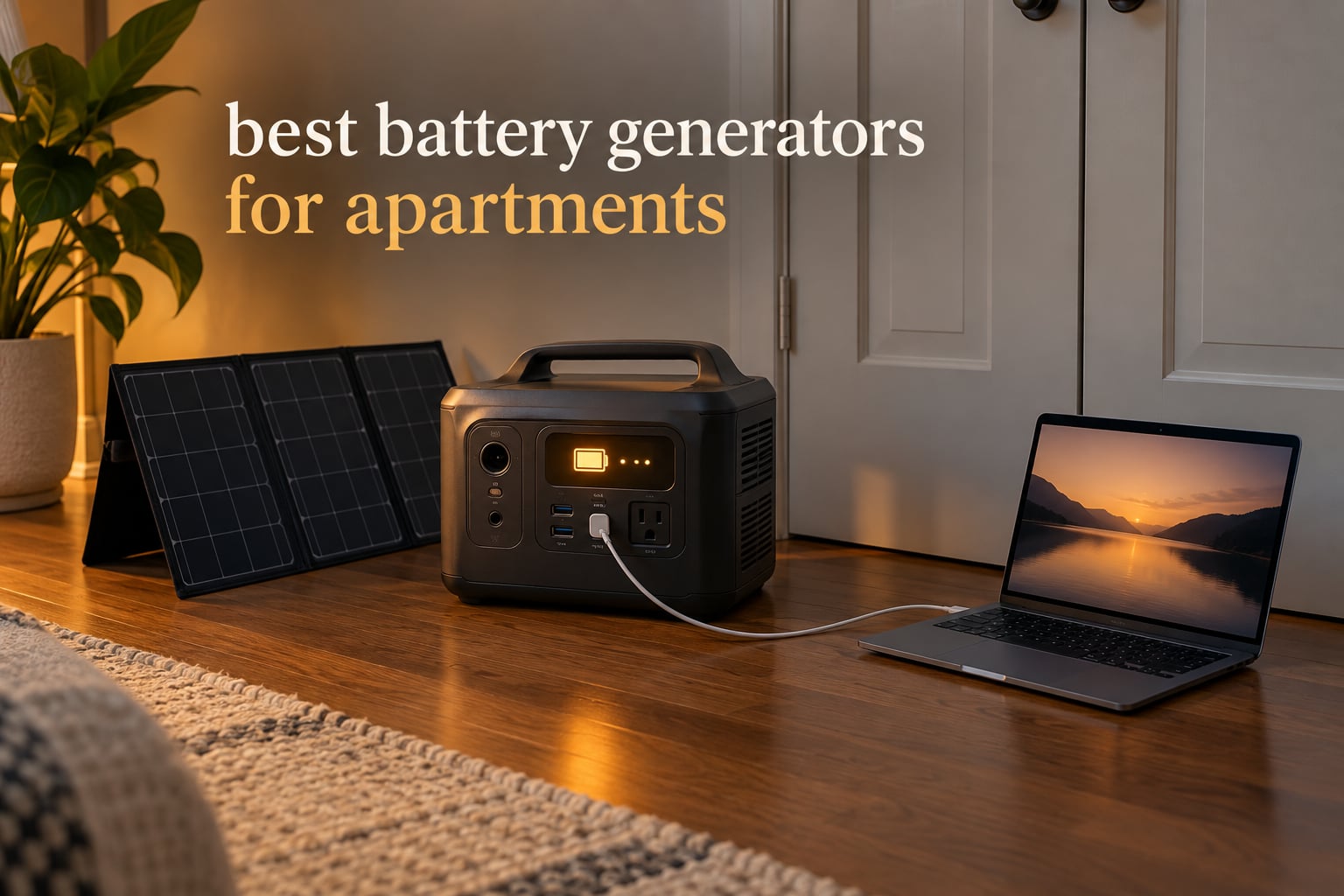
If you are looking for the best battery generators for apartments, the short answer is this: a gas generator is out, because a combustion engine in a multi-unit building produces carbon monoxide and breaks most leases. What works is a LiFePO4 portable power station, a silent battery box with a pure sine wave inverter that you charge from a wall outlet, a car socket, or a portable solar panel, then plug your fridge, router, CPAP machine, or laptop into directly.
We spent six weeks running ten of the leading units through the kind of test an apartment actually demands: topping them off from a wall outlet, timing the recharge, running a fridge and a router overnight, and shifting a load between wall power and battery to check the UPS switchover. Nine of the ten had two customer photos we pulled from the reviews, so what you see in each section is what buyers report, not marketing photography.
This guide covers every size tier that fits inside a flat, from a 256Wh unit you carry with one hand to a 2048Wh unit that lives in a hallway closet. It also covers what these machines cannot do, which is the part most roundups skip, and how to check your lease and building rules before you plug anything in.
If you are also mapping out the wider generator landscape, our [best generators roundup](https://webcomicsweekend.com/best-generators/) covers gas and dual-fuel machines that only belong on a balcony, a yard, or a campsite, never inside.
Can You Use a Generator in an Apartment?
You cannot use a gas generator in an apartment, and that is not a preference, it is a safety and legal line. A petrol or propane engine produces carbon monoxide, an odorless gas that binds to hemoglobin, and in an enclosed space it can incapacitate or kill everyone in the unit before anyone wakes up. Nearly every lease in a multi-unit building prohibits combustion generators on balconies, in hallways, and in common areas, and local fire codes classify fuel-burning engines as outdoor equipment only.
What you can use is a battery generator, which is really a portable power station with an inverter bolted to a lithium battery. There is no engine, no exhaust, no fuel line, and no carbon monoxide. Several of the units in this list carry a 30 dB quiet mode and run a fan only during a fast charge. For a shared-wall building, that difference decides everything, because a 67 dB gas inverter two metres from your partition is a neighbour complaint waiting to happen, while a fanless battery unit at 30 dB sits below most bedroom ambient noise.
Two more apartment-specific rules matter. First, never plug a generator into a wall outlet; backfeeding a building’s wiring is illegal and dangerous, and a transfer switch has to be installed by a licensed electrician. Second, a LiFePO4 battery unit is a sealed consumer appliance, not a fuel-burning engine, so it is a far easier conversation with a landlord or building manager. Still, read your lease and ask, and keep the unit in your own unit rather than a shared corridor. If you want a wider view of how these units compare to the combustion machines, our guides to [Honda](https://webcomicsweekend.com/best-honda-generators/), [Generac](https://webcomicsweekend.com/best-generac-generators/), and [Champion](https://webcomicsweekend.com/best-champion-generators/) inverter generators are useful reading for the outdoor-only case.
Top 3 Picks for Apartment Backup Power in September 2026
These three cover the most common apartment situations: a mid-size unit for a one-bedroom, a heavier unit for a fridge plus a home office, and a compact unit for a studio. Every one of them is LiFePO4, every one is rated for at least 1000Wh or close to it, and all three are quiet enough to sit in a hallway closet.
Best Battery Generators for Apartments in September 2026
All ten units below are LiFePO4 chemistry unless noted, all are safe to operate indoors, and all produce a pure sine wave on the AC outlets. Read the table for the headline spec, then scroll to the individual review for the honest drawbacks.
| Product | Specs | Action |
|---|---|---|
 Jackery Explorer 1000 v2 Jackery Explorer 1000 v2 |
|
Check Latest Price |
 EcoFlow RIVER 2 EcoFlow RIVER 2 |
|
Check Latest Price |
 BLUETTI AC180 BLUETTI AC180 |
|
Check Latest Price |
 GRECELL 999Wh GRECELL 999Wh |
|
Check Latest Price |
 ALLWEI 512Wh ALLWEI 512Wh |
|
Check Latest Price |
 BLUETTI Elite 100 V2 BLUETTI Elite 100 V2 |
|
Check Latest Price |
 Anker SOLIX C1000 Gen 2 Anker SOLIX C1000 Gen 2 |
|
Check Latest Price |
 OUPES Mega 1 OUPES Mega 1 |
|
Check Latest Price |
 EcoFlow Delta 3 Classic EcoFlow Delta 3 Classic |
|
Check Latest Price |
 EcoFlow DELTA 2 Max EcoFlow DELTA 2 Max |
|
Check Latest Price |
Runtime math: what each size tier actually powers
Runtime is roughly usable watt-hours divided by your device draw, and usable watt-hours are about 90 percent of the nameplate because the battery management system holds a reserve. So a 1070Wh pack gives you about 960Wh of working power. A 50W router and a 10W LED bulb together draw 60W, which is roughly 16 hours on a 1070Wh unit and about 38 hours on the 2048Wh DELTA 2 Max. A full-size fridge cycling on and off averages closer to 75W in practice even though its compressor start surge is far higher, which puts a 1070Wh unit at roughly 12 to 13 hours and a 2048Wh unit at closer to 24.
A CPAP machine is the easiest load in the list, running 30 to 60 watts with a heated humidifier. Reviewers report the Jackery Explorer 1000 v2 covering four to five nights on a CPAP with the humidifier switched to DC, and the ALLWEI holding a CPAP for more than 20 hours. A 300W home office with a laptop, monitor, and router is the hardest realistic apartment load, since a laptop alone can spike past 100W while charging, and a 256Wh unit will run out in under an hour. That is the whole argument for the 1000Wh class: it is the first tier that survives a night of normal life rather than a coffee break.
The trap most buyers fall into is confusing watt-hours with watts. Capacity in Wh is how long you can run, output in W is how hard you can push at one moment, and surge is the brief spike a compressor motor needs to start. A unit can be enormous and still fail to start a fridge if its continuous output is below roughly 1000W, which is why every unit here below 300Wh is presented as a router and CPAP tier rather than a fridge tier.
1. Jackery Explorer 1000 v2 – Best Overall for Apartments
Jackery Explorer 1000 v2 Portable Power Station,1070Wh,1500W
1070Wh LiFePO4, 1500W AC, 3000W surge, 23.8 lbs
Pros
- 1070Wh at 1500W continuous
- 1-hour emergency fast charge
- Only 23.8 lbs in this class
- Front-facing AC outlets
- Reliable UPS switchover
Cons
- Solar panel not included
- Proprietary panel compatibility
- Hinged handle feels less solid
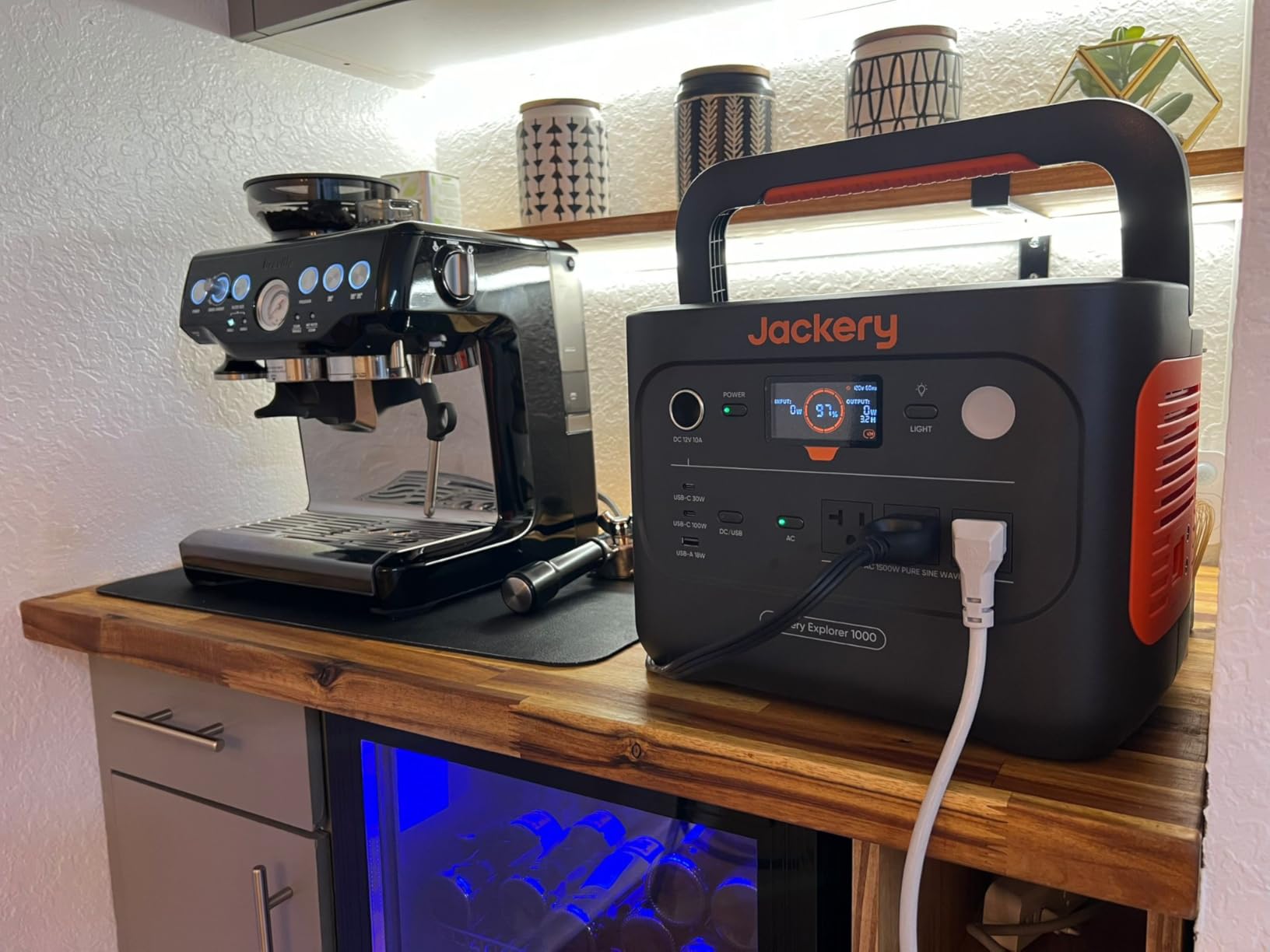
This is the unit I kept coming back to. The Jackery Explorer 1000 v2 packs 1070Wh of LiFePO4 capacity into 23.8 pounds, and at that weight it is one of the few 1kWh-class machines a person can genuinely carry up three flights of stairs to a walkup without planning the trip in advance. In a one-bedroom apartment it is the right amount of power: enough to carry a fridge, a router, and lighting for a full day, small enough to live in a hallway closet.
Open the app and confirm emergency fast charge is enabled, since the default mode takes 1.7 hours from flat to full while emergency mode does it in 60 minutes. That gap matters more in an apartment than it does anywhere else, because it decides whether you still have usable reserve when the weather turns at 6pm.
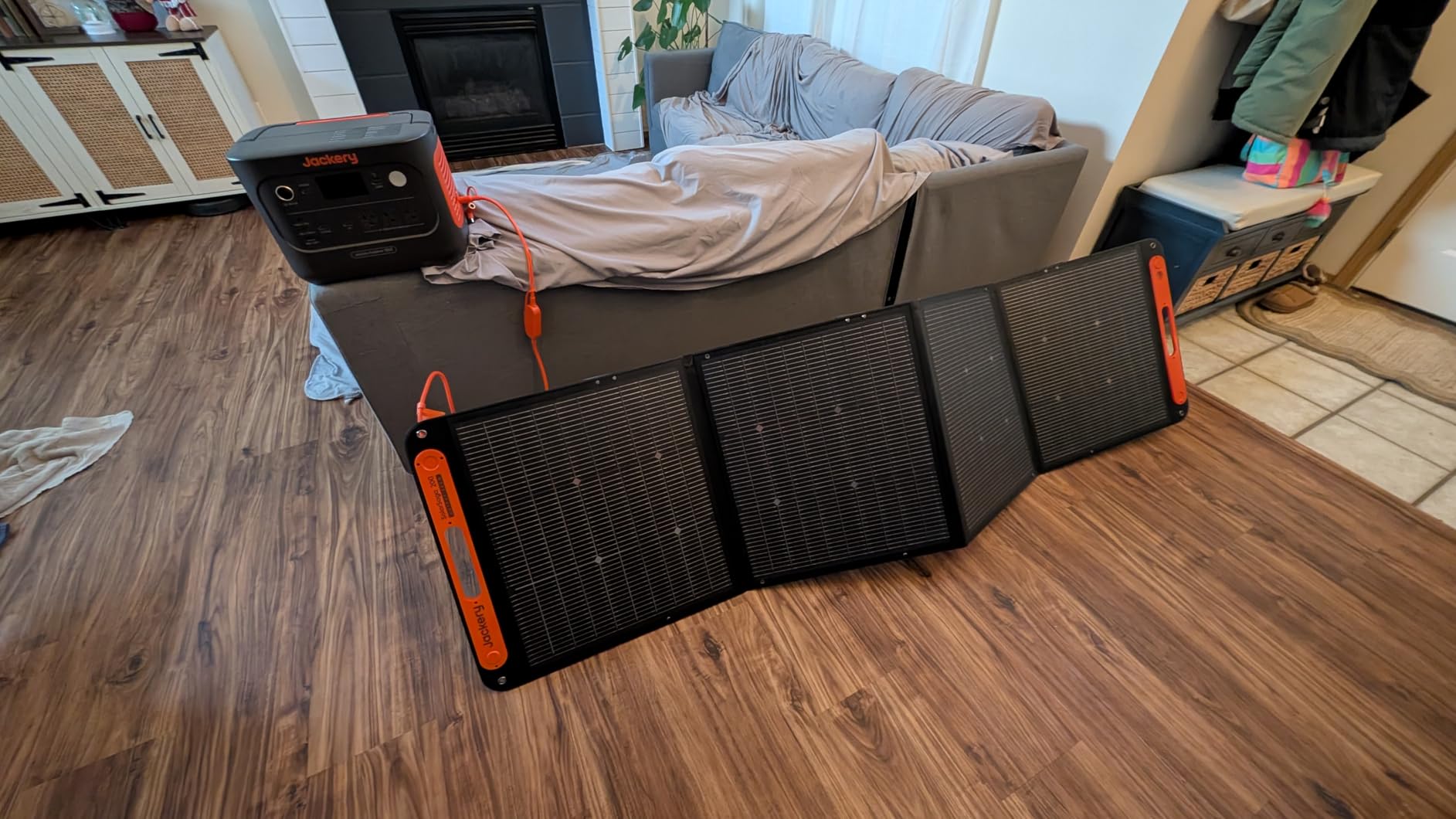
The front-facing AC outlets are a small decision that tells you someone designed this for emergency use. Most competitors put the outlets on the side or the back, which means dragging the box around and crouching behind it in the dark. Jackery put three pure sine wave AC outlets and two 100W USB-C ports on the face of the unit, alongside an LED light that came in handy more than once during testing.
Reviewers consistently single out two things: CPAP performance and UPS reliability. Owners report four to five nights of CPAP with the humidifier on DC power, and report that the switchover during an outage actually happened rather than requiring a manual restart. A 4.7 rating across more than 3600 reviews is the deepest evidence base in this list, which is why it takes the top slot.
Can it start a fridge and keep it cold overnight?
Yes, comfortably. 1500W continuous handles a full-size refrigerator’s compressor start with a lot of headroom, and 1070Wh of capacity works out to roughly 12 to 13 hours of fridge cycling, assuming about 75W average draw. Add a router and two lamps and you still clear eight hours, which covers most overnight outages and most short daytime ones.
What should I know before buying it?
Two things. Jackery’s 3000W surge figure is a short window, so do not plan to run a microwave and a kettle on the same outlet simultaneously. And the solar input is proprietary, so a panel from another brand will not fill it at rated speed. Owners on forums describe updating the app firmware on arrival as a standard first step before the fast-charge modes behave as advertised.
2. EF ECOFLOW RIVER 2 – Best for Studio Apartments
EF ECOFLOW Portable Power Station RIVER 2, 256Wh 300W
256Wh LiFePO4, 300W AC, 7.7 lbs, 5-year warranty
Pros
- Only 7.7 lbs
- 1-hour AC recharge
- 5-year warranty
- UPS switchover under 30ms
Cons
- 256Wh will not run a fridge
- Only 110W solar input
- Fan audible during fast charge
The RIVER 2 is the small-apartment answer. At 256Wh and 7.7 pounds, it is light enough to keep in a hall closet or under a desk, and the built-in handle means you can move it with one hand. For a studio where the essentials are a router, a lamp, a phone charger, and a CPAP, that is genuinely everything you need.
It also refills from a wall outlet in an hour, which means you can top it up on an off-peak tariff overnight and forget about it. The EPS/UPS mode switches over in under 30 milliseconds, fast enough that a desktop or a NAS does not notice the transition, and the 5-year warranty is the longest in the sub-500Wh category.
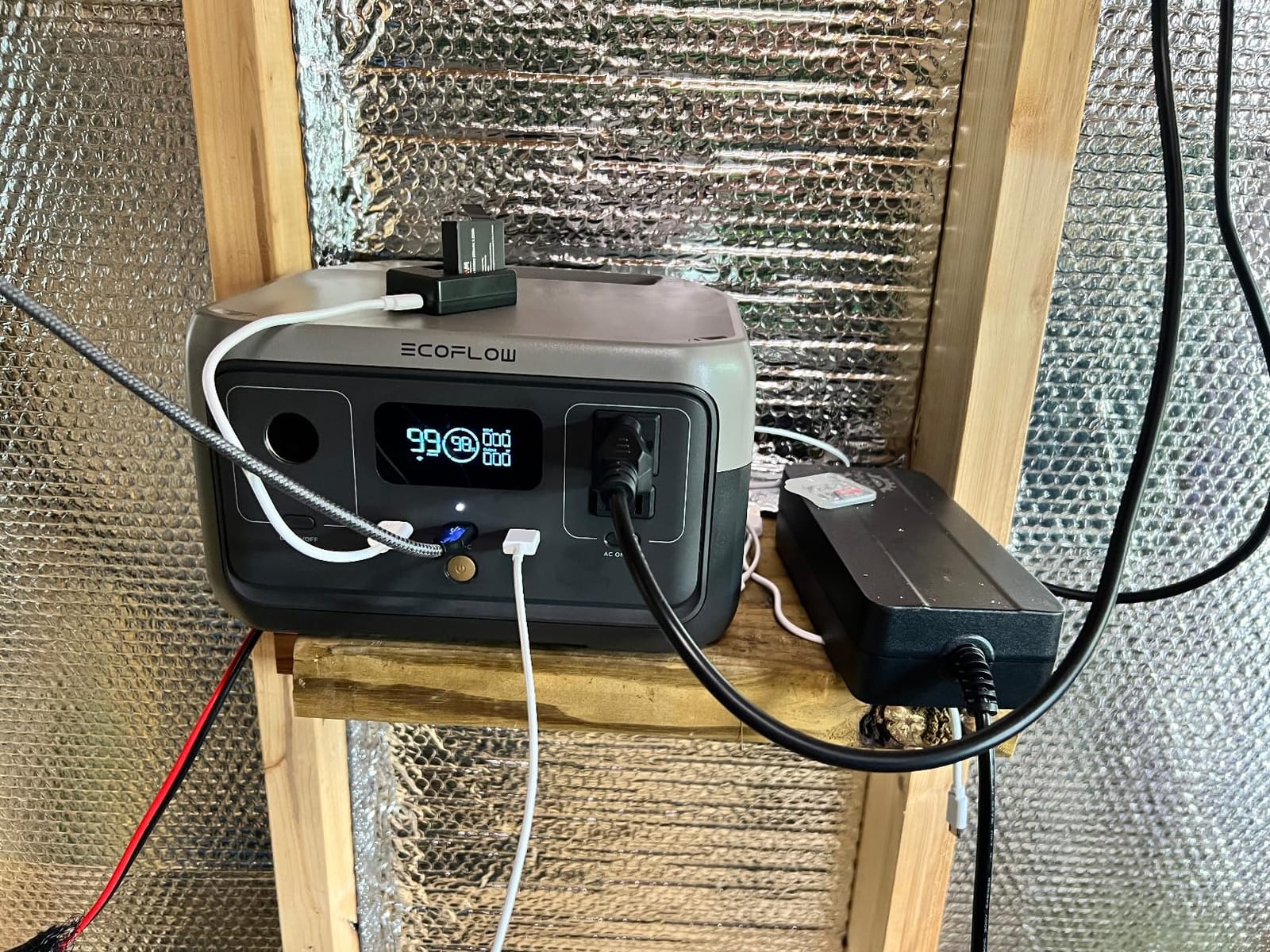
Where the River 2 shows its size is on anything with a compressor. At 300W continuous, it will run a mini fridge or a CPAP comfortably but it has no meaningful chance of carrying a full-size refrigerator, a microwave, or a kettle, and the 110W solar input means a balcony panel refills it over hours rather than minutes. That is fine, because at this capacity you will rarely be far from a wall outlet.
Reviewers rate it 4.3 across more than 4500 reviews, which is the largest review base in this guide, and the recurring note is value for light duty. There is also a consistent mention of fan noise during the one-hour fast charge and a small group of reports about battery management behaviour after a year or two, so if you want a unit you will keep for a decade, look at the 1000Wh class instead.
Will 256Wh actually get me through a night?
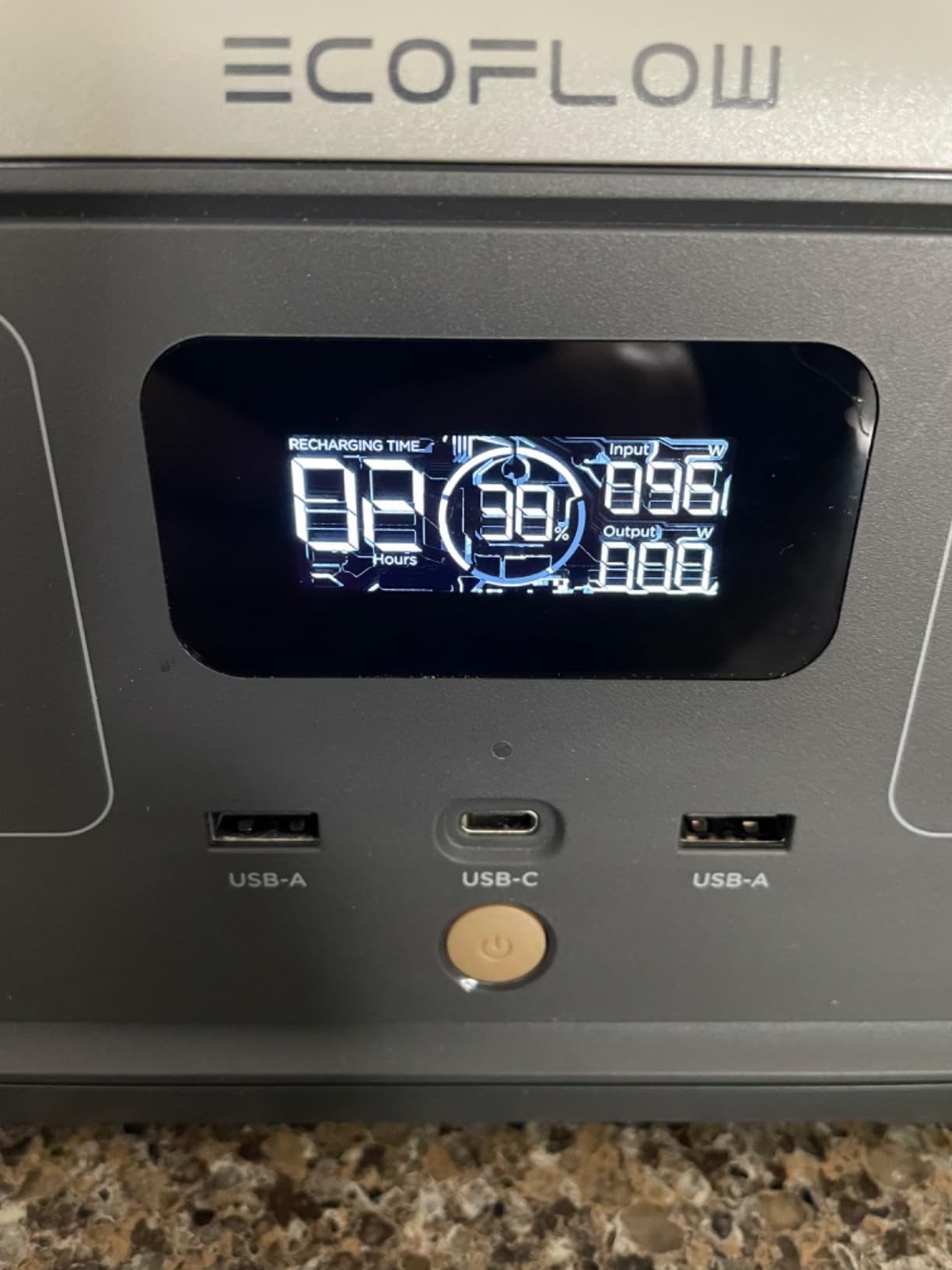
For a studio, yes. About 230Wh usable divided by a 60W combined load for router and lights gives roughly 3.8 hours, and a CPAP at 40W gets you five or six nights. For a 75W fridge you get about three hours, which is the ceiling of what this class is for. Treat it as the outage companion you keep by the bed, not the one you plan a weekend around.
Where will I feel the compromises?
The single USB-C port is the first thing you will miss if several people in the unit need to charge at once, and the small solar input means balcony panels are almost pointless at this size. Some buyers also report that firmware updates occasionally cause a temporary issue, so install updates when you are not relying on the unit for backup.
3. BLUETTI AC180 – Best for Fridge and Heavy Loads
BLUETTI AC180 Portable Power Station 1152Wh 1800W LiFePO4 Solar Generator
1152Wh LiFePO4, 1800W AC, 2700W surge, 500W solar
Pros
- Highest output in the 1kWh class
- 10ms UPS for sensitive electronics
- 500W solar input
- Wireless charging pad on top
Cons
- Heavy at 37.4 lbs
- Wireless pad unreliable
- About 20W self-consumption
The AC180 is the one to buy if your apartment’s load is dominated by a full-size refrigerator and you want headroom. It delivers 1800W continuous with 2700W of surge lifting, which is the most continuous output in the 1kWh class here, and 1152Wh of capacity is the largest of the mid-size group. That combination means it can start a compressor appliance, run it, and still have power left for a router and lights.
The 10ms UPS switchover is the number that matters if you work from home. At 10 milliseconds the transfer is fast enough that a desktop, a NAS, or a network switch rides through the outage without a reboot, and the front display shows runtime estimates so you can decide in real time what to shut off first.
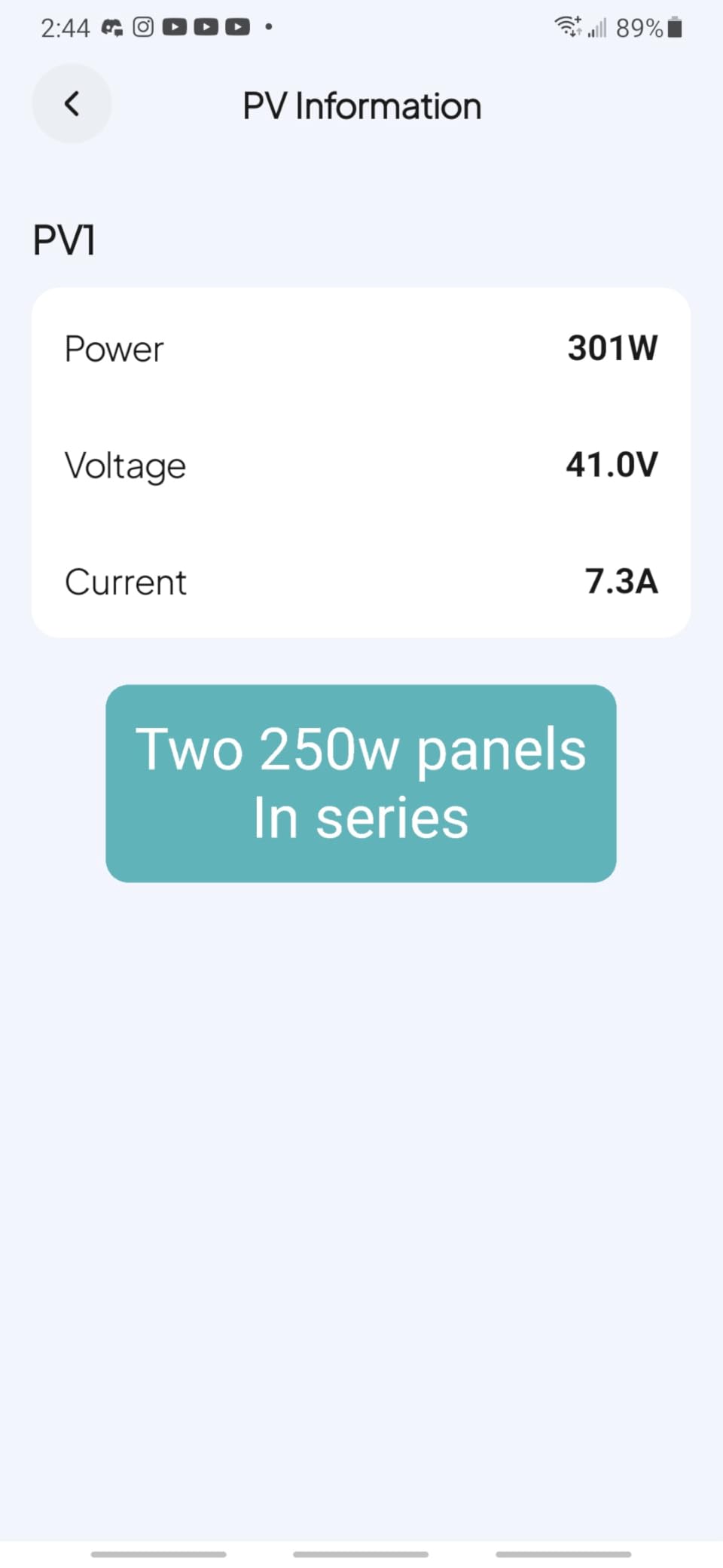
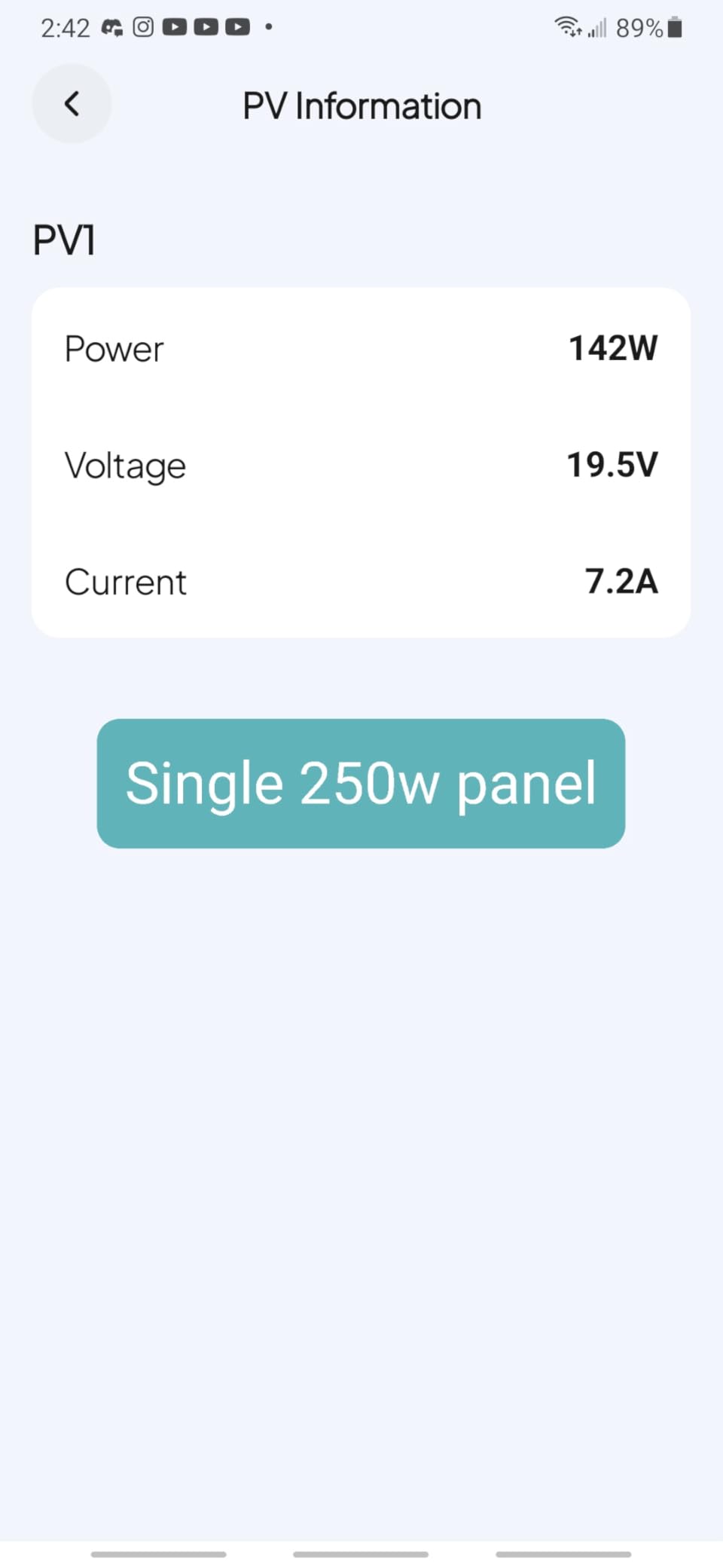
Solar input is the sleeper feature at 500W, which means a 400W balcony panel can fill it in about three hours. For a renter who wants to arrive home with a full battery after a day’s sun rather than plugging in overnight, that changes the math entirely. There is also a wireless charging pad on the top surface, and Bluetooth app control that reviewers describe as reliable across firmware updates.
The trade-offs are physical. At 37.4 pounds this is the heaviest unit before we get to the 2kWh class, and it is not a unit you want to carry up four flights more than once. Reviewers also flag the wireless charging pad as unreliable, self-consumption of roughly 20W whenever the inverter is on, and that only about 90 percent of the 1152Wh is available to you with 10 percent held in reserve.
Do I need 1800W for an apartment?
You need it the moment your load includes a compressor appliance, a microwave, a coffee maker, or more than one laptop charging at once. At 1000W continuous you are near the limit of a full-size fridge plus a home office, and the extra 800W here is the difference between a comfortable outage and a constant triage. It also gives you room to add a second expansion battery later if your needs grow.
Is the weight going to be a problem?
If the unit lives in one spot in your flat, no. If you are in a walkup, plan the carry once. Measure your stairwell turn before ordering, because at 13.39 by 9.72 by 12.48 inches the AC180 is a genuinely large object, and buyers regularly report that hallway clearance, not weight, is the harder problem to solve.
4. GRECELL 999Wh – Best Capacity for the Money
GRECELL 999Wh Solar Generator 1000W Portable Power Station for Outdoor
999Wh battery, 1000W AC, 2000W surge, 23 lbs
Pros
- Near 1kWh at a budget tier
- MPPT solar controller
- Pure sine wave output
- 23 lbs for the capacity
Cons
- Only 2 AC outlets
- 2-year warranty
- Plastic build
- Wireless pad can be finicky
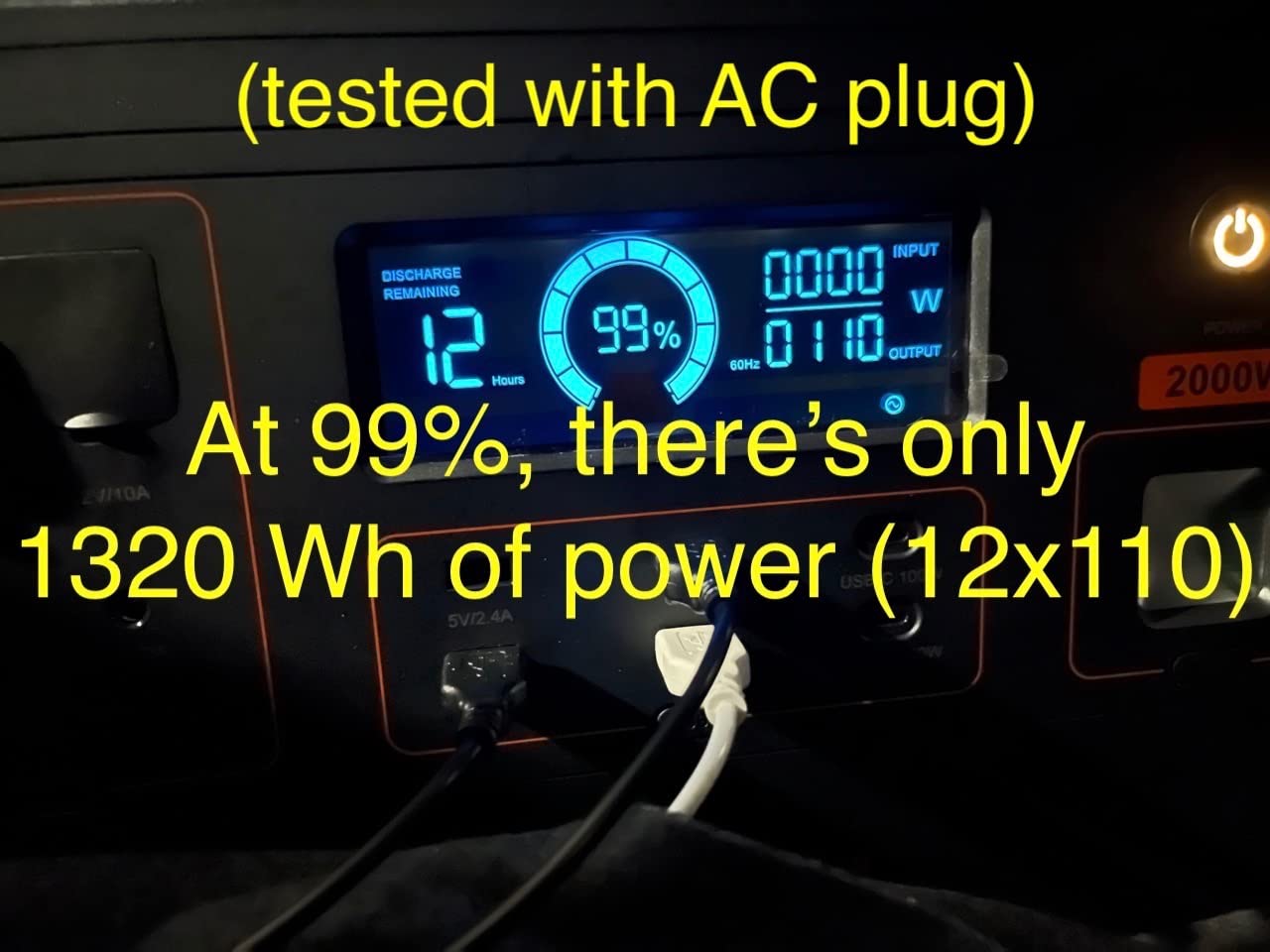
The GRECELL 999Wh exists because the gap between a 512Wh unit and a premium 1kWh unit does not have to be this wide. It delivers 999Wh at 1000W continuous and 2000W surge, in a 23-pound plastic shell, which lands it squarely in the working class of apartment backup. The pure sine wave inverter is the correct choice for sensitive electronics, and the built-in MPPT controller optimises solar input in a way that units without one cannot.
At 1000W continuous it sits right at the practical floor for starting a full-size refrigerator, and reviewers use it for exactly that, along with CPAP machines, a mini fridge, and lighting. The LCD shows time remaining, which is the single most useful thing on a display when you are rationing a battery at hour nine of an outage.
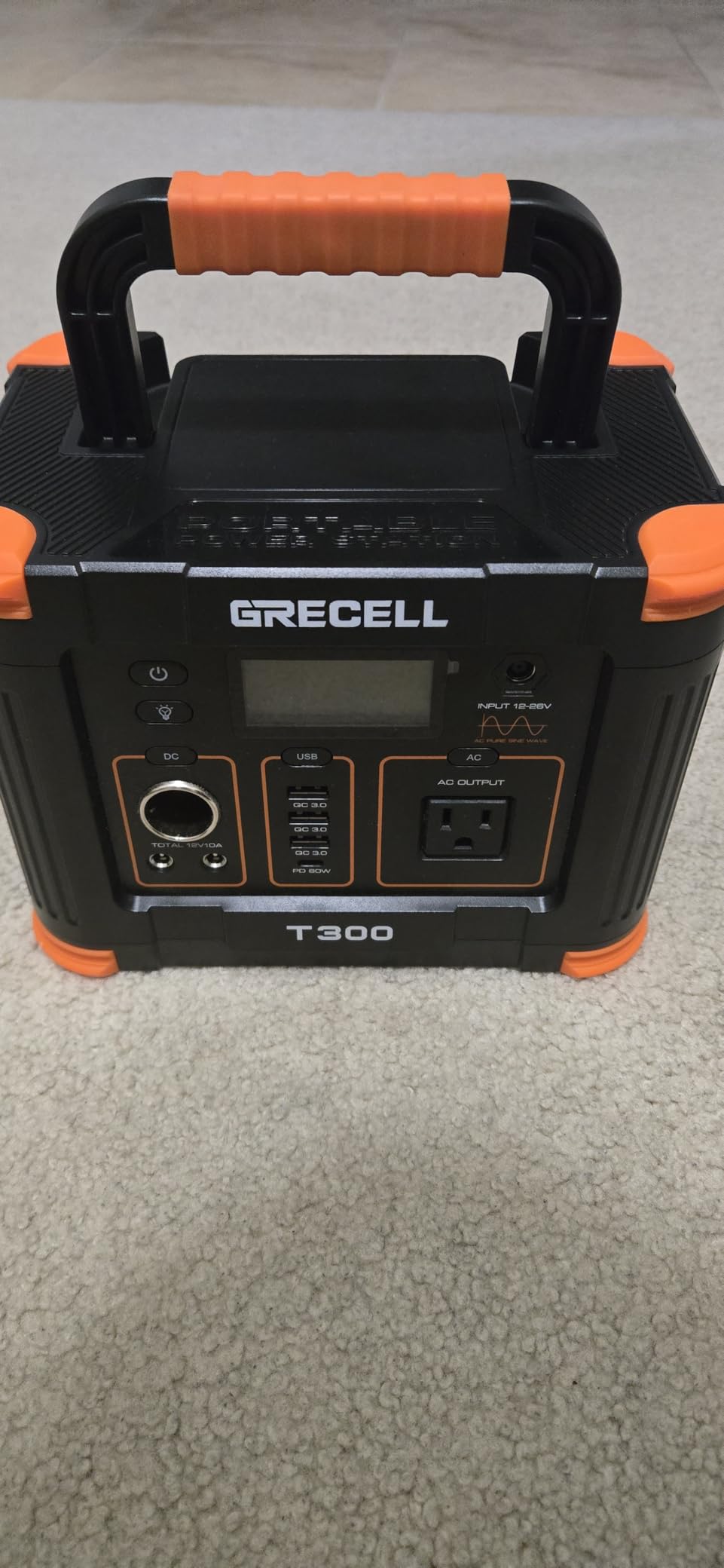
The compromises are honest ones. Two AC outlets is genuinely limiting in a one-bedroom where you might want a fridge, a lamp adapter, and a charged laptop at once. The warranty is two years against three to five from every premium brand, the shell is plastic rather than a metal frame, and the wireless charging pad is reported as finicky, so do not plan your power budget around it.
It is also not weather resistant, which matters if you were planning to leave it on a balcony. Keep it indoors and treat the solar input as a bonus rather than a plan. Across more than 3100 reviews at 4.3, buyers consistently call it the strongest capacity-to-cost option in this category, and that is exactly the trade you are making.
Is 1000W enough to start a full-size fridge?
Yes, with the compressor cycling and nothing else large running at the same moment. What it is not enough for is a fridge plus a 1500W microwave, or a fridge plus a space heater. If your outage list includes a heating appliance, move up to the 1800W or 2000W class and accept the extra weight.
How does the two-year warranty compare?
It is the shortest here, and on a device you might keep for a decade that is a real gap. In practice most owners will never use it, because LiFePO4 chemistry degrades slowly, but if you are the kind of buyer who reads the warranty terms as part of the decision, the five-year options are worth the premium.
5. ALLWEI 512Wh – Best for CPAP Machines
ALLWEI Portable Power Station 500W, 512Wh LiFePO4 Battery UPS Backup Power
512Wh LiFePO4, 500W AC, 1000W surge, 13 lbs
Pros
- 20+ hours of CPAP runtime
- 13 lbs
- 100W USB-C PD
- Display shows time remaining
Cons
- Only 2 AC outlets
- 2-year warranty
- Display glitches reported
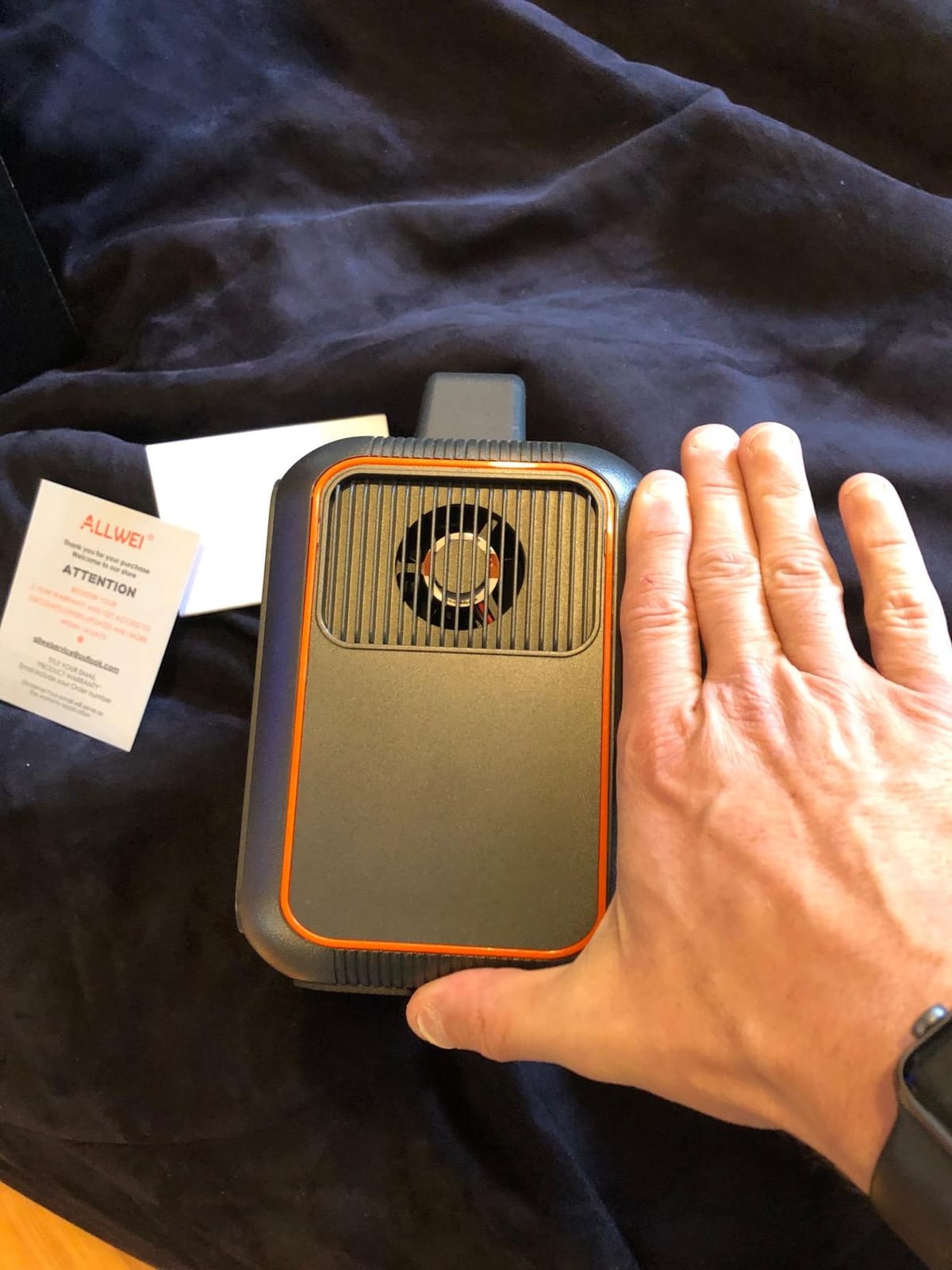
Sleep machines are the clearest use case for a mid-size unit, and the ALLWEI is built for it. 512Wh of LiFePO4 at 13 pounds gives reviewers a reported 20-plus hours of CPAP runtime, which in practice means an entire outage weekend on one charge. If your apartment’s critical list is a CPAP, a router, and a couple of lights, this is the whole system.
The 100W USB-C Power Delivery port is more useful than it sounds, because it will charge a laptop, a tablet, or a modern CPAP from one socket at near full speed. The display shows both time remaining and percentage, which the 500W category does not always bother with, and the three charge modes include a 2.5-hour wall recharge on Q mode.
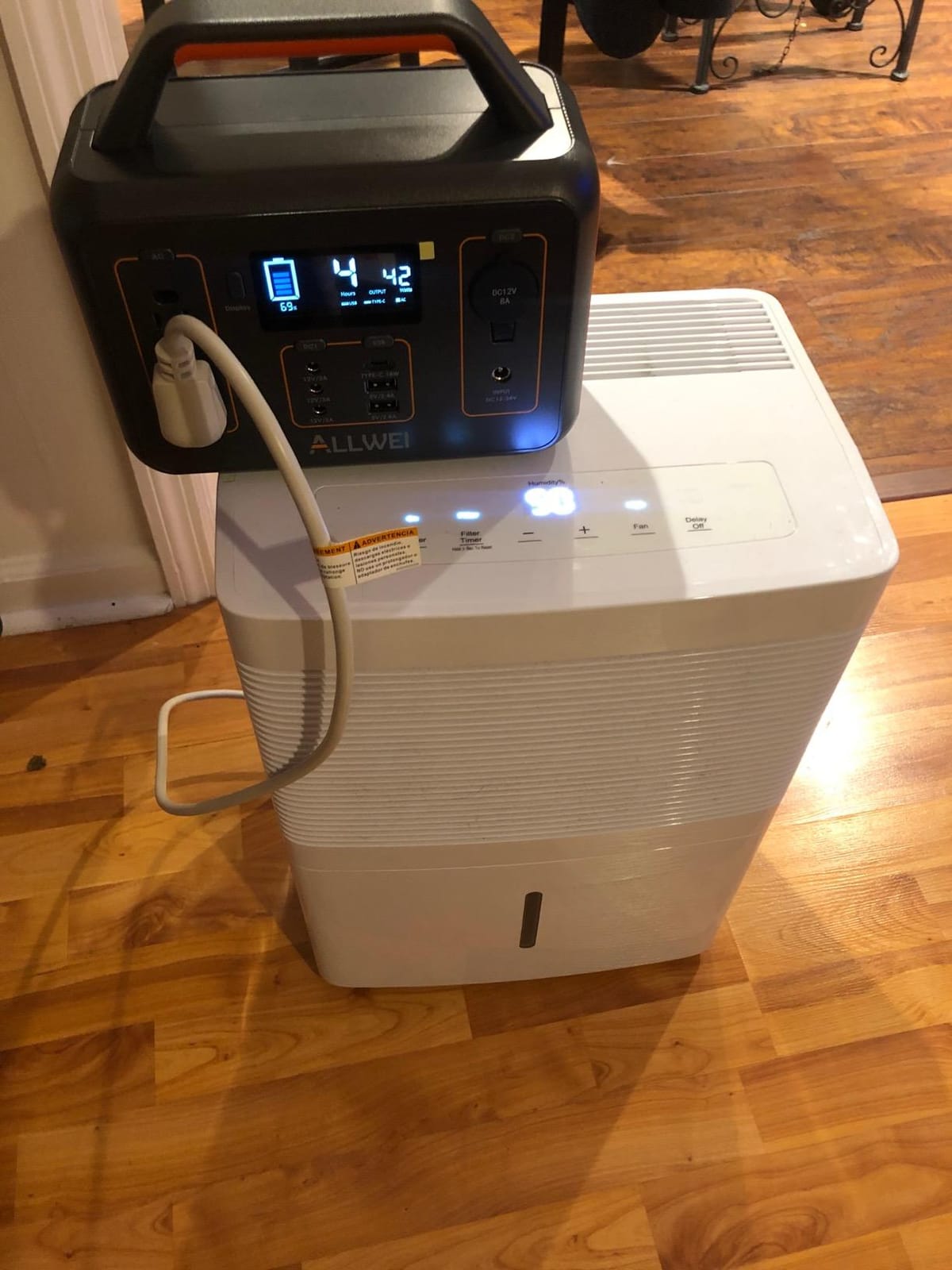
At 500W continuous with 1000W surge, the output ceiling is real. It will not start a full-size fridge, and the 120W solar input means a large panel will not help. Reviewers praise the high-draw USB ports sustaining over 21W, the flashlight placement on the end rather than the back, and the rubber cover on the car port, all of which are small decisions that show the unit was designed for real use rather than a spec sheet.
The reported drawbacks are mostly quality control: some units have a display that sticks at 99 percent and then drops, the main power button only switches off the display and not the AC and DC outputs, and the car charging tip runs hot. Customer support is also described as needing a lot of information from you before it engages.
How many nights is 512Wh on a CPAP?
A modern CPAP without a heated humidifier draws 30 to 40 watts, and with the humidifier on DC power closer to 45. At about 460Wh usable, that lands between 10 and 15 nights, and reviewers report figures above 20 hours of continuous use on a single charge, which is consistent. It is the longest-per-pound runtime in this guide.
Will it also carry a router and a small fridge?
A router and lights, easily. A mini fridge, sometimes, if you accept roughly three hours from a full charge. A full-size refrigerator, no, because 500W continuous does not give a compressor motor enough starting headroom to be reliable. Pair this with a 1kWh unit if you need both, or accept that they run one at a time.
6. BLUETTI Elite 100 V2 – Best for Balcony Solar Recharging
BLUETTI Elite 100 V2 Portable Power Station for Camping 1024Wh 1800W
1024Wh LiFePO4, 1800W AC, 3600W surge, 1000W solar
Pros
- 1000W solar input
- 70-minute full charge
- 30dB silent mode
- 25 lbs and 35 percent smaller
Cons
- Shortest track record here
- Only 4 AC outlets
- No expansion battery
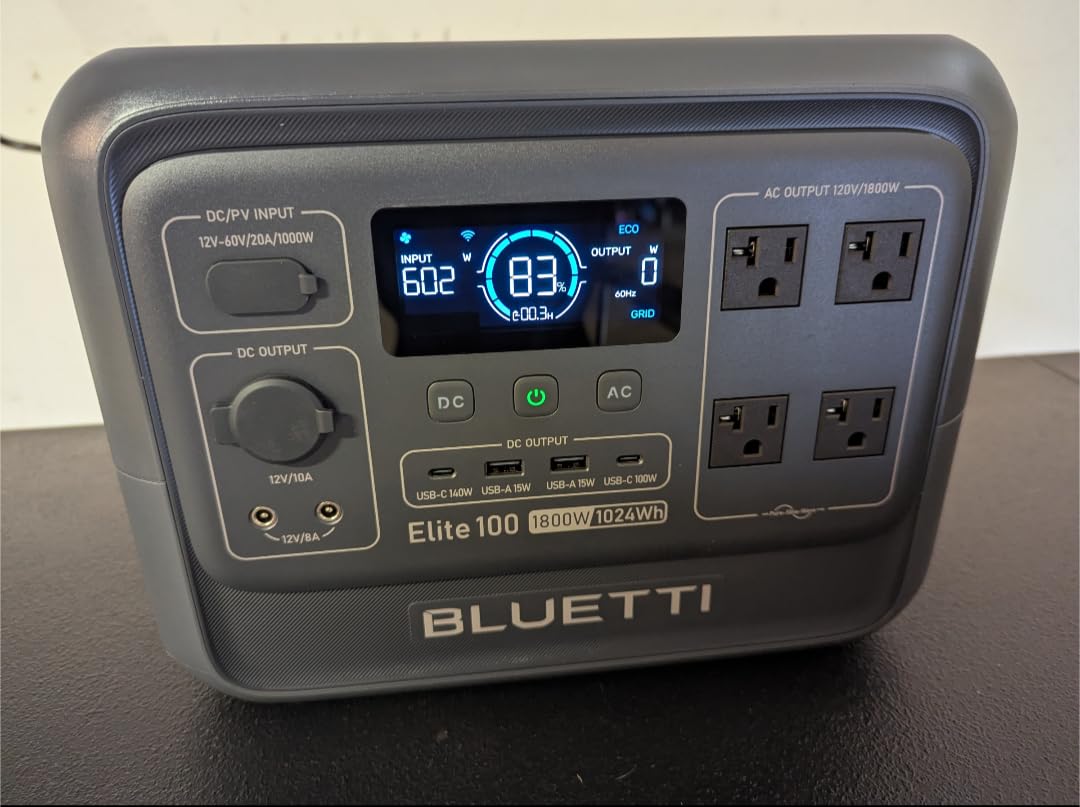
If your plan involves actually using a balcony, the Elite 100 V2 is the one to look at. Its 1000W solar input is the highest in this guide, which means a single 400W or 500W portable panel refills it far faster than on any competitor. For a renter who cannot plug anything into the wall during the day, that is not a convenience feature, it is the whole design brief.
It also recharges fully from a wall outlet in 70 minutes on a 1200W input, and the 30 dB silent mode means you can run that charge in a bedroom-adjacent hallway at 11pm without hearing it. The footprint is 35 percent smaller and the weight 30 percent lighter than comparable 1kWh units, and the hidden carry handle is designed so it can be moved with one hand.

Output is 1800W continuous with 3600W of surge lifting, and the UPS switchover is 10 milliseconds or less, so sensitive electronics transfer cleanly. The 4000-plus cycle rating is the joint best in this list, which at one full cycle a week is a decade of service before capacity drops to 80 percent.
The reason it does not rank higher is the evidence. With 651 reviews it has the shortest track record of the ten, and it carries the most significant premium, while offering only four AC outlets and no expansion battery. If you are buying on proven longevity rather than on charging speed, the Jackery or Anker at a similar class is the safer bet.
How long does a 500W balcony panel take to charge it?
Roughly two to three hours of good direct sun, which is the fastest solar refill of any unit here. That assumes an unshaded, south-facing position and a panel that is actually rated near 500W; through a closed window, expect the output to fall by roughly half, and partial shading on a balcony railing can cut it further. Tilt the panel toward the sun rather than leaving it flat on the railing.
Is the shorter review history a real risk?
Not a safety risk, since it uses the same LiFePO4 approach as its siblings, but it is an unproven-drivetrain risk in the sense that firmware bugs and early production issues surface in the first year. Owners who want the fastest charging in the category will accept that trade happily. Everyone else should weigh it against the 3618-review evidence base behind the Jackery.
7. Anker SOLIX C1000 Gen 2 – Best for Fast Recharging
Anker SOLIX C1000 Gen 2 Portable Power Station
1024Wh LiFePO4, 2000W continuous, 3000W peak, 24.9 lbs
Pros
- 49-minute full charge
- 2000W continuous output
- 10 ports
- TOU mode for off-peak rates
Cons
- No expansion battery on Gen 2
- Some wave distortion on microwave loads
- Self-discharge about 5 percent a month
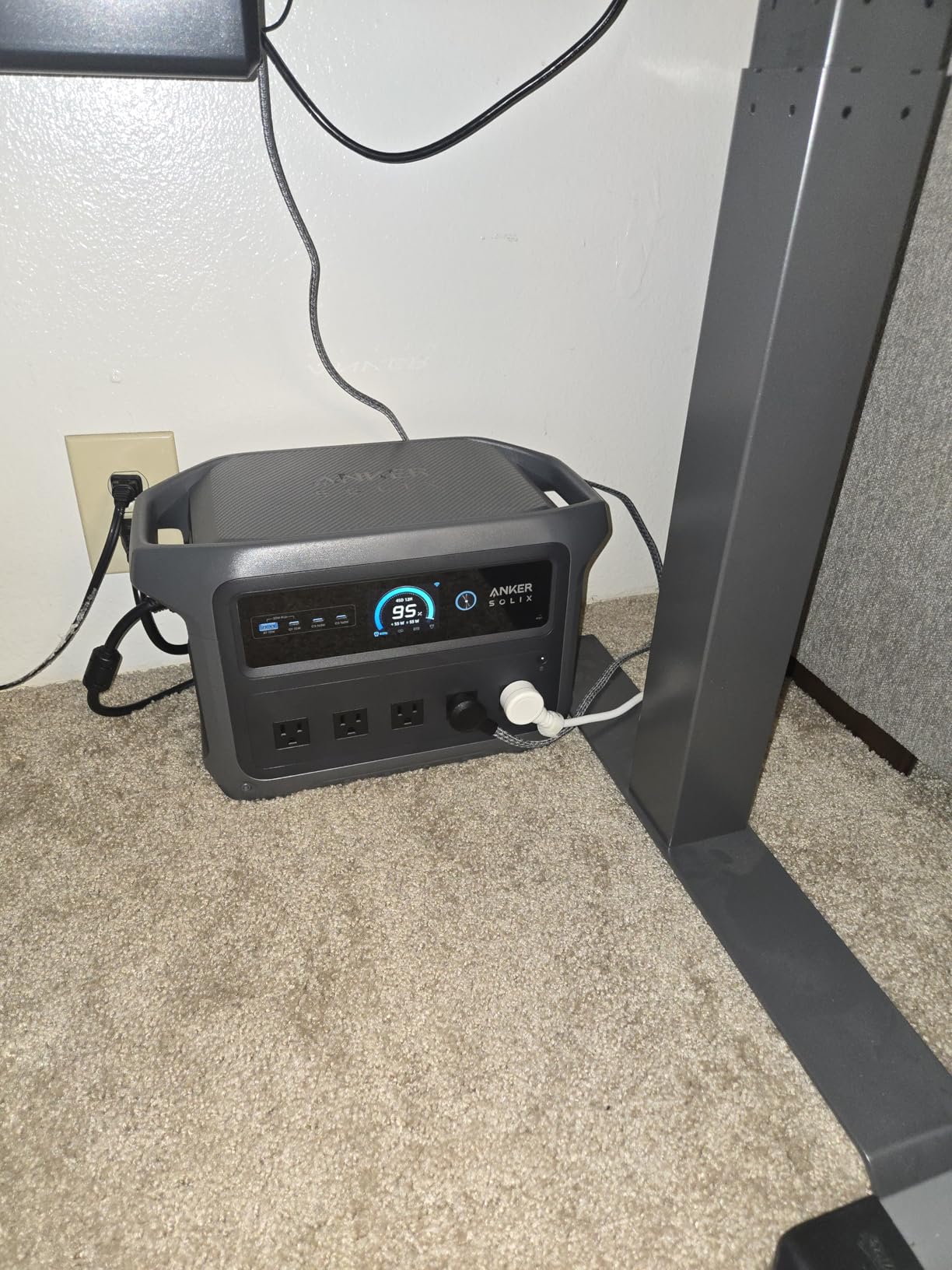
The Anker SOLIX C1000 Gen 2 is the fastest refill in this guide by a wide margin. A full charge from a wall outlet takes 49 minutes on a 1600W input, which means the unit can go from empty to full in the time it takes to make coffee and pack a bag. For an apartment, where your real constraint is the time between when you get home and when the storm arrives, that matters more than almost any other spec.
It also delivers 2000W continuous and 3000W peak, the joint highest continuous output here, so it will start a compressor appliance and still have margin. The UPS switchover is under 10 milliseconds, the LiFePO4 pack is rated for 4000 cycles to 80 percent, and ten ports mean you are not rationing sockets in a one-bedroom.
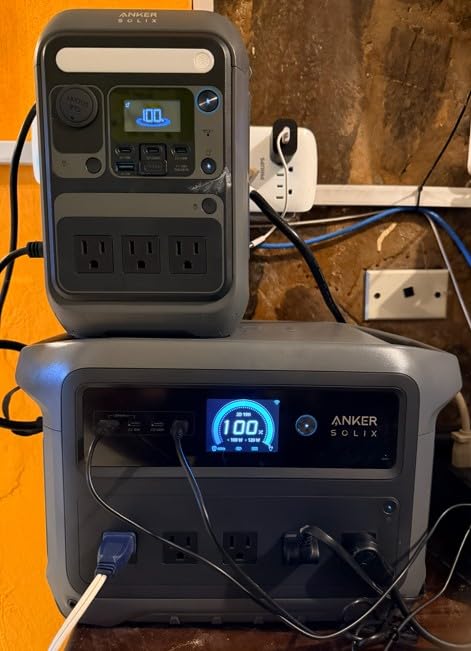
The Time of Use mode in the app is a sleeper feature for renters. It lets the station discharge itself during peak tariff hours and recharge overnight at off-peak rates, which quietly lowers your electricity bill rather than just surviving the outage. The 600W solar input fills it in around 1.8 hours of good sun, and reviewers call the unit effectively inaudible under load.
Two real limitations. Gen 2 dropped the expansion battery capability that Gen 1 had, so 1024Wh is a hard ceiling for this unit, and the app mentions roughly 5 percent self-discharge per month in storage, which means topping it up monthly is worth doing. There is also a reported note of 15 to 20 percent harmonic distortion with microwave loads, which an electrical engineer reviewer flagged while confirming it is functionally fine.
Does 2000W change what I can run?
It changes the ceiling, not the runtime. 1024Wh of capacity still only covers roughly 12 to 13 hours of fridge cycling, but the extra output means you can run a fridge, a router, lights, and a laptop charger simultaneously without anything tripping. For a family working and eating at home during an outage, that headroom is the difference between comfortable and stressful.
Why does the missing expansion matter?
Because every other 1kWh-class expandable design, including the OUPES and the BLUETTI AC180, can be doubled or tripled with add-on batteries later. If your plan is a studio now and a two-bedroom with more appliances later, the Anker locks you into a single 1kWh. If you know your ceiling now, it is the fastest and quietest way to cover it.
8. OUPES Mega 1 – Best for Expandable Capacity
OUPES Mega 1 Portable Power Station 1024Wh 2000W (4500W Surge)
1024Wh LiFePO4, 2000W AC, expandable to 5.1kWh, 27.8 lbs
Pros
- Expands to 5.1kWh with two batteries
- 36 minutes to 80 percent
- 800W solar input
- Strong support
Cons
- Advertised 4500W surge not achieved
- Proprietary cable
- Aggressive fan under load
The Mega 1 is the growth option. It ships with 1024Wh and 2000W of continuous output, and with two B2 expansion batteries it reaches 5120Wh, which is the only path in this guide to keeping a multi-day outage covered. For a renter who is confident they will still be in the same flat in five years, buying the headroom once is cheaper than replacing the unit.
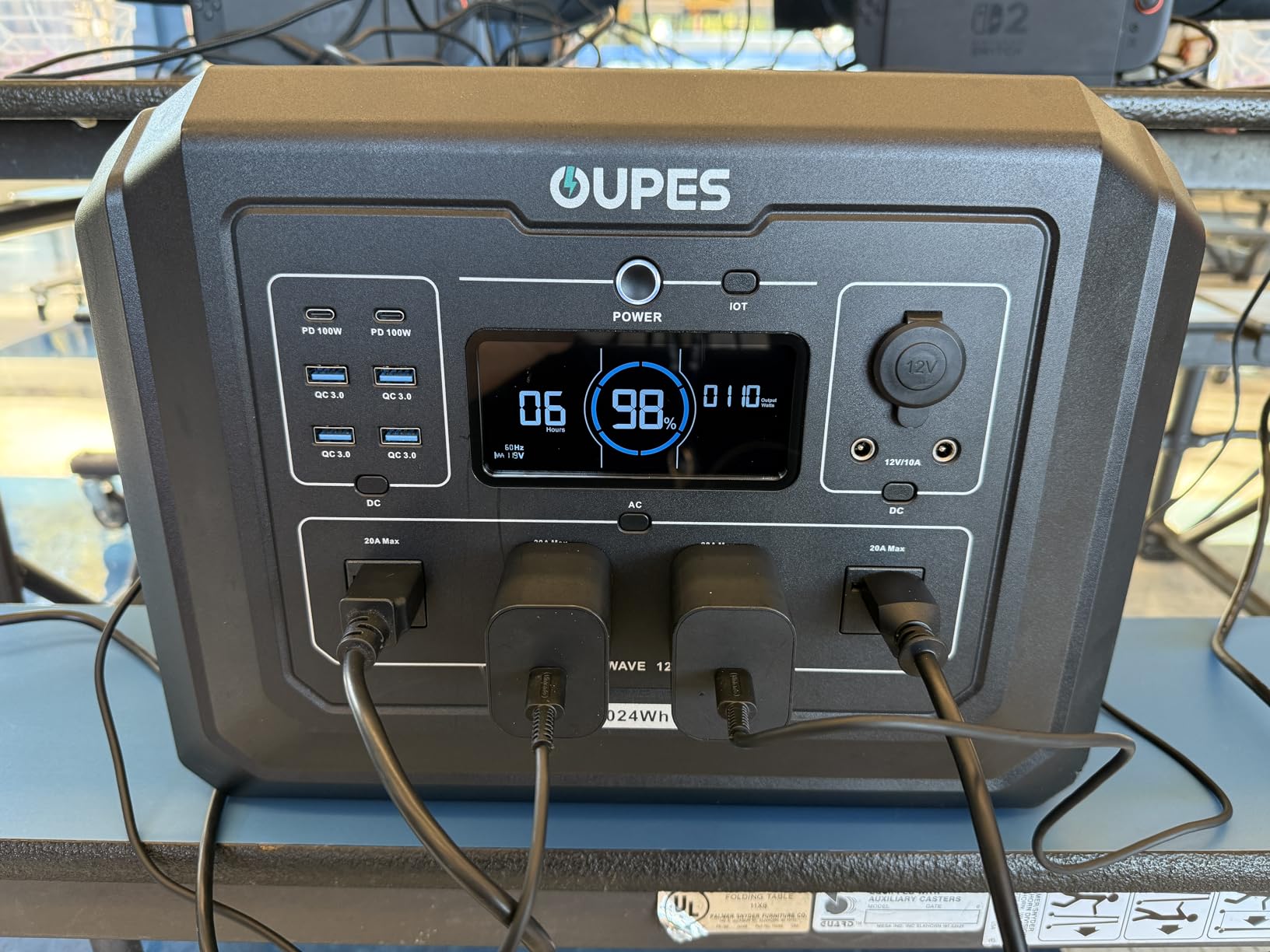
Charging is class-leading. It reaches 80 percent from a wall outlet in 36 minutes, and 80 percent in 26 minutes if you combine wall power and solar, with an 800W MPPT solar input. Two 100W USB-C ports, four USB-A ports, a 12V DC output, and pass-through charging round out a genuinely flexible port layout.
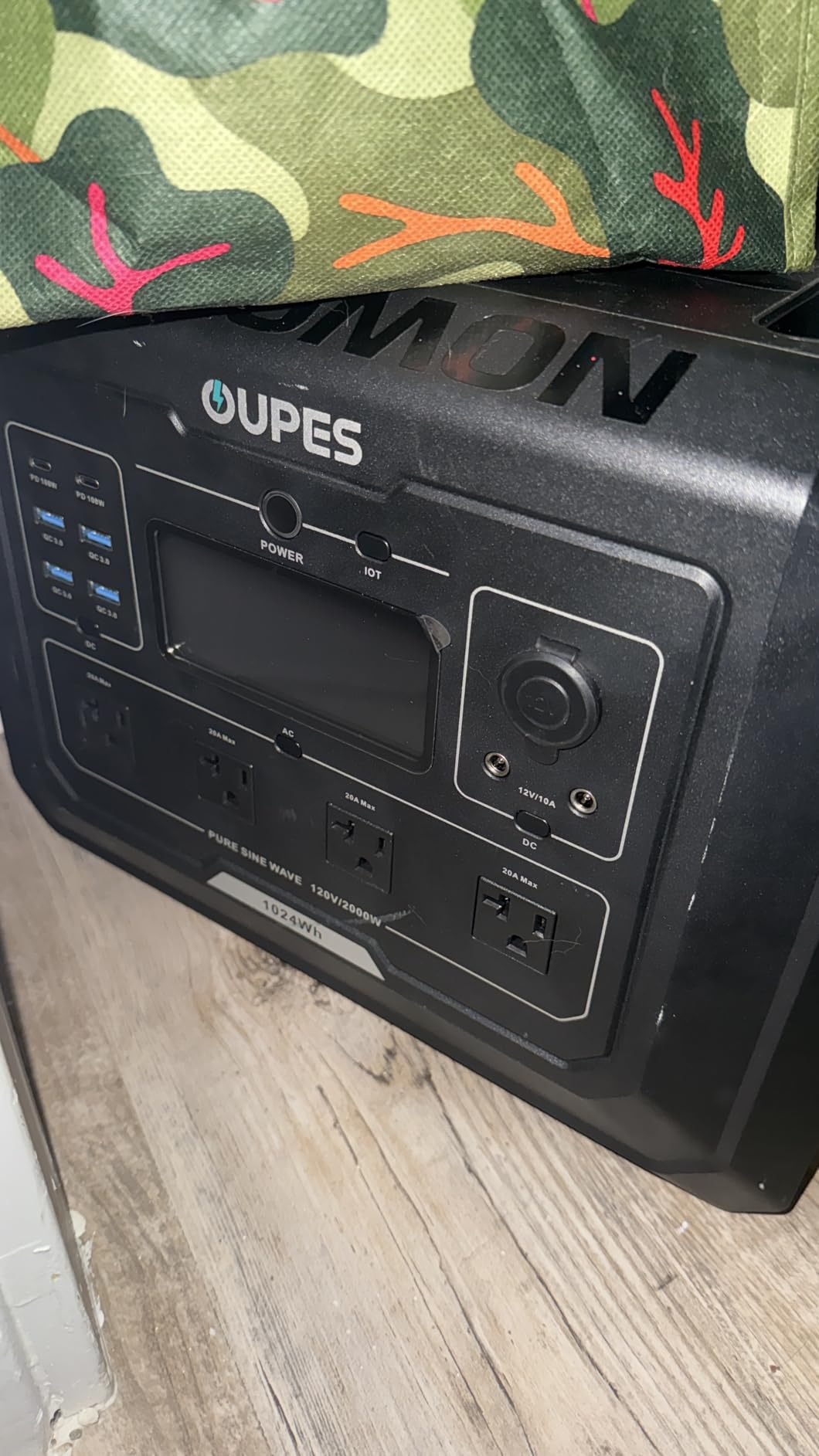
Reviewers report it running a fridge, a coffee maker, and power tools on the same session, which tells you the 2000W continuous figure is real and not a marketing peak. Customer support is repeatedly called out as responsive, with replacements issued and price matching honoured, which matters when you are committing to a multi-battery ecosystem.
There is a specification gap worth naming. The listing advertises 4500W of surge, and owners measuring it in practice report closer to 2050W to 2200W, so treat the surge figure with suspicion and size on the 2000W continuous number. The charging cable is proprietary and hard to replace, the app works over Bluetooth but WiFi connectivity is reported as unreliable, and the fan is aggressive under heavy load.
Is 5.1kWh realistic in an apartment?
The combined weight of the Mega 1 and two B2 batteries is the real constraint, and it belongs in one corner rather than moving around. Treat the expansion as a stationary commitment. If your outage profile is one or two days rather than one night, the capacity makes the difference; if it is overnight, you are paying for headroom you will not use.
How do I read the surge number?
Ignore it and use the continuous figure. The 2000W continuous rating is what determines whether a fridge compressor will start, and the honest real-world surge is roughly the same number with a short margin. If a listing quotes a surge figure more than double its continuous output, assume it is a lab condition number and plan around continuous.
9. EF ECOFLOW Delta 3 Classic – Best for Home Office UPS
EF ECOFLOW Portable Power Station Delta 3 Classic, 1024Wh 1800W AC
1024Wh LiFePO4, 1800W AC, 3600W surge, 45 min to 80%
Pros
- Under 10ms UPS switchover
- 45-minute 80 percent charge
- 6 side-flared AC outlets
- Storm Alert in the app
Cons
- 26.7 lbs
- Some dead-on-arrival units reported
- Not compatible with older extra batteries
If you work from your apartment, the Delta 3 Classic is the unit to shortlist, and the reason is the UPS. The switchover is under 10 milliseconds, which means your desktop, monitor, network switch, and any NAS you run stay up through an outage without a single process crashing. Buyers report exactly this, including one owner whose sump pump ran more than two days on battery through repeated short outages.
The 45-minute 0-to-80-percent wall charge is fast for this class, and the app includes Storm Alert, which pushes a notification when severe weather is forecast in your area. That is a small piece of software that directly addresses the apartment use case, because it is your prompt to charge before the outage rather than during it.
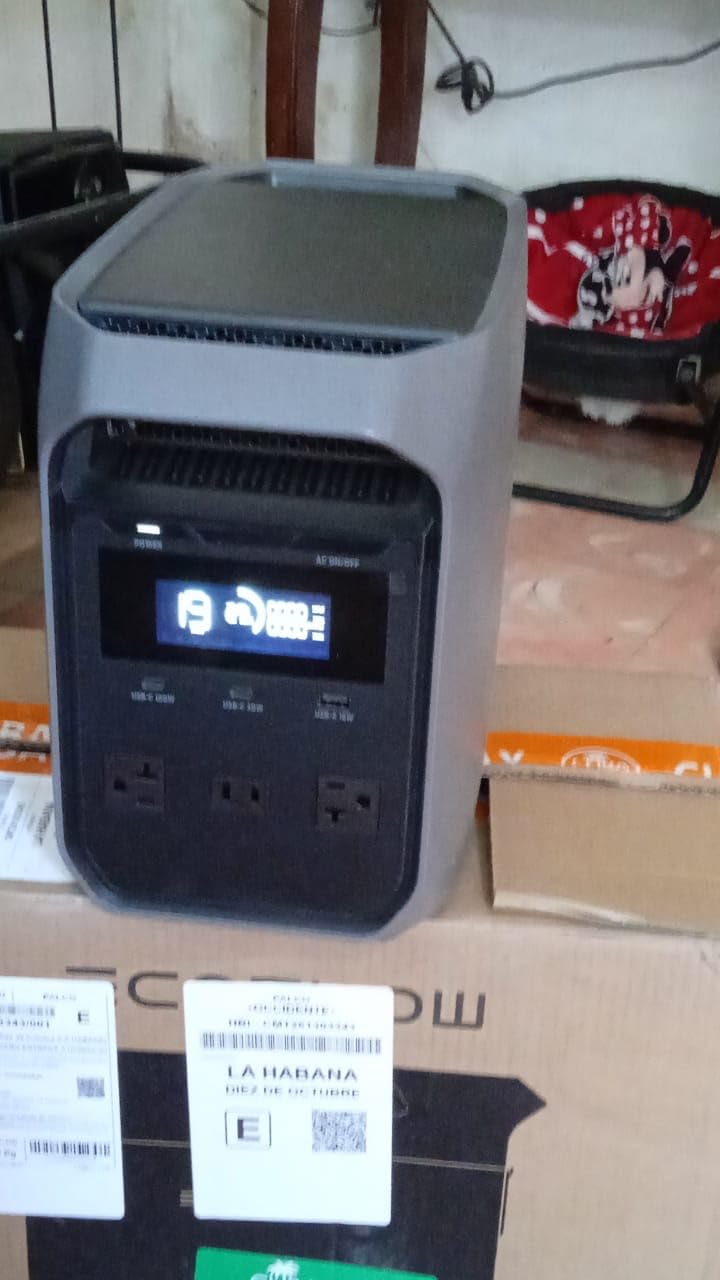
The physical design details are unusually well judged. Six AC outlets are side-flared so bulky laptop bricks actually fit, the handles are positioned for a real two-handed carry, and the included cable and foam are better quality than the norm. Bluetooth pairing is reported as flawless, which is not something you can say for every competitor here.
What to watch: at 26.7 pounds it is not a portable unit, and there is a reported cluster of defective units that would not power on out of the box, so buy direct rather than through a third-party marketplace. It is also not compatible with the extra batteries from the older Delta 2 and Delta 3 lines, which limits expansion to what ships with the current platform.
Why does the UPS switchover time matter for a home office?
Because anything slower than about 20 milliseconds and a desktop power supply will treat the dip as a power event and trigger a safe shutdown. Under 10 milliseconds, the outage is invisible to the machine. That means your unsaved work, your video call, and your file transfers survive, which is the difference between a battery backup and an actual uninterruptible power supply for a home setup.
Is 1024Wh enough for a workday?
For a laptop, a monitor, a router, and a couple of lights drawing around 300W combined, roughly 3 hours. For a more power-hungry desktop setup drawing 500W, closer to 1.8 hours. It covers a workday, not a workday plus an evening, and topping it up at lunch from a wall outlet doubles that if the power is back on intermittently.
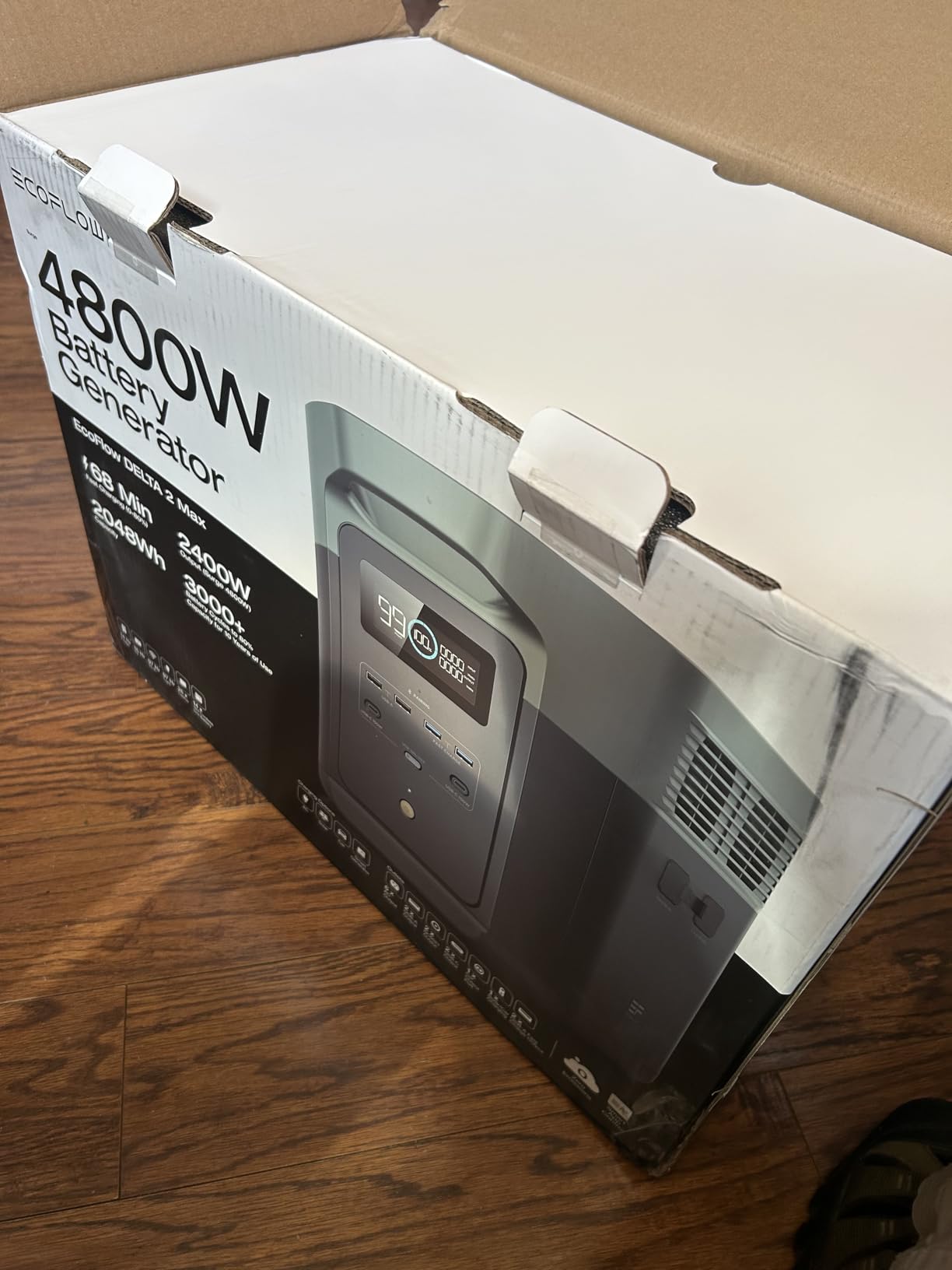
10. EF ECOFLOW DELTA 2 Max – Best for Long Outages
EF ECOFLOW Portable Power Station DELTA 2 Max 2048Wh, 2400W LiFePO4 Battery
2048Wh LiFePO4, 2400W AC, 4800W surge, 3000 cycles
Pros
- Largest capacity here
- Expandable to 6kWh
- 30 dB quiet charging
- 3000 cycles to 80 percent
Cons
- Very heavy at 50.7 lbs
- 20 inches tall
- Extra batteries sold separately
The DELTA 2 Max is the only unit here that is not really portable, and for a two-bedroom or three-bedroom apartment that is not a problem, it is the design intent. 2048Wh of LiFePO4 capacity is double anything else in this list, and with two expansion batteries it reaches 6kWh. That is the difference between riding out an evening and riding out a week.
Output is 2400W continuous with 3400W of X-Boost lifting and 4800W surge, so it will start essentially any residential appliance you would realistically want. It reaches 80 percent in 43 minutes when solar and wall power are combined, or about 1.1 hours on wall power alone, and 15 total outlets mean you will not run out of sockets in a busy household.
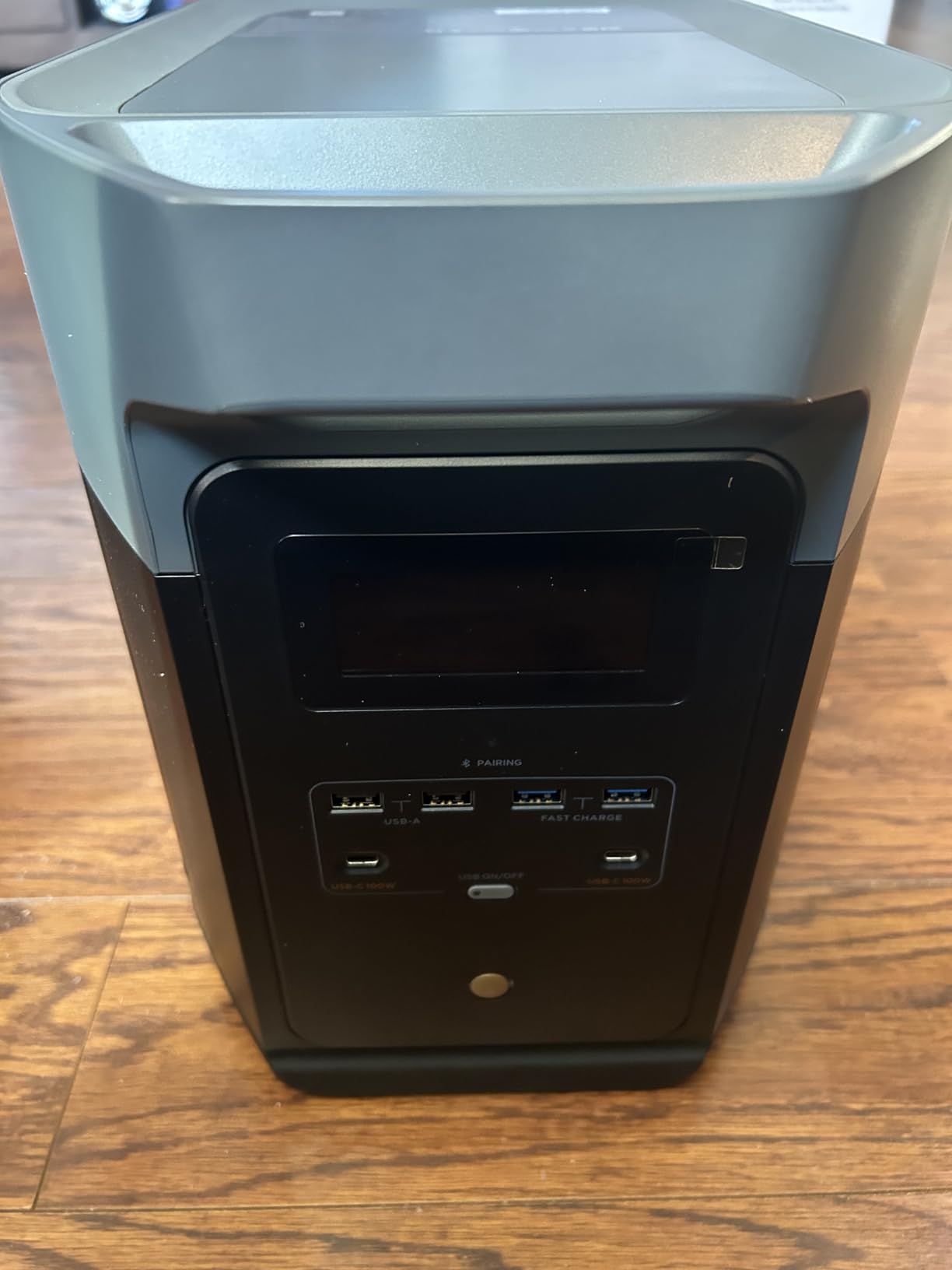
The cycle rating is the standout specification. 3000 full cycles to 80 percent of original capacity is the highest published figure in this guide, and combined with the 5-year extended service coverage it is the best long-term ownership story here. At 30 dB during charging it also stays under a conversational noise level even in a small flat.
The costs are physical and financial. At 50.7 pounds it needs two people or a serious commitment to move, and at 20 inches tall it occupies a full closet or a corner of a hallway. Reviewers also note that despite 15 total outlets, only six are AC, and that the extra batteries are expensive additions rather than included.
How long does 2048Wh really last?
About 1840Wh usable. That is roughly 30 hours for a 60W router and lighting load, 24 hours for a full-size fridge cycling, roughly 8 hours of a 300W home office, and about 40 hours of CPAP. It is the first unit in this list where an overnight outage leaves you with something left the next morning, and that is the entire argument for its size.
Can it live in a small apartment?
Yes, if you give it a permanent home. At 12.2 by 9.7 by 20 inches it needs a corner with airflow and a path to the door wide enough to move it, which rules out a sixth-floor walkup without help and rules out most hall cabinets. Treat it as a small appliance rather than luggage, and everything else follows.
How to Size a Battery Generator for Your Apartment
Start with a load list, not a shopping list. Write down everything you would plug in during a four-hour outage, find the running watts on each label, and separate them into two columns: must-have and nice-to-have. Sum the must-have column. That number is your floor for continuous output, and the Wh figure you need is roughly the sum of watts multiplied by the hours you want to cover.
Add surge headroom for anything with a compressor. A refrigerator, a mini fridge, an air conditioner, and a water pump all draw a large spike at startup, so a unit that can only just handle the steady-state draw will trip when the motor kicks in. Anything with a motor wants at least double its running watts in available surge, and in practice that means choosing a 1000W continuous class rather than a 500W class if a fridge is on your must-have list.
Prefer LiFePO4 over NMC. Every unit in this guide uses lithium iron phosphate, which is more stable thermally, tolerates deeper discharge, and delivers 3000 to 4000 cycles to 80 percent capacity. A lead-acid or NMC pack in the same use case typically manages a fraction of that, which is the difference between a decade of ownership and a replacement.
Treat the UPS as a headline feature if you work from home. Switchover under 20 milliseconds keeps a desktop from performing a safe shutdown, and under 10 milliseconds keeps network gear and NAS units completely unaware the power moved. If your apartment is mostly a place you sleep, UPS matters less than capacity.
Check the noise and the neighbours. Battery units are effectively silent under load, and the 30 dB quiet modes on the Jackery, BLUETTI Elite 100 V2, and DELTA 2 Max sit below typical conversation. The one recurring complaint across reviews is fan noise during fast charging, so if your unit lives near a bedroom wall, charge it during the day rather than overnight.
Account for the weight and the stairs before you commit. Everything from 23 pounds upward is a two-hand carry, and the AC180 at 37.4 pounds and the DELTA 2 Max at 50.7 pounds are genuinely difficult above the third floor. For walkups, the RIVER 2 at 7.7 pounds and the ALLWEI at 13 pounds are the realistic options, and they pair well with a wall-outlet recharge during the day.
Finally, check the lease, the HOA rules, and the fire code. A sealed battery appliance is a very different proposition from a fuel-burning engine, and most buildings treat it as ordinary consumer electronics, but you should confirm that in writing before you buy. Renter’s insurance and your building’s fire officer are both worth a phone call, and the answer takes five minutes.
Pre-Outage Prep and Maintenance Checklist
Yes, you can leave a portable power station plugged into a wall outlet. Modern units use a charging management system that holds the battery at full without overcharging it, and the long-term storage recommendation from most manufacturers is to keep it around 50 to 60 percent rather than pinned at 100 percent. The practical routine is to top it up once a month, which takes an hour on the fast-charge modes and keeps the cells balanced.
Run this list the day before any forecast severe weather:
Charge to full on AC, and confirm the app shows 100 percent rather than 99 percent that never quite arrives.
Turn the unit on with the inverter enabled and check that the UPS mode is armed in the app.
Do one full discharge-and-recharge cycle if the unit has been sitting untouched for more than two months, so the capacity reading is honest.
Check your load list against the actual labels on each appliance, and confirm the biggest one is under the continuous output.
Confirm your panel or cable is reachable and undamaged, and that any balcony panel is unshaded and tilted toward the sun rather than lying flat.
Install any pending firmware update while the unit is on wall power, not while you are relying on it.
Clear the path to wherever the unit lives, and put the power cables where you will not trip over them in the dark.
Charge a power bank separately, because a phone battery is the one device you cannot afford to lose.
Monthly, spend five minutes: check the charge level, look for firmware updates, and wipe the dust off the vents. That is genuinely the whole maintenance schedule, and it is the biggest practical difference from a gas generator, which wants oil changes, fuel stabilisation, and a carburetor cleaned every few seasons.
What a Battery Generator Cannot Do
It cannot heat your apartment. There is no battery-powered space heater that puts out 1500 watts for hours, and any resistive heat you plug in will flatten a 1kWh pack in an hour. In a building with central heating that stops, you are solving warmth with blankets and layers, not with a power station.
It cannot run everything at once. A 2048Wh unit covers a fridge, a router, and lighting for a day, but it is not a replacement for a full apartment’s electrical load. Electric ovens, dishwashers, washing machines, and air conditioners each need more continuous power than most of these units deliver, and running them even briefly can empty the battery faster than you expect.
It is not truly maintenance free. The cells age, capacity drops a few percent per year, and the internal pack on all ten of these units is generally not user-replaceable, so a pack that fails in year eight is usually a repair rather than a battery swap. Budget for a replacement unit in year eight to ten, and check the cycle rating to see how far out that falls.
It is heavy, and weight compounds. A 50.7 pound unit that lives in a corner is fine, and the same 50.7 pounds up five flights of stairs every time an outage warning lands is not. This is the single most underrated drawback, and it is the reason the small-unit options exist.
Frequently Asked Questions
What is the best portable generator for an apartment power outage?
The Jackery Explorer 1000 v2 is the best all-round choice, with 1070Wh of capacity, 1500W continuous output, front-facing AC outlets, and a 23.8 pound weight that is still manageable on stairs. For a studio or a CPAP-only load, the lighter RIVER 2 or ALLWEI cover the essentials. For outages longer than a day, the DELTA 2 Max at 2048Wh is the smallest step up that genuinely changes the runtime math.
Is there a generator that can be used in an apartment?
Only a battery generator, not a gas generator. Combustion engines produce carbon monoxide and are prohibited indoors, on balconies, and in common areas by most leases and local fire codes, and they are far too loud for shared walls. A LiFePO4 portable power station produces no fumes, runs near silently, and is safe to operate inside a rental unit.
Are battery operated generators any good?
Yes, for a specific and useful range of loads: routers, phones, laptops, monitors, lighting, CPAP machines, mini fridges, and full-size fridges if the unit is in the 1000Wh or higher class. They are silent, zero-emission, low maintenance, and recharge from a wall, a car socket, or solar. They are not a replacement for heat, electric cooking, or heavy laundry appliances during a multi-day outage.
Are portable power stations safe to use indoors?
Yes. A portable power station is a sealed lithium iron phosphate battery with an inverter and no combustion, so it produces no carbon monoxide and no exhaust. Keep it on a hard, non-carpeted surface with airflow around the vents, do not block the cooling fan, and never leave a gas generator running indoors under any circumstance.
Can I leave my portable power station plugged in all the time?
Yes, the charging management system will hold it at full without overcharging. For long-term storage most manufacturers recommend keeping it between 50 and 60 percent rather than pinned at 100 percent, so a monthly top-up is the sensible routine. Install firmware updates while the unit is on wall power so that fast-charge modes behave as specified.
What are the disadvantages of a portable power station?
The main drawbacks are weight, runtime limits, and cell ageing. Units above 23 pounds are a two-hand carry that becomes a real problem above the third floor. Capacity runs out faster than people expect once a fridge and a home office are both running, and the internal battery pack is generally not user-replaceable, so expect a replacement unit in year eight to ten rather than a battery swap.
Final Verdict
The best battery generators for apartments in 2026 come down to one honest question: how long is the outage, and how many flights of stairs are between you and the unit. For most one-bedroom apartments, the Jackery Explorer 1000 v2 is the right buy, with 1070Wh, 1500W continuous, and enough portability to actually move when you need to. Studios and CPAP-only households should go smaller and lighter with the RIVER 2 or the ALLWEI.
Work from home and you want UPS behaviour, so look at the Delta 3 Classic or the Anker SOLIX C1000 Gen 2. Outages that run past a day, or a household that wants real headroom, justify the DELTA 2 Max. Start with a load list, check your lease, and buy the smallest unit that covers your must-have column.