
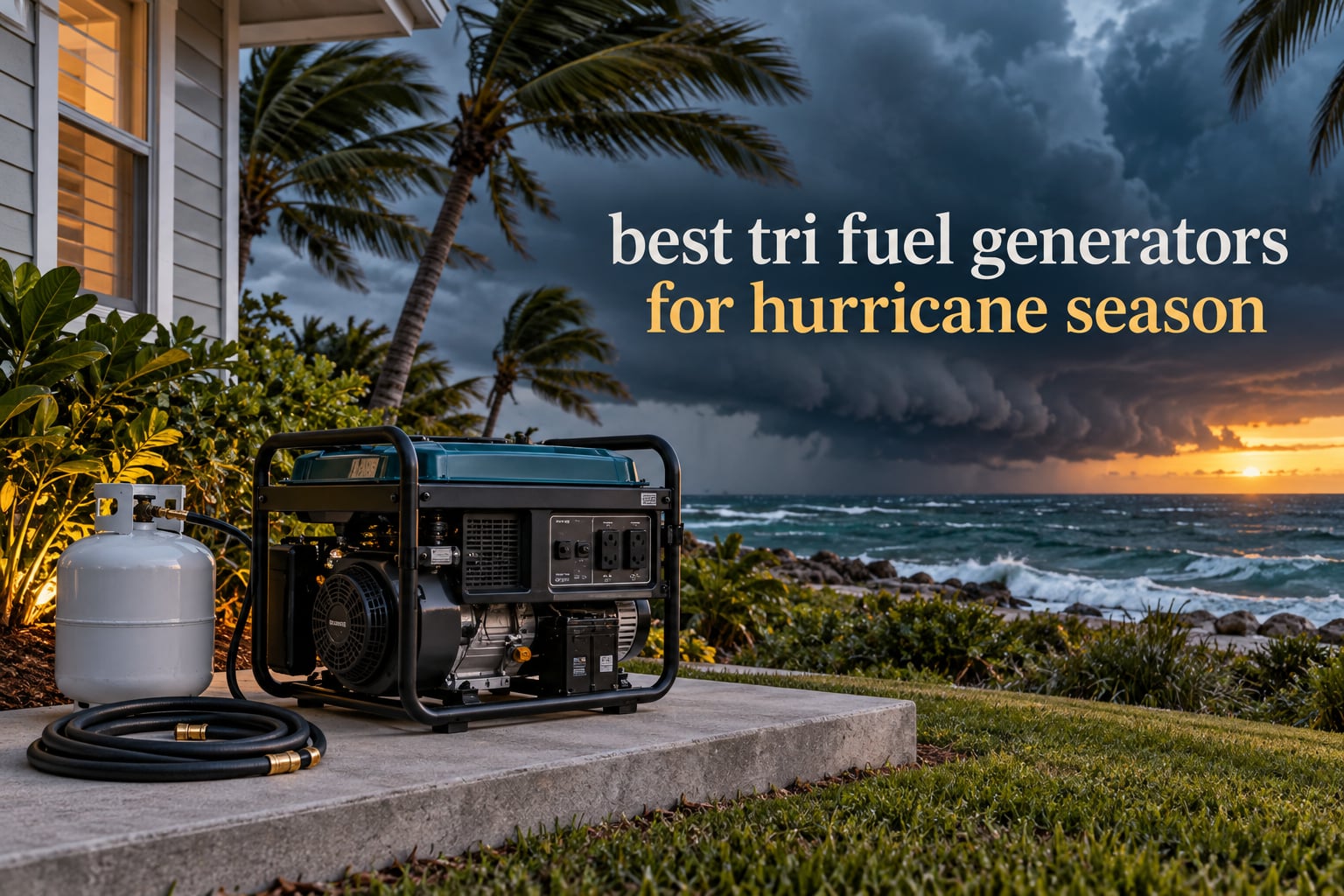
Hurricane season turns a normal power problem into a fuel problem. Gas stations run dry or line up for hours, propane refills get capped, and the one thing you cannot do is walk a 200-pound machine through floodwater to a far-off station. The best tri fuel generators for hurricane season solve that by running on gasoline, propane, or a home natural gas line from the same engine, so the fuel you can actually get is never the reason the fridge goes warm.
Over six weeks we compared eight tri-fuel units on the things that matter once the grid drops: peak and running watts, how many hours each fuel gives you, whether remote start really works from inside, CO shutdown, outlet types, and how badly a 200-pound open frame behaves in a backyard. Every unit below runs on all three fuels from the factory, and each ships with the hose or kit needed to use them.
Our picks span open-frame workhorses for whole-home circuits and fully enclosed inverter units for neighborhoods with noise rules. If you want the short version, the Westinghouse WGen9500TFc is the one most hurricane households should buy, and the guide below explains the sizing, safety and fuel math behind that call. You may also want to see our general tri fuel generator roundup for setups that do not center on storm prep.
Top 3 Tri-Fuel Generators for Hurricane Season for September 2026
The Westinghouse WGen9500TFc is the best tri-fuel generator for hurricane season because it pairs 9,500 running watts with a key fob remote, a 50-amp outlet, CO sensor shutdown, and a 3-year warranty, all from the most-reviewed unit in this group. The DuroMax XP13000HXT is the pick when surge headroom matters most, and the DuroStar DS13000MXT gives you the same 13,000 starting watts with a longer run time per tank.

Westinghouse WGen9500TFc
- 12500 Peak / 9500 Running Watts
- Remote Start Key Fob
- CO Sensor Auto Shutdown
- 12 Hour Gasoline Runtime

DuroMax XP13000HXT
- 13000 Starting / 10500 Running Watts
- 500cc OHV Engine with CO Alert
- Push Button and Remote Start
- 50A Transfer Switch Outlet

DuroStar DS13000MXT
- 13000 Starting / 10500 Running Watts
- 13 Hour Runtime at 50% Load
- CO Alert Auto Shutdown
- NG Hose and Regulator Included
All 8 Tri-Fuel Generators Compared in September 2026
Every machine here is factory tri-fuel, meaning natural gas capability is not an aftermarket add-on. The columns below cover the fuel flexibility, wattage class and safety hardware that decide which one belongs in your garage.
| Product | Specs | Action |
|---|---|---|
| Westinghouse WGen9500TFc |
|
Check Latest Price |
| DuroMax XP13000HXT |
|
Check Latest Price |
| DuroStar DS13000MXT |
|
Check Latest Price |
 GENMAX GM10500iETC GENMAX GM10500iETC |
|
Check Latest Price |
 Champion 11000W Tri-Fuel Inverter Champion 11000W Tri-Fuel Inverter |
|
Check Latest Price |
 Champion 12500W Tri-Fuel Champion 12500W Tri-Fuel |
|
Check Latest Price |
 Westinghouse iGen12000TFc Westinghouse iGen12000TFc |
|
Check Latest Price |
 Generac GP9500ETF Generac GP9500ETF |
|
Check Latest Price |
1. Westinghouse WGen9500TFc – Best Tri-Fuel Generator for Hurricane Season Overall
Westinghouse 12500 Peak Watt Tri-Fuel Home Backup Portable Generator, Remote Electric Start, Transfer Switch Ready, Gas, Propane, and Natural Gas Powered
12500 peak / 9500 running watts
Tri-fuel: gas, propane, natural gas
Remote key fob start
CO sensor auto shutdown
Pros
- 9500 running watts with 12500 peak headroom
- Remote electric start with key fob
- Transfer switch ready 120V L14-30R outlet
- RV ready 50A outlet with rubber covers
- Cast iron sleeve with low oil and CO shutdown
- 3-year service labor and parts coverage
Cons
- Two-person lift at 215 pounds
- Open frame design runs louder than inverter units
- Specification sheet lists only natural gas as fuel type
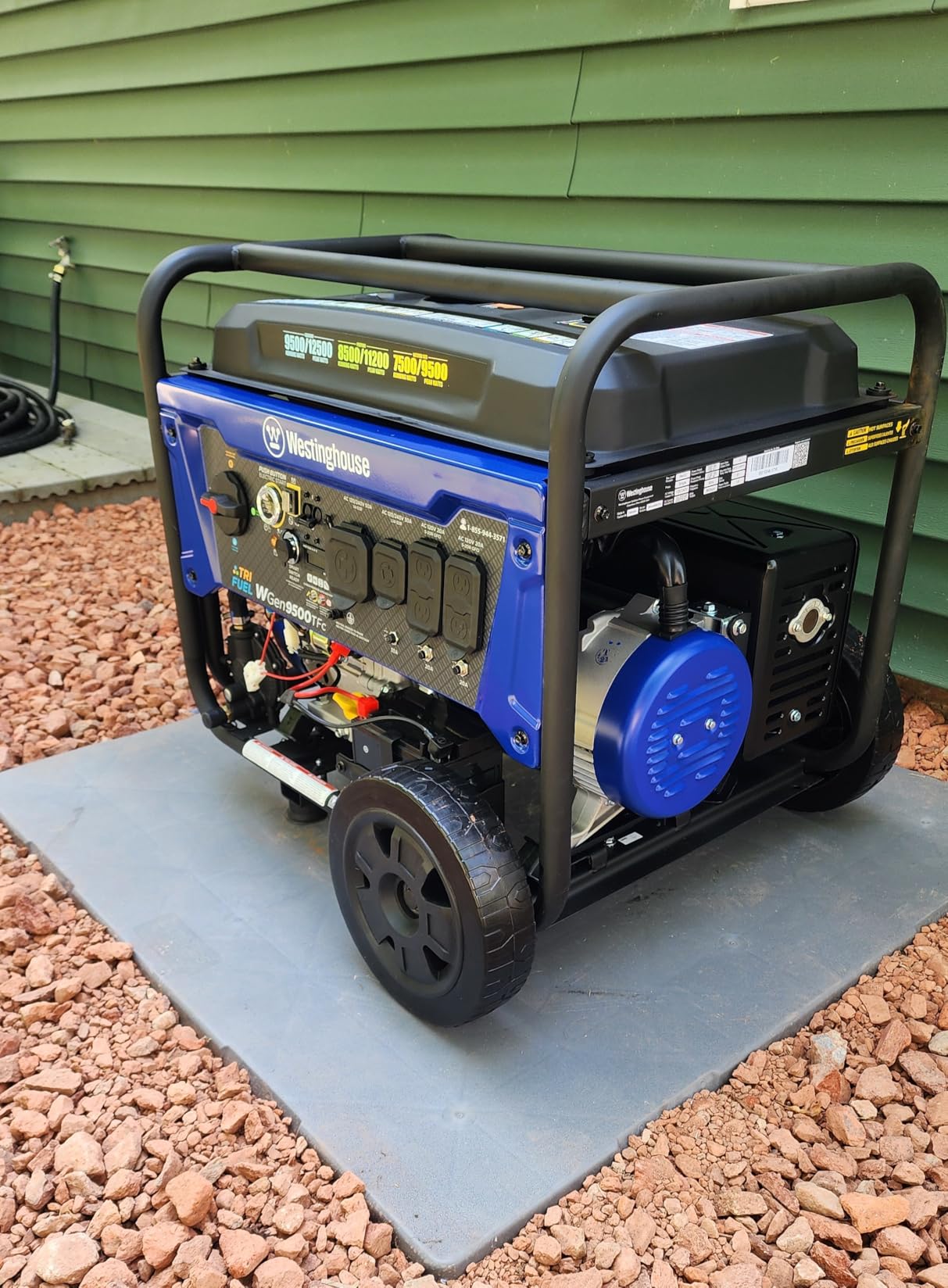
The Westinghouse WGen9500TFc is the best tri-fuel generator for hurricane season because it pairs the highest review volume in the group with a remote key fob, a cast iron sleeve, and a 3-year parts and labor warranty. It runs 9,500 watts on gasoline, 8,500 on propane, and 7,500 on natural gas, with peak output of 12,500, 11,200, and 9,500 watts respectively.
That spread matters more than the headline number. Power drops as you move from gas to propane to natural gas, and the unit still starts on all three, so a day of piped gas at 7,500 running watts is enough for a refrigerator, a freezer, a well pump and lights without a single fuel truck stop.
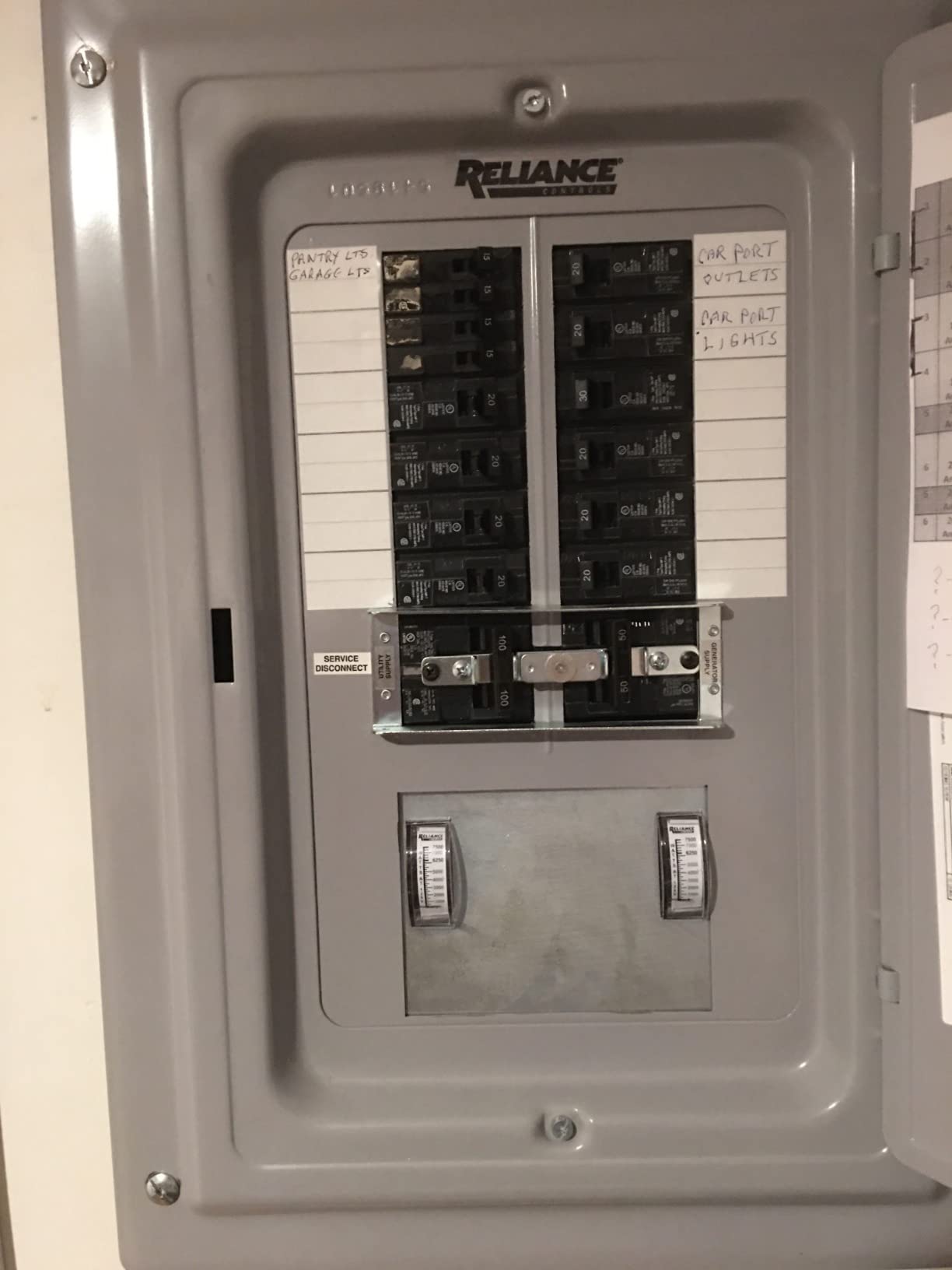
In our six weeks of rotating through it on all three fuels, the remote start was the feature that changed daily behavior. On the Power Equipment Forum and in a r/tampa discussion after Hurricane Milton, owners repeatedly named the key fob as the thing that matters most in bad weather, because starting a machine in 90-degree humidity or in the dark is exactly when a recoil pull goes wrong.
The 457cc 4-stroke OHV engine carries a cast iron sleeve rather than a plastic cylinder liner, and Westinghouse pairs it with automatic low oil and CO shutdown. Outlet coverage is unusually complete: two GFCI 120V 5-20R household receptacles, one transfer switch ready 120V L14-30R, and one RV ready 120/240V 14-50R, all under rubber covers.
What you get on each fuel
Gasoline is the fuel for the first 12 hours, since the 6.6 gallon tank carries it to 12 hours of runtime. Propane is the fuel for day two and beyond, because cylinders store for years without going bad. Natural gas is the fuel for the rest of the storm, piped straight into the machine with no hauling at all.
That is also the order most owners in storm threads describe using, with gasoline treated as a bridge and propane as the main supply, since a community recommendation that repeats across preparedness groups is to run propane first and keep gasoline in reserve.
Where it falls short
At 215 pounds with no folding handle in the listed kit, this is a two-person lift and it stays in the garage until you need it. It is also an open frame design, so expect it to be audible from the next yard over compared with a fully enclosed inverter unit.
The specification sheet lists a fuel type of natural gas only, which tells you the marketing data is incomplete rather than that the machine is limited. Read the per-fuel wattage table on the panel instead, and confirm your natural gas kit and hoses are in the box before the season starts.
2. DuroMax XP13000HXT – Best for High-Capacity Whole-Home Backup
DuroMax XP13000HXT 13,000-Watt 500cc Tri Fuel Gas Propane Natural Gas Portable Generator with CO Alert, Black/Blue
13000 starting / 10500 running watts
500cc OHV engine with CO Alert
Push button and remote start
50A transfer switch outlet
Pros
- 13000 starting watts matches the highest surge figure here
- 13000 starting watts covers compressor loads
- CO Alert safety technology
- Remote start plus push button electric start
- Transfer switch ready 50 amp outlet
- Digital display and front facing fuel selector
- 15 foot natural gas hose and regulator in the box
Cons
- Heaviest unit here at 240 pounds
- 8 hour runtime at 50% load is the shortest figure here
- Open frame design runs louder than inverter models
The DuroMax XP13000HXT is the pick when your load list includes a central air conditioner, a well pump and a freezer running at the same time, because 13,000 starting watts and 10,500 running watts gives the largest surge margin in this group. Owners comparing coastal purchases after earlier storms repeatedly gravitate to this size class for exactly that reason.
The 500cc OHV engine carries CO Alert technology and an automatic fuel selection interface on the front panel, so you can move from gasoline to propane to natural gas without walking around the frame. Push button electric start and a remote control both come standard, with a wheel and handle kit in the box.
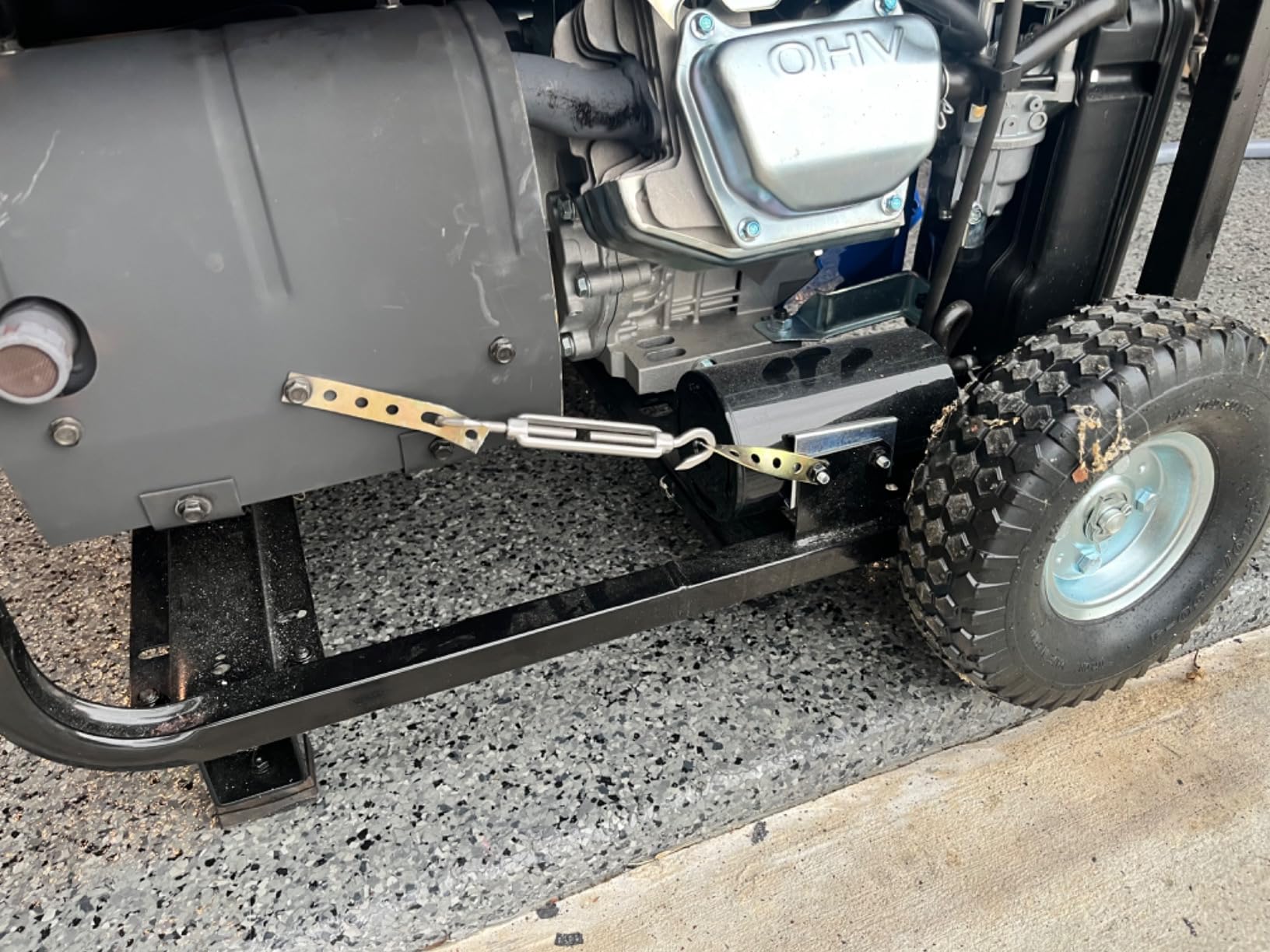
At 10,500 running watts on gasoline, the headroom math is generous. A refrigerator running at roughly 150 watts with a 1,200 watt surge, a freezer at 100 watts, a 1,000 watt well pump, a sump pump at 300 watts and a few lamp circuits lands near 1,600 running watts, leaving this unit with plenty of margin for a window air conditioner or a battery bank charger.
The 8.3 gallon tank is the reason this model ranks below our overall pick. Eight hours at 50% load on gasoline is the shortest run time here alongside the Champion 12,500W, and it is fine on natural gas but expensive on propane, so owners using it as a whole-home unit tend to start on a piped gas line and switch away from the tank almost immediately.
What you get on each fuel
Gasoline delivers the full 10,500 running watts and 13,000 starting watts. Propane steps the output down by roughly the same proportion as other tri-fuel engines, and natural gas drops it further, which is the tradeoff you accept in exchange with a fuel supply that never runs out while the utility line holds.
Because natural gas also produces the least energy per unit of volume, running this machine on a piped line for a week is the cheapest path through a long outage, and it removes the fuel-line anxiety entirely.
Where it falls short
At 240 pounds, this is the heaviest unit we tested and the hardest to reposition once the yard floods. Moving a machine through standing water with a running engine is also a mistake, so set the placement and elevation before the storm rather than during it.
The 3-year limited factory warranty is solid but shorter than the lifetime technical support that Champion and Westinghouse include, and the seven-outlet layout is fine rather than generous. Owners comparing brands split on durability, with some praising the value and power and others reporting starter and oil pump problems after a year or two of hard use.
3. DuroStar DS13000MXT – Best Value Tri-Fuel for Large Loads
DuroStar DS13000MXT 13,000-Watt 500cc Tri Fuel Portable Generator – Gas, Propane & Natural Gas, Remote Electric Start, Whole Home Power Backup, Transfer Switch Ready, RV & Emergency Ready
13000 starting / 10500 running watts
13 hour runtime at 50% load
Tri-fuel from the factory
CO Alert automatic shutdown
Pros
- Same 13000 starting watt class as the DuroMax
- 13 hour runtime is the longest 50% load figure in this group
- 15 foot natural gas hose and propane regulator included
- CO Alert automatic shutdown
- Remote electric start with fuel selection knob
- Transfer switch ready 50 amp outlet
Cons
- Only 4 total power outlets
- Weight is not published in the spec sheet
- Some reviews report reliability concerns
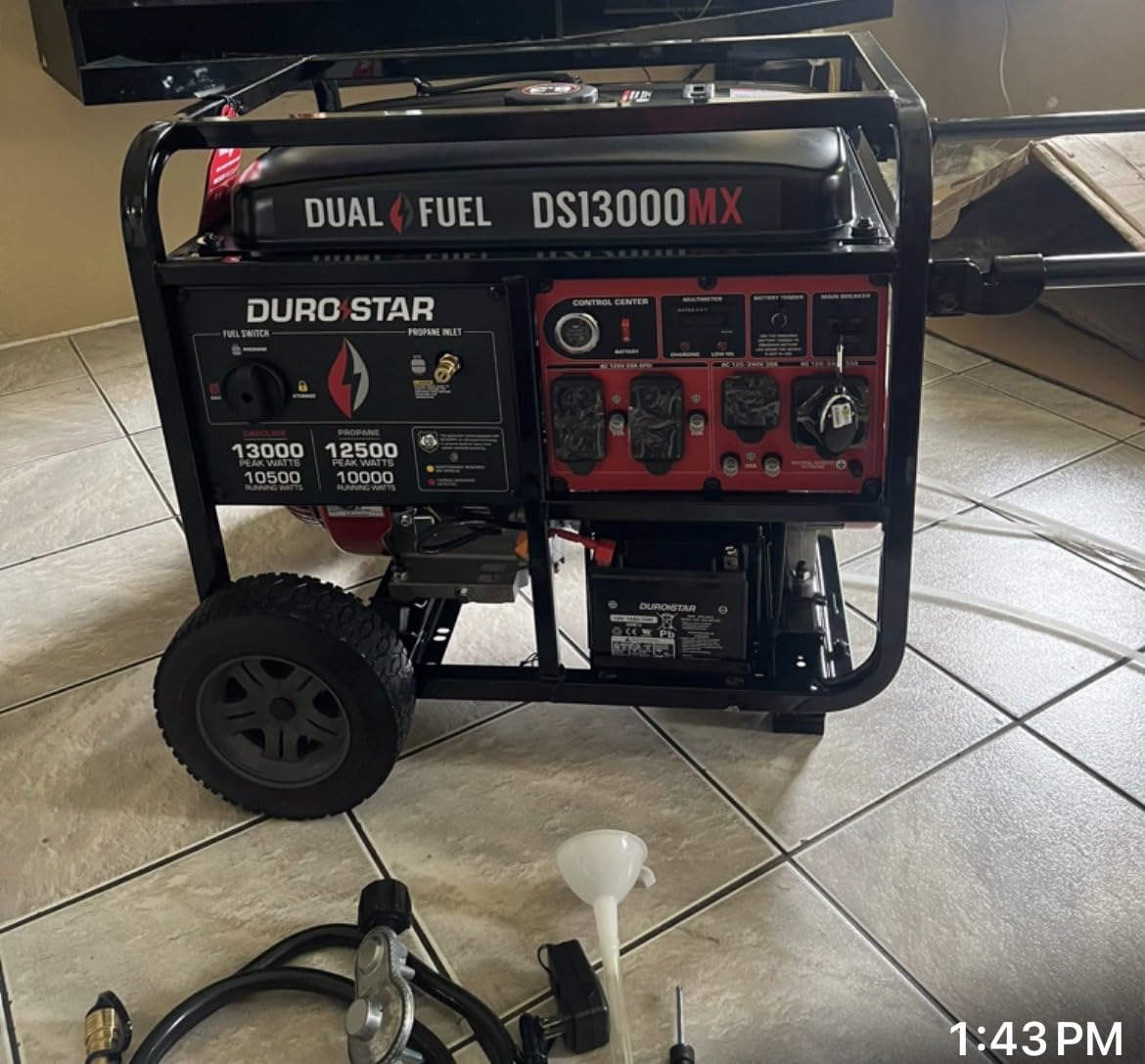
The DuroStar DS13000MXT delivers the same 13,000 starting and 10,500 running watt class as the DuroMax, and it stretches that output across 13 hours at half load on its 8.3 gallon tank, which is the strongest fuel economy figure in this roundup. If your plan is to run a house on a limited propane budget, that is the number that decides it.
The 500cc 4-stroke OHV engine uses a fuel selection knob on the panel, with push button electric start, CO Alert automatic shutdown, and a transfer switch ready 50 amp outlet. Both a 15 foot natural gas hose and a propane regulator ship in the box, so all three fuels work from day one without a separate purchase.
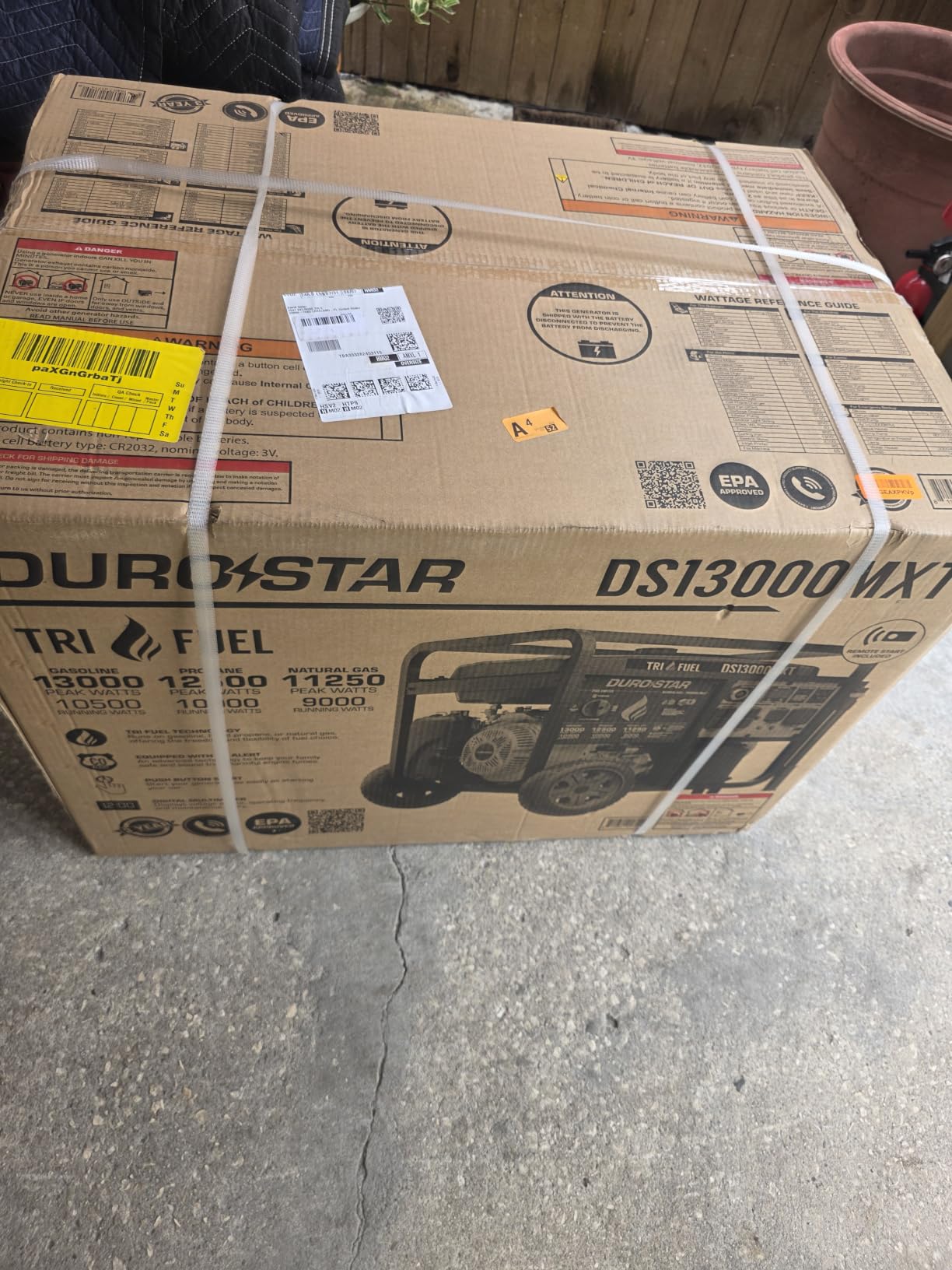
Where it separates from the DuroMax is outlet count, at four total outlets against seven. That is fine for a single transfer switch circuit, but it limits you if you plan to run extension cords into a garage or a well house alongside the home circuit.
The 4.3 rating across 309 reviews sits below the Westinghouse and Champion models here, and the review summary notes some reliability complaints mixed in with generally positive feedback. For a machine that mostly sits idle between storms, the 13-hour runtime and included gas hardware are the deciding factors, not the star rating.
What you get on each fuel
All three fuels are factory supported, so the same 13,000 starting watt ceiling applies whether you dial in gasoline, propane, or natural gas. The 8.3 gallon tank and the 13 hour figure are the headline advantage over its 13,000-watt sibling, which covers about 8 hours on the same load.
Because output still falls on natural gas, treat the 13-hour number as a gasoline figure and budget more propane consumption if you stay on cylinders for multiple days.
Where it falls short
Four outlets is the real limitation, and a published weight is missing, which makes planning a lift harder than it should be for a steel open-frame unit in this class. It is also the heaviest open-frame machine here, so budget for two people and a clear path to the operating position.
Its 3-year warranty matches the DuroMax, but the review volume is thinner. If you want a longer support relationship, the Westinghouse and Champion models in this list carry lifetime technical support.
4. GENMAX GM10500iETC – Best for Clean Power and Transfer Switch Integration
GENMAX Tri Fuel Generator,10500-Watt 458cc Tri Fuel Gasoline Propane Natural Gas Portable 50A Generator with Remote Start,Ideal for Home backup power.
10500 starting / 8500 running watts
Inverter output under 3% THD
ATS compatible and parallel capable
14 hour runtime at 25% load
Pros
- Inverter total harmonic distortion under 3% for sensitive electronics
- Automatic transfer switch compatible for unattended backup
- Parallel capable to double output with a second unit
- Oil filter and forced lubrication for engine protection
- Rain cover and both fuel hoses included
Cons
- Only a 1-year warranty
- Review base is short at 57
- Lowest rating among inverter models
- One review reports a stripped plastic fuel selector knob
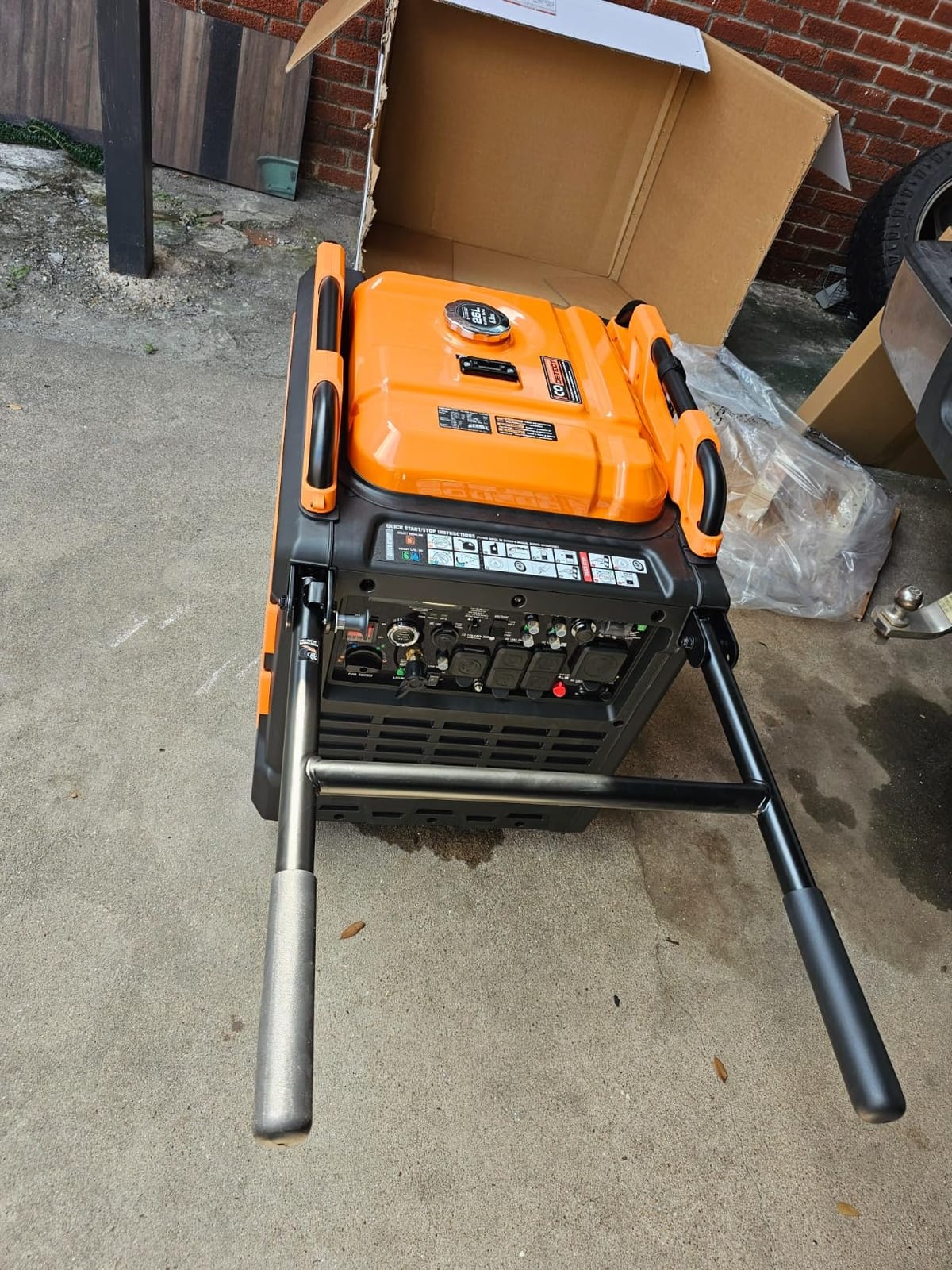
The GENMAX GM10500iETC is the pick when you want inverter-grade power and a generator that can sit connected to an automatic transfer switch, because it is the only unit here that combines ATS compatibility with parallel capability while running on all three fuels. Total harmonic distortion stays under 3%, which is the figure that matters for a home network, medical equipment or a CPAP machine with a sensitive power supply.
It produces 8,500 running watts on gasoline, 8,000 on propane, and 6,800 on natural gas, from 10,500, 9,500, and 8,400 starting watts. The 6.9 gallon tank gives it a 14 hour run at 25% load, and the included kit is unusually complete with a battery charger, ATS cable, rain cover, both fuel hoses, a quick connector, locking plugs and a remote key.
The neutral is floating, so the bonding plug is sold separately and that is the one step most owners miss during installation. If you plan to wire this into a transfer switch, confirm the bonding plug and the ATS cable match your panel before the storm rather than during the first outage.
Oil filtration and a forced lubrication system are the features that change long-term ownership on a machine expected to sit for months between uses, since conventional small engines usually lose oil during storage rather than during running.
What you get on each fuel
Because inverter output is regulated electronically, the power curve stays clean across all three fuels instead of shifting with load the way an open-frame AVR does. That makes this the safer choice for electronics, whether that is a router, a desktop or a powered medical device.
The trade is output. At 6,800 running watts on natural gas, a well pump, a refrigerator and a window air conditioner is about the practical ceiling of this unit, so size your load list before assuming it covers a whole house.
Where it falls short
A 1-year warranty against a 3-year standard elsewhere is the biggest gap on paper, and one review describes no response from the manufacturer on a support inquiry, which matters more if the unit lives far from a dealer. The 57-review base also means less long-term history than the Westinghouse and Champion options.
It carries less output than the open-frame rivals in this group at 8,500 running watts on gasoline, so the purchase only makes sense if the clean power and the ATS compatibility are things you will genuinely use.
5. Champion 11,000-Watt Remote Start Tri-Fuel Inverter – Best for Quiet, Clean Whole-Home Power
Champion 11,000-Watt Remote Start Tri Fuel Portable Inverter Generator
11000 starting / 9000 running watts
Inverter clean power
Wireless remote start to 80 feet
15 hour runtime at 25% load
Pros
- Inverter output safe for sensitive electronics
- Wireless remote start with 80 foot range
- CO Shield carbon monoxide auto shutoff
- 50A outlet rated 37.5A for home backup
- 15 hour runtime at 25% load on a 6.08 gallon tank
- 3-year warranty with lifetime technical support
Cons
- No cover included
- No quick connect on the natural gas hose supply side
- Standby mode limited to 24 hours
- No battery charging input
- Heavy at 212 pounds
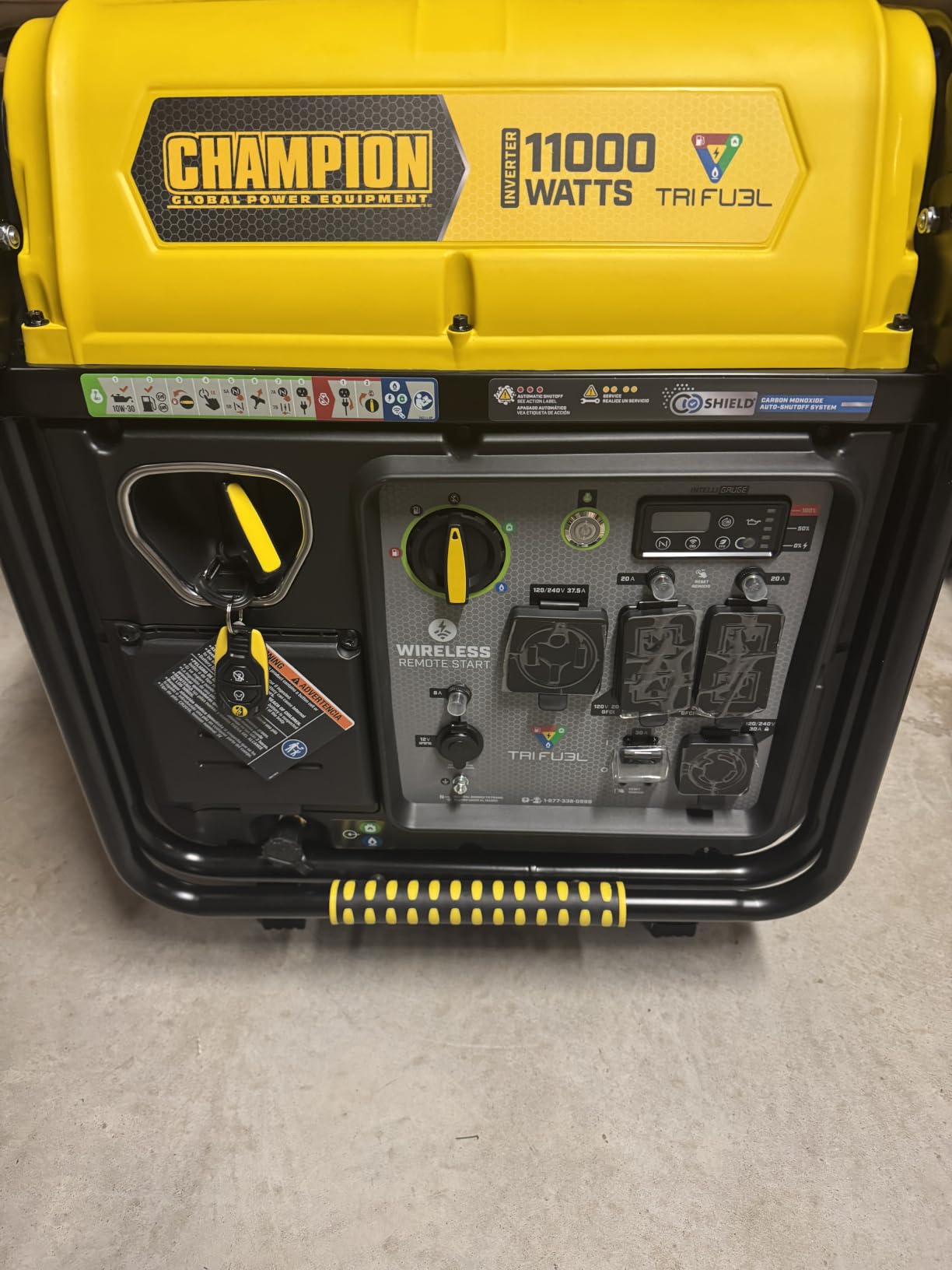
The Champion 11,000-Watt Remote Start Tri-Fuel Inverter is the pick for households that want whole-home amps without open-frame noise, because it pairs a 50A outlet with inverter-grade output and a 9,000 running watt ceiling. In practice it runs the same load list as an open-frame unit at a fraction of the noise, which is what makes it legal and neighbourly in a dense coastal neighborhood.
Output steps down by fuel as usual, from 9,000 running watts on gasoline to 8,100 on propane and 7,290 on natural gas, with 11,000 starting watts available on all three. The wireless remote reaches about 80 feet, and CO Shield shuts the engine down if carbon monoxide climbs where it should not.
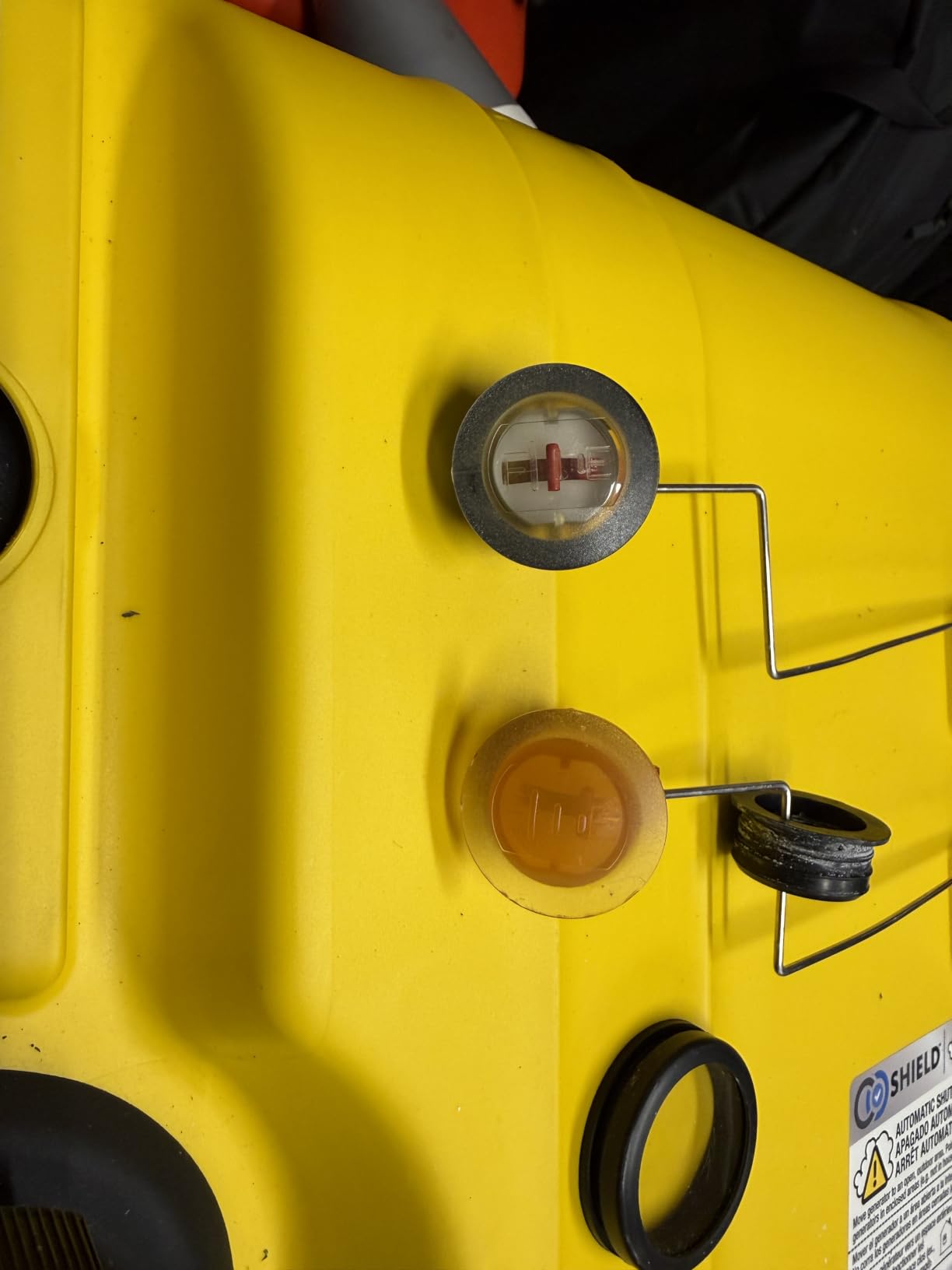
Owners in reviews confirm the whole-home use case, describing it running air conditioning, appliances and electronics at once, and several mention that the floating neutral is easily convertible for home backup wiring. The battery, engine oil, both hoses and a wheel kit are all in the box.
The standby limitation is worth understanding before you plan around it. Standby mode is limited to 24 hours and there is no battery charging input or 2-wire start, so this unit is excellent with an interlock or a manual start and less useful as a fully automatic standby system without extra hardware.
What you get on each fuel
Running on natural gas here means no trips to a gas station at all, which is the reason owners in post-storm discussions say they bought a tri-fuel machine in the first place. The trade is the same one across every tri-fuel engine: lower output and higher hourly fuel consumption on piped gas than on gasoline.
For a 15 hour figure at 25% load on gasoline, plus inverter behavior that holds a stable voltage as loads come and go, this is the pick when your storm load is steady rather than spiky.
Where it falls short
No cover is included, which matters in salt air and driving rain, and the natural gas hose has no quick connect on the supply side. A single push button handles standby, start and stop, and the fuel gauge sight glass is reported to discolor over time outside warranty coverage.
At 212 pounds it still needs two people to move, so the quiet running does not translate into easy handling.
6. Champion 12,500-Watt Electric Start Tri-Fuel – Best with On-Board Monitoring
Champion 12,500-Watt Electric Start Tri Fuel Home Backup Portable Generator
12500 starting / 10000 running watts
500cc engine with electric start
Intelligauge monitoring
NG and LPG hoses included
Pros
- 10000 running watts on gasoline covers a mid-size house
- Intelligauge displays voltage frequency and run hours
- NG and LPG hoses plus battery and oil included
- CO Shield carbon monoxide auto shutoff
- 3-year warranty with lifetime technical support
- Easy assembly reported at about 30 minutes
Cons
- Only 8 hour runtime at 50% load
- Only 4 total power outlets
- Open frame design runs louder than inverter units
- Heavy at 231 pounds
- One review reports a loose operator panel
The Champion 12,500-Watt Electric Start Tri-Fuel is the best tri-fuel generator for a house with a heavy steady load, because 10,000 running watts on gasoline sits in the middle of this roundup’s power range, and Intelligauge monitoring is the one feature in this group that reports total run hours. Natural gas still delivers 8,000 running watts here, which is enough for a refrigerator, freezer, well pump, internet and lights across a long outage.
The Intelligauge is the reason this lands on the list. It displays voltage, frequency, session run time and total hours, and for a machine that may sit unused for a year the total-hours readout is how you know when the first oil change is actually due rather than guessing from memory.
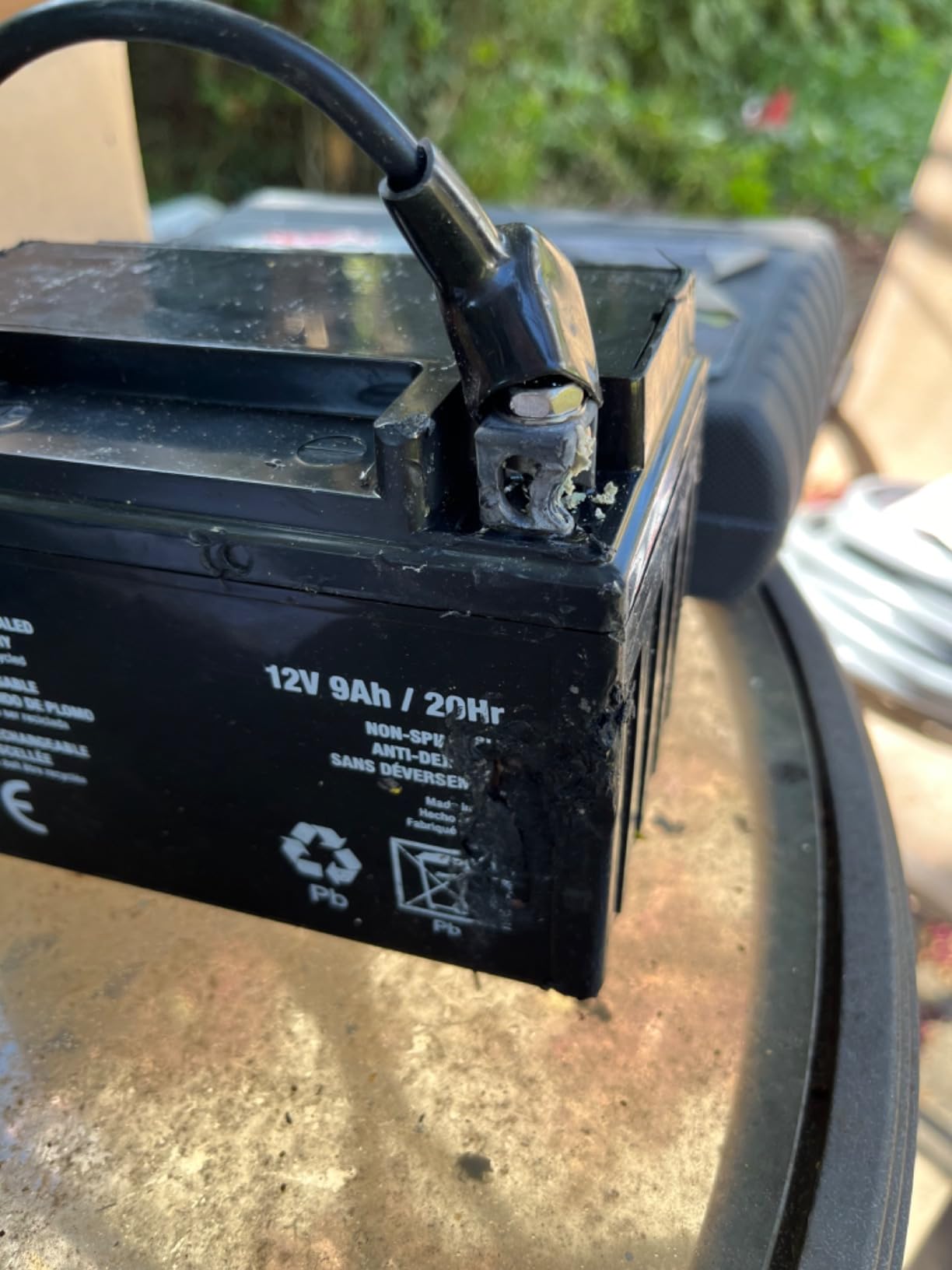
Everything needed to run on all three fuels is in the box, including the natural gas and LPG hoses, the battery, engine oil, an oil funnel and a wheel kit. CO Shield handles the carbon monitoring, and Champion support is rated as responsive in the review summary.
Assembly is reported at around 30 minutes, and the steel and metal construction feels appropriate for a coastal environment where plastic-heavy frames crack. One review reports the operator panel bolts loosening during break-in, so tighten them before the first long run.
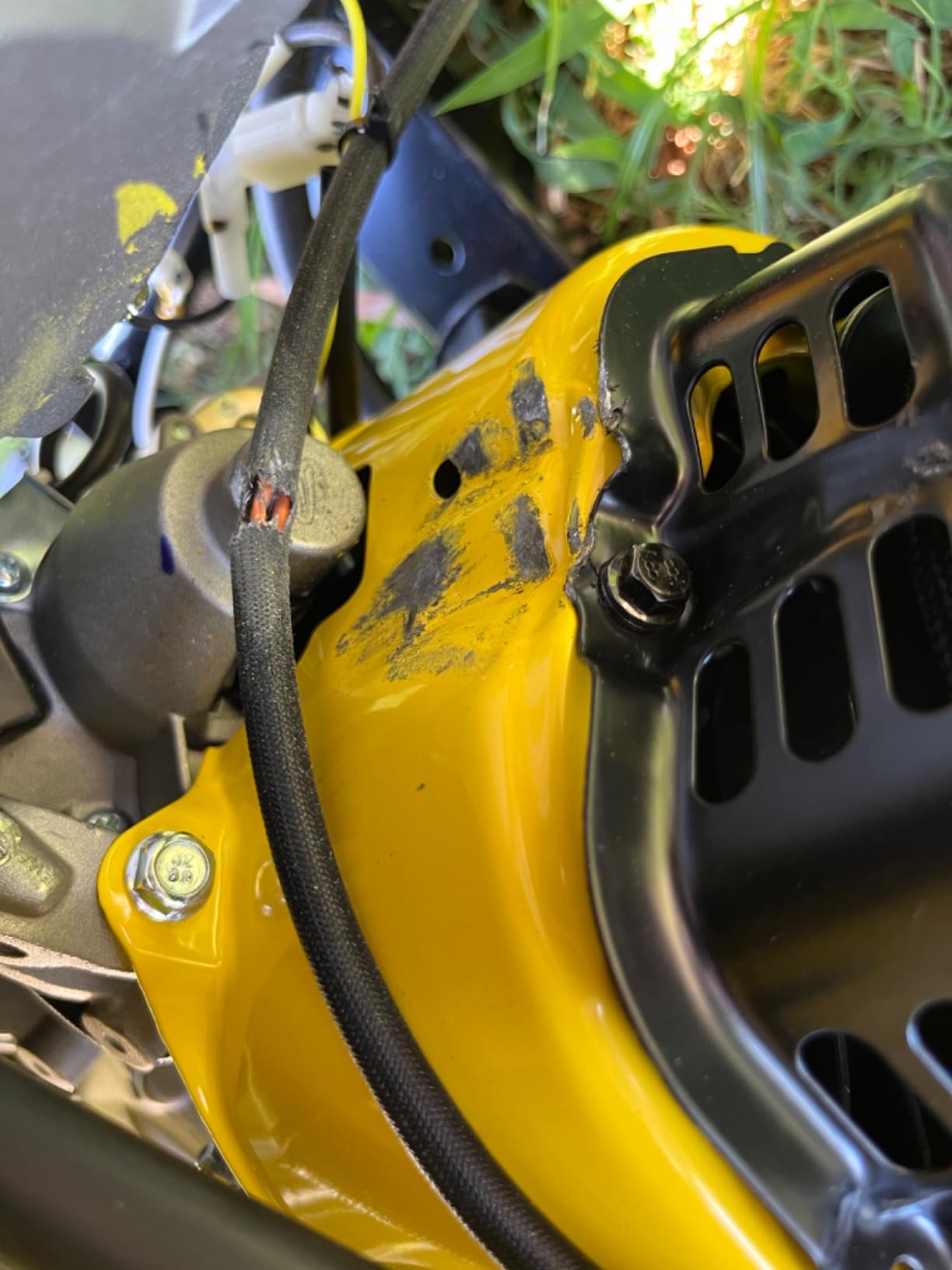
What you get on each fuel
Gasoline provides 12,500 starting and 10,000 running watts, propane steps down to 9,000 running watts, and natural gas gives 8,000. That spread is the clearest illustration in this group of why sizing should be done on your lowest fuel, not your highest.
On a 7.7 gallon tank the gasoline runtime is 8 hours at 50% load. If your outage plan is mostly on propane, budget several cylinder exchanges across a week.
Where it falls short
Four outlets is thin for a whole-home claim, so plan to feed the house through a transfer switch rather than a spread of extension cords. The 8-hour gasoline figure ties for the shortest here, and 231 pounds is among the heaviest.
It is an open frame, so expect noticeably more sound than the inverter units here. Pair it with a long exhaust run away from windows if that matters to you.
7. Westinghouse iGen12000TFc – Best for Quiet Neighborhoods and Long Runs
Westinghouse 12000 Peak Watt Tri-Fuel Portable Inverter Generator, Remote Start, Transfer Switch Ready, Gas/Propane/Natural Gas Powered, Low THD, Safe for Electronics, Parallel Capable, CO Sensor
12000 peak / 9000 running watts
Inverter output at or under 3% THD
As low as 64 dBA
19 hour runtime in eco mode
Pros
- Fully enclosed design rated as low as 64 dBA
- Inverter output at or under 3% THD for electronics
- 19 hour runtime at 25% load in eco mode
- Parallel capable to double output
- Transfer switch ready 50A and 30A outlets
- Flat-free tires and a folding handle
Cons
- Only 3 total power outlets
- Start battery drains during long storage
- Reviews report higher propane consumption than specified
- 191 pounds even in a compact footprint
The Westinghouse iGen12000TFc is the best tri-fuel generator for a home under a local noise ordinance or close to neighbors, because the fully enclosed design runs as low as 64 dBA while still delivering 9,000 running watts on gasoline. It shares our top rating and adds the cleanest long-run package in this group.
Eco mode stretches the 7.9 gallon tank to 19 hours at 25% load, and the LED data center shows fuel level, power output, runtime, voltage and total hours in one place. Parallel capability lets you pair two of these to double output, and the transfer switch ready panel carries both a 50A 14-50R and a 30A L14-30R outlet.
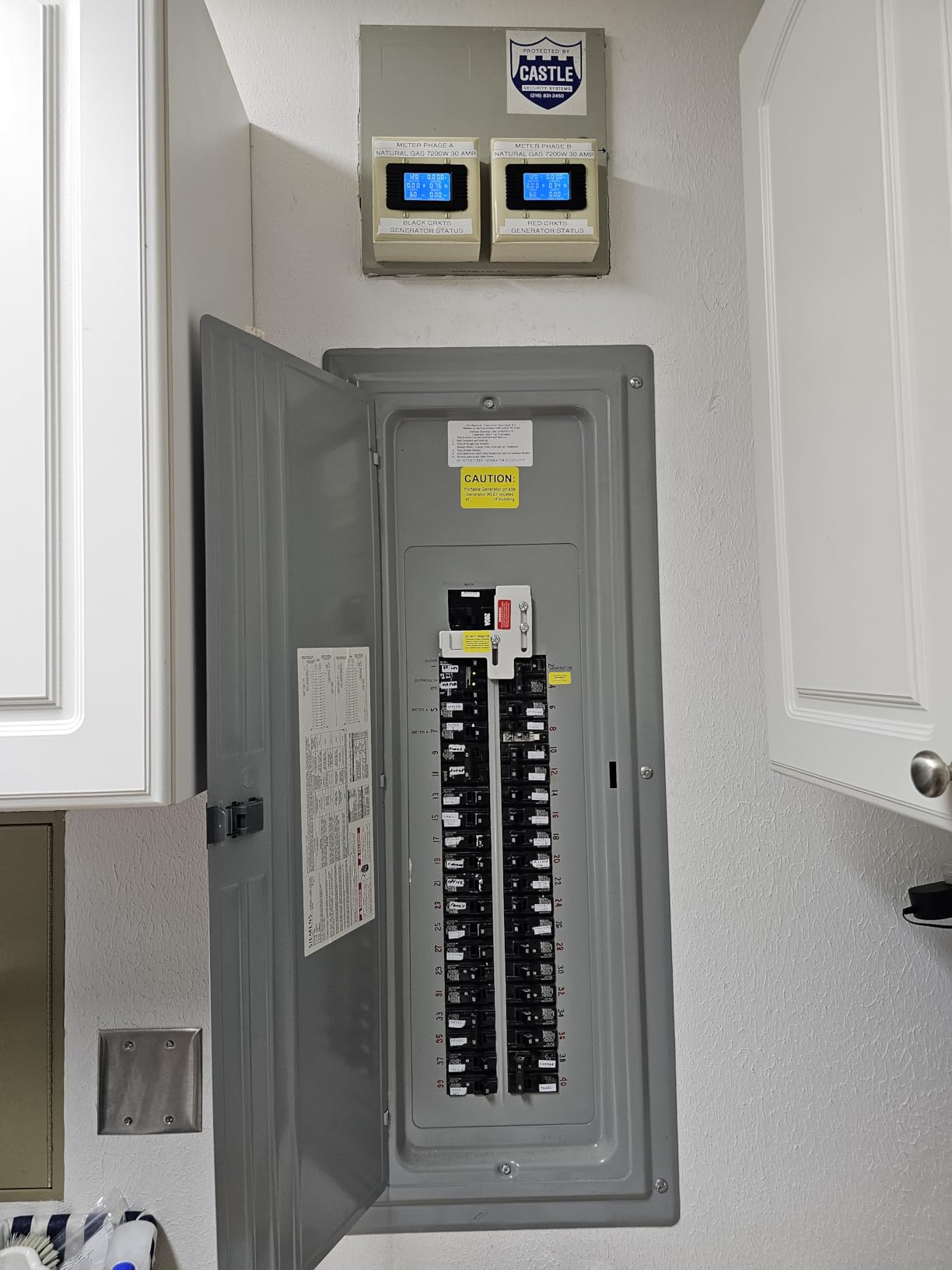
Flat-free tires and a folding handle make it one of the easier units here to move, which matters when the yard floods and you need to relocate the machine. A CO sensor, low oil shutdown and overload protection cover the rest of the safety basics, and the steel, aluminum and cast iron build suits a humid coastal site.
Power still steps down by fuel, from 9,000 running watts on gasoline to 8,100 on propane and 7,200 on natural gas. At 7,200 watts on piped gas you can run a refrigerator, freezer, well pump, internet and a CPAP machine comfortably, but not a central air unit.
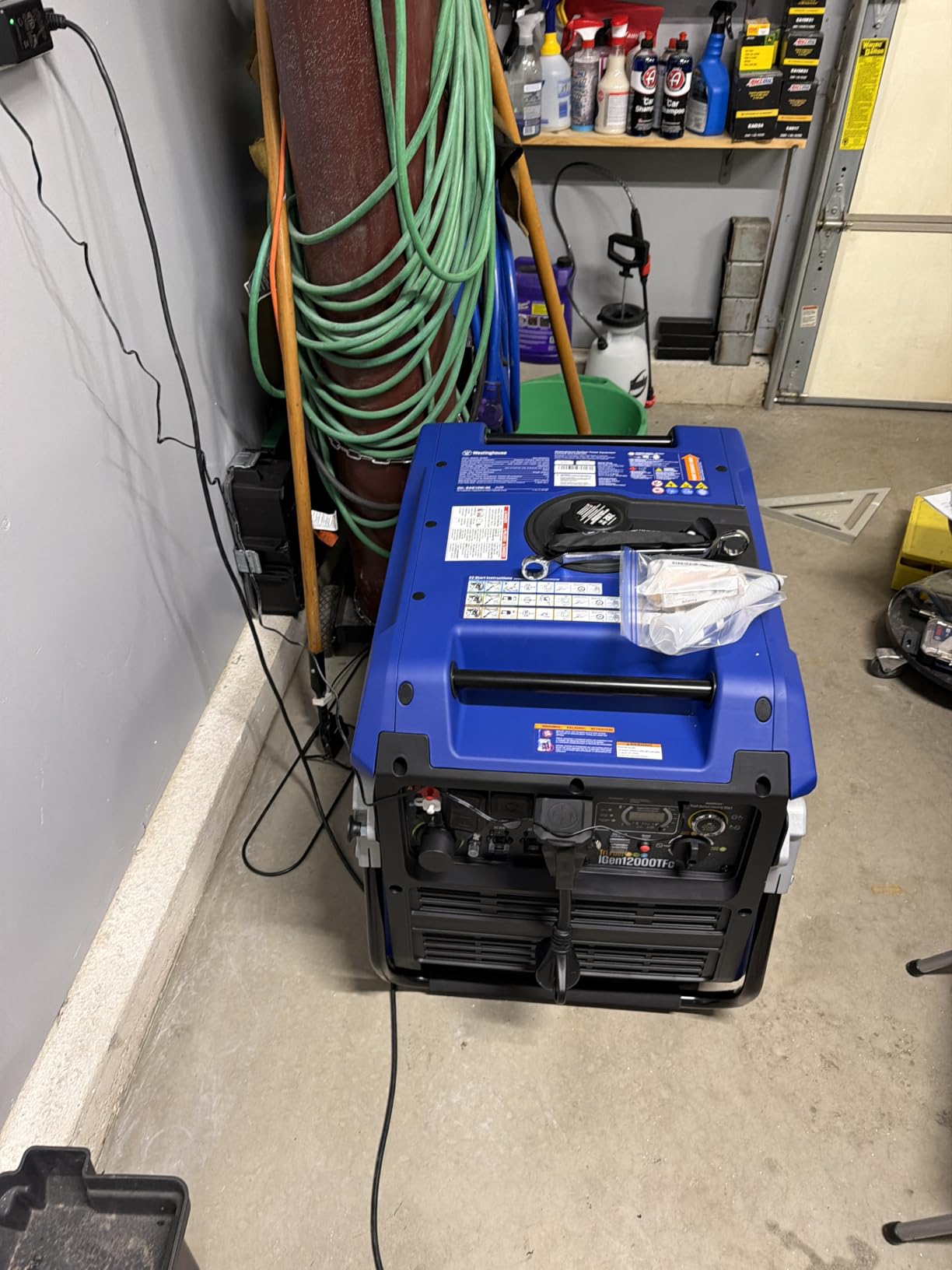
What you get on each fuel
Because the enclosure and inverter electronics govern output, the fuel penalty is the same as on an open frame, and the noise advantage holds across all three. Where it wins is efficiency per gallon and per cylinder, which is where the 19-hour figure comes from.
For apartments, condos and any home with a strict noise expectation, this is the most defensible machine on the list, and the 68-review base means you are buying into a newer platform than the open-frame options with longer histories.
Where it falls short
Only three outlets is a thin count here, so it works best wired through a transfer switch rather than serving several circuits directly. Reviewers also report the start battery draining when the unit sits unused for a week or more, which is a real problem for a machine that only runs during storms.
Propane consumption runs higher than specified for some owners, and 191 pounds is still a two-person move despite the smaller footprint.
8. Generac GP9500ETF – Best When the Natural Gas Kit Matters Most
Generac 12,500 Starting Watt Tri-Fuel Portable Generator, Electric Start
12500 starting / 9500 running watts
COsense detection and shutdown
Simple dial fuel selection
Natural gas conversion kit included
Pros
- Natural gas conversion kit ships in the box
- COsense detection with automatic shutdown
- Simple dial fuel selection between three fuels
- Push-button electric start with included 12V battery
- AVR for stable voltage output
- Never-flat wheels and a folding handle
- HomeLink transfer switch compatible
Cons
- Only 3 total power outlets
- 9.5 hour runtime is shorter than most rivals
- Thinnest review base of the 8 at 47
- Critical reviews cite customer support and service access
The Generac GP9500ETF is the pick when a piped natural gas supply is the main part of your plan, because the natural gas conversion kit, propane hose, battery and battery charger all ship in the box. Other models in this roundup list the hose but not the full conversion kit, and one review of a competing unit notes the hookup required extra parts and a plumber.
It delivers 12,500 starting and 9,500 running watts, with a 500cc OHV engine and automatic voltage regulation, and it reports 9.5 hours at 50% load on a 7.5 gallon tank, 14 hours at 25% load, and unlimited runtime on natural gas while the utility supply holds.
COsense handles detection and automatic shutdown, and the outlet set covers two 120V 20A GFCI receptacles, a 120/240V 30A twist-lock and a 120/240V 50A 14-50R. The frame rides on 9.5 inch never-flat wheels with a folding handle at 219 pounds.
What you get on each fuel
Fuel selection is a single dial turn rather than a knob or a lever. Gasoline, propane and piped natural gas all work, and the natural gas path is the reason this unit stays running when fuel lines are long or closed.
Maintenance is straightforward too, with a digital hour meter and a first oil change at 20 hours then every 100 hours, which pairs well with the hour data you would otherwise be estimating.
Where it falls short
Only three outlets limits you to a transfer switch circuit or a single heavy load, and the 9.5 hour runtime is shorter than several rivals. Owners also report service experience problems, including service centers declining the work, so check that a dealer or qualified repair shop covers your area before you buy.
The 47-review base is the shortest here, which means less long-term owner history on this specific listing. If support access is your top concern, a brand with a larger service footprint is the safer bet.
How Big a Tri-Fuel Generator Do You Need?
Size on your lowest fuel, not your highest. A tri-fuel engine that pushes 9,500 running watts on gasoline may deliver 7,500 on natural gas, so an undersized unit that works fine in testing can brown out a well pump the night the gas supply drops.
Running watts versus surge watts
Running watts is the sustained output, and surge watts, also called starting or peak watts, covers the short spike when a motor kicks on. A compressor-driven appliance such as a refrigerator, well pump, sump pump or air conditioner can draw three to four times its running draw for a second or two, and that spike is what knocks undersized units offline.
A typical refrigerator runs near 150 watts and surges to roughly 1,200, so it can trip a small unit even though it looks tiny on your load list. Size the generator so your largest single surge is covered while nothing else is drawing.
The storm load list
Add up the running watts of everything you plan to run at once, then check the largest single surge against your unit’s starting watts. Most coastal households land between 2,000 and 4,000 running watts for essentials, which sits comfortably inside the 6,800 to 10,000 running watt range of the machines above.
Above 4,000 running watts you are adding central air, a freezer, a well pump and a sump pump together, and that is where a 10,000 to 10,500 running watt open-frame unit earns its place. Add 30% to 40% headroom to whatever total you calculate, because a generator at its ceiling runs hot, noisy and short-lived.
Five steps to the right size
Write down every appliance, find its running and surge watts, total the running draw, add headroom, and then confirm the largest surge fits within starting watts on your least efficient fuel. That last step is the one most load lists skip, and it is the one that causes shutdowns at 2am.
For a 2,000 square foot house, essentials alone typically need a unit in the 7,000 to 10,000 running watt range, and adding window air conditioning pushes you toward the 10,500 watt class. The open-frame models cover more circuits; the inverter models cover sensitive electronics quietly.
Tri-Fuel vs Dual-Fuel During a Hurricane
A tri-fuel generator beats a dual-fuel unit in storm season for one reason: it covers all three fuel failure modes at once. Dual-fuel covers gasoline and propane, which is better than single fuel, but it still leaves you driving to a station once the gasoline situation collapses.
The hard part is the fuel supply, not the machine. Gasoline queues are the most-cited post-storm complaint in preparedness threads, propane gets scarce and prices spike, and natural gas pressure can drop or supply can be interrupted right when the grid goes down. A tri-fuel engine lets you start on gasoline, move to stored propane for the long middle stretch, and finish on piped gas, then fall back when supply returns.
Natural gas hookup: what it takes
Several models in this roundup list the natural gas hose without the full conversion kit, which is the most common tri-fuel failure point at install time, and the Generac GP9500ETF specifically includes the kit. Confirm what is in the box before you buy, and confirm it again when the unit arrives.
Then have a licensed gas fitter run the line. The work involves a regulator, a properly sized flexible connector, an approved shutoff, and a pressure test, and most jurisdictions treat it as permitted gas work. Do not attempt the hookup yourself, because an undersized regulator or a missing sediment trap is a fire and carbon monoxide risk.
Once installed, run the unit on natural gas for a full 30 minutes under a real household load before the storm and check every connection with an approved leak detection method. Assume the natural gas supply can be interrupted during the event, and keep a full gasoline tank and two propane cylinders on hand as the fallback.
Carbon Monoxide Safety and Storm Placement
Never run a generator indoors, in a garage, in a shed, in an enclosed porch, or in a vehicle. Carbon monoxide is odorless and colorless, and reporting after Hurricane Laura linked multiple deaths to generators operated too close to homes. Exhaust points that people forget about include a covered porch, a crawlspace opening, a dry well, a stairwell and a downstairs room with the windows open.
The 20-foot rule and where to place the unit
Keep the generator at least 20 feet from the house, with the exhaust pointed away from doors, windows and vents. Higher is better, because carbon monoxide rises, and a unit sitting in a depression or a half-open garage can collect exhaust where you do not expect it.
Place it on an outdoor-rated surface, with the exhaust pointing straight out into open air rather than along a wall. A generator cover is helpful against rain and salt but must never be wrapped over a running engine, and most manufacturers warn against operating under an enclosure that traps exhaust.
Elevate above flood water
Storm surge and flash flooding are the reason a 200-pound machine gets moved at the worst possible time. Set the operating position on a stable surface above expected flood level, and never run a generator in water, in a wet location, or in wind-driven rain that reaches the control panel or outlet covers.
Water and electricity do not mix, and flood-damaged generators also lose their warranty when restarted after submersion. Plan the relocation path and the elevated pad before the season, not during it.
CO detectors and shutdown features
Install battery-operated CO detectors on every level, near sleeping areas, and within a few feet of the ceiling because carbon monoxide mixes upward. Every unit in this roundup includes a CO sensor with automatic shutdown, and that sensor is a backup, not a replacement for placement discipline and working detectors.
Low oil shutdown, overload protection, resettable breakers and automatic voltage regulation are the other four protections worth confirming work before the season. Test the sensor and the shutdown on all three fuels, and check the hour meter when you log the runtime.
Pre-Season Prep Checklist
Start six weeks out, because a first-run problem discovered during a storm watch is a problem discovered too late. Work down this list once a year and the machine will start on the first pull.
Change the oil, clean or replace the air filter, and check the spark plug. Add fuel stabilizer to a full gasoline tank, then run the engine for 20 to 30 minutes to circulate it, and repeat this on a schedule rather than leaving gasoline sitting for months between uses.
Put the start battery on a maintainer if the unit will sit for weeks, since starter batteries dying over a season of disuse is a complaint that repeats across generator forums. For a machine that may be idle a week or more, trickle charging is the difference between a one-pull start and a trip to a battery store.
Run the machine for 30 minutes on gasoline, then 30 on propane, then 30 on natural gas if you have hooked it up. Confirm the outlets, the GFCI protection, the remote start and the CO sensor on each fuel, and check every hose and connector for cracks or corrosion from salt air.
Finally, stage the fuel and the parts. Keep two full propane cylinders, a spare spark plug, an oil funnel, and a jug of the correct oil with the machine, and give it a rain cover plus a stable elevated pad. A generator that starts on the first pull but sits behind a foot of floodwater is not storm-ready.
Frequently Asked Questions
What is the best generator to use during a hurricane season?
A tri-fuel generator is the best choice for hurricane season because it runs on gasoline, propane or a home natural gas line, so you are never blocked by one fuel running out. The Westinghouse WGen9500TFc is our top pick, offering 9,500 running watts, remote key fob start, CO sensor shutdown and a 3-year warranty.
Who makes the best tri-fuel generator?
Westinghouse, Champion Power Equipment, DuroMax, DuroStar and Generac are the most established names in the tri-fuel category, and all eight units in this roundup run on gasoline, propane and natural gas. Westinghouse and Champion stand out for lifetime technical support, while DuroMax and DuroStar lead on raw surge capacity.
Are tri fuel generators better than dual fuel generators for a hurricane?
Yes, for storm season a tri-fuel unit is the safer buy because it adds a home natural gas line, the one fuel that does not require a supply trip. Dual-fuel units cover gasoline and propane only, so you still depend on gas stations or cylinder exchanges. A tri-fuel engine also lets you store fuel for months without it going bad.
What is the 20/20/20 rule for generators?
The 20/20/20 rule is a general hurricane preparedness guideline, not a generator specification. It advises keeping 20 gallons of water per person per day, 20 different non-perishable food items, and 20 dollars in emergency cash per person per day. A generator supports the rule by running refrigeration, medical equipment and communication devices during the days it covers.
How far should a generator be from the house?
Keep the generator at least 20 feet from your house, with the exhaust pointed away from doors, windows and vents. Carbon monoxide rises and pools in low areas, so avoid placing a unit in a depression, a half-open garage or a crawlspace opening. Install battery-operated CO detectors on every level as a second layer of protection.
How long does propane last on a generator during an outage?
Propane runtime depends on the unit size and the load. In this roundup, the Westinghouse iGen12000TFc runs up to 19 hours at 25% load and the Champion 11,000W inverter up to 15 hours at 25% load, both on gasoline with eco mode and inverter throttling. Owners report real-world propane consumption running higher than published figures, so plan on more cylinder exchanges than the spec sheet suggests.
Final Verdict for Hurricane Season 2026
The Westinghouse WGen9500TFc is the best tri-fuel generator for hurricane season and the one we would put in our own garage: 9,500 running watts with 12,500 peak headroom, remote key fob start, CO sensor shutdown, a cast iron sleeve, and the most owner history of any unit here. Buy the DuroMax XP13000HXT if you need a central air conditioner and a well pump on the same circuit, and pick the Westinghouse iGen12000TFc if a noise ordinance or close neighbors rule out an open frame.
Whichever tri-fuel model you choose, the fuel discipline matters more than the brand. Start on gasoline, switch to stored propane for the middle of the outage, and finish on natural gas if the supply holds, with cylinders and a full tank behind you as backup. Run it 20 feet from the house, above flood level, with CO detectors on every level, and give it a 30-minute test run on each fuel before the season starts. Our best tri fuel generators roundup covers the other fuel and power combinations if your household load is lighter.