
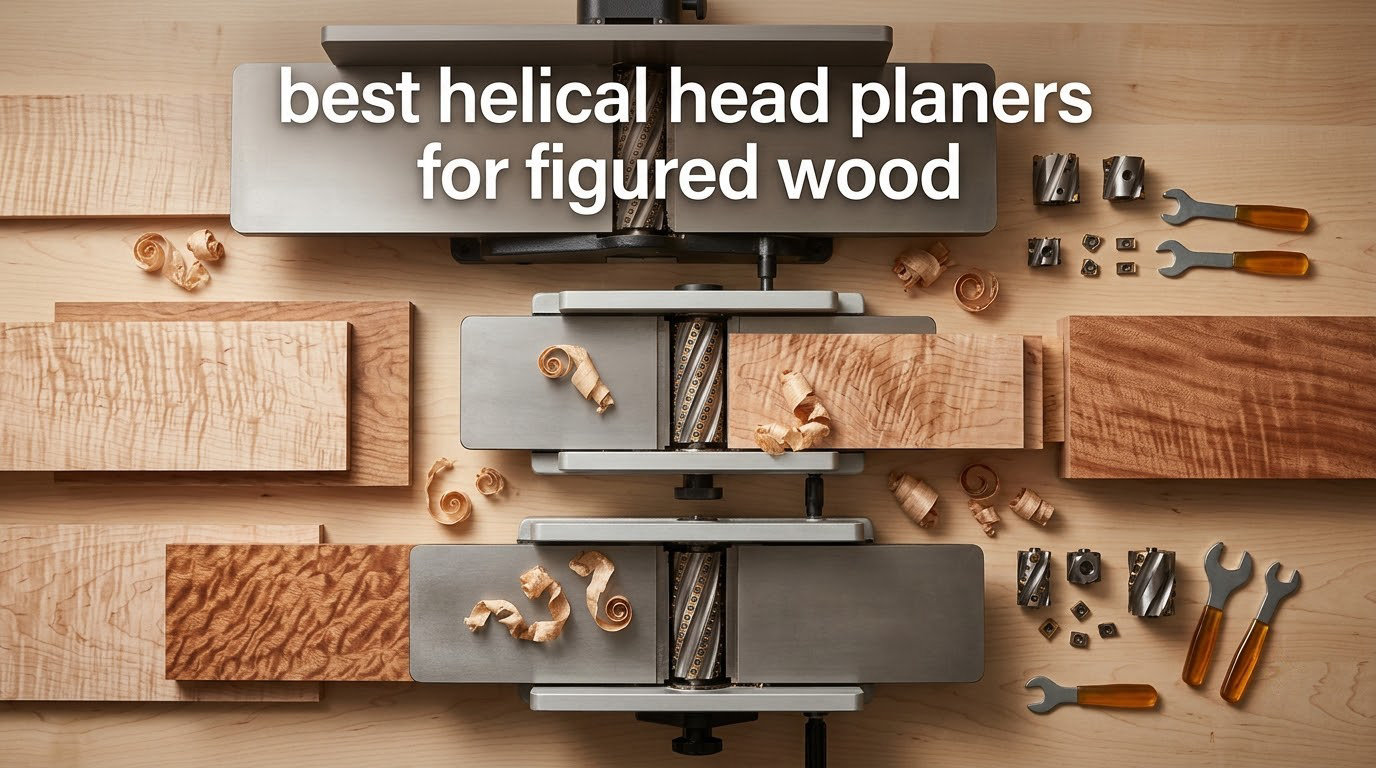
Figured wood does not forgive a bad cutterhead. Curly maple, bird’s eye maple, quilted mahogany and walnut all contain grain that reverses direction inside a single board, and a conventional straight-knife cutterhead rips those reversing fibers straight off the surface. A helical head planer fixes most of that problem by replacing two or three wide knives with dozens of small carbide or HSS inserts arranged in a spiral, so no single insert ever takes a full-width bite and each one shears the fibers at a slight angle instead of chopping across them.
That is the whole idea, but it is not the whole buying decision. Feed speed, insert count, table length and width capacity decide whether a machine is a good helical head planer for figured wood or just a quiet planer with a spiral head bolted on. We compared nine machines in this roundup, from a lightweight benchtop unit to a 20-inch commercial planer, and ranked them on how they behave when a curly maple board goes through badly.
If you want the wider picture on machine classes first, our wood planer roundup covers straight-knife and drum planers in depth, and our benchtop planer guide covers the table-flatness details that decide whether thickness readings match from end to end. This roundup is specifically about helical cutterheads and figure.
Top 3 Helical Head Planers for Figured Wood in October 2026

WEN PL1326 Spiral Planer
- 26 rotatable HSS blades
- 10000 RPM
- 26 FPM single speed
- 13 inch width
- cast iron base

RIKON 25-135H Helical Planer
- 26 two-edge HSS inserts
- two speeds at 16 or 26 SFPM
- 13 inch width
- 67.9 lbs

Cutech 40800H Spiral Planer
- Two-sided carbide inserts
- two speeds with a 16 FPM figured wood setting
- snipe minimiser
The WEN PL1326 takes the overall slot because it has the deepest evidence base in the category and reviewers consistently report a clean finish on walnut and maple with it. The RIKON 25-135H is the better machine for anyone who can use the slower gear, because 16 SFPM is the single most useful number on any benchtop helical planer. The Cutech 40800H is the one to watch if you want carbide inserts and a slow feed without stepping up a class.
All 9 Helical Head Planers Compared for October 2026
| Product | Specs | Action |
|---|---|---|
| WEN PL1326 13-Inch Spiral Benchtop Planer |
|
Check Latest Price |
 JET JWP-13BT 13-Inch Helical Style Planer JET JWP-13BT 13-Inch Helical Style Planer |
|
Check Latest Price |
| RIKON 25-135H 13-Inch Helical Style Planer |
|
Check Latest Price |
 JET JWP-208HH 20-Inch Helical Cutterhead Planer JET JWP-208HH 20-Inch Helical Cutterhead Planer |
|
Check Latest Price |
 King Canada KC-13HPC 13-Inch Helical Planer King Canada KC-13HPC 13-Inch Helical Planer |
|
Check Latest Price |
 JET JWP-15BHH 15-Inch Helical Cutterhead Planer JET JWP-15BHH 15-Inch Helical Cutterhead Planer |
|
Check Latest Price |
| Cutech 40800H 13-Inch Spiral Cutterhead Planer |
|
Check Latest Price |
 Wahuda 13-Inch Spiral Cutterhead Planer Wahuda 13-Inch Spiral Cutterhead Planer |
|
Check Latest Price |
 VEVOR 13-Inch Spiral Thickness Planer VEVOR 13-Inch Spiral Thickness Planer |
|
Check Latest Price |
1. WEN PL1326 – Best Overall Helical Head Planer for Figured Wood
WEN PL1326 15-Amp 13-Inch Spiral Benchtop Thickness Planer
26 rotatable HSS blades in a spiral cutterhead
13 inch width by 6 inch cutting height
15A motor, 10000 RPM, 26 FPM feed
Pros
- Clean finish on walnut and maple per owner reports
- Rotatable HSS blades stretch cutter life before replacement
- Minimal to no snipe after table adjustment
- Large cast iron construction feels solid at roughly 80 to 100 lbs
- Strong value against premium helical machines
Cons
- Brush motor noise makes it about as loud as a knife head planer
- Dust port misses chips so a collector is effectively required
- Depth indicator is a single round pin rather than a full width scale
The PL1326 has the largest body of owner feedback in this entire category, and that feedback is unusually consistent: people who switched to it from a straight-knife planer report that the surface comes out close to finish-ready on walnut and maple without extra sanding. That is the single most important thing a helical head planer can do for figured wood, and this machine does it while carrying 736 reviews at a 4.7 average.
The cutterhead runs 26 staggered and rotatable HSS blades at 10000 RPM, feeding at 26 FPM across a cast iron base. That is a single-speed machine, which matters more than it might sound, and we will deal with it directly below. The board capacity is 13 inches wide by 6 inches thick, with a material removal gauge on the front for keeping track of what each pass takes.
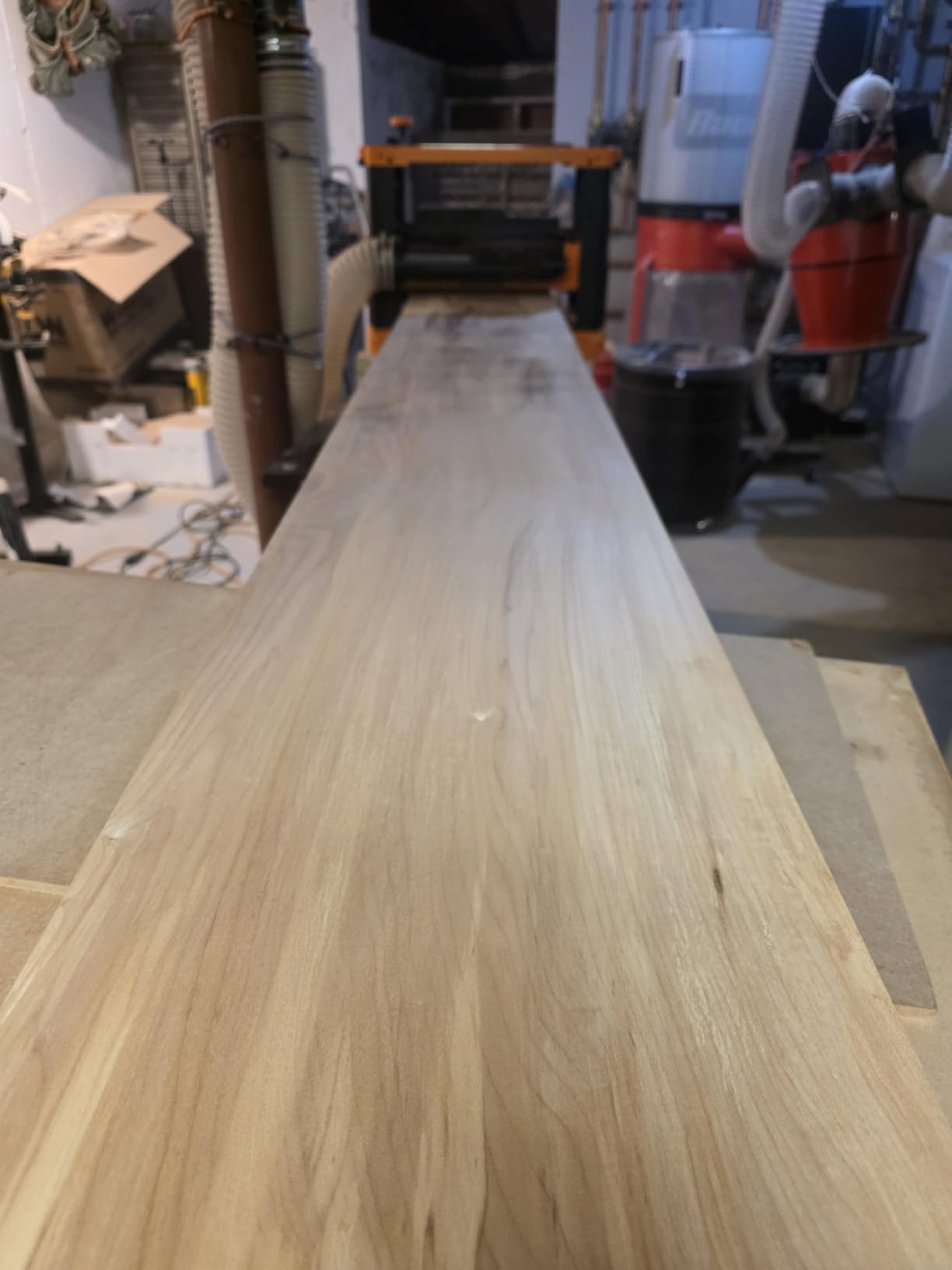
Table setup is where this machine earns its reputation. Owners consistently report getting to a state where snipe is minimal or gone entirely after adjusting the infeed and outfeed tables, and that is a setup problem more than a machine problem. The cast iron bed gives it the mass to hold a setting once you find it, which is why the finish stays consistent across a long board.
It is worth being honest about the two things that frustrate owners. The brush motor is loud, and reviewers say it is roughly as loud as a straight-knife planer, so the quiet-shop argument does not apply here. Dust collection also needs attention; the adjustable dust port does not capture everything, and a real collector is close to mandatory if you run a helical planer.
How the single-speed feed rate affects figured wood
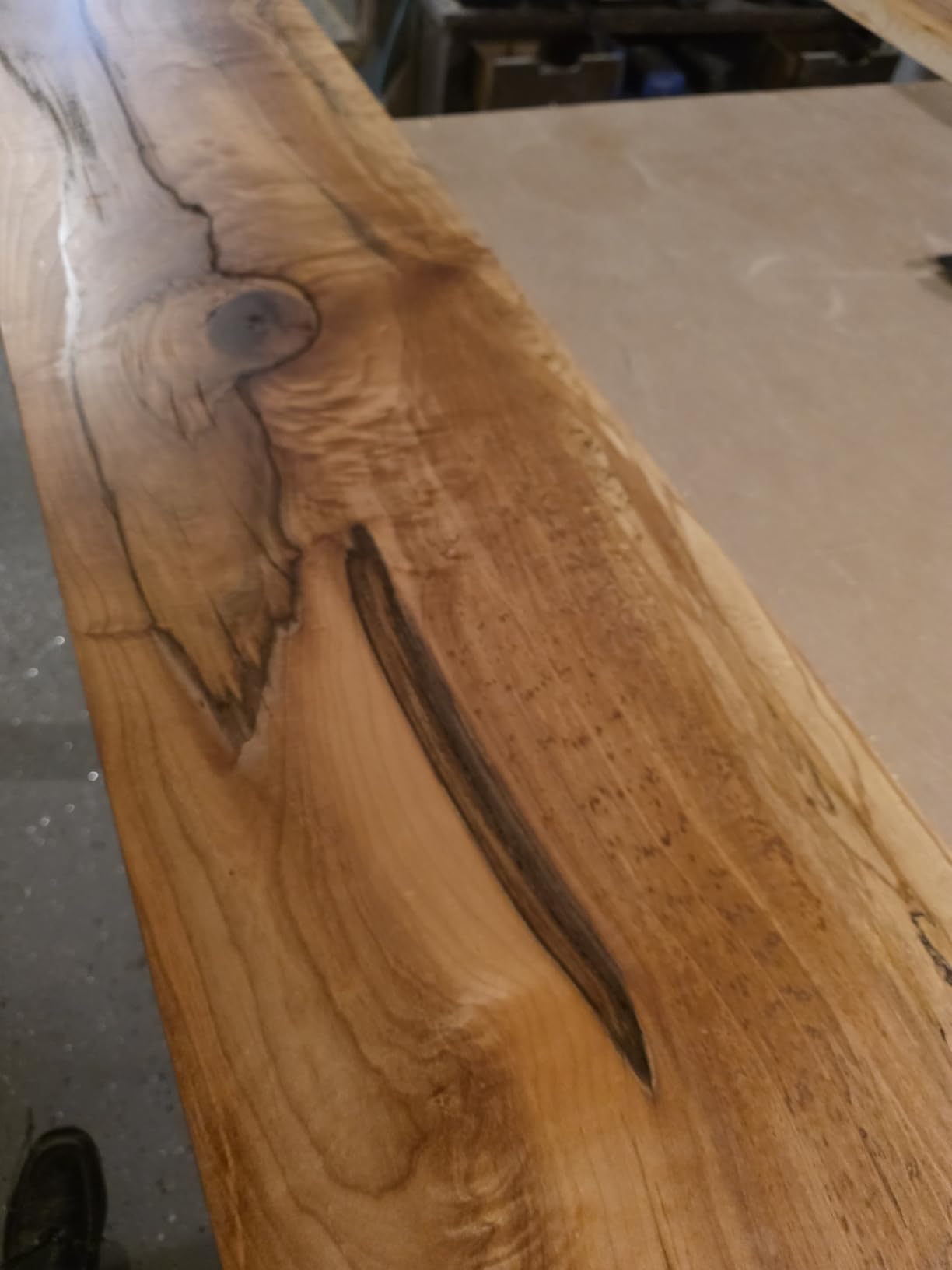
At 26 FPM there is no slower option on this machine. For most figured work that means you manage the surface by taking a lighter pass rather than by slowing the feed, which works but asks more of the motor on hard maple and dense exotics. If your figured stock is mostly walnut and soft maple, that trade is fine. If you work in curly maple regularly, you will eventually wish for a second gear.
What you give up by choosing it
The width cap of 13 inches rules out any panel or slab work that needs a jointing pass first, and the noise means it does not suit a shared or home workshop where a planer session is measured in hours. For a shop cutting furniture components, matched stock and domestic hardwoods one board at a time, neither limitation is serious.
2. JET JWP-13BT – Best Two-Speed 13-Inch Helical Head Planer
JET 13-Inch Benchtop Thickness Planer for Woodworking, Helical Style Cutterhead with 2-Speed (18 FPM / 26 FPM) Feed Rate, 2 HP, 120V 1Ph (JWP-13BT)
Helical style cutterhead with 26 quick change HSS inserts
6 rows, 2 HP at 10000 RPM
Two feed speeds at 18 or 26 FPM
Pros
- Helical style cutterhead cuts smoother and quieter than straight knife machines
- Two feed speeds let you slow the pass down for figured material
- Cast iron bed and four post head support help reduce snipe
- Folding infeed and outfeed tables save shop space when stored
Cons
- 11 percent of ratings are 1 star
- HSS inserts wear faster than carbide on hardwood workloads
- Folding tables can be less rigid than full length fixed tables
The JWP-13BT is the machine people mean when they ask which helical head planer has the best combination of a slow gear and a full spec sheet at 13 inches. The 18 FPM setting gives you a genuinely slower pass on figure, the cast iron bed and four-post head support help hold a thickness setting across a long board, and the folding tables mean it fits in a small shop between uses.
It runs 26 quick-change HSS inserts across six rows at 10000 RPM from a 2 HP motor, with a maximum depth of cut of 1/8 inch and a 13 inch by 6 inch capacity. The specification that matters most for figure is the gearbox, not the horsepower. A 2 HP motor is adequate because helical heads take lighter passes, not because it has surplus power.
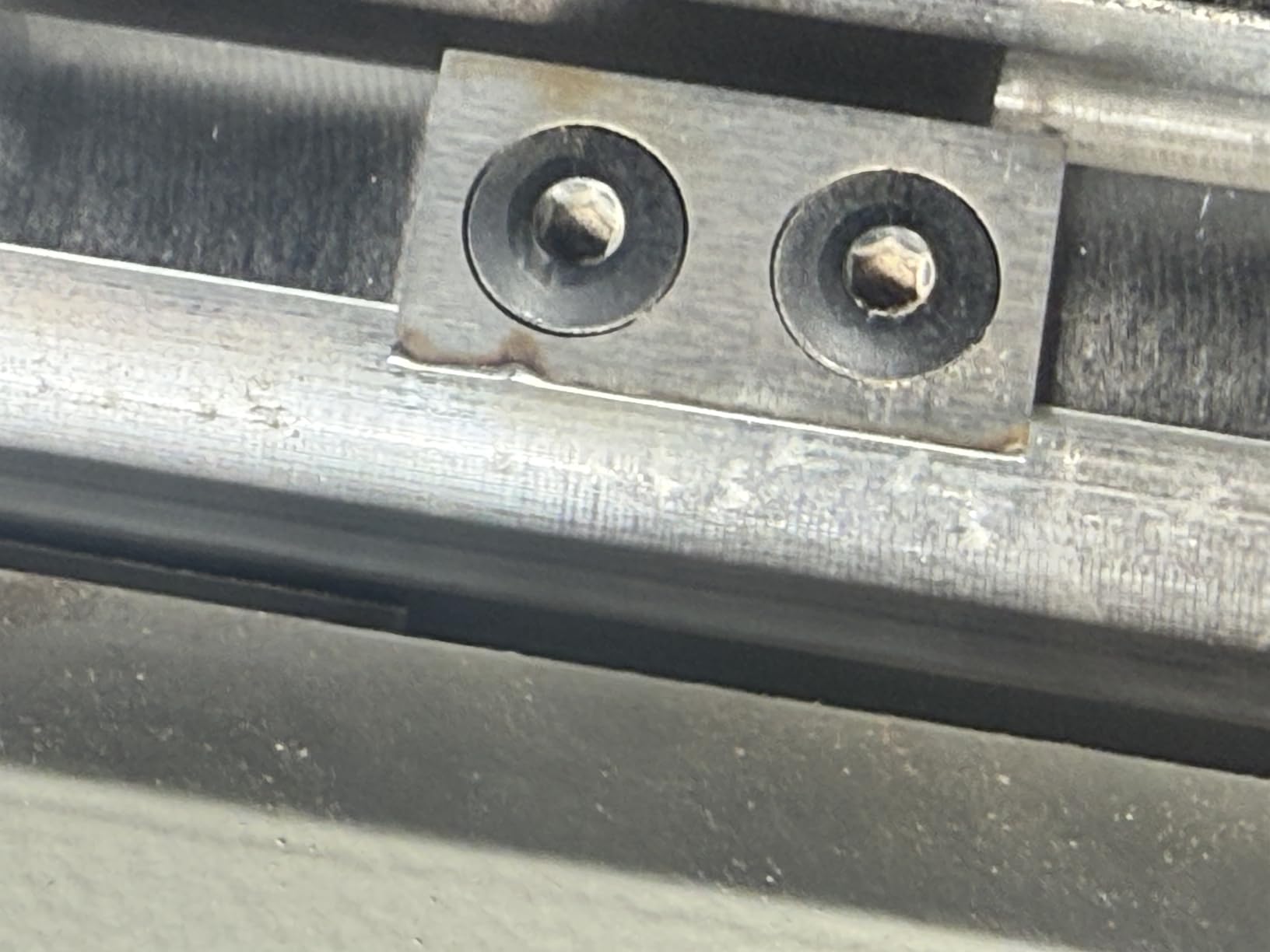
Reviews here are good but noticeably more mixed than the rating alone suggests. Owners credit the quieter cut and the reduced snipe against straight-knife competitors, and a meaningful share of the one-star reviews point at assembly, insert quality or durability rather than at how it cuts. If you are buying this, inspect the machine the day it arrives rather than assuming it is fine.
The folding tables are the quiet compromise in this design. They are genuinely useful in a tight shop, but they are not as rigid as full-length fixed tables, and on a heavily cupped board with a lot of extension out you can feel it. Set the tables conservatively and check the reading at both ends before you commit to a full pass.
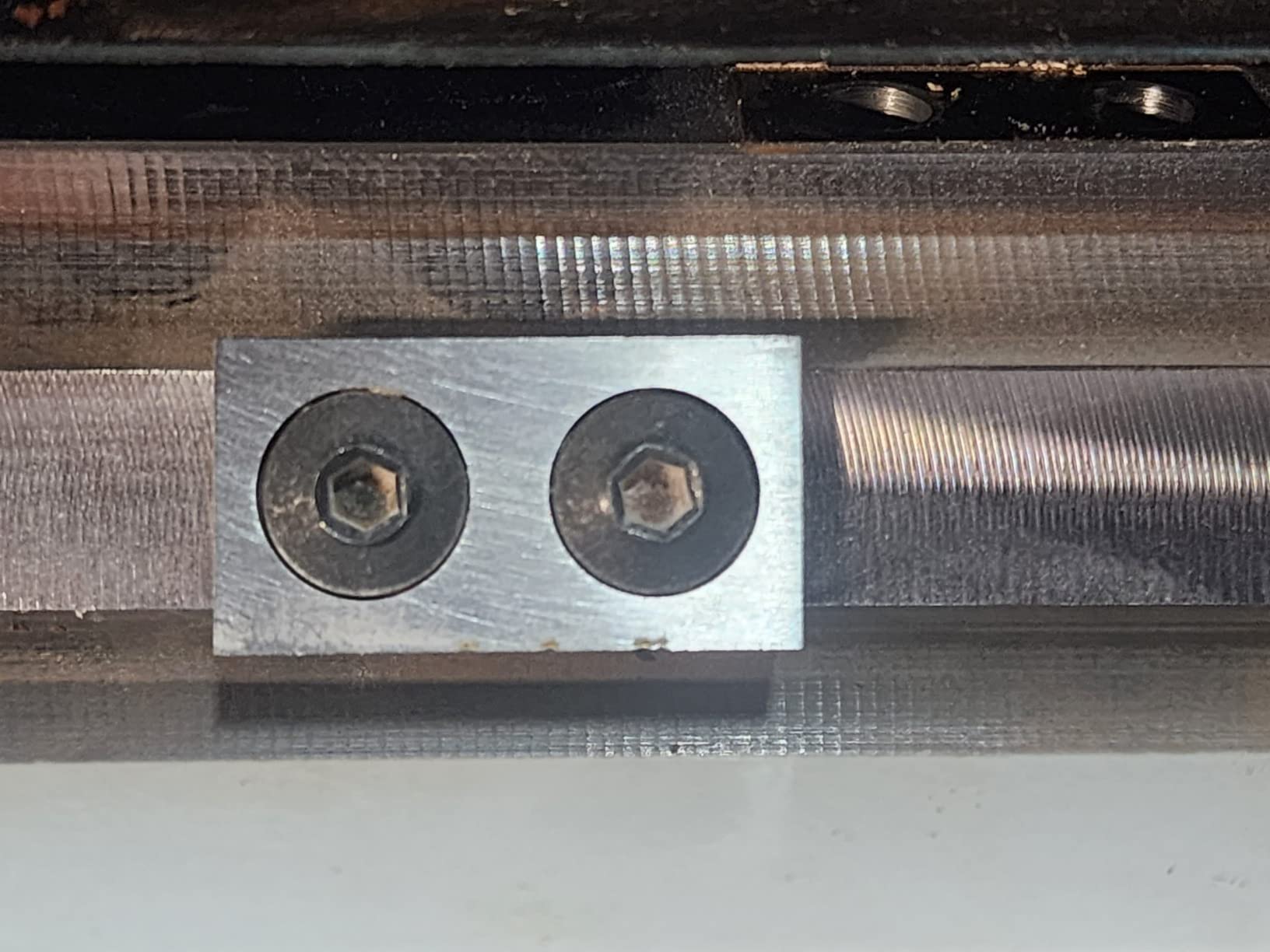
When 18 FPM changes the result on figure
The slower gear roughly cuts the number of cutting edges the board sees per inch, which changes the surface from chopped to sheared-looking. On curly maple that difference is visible before you even sand. On straight-grained oak and walnut the improvement is small, so the gearbox earns its keep specifically on interlocked grain and on anything resinous that gums the inserts up.
Who should skip it
Buy something else if your figured work is occasional. The entry cost for a 13-inch class machine is high, the insert material is HSS rather than carbide, and if you plane softwood four times a year this is capability you will not use. The gearbox only pays for itself once figure is a regular part of your cutting list.
3. RIKON 25-135H – Lightest Planer With a Useful Slow Gear
RIKON 25-135H 13-Inch Portable Planer with Helical-Style Cutterhead
Six row helical style cutterhead, 26 two-edge HSS inserts
Two feed speeds at 16 or 26 SFPM
13 inch by 6 inch capacity, 1/8 inch depth of cut
Pros
- Two feed speeds let the 16 SFPM pass tame tear out on figure
- 26 two-edge inserts rotate instead of being thrown away
- Threaded four post head support gives repeatable thickness settings
- Lightest helical machine in the lineup at 67.9 lbs
- Dust hood and a 4 inch to 2.5 inch adapter included
Cons
- Aluminum base is lighter and less damped than a cast iron bed
- HSS inserts dull faster than carbide on figured and resinous hardwoods
- 13 inch width limits wide panel work
RIKON built this machine around one idea: put the slow gear as low as possible and make the machine light enough that you will actually move it to the work instead of bringing the work to it. The 16 SFPM setting is the lowest slow gear on any benchtop helical planer in this roundup, and that single number is why this is our premium pick for figured wood.
The cutterhead is a six-row helical style arrangement using 26 two-edge HSS inserts that rotate when worn or nicked, turning at 10000 RPM. Capacity is 13 inches wide by 6 inches thick with up to 1/8 inch of depth of cut on boards 6 inches wide or less, and the threaded four-post head support with depth gauge, thickness scale and repeat-cut control gives you repeatable settings.
The threading detail is more than a spec line. Threaded posts hold their adjustment better than friction-fit heads, and on a helical planer where you are taking multiple light passes at one setting, a head that drifts is the difference between saving a board and re-planing it.
Why the aluminum base is a real trade
An aluminum base is lighter and less damped than cast iron, and owners name the aluminum as the most common reservation. In practice it means slightly more sensitivity to motor vibration and a little more creep under heavy loading. It also means the machine weighs 67.9 lbs, which is genuinely light for a helical planer and lets one person reposition it without a second pair of hands.
Where the insert material becomes the limit
HSS inserts hold an edge well on clean hardwood but dull faster than carbide on figured and resinous species, and curly maple is precisely the kind of wood that generates heat and fine dust at the cutting edge. The inserts rotate, which extends their life considerably, but you will be rotating them more often than you would on a carbide head. Budget for it as part of running this machine.
4. JET JWP-208HH – Best for Wide Slabs and Heavy Cut Volumes
JET 20-Inch Planer, Helical Cutterhead, 5 HP, 230V 1Ph (Model JWP-208HH)
20 inch width with helical cutterhead, 5 HP TEFC motor
Two speed gearbox at 24 or 31 FPM
1/16 inch increment height scale, cast iron tables
Pros
- 20 inch width handles full size slabs without a jointing pass
- 5 HP TEFC motor never labours on wide material
- Welded steel base and cast iron tables stay stable
- 1/16 inch height scale supports fine repeatable cuts
- Two speed gearbox with automatic chain tensioner
Cons
- 753 lbs makes it shop placed rather than portable
- Requires a 230V single phase circuit
- Very high cost against 13 inch and 15 inch machines
At 20 inches wide and 753 lbs, this is not really a benchtop machine. It is a shop-placed production planer, and the reason it appears in a figured wood roundup is simple: it is the machine that removes the jointing pass from the workflow entirely, which is where figured slabs usually get ruined before the planer ever touches them.
The cutterhead turns at 5000 RPM from a 5 HP TEFC induction motor with V-belt transmission, and the two-speed gearbox offers 24 or 31 FPM. The 1/16 inch increment height scale is the standout feature for anyone doing fine passes, because it gives you a readable increment rather than a fraction of a crank turn.

The one-piece welded steel base and the pair of cast iron infeed and outfeed tables do the work that a 20 inch machine needs. Magnetic controls are specified for longevity, and the automatic chain tensioner on the gearbox means the feed speeds stay consistent as the machine ages. The maximum depth of cut is listed at 0.09 inch.
Owner sentiment here is strongly positive on cutting performance, with the machine’s weight and its 230V single-phase requirement being the defining trade-offs. At this size you should treat it as a fixed fixture with a dedicated circuit and a plan for moving it into position, not as a tool you pull out when needed.
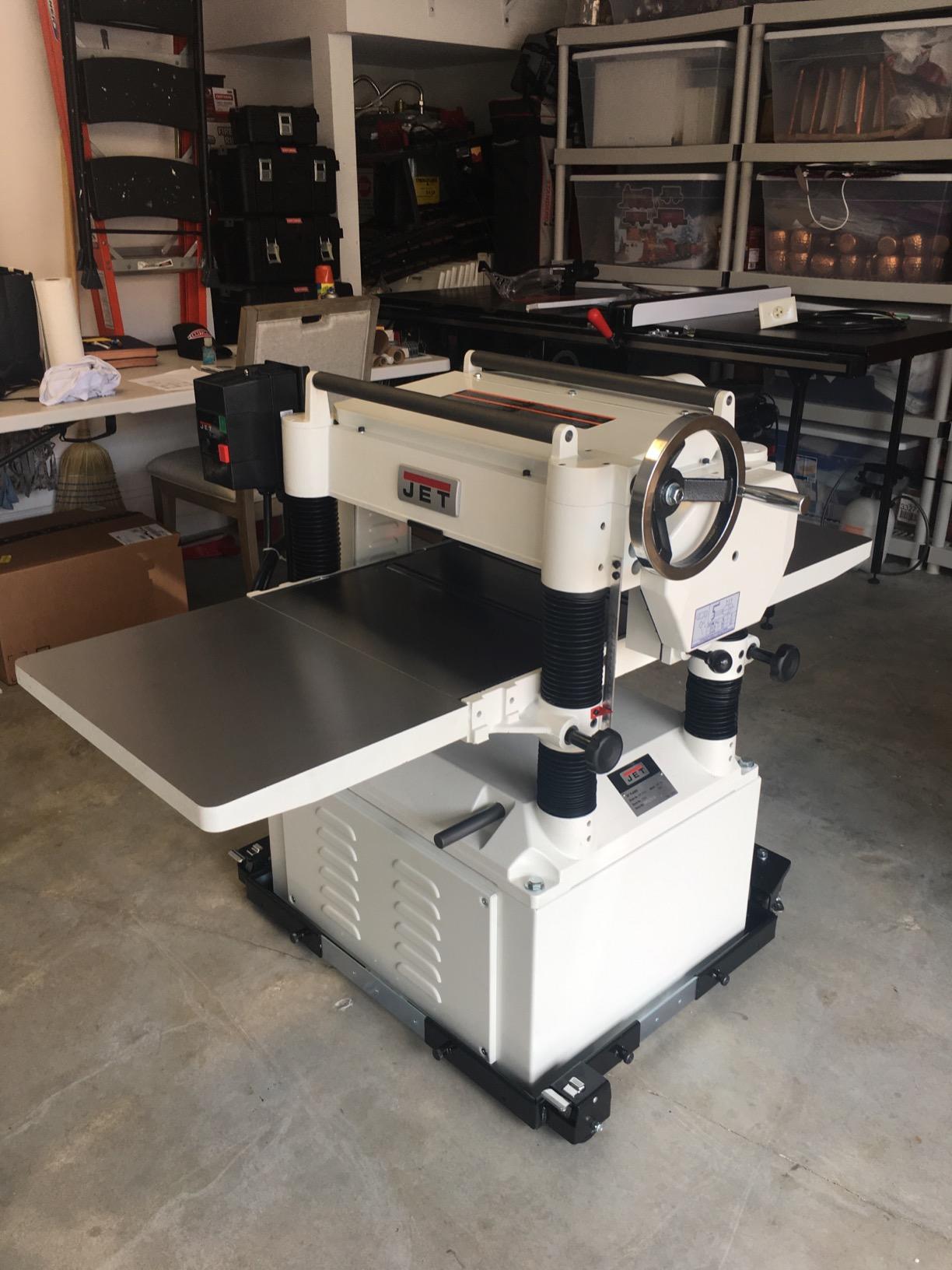
When width changes the figured wood outcome
A 20 inch capacity lets you surface a full width slab in one pass with the grain running in the direction you want. On curly and quilted stock, being able to choose board orientation rather than fight the width is the difference between a clean face and a face you sand back. If your material is narrower than 13 inches, none of this applies to you.
What the 230V requirement rules out
This machine needs a 230V single-phase circuit, which in a home shop or a small residential garage usually means a new sub-panel. Combined with a 753 lb shipping weight and a very high purchase cost, the circuit work alone can make a smaller two-speed 13-inch machine the smarter total decision for most people.
5. King Canada KC-13HPC – Best for Repeatable Thickness Settings
13″ Planer – Helical Cutterhead
Spiral cutterhead carried on four precision ground columns
13 inch width, 1.75 inch depth of cut
15 amp motor with thermal overload protection, 8 preset depth stops
Pros
- Spiral cutterhead leaves a superior tear out free finish
- Four precision ground columns add stability to the depth setting
- Eight preset stops cover common thicknesses
- Thickness display with inch and millimetre depth scale
- Thermal overload protection on the motor
Cons
- 15A motor is modest against 3 HP and 5 HP machines
- Depth of cut is shallow compared with heavier commercial units
- 13 inch capacity only
The KC-13HPC is the machine for anyone who planes matched components in batches and cannot afford a thickness variation between them. The cutting head raises and lowers onto four precision-ground columns rather than a single screw, and it is paired with a thickness display, a graduated scale in both inches and millimetres, and eight preset depth stops at quarter inch increments.
Those preset stops cover 1/8, 1/4, 1/2, 3/4, 1, 1-1/4, 1-1/2 and 1-3/4 inch, which means glue-up and door stock work goes quickly without a measuring loop each time. The spiral cutter head is specified for a superior finish, and owners report exactly that.
Power comes from a 15 amp single-phase motor with thermal overload protection. That is a modest motor by the standards of this list, and it is the reason the machine is not a first choice for wide heavy hardwood, but for domestic hardwood at a 13-inch capacity it does the job without straining.
Why preset stops matter for figured panels
Figured stock tends to be bought rough and in quantity. When you are flattening twenty boards to the same thickness for a panel glue-up, a machine that lets you dial to 3/4 inch and go removes the single biggest source of error in the process, which is re-measuring and creeping deeper into every board as you go.
Where its limits show
The depth of cut is shallower than heavier commercial units, and the single-phase 15 amp motor is the limiting factor for thick, wide, hard stock. If your figured wood comes in as slabs or rough beams rather than surfaced components, this is not the machine that handles it. If it comes in as boards and components, the depth-setting aids are the best in this roundup.
6. JET JWP-15BHH – Best Helical Head for Quiet Production Figure Work
JET 15-Inch Thickness Planer for Woodworking, Helical Style Cutterhead with 2-Speed (16 FPM / 20 FPM) Feed Rate, 3 HP, 230V 1Ph (JPW-15BHH)
48 staggered carbide knives in a helical cutterhead
Two speed infeed at 16 or 20 FPM
PASS air strut snipe control, 15 inch width, 3 HP at 230V
Pros
- Carbide knives shear rather than cut which minimises tear out on figure
- Exceptionally quiet for a planer in this class
- 3 HP motor has not laboured on wide raw hardwoods
- PASS system and cast iron extension tables largely remove snipe once set
- 15 inch width covers most furniture material in one pass
Cons
- Only a 4.0 average
- the lowest of the well reviewed helical machines
- Reports of shipping damage and missing rollers on some units
- 4 inch dust port clogs smaller wall mounted collectors
- Requires a 230V circuit and weighs 285.5 lbs
This is the most capable helical cutterhead in the roundup on paper: 48 staggered carbide knives, a two-speed gearbox that drops to 16 FPM, and a 15-inch width. On cutting performance that is the machine we would want for a production schedule of figured parts. The rating tells a more complicated story, and we will get to it.
Carbide knives are the material choice for figure. They hold an edge far longer than HSS through resinous and interlocked grain, and with 48 of them the number of cuts per inch on the board is high, which is exactly what tight curly figure wants. The Precision Air Strut System applies consistent upward pressure on the cutterhead, and owners report it largely eliminates snipe once the tables are set.
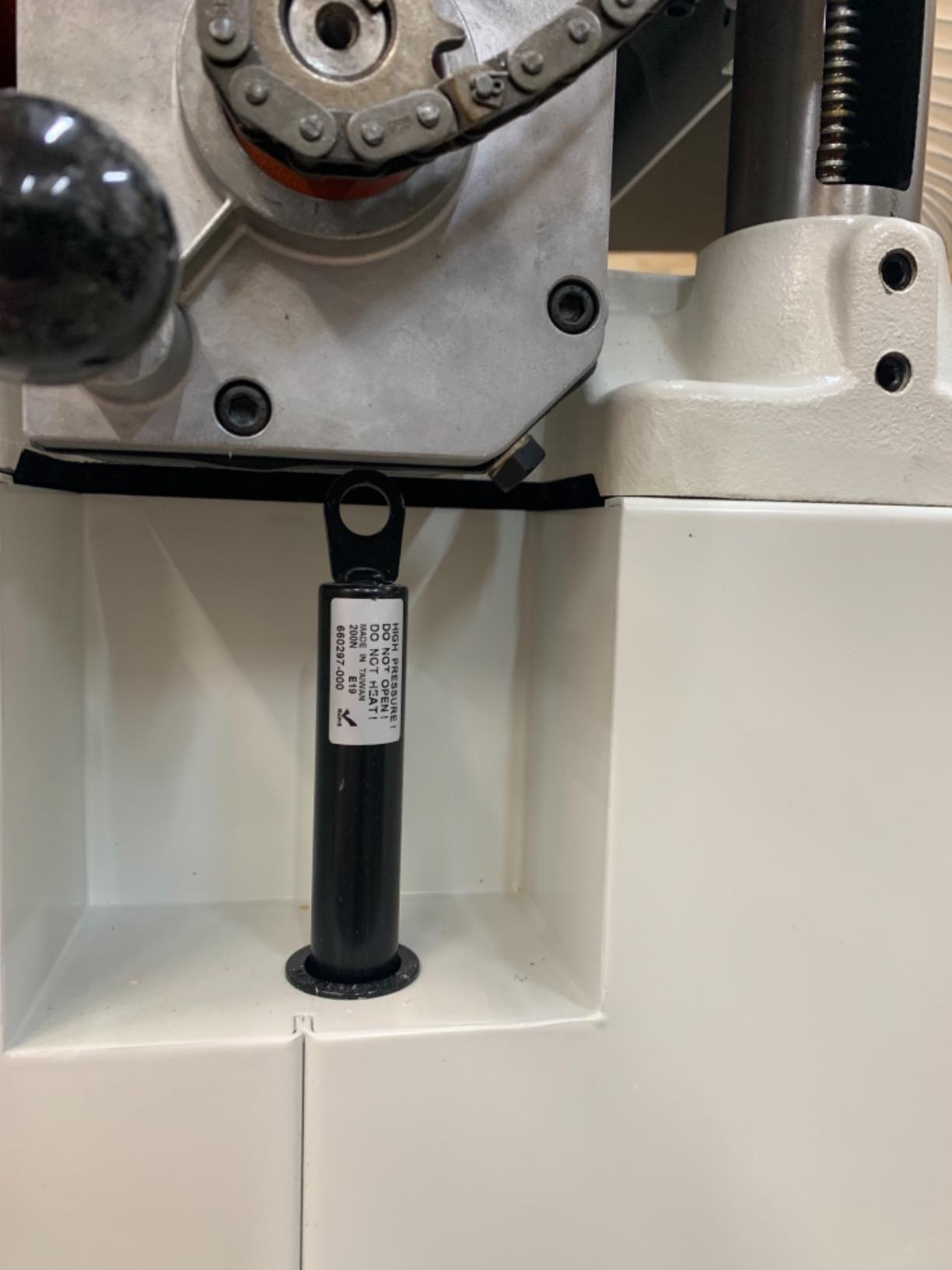
The quietness is the surprise. Multiple reviewers compare it favourably against a three-knife DeWalt planer and report it as noticeably softer to run. At 5200 RPM from a 3 HP motor, a 15 inch width and a 1/8 inch maximum depth of cut, it has the headroom for full-width passes on raw hardwoods.
Now the problems. The 4.0 average is the lowest of the well-reviewed helical machines here, and the negative reviews cluster around quality control rather than performance. One reviewer reported damaged foot plates and poorly welded cabinet feet out of the box; another reported missing rollers, chain and sprockets along with a non-functioning power off button. The dust port also shares a side with the power switch, and the 4 inch port clogs smaller wall-mounted collectors.
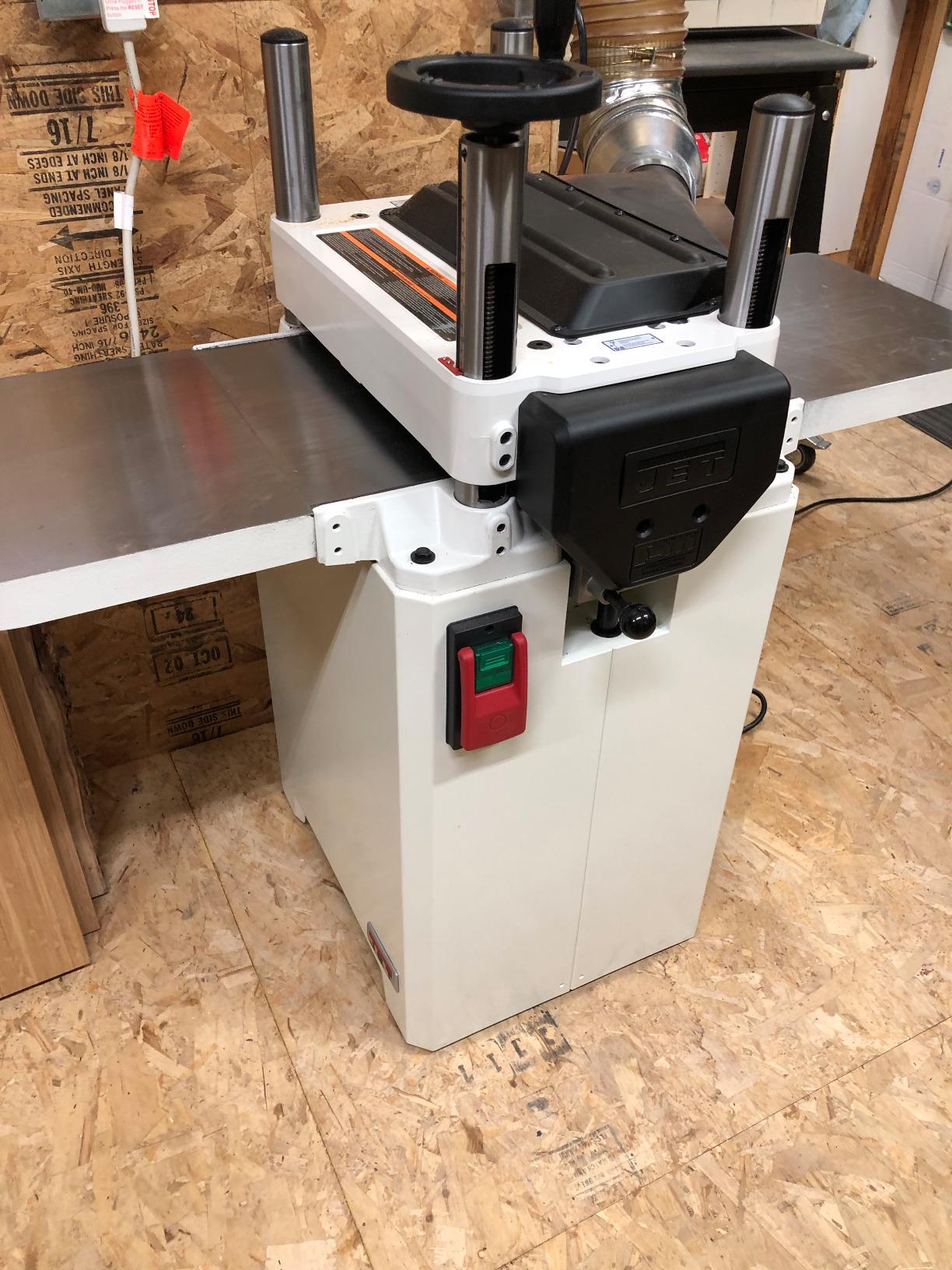
Why 48 carbide knives is the count that matters on tight figure
Cuts per inch is the number that predicts how a helical head behaves on interlocked grain, and it rises with insert count, cutterhead speed and feed rate. Forty-eight knives is far more than any 13-inch machine on this list, and combined with the 16 FPM gear it produces the highest effective mark rate available here. On the tightest curly maple you will see the smoothest result from it.
How to buy this one safely
Inspect it on arrival, photograph any shipping damage before you assemble anything, and check the roller, chain and sprocket inventory against the manual before the first cut. Assembly or transit damage accounts for most of the complaints, and a documented arrival issue is far easier to resolve than a discovered one. Also plan for a 230V circuit and a 285.5 lb machine that needs two people to reposition.
7. Cutech 40800H – Best Value Helical Head Planer for Figured Wood
Cutech 40800H 13-Inch Spiral Cutterhead Benchtop Planer with 26 Tungsten Carbide Inserts, 2-Speed Feed Rate, Snipe Minimizer, and Board Return Rollers (13-Inch 2-Speed (Rifle Green))
Six row cutterhead with staggered two-sided carbide inserts
Two speed lever with a 16 FPM figured wood setting
Four lead screw snipe minimiser, 8 position depth stop
Pros
- Two-sided inserts hold alignment better and draw less current
- Snipe minimiser works without buying an accessory
- Two speed lever drops to 16 FPM to avoid tear out
- All metal construction with a near finish ready surface
- Four post carriage adjustment is stable with no drift
- Runs on a single 15 amp circuit
Cons
- Light hiccup depressions about two inches from each end
- Weak dust collection with the flip up hood
- Heavy enough to warrant a dedicated cart
The Cutech 40800H combines the two things that actually decide how a machine handles figure, at a price that undercuts every other two-speed helical planer here. It has carbide inserts and it has a 16 FPM setting, and the marketing for the slow gear is unusually direct about why: to avoid tear-out on figured wood.
The cutterhead carries six rows of staggered in-house-made inserts, and the inserts are two-sided with a non-cutting edge that prevents skewing while planing. That geometry is claimed to sit in better alignment than four-sided designs and to cut at a low amp draw, which means you can run full-width hardwood in light passes on a single 15 amp circuit.
Snipe control is built in rather than sold separately. Four lead screws and a patented coupling design minimise snipe without an accessory, and owners report near-zero snipe after table adjustment. The eight-position repeat cut depth stop and the front depth-of-cut indicator scale make batch thicknessing straightforward.
Why the slow gear is what this machine is really selling
At 16 FPM the low gear on this machine matches the RIKON, which is the number that controls tear-out on interlocked grain. Owners upgrading from straight-knife machines describe the combination of a 16 FPM pass and two-sided carbide inserts as transformative, and the near finish-ready surface means sanding after planing is often skipped.
The hiccup problem and how to live with it
The recurring complaint is a shallow depression roughly two inches in from each end on some workpieces. It shows up more on end-grain work and it is a table and roller behaviour rather than a cutterhead issue. Planing figured stock face-up, taking a lighter first pass, and checking both ends with a dial indicator will catch it before it ruins a board, but on matched glue-up stock you should plan the same face on every board.
8. Wahuda 13-Inch Spiral Planer – Best for Long Carbide Insert Life
Wahuda Tools 13″ Spiral Cutterhead Planer with 4-sided carbide Tips (Two Speed-New)
Spiral cutterhead with 4-sided carbide inserts
Two speeds at 18 and 26 FPM
Pull-out extensions give 45 inch of support, 77 lbs
Pros
- 18 FPM slow feed gives a smooth finish on figured stock with minimal tear out
- Carbide inserts ran nearly two years for one owner before rotation
- Pull-out extensions give 45 inch of support for long material
- Excellent finish reported on red oak
- white oak and hard maple
- Does not bog down on thick oak or wide hard maple
- Dust port adapter included
Cons
- Infeed and outfeed trays are less rigid than ideal with extensions fully out
- Speed selector can only be changed with the machine running
- One unit arrived with a badly cracked cast base
- Small brand with inconsistent support in isolated reports
This is the smallest evidence base in the roundup at 21 reviews, and we would rather say that plainly than dress it up. What the reviews do say is consistent and specific: the 18 FPM slow feed gives a smooth finish on figured material with minimal to no tear-out, and the 4-sided carbide inserts have run for a very long time before needing rotation.
One owner reports going nearly two years without rotating the inserts, which is the sort of result that matters more than a specification line when you are weighing running cost. The spiral cutterhead uses inserts that rotate or swap when dull, driven by a 120V 15 amp motor, with a 13 inch by 6 inch capacity at 1/8 inch maximum depth of cut and an 8-position preset stop.
The pull-out extensions are the practical standout here. Coplanar pull-outs give 45 inch of total support, which is longer than most 13-inch benchtop machines offer even with fixed tables, and that is exactly what you want when snipe on long figured boards is the problem.
When 18 FPM on this machine is worth choosing
The difference between 26 and 18 FPM shows up most clearly on boards where the grain reverses tightly, and on resinous exotics where a faster pass generates enough heat to dull an insert quickly. Owners name red oak, white oak and hard maple as the species where the finish comes out well, and report that the machine does not bog down on thick oak or wide hard maple.
The caveats worth weighing
The trays are less rigid than ideal with the extensions fully out, which undercuts the very support that makes them appealing. The speed selector can only be changed with the machine running, which is a design decision you will find annoying every time. One unit arrived with a badly cracked cast base, and support responsiveness has been inconsistent in isolated reports. Check the base and the castings carefully on arrival.
9. VEVOR 13-Inch Spiral Planer – Budget Pick with One Real Limitation
VEVOR 13-Inch Spiral Thickness Planer, Woodworking Power Benchtop Planer, with 2000W 23500 RPM Powerful Motor, Single Speed, for Hard & Soft Wood Material
24 spiral alloy blades with a dual-roller feed system
Single speed only, 23500 RPM cutterhead
28.2 inch table, 13 inch width, 2000W motor
Pros
- Lowest price in the helical head category by a wide margin
- 24 spiral alloy blades shear the surface rather than cutting flat
- Dual roller feed reduces vibration on warped material
- 28.2 inch table is longer than most 13 inch benchtop machines
- Works with either 2 inch or 4 inch dust hoses
Cons
- Single speed only
- so no slower pass for figured wood
- Alloy blades rather than replaceable HSS or carbide inserts
- 15 percent of ratings are 1 star
- Aluminum alloy body offers less rigidity than cast iron
The VEVOR is the cheapest way into a helical cutterhead and the specification sheet is genuinely impressive on paper: a 2000W motor, a 23500 RPM cutterhead delivering up to 8000 cuts per minute, a 28.2 inch worktable, and 1/8 inch depth control with millimetre-level accuracy.
What it does not have is a second gear. That single-speed design is the central drawback for figured wood specifically, and no amount of headroom in the motor changes it. You get one feed speed, and your only lever on tear-out is how lightly you take the pass.
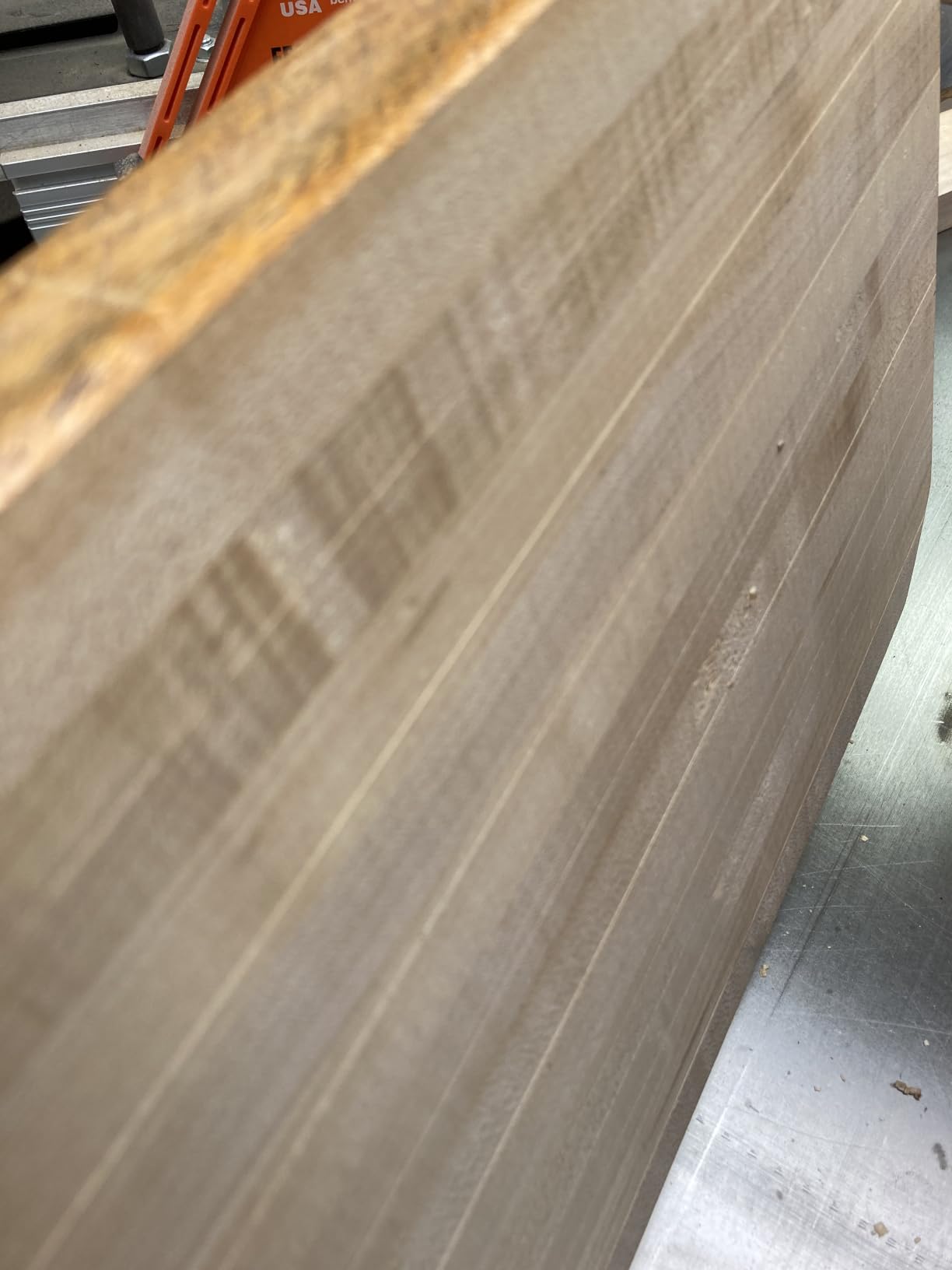
The 24 spiral alloy blades are not replaceable HSS or carbide inserts, and that is the other real limitation. On a helical head, carbide inserts are the reason the machine can be maintained rather than replaced. Alloy blades in a head this fast will need attention eventually, and there is no insert rotation to extend their life in the meantime.
Owners do like several practical details. The dual-roller feed reduces vibration and alignment issues on warped material, the long table keeps long boards steadier than most machines in this class, and the dust port accepts both 2 inch and 4 inch hose. The 3.9 average and the 15 percent share of one-star ratings point to weaker build consistency than the rest of this list.
Who it actually suits
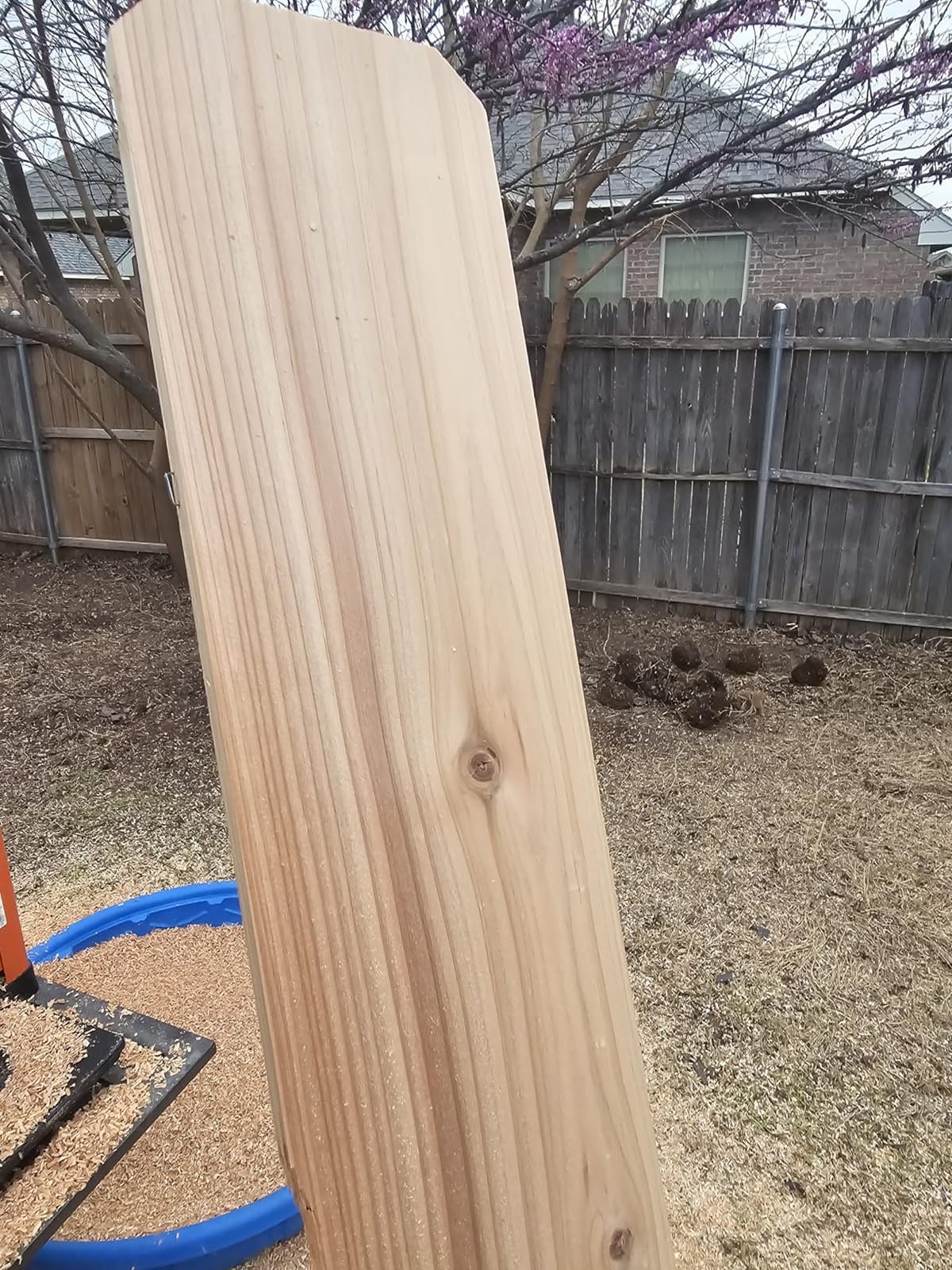
A hobbyist who wants a spiral head for general surfacing, mostly softwood and mild straight-grained hardwood, and who wants a light machine at 61.7 lbs. The 28.2 inch table and dual-roller feed handle warped material better than the price suggests. For pure figured work it is the wrong tool, because you cannot slow the feed down.
Where the quality gap shows
The ADC12 aluminum alloy body offers less rigidity than the cast iron machines here, which matters more on wide stock and on thin figured stock where vibration translates into ripple. If you are buying this machine, buy it for softwood and general surfacing and treat figured wood as a project you approach with very light passes rather than a material to run through freely.
Two-Speed vs Single-Speed: The Spec That Matters Most for Figure
Almost every buying guide for planers leads with motor horsepower. For figured wood, that is the wrong place to start. Feed speed is the variable that decides how many cutting edges hit each square inch of interlocked grain, and a helical head can only shear as gently as the feed allows.
Compare the slowest gear available in this roundup. The RIKON and the Cutech both offer 16 FPM. The JET JWP-13BT and the Wahuda offer 18 FPM. The JET JWP-208HH and the JET JWP-15BHH offer 24 and 16 FPM respectively. The WEN PL1326 has one speed at 26 FPM and the VEVOR has one speed with no published feed figure. The spread between 16 and 26 FPM is the difference between a light shearing pass and a substantially more aggressive one.
That is why the two-speed machines dominate this ranking even though they are not always the highest rated. The single-speed machines here are excellent planers. They are simply not the ones we would hand to someone whose main complaint about their current planer is tear-out on curly maple.
Feed speed also changes how many passes you make. On a board that is 3/4 inch out of flat, 26 FPM may need four or five passes to work down to size, and each pass is another chance for the grain to tear. A 16 FPM machine may reach the same thickness in two passes with a lighter take. Fewer passes is less risk, and on figured stock risk is what costs you the board.
There is a reasonable argument against two-speed machines in low-volume shops, and we will make it. If you are dimensioning softwood four times a year, the gearbox adds a service point for a capability you will not use, and a single-speed cast iron machine will serve you perfectly well. The gearbox earns its place the day figure enters your cutting list.
Upgrade Your Existing Planer or Buy a Helical Machine?
This is the most common question in woodworking forums, and the forum consensus is more useful than any specification list. A drop-in helical cutterhead for a DeWalt DW735 or DW735X is the single most common upgrade path people discuss, and owners describe the same outcome: tear-out that is drastically reduced, and a much quieter machine, on a planer they already own and trust.
The economics are straightforward. A drop-in helical head plus a set of inserts can approach or exceed the cost of a new entry-level helical planer, and that is exactly where buyers hesitate. The forum answer is generally to buy the inserts and do the upgrade anyway if the machine is otherwise sound, because a good used straight-knife planer that you already know how to service is worth more than its resale value to you.
There are real compatibility traps, and they are worth taking seriously. Cutterhead diameter has to match the machine, bearing fit has to be correct, and the cutting height changes what depth of cut is available at the extreme positions. Buy the head from a source that lists your exact model number, and confirm the diameter before you order rather than after. A mismatch here is not a parts problem, it is a safety problem.
Our rule of thumb is simple. If your existing planer has a cast iron bed, a serviceable drive and a body you like, a drop-in helical head is the higher-value purchase. If it has an aluminium base, a failing motor or a table that will not hold a setting, the money is better spent on one of the machines in this roundup.
How to Plane Figured Wood Without Tear-Out?
These are the settings and habits that separate a clean helical pass from a torn one. They matter more than the machine you own, and reviewers on every platform agree.
Use the slow gear. If the machine has two speeds, the low one exists for exactly this material. Every two-speed machine in this roundup specifies 16 or 18 FPM as the figure setting, and those figures were not invented for marketing copy.
Take a light pass. On tight curl, remove less material per pass than feels efficient. Two or three light passes cost you minutes; one aggressive pass on curly maple can cost you the board.
Feed with the grain. Figure reads differently depending on which face goes down. The board orientation that shows the most attractive figure on a finished surface is often not the orientation that planes most cleanly, so on a test cut decide which face you want and work from there. For cupped material, the concave face goes down on the infeed table.
Watch the ends for snipe. Snipe appears at the start and end of a board where the feed rollers release. As a working rule, a planer handles boards up to roughly twice the total table length with minimal snipe. The 13-inch machines in this roundup have short tables, so plan long boards with support under the overhang or in two shorter pieces.
Support the overhang. Every helical planer here benefits from a roller stand or outfeed support on long workpieces. Snipe on figured stock is almost always a support problem, not a cutterhead problem.
Keep an eye on insert sharpness. A dull insert does not shear, it pushes, and pushing is what lifts fibres. If the surface starts to look fuzzy rather than clean, the inserts are the first thing to rotate, not the machine to blame.
Clean the pitch out of the head. Resinous species build up on the cutterhead and the inserts. Frequent cleaning keeps the spiral geometry working as designed.
Which lumber should not go through the planer
Reclaimed lumber with embedded nails or screws is the obvious answer, and a helical head is only slightly more forgiving than a straight knife. Extremely tight figure where multiple light passes are not practical is a second: if you cannot reduce the tear-out, you should resaw the board instead of planing it. Bamboo splits easily at the edges, and very thin material under half an inch can chatter. Warped boards beyond what the machine can correct are worth hand-sawing or skipping rather than forcing.
The insert rotation schedule
Every insert on every machine in this roundup has more than one usable edge, and using them is what makes a helical head economical. Check the inserts at the end of each session and rotate any that show a flat spot or a line in the finish. Clean the pockets and the head with a brush rather than compressed air, which drives grit into the bearings. Inspect the bearings and the drive chain every few months. Full depth and parallelism checks with a dial indicator belong on a schedule rather than on the day something looks wrong.
Frequently Asked Questions
What is the best helical head planer for the money?
For most hobbyists and small shops, the WEN PL1326 is the best value in the helical head category: 26 rotatable HSS blades, a cast iron base and the largest body of owner feedback available, with clean finishes reported on walnut and maple. If your work includes tight curly maple, spend a little more for a two-speed machine such as the RIKON 25-135H or the Cutech 40800H, both of which offer a 16 FPM low gear and carbide-class insert options. Wider figured work points to the 15-inch or 20-inch machines.
Which is better, a spiral or a helical cutterhead?
They are the same thing. Spiral and helical are used interchangeably by manufacturers, importers and retailers, so a spiral cutterhead planer and a helical cutterhead planer are the same category of machine. The genuine alternative is the segmented or cone head, which mounts carbide segments around the drum instead of arranging inserts in a helix. Segmented heads cost less and are a reasonable compromise, but owner reports of their finish on figured wood are mixed.
Are helical cutters worth it?
They are worth it if you regularly plane figured or exotic hardwoods, and less compelling if you mostly plane softwoods. Helical heads cut tear-out dramatically, run far quieter than straight-knife machines, and replace inserts by rotation instead of paying for repeated sharpening. Against that, the machines cost more up front, inserts still have to be managed, and a softwood-only shop that planes occasionally will rarely recover the difference. On tight curly maple the improvement is not subtle enough to argue about.
Is the Harbor Freight planer any good?
Harbor Freight does not offer a dedicated helical head planer in its mainstream range, so the helical head question is a poor fit for their planer line. For any Harbor Freight power tool, expect a machine that performs adequately for light work, with the usual caveats around parts availability, insert quality and support if something fails. If your priority is figured wood, the money is better spent on a two-speed helical machine from this roundup.
Is a helical planer head better than a straight knife planer head?
For figured wood, yes, and by a wide margin. A helical head shears fibres with many small inserts at a slight angle instead of driving a wide knife straight into compressing grain, so tear-out drops sharply and the machine runs much quieter. Straight knives remain a practical choice for softwood-only shops that plane occasionally, where in-house high-speed steel sharpening is cheaper than managing carbide inserts. Helical heads still reduce tear-out rather than eliminate it on extremely tight grain.
Which planer has the best helical cutterhead?
It depends on the use case rather than one machine. The JET JWP-15BHH has the most capable cutterhead on paper with 48 staggered carbide knives and a 16 FPM gear. The JET JWP-208HH is the choice for 20-inch slabs and heavy cut volumes. Among benchtop machines, the RIKON 25-135H and the Cutech 40800H combine a 16 FPM low gear with carbide inserts, which is the combination that matters most on figured stock.
Which type of lumber should not be run through the planer?
Reclaimed lumber with embedded nails or screws is the clearest case, and very thin material under half an inch can chatter. Bamboo splits at the edges, and boards warped beyond what the machine can correct are better hand-sawn or skipped. Extremely tight figure that will not stop tearing is also better resawed than planed. A helical head is more forgiving than straight knives when it meets occasional metal, but it is still not permission to feed unknown material through.
Conclusion: Which Helical Head Planer Should You Buy?
For most people reading this, the WEN PL1326 is the answer. It has the deepest evidence base in the category, a cast iron base that holds a setting, and owner reports of a finish good enough to skip sanding on walnut and maple. Its two limits, a single 26 FPM feed and a 13-inch width, only matter if tight curly maple is a frequent part of your work or you cut wide panels.
If figured wood is a regular job, buy a two-speed machine and choose the gear over the horsepower. The RIKON 25-135H is the pick for anyone who wants the slowest low gear and the lightest body, and the Cutech 40800H is the pick for anyone who wants carbide inserts and built-in snipe control at a lower step up. For production volume on figure, the JET JWP-15BHH has the best cutterhead in the roundup and needs careful inspection on arrival.
Whatever you choose, the technique decides the result as much as the machine. Slow gear, light passes, correct board orientation and honest expectations about what a spiral head cannot fix. Our wood router roundup covers the next machine most shops add, and our benchtop planer guide goes deeper on table flatness. Used carefully, any of these nine will change how figured wood looks coming off the machine in 2026.