
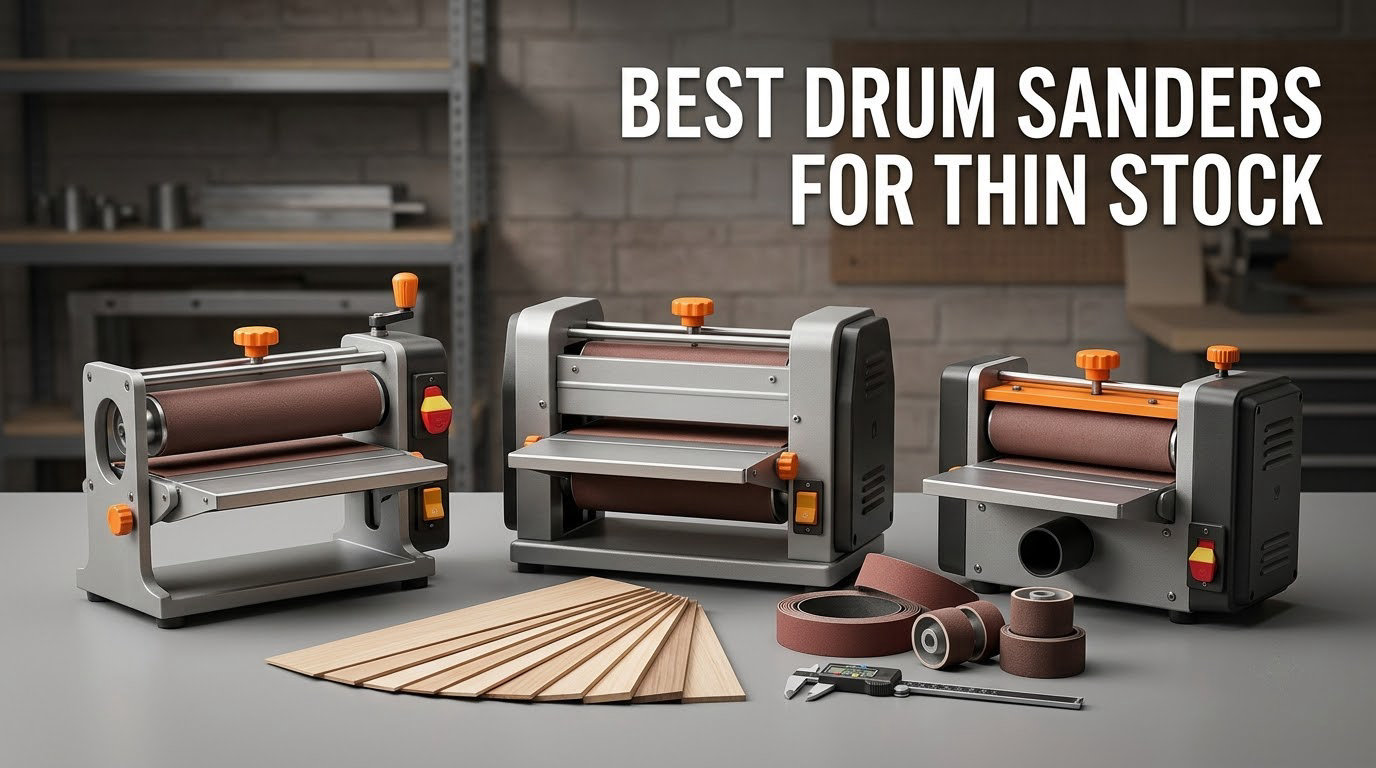
A thickness planer is the tool most shops reach for when wood needs to be flat. It is also the tool that eats 1/8 inch resawn stock, snipes the ends of short boards and tears out figured maple. A drum sander takes a different approach: the workpiece rides on a powered conveyor while abrasive wrapped around a rotating drum presses down on it, so the contact is brief and controlled. That is why the best drum sanders for thin stock can finish a board a planer would destroy.
We compared ten drum sanders for this guide, from 10 inch benchtop units to a 24 inch dual-drum machine, and read the owner reviews closely for the thin-stock details: minimum thickness, how heat behaves, and whether short parts stay put on the conveyor. This is a research-led roundup built on manufacturer specifications and verified buyer feedback, not a hands-on shootout, and we have said so throughout so you know which claims are spec sheet and which are owner experience.
If you want the broader picture first, our complete drum sander guide covers the machine types and dust collection in more depth, and drum sanders for large panels is worth a look if wide stock is your main workload.
A quality drum sander can surface stock down to roughly 1/32 inch, and some owners report 1/64 inch results with careful setup. Realistically, anything under 1/8 inch needs a slower feed, a backer board or sacrificial caul underneath, and a drum gap no wider than the workpiece itself.
Top 3 Drum Sanders for Thin Stock in October 2026

JET JWDS-1020 10-Inch Benchtop
- Heat-dissipating aluminum drum
- Infinitely variable feed
- 73 lb benchtop body

JET JWDS-1632 SandSmart…
- SandSmart load-sensing feed
- 16 inch in one pass or 32 in two
- 97% dust capture

JET JWDS-2244 22-Inch Drum…
- Pull-through conveyor
- Dynamically balanced drum
- Toolless parallelism dial
Drum Sanders for Thin Stock Compared in October 2026
| Product | Specs | Action |
|---|---|---|
| JET JWDS-1020 10-Inch Benchtop |
|
Check Latest Price |
| JET JWDS-1632 16-Inch SandSmart |
|
Check Latest Price |
| JET JWDS-2244 22-Inch Open Stand |
|
Check Latest Price |
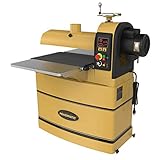 Powermatic PM2244 22-Inch Closed Stand Powermatic PM2244 22-Inch Closed Stand |
|
Check Latest Price |
 VEVOR MS3140 16-Inch Dual Motor VEVOR MS3140 16-Inch Dual Motor |
|
Check Latest Price |
 VEVOR MS3126 10-Inch Benchtop VEVOR MS3126 10-Inch Benchtop |
|
Check Latest Price |
 SuperMax 19-38 Drum Sander SuperMax 19-38 Drum Sander |
|
Check Latest Price |
 SuperMax 16-32 Open Stand SuperMax 16-32 Open Stand |
|
Check Latest Price |
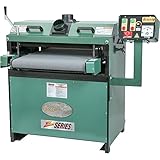 Grizzly G1066Z 24-Inch Dual Drum Grizzly G1066Z 24-Inch Dual Drum |
|
Check Latest Price |
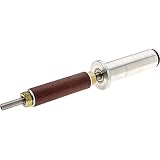 Shop Fox D4594 Pneumatic Drum Sander Shop Fox D4594 Pneumatic Drum Sander |
|
Check Latest Price |
1. JET JWDS-1020 10-Inch Benchtop Drum Sander – Best Overall for Thin Parts
JET 10-Inch Benchtop Drum Sander, 1 HP, 115V 1Ph (Model JWDS-1020)
10 inch drum
1 HP 115V
73 lb
26.85 x 17.9 x 17.87 inch
Infinitely variable feed
Pros
- Extruded aluminum drum dissipates heat on thin panels
- Open-end design sands up to 20 inch capacity in two passes
- Compact enough for a benchtop or flip-top cart
- 73 pound weight keeps it stable on small parts
Cons
- Very heavy for a benchtop unit
- Only one 80 grit wrap included
- Out of the box conveyor alignment varies
- Abrasive clip is stiff to load
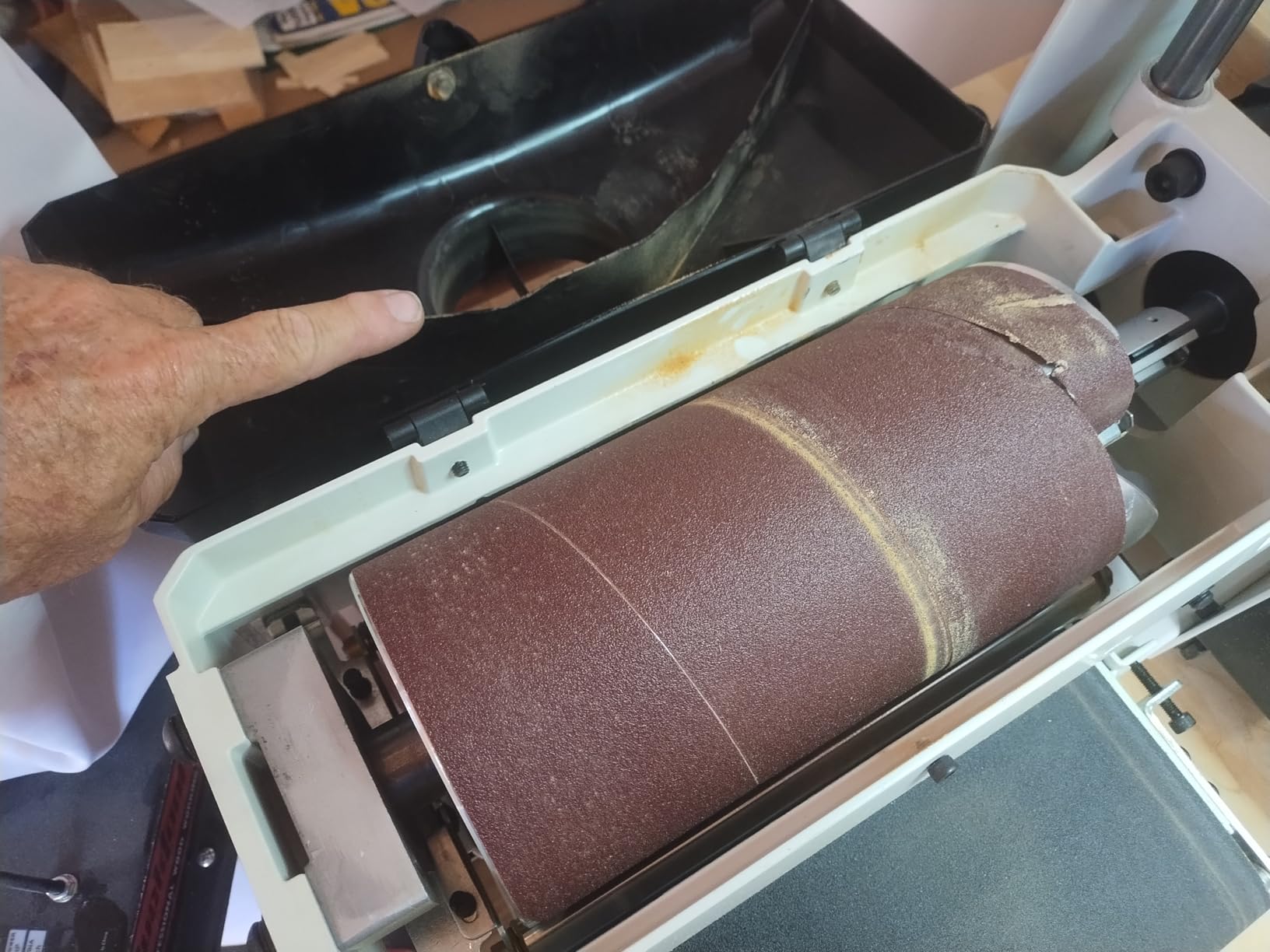
The JWDS-1020 is the machine most home shops buy first, and for thin work it makes more sense than its small drum width suggests. The open-ended drum gives you 10 inch capacity in a single pass and up to 20 inch in two, which is enough for most cabinet parts, drawer fronts and resawn boards without a second machine.
Owners consistently single out the extruded aluminum drum, which is designed to pull heat away from the workpiece rather than trap it. On 1/8 inch stock that matters more than horsepower, because the alternative is a scorch mark on a board you cannot afford to lose.
Feed control is infinitely variable rather than a fixed-speed conveyor, and that is the feature thin-stock users need most. Several reviewers report sanding pieces under 3 inch long and down toward veneer thickness, with multiple light passes rather than one aggressive cut.
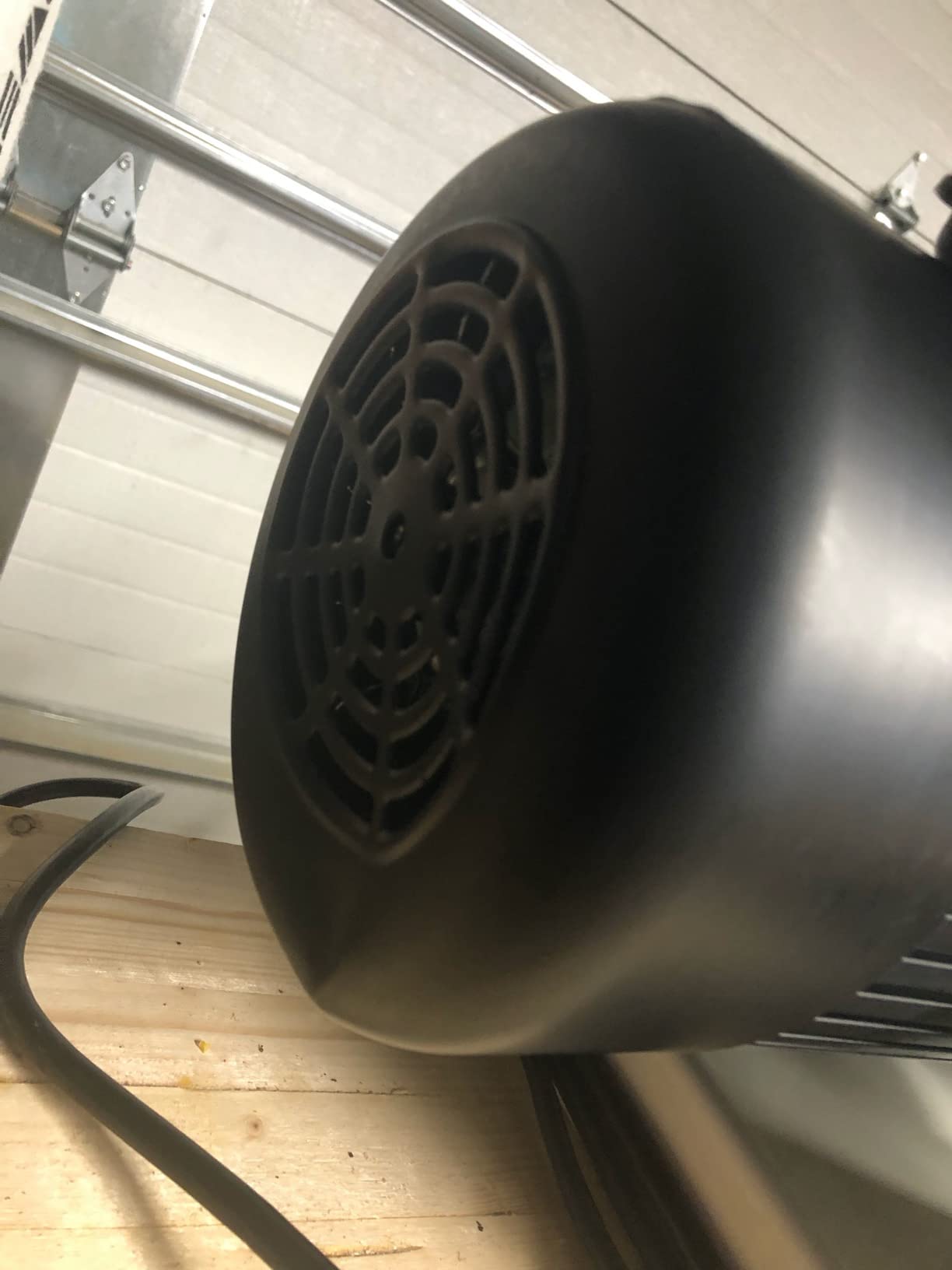
The recurring complaints are all setup issues rather than design faults. Conveyor bed alignment varied on some units and needed manual correction, the spring-loaded abrasive clip is stiff against the motor spindle, and 73 pounds is genuinely awkward to center on a flip-top cart.
Where it handles thin stock well
Short parts and small panels are the strength here. One owner describes using it as a thicknesser for thin stock and for anything too wide or too awkward to feed safely through a planer, which is exactly the use case this machine was built for.
The die-cast aluminum and steel body gives it the rigidity to hold a consistent surface across a narrow drum, and the integrated circuit breaker protects the motor if you advance the depth adjustment too far in a single pass.
Where it will frustrate you
The 10 inch drum means wide thin panels need two passes and a reorientation, and reversing the workpiece is where snipe creeps in. If your thin stock is mostly wider than 10 inch, you will be flipping boards every time.
Budget for extra abrasive wraps, since only an 80 grit strip comes pre-installed. Thin-stock work changes grit often, and a single included wrap will not cover a season of resawing.
2. JET JWDS-1632 16-Inch Drum Sander – Best for Veneer and Open-End Width
JET 16″ Drum Sander w/Stand, SandSmart Auto Feed Control (JWDS-1632)
16 inch drum
1-1/2 HP 115V
156 lb
SandSmart to 10 FPM
97% dust capture
Pros
- SandSmart holds a consistent cut without constant dial attention
- 16 inch in one pass or 32 in two
- Toolless parallelism dial and self-aligning belt trackers
- Quiet relative to a comparable planer
Cons
- Abrasive strips are slow and awkward to change
- Real learning curve before it stops burning thin stock
- Open-end snipe on the outfeed side
- 156 lb makes the stand hard to move
This is the machine most often described online as the drum sander for veneer. It handles 16 inch stock in one pass and up to 32 inch in two, and the SandSmart system continuously watches drum motor load and regulates conveyor speed to hold the fastest feed the cut allows, infinitely variable to 10 FPM.
That load-sensing behavior is the thin-stock safety net. Feed faster than the drum can take and you get gouging and burn marks; SandSmart backs the conveyor off instead of letting you cook the workpiece.
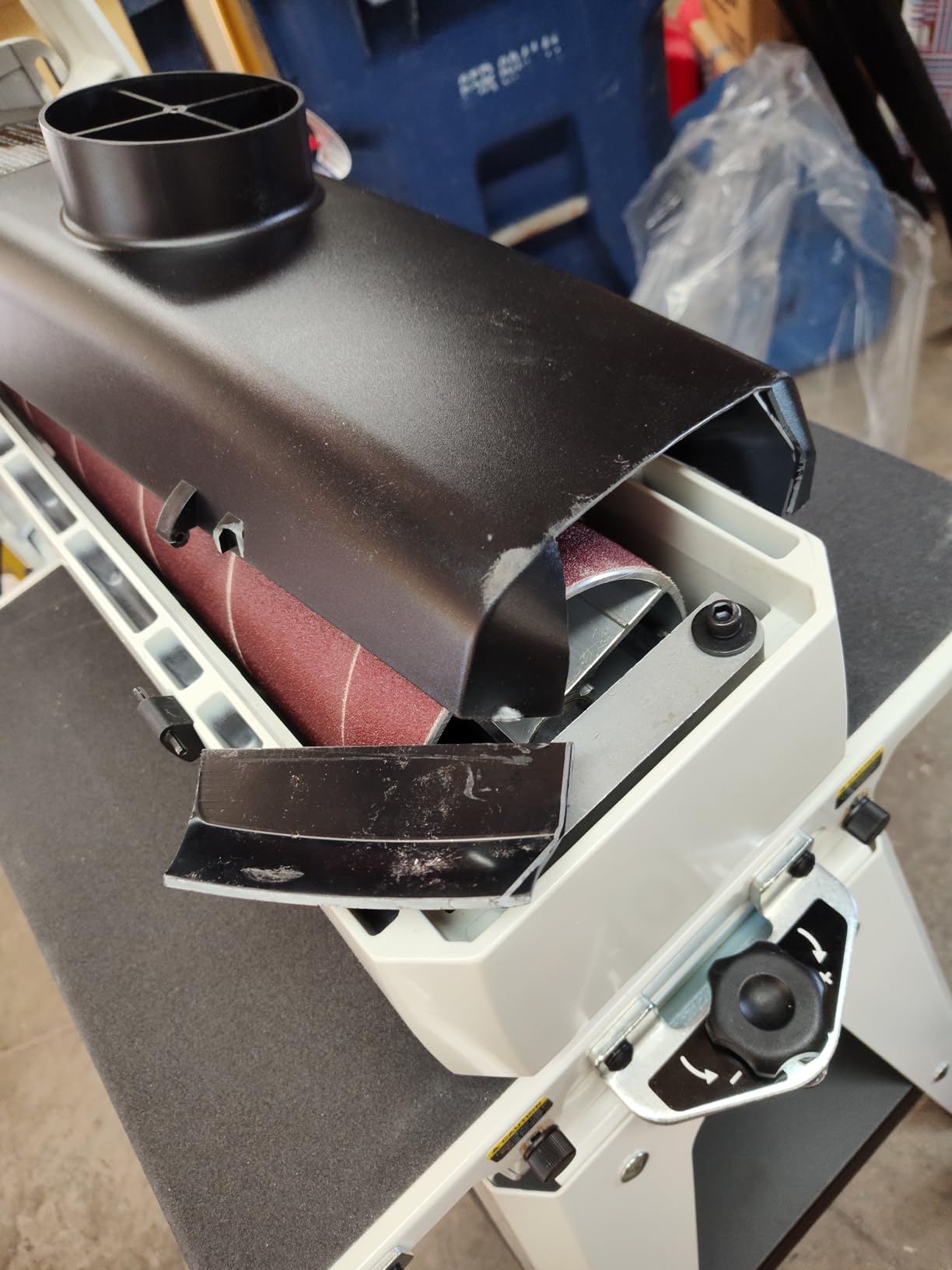
Owners report level, consistent surfaces that hold inlays and end-grain work flat, and dust capture rated up to 97 percent when paired with a cyclone collector through the drum-shaped hood channel and 4 inch port. The stand arrives as a complete 20 x 37 inch steel unit and assembles in under an hour with hand tools.
Set expectations properly on the learning curve. Buyers report that aggressive depth or a fast feed destroys paper and burns the workpiece, which is the same warning that appears in nearly every thin-stock drum sander review. Multiple light passes are the habit worth building.
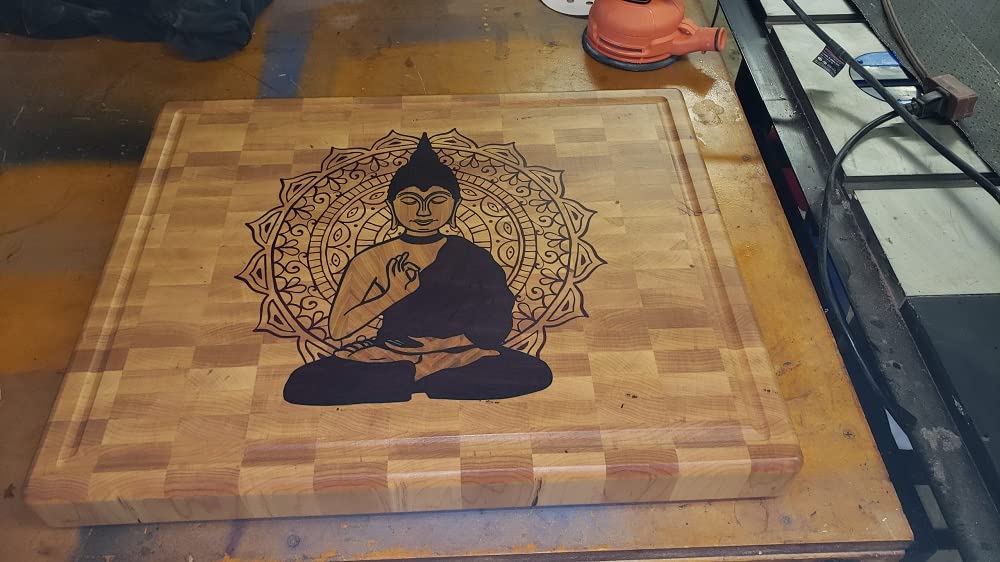
Where it handles thin stock well
Open-end design means wider thin panels do not need a second machine, you just reverse the workpiece and take a second pass. The toolless parallelism dial and dual self-aligning belt trackers make the setup corrections that thin stock demands far less tedious.
A SawmillCreek thread on the Performax 16-32, the same open-end 16 inch format this machine carries, put the case plainly: it will sand thin stock like shop sawn veneer, and a planer does not work on thin stock at all.
Where it will frustrate you
Snipe on the outfeed side of the open end is reported and cannot be dialed out entirely. On very short thin parts that ridge is the first thing you will see on an otherwise perfect face.
Abrasive strips are slow and awkward to change, and clamps can loosen during a run. On a machine that needs frequent grit changes for thin stock, that is a real cost in shop time, and a few owners also report poor long-term parts availability.
3. JET JWDS-2244 22-Inch Drum Sander – Top Rated for Large Thin Panels
JET 22-Inch Drum Sander with Open Stand, 1-3/4 HP, 1Ph 115V (Model JWDS-2244)
22 inch drum
1-3/4 HP 115V
177 lb
Pull-through conveyor
SandSmart auto-feed
Pros
- Highest rating in this group at 4.4 with 74% five-star reviews
- Dynamically balanced drum reduces heat and burn marks
- Toolless parallelism dial with quick return stop
- Conveyor pulls stock through for better control on long boards
Cons
- Large open stand takes substantial floor space
- 177 lb needs planning to move
- Small review base of 49 limits long-term data
At 4.4 stars this is the best-rated machine we looked at, and the design detail that earns the rating is the dynamically balanced, precision-machined drum. Owners point to it directly as the feature that keeps heat and burn marks off thin panels.
The pull-through conveyor is the other quiet win. Instead of pushing stock at it, the machine draws long boards through, which gives you better control on the exact work thin-stock users do most.
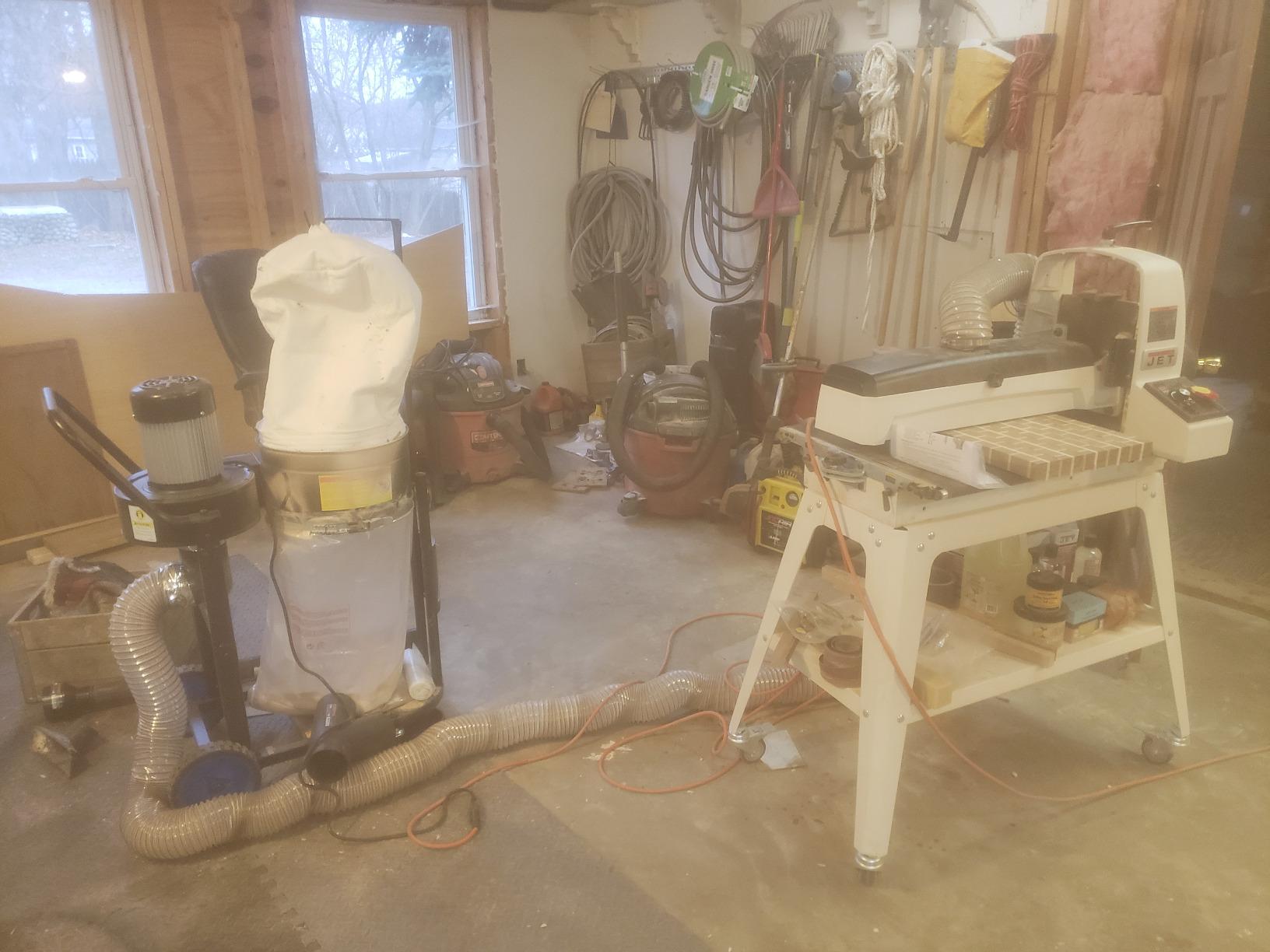
Parallelism adjustment uses a dial on the outside of the bed with no tools, plus a stop that returns the bed to flat quickly. On a machine that sands thin panels, being able to re-flat in seconds between grits matters more than most spec sheet extras.
What you give up is floor space. At 42 x 24 x 52 inch on an open stand and 177 pounds, this is a dedicated shop bay machine rather than something you shuffle around a small room.
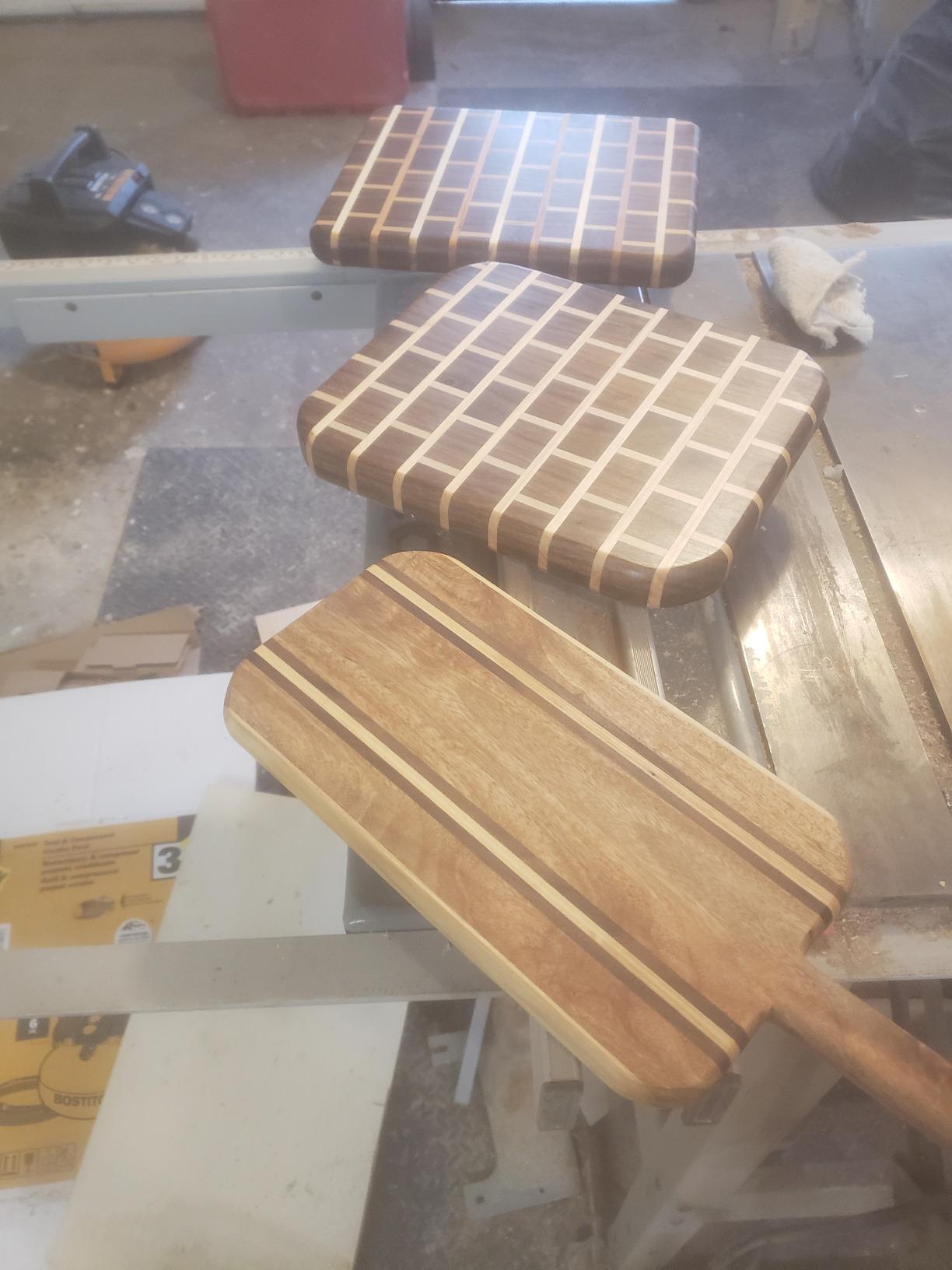
Where it handles thin stock well
The 22 inch drum takes wide thin panels in a single pass, so you avoid the reverse-and-repeat cycle that introduces snipe. SandSmart holds the cut without constant dial attention, which matters when you are feeding stock with almost no thickness to spare.
Owners also credit the drum-shaped dust hood channel feeding the 4 inch port, which keeps chips moving off the workpiece instead of packing against the drum where thin veneer can ride up.
Where it will frustrate you
Forty-nine reviews is a thin base for a machine this size, so long-term consensus should be read as directional rather than deep. Treat common owner themes as a starting point for setup, not a guarantee.
The footprint and weight are the practical limits. If your thin stock is mostly small parts, you are buying width you will not use and floor area you cannot spare, and a benchtop unit would serve the same work.
4. Powermatic PM2244 22-Inch Drum Sander – Best Support for Long Thin Boards
Powermatic 22-Inch Drum Sander, 1-3/4 HP, 115V 1Ph (Model PM2244)
22 inch drum
1-3/4 HP 115V
328 lb
37-1/2 inch table support
Feed Logic control
Pros
- Extension tables provide 37-1/2 inches of workpiece support
- Feed Logic prevents motor overload on heavy passes
- Repeatable snipe-free thicknessing accurate to a few thousandths
- Dial table parallelism avoids moving the whole drum carriage
Cons
- Very heavy at 328 lb
- Feed belt can stall on thick heavy workpieces and burn them
- Electronics and customer service draw heavy criticism
- Several reports of shipping damage on arrival
The PM2244 exists for one reason: support. Its infeed and outfeed extension tables give 37-1/2 inches of workpiece support, and for long thin boards that support is the difference between a flat result and a board that flexes down as the drum passes over it.
Users who get this machine dialed in report repeatable, snipe-free thicknessing accurate to a few thousandths across a door. The closed stand adds abrasive storage and integrated casters, which is helpful if you want to move it occasionally.
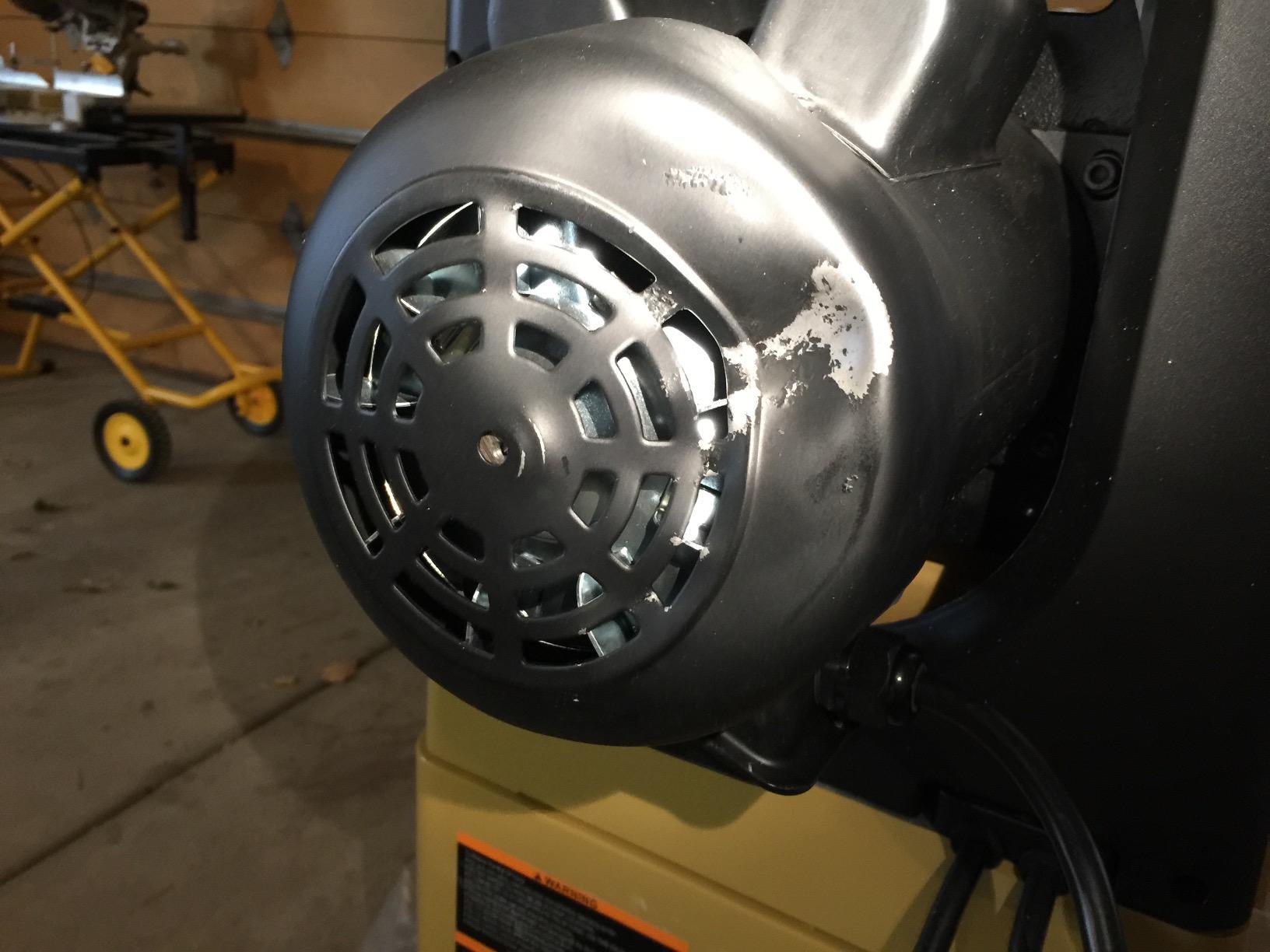
Feed Logic monitors the drum motor and regulates conveyor speed, preventing the overload shutdown that would otherwise end a pass. The tradeoff appears in heavy work: owners report the feed belt stalling on large pieces and leaving drum indentations and burn marks.
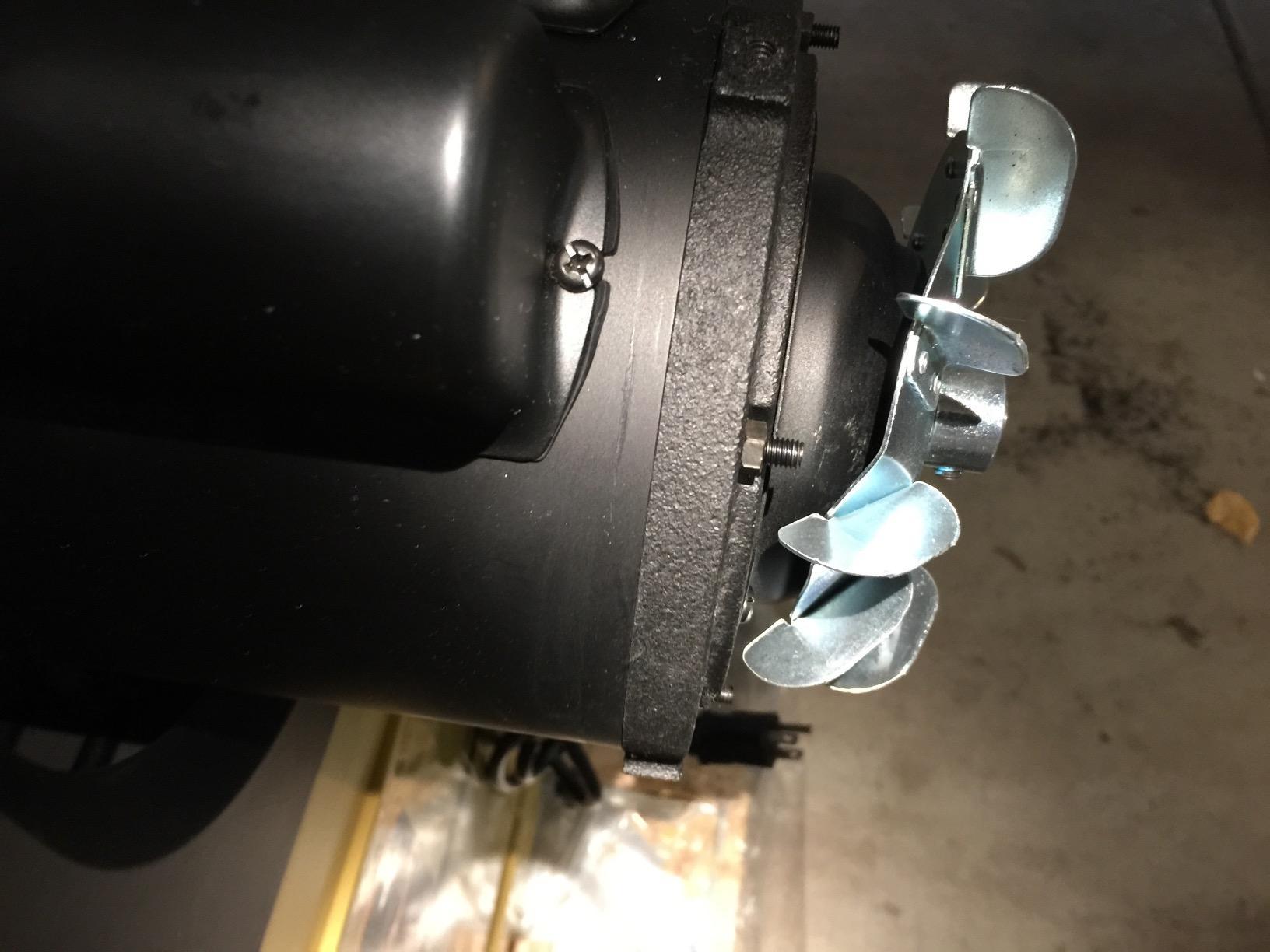
At 328 pounds with a 42.25 x 37.75 inch footprint, this is the least movable machine in the group, and the 3.6 rating reflects polarization rather than broad mediocrity. Buyers also report cracked castings and bent bases on arrival, plus sharp criticism of electronics and service.
Where it handles thin stock well
The extension tables matter most here of any machine reviewed. Long, thin, wide boards need support at the infeed and outfeed or they bow under the conveyor and sand unevenly, and this is the only machine in the set with that much table on both ends.
Dial-based table parallelism is also more useful than it sounds. You can correct a bed without repositioning the entire drum carriage, which is exactly the adjustment thin-stock work demands between grits.
Where it will frustrate you
The feed belt is the weak link. It can stall on thick, heavy workpieces, and one reviewer reports poor feed on a large 25 x 72 inch tabletop, which is the opposite of the gentle handling thin panels need.
Moving it is a chore at 328 pounds, and the reviews split sharply enough that you should buy it for its support tables specifically rather than expecting it to be the best machine here. Check the machine carefully on arrival if you order it.
5. VEVOR MS3140 16-Inch Drum Sander – Best With Extension Tables
VEVOR 16″ Drum Sander with Stand & Extension Tables, 1.5HP 1720RPM Dual Motor Drum Sander for Woodworking – Variable Speed Conveyor Belt, 4″ Dust Collection Port for Cabinet & Furniture Finishing
16 inch drum
1.5 HP at 1720 RPM
193.4 lb
Rated 1/32 to 3 inch stock
Variable speed conveyor
Pros
- Published spec covers stock from 1/32 to 3 inch thick
- Two removable extension table assemblies for long stock
- Conveyor belt tracker reduces deviation on the feed
- 4 inch dust port plus mobile wheels and height handwheel
Cons
- Abrasive clamp is hard to reach and the surrounding metal is sharp
- Documented snipe on the outfeed side
- Feed belt can slip and need manual help
- Trips the internal breaker if the first feed rate is too high
This is the only machine in the group that publishes a minimum and maximum stock thickness, handling boards up to 16 inch wide and 1/32 to 3 inch thick. That published figure is exactly the kind of specification thin-stock buyers usually have to guess at.
The dual motor layout separates the direct-drive sanding motor from a gear-reduction conveyor motor, so conveying stays smooth even when the sanding side is working. The conveyor belt tracker is designed to prevent lateral deviation, which is what keeps sanding even across the width.
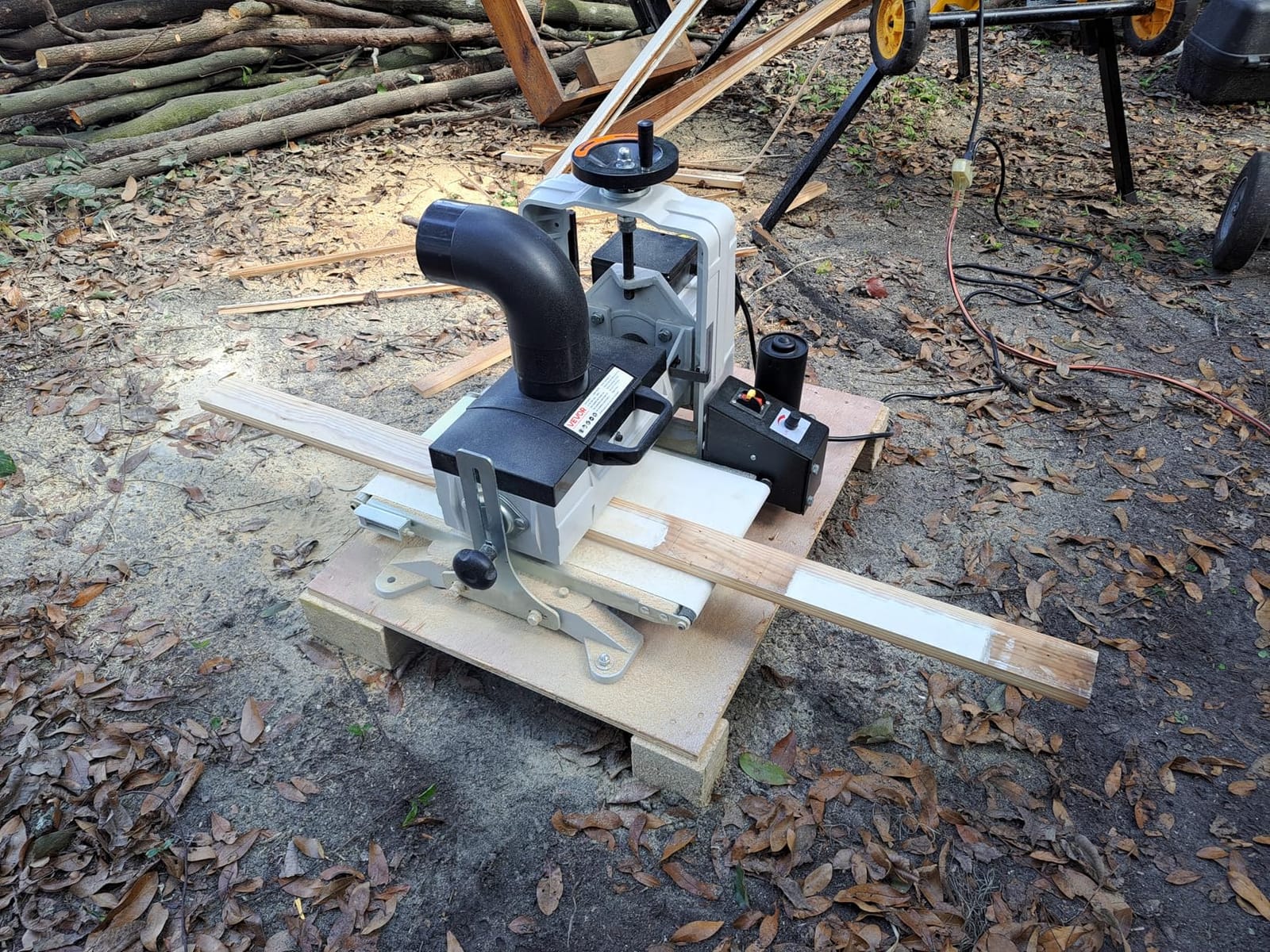
Owners report that once the handwheel and feed speed are dialed in, they can take as little as 1/64 inch per pass with square results. The 4 inch dust port accepts common hose, and mobile wheels make it easier to reposition than most open-stand machines.
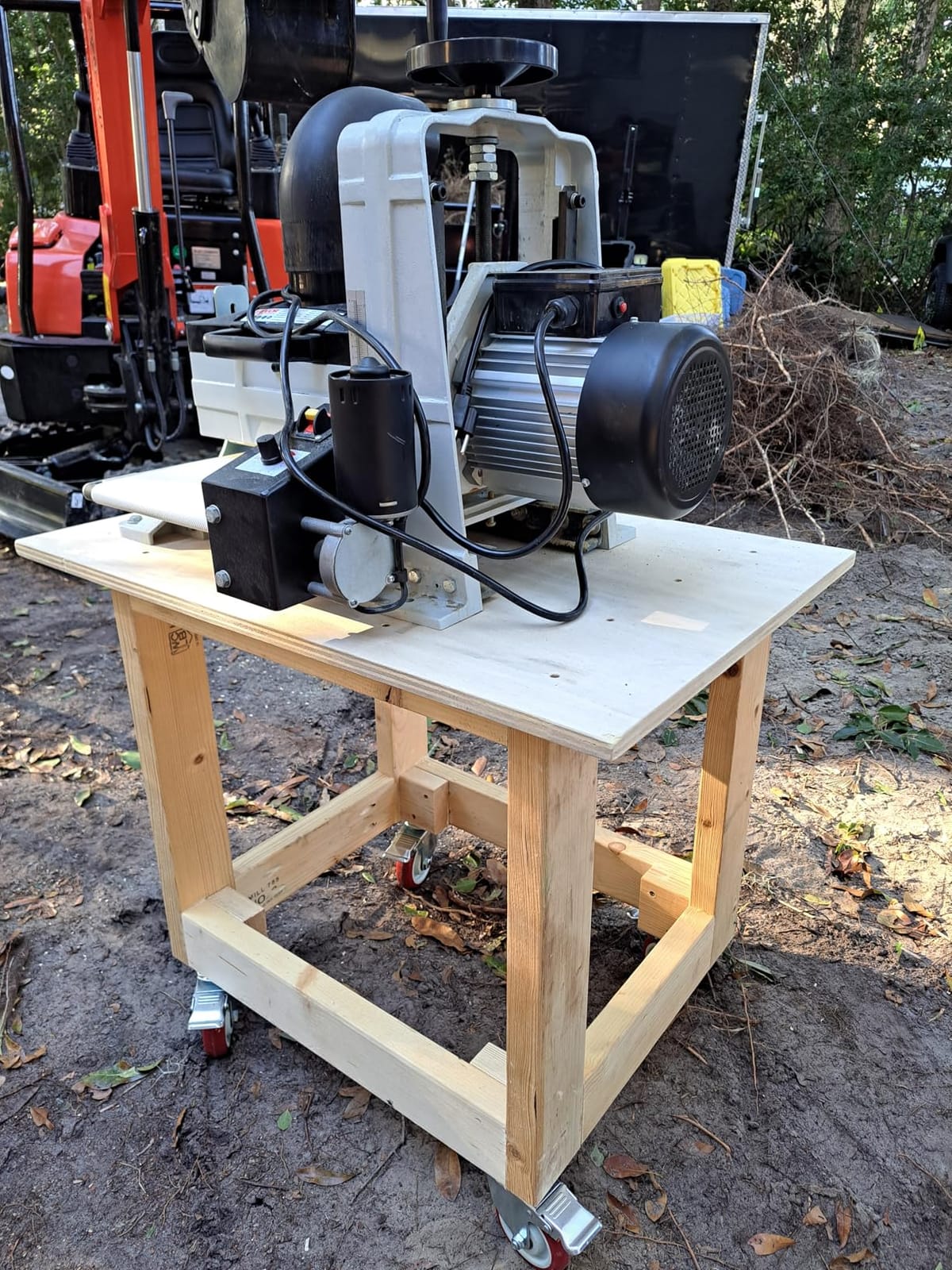
The friction is ergonomic. The abrasive clamp sits in a cramped, sharp-edged area near the motor, the illustrated hand position in the manual does not work and owners switch to the outfeed side, and several tripped the internal breaker by feeding too fast on the first pass.
Where it handles thin stock well
Variable speed conveyor control lets you dial the feed down for veneer and up for thicker stock without changing machines, and the two extension table assemblies give long thin workpieces somewhere stable to sit.
Snipe is documented on the outfeed side, especially on thin stock, so expect to sand critical show faces from one direction and treat the reverse as the reference face rather than assuming a flawless result on both sides.
Where it will frustrate you
Ten reviews is a very small base, and a 22 percent one-star share limits what you can conclude about long-term durability. This is a machine to evaluate on published specifications and warranty terms, not on owner consensus.
Changing the abrasive wrap is the task you will do most often in thin-stock work, and it is the worst-served function on this machine. Budget extra shop time for paper changes or budget for a helper.
6. VEVOR MS3126 10-Inch Benchtop Drum Sander – Best Compact Dual-Motor
VEVOR 10″ Benchtop Drum Sander, 1HP 1725RPM Dual Motor Drum Sander for Woodworking – Variable Speed Conveyor Belt & 4″ Dust Collection Port for Cabinet Making & Furniture Finishing
10 inch drum
1 HP at 1725 RPM
130.2 lb
Rated 1/32 to 3 inch stock
Variable speed conveyor
Pros
- Published rating covers 1/32 to 3 inch stock thickness
- Handwheel gives fine depth control down to about 1/64 inch
- Quiet and smooth running with minimal vibration
- Stout cast frame that does not flex
Cons
- Stand not included
- abrasive clamp hard to reach near sharp edges
- Feed belt can slip
- Noticeable outfeed snipe
The MS3126 carries the same published 1/32 to 3 inch stock range as its 16 inch sibling, in a body small enough for a bench in a one-person shop. At 27.2 x 23 x 21.7 inch it is the least floor-hungry machine here that still handles veneer-thin material.
Owners verify results with calipers after setting the handwheel, and the variable speed conveyor straightens cupped stock over multiple passes. For warped thin panels, that slow repeated pass is often the whole trick.
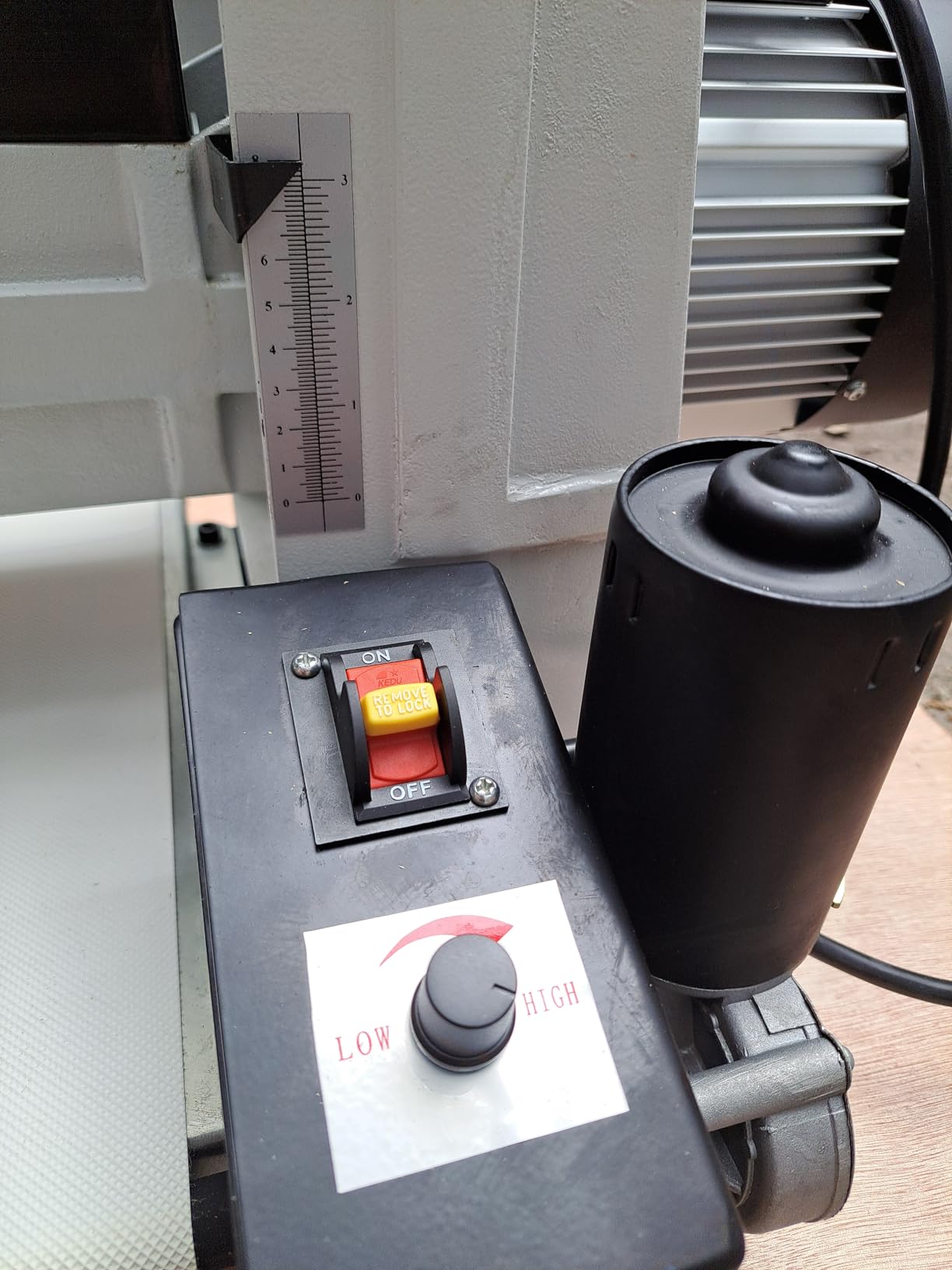
Arriving nearly assembled in a crate, with only the adjustment dial needing attachment, it is a fast setup compared with stand-based machines. A 4 inch dust port and included adapter mean it will accept a standard hose without a transition part.
Three complaints recur. The abrasive clamp is very difficult to reach from the infeed side and the surrounding parts are sharp, the feed belt can slip so the workpiece needs a hand, and snipe is noticeable at the outfeed side.
Where it handles thin stock well
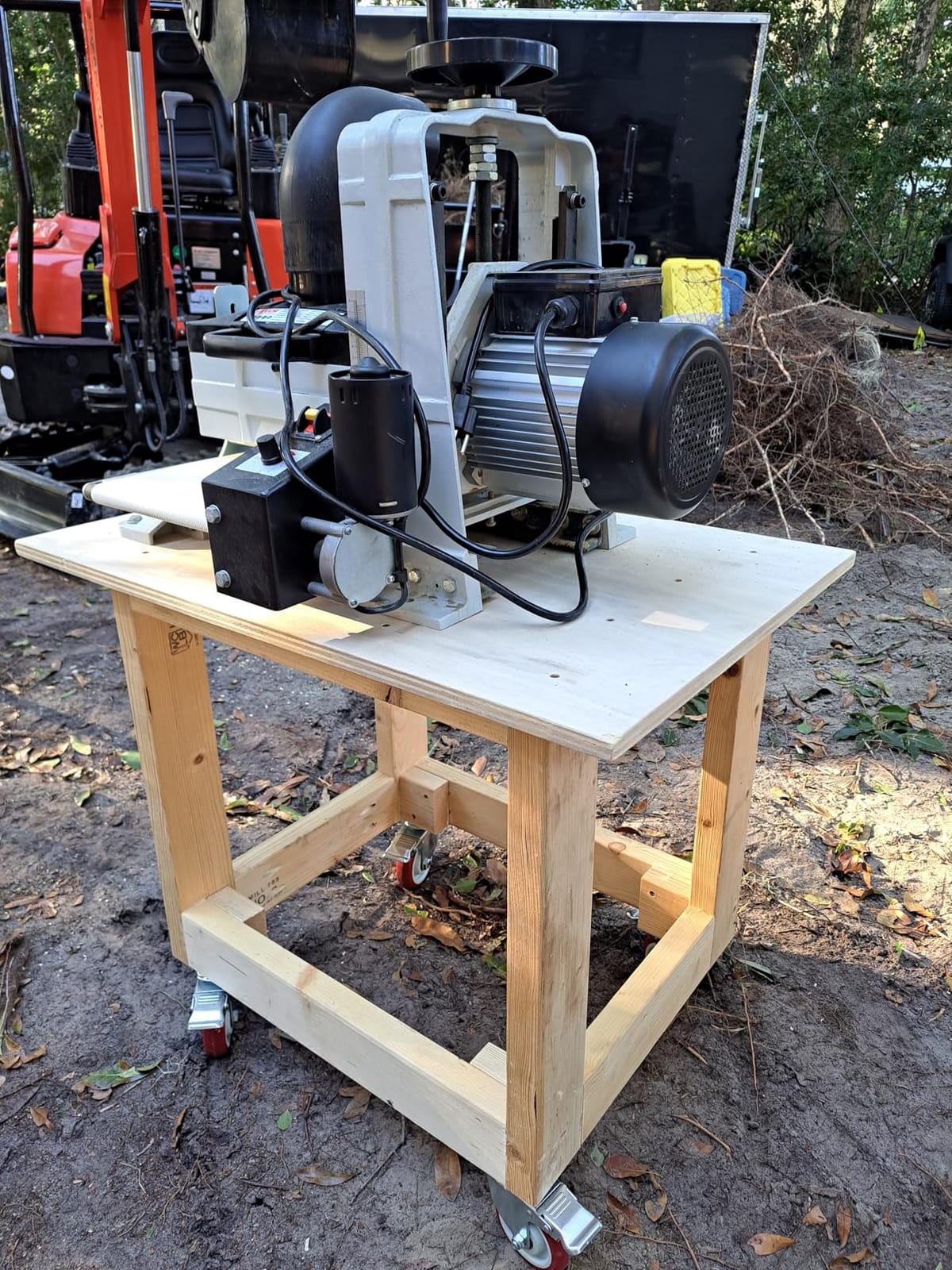
Small parts are the target. A 10 inch benchtop drum with a 130 pound frame suits instrument blanks, small panels and cut-off pieces that are too short to handle safely on a floor machine.
Some owners report the variable feed evening out cupped thin stock across repeated passes, which a planer would handle poorly on the same material because the workpiece needs support from underneath.
Where it will frustrate you
No stand is included, so you need a planer stand or a heavy table to put it on, which adds a purchase and eats the footprint advantage. Only one sheet of abrasive is included, so order additional grits up front.
It shares the family snipe issue at the outfeed, and the internal breaker trips if the initial feed rate is set too fast for the material. Ten reviews with a 22 percent one-star group means setup frustration dominates the feedback.
7. SuperMax 19-38 Drum Sander – Best Grip on Short Raw Stock
SUPERMAX TOOLS Drum Sander with Flatness Guarantee, Intellisand Technology and Patented Abrasive Attachment System. Model 19-38 (SUPMX-71938-D)
19 inch drum
38 inch capacity in two passes
239 lb
Flatness guarantee under .010 inch
IntelliSand control
Pros
- Abrasive conveyor belt grips raw wood so stock can be much shorter or thinner
- Flatness guarantee under .010 inch across the width
- Self-cooling drum prevents overheating and extends abrasive life
- Adjustable tension rollers apply hold-down pressure that reduces snipe
Cons
- Drive belt undersized for wide heavy panels
- which can lag groove or burn
- Motor-side abrasive clip is poorly positioned
- Drive belt and parts can be slow to source
- Support responsiveness criticized by owners
The defining feature here is the abrasive conveyor belt rather than a rubber one. The manufacturer says it gives the best grip on raw wood, which allows stock that is much shorter or thinner than a conventional conveyor will carry, and that is the single most relevant claim on this list for your use case.
The tension rollers adjust in height and hold down pressure, which owners credit with reducing snipe. For short thin parts, a machine that grips the workpiece and holds it down is solving two problems at once.
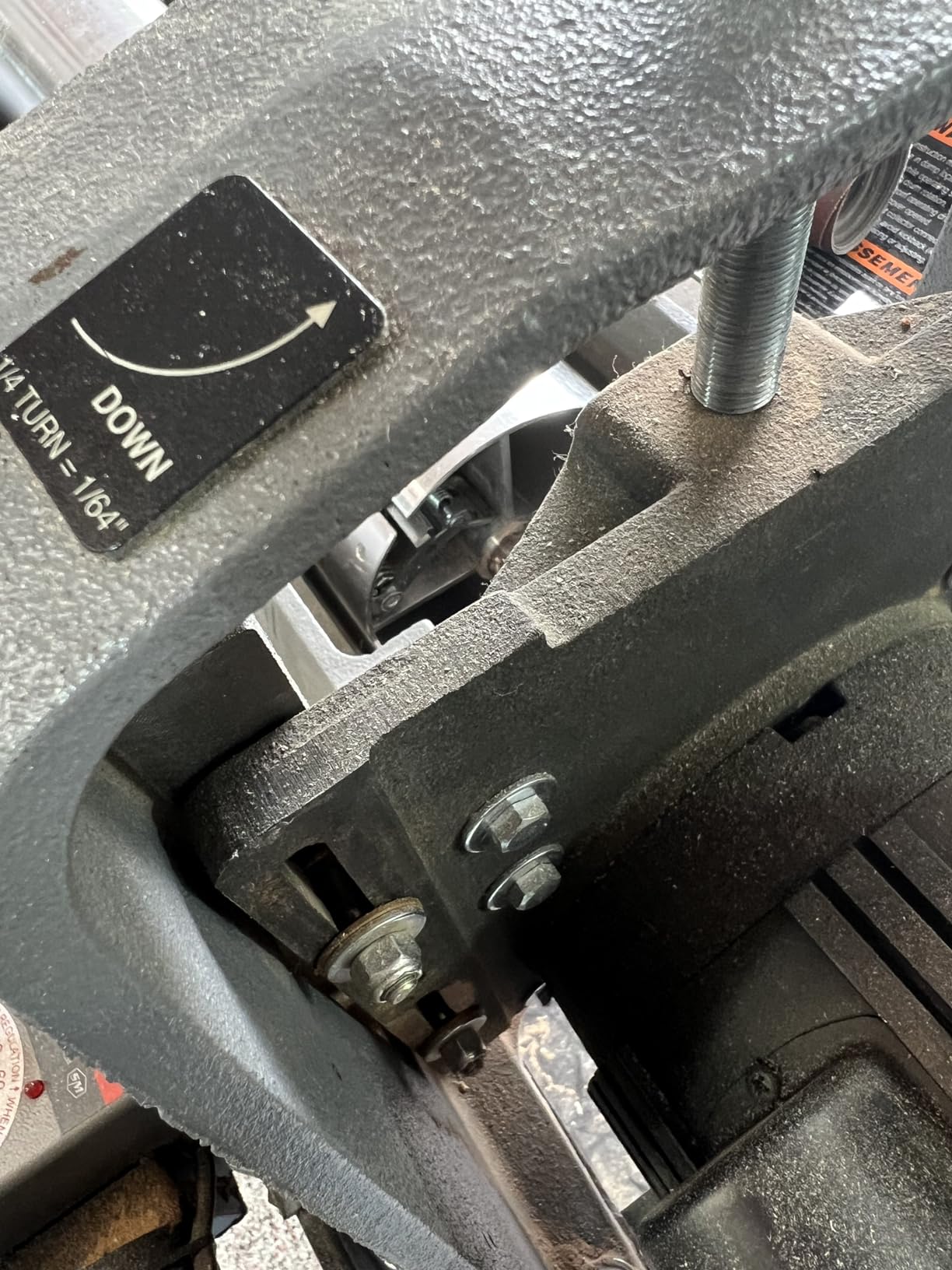
Add a precision-flattened reinforced bed with four steel cross sections and a manufacturer flatness guarantee under .010 inch across the width, plus a self-cooling drum that extends abrasive life, and the thin-stock case is well argued by the spec sheet.
Owners draw a clear line between work sizes. Rail-and-stile stock, drawer fronts and small cutting boards are described as excellent, while wide or heavy panels lag, groove, overheat and leave a black burn trail that one owner blames on an undersized drive belt.
Where it handles thin stock well
Grip and hold-down are the reasons this machine appears in veneer workflows. A rubber belt can let a light, thin, slightly cupped piece walk or flutter, and both of those create a rippled surface no amount of regrinding fixes.
The abrasive attachment system tensions wraps and prevents overlap and loose abrasive, and the fastener access is described as the widest of any drum sander, which matters when you change grit several times a week for veneer work.
Where it will frustrate you
Wide, heavy stock is the consistent failure mode. The drive belt is not strong or wide enough for those panels, and it is the one complaint owners repeat without variation.
With eight reviews the signal is directional, and parts and drive belt sourcing reportedly ran to weeks on paid orders. The motor-side abrasive clip is also independently criticized as a poor solution.
8. SuperMax 16-32 Drum Sander – Best With a Built-In Thickness Readout
SuperMax 16-32 Drum Sander Open Stand INTELLISAND Technology Built-in DRO Quick Adjustment Lever
16 inch drum
32 inch capacity in two passes
158 lb
20 x 27 inch stand
Built-in digital read out
Pros
- Built-in digital read out helps hold material thickness consistently
- Patented quick adjustment lever cuts setup time
- Compact 20 x 27 inch open stand footprint
- IntelliSand intended to prevent gouging and burning
Cons
- Feed belt alignment is a major reported issue
- Ceramic alignment blocks reportedly advised to be removed
- Conveyor gear failures reported
- Support and parts criticized
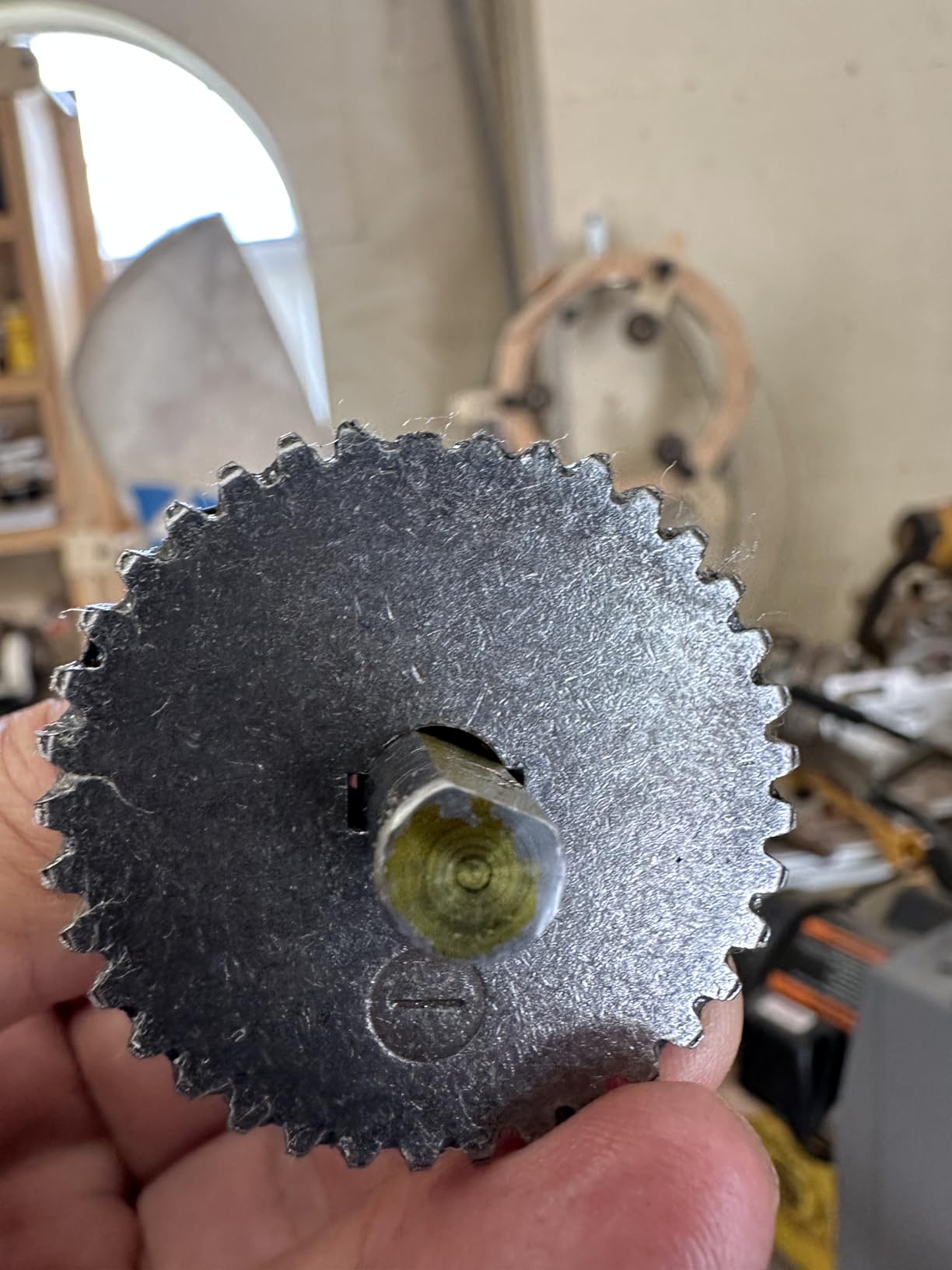
A digital read out is unusual at this size and it is the feature that matters most for thin stock. Holding a consistent thickness across repeat passes is exactly what you are trying to do when you are working down toward 1/8 inch and below, and a readout removes the guesswork that handwheel scales leave behind.
The patented quick adjustment lever is built to cut setup time, which pairs well with the same workflow. The 20 x 27 inch open stand footprint is the most compact of the floor-style machines here.
IntelliSand adjusts conveyor speed based on load to prevent gouging, damaging or burning material, and the rear gear motor placement is an intentional fix for conveyor belt tracking. A turbo vented dust port adds 15 percent airflow to the collector.
Where it handles thin stock well
The digital read out is the answer here. When you are taking repeated light passes off resawn board, knowing your depth setting without a caliper check saves a full grit progression every time you get it wrong.
Owners who get the machine running report good sanding performance, and IntelliSand is designed for the same burn-avoidance role that SandSmart plays on the JET machines reviewed earlier.
Where it will frustrate you
Feed belt alignment is the dominant complaint. Owners report the belt will not stay centered and pulls to one side, even after following the alignment procedure and fitting a new drive belt, and one reviewer attributes the fault to the factory ceramic alignment blocks after being told to remove them.
Conveyor gear failures are a second reliability report, sanding paper changes take practice, and six reviews is the thinnest data in this set. Expect to spend time on setup before you trust it with veneer.
9. Grizzly G1066Z 24-Inch Dual-Drum Sander – Best for Two-Grit Single Passes
Grizzly Industrial G1066Z – 24″ 5 HP Variable-Speed Drum Sander
24 inch class
5 HP 220V single-phase
Two aluminum drums
Stock to 23-1/2 by 4-1/4 inch
Two 4 inch dust ports
Pros
- Two drums can run different grits for a single-pass finish
- Handles stock up to 23-1/2 inch wide and 4-1/4 inch thick
- Variable speed conveyor matches feed to the cut
- Hook and loop abrasive for fast tool-free changes
Cons
- Requires a 220V supply that excludes many residential shops
- Industrial scale and weight
- Sparse review base with reports of repeated motor failures
- Initial drum and belt adjustment needed to avoid burn marks
Two drums is the concept worth understanding here. A 5 HP 220V motor drives two aluminum sanding drums, and they set independently, which means you can run 100 grit on the front drum and 150 grit on the rear and finish thin stock in a single pass instead of running the whole board twice.
For thin stock that is a genuine advantage, because every additional pass is another chance to burn, gouge or snipe a fragile board. One owner reports the factory calibration needed no adjustment at all.
Dust handling is well specified, with two 4 inch ports for flexible hookup, and one owner pairs it with a 2 HP collector and captures about 95 percent of the dust. Hook and loop abrasive makes paper changes fast and tool free, which the grind-intensive thin-stock workflow needs.
Where it handles thin stock well
The single-pass two-grit setup is the reason to consider this machine, and the same owner who reports clean factory calibration also reports running two grits in one pass as their finishing method.
Hook and loop paper changes are the fastest in this group by a wide margin, and with stock up to 23-1/2 inch wide and 4-1/4 inch thick it covers wide thin panels in a single pass.
Where it will frustrate you
The 220V supply requirement rules out many residential shops outright, and the industrial scale is a mismatch for a benchtop thin-parts workflow. It also arrives as a bare tool, so stand and accessories are on you.
One owner describes repeated motor failures, a wrong replacement motor, damaged pulleys and six weeks of downtime, and others needed initial drum and belt adjustment to avoid burn marks on hardwood. Four reviews across widely spaced dates means you are reading two experiences, not a consensus.
10. Shop Fox D4594 Pneumatic Drum Sander – Best for Contouring Thin Parts
Shop Fox D4594 Hand-Held Pneumatic Drum Sander, 4″ x 1-1/8″
4 by 1-1/8 inch drum
Pneumatic
150 grit included
Ball-bearing handle
4 inch length
Pros
- Pneumatic speed is enough for contouring curved surfaces
- Ball-bearing handle glides smoothly in the hand
- Integrated air valve accepts a bicycle pump so no running compressor is needed
- Reaches inside corners and curves a machine sander cannot
Cons
- Air powered
- so it needs a compressed air supply or pumped reservoir
- 4 inch drum is a detail tool and cannot surface flat stock
- Not suited to dimensioning thin panels
This is the odd one out and it earns its place. A hand-held pneumatic drum sander with a 4 by 1-1/8 inch drum is not a stock-thicknessing machine, and it cannot replace a belt or drum machine for flat panels. What it does is reach surfaces a machine cannot: inside corners, tight radii and contoured thin parts.
The ball-bearing handle glides smoothly in the hand for controlled contouring passes, and 56 reviews at a steady 4.0 average reflects a simple tool doing a narrow job well.
The built-in air valve is the detail that makes it practical. Owners can top it up with a bicycle pump, so you are not tied to a running compressor the first time you pick it up.
Where it helps with thin stock work
Think of it as the finishing partner to a machine sander. A thin molded or shaped part comes off the machine flat, and this tool smooths the curves and internal corners the drum and conveyor could never reach.
It comes with 150 grit abrasive, a sensible finishing grit, so it is useful on the last step rather than the heavy removal.
Where it does not belong
It will not surface or dimension flat thin panels, and anyone expecting a benchtop machine sander here will be disappointed. If your workflow is flat stock, read the other nine reviews first.
It still needs an air supply. If you have no compressor and no pump, this tool is not ready to work the day it arrives.
How to Sand Thin Stock Without Burning It in 2026
Machine choice matters, but technique decides whether thin stock survives. A drum sander applies continuous downward pressure, and thin wood has very little heat capacity to absorb it before the surface discolors. Six habits account for nearly all the burn marks and gouges we see described in owner reviews.
1. Back the workpiece up. A thin board sandwiched between two sacrificial cauls, or sitting on a support board of equal thickness, spreads the drum pressure across more material. SawmillCreek forum regulars describe this as the standard method for shop-sawn veneer, and it is the single most effective change you can make.
2. Start your feed rate slower than feels right. Infinitely variable feed, or a load-sensing system like SandSmart or IntelliSand, is the machine-level version of the same idea. A GarageJournal owner describing the Performax 16-32 put the tradeoff honestly: it does a great job at smoothing boards but does not take a lot off at a time.
3. Take light passes, not one big one. Two passes at half the depth beat one aggressive pass that gouges and burns.
4. Move faster than your instinct says on thin stock. A drum sander is a conveyor machine and, unlike a wide belt sander, it is gentle on short or small parts. That is the reason owners on r/woodworking describe reaching for a drum sander specifically to handle thin stock and parts that are too wide or too dangerous for a planer.
5. Match the grit progression to the material. Begin where the surface actually is, not where you want it, and step up in small increments. For figured or curly stock, hold the drum finish pass light to avoid a scratch pattern that hand sanding cannot fix.
6. Keep airflow moving. A dust port left unconnected packs chips against the drum, and packed abrasive is what gouges and burns thin veneer. Size your collector to the port, ideally with a cyclone, and if you are handling small parts, our orbital sander guide covers the other direction for detail work.
Buying Guide: What Matters for Thin Stock in 2026
Minimum stock thickness and why the numbers are vague
Most quality drum sanders are specified down to roughly 1/32 inch. Two machines in this roundup, the VEVOR MS3140 and MS3126, publish 1/32 to 3 inch as their working range, and owners of both report reaching about 1/64 inch per pass with careful setup.
Those figures assume a support board, a slow feed and a drum gap no wider than the workpiece. Treat 1/32 inch as a ceiling of capability rather than a comfortable working thickness, and if your stock is 1/16 inch or thinner, plan on the caul method every time.
Drum sander versus thickness planer on thin stock
A planer needs enough material to grip the workpiece, and it snipes, burns and tears out figured grain on thin pieces. A drum sander presses down instead of pulling through, so a supported thin board stays flat and the contact is brief.
Fully supported drum sanders are used as thickness planers daily by businesses of every size, according to discussion on the ar15 forum, and owners on r/woodworking describe using one as a thicknesser specifically for thin stock. If you also need to dimension thick boards, keep the planer. If flat, consistent surfaces on fragile stock is the problem, the drum sander is the better answer.
Grizzly versus JET for thin work
The Grizzly in this group, the G1066Z, is a 5 HP 220V dual-drum industrial machine built for wide and thick production stock, so it competes with the JET JWDS-2244 rather than the benchtop units. Its advantage is the independent two-drum setup that runs two grits in one pass, plus hook and loop paper changes that are by far the fastest here.
The JET machines win on heat management and setup convenience for thin work. Extruded aluminum drums on the 10 inch and benchtop VEVOR, dynamically balanced drums on the 16 and 22 inch, SandSmart load sensing on both, and toolless parallelism dials that need no tools, all push in the direction of not burning thin stock.
Open-end versus closed-end and two-pass capacity
An open-end drum sands only as wide as the drum, then you reverse the workpiece for a second pass. That second pass is where snipe appears, which several owners of the 16 inch JET and both VEVOR machines report at the outfeed side. Closed stands with extension tables, like the Powermatic PM2244 with 37-1/2 inches of support, avoid the reversal entirely.
Open-end designs are still good value, and the one genuine open-end advantage for thin stock is grip. The SuperMax 19-38 uses an abrasive conveyor belt specifically to hold short or thin raw stock, and its tension rollers add hold-down pressure that cuts snipe.
Dust collection sizing and motor class
Most machines here use a 4 inch dust port, with the Grizzly offering two. Pair that with a collector rated well above the port and add a cyclone if you sand thin stock regularly, because packed chips are the mechanism behind most gouges. Thin-stock work is gentler on the motor than it looks, so horsepower matters more for wide or thick production runs than for your use case.
Class guideline: 1 HP covers benchtop small parts, 1-1/2 to 1-3/4 HP covers 16 and 22 inch machines, and 5 HP is a production machine with a 220V supply.
Drum paper changes and abrasive life
Thin-stock work means changing grit often, so paper changes are a daily task rather than a monthly one. Toolless abrasive take-up fasteners on the JET JWDS-1020 and the widest fastener access on the SuperMax 19-38 make this less painful, while cramped, sharp-edged abrasive clamps on both VEVOR machines make it the worst part of ownership.
For general drum sander selection including larger machines, our belt sander guide covers the alternative when you outgrow a drum, and shop owners commonly recommend a belt cleaning stick to prolong abrasive life, which reduces how often you wrap in the first place.
Frequently Asked Questions
How thin can a drum sander go?
A quality drum sander can surface stock down to roughly 1/32 inch, and some owners reach about 1/64 inch per pass with careful setup. Below 1/8 inch, back the workpiece with a support board or sacrificial caul, slow the conveyor and keep the drum gap no wider than the part.
What is the minimum thickness a drum sander can sand?
Most machines are specified to about 1/32 inch. Two models in this roundup, the VEVOR MS3140 and MS3126, publish a 1/32 to 3 inch range directly. Realistically anything under 1/8 inch needs a caul, a slow feed and multiple light passes to stay flat and unburned.
What is the best drum sander for a small shop?
For a small shop the JET JWDS-1020 10-inch benchtop is the strongest all-round choice for thin parts, and the VEVOR MS3126 is a cheaper compact alternative with the same published 1/32 inch minimum. The SuperMax 16-32 gives you a 20 by 27 inch footprint if you want an open-stand floor machine instead.
Which drum sander is better, Grizzly or Jet?
For thin stock the JET machines are the better fit, because their extruded or dynamically balanced aluminum drums dissipate heat, SandSmart regulates conveyor speed from drum load, and toolless parallelism dials make repeated setup corrections fast. The Grizzly G1066Z wins on two independent drums for two-grit single passes, but it needs a 220V supply and is industrial in scale.
Are open-ended drum sanders good?
Yes, for thin stock they can be excellent. The open end gives you two-pass capacity, for example 16 inch in one pass or 32 in two, and the SuperMax 19-38 uses an abrasive conveyor belt specifically because it grips short or thin raw stock better. The cost is snipe at the outfeed on the reverse pass, which owners of the JET 16 inch and both VEVOR machines report.
Can a drum sander replace a planer?
For thin stock, effectively yes. A planer needs material to grip and snipes, burns and tears out figured grain on thin pieces, while a drum sander presses down on a supported board and keeps contact brief. Keep a planer if you also dimension thick boards, since a drum sander removes far less stock per pass.
Why does my drum sander leave burn marks?
Almost always one of three causes: the feed rate is faster than the cut allows, the abrasive is dull or packed with dust, or the workpiece is unsupported. Back the part with a caul, slow the conveyor, step up grit gradually and make sure chips are being extracted before blaming the machine.
Best Drum Sanders for Thin Stock: Final Verdict
The JET JWDS-1020 is our pick for most people buying the best drum sanders for thin stock, because its extruded aluminum drum, infinitely variable feed and 267 verified owner reviews make it the most proven way to surface short, thin parts without burning them. The heat-dissipating drum matters more here than horsepower does.
If your thin stock is wider than 10 inch, step up to the JET JWDS-1632 with SandSmart load sensing, or the JET JWDS-2244 if you want 22 inch in a single pass. If grip on short raw stock is your specific problem, the SuperMax 19-38 abrasive belt is built for exactly that.
Whatever you choose, back the workpiece, slow the feed and take light passes. That technique does more for thin stock than any specification on a spec sheet.