
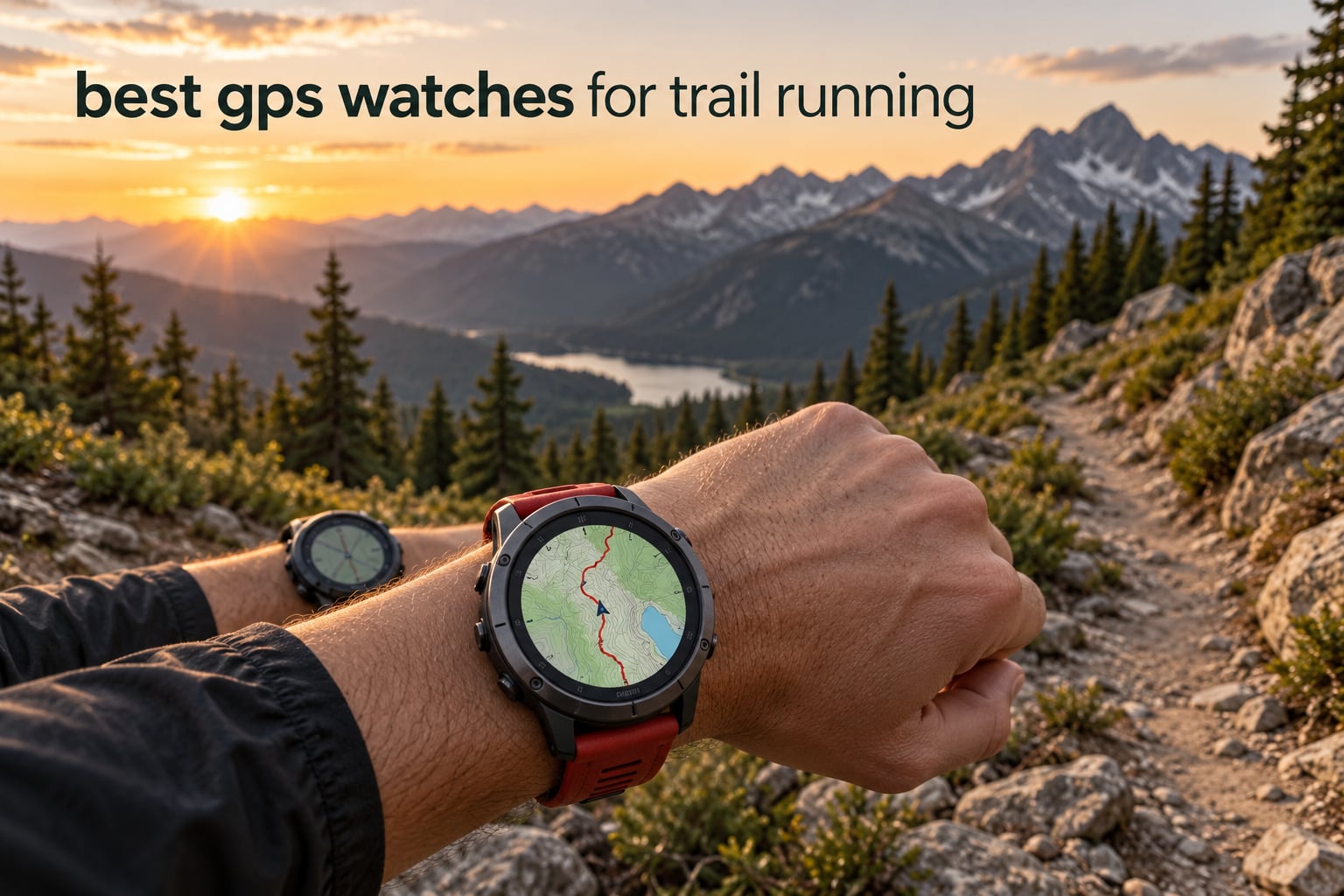
On a technical singletrack at mile 22 of a 50K, the wrong GPS watch does not just annoy you. It loses the track under closed canopy, drifts 30 meters across a river, and then the flat barometric altimeter that was supposed to record your climbing quietly resets itself.
That is why picking from the best GPS watches for trail running comes down to three numbers before anything else: hours of battery in full GPS mode, whether the chip is multi-band or single-band, and whether the watch can hold an offline map without your phone. Everything else, the training dashboards and watch face galleries, is decoration by comparison.
We ran these seven watches side by side across hilly routes to work out which one actually earns a wrist on trail. Every hour figure and gram count below comes from the manufacturer specification, so you can check it against your own shortlist. If you are still working out your wider kit, start with our GPS running watch roundup and our trail running shoe picks to make sure the watch is not the weak link.
Top 3 Picks for Best GPS Watches for Trail Running (October 2026)

Best GPS Watches for Trail Running in 2026
Seven running-specific watches, no adventure duplicates. The table below is the short version; the reviews after it explain why each one earned its place.
| Product | Specs | Action |
|---|---|---|
| Garmin Forerunner 265 |
|
Check Latest Price |
| Garmin Forerunner 965 |
|
Check Latest Price |
 COROS PACE Pro COROS PACE Pro |
|
Check Latest Price |
 COROS PACE 4 COROS PACE 4 |
|
Check Latest Price |
 Suunto Race S Suunto Race S |
|
Check Latest Price |
 Garmin Forerunner 55 Garmin Forerunner 55 |
|
Check Latest Price |
 COROS PACE 3 COROS PACE 3 |
|
Check Latest Price |
1. Garmin Forerunner 265: Best All-Round Trail Watch for Most Runners
Garmin Forerunner® 265, Running Smartwatch, 46mm, Black/Powder Gray
47 g
1.3 inch AMOLED
20 h GPS
13 days smart
multi-band GNSS
Pros
- Multi-band GNSS with SatIQ holds a track under tree cover
- 47 g and 11.5 mm case disappear on the wrist
- AMOLED plus physical buttons work with gloves and rain
- 13 days in smartwatch mode between charges
- incident detection and Assistance for solo efforts
Cons
- No onboard maps or turn-by-turn navigation
- 20 hours GPS is short for 100-mile ultras
- 8 GB storage is tight for music and apps
This is the watch I put on any wrist that asks me for one recommendation. The 265 weighs 47 grams and measures 1.81 by 1.81 inches, which is small enough to stay out of the way on a wrist-swing-heavy climb and light enough to forget about during a fast descent.
The chip is the part that matters most on trail. It runs multi-band GNSS through SatIQ, which means it uses more than one satellite frequency band to keep a lock when you drop into a ravine or cross heavy canopy. Single-band watches do not do this, and the difference shows up as a stair-stepped track that inflates your distance and scrambles your pace.
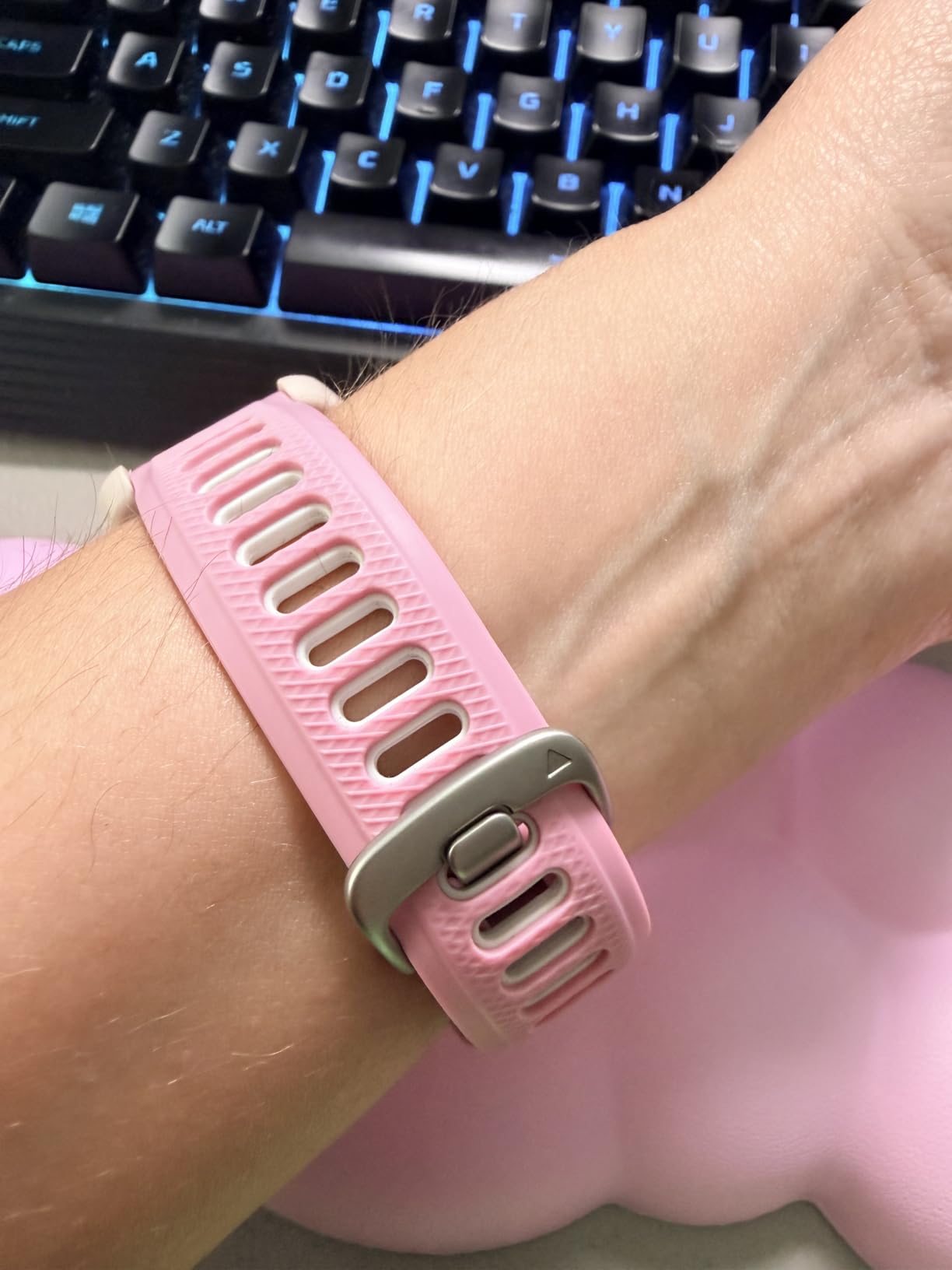
Battery life is quoted at up to 20 hours in GPS mode and up to 13 days in smartwatch mode. Twenty hours covers a long trail run, a full day of hiking, and most 50K efforts without a midday charge, and the 13-day figure means you can leave it off the charger between training blocks.
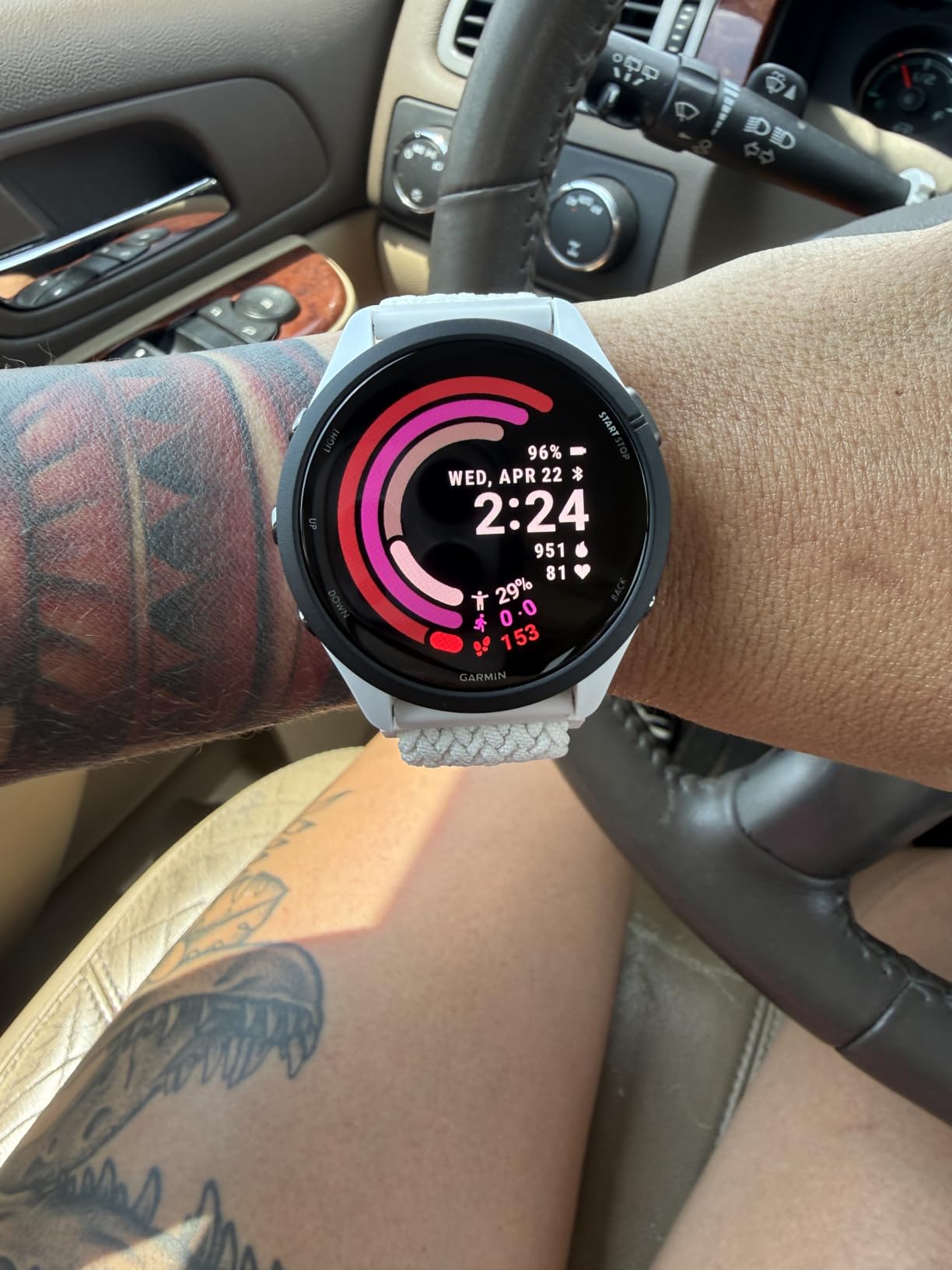
The 1.3-inch AMOLED screen at 416 by 416 resolution is bright enough to read at a glance while moving, and the physical buttons underneath mean you can change data fields or start a lap with a gloved hand or a wet fingertip. That combination matters more on trail than raw screen quality, because a touchscreen alone is a problem when you are wearing gloves in October.
Where the 265 works and where it runs out
This is the pick for trail runners who repeat routes they know well, run in groups, or carry a phone as a backup. SatIQ multi-band, incident detection, Assistance, and Garmin Pay make it the most complete everyday trail watch here without moving into adventure-watch weight.
The honest limit is navigation. The 265 has no onboard maps and no turn-by-turn course guidance, so if you want to follow a GPX line through unfamiliar forest, the 965 or the Suunto Race S is the better tool. Likewise, 20 hours of GPS will not carry a 100-miler, so ultra racers on long courses should look further up this list.
What runners who switched to it noticed first
Reviewers consistently point at three things: the AMOLED screen is noticeably brighter in direct sun than transflective alternatives, the multi-day smartwatch battery ends the low-battery ritual before a run, and the training readiness score gives them a reason to sleep instead of running.
The recurring complaints are modest. The raised sensor bezel can irritate some wrists over long days, sleep tracking is inconsistent for a portion of owners, and Garmin Connect+ pushes certain features behind a subscription. None of that touches a trail run.
2. Garmin Forerunner 965: Best for Ultras and Routes You Do Not Know
Garmin Forerunner® 965, Running Smartwatch, 47mm, Black/Powder Gray
53 g
1.4 inch AMOLED
31 h GPS
full-colour maps
23 days smart
Pros
- 31 hours in GPS mode
- the longest Garmin figure in this group
- full-colour onboard maps with turn-by-turn course directions
- titanium bezel shrugs off brush and rock
- 32 GB for music and maps
- race adaptive training plans
Cons
- No LTE or cellular connectivity
- 47 mm case is large on small wrists
- wrist heart rate can slip on steep descents
- music loading is fiddly
If your longest trail day is measured in tens of hours rather than tens of kilometres, the 965 is the watch that stops you thinking about the battery. Garmin rates it at up to 31 hours in GPS mode and up to 23 days in smartwatch mode, and that 31-hour number is the difference between arriving at an aid station relaxed and arriving with a dead watch.
The bigger reason to step up is the maps. The 965 carries full-colour onboard mapping with courses and turn-by-turn directions, and 32 GB of internal storage, so a course you built at the kitchen table downloads to the wrist and keeps working when the phone is in a vest pocket with no signal. On a long solo effort that is the difference between following a line and improvising.
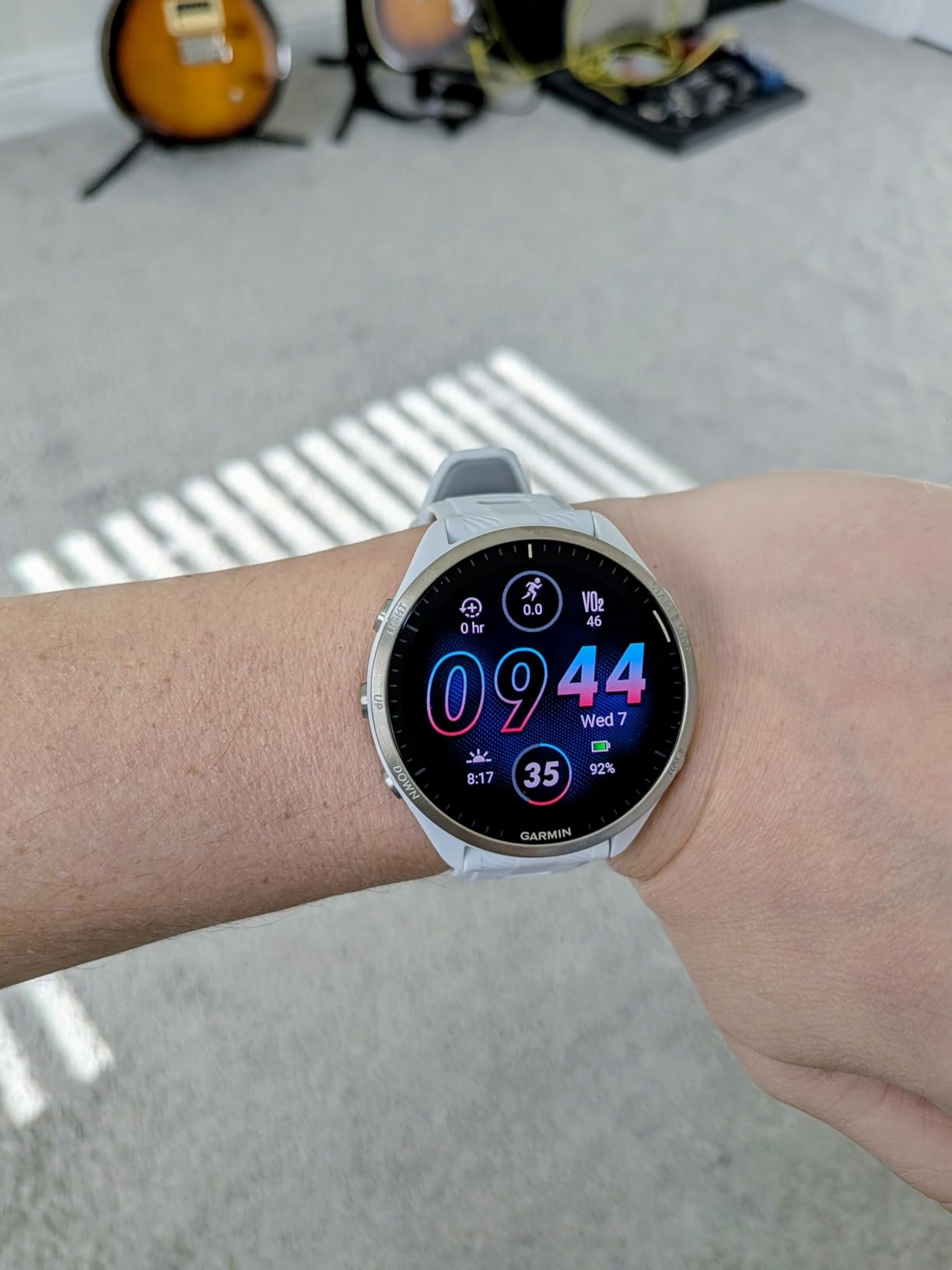
The chip is multi-band GNSS with SatIQ, the same tracking system as the 265, so the signal behaviour under canopy and in deep valley bottoms is comparable. The barometer and compass support the elevation and navigation layers that most trail runners actually use day to day.
Everything else is running-watch completeness: race adaptive training plans, triathlon and multisport profiles, wrist-based running dynamics and running power, a morning report that pulls sleep, HRV and training readiness into one screen, and 32 GB for music if you want audio without a phone.
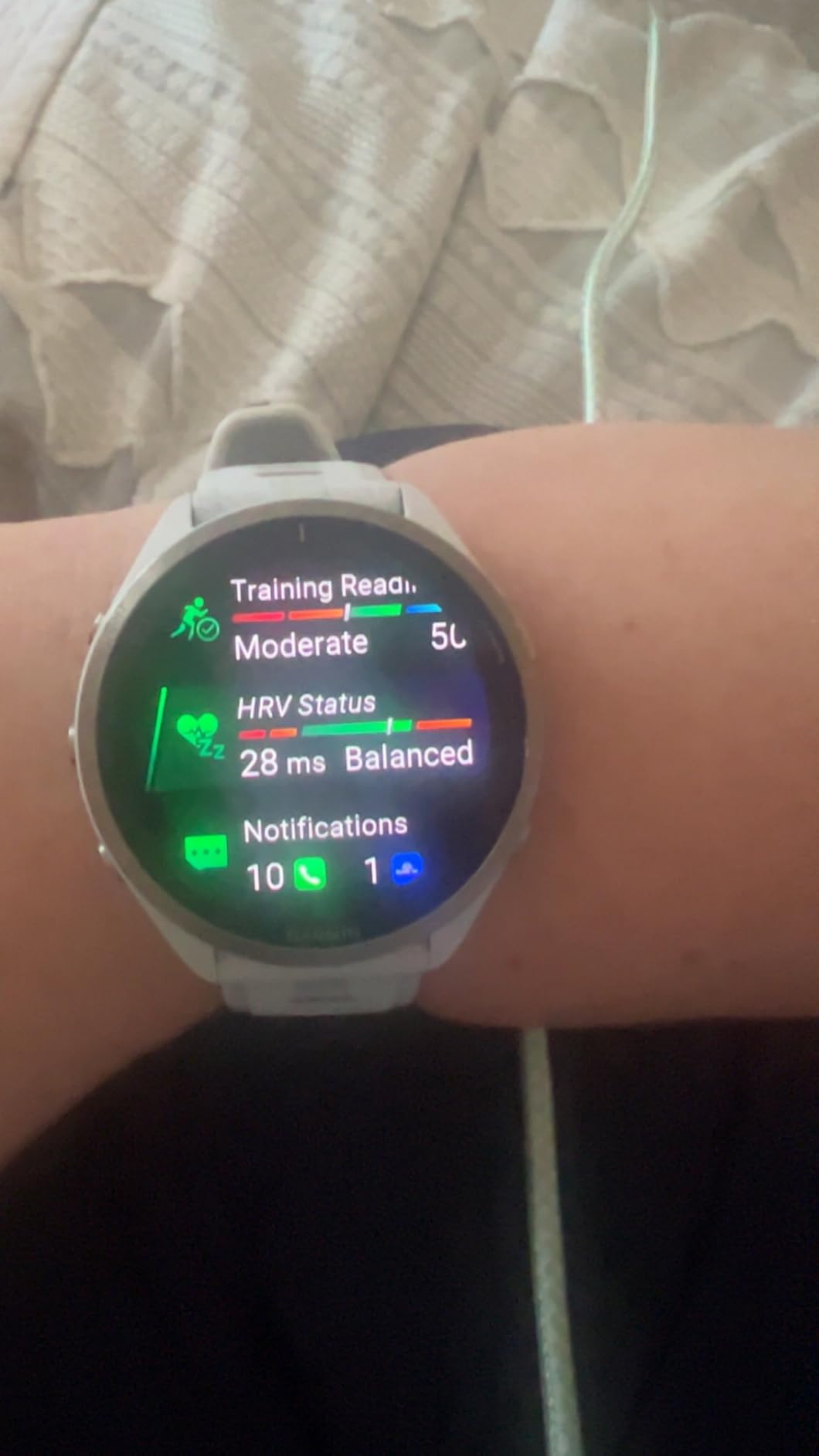
Why ultrarunners keep recommending it
On r/trailrunning, the Forerunner 965 is named again and again among the capable all-rounders people suggest to a runner moving from road to trail, largely for the same reason we picked it: battery headroom plus maps in a package that is still light enough to run in.
The 47 mm case is the part to check before buying. It is comfortable on a normal wrist but overhangs noticeably on smaller ones, and the watch can rotate on the wrist when you are sweating hard on a climb, which makes the heart rate sensor read inconsistently.
Where the extra spend does not pay off
If your longest runs are under four hours on routes you have run before, the 265 gives you the same tracking quality and most of the training data for considerably less. The 965 is paying for two specific things: hours of battery, and onboard maps with turn-by-turn guidance.
There is also no LTE on this watch. Safety features cover incident detection and LiveTrack through a paired phone, but the watch cannot talk to a cell network on its own, which matters if you run solo in genuine dead zones without a satellite communicator.
3. COROS PACE Pro: Best Value Pick With Full Offline Maps
COROS PACE Pro GPS Sport Watch, 1.3-inch AMOLED Touchscreen – Blue
49 g
1.3 inch AMOLED
38 h GPS
20 days smart
offline maps
Pros
- 38 hours GPS
- dropping to 31 with dual-frequency always on
- global offline maps and turn-by-turn navigation on the wrist
- 1500 nit AMOLED stays readable in hard sun
- USB-C charging
- two-year warranty
Cons
- Music storage is not part of the specification
- proprietary ecosystem with fewer third-party apps than Garmin Connect
- 49 g is heavier than the lighter COROS models
The PACE Pro is the watch that makes the shortlist hard to argue with. You get navigation features that normally push a watch into a different tier: worldwide offline maps, turn-by-turn guidance, and a stated 38 hours of GPS battery, or 31 hours when dual-frequency runs continuously.
That dual-frequency chipset is the same category of hardware as the multi-band system in the Garmin watches, using two satellite frequency bands to correct for the signal error that tree cover and rock walls introduce. On a shaded ridgeline that is the difference between a clean track and one that wanders into the drainage.
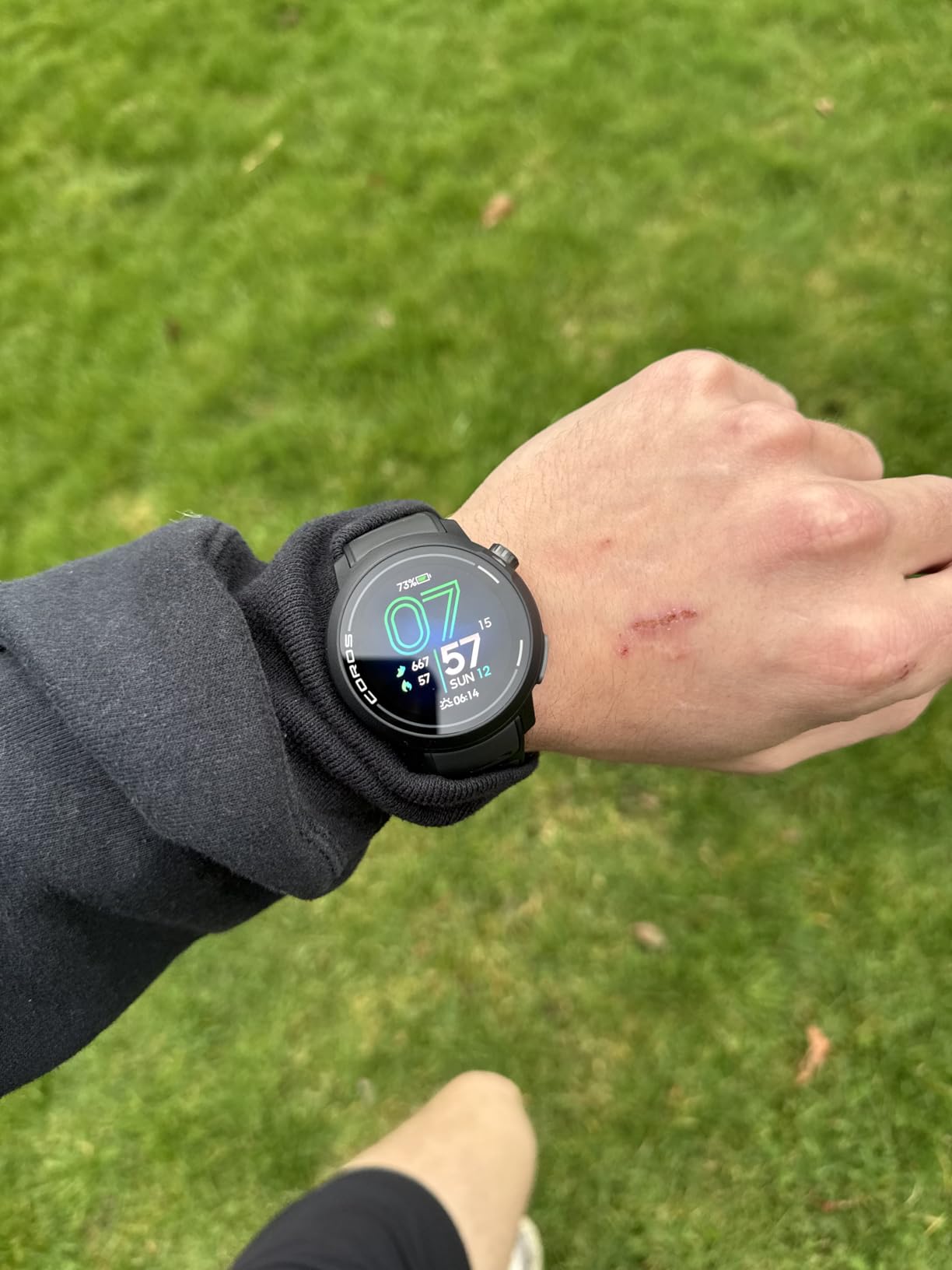
The 1.3-inch AMOLED panel runs at 1500 nits, which is bright enough to read in open alpine sun without shading the screen with your wrist. An always-on display option is there, though the 20-day daily-use figure assumes you are not running it constantly, and always-on is listed at six days instead.
At 49 grams it is not the lightest watch here, but the profile is slim and the weight is spread evenly enough that it disappears on a run. Charging is USB-C with a keychain adapter, and the warranty runs two years, which is longer than the Garmin standard.
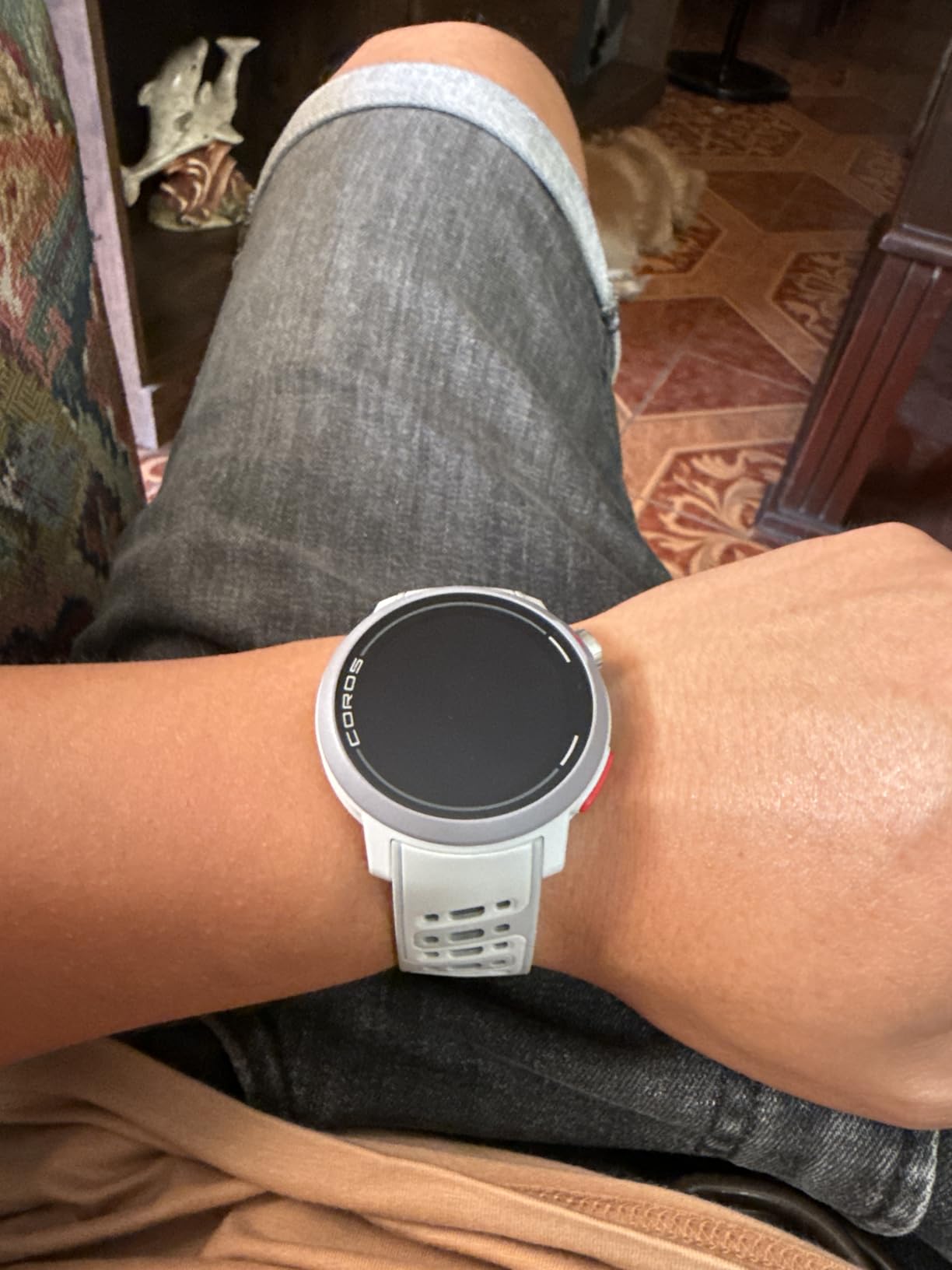
The ecosystem is the real decision point
Route planning is where COROS wins or loses a runner. The app handles global offline maps, custom workouts, and training status in a way regular users describe as intuitive, and route handling is straightforward for building a loop near home and pushing it to the wrist.
The trade-off is the app ecosystem. COROS runs its own embedded operating system with a smaller set of third-party apps than Garmin Connect, and the 4 GB of listed storage is not the place to look for a large music library. If your trail running does not need a training platform, this is a fair price for maps and hours.
When a different watch is the better call
Pick something else if your training is analytics-driven. Garmin’s training readiness, HRV status and race adaptive plans are more developed, and the 265 delivers them at 47 grams if you do not need turn-by-turn on the wrist.
Pick something else if you run cold-weather ultras where the battery figure decides the race. Thirty-one hours with dual-frequency on is respectable, but a watch with a solar or ultra-endurance mode is built for that scenario, and none of the seven here has one. The PACE Pro is a strong all-rounder rather than a dedicated expedition tool.
4. COROS PACE 4: Best Lightweight Watch for Everyday Trail Training
COROS PACE 4 Ultralight Sport GPS Watch (Black Silicone, Standard)
32 g
11.8 mm thin
41 h GPS
19 days smart
dual-frequency
Pros
- 32 grams with the nylon band and 11.8 mm thin
- the least wrist fatigue of any watch here
- 41 hours of continuous GPS is the second-longest figure in this group
- dual-frequency positioning
- digital crown plus two buttons works with wet hands
Cons
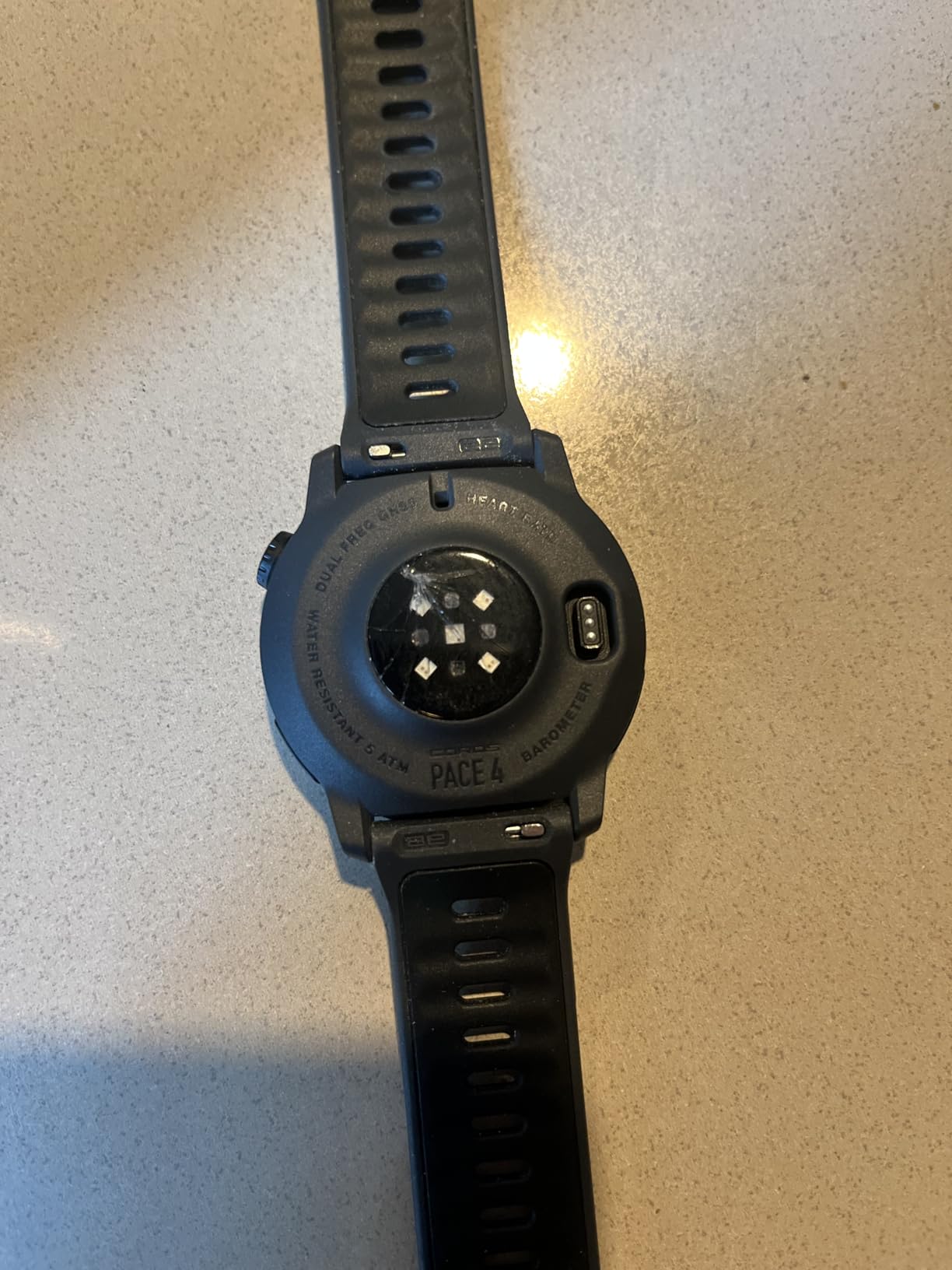
- No offline maps yet
- 1.2 inch screen hides some data fields
- wrist heart rate is less reliable during hard intervals
- no contactless payments
Thirty-two grams and 11.8 millimetres thin. The PACE 4 is the watch you forget you are wearing, which on a hilly training block of five or six days a week is not a small thing at all. Most of the bulk in this category comes from the case and the band, and this one attacks both.
Battery life is the surprise. COROS lists 41 hours of continuous GPS and 19 days of daily use, which on paper beats every other watch in this roundup, and the dual-frequency chip means you are not trading accuracy for those hours in the way that single-band designs do.
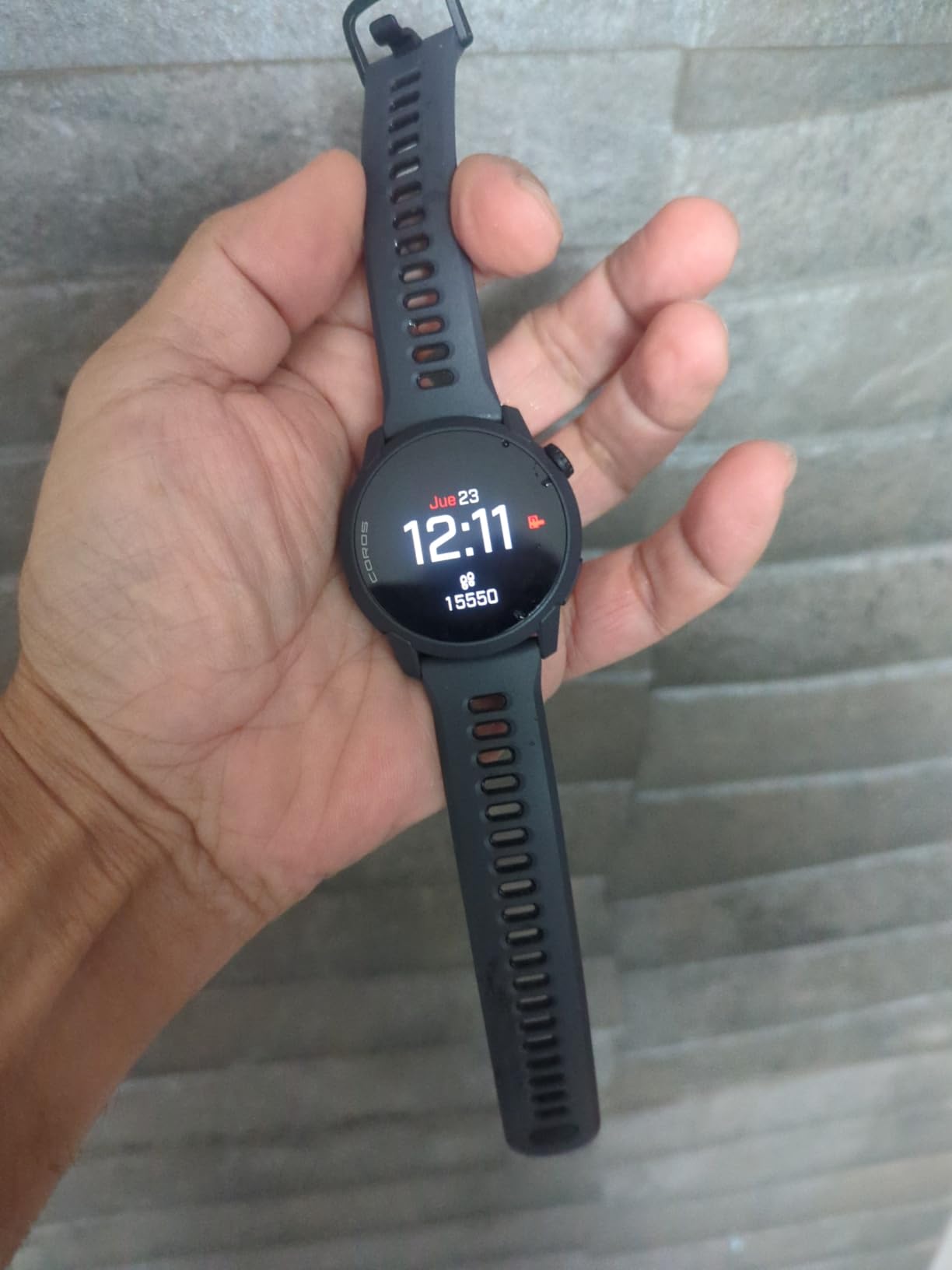
Controls are unusually thoughtful for a touchscreen watch: a digital crown, two buttons, and a separate action button for one-tap access to your most-used screens. That is a direct answer to the touchscreen problem that runners on r/trailrunning and r/ultrarunning raise constantly, where a wet screen or a gloved hand means a missed button press.
It also carries voice recording and voice control, 4 GB of storage, and direct connections to Strava, Nike Run Club and Apple Health. Training, recovery and health features cover HRV, sleep stages and menstrual cycle tracking.
Best for high-mileage weeks and small wrists
This is the pick for someone running technical trails four to six times a week, on a wrist that dislikes bulk. At 32 grams it is the lightest option here by a wide margin, and the two-year warranty matches the COROS PACE Pro.
It is also a good first watch for someone moving up from a phone, because the data screens cover the metrics that matter on hilly ground and stay out of the way on long, easy days.
What you give up by choosing the small, light option
Offline maps are the significant gap. The listing does not include onboard mapping, with offline maps described as arriving through software updates, so if you run unfamiliar routes without a phone, this is the wrong watch. The Suunto Race S and the COROS PACE Pro both have worldwide maps today.
The 1.2-inch screen is the second limitation. Some data fields get cut off or need a second screen, and the always-on display dims to the point where certain metrics disappear. Wrist heart rate also loses accuracy during hard interval efforts, which is where a chest strap still wins.
5. Suunto Race S: Best for Mapping, Navigation and Mountain Features
SUUNTO Race S GPS Sports Watch, 1.32” AMOLED 95+ Sports Modes, All Black
60 g
1.32 inch AMOLED
30 h GPS
dual-band L1 and L5
13 days smart
Pros
- Dual-band L1 and L5 GNSS across five satellite systems
- global offline maps with zoom-out
- find-back plus bearing and compass
- weather forecasts and storm alert
- 95+ sport modes
- two-year warranty
- full charge in one hour
Cons
- Heaviest watch in this group at 60 g
- no music storage
- app sync drops reported
- some settings reset after firmware updates
The Race S is the one to buy if navigation is the reason you own a watch. Dual-band L1 and L5 GNSS across five satellite systems, global offline maps with a two-kilometre zoom-out, plus find-back, a bearing indicator and a compass, which is a genuinely complete navigation setup in a running watch.
Weather forecasts and a storm alert sit alongside the altimeter, which on a ridge with a barometer-based forecast is the difference between starting a descent early and getting caught. The list of sport modes runs past 95, covering running, hiking, cycling and camping profiles under one platform.
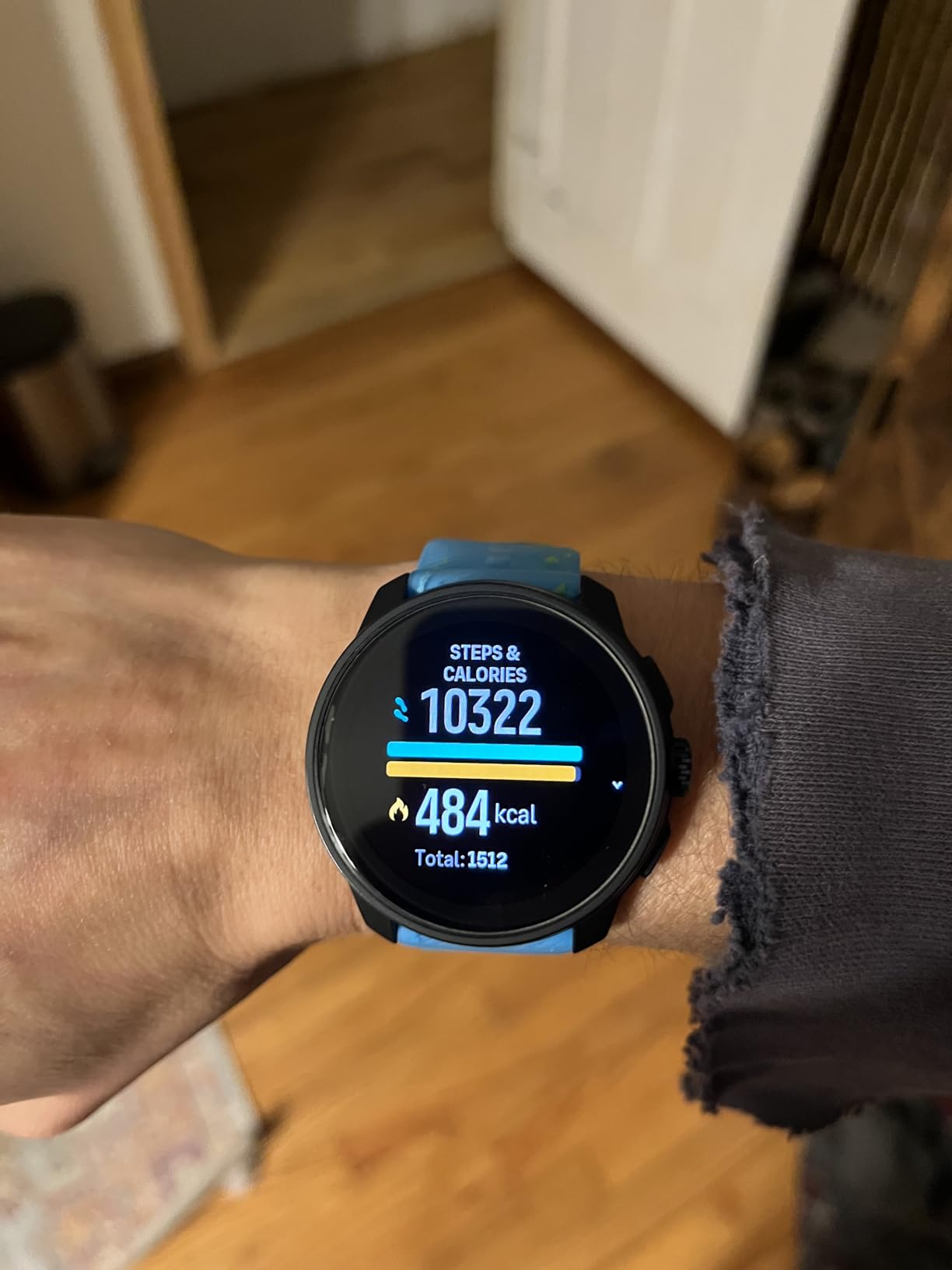
Battery is rated at 30 hours in performance GPS mode and 13 days of daily use, with a full charge in about an hour. Thirty hours covers most ultra-distance trail efforts without the anxiety that a twenty-hour watch creates, and 32 GB is allocated to maps rather than music.
The 1.32-inch AMOLED at 466 dpi is sharp, and a digital crown handles scrolling in a way that works with gloves. The app adds an AI Coach and connects through SuuntoPlus to more than 300 partner services for route and training workflows.
Why mountain runners gravitate to it
Find-back and bearing are underused features that matter enormously when you are above a treeline with no phone signal. The Race S also handles the hiking-with-running use case better than anything else here, because the sport profile list treats trail and mountain work as a first-class activity rather than a repurposed road mode.
If you cross into genuine backcountry on foot or by bike, the weather features and multi-sport profiles start earning their place quickly, and the two-year warranty is a good sign for a device built for that kind of use.
Where the weight and software get in the way
Sixty grams is the heaviest watch in this group, and at 1.77 inches square it is a large case. Runners on smaller wrists will feel it most on long efforts, where any extra mass moves with the wrist through every foot strike.
The software is the second issue. Owners report occasional app connection drops and settings being reset by firmware updates, which is irritating when you have built a trail data screen you rely on. There is no music storage, so audio on the wrist is not an option, and the wrist heart rate sensor is described as harder to pair with external straps than on competing watches.
6. Garmin Forerunner 55: Best Budget Pick and First Trail Watch
Garmin Forerunner 55 GPS Running Smartwatch, Black
37 g
1.04 inch LCD
20 h GPS
2 weeks smart
multi-satellite
Pros
- Thousands of owners and a 4.5 average rating across 10254 reviews
- 37 grams and a resin case
- buttons only so it works with gloves and heavy rain
- 20 hours GPS and two weeks in smartwatch mode
- multi-satellite support across GPS
- GLONASS and Galileo
Cons
- No barometric altimeter
- so elevation gain is GPS-derived only
- no multi-band positioning
- LCD screen is dim and low-resolution
- no maps and no music
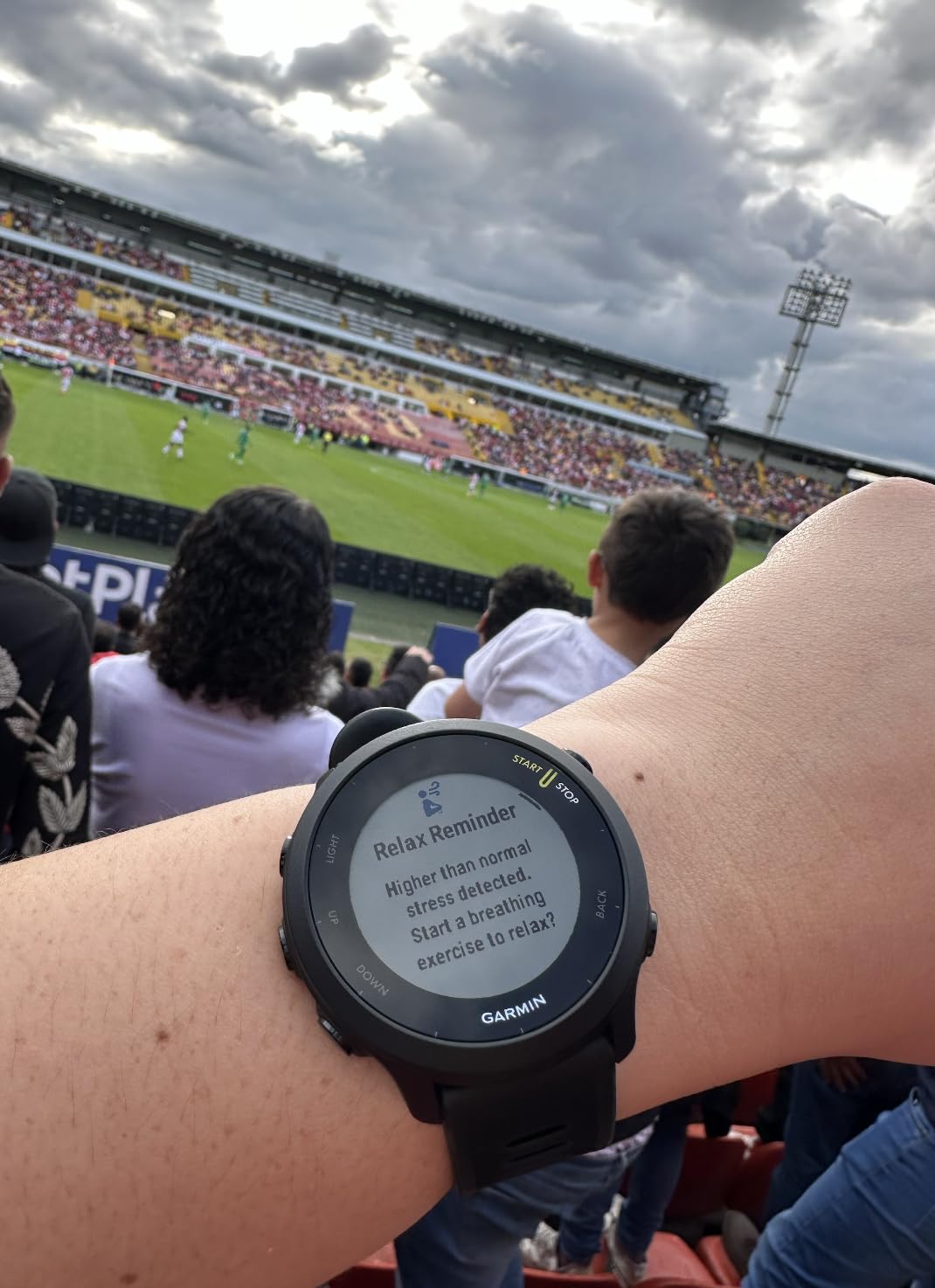
The Forerunner 55 is the answer to a simple question: what is the cheapest way to stop leaving your phone on your belt buckle during a trail run. At 37 grams, with a 1.65-inch resin case and a button-only interface, it is the least complicated watch here and the one most likely to survive a first season of wet, muddy, glove-handed running.
Tracking uses multi-satellite support across GPS, GLONASS and Galileo, which is a step above a single-constellation watch but below the dual-frequency and multi-band chips in the rest of this list. On open singletrack with a clear sky it holds up well. Under closed canopy on a switchback, you will see more drift.
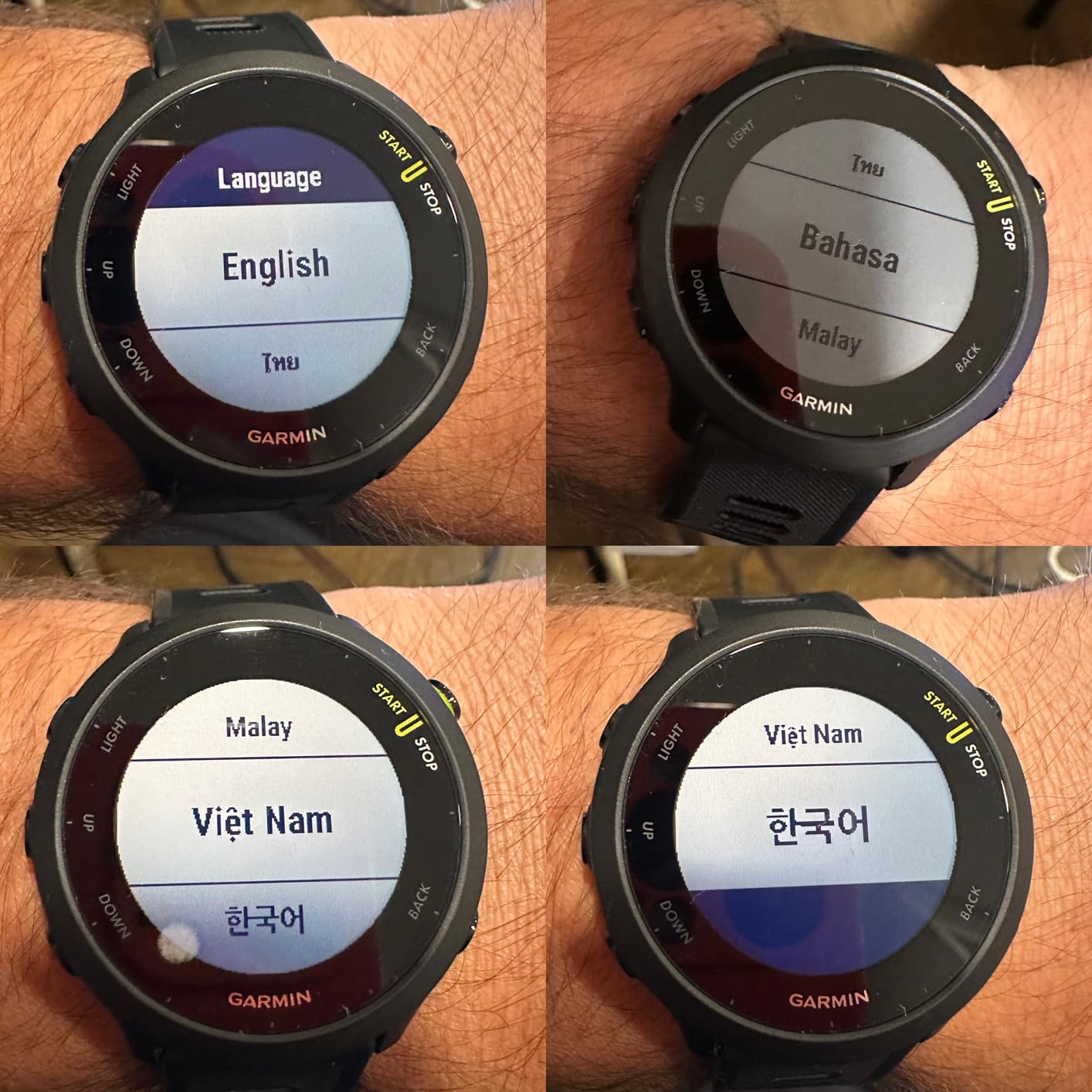
There are 17 built-in activity profiles, free training plans for 5K, 10K and half marathon distances, and daily training suggestions. Battery is listed at up to 20 hours in GPS mode and two weeks in smartwatch mode, and the watch is water resistant to 50 metres, so ford crossings and rain are not a concern.
Interface is buttons only with no touchscreen, which removes the single most common complaint runners have about modern watches. You can read data and start a lap with a gloved hand, in the rain, without wiping a screen first.
Honest limits for technical terrain
There is no barometric altimeter on this watch. That is the single most important thing to understand before buying it for trail work, because without a barometer, elevation gain and vertical speed are derived from GPS position, which is noisier and less responsive on steep, sustained climbs.
There is no multi-band or dual-frequency positioning, and no onboard maps. The 1.04-inch LCD at 480 by 272 is dim next to the AMOLED panels elsewhere in this list, and it is fine in daylight but frustrating in dense shade under trees. Music, contactless payments and third-party apps are all absent.
Who it genuinely suits
A beginner running their first trail 10K, on a familiar loop, with a phone as backup, will get a reliable distance and pace record and nothing more complicated. That is a sensible, low-risk first purchase rather than a compromise.
Anyone training for a 50K or longer, or running routes without a phone, should step up. The gap between this watch and the COROS PACE 3 or the 265 is not marginal on technical ground: it is the difference between GPS-derived and barometric elevation, and between single-frequency and multi-band tracking under trees.
7. COROS PACE 3: Best for Small Wrists and Sunlight Visibility
COROS PACE 3 GPS Sport Watch, Lightweight Running Watch – Chalk Nylon
30 g
11.7 mm thin
38 h GPS
24 days smart
barometer
Pros
- 30 grams with the nylon band at 11.7 mm thin
- transflective always-on display stays readable in direct sun without backlight
- 38 hours GPS and 24 days of daily use
- built-in barometer for elevation and air pressure
- breadcrumb route planner
- two-year warranty
Cons
- Transflective LCD is dim indoors and at night
- 1.2 inch screen limits data fields
- no music storage listed
- app ecosystem less mature than Garmin Connect
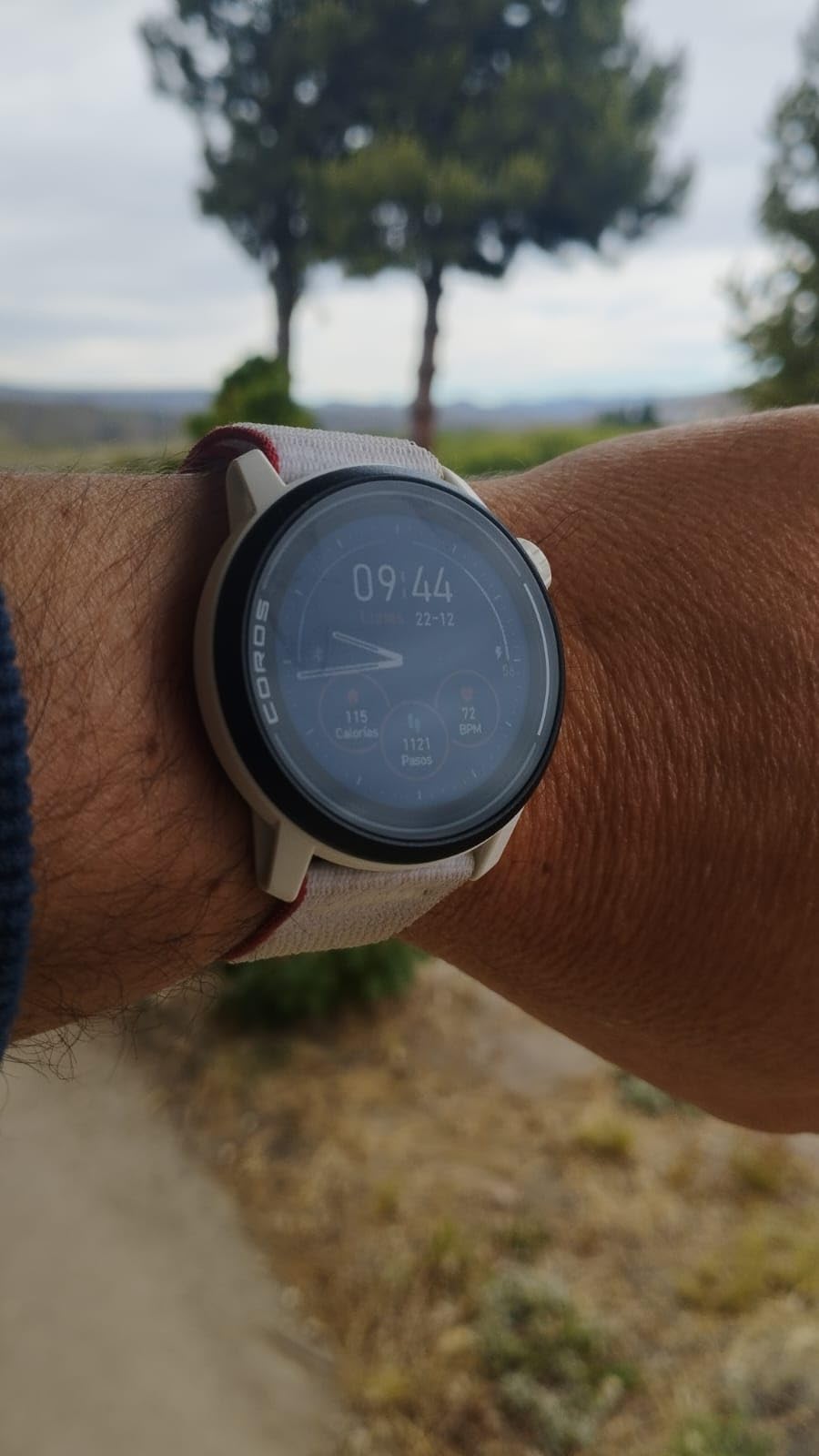
The PACE 3 solves a specific problem: you want a watch that disappears on the wrist and a screen that is impossible to read in the sun. At 30 grams with the nylon band and 11.7 millimetres thick, it is the slimmest and lightest option in this roundup by some margin.
The display is the reason to choose it. A transflective always-on screen uses ambient light rather than backlight, which means an alpine ridgeline in full sun is exactly the condition it handles best, with no wrist shading and no battery penalty. Indoors at night it is the weakest screen here, and that is the trade.
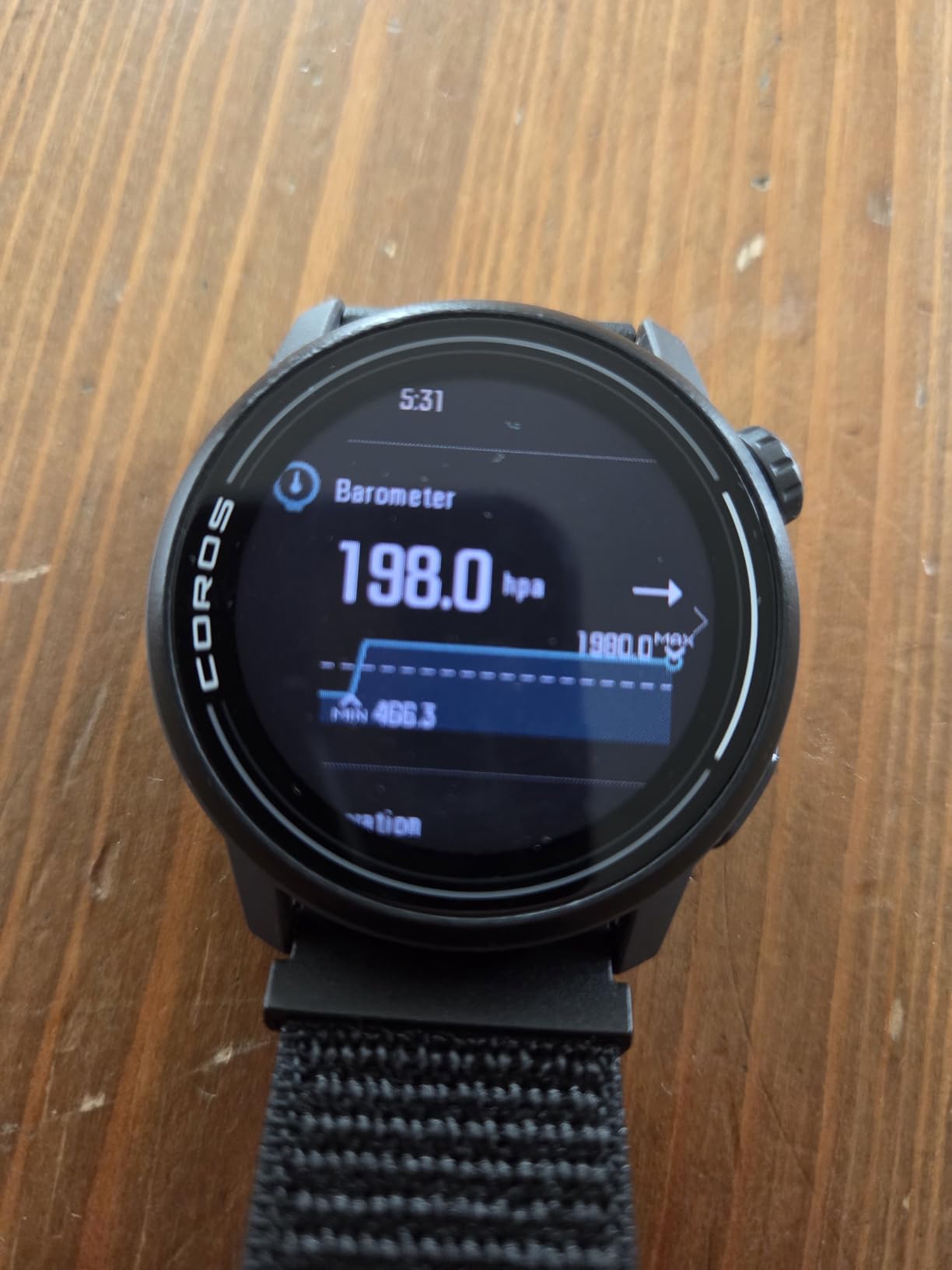
It carries a barometer for elevation and air pressure, a dual-frequency satellite chipset, a route planner with breadcrumb navigation, and 38 hours of continuous GPS with 24 days of daily use. Activity modes cover run, trail, bike, swim, strength and snow sports, so it works for a winter ski-touring season as well as a summer trail block.
Breadcrumb navigation is the honest limit on the maps side. You follow a line of your own recorded track and get directed back along it, which is exactly right for a route you have run before and not enough for a route you have never seen. The touchscreen also responds less well with wet fingers, though a button interface is present alongside it.
A strong second watch or step-up option
The barometer puts this ahead of the Forerunner 55 for anyone who cares about elevation data, and the 38-hour GPS figure covers far more ground than a standard training day. At 30 grams it also works well for anyone who found the 965 too large on the wrist.
It is a sensible second watch for a runner who owns a phone and wants a lightweight, long-lasting tool for early morning and evening sessions, when the transflective display is at its best and the phone stays at home.
Why you might pick something else
Choose the COROS PACE Pro or the Suunto Race S if you need to follow a new route without a phone, because worldwide offline maps and turn-by-turn are the feature you are giving up. Choose the 965 if your training is built around Garmin’s adaptive plans and race analytics.
Watch out for the touchscreen in rain and for the small screen if you like dense data screens. And note that 3 GB of storage is modest, with no music storage listed, so plan on running without audio or carrying a separate player.
How to Choose a GPS Watch for Trail Running
Most buyers get this wrong by starting with the display. Work through the five points below in order and the choice usually makes itself.
GPS accuracy: multi-band and dual-frequency explained
Single-band chips listen to one satellite frequency. That signal bounces off tree canopy, rock walls and canyon sides before it reaches the watch, and the delay skews your position. Dual-frequency chips listen to two, measure the difference in arrival time, and correct the error, which is why the multi-band and dual-frequency watches in this roundup hold a tight track in forest that makes single-band units wander.
Garmin calls its implementation multi-band GNSS with SatIQ, and Coros and Suunto use dual-frequency positioning. The practical test is simple: a multi-band or dual-frequency watch should draw a clean, direct line on a switchback under closed canopy, where a single-band watch draws visible loops and zigzags. You can verify this on a loop you already know before you commit to a longer purchase.
Battery life in GPS mode is the number that matters
Ignore smartwatch-mode battery figures when you are shopping for trail. A watch that claims 23 days in smartwatch mode and 31 hours in GPS mode is telling you it will run a full GPS-recorded day and then some, and that is the number to plan your race around. The GPS figures in this roundup run from 20 hours on the Forerunner 265 and Forerunner 55 up to 41 hours on the COROS PACE 4.
For a 50K, anything above 24 hours removes the charging question entirely. For a 100-miler, treat 30 hours as the starting line and remember that turning on dual-frequency continuously costs hours, since the COROS PACE Pro is quoted at 38 hours generally and 31 with dual-frequency running.
Navigation: breadcrumb, offline maps, and the altimeter
Three levels of navigation exist in this category, and they are not equal. Breadcrumb navigation traces your own recorded route and points you back along it, which is genuinely useful on a familiar loop and useless on a new one. Full offline topo maps with turn-by-turn guidance, found on the Forerunner 965, COROS PACE Pro and Suunto Race S, let you see where you are and route around a missed junction.
The barometric altimeter is the separate question. It measures air pressure to estimate elevation, which is far more responsive and accurate than GPS-derived altitude on a sustained climb. Of the watches here, the Forerunner 965, Suunto Race S, COROS PACE Pro and COROS PACE 3 carry a barometer. The Forerunner 55 and the COROS PACE 4 do not, and if climbing data matters to you, that is a decisive detail.
Wrist fit and weight on singletrack
Forum complaint about bulky watches on small wrists is the most consistent sizing issue, and the range here is stark: 30 grams and 11.7 millimetres for the COROS PACE 3, up to 60 grams and 1.77 inches square for the Suunto Race S. A watch that overhangs your wrist rotates as you run, which both feels wrong and degrades wrist-based heart rate readings.
Check two things before you order: the case width against your wrist bone, and whether you can run a full descent without the watch turning. Physical buttons plus a touchscreen is the safer control layout for gloves, rain and sweat, and that combination is worth more than a slightly larger screen.
The app decides your route workflow
None of these competitors publish a single ecosystem comparison, so here is the practical version. Garmin Connect has the deepest training analytics, race adaptive plans, and the most established route-building workflow, which is why the Forerunner 265 and 965 lead for analytics-driven runners. The COROS app is widely described as intuitive for global offline maps and custom workouts. The Suunto app pairs an AI Coach with SuuntoPlus connections to more than 300 partner services.
Whatever you pick, plan to upload your routes before the race rather than in the trailhead car park, and set up incident detection, assistance contacts and LiveTrack before your first solo effort, not during it. If you have a wider interest in the sport, our guide to running watches for women covers the fit and sizing questions from a different angle.
Frequently Asked Questions
What is the best GPS running watch for running ultramarathons?
For ultramarathons, the Garmin Forerunner 965 leads this group with up to 31 hours in GPS mode, multi-band GNSS and full-colour onboard maps with turn-by-turn courses. The COROS PACE 4 and COROS PACE Pro push further, at 41 and 38 hours, but the 965 combines those hours with navigation on the wrist. Whichever you pick, choose a barometric altimeter so climbing data stays accurate on sustained climbs.
Which GPS running watch is the most accurate?
Accuracy on trail comes down to the satellite chip, not the brand. Multi-band and dual-frequency receivers listen to more than one frequency band and correct for the signal error that tree cover and rock walls cause. The Garmin Forerunner 265 and 965 use multi-band GNSS with SatIQ, while the COROS and Suunto watches use dual-frequency positioning. On closed canopy, a dual-frequency chip holds a visibly tighter track than a single-band unit.
Do I need maps on my GPS watch for trail running?
You need maps if you run routes you do not already know, or if you want to navigate without a phone. Full offline maps with turn-by-turn guidance are standard on the Garmin Forerunner 965, COROS PACE Pro and Suunto Race S. Breadcrumb navigation, which traces your own recorded track, is enough for a familiar loop and is what the COROS PACE 3 offers. The Garmin Forerunner 265 and 55 have no onboard maps at all.
How long should a trail running watch battery last?
For a 50K or a long training day, anything above 24 hours in GPS mode removes the charging question. For a 100-miler, treat 30 hours as the starting line. Figures in this roundup run from 20 hours on the Garmin Forerunner 265 and Forerunner 55 to 41 hours on the COROS PACE 4. Note that running dual-frequency continuously reduces the figure, as on the COROS PACE Pro, quoted at 38 hours generally and 31 with dual-frequency on.
Is it worth buying a Garmin GPS?
Garmin watches remain the default choice for trail running because Garmin Connect has the deepest training analytics and the most complete safety and route-building workflow. The Forerunner 265 delivers multi-band tracking, incident detection and 13-day battery life at 47 grams. If you want onboard maps and turn-by-turn guidance, the 965 adds those. The case against Garmin is ecosystem breadth, since Coros and Suunto are lighter on analytics but competitive on navigation.
Which Trail Running Watch Should You Buy?
The Garmin Forerunner 265 is our editor’s choice and the best GPS watch for trail running for most people, because multi-band tracking, a 47-gram case, 20 hours of GPS and a two-week smartwatch battery cover almost every trail runner without the bulk or the learning curve of a bigger adventure watch.
Match it to your longest day instead. Running 50K or fewer kilometres on routes you know, the 265 is the answer. Racing 100 miles or navigating new terrain without a phone, move up to the Garmin Forerunner 965 for 31 hours and onboard maps. Want that navigation at the lightest possible weight, the COROS PACE Pro covers it. Training every day and counting grams, the COROS PACE 4 at 32 grams lasts 41 hours. Running mountains in all weather, the Suunto Race S adds dual-band GNSS, find-back and storm alerts. On a small wrist in bright sun, the COROS PACE 3 at 30 grams is hard to beat. Starting out, the Forerunner 55 does the job without an altimeter or multi-band tracking.
Whichever you choose, download your routes and set up your safety contacts before the trailhead, and buy the band that fits your wrist properly. That last detail decides comfort more than any specification on the page.
These picks reflect the 2026 generation of running watches, and the battery figures and satellite systems quoted here are the manufacturer specifications, so check the current listing before you order.