
Ask most people why their driveway camera failed and you get the same answer: the footage looks fine until you scrub to the moment a car pulls in, and the plate is a gray smear. That is not a resolution problem. It is usually an illumination problem, and the infrared light most home cameras use at night bounces straight off the reflective sheeting every US state requires on its plates and blows the characters out completely. Practitioners on cctvforum.com put it bluntly: some plates cannot be read by pure IR cameras at all.
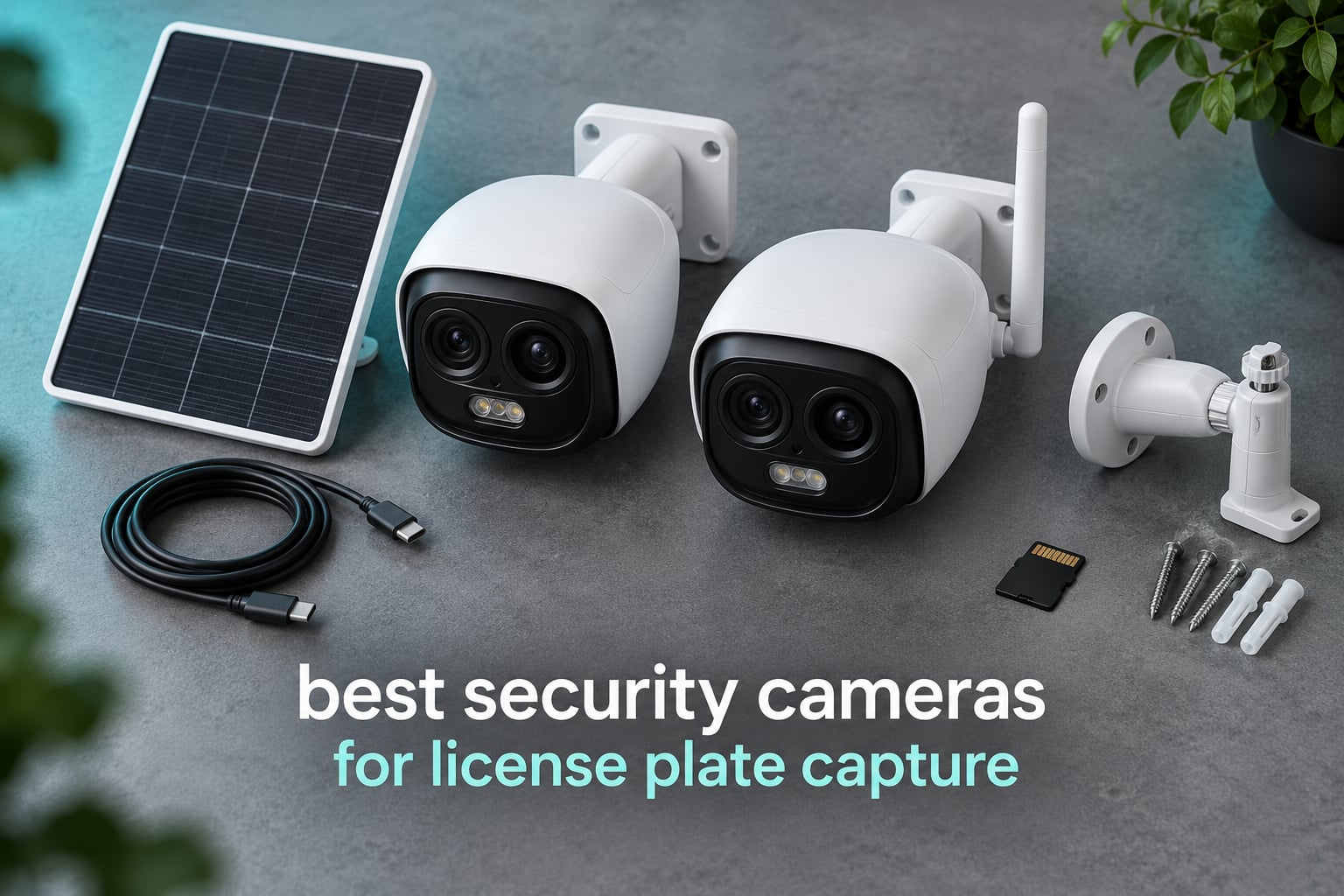
So the honest answer to the best security cameras for license plate capture question is not the most expensive unit on the market. It is the camera with true optical zoom aimed at one specific capture zone, paired with white-light or dual illumination, and set to a fast shutter. We put ten cameras through that lens, from battery-powered solar models to 30x optical PTZ domes, and scored them on exactly the things that decide whether you can read a plate three months from now.
One terminology note before we start, because it prevents most overspending. Plate capture means you get a clear enough image to read the number yourself. Plate recognition, also called LPR, ANPR or ALPR depending on which region you are in, means software runs optical character recognition and turns the plate into searchable text. Most people buying for a driveway want capture. If you are running a gated community or a self-storage lot and need searchable plate lists, you want recognition. We note which is which below.
If you are still building out the basics, our wireless security camera roundup and outdoor camera picks cover the general cases. This guide is narrower: it is only about vehicles and plates.
Top 3 Picks for License Plate Capture in 2026

Best Security Cameras for License Plate Capture in 2026
Every camera below is evaluated on the same four questions: does it have real optical reach, can it hold a vehicle sharp in motion, will it produce a readable plate after dark, and does it keep recording without a monthly bill.
| Product | Specs | Action |
|---|---|---|
| eufy SoloCam S340 3K Dual-Lens Solar |
|
Check Latest Price |
 Tapo MagCam 2K+ C425 Tapo MagCam 2K+ C425 |
|
Check Latest Price |
| SEHMUA 2K Solar Dual-Lens |
|
Check Latest Price |
 eufy Floodlight Cam E340 eufy Floodlight Cam E340 |
|
Check Latest Price |
 REOLINK TrackMix WiFi 4K REOLINK TrackMix WiFi 4K |
|
Check Latest Price |
 REOLINK TrackMix PoE 4K REOLINK TrackMix PoE 4K |
|
Check Latest Price |
 eufy 4G LTE Cam S330 eufy 4G LTE Cam S330 |
|
Check Latest Price |
 REOLINK RLC-811A REOLINK RLC-811A |
|
Check Latest Price |
 Ctronics 5MP 30X PTZ Ctronics 5MP 30X PTZ |
|
Check Latest Price |
 SV3C 4K 36X PTZ SV3C 4K 36X PTZ |
|
Check Latest Price |
1. eufy SoloCam S340 – Our Best Overall License Plate Camera Pick
eufy Security SoloCam S340, 3K Dual-Lens Solar Security Camera
3K dual-lens
8x hybrid zoom
Solar panel plus 10000mAh battery
6 meter night range
Pros
- 3K dual-camera detail with 8x hybrid zoom
- Solar panel and 10000mAh battery cut charging entirely
- 360 degree pan and tilt removes driveway blind spots
- 8GB local storage with no monthly fee
- Seven-minute wire-free install
Cons
- Effective still resolution listed as 5MP despite 3K branding
- Night vision range of 6 meters is short for long driveways
- Some units need patience on Wi-Fi pairing
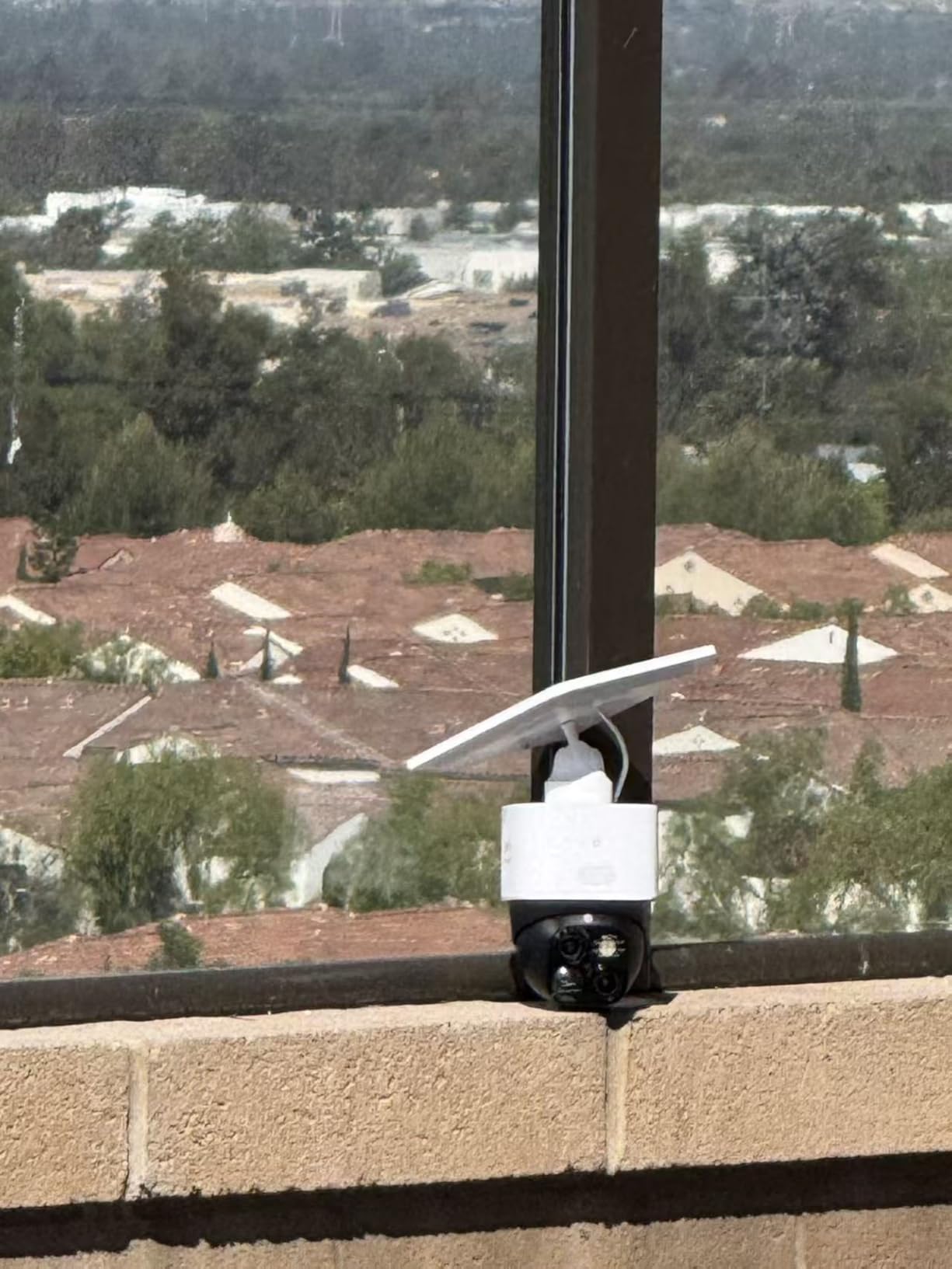
The SoloCam S340 is the camera I keep coming back to for a suburban driveway, and the reason is the second lens. A 3K wide view keeps the whole scene in frame while a separate telephoto channel provides the plate detail, which is exactly the dual-view trick r/UNIFI users describe as best practice for their own systems: aim and zoom into the specific area, not the entire yard.
With 6973 reviews at a 4.2 average, it is also the most thoroughly battle-tested camera in this guide, and the fifth-star share sits at 68 percent. Owners consistently single out the 3K image quality, the 360-degree pan and tilt, and the fact that solar power plus 8GB of built-in storage means no subscription and no charging schedule.
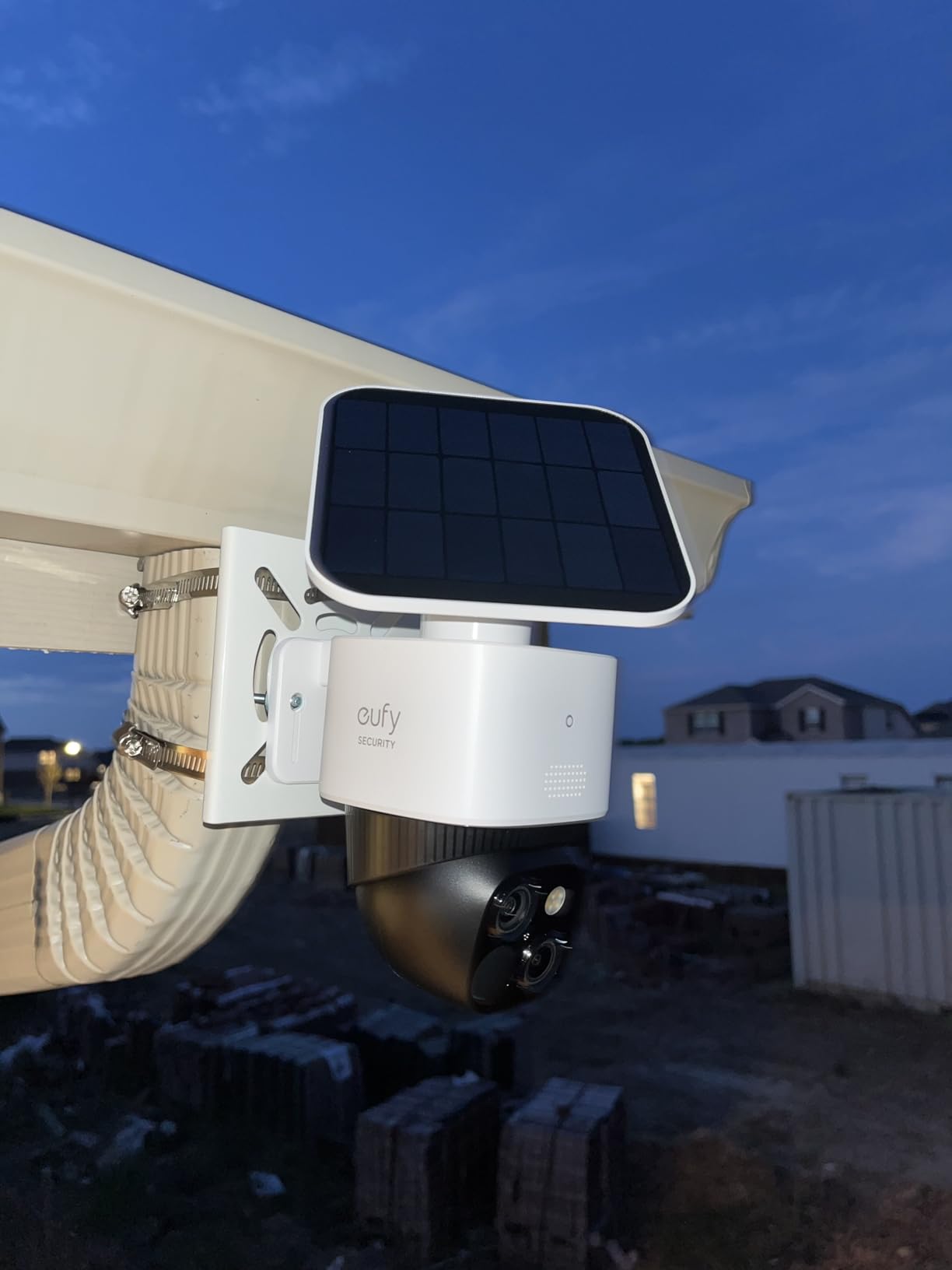
Where it falls short is honest and worth knowing before you buy. The listed night vision range is 6 meters, which is roughly 20 feet, and that is the honest limit for this body. If your capture zone sits at the far end of a long drive, the daylight plate will read and the night plate will not.
The 3K marketing also resolves to 5MP effective still resolution, so do not treat the 3K label as a guarantee of fine character detail. A minority of owners report finicky Wi-Fi pairing, and the camera is Wi-Fi dependent with no cellular fallback. Our solar camera guide covers the power side in more depth if off-grid placement is your priority.
Where this camera works best
Short driveways, parking pads and curbs where cars slow to a stop, within about 20 feet after dark. It is also the easiest install in the group, with no wiring, no NVR and no monthly bill.
Where this camera falls short
Long rural drives where the capture zone is 60 feet or more out, since 6 meters of night range cannot be stretched. It also gives capture, not recognition, so nothing here decodes a plate into searchable text.
2. Tapo MagCam 2K+ (C425) – Best Value Pick for Plate Detail
Tapo MagCam 2K+ Security Camera Wireless Outdoor, Battery Powered, C425
2K QHD
142 degree field of view
10000mAh battery, up to 300 days
IP66 weatherproof
Pros
- 2K QHD is explicitly marketed for license plate detail
- 142 degree field of view covers a wide capture area
- Up to 300 days of battery per charge
- Starlight sensor plus spotlights give full-color night video
- Magnetic base and IP66 simplify outdoor placement
Cons
- Zoom is digital only with 1x optical
- so cropping costs detail
- Solar panel is a separate purchase
- No pan or tilt motor on this fixed-view model
Tapo markets the C425 on one specific claim, and it is the right one: 2K QHD with 1.7 times the pixels of 1080p, marketed for pulling clear detail like license plates. That 4MP effective resolution is not headline-grabbing, but the field of view and the sensor work together in a way that matters more for capture than raw pixel counts usually do.
The battery is the sleeper feature. A 10000mAh cell rated for up to 300 days per charge means you can mount this at a gate or the back of a long drive with no outlet and no cable run, and the Starlight sensor with built-in spotlights produces full-color night footage rather than the gray IR wash that wrecks plate legibility.
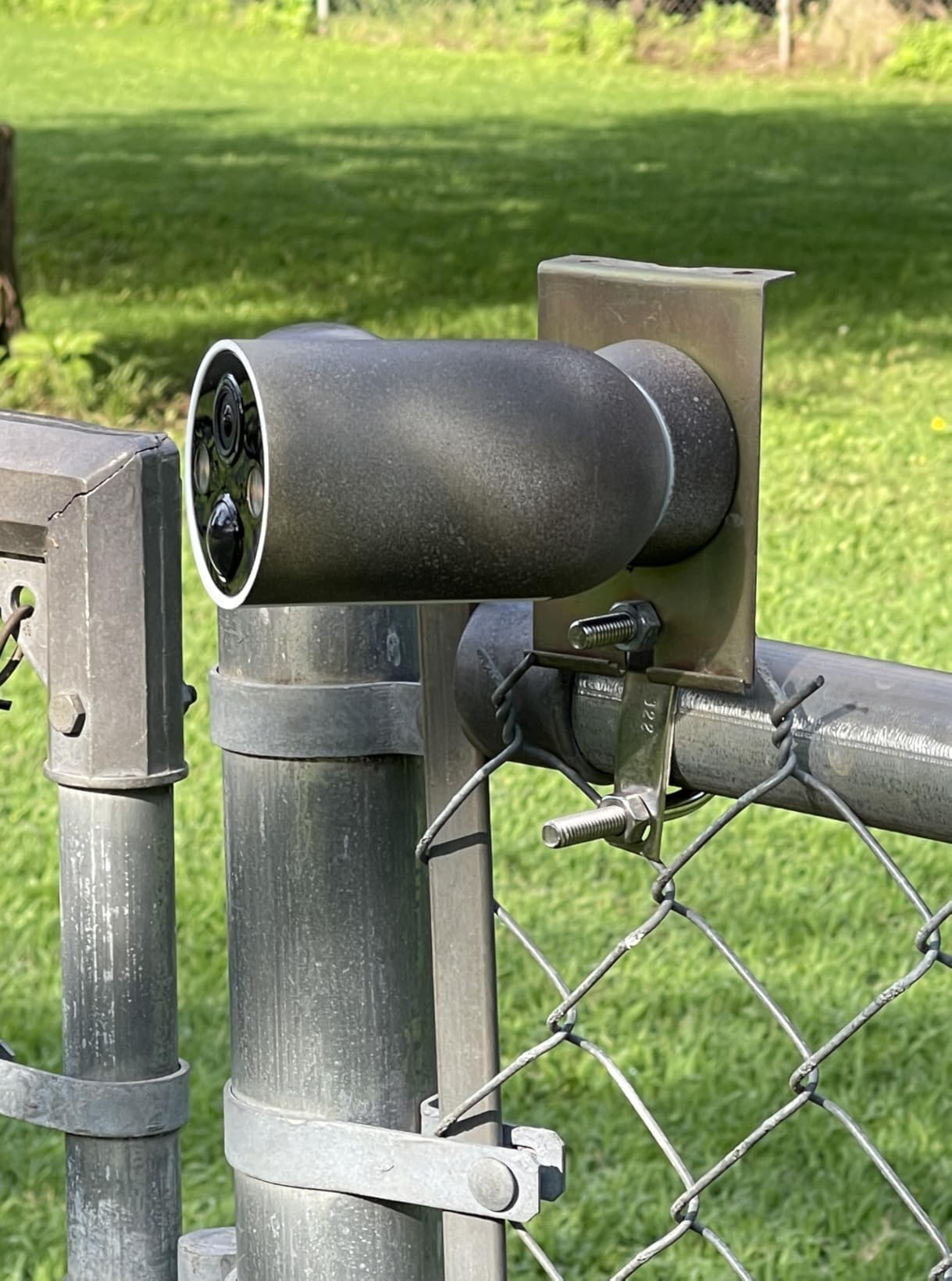
The limitation that decides this for you is the zoom. Optical zoom is listed at 1x, meaning every magnification past that is digital cropping. If your capture zone is close, that costs you nothing. If it is 50 feet away, the cropped image will soften before the characters resolve.
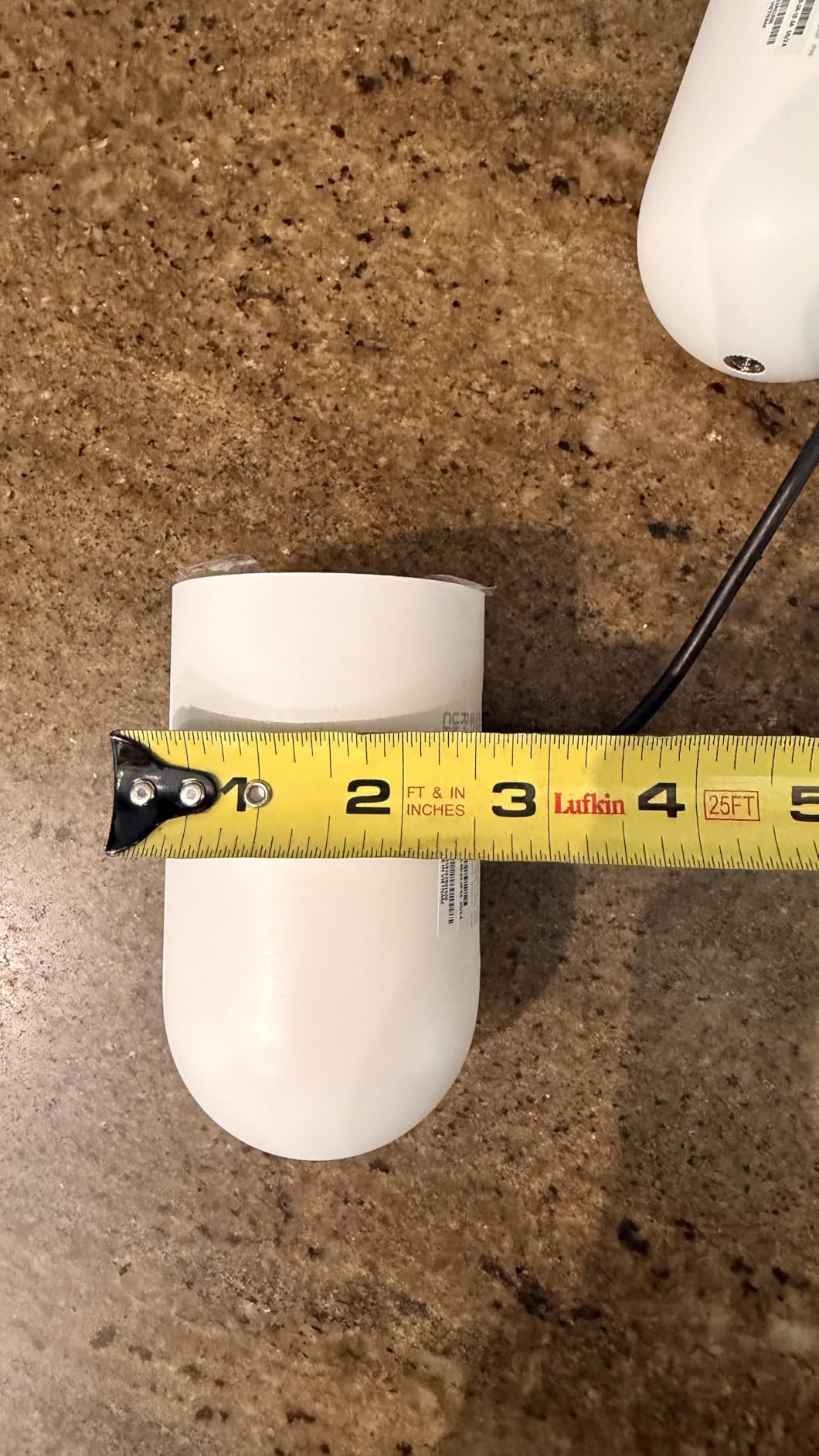
Also note the solar panel is optional and not included, and this is a fixed-view model with no pan or tilt motor. If you want one camera that can follow a vehicle around the property, this is not it. Buyers who want the widest possible scene from a single mount will like the 142 degree coverage.
Why we call this the best value
At 4.2 stars across 3777 reviews with 71 percent five-star, satisfaction is the highest in this group. The Starlight sensor uses visible light rather than relying on IR alone, which is the biggest reason plates stay readable after dark.
What you give up
Distance. With 1x optical and a 142 degree field, the plate is only large in frame when the vehicle is close. There is also no automated recognition, and the fixed mount means the aim must be right on day one.
3. SEHMUA 2K Solar Dual-Lens – Best for Long Solar Driveways
SEHMUA 2K Solar Security Cameras Wireless Outdoor, Dual Lens 12X Hybrid Zoom, 360° View Pan/Tilt WiFi Security Camera Outside with Color Night Vision, Easy to Install, PIR Alarm, 2-Way Audio
3.6mm wide plus 12mm telephoto dual lens
12x hybrid zoom
98 foot night range
IP65 weatherproof
Pros
- Dual-lens 12x hybrid zoom aimed at driveway plate reading
- Solar panel keeps the battery topped off in poor weather
- 2.4GHz link held up on weak-signal mounts
- Two-way audio for talking to a driver
- Clear day and night video with wide pan and tilt
Cons
- No SD card included
- so nothing records until you add one
- 2.4GHz only and needs band splitting on 5GHz routers
- PIR sensitivity triggers on insects and rain unless turned down
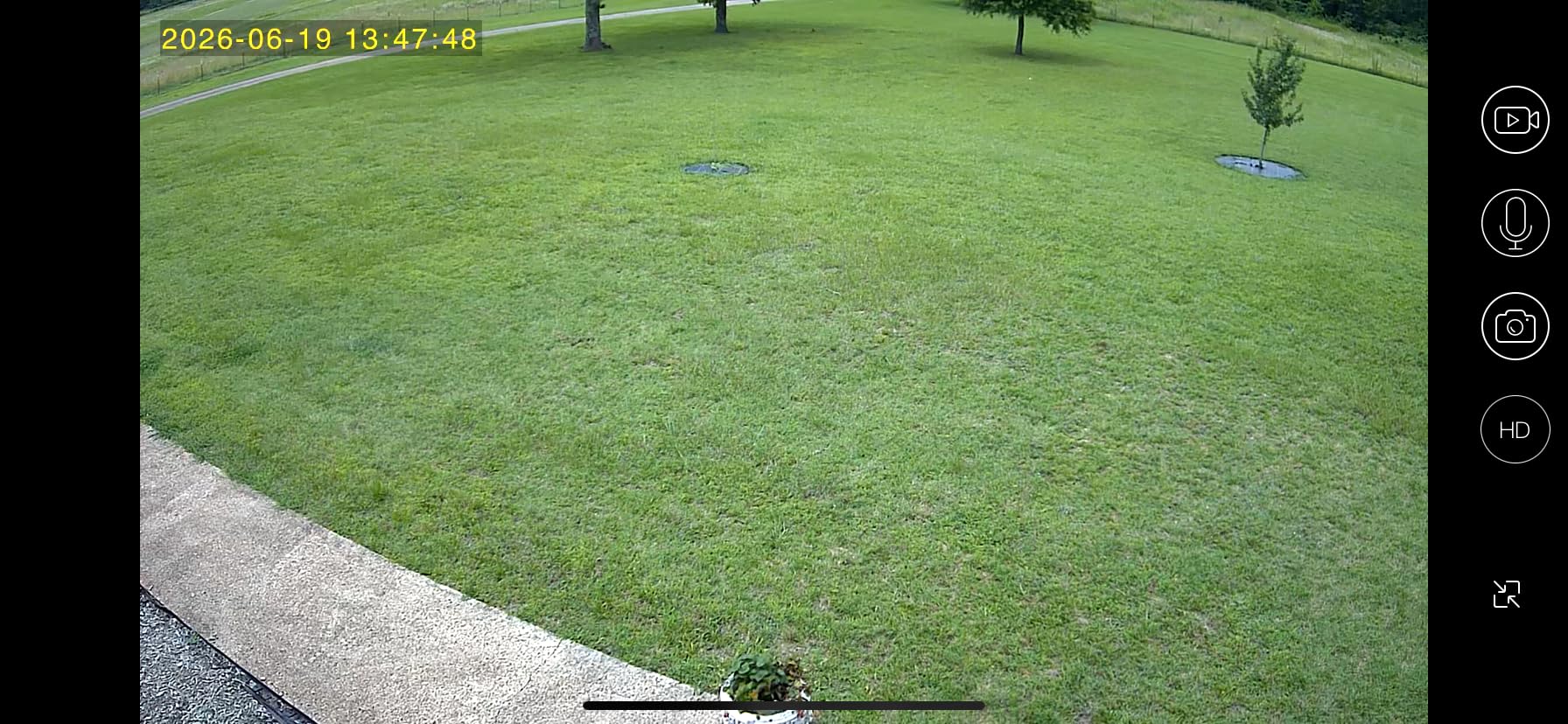
The RBX-SD22 is one of the few cameras in this guide where the plate use case is named directly in the product documentation, with a 3.6mm wide-angle lens paired with a 12mm telephoto and 12x hybrid zoom marketed for reading a car plate at the end of a driveway. That telephoto channel is what separates it from a plain wide-angle solar camera.
At 4.3 stars from 3278 reviews, it holds the second-highest rating in this group, and long-term owners report strong battery endurance from the solar panel plus a 2.4GHz connection that held up at one-bar signal on a 2.5-acre property. The listed night vision range of 98 feet is the second longest among the solar models here.
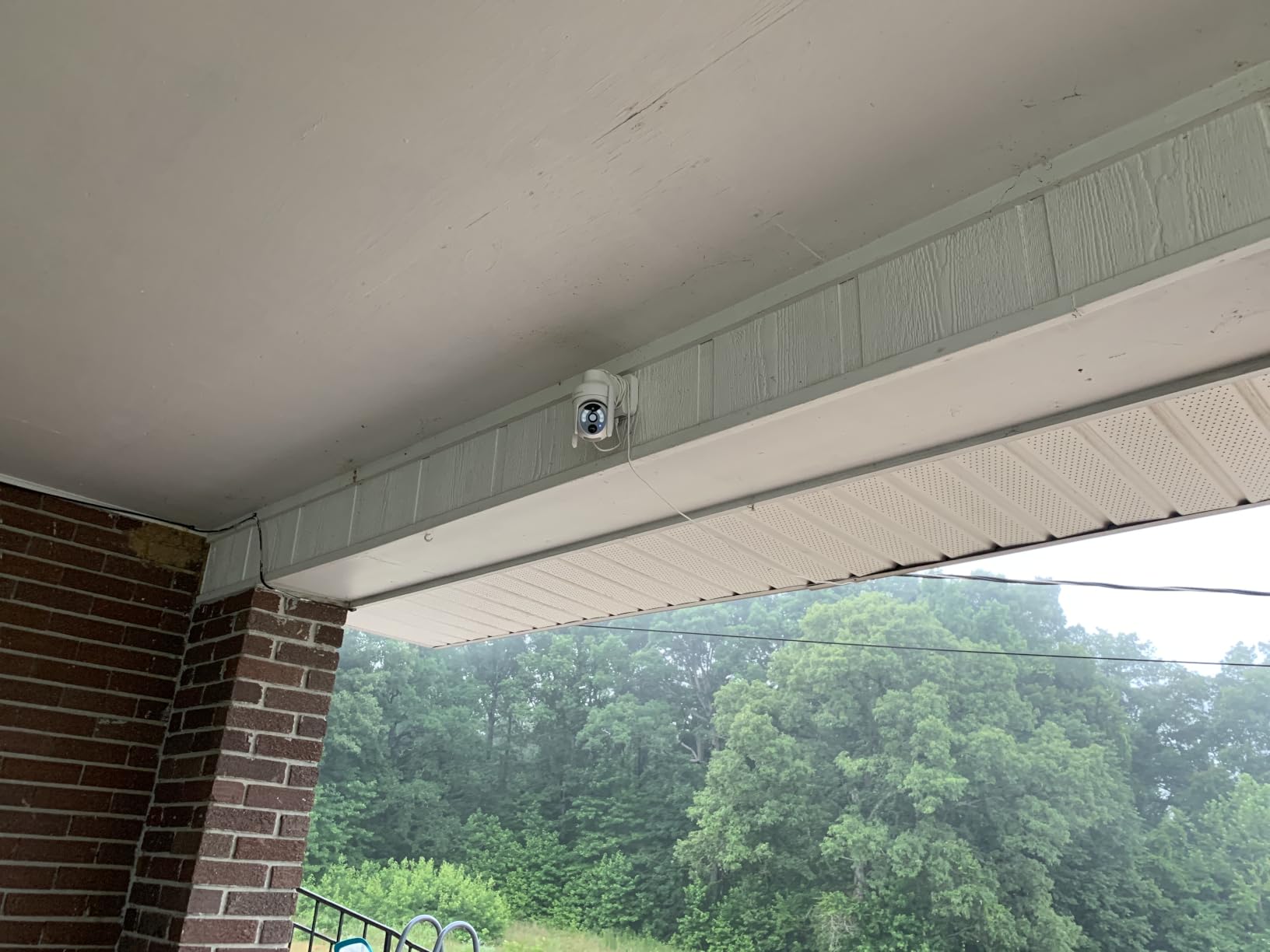
Two practical catches. No microSD card is included in the box, which means motion clips are not saved anywhere until you add a card or a cloud plan, and the PIR sensitivity defaults high enough that insects and rain generate false alerts. Both are ten-minute fixes.
The 2.4GHz-only radio is the more annoying one. On a router broadcasting 5GHz only, you will be splitting bands manually before the camera will connect. Budget for that setup step rather than expecting a plug-and-play mount.
Where this camera is the right answer
Long rural driveways, private roads and lots where running cable is not an option. The 12mm telephoto is a real lens, so the plate occupies far more of the frame than a 142 degree fisheye would allow.
Where this camera is the wrong answer
Setups needing searchable plate data, and installations where you cannot wait for an SD card. Expect to turn the motion sensitivity down on day one, or PIR will fill your phone with insect alerts.
4. eufy Floodlight Cam E340 – Best for Lighting Plates at Night
eufy Security Floodlight Camera E340, Dual-Lens, 360° Coverage, 8X Zoom
3K wide plus 2K telephoto
Detail to 50 feet
2000 lumen light
IP65 weatherproof
Pros
- Dedicated 2K telephoto pulls readable detail to about 50 feet
- 2000 lumen light illuminates plates and deters visitors
- Auto tracking follows vehicles across the pan range
- Dual-band Wi-Fi 6 holds a stable link
- Continuous local recording with no subscription
Cons
- Resolution drops to 2K when AI tracking or dual view is active
- Corded power only so an outlet or junction box is needed
- Bulky 12.6 inch housing is hard to disguise
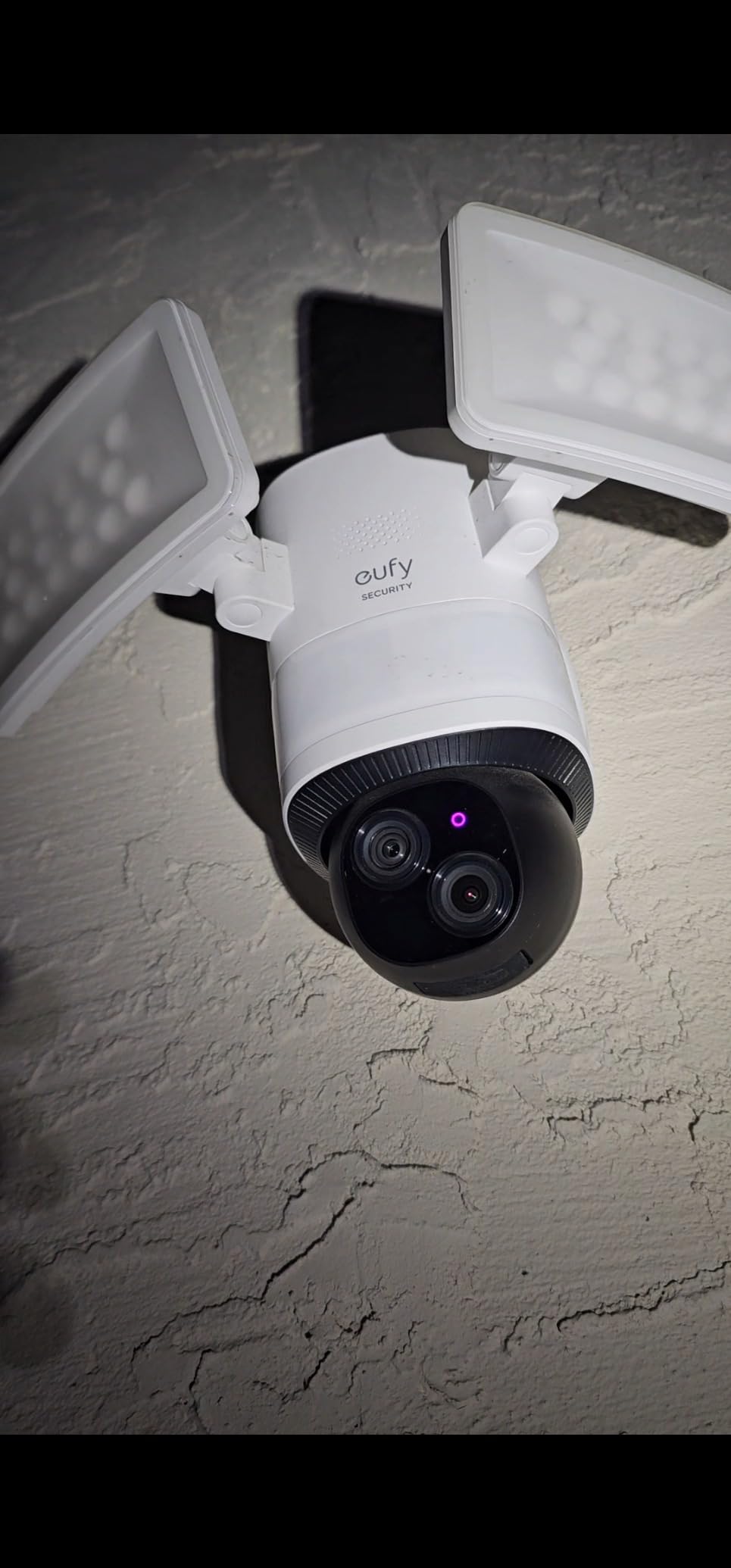
If your problem is specifically that plates are unreadable after dark, the E340 attacks that problem head-on with light. The 2000-lumen defense lamp is the brightest illuminator in this entire roundup, and because it is visible white light rather than IR, it does not trigger the reflective-shearing blowout that makes plates worse.
The optical design is the other half of the story. A 3K wide-angle lens covers the scene while a separate 2K telephoto channel is specified to hold detail up to 50 feet, paired with 8x hybrid zoom. That combination of a bright visible light source and a dedicated telephoto is the closest consumer hardware gets to what a purpose-built LPR camera does with a white-light illuminator.
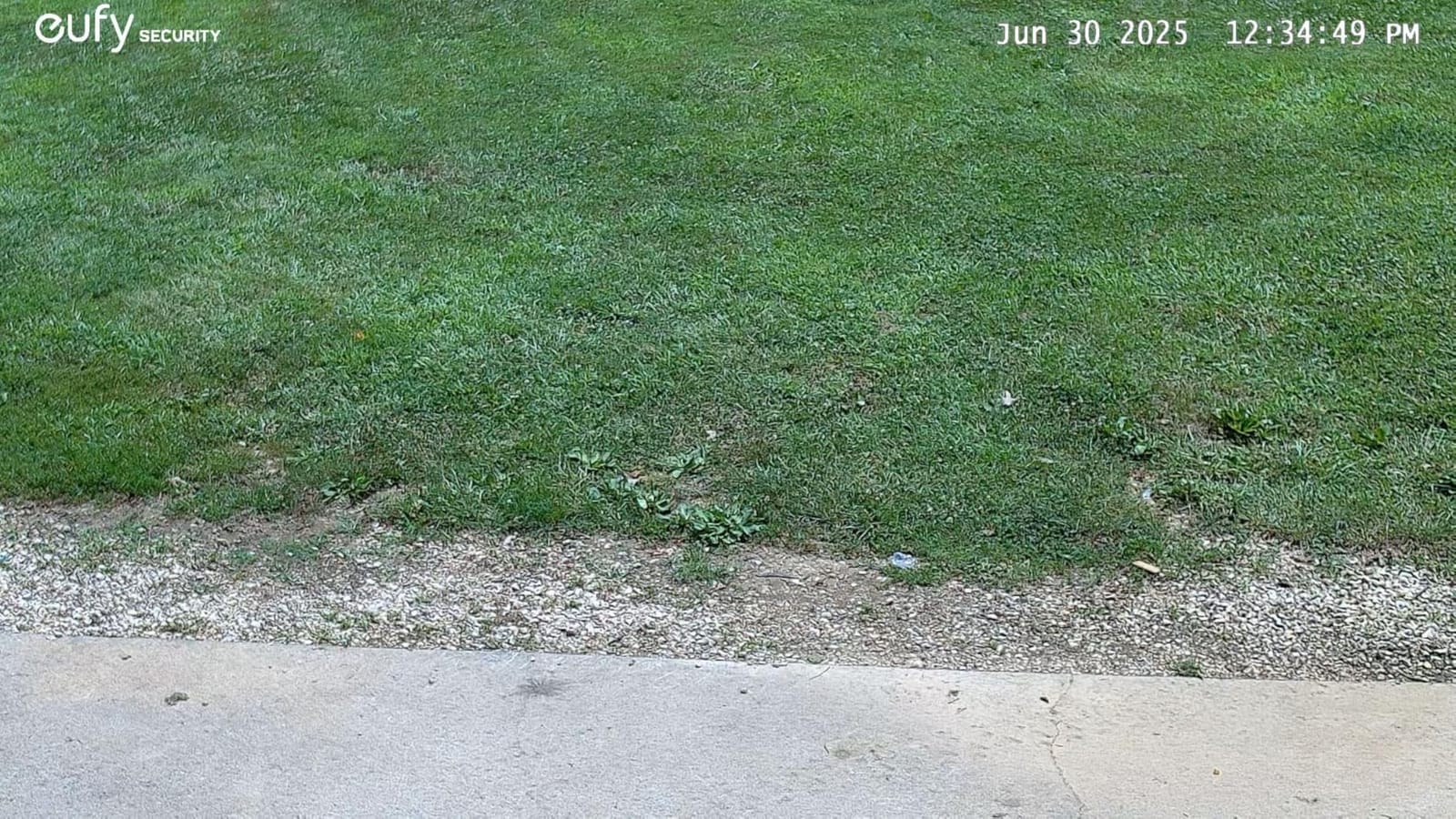
The resolution trade-off is real and worth planning around. Maximum resolution drops from 3K to 2K whenever AI tracking or dual-view modes are active, which is exactly when you are most likely to want the detail. If plate legibility is the priority, decide in advance which mode you will leave running.
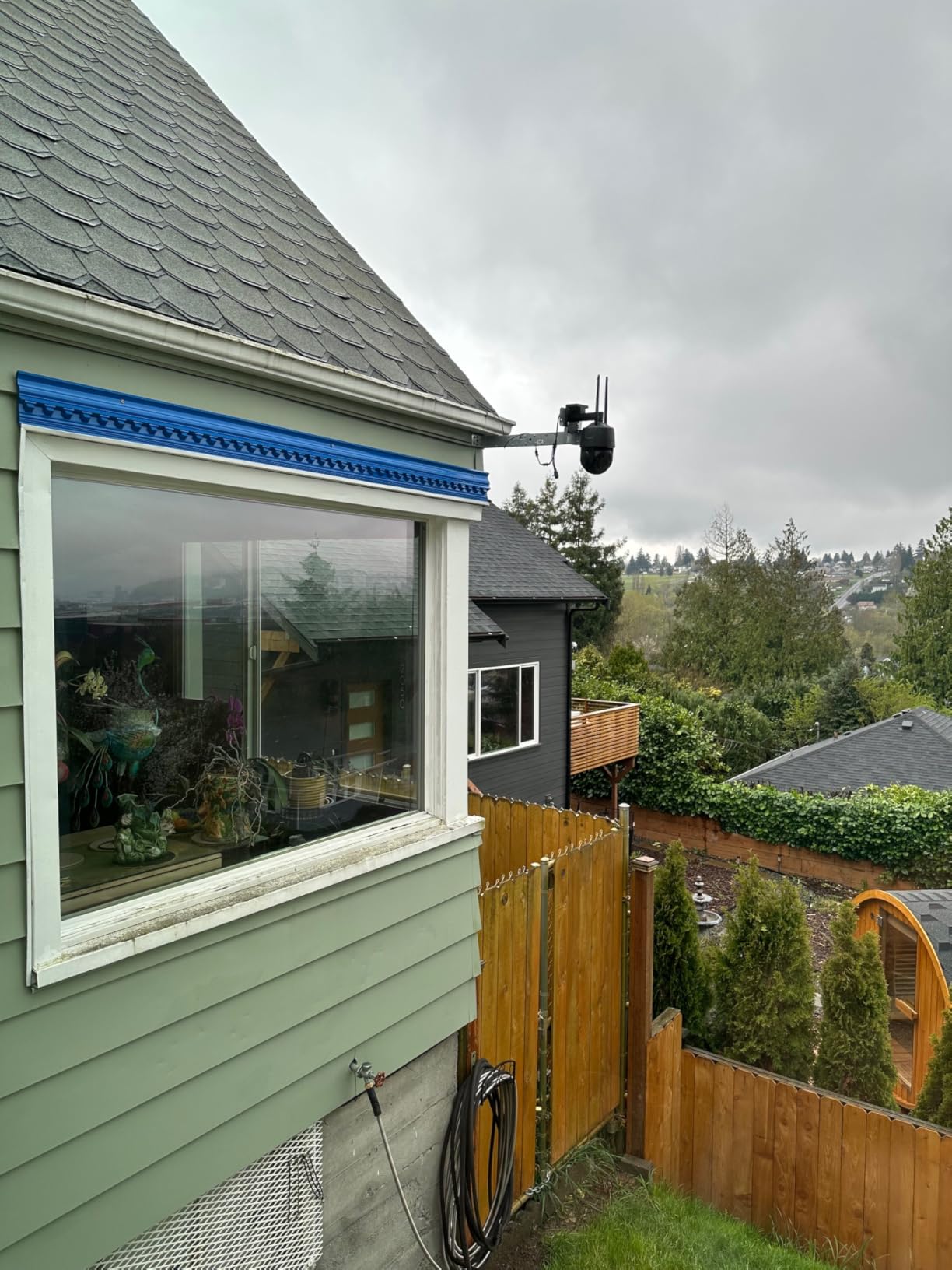
This is also the heaviest unit we covered at 1380 grams, with a 12.6 inch floodlight housing that is visible from the street. Plan the mount height and angle carefully, since moving it later means a ladder.
Who should buy this one
Anyone whose capture zone sits 25 to 50 feet from a wall with access to power. That is where the telephoto channel still resolves characters and the floodlight fills the scene without washing the plate out. Homeowners comparing the movement side can read our PTZ camera guide.
Who should pass
People without an outlet at the mount point, since this is corded only, and anyone who cannot accept a visible 12.6 inch floodlight. The 2K telephoto is a step down from the 4K bodies further down this list.
5. REOLINK TrackMix WiFi 4K – Best PTZ for Following Vehicles
REOLINK 4K Wired WiFi Outdoor Camera, 8MP Dual-Lens PTZ Security Camera
4K 8MP dual-lens PTZ
6x optical zoom
355 degree pan, 90 degree tilt
100 foot night range
Pros
- Dual-lens layout shows wide overview and zoomed close-up together
- 6x optical zoom with PTZ tracking follows approaching vehicles
- Spotlights deliver usable full-color night footage
- Dual-band Wi-Fi 6 handles busy networks
- Local microSD
- FTP or NVR storage with no subscription
Cons
- PoE is not supported so a power adapter must be run
- 20 fps frame rate is below some 4K rivals
- Sensitive motion events are occasionally missed
The TrackMix WiFi is the most interesting tracking option here because it uses real glass. A 6x optical zoom across dual telephoto and wide-angle PT lenses means the close-up channel resolves detail rather than cropping it, which is the whole difference between a vehicle you can identify and a vehicle you can only confirm was there.
Both lenses run together, so you get the wide situational view and the zoomed plate view on one screen without switching modes. The field of view spans 104 to 38 degrees horizontally, 355 degrees of pan and 90 degrees of tilt, with tracking specified to 50 feet in both day and night conditions.
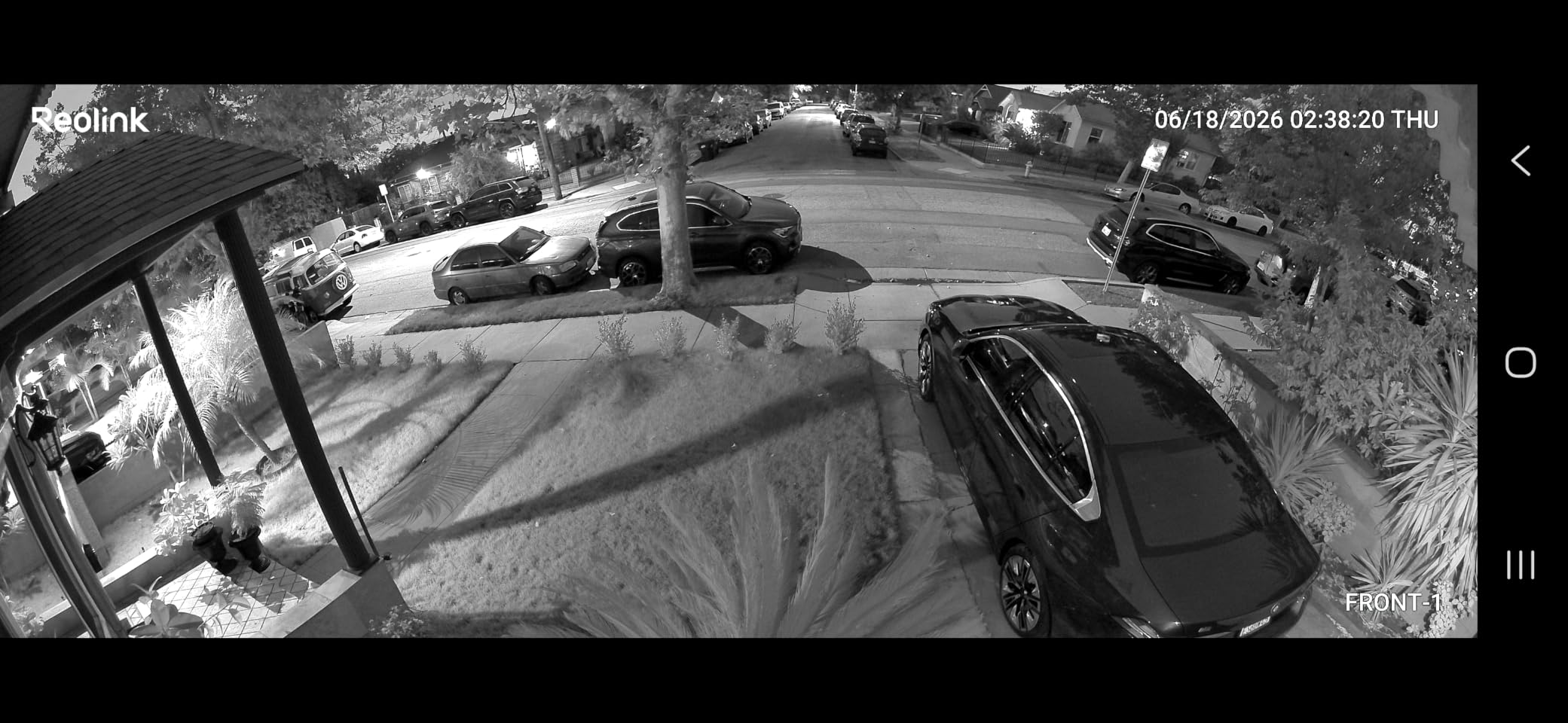
The 20 fps frame rate is the number to think about. Faster cars get more motion blur at that rate, and the RLC-811A at pick eight runs 25 fps. If your road sees highway speeds, a fixed higher-frame-rate camera is a better tool than a moving one.
This Wi-Fi version does not support PoE, so you are running a power adapter to a camera that otherwise has the build to be a wired install. Reolink makes a PoE version of the same body if cabling is an option, which is the next pick.
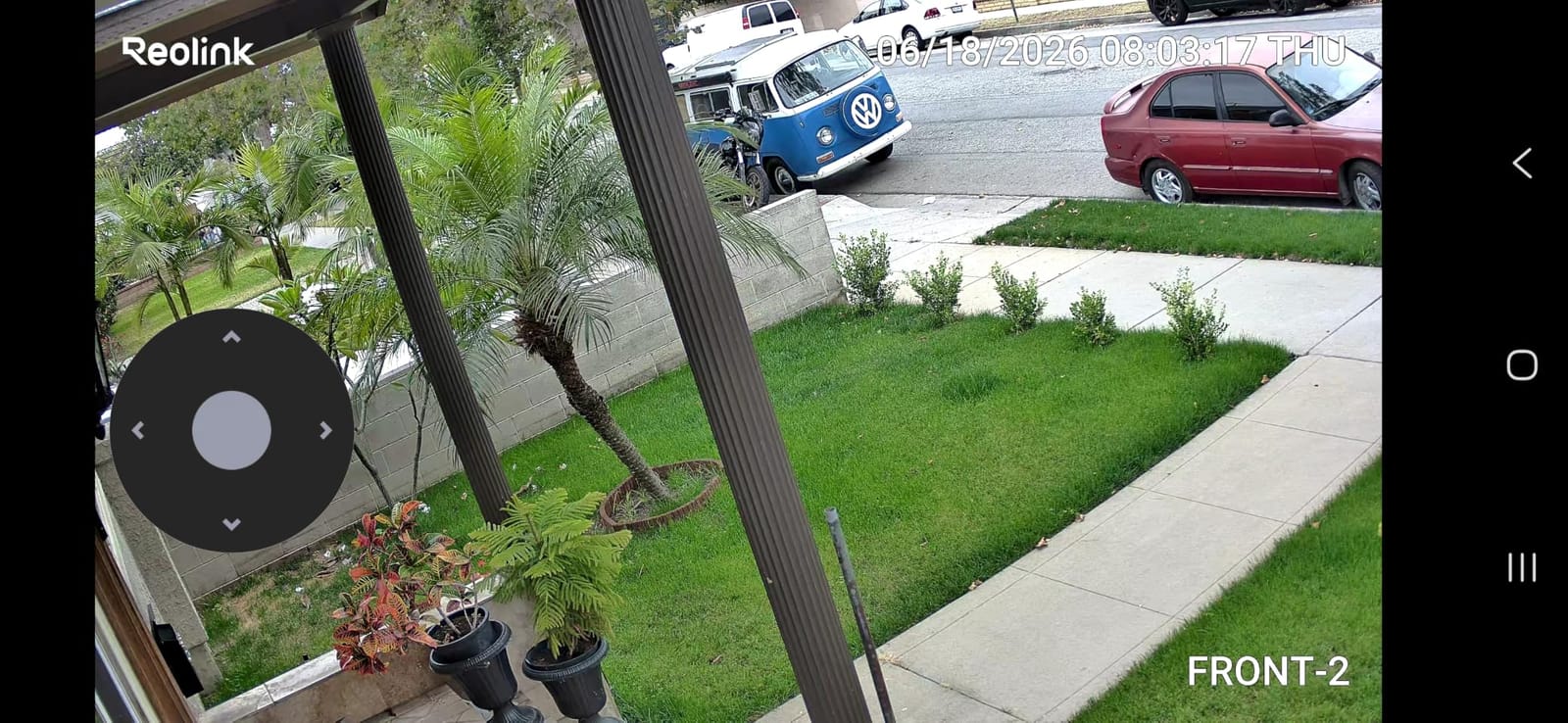
Why this suits a busy driveway
Auto tracking across a 355 degree pan means you do not have to predict where a car will stop, and local storage to microSD, FTP or an NVR means no subscription for long-term evidence.
Where the trade-offs show up
PTZ blind spots. Motion below or behind the camera’s field is genuinely missed, and at nearly 9 inches the metal dome is large enough to announce itself. The 1514-review base is solid but shallower than the top picks.
6. REOLINK TrackMix PoE 4K – Best for Reading Plates at Long Range
REOLINK TrackMix PoE Grey Dual-Lens PTZ Security Camera 6X Hybrid Zoom
4K dual-lens PTZ
2.8mm wide plus 8mm telephoto
6x optical zoom
PoE single-cable install
Pros
- Reviewers report plates readable at roughly 125 feet from a 10 foot mount
- Telephoto lens tracks and zooms while the wide lens keeps context
- Single PoE cable carries power and data with no dropouts
- Full local functionality with no subscription
- Metal housing and mount reported to survive years of harsh sun and extreme cold
- Detection filtering makes clip searches fast
Cons
- PTZ tracking can miss motion below or behind the field
- Zoom detail degrades past roughly 30 feet for some users
- Large obvious housing that cannot be disguised
- Some app settings are buried and presets may need calibration
- Limited wide view when mounted low at 6 feet
This is the highest-rated camera we covered, at 4.4 from 1350 reviews, and the one reviewers most often describe in plate-capture terms. Multiple owners specifically cite plate legibility at distance, with reports of readable plates at roughly 125 feet when the camera is mounted about 10 feet high.
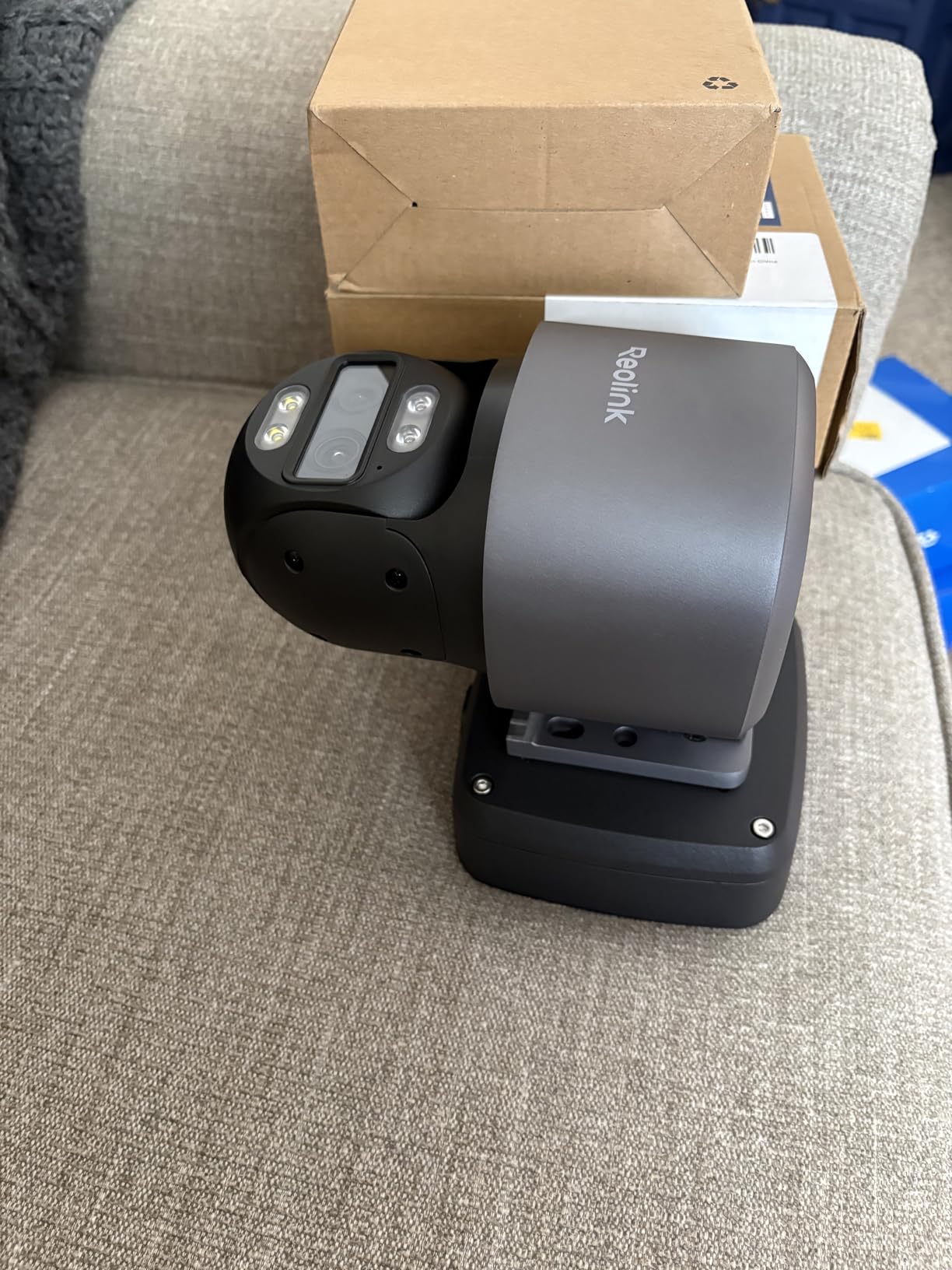
The lens pairing is what makes that possible: a 2.8mm wide-angle plus an 8mm telephoto shown side by side, with 6x hybrid zoom that automatically switches the close-up channel between 2MP and 4K depending on what the tracker is following. PoE means one cable carries power and data, so there is no separate adapter to weatherproof.
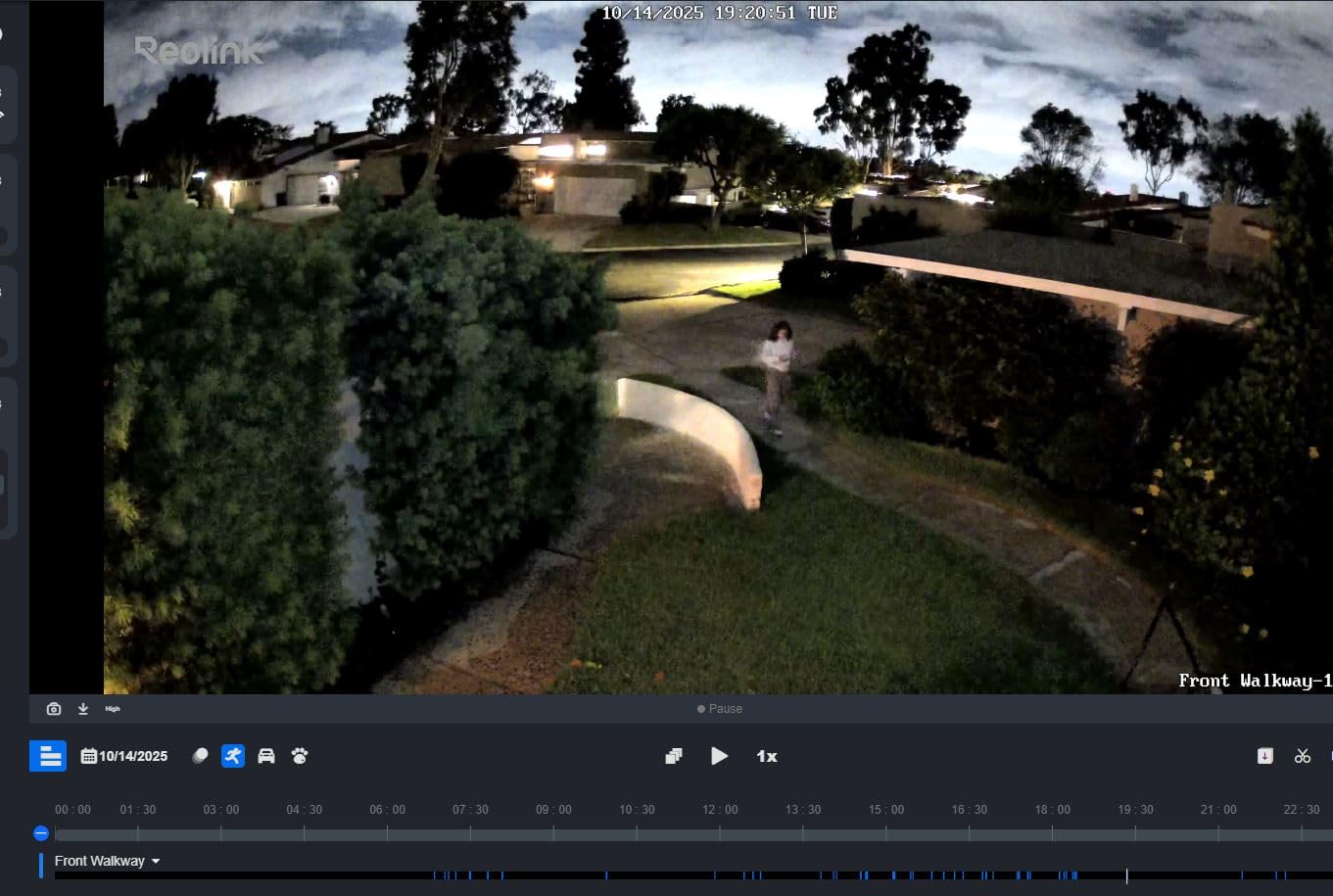
The honest caveat: some users report telephoto detail degrading beyond roughly 30 feet even at 4K, which sits awkwardly against the 125-foot reports. The difference is almost always mounting height and how squarely the camera faces the approach. A 10 foot mount with a straight-on view gets the far numbers.
Long-term durability reports are unusually good. Owners describe the metal housing and mount plate holding up for years across intense sun and temperatures from -25C to +40C, which matters for a camera that lives outside year round. Storage runs to 512GB microSD, a Reolink NVR or FTP, with no subscription.
Where this camera is unbeatable
Any install where you can run a network cable and the capture zone is far away, from long driveways to parking lot entrances. It also suits anyone who wants plate capture plus vehicle classification without a cloud bill.
Where it disappoints
Low mounts. At around 6 feet the wide view is limited, aim and preset calibration take patience, and at 8.15 inches the housing is impossible to hide if discretion matters.
7. eufy 4G LTE Cam S330 – Best for Gates With No Wi-Fi
eufy Security 4G LTE Cam S330, 4K Cellular Solar Security Cameras Wireless Outdoor, Pan and Tilt, 4G and Wi-Fi Duo-Mode, AI Tracking, with SIM Card and 32GB SD Card, No WiFi, No Problem
4G LTE with Wi-Fi failover
4K color day and night
Plates stated at 30 feet
Solar plus 9400mAh battery
Pros
- Works with no Wi-Fi at all over 4G LTE
- Automatic failover keeps the feed live during an internet outage
- 4K color video with plate identification stated at 30 feet
- Large solar panel and 9400mAh battery for off-grid runtime
- 32GB SD card and SIM card included in the box
Cons
- Digital zoom only
- so cropping limits how far 4K detail holds
- IP55 is the weakest weather sealing in this group
- Lowest average rating here at 4.0 with 15 percent one-star reviews
- Ongoing cellular data plan needed for off-grid use
Some capture zones simply have no Wi-Fi signal: a gate at the end of a long drive, a barn, a construction trailer, a boat dock. The S330 is built for exactly that problem, pairing 4G LTE with Wi-Fi in dual-mode and switching to mobile data automatically when the network drops.
A SIM card is bundled, described as compatible with AT&T, T-Mobile and Verizon with cross-network roaming to the strongest available signal, and a 32GB SD card is included so you are recording from day one rather than after a delivery. The video is 4K color at 30 fps with plate identification stated at 30 feet, and a 100-lumen spotlight extends color detail to 26 feet.
This is also the least satisfying camera statistically in the group. At a 4.0 average with 15 percent one-star reviews, it has the widest spread of experiences, and the zoom is digital only, so the 4K detail degrades as you crop in. IP55 is the weakest weather sealing here too, which matters for an exposed gate post.
There is an ongoing cost the hardware does not capture: a cellular data plan for off-grid operation. That is fine if the alternative is a trenching job, and poor value if you have perfectly good Wi-Fi at the mount point.
When cellular is the right call
Remote gates, farm outbuildings, storage yards and any point where pulling a network cable means digging a trench. Automatic Wi-Fi-to-cellular failover means an internet outage does not kill your evidence trail.
When it is not
Anywhere with reliable Wi-Fi and a nearby outlet, since there is no optical zoom to justify the cellular complexity. Consider rain too: IP55 with a 4.0 average is a combination we would not choose for an exposed gate post.
8. REOLINK RLC-811A – Best Fixed Bullet for Driveway Aim
REOLINK PoE Security Camera RLC-811A 5X Optical Zoom, 4K Color Night Vision
4K Ultra HD with 8MP still resolution
5x optical varifocal zoom
123 degree field of view
IP66 aluminum housing
Pros
- 5x optical zoom preserves native 8MP detail rather than cropping
- Aluminum housing with IP66 sealing for permanent outdoor mounting
- Single-cable PoE install is quick and reliable
- Color night vision with built-in spotlight and siren
- Local microSD
- NVR or FTP storage with no subscription
Cons
- Fixed bullet form with no pan or tilt so the aim must be correct at install
- PoE NVR
- switch or injector and DC adapter not included
- Time-lapse is the only non-continuous recording mode
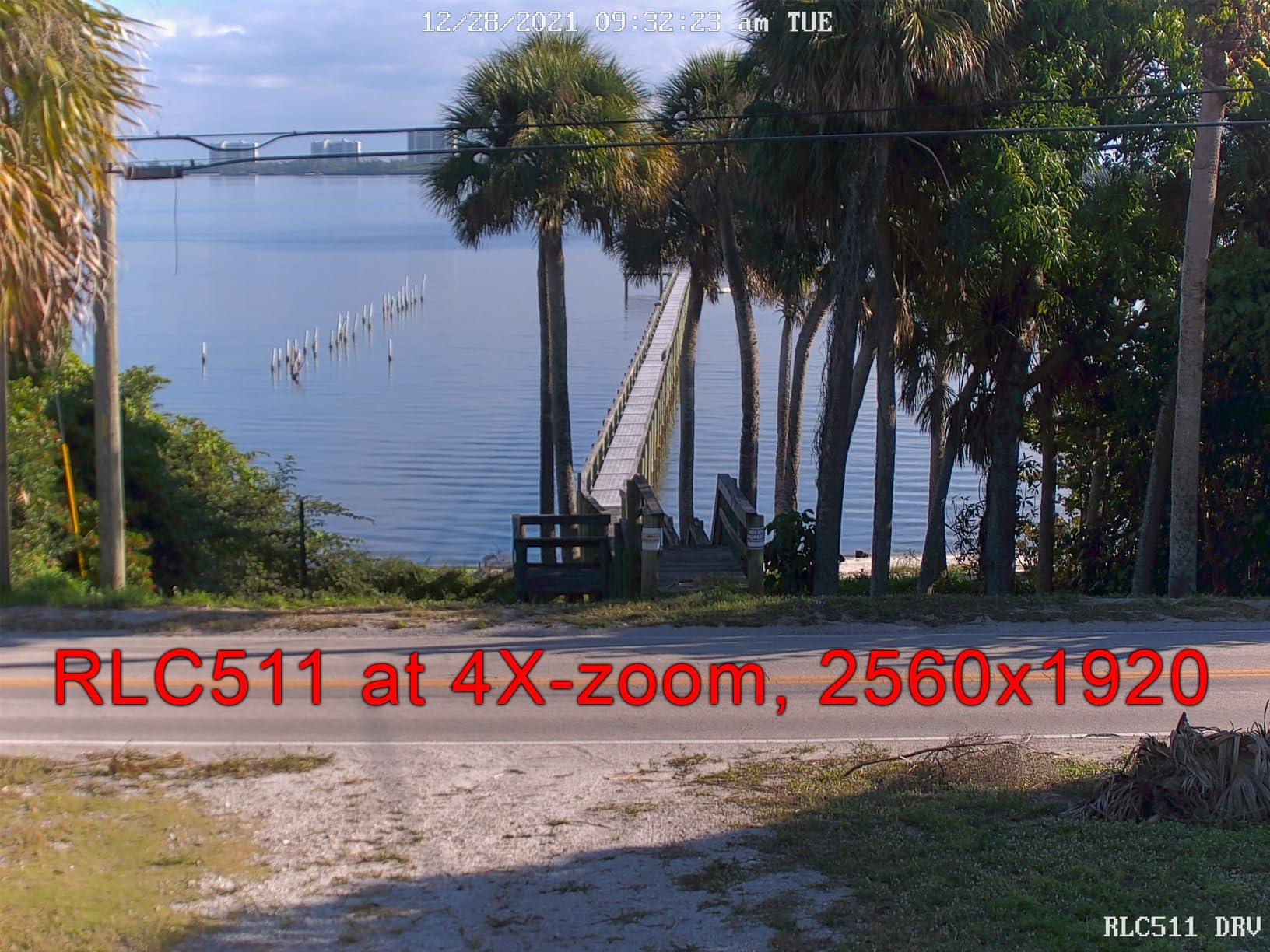
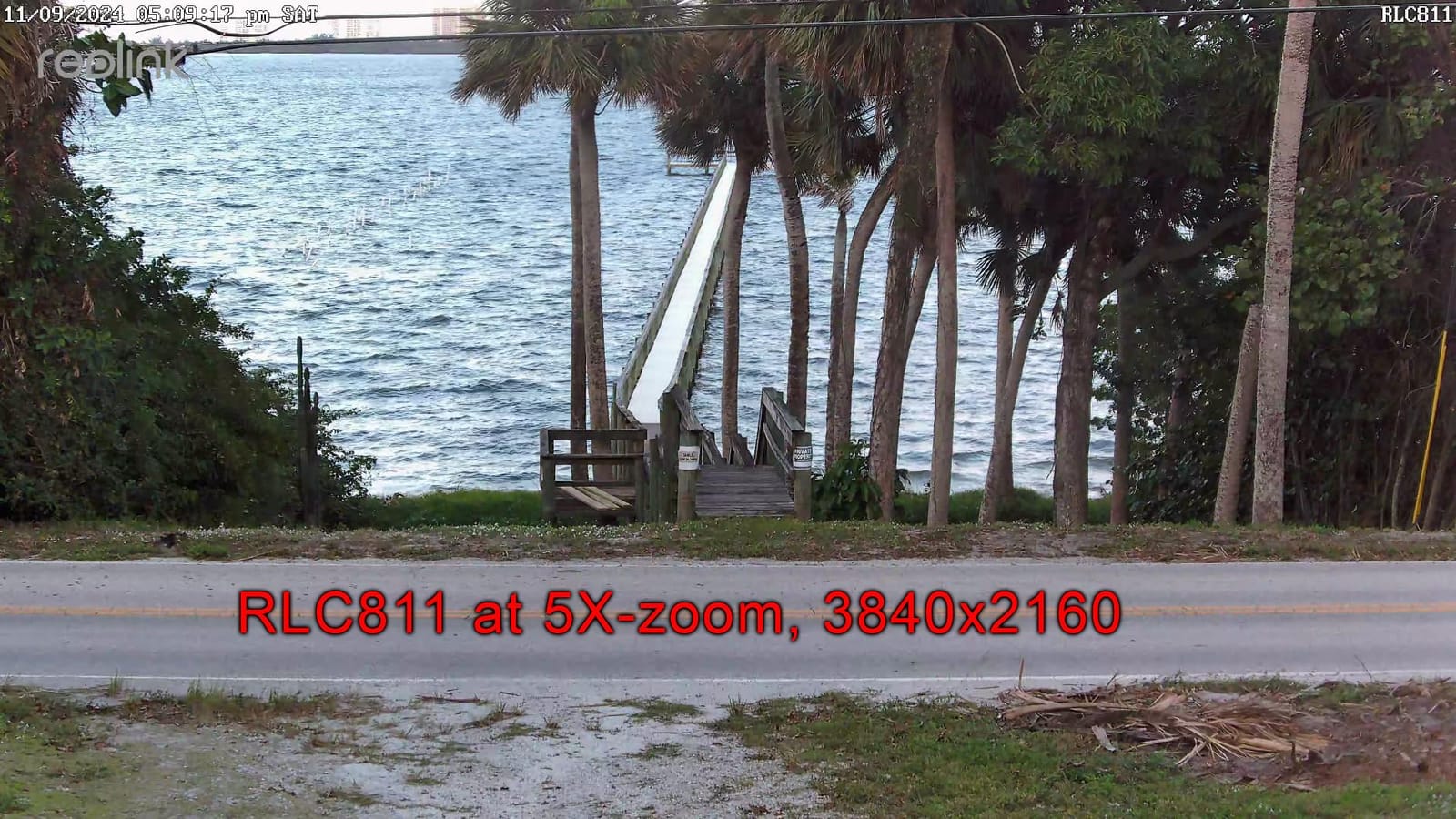
Everything the TrackMix does with movement, the RLC-811A does with a longer glass lens and no movement at all. A 5x optical varifocal zoom across a 123 degree field of view lets you physically narrow the frame onto the capture zone at install time, and because it is real glass, the 8MP detail is preserved rather than cropped.
That makes it the most honest camera in this roundup for a single known capture point. Mount it at 10 feet, aim it at the spot where cars slow or stop, walk a friend through with a vehicle, and the frame contains almost nothing but the plate.
IP66 sealing and an aluminum body suit a permanent outdoor post, and night vision is rated to 100 feet with color output when the built-in spotlight is active plus a siren on intrusion detection. Video is H.265 at 25 fps, which is a better frame rate for moving vehicles than the 20 fps TrackMix WiFi.
The catch is that a fixed aim means repositioning requires physically remounting the camera, and none of the networking gear is included. You will need a PoE NVR, switch or injector, plus a DC adapter. Budget for that before ordering.
Why installers keep recommending fixed glass
A varifocal lens narrows the field without digital artifacts, so every pixel goes to the capture zone. The same logic behind 10-50mm lenses on professional LPR hardware, scaled to a homeowner budget, and it has no blind spots.
Where you will feel the limits
One capture point, one aim, no second chance, and repositioning means remounting. None of the PoE gear is included either, so budget for an NVR, switch or injector.
9. Ctronics 5MP 30X PTZ – Best Optical Reach for Long Lanes
Ctronics 5MP 30X Optical Zoom Security Camera WiFi Outdoor, 2.4/5Ghz WiFi Dome Surveillance Cameras with Auto Cruise & Zoom, 492ft Night Vision,Human Detection,IP66 (Black)
5MP Sony IMX335 sensor
30x optical zoom
492 foot night vision
IP66 metal housing
Pros
- 30x optical zoom is the longest true optical range in this group
- 492 foot night illumination reaches far beyond consumer rivals
- Metal body with IP66 sealing for permanent outdoor install
- Human detection and auto tracking cut weather and vegetation false alarms
- Red and blue deterrent lights plus audible alarm
Cons
- Lowest average rating in the group at 3.9 with 13 percent three-star reviews
- 5MP resolution sits below the 4K and 8MP alternatives
- Auto tracking and light alerts need numeric preset codes entered in the app
- Bulky 4.6 pound dome that needs a solid mount
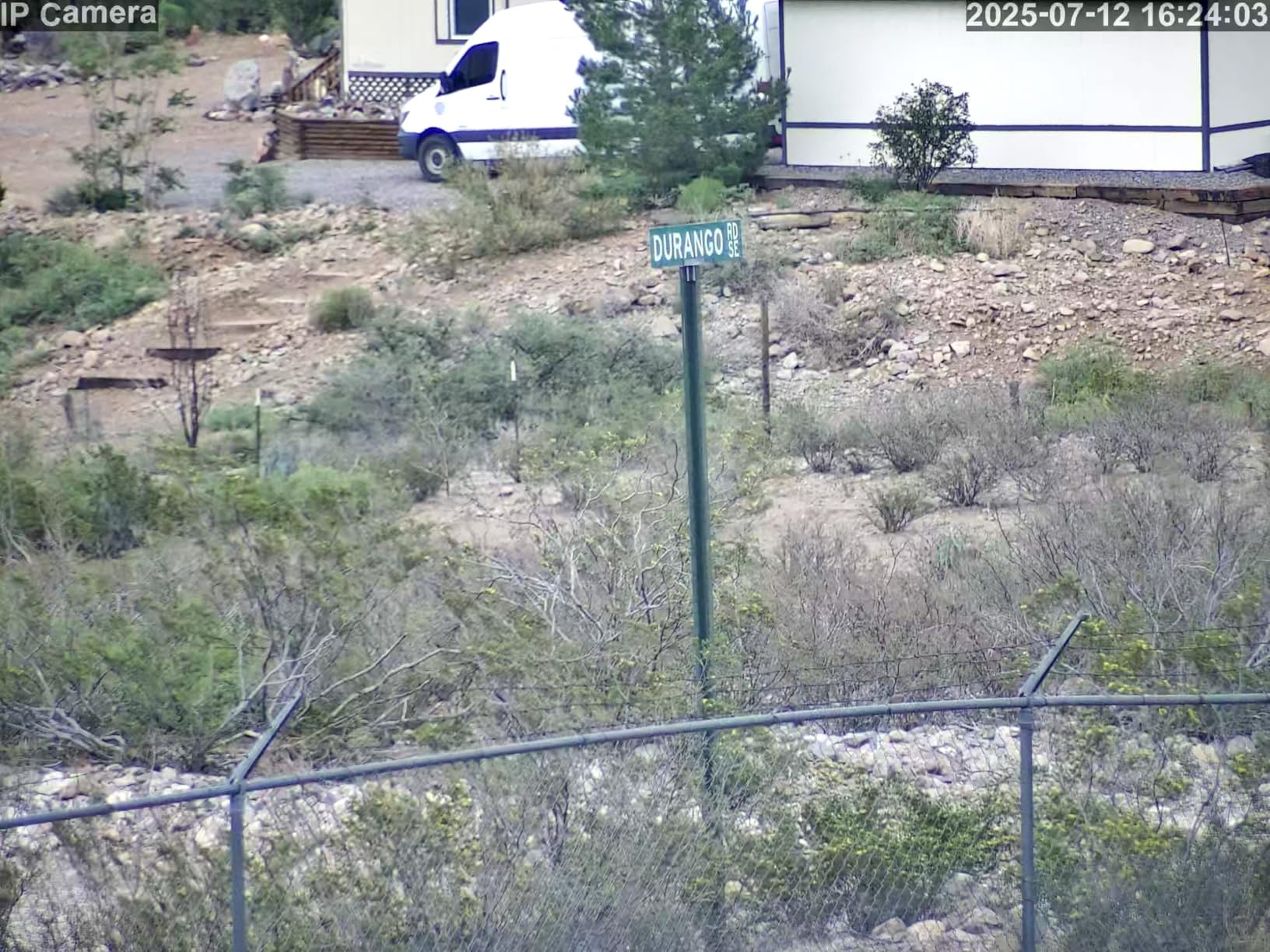
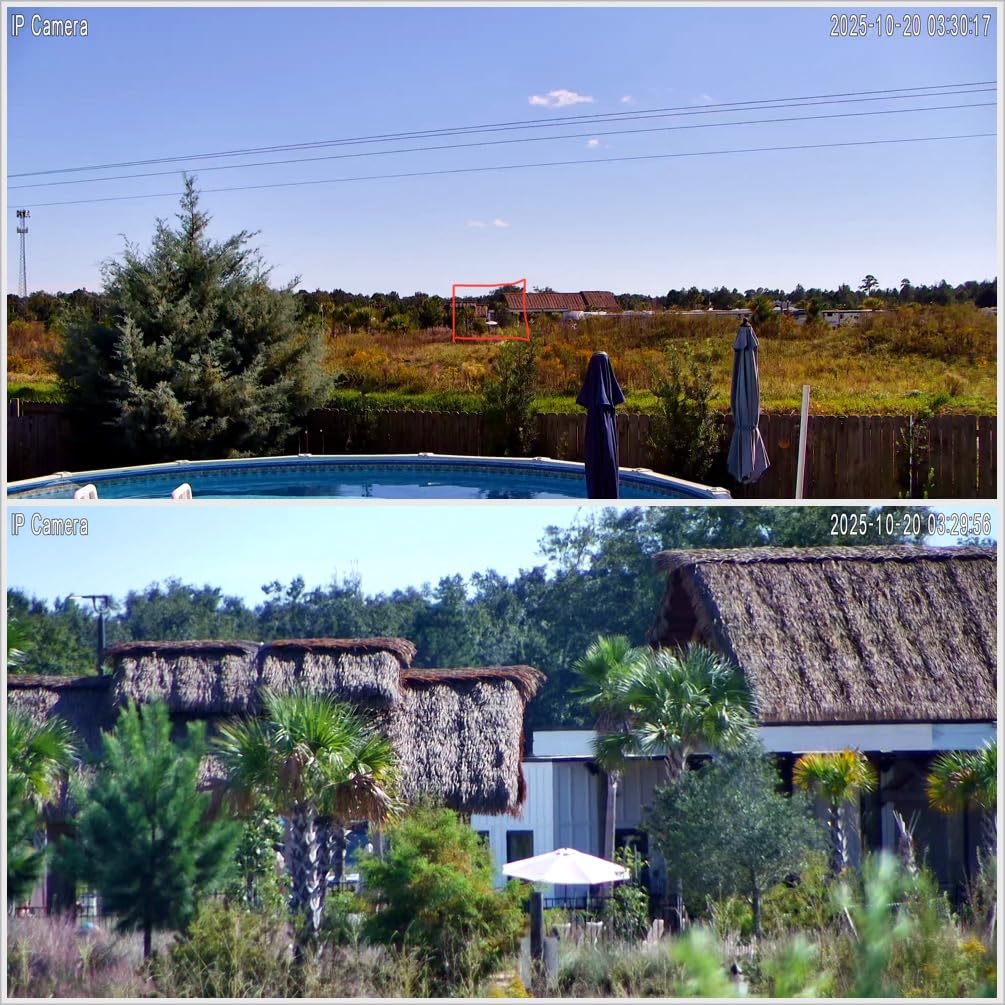
Nothing else in this roundup reaches as far optically. A 30x optical zoom on a Sony IMX335 5MP sensor is specified for identifying faces or car number plates at long distance, and the illumination is specified to 492 feet using seven IR array LEDs plus two laser IR lights.
That reach is the entire argument for this camera. If you are covering a private road, a large lot, a warehouse yard or a gate at the far end of a property, the Ctronics is the only unit here where the lens can physically isolate a plate at that distance without cropping.
Now the reasons to hesitate. The 3.9 average is the lowest in the group, with 13 percent of reviews at three stars, and 5MP is below every 4K and 8MP body competing with it. Zooming 30x into a 5MP image is a lot of magnification on a modest sensor.
The software is also the weak point. Auto tracking and the red-and-blue deterrent lights are activated by entering numeric preset position codes in the Ctronics Pro app, which is exactly the kind of friction that produces three-star reviews. At 4.6 pounds, the dome needs a mount that will not sag.
Where nothing else reaches
Any capture zone beyond 100 feet, and unlit private roads where the alternative is adding lighting. Human detection reportedly cuts false alarms from rain, wind and plants by roughly 95 percent.
Why we ranked it ninth
Sensor resolution and app polish. A 30x zoom on 5MP is a genuine trade, and entering numeric preset codes to unlock auto tracking is real friction that shows up in the ratings.
10. SV3C 4K 36X PTZ – Best for DIY NVR and Software Setups
SV3C 4K 36X Zoom PTZ Camera Outdoor, 8MP Dual Band WiFi Security IP Camera
IMX415 sensor at 4K
18x optical plus 18x digital
350 degree pan, 93 degree tilt
IP66 aluminum housing
Pros
- 18x optical plus 18x digital gives the longest total zoom range at this resolution
- 4K 3840x2160 on an IMX415 sensor with an auto-focus lens
- IR and LED lights switch intelligently with zoom level
- Full aluminum IP66 body for harsh weather
- Works in a browser with no software install
- plus RTSP for third-party NVRs
Cons
- Third-party compatibility with Blue Iris
- iSpy and VLC is explicitly partial
- Cloud storage requires a monthly service fee
- Smallest review base in the group at 718
- 60 watt power draw is the highest listed
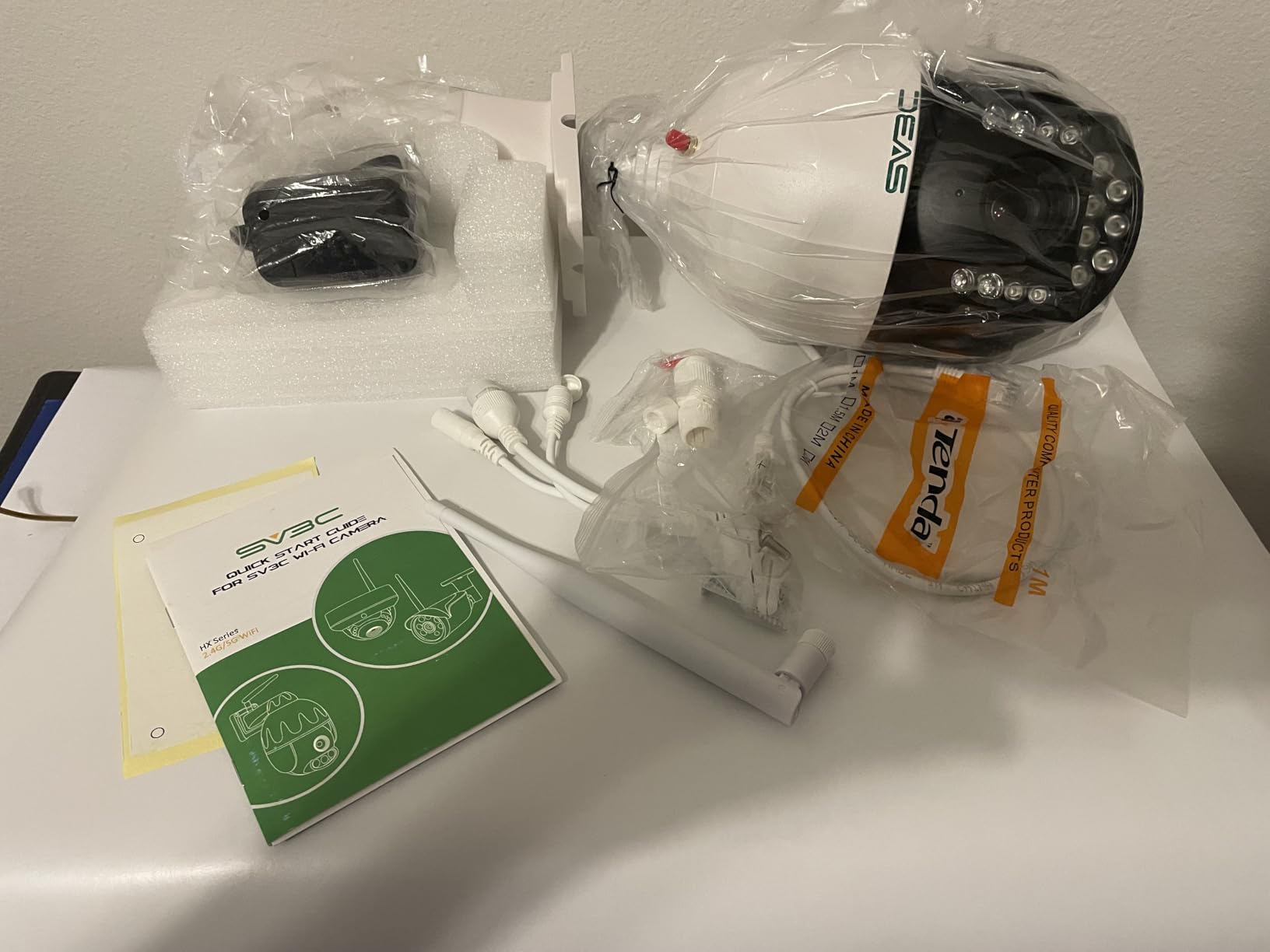
The SV3C C25 matters most to a specific reader: the one who already runs Frigate, Blue Iris or Home Assistant and wants a high-zoom camera to point at a capture zone. It works over RTSP, supports FTP and NVR recording, and needs no browser plugin or desktop client to view live.
On the lens, an 18x optical plus 18x digital gives 36x total, paired with an auto-focus lens on an IMX415 CMOS sensor at 3840×2160. The IR array and LEDs switch mode based on zoom level, which is a smart way to keep detail when magnified at night rather than flooding the frame.
The warning is in the spec sheet itself: compatibility with Blue Iris, iSpy and VLC is listed as not fully compatible. If your plan depends on one of those, verify before you mount it. NVRs speaking standard protocols are the safer target.
At 718 reviews this has the smallest feedback base in the roundup, so there is less long-term field data to lean on. It also draws 60 watts, the highest listed, and cloud storage is an optional monthly service.
Where it earns its place
Running recognition software on hardware you control. A 4K sensor with genuine 18x glass and zoom-aware illumination gives an LPR stack something to work with, and local NVR or FTP recording keeps the chain off the cloud.
Where it falls short
Partial third-party integration and a paid cloud tier, plus the smallest review base in the group. It is also more complex than the fixed-bullet options for the same job.
How to Choose a Camera That Actually Reads Plates
Here is how we picked, and the reasoning behind the order. Every camera was judged on four criteria: presence of true optical zoom rather than digital crop, a specified distance at which a plate stays readable, how the camera is illuminated after dark, and whether recording works without a subscription.
Megapixel counts and brand names were treated as weak signals. Real capture samples and reviewer reports of actual plate legibility at a stated distance carried the most weight, which is consistent with what the IPVM community and the r/SecurityCamera crowd repeatedly say matters. If you want the wider view, our eufy camera roundup covers that line in more detail.
Five factors decide whether a plate reads
1. Viewing distance and pixels per foot. The practical rule of thumb from installer experience is that a plate needs roughly 100 to 150 pixels across its width to resolve characters. Work backward from your capture distance and the sensor’s real effective resolution. This is also why the Tapo C425, despite a respectable 2K sensor, drops off faster past 30 feet: no glass behind those pixels.
2. Optical zoom, not digital. A varifocal lens like the RLC-811A narrows the field of view optically, so the plate keeps its native detail. A digital crop enlarges what the sensor already recorded, which is a blur. For a fixed capture point, optical is strictly better.
3. Mounting height and angle. A 10 foot mount with a slight downward angle gives the flattest read of a plate. Too high and you see the roof, too low and you see the bumper. Reviewers reporting the best results consistently mounted high and aimed straight at the approach point.
4. Illumination type. This is the one that catches people. Pure IR makes many plates worse, because state-mandated reflective sheeting returns that light straight into the lens. Visible white light, a spotlight, or a dual illuminator is the reliable answer. Every camera in this roundup except the long-reach Ctronics leans on visible light, and it shows in the night results.
5. Vehicle speed and frame rate. Independent testing cited in this space found advertised 99 percent accuracy figures landing closer to 80 percent in practice, and dropping further above 45 mph. A slower shutter or a low frame rate turns fast vehicles into smears. A fixed 25 fps camera beats a 20 fps PTZ for a fast road.
Do you need a dedicated LPR camera?
Probably not for capture. The r/SecurityCamera consensus is that any 8MP body from Dahua, Hikvision or Reolink will grab a plate in daylight and at night without IR, provided the lens is zoomed onto the capture zone. That is exactly what the fixed-bullet and PTZ picks here do.
You do need dedicated hardware or dedicated software if you want searchable plate data. Axis is repeatedly called the gold standard by practitioners, and IPVM recommends Mobotix M12 or M15 bodies with a long-pass filter and separate IR illuminators, recording on-device to 64GB so footage never depends on the cloud. Neither is on this list, and that is a deliberate choice: they serve professional deployments rather than a single driveway.
For a DIY route, r/frigate_nvr users run recognition on a dedicated cropped substream so the main stream stays free for object detection, and r/BlueIris users report third-party AI zone plugins underperform compared with purpose-built LPR hardware. Both are worth knowing before you spend.
Testing before you commit
Run three tests. First, a daylight test at your actual capture distance: have someone drive through and check whether the characters are resolvable, not whether you can see a car. Second, a night test at the same distance with headlights on, which is where IR glare and headlight washout reveal themselves.
Third, a wet-plate test. Have the driver spray the plate with water before passing, since a reflective wet surface doubles the glare. If your camera holds up in that test it will hold up in rain. Pull the clip, zoom to 100 percent, and count characters rather than trusting that the car was there.
A note on privacy
A camera covering your own driveway is straightforward. A camera pointed at a public street or a neighbor’s property is a different matter, and rules about filming plates of vehicles you do not own vary by state and by whether the footage is published. Some states have also restricted the operation of automated plate reader networks by private operators.
Plate blockers and frames are a different question again. They are sold widely, and their legality for use on your own vehicle varies by state. We are not going to give evasion advice here, but if privacy is driving the purchase, understand that a camera you own can be pointed at your own property, and that is the part with the clearest legal footing.
Frequently Asked Questions
What are license plate cameras?
A license plate camera is a surveillance camera set up to capture vehicles and their plates inside a defined capture zone. It uses a narrow optical zoom lens, a fast shutter speed and dedicated illumination to keep characters readable. Add software that converts the plate image into searchable text and it becomes LPR, ANPR or ALPR.
What camera can read license plates at night?
A camera with optical zoom and visible white-light or dual illumination reads plates at night better than one relying on infrared alone. Infrared LEDs reflect off the reflective sheeting that state plates are required to carry, which washes out the characters instead of revealing them.
What type of CCTV camera can read number plates at night?
A fixed bullet or dome with true optical zoom, a fast shutter and a white-light or dual illuminator will read number plates at night. Full PTZ units with 18x or 30x optical zoom extend that to long lanes and distant gates, provided the lens is aimed at the exact point where vehicles slow or stop.
Do license plate scanners work at night?
They do, with the right illumination. Independent testing cited in this space found advertised 99 percent accuracy landing closer to 80 percent in practice and dropping further above 45 mph, so night results depend on mounting height, angle and whether visible light is available at the capture zone.
How far can a security camera read a license plate?
As a rule of thumb, a plate needs roughly 100 to 150 pixels across its width to resolve characters. With a 4K 8MP sensor and genuine optical zoom you can expect readable plates in the 50 to 125 foot range depending on mounting height and angle, while digital-only zoom cameras fall off sharply past 30 feet.
Do I need a special camera to capture license plates, or does a 4K camera work?
A 4K or 8MP camera works for plate capture as long as you zoom the lens onto one capture zone, aim it from about 10 feet high and use visible light rather than pure infrared. You only need dedicated LPR hardware or software if you want plates decoded into searchable text and allowlists.
Which License Plate Camera Should You Buy?
For most driveways, start with the eufy SoloCam S340. Two lenses, a 6973-review track record at 4.2 stars, solar power and local storage with no monthly fee make it the strongest answer in this roundup for a short-to-medium capture zone, working in daylight and within about 20 feet after dark.
If your drive is longer, the REOLINK TrackMix PoE is the one I would point at a distant capture zone, since owners report readable plates around 125 feet from a 10 foot mount and the 6x optical zoom is genuine glass rather than a crop. The REOLINK RLC-811A is the simpler fixed-bullet answer for a single known approach point, and the Ctronics 30x is the only option here that reaches beyond 100 feet.
Whatever you choose in 2026, do the three tests before you call it done: daylight, night with headlights, and a wet plate. Two minutes of that will tell you more than any spec sheet, and it costs nothing.