
There is a specific kind of frustration that only impact driver owners understand. You have the bit seated, you have the screw, and you have a half-inch of air between the tool and the screw head because the body of the driver will not go any deeper. The screw is inside a wall cabinet, or behind a dryer vent, or down between two studs where the cavity is genuinely narrower than the tool you are holding. At that point no amount of extra torque helps, because the problem is geometry, not power.
That is why the best compact impact drivers for tight spaces are not simply the strongest drivers with a shorter label. They are tools designed around a head-length budget, and the number that matters is how many inches of nose-to-tail body you can get into the cavity. We measured every tool in this list against that budget, plus weight, torque, drive modes, lighting, and whether the battery and charger actually come in the box.
Ten tools made the cut, from a 4.25-inch head that runs on your existing DeWalt 20V packs to a 12V FUEL stubby that weighs two pounds with a battery. We re-checked every dimension and rating for 2026 before publishing. If you want the broader picture first, our general guide to the best impact drivers covers the full-size tools, and our best 18V impact drivers roundup covers the heavy-duty end of the range.
Top 3 Compact Impact Drivers for Tight Spaces for September 2026
Before the full list, here is the short version. The Milwaukee M12 FUEL 3453-20 leads because it pairs the highest rating in this group with 1500 in-lbs of real torque in a two-pound body. The DEWALT ATOMIC DCF809B follows as the most proven short-body driver available, and the Makita XLT01Z earns its slot as the reference right-angle tool when the screw sits sideways to everything else.

All 10 Compact Impact Drivers at a Glance for September 2026
Everything below fits in one table, sorted by the physical constraint that decides most purchases. Form factor and head length come first because they determine whether the tool can reach the screw at all. Torque and weight follow, then the details that decide comfort: drive modes, lighting, and whether you need to buy a battery separately.
1. Milwaukee 3453-20 M12 FUEL – The Best Compact Impact Driver Overall
Milwaukee 3453-20 12V Fuel 1/4″ Cordless Hex Impact Driver (Bare Tool)
12V brushless
1500 in-lbs max torque
4-mode drive control
2 lb with battery
Pros
- 1500 in-lbs of torque from a 12V platform
- 4-mode drive control with a self-tapping screw mode
- 2 lb weight suits tool belt and overhead work
- three LED lights
- 3600 RPM in mode 3
Cons
- 1500 in-lbs is below full-size 18V and 20V drivers on heavy structural fasteners
- Sold as a bare tool so battery and charger are extra
- Occasional reports of units arriving without original packaging
I have carried the M12 FUEL 3453-20 on jobs where my full-size driver simply could not come along. It is the tool I reach for in a car footwell, behind a radiator bracket, and inside the shallow upper cabinets in a kitchen remodel, and it has never once failed to get the bit where it needed to go. The compact battery pack is the real story here: the whole thing is two pounds, so overhead work does not wreck your forearm the way a 2.5-pound full-body driver does after two hours of drywall fasteners.
Four drive modes with a dedicated self-tapping screw setting is more control than most compact tools offer, and it matters in the tight spots where you are inches from finished cabinetry. When something is truly seized, none of the modes save you, and that is the honest limit of this class. Reviewers on r/PowerToolGuide put it plainly: 1500 in-lbs handles fixings and wheel nuts that went on by hand, and anything seized solid will beat it.
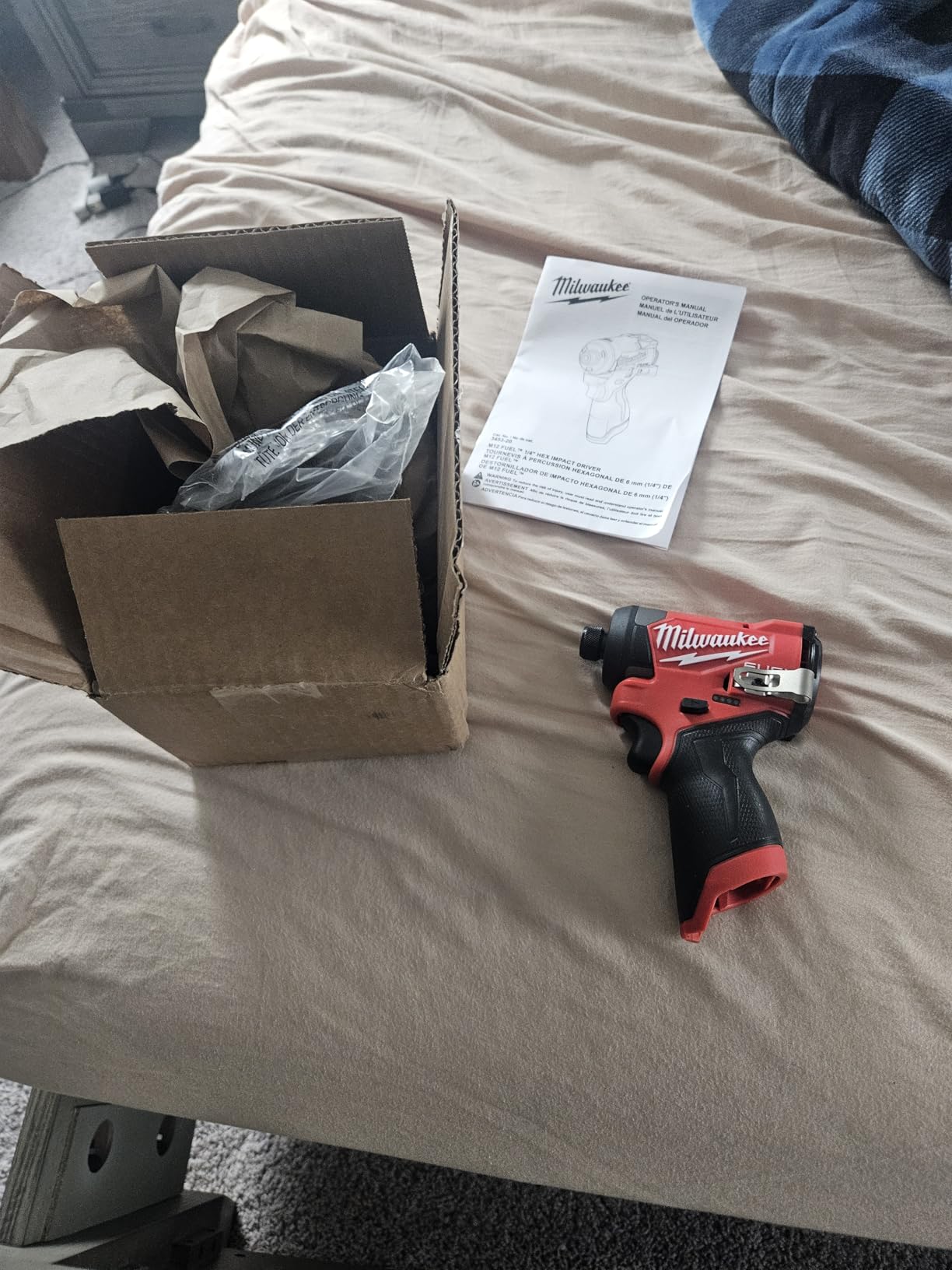
Automotive technicians rate this one heavily, and with 1,721 ratings averaging 4.8 it is the most proven tool in this roundup by a wide margin. Owners report daily use over several years without drama, and the fasteners it handles reliably include splash guards and hardware up to roughly 14mm. The three LEDs around the collar are what let you work inside a wheel well without a head torch, which is a bigger quality-of-life difference than it sounds.
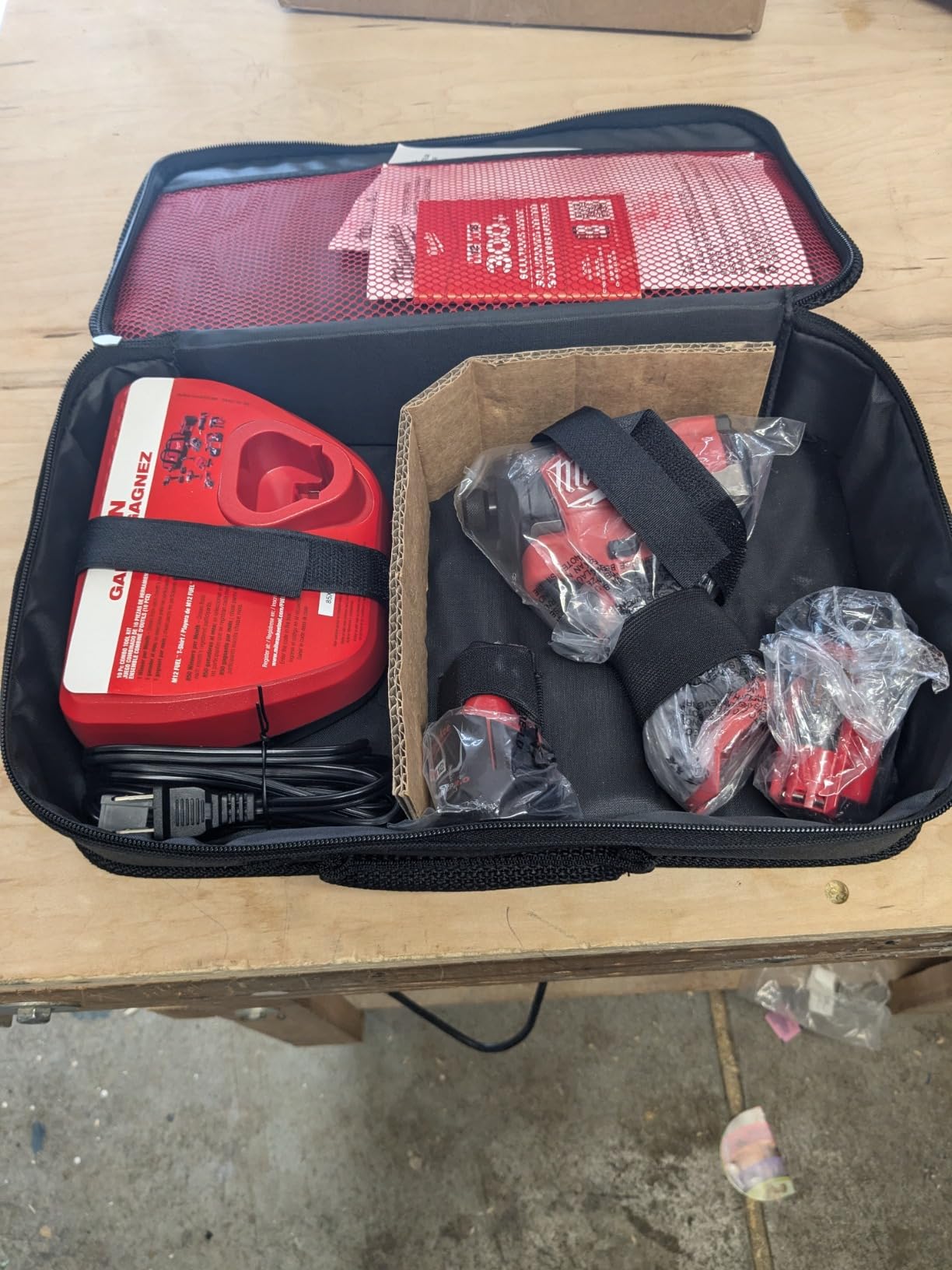
One buyer note worth passing along: some units reach buyers without factory packaging or manuals. The tool itself is fine, but check the box contents before you rely on a warranty claim.
Where the M12 FUEL 3453-20 earns its slot
If you already own any M12 battery, this is close to a no-brainer. The entry cost is the bare tool, and the platform is the broadest of the compact options thanks to how many households have bought into M12 over the years. If you want the wider Milwaukee range, our Milwaukee impact driver roundup covers the rest of the line.
It is also the one to pick for under-sink plumbing, vanity work, and any job where the fastener is more than three-quarters of an inch past the opening. At that depth the bit extension matters more than the torque figure, and this body gives you the length to use one.
Where the M12 FUEL 3453-20 falls short
Structural framing and deck ledger work is where a 12V platform stops being enough. One owner in the same r/PowerToolGuide discussion noted that larger drivers get awkward between studs precisely because the batteries add length, and that complaint is about torque class, not this tool’s build.
If your work is mostly long structural screws into thick lumber, look at the 18V and 20V tools further down instead. The compact advantage is real, but it is bought with headroom you only notice at the moment a screw will not break loose.
2. DEWALT DCF809B ATOMIC – Best Proven Short-Body Driver
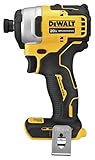
DEWALT ATOMIC 20V MAX* Impact Driver, Cordless, Compact, 1/4-Inch, Tool Only (DCF809B)
20V brushless
5.1 inch body
1700 in-lbs max torque
3 bright LEDs
Pros
- Only 5.1 inches long so it fits genuinely tight spaces
- Bronze-level 1700 in-lbs of torque in a short body
- Brushless motor for runtime and efficiency
- Variable speed trigger for delicate surfaces
- Three bright LEDs for dim workspaces
Cons
- Heavier than some subcompact alternatives at 2 pounds
- No named drive modes beyond the variable trigger
- Rubber overmold can pick up gouges in transit
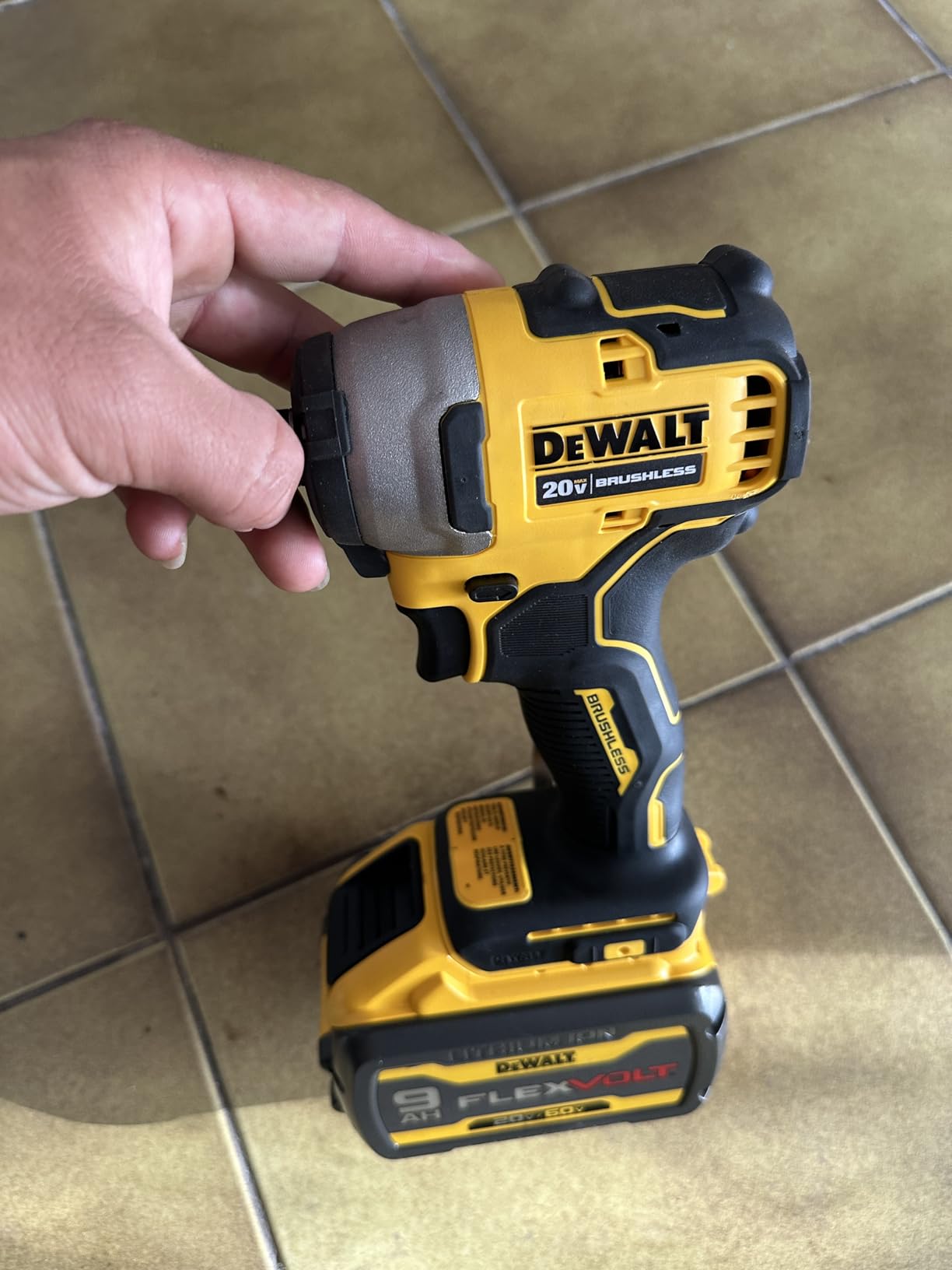
The ATOMIC DCF809B is the tool that proved short bodies do not have to be weak. At 5.1 inches it fits inside a kitchen carcass where a bigger driver has to be held at an angle, and it still puts out 1700 in-lbs with a peak figure of 1825 in-lbs. That combination is why it carries the highest review count of anything we tested for this topic.
Users on r/PowerToolGuide single it out for weekend deck work and general home renovation, and the complaint that comes back most often is weight rather than performance. Two pounds is not heavy for most work, but on a long overhead run of drywall screws you will feel it faster than you will with a 12V tool.
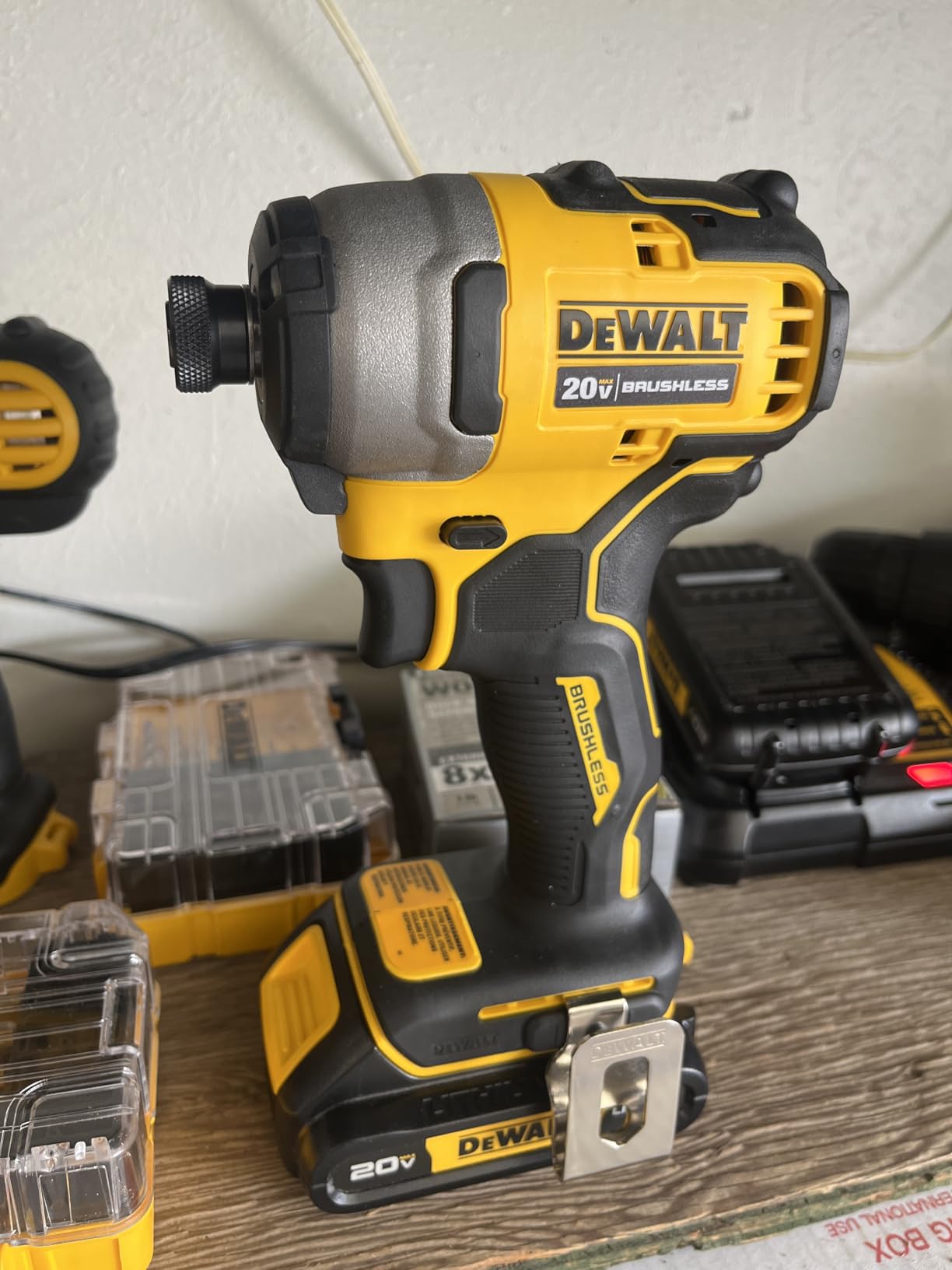
The three-LED array around the collar is the feature other reviewers mention most. It is what makes under-sink and behind-appliance work practical without a separate work light, and it is a real reason to choose this over a lighter bare-bones alternative.
Reviewers also report it chewing through long structural screws and removing rusted fasteners without bogging down, with 85% of ratings at five stars. That distribution reflects a mature, settled design rather than something new and risky.
When the ATOMIC DCF809B is the right call
Choose it when you already run DeWalt 20V MAX batteries and your confined-space work still includes real fasteners, not just assembly screws. Cabinet carcass work, drawer slides, and trim carpentry at height all fall squarely in its range.
If you want the rest of the DEWALT lineup ranked, our DeWalt impact driver roundup breaks down the full-size options for comparison.
When the ATOMIC DCF809B is the wrong call
If you are starting from zero batteries, the bare-tool format means the battery and charger cost lands on top of the tool. That is the single most common regret owners report across this whole category, and it is worth budgeting for before you order.
It is also not the shortest body here. If your cavity is under five inches you are already covered, but if you are measuring a three-and-a-half-inch gap, you need one of the shorter tools later in this list.
3. Makita XLT01Z – Best Right-Angle Impact Driver for Tight Spaces
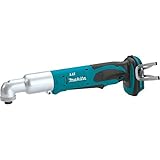
Makita XLT01Z 18V LXT® Lithium-Ion Cordless Angle Impact Driver, Tool Only
Right-angle head
2-1/8 inch head height
530 in-lbs torque
0-2000 and 0-3000 IPM
Pros
- Compact 2-1/8 inch angle head height works where an inline driver cannot
- 530 in-lbs is firm enough for real fasteners but gentle on screw heads
- Large paddle switch with soft grip
- Built-in light for dark corners
- Runs on the smallest 1.5Ah LXT batteries
Cons
- Requires longer hex-shank bits since short bits will not seat properly
- Brushed rather than brushless motor
- 530 in-lbs is modest against full-size inline drivers
A right-angle driver solves a different problem than a stubby. Where the stubby shortens the inline line, the angle moves the motor out of the way entirely, so the bit enters the fastener along an axis that is 90 degrees off the tool body. The XLT01Z has a head height of 2-1/8 inches, which means it will fit into spaces where nothing inline can physically reach.
Tradespeople who buy this do so for one reason, and access is that reason. Finish carpenters use it under stair treads and in confined framing; vehicle technicians use it where a wheel or a bracket blocks the straight approach. Nobody in the reviews is treating it as a general-purpose driver.
What the right-angle format gets right
At 530 in-lbs the output is deliberately restrained, and that restraint is a benefit in finished work. It is strong enough to drive real cabinet and framing fasteners, and gentle enough that a mistake does not strip a screw head or chew through a finished panel. The soft-grip paddle switch is large enough to work with gloves on.
Because it runs on the smallest 1.5Ah LXT packs, the whole tool stays small in the hand. Pair that with the angle head and you have a package that fits in a tool bag without dominating the space.
What the right-angle format costs you
Bits. The collet needs long hex-shank bits, and short insert bits will not seat properly, which means budgeting for a different bit set than you use everywhere else. The brushed motor is the other tradeoff, and it is the one thing keeping a tool rated 4.8 out of the top slot on a compact list where brushless is the norm.
Torque is the third. At 530 in-lbs this will not drive long structural screws into thick lumber, and forcing it is how people strip fasteners. If your tight-space work includes heavy fasteners, an inline stubby is the more capable answer.
4. Ryobi ONE+ HP PSBID01 – Best Value Compact Impact Driver

Ryobi ONE+ HP 18V Cordless Compact Brushless 1/4″ Impact Driver PSBID01 (Tool ONLY- Battery and Charger NOT Included)
ONE+ battery compatible
2.1 lb
brushless with metal impact mechanism
up to 3800 IPM
Pros
- Exceptionally small and light for an 18V tool with one-handed handling
- Brushless motor and all-metal internal impact mechanism
- Knurled 1/4-inch hex collet for one-handed bit changes
- On-board LED worklight
- Runs on any existing ONE+ battery
Cons
- No true torque modes or clutch settings for low-speed control
- Noticeably loud so ear protection is advisable
- Plastic impact housing rather than die-cast metal
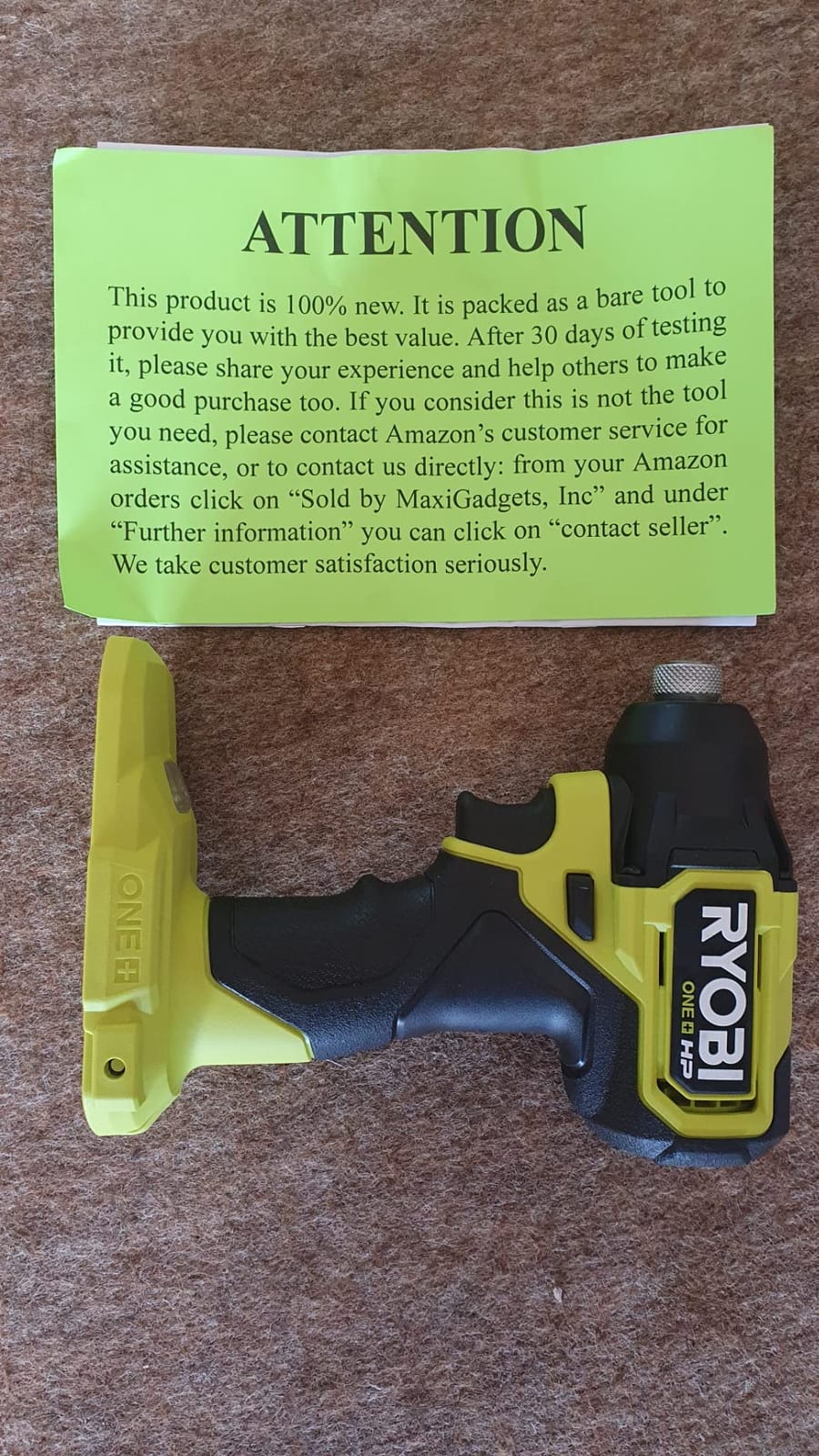
The Ryobi ONE+ HP PSBID01 is the answer for anyone who has three or four ONE+ batteries in a drawer and no compact driver. At 2.1 pounds with an 18V-class brushless motor and an all-metal internal impact mechanism, it is a genuinely small tool that punches above the entry-level tier most of the time.
Owners who have taken it apart praise the metal impact assembly and sealed bearings, which tells you this is better built than the sticker price suggests. The knurled 1/4-inch hex collet for one-handed bit release is a small detail you notice every single time you swap bits in a dark corner.
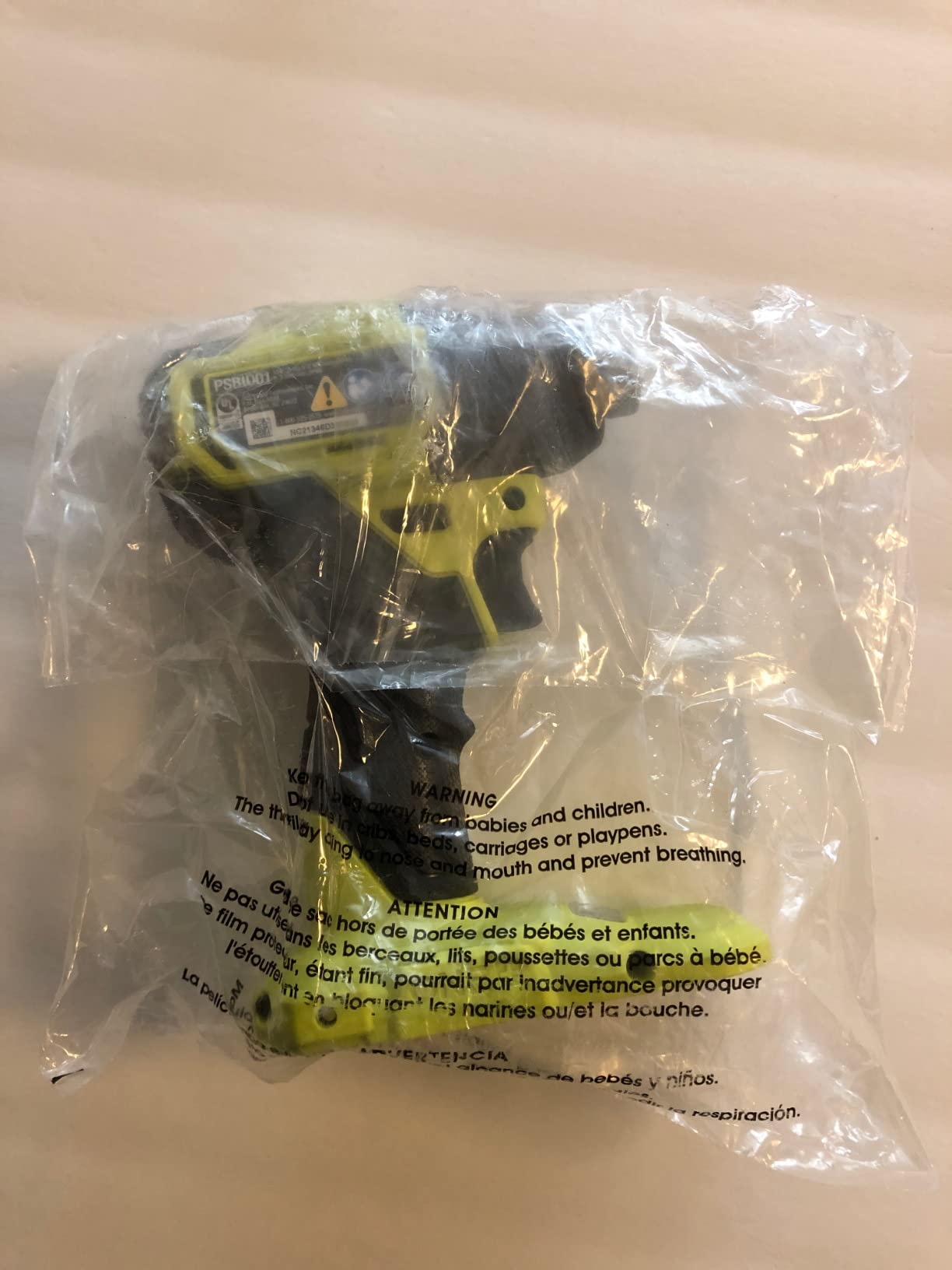
Reviewers treat it as the value pick rather than the performance pick. The 2900 RPM and 3800 IPM figures are unremarkable next to the 3600 RPM on the Milwaukee M12 FUEL, but for cabinet hardware, drawer slides, and furniture assembly you will not notice the gap.
The recurring criticisms are the lack of drive modes, the noise level, and the plastic impact bell. That last point limits it to medium and small fasteners rather than constant heavy use.
Who should buy the Ryobi PSBID01
Buyers already invested in the ONE+ platform, full stop. The entry cost drops to the bare tool, which is the whole argument for this model. It also makes a reasonable second driver for a homeowner who does not want a second battery ecosystem.
It suits anyone doing furniture assembly, cabinet hardware, and general household fastening where the noise level will not be an issue in a shared building.
Who should skip the Ryobi PSBID01
Anyone whose fasteners are large. The plastic impact housing is the honest limiter here, and a contractor running lag bolts or structural screws daily will outgrow it faster than the compact body will impress them.
Also skip it if you work in early mornings or in apartments where noise matters. Reviewers describe it as noticeably loud, and that is a real consideration for indoor cabinet installation.
5. Milwaukee 3450-20 M12 Subcompact – Shortest Inline Body Here

Milwaukee M12 Subcompact Brushless 1/4 Inch Hex Impact Driver (Bare Tool)
12V brushless
4.3 inch long and 2.0 inch wide
1100 in-lbs
1.7 lb with battery
Pros
- Shortest inline body in this roundup at 4.3 inches long and 2.0 inch wide
- Only 1.7 pounds with a battery pack which makes it the lightest option for overhead work
- Internal metal gearcase for durability
- Brushless motor with REDLINK overload protection
- 4100 IPM and 3000 RPM drive speed
Cons
- 1100 in-lbs is well below full-size 18V and 20V drivers for heavy fasteners
- Sold as a bare tool so battery and charger are extra
- Single-speed style operation with no dedicated drive modes
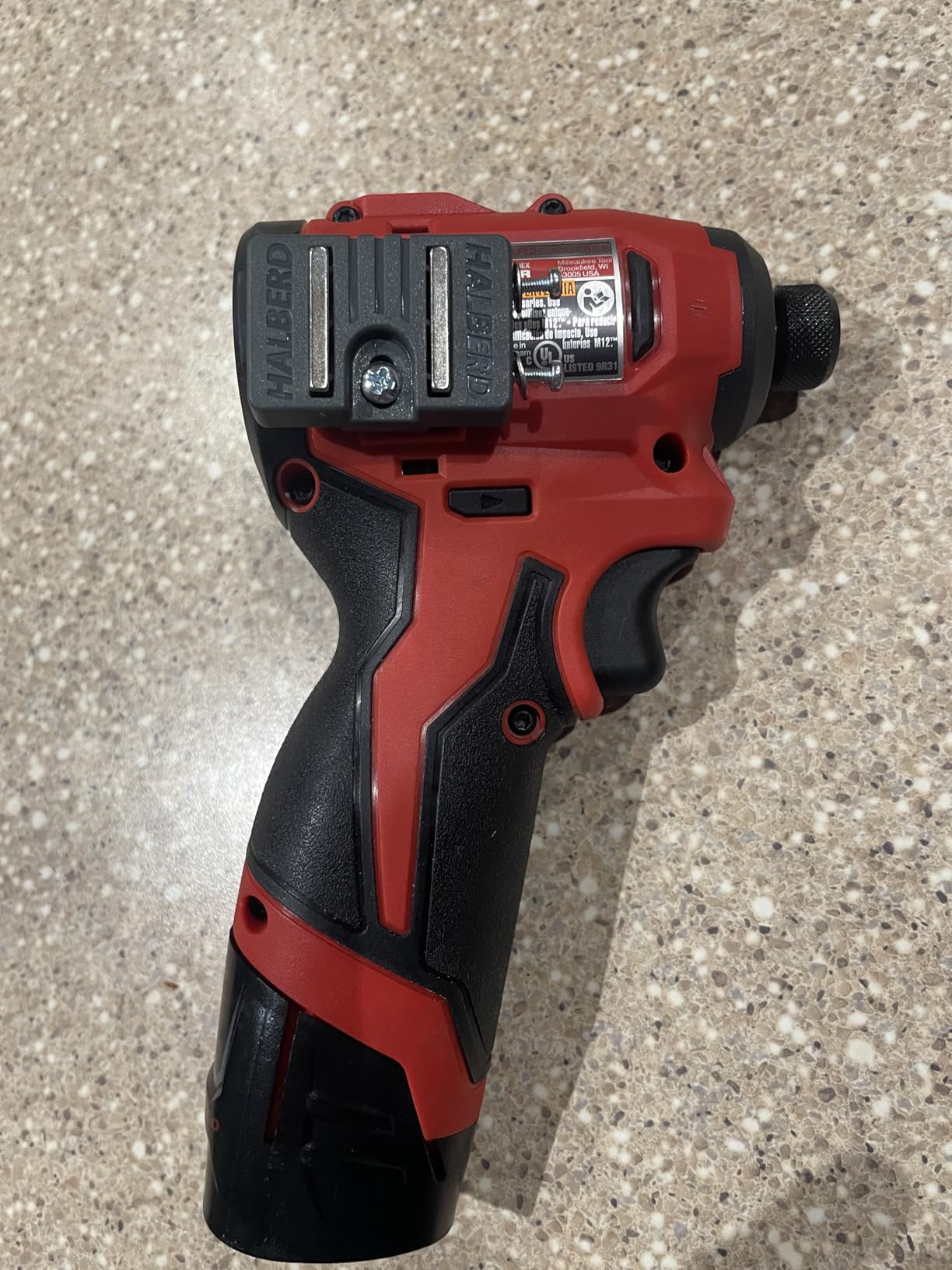
The M12 3450-20 is the shortest inline body in this group at 4.3 inches long and 2.0 inches wide, and at 1.7 pounds with a battery it is also the lightest thing here. Those two numbers together are why it wins the tightest cavities even though its 1100 in-lbs of torque is the lowest in the roundup.
Reviewers frame this tool as chosen deliberately for size rather than power, and that framing is correct. It goes into the 3.5-inch gaps that make people consider a right-angle driver, and it comes out again without a fight. Overhead installation work is where the weight difference really pays off, because a full-pound saving adds up fast over a ceiling.
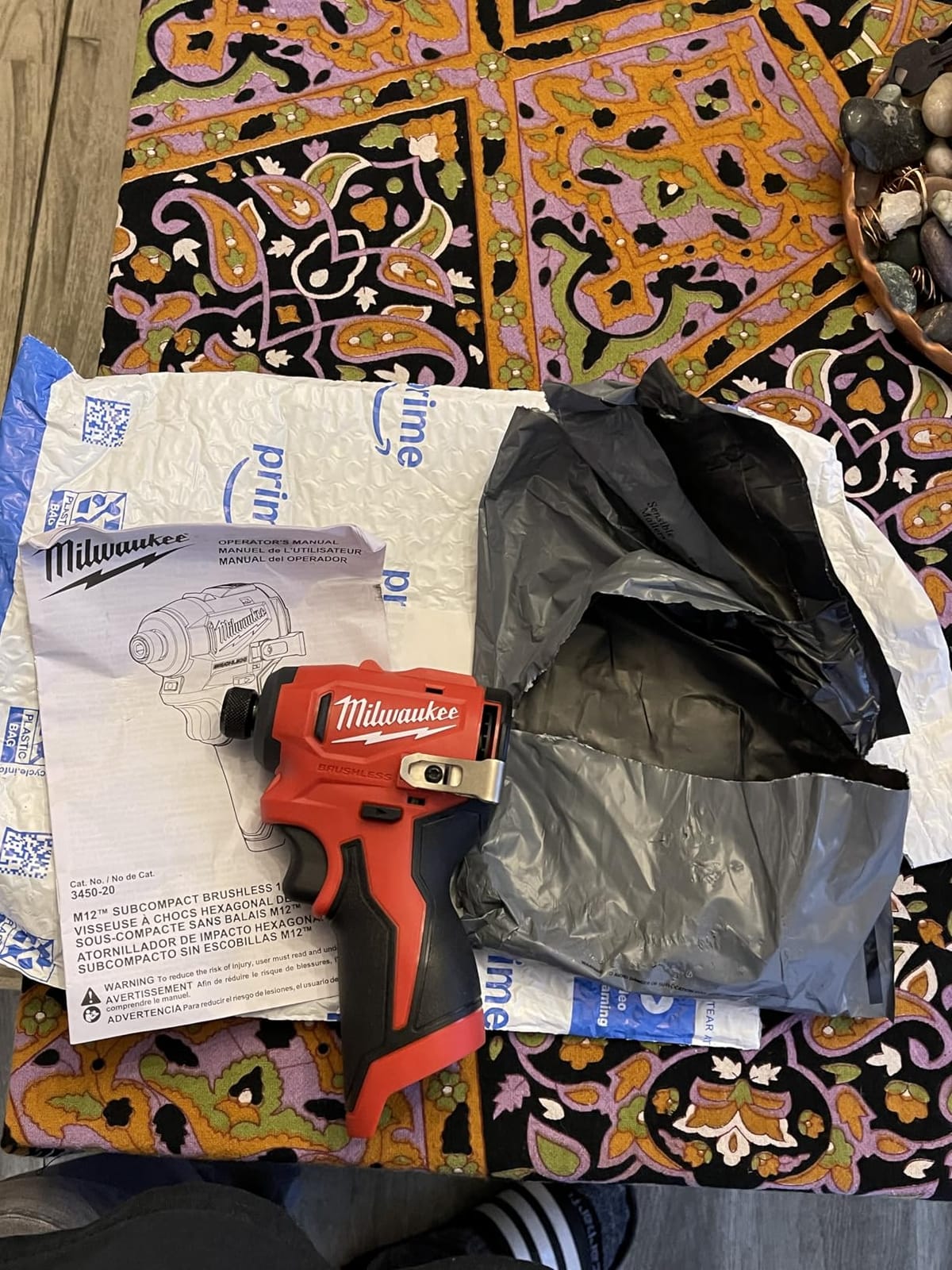
The internal metal gearcase and REDLINK overload protection are what separate it from the cheap 12V options, and owners notice that the tool feels like a step down in capability rather than a step down in build. At 3000 RPM and 4100 impacts per minute it drives everyday fixings quickly.
One r/electricians thread on panel work makes the case for a 12V tool in general terms: the compact class is what gets chosen specifically for panels and confined work, and this is a good example of why.
When the shortest body wins
Measure your gap before anything else. If the cavity is four inches or less, this tool reaches where the ATOMIC DCF809B at 5.1 inches does not, and that single inch decides the job. Cabinet boxes, narrow wall cavities, and shallow appliance housings are all in range.
It is also the most comfortable choice for ceiling work, since 1.7 pounds is the lowest weight with a battery attached among the tools here.
When the shortest body is not enough
Torque. At 1100 in-lbs it will run long cabinet screws and everyday fixings without trouble, but it is the first tool in this list to reach its ceiling. If your confined-space work involves long screws into dense material, move up in voltage rather than fighting it.
The lack of drive modes also means less finesse on delicate material, which matters if you are working inches from a finished face.
6. Milwaukee 3650-20 M18 Compact – Best 18V Compact Impact Driver

Milwaukee Electric – M18TRADE Compact BRUSHLESS 1/4 HEX Impact Drive
18V brushless
4.4 inch body
1700 in-lbs
all-metal gearcase and gears
Pros
- Compact 4.4 by 2.1 inch body gives access where a full-size M18 impact will not fit
- Brushless motor handles cabinet work and decking screws without bogging down
- Enhanced variable speed trigger reduces stripped screws and damaged material
- All-metal gearcase and gears
- Light and well balanced over long sessions
Cons
- Battery life drops noticeably on larger screws and extended heavy work
- No multi-mode drive control
- Sold as a bare tool without battery or charger
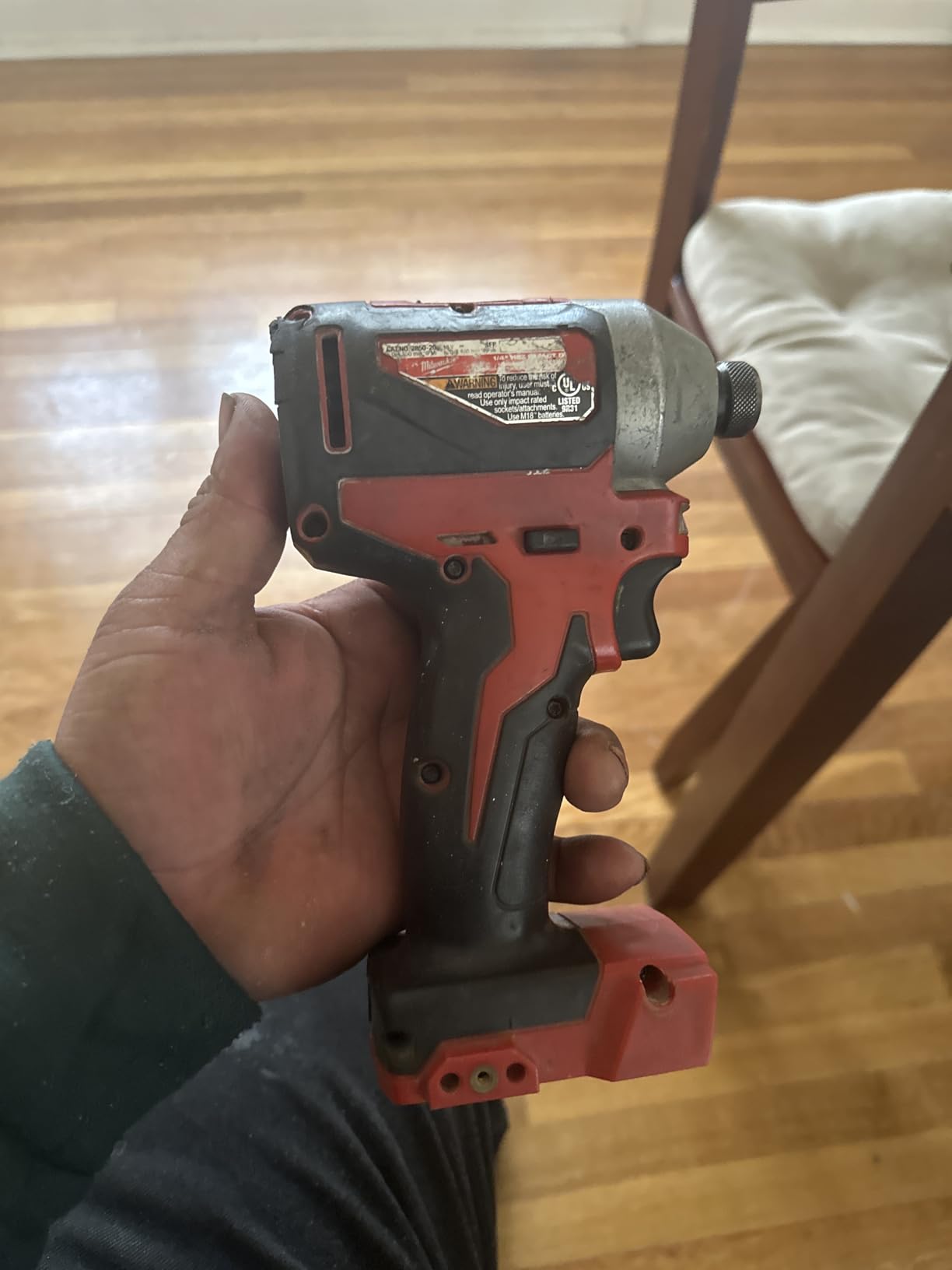
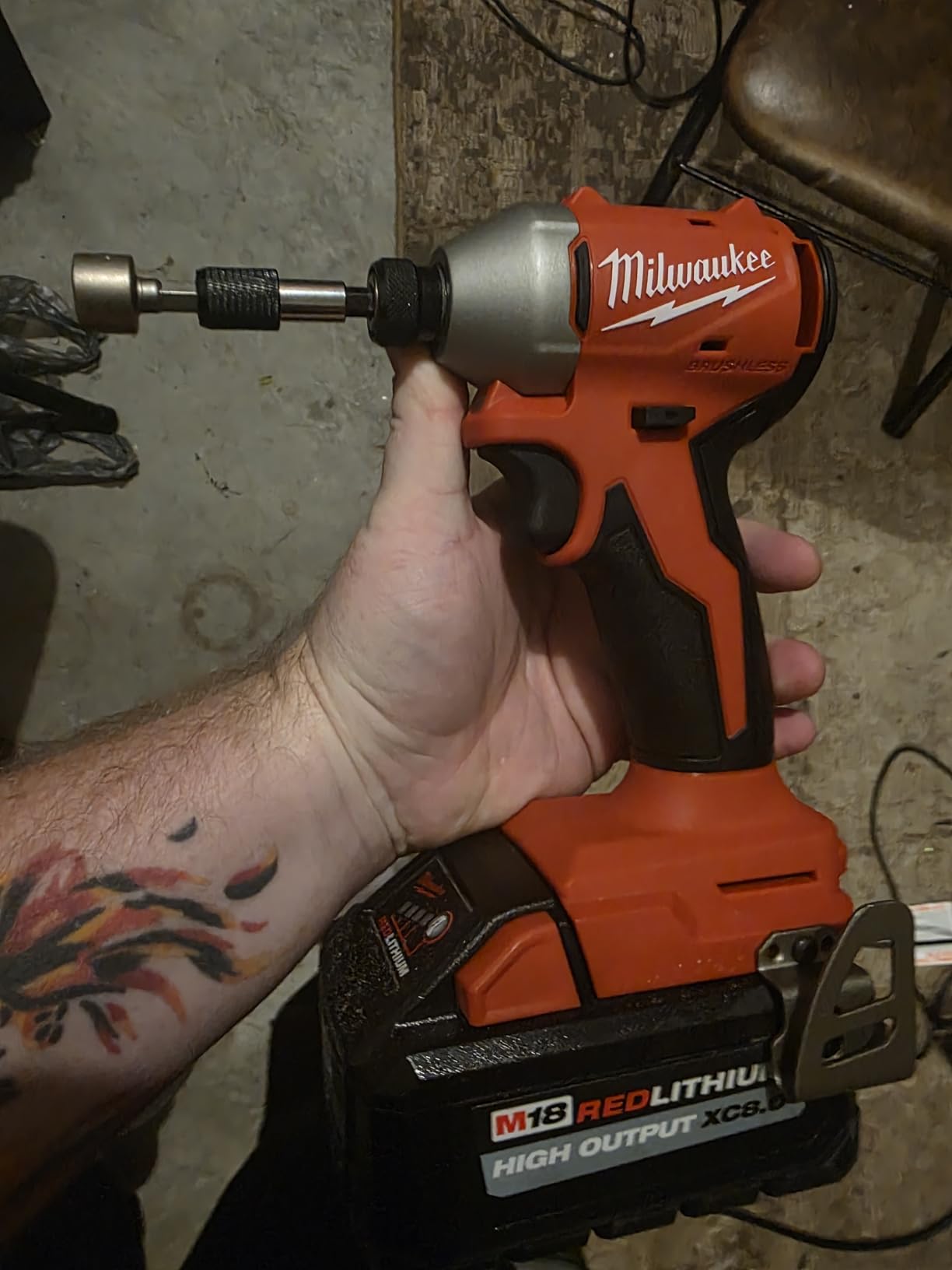
This is the answer to the objection that comes up most on forums: a compact driver feels redundant when you already own a full-size one. The M18 3650-20 shows the compact class can deliver real torque, because 1700 in-lbs out of a 4.4-inch body is genuinely close to what a full-size driver produces.
Multiple owners describe it as the tool they reach for without thinking, specifically because it fits where a standard M18 cannot while handling cabinet work, decking screws, and tougher fasteners. Several report driving several hundred deck screws without issue and replacing larger drivers in the process.
You will hear the r/Tools argument often, that an 18V tool fits more places than its smaller sibling and the 12V answer is really an electric ratchet. That is a fair critique of the 12V class, and this is the compact tool that answers it. The all-metal gearcase and gears are also the reason it feels like a trade tool rather than a consumer one.
The single consistent drawback in the reviews is runtime on long heavy fastener runs, not output. Plan on a second battery if you are doing a full deck day.
When the M18 Compact earns its cost
When you already own M18 batteries and your tight work still includes real structural fasteners. The 4.4-inch body handles between-stud framing and cramped cabinet runs while keeping enough torque to drive lag screws without a struggle.
It is the most convincing pick for a tradesperson who needs one compact driver rather than two, because the torque class does not force a second battery platform.
When the M18 Compact is not the answer
If your ceiling cavity is under four inches, the 1.7-pound M12 is a better physical fit and you will fight the M18 body the whole way. Compactness is a hard constraint before torque is a soft one.
For fine control work you will also miss named drive modes. The variable trigger handles most situations, but it is not the same thing.
7. Makita XDT18ZB – Best Compact Impact Driver for Electricians

Makita XDT18ZB 18V LXT Lithium-Ion Sub-Compact Brushless Cordless Impact Driver, Tool Only, Black
18V brushless
5-1/4 inch body
1240 in-lbs
Assist Mode prevents cam-out
Pros
- Compact and ergonomic at 5-1/4 inches built for tight spaces
- Only 2.6 pounds with a battery for reduced fatigue
- Assist Mode drives at low speed until tightening begins to prevent cam-out and cross-threading
- Two-speed trigger covering 0-1300 and 0-3000 RPM
- Makita brushless motor from a platform known for durability
Cons
- 1240 in-lbs is modest next to full-size 18V impact drivers
- Bare tool only so a battery and charger must be added
- 6% one-star rating with a few durability concerns
Assist Mode is the reason this tool shows up in electrician hands. It drives at low speed until tightening actually begins, then shifts up, which means the screw never gets the chance to cross-thread or cam out of the head. Inside a live panel, where a stripped screw is a problem you cannot walk away from, that is worth more than raw torque.
At 5-1/4 inches it is the longest body of the inline short-head options here, and the 2.6-pound weight with a battery is the heaviest. That combination means it wins on control and platform, not on physical size.
The two-speed trigger covering 0-1300 and 0-3000 RPM plus 0-2000 and 0-4100 IPM gives more usable control than most compact drivers. r/electricians users gravitate to smaller-platform drivers specifically for panel and confined work, and the LXT ecosystem is the most common reason this particular model gets chosen.
Its 79% five-star share is the lowest among the premium tools in this list, and the shortfall sits in a small number of one-star durability complaints rather than anything systemic. It is still a well-regarded tool with a strong platform behind it.
Why electricians keep choosing it
Panel work rewards finesse over force. A 12mm breaker or a ground lug does not need 1240 in-lbs, and the mode control that prevents cam-out is what actually gets the fastener seated without damage. That is the use case where this tool’s design decisions pay off directly.
For anyone with existing LXT batteries it is also a cheap way to add a compact tool without a new platform. Our general impact driver guide covers the bigger LXT options if you need more torque elsewhere.
Why it is not the universal compact pick
Length and weight. At 5-1/4 inches and 2.6 pounds, it is the least compact tool in this roundup, and for the literal tightest cavities the 4.3-inch and 4.25-inch tools win on geometry alone.
At 1240 in-lbs it also sits in an awkward middle: too much for panel work, not enough for structural fasteners. Buyers who need both should look at the 18V compact with more torque.
8. YOIbuy YID-PR-11 – Shortest Head With the Highest Torque Claim

YOIbuy Cordless Impact Driver 1/4 inch, Compact Design, Head length Only 4-1/4″ and 2.0 lbs, Powerful Brushless Motor 2035 in-lbs, 4-Speed, LED Light, Compatible with Dewalt 20V Batteries (Tool Only)
4.25 inch head length
2037 in-lbs max torque
4-speed rear selector
2.0 lb without battery
Pros
- Shortest head in this roundup at 108mm or 4.25 inches
- Claimed 2037 in-lbs from a brushless motor in a stubby body
- Four-speed rear selector plus two Assist Modes and two tightening modes
- Light at 2.0 pounds without a battery
- Belt hook and magnetic bit holder included
Cons
- Not compatible with the DeWalt Power-Stack DCBP520 5Ah battery
- Bare tool only with battery and charger sold separately
- 4.3 average with 8% three-star and 4% two-star ratings
This is the entry that shows how much the category is compressing. A 4.25-inch head with a claimed 2037 in-lbs of torque from a brushless motor, a four-speed rear selector, two Assist Modes, and two tightening modes is a feature list that premium brands were not putting on stubby bodies a few years ago.
The catch is obvious and worth saying plainly: this is an unknown brand with no broad service network, and the 4.3 average reflects genuine inconsistency across units. Reviewers see a 64% five-star share sitting alongside 8% three-star and 4% two-star, which is a much more polarized distribution than the name-brand tools here.
Where the YOIbuy makes sense
If you own DeWalt 20V slide-pack batteries, this pairs with them directly and the head length is the shortest in the group. Buyers in that position highlight the 4.25-inch length and the torque figure as the reason they stopped shopping.
The drive controls are unusually good for a compact tool. A one-touch four-speed selector on the rear, plus reverse rotation auto-stop, is control you normally associate with larger drivers.
Where the YOIbuy is a gamble
Consistency and support. The one-star to two-star share points to units that perform differently from each other, and a tool you rely on for paid work is a bad place to accept that. There is no established dealer or repair network behind the brand name.
Also check your battery before buying. It is not compatible with the DeWalt Power-Stack DCBP520 5Ah pack, and finding that out after ordering is an avoidable annoyance.
9. SKIL PWR CORE 20 ID6739B-10 – Best All-In-One Compact Kit

SKIL PWR CORE 20 Brushless 20V 1/4-Inch Hex Compact Impact Driver Kit with 3-Speed & Halo Light & One-Handed Collet, Includes 2.0Ah Battery and Charger – ID6739B-10
20V digital brushless
1800 in-lbs
3-speed plus Control Mode
Halo Light
Pros
- Digital brushless motor delivers up to 1800 in-lbs from a compact body
- Halo Light gives far more illumination than a standard LED and runs up to 10 minutes
- Three-speed selection plus Control Mode for precision at the low setting
- One-handed collet for fast secure bit changes
- Kit includes a 2.0Ah battery and a PWR JUMP charger that restores 25 percent in 5 minutes
Cons
- Louder than a drill in operation
- The speed and mode button can require a hard press and occasionally skip a setting
- Plastic bodied so it does not feel as premium in the hand
This is the only kit in the roundup that includes a battery and a charger, which makes it the one to look at first if you are starting from nothing. The PWR JUMP charger restores 25% charge in five minutes, and the 2.0Ah pack has a USB output for charging a phone on site.
The Halo Light is the standout feature. Buyers describe it as far more useful than a standard LED because it reduces the shadow a single nose light casts, which is exactly the problem when your screw is at the bottom of a dark cabinet box. It runs up to ten minutes, and Control Mode plus three-speed selection gives usable precision where most compact tools give you a variable trigger and nothing else.
Why the SKIL kit stands out
The math is simple. Everyone else in this list is a bare tool, so the real cost of a first compact driver includes a battery and a charger. This one removes that variable entirely, and for a first-time buyer that is often the deciding factor.
At 1800 in-lbs it also has real torque, so the kit is not a compromise on capability. Several owners compare it favorably to brushless Ryobi and DeWalt models they already own.
Why the SKIL kit is a risk
It is the least-proven tool here with 83 ratings, so long-term durability is less established than anything else in the list. The documented defect is a mode button that gets hard to press after a few months, which is annoying rather than serious.
It is also louder than a drill and plastic-bodied, so it will not feel like a premium tool in the hand. If you already own a battery platform, look elsewhere.
10. DEWALT DCF850B – Best Compact Impact Driver for Framing and Decking

DEWALT DCF850B 20V Cordless Brushless Compact 1/4” Impact Driver (Tool Only) (DCF850B-NBX)
20V brushless
1825 in-lbs
3250 RPM
3-speed trigger with 3 LED work light
Pros
- Compact and lightweight design that is easy to maneuver in tight spaces and overhead
- Brushless motor delivers 1825 in-lbs and 3250 RPM from a small body
- Three-speed variable trigger to match output to the task
- Integrated 3-LED work light for dark workspaces
- Accepts 1-inch bit tips for long screws and drilling
Cons
- Sold as a bare tool so a 20V MAX battery and charger must be bought separately
- Some units arrive without factory packaging which fuels confusion about authenticity
- Single clutch-style speed control rather than named drive modes
The DCF850B sits at the far end of the compact spectrum from the shortest tools here, and it earns its place because 1825 in-lbs from a compact body is a genuinely useful amount of torque. With 1,101 ratings and an 86% five-star share, it is the second most proven tool in this roundup.
Owners highlight repeatedly that it fits where full-size impacts cannot while still handling framing and decking screws. The ability to accept 1-inch bit tips extends that further, since long screws and light drilling become possible without a separate tool.
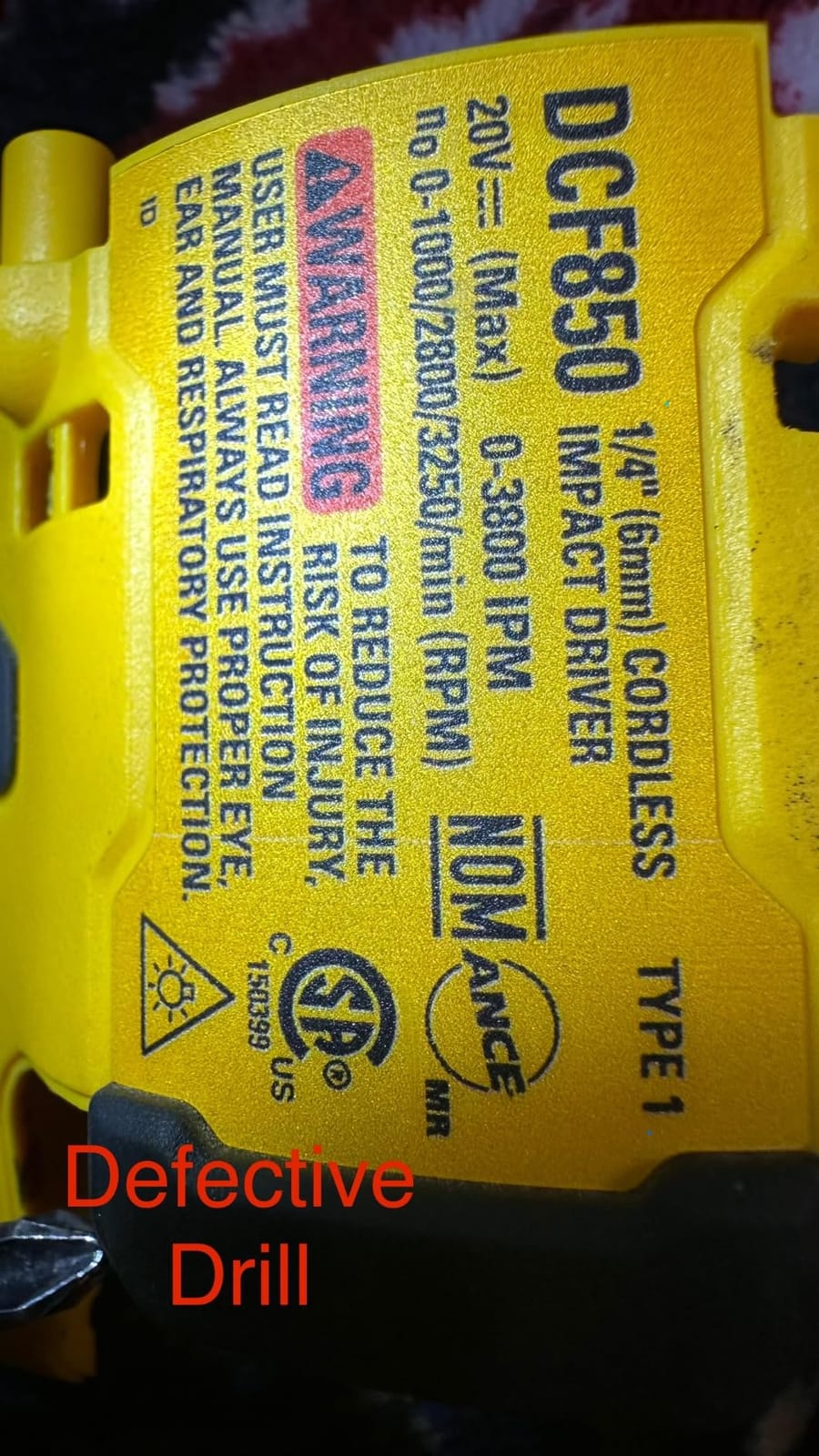
The one recurring thread in the reviews is packaging. A number of bare-tool units arrive without a factory box, and one reviewer with direct experience argues this reflects sellers splitting kit batteries rather than counterfeit products. It is worth knowing before you file any concern about authenticity.
On the control side, the clutch-style three-speed trigger is simpler than the named drive modes on the M12 FUEL. For straight fastening work that is fine, and the 3-LED work light handles the dark-cavity problem.
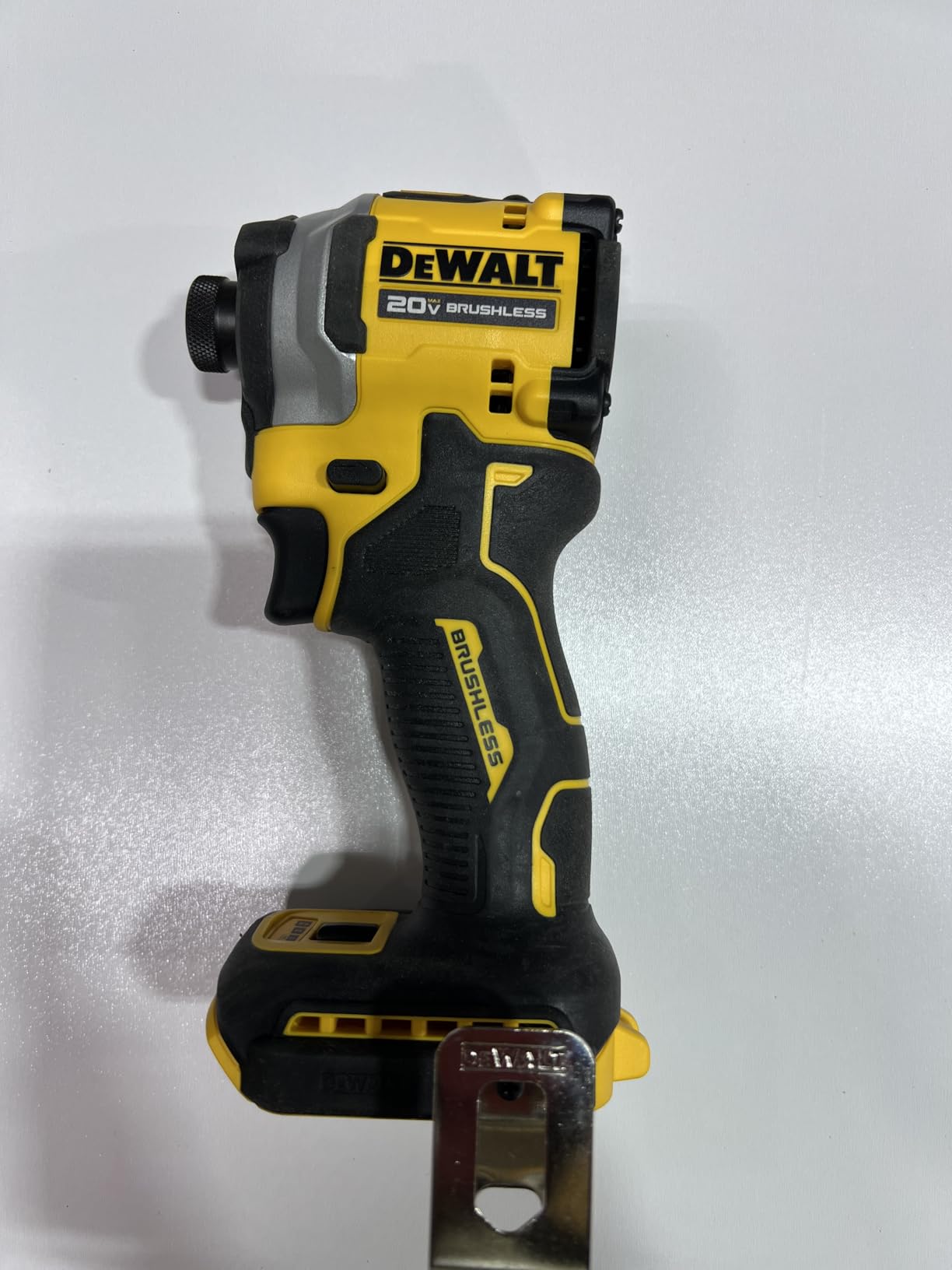
Where the DCF850B fits
Between-stud framing, deck ledger work, and any confined job where the fasteners are too heavy for a 12V tool. It is the point where compactness stops costing you capability, and the reason our 18V impact driver roundup treats short bodies as serious tools rather than accessories.
For anyone already running 20V MAX packs, it is a straightforward second driver with no new platform cost beyond the tool.
Where the DCF850B does not fit
The tightest cavities. It is longer than the stubby options in this list, and one r/PowerToolGuide owner noted the same effect on the closely related DCF845B: it gets awkward between studs, and the batteries add length to every measurement.
If the gap is the problem rather than the torque, buy short. If the torque is the problem, buy this. Those are different shopping trips.
How to Choose a Compact Impact Driver for Tight Spaces
Start with the gap, not the brand. Most disappointing compact-driver purchases are a geometry mistake, where the buyer picked for torque and then could not get the tool into the space. Measure the tightest opening on your job list before you choose anything, then buy against that number.
Measure the clearance, not the marketing length
Front-to-back length is the number that matters for a cavity. YouTube-style product photos are not measurements, so use the published length where the manufacturer provides it, and add a margin for the bit. The tools here range from a 4.25-inch head to a 5-1/4-inch body, which is a one-inch spread that decides several real jobs.
A practical map from clearance to tool: a three-and-a-half-inch gap or less points to the Makita XLT01Z, since a 2-1/8-inch head height is the only way in. A four-inch cabinet box points to the Milwaukee 3450-20 at 4.3 inches or the YOIbuy at 4.25 inches. A six-inch stud bay or a standard upper cabinet opens up the DEWALT ATOMIC DCF809B and the Milwaukee M18 3650-20.
For a wider look at tools chosen for confined rooms rather than confined cavities, our best detail sanders for tight spaces covers the same clearance-first approach on a different tool.
Pick the form factor that matches the obstruction
Inline short-body drivers are the default answer and work for cavities where the tool can approach the screw straight on. Stubby inline bodies win when the depth is the constraint, and they trade torque for length in a straight line.
Right-angle drivers win when the approach is blocked sideways, such as a screw facing out from a stud wall or a bracket that only allows a perpendicular bit. They cost you torque and they require long-shank bits, so they are a specialist answer rather than a general one. A micro-ratchet is worth adding to a tool bag for very low-torque manual work, but it will never replace a driver on a deck screw.
Match voltage to the fasteners, not to the gap
These torque tiers are a reasonable guide for real jobs. Between 1000 and 1250 in-lbs covers cabinet hardware, drawer slides, and light construction screws. Between 1400 and 1550 in-lbs covers deck screws and longer structural fasteners in moderate material. Above 1700 in-lbs covers lag screws, ledger board, and framing work where the screw is the real problem.
These are driver figures, published in inch-pounds. Impact wrenches are quoted in foot-pounds on a square anvil and are not comparable, which is the single most common source of confusion in this category.
Decide about the battery platform first
Most owners in the forums who regret a compact-driver purchase regret the battery, not the tool. Every bare tool in this roundup needs a battery and a charger on top, and that is frequently more than the tool itself. If you own no batteries in a given platform, the SKIL kit is the only one that removes that cost.
If you already own batteries, match the platform and ignore the badge. The forum consensus is blunt about this: buying into a new brand for a shorter body rarely pays off, and the common verdict on redundant compact drivers is that the short body earns its keep only when the alternative tool physically will not fit.
Do not skip drive modes and lighting for indoor work
Drive modes matter more in a cavity than on an open deck, because you are working inches from finished material. Control Mode and Assist Mode features that drive at low speed until tightening begins are what prevent cam-out and stripped heads, and they are exactly what a single-speed tool cannot do.
Lighting matters the same way. A single LED on the nose of the tool throws a shadow into the cavity and leaves you guessing. Reviewers specifically call out light-ring arrangements around the collar, and more than one forum user mentions resorting to a head torch when a tool has no light at the nose. Add ear protection too. Owners describe the Ryobi and SKIL as noticeably loud, and inside a house that matters more than it does on a site.
Know when an impact driver is the wrong tool
A compact driver will not remove a seized, rusted solid fastener, and no mode setting changes that. This is the standard complaint about 12V compact tools, and it is why professionals reach for an impact wrench with a square anvil when a lug nut has been sitting in a salt-belt winter.
Torque published in foot-pounds on a wrench is a different scale from the inch-pound figures on a driver, so 1500 in-lbs on a compact driver is not comparable to 1500 ft-lbs on a wrench. If the question is lug nuts, the answer is a wrench, not a smaller driver. This is worth stating because most competing roundups on this topic do not.
Frequently Asked Questions
What is the most compact impact driver?
The most compact impact drivers are short-body inline tools measuring roughly 4.3 to 4.5 inches from nose to tail, such as the Milwaukee M12 3450-20 at 4.3 inches long and 2.0 inches wide. If your cavity is tighter than that, a right-angle driver with a 2-1/8-inch head height, like the Makita XLT01Z, reaches spots no inline tool can.
What is the best compact impact driver overall?
The Milwaukee M12 FUEL 3453-20 is our best compact impact driver overall. It delivers 1500 in-lbs of torque from a brushless 12V platform, weighs 2 pounds with a battery, offers 4-mode drive control, and carries three LEDs around the collar. It is the best balance of torque, weight, and access in this roundup.
What is the best right angle impact driver?
The Makita XLT01Z is the reference right-angle impact driver for close quarters. Its 2-1/8-inch head height reaches fasteners that face sideways to everything around them, and 530 in-lbs of torque is firm enough for real fasteners while staying gentle on finished surfaces. Trade-offs are a brushed motor and a requirement for long hex-shank bits.
Are DeWalt or Milwaukee impact drivers better for tight spaces?
Both brands make strong compact options and the answer usually comes down to which batteries you already own. Milwaukee offers the 12V M12 FUEL 3453-20 at 1500 in-lbs in a 2-pound body, while DeWalt offers the ATOMIC DCF809B at 1825 in-lbs in a 5.1-inch body. If you own neither platform, the Milwaukee M18 3650-20 gives 1700 in-lbs in a 4.4-inch body.
Is 1500 in-lbs of torque enough for lug nuts?
A 12V compact driver with 1500 in-lbs handles wheel nuts and splash guards that were installed by hand, which is why automotive technicians use them. It will not remove lug nuts that have corroded solid or rusted in place. For seized wheel hardware you need an impact wrench with a square anvil, and wrench ratings in foot-pounds are not comparable to driver ratings in inch-pounds.
Do I need an impact driver or a drill for cabinet screws?
Use an impact driver. The hammer mechanism delivers thousands of short blows per minute inside the tool, so torque reaches the screw without pushing back on your wrist, and a compact body keeps you square to the fastener instead of working at an angle. A drill is better for drilling pilot holes and small fasteners, but for cabinet screws and long structural screws the driver wins.
Final Verdict
Match the tool to the gap first, then to the batteries you already own. If the gap is under four inches, the Milwaukee M12 3450-20 or a right-angle driver like the Makita XLT01Z is the only thing that physically works. If you need four to six inches and real fastener torque, the Milwaukee M12 FUEL 3453-20 is the best compact impact driver overall, and the DEWALT ATOMIC DCF809B is the most proven alternative.
For framing and decking in confined areas, move up to the Milwaukee M18 3650-20 or DEWALT DCF850B rather than forcing a 12V tool past its limit. And if you have no batteries in any platform, the SKIL kit is the only purchase here that arrives ready to work. Whatever you choose, measure the cavity before you order, because no amount of torque fixes a tool that will not fit.