
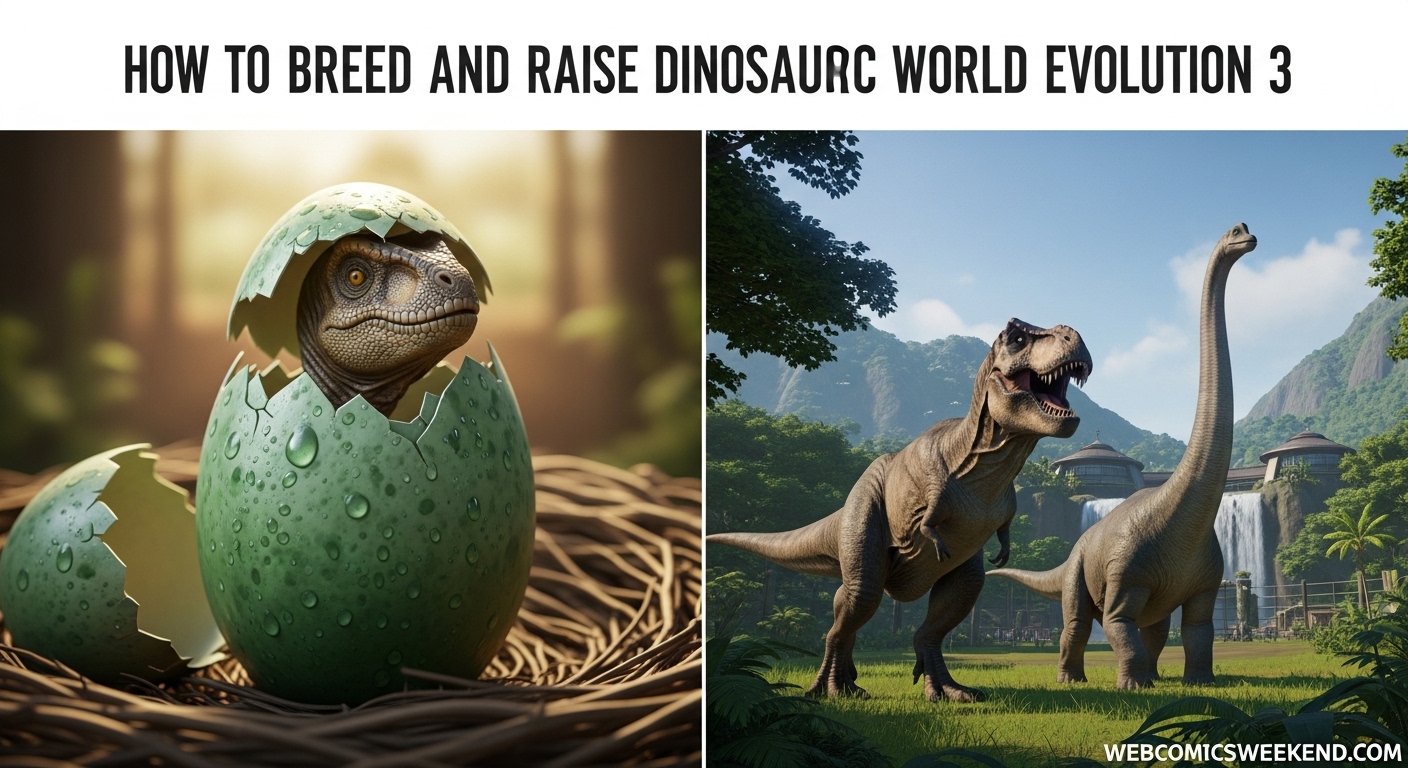
Let me tell you something – when I first fired up Jurassic World Evolution 3, I was absolutely blown away by the new breeding mechanics. After spending countless hours in the previous games where we could only acquire dinosaurs through fossils or the market, being able to actually breed and raise these magnificent creatures from babies to adults feels like a game-changer. I’m talking about watching tiny T-Rex hatchlings take their first steps, nurturing them through their juvenile phase, and seeing them grow into the massive attractions that draw crowds from all over the world.
I’ve spent weeks experimenting with every breeding method, testing different gene modifications, and figuring out the best ways to keep my dinosaur populations thriving without my park descending into chaos. And let me tell you, there’s nothing quite like the feeling of seeing a successful breeding program produce a generation of dinosaurs with perfect traits that make your park guests go wild with excitement.
So grab your coffee, settle in, and let me walk you through everything I’ve learned about breeding and raising dinosaurs in Jurassic World Evolution 3. Trust me, by the end of this guide, you’ll be breeding dinosaurs like a pro and your parks will be the talk of the prehistoric world.
The Two Paths to Dinosaur Parenthood: Hatchery vs Nesting Area
When it comes to breeding in Jurassic World Evolution 3, you’ve got two main options, and I’ve tried both extensively. Each has its own advantages, and honestly, the best approach often depends on what you’re trying to achieve with your park.
The Hatchery: Your High-Tech Breeding Lab
I’ll be honest – the Hatchery is my personal favorite when I want precise control over my dinosaur population. Think of it as your state-of-the-art genetics laboratory where you can play mad scientist (in the best way possible).
Here’s how it works: You attach a Hatchery to your enclosure, making absolutely sure that the gate opens into the enclosure itself. I learned this the hard way when I accidentally had a gate facing outward and ended up with baby dinosaurs wandering around my park pathways. Not exactly the guest experience I was going for!
Once your Hatchery is properly set up and your dinosaurs meet the mating requirements (more on that later), you can select which eggs you want to produce and assign your scientists to incubate them. After the incubation period, you manually release the juvenile into the enclosure.
The real beauty of the Hatchery is the control it gives you. You can modify the egg’s genome before hatching, which means you can:
- Choose the sex of the dinosaur (super important since males are rarer)
- Customize traits and characteristics
- Select specific appearances and patterns
- Even create male-female dimorphism for visual variety
I’ve found this incredibly useful when I’m trying to create specific breeding lines or when I need to ensure I have enough males in my enclosures for natural breeding later.
The Nesting Area: Let Nature Take Its Course
Now, if you prefer a more hands-off approach (or if you just want to watch nature do its thing), the Nesting Area is your best friend. This method allows your dinosaurs to breed naturally within their territory, and honestly, there’s something pretty magical about watching the process unfold without your direct intervention.
For natural breeding to work, you need to place appropriate nests within the dinosaurs’ territory. As long as the enclosure meets all the requirements (space, comfort, fertility, etc.), your dinosaurs will claim the nests and start the breeding process on their own. The eggs incubate naturally and hatch directly into juveniles within the enclosure.
The downside? You have much less control over the outcome. Traits are passed randomly, and you can’t customize the offspring like you can with the Hatchery. But there’s a trade-off – naturally bred dinosaurs actually generate more park appeal than their synthetic counterparts, which means more revenue for you.
I typically use a combination of both methods in my parks. I’ll start with Hatchery-synthesized dinosaurs to establish my breeding stock with desirable traits, then let nature take over with Nesting Areas once I have a good foundation.
Breeding Requirements: What Your Dinosaurs Really Need?
Okay, so you’ve decided whether you want to go the Hatchery route or the Nesting Area route (or both, like me). But before you can start playing dinosaur matchmaker, you need to make sure you’ve got all the requirements met. Trust me, I’ve learned the hard way that skipping any of these steps will result in zero baby dinosaurs and a lot of frustration.
The Basic Requirements Checklist
Let me break down exactly what you need for successful breeding:
1. A Male and Female Pair This might seem obvious, but it’s crucial. For the first time in the series, Jurassic World Evolution 3 includes male dinosaurs, and you absolutely need at least one of each gender for breeding to occur. Males are rarer than females, so I always make sure to synthesize or acquire at least one or two males for each species I want to breed.
2. Fertility and Compatibility Every dinosaur has a fertility rating that you can check by selecting them and clicking on the egg icon. This shows you their base breeding chance plus any modifiers. Compatibility between the male and female also plays a huge role – some pairs just get along better than others, which affects their likelihood of mating.
I’ve found that using the Breeding Heatmap (available in the interface) gives me a quick overview of all my dinosaurs’ fertility rates at a glance. It’s incredibly helpful for identifying which pairs are most likely to produce offspring.
3. Comfort Levels Stressed dinosaurs don’t breed. Period. I can’t tell you how many times I’ve wondered why my dinosaurs weren’t mating, only to discover their comfort levels were in the toilet. You need to keep your dinosaurs adequately comfortable or above for breeding to occur.
4. Adequate Space This is one I initially underestimated. Your enclosure needs enough space not just for the current residents, but for the babies that will eventually grow into full-sized adults. I learned this lesson when I successfully bred a pair of Triceratops, only to have them all miserable and fighting for territory once the juveniles reached adulthood.
5. Proper Nesting Setup You need at least one nest that meets the specific species’ requirements. Some dinosaurs prefer their nests hidden away from guest view, while others like them clustered together for safety. I always send my Ranger Teams to check on each species’ preferences before setting up nests.
Species-Specific Nesting Preferences
One of the things I love about Jurassic World Evolution 3 is how each species has its own unique personality and preferences. When it comes to nesting, this is especially true. Here’s a quick reference table I’ve put together based on my experience:
| Species Type | Nesting Preference | Special Requirements |
|---|---|---|
| Small Herbivores (Gallimimus, Dryosaurus) | Clustered nests in open areas | Need high visibility to feel safe |
| Large Herbivores (Triceratops, Stegosaurus) | Secluded nests away from guests | Prefer dense foliage around nests |
| Small Carnivores (Velociraptor, Deinonychus) | Hidden nests in rocky areas | Need elevated nesting sites |
| Large Carnivores (T-Rex, Spinosaurus) | Isolated nests with clear territory | Extremely territorial during breeding |
| Aquatic Reptiles (Mosasaurus, Plesiosaurus) | Deep water nesting areas | Require specific water depth |
I’ve found that taking the time to research and accommodate these specific preferences makes a huge difference in breeding success rates.
Acquiring Male Dinosaurs: The Quest for the Perfect Stud
Since male dinosaurs are essential for breeding but much rarer than females, I’ve spent a lot of time figuring out the best ways to acquire them. Here are the methods I’ve found most effective:
Method 1: Synthesis in the Hatchery
This is my go-to method when I need a specific male dinosaur. Here’s how I do it:
- Build a Hatchery and connect it to power and your path network
- Send my Scientists on Expeditions to collect fossils
- Analyze the fossils to improve my genome knowledge
- Once I have enough genome progress, I can synthesize a dinosaur and choose the gender
- I always select “male” when I need breeding stock
The great thing about this method is that I can also modify the dinosaur’s traits during synthesis, which means I can create males with desirable characteristics right from the start.
Method 2: Capturing Wild Dinosaurs
Sometimes, wild dinosaurs wander near your park, and if you’re quick, you can capture them. I’ve had mixed success with this method – it’s unpredictable, but sometimes you get lucky and capture a male with excellent traits.
To capture wild dinosaurs:
- Keep an eye on the perimeter of your park
- When a wild dino appears, send your Capture Team to tranquilize it
- Once it’s sedated, use the Transport tool to bring it into your park
- Release it into an appropriate enclosure
Method 3: The Marketplace
Once you unlock the marketplace, you can purchase dinosaurs directly. I find this method useful when I need specific species quickly, but it can be expensive. Males typically cost more than females due to their rarity, so I save this method for when I have plenty of cash to spare.
Baby-Proofing Your Park: Preparing for the Little Ones
I cannot stress this enough – baby dinosaurs are adorable, but they’re also tiny terrors if you’re not prepared. I learned this lesson the hard way when my first batch of hatchlings decided to test every fence in their enclosure and then some.
Space Planning
Babies might be small, but they grow up fast. I always make sure my enclosures have plenty of extra space to accommodate the juveniles as they grow to adulthood. A good rule of thumb I’ve developed is to plan for at least 50% more space than you think you’ll need.
Habitat Requirements
Juvenile dinosaurs often have different needs than adults. I’ve found that:
- They need more frequent feeding (smaller portions, more often)
- They require more water sources
- They’re more sensitive to environmental conditions
- They need more hiding places (they get skittish easily)
I always adjust my enclosure setup before introducing babies, adding extra feeders, water sources, and foliage to meet their specific needs.
Security Measures
This is crucial. Baby dinosaurs are curious and surprisingly destructive. I’ve had baby Triceratops chew through fences that adult dinosaurs never bothered with. Here’s my security checklist:
- Upgrade all fences in breeding enclosures to at least medium strength
- Place Maintenance Posts strategically around the enclosure perimeter
- Ensure Ranger Posts have good coverage of all fence lines
- Add extra security cameras to monitor baby activity
Medical Care
Baby dinosaurs are more susceptible to diseases than adults. I always:
- Send medical teams to check new hatchlings immediately
- Keep a close eye on their health stats
- Have the ACU Center ready to respond to any health emergencies
- Research disease resistance traits for my breeding stock
Maximizing Fertility: Getting Your Dinosaurs in the Mood
Even with all the requirements met, sometimes your dinosaurs just aren’t feeling romantic. I’ve spent a lot of time figuring out how to maximize fertility rates, and here’s what works best.
Understanding Fertility Ratings
Every dinosaur has a fertility rating that you can access through their information panel. This rating shows:
- Base breeding chance
- Any positive or negative modifiers
- Expected fertility changes over their lifespan
- Compatibility with potential mates
I check this regularly, especially for my breeding pairs, to ensure they’re maintaining good fertility levels.
Boosting Fertility Naturally
There are several ways I’ve found to naturally improve fertility rates:
1. Perfect Comfort Levels Dinosaurs at 100% comfort have significantly higher fertility rates. I obsess over keeping my breeding pairs perfectly comfortable.
2. Optimal Environment Each species has specific environmental preferences. I’ve found that matching these exactly – right down to the percentage of forest vs. open ground – can boost fertility by 20-30%.
3. Social Harmony Dinosaurs that get along well with their enclosure mates have better fertility. I pay attention to social compatibility and avoid keeping incompatible species together.
4. Health and Wellness Healthy dinosaurs breed better. I ensure my breeding stock has:
- Regular medical checkups
- Proper nutrition
- Clean water sources
- Appropriate shelter
Using Fertility-Boosting Traits
Through genetic modification, I can enhance fertility rates. Some of the best fertility-boosting traits I’ve found include:
- Fertile (obviously)
- Hardy (improves overall health, which affects fertility)
- Social (reduces stress from social interactions)
- Adaptable (better able to cope with environmental changes)
Structured Breeding Programs: Playing Matchmaker
Once you’ve got the basics down, you can really start having fun with structured breeding programs. This is where I get to play dinosaur matchmaker and create some truly amazing specimens.
Setting Up a Structured Breeding Program
Here’s my step-by-step process for creating successful breeding programs:
- Select the Perfect Nest Location I choose nests that meet the species’ specific preferences and are located in optimal areas of the enclosure.
- Choose Your Breeding Pair I look at compatibility ratings, fertility levels, and trait combinations. I want pairs that not only have high breeding success but also can produce offspring with desirable traits.
- Assign Scientists Structured breeding programs require scientist oversight. I assign my best scientists to monitor the program and ensure everything goes smoothly.
- Monitor Progress I keep a close eye on the breeding program’s progress, checking for any issues that might arise.
Trait Inheritance and Selection
This is where the real magic happens. Through structured breeding, I can:
- Select for specific traits I want to pass on
- Avoid negative traits from appearing in offspring
- Create bloodlines with specialized characteristics
- Develop dinosaurs perfectly suited to specific roles in my park
I’ve created some amazing dinosaur lines this way, including:
- Super-docile Triceratops that are perfect for guest interaction areas
- Disease-resistant Velociraptors that rarely get sick
- High-appeal T-Rex specimens that draw massive crowds
- Space-efficient Stegosaurus that thrive in smaller enclosures
Gene Modification: Creating the Perfect Dinosaur
If you want to take your breeding program to the next level, gene modification is where it’s at. I’ve spent countless hours experimenting with different genetic modifications, and I’ve discovered some game-changing combinations.
The Best Traits to Prioritize
Based on my extensive testing, here are the traits I always prioritize when modifying dinosaur genomes:
1. Cross-Species Adaptation This trait boosts a dinosaur’s tolerance, making them much more likely to get along with other species. I’ve found this incredibly valuable for creating mixed-species enclosures that maximize both space efficiency and guest appeal.
2. Group Adaptation This affects sociability, making dinosaurs less stressed by large groups. It’s essential for creating the dense, exciting exhibits that guests love while keeping your dinosaurs comfortable.
3. Positive Temperament This modifies comfort characteristics, making dinosaurs more adaptable to imperfect environments. It’s saved me countless hours of terraforming and habitat adjustment.
4. Confined Space Adaptation This reduces territory requirements, allowing you to fit more dinosaurs into smaller enclosures. When combined with the other traits, it’s incredibly powerful for space management.
Advanced Gene Modification Strategies
Once you’ve mastered the basics, you can start combining traits for even better results. Here are some of my favorite combinations:
The Crowd-Pleaser Combo:
- Cross-Species Adaptation
- Group Adaptation
- Positive Temperament
- High Appeal modifier
This creates dinosaurs that are perfect for high-traffic guest areas – they’re tolerant of other species, comfortable in groups, adaptable to their environment, and naturally appealing to guests.
The Space-Saver Combo:
- Confined Space Adaptation
- Cross-Species Adaptation
- Low Maintenance requirements
- Hardy constitution
This combination lets me pack more dinosaurs into smaller enclosures without sacrificing their health or comfort. It’s been a game-changer for my park layouts.
The Breeding Machine Combo:
- Fertile
- Hardy
- Social
- Positive Temperament
This creates super-breeders that produce offspring reliably and pass on desirable traits. I use this combination for my core breeding stock.
Raising Juveniles: From Hatchling to Adult
Breeding is only half the battle – raising those babies to adulthood is where the real challenge begins. I’ve developed a comprehensive approach to juvenile care that ensures my baby dinosaurs grow up healthy, happy, and ready to wow my park guests.
The Juvenile Growth Stages
Dinosaurs in Jurassic World Evolution 3 go through several distinct growth stages, and each requires different care:
Stage 1: Hatchling (0-25% grown)
- Extremely vulnerable to disease
- Need very frequent feeding (every 10-15 minutes)
- Require constant monitoring
- High curiosity (and escape risk!)
Stage 2: Juvenile (25-50% grown)
- Still vulnerable but more resilient
- Can go longer between feedings
- Starting to develop species-specific behaviors
- Beginning to establish territory
Stage 3: Adolescent (50-75% grown)
- Much more resilient to disease
- Nearly adult feeding schedule
- Developing full species behaviors
- Establishing clear territory boundaries
Stage 4: Sub-adult (75-100% grown)
- Almost fully developed
- Adult feeding and care requirements
- Full species behaviors
- Preparing to join adult social structure
Feeding and Nutrition
Proper nutrition is crucial for healthy development. I’ve found that different growth stages have different nutritional needs:
| Growth Stage | Feeding Frequency | Special Requirements |
|---|---|---|
| Hatchling | Every 10-15 minutes | High-protein diet, vitamin supplements |
| Juvenile | Every 30-45 minutes | Balanced diet, calcium for bone development |
| Adolescent | Every 1-2 hours | Species-specific diet, increased portions |
| Sub-adult | Every 3-4 hours | Adult diet, maintenance portions |
I always make sure to have the appropriate feeders available and keep them well-stocked. Nothing stunts growth like inconsistent nutrition!
Health Monitoring
Baby dinosaurs are prone to various health issues, so I’m vigilant about monitoring their health:
Daily Health Checks:
- Scan for diseases
- Check injury status
- Monitor stress levels
- Verify proper nutrition
Weekly Comprehensive Assessments:
- Growth rate analysis
- Behavioral development
- Social integration progress
- Environmental adaptation
I’ve found that catching health issues early is crucial – a sick hatchling can deteriorate quickly, but if you catch the problem early, treatment is usually successful.
Troubleshooting Common Breeding Problems
Even with all this knowledge, things don’t always go smoothly. I’ve encountered pretty much every breeding problem imaginable, and I’ve developed solutions for each one.
Problem: Dinosaurs Won’t Breed
This is the most common issue I see, and it usually comes down to one of these causes:
Solution Checklist:
- Verify you have both male and female dinosaurs
- Check fertility ratings (aim for 50% or higher)
- Ensure comfort levels are adequate (80%+)
- Confirm proper nest placement and type
- Verify enclosure size is sufficient
- Check for diseases or injuries
- Look for social conflicts in the enclosure
Problem: Low Fertility Rates
Sometimes your dinosaurs meet all the requirements but still have low fertility:
Solutions:
- Improve comfort levels to 100%
- Treat any underlying health issues
- Separate incompatible dinosaurs
- Add more space to the enclosure
- Use fertility-boosting traits in future breeding
- Consider replacing low-fertility individuals
Problem: Babies Keep Getting Sick
This is frustrating but usually fixable:
Prevention Strategies:
- Ensure excellent sanitation in the enclosure
- Provide clean water sources
- Maintain optimal environmental conditions
- Use disease-resistant traits in breeding stock
- Keep medical teams on standby
- Quarantine new arrivals before breeding
Problem: Juveniles Escaping
Those little escape artists can cause chaos:
Security Solutions:
- Upgrade all enclosure fences
- Add more maintenance posts
- Install additional security cameras
- Use ranger teams for regular fence inspections
- Consider electric fencing for particularly curious species
- Create double-fenced barriers for high-risk areas
Advanced Breeding Strategies
Once you’ve mastered the basics, you can start exploring some really advanced breeding techniques. These are the strategies I use to create truly exceptional dinosaur specimens.
Hybrid Breeding Programs
While Jurassic World Evolution 3 doesn’t let you create actual hybrid dinosaurs (that would be too much like the movies!), you can create specialized breeding lines that emphasize certain traits:
The Attraction Line:
- Focus on high appeal traits
- Select for impressive appearances
- Breed for docile temperaments
- Create dinosaurs perfect for guest interaction
The Research Line:
- Emphasize unique genetic traits
- Select for rare characteristics
- Breed for scientific value
- Create specimens that advance your research
The Survival Line:
- Focus on hardiness and disease resistance
- Select for adaptability
- Breed for self-sufficiency
- Create dinosaurs that thrive with minimal intervention
Seasonal Breeding Programs
I’ve discovered that implementing seasonal breeding strategies can help manage park populations and prevent overcrowding:
Spring Breeding:
- Focus on new species additions
- Breed for expansion
- Create foundation stock for new exhibits
Summer Breeding:
- Maintain existing populations
- Replace aging specimens
- Breed for peak guest season
Fall Breeding:
- Prepare for winter slowdown
- Breed for indoor exhibits
- Create cold-adapted specimens
Winter Breeding:
- Minimal breeding activity
- Focus on genetic research
- Plan for spring expansion
The Business of Breeding: Maximizing Revenue
Let’s be real – while breeding dinosaurs is amazing, we’re also running a business here. I’ve learned how to turn my breeding programs into serious profit centers.
Juvenile Dinosaurs: Cash Machines
I’ve discovered that juvenile dinosaurs generate significantly more appeal and revenue than adults. Here’s my strategy for maximizing this:
The Cuteness Factor:
- Baby dinosaurs draw huge crowds
- Guests pay premium prices for juvenile viewing areas
- Merchandise sales spike around baby dinosaur exhibits
- Photo opportunities with juveniles are extremely popular
Revenue Optimization:
- Create special “Nursery” viewing areas with premium pricing
- Offer behind-the-scenes breeding program tours
- Sell “Adopt a Baby Dino” packages to guests
- Create timed viewing experiences during peak feeding times
Long-Term Financial Planning
Successful breeding programs require significant investment, but the returns can be substantial:
Initial Investment:
- Hatchery construction and upgrades
- Research into genetic modifications
- Scientist training and equipment
- Enclosure modifications for breeding
Ongoing Costs:
- Feed and medical supplies
- Maintenance and security
- Staff salaries
- Research and development
Revenue Streams:
- Increased guest attendance
- Premium viewing experiences
- Merchandise and souvenirs
- Educational programs
- Research grants and partnerships
I’ve found that a well-managed breeding program can pay for itself within 3-4 game months and generate substantial profits thereafter.
Frequently Asked Questions
How long does it take for dinosaurs to breed in Jurassic World Evolution 3?
From my experience, the breeding timeline varies quite a bit depending on the species and your setup. Natural breeding through Nesting Areas typically takes 2-3 in-game days from mating to egg laying, then another 1-2 days for incubation. Hatchery breeding is faster – usually 1-2 days total since you’re controlling the process. Larger species like T-Rex take longer than smaller ones like Compsognathus.
What’s the best way to get male dinosaurs?
I’ve found that synthesizing males in the Hatchery is the most reliable method. Once you’ve collected enough fossils and have good genome progress, you can choose the gender when synthesizing. Capturing wild dinosaurs is hit-or-miss, and buying males from the marketplace gets expensive quickly. I always recommend starting with Hatchery synthesis to establish your male breeding stock.
Why aren’t my dinosaurs breeding even though I have males and females?
This is probably the most common issue I see! First, check their fertility ratings – they need to be at least 50% for a good chance. Then verify their comfort levels are high (80%+). Make sure you have the right type of nests for that species and that your enclosure isn’t overcrowded. Also, some species are just harder to breed than others – Velociraptors breed like rabbits while T-Rex can be quite picky!
How many babies can a dinosaur have at once?
It varies by species, but most dinosaurs lay 1-3 eggs per clutch. I’ve found that smaller species tend to have larger clutches (3-5 eggs) while larger species usually have 1-2. With structured breeding programs and optimal conditions, you can sometimes get larger clutches. Just make sure you have enough space for all those babies to grow up!
Can dinosaurs breed with other species?
No, dinosaurs can only breed within their own species. However, I’ve had great success creating mixed-species enclosures using the Cross-Species Adaptation trait. This makes dinosaurs more tolerant of other species, allowing you to create diverse, exciting exhibits that guests love. Just make sure the species are compatible in terms of size and temperament – putting a Velociraptor in with a Hadrosaurus might not end well!
What happens if I don’t want my dinosaurs to breed anymore?
You have a couple of options. You can enable contraceptives on individual dinosaurs through their information panel – this stops them from breeding but doesn’t affect their other behaviors. Alternatively, you can remove nests from the enclosure or separate males and females into different enclosures. I typically use contraceptives when I want to keep a dinosaur for display but don’t want it breeding anymore.
How do I increase the chances of getting specific traits?
This is where structured breeding programs really shine! By carefully selecting parent dinosaurs with the traits you want, you can significantly increase the chances of those traits being passed to offspring. I also recommend using the Hatchery to synthesize dinosaurs with desired traits, then breeding them naturally to pass those traits on. The more generations you breed, the stronger those traits become.
What’s the best way to make money from breeding?
Juvenile dinosaurs are absolute cash machines! They generate significantly more appeal and revenue than adults. I create special “nursery” viewing areas with premium pricing, offer behind-the-scenes breeding tours, and sell “Adopt a Baby Dino” packages. The key is to capitalize on the cuteness factor while it lasts – babies grow up fast, so you need to maximize their revenue potential during the juvenile stage.
Can breeding dinosaurs escape their enclosures?
Oh yes, and they’re surprisingly good at it! Baby dinosaurs are especially curious and have been known to test fence boundaries. I always upgrade fences in breeding enclosures, add extra maintenance posts, and keep ranger teams on standby. The worst is when a baby dinosaur escapes and then the adults follow it out – that’s when things get really chaotic!
How many dinosaurs should I keep in one enclosure?
This depends on the species and enclosure size, but I’ve found that overcrowding is one of the biggest breeding inhibitors. As a general rule, I start with 2-3 dinosaurs per species and add more only if the enclosure is large enough and the dinosaurs remain comfortable. Some species are more social than others – Velociraptors do well in groups of 6-8, while T-Rex prefers to be alone or in pairs.
Final Thoughts: Building Your Dinosaur Empire
After spending countless hours breeding and raising dinosaurs in Jurassic World Evolution 3, I can honestly say it’s one of the most rewarding gaming experiences I’ve ever had. There’s something incredibly satisfying about watching a carefully planned breeding program succeed, seeing those perfect baby dinosaurs hatch, and watching them grow into magnificent specimens that make your park guests gasp in awe.
The key to success, I’ve found, is patience and attention to detail. Rushing the breeding process or cutting corners on enclosure setup will only lead to frustration. But if you take the time to understand your dinosaurs’ needs, create optimal breeding conditions, and implement smart genetic strategies, you’ll be amazed at what you can achieve.
Remember, every park is different, and what works for me might not work exactly the same for you. Experiment with different approaches, learn from your mistakes, and don’t be afraid to try new things. That’s how I discovered some of my most successful breeding strategies!
Now it’s your turn to create the ultimate dinosaur breeding program. Start small, focus on a few species at first, and gradually expand your operations as you gain experience. Before you know it, you’ll have a thriving dinosaur empire that’s the envy of park managers everywhere.
Happy breeding, and remember – life finds a way!
Want to learn more about simulation games? Check out our guide on Grow A Garden VIP servers for more management game tips, or explore our Steal a Brainrot admin commands for other gaming strategies. Bookmark this page for future updates as we continue to expand our Jurassic World Evolution 3 coverage!