
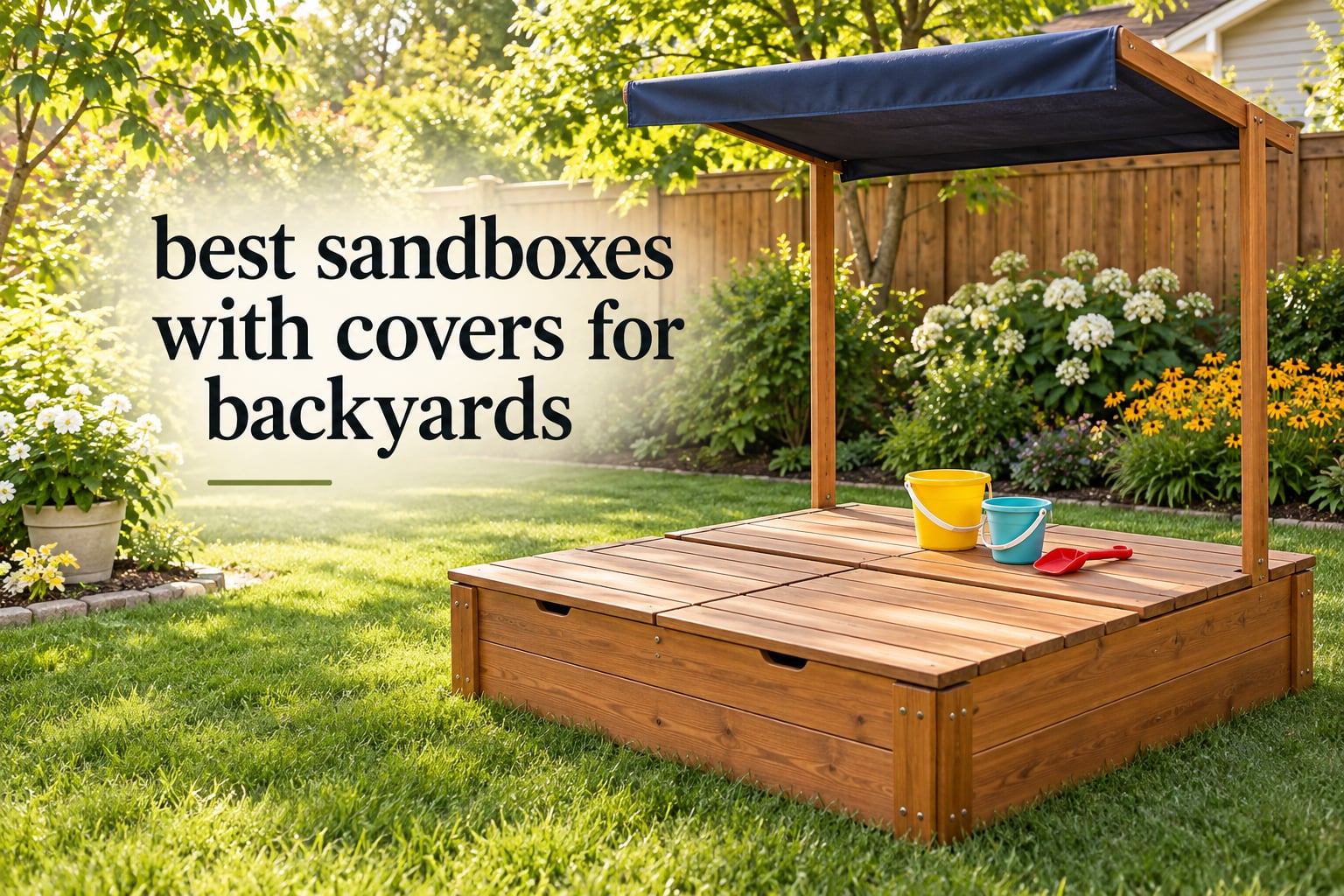
An uncovered sandbox is an open invitation. Stray cats treat it as a litter box, maples drop everything they have into it, and one afternoon of rain turns the sand into a cold mud pond that takes days to dry. A cover solves all three problems, and the best sandboxes with covers for backyards do it without turning playtime into a chore.
We spent weeks reading thousands of owner reviews, comparing cover types, wood species, sand capacity and sealing gaps across ten models that all claim to keep the sand clean. The differences turned out to be bigger than the marketing suggests. Some covers latch and seal flat, some merely drape, and a few are canopies that shade the box during play but never actually close over the sand.
That last detail matters more than any spec sheet. If cats are your main worry, a cover that does not seal is decoration. This roundup is organized around what each cover actually does, plus honest notes on where it falls short. If you also want general sandbox guidance, our 8 Best Sandboxes roundup covers uncovered and sand-table styles too.
Everything below reflects the current 2026 catalog. We never list prices, so check the button on each product for the live figure.
Top 3 Picks for Covered Backyard Sandboxes (October 2026)

Best Choice Cedar Box with Folding Benches
- Cedar wood
- 47 x 47 in play area
- Benches fold into a split cover
- 220 lb bench capacity

Badger Basket Cedar Sandbox with Lid
- Cedar wood
- 46.5 x 46.5 in
- Holds about 750 lbs of sand
- Folding bench lid

Mederra Cedar Octagon with Cover
- 85 x 78 in octagon
- 800-1000 lbs of sand
- Waterproof cover and liner
- Seats up to 6-8 kids
The cedar box with folding benches takes the top slot because it does the two things parents ask for most, a genuine cover and seating for adults, without a canopy mechanism to fight with. The Badger Basket earns its premium slot on build quality, a 4.4 average across 1144 reviews, and the strongest record of surviving multiple winters outdoors. The octagon is the pick for families with more than one child.
The Best Sandboxes With Covers for Backyards in 2026
| Product | Specs | Action |
|---|---|---|
| Best Choice Products Cedar Sand Box with Folding Bench Cover |
|
Check Latest Price |
 Aivituvin Sandbox with Retractable Canopy Aivituvin Sandbox with Retractable Canopy |
|
Check Latest Price |
| Badger Basket Cedar Sandbox with Lid and Benches |
|
Check Latest Price |
| Mederra Cedar Octagon Sandbox with Cover |
|
Check Latest Price |
 BIRASIL Wood Sandbox with Cover and Bench Seats BIRASIL Wood Sandbox with Cover and Bench Seats |
|
Check Latest Price |
 Best Choice Products Octagon Sandbox with Lid Best Choice Products Octagon Sandbox with Lid |
|
Check Latest Price |
 YOLENY Sandbox with Lid and 420D Oxford Canopy YOLENY Sandbox with Lid and 420D Oxford Canopy |
|
Check Latest Price |
 Agitree Wooden Sandbox with Lid, Canopy and Storage Agitree Wooden Sandbox with Lid, Canopy and Storage |
|
Check Latest Price |
 Outsunny Wooden Sandbox with Lid and Canopy Outsunny Wooden Sandbox with Lid and Canopy |
|
Check Latest Price |
 Costzon HDPE Sandbox with Oxford Cover Costzon HDPE Sandbox with Oxford Cover |
|
Check Latest Price |
That table is the short version. What follows is why each box earns its place, and what you should know before you commit.
1. Best Choice Products Cedar Sand Box with Folding Bench Cover
Best Choice Products Large Outdoor Wooden Sand Box for Kids, Sandbox with Cover, Bench Seats Support up to 220 lbs, Bottom Liner for Drainage, Cedar Wood – Brown
Heat-treated cedar
47.25 x 47 x 8.5 in
32.5 lbs
220 lbs per bench
Ages 3 and up
Pros
- Benches seat 220 lbs each and fold flat into a full cover
- Heat-treated cedar resists splitting when assembled carefully
- Open bottom with liner makes drainage and sand depth easy
- Roomy 47 inch footprint suits two toddlers
Cons
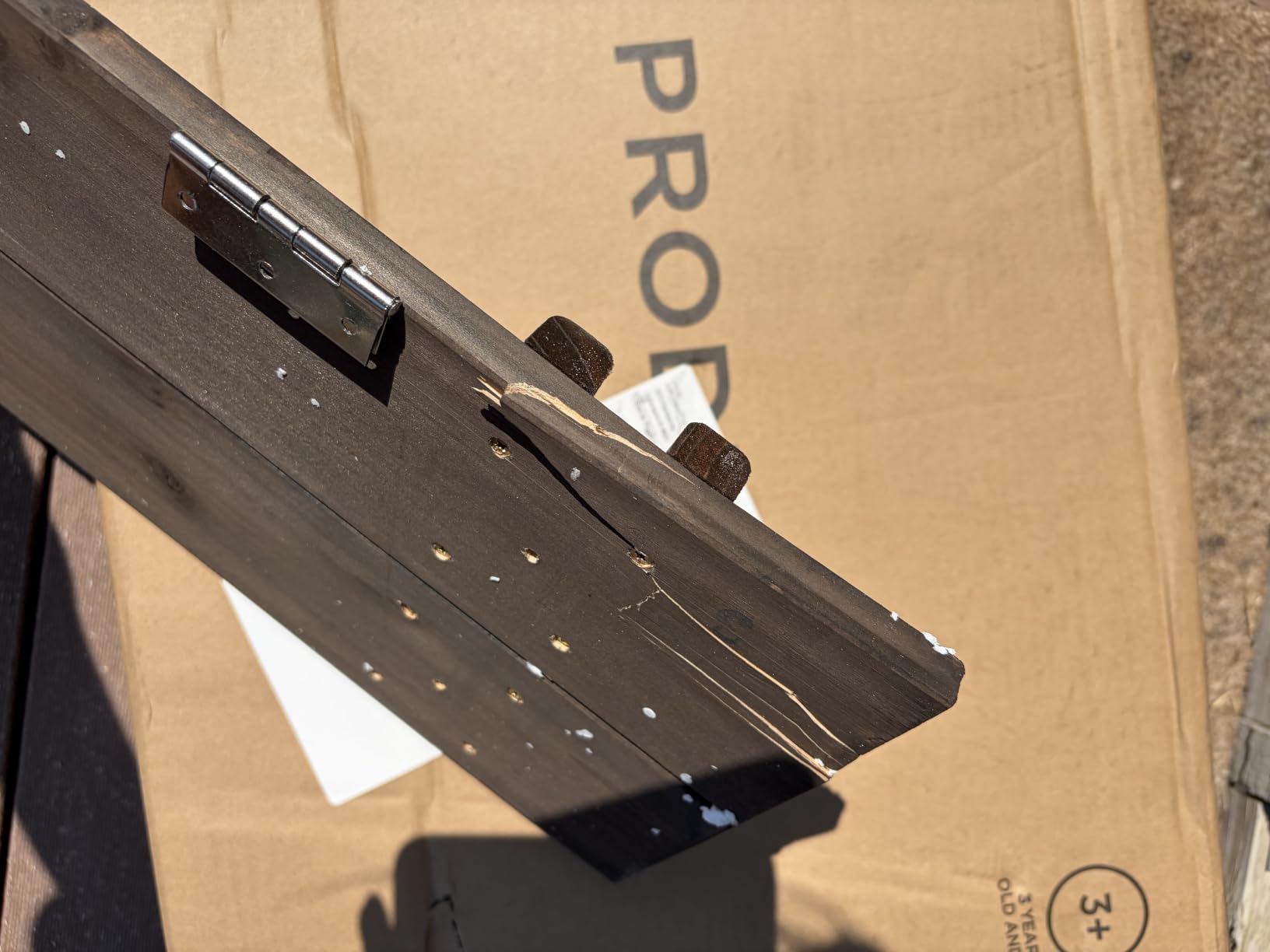
- Included screws are undersized for soft cedar and work loose over time
- Cover is not rated to walk on
- Thin instructions may mean a trip to the brand site for details
This is the box we kept coming back to, because the cover is not an accessory bolted on afterwards. The two benches are the cover. Fold them inward and the sandbox is sealed, so cats, leaves and rain have to get past a solid wood lid rather than a flapping tarp.
Cedar is the right call for a box that lives outdoors year round. It is dense, it resists rot without chemical treatment, and it shrugs off the freeze-thaw cycle that cracks cheaper pine. Owners consistently warn to follow the assembly directions closely, because the panels will split if the screws are driven fast into predrilled cedar.
The build is unassuming but solid at 32.5 pounds, light enough that two adults can carry it into position without a dolly. The bench rating of 220 lbs each is a real number, not marketing, which matters because most sandbox benches are sized for children and sag under an adult within a season.
The open bottom is the quiet hero here. Sand sits on the ground cloth and drains downward after rain, so you are not dumping out a soaked liner. It also lets you raise or lower the sand depth by adding or removing material, which is how you extend the life of a play area before replacing all the sand.
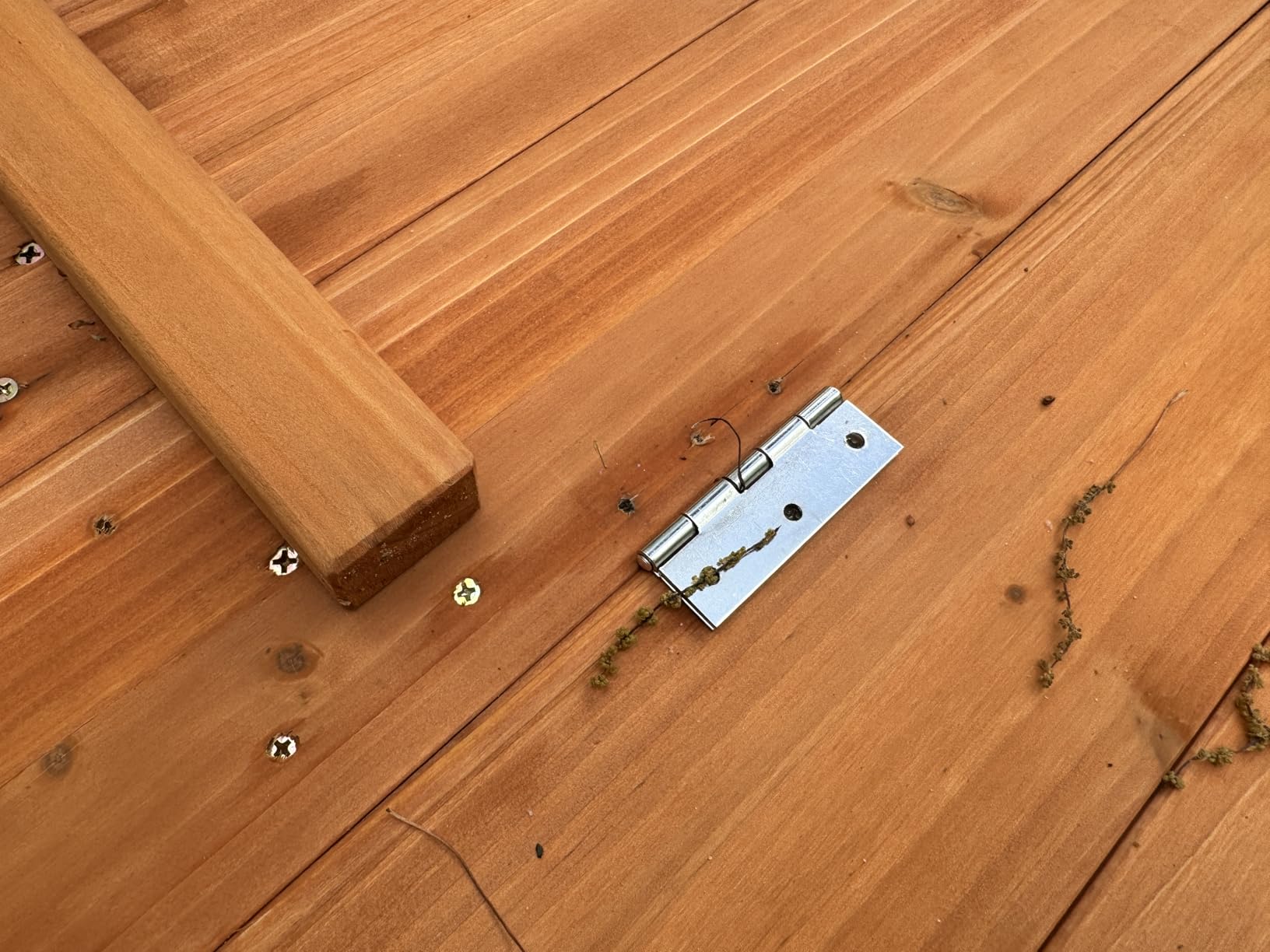
Weighing against those strengths, the hardware is the one weak link. Reviewers repeatedly report the supplied screws and latches loosening, and several owners fixed it with a stronger hinge pack within the first year. That is a ten-minute fix, not a reason to walk away, but budget for it.
Who this covered sandbox suits best
It suits a yard with two children, plenty of supervision time, and cats. The 47 inch square gives two kids room to dig and build without one standing on the bench, and the adult seating means someone can sit at the edge and watch instead of standing over their shoulder.
Who should skip it
Skip it if you want a canopy for midday shade in a yard with no tree cover. There is no roof here, only a lid, so summer sun protection has to come from where you place the box. It is also a poor match for anyone who cannot spend an hour on assembly with a second adult.
2. Aivituvin Sandbox with Retractable Canopy
Aivituvin Kids Sand Boxes with Canopy Sandboxes with Covers Foldable Bench Seats, Children Outdoor Wooden Playset – Upgrade Retractable Roof (47x47Inch)
Wood
47.2 x 47.2 x 51.9 in
45 lbs
200 lbs per bench
Ages 12 months and up
Pros
- Retractable canopy doubles as play shade and a closed cover
- Pre-drilled holes make setup straightforward
- Canopy detaches for rinsing
- Bottomless design drains well
Cons
- Canopy fabric fades or tears at the frame after a few months
- Uprights crack and bench hinge screws work loose
- Soft wood splits if screws are driven too fast
The canopy is the reason this box is interesting. It tilts up for shade during play and lowers flat to close the box, so one part does two jobs instead of you owning a shade sail and a separate tarp. Parents who bought it mostly for the cover tend to keep it for the shade.
At 51.9 inches tall it is a proper piece of yard furniture rather than a low tray. That height gives real sun protection through the middle of the day, and the bench seats with backrests mean an adult can sit upright at the edge. The 200 lb rating per bench is honest enough for one grown supervisor.
Assembly is the easy part. Pre-drilled holes and a straightforward parts list mean one adult can get it together without hunting for hardware mid-build, which is a genuine advantage over boxes that arrive with an unlabeled bag of screws.
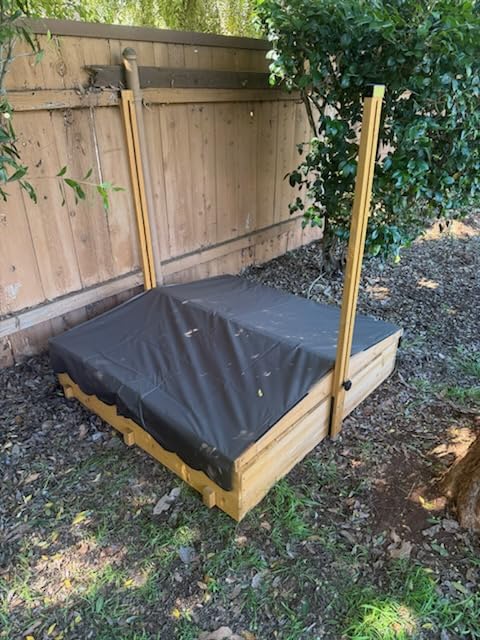
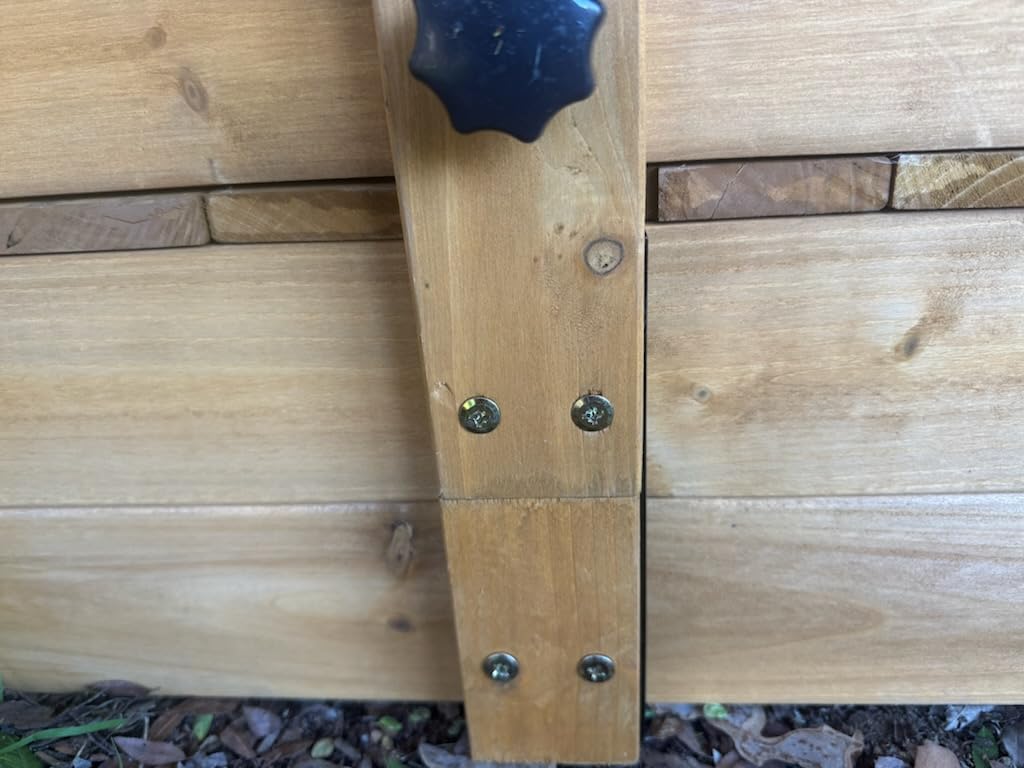
The weakness is everything touching the canopy. The fabric fades and eventually tears at the frame, the upright posts crack after roughly a season, and the bench hinges let go first. In other words, the shade mechanism is the part most likely to fail before the wood does.
It is also a fairly heavy box at 45 pounds, and the canopy is awkward to raise and lower alone. If you plan to move it for seasonal storage, plan for two people or accept that it stays where you put it.
Who this covered sandbox suits best
It suits a yard with no shade trees and a child who plays through the middle of the afternoon. A canopy sandbox with retractable roof is the closest thing in this group to a shaded play structure, and it handles a household that treats the sandbox as a daily destination rather than an occasional treat.
Who should skip it
Skip it if you live somewhere with strong seasonal winds and plan to leave the canopy raised. Posts crack, fabric tears, and a raised canopy is a sail. Parents who mainly want a sealed box and do not care about shade should look at a folding bench lid instead.
3. Badger Basket Cedar Sandbox with Lid and Benches
Badger Basket Cedar Sandbox with Lid & Benches – Outdoor Wooden Sandbox for Kids with Folding Cover – Large Backyard Playset (46.5 x 46.5 x 9.5)
Cedar
46.5 x 46.5 x 9.5 in
42.9 lbs
Holds about 750 lbs of sand
36 months to 12 years
Pros
- Well-rated build with a 4.4 average across 1144 reviews
- Sturdy cedar that survives multiple winters outdoors
- Folding benches convert to a protective lid
- Service replaces defective slats free years later
Cons
- Factory hinges are thin and reported to break within a season
- Routed hinge pockets are narrow for replacements
- Top slats have small gaps that let dirt and insects in
This is the most reassuring object in the roundup to walk up to in the yard. It is heavy at nearly 43 pounds, which sounds like a complaint until you realise a cover that weighs something is a cover that stays where you put it. The benches fold down and the sand is sealed under cedar.
Cedar again, with a rustic natural finish and no chemical treatment to worry about. Owners in cold climates report it holding its shape through multiple winters, which is the single hardest test a backyard sandbox has to pass. Badger Basket is also the only brand here that owners describe as sending a replacement slat free of charge years after the original purchase.
The sand capacity of about 750 lbs is worth pausing on. That is enough for two children to dig seriously, deep enough to build a proper castle wall, and it means the box keeps working as they get older instead of becoming a tray for a three-year-old.
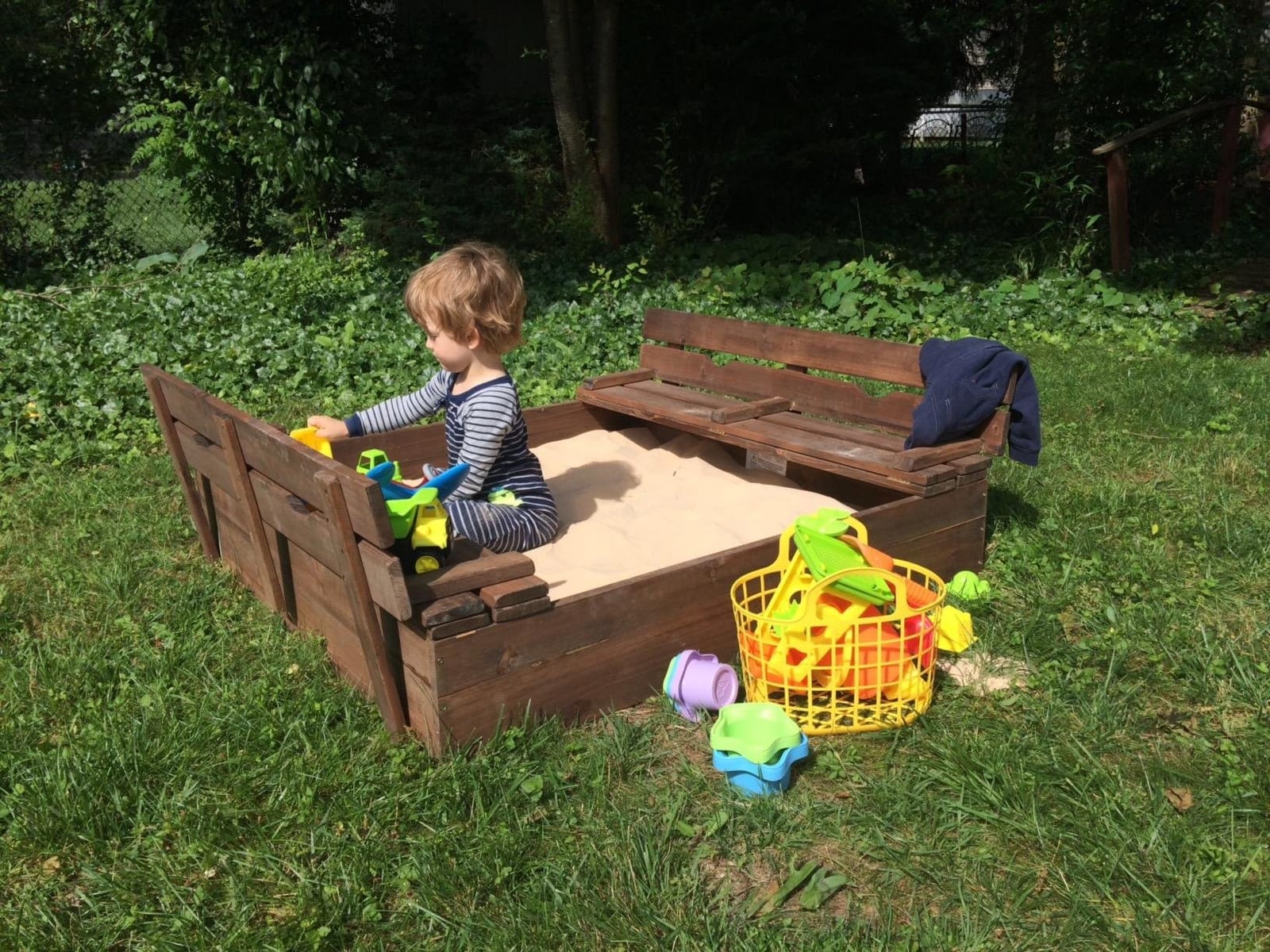
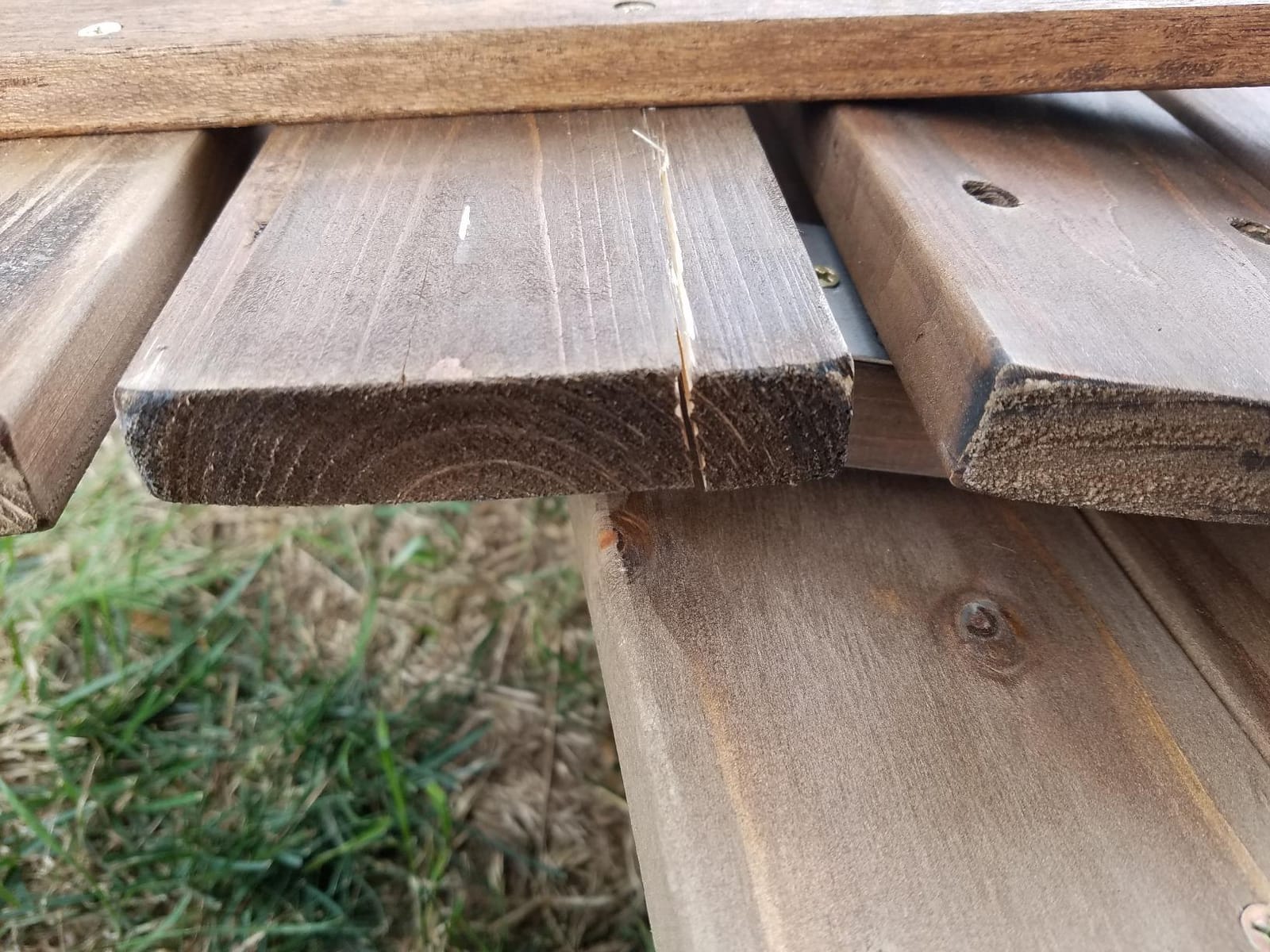
The hinge hardware is the near-universal complaint, and it is worth being specific. The factory hinges are thin stainless, and several owners replaced them within the first season. The routed pockets cut into the frame are narrow, so off-the-shelf replacement hinges may not fit without modification.
There is also a smaller issue: gaps between the top slats let fine dirt and insects reach the sand. If insects matter to you, this argues for pairing the box with a ground cloth and a fine mesh layer under the sand surface.
Who this covered sandbox suits best
It suits cold climates and buyers who plan to keep the box outside permanently. If your yard sees freeze-thaw cycles, deep snow, or a full season of neglect between uses, this is the covered sandbox most likely to still be standing in five years.
Who should skip it
Skip it if you want sun protection during play, since the lid is a lid and nothing else. It is also a harder lift than most, so a single adult without help should think twice about positioning it in a tight corner.
4. Mederra Cedar Octagon Sandbox with Cover
85”x78”x9” Wooden Octagon Sandbox with Cover, Large Sandpit for Kids Outdoor Patio Backyard Play, Easy & Quick Assemble
Cedar octagon
85 x 78 x 9 in
800-1000 lbs of sand
Seats 6-8 children
Ages 3 and up
Pros
- Largest play footprint in the group at 85 x 78 inches
- Four built-in benches for adults and kids
- Pre-cut pre-drilled cedar assembles in about 40 minutes
- Mesh liner keeps sand in while moisture escapes
Cons
- Cover is not tensioned and pools water unless weighted
- Canvas catches at the uprights and forms a catch pan
- Thin panels can split when predrilled holes misalign
The octagon footprint is the point of this box. At 85 by 78 inches it is the largest play area we compared, and with 800 to 1000 pounds of sand capacity it comfortably handles shared play rather than one child plus a supervisor.
The octagon shape is functional, not decorative. Every panel is a straight seating edge, so four built-in benches ring the box with no wasted corners and no gaps for a child to trip into. Angle iron posts join the cedar panels at the joints, which is the detail that keeps an oversized frame from racketing apart over a winter.
It also carries the strongest safety documentation in the group. The design meets ASTM, F963 and CPSIA standards, and the US patented octagon layout is a deliberate attempt to remove the sharp corner geometry that causes most sandbox scrapes.
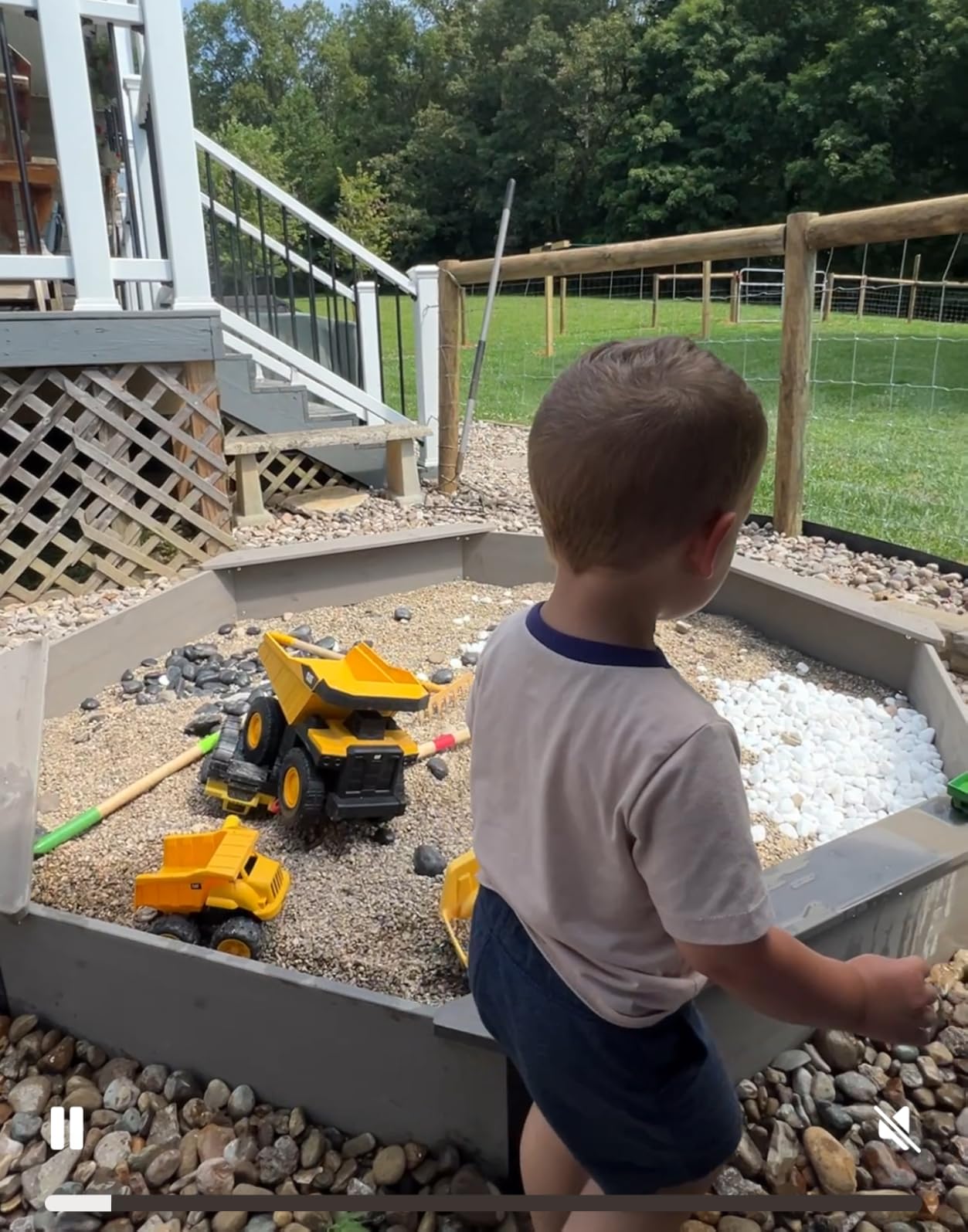
The cover is the honest weak point, and every owner figures this out the same way. It is not tensioned enough to shed water on its own, so rainwater pools in the middle and the cover lifts. The fix that works is weight: rocks, sandbags, or a couple of weights around the edge. The canvas also rides up on the uprights and makes a shallow pan rather than draining.
Assembly is quick when the predrilled holes line up, and a single adult reports finishing in roughly 40 minutes. Cedar quality varies a little between size variants, with the smaller versions drawing complaints about pale, soft wood. Check the corners for bark and knots before you fill it.
Who this covered sandbox suits best
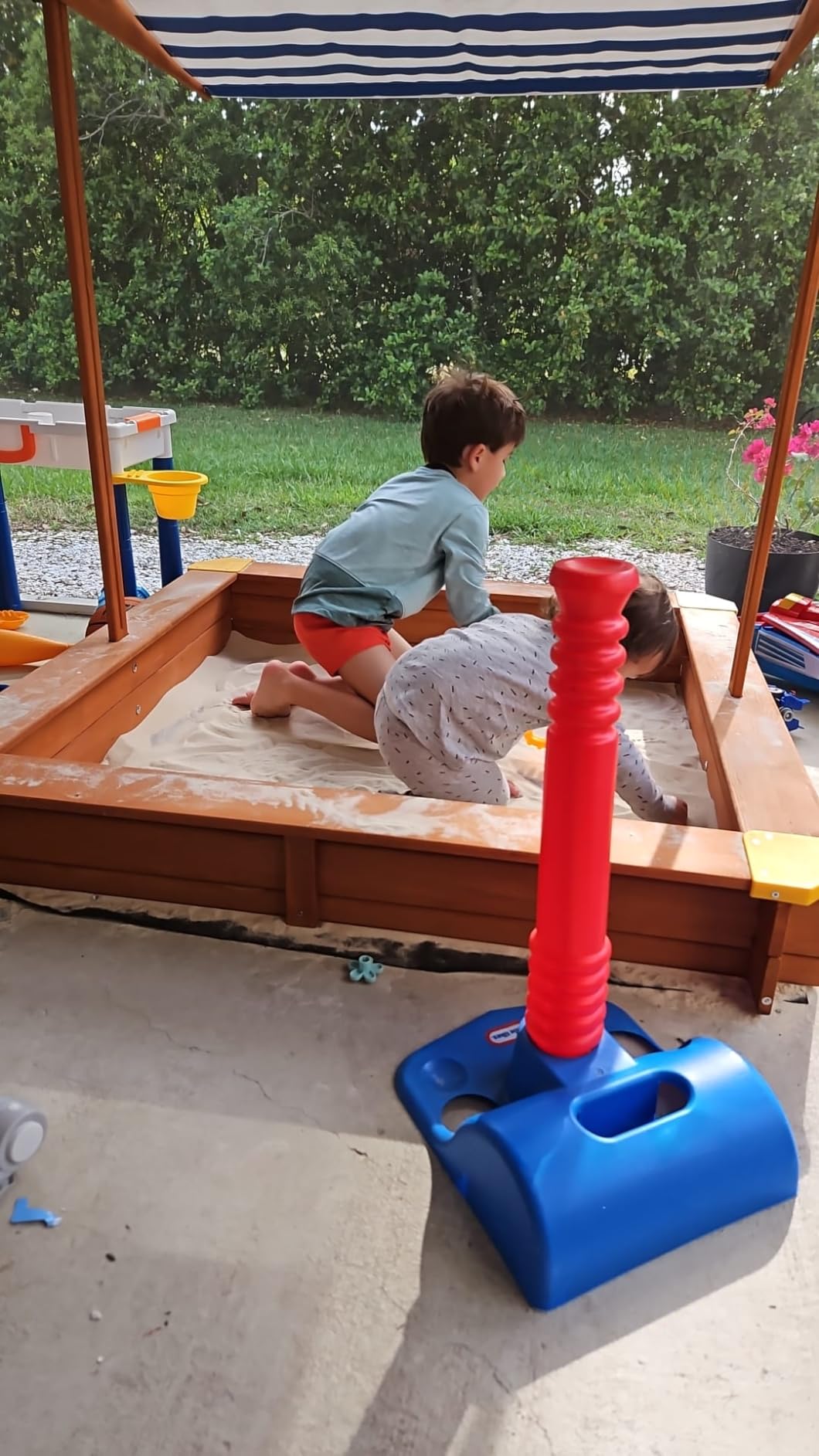
It suits a family with three or more children, or a yard shared with neighbours, where a 47 inch box would have children queueing. The 85 inch span also gives you room to dig down and build up in the same session, which is what keeps older kids engaged.
Who should skip it
Skip it for a small yard. At 85 by 78 inches it swallows a large share of the lawn, and it needs clear space around the perimeter to sit on the benches. If you have a windy site, be prepared to weight the cover every time it rains.
5. BIRASIL Wood Sandbox with Cover and Bench Seats
BIRASIL Wood Sandbox with Cover, Sand Box with 2 Bench Seats for Aged 3-8 Years Old, Sand Box for Backyard Garden, Beach Patio Outdoor (Natural Wood, 48 Inch)
Fir wood
48 x 48 x 48 in
42 lbs
200 lbs per bench
Ages 3 and up
Pros
- Generous 48 inch play area for several children
- Benches with backrests rated to 200 lbs each
- Canopy height adjusts to track the sun
- Smooth sanded fir with no barks
Cons
- Lowest average rating here at 4.0 with a share of one-star reviews
- Canopy fabric and frame wear out before the wood does
This one wins on a narrow but real advantage: it goes together fast. Owners report around 15 minutes with the included hardware, which makes it a good choice if assembly time is the thing most likely to stop you buying a sandbox at all.
Fir is the wood here, and it is sanded smooth with no barbs, which matters for a box that younger children climb into. The 48 inch square gives more interior room than most boxes in this group while the two backrest benches rated to 200 lbs each handle an adult sitting at the edge.
The canopy adjusts in height, so you can move the shade rather than rebuilding the whole structure when the sun shifts. Bottomless construction underneath means drainage and easy sand-depth adjustment, the same practical benefit the open-bottom cedar designs share.
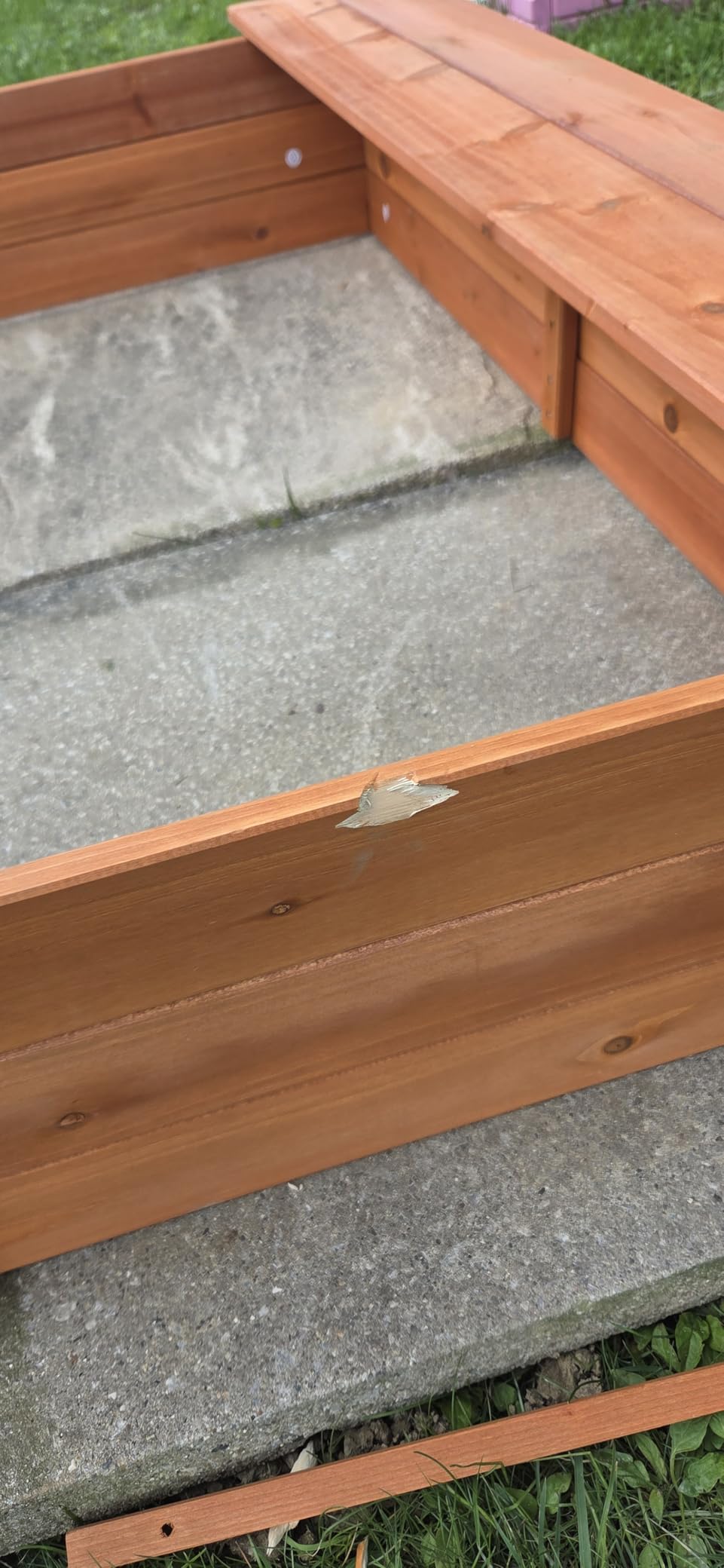
What holds it back is rating. This is the only 4.0-rated box here, with roughly a tenth of reviews at one star, and the recurring theme in those reviews is the canopy rather than the wood. The fabric and frame are described as the components most likely to wear out first on an otherwise serviceable box.
Fir is also a softer, faster-weathering species than cedar. If you want a box that overwinters without annual attention, choose a rot-resistant wood instead. This one is better suited to a sheltered spot under partial shade.
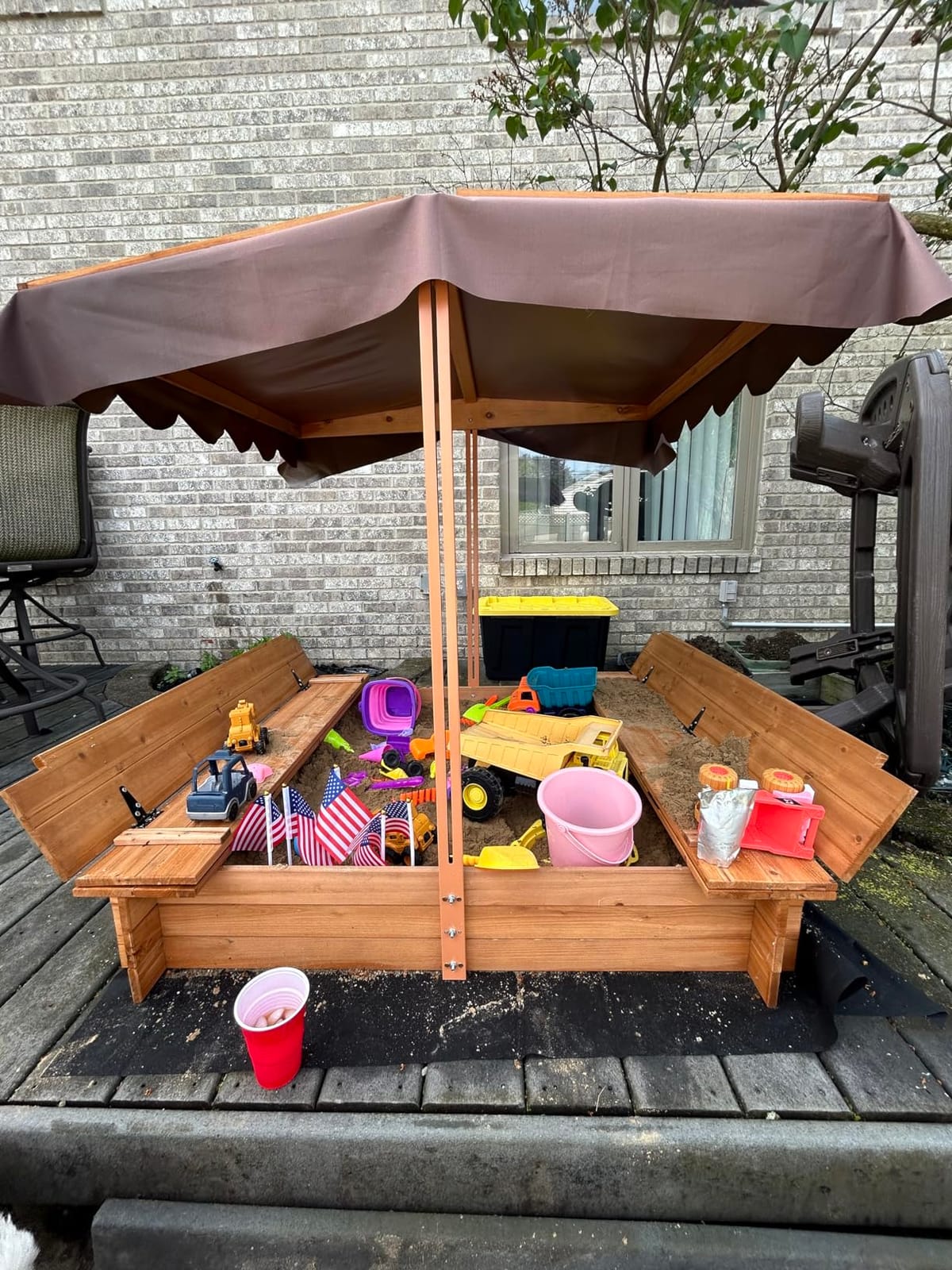
Who this covered sandbox suits best
It suits buyers who want a generous square footprint, adjustable shade, and a build they can finish in one sitting without calling a friend. The smooth finish and backrest benches also work well for a child who is still climbing rather than digging.
Who should skip it
Skip it if leaving the box outside through winter is part of the plan, or if you want the longest service life per dollar. At 42 pounds it is also not a one-person lift, and the canopy needs checking each season before you leave it raised.
6. Best Choice Products Octagon Sandbox with Lid
Best Choice Products Large Wooden Octagon Sandbox w/Lid for Kids, Brown
Heat-treated hemlock
78 x 78 x 9 in
36.5 lbs
Seats up to 8
220 lbs per bench
Pros
- Huge 78 inch octagon holds 18-20 bags of sand
- Edge seating fits four children at once
- Interlocked panels assemble in about 10 minutes with two adults
- Has held up through storms and falling branches
Cons
- Cover is not fully waterproof and the sand takes long to dry
- Water pools in the centre unless weighted
- Liner lets sand escape unless stapled from inside
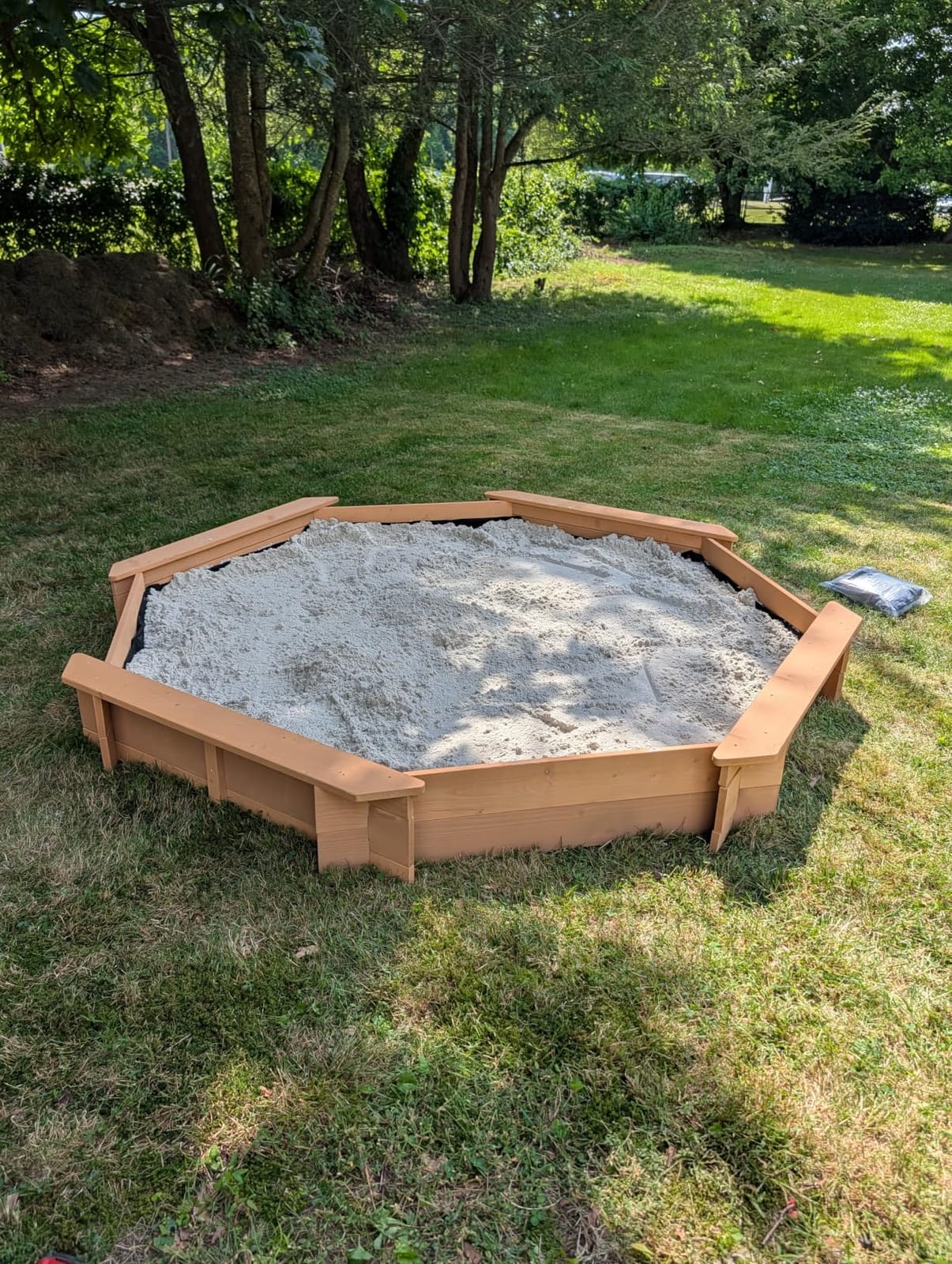
The interlocking hemlock panels are the engineering story here. Instead of butting boards against corner posts and hoping, the panels slot into each other at the joints, which is why owners describe a roughly 10 minute build with two adults and a frame that has stood up under falling branches.
At 78 inches square this is the second-largest box we compared, and owners load 18 to 20 bags of sand into it. Seating around the edges accommodates four children at once, with corner seats giving younger kids a place to sit out of the sand rather than in it.
Heat-treated hemlock is a solid middle ground between cedar and pine. It handles weather better than pine, weighs less than cedar, and the interlocked joint hides fasteners so there are fewer exposed screw heads for a splinter to come from.
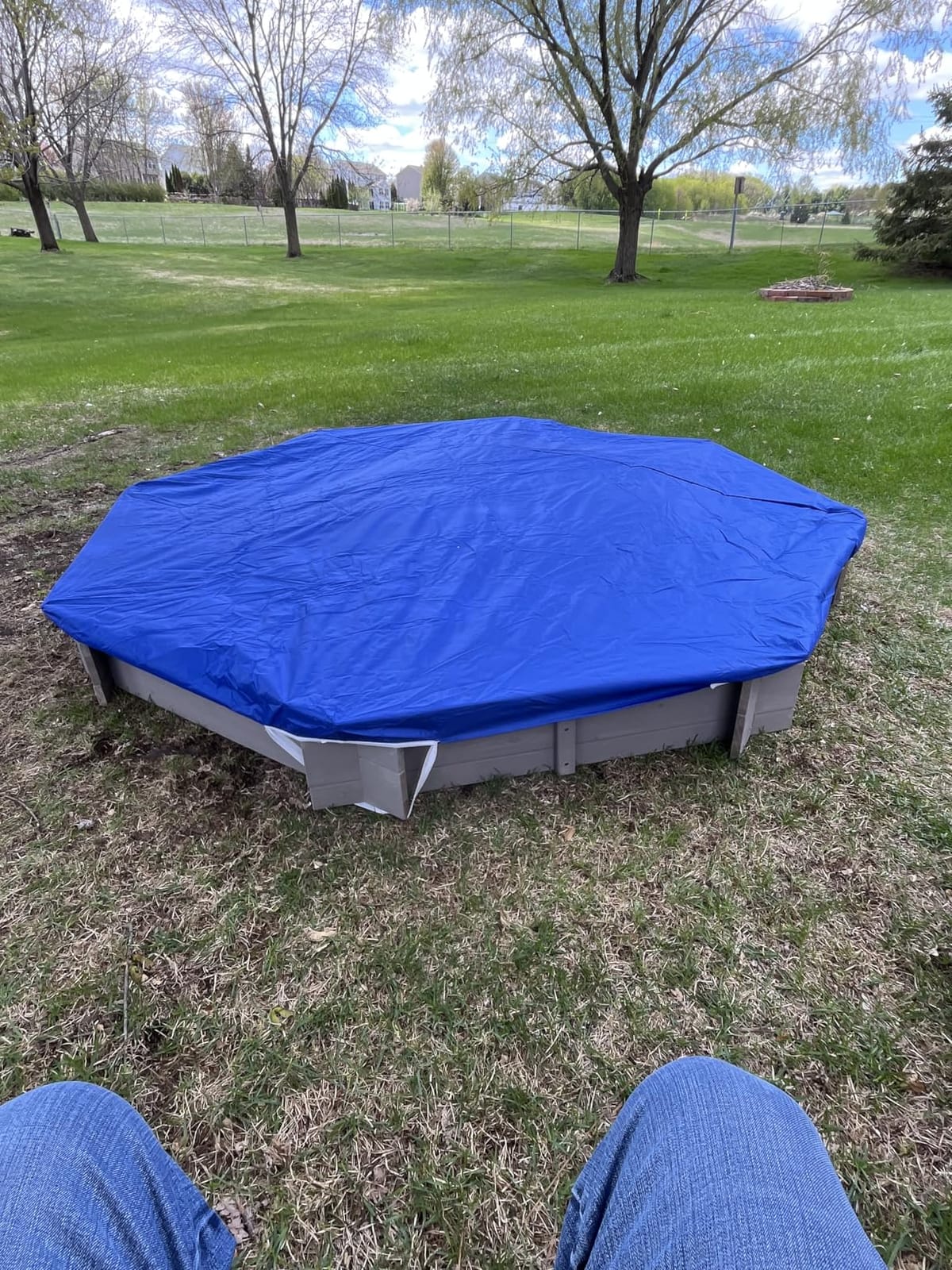
The cover is the recurring complaint, and it is worth reading carefully. It resists UV and sheds an ordinary shower, but in heavy rain water reaches the sand and then takes a long time to dry. Owners weight the centre with rocks or inflatables to stop pooling. There is also a liner fix: it needs to be attached from inside the box or sand slowly escapes.
Some owners also report cracking and wear appearing after the first winter outdoors. For a box intended to stay up permanently, budget for a stain refresh and treat the cover as a consumable part rather than a permanent fixture.
Who this covered sandbox suits best
It suits a family that plays together and wants a big sand area without a slow build. If you already know how to re-stain wood and are comfortable weighting a cover after a storm, the size and the fast assembly make this one hard to argue with.
Who should skip it
Skip it if you need a genuinely waterproof seal in a wet climate, or if nobody will put weights on the cover after heavy rain. It is also a large object at 78 inches, so the yard needs clearance around the seating edge.
7. YOLENY Sandbox with Lid and 420D Oxford Canopy
YOLENY Sandbox with Lid,Kids Sandbox with Cover Outdoor,Wooden Sand Box with 2 Foldable Bench Seats,Adjustable UV-Resistant Roof & Bottom Liner,Sand Box for Kids Ages 2-8, Perfect for Backyard,Beach
Treated spruce
43.7 x 43.7 x 43.3 in
47.8 lbs
UV50 canopy
Holds 250 lbs of sand
Pros
- Lid
- canopy and ground liner all included in one box
- 420D Oxford canopy rated UV50 rotates 180 degrees
- Benches rated to 200 lbs each with backrests
- Manual plus an installation video make setup approachable
Cons
- Smallest wooden footprint here at 43.7 inches
- Optional column and canopy hardware add assembly steps
- Holds 250 lbs of sand
- which is light for group play
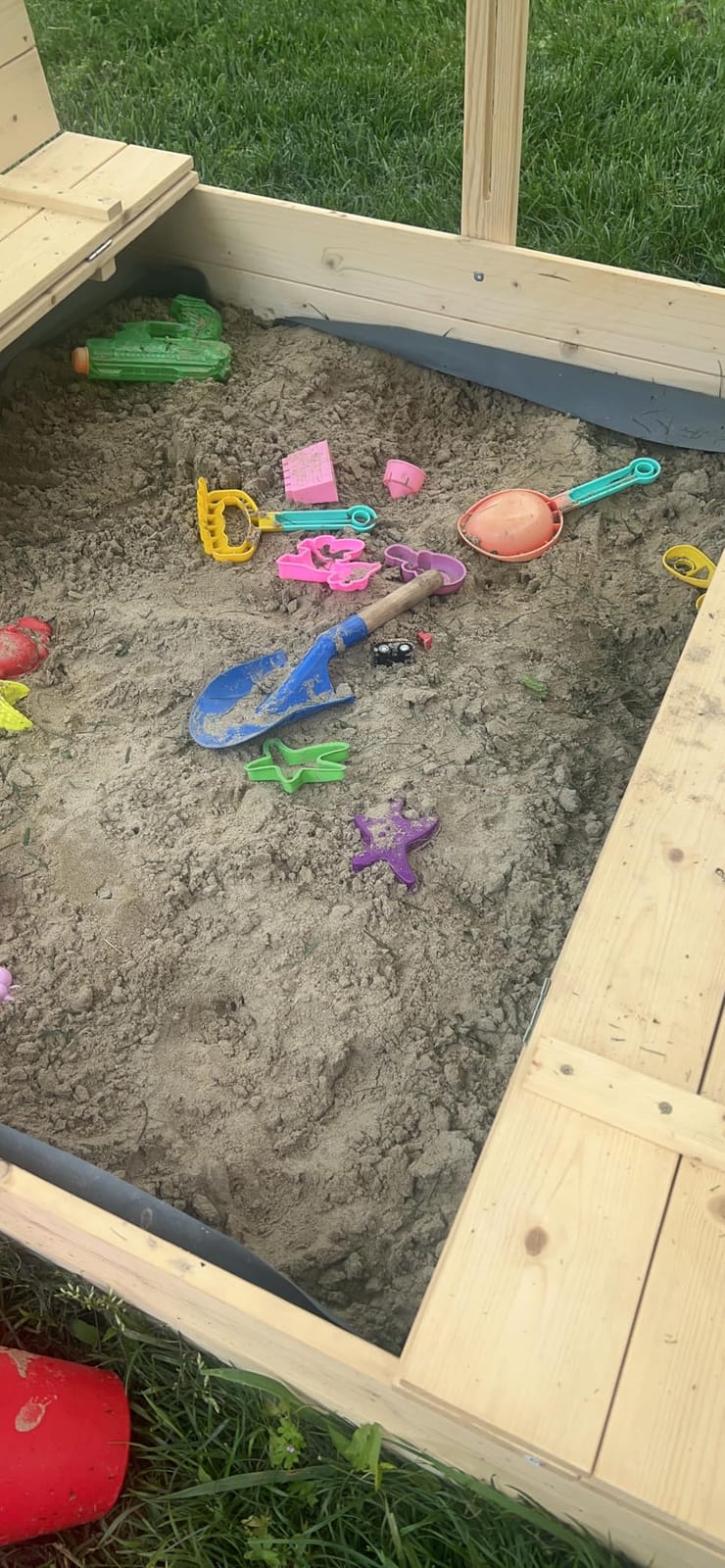
This is the box to look at if you want all three features, a lid, a canopy and a ground liner, without piecing your setup together from separate parts. The removable canopy column is a smart touch: take it out and the box drops to a low covered sandbox for cooler months.
The canopy fabric is 420D Oxford cloth rated UV50, which is a meaningfully heavier weave than the canvas used on cheaper canopies. It rotates 180 degrees, so you can swing the shade to whichever side needs it without rebuilding anything.
Treated spruce is smooth and holds up well outdoors, and the benches with backrests handle 200 lbs each. At 47.8 pounds it is one of the heavier units in the group, which again cuts both ways: solid, but awkward to reposition alone.
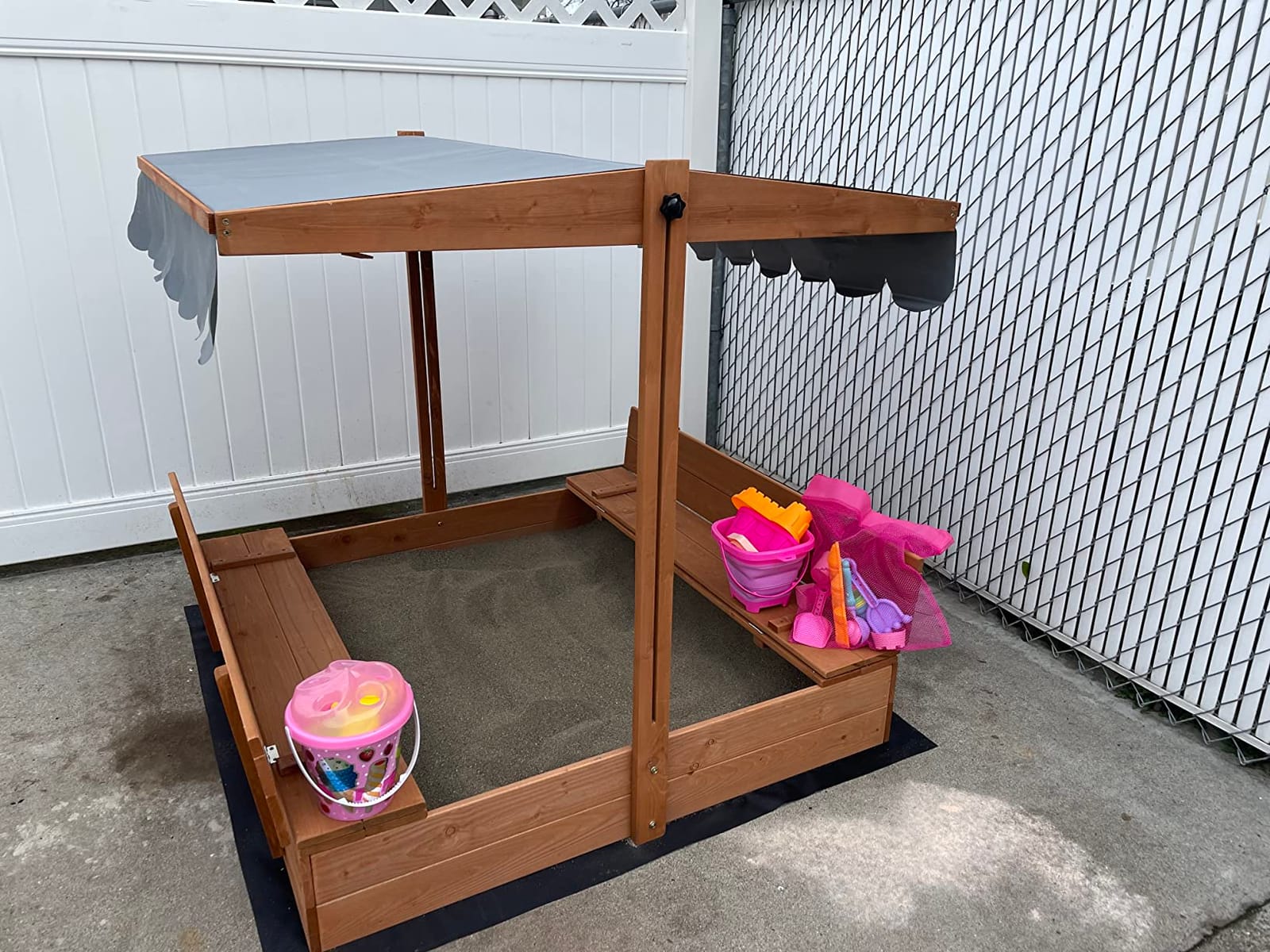
The stapled Oxford ground liner is the sleeper feature. It reduces sand leakage onto the lawn and blocks animals from burrowing up into the sand from below, which is a problem several open-bottom designs in this roundup leave unsolved.
Capacity is 250 lbs of sand, which suits one young child at a time, and the 43.7 inch footprint is compact enough for a smaller lawn. The detachable column adds a step to assembly that you should budget for.
Who this covered sandbox suits best
It suits a family with one or two young children who want shade in summer and a sealed box in winter. The removable column makes it a genuinely two-season piece rather than a fixed summer structure.
Who should skip it
Skip it for group play, since 250 lbs of sand runs out fast with three children in the box. If you need the box to move through the yard easily, the weight is a problem.
8. Agitree Wooden Sandbox with Lid, Canopy and Storage Bench
Agitree Wooden Sandbox with Lid and Canopy for Kids Ages 3-8, 47″ Outdoor Sand Box with Foldable Storage Bench Seats, Bottom Liner Included
Heat-treated fir and cedar
47.2 x 47.2 x 46 in
200 lbs per bench
Ages 3-8
About 30 minute build
Pros
- Only box here with a storage compartment built into the bench
- 360 degree rotating height-adjustable canopy
- Benches fold into separate cover panels that also seat
- Non-toxic water-based stain on smooth boards
Cons
- Highest price point in the group with a mid-pack 4.1 rating
- Twelve percent one-star reviews
- Closed cover sits lower so covered volume is smaller
The built-in storage compartment is the feature nothing else here has. Shovels, rakes, buckets and moulds live under the bench instead of scattered around the patio, and because the bench folds into a cover panel, the storage stays enclosed when the box is closed up.
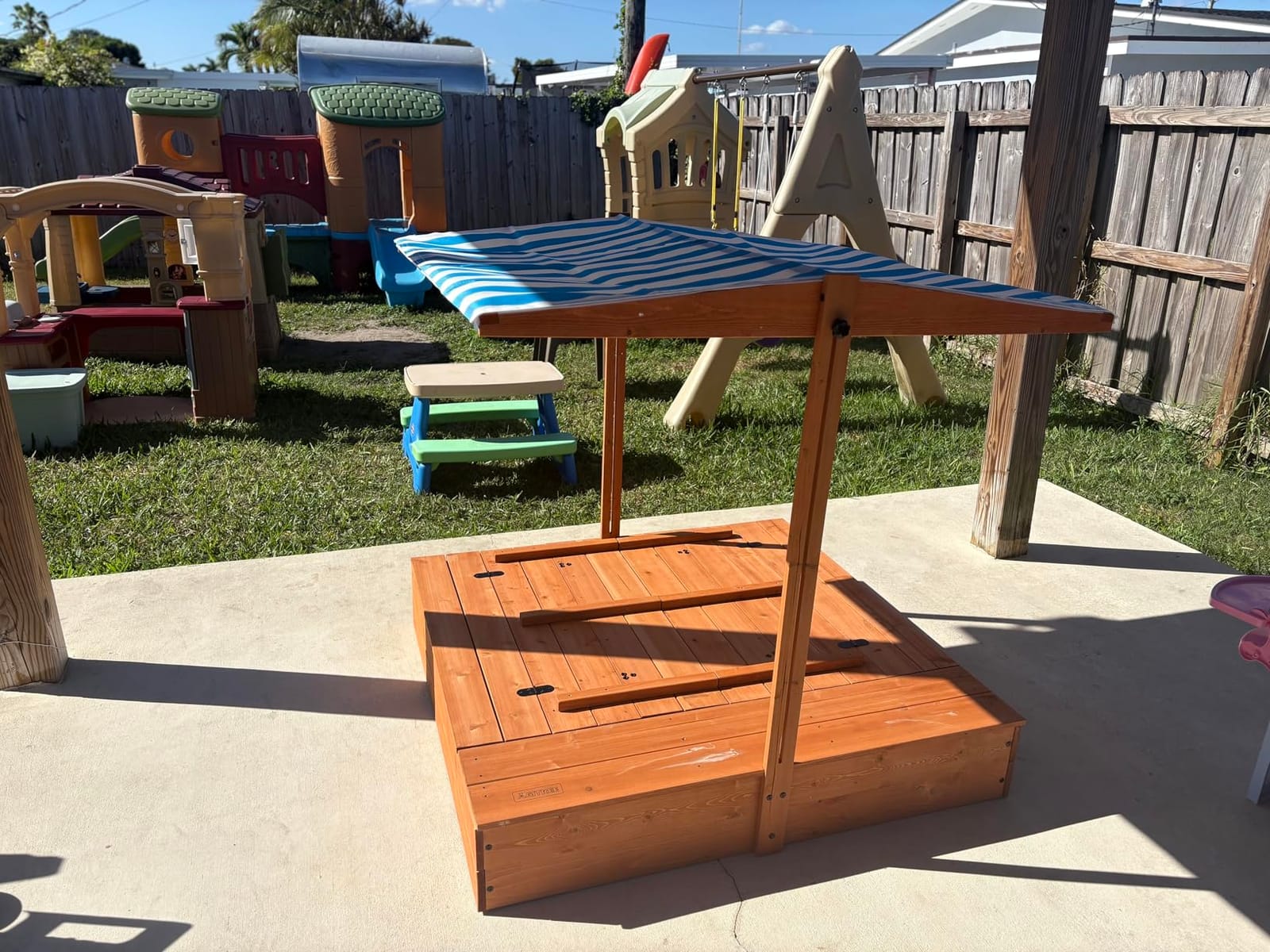
The canopy is also the most capable in the group. It rotates a full 360 degrees and adjusts in height, so shade follows the sun across the day without you repositioning the box. For a yard with no trees, that is the whole ballgame.
Materials are handled well. Heat-treated fir and cedar with a water-based, non-toxic stain means nothing unpleasant near a child who will inevitably put a splinter in their mouth. The boards are smooth and the stated build time is around 30 minutes.
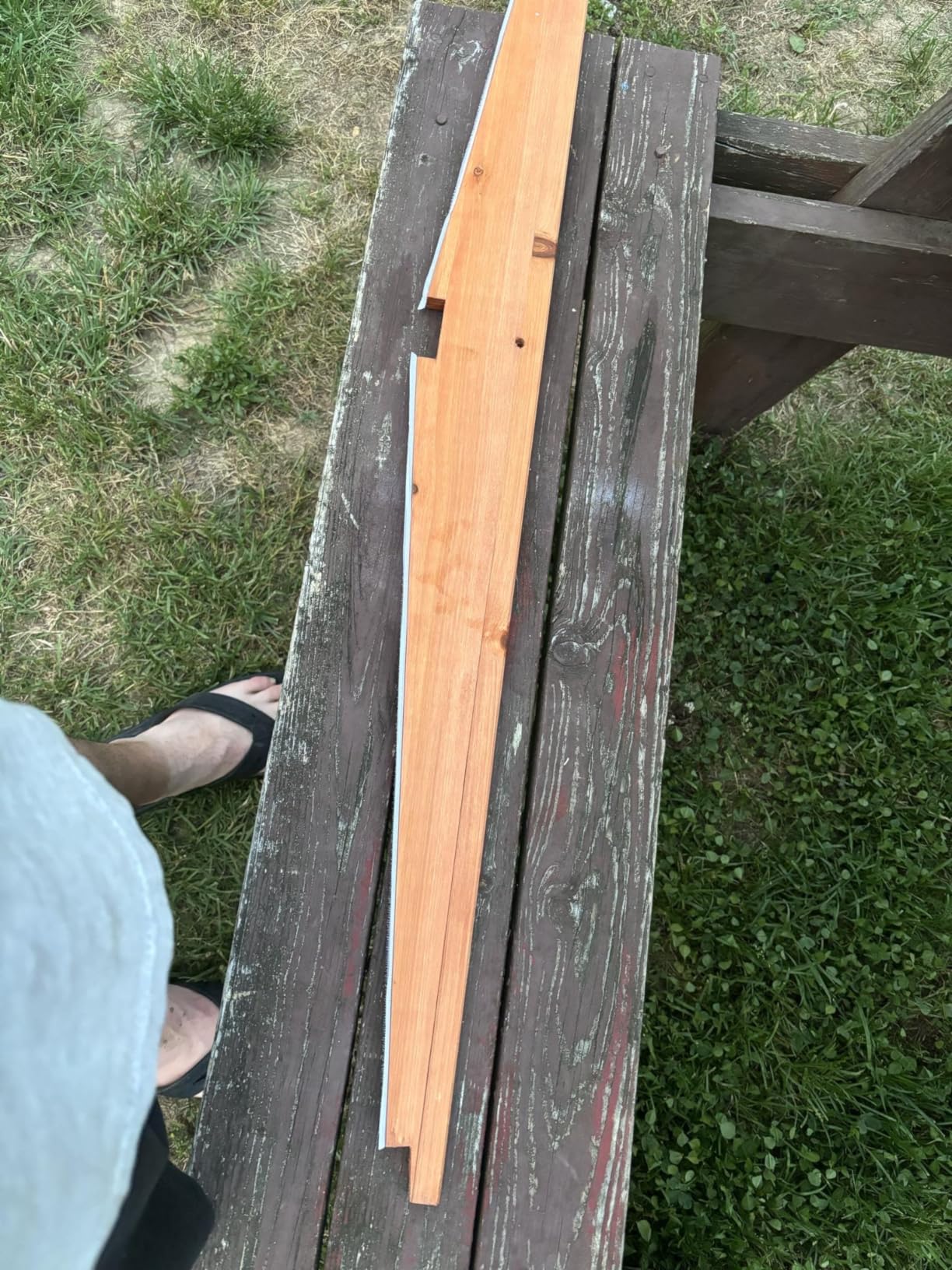
What gives us pause is the value equation. This is the most expensive box in the roundup and the rating sits mid-pack at 4.1, with twelve percent of reviews at one star. The complexity of running a cover and a canopy at once is the most-cited source of friction, which is a fair warning for anyone who wants a simple lid.
The closed cover height is also lower than the tall-canopy models, so the covered volume is smaller even though the footprint is comparable. You are trading interior headroom for the canopy mechanism.
Who this covered sandbox suits best
It suits a family who wants a single piece of outdoor furniture that does several jobs, storing toys, seating adults, shading children, and sealing the sand. If your patio currently has a toy problem, the storage bench is worth the step up.
Who should skip it
Skip it if you want the simplest possible cover. A folding bench lid has nothing to jam, and if you have already got a toy storage solution elsewhere in the yard, the premium here buys you less than it appears to.
9. Outsunny Wooden Sandbox with Lid and Canopy
Outsunny Wooden Sandbox with Lid Canopy for Aged 3-7 47X47 in Brown
Fir wood
41.7 x 41.7 x 45.3 in
Rated 36 months to 7 years
Removable benches
Non-woven liner
Pros
- Adjustable canopy blocks sun and keeps children dry in rain
- Removable benches free up play space when needed
- Detachable design makes assembly and seasonal storage quick
- Non-woven liner drains easily
Cons
- Some boxes arrive with three or four cracked wood pieces
- Canopy is stiff to raise and lower
- Canvas faded to dingy yellow within a week
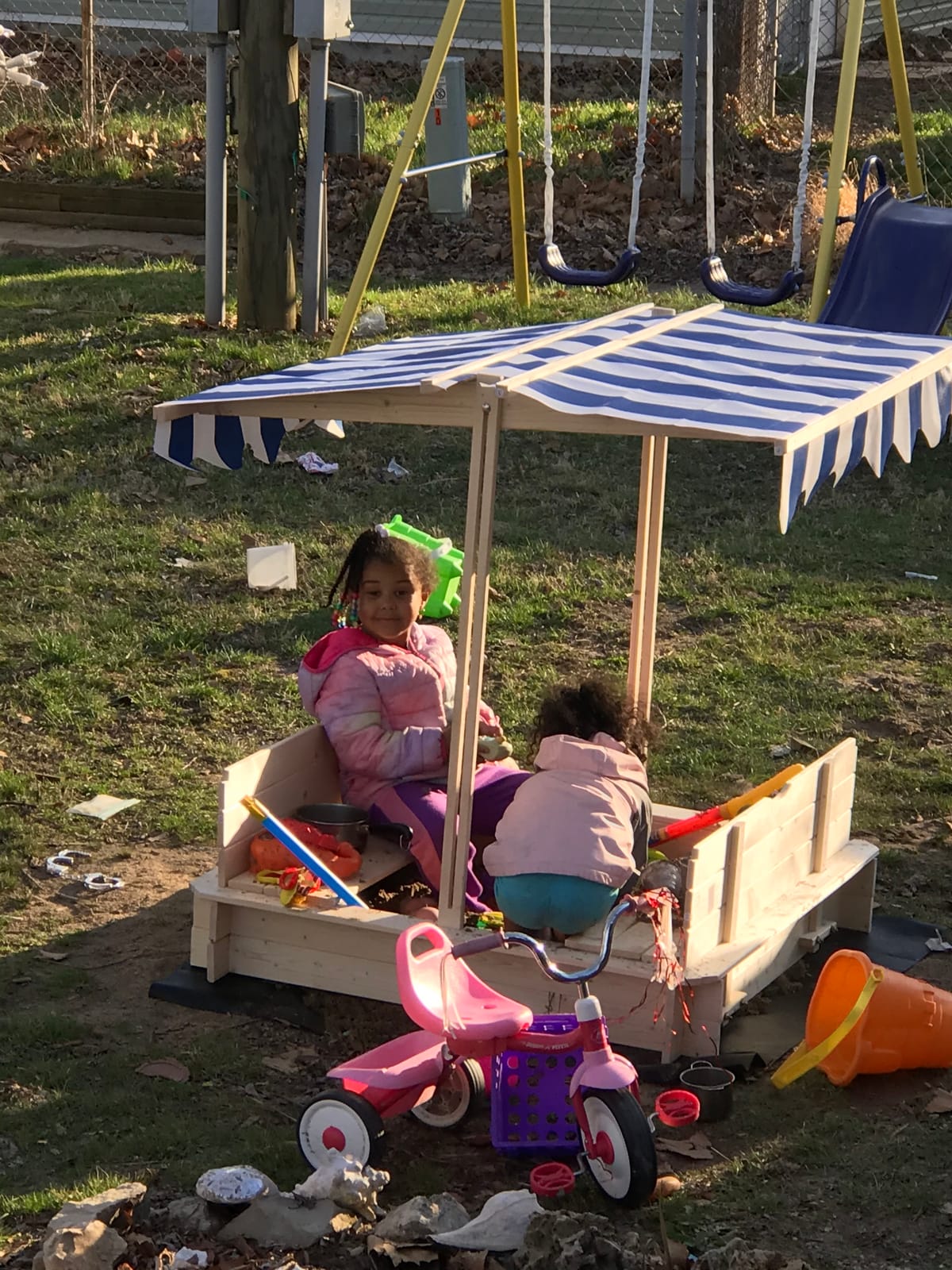
This is the most compact covered wooden box we looked at, at 41.7 inches square, and that is the entire argument for it. If your yard is small or your deck is the only flat space, this fits where a 47 or 48 inch box would dominate the space.
The removable benches are genuinely useful. Pull them out and you gain a noticeably larger continuous play area for a hot day; put them back and you have backrests for small children and a place for an adult to sit. The detachable design also means seasonal storage is a matter of taking it apart rather than dragging it.
Its age rating runs from 36 months to 7 years, which makes it a toddler and preschool box rather than a long-term fixture. The non-woven fabric liner secured by wooden plates is a sensible detail because it lets water drain rather than sitting in the base.
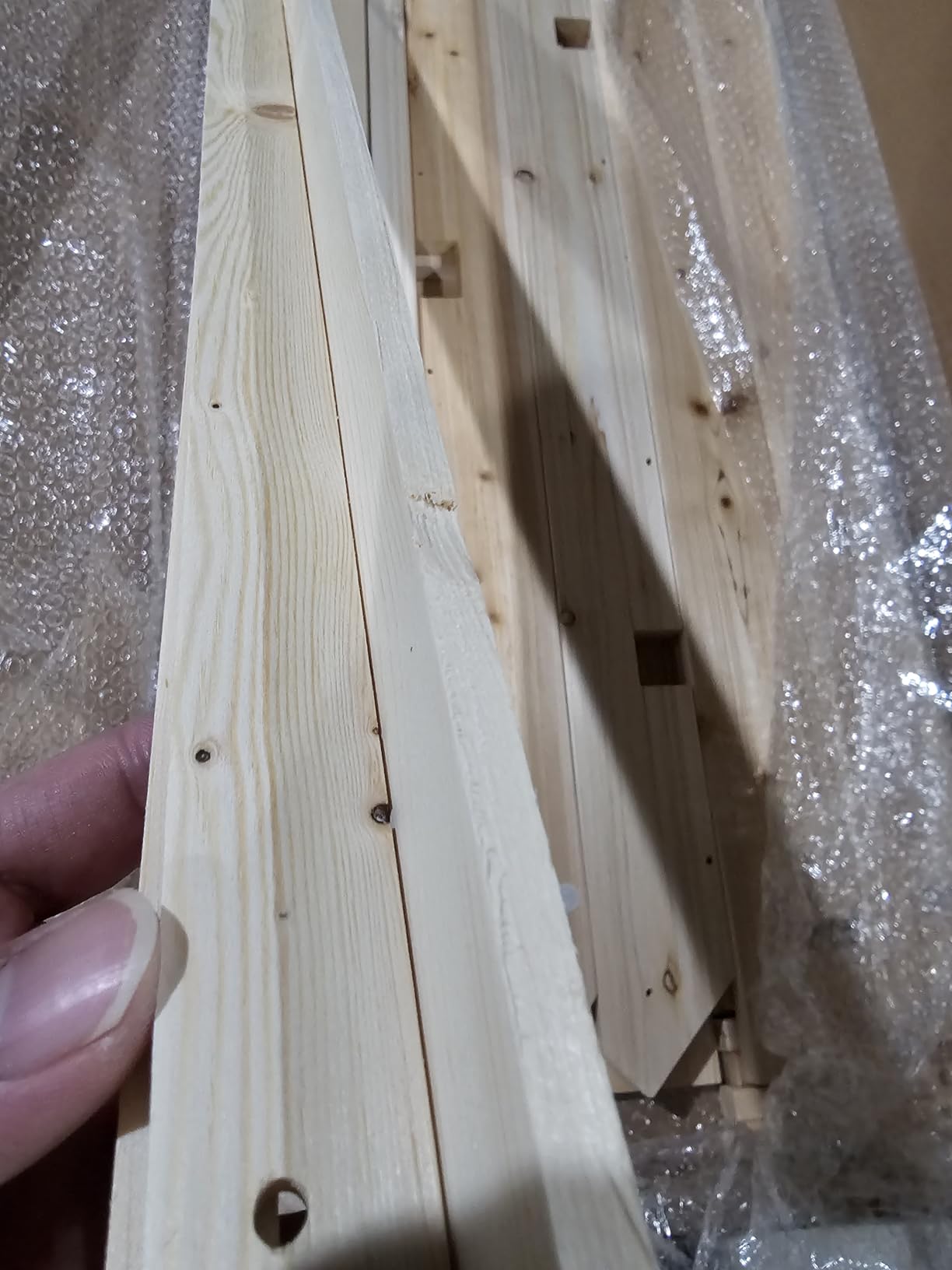
Quality control is the main issue, and it shows up immediately. Several buyers report boxes arriving with three or four cracked or damaged wood pieces, which is a fifteen-minute fix with glue but a bad first impression. The canopy is also stiff to operate, and the canvas faded noticeably within the first week.
That combination makes it a fair pick for a tight space but a risky one as a gift or a first sandbox. Inspect the boards before assembly and keep spare fasteners nearby.
Who this covered sandbox suits best
It suits a family with a toddler or preschooler in a small yard, patio, or deck where footprint is the deciding constraint. The removable benches help when a single child wants the whole floor of the box.
Who should skip it
Skip it if the box will stay up for years without inspection, or if you can accommodate a larger footprint. The cracked-board reports are common enough that you should not expect a flawless box on arrival.
10. Costzon HDPE Sandbox with Oxford Cover
Costzon Kids Sandbox with Cover, 4ft x 4ft HDPE Sandpit with Oxford Cover, Bottom Liner, 4 Corner Seats, Weather Resistant Outdoor Sand Pit for Backyard Lawn Garden Beach (Dark Brown)
Molded HDPE
48.5 x 48.5 x 12.5 in
27 lbs
Four corner seats
ASTM and CPSIA certified
Pros
- No wood means no splinters and no rot
- Assembles in under 10 minutes using metal casings
- Light enough at 27 lbs for one adult to move
- High 12.5 inch walls let a child sit inside
Cons
- Cover is undersized and slips off in heavy rain
- Perforated liner holes let sand spill onto turf
- No solid floor
- so it is four walls plus seats
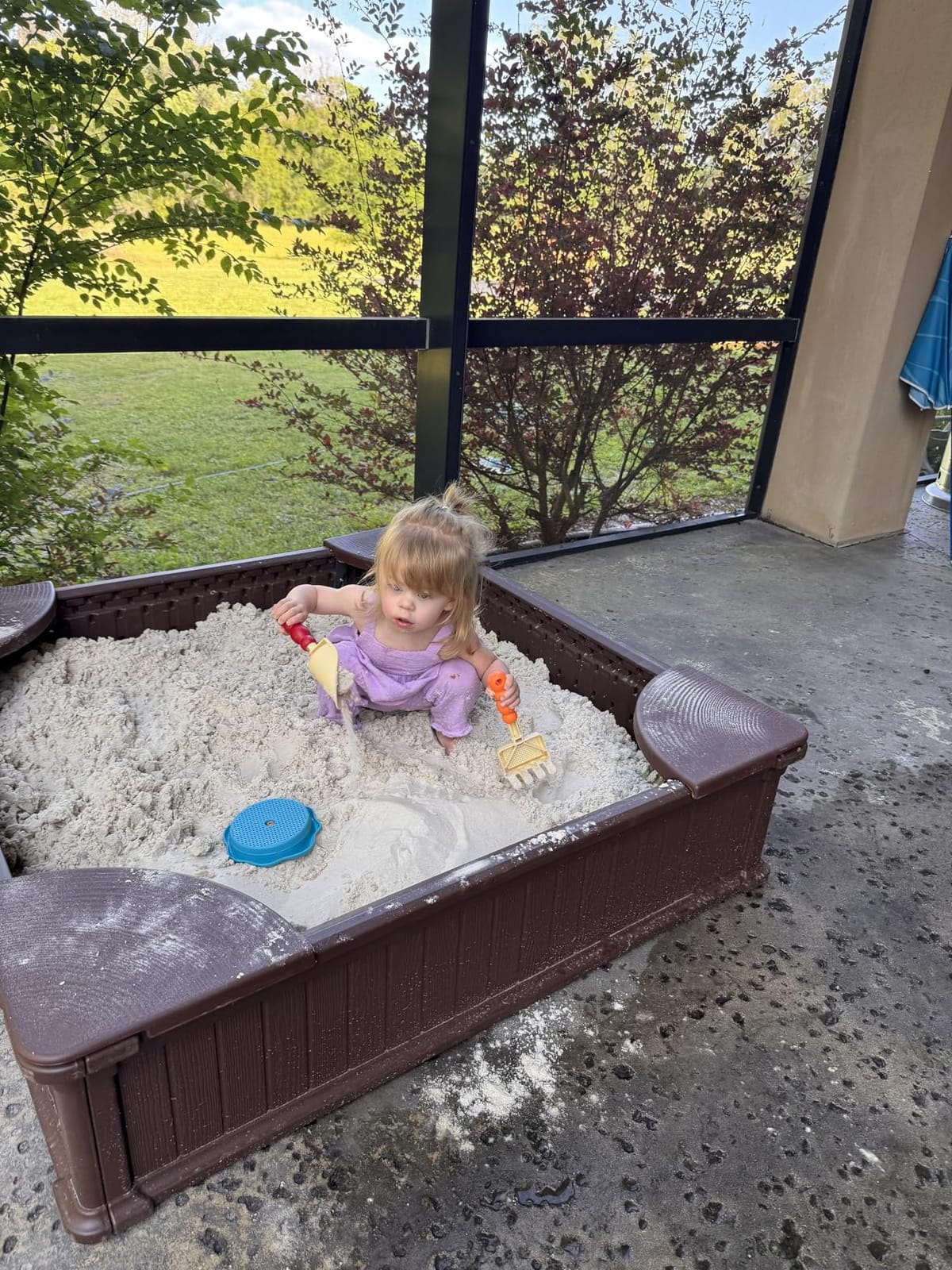
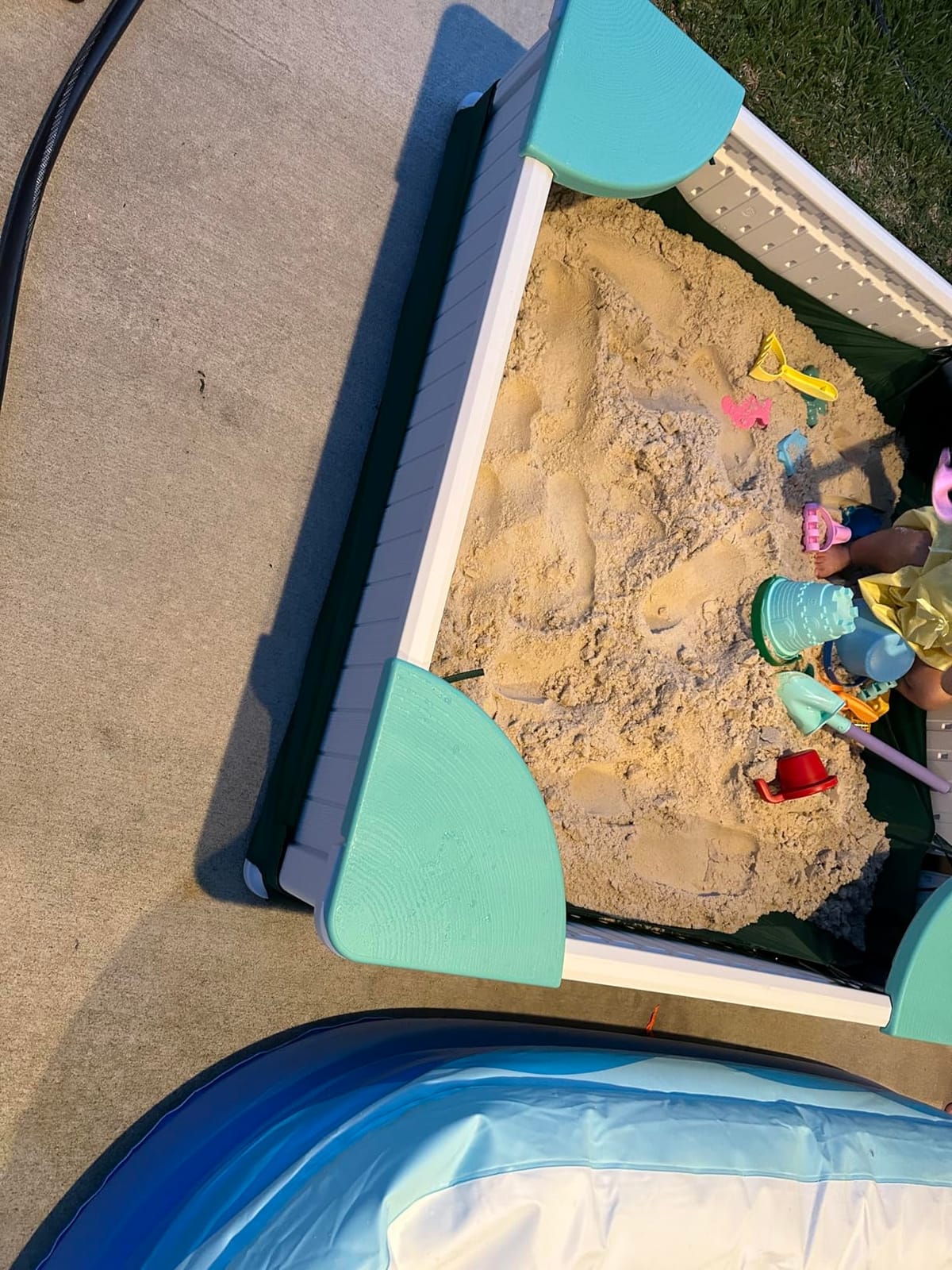
This is the one to buy if wood is not an option. Molded HDPE has no grain to splinter, no finish to peel, and no rot to worry about, and at 27 pounds it is the only box in this roundup one adult can reposition without help.
Assembly is its strongest feature by a wide margin. Metal casings on the screw points mean fasteners never strip in plastic, so owners report finishing in under ten minutes. It is also one of only two boxes here carrying ASTM and CPSIA certification.
The 12.5 inch walls are taller than the wooden boxes in this group, which lets a child sit inside and play rather than perching on the edge. Four corner seats rated to 110 lbs each give the adults a place to sit, though at a lower rating than the wooden benches.
The cover is where it falls short of the wooden boxes. The Oxford cover with hook and loop fasteners is undersized, slips off, and does not shed heavy rain, with several owners replacing it with a larger tarp. If cats are your concern, budget for a proper tarp from the start rather than trusting the supplied one.
The perforated bottom liner also lets sand escape onto the lawn unless you lay landscaping fabric underneath, and there is no solid floor at all. One buyer repurposed the box as a raised planter, which is a genuine alternative use, but it is not a sand-retaining floor.
Who this covered sandbox suits best
It suits families living somewhere with no cedar, fir or spruce available, or anyone who wants zero wood maintenance. It also works for a child on a deck or patio, where the light weight and short build are decisive.
Who should skip it
Skip it if your main worry is keeping sand dry and clean, because the cover is the weakest part. Anyone living in a cat-heavy area should assume they are buying a separate tarp within a season.
What Is the Best Material for a Sandbox Cover?
For most backyards, a rigid lid that folds or hinges shut beats fabric every time. Fabric blocks leaves and drizzle but not determined cats, and it collects water where it sags. A solid panel seals, sheds rain, and cannot be lifted by a five-pound animal, which is why several of the ten picks on this list use folding benches as lids.
The trade-off is that rigid covers cannot give you sun protection during play. If shade matters more than sealing, a convertible canopy that lowers flat is the compromise most families end up buying.
Folding wood bench lid: Seals completely, doubles as seating, heavy enough to stay put in wind, needs no extra hardware. The best all-round answer.
Molded plastic lid: Seals tightly and shrugs off weather, but adds weight and cost to a box that is otherwise portable.
Adjustable canopy: Best for shade while playing, weaker as a seal. Look for a fabric rated UV50 in 420D Oxford or heavier, and a frame that lowers flat.
Poly tarp: Cheapest and fully waterproof, but it flutters, tears at eyelets, and has to be weighted. Fine for a retrofit, unsatisfying as a daily solution.
Canvas: Breathable and more forgiving than poly, but it absorbs water and eventually stretches out of shape.
Marine-grade vinyl: The most durable fabric option, resists UV and mildew, and is the one to choose for a permanently exposed box.
Do You Actually Need a Sandbox Cover?
You need a cover if you have neighbourhood cats or wildlife, children under about five who play unsupervised, trees overhead, or a yard exposed to wind-driven rain. Those four conditions cover most backyards, and in each case the cover is doing real work rather than decorating the box.
A cover is optional if you have one older child, a fully fenced yard with no cats in it, and partial shade from a tree that keeps the sand cool anyway. In that situation you can get the same play value from an uncovered box and save the money, or put the savings into a deeper fill of good sand.
Skip the cover entirely if nobody will maintain it. A cover that sits half on, pools water, and gets left there grows the exact bacteria and mould problem you were trying to avoid. A simple cover used consistently beats an expensive one abandoned on day one.
How to Choose a Covered Sandbox: Seven Things to Check
Start with the cover, because it is the feature you asked for. Check whether it latches, hinges, or simply rests, and whether it seals flat or leaves a gap. A quarter-inch gap is enough for rain, insects, and a determined cat, so treat any advertised cover that slides rather than latches as decoration.
Second, pick the wood by where the box lives. Cedar, larch, robinia and Douglas fir are the rot-resistant choices, and cedar is the most common. Fir and spruce work well in a sheltered spot but want an annual stain. If you have no access to rot-resistant timber, molded HDPE removes the question entirely.
Third, size it to the number of children. Roughly 47 to 48 inches square suits two children, and anything from 78 inches up is built for group play. Manufacturers rate sand capacity in pounds, which is the more useful number: a box for one toddler holds about 250 lbs, while a shared box needs 800 lbs or more.
Fourth, plan the fill. A 47 inch box needs roughly 20 bags of play sand, and sand is a repeat purchase rather than a one-off. Buy sand designed for play, not builders sand or anything containing crystalline silica, and avoid play areas where children are likely to put damp sand in their mouth.
Fifth, check how it handles the sun. A canopy or a box placed under partial shade is the difference between a sandbox used at noon and one abandoned in the afternoon. Sixth, look at assembly: pre-drilled holes and interlocked panels take 10 to 30 minutes, while unlabeled bags of screws can cost you an extra trip to the hardware store.
Seventh, plan for the cover in wind. Lightweight fabric lids need weights, and the three most common failure reports in this category are a cover pooling water, a cover lifting off, and hardware loosening at the hinges. Budget an afternoon after your first season to re-tighten, re-stain, and replace a cover fabric that has faded.
If you are also thinking about the rest of the yard, our guides to backyard fireplaces and outdoor speakers cover the other two things families usually add to a play area.
How to Cover a Sandbox You Already Own
If you already built or bought a bare wooden box, the retrofit path is quicker and far cheaper than replacing it.
Measure the top frame exactly and add four inches of overhang on every side so the cover extends past the edges rather than stopping at them.
Choose a marine-grade vinyl or heavy poly tarp and cut it to size. Canvas stretches and stops sealing within a season, which defeats the purpose.
Stap or screw the cover to the top rail on all four sides, or build a shallow frame from furring strips that clamps over the box for airflow underneath.
Add two or more grommets and bungee cords so the cover can be tensioned downward in wind rather than relying on its own weight.
Cut or remove the centre of a solid lid if you want both a sealed layer and airflow, and lay mesh underneath to stop insects reaching the sand.
The reason to allow airflow is hygiene. Pediatric guidance reported by The Bump is to let wet sand dry fully before covering it, and a sealed cover over damp sand is how bacteria and mould get a start. A covered box that breathes is a covered box you can leave closed for a week.
How to Keep a Sandbox Cover On in Wind and Storms
Lightweight covers lift in a stiff breeze, and a lifted cover is worse than no cover because it dumps wet sand and debris across the yard. The fix is always the same: tension, then weight.
Tension it first. A cover that is pulled taut resists wind. Loose fabric flutters and generates lift, so use grommets, bungee cords, or ratchet straps rather than draping.
Weight the centre, not just the edges. A shallow pool of rainwater in the middle of a flat cover creates lift, so place a few flat rocks or a bag of sand in the middle as well as along the edges.
Anchor the cover itself for storms. A lid that hinges on the box can be lashed down with a ratchet strap over the top, which stops it being lifted off the frame entirely.
Lower canopies before bad weather. A canopy that has been raised all week is a sail when the wind arrives, and posts crack under the load.
The same idea applies to other covers around the yard. Our picks for motorcycle covers and ATV covers exist for the same reason, and the wind-rating logic is identical.
Frequently Asked Questions
What are the best sandboxes with covers?
The best sandboxes with covers are the ones whose lid seals flat rather than draping. Folding bench lids in solid wood give the tightest seal and double as seating, while convertible canopies add sun protection during play. Our top pick is the Best Choice Products cedar box, which folds two 220 lb benches into a split cover, and the Badger Basket cedar model is the stronger long-term build.
Should sandboxes be covered?
Yes, if you have neighbourhood cats or wildlife, children under five playing unsupervised, trees overhead, or a yard exposed to wind-driven rain, because a cover stops litter, leaves and rain from reaching the sand. A cover is optional for one older child in a fully fenced, cat-free yard with partial shade. Skip it entirely if nobody will maintain it, because a cover left wet and half on grows mould.
What is the best material to use for a sandbox cover?
A rigid lid that folds or hinges shut is the best material for most backyards because it seals, sheds rain, and cannot be lifted by a cat. For a cover that gives sun protection during play, choose a convertible canopy in 420D Oxford rated UV50 or marine-grade vinyl. Poly tarp is the cheapest full waterproof option but needs weights to stop it flapping and tearing.
Can I make a DIY sandbox with a cover?
Yes, and for an existing box the retrofit is faster than a new build. Measure the top frame, add four inches of overhang, and staple a marine-grade vinyl or heavy poly tarp to the top rail on all four sides. Add grommets and bungee cords so it can be tensioned in wind, and keep a gap or mesh layer for airflow so damp sand can dry out.
How much sand do I need to fill a sandbox?
A 47 inch covered box needs roughly 20 bags of play sand, which is about 750 to 1000 pounds depending on depth. A small 43 inch box for one toddler needs closer to 250 pounds, while a large 78 to 85 inch octagon for group play wants 800 to 1000 pounds. Buy play sand rather than builders sand, and avoid products containing crystalline silica.
Can mold grow in a sandbox?
Yes, and a cover is often what causes it. Sealing a lid over damp sand traps moisture and warmth, which is ideal for bacteria and mould, so let wet sand dry fully before closing the cover and allow airflow underneath whenever possible. A ground liner beneath the sand also blocks animals burrowing up into the play area.
What type of wood is best for building a sandbox?
Cedar, larch, robinia and Douglas fir are the rot-resistant choices for a sandbox that stays outdoors, and cedar is the most widely available. Fir and spruce work in a sheltered spot but want an annual stain to keep out moisture. Avoid untreated pine, and if you have no access to rot-resistant timber a molded HDPE plastic box removes the question entirely.
What to use instead of a sandbox?
A water table gives the same digging and pouring play without any sand to track indoors. A digging pit with loose fill is a good alternative for older children, a play kitchen suits indoor or covered space, and a playset with an integrated sandbox area keeps everything in one footprint. For small yards a water table is usually the best substitute.
Final Verdict: The Best Sandboxes With Covers for Backyards in 2026
After comparing all ten, the Best Choice Products cedar box with folding bench cover remains our pick of the best sandboxes with covers for backyards. It is the most-reviewed box in the group, the cover is the lid rather than an add-on, and the hardware complaints that owners report have a cheap ten-minute fix.
Buy the Mederra cedar octagon if more than two children use the sandbox, and the Badger Basket if your yard overwinters and you want the most durable build. Add a canopy, as on the Aivituvin or Agitree, only if your yard lacks shade trees, and skip the HDPE option unless avoiding wood entirely matters more to you than getting a tight cover seal.