
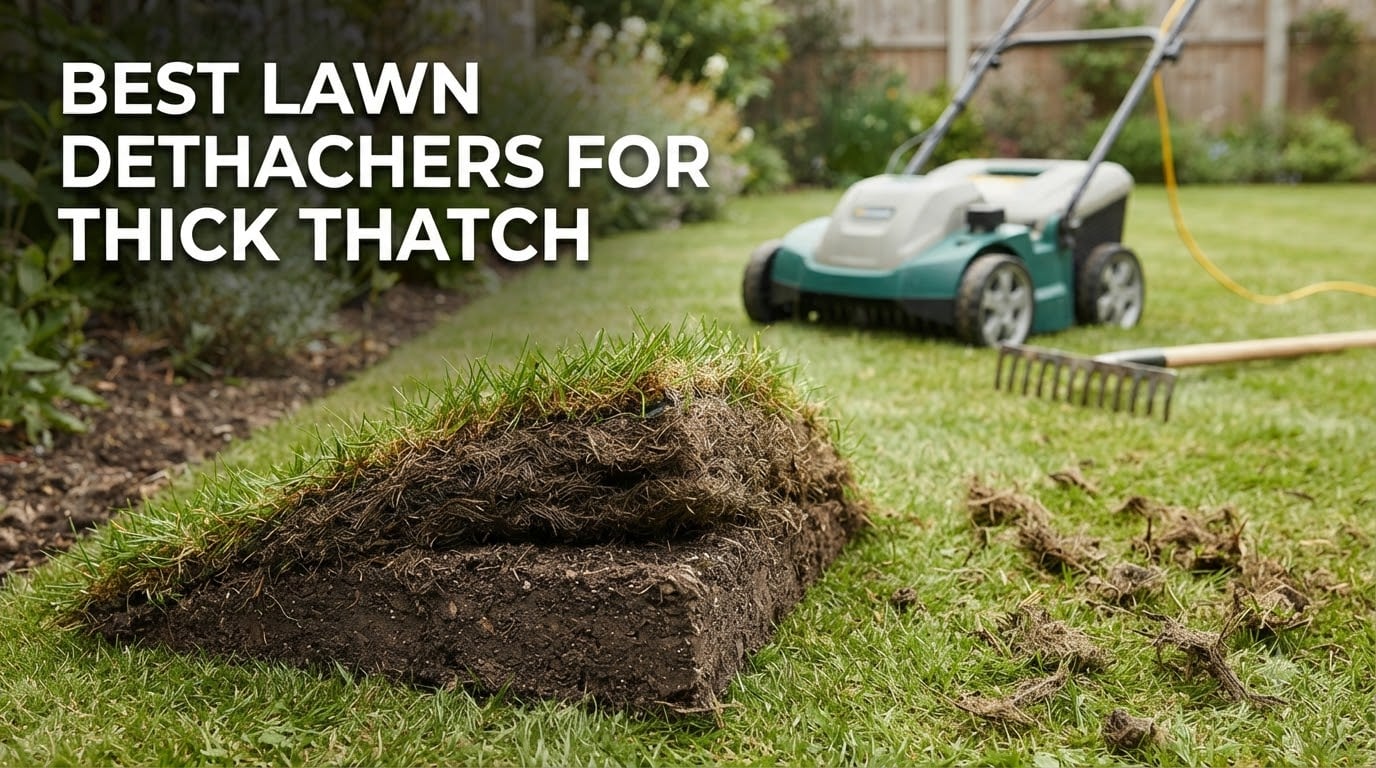
If your lawn feels spongy underfoot and the mower wheels disappear past the hubs, you are not short on opinions. You are short on information. The honest answer on the best lawn dethatchers for thick thatch is that the machine matters far less than the measurement you take first. Cut a wedge of sod, read the cross-section, and the decision usually makes itself.
Here is the rule we work to. A thatch layer up to about half an inch is doing its job. It insulates the crown, buffers foot traffic, and moderates soil temperature. Past roughly half an inch it stops doing that and starts blocking water, air, and nutrients while giving pests and fungal disease somewhere to live. Around a full inch, you are looking at a layer with living roots running through it, and that is rental-class territory rather than a consumer machine. Clemson Cooperative Extension, University of Illinois Extension, and University of Missouri Extension all frame the threshold in roughly these terms, and it is the single most useful number in this entire subject.
We spent weeks putting eight machines through their paces on neglected, heavily thatched lawns and reading several thousand owner reviews, because the gap between what these machines are advertised to do and what they actually pull out of a lawn is where most buying mistakes happen. Every one of the eight below is corded. That is not a gap in the testing, it is a fact about the category: consumer dethatchers in this bracket are almost entirely corded electric, and the battery options that exist are aimed at small lawns. If your lawn is genuinely large and genuinely thick, read the buy-versus-rent section before you fall in love with any of these.
For readers who want the wider picture on scarifying versus dethatching, we have a separate breakdown on the best lawn dethatchers and scarifiers. It covers reel types and grass-type constraints in more detail than we can fit here.
Top 3 Dethatchers for Thick Thatch in October 2026

Sun Joe AJ805E 15-Inch
- 13-amp motor
- 2-in-1 dethatcher and scarifier
- 13.2-gallon bag
- 5-position depth control

WEN DT1516 16-Inch
- 15-amp motor at 3300 RPM
- 24-tine and 20-blade heads
- 5-position depth
- overload shutdown

TIECTOWN 16-Inch 15.5A
- 15.5A peak at 3600 RPM
- 14.5-gallon bag
- 5-position depth
- 3-year warranty
Best Lawn Dethatchers for Thick Thatch in October 2026
All eight machines below are walk-behind, corded electric, and two-in-one designs with a swappable head. Use the table as a fast filter, then read the full review for the one that matches your lawn size and your measured thatch depth.
| Product | Specs | Action |
|---|---|---|
| Sun Joe AJ805E 15-Inch |
|
Check Latest Price |
| WEN DT1516 16-Inch |
|
Check Latest Price |
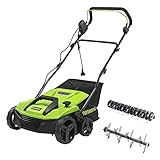 Greenworks 14-Inch 13-Amp Greenworks 14-Inch 13-Amp |
|
Check Latest Price |
| TIECTOWN 16-Inch 15.5A |
|
Check Latest Price |
 BUCOTOD 16-Inch 15-Amp BUCOTOD 16-Inch 15-Amp |
|
Check Latest Price |
 MZK 15-Inch 13-Amp MZK 15-Inch 13-Amp |
|
Check Latest Price |
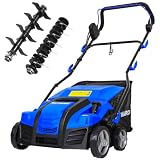 BILT HARD 16-Inch 15-Amp BILT HARD 16-Inch 15-Amp |
|
Check Latest Price |
 Westinghouse 16-Inch 15-Amp Westinghouse 16-Inch 15-Amp |
|
Check Latest Price |
Dethatcher Reel vs Scarifier Reel vs Vertical Mower
These three get confused constantly, and the confusion is the reason a lot of consumer machines carry low owner ratings. They are not competing products. They are three severity levels, and picking the wrong one produces exactly the disappointing experience people complain about online.
A dethatcher reel carries flexible spring tines. The tines lift thatch up and back into the bag while the machine moves forward, and they are forgiving. They comb rather than cut, which means they remove a loose or matted layer without slicing into healthy crowns. A scarifier reel swaps in fixed blades on a tighter spacing, and those blades cut vertical grooves into the soil surface. That is more aggressive, it is what you want before overseeding, and it is not what you want on a lawn you are not immediately reseeding.
A vertical mower is the rental-class machine. It uses revolving straight fixed blades with adjustable spacing and depth, and per Clemson Cooperative Extension it cuts into the thatch and at least half an inch into the soil. That is a fundamentally different job from combing a mat, and it is why a heavily rooted thatch layer cannot be solved by any of the eight consumer machines below.
One practical warning: several machines in this roundup come with the scarifier blade fitted rather than the dethatching head. Owners report learning this the hard way on a lawn they meant to comb rather than scarify. Check which head is fitted before your first pass.
1. Sun Joe AJ805E 15-Inch – Best Overall Corded Dethatcher
Sun Joe 15-Inch Lawn Dethatcher with Scarifier Blade Reel, AJ805E
15-inch path
13-amp motor
13.2-gallon bag
5-position depth
27.1 pounds
Pros
- Pulls up heavy matted thatch reliably
- 13.2-gallon bag among the larger capacities here
- 2-in-1 dethatcher and scarifier head
- Four easy-glide wheels make turns predictable
Cons
- Corded operation means dragging an extension cord across the lawn
- 15-inch path is narrower than the 16-inch competitors
The Sun Joe AJ805E is the machine we keep coming back to, and the reason is not the spec sheet. It is that roughly 19,000 owners have run it, which means the failure modes are well documented rather than theoretical. On lawns with a genuine mat of dead grass and roots, the 13-amp motor does not bog down the way smaller machines do, and the reel keeps lifting material into the bag instead of smearing it across the surface.
The 13.2-gallon bag is the quietly important spec here. Almost every complaint in this category boils down to bag size, and a bag that holds more means fewer stops, which means less temptation to rush the pass. That matters more on thick thatch than on a routine spring scarify, because thick thatch produces volume fast.
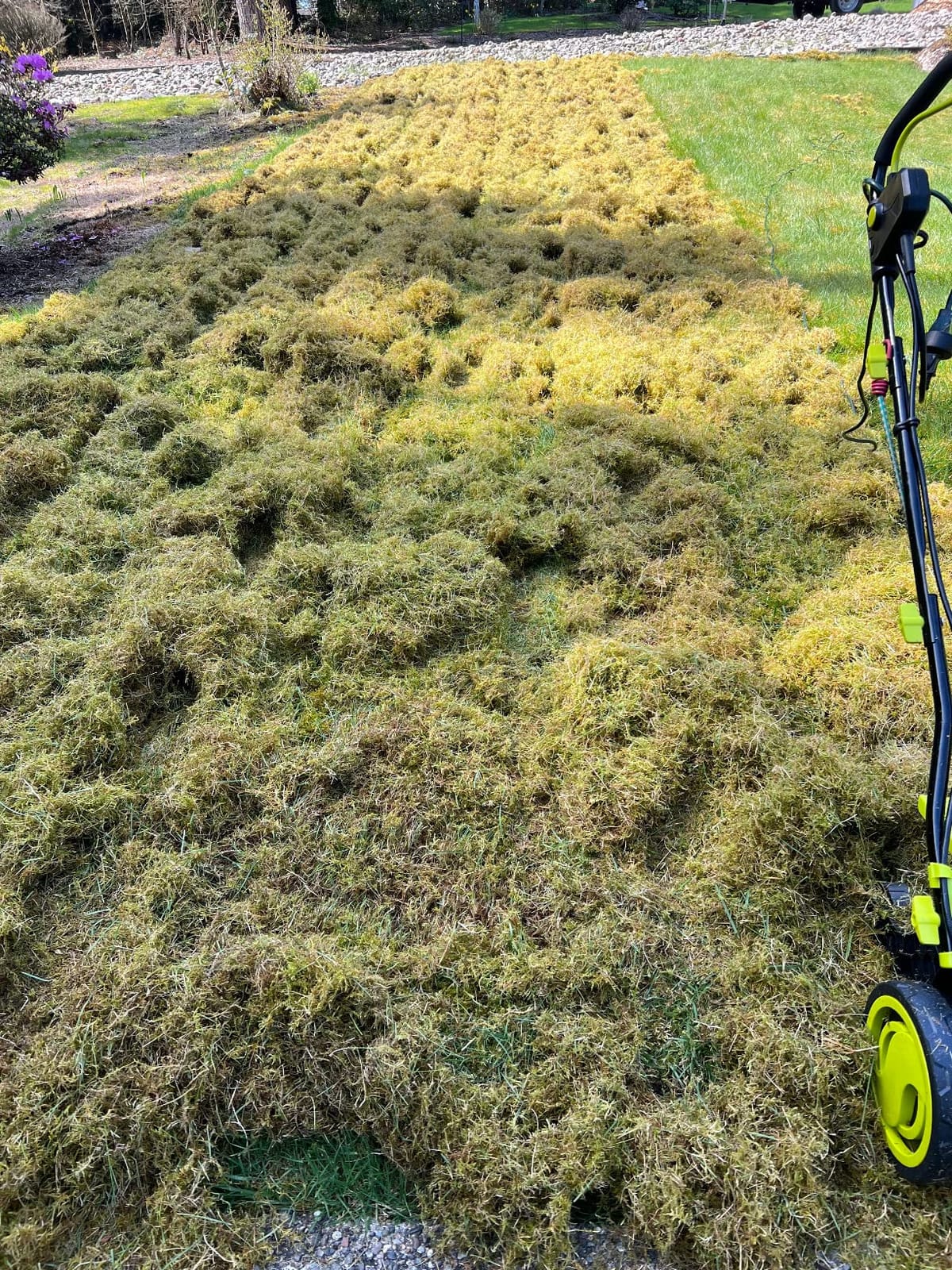
Five-position depth control gives you room to start shallow and work down, which is the correct sequence on a stressed lawn. Set it shallow, pull the loose layer, then reassess. The four easy-glide wheels are more than a gimmick on uneven ground, because a wheel that catches mid-turn will lift the reel and leave a stripe of unworked thatch behind it.
The honest weakness is the 15-inch path. On a large lawn, that inch of width adds up, and this is where a gas power rake or a wider walk-behind earns its keep. We have written up the wider-cutting mowers in our gas push mower guide if the rest of your equipment is also struggling with overgrown turf.
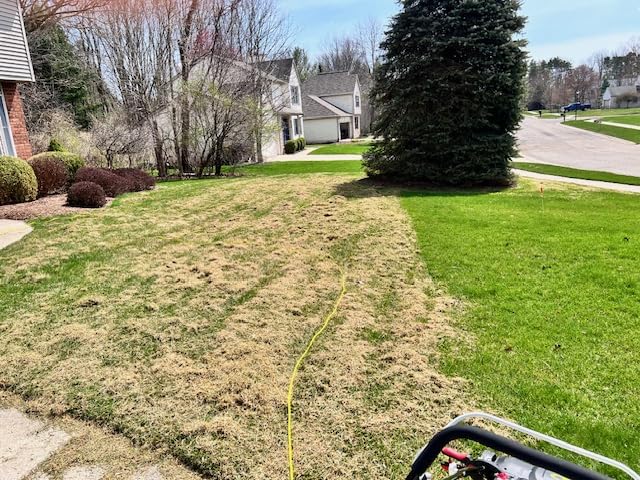
What the 19,000 reviews actually confirm
Reviewers report the same two things over and over: it pulls up heavy thatch, and the cord is a nuisance on bigger lawns. The 4.4 average is a real, well-sampled number, which is exactly why this one anchors the list.
The 2-in-1 head means the same machine handles the annual scarify before overseeding in autumn. Owners frequently describe using it twice a year, which spreads the cost across both jobs and makes the purchase easy to justify.
Where it falls short
It is corded, so plan your cord path before you start rather than mid-lawn. At 15 inches it is one of the narrower paths in the set, so budget more passes on an open suburban lawn.
If your measured layer is at or past an inch, no corded consumer machine of this class is the answer. Read the rent section before you buy anything.
2. WEN DT1516 16-Inch – Best Head Set for Thatch and Overseeding
WEN DT1516 16-Inch 15-Amp 2-in-1 Electric Dethatcher and Scarifier with Collection Bag, Black
16-inch path
15-amp at 3300 RPM
24-tine and 20-blade heads
5-position depth
33.7 pounds
Pros
- 15-amp motor handles packed thatch without bogging
- Interchangeable 24-tine and 20-blade heads
- Automatic overload shutdown protects the motor
- Folds down for storage
Cons
- Collection bag fills within about 20 feet on heavy thatch
- Scarifier blade comes fitted and needs a manual swap
The WEN DT1516 has one of the most complete head packages in this roundup, and for thick thatch that is the spec that matters most. A 24-tine dethatching head for maximum pickup and a 20-blade scarifying head for cutting grooves, both on the same chassis, means you are not buying two machines to do a full year’s lawn work.
The 15-amp motor running to 3300 RPM has more headroom than the 13-amp machines when the thatch is wet or packed with moss. On a lawn where a lighter machine stalls and you end up raising the reel out of frustration, that difference decides whether the job gets finished in an afternoon or spread across a weekend.
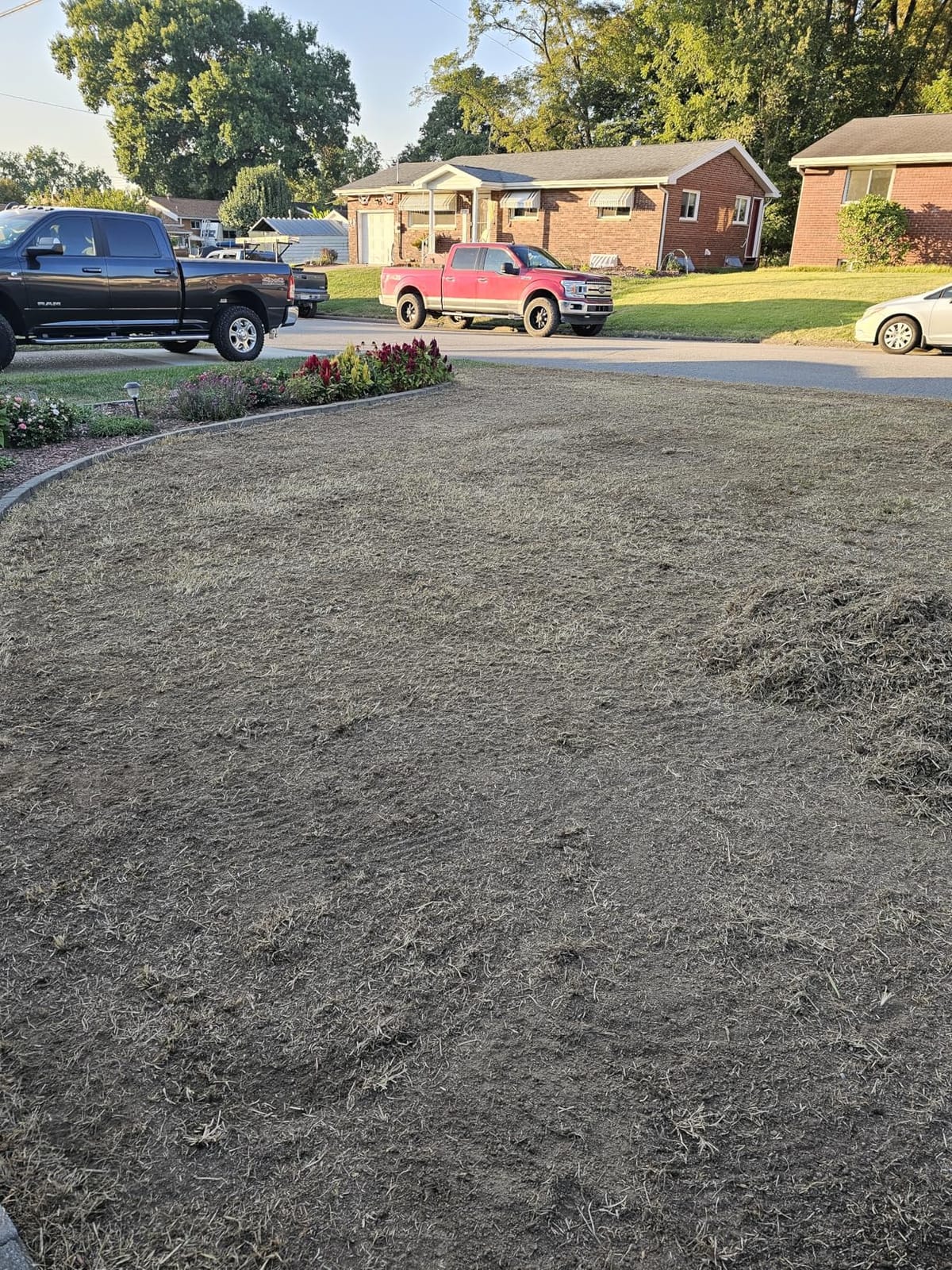
Depth adjustment runs across five positions from plus a quarter inch down to minus a half inch, which is among the deepest consumer ranges here and gives you real control over how aggressively the tines enter the soil. Automatic overload shutdown is a small thing that matters on a neglected lawn: it protects the motor instead of letting it cook when the reel jams on a buried stone or a dense root mat.
Owners call out the weight positively. At 33.7 pounds it is substantial enough to keep the tines engaged without leaning on the handle, and several reviewers describe it as more effective than gas rental machines they used for the same job.
The bag problem is the real problem
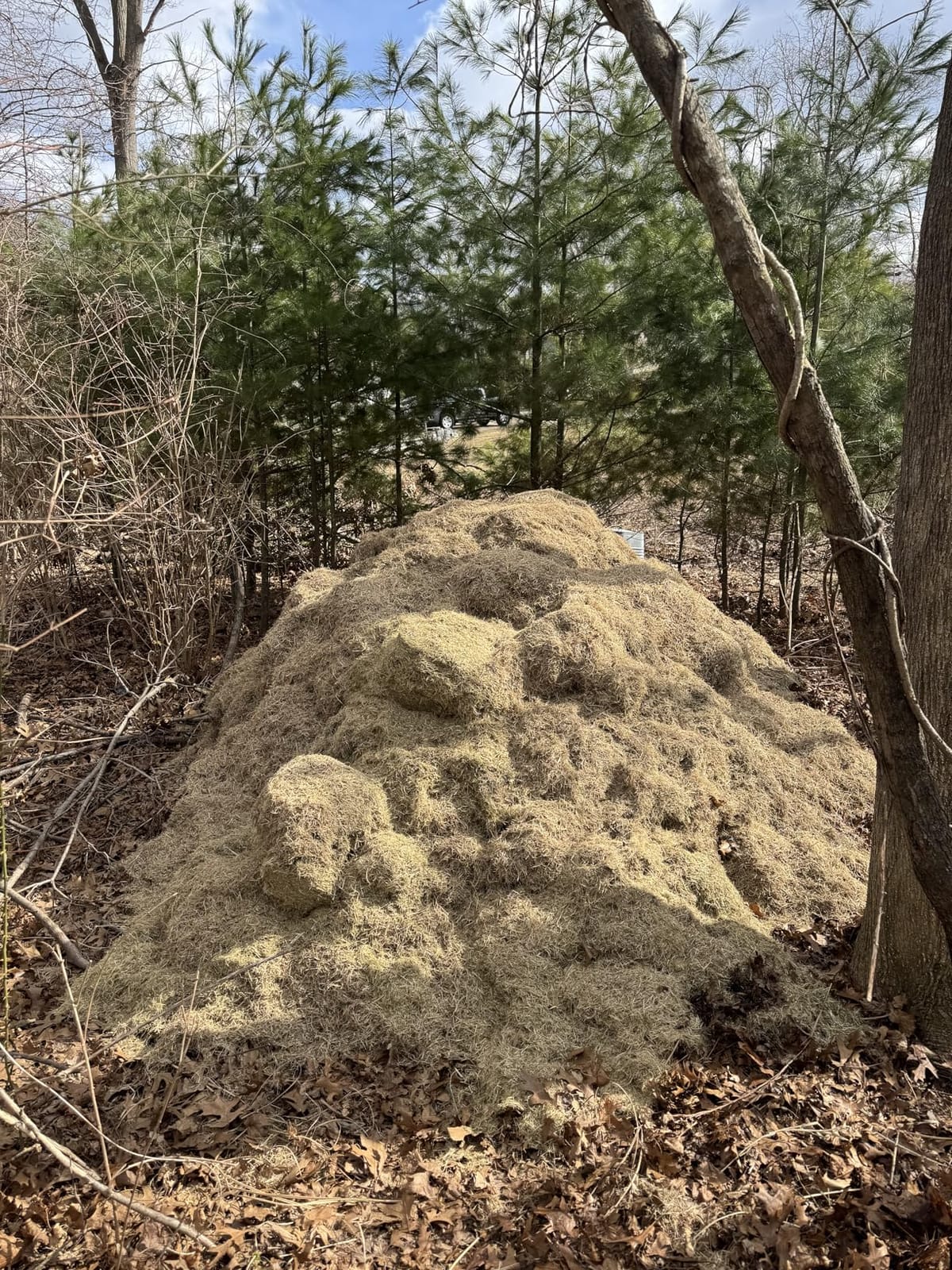
The single most repeated complaint is that the collection bag fills within about 20 feet on a heavily thatched lawn. Most owners end up removing the bag and following up with a rake or a bagging mower. Plan for that, because the alternative is stopping every fifteen feet, and stopping is when people quit a job halfway.
Also note which head is fitted out of the box. Several reviewers were surprised by how aggressive it felt on a lawn they only wanted to comb, so swap to the 24-tine head before your first pass.
Who should skip it
If you have a small lot or a townhome yard, the 16-inch path is more machine than you need and the bag capacity will never be the bottleneck. The Sun Joe above is the better fit for a lawn under a few thousand square feet.
3. Greenworks 14-Inch 13-Amp – Best for Small Lawns and Tight Spaces
Greenworks 13 Amp 14-Inch Corded Dethatcher / Scarifier, 2-in-1 Electric Lawn Rake with 3-Position Depth Adjustment & Push-Button Start, Lawn Care Tool for Healthy Yard Maintenance
14-inch path
13-amp at 3200 RPM
3-position depth
28.7 pounds
Tool-free assembly
Pros
- Handles thick moss and thatch on a 13-amp motor
- Light at 28.7 pounds for long sessions
- Quick-release head swap with no tools
- Assembles without tools
- Cord holder clip keeps the cable tidy
Cons
- Only three depth positions
- Bag holds debris in the front and fills fast
- Unfamiliar safety sequence: press button then pull the deadman bar
The Greenworks DHA103 is the machine to buy when your lawn is small, your path is narrow, or you are dealing with edging and beds rather than an open field. The 14-inch reel is the narrowest in the set, which makes it genuinely easier to steer between shrubs and along a fence line where a 16-inch machine constantly clips the reel.
At 28.7 pounds it is one of the lighter machines in the set, and owners doing extended sessions single that out. The push-button start needs no cord tugging, tool-free assembly takes a few minutes rather than an afternoon, and the quick-release head swap means the change from dethatching to scarifying takes seconds.
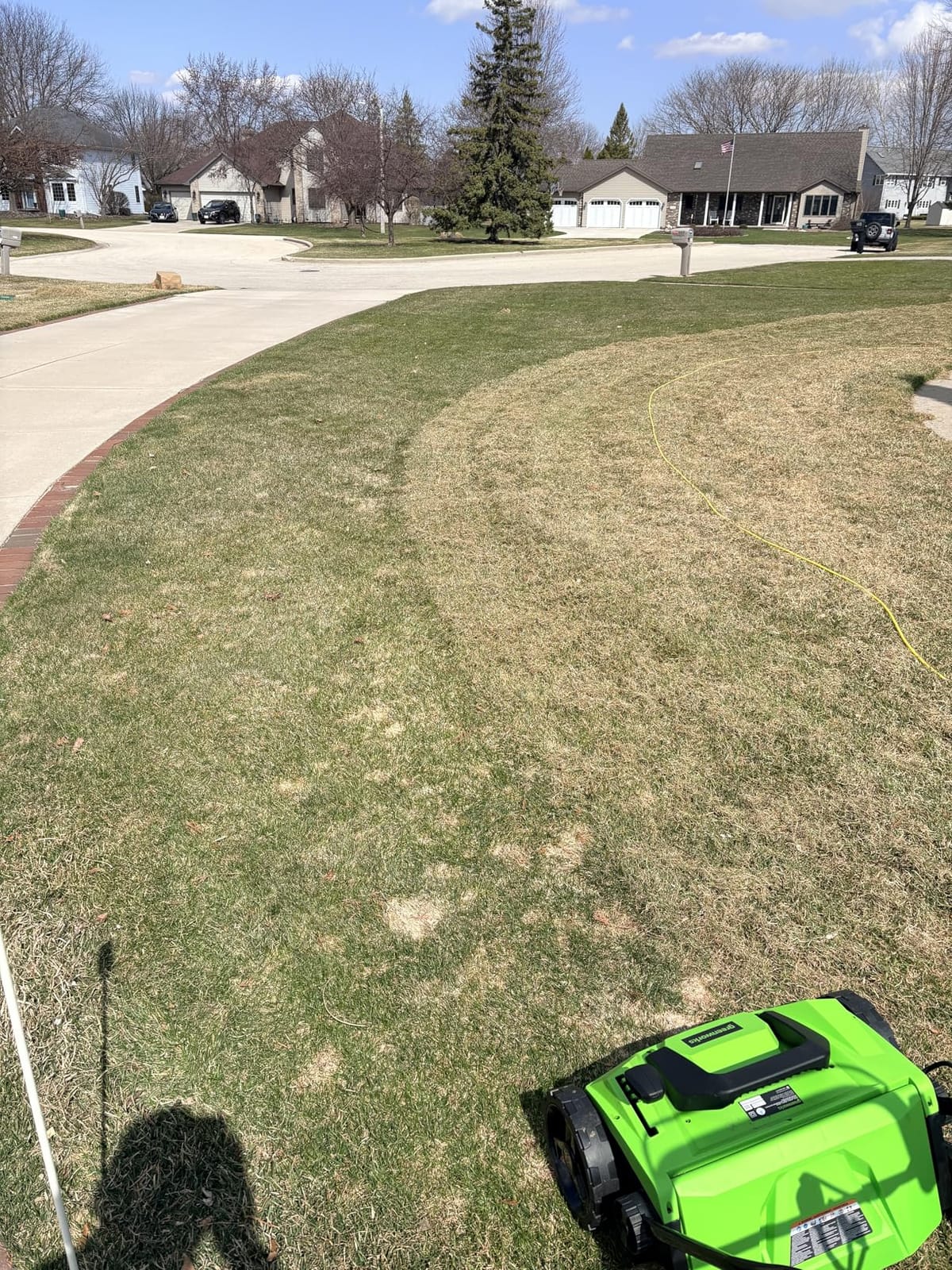
The 3-position depth adjustment is the compromise. Three settings give you less fine control than the five-position machines, which on a lawn with uneven thatch depth means you may need to do part of the lawn at one setting and part at another. If your thatch is patchy, that is a real annoyance.
Owners report pulling multiple cubic yards of moss and thatch from neglected lawns with this unit, and several describe recovering the cost of a rental in a single use. That is a fair read of what a 13-amp motor can do when the reel is set correctly.
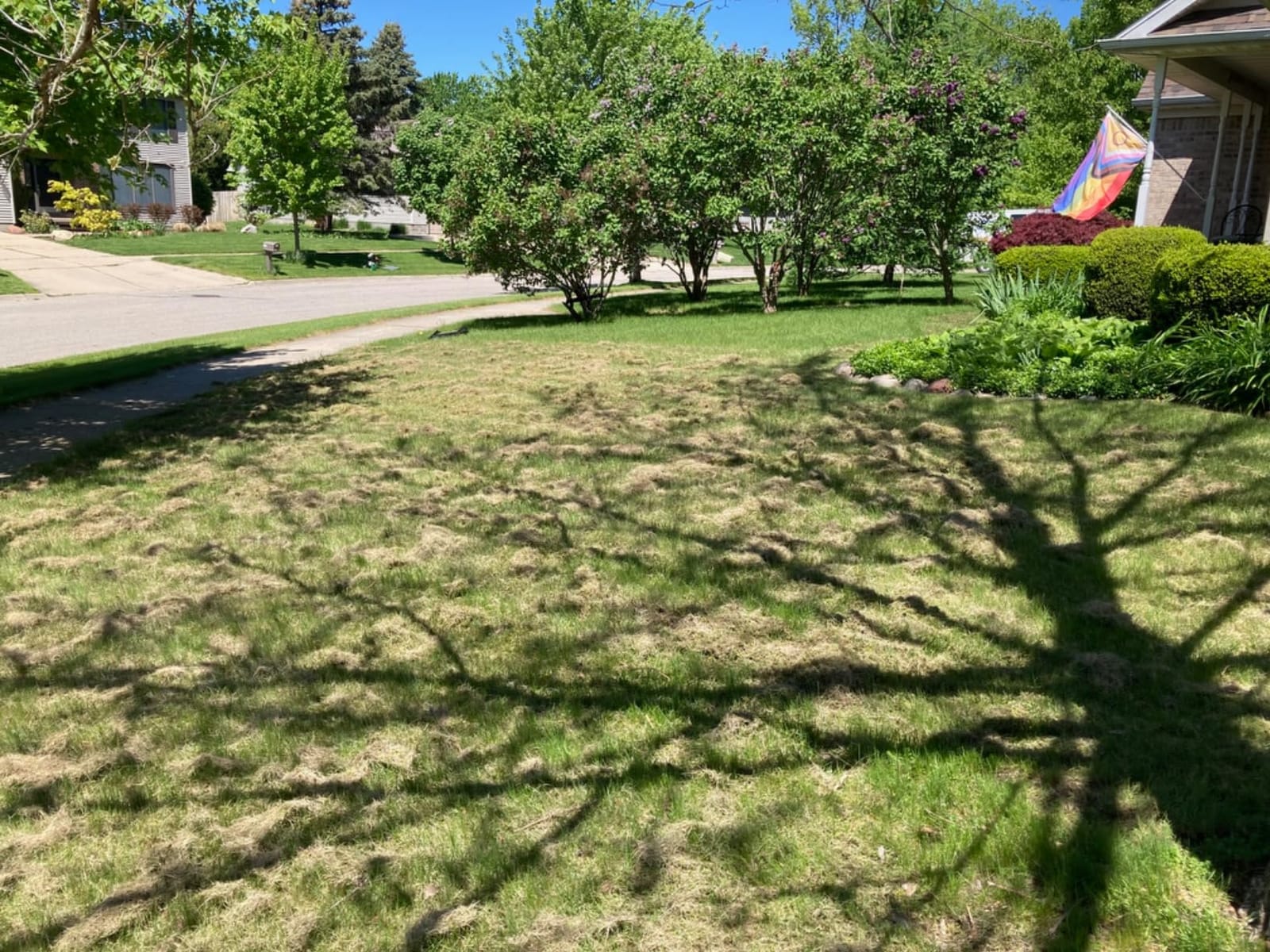
The safety sequence catches people out
The controls run opposite to most lawn mowers. You press the start button and then pull the deadman bar, rather than holding the bar and pressing a switch. It works fine once you know it, but the first attempt on a lawn you are excited about is a good time to read the manual rather than guess.
The cord holder clip is a small quality-of-life feature that matters more on a small lawn than you would expect, because a short run still means tripping over a cable three times.
Where it will not keep up
Three depth positions and a 14-inch path make this the wrong tool for a large open lawn. If you are covering more than a few thousand square feet, the pass count gets old fast.
4. TIECTOWN 16-Inch 15.5A – Best Value for Thick Thatch
TIECTOWN 2026 Upgrade 16-Inch 15.5A Electric Dethatcher & Scarifier, Green
16-inch path
15.5A peak at 3600 RPM
14.5-gallon bag
5-position depth
30 pounds
Pros
- 3600 RPM motor speed with a 15.5A peak draw
- 14.5-gallon bag cuts emptying stops
- Tool-free quick-release blade change
- Three-year manufacturer warranty
- Folds flat and weighs 30 pounds
Cons
- Corded
- so extension cord management is on you
- Some owners still report frequent bag emptying on neglected lawns
The TIECTOWN LM01 is one of the strongest specifications in this group, and on thick thatch specifications are what separate a good day from a frustrating one. A 15-amp motor with 15.5 amps peak running at 3600 RPM is among the highest no-load speeds in the roundup, paired with a full 16-inch path. That pairing is what makes it a safe choice when the layer is dense.
Where it wins clearly is the bag. At 14.5 gallons it matches the largest capacity in the set, and on a lawn producing heavy debris that is the difference between finishing a section and stopping every twenty feet. Buyers consistently highlight the bag size as larger than competing 15- and 16-inch machines.
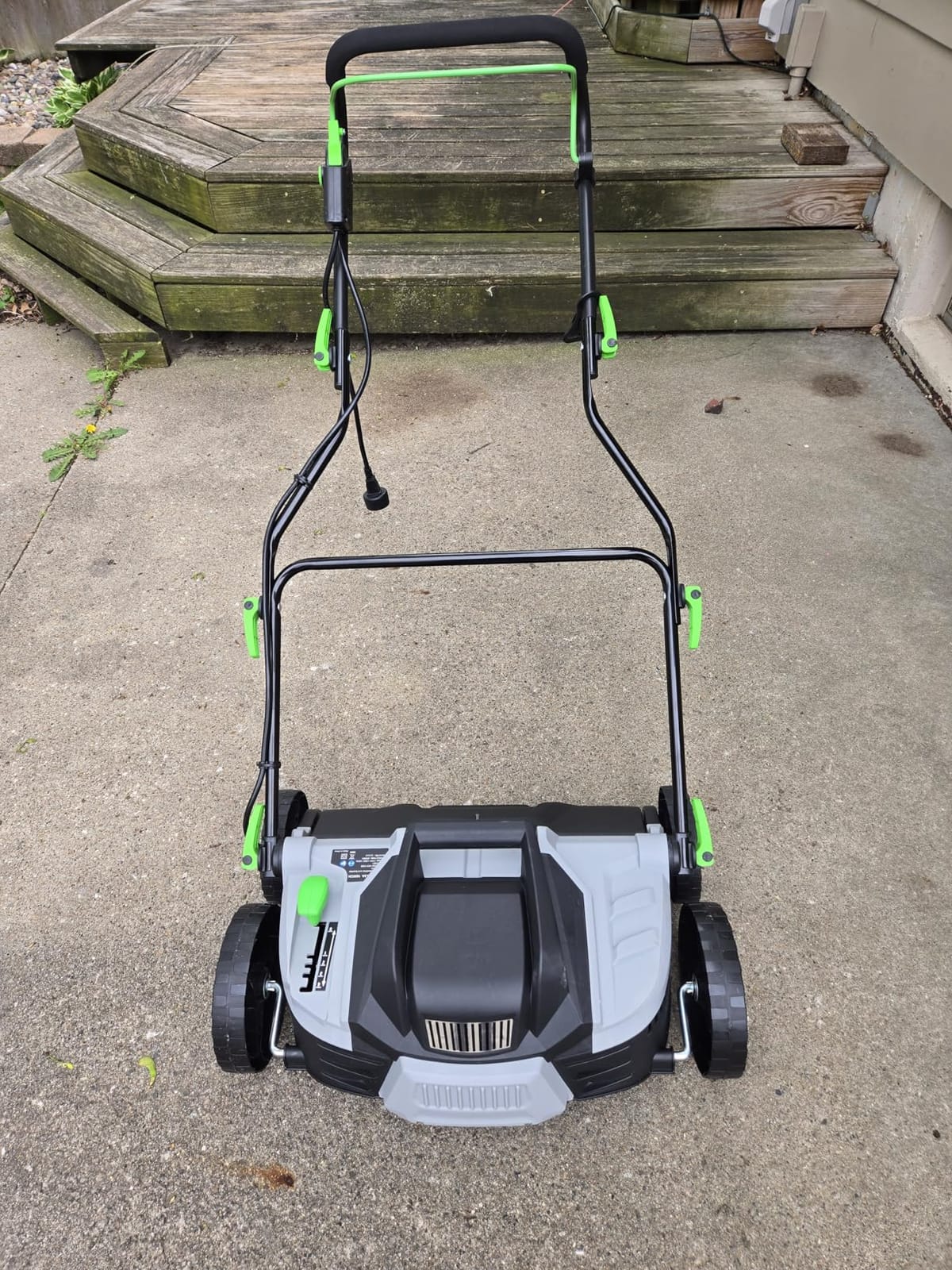
Depth control runs five positions, with separate stated ranges for scarifying at minus 0.47 inch to plus 0.24 inch and dethatching at minus 0.32 inch to plus 0.39 inch. Publishing those numbers in inches rather than arbitrary position numbers is more useful than it sounds, because it lets you set depth by soil condition instead of by trial and error.
It also publishes cord guidance, which almost nobody else does: 14 AWG up to 50 feet, 12 AWG up to 100 feet. On a 15-amp class machine that runs a full lawn, an undersized extension cord is the single most common cause of a motor bogging down in thick material.
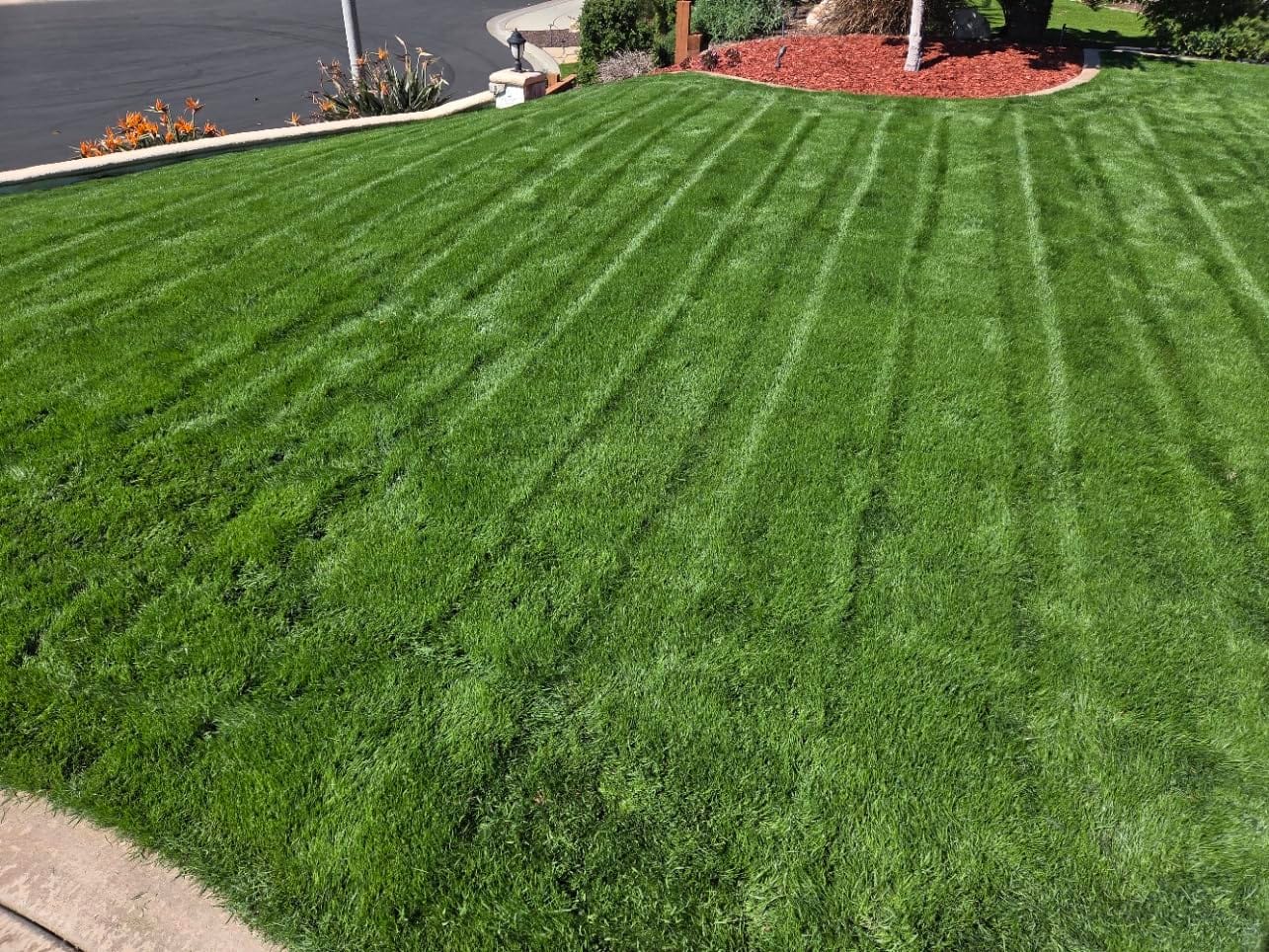
Why the three-year warranty matters here
A three-year manufacturer warranty is the longest stated term in this roundup, and for a machine with a powered reel and a lot of spring steel, warranty length is a reasonable proxy for how the manufacturer expects the parts to wear.
The tool-free quick-release blade change and the three-position handle rod are quality-of-life details that make a long afternoon shorter, and at 30 pounds the machine folds flat for storage in a garage that is not a shed.
What to watch for
The cord is still the cord. Every 15-amp machine here needs a properly gauged extension cord and a dedicated circuit, and a 16-inch reel in a 15-amp body will bog on a long thin cable.
Some owners still report frequent emptying on neglected lawns even with the 14.5-gallon bag. On the worst lawns, plan on a second pass with the bag removed and a rake behind the machine.
5. BUCOTOD 16-Inch 15-Amp – Best for Packed and Mossy Thatch
2-in-1 Dethatcher & Scarifier, 16″, 15A Electric Lawn Care
16-inch path
15-amp at 3500 RPM
34.4 pounds
5-position depth
14.5-gallon bag
Pros
- Heavy chassis helps tines bite into packed thatch
- Quiet enough to run well below an electric mower
- Runs for hours without hesitation
- Compact folded footprint
Cons
- Bag fills every 10 to 30 feet and most owners remove it
- Scarifier blade comes fitted and needs swapping
The BUCOTOD WR5028-2000Q15 sits among the heavier machines in this class at 34.4 pounds, and that weight is the whole argument. When thatch is packed down and full of moss, reel penetration is what separates a productive pass from a frustrating one. A heavier chassis keeps the tines engaged without you leaning forward on the handle all afternoon.
The 15-amp motor at up to 3500 RPM no-load sits near the top of the set. Owners report running it for hours across a large neglected lawn without hesitation, which is a credible description of what a 15-amp machine can sustain.
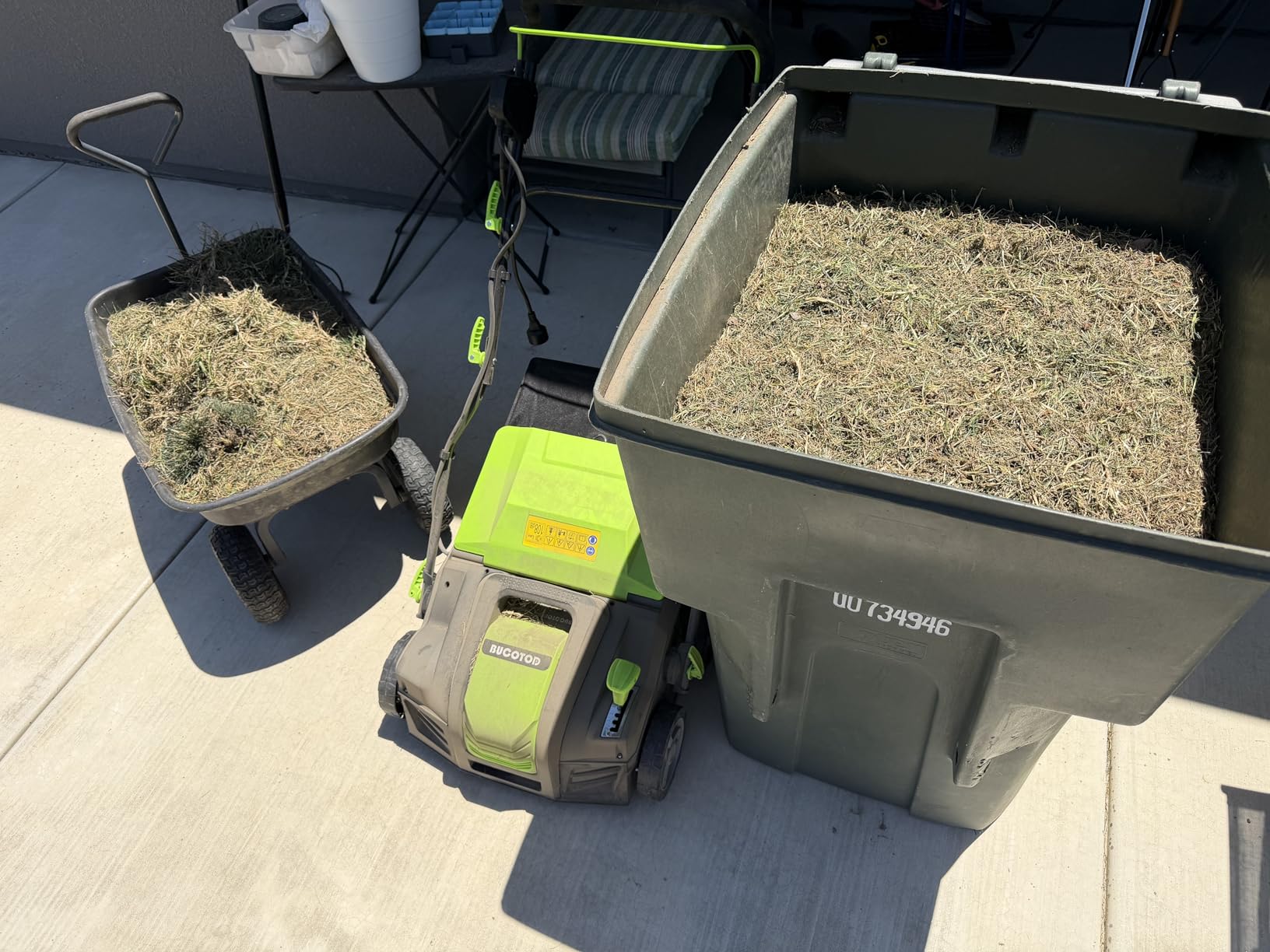
Quiet operation is the sleeper benefit. If you are working a lawn next door to someone who works from home, or on a Sunday morning, a machine you can hear yourself think around changes the experience considerably compared with a gas power rake.
The folded footprint is genuinely small, roughly the size of the bag attachment, which matters more than it sounds in a garage already occupied by a mower and a pressure washer.
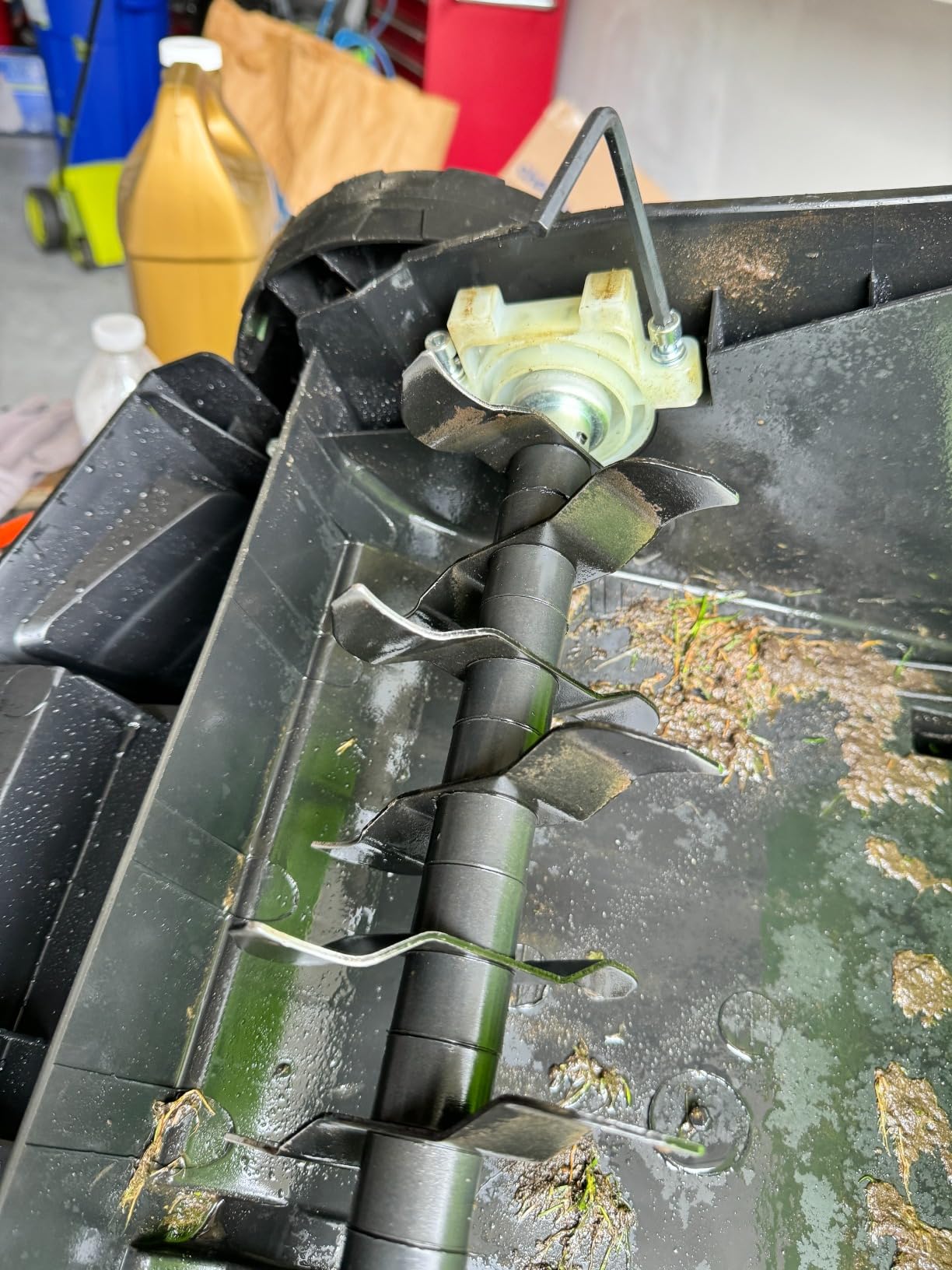
The bag is where this machine disappoints
The 14.5-gallon bag is a good size, but owners report it filling every 10 to 30 feet on heavy thatch and most of them stop using it. On packed material the volume of debris is simply enormous. Accept that you will be making repeat passes with a rake, and plan for it.
The height settings are also numbered positions rather than depths in inches, which is less useful when you are trying to match depth to a measured thatch layer.
When the weight is a problem
Thirty-four pounds with a 16-inch path is fine on flat ground and awkward on slopes or rocky soil. If your lawn is uneven, the Sun Joe or the Greenworks will be easier to control.
6. MZK 15-Inch 13-Amp – Best Starter Machine for First-Time Owners
MZK Lawn Dethatcher Electric Scarifier with Bag,15In(RED)
15-inch path
13-amp at 3700 RPM
27.5 pounds
5 depth positions
45L bag
Pros
- 3700 RPM from a 13-amp motor
- Light at 27.5 pounds for long sessions
- Quick blade swap between modes
- Folds flat with dual safety switches
Cons
- Small sample size of owner reviews
- Bag fills quickly and leaves debris behind
- Can stall if pushed hard into very thick thatch
The MZK G-AC2401 is the one in this roundup with almost no owner history, and that fact has to lead the section. Its 4.9 average comes from 50 reviews. That is a real number but a thin sample, and a single returned unit or a batch of early production issues can move an average that size a long way. We are including it because the hardware deserves an honest look, not because the rating is a proven track record.
On paper the motor is the interesting part. A 13-amp copper motor at 3700 RPM is the highest no-load speed in the entire set, higher than the 15-amp machines, and owners describe visible differences after only a few passes. At 27.5 pounds it is one of the two lightest frames here, close to self-propelling on flat ground.
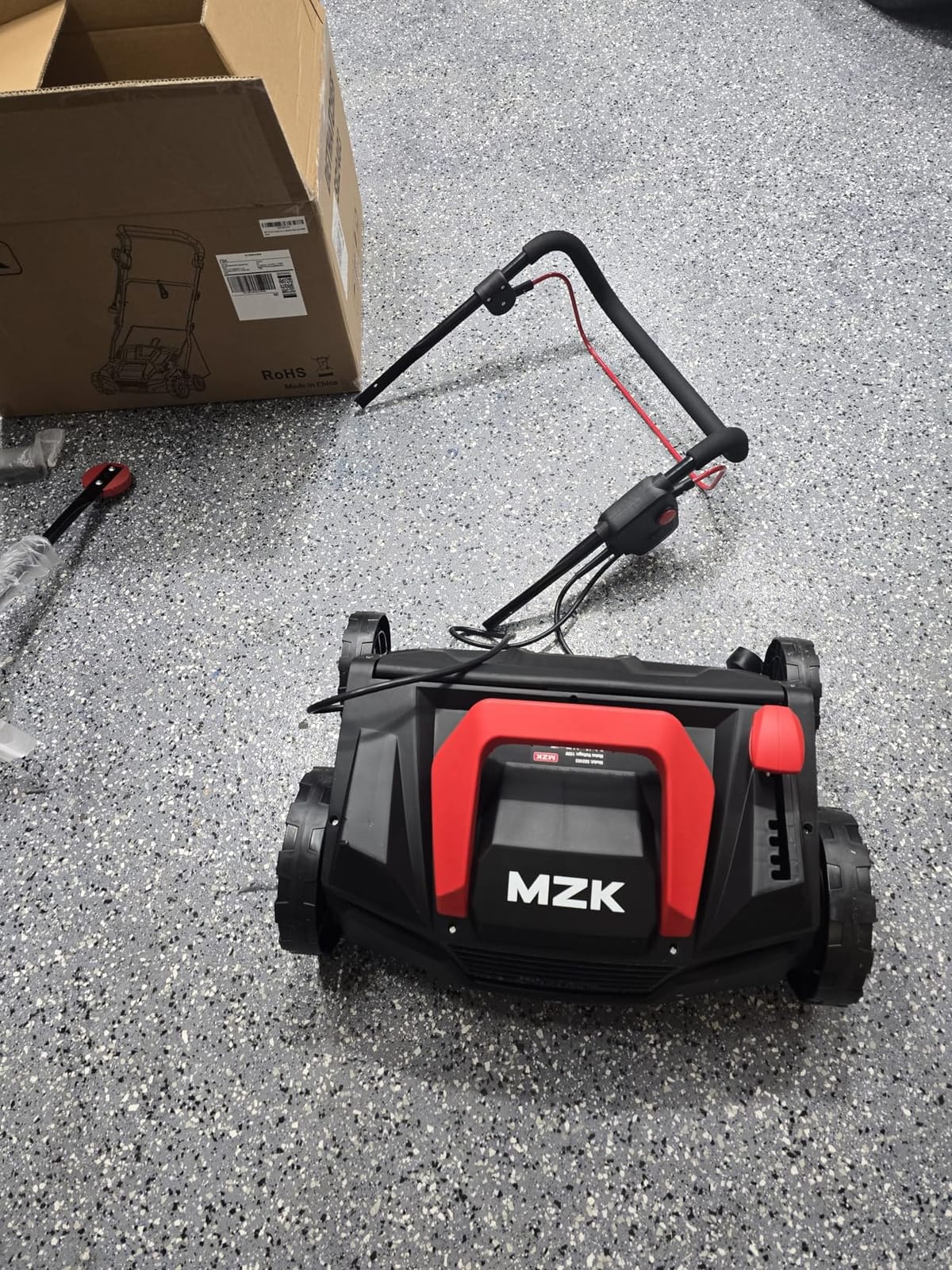
Five depth positions with a stated range of minus 0.47 inch to plus 0.24 inch is unusually precise for a machine at this level, and the foldable frame with dual safety switches is a sensible safety setup for a powered reel.
The 45 liter bag is on the smaller side, and owners report it filling quickly and leaving debris behind. That is the same complaint that runs through this whole category, but on a machine with this little owner history you have less evidence about how it behaves over five seasons.
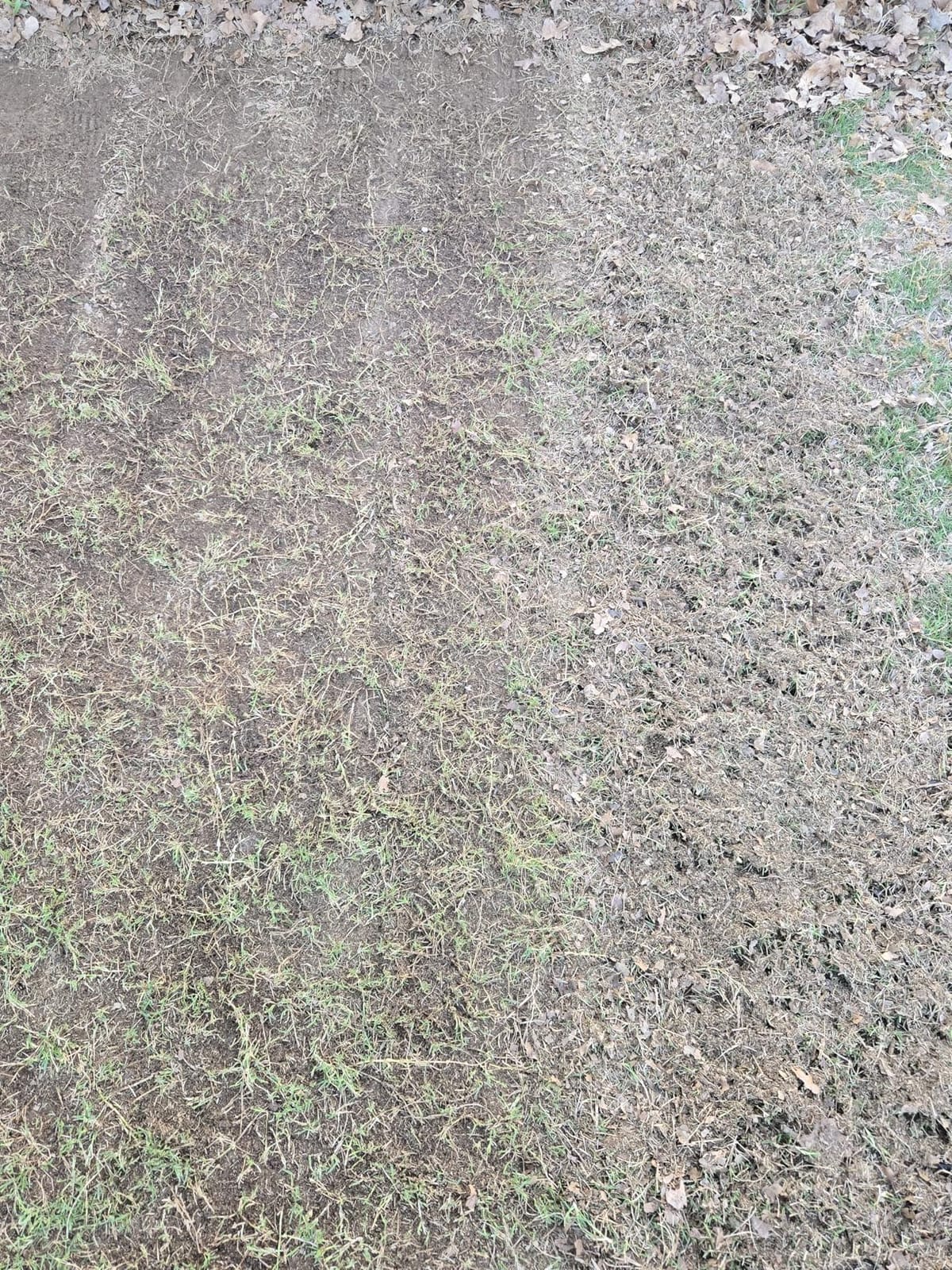
What could go wrong that reviews will not tell you yet
Owners flag that the machine can stall if pushed too hard into very thick thatch. With this little history, there is no long-term durability picture, and tine or motor replacement on a lesser-known brand is a genuine unknown.
The scarifier tines are aggressive enough to tear up lawn areas, which again means check which head is fitted before the first pass.
Who should consider it
If you have a small lawn, a moderate layer somewhere between half an inch and three-quarters, and a limited budget, the hardware is competitive. If you want a machine you will still own in five years, the two-year and three-year warranty machines above are the safer bet.
7. BILT HARD 16-Inch 15-Amp – Best for Aggressive Thatch and Moss
BILT HARD 16 Inch Dethatcher Scarifier Electric Powered, 15 Amp Copper Motor, 5-Position Depth Adjustment, 14.5 gal Thatch Bag, 2 in 1 Walk Behind Thatch Removing Machine for Lawn
16-inch path
15-amp at 3300 RPM
57.3 pounds
20 spring steel tines
14.5-gallon bag
Pros
- 20 spring steel tines pull heavy thatch and moss
- Works effectively in a single pass
- Assembles in about 30 minutes
- 14.5-gallon bag reduces leftover raking
- Overload protection and lock-off switch
Cons
- Heaviest machine here at 57.3 pounds
- Bag backs up quickly on heavy debris
- Tines can snag on aggressive rhizome grasses
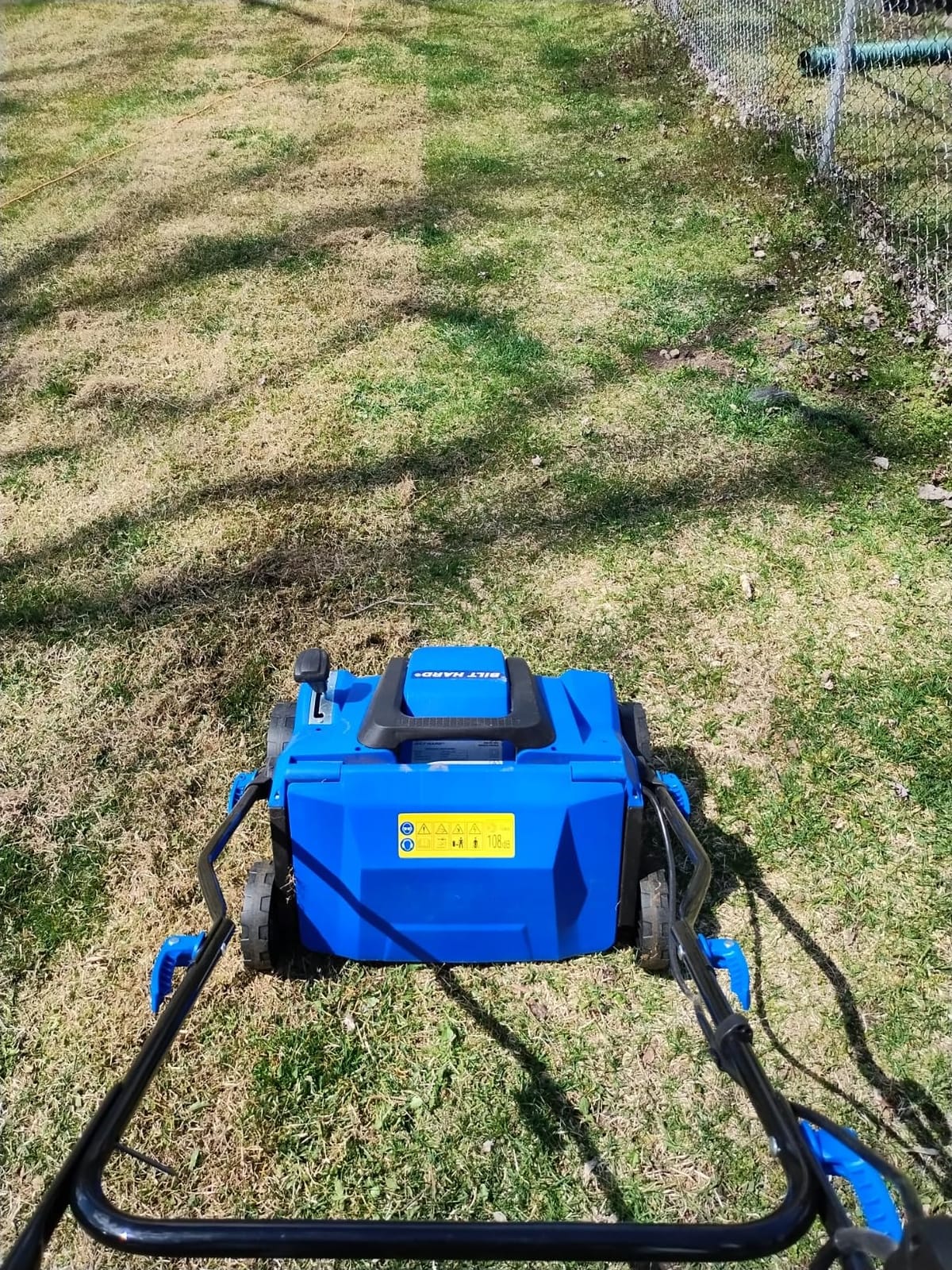
The BILT HARD TIA-1002 is the heaviest machine in this roundup, and that is where its force comes from: it weighs 57.3 pounds. That is roughly 30 pounds more than the lightest machine here, and every pound of it is behind the reel keeping the tines engaged in dense material. If your thatch is thick, wet, and full of moss, that mass is the reason it works in one pass where lighter machines need two.
The reel itself carries 20 spring steel tines, with a 16-blade scarifying roller available as a quick-change companion. Depth lever runs five positions, and there is overload protection plus a lock-off switch.
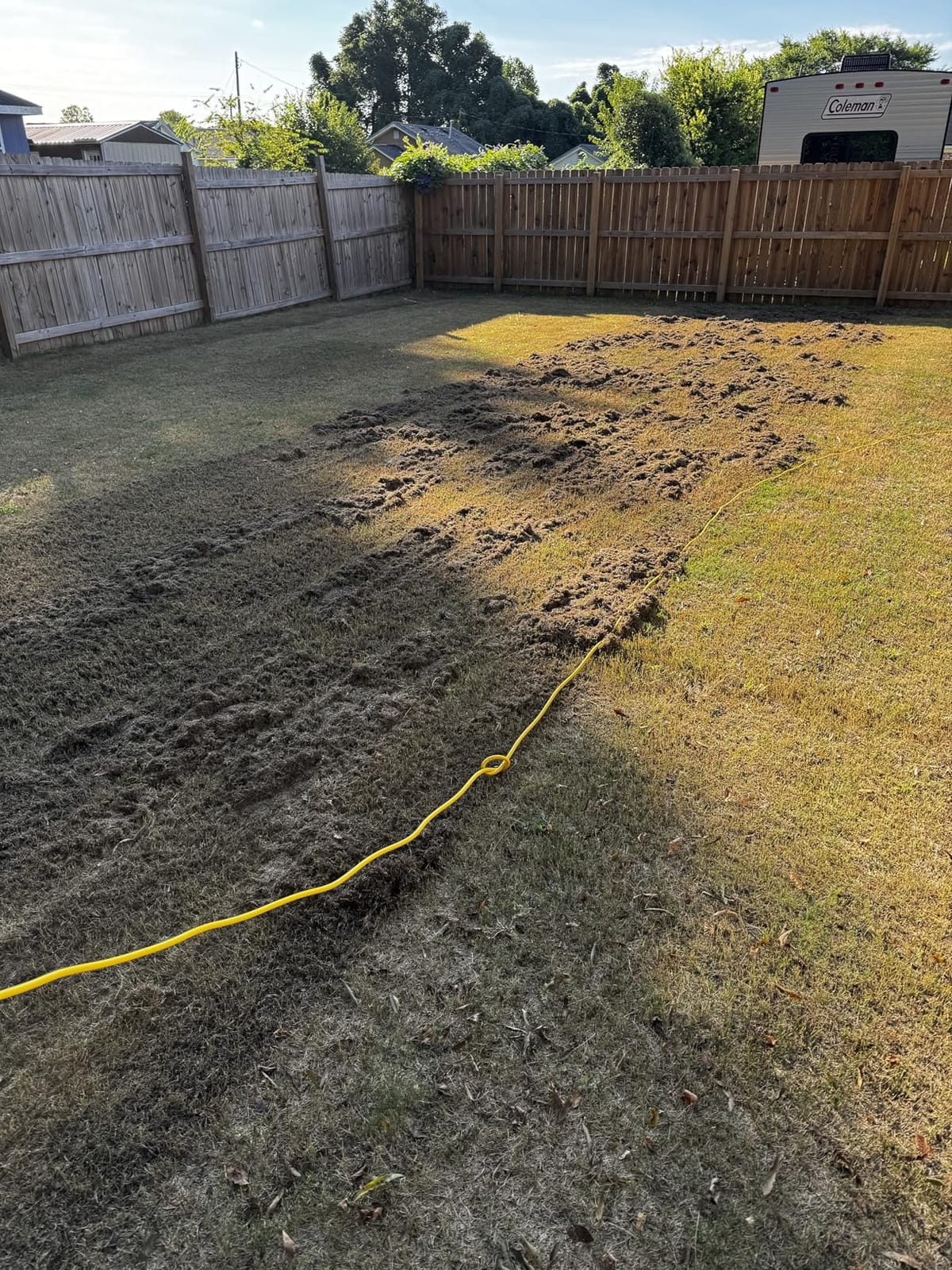
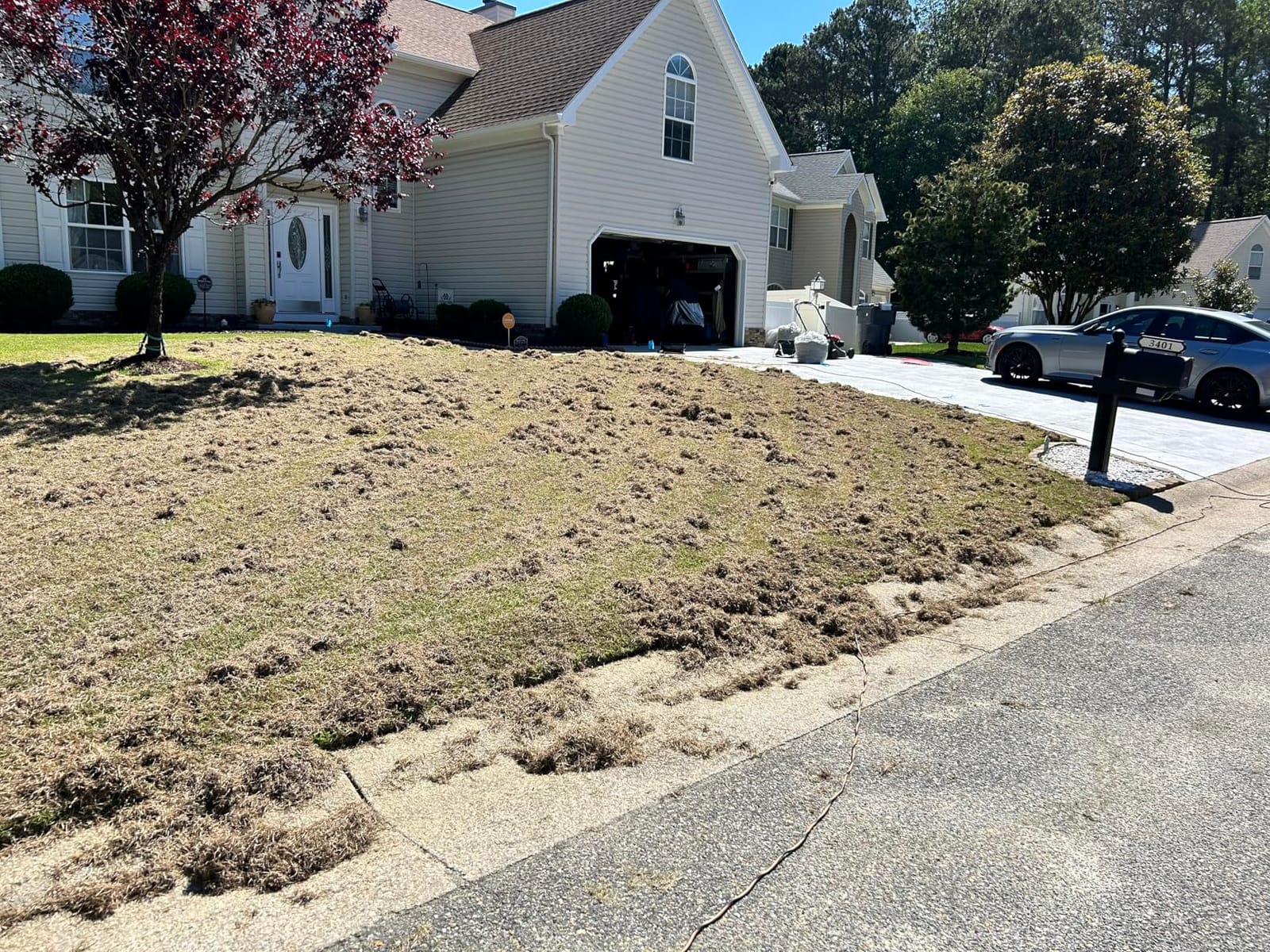
Owners report serious output. One reviewer filled 45 bags of debris from a large neglected St. Augustine lawn, and a long-term owner reports three years of reliable use. For a neglected warm-season lawn in bad shape, that is the kind of result most people are actually hoping for when they search for a dethatcher for thick thatch.
Assembly takes roughly 30 minutes and the handle folds down, so storage is not the problem people expect it to be.
Weight is a genuine trade-off, not a detail
At 57.3 pounds this is also the machine most likely to be put down mid-lawn by someone with a back issue or an uneven yard. On slopes or rocky ground, the weight that helps penetration becomes the thing fighting you.
The tines can also snag on aggressive rhizome grasses such as Bermudagrass. If your lawn is a warm-season runner, be careful about how many passes you take.
Where it does not fit
Small lot, soft shoulders, a gate narrower than 16 inches: this is not the machine. The Westinghouse below gives you a 16-inch path at 29.5 pounds.
8. Westinghouse 16-Inch 15-Amp – Best Sturdy Build in a Manageable Weight
Westinghouse 16″ 15-Amp 2-in-1 Electric Dethatcher and Scarifier with Collection Bag
16-inch path
15-amp at 3500 RPM
29.5 pounds
24 spring tines
14.5-gallon bag
Pros
- 15-amp motor holds up on a 75-foot cord
- 24-tine head plus 20-blade scarifier head
- Light at 29.5 pounds with a folding handle
- Three handle height positions
Cons
- Bag fills quickly on larger areas
- Scarifier head underperforms the dethatching head
- Individual tines cannot be replaced without swapping the roller
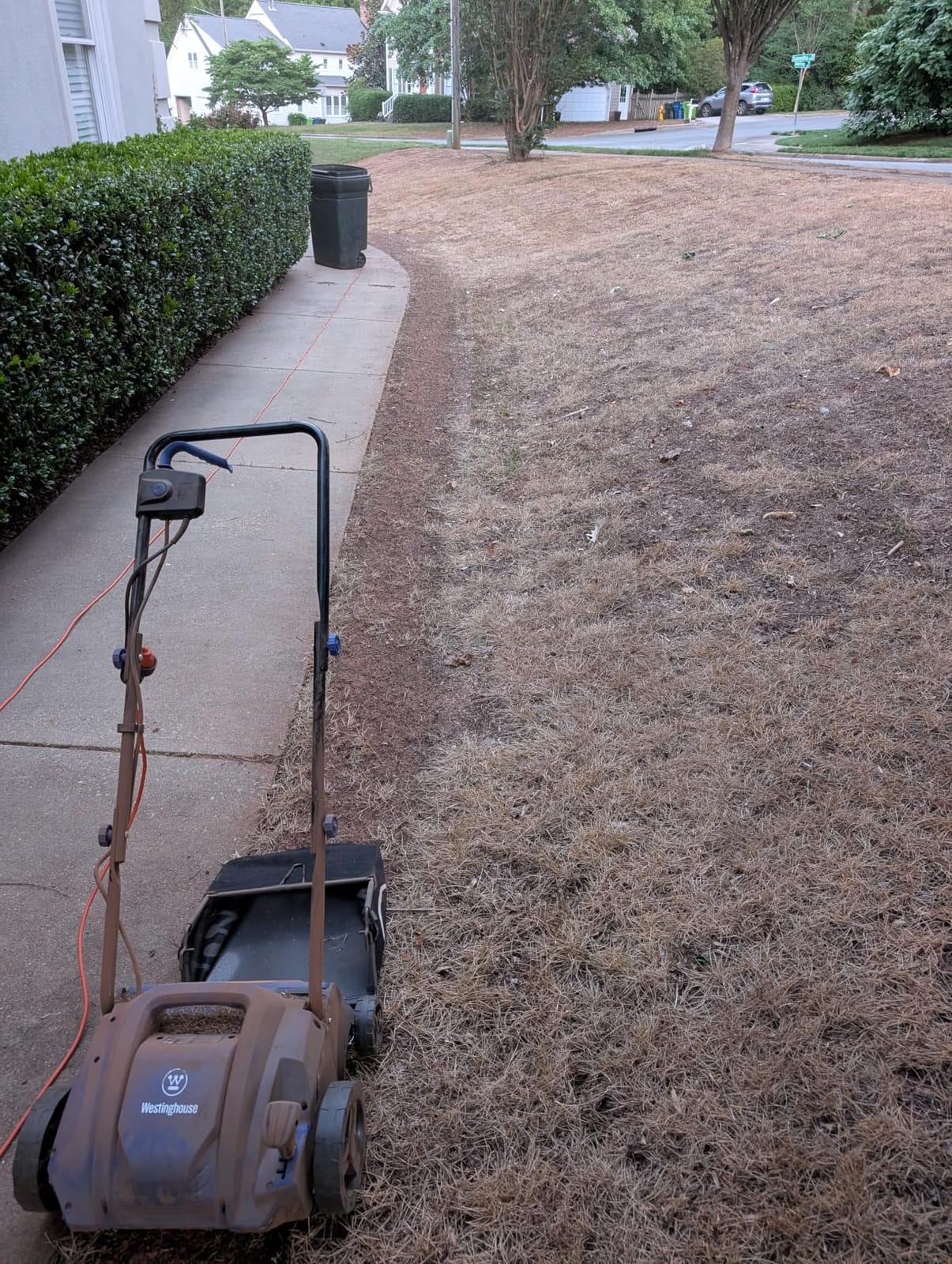
The Westinghouse W16ADAC solves the problem that stops people buying the heaviest machine. It gives you a full 16-inch path and a 15-amp motor at up to 3500 RPM, but at 29.5 pounds it is roughly half the weight of the BILT HARD while still carrying 24 spring tines on the dethatching head. That combination is genuinely rare in this bracket.
Owners confirm the motor holds power over a long 75-foot extension cord, which is not a trivial claim on a 15-amp machine. The 14.5-gallon rear bag is full size for the class, and three handle height positions plus a center carry handle make it easy to get the reel angle right for your height.
Stainless steel construction and a two-year limited warranty with lifetime technical support give it a reassuring ownership story in the set if you keep machines for a decade, which a lot of people do with a dethatcher.
Depth runs five settings from minus a half inch to plus a quarter inch, which is a genuinely useful consumer range and lets you set depth from an actual measurement.
The scarifier head is the weak half
Reviewers rate the aeration and scarifying function as clearly weaker than the dethatching function, with one reviewer dropping to three stars over that alone. If you plan to use the machine primarily to open a canopy for overseeding, look at a unit where both heads are well regarded.
Individual tines cannot be replaced without swapping the entire roller. That is a maintenance consideration rather than a dealbreaker, but worth knowing before you buy.
Why it is on the list
It is the balance pick. Full-size path, real motor power, a bag that is not undersized, and a weight you can push uphill. For most homeowners with a measured layer between half an inch and an inch, that is the machine we would put in a garage.
How to Choose a Lawn Dethatcher for Thick Thatch
Depth adjustment is the specification that decides whether a dethatching job improves your lawn or damages it. The failure mode is not too shallow, which merely means you make another pass. The failure mode is too deep, which pulls out living crowns and leaves you with a bare, damaged lawn in spring. Look for a machine that states its depth range in inches, not in numbered positions, and start one setting above the depth your measurement calls for.
Motor amperage matters more on thick thatch than on a routine scarify, because dense material is where a small motor bogs. Everything at 13 amps and above will handle a mat. The difference shows up on wet, mossy, compacted thatch where a 15-amp class machine keeps moving and a 13-amp machine starts to labour. If your layer is close to an inch, do not look below 13 amps.
Working width is a time calculation, not a quality judgement. A 16-inch reel covers roughly a third more ground per pass than a 14-inch, and on a large lawn that difference compounds across a whole afternoon. Below about 15 inches, expect to be moving a lot of lawn for a problem you only have in one area.
Collection bag capacity is the most common owner complaint in this entire category, so treat the number seriously. Anything at 13 gallons or above saves real time on a neglected lawn. If you end up removing the bag and following with a rake, which many owners do, the capacity matters far less.
Extension cord gauge is the detail that gets people. A 15-amp machine pulling a long extension cord through wet grass needs 14 AWG up to 50 feet and 12 AWG up to 100 feet, on a dedicated circuit. An undersized cord is the most common cause of a motor bogging down and cutting out mid-lawn. Check your cord gauge before the first pass, not after the machine quits.
Finally, weight. Anything over 50 pounds changes the character of the job, particularly on slopes, uneven ground, or rocky soil where reel penetration matters most. If your lawn is not flat, a 30-pound machine with a 15-amp motor is a better working tool than a heavy one.
When to Dethatch by Grass Type
Timing is not optional. Dethatching removes material that is insulating your crown, and doing it at the wrong time of year removes the protection your grass needs to survive a stress period. Cool-season lawns, meaning Kentucky bluegrass, tall fescue, and perennial ryegrass, are dethatched in early spring or early autumn when the grass is actively growing and the soil is workable. Warm-season lawns, meaning Bermudagrass, Zoysia, and St. Augustinegrass, are dethatched from late spring into early summer once growth is well established.
There is one rule that overrides all of it. Centipedegrass and St. Augustinegrass spread by stolons, and repeated passes in different directions will cut those stolons apart, which is how a lawn that spreads by above-ground runners regenerates. If your lawn is one of these, dethatch in a single direction only. Forum users raise this repeatedly, and it is the one hard rule in this article with no gray area.
The other half of the debate is whether to dethatch at all. Much of the criticism you will read online is half right. Dethatching a lawn with a healthy half-inch layer does real damage for no benefit, because that layer is working exactly as intended. Dethatching a lawn with an inch of thatch is a rescue operation, and skipping it means the water and nutrients you apply never reach the roots. The threshold is the entire argument.
How to Dethatch a Lawn Step by Step
Water the lawn a day or two beforehand if it has been dry. A slightly moist surface is far easier on the tines and on your machine than bone-dry sod, and it reduces the dust. Mowing first is a good idea, because tall grass snags the reel before the thatch even gets a chance to.
Set the depth to one position shallower than you think you need. The first pass on thick thatch is about lifting the loose layer, not about cutting to a target. You can always go deeper on a second pass. You cannot undo an aggressive first pass.
Work in straight parallel passes, overlapping slightly so you do not leave unworked stripes. Keep moving at a steady walking pace. Pushing faster is the most common mistake, and it is exactly how a reel lifts out of the thatch and leaves a windrow behind it instead of combing it.
Empty the bag before it packs solid. A bag filled to the top will drag, lift the reel, and undo the pass you just made. If you are on a big job, remove the bag entirely and follow the machine with a rake. That is what a lot of owners end up doing, and it is a legitimate approach rather than a workaround.
When you are done, rake the debris up and remove it. Leaving a heavy mat of thatch on the lawn blocks the light and the water you are trying to get in. Compost it rather than piling it against the house, and do not leave it in the storm drains.
Aftercare is short and it matters. Water lightly and consistently, avoid walking on the lawn while it is wet and fragile, and overseed bare patches promptly while the canopy is open. If you dethatched in spring, hold off on heavy fertiliser until the grass has recovered. Recovery from a heavy dethatch takes three to four weeks, and the lawn looks worse before it looks better. Everyone panics at the two-week mark and stops watering.
Buy, Rent, or Do Nothing
This is the section we would want a reader to reach before the shopping cart, because the failure mode in this category is spending on a machine that cannot do the job.
Do nothing if your measured layer is under half an inch. Rake light debris, mow a little higher, and address the cause. That is genuinely the correct answer for most lawns.
Buy a consumer dethatcher if your layer measures between half an inch and roughly three-quarters of an inch and your lawn is a normal suburban size. Any of the eight machines above will handle that. Our pick for most people is the Sun Joe AJ805E, with the Westinghouse the choice if you want more motor and a 16-inch path at a pushable weight.
Rent if your layer is at an inch or more, if roots are running through the thatch, or if your lawn is much larger than a few thousand square feet. A gas power rake or a rental-class vertical mower cuts into the layer rather than combing it, and no consumer machine substitutes for it. For a single-job rescue, a weekend rental is the sensible call. For a battery option, cordless walk-behind dethatchers exist for small lawns, but none of the machines we tested here, and the category is thin.
And if the thatch keeps coming back every year, the machine is not your problem. Compaction, over-fertilisation, excess watering, low pH, and mowing too short all build thatch. Fix those and one good dethatching job may be the last one you need.
Frequently Asked Questions
What is the best dethatcher on the market?
For most homeowners the Sun Joe AJ805E 15-inch is the best balance of power, bag capacity and price, and its 13-amp motor handles a genuine mat of dead grass. The WEN DT1516 pairs a 15-amp motor with a 24-tine dethatching head. Measure your thatch first, because if the layer is at an inch or more with roots running through it, the answer is a rental-class vertical mower rather than any consumer machine.
Do lawn dethatchers actually work?
They work well on a thatch layer that is loose, matted or mossy, pulling it up into the bag and opening the canopy so water and air reach the roots. They do very little for a healthy layer under about half an inch, and they cannot cut into soil the way a rental-class vertical mower does.
What are common dethatching mistakes?
The biggest mistakes are starting too deep, pushing the machine too fast, ignoring the cord and tripping on it, and dethatching at the wrong time of year for your grass type. Start one position shallower than you think you need, work at a walking pace, and never dethatch centipedegrass or St. Augustinegrass in more than one direction.
Is it better to scarify or dethatch?
Dethatch with spring tines to comb out a loose or matted layer, and scarify with fixed blades to cut vertical grooves ahead of overseeding. Scarifying is more aggressive and more useful when you are about to seed, but it is more damaging when you are not. Check which head is fitted, because several machines come with the scarifier blade attached.
How do I tell how thick my thatch is?
Cut a four-inch square wedge of sod about three inches deep from the middle of your lawn, lay it soil-side down, and measure the dark spongy band between the soil and the green blades with a ruler or a coin. Under half an inch is fine, half an inch to an inch needs a dethatcher, and an inch or more with roots in it calls for a rental.
What is the best dethatcher for a large lawn?
For a large lawn you want the widest path and the largest bag you can get, which points to a 16-inch machine such as the WEN DT1516, the TIECTOWN 16-inch, or the Westinghouse at a pushable 29.5 pounds. If the thatch is at an inch or more, rent a gas power rake or vertical mower rather than buying a consumer machine.
How do I dethatch a very large lawn?
Rent rental-class equipment rather than buying. A gas power rake or vertical mower cuts into the thatch and into the soil instead of combing it, and a weekend rental costs far less than a machine that still cannot do the job. Work in straight parallel passes, overlap slightly, and empty the bag before it packs solid.
What is the best month to dethatch your lawn?
Dethatch cool-season lawns such as Kentucky bluegrass, tall fescue and perennial ryegrass in early spring or early autumn, and warm-season lawns such as Bermudagrass, Zoysia and St. Augustinegrass from late spring into early summer. The grass must be actively growing, and the soil must be workable rather than frozen or saturated.
Should you dethatch and scarify at the same time?
No, use the appropriate head rather than running both. The two-in-one machines in this roundup swap a spring tine reel for a fixed blade reel in seconds, so you comb out the layer first, then switch to the scarifying head for the single aggressive pass before overseeding.
Will dethatching kill my lawn?
Set to the correct depth it will not, but going too deep pulls out living crowns and bare patches appear. The layer under half an inch is protecting your crown and should stay put. Dethatch a lawn that is spongy, sinking under the mower, or holding water, then water, rake, and overseed the thin areas promptly.
Final Verdict
Measure first, because that single step decides everything else. Under half an inch, do nothing and fix the compaction, the watering, and the mowing height. Between half an inch and three-quarters, any of these eight will do the job, and the Sun Joe AJ805E is the one we would buy first because its motor holds up on a real mat and its 13.2-gallon bag means fewer stops on the way through.
If you want more aggression, the WEN DT1516 has the motor and the head set. If you want a full 16-inch path without the heavy deadweight, the Westinghouse is the machine we would put in our own garage. And if your layer measures an inch or has roots running through it, rent a gas power rake or vertical mower for a weekend rather than buying any of them, because that is a different machine class and no amount of amperage substitutes for it.
Whatever you choose, water it, rake it, and overseed the thin spots while the canopy is open. The lawn will look worse around the two-week mark and that is normal.