
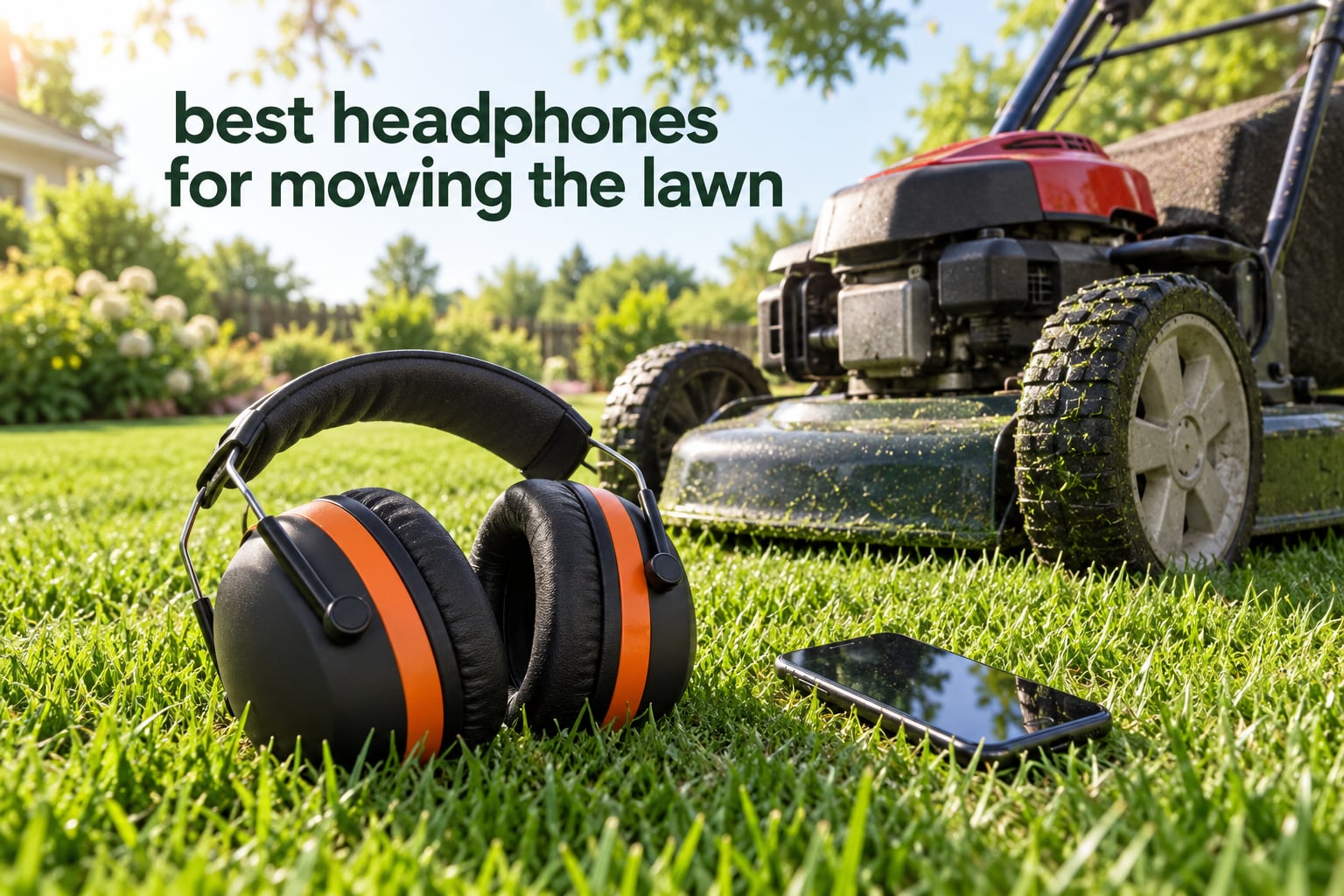
Here is the short answer: the best headphones for mowing the lawn are Bluetooth-enabled hearing protectors rated at 25 dB NRR or higher, not ordinary noise cancelling headphones. A gas push mower puts out roughly 90 to 100 dB at the handlebar, and NIOSH puts the safe exposure limit at 85 dB. Our top pick after weeks of comparison is the PROHEAR 037, which pairs a 30 dB SNR rating with a rechargeable 120-hour battery and an 80 ft Bluetooth range.
That last point matters more than sound quality. Consumer ANC headphones and AirPods-style earbuds feel like they are quieting the yard, but they attenuate nothing. They mask noise with your music and leave every decibel reaching your eardrum. Real hearing protectors physically block sound energy with a sealed shell and certified foam, and that is the only mechanism that protects your hearing.
We compared ten pairs across muff-style and earplug-style designs, checking the published NRR or SNR figure, real battery claims, sweat handling, and how each one holds up with a sun hat and sunglasses on. The list runs from the all-round muff at the top to the compact in-ear picks in the middle, so you can choose by mowing style rather than by brand.
How to Actually Listen to Music While Mowing Safely
Three steps cover almost everyone who wants audio in the yard.
First, buy an NRR-rated hearing protector with Bluetooth rather than a consumer ANC headset. Anything at 25 dB NRR or above is a reasonable target for a residential gas mower; 30 dB or more gives you margin if you cut tall grass or run a riding mower. Second, pair it to your phone before you start the engine, and keep the phone in a shirt pocket or a vest rather than a back pocket, because body tissue cuts range. Third, leave the volume below the limiter if your protector has one, and take a break every 20 minutes to check that the cushions are still sealed against your head.
If you would rather not carry a phone at all, an earmuff with a built-in AM/FM radio solves the problem in one device. If you mow in July heat, the in-ear earplug lane wins on temperature even before you start comparing specs. We cover both in the picks below.
Top 3 Picks for Mowing the Lawn in 2026


These three cover the widest range of mowing situations. The PROHEAR 037 is the muff you want if you own one pair and expect to keep it for years. The MIPEACE MI04 is the answer to July heat, when an over-ear shell traps more than you can stand. The Peltor Sport Tactical 500 is the pick if you need to hear a car, a child, or a machine warning coming while the loud peaks are suppressed.
Best Headphones for Mowing the Lawn in 2026
| Product | Specs | Action |
|---|---|---|
| PROHEAR 037 Bluetooth Hearing Protector |
|
Check Latest Price |
| MIPEACE MI04 Bluetooth Earplug Headphones |
|
Check Latest Price |
 Elgin Ruckus Wireless Earplug Headphones Elgin Ruckus Wireless Earplug Headphones |
|
Check Latest Price |
 DEWALT DPG17 Bluetooth Earmuffs DEWALT DPG17 Bluetooth Earmuffs |
|
Check Latest Price |
 ISOtunes LINK 2.0 Bluetooth Earmuffs ISOtunes LINK 2.0 Bluetooth Earmuffs |
|
Check Latest Price |
 Kalence AC136 Bluetooth Hearing Protection Kalence AC136 Bluetooth Hearing Protection |
|
Check Latest Price |
 ZOHAN EM037 Bluetooth Hearing Protector ZOHAN EM037 Bluetooth Hearing Protector |
|
Check Latest Price |
 PROHEAR 033 Bluetooth Muff with AM/FM Radio PROHEAR 033 Bluetooth Muff with AM/FM Radio |
|
Check Latest Price |
| Peltor Sport Tactical 500 |
|
Check Latest Price |
 3M Pro-Protect Bluetooth Hearing Protector 3M Pro-Protect Bluetooth Hearing Protector |
|
Check Latest Price |
Every product on this list carries a published NRR or SNR figure, which is unusual in this category. The noise ratings in the table are copied straight from the manufacturer listings, so you can compare protection levels before you buy rather than guessing.
Do Noise Cancelling Headphones Work for Lawn Mowing?
They reduce how much noise you notice, and nothing else. A consumer ANC headset works by placing microphones outside the ear cup, measuring low-frequency sound, and emitting an opposing wave so the two cancel inside the cup. That works well against the steady hum of an aircraft cabin and poorly against a mower, because mower noise is broadband and changes constantly as the blades load and unload.
The documented failure mode is a pulsing low-frequency artifact. The top poster in the r/lawncare thread on this exact question reports that a pair of Sony WH-1000XM5 worked fine until the mower blades engaged, then produced a repeated womp womp sound as the cancellation circuit chased the engine drone. You are not hearing less noise; you are hearing noise plus a distortion the electronics created.
There is a second problem that matters more. ANC masks noise; it does not attenuate it. The energy still reaches your eardrum at close to full level, which is why the volume limiter on a modern ANC headset is a hearing safety feature for music playback, not protection for the environment. Volume limiters cap what you hear. Only a certified NRR seal stops the decibels. If you want audio and protection at the same time, the mechanism has to be passive blocking with Bluetooth riding through it.
One exception is worth naming: an electronic hearing protector like the Peltor Sport Tactical 500 or the 3M Pro-Protect. Those use microphones to make your surroundings audible rather than inaudible, and they carry a real NRR. The term active noise cancelling is a marketing phrase you will see on both very different products, so check for the printed NRR every time.
Earmuffs vs Earbuds vs ANC: Which One Fits Your Mowing
Most people searching for headphones for mowing end up comparing two different products and picking the wrong lane. Here is how the three form factors divide up.
Over-ear muffs give the highest protection numbers and the best seal, and they are the only option that works with a sun hat and glasses without adjustment. They trap heat, so in peak summer you will sweat through the headband by the second mow. Weigh roughly 0.7 to 1.25 lb depending on the model.
In-ear earplug headphones sacrifice some low-frequency blocking for a huge comfort win in heat. A 30 g neckband model barely registers, sits under a cap, and keeps your ears free of the humidity that wets out foam cushions. Protection is still real: 29 dB NRR is an OSHA-certified figure. The catch is battery life, typically 12 to 20 hours, and the fact that a poor insertion ruins the seal instantly.
Consumer ANC headphones win on music quality and nothing else. They do not protect your hearing at all, they run hot, and they fail audibly against mower drone. If your goal is enjoying music rather than surviving the noise, buy good ANC headphones and mow in a quieter window. If your goal is surviving the noise, stay with a certified protector.
One more lane worth naming: electronic hearing protectors with awareness microphones. They hold a real NRR and let you hear voices and machines through the muffs. For a riding mower, a busy street, or a property with pets and children, that situational awareness is worth more than extra hours of battery.
1. PROHEAR 037 Bluetooth Hearing Protector: Our Best Overall Pick
PROHEAR 037 Bluetooth 6.0 Hearing Protection Headphones with Rechargeable 1100mAh Battery, 30dB SNR Safety Noise Reduction Ear Muffs 120H Playtime for Mowing, Workshops, Snowblowing – Black
30dB SNR
Bluetooth 6.0, 80ft
1100mAh, 120H playtime
ABS shell, 11.52 oz
Pros
- 30dB SNR for mower and snowblowing
- 120 hour rechargeable battery
- 80ft Bluetooth 6.0 range
- raised glove friendly buttons with 3.5mm fallback
- 6309 ratings for a settled owner base
Cons
- ABS plastic shell feels basic beside metal cups
- bulkier and warmer than earplug designs
- no AM/FM radio on this model
We put the PROHEAR 037 at the top because it is the one muff in this group where nothing important is missing. The 30 dB SNR figure sits at the top of what these muffs claim, and it pairs with a battery that outlives most users’ charging habits by a wide margin.
The 1100 mAh cell is rated at 120 hours of Bluetooth playtime, which works out to weeks of mowing on a single charge. Bluetooth 6.0 holds a stable connection out to about 80 ft, enough to walk to the far corner of a large yard from a phone in a pocket. A 3.5 mm cable is in the box, so the muffs still work if the battery dies mid-lawn.
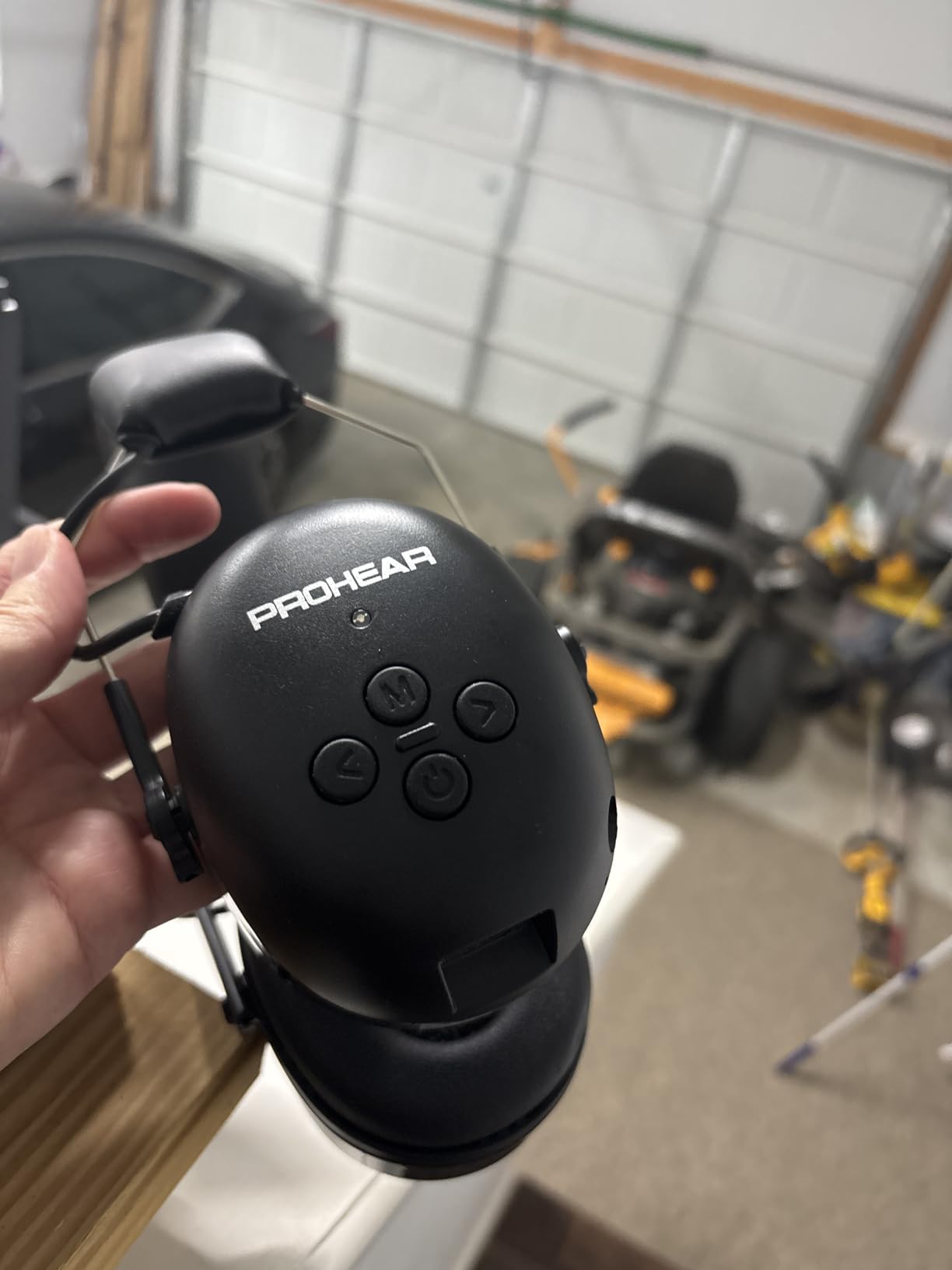
Comfort is where the value shows. The padded headband and soft breathable ear pads hold up through a long afternoon, and the controls are raised and spaced far enough apart to hit through work gloves. At 11.52 oz it is one of the lighter full-size muffs on the list.
The 4.3 average across 6309 ratings is one of the most settled owner profiles in the roundup, and buyers consistently describe getting through a whole property without thinking about power. The honest weakness is material: ABS plastic feels thin compared with metal-shell rivals, and this is the design we would flag first in the summer heat section.

Why the PROHEAR 037 works for most yards
The combination of certified noise blocking, a battery measured in months rather than days, and a straightforward build is hard to argue with. If you mow a residential lawn with a gas push mower and want one pair that handles mowing, snow blowing, and workshop use, this is the shortest path.
Owners who migrate from consumer headphones report that the muff dulls the engine enough that they can listen at moderate volume instead of pushing it to drown out the deck. That is the whole point of the category and it is where this model delivers.
Where the PROHEAR 037 falls short
There is no AM/FM radio, so if you want to leave the phone behind, a different model handles that. The plastic shell also means less long-term feel than a metal-cup build, and the full muff traps more heat than an in-ear design on a July afternoon.
2. MIPEACE MI04 Bluetooth Earplug Headphones: Best for Hot Weather
MIPEACE Bluetooth Earplug Headphones, Neckband Wireless Earbuds earplugs-29db Noise Reduction isolating in-Ear earplug Earphones and Controls,IPX6 sweatproof,20+Hour Battery(Blue Orange)
OSHA-certified 29dB NRR
30g neckband, 20+ hours
IPX6 sweatproof
Bluetooth 5.4, 66ft
Pros
- Most reviewed product here at 8833 ratings
- OSHA-certified 29dB NRR
- IPX6 sweat and water resistance
- coolest option in hot weather at just 30g
- carrying case included
Cons
- Passive reduction only with no electronic impulse attenuation
- bass-heavy tuning
- 20+ hour battery trails the 100+ hour muffs
- fixed neckband can sit short on taller necks
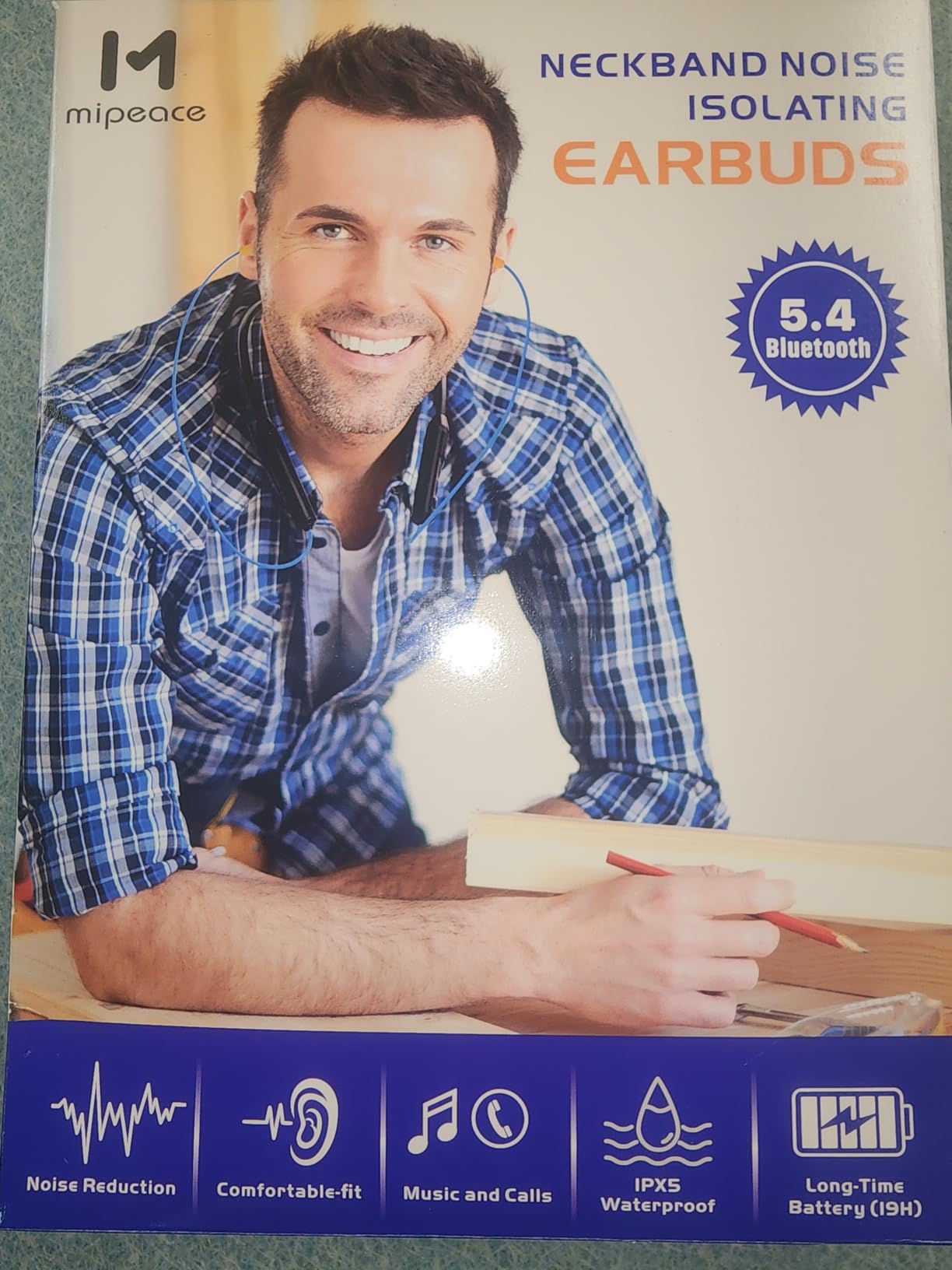
The MIPEACE MI04 is the pick if your mowing happens in summer heat, and it is also the only earplug in the roundup with an OSHA-certified 29 dB NRR. That is a genuinely serious protection figure, not a marketing number.
At 30 g the neckband is close to weightless, and the in-ear format keeps your ears free of the humidity that ruins foam cushions. IPX6 sweat and water resistance handles perspiration and a passing shower. Bluetooth 5.4 reaches about 66 ft, and 20-plus hours of battery covers a long weekend of yard work.
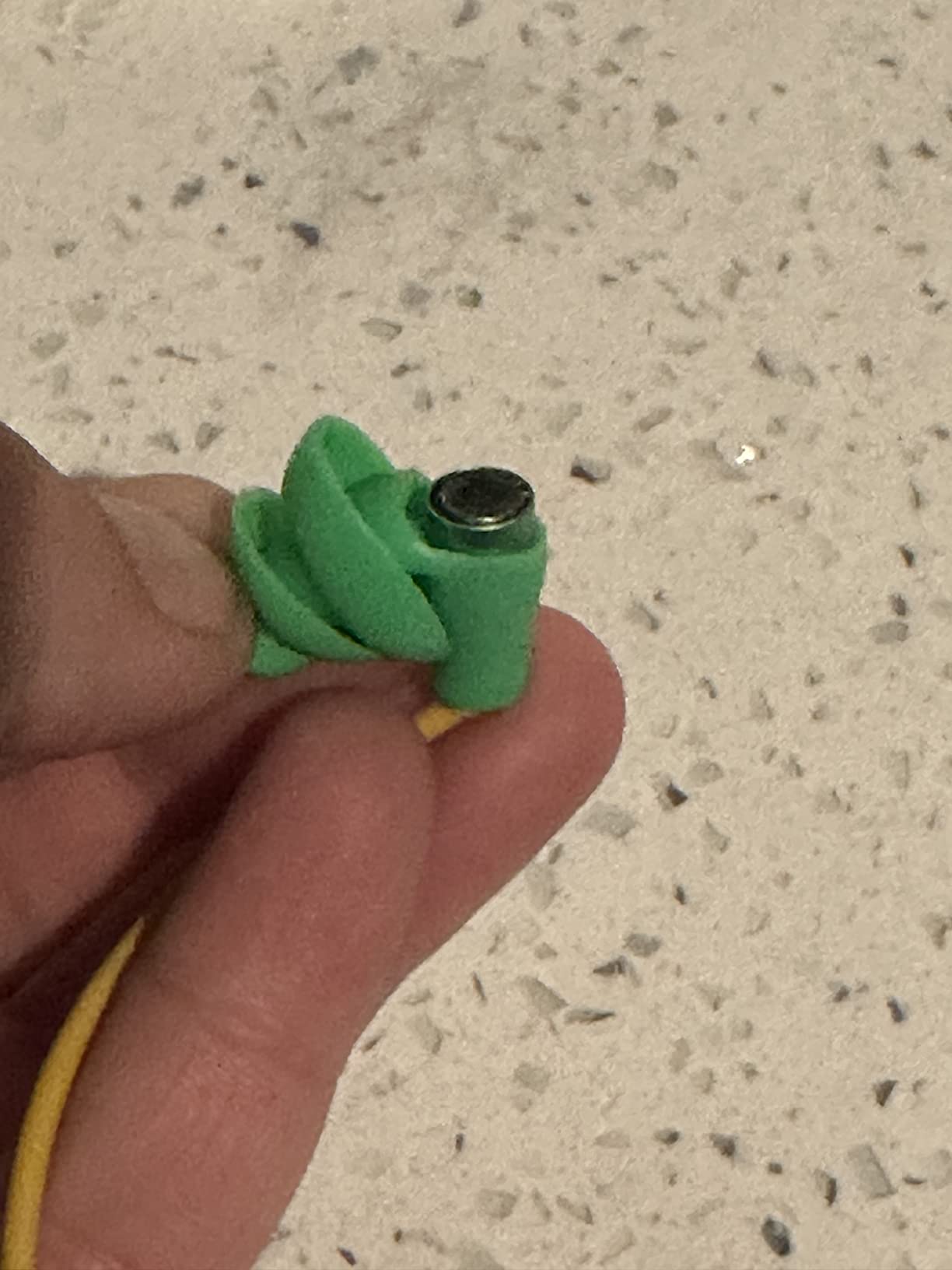
Owners value the form factor more than anything else, and the 8833 ratings at a 4.2 average make it one of the most settled products here. It slips under a cap, stays put through a long job, and the included case makes it easy to keep in a truck bed or a mower bag.
Sound quality is functional rather than tuned, with a bass-heavy character that reviewers mention often. The protection mechanism is entirely passive, so there is no electronic response to sudden impulse noise, only a physical seal. Get the insertion right and the isolation is very good; rush it and you lose a lot of the benefit.
Who the MIPEACE MI04 suits
Anyone mowing in July or August, anyone who wears a hard hat or a cap on the job, and anyone who has given up on muffs because of sweat. The OSHA certification makes it viable for a landscaping crew, not just a homeowner with a quiet electric mower.
It is also the sensible choice for small lawns, where 20 hours of battery is several weeks of use. Charge it overnight after a big day and you will not think about it again.
Where the MIPEACE MI04 falls short
Short battery life relative to the muffs, and a fixed neckband that can sit awkwardly on a longer neck. Sound quality is not tuned for enjoyment, and passive-only isolation will never match a sealed over-ear shell for a zero-turn riding mower.
3. Elgin Ruckus Wireless Bluetooth Earplug Headphones: Toughest Build We Tested
Elgin Ruckus Wireless Bluetooth Earplug Headphones, Ear Plug Earbuds
ANSI-certified 25 dB NRR
Bluetooth 5.3, 50ft
12+ hours, 2.5h charge
IP65 dust and sweatproof
Pros
- Survives drops
- snags and even a severed cable
- collar clips keep earplugs secure without a neckband
- ANSI-certified 25 dB NRR
- IP65 dust and sweat resistance
- one-year warranty
Cons
- Battery degrades noticeably after a few months of daily use
- ear tips are not interchangeable
- controller-to-earpiece cable is short
- small power button is hard to find by feel
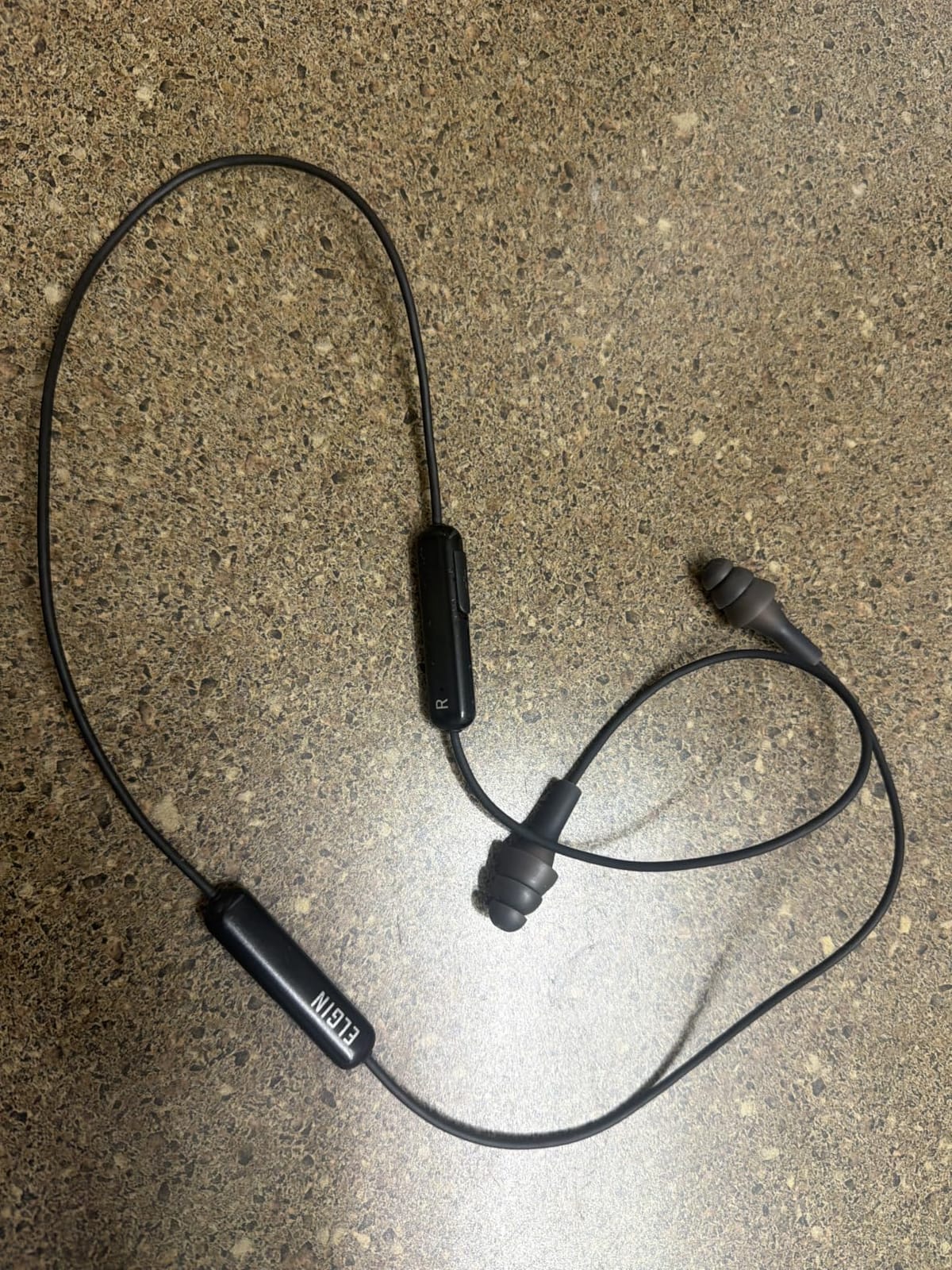
The Elgin Ruckus is the one we would hand to someone who clips radios onto their belt and tangles things. The Kevlar-reinforced cable and tough enclosures are not a spec-sheet flourish; owners report surviving drops, snags on brush, and one case where a cut cable still left the earbud working.
Protection is an ANSI-certified 25 dB NRR, which meets the threshold for a typical residential mower. Bluetooth 5.3 gives about 50 ft of range, and IP65 dust and sweat protection is appropriate for a device that lives in a truck bed. Collar clips hold the low-profile earplugs in place without a neckband loop, which keeps them clear of a collar.
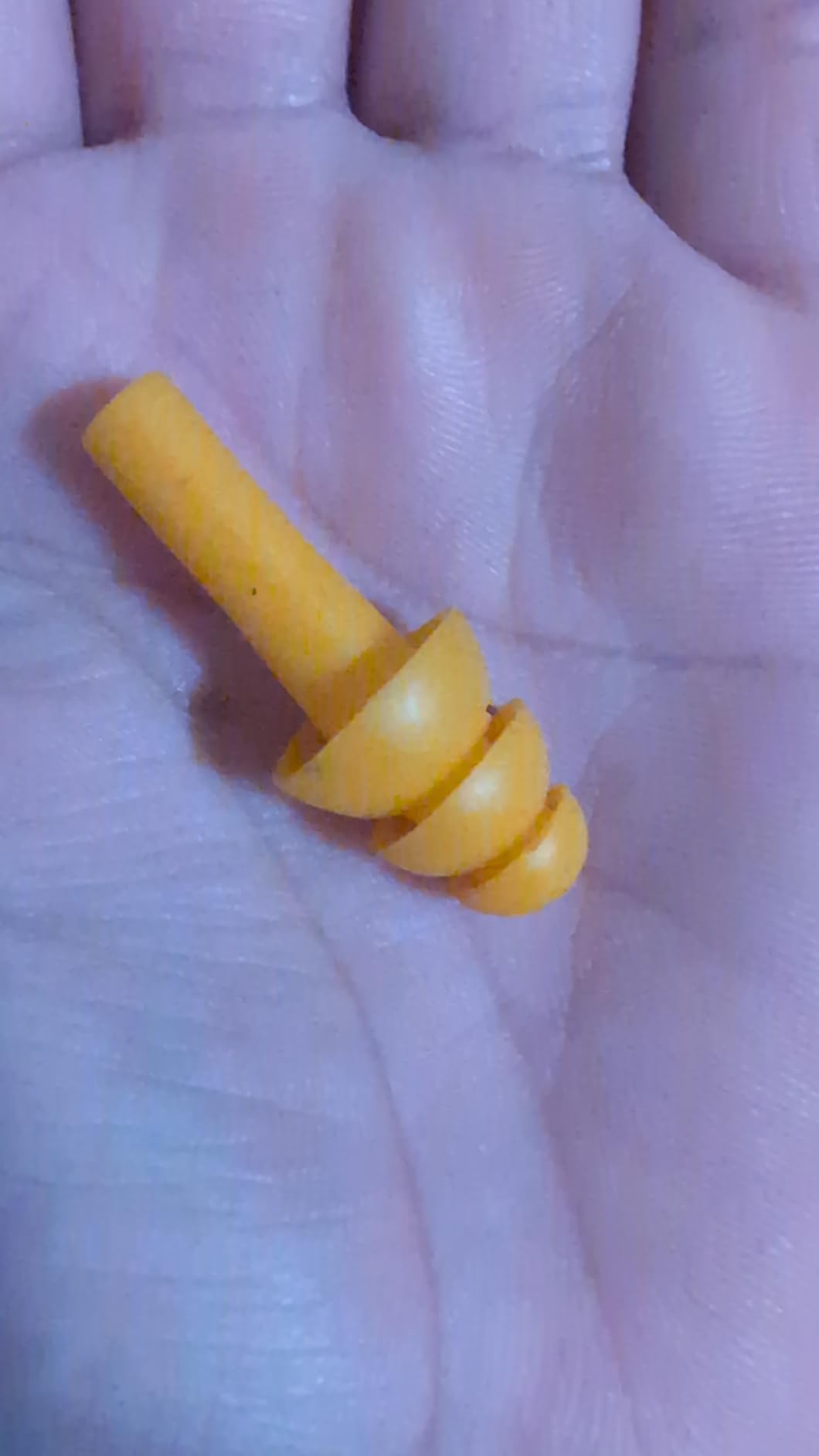
At 4.2 across 3034 ratings, the pattern is consistent: people buy it for toughness and keep it for the toughness. A reinforced storage case and a one-year manufacturer warranty round out the package, and customer service has replaced faulty pairs for owners.
Sound is clearer and fuller than most earplug-style competitors, with 8 mm dynamic drivers and a reported 16 ohm impedance. The tradeoff is the battery: 12-plus hours of playback with a 2.5 hour charge, and owners report that holding up falls noticeably after a few months of daily use.
Why the Elgin Ruckus holds up on a job site
Everything about this build is oriented toward abuse. The cable is reinforced, the enclosures are tough, and the clips keep the profile low enough to tuck under a collar. For landscaping crews, pressure washing, or anyone who stows gear in a pickup without cases, that durability claim matters more than battery figures.
It is also the pick for anyone who has already ruined a pair of earbuds with sweat and wants hardware that tolerates a season of abuse before it needs replacing.
Where the Elgin Ruckus falls short
Battery longevity over time is the main complaint, with a noticeable drop after a few months of daily use. The silicone ear tips are not easily interchangeable, the controller-to-earpiece cable is short, and the small power button is hard to locate without looking. Like all passive earplugs, protection depends entirely on correct insertion.
4. DEWALT DPG17 Rechargeable Bluetooth Earmuffs: For Tool-Collection Owners
DEWALT DPG17 Rechargeable Bluetooth Earmuffs, Hearing Protection, NRR 25
25 dB NRR electronic
Integrated microphone
Adjustable padded headband
Micro-USB rechargeable
Pros
- Recognizable DEWALT yellow and black build
- 25 dB NRR handles mower engines
- integrated mic for calls without removing the muffs
- rechargeable with no disposable batteries
- padded adjustable headband
Cons
- 4.0 average with a 13 percent one-star share
- Micro-USB charging is dated against USB-C rivals
- heavier clamp than lighter budget models
- narrower Bluetooth feature set than competing muffs
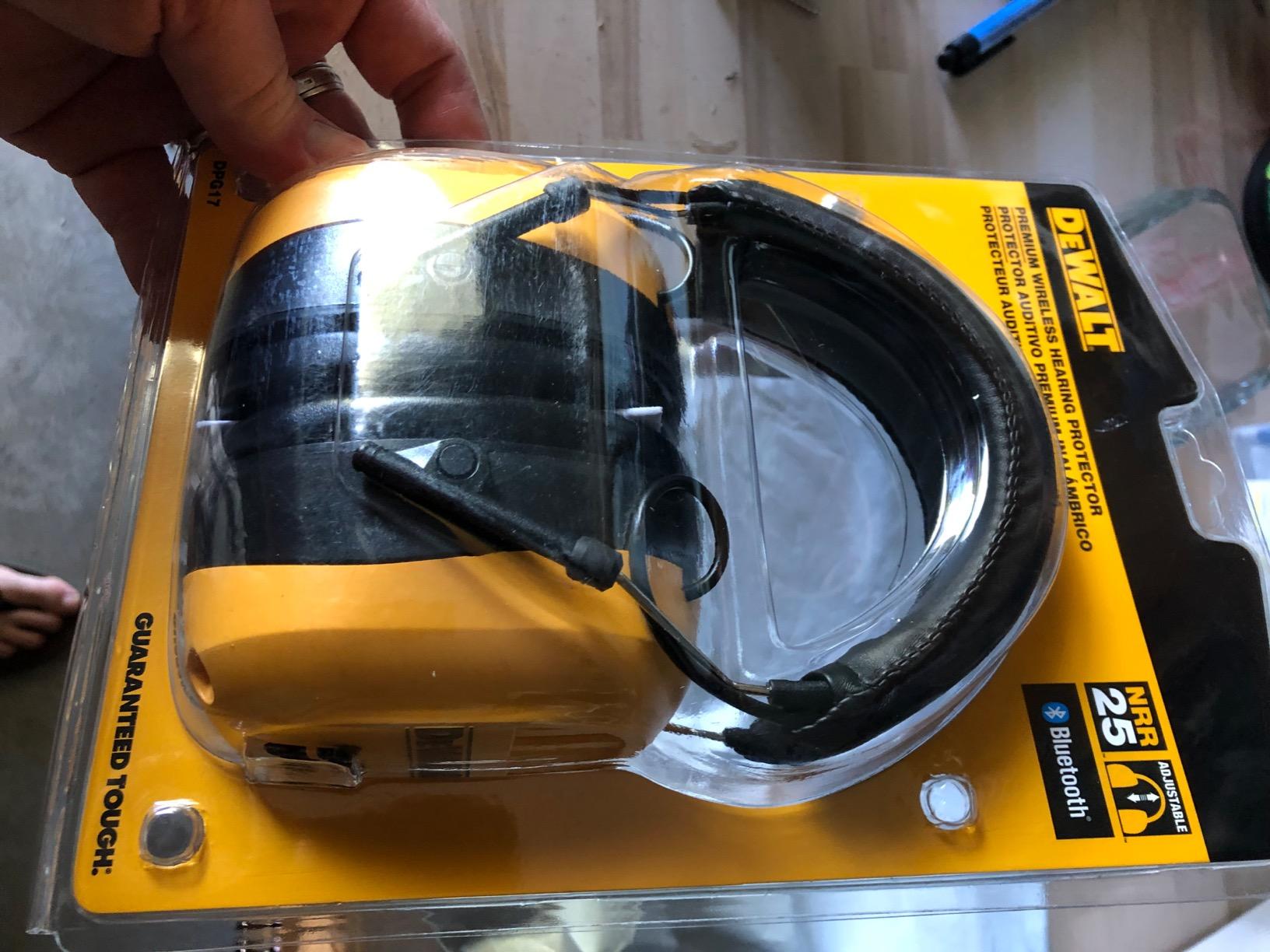
If your garage already looks like a tool brand catalogue, the DEWALT DPG17 fits the shelf. The yellow-and-black build matches the rest of a mower and trimmer collection, and the 25 dB NRR is enough for a residential gas mower.
The integrated microphone is a detail that separates it from cheaper muffs: you can take a call without pulling the protection off your ears, which is the point of an electronic muff in the first place. The padded adjustable headband stays comfortable across an extended mowing session, and the rechargeable design means no disposable batteries to hunt for.
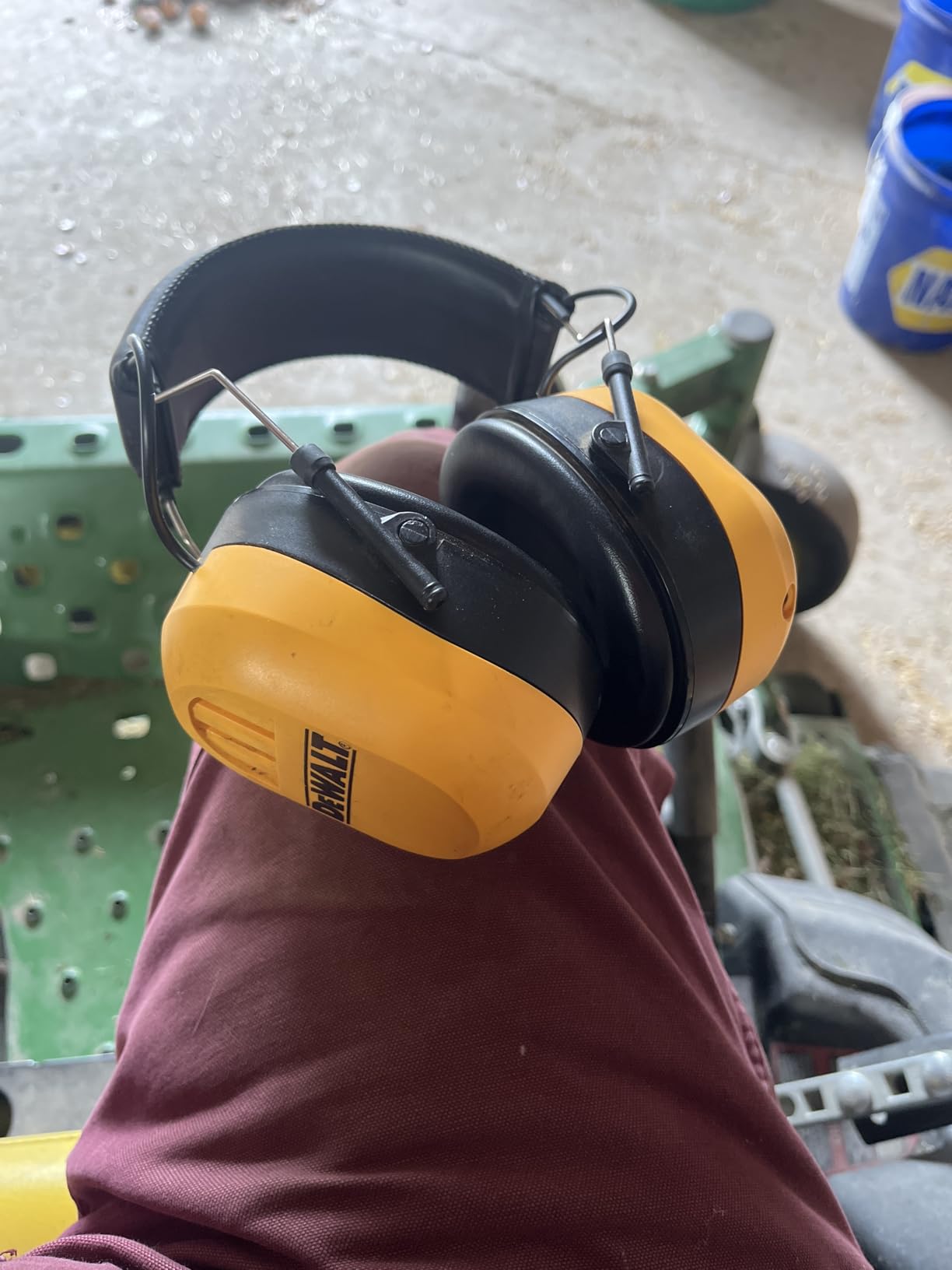
It weighs 0.43 kg, which is at the heavy end of this list, and that weight translates into a firmer clamp than the lighter budget models. Charging is via a Micro-USB cable in the box, which works but is the older standard among current devices.
The 4.0 average across 2308 ratings comes with a 13 percent one-star share. Owners point to average perceived sound quality alongside the dated charging port. The feature set is narrower than competing muffs, with no radio and no volume limiter published on the listing.
Who should buy the DEWALT DPG17
Pick it for the calls. If you run a lawn care business and need to be reachable while the engine is running, an integrated microphone is worth more than a longer battery specification. The brand fit is a legitimate tiebreaker for anyone who buys their equipment from one manufacturer.
For a single home lawn with an occasional trimmer pass, the NRR and comfort are sufficient. Just do not expect the audio to be tuned for enjoyment.
Where the DEWALT DPG17 falls short
It carries a firm clamp force and a 4.0 average, with a 13 percent one-star share. Micro-USB charging feels dated, and the Bluetooth feature set is thin next to muffs with volume limiters or radio tuners. Music quality is functional rather than good.
5. ISOtunes LINK 2.0 Bluetooth Earmuffs: Best Built-In Volume Limit
ISOtunes Link Bluetooth Earmuffs, OSHA Compliant Headphones for Work
ANSI-certified 25 dB NRR
ISOtunes SafeMax 85 dB limit
50H plus AAA backup
IPX4, foldable
Pros
- SafeMax Technology caps output at 85 dB
- rugged build with long-term owner durability reports
- battery holds up after two years of daily use
- roomy cups fit hearing aids
- folds flat
- memory foam cushions and raised buttons
Cons
- Tight clamp can cause headaches after a few hours
- 85 dB ceiling may not drown a reverberant mower deck
- weak bass on kick drums
- headband range runs out for very large heads
- occasional Bluetooth dropouts
The ISOtunes LINK 2.0 is the one pick in this roundup where the volume ceiling is the headline feature rather than a footnote. SafeMax Technology limits audio output to 85 dB, which is the responsible choice when you are spending two hours next to a 95 dB machine.
It is also an OSHA-approved, ANSI-certified 25 dB NRR muff from a dedicated hearing protection brand, so the safety claim is not borrowed. Battery life is 50 hours per charge, with optional AAA backup adding roughly 100 more, and the frame folds flat for storage between jobs.
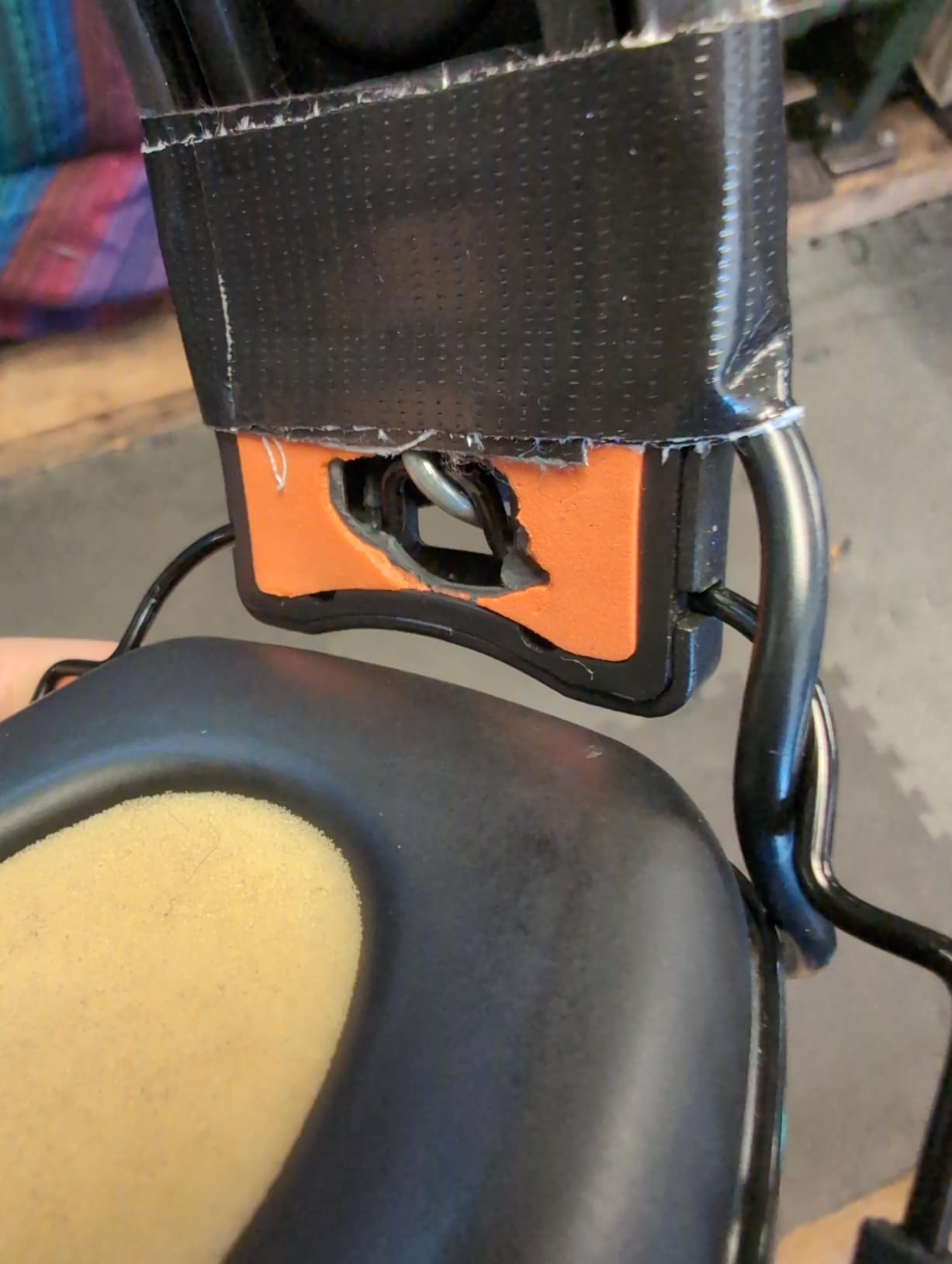
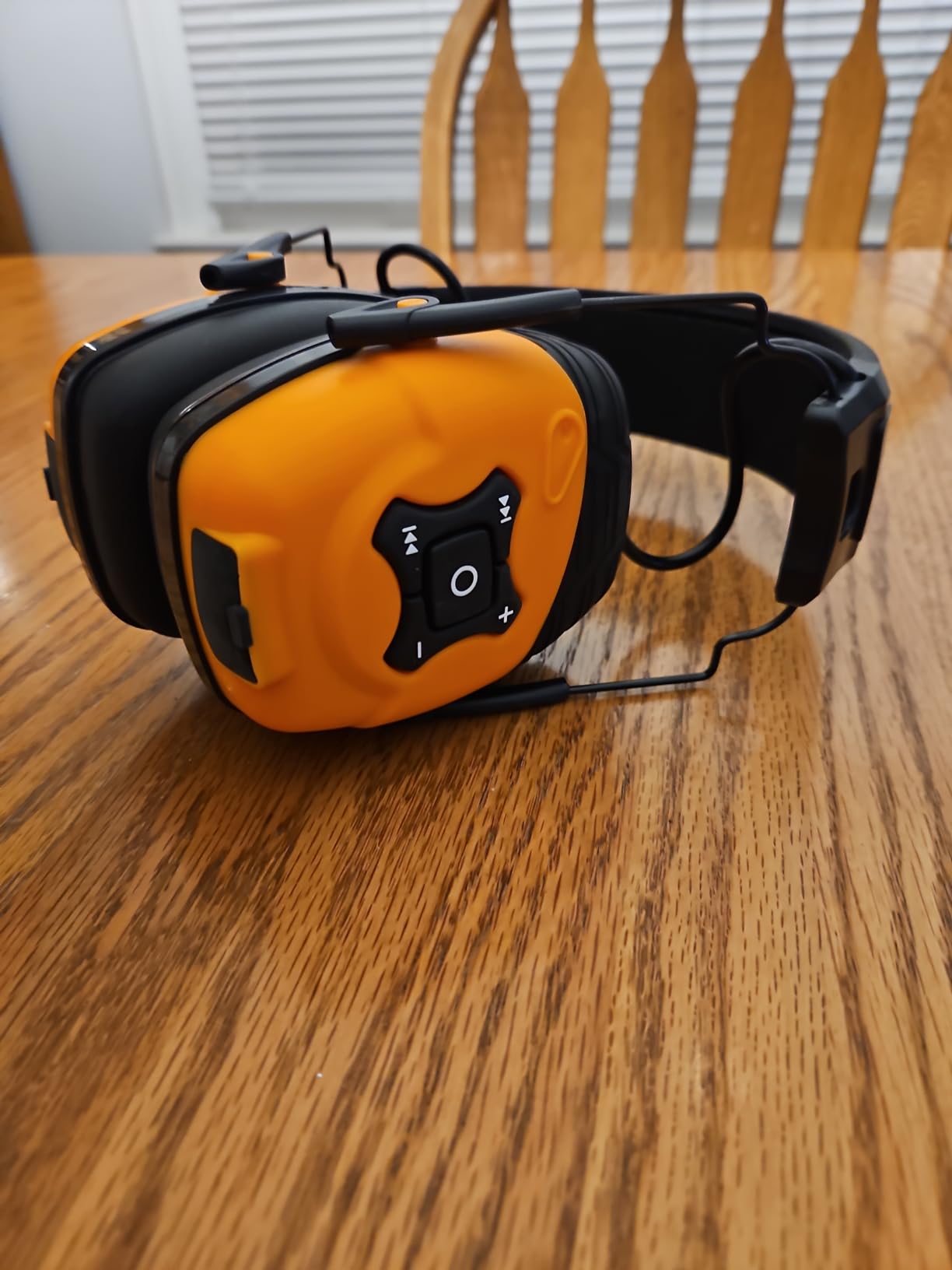
The durability story is the standout here. Long-term owners describe 1000-plus hours of use, repeated 20-foot drops, and battery performance that still holds after two years of daily wear. Memory foam cushions and raised buttons work well with gloves, and the roomy cups accommodate hearing aids worn underneath.
The critical split is comfort and volume. The clamp is tight, and some users report a headache or sore ears after a few hours. Bass is weak, especially on kick drums. Most importantly, the 85 dB ceiling means music is not loud enough to bury a reverberant zero-turn mower deck for some listeners.
Why the SafeMax limit is the deciding feature
Most Bluetooth muffs in this list will happily play at whatever volume you choose. ISOtunes caps it. If you are the kind of person who cranks the volume to overcome engine noise, that ceiling is doing you a favor that no software update can add to a competing pair.
For a walk-behind mower on an open lawn, the ceiling rarely gets in the way. Owners who love the limit usually also like that the muffs muffle rather than silence, so you still hear a warning without an ANC pressure sensation.
Where the ISOtunes LINK 2.0 falls short
A tight clamp is the top complaint, and the headband adjustment can run out of range for very large heads. The 85 dB cap frustrates people on riding mowers with reverberant decks, and some owners report occasional Bluetooth dropouts or unexplained power-offs.
6. Kalence AC136 Bluetooth Hearing Protection: Best Value Pick
Kalence Bluetooth 6.0 Hearing Protection with 120H Working Time, 30dB Safety Earmuffs, Rechargeable Ear Protection Headphones with Mic for Mowing, Workshops, Construction, Snowblowing, Black
NRR 26 dB / SNR 30 dB
ANSI S3.19 and CE EN352-1
1200mAh, 120H, 2h charge
Bluetooth 6.0
Pros
- A 75 percent five-star share alongside a 4.4 average
- NRR 26 dB and SNR 30 dB certified to two standards
- 120 hour playtime with a 2 hour charge
- large glove-friendly buttons
- wired mode keeps it working when the battery dies
Cons
- Marked as a Large size which may not suit smaller heads
- Bluetooth 6.0 is a spec bump with no audible gain
- bulkier and warmer than in-ear options
The Kalence AC136 carries a dual certification that most of its competitors cannot show: NRR 26 dB and SNR 30 dB, certified to ANSI S3.19 in the US and CE EN352-1 in Europe. That is a higher NRR than the other models priced in this bracket, and a real certificate rather than a marketing claim.
Battery is the other headline. A 1200 mAh cell gives 120 hours of playtime on a two-hour charge, and the 3.5 mm AUX input creates a wired never-power-off mode so a dead battery cannot end your mowing day. Foam pads seal around the entire ear rather than sitting on top of it.
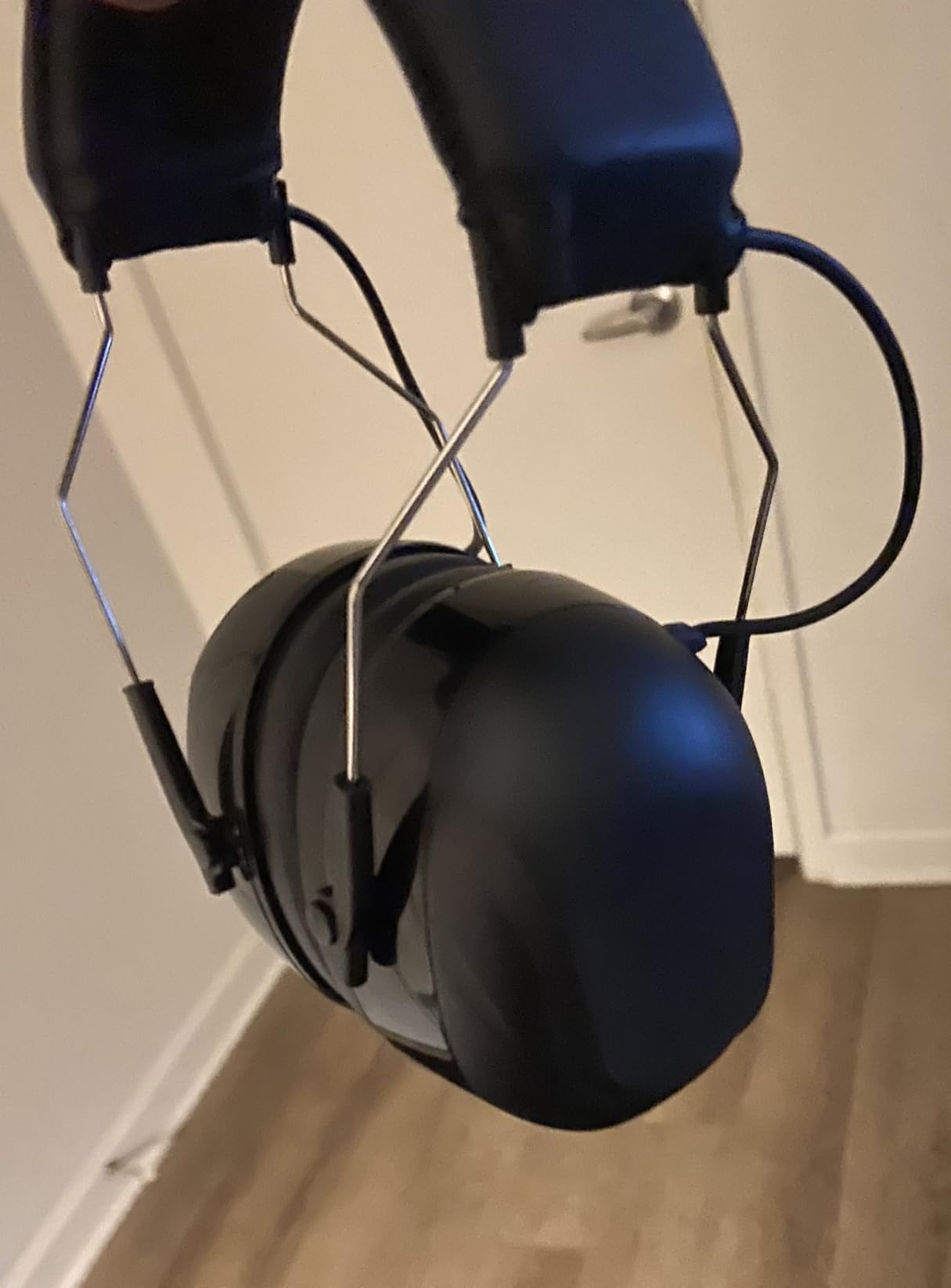
The 4.4 average across 1325 ratings comes with a 75 percent five-star share, one of the strongest satisfaction profiles here. Controls are large enough for gloved hands, and voice assistant support is a small touch that some owners like for hands-free control.
There are very few substantive complaints. The main caveat is sizing: it is listed as Large, so smaller heads may find the seal loose. The Bluetooth 6.0 label is a generation bump with no practical advantage over 5.x, and the muff bulk is noticeable in summer.
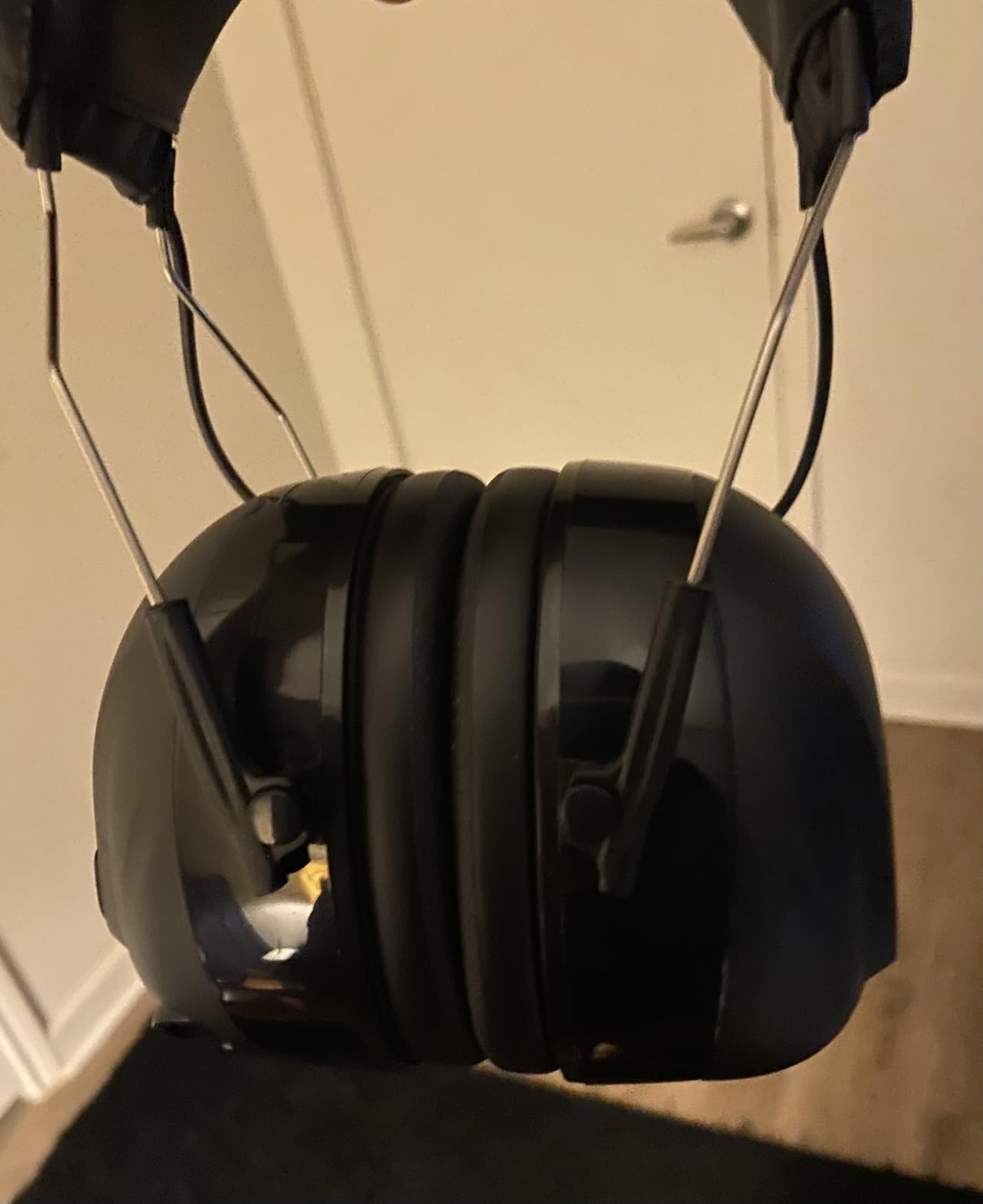
Why the Kalence AC136 stands out for value
You are getting a dual-certified 26 dB NRR, a 120-hour battery, a wired fallback, and glove-operable controls. Very few muffs at any price point put all four of those together, and the satisfaction score backs up the spec sheet.
It is a natural fit for a beginner who wants a real safety rating without a brand premium, and for anyone who wants to keep mowing if the battery fails. A carrying bag is included for transport.
Where the Kalence AC136 falls short
The Large sizing is the practical issue for smaller heads, where a good seal is everything. It is a bulky design that runs warm, and the Bluetooth 6.0 specification is marketing rather than a real audio improvement.
7. ZOHAN EM037 Bluetooth Hearing Protector: Best Lightweight Muff
ZOHAN EM037 6.0 Bluetooth Hearing Protection 25dB NRR Noise Reduction
25 dB NRR
Bluetooth 6.0, 80ft
1100mAh, 120H, unlimited wired
approx 0.66 lb
Pros
- 25 dB NRR certified to both US and European standards
- 120 hour Bluetooth playtime plus unlimited wired playback
- redesigned wider and thicker headband
- double-thickened foam in a durable ABS shell
- light at roughly 0.66 lb
Cons
- 25 dB NRR sits below the 30 dB SNR models here
- Bluetooth 6.0 brings no practical gain over 5.x
- foam cushions degrade and are not as soft as gel options
The ZOHAN EM037 is the muff to look at if the other budget models feel heavy on your head. At roughly 0.66 lb it is among the lightest full-size designs here, and the redesigned wider and thicker headband spreads pressure instead of pinching.
Protection is a 25 dB NRR certified to both US and European standards, which is the right tier for a residential mower. The 1100 mAh battery gives 120 hours in Bluetooth mode, and the wired mode runs indefinitely, which is a safety net you will appreciate on a large property.
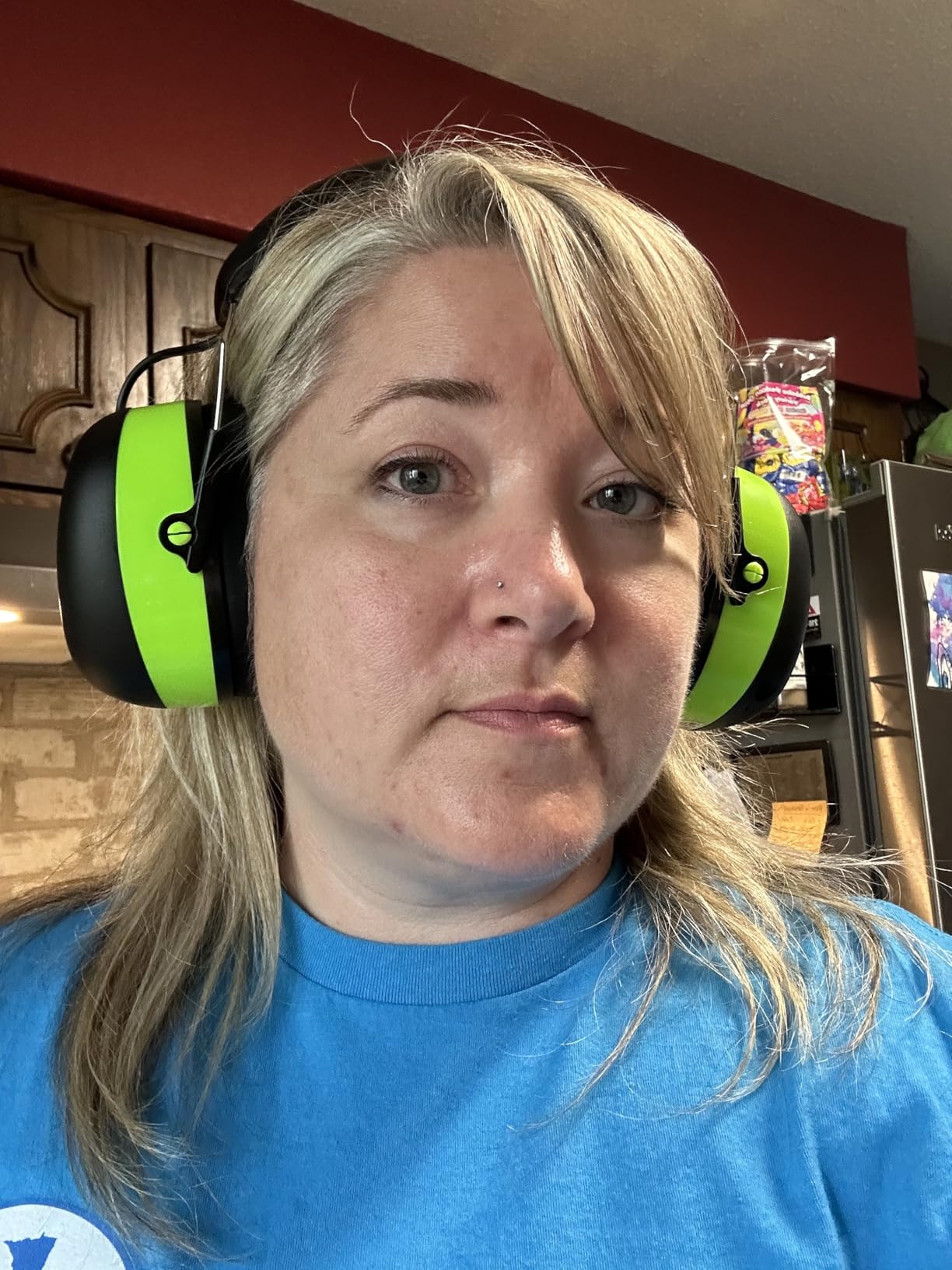
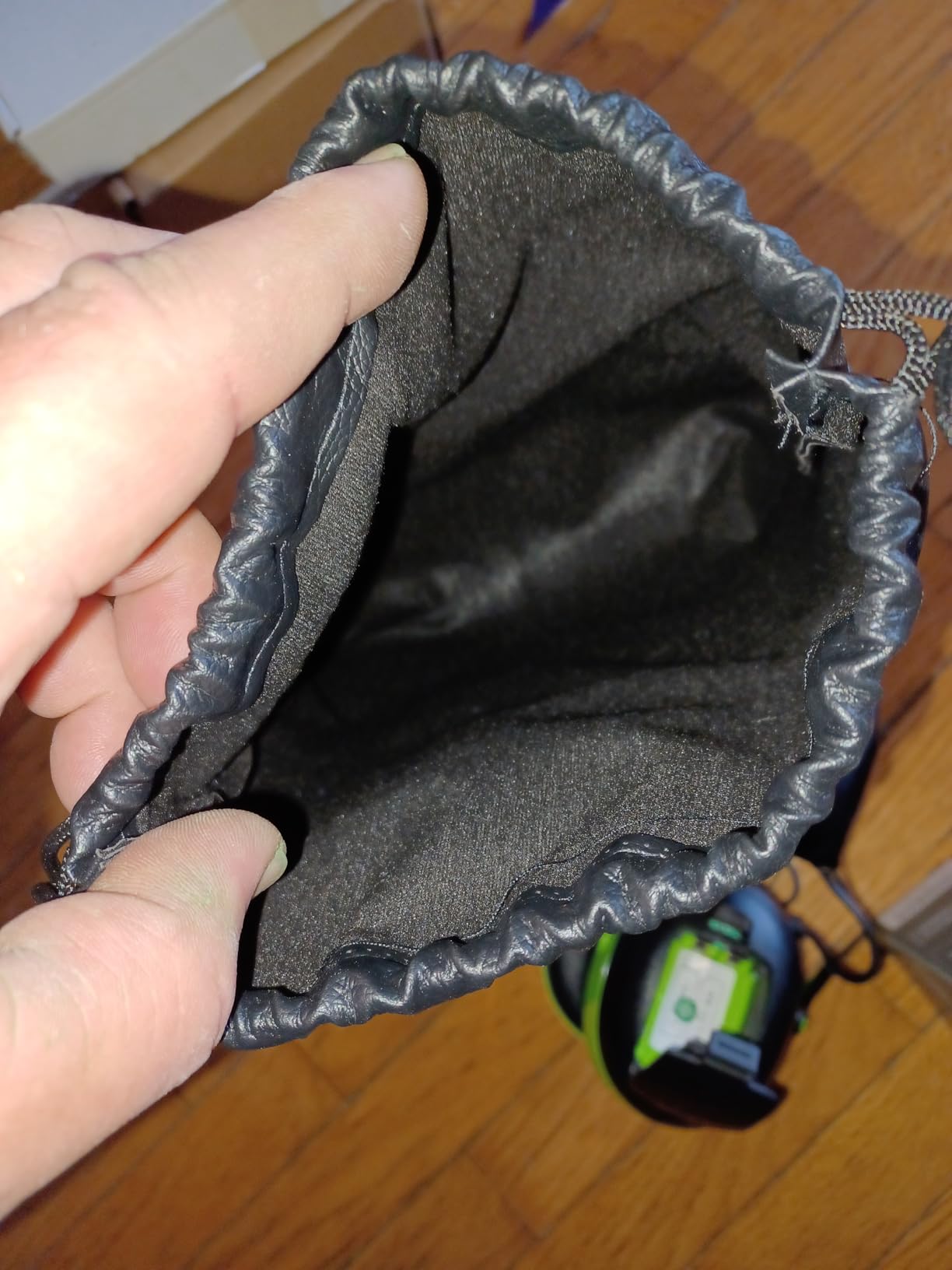
Construction is a durable ABS shell with double-thickened noise-dampening foam, wrapped in stain-resistant PVC leather. A black leather carry bag is included. The 4.4 average across 1492 ratings includes a 71 percent five-star share.
Owners single out the wider, softer headband as a comfort upgrade over earlier muffs and confirm that the 120-hour claim holds for lawn and yard work. The complaints are modest: 25 dB is below the 30 dB SNR models here, and the foam cushions degrade over time without matching the softness of gel designs.
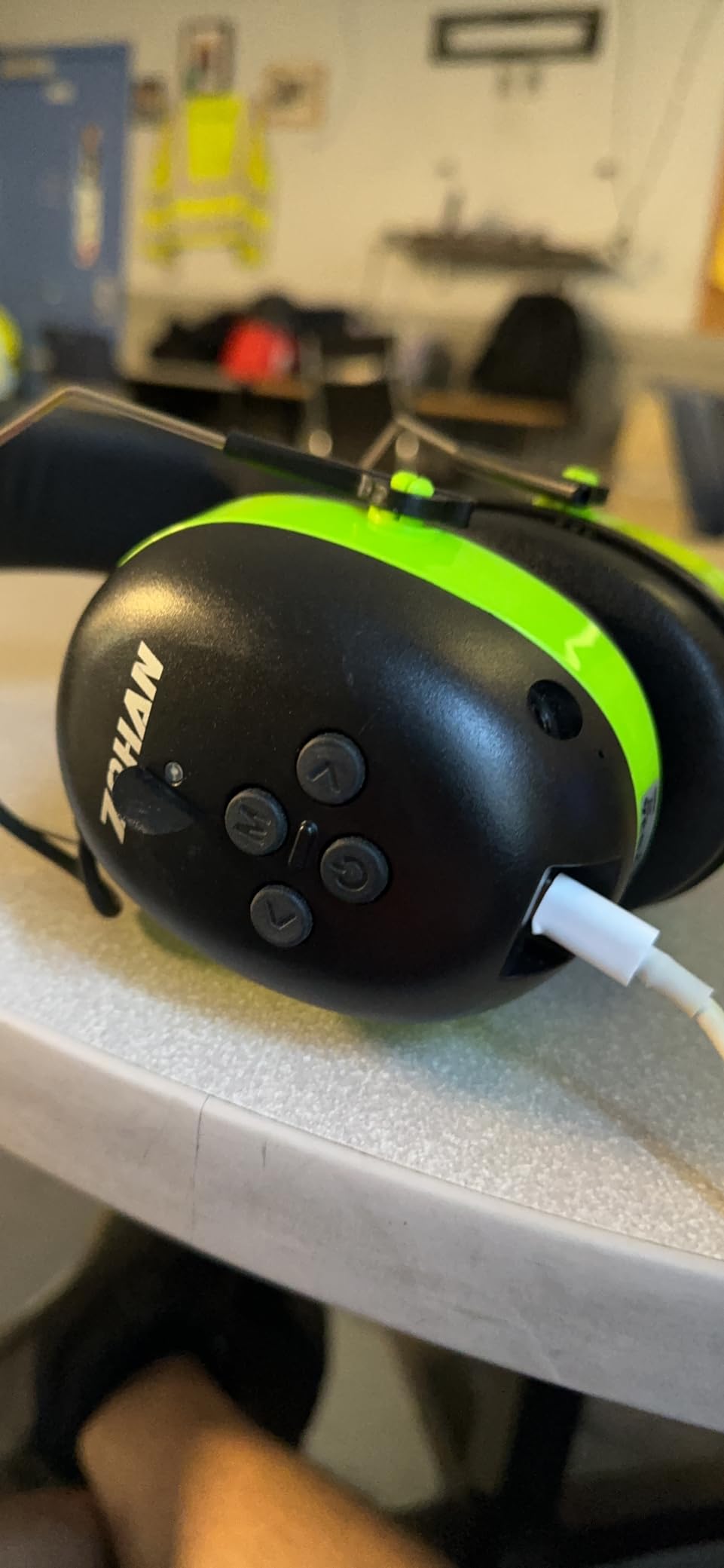
Why the ZOHAN EM037 is the muff for long afternoons
Weight and headband pressure are what end most muff sessions early. At 0.66 lb with a wider band, this is a muff people keep on for the second lawn of the day. Owners consistently report the comfort upgrade over earlier generations of the same design.
Unlimited wired playback removes battery anxiety entirely, and the 80 ft Bluetooth range covers a normal yard without dropouts. For anyone who mows more than once a week, the light weight matters more than the last few decibels.
Where the ZOHAN EM037 falls short
Its 25 dB NRR is the lower end here, which matters more on a zero-turn riding mower than on a push mower. Foam cushions age faster than gel ones, and the Bluetooth 6.0 label is a spec bump rather than an improvement.
8. PROHEAR 033 Bluetooth Muff with AM/FM Radio: Best With a Radio
PROHEAR 033 Upgraded Bluetooth 5.4 Hearing Protection Headphones with FM/AM Radio, OSHA-Compliant 25dB NRR Safety Earmuffs, Rechargeable 48H Playtime for Mowing, Workshops and Snowblowing – Black
NRR 25 dB / SNR 30 dB
ANSI S3.19-1974 and CE EN352-1
FM/AM with 10 FM and 10 AM presets, LCD
1500mAh, 48H Bluetooth
Pros
- The only pick here with a built-in FM/AM radio and LCD
- dual certified 25 dB NRR and 30 dB SNR
- battery covers several days of yard work
- roughly 75 to 80 ft Bluetooth range
- snap-in cushions are easy to replace
Cons
- Fit runs small for larger heads and cups may not enclose bigger ears
- battery disappoints some owners on full-charge sessions
- internal battery cable can fault
- charging port type varies between production runs
- radio reception is inconsistent
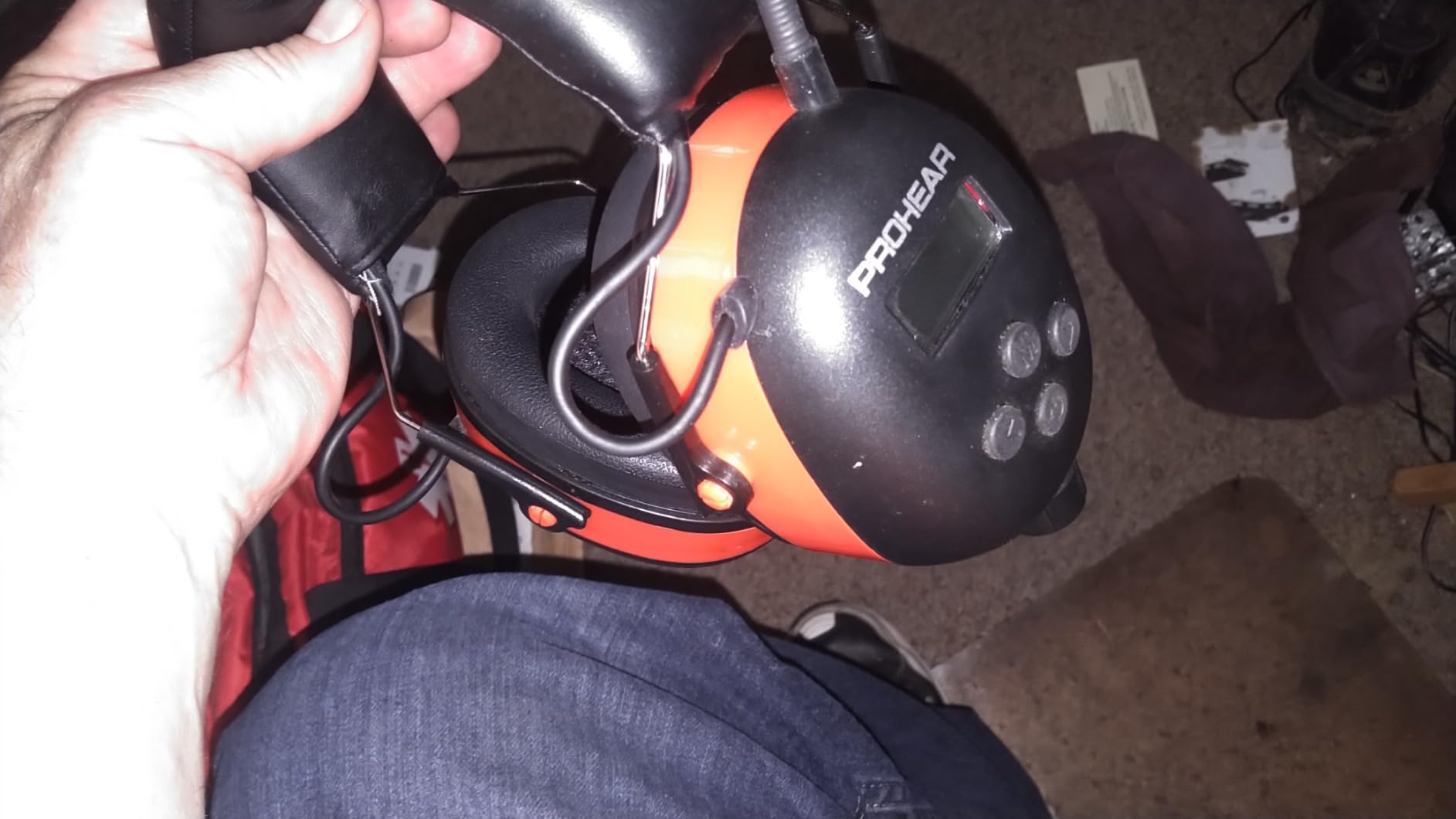
The PROHEAR 033 is the pick if you would rather not carry a phone. It is the only muff in this roundup with a built-in FM/AM radio, ten FM and ten AM presets, an automatic station search, and an LCD display showing what you are tuned to.
Protection is certified to two standards: NRR 25 dB and SNR 30 dB under ANSI S3.19-1974 and CE EN352-1. The 1500 mAh battery gives 48 hours of Bluetooth playback and more than 40 hours in wired or radio mode, which covers several days of landscaping work per charge.
Bluetooth 5.4 with Hi-Fi speakers and an integrated microphone handles calls, and range measures around 75 to 80 ft. At 0.82 lb it sits in the middle of the weight range, and the ultra-soft snap-in ear cushions are easy to replace when sweat-soaked or damaged, which happens every season.
Owners confirm the muff blocks mower noise effectively without needing to crank the volume. The 4.3 average across 1810 ratings reflects a settled product. Recurring gripes are a fit that runs small on larger heads, short internal side wiring, and inconsistent radio reception in weak-signal areas.
Why the radio lane is worth it
A radio tuner removes the phone from the equation entirely, which means no pocket dropouts, no depleted phone battery mid-lawn, and no data use. For someone on a large property with no reception, that is a real reliability gain rather than a novelty feature.
It also serves the ballgame and the workshop. Hearing-aid users report the radio working well during yard work, and the replaceable cushions mean you can keep the same muff for years by swapping the foam.
Where the PROHEAR 033 falls short
The fit runs small on bigger heads, and the cups may not fully enclose larger ears, which leaks both protection and comfort. The internal battery cable can develop an intermittent fault, the charging port type varies between production runs, and the speakers are not powerful with inconsistent reception.
9. Peltor Sport Tactical 500: Top Rated for Situational Awareness
Peltor Sport Tactical 500 Bluetooth Hearing Protection Ear Muffs, 25 dB NRR
25 dB NRR electronic
Dynamic suppression time
Clear Voice Tracking
Bluetooth, 3 AAA power
Pros
- 4.6 average from 3607 ratings with 80 percent five-star
- electronic dynamic suppression handles impulse noise
- Clear Voice Tracking hears machinery and voices
- independent volume for media and ambient sound
- low profile fits under a cap
Cons
- The priciest product in the roundup
- runs on 3 AAA batteries or a separate rechargeable pack
- electronic attenuation can dull music
- less room for hearing aids
The Peltor Sport Tactical 500 holds the best satisfaction score of anything we compared, at 4.6 from 3607 ratings with an 80 percent five-star share. The reason is a different design philosophy: instead of sealing you off, it suppresses the loudest peaks while keeping voices and machines audible.
Dynamic suppression time adapts automatically to sudden impulse noise, which is what a blade strike or a saw kickback produces. Clear Voice Tracking uses recessed microphones to filter wind and background noise so you can hear someone talk to you. Independent volume control lets you balance your media against ambient sound rather than fighting with one slider.
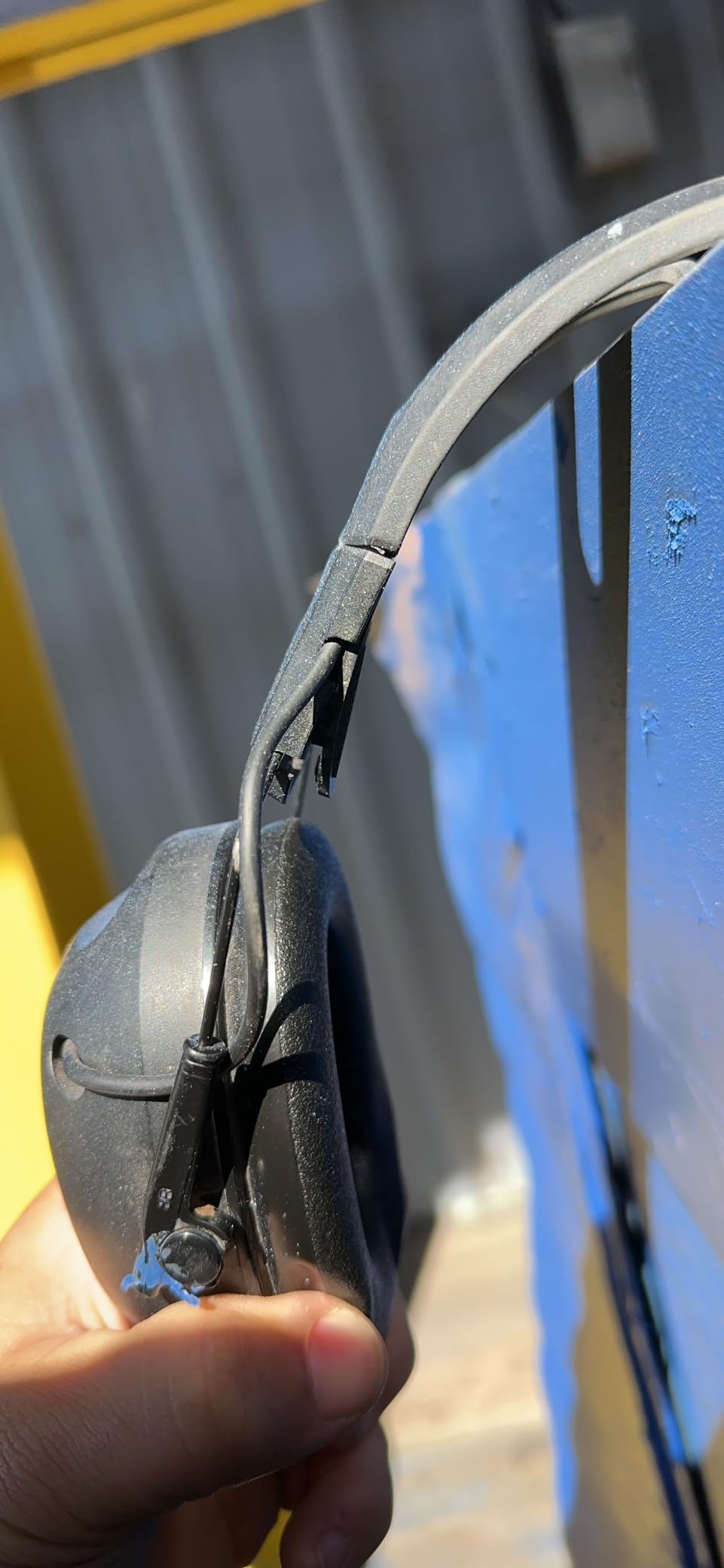
The low-profile adjustable vented headband and soft conformable cushions fit under a cap and store compactly in the included bag. Ear cushion cutouts with rubber bumpers suit long-gun users, and cushions are replaceable through a 3M gel hygiene kit to extend service life. Auto shut-off and a low battery indicator reduce the risk of returning to a dead muff.
Power comes from three AAA batteries, or a separately sold rechargeable lithium-ion pack, rather than built-in USB-C. That is a real friction point for anyone else carrying rechargeable gear. Electronic attenuation can also dull music compared with Bluetooth-only muffs, and hearing-aid users have less room inside the cups.

Why awareness changes the decision for riding mowers
On a walk-behind mower in your own yard, a sealed muff is fine. On a riding mower near a street, a driveway with cars, or a property with kids and dogs, the Peltor approach is safer because you hear what is around you while the electronics handle the peaks.
The 4.6 score reflects owners who understand the trade and value it. Situational awareness is a safety feature, not a gimmick, and Peltor builds the whole product around it rather than adding it as a secondary mode.
Where the Peltor Sport Tactical 500 falls short
It is the priciest product in the roundup, and it runs on disposable AAA batteries unless you buy a separate rechargeable pack. The electronic processing can dull music, and the ear cups leave less room for hearing aids than the roomier foam designs.
10. 3M Pro-Protect + Gel Cushions Bluetooth Hearing Protector: Best for Hard Hat Wearers
3M Pro-Protect + Gel Cushions Electronic Hearing Protector with Bluetooth Wireless Technology, NRR 26 dB
NRR 26 dB, also 26 dB with a hard hat
60+ hour battery
Active awareness microphones
Premium gel cushions
Pros
- 26 dB NRR that holds when worn with a hard hat
- active microphones maintain awareness of equipment and voices
- 60 plus hour battery covers a full week
- gel cushions and canted cups ease pressure
- glove-usable controls
Cons
- Bluetooth audio is functional rather than hi-fi
- electronics add weight
- premium gel cushions run warm in summer heat
- Audio Assist prompts annoy experienced users
The 3M Pro-Protect carries an NRR 26 dB that stays at 26 dB even when worn with a hard hat, which is a genuinely useful spec for anyone working around equipment. Active microphones keep you aware of machinery and voices nearby while the protection is in place.
Battery life is the practical strength at 60-plus hours with a four-hour auto shut-off, which covers a full week of mowing on a single charge. The premium gel cushions and canted ear cups spread pressure better than flat pads, and the recessed microphones are designed to survive wind and rough handling.
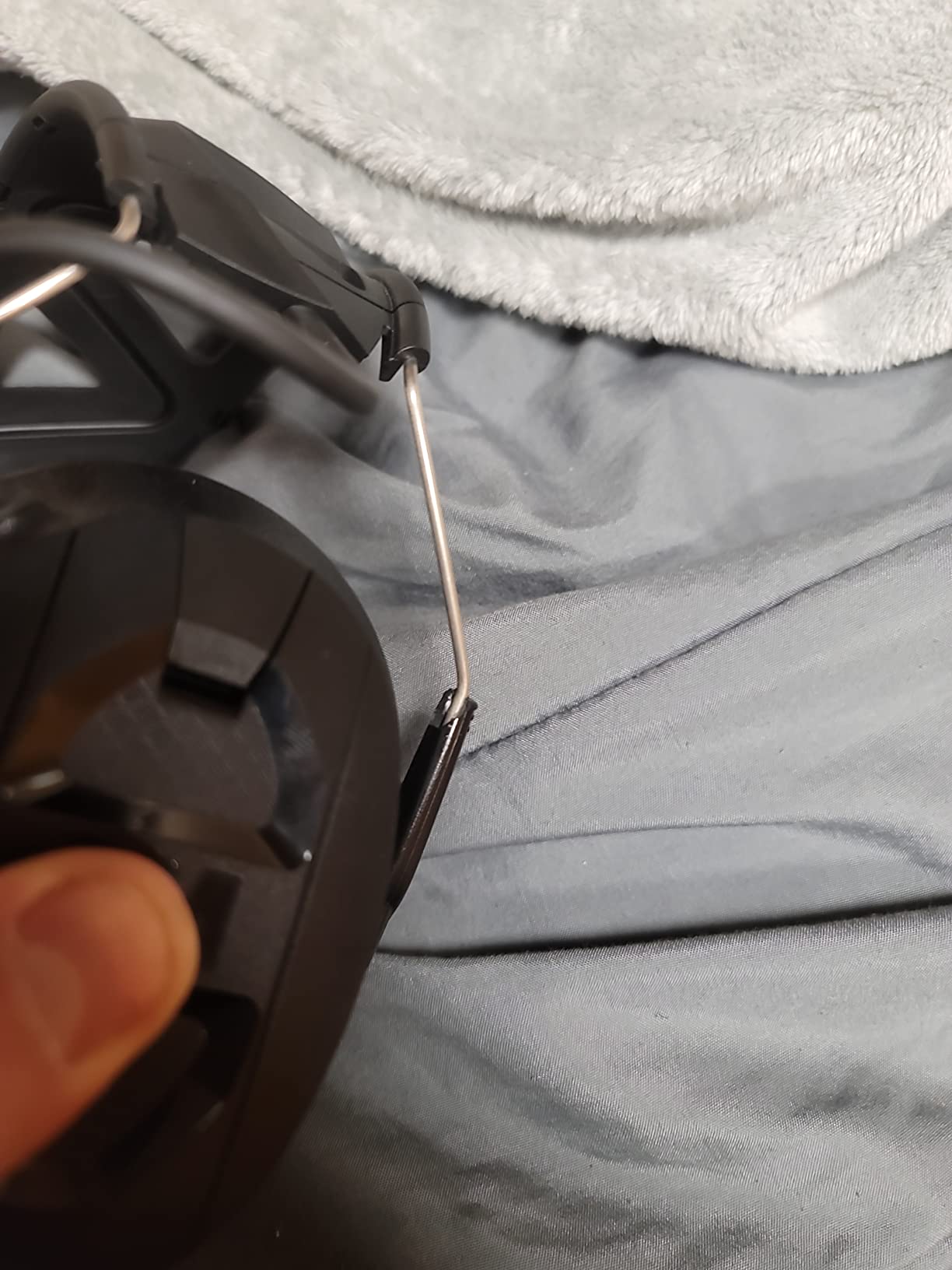
Ergonomic controls are usable with gloves, and Audio Assist guides you through setup. It weighs 13.44 oz, so the electronics add weight compared with a purely passive muff, and it is built for teams that need hands-free communication on a job site.
The 4.1 average across 1374 ratings sits below most of the muffs here. Music playback is the recurring complaint, described as functional rather than tuned for enjoyment, and the gel cushions can run warm during summer mowing. Audio Assist prompts become irritating once you know the controls.
Why the 3M name matters for a hard hat
But not many protectors publish a hard-hat-compatible NRR. If you mow where a hard hat is required, or you split time between the yard and a site, this is the spec that keeps the rating intact instead of dropping.
The 60-hour battery removes charging from your routine entirely, and the awareness microphones suit anyone sharing a property with equipment running nearby. Gel cushions also last longer than foam if you rotate a spare pair.
Where the 3M Pro-Protect falls short
Bluetooth audio is adequate rather than enjoyable, which is a problem if music is the main reason you are out there. The electronics add weight, the gel cushions run warm in summer, and the guided setup prompts wear thin after a week.
How to Choose Headphones for Mowing the Lawn
Start with the NRR, and derate it. NRR is the Noise Reduction Rating tested to ANSI S3.19, a laboratory figure measured with ideal seals and no movement. Because nobody seals perfectly on a bumpy lawn, the widely used safety practice is to halve it. A muff rated 26 dB gives you roughly 13 dB of real protection, and a 30 dB SNR figure is about 15 dB. Judge products on the derated number, and treat 24 to 25 dB NRR as the minimum for a residential gas mower.
Match the form factor to your season. Muffs give the best seal and the best protection numbers, and they are the only option that fits sunglasses and a sun hat without adjustment. Earbuds win in July heat, where the humidity soaks through foam cushions in an hour. If you have both problems, buy a muff and a spare set of replaceable cushions rather than a second pair of headphones.
Decide how you will get audio. Bluetooth needs a phone within range, and body tissue cuts range more than walls do. A phone in a shirt pocket keeps you near the 50 to 80 ft these products are rated for; a phone in a back pocket will not. If you would rather not manage either, an earmuff with an AM/FM tuner removes the phone from the equation and works anywhere with a signal.
Count the battery in days, not hours. Forty hours of playback is roughly two large lawns before you charge. One hundred-plus hours is a season. Muffs powered by replaceable AA or AAA cells have a theoretical ceiling, and for someone on a large property a rechargeable cell with a wired fallback is the safer specification.
Check that the controls work with gloves. Raised, widely spaced buttons are not a luxury in July. Small recessed buttons force you to pull the muffs off with one hand while the mower idles, which is both annoying and unsafe.
Treat sweat as a selection criterion. This is the failure mode owners describe most often. Ear pieces and headbands can separate after a season of heavy perspiration, and foam cushions stop sealing once they are soaked. Look for a published IP rating, a stated sweat resistance, or replaceable snap-in cushions. Nothing extends the life of a soaked cushion.
Check the glasses and hat fit before you buy. A tight headband and a temple arm sitting under the muff seal is a leak, and a leak is protection you are paying for and not getting. Loosen the headband fully and check that a sun hat brim and sunglasses temple do not lift the cup off your skull.
Consider double protection for professionals. Crews working mowers and trimmers all day commonly wear foam earplugs under an over-ear defender. Once you add a plug, you should not also wear an earplug-style Bluetooth device, and the combined protection changes the calculation entirely.
While you are matching the protector to the machine, our picks for the best lawn vacuums and best lawn sweepers cover fall cleanup, when leaf blowers and vac noise are just as loud as the mower.
How Loud Is a Lawn Mower and How Long Is Safe?
A gas push mower typically measures 90 to 100 dB at the operator position, and a riding mower or a mower cutting tall, wet grass sits at the loud end of that range. NIOSH recommends limiting exposure to 85 dB as an eight-hour average. Hearing damage from this kind of noise is permanent and irreversible, because no medical procedure restores lost hearing.
That is why the product specifications on this page matter. A 95 dB mower against an 85 dB limit is a 10 dB overshoot, and every 3 dB above the limit halves the recommended exposure time. A pair with 25 dB NRR, once you allow for a realistic seal, brings the arriving level down close to the limit for a couple of hours of mowing.
The practical rule we use: if you cannot hear a phone ring at arm length while the mower is running, the protection is not sealed properly. Check the cushions, check the headband tension, and if you are still shouting over it, add earplugs underneath.
Frequently Asked Questions
Do noise cancelling headphones work for lawn mowing?
They reduce how much noise you notice but protect nothing. ANC masks noise with music rather than blocking it, and against a mower it often creates a pulsing low-frequency artifact as the electronics chase the engine drone. For mowing, choose a hearing protector with a published NRR of at least 25 dB and Bluetooth built in.
What are the best Bluetooth hearing protection headphones for mowing?
The PROHEAR 037 leads for muff-style users with 30 dB SNR, Bluetooth 6.0 and a 120-hour rechargeable battery. The MIPEACE MI04 is the best in-ear option with an OSHA-certified 29 dB NRR and an IPX6 sweat rating. The Kalence AC136 offers dual-certified 26 dB NRR protection with a wired fallback mode.
What are the best earmuffs for mowing?
Look for four things in an over-ear muff: a published NRR of at least 25 dB, a padded headband comfortable for hours, a Bluetooth or radio option for audio, and sweat-resistant or replaceable ear cushions. The PROHEAR 037 and the 3M Pro-Protect both meet that bar, with the Kalence AC136 as a lighter-feeling alternative.
What are the best radio headphones for mowing the lawn?
The PROHEAR 033 is the pick, with a built-in FM/AM tuner, ten FM and ten AM presets, an LCD display, automatic station search, and an NRR 25 dB / SNR 30 dB rating. It runs 48 hours of Bluetooth playback and more than 40 hours in radio mode on a 1500 mAh battery, and it removes the need to carry a phone.
What is the best hearing protection for mowing the lawn?
A Bluetooth hearing protector rated at 25 dB NRR or higher is the right standard for a residential gas mower. Add margin for a riding mower, tall grass, or a long session, and remember that real protection is roughly half the printed figure once you account for an imperfect seal. Muffs seal best; in-ear plugs stay cooler in summer heat.
Final Verdict on the Best Headphones for Mowing the Lawn
The PROHEAR 037 is the best headphones for mowing the lawn for most people, because it combines a 30 dB SNR rating with a battery measured in months and an 80 ft connection that holds across a yard. It also carries 6309 ratings at a 4.3 average, which means the failure points are already well documented rather than a surprise.
Buy the MIPEACE MI04 if heat is your problem. Buy the PROHEAR 033 if you want to leave your phone at home. Buy the Peltor Sport Tactical 500 if you need to hear what is around you while the loud peaks are suppressed. Buy the 3M Pro-Protect if you wear a hard hat or work around equipment.
Whatever you choose, check the printed NRR, keep the seal tight with the cushions dry, and treat any consumer ANC headset as a music device rather than protection. If you are replacing an older pair, our best lawn tractors guide covers the machines where the noise levels are highest.