
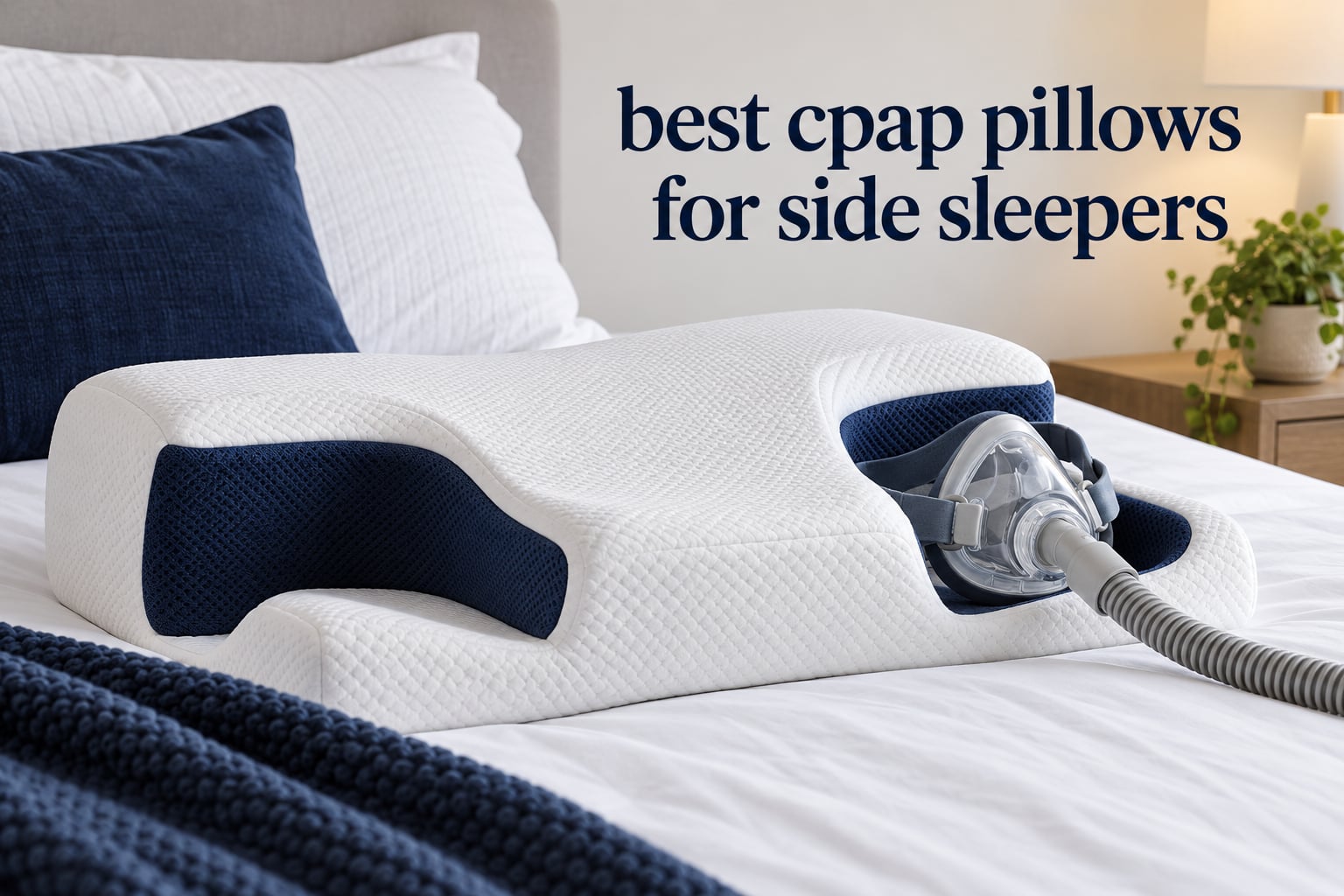
The best CPAP pillows for side sleepers are contoured pillows with deep side cutouts, hollow ear zones and a medium-to-high loft of roughly 4-5 inches. That combination gives a full face, nasal or nasal pillow mask room to sit without levering the seal open when you roll onto your shoulder.
Side sleeping is where most CPAP problems start. When you lie on your shoulder, your cheek and the frame of your mask press straight down into the pillow. That pressure levers the seal open, and the hose then drags the mask out of position. The result is air pushing into your eyes, red marks across your cheek and nose by morning, and hours of therapy lost.
We spent weeks reading the review data on ten of the most-reviewed CPAP pillows on the market, checking loft in inches, cutout geometry, foam density claims, certifications and care instructions against manufacturer listings. We also cross-checked what long-term users post on r/CPAP and cpaptalk.com, because the numbers on a listing rarely tell you how a pillow behaves in hour four of sleep.
One thing to clear up early: a CPAP pillow fixes leaks that come from head position. It cannot fix leaks caused by a mask that is strapped too tight, a worn-out cushion, or a pressure setting high enough to blow the mask off your face. We cover that distinction in detail further down, because it is the single most repeated question in the community. If you are still deciding on hardware, our guide to the best CPAP masks is worth a look first.
Top 3 CPAP Pillows for Side Sleepers for October 2026

Lunderg CPAP Pillow
- Removable 1.1 in foam layer
- Works with every mask type
- Two machine-washable covers

IKSTAR Large Cutout Pillow
- Larger mask cutouts
- 2 cm adjustable loft insert
- Cooling washable cover

EnduriMed CPAP Pillow
- Patented two-thickness design
- Four contoured cutouts
- Corner gaps for tubing
The Lunderg is the pick we would put in front of most people. It carries the deepest review base in this group at 3835 ratings, it works with every mask style including full face and BiPAP, and the removable 1.1 inch foam layer means you can drop the height if 5 inches is too much for you.
The IKSTAR large-cutout model is the value pick. Side sleepers using a full face mask repeatedly report their mask seal score moving from a marginal setting to a good one once the cutout is big enough to hold the frame rather than pinch it.
The EnduriMed is the high-loft option. It is a genuinely firm, taller pillow with four cutouts and corner gaps, and it is the one we would pick for broad shoulders that compress a lower pillow.
All 10 CPAP Pillows for Side Sleepers at a Glance for October 2026
| Product | Specs | Action |
|---|---|---|
| Lunderg CPAP Pillow for Side and Back Sleepers |
|
Check Latest Price |
| IKSTAR HSA/FSA Pillow with Larger Cutouts |
|
Check Latest Price |
| EnduriMed CPAP Pillow for Side Sleeping |
|
Check Latest Price |
 HOMCA CPAP Pillow for Side Sleeping HOMCA CPAP Pillow for Side Sleeping |
|
Check Latest Price |
 IKSTAR Dual Loft CPAP Pillow IKSTAR Dual Loft CPAP Pillow |
|
Check Latest Price |
 Elviros Adjustable CPAP Pillow Elviros Adjustable CPAP Pillow |
|
Check Latest Price |
 IKSTAR Standard Loft CPAP Pillow IKSTAR Standard Loft CPAP Pillow |
|
Check Latest Price |
 Elviros Dual Height CPAP Pillow Elviros Dual Height CPAP Pillow |
|
Check Latest Price |
 Lunderg Parkin Down Alternative Pillow Lunderg Parkin Down Alternative Pillow |
|
Check Latest Price |
 Pillows With A Purpose CPAP Pillow Pillows With A Purpose CPAP Pillow |
|
Check Latest Price |
1. Lunderg CPAP Pillow for Side and Back Sleepers: Best Overall Pick
Lunderg CPAP Pillow for Side & Back Sleepers – Memory Foam
Removable 1.1 in foam layer
Two machine-washable covers
21.65 in L x 13.78 in W
Pros
- Works with every mask type and brand
- Removable 1.1 in memory foam layer for loft tuning
- Two machine-washable pillowcases included
- Two-sided contour suits side back and stomach sleepers
Cons
- Slow-rebound foam feels very firm at first
- Contour can create a three-point tripod contact
- Narrow footprint means repositioning when turning over
This is the pillow we kept coming back to while working through the list. At 3835 ratings averaging 4.2 stars, it is the most reviewed CPAP pillow in this group by a wide margin, and that volume matters because it means the odd complaints have already surfaced rather than hiding behind a thin review count.
Buyers consistently credit it with removing the two things side sleepers complain about most: the mask seal breaking when they roll over, and the pressure marks left on the cheek and bridge of the nose in the morning. Several people describe being able to loosen their headgear after switching, because the pillow is doing the positioning work the straps were being tightened to compensate for.
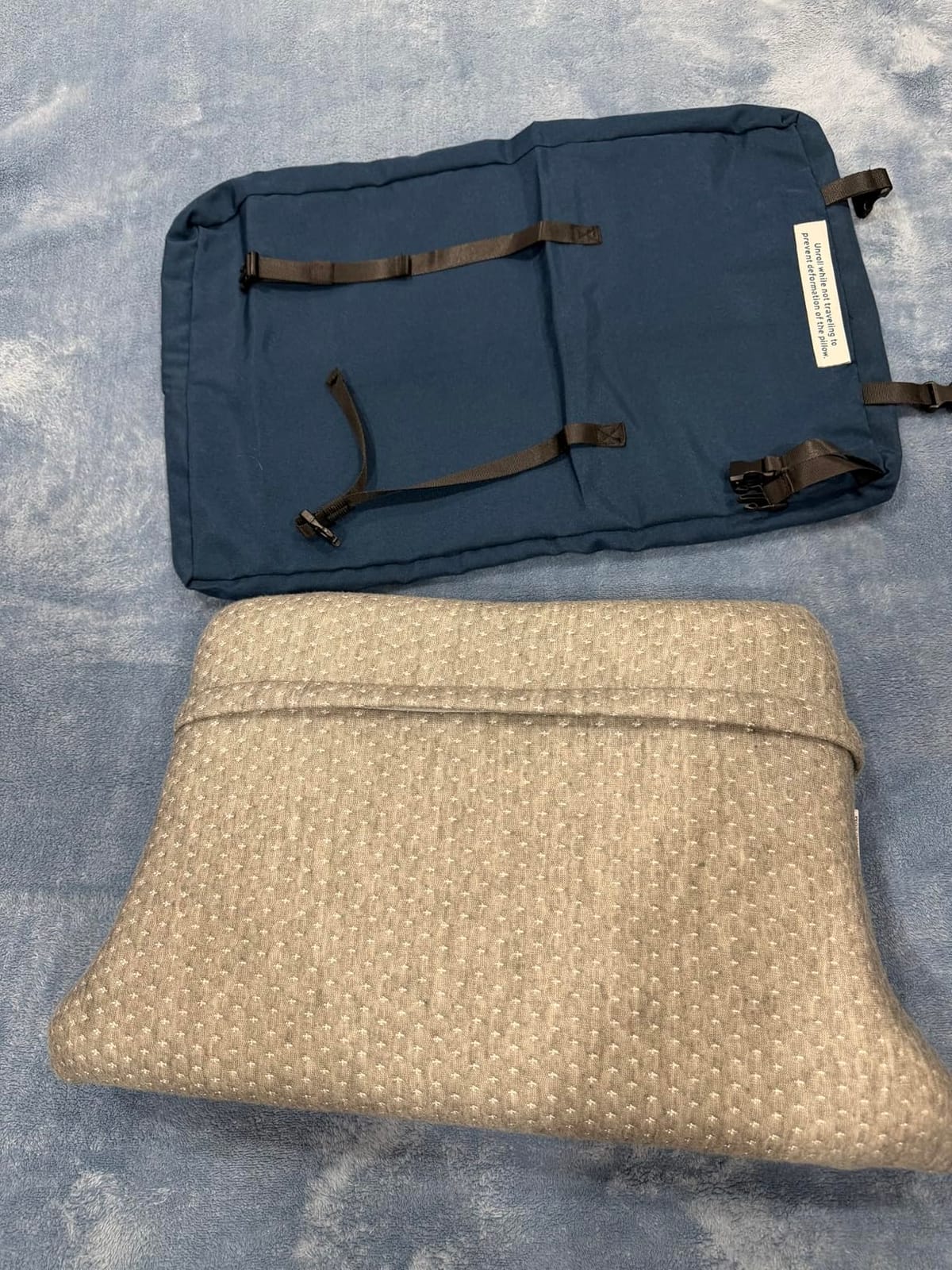
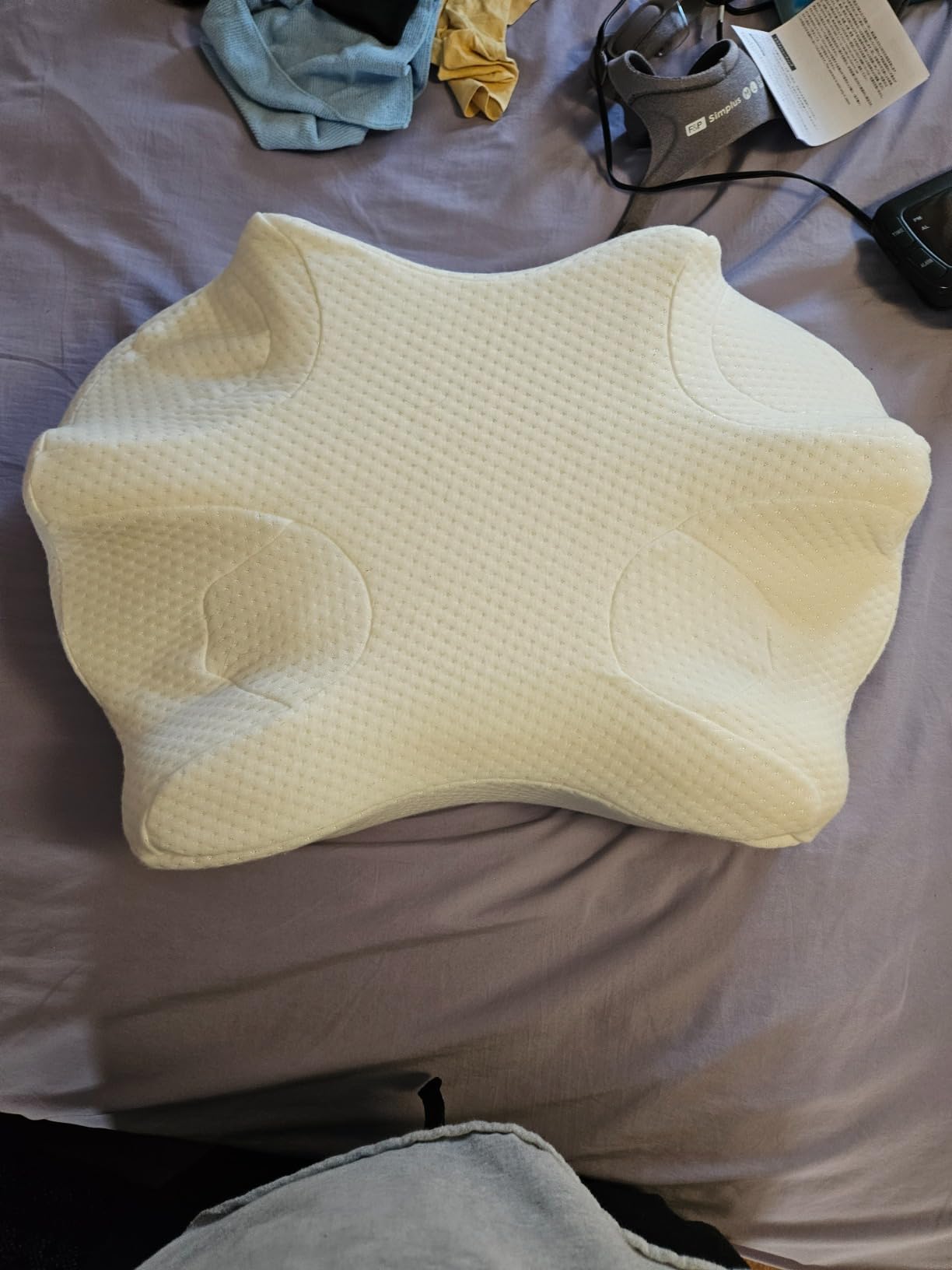
The construction is straightforward. A slow-rebound CertiPUR-US memory foam core, a two-sided contour with cutouts on both faces, and a removable 1.1 inch foam layer you can take out to lower the height. The two-sided design is what makes it work as a combo sleeper pillow, because you can flip it rather than hunt for the right orientation in the dark.
Its one real weakness is feel. The foam is firm, and reviewers who are used to a standard or down pillow often describe the first two weeks as an adjustment. A second theme is the contour geometry itself: the raised edges can leave the head touching down in three separate places, which some find odd until they get used to it. At 21.65 by 13.78 inches, it is also narrower than a queen pillow, so you will be re-centering it when you turn over.
Check the height before you commit to full-loft mode
The removable layer is the most useful thing about this pillow. Removing it drops the profile by 1.1 inches, which is usually the difference between a comfortable side-sleeper loft and a neck craned at an angle.
If you normally sleep on a stack of two pillows, stay on one pillow with this one. It is designed to be the only pillow under your head.
Know that the foam will not feel like your old pillow
Adjust your expectation rather than your return window. Reviewers who rated it highly are almost always the ones who gave it two weeks before judging the feel.
If you know you cannot adapt to a firm, slow-rebound surface, the plush alternative in this list is the better fit for you, even though it has a much smaller review base.
2. IKSTAR CPAP Pillow with Larger Cutouts: Best Value for Full Face Masks
HSA/FSA CPAP Pillow for Side Sleepers with Larger Cutouts – Adjustable Height Memory Foam – Fits Most Nasal/Full-Face/Pillow Masks – Helps Reduce Mask Pressure & Air Leaks – Cooling Washable Cover
Larger cutouts plus ear hole
2 cm adjustable loft insert
Cooling removable washable cover
Pros
- Larger cutouts give full-face masks real room
- 2 cm insert lets you tune loft quickly
- Slow-rebound foam holds its shape
- Works with nasal full-face and pillow masks
- Breathable cover stays cool at night
Cons
- Too thin for anyone who sleeps on a pillow stack
- Cutouts sit toward front-routed hose paths
- Center cradle feels soft to some
This is the highest rated pillow in our set at 4.3 stars, and the reason is not subtle. Its cutouts are sized generously, and for anyone on a full face mask that clearance is the whole point.
Multiple side sleepers describe watching their machine’s mask seal score change from an adjustable reading to a good one within the first few nights. That is a machine-reported number, not a comfort impression, and it is the kind of data point we weight heavily. It also works with top-of-head hose routing, so the tube is not being levered downward all night.
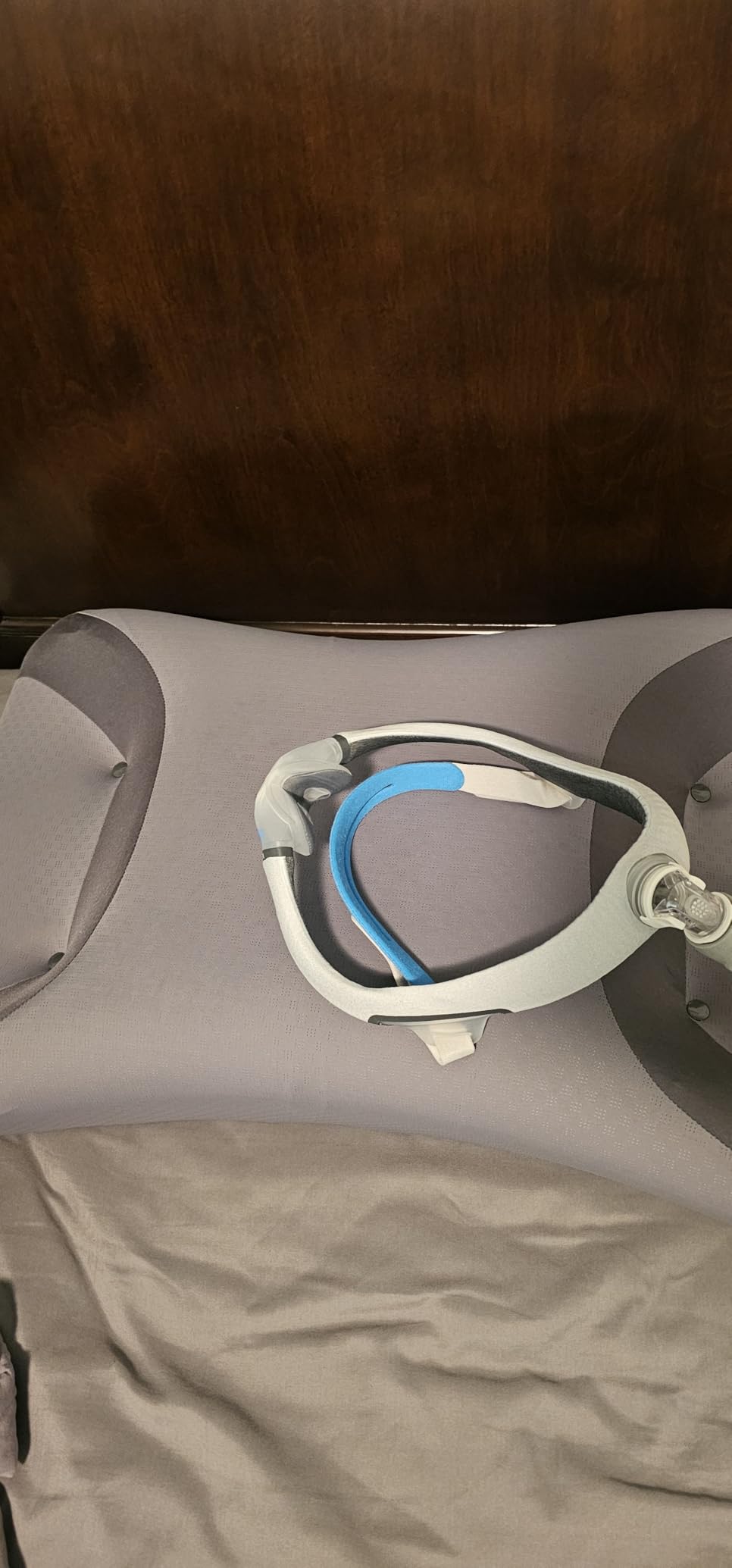
The 2 cm insert is the adjustable element, added or removed depending on the height you want. The base is slow-rebound foam that reviewers say holds its contour instead of flattening out over a few months, and the ear hole design takes pressure off the ear on the down side, which is a distinct side-sleeper complaint from mask pressure.
The main limitation is height. At 5.5 inches and 4.7 inches depending on configuration, it is not a tall pillow, and anyone used to a stacked setup may find the head under-supported. The cutouts are also positioned primarily for hose runs coming from the front of the machine rather than over the headboard, which is worth checking against your setup.
Full face mask users should look here first
Full face masks cover the nose and mouth and take up far more surface area than a nasal or nasal pillow mask. If that frame is being compressed by a flat pillow surface, no amount of strap adjustment fixes it.
The cutout width here gives the frame somewhere to go, and the ear hole relieves the other pressure point on the down side.
Not the pick if you sleep on two pillows
Keep your current height if you read better elevated or if reflux is part of why you sleep on a stack. This pillow is built to be the single layer under your head.
3. EnduriMed CPAP Pillow: Best for Broad Shoulders That Compress a Low Pillow
EnduriMed CPAP Pillow for Side Sleeping – Adjustable Memory Foam CPAP Pillows for Side & Back Sleepers – Eligible for Better Sleep with CPAP Machine
Patented two-thickness design
Four contoured cutouts
22.44 x 11.81 x 5.12 inches
Pros
- Four cutouts let you flip for a different fit
- Gradual sloped cutout walls feel gentler on the mask
- Removable foam pad adjusts thickness
- Corner gaps reduce hose tangles and leaks
- Suits full-face BiPAP and APAP masks
Cons
- Very firm and firmer than most memory foam
- Small footprint means re-centering when rolling over
- No back-sleeping divot pushes the chin forward
- Replacement covers are hard to find
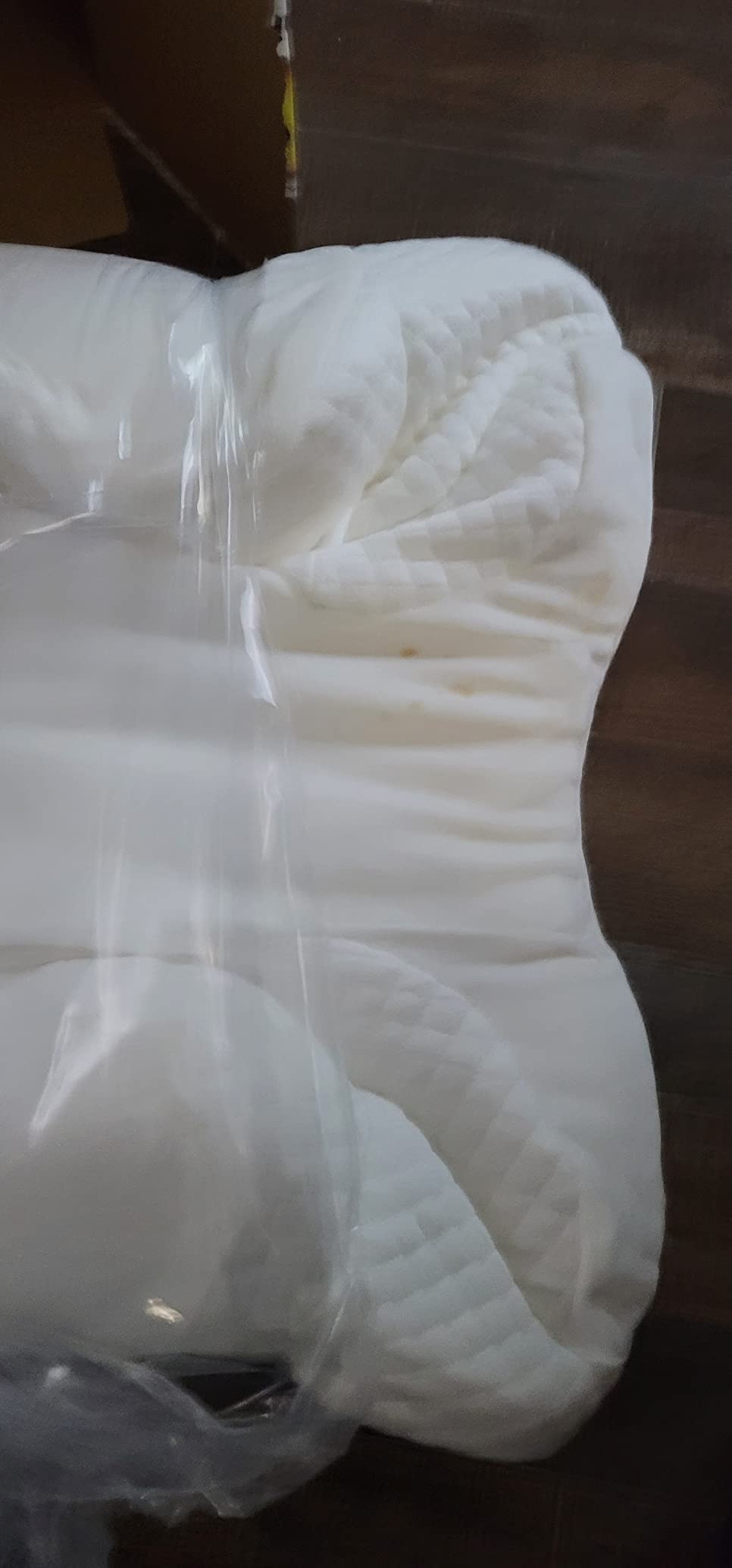
This is a tall, firm pillow and it behaves like one. At 5.12 inches and 3758 ratings, it sits at the opposite end of the feel spectrum from the pillows people describe as plush, and for side sleepers with broader shoulders that extra height is the entire reason to consider it.
The patented two-thickness design is worth understanding before you buy. Instead of one flat slab with a hole, the foam is cut so each orientation gives a different height, and the four cutouts let you flip the pillow to suit your mask position. Reviewers who have used it for years report the chronic leak and the face creases resolved inside the first week.
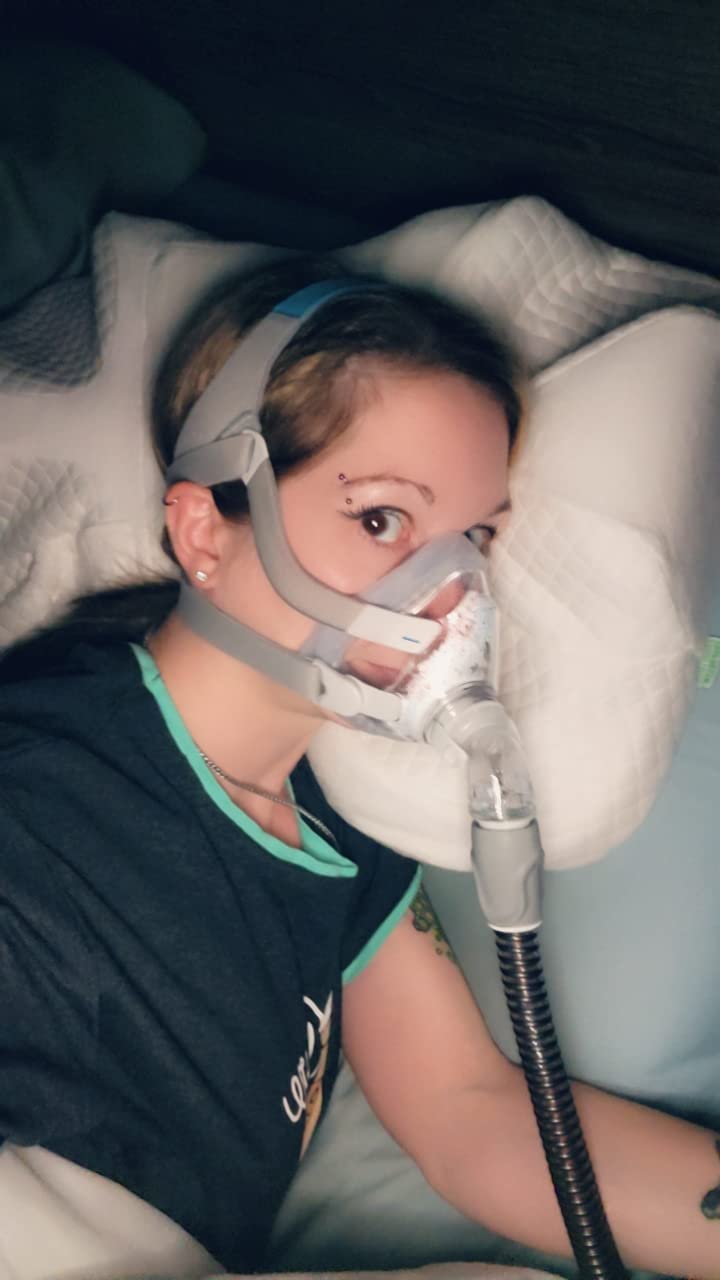
Where it stands out is the shape of the cutout walls. They slope gradually rather than dropping at a sharp edge, and that gives the mask frame a gentle ramp to sit against instead of a hard lip to press into. The corner gaps are a nice touch too, routing the hose away from the shoulder so you stop waking up tangled.
The complaints are consistent enough to plan around. It is very firm. The footprint is compact, so when you roll over you have to re-center your head in the other contour rather than just turning. There is no back-sleeping divot, and lying supine it can push the chin toward the neck. If you plan to buy replacement covers later, find them first.
Height matters more than cutouts for broad-shouldered side sleepers
When a wide frame compresses a low pillow, your head drops and the neck has to tilt up to keep the airway open. That tilts your skull into the mask, and no cutout on a short pillow will help.
This pillow solves the height first, which is why it appears this high on a list about mask leaks.
Be honest about your position changes
The small footprint means turning over is a deliberate repositioning rather than a roll. Active sleepers who never know which way they will wake up may find that annoying by the third week.
4. HOMCA CPAP Pillow: Best for Larger Frames Needing Deep Side Notches
HOMCA CPAP Pillow for Side Sleeping, HSA/FSA Cervical Pillow for All Masks
Side notches with hollow center
Two heights of 4.33 in and 3.54 in
CertiPUR-US and Oeko-Tex foam
Pros
- Generous 25.6 in length with deep side notches
- Two heights to pick between
- Soft slow-rebound foam many call comfortable
- Hollow center relieves ear pressure
- 3D mesh cover with dustproof inner cover
Cons
- Too bulky for smaller frames and short necks
- Firm and hard on arrival
- Deep contour can trap the head near the mask
Its footprint runs to 25.59 by 15.75 inches, and the extra length is deliberate. Side sleepers report that once they learn to place the back of the head in the center so the mask falls into the notch, their leak counts drop to close to nothing.
The foam is listed as a soft memory foam, and the 3D mesh cover is genuinely good for hot sleepers. The hollow center does more than relieve ear pressure: it is where the mask and hose drop clear of your face instead of pinning your cheek down.
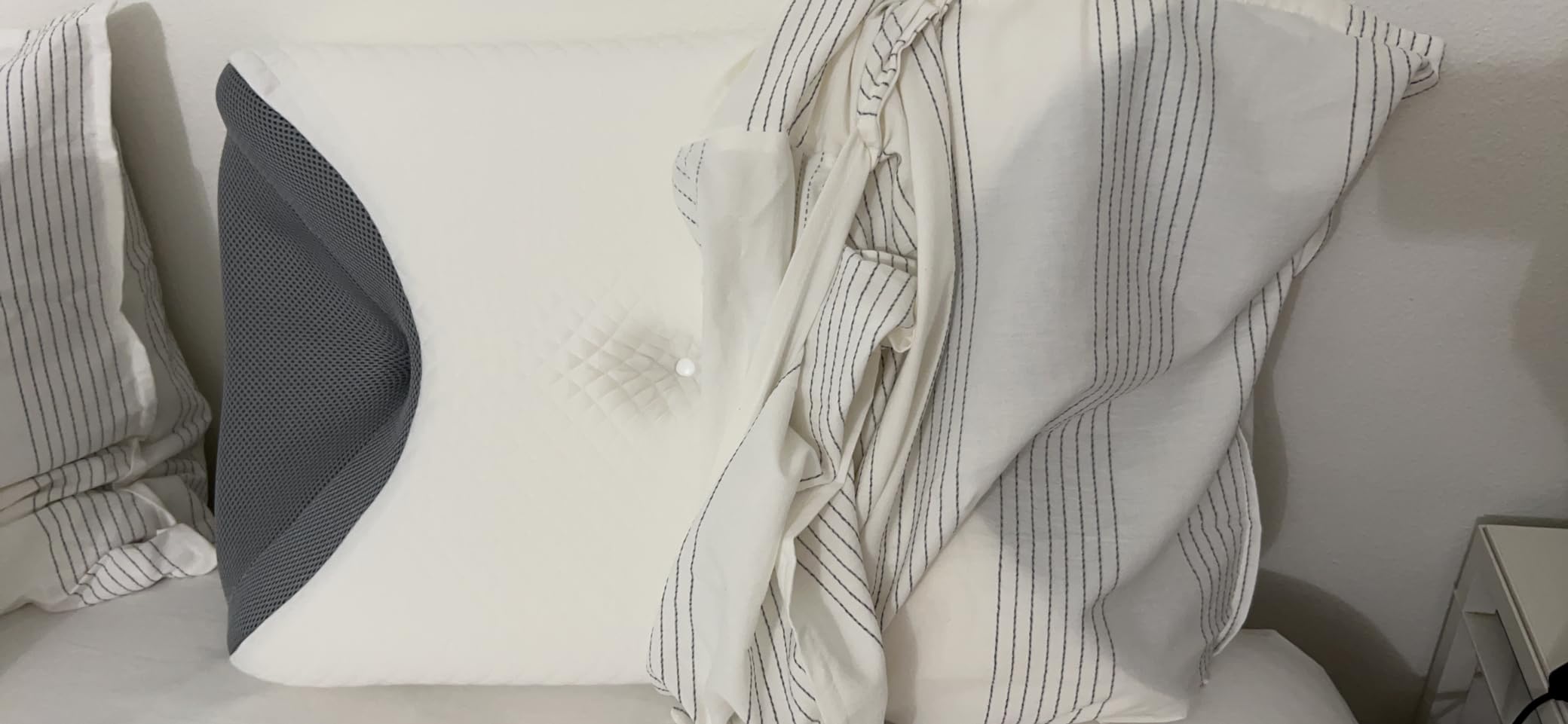
Two heights, 4.33 inches and 3.54 inches, let you match the pillow to your shoulder width. There is also an optional 0.8 inch booster cushion available through customer service if you want to climb higher later without buying a new pillow. The CertiPUR-US and Oeko-Tex approvals are both named on the listing, which is more than most competitors offer.
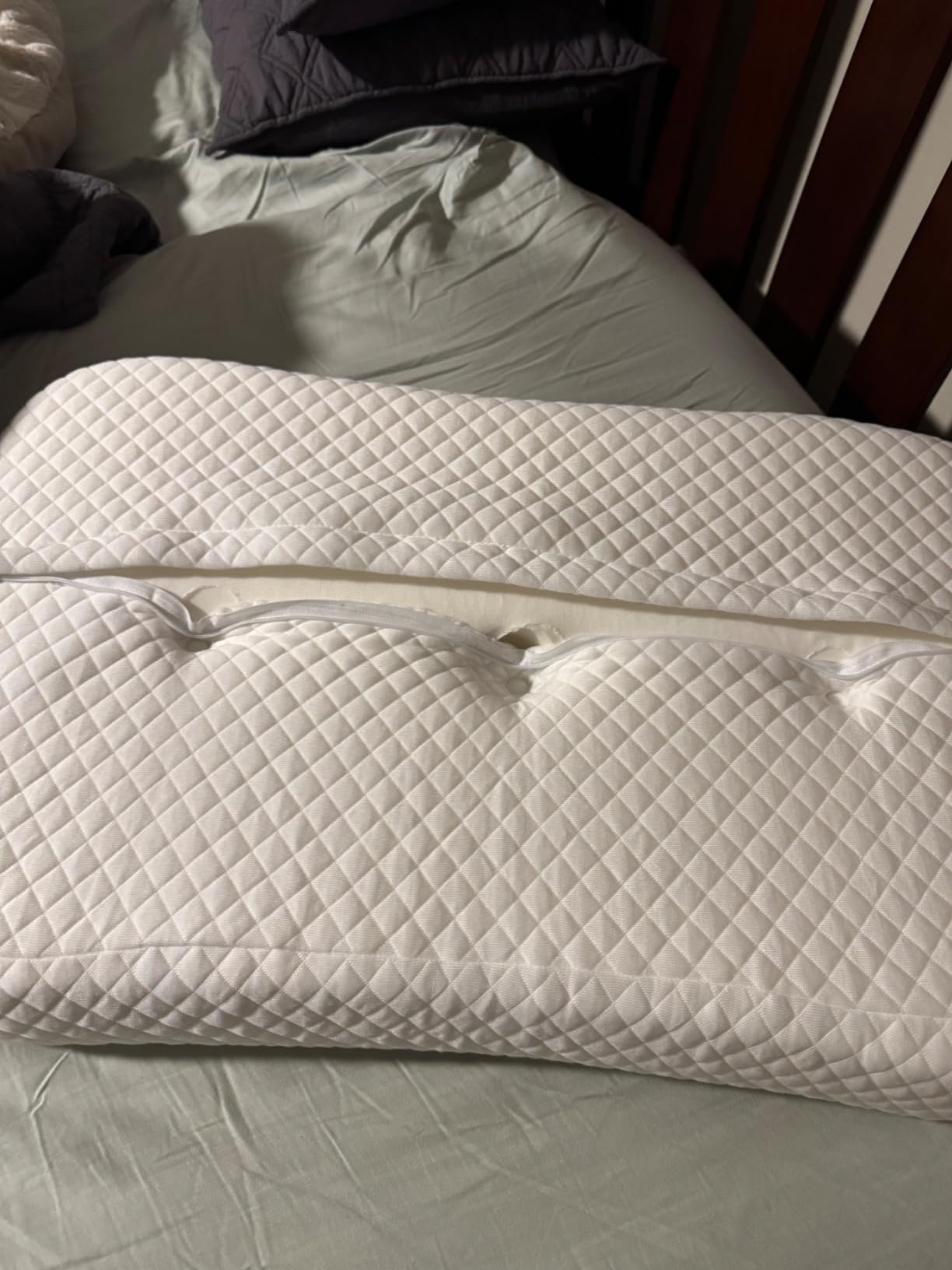
The fit problems are the flip side of the size. Smaller-framed sleepers and anyone with a shorter neck describe it as too deep and bulky, and the contour runs from base to center in a way that can make it hard to position your head fully clear of the mask. It also needs a break-in period before the foam settles into something comfortable.
Check your frame size before ordering
The leading complaint on this pillow is that it feels like more pillow than a person needs. If you have narrower shoulders or a short neck, start with the lower 3.54 inch side and expect a week of adjustment.
Longer neck and wider shoulders, the opposite is true and this is where the deep notches pay off.
Learn the center placement trick
The reason leak counts drop so much for some users is a technique, not a feature. Set the base of your skull in the hollow center so the mask sits over the notch rather than against foam.
It feels wrong for a night or two, then it becomes automatic.
5. IKSTAR Dual Loft CPAP Pillow: Best for Smaller Frames and Lower Heights
IKSTAR CPAP Pillow for Side Sleepers, Memory Foam Pillow with Mask Cutouts for More Room, Fits Full Face, Nasal & Nasal Pillow Masks, Dual Height Support for Side, Back & Stomach Sleepers
Dual loft of 3.93 in and 3.74 in
Dual contoured cutouts
Odorless CertiPUR-US foam
Pros
- Dual cutouts ease pressure points and air leaks
- Two loft heights suit different body types
- Foam arrives essentially odorless
- Snap-secured cotton cover is machine washable
- Strong value relative to the field
Cons
- Lower loft than most rivals and can feel flat
- Listing photos overstate the plushness
- Toss-and-turners can drift out of the contours
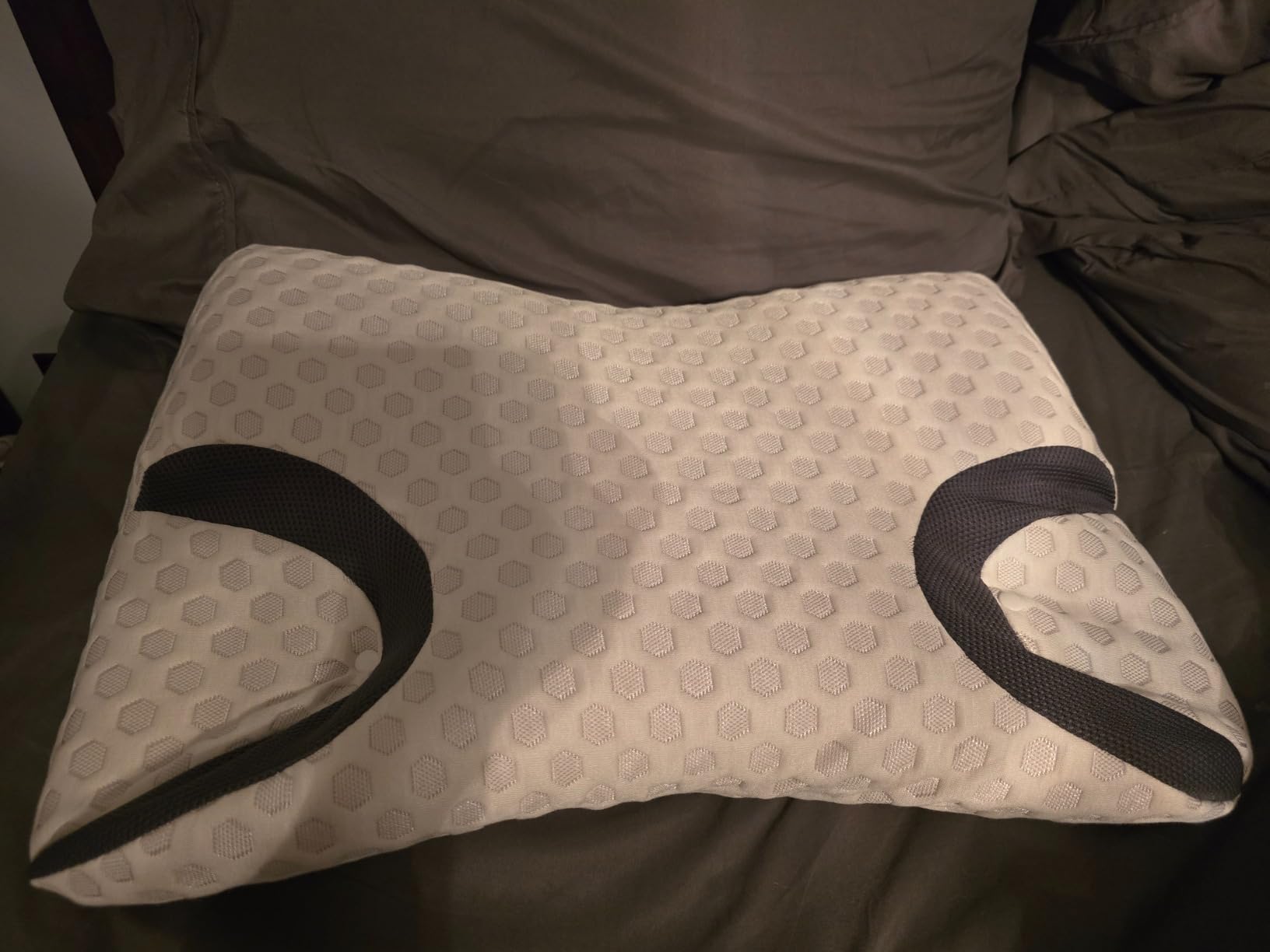
Both sides of this pillow are on the low side, measuring 3.93 and 3.74 inches. That is deliberate, and it is the reason this one works for side sleepers with a smaller frame or a shorter neck who find the taller pillows in this list overbearing.
It is also one of the few here that arrives genuinely odorless. People who have been disappointed by a week of foam smell with other brands notice that difference immediately, and several reviews mention that the foam rebounds without flattening over time rather than gradually losing its shape.
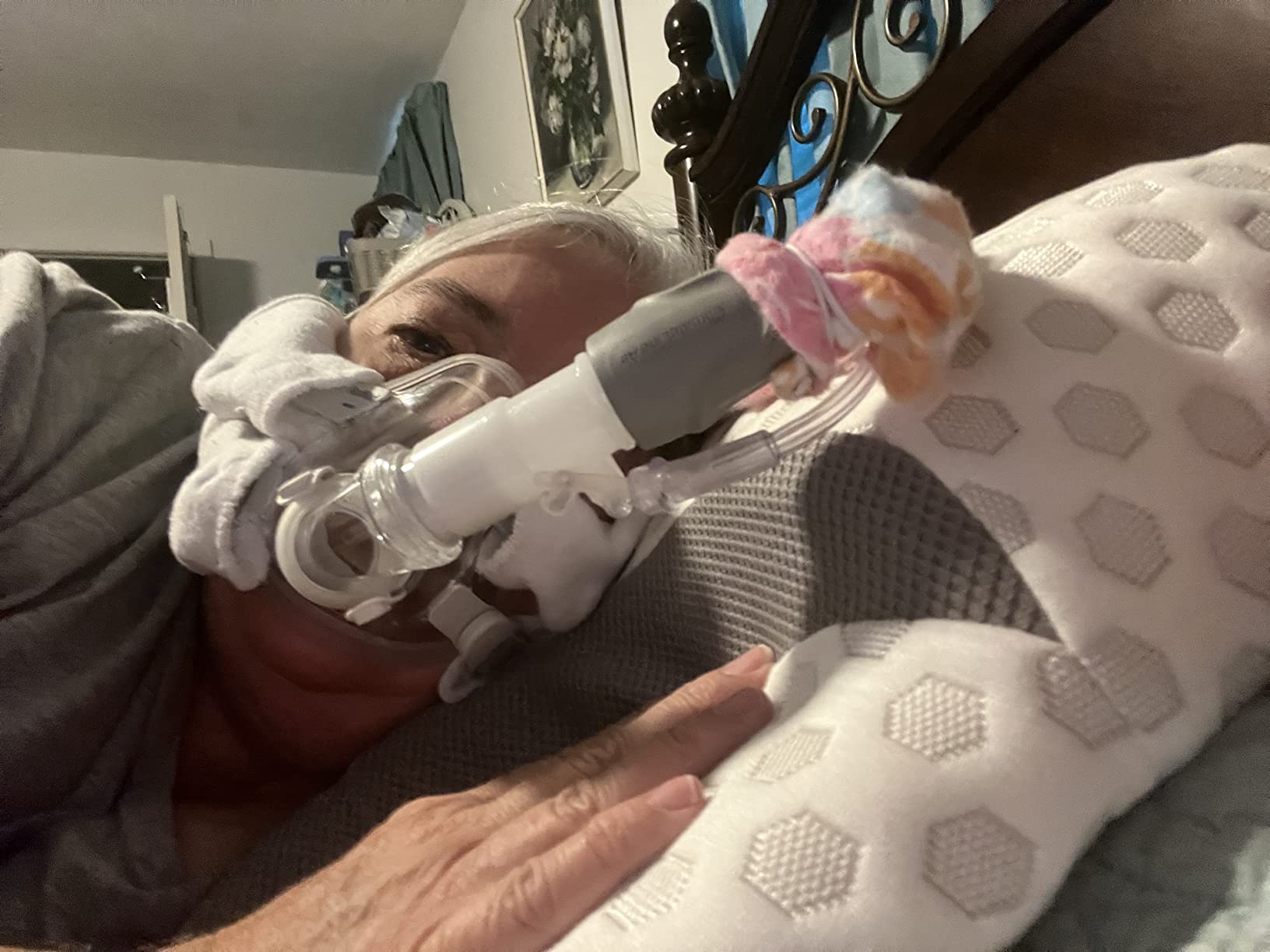
The dual cutouts are positioned for practical hose management as much as mask clearance, and they work across full face, nasal and nasal pillow styles. The breathable cotton cover is removable, machine washable and secured with snaps so it does not migrate off the foam during the night.
Two things temper the recommendation. First, the listing photos make this look plusher and taller than it is, and that mismatch is a repeated theme in the reviews. Second, if you change position a lot, the shallow cutouts let your head drift out of the center and you can lose the mask seal in the process. The stomach-sleeping benefit is also less consistent than the side-sleeping one.
A good match if you have never used a cervical pillow
The height sits close to a normal bed pillow, so this is a low-commitment way to test whether a contoured CPAP pillow solves your leak problem at all before you adapt to a tall firm design.
If you like it, the tradeoff is that you are giving up some head stability in exchange for the easy transition.
Expect less, then decide
If a tall plush pillow is what you had in mind, look elsewhere in this list. Buy this one for the low profile and the clean cotton cover, not for a luxury feel.
6. Elviros Adjustable CPAP Pillow: Best for Fine-Tuning Loft and Firmness
FSA Eligible CPAP Pillow for Users to Reduce Air Leaks & Mask Pressure
Four height settings and 0.8 in spacer
Two swappable foam inserts
Nylon-spandex washable cover
Pros
- Four heights from rotation and a removable spacer
- Softer and firmer inserts both included
- Dual cutouts organize tubing and cut leaks
- Nylon-spandex cover resists heat buildup
- Ergonomic contour for head neck and spine
Cons
- Light foam odor on arrival
- Swapping inserts and spacers adds steps
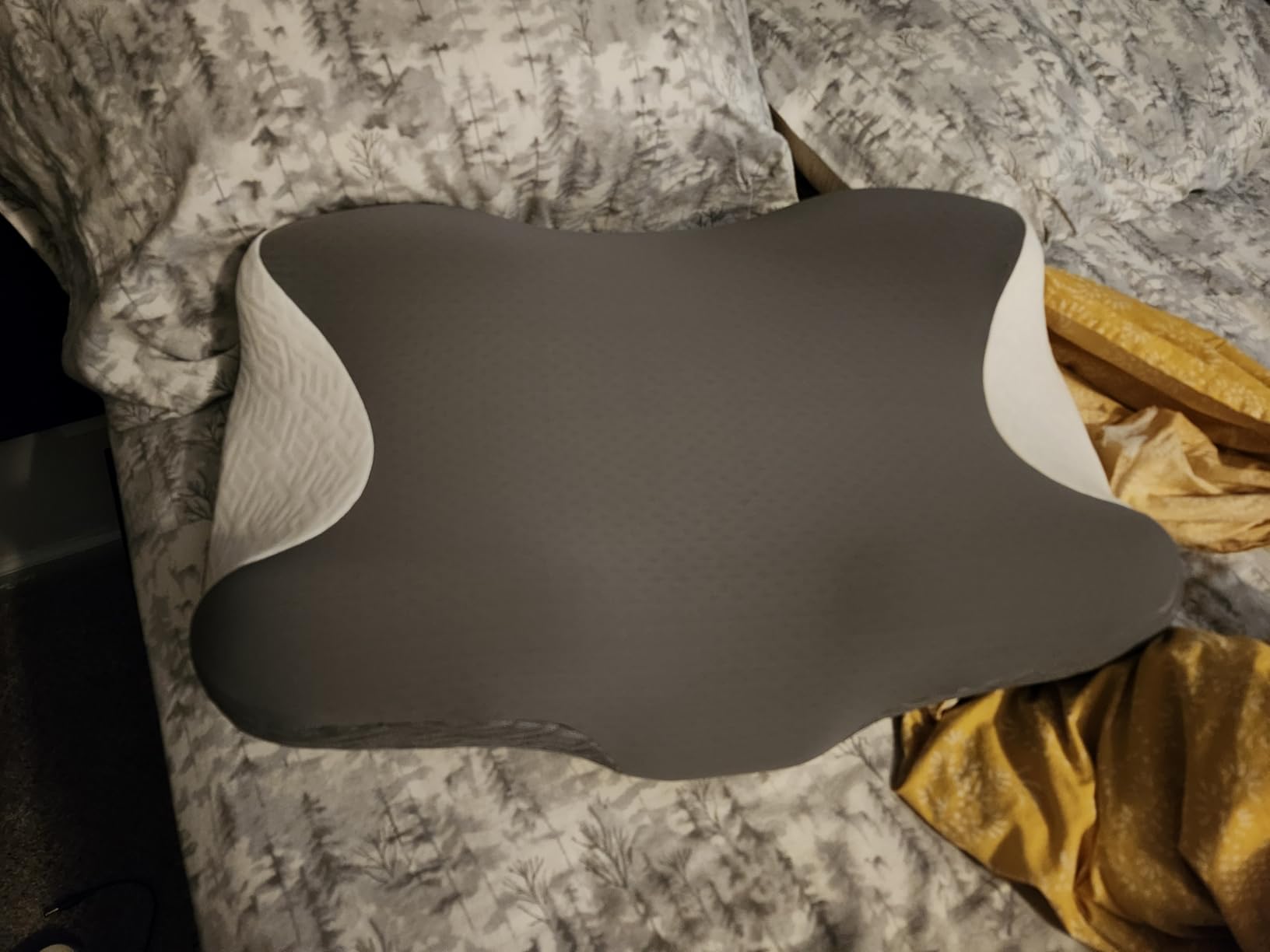
Few pillows in this list give you this many ways to change the feel. Two profile zones give four height combinations, a removable 0.8 inch base spacer adds more range, and both a softer and a firmer insert are included so you can change cushioning, not just height.
That matters most in the first month, when you are still working out how your head sits in the contour. Several reviewers describe a process of trial and adjustment that eventually settles on a combination, and the cutouts on both sides do the practical work of organizing the tubing and reducing leak at the connection point.
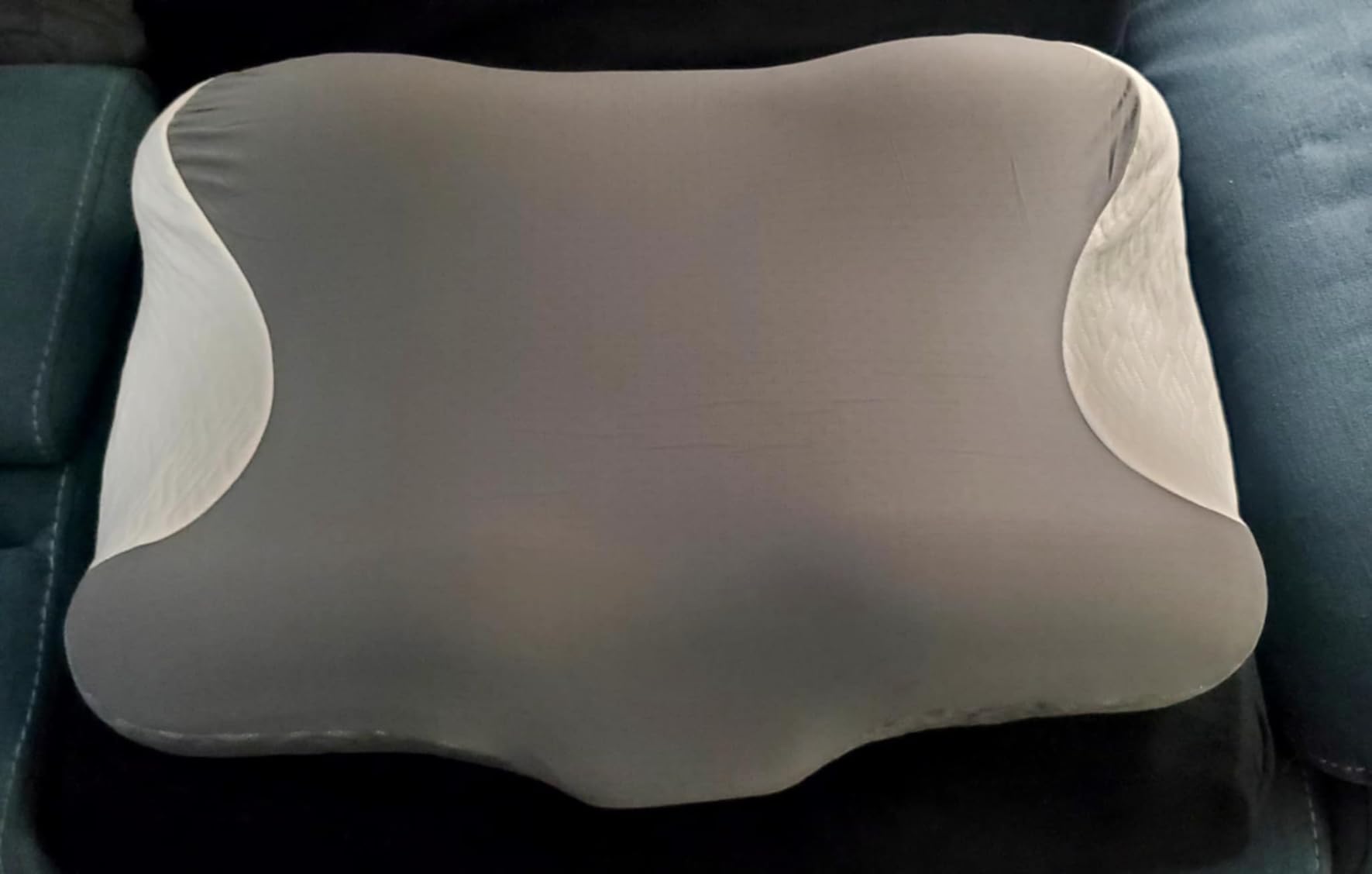
The cover is a nylon-spandex blend over a polyester inner, which resists heat better than a cotton shell and stays machine washable. Memory foam is CertiPUR-US certified. Reported results include less facial marking and better mask clearance once the height is right.
Two drawbacks. The foam has a light smell on arrival that the manufacturer says resolves with three to five days of ventilation, and the insert and spacer system adds fiddly steps to the care routine compared with a pillow you just flip. If you want a set-and-forget experience, that is a real cost.
Worth it if you are still finding your height
Most people do not know their ideal side-sleeper loft on day one. Having four heights and two firmnesses means you can find it in a week instead of buying three pillows to find it.
Once you have your combination, leave everything where it works.
Airy the foam before the first night
Unbox it in an aired-out room two or three days before you want to use it and leave the cover off. The odor is mild but it is there, and you do not want to start your CPAP experience with it.
7. IKSTAR Standard Loft CPAP Pillow: Best for Familiar Sizing
HSA/FSA CPAP Pillow for Side Sleeper, Sleep Apnea Pillow for Sleeping, CPAP Nasal Pillows Suit for All CPAP Masks User, Cervical Memory Foam Neck Support Pillow Relief Neck Pain for Side Back Sleepers
Dual loft of 4.72 in and 4.14 in
Side indents and cut-outs for any mask
Odorless foam with washable cover
Pros
- Side indents keep a full-face mask sealed
- Near-standard 25.2 in sizing feels familiar
- Dual loft close to a regular pillow
- Works for back and side sleepers
- Odorless memory foam with breathable cotton cover
Cons
- Firmness reads as brick hard to some
- Too thin for neck support or long hose runs
- Can run hot for some sleepers
- A little small overall
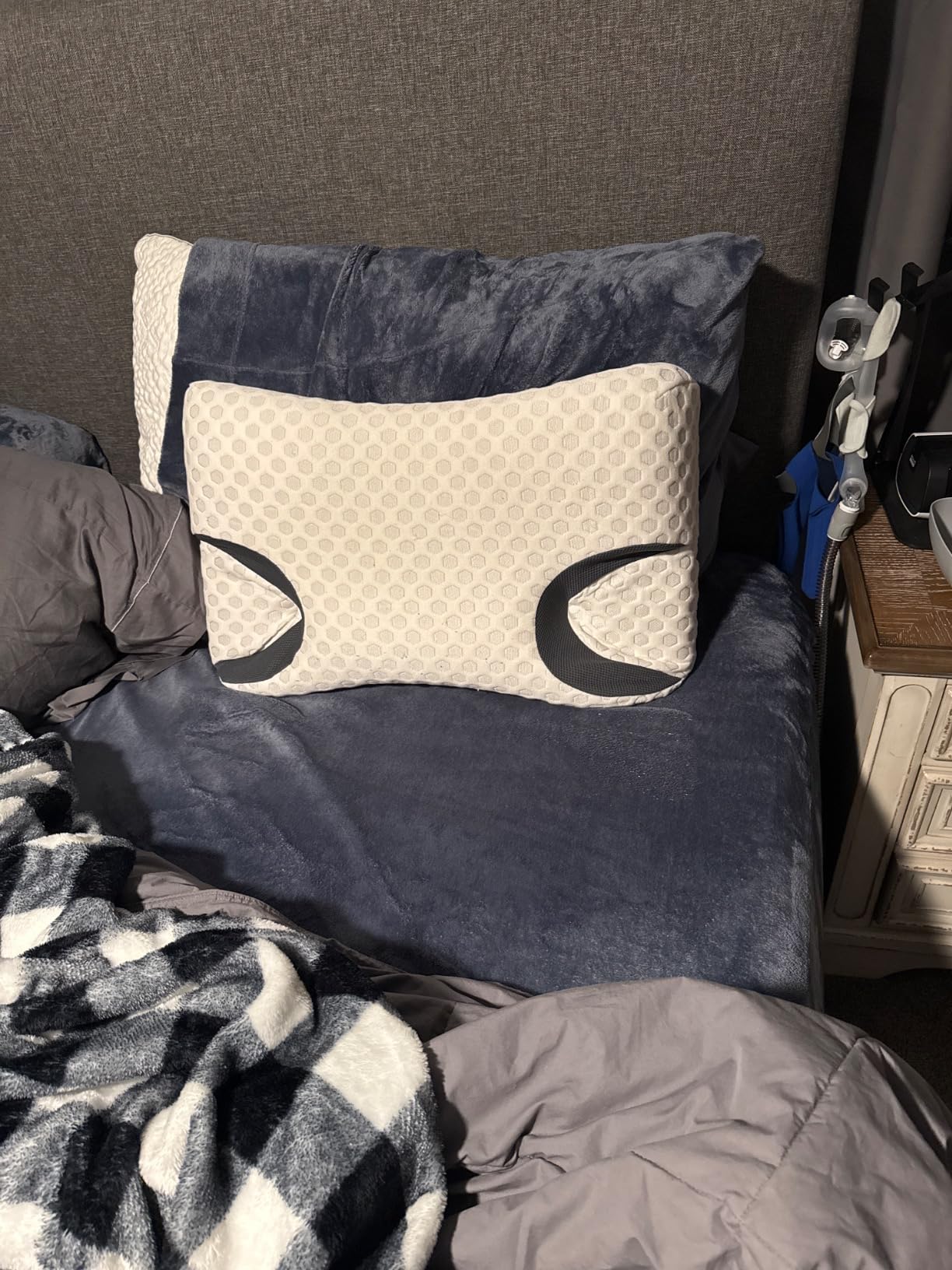
At 25.2 by 14.96 inches with lofts of 4.72 and 4.14 inches, this is the closest thing here to a normal bed pillow with CPAP features added. For anyone who has already spent a month sleeping on something strange and uncomfortable, that familiarity is the selling point.
Side sleepers on full face masks call the side indents the part that keeps the mask sealed through the night. Unlike deeper cutouts, these are shallower indents that hold the frame in position without creating a tunnel, and the pillow works well for back sleepers too. The memory foam is odorless and the cotton cover is removable and machine washable.
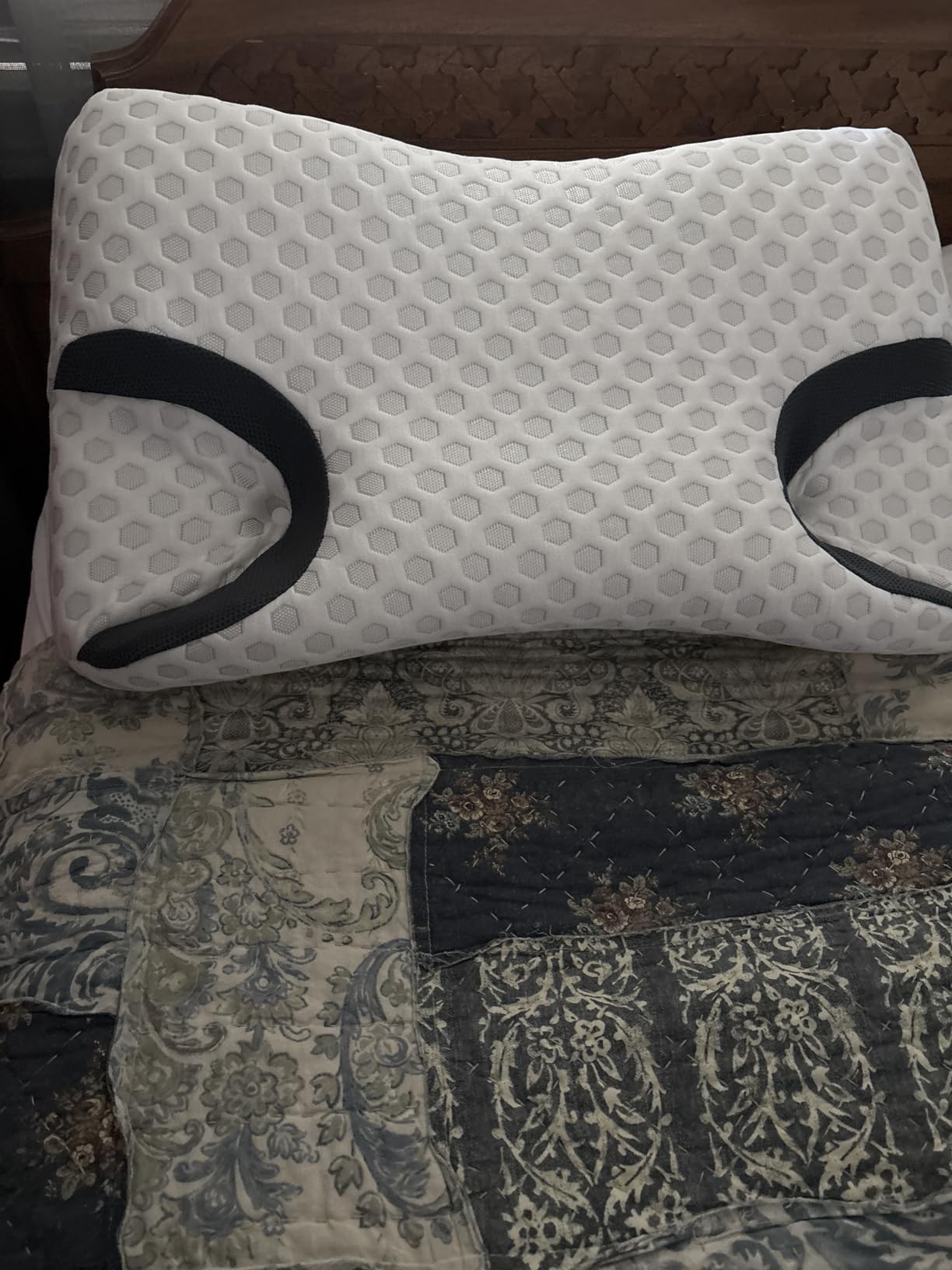
Where we would temper expectations: the feel is on the firm side, and reviewers who prefer a soft pillow describe it as brick hard. The dimensions on the listing are also slightly more generous than the physical pillow, which is a common disappointment when people compare it to a queen pillow they already own.
Two specific fit notes. Some users find it too thin for neck support, and others find the end cut-out too short to comfortably hold a long hose run. A few report running hot, which is a reasonable complaint for a non-gel cotton shell in a warm room.
The lowest-friction option if you dislike odd pillows
Nothing about the shape is going to feel alien on night one. If your previous experience with contoured pillows was frustrating, this is the least risky way to get the mask clearance benefit.
You still get indents and a dual loft, just with a conventional footprint.
Test the hose before the first long night
Run your usual hose routing against the end cut-out in daylight. If the tube has to double back or sit under tension to reach, that tension will drag the mask overnight.
8. Elviros Dual Height CPAP Pillow: Best for Combo Sleepers Who Flip
Elviros HSA/FSA CPAP Pillow for Side Sleeper Adjustable Sleep Apnea Pillow
Dual cutouts on both sides
Heights of 3.54 in and 4.33 in
CertiPUR-US foam with washable cover
Pros
- Cutouts give side sleepers mask room and cut leaks
- Two height options in one pillow
- Multi-zone design spreads pressure across the head
- Breathable cover stays cool and dry
- Minimal odor for many buyers
Cons
- Thin profile leaves some with neck pain
- No dedicated cooling for hot sleepers
- Extra foam insert must be requested separately
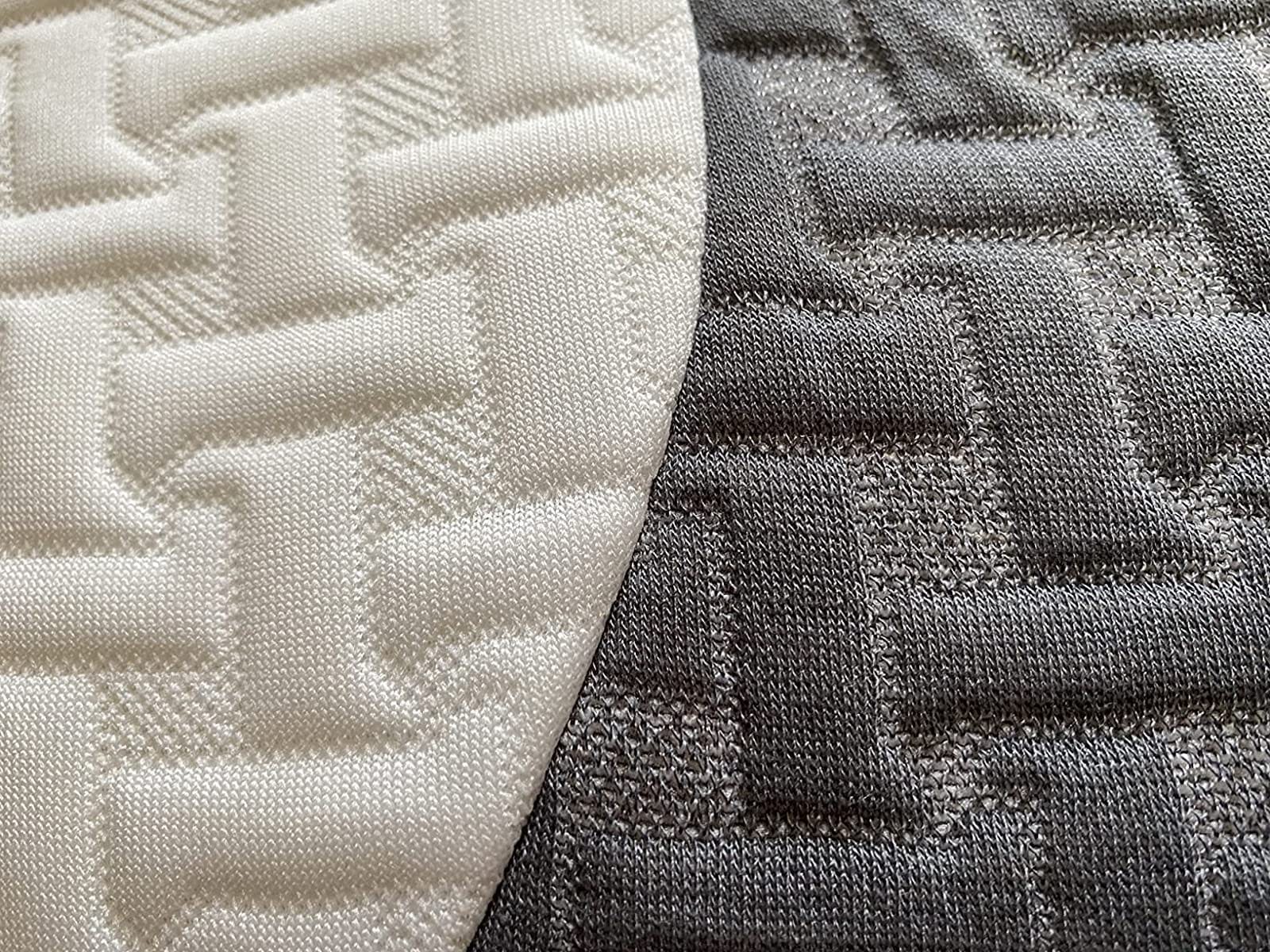
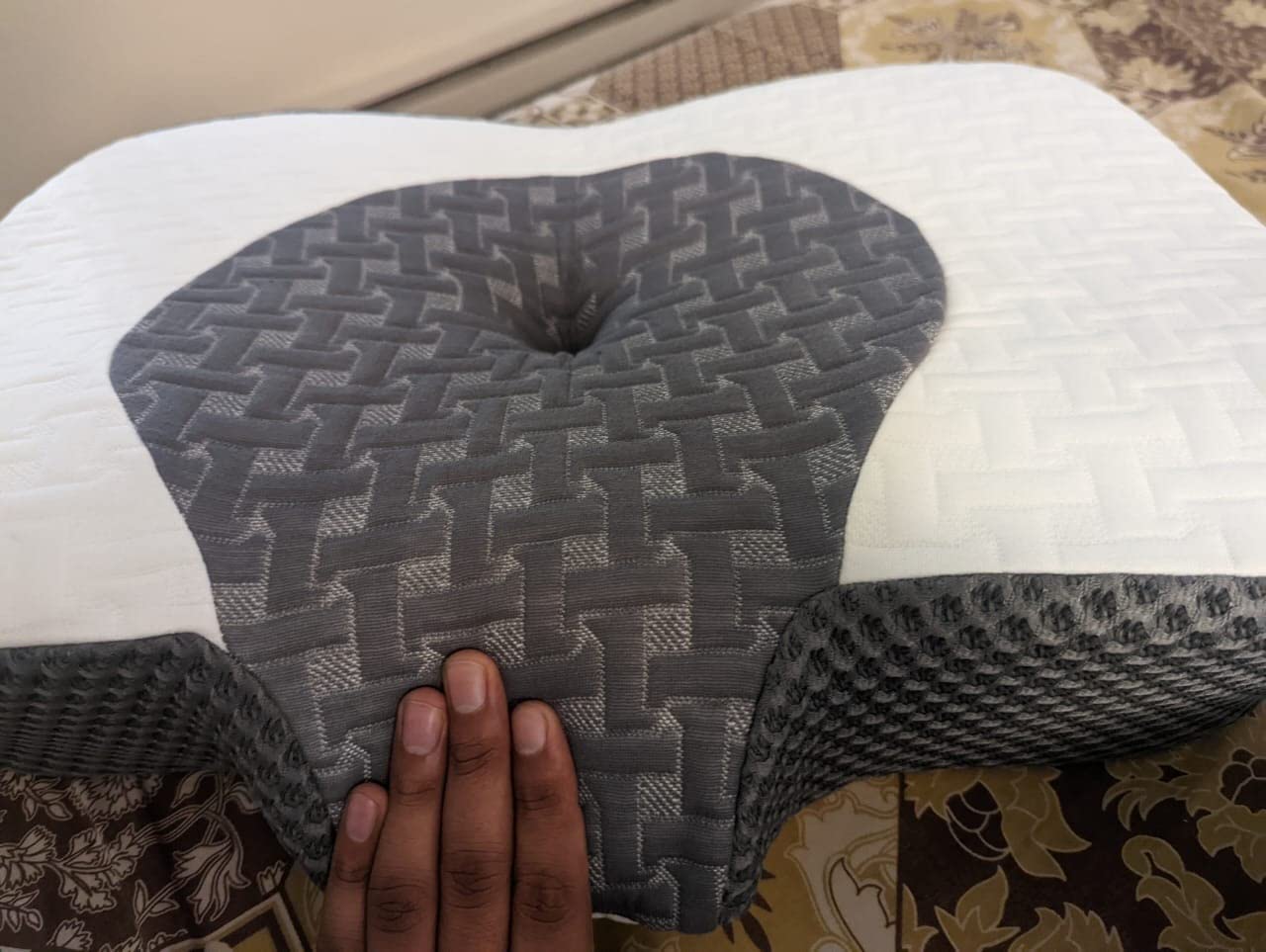
The multi-zone layout is what makes this one interesting for people who do not hold a single position all night. Rather than one central depression, the pressure is distributed across separate zones, so a head that drifts out of the side contour does not immediately lose all support.
Side sleepers frequently report that the cutouts let the mask sit without any pressure on it at all, and that the pillow does not sink the head into the foam the way some memory foam does. The 3.54 and 4.33 inch heights cover both a flatter preference and a taller one, and the removable washable cover is described as staying cool and dry.
The recurring complaint is loft. Buyers who need a taller pillow report neck pain and headaches, and the extra foam insert that would fix that is not included in the box. You have to request it separately through the seller, which is a step most people do not know about until after they have tried to sleep on it.
It is also not the pillow for a hot sleeper. There is no gel layer, no mesh cover mentioned, and the fabric is a straightforward polyester. For people who run hot inside a mask, a cooling cover matters more than anything else on the list.
Good for a body that moves around
Most CPAP pillows are designed around one position. The multi-zone structure here means turning over does not drop you into a flat spot, which suits people who wake up facing either direction.
It also means less mask seal loss through the night, since the head is supported on more than one point.
Request the extra insert early if you are tall
If you read taller than average, ask the seller for the extra foam insert before you start. Retrofitting it after three weeks of neck pain is a poor way to learn the lesson.
9. Lunderg Parkin Down Alternative Pillow: Best for People Who Dislike Memory Foam
Lunderg Parkin CPAP Pillow for Side & Back Sleepers – Down Alternative
Plush down-alternative fill
Thin memory foam base with cutouts
Included fill bag for height and firmness
Pros
- Plush feel for people who dislike memory foam
- Included fill bag tunes height and firmness
- Gusseted cutouts relieve mask pressure points
- Works for side back and stomach sleepers
- Machine-washable cotton case
Cons
- Fill may not soften the core enough
- Cutouts sit close to the edge
- Only one pillowcase included
- Fill and case can hold heat
This is the only down-alternative option in the group and it exists for a specific reason. A lot of people try a CPAP pillow, hate the slow-rebound memory foam, and conclude that contoured pillows are not for them. They are wrong about the conclusion.
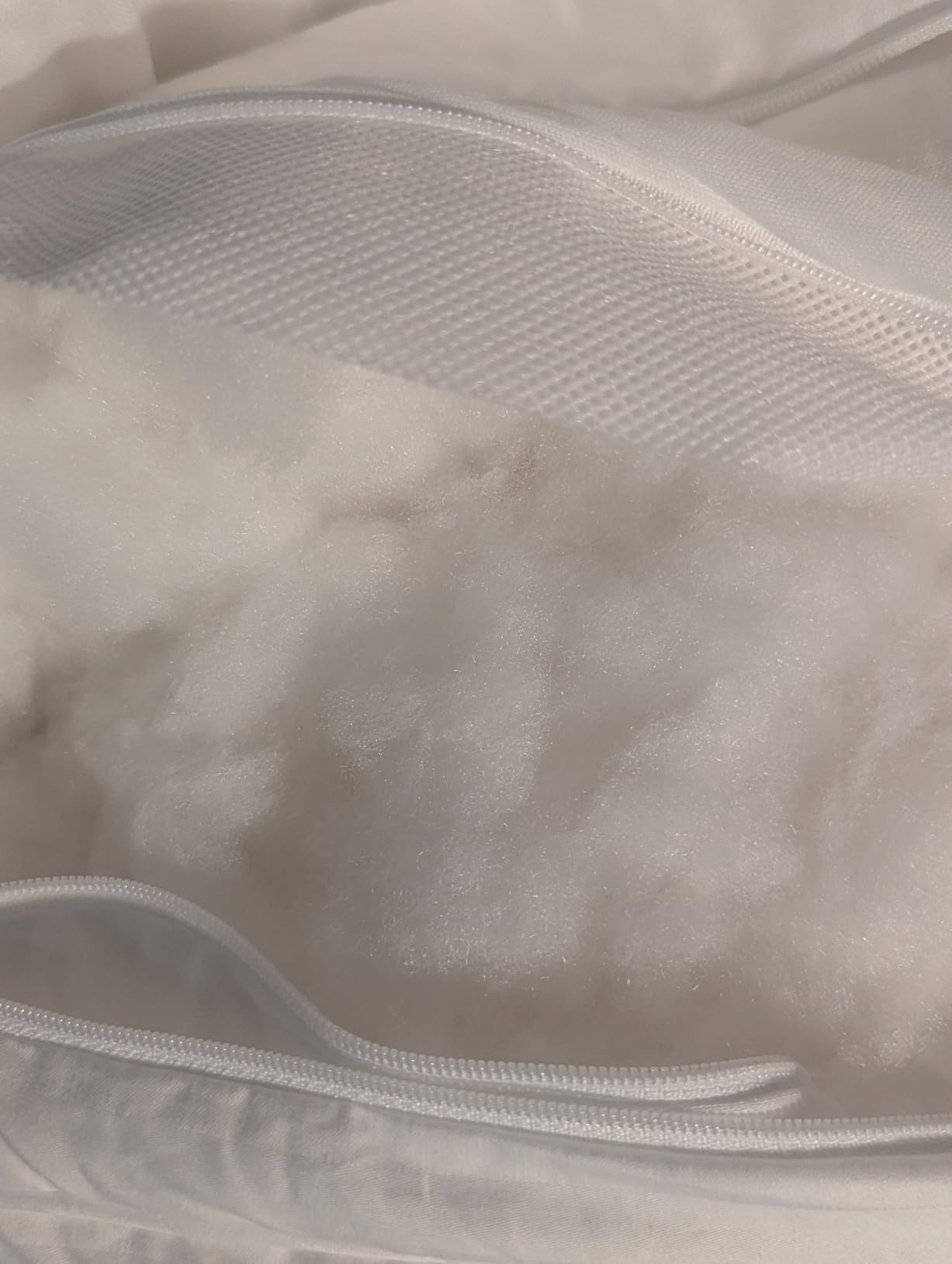
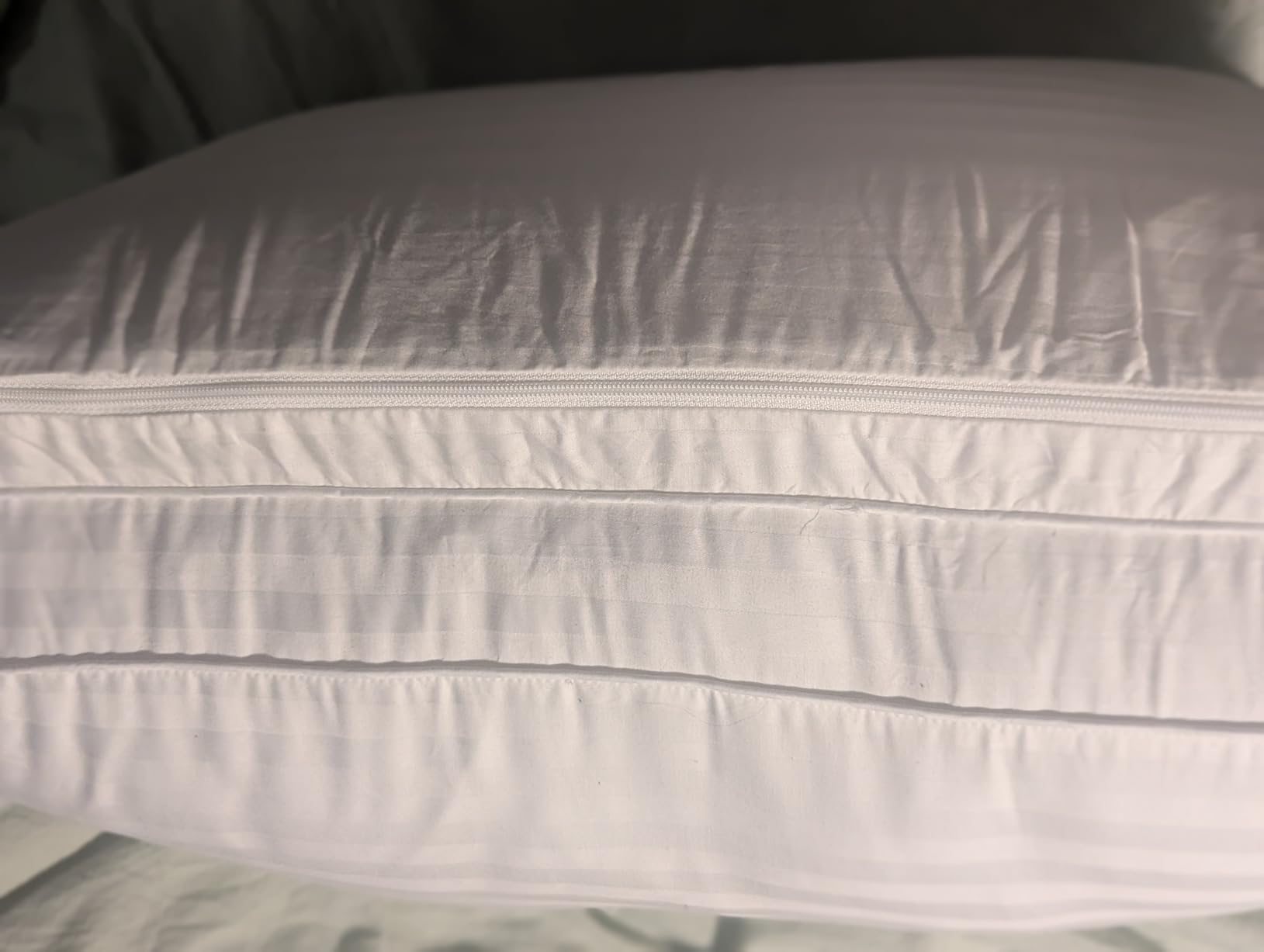
A thin memory foam base layer provides the shape retention and the contoured cutouts, while the fill is down alternative that springs back quickly. A bag of blended fill is included so you can add or remove material until the height and firmness are right for you. Users report the mask seal scores and morning neck pain both improving, and a few cite roughly halved AHI numbers after switching.
We want to be straight about the limitation: at 266 ratings this has the smallest review base here by a wide margin. The positive reports are unusually specific, but the sample is small, and that is worth weighing if you are deciding between two similar options.
On fit, dissatisfaction centers on the cutouts sitting close to the edge, which leaves some side sleepers feeling under-supported, and on the core staying stiff even after adding fill. Only one pillowcase is included, so you will be washing the one you are sleeping on. The fill and case fabric can also hold heat in a warm climate.
Use this if foam is the thing blocking you
If your CPAP experience has been unpleasant because of the texture and slow rebound of memory foam, this keeps the mask-friendly geometry and replaces the surface. That is a different problem from height, and this solves it.
It is also the only option here with a genuinely plush feel, which matters if being able to relax into the pillow is what keeps you asleep.
Adjust the fill in small steps
Add a small amount at a time across a few nights rather than loading the whole bag on the first night. Firmness changes in the core are hard to undo quickly once the fill settles.
10. CPAP Pillow by Pillows With A Purpose: Budget Pick with Shallow Cutouts
CPAP Pillow by Pillows with a Purpose – Standard Size – Unqiue Design with Contoured Cut-Outs – Hypoallergenic with Cover Included
Contour cut-outs with center dimple
Hypoallergenic polyester fiber fill
20 in x 26 in with cotton cover
Pros
- Simple familiar pillow shape
- Contour cut-outs keep mask and hose steadier
- Center dimple supports the neck
- Hypoallergenic fiber fill in a cotton cover
- Standard sizing fits a normal pillowcase
Cons
- Shallow cut-outs may not clear a full-face mask
- Some buyers want a deeper contour
This is a traditional-shaped bed pillow with two modest cut-outs pressed into it, a center dimple for neck support and a 100 percent cotton cover over hypoallergenic polyester fiber. That is the whole design, and simplicity is the appeal.
For a side sleeper on a nasal or nasal pillow mask, it does the job the mask needs: keeps the tube from shifting and reduces the drag that pulls a seal open. Reviewers like the breathable construction and the fact that it fits a normal pillowcase, which makes laundry simple in a way the contoured covers here do not.
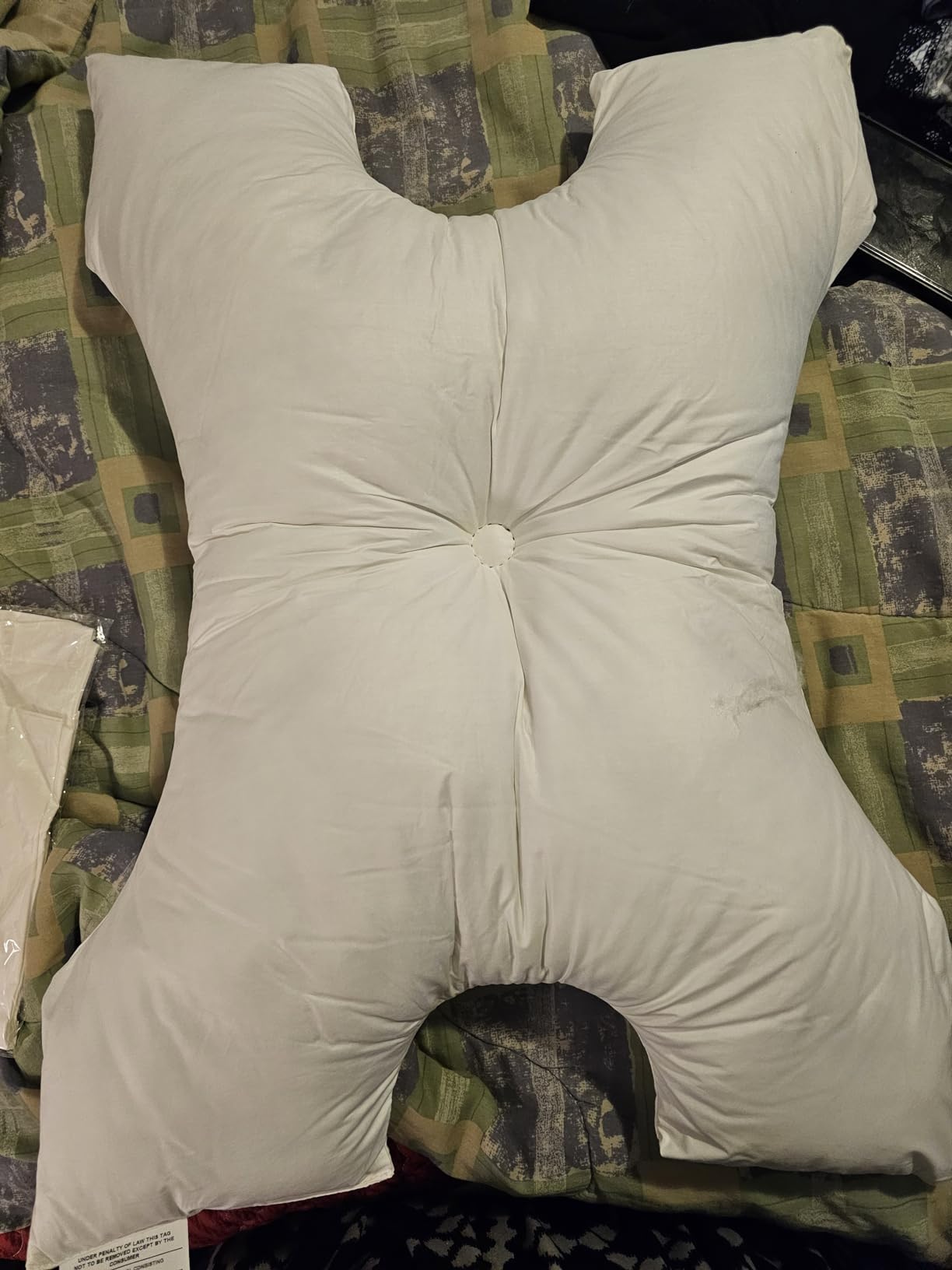
Be clear-eyed about the limit. The cut-outs are shallow, and reviewers with larger masks say they do not clear a full face mask or bulky tubing. If that is your situation, the same money in a deeper-cutout pillow will serve you better.
There is no height adjustability, no foam certification listed, and no claim of any particular loft. It is a bed pillow with CPAP-shaped holes in it, which is exactly enough for a lot of people and clearly not enough for others.
A sensible first CPAP pillow
If you are a new CPAP user who does not know yet whether a contoured pillow suits you, this is a low-commitment way to find out whether mask pressure is part of your problem at all.
It also washes and handles like an ordinary pillow, which matters more than it sounds at two in the morning.
Skip it if you use a full face mask
Shallow cut-outs cannot make room for a full face frame. If that is your mask, choose one of the deeper-cutout models earlier in this list and spend the difference.
Which CPAP Pillow Matches Your Mask?
Mask type is the first filter, and it narrows the field faster than any other variable. A nasal pillow mask covers almost nothing, so it needs very little clearance. A full face mask spans the nose and mouth, takes up far more surface area, and is the one that will be levered sideways by a flat pillow.
Nasal pillow masks such as the ResMed AirFit N30i style and other low-profile nasal pillows work with almost any contoured pillow in this list, because the frame is small and sits in the middle of your face. You need a cutout, but not a deep one.
Nasal masks sit a little higher and cover the nose bridge, so the top of the mask needs clearance and the hose should be able to exit upward without pressing the frame down. A pillow with cutouts on both faces and a sloped rather than vertical wall works best here, because the ramp lets the frame settle without pinching.
Full face masks, and any BiPAP setup with a full face interface, need the deepest cutout you can find and a tall loft. The mask weight is what drives the seal open when you roll over, and the only counter is a pocket of space for it to hang into. This is where the IKSTAR large-cutout model and the EnduriMed earn their place.
Hose routing is the detail people miss. Front-routed hoses need a corner gap or an end cut-out that the tube can drop into without tension. Top-of-head routing needs the cutout to sit clear of the tube’s path, or the tube becomes the thing pushing the mask off. Check your own setup before you pick a pillow, because a few of the models here position their cutouts specifically for front-routed hoses.
Our methodology: we compared published specifications against the review data on each product, weighted machine-reported outcomes like mask seal scores above comfort impressions, and used reported leak and AHI observations rather than our own measurements since we are not a clinical sleep lab. We are not sleep technicians, and nothing here should replace your DME provider’s advice.
Why Does My CPAP Mask Leak When I Sleep on My Side?
Before you buy a pillow, work through these in order, because the pillow is only responsible for some of the causes. Users on r/CPAP and cpaptalk.com raise the same confound constantly: a mask can leak when it is too tight and when it is too loose, so tightening the straps is not automatically the answer.
Your head is dropping into a flat pillow. When a low pillow lets your head sink, your neck tilts upward and your skull rotates into the mask frame. The fix is loft, not straps. A pillow in the 4-5 inch range usually resolves it.
The mask is bearing your body weight. On a flat surface, a full face mask is being pressed between your face and the foam. A deep cutout lets it hang partly free instead of being compressed. This is the single most pillow-fixable cause.
The hose is under tension. A tube that has nowhere to go pulls the mask off position as you turn. Look for corner gaps or end cut-outs sized for your tubing, and route the hose before you settle.
Your straps are too tight. Over-tightened headgear pulls the mask frame into your skin unevenly, which breaks the seal in a different place and leaves pressure marks. Loosen them until you feel airflow at the edges, then tighten only enough to hold.
Your cushion is worn out. Silicone cushions harden and distort with use. A seal that will not hold regardless of pillow height is usually a cushion replacement.
Your pressure is too high for the position. No pillow can fix a machine delivering enough air to push the mask off your face. This is why air blowing into the eyes is a settings problem, not a pillow problem, and it needs your provider.
You are cinching the mask while awake. People naturally tighten a mask at bedtime and relax several hours later. The seal that held at midnight is not the seal at four in the morning, which is why many people leak more in the second half of the night.
If steps one through three describe your situation, a CPAP pillow for side sleeping is the right purchase. If steps four through seven are the real cause, fix that first, and you will not need a new pillow. A chin strap helps if the mask shifts when your jaw drops open during side sleeping, and a mask change is the better move if your frame simply does not suit your face shape.
One more note the community makes often: a machine compensating for a leak is not a reason to ignore it. The leak itself is what wakes you and breaks up your therapy hours, which is the number your insurer actually cares about.
How to Choose a CPAP Pillow for Side Sleeping
Four features decide whether a CPAP pillow works for you, and everything else is preference. Look for these before you look at anything else on the listing.
Mask cutouts. The contoured recess that gives the mask and elbow room. Deeper is better for a full face mask, shallower is fine for a nasal pillow mask. This is the feature that actually reduces leak.
Firm support and proper loft. Aim for roughly 4-5 inches at the head position. Softer foam lets your head drop, and a dropped head tilts into the mask. Adjustable inserts and spacers are worth paying extra for because you cannot predict your ideal height before you have slept on the pillow.
Hose management. Corner gaps, end cut-outs and side indents that hold the tube without tension. A hose under tension is a mask off your face at 3am.
Cooling materials. 3D mesh covers, nylon-spandex shells and ventilated foam matter more than you would expect. A mask traps heat, and a non-breathable pillow cover on top of that is how you end up replacing your pillow and your mask in the same year.
On loft specifically, here is the arithmetic. Measure the distance from your shoulder to the side of your face when you lie down; that is roughly the head position height your neck needs. A pillow flatter than that forces a tilt. Most side sleepers land in the 4 to 5 inch range, which is why the pillows at both ends of this list are only right for a subset of people.
Firmness expectations are worth setting in advance. Every memory foam pillow in this group reads as firm or hard to a new user, and a one to four week break-in is normal. If you know you cannot adapt to that, the down alternative option is the safer choice.
Size against your frame. A pillow that feels smaller than expected for a full night is a leading return driver, and our research flags it as a common complaint. A standard 20 by 26 inch pillow suits a narrow frame. A 25-inch pillow suits broad shoulders and gives the mask somewhere to sit without you dragging it back into place.
Care and washability vary more than you would expect. Several of these list pillowcase-clean-only care, while others list the whole pillow as machine washable. A dustproof inner cover, as the HOMCA has, is a genuine convenience because it protects the foam from sweat and skin oil and extends its life.
Certifications are a quick filter. CertiPUR-US means the foam met specific chemical and emissions standards, and Oeko-Tex on the cover means the fabric passed its own test. If you are sensitive to smells, both are worth having, and any pillow arriving completely odorless is a bonus.
Finally, check HSA and FSA eligibility before you buy. Several models here are marked as eligible, and a letter of medical necessity from your provider lets you buy a CPAP pillow with tax-advantaged health spending account funds. Check the listing wording, confirm with your plan, and keep the documentation. Whether you need a CPAP cleaner as well is a separate question we have covered elsewhere.
For a general read on pillow construction outside the CPAP category, our side sleeper pillow guide covers loft and material basics.
Off-Gassing and Break-In: What to Expect in the First Two Weeks
New memory foam has a smell. It comes from residual manufacturing agents and it fades. What matters is whether you know that in advance, because a first night spent with a pillow you distrust is a bad start to CPAP therapy.
Unbox the pillow two to three days before you intend to sleep on it. Leave the cover off, stand it somewhere ventilated, and turn it once a day. The manufacturer guidance for the adjustable foam model here is three to five days of ventilation, and most people report the smell gone well before that. One model in this list ships essentially odorless, so expectations differ between brands.
Night one to three is about geometry, not comfort. Your neck will notice the contour and your head will search for the center. Push the base of your skull back into the middle rather than resting on the slope.
Nights four through ten are the firmness adjustment. This is the window where a lot of returns happen and where a review of four nights tells you very little. If you are still uncomfortable, check the height first, since that is adjustable on most of these pillows.
By the second week the pillow should be conforming to you rather than resisting you. A few of the slower-rebound foams take the full four weeks. If you are still fighting the pillow at that point, the height or the firmness is wrong, and no amount of extra time will fix it.
Frequently Asked Questions
Do sleep apnea pillows really work for side sleepers?
Yes, when the leak is positional. A contoured CPAP pillow gives your mask a clearance pocket so the frame is not compressed between your face and the foam, and a higher loft stops your head dropping and rotating into the mask. Multiple r/CPAP users report leakage approaching zero after switching. A pillow cannot fix leaks caused by a worn cushion, over-tightened straps, or pressure settings that lift the mask off your face.
Why does my CPAP mask leak when I sleep on my side?
Your cheek and the mask frame press into the pillow, which levers the seal open, and the hose then drags the mask out of position. The pillow-related fixes are more loft and a deeper mask cutout. If those do not work, check strap tension, cushion wear and your pressure setting. Many people also cinch the mask at bedtime and relax hours later, which is why leaks often appear in the second half of the night.
How tall should a CPAP pillow be for side sleeping?
Most side sleepers land between 4 and 5 inches at the head position. Measure the gap from your shoulder to the side of your face when lying down, and that is roughly the height your neck needs. A flatter pillow forces your neck to tilt upward, rotating your skull into the mask frame. Adjustable inserts and removable spacers let you tune the height after a few nights.
Should a CPAP pillow be firm or soft?
Firmer, for the first few weeks at least. Every memory foam model in this category reads as hard to a new user, and a one to four week break-in is normal before the foam conforms to you. Very soft foam lets your head sink, and a sunken head tilts into the mask, which causes the leak you are trying to solve. If you know you cannot adapt to a firm surface, a down alternative fill is the safer pick.
Is a CPAP pillow worth it, or should I change masks instead?
Change the mask first if the seal is breaking everywhere, if you get marks that no amount of head position fixes, or if pressure is blowing the mask off your face. Buy a pillow when the leak is clearly tied to rolling onto your side, when your mask is a full face style that gets compressed, or when a flat pillow is leaving your neck tilted. A chin strap is the better fix if your jaw drops open during side sleeping.
Bottom Line
For most side sleepers, the Lunderg CPAP Pillow is the one to buy first. It has the deepest review base in this group, it works with every mask type, and the removable foam layer lets you drop an inch if the default height is too much.
Pick the IKSTAR large-cutout model if you use a full face mask and want the deepest clearance available, or if you want a lower profile that will not overpower a narrow frame. Go with the EnduriMed if you have broad shoulders and need real height, and with the HOMCA if you want a long pillow with soft foam and a genuinely cool cover.
Whatever you choose, give it two weeks before you judge the feel, air the foam out for a few days first, and check whether your account is HSA or FSA eligible before checkout. And if you have a diagnosed neck or spinal condition, check with your doctor before changing the height of your sleep surface.