
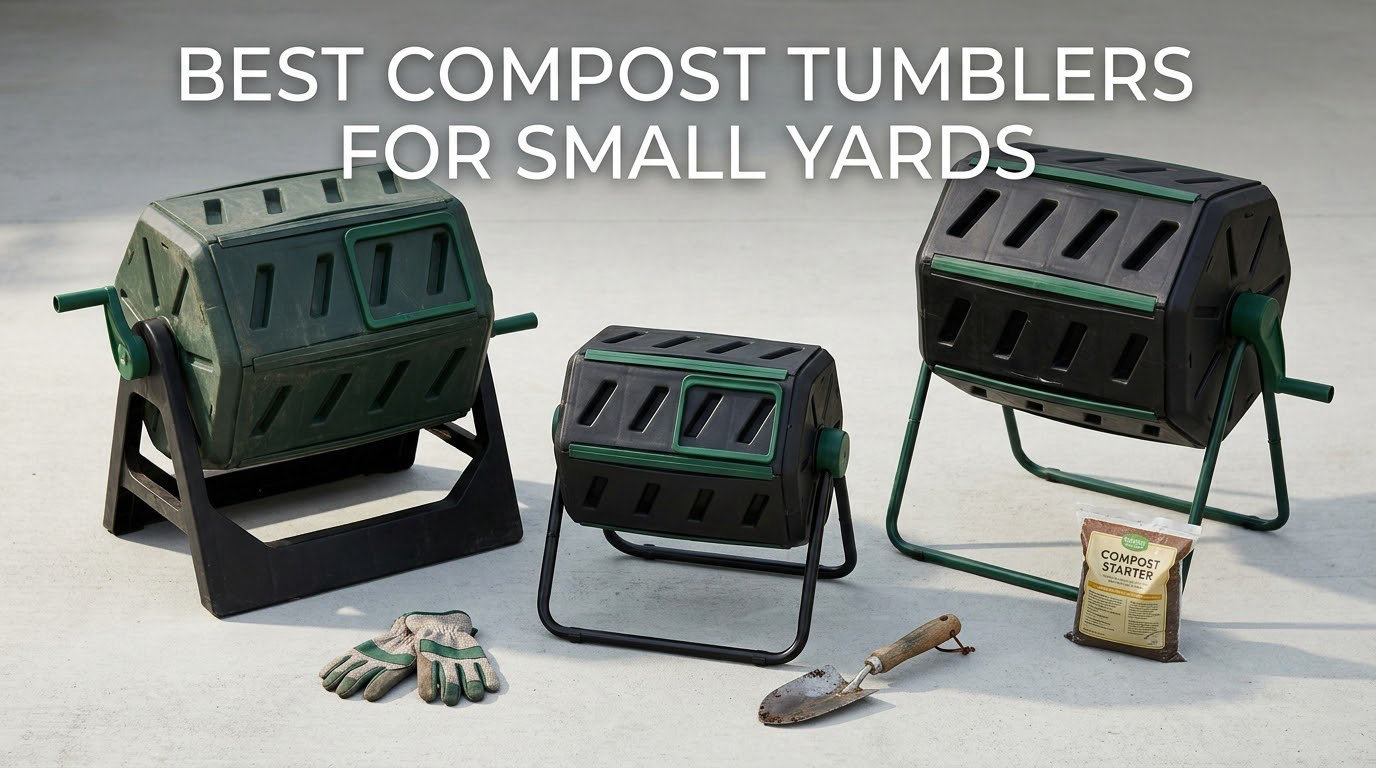
Finding the best compost tumblers for small yards comes down to one number most spec sheets bury: the footprint. A 43-gallon octagonal drum measures roughly 26 by 24 inches before you add the clearance the turning handle needs, which is 4.3 square feet of patio, side yard or balcony gone for good. A compact 18.5-gallon single chamber fits inside 3.7 square feet and weighs 10.5 pounds, so one person can shuffle it with a foot. Both compost. Only one fits.
That distinction matters more than it sounds, because the most common composting disappointment in a small yard is not a bad machine. It is a good machine sized to a waste stream you do not have, or a good machine planted on uneven ground that rocks the first time the drum is full. Retailer data supports the first point: across the large-capacity compost tumblers we looked at, the two biggest mainstream units hold the worst star averages in their review pools, while mid-volume models carry the strongest ratings from the largest number of owners. Oversizing is the trap, not quality.
We spent weeks reading owner reviews, comparing published dimensions and weighing frame materials across eight tumblers that can plausibly sit in a yard under 500 square feet. Everything below is filtered for that. We have left out the 80-gallon and 100-gallon-plus drums entirely, not because they compost badly, but because a small yard is a space problem first and a composting problem second. Ratings and specifications here were captured in October 2026 and they shift constantly, so treat the numbers as a snapshot rather than a promise.
If you are still working out how much compost you actually generate, our general compost tumbler roundup covers the full size range including the models we skip here. And if the real constraint is your lawn rather than your compost, our guides to the best robotic lawn mowers for small yards and battery-powered lawn mowers for small yards cover the other half of the problem.
Top 3: The Best Compost Tumblers for Small Yards in October 2026

FCMP IM2000 Tumbler
- 22.5 gal dual chamber
- 24 by 19 in footprint
- recycled Canadian polypropylene
Miracle-Gro 18.5 Gal
- 18.5 gal single chamber
- 23 by 23.5 in footprint
- galvanized steel base

Our top three are separated by a question most lists skip: how much square footage can you genuinely spare? If the answer is under 3.5 square feet, the single-chamber Miracle-Gro is the only one of these that fits comfortably. If you have a patio corner to give up, the FCMP IM2000 combines the highest owner rating and the largest review base in the group with the smallest footprint of the dual-chamber options. If you want a steady stream of finished compost rather than one batch at a time, the VIVOSUN dual chamber gives you that workflow at a price point that undercuts the premium options.
All 8 Compost Tumblers Side by Side in October 2026
| Product | Specs | Action |
|---|---|---|
| FCMP Outdoor IM2000 22.5-Gallon Dual Chamber |
|
Check Latest Price |
| Miracle-Gro 18.5-Gallon Single Chamber |
|
Check Latest Price |
| VIVOSUN 43-Gallon Dual Chamber |
|
Check Latest Price |
 Nazhura 43-Gallon Dual Chamber Nazhura 43-Gallon Dual Chamber |
|
Check Latest Price |
 F2C 43-Gallon Dual Chamber F2C 43-Gallon Dual Chamber |
|
Check Latest Price |
 Good Ideas Compost Wizard Jr. 50-Gallon Good Ideas Compost Wizard Jr. 50-Gallon |
|
Check Latest Price |
 EJWOX 43-Gallon with Thermometer EJWOX 43-Gallon with Thermometer |
|
Check Latest Price |
 Hourleey 43-Gallon Dual Chamber Hourleey 43-Gallon Dual Chamber |
|
Check Latest Price |
Two figures above deserve a note. Published footprint is the drum plus its frame, not including the arc the barrel sweeps when it turns, so budget roughly a foot of extra clearance on the handle side. And gallon capacity is a nominal figure: owners who fill chambers with water to check real volume routinely find less usable space than the label implies, because the barrel is never filled to the top and material bulks up as it breaks down.
1. FCMP Outdoor IM2000: The Best Overall Compost Tumbler for Small Yards
FCMP Outdoor IM2000 Tumbling Composter Canadian-Made, 100% Recycled Resin – Outdoor Rotating Compost Tumbler Bin for Garden, Kitchen, and Yard Waste, Black (22 Gallon)
22.5 gal dual chamber
24 by 19 in footprint
17.2 lb recycled polypropylene
Pros
- Highest owner rating and review base in the group
- Turns smoothly by hand with no crank
- Recycled Canadian polypropylene will not rust
- Dual chambers let one batch finish while you fill the other
Cons
- Assembly is tedious with many screws and unclear instructions
- One sliding door must be removed to empty a chamber
- Door is not critter-proof
The FCMP IM2000 is the pick because it is the only dual-chamber tumbler in this group that also fits under 3.5 square feet. At 24 by 19 inches it is narrower than the Miracle-Gro single chamber, which sounds impossible until you realise the two units are shaped differently: this one is octagonal and split into two barrels side by side.
What sold us is the material and the numbers behind it. It is made in Canada from 100% post-consumer recycled polypropylene, so it will never rust, and it carries a one-year limited replacement warranty against manufacturing defects. It also holds the highest owner rating of any model we reviewed at 4.5 stars across 18783 reviews, a genuinely large sample rather than a rounding error.
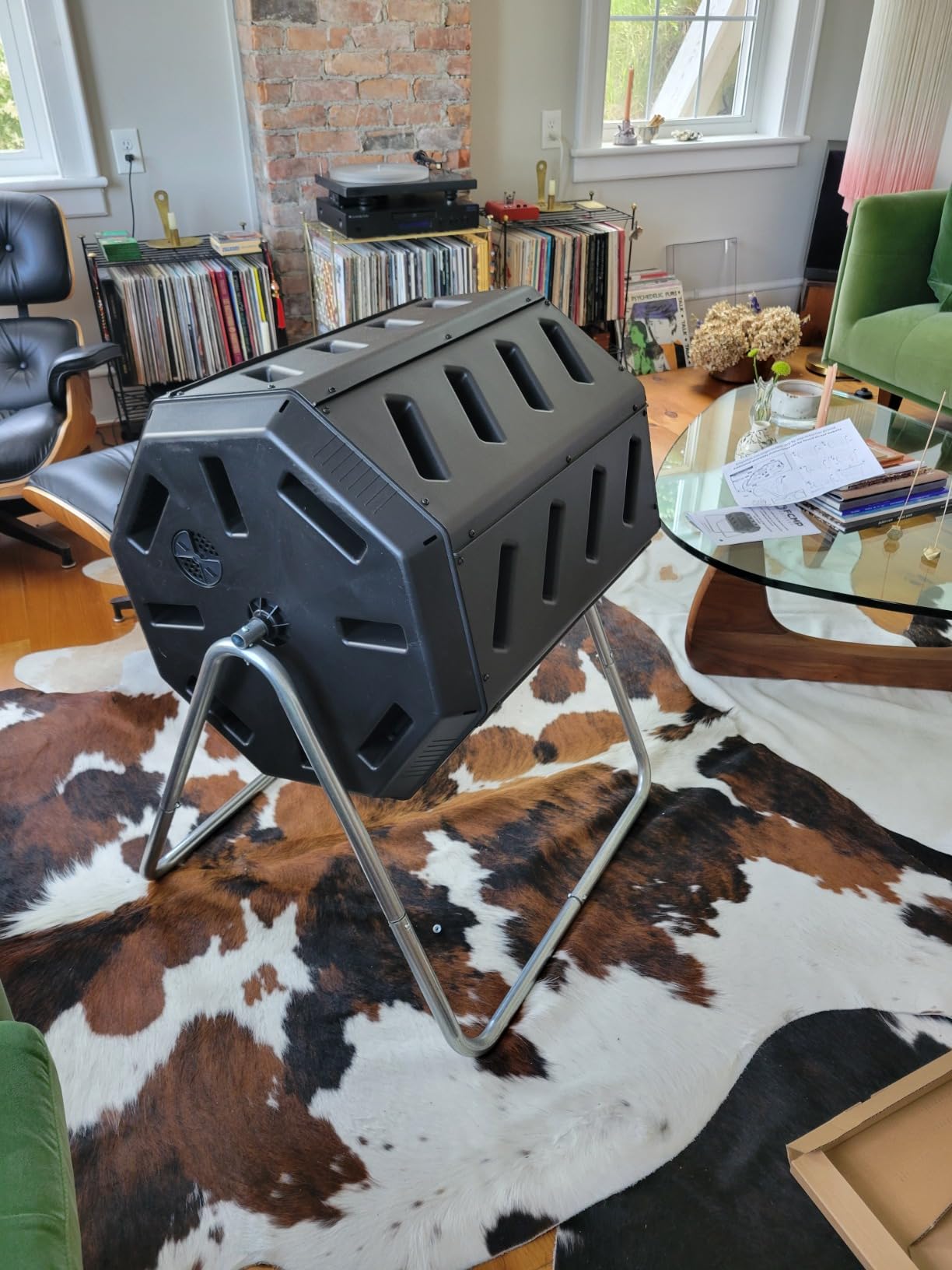
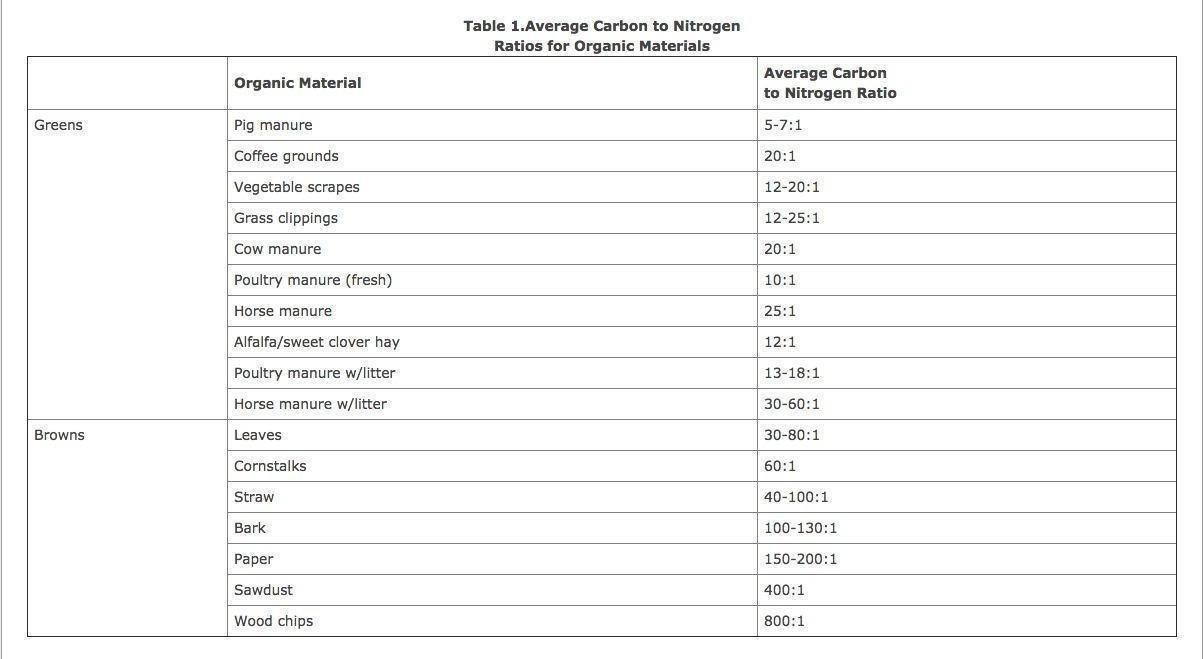
The rotating experience is the standout. Owners report the barrel turns by hand with no crank even when loaded, and the deep fins moulded into the outside double as handholds and as internal agitators that break up clumps. Aeration holes run through the panels, and the manufacturer suggests closing the door and turning five or six times every two or three days.
Timing is the other reason this leads. Owners in hot, sunny conditions report finished compost in as little as two weeks with a balanced mix, which is the fastest turnaround anyone here claims. Treat that as the ceiling rather than the promise, and note that the black octagonal body absorbs heat, which helps in spring but means the interior gets warm rather than hot.
How it feels to turn a full barrel
Owner reviews describe a smooth hand-turn even when the drum is loaded, which is the single most common complaint against cheaper models, and there is no crank or gearing to strip. Smooth does not mean effortless though: fill each chamber to roughly two-thirds, and shred anything woody before it goes in, because screws and twigs add a lot of leverage.
Where this bin frustrates owners
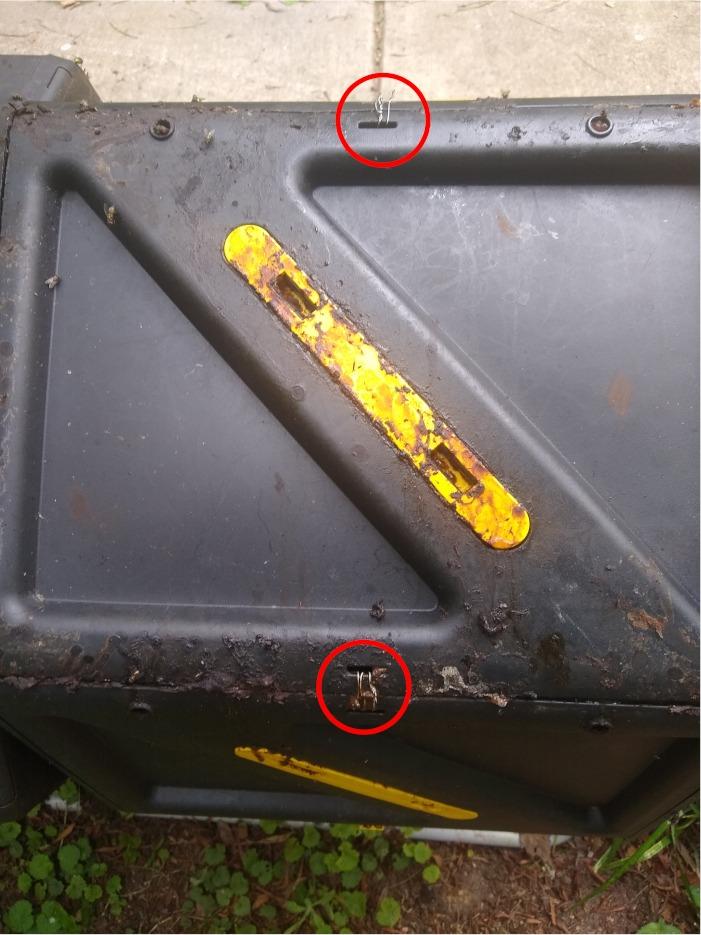
Assembly is the loudest complaint, described as tedious and time-consuming with many screws and unclear written instructions. Budget a couple of hours with a power driver, and seat every panel tab in its guide holes, because tabs that are not seated act as weep holes that leak compost tea onto your patio. The single sliding door must also be removed to empty a chamber, and it is not critter-proof, so add a clamp if wildlife is a problem.
2. Miracle-Gro Single Chamber: Best Compost Tumbler for One-Person Households
Miracle-Gro Compost Tumbler Single Chamber – Easy-Turn Composter Tumbler Outdoor for Fast Composting – Heavy-Duty Composting Bin with 1 Sliding Door (18.5 Gallon / 70 Liter)
18.5 gal single chamber
23 by 23.5 in footprint
10.5 lb galvanized steel base
Pros
- Lightest unit here at 10.5 lb so one person can move it
- Internal mixing bars speed decomposition
- Claimed 4 to 6 week compost turnaround
- Galvanized steel base resists tipping
- Garden gloves included
Cons
- Single chamber means the whole batch must finish before you reload
- 18.5 gal fills quickly for a busy household
- Lowest owner rating in the group at 4.2 stars
If your waste stream is a couple of people cooking at home, this is the tumbler that respects your yard most. Eighteen and a half gallons is genuinely small, the drum is hexagonal rather than octagonal, and at 10.5 pounds it is the only model in this roundup one person can lift and reposition without a second pair of hands. That matters if the only suitable spot is a corner of a balcony or a strip beside a garage door.
It also carries the largest claim-to-footprint ratio of anything here. You get a real steel base with side-locking mechanisms and tight seals designed to keep pests out, and the internal mixing bars are the reason owner reviews report finished compost in roughly four to six weeks, which is faster than most 43-gallon drums in the same conditions.
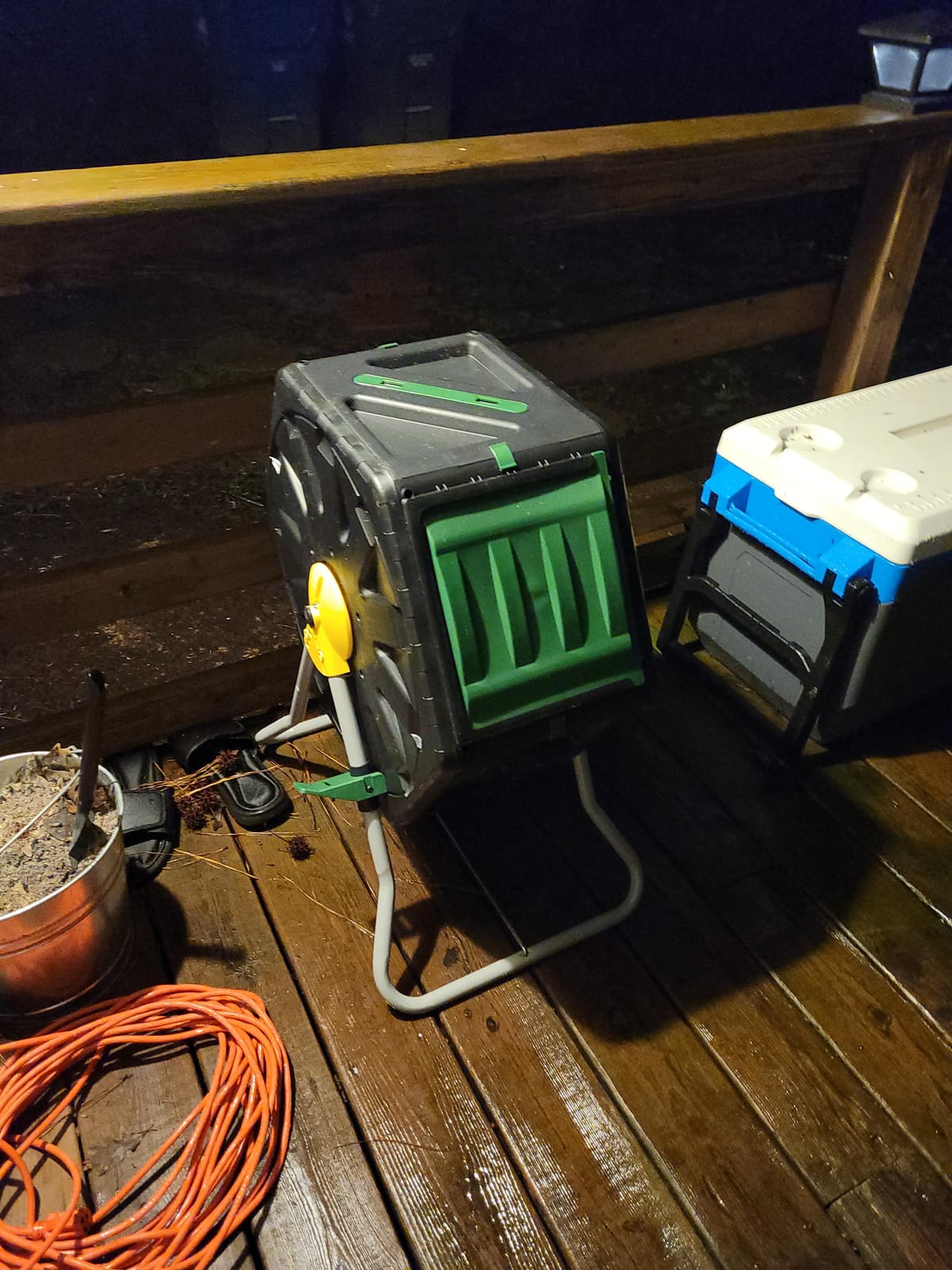
With 14625 reviews behind a 4.2-star average, this is one of the most thoroughly documented bins on the market, and the documentation is candid. Reviews note that the hexagonal shape gives less usable interior volume than an octagonal dual-chamber drum of the same nominal capacity, and roughly seven percent of reviews are one-star. That is the largest share of one-star ratings in the group, so read the critical reviews, not just the headline number.
The single chamber is the structural limitation. There is one working chamber, so the entire load has to finish before you can add fresh scraps, which in practice means a gap of several weeks between batches.
For a one or two person household that gap is manageable and the simplicity is a virtue, but for steady kitchen waste it becomes a bottleneck.
The one-chamber trade-off nobody mentions
Most comparisons frame dual chamber as strictly better, and for throughput it is. But a single chamber has real advantages in a small yard. There is no central divider to misalign during assembly, which removes the most common build failure in this category, and the whole drum empties from one opening so you can tip the whole batch into a bucket instead of shoveling half of it.
There is also a simplicity argument: you cannot load the wrong side, and you cannot leave a finished batch sealed while you slowly top up the other one. For a casual composter who turns a few times a month, that simplicity beats throughput.
Who should not buy the smallest bin on the list
Do not buy this if your household fills 18.5 gallons in under a week, since constant overflow is the fastest route to a bin nobody wants to turn, and owners report capacity running out sooner than expected. It is also the wrong choice if you chip branches or bag autumn leaves.
Skip it if you plan to compost for a family of four or share the bin with neighbours, because a shared installation needs a larger chamber so the turn-fill-turn rhythm of several households does not collide.
3. VIVOSUN 43-Gallon Dual Chamber: The Best Value Tumbler for Continuous Composting
VIVOSUN Outdoor Tumbling Composter Dual Rotating Batch Compost Bin, 43 Gallon Black Door
43 gal dual chamber
26.25 by 23.6 in footprint
21.7 lb octagonal barrel
Pros
- Twin independent chambers give a continuous compost stream
- Deep fins on eight panels give a strong grip for turning
- Metal frame and plastic body resist corrosion
- Vents circulate air and relieve pressure
- Gloves and four plastic claws included
Cons
- 43 gal octagonal barrel needs real clearance to rotate
- Single sliding door per opening makes emptying awkward when loaded
The VIVOSUN is the value pick because it does the two things that matter in a small yard, continuous composting and grip, without charging premium money. Two independent chambers sit inside one rotating barrel, so one side finishes while you fill the other. Owners rate it 4.3 stars across 9919 reviews, a large enough sample to trust, and it holds one of the top sales positions in outdoor composting bins.
Turning is where the design earns its keep. Deep fins run across eight panels and serve double duty as handholds and internal surfaces that break up clumps, which reviewers consistently single out as the reason rotation stays easy over time. Air vents circulate through the chamber and relieve the internal pressure that builds as wet greens break down.

Construction is a corrosion-resistant metal frame carrying a polypropylene plastic body at 21.7 pounds. That is a middle weight in this group, heavier than the Miracle-Gro single chamber and lighter than the F2C, and it is a weight you can still manage with one hand on the handle. The box also includes waterproof gloves and four ABS plastic claws, small touches that matter when you are handling wet material.
The real compromise is honest and simple: 43 gallons needs room. At 26.25 by 23.6 inches the footprint is 4.3 square feet before you account for the arc the barrel sweeps. On a small patio that is fine. On a side yard with a fence on one side, you need to plan where the handle ends up before you buy.

Fins, vents and the turning effort
The fins are the feature to look for on any tumbler, and this one has more grip surface than most rivals. Owners report the finned panels make rotation straightforward even when the barrel is loaded, which is not a small claim given how often turning is the reason people abandon composting. Vents solve a less obvious problem too: wet scraps in a sealed drum generate gas, and a well-vented tumbler bleeds that pressure rather than pushing material out at the door seal.
Who should skip a 43-gallon drum
Skip it if you only need one chamber, because the second chamber is the whole point: it means you never have an empty drum. And skip it if your only available surface is under four square feet, since the dual-chamber workflow earns its space only when you generate scraps fast enough to fill one chamber while another matures. A 22-gallon dual chamber gives you the same workflow in a third less space.
4. Nazhura 43-Gallon Dual Chamber: Best for Holding Heat in a Small Yard
Compost Tumbler Bin Composter Dual Chamber 43 Gallon (Bundled with Pearson’s Gardening Gloves)
43 gal dual chamber
26.25 by 23.6 in footprint
21 lb insulated dividers
Pros
- Insulated divider walls conserve heat from decomposing matter
- Interior paddles mix and aerate as the barrel turns
- One sliding door handles loading and emptying
- Top seller in outdoor composting bins
- Gloves included
Cons
- Same bulky 43 gal footprint as other dual-chamber bins
- One-year warranty is shorter than some rivals
- Green finish shows weather wear more than black
The Nazhura is the one in this group built specifically around heat retention, and in a small yard that is not a gimmick. Its dual chambers are separated by insulated dividers designed to conserve the heat generated by decomposing matter, which slows the loss of warmth through the walls. In practice that means the interior holds a slightly higher steady temperature than an uninsulated drum of the same size, particularly in autumn and early spring.
It holds a 4.4-star average across 2951 reviews and sits at the top of its category in sales rank, so the feedback base is deep enough to be useful. Interior paddles do the mixing work when the barrel turns, bringing oxygen to the centre of the load rather than only tumbling the outside layer.
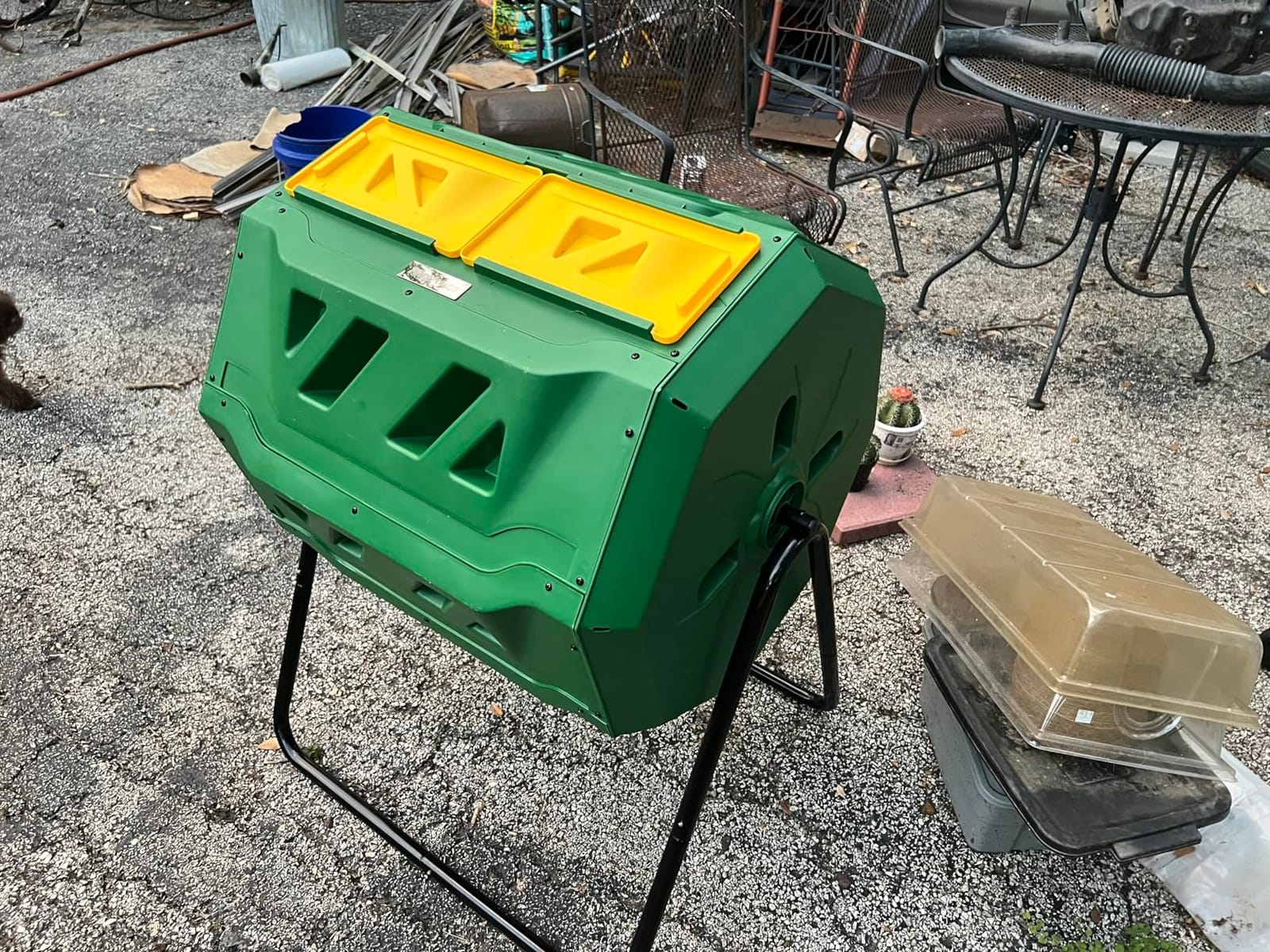
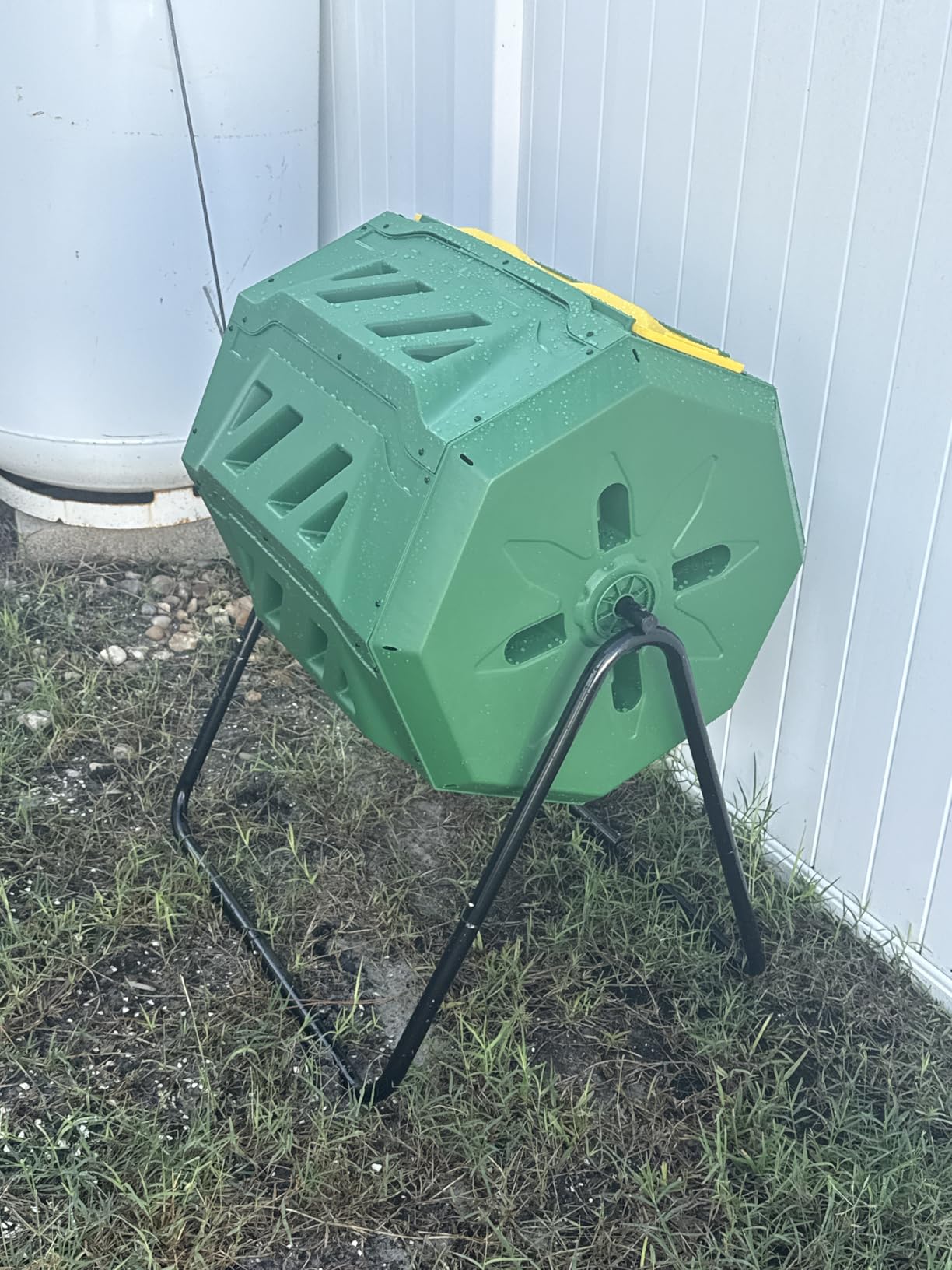
Construction is plastic with a galvanized steel frame at 21 pounds, and the barrel is oval rather than octagonal. That shape difference is not cosmetic: an oval cross-section tends to churn material more thoroughly as it rolls, while a faceted octagonal drum tends to roll in a more predictable way. Owners generally favour the mixing either way.
Expect the same clearance problem as the VIVOSUN, since the published footprint is identical at 26.25 by 23.6 inches. Reviewers flag the unit’s size most often, alongside the fact that the green finish can look less tidy in a small garden than a black body, and the one-year warranty is shorter than some competing bins.
Why insulated dividers matter in a cold month
Heat loss in a tumbler happens through the walls, and a thin plastic wall is a poor insulator. Insulation between the two chambers slows that loss, which matters most in the shoulder months when the ambient temperature sits just below what bacteria want: in midsummer every open drum in this group works reasonably well, and the difference shows up in the cool part of the year. It is a multiplier rather than a substitute, though, since a pile that never generated heat in the first place stays cold.
What the padded walls do not fix
Insulation does nothing about the three failure modes owners complain about most: turning effort, door sealing and drainage. This unit shares the standard sliding door arrangement, and a sliding door is a lip seal rather than a gasket, so it deters casual pests without making the drum airtight, and there is no drain port, so liquid shed during turning lands on whatever is underneath. If your spot is paved, put a splash tray or a piece of cardboard under the barrel first.
5. F2C 43-Gallon Dual Chamber: The Budget Pick That Outlasts Its Price
F2C Compost Bin Outdoor 43 Gallon Garden Dual Chamber Composter Bin – Bundled with Pearson’s Gardening Gloves, BPA Free, Heavy-Duty Steel Frame, Rotating Tumbler with Sliding Doors -Black
43 gal dual chamber
28.5 by 25 in footprint
24.3 lb powder-coated steel
Pros
- Lowest cost among the 43 gallon dual-chamber models
- Stable and easy to spin even fully loaded
- Owners report it handles desert sun and winter well
- Two chambers can pair fresh material with a dry source
- Gloves and a screwdriver included
Cons
- Assembly involves roughly 50 to 85 nuts and bolts
- Center divider alignment is tricky and errors require rework
- Printed instructions are thin and some steps are undocumented
The F2C is the most interesting value proposition here, because owners repeatedly report it outperforming more expensive units they have owned. It holds a 4.4-star average across 2640 reviews, sits at 24.3 pounds on a powder-coated steel frame, and its reviewers describe rotation as stable and easy even fully loaded thanks to the number of grip points around the barrel.
There is a real engineering claim behind the stability, too. The manufacturer states the loaded unit stays stable in 40 mph winds, and BPA-free polypropylene panels interlock into a coated steel frame. Owners in high-desert climates report it shrugging off strong sun and winter without degradation, and some describe treating the rotation points with silicone grease once and then having smooth motion for months.

The black body also absorbs sunlight, which raises the internal temperature and speeds decomposition in cool months. That is a cheap trick that genuinely works, and it is the same principle the more expensive heat-focused models are paying for in a more engineered form. It is also the whole difference between this model and a plastic barrel on a bare plastic frame.
The catch is footprint and build effort. At 28.5 by 25 inches this is the second-largest footprint in the group at roughly 4.9 square feet, so it needs more clear space than the FCMP and the Miracle-Gro. And assembly is the dominant theme in its reviews, with the fastener count cited as the main obstacle.

Plan for an hour of assembly
Owners describe somewhere between an hour and an hour and a half with basic tools, and many recommend an electric screwdriver. The fiddly part is the centre divider, which is not screwed in place: if it is mis-seated you may have to unscrew many panels to correct it, and reviewers report arriving at bowed or misaligned panels. Read the printed instructions once through before starting, seat every tab fully in its guide holes, and budget an extra fifteen minutes for that check.
Stability claims versus real ground conditions
Wind stability and ground stability are different problems, and the manufacturer claim covers only the first. A unit can be perfectly rigid in a stiff wind and still rock on soft or uneven soil, which is the single most cited complaint in composting owner reviews, so level the site before you assemble rather than after. If the frame still moves, set the feet on two patio pavers and run a quarter-inch carriage bolt through the lower crossbar into a paver; owners who made that fix report the wobble becoming a non-issue for very little money.
6. Good Ideas Compost Wizard Jr.: Best Compost Tumbler With No Assembly Step
Good Ideas Compost Wizard Jr. Tumbler, 7 Cubic Foot Capacity
50 gal single chamber
22 by 23.5 in footprint
27 lb wheeled base
Pros
- Arrives fully assembled and ready to use
- Wheeled base makes the heavy drum easier to move
- 12-inch twist lids seal in heat and moisture
- Molded handholds double as internal agitators
- Plastic body is safe around children and pets
Cons
- Most expensive model in this roundup
- Single chamber pauses additions until a batch finishes
- 27 lb weight is awkward despite the wheels
The Compost Wizard Jr. is the option for anyone who does not want to spend a Saturday with a power driver. It arrives fully assembled and ready to use, which removes the single biggest complaint in this entire category. Every other 43-gallon model we reviewed draws a substantial share of its reviews from assembly frustration, and this one simply has no assembly step.
It also solves the footprint problem unusually well. At 22 by 23.5 inches the drum is about 3.6 square feet, smaller than every 43-gallon dual-chamber unit here, yet it holds 7 cubic feet, or 50 gallons, the largest single-chamber capacity in the group. The wheeled base lets you roll the whole 27-pound unit rather than lifting it.

Twelve-inch twist lids seal each chamber to lock in heat and moisture, and the heat-absorbing black drum exterior does the same job the dark plastic bodies of the cheaper models do, at a more considered level. Molded handholds on the outside double as internal agitators, breaking up the material as the drum turns rather than merely moving it around.
The plastic construction is rated safe around pets and children, which matters if the unit sits near a play area or a dog run. At 4.4 stars across 748 reviews, sentiment is positive, and the main reservations owners voice are cost and the single-chamber workflow rather than performance.

Pre-assembled convenience versus capacity and workflow
Buying a bin that needs no build removes roughly an hour of work and all of the alignment anxiety that comes with interlocking panels, which for a first-time composter is a better use of an afternoon than rebuilding the same screws twice. The trade is that you are buying the assembly labour into the price, and what you get for that premium is capacity and sealing rather than dual chambers, so a steady stream of scraps means longer batch cycles and a pause before you can start a new load.
Where the wheels earn their keep
A 27-pound drum is awkward to lift, and it is exactly the weight that stops people repositioning a tumbler toward the sun or away from a fence line. It also matters for the off-season storage problem that nobody in the compost tumbler category talks about: in a small yard, a tumbler that can be rolled into a garage in winter is worth more than a cheaper unit you have to wedge behind the bins because you cannot move it alone.
7. EJWOX 43-Gallon with Thermometer: Best for Watching Internal Heat
EJWOX 43 Gallon Dual Chamber Tumbling Composter with Integrated Thermometer – Rotatable Outdoor Compost Bin, Dual Batch Design for Garden Waste, Black
43 gal dual chamber
25.9 by 23.6 in footprint
23.3 lb built-in thermometer
Pros
- Built-in thermometer reads internal heat without opening the lid
- Dual chambers support continuous batch composting
- Tumbling action gives good aeration with less manual turning
- Galvanized steel frame with high-density plastic body
- Black and green options
Cons
- 43 gal octagonal barrel is bulky for a small yard
- Fewer reviews than the leading models so durability data is thin
- Thermometer is a single point and does not show moisture
The defining feature of the EJWOX is the thermometer built through the barrel wall. You can read the internal temperature without cracking the lid, which sounds minor until you consider what opening the lid actually does. Every time you lift a compost tumbler door you release the heat you spent the last week building, cool the pile and reset the process.
Everything else is a competent 43-gallon dual chamber. Two compartments let one batch mature while fresh scraps go into the other, and the tumbling action provides aeration that reduces how much manual turning the load needs. The frame is galvanized steel with a high-density plastic body at 23.3 pounds, rated for year-round outdoor use.
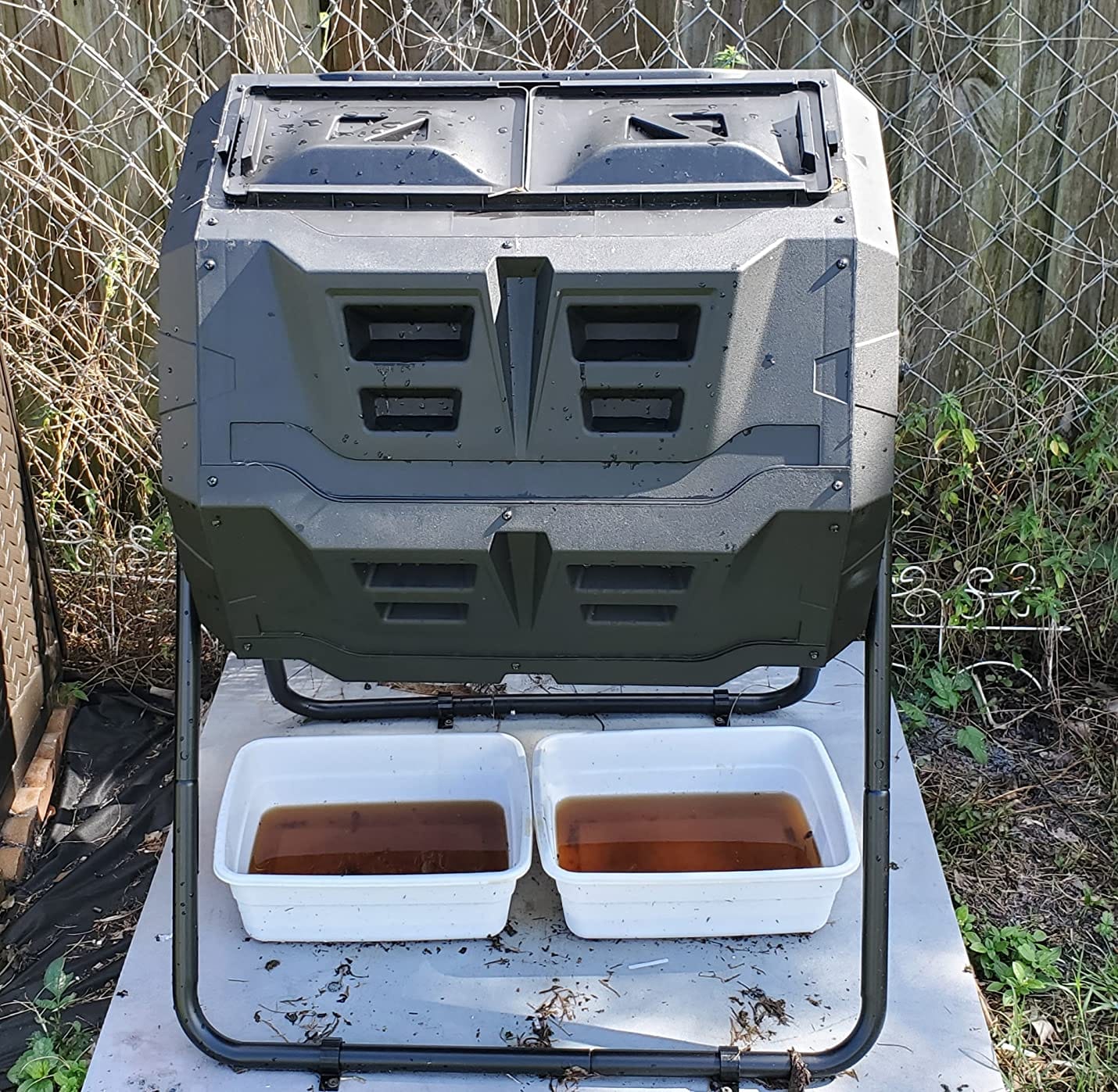
At 25.9 by 23.6 inches the footprint is about 4.2 square feet, fractionally tighter than the other 43-gallon octagonal drums in this group, though the difference is small enough that it will not decide a tight patio. Owners like the updated structural design for being stable and simpler to set up than older twin-chamber designs.
Do read the rating with its sample size in mind. At 4.3 stars from 789 reviews, the average is solid but the base is much thinner than the FCMP at 18783 reviews or the Miracle-Gro at 14625. That means less long-term durability data and fewer owners reporting how the plastic and fasteners held up after several seasons.

What a thermometer tells you and what it misses
A thermometer answers the single question that matters most in compost, which is whether the pile is working. A reading in the 130 to 160 degree range tells you a thermophilic pile is running, which means weed seeds and most pathogens are being degraded. A reading near ambient tells you the pile is only mesophilic, which still produces usable compost, just more slowly and without the sanitising effect.
What it cannot tell you is moisture. A thermometer reads the same temperature whether the mix is bone dry or soaking wet, and both extremes stall decomposition while producing a perfectly normal-looking reading, so use the squeeze test instead: if a handful barely holds together it is too dry, and if water runs out of it, add browns.
Thinner review history means less long-term data
When you are buying a bin that will sit outdoors year after year, review count is as informative as star rating. 789 reviews tells you owners are satisfied now, and much less about what the plastic does after five winters of UV exposure or whether the galvanized frame corrodes at the fastener points in a damp climate. Compare that with the models carrying 9919, 14625 and 18783 reviews, whose pools contain years of accumulated commentary about cracking panels, stripped threads and door seals, which is the information that saves you a return.
8. Hourleey 43-Gallon Dual Chamber: Best for Smooth, Low-Effort Rotation
Hourleey Compost Bin Outdoor, 43 Gallon Dual Chamber Tumbling Composting Bin with Sliding Doors, Tumbler Rotating Batch Composter Bin for Garden Kitchen Yard
43 gal dual chamber
27.6 by 25.8 in footprint
21.7 lb metal frame
Pros
- Deep flaps in deep grooves make the barrel rotate smoothly
- Two large marked compartments simplify feeding
- Enclosed barrel deters critters better than an open pile
- Aeration holes and deep fins break up clumps
- Sturdy plastic and frame build for prolonged outdoor use
Cons
- Some compost leaks out during turning and there is no handle
- Metal stand feels flimsier than the plastic drum
- Center divider is small enough that batches can mix
The Hourleey earns its place through one specific mechanical detail: deep flaps seated in deep grooves around the barrel. Those interlocks are what make the rotation smooth rather than merely possible, and owners single them out as the reason the drum turns easily even when loaded. In a group where hard turning is the most persistent complaint, that is worth paying attention to.
It is also the friendliest of the 43-gallon models to load. The two chambers are marked with a plus sign so you remember which side is being fed, which sounds trivial until you have filled one chamber, gone to collect grass, and come back to the wrong door. Large openings with removable doors make filling fast.

Owners report that the enclosed design kept animals out compared with an open pile, and that after a month of use they had seen no leaks, no odour and no insects, which is the quiet win that a sealed drum is actually selling. Aeration holes combined with deep fins handle airflow and clump breakup at the same time.
Be aware the listed dimensions are inconsistent. The feature listing gives assembled dimensions of 27.6 by 25.8 by 36 inches, which is the figure to plan around, while the specification block lists something clearly wrong. At roughly 4.9 square feet, this is among the largest footprints in the group, so measure before committing.

The grooves and flaps that help it turn
Look at the barrel edges on any tumbler you are considering. A smooth cylinder rolls unpredictably and can slip on wet material, while faceted panels with deep interlocks bite into each other and advance in controlled increments, which is the difference between a turn you can do one-handed and a turn that needs both hands and a shoulder. The interlocks also reduce strain on the frame, so play at the rotation points and a wobbling barrel tend to arrive later than on smooth-barrel designs.
Leaks, divider size and instruction quality
Three drawbacks recur. Some compost leaks out during turning and there is no handle to help you control the barrel while it rotates, which is a problem over a patio. The metal stand is described as feeling flimsier next to the plastic drum, which is the opposite of what the F2C manages. And the middle plastic divider is small enough that maturing and fresh material can mix, costing you the clean one-side-at-a-time workflow.
Assembly takes about an hour to an hour and a half with a fiddly centre divider and crossbar, and one buyer reported instructions that referenced part numbers not present on the unit, so check the parts against the manual before you start. With 633 reviews the feedback base is the thinnest here, so treat owner reports as a useful signal rather than a settled record.
How to Choose a Compost Tumbler for a Small Yard: 6 Criteria
The first criterion is footprint, measured not as the drum but as the whole working area. Take the published length and width, add about 12 inches on the side where the handle swings, and check the result against the space you actually have free. All eight models here measure between 3.2 and 4.9 square feet on the drum alone, which is a narrow range but often the difference between fitting and not.
The second is capacity against real waste volume, not against the manufacturer label. A nominal 43 gallons becomes an effective 25 or 30 once you account for the space the frame occupies, the fill line you should not exceed, and the fact that woody material bulks up as it breaks down. A two-person household producing a few handfuls of scraps a week needs roughly 20 to 30 gallons total. A family of four generating steady kitchen waste needs 40 to 60 gallons, and anyone raking autumn leaves needs more than any of the models on this page.
The third criterion is chamber type, and it is simpler than the marketing suggests. Dual chamber means you can fill one side while the other finishes, which suits steady producers. Single chamber means you have a simpler machine with one batch at a time, which suits casual composters and light waste. There is no third option worth paying for.
The fourth is frame and ground stability. Look at the base, not the barrel. A galvanized or powder-coated steel base with side-locking mechanisms is meaningfully more stable than a plastic frame, and the heavier units resist rocking because more mass sits low. Whatever you buy, level the ground first, because no design compensates for a slope.
The fifth is pest sealing, and this is where marketing language separates from reality. Tight seals and gasketed doors are described as rodent-resistant on most listings, and a sealed drum is genuinely far better than an open pile, but a sliding door is a lip rather than a gasket. Expect good deterrence rather than a guarantee, and keep food scraps buried in the centre of the load rather than near the opening.
The sixth is hot-compost ability, and here you should manage expectations. Thermophilic composting needs a mass of material that can hold heat, adequate insulation and a balanced mix. No 43-gallon plastic tumbler in this roundup reaches and holds 130 to 160 degrees reliably, and the small ones never will. If sanitising your compost matters, a larger insulated vessel is the answer, and a small yard is a poor place to find one.
Why Small Compost Tumblers Never Get Hot
A compost pile is hot when the heat produced by bacteria decomposing material cannot escape faster than it is generated. That balance depends on volume, insulation and a correct carbon-to-nitrogen ratio, and a small tumbler fails the first test by design.
Heat generation scales with the mass of active material, and a 22-gallon drum simply does not contain enough of it. A pile also loses heat through its outer surface, and the ratio of surface area to volume gets worse as the container shrinks, so a small drum is losing proportionally more heat than a large one. Insulation helps at the margins but cannot replace mass. The practical consequence is that small tumblers run mesophilic, which means slower breakdown and no reliable kill of weed seeds.
When your compost is not breaking down, four causes account for most cases. First, volume too small to sustain a hot core, which is a design limit you cannot compost your way out of. Second, the mix is off balance, most often too much dry leaf relative to greens, or greens without enough browns to absorb the moisture. Third, the material is too chunky, since shredding roughly doubles the surface area available to bacteria. Fourth, insufficient turning, since oxygen is what keeps decomposition aerobic rather than anaerobic and smelly.
For all of them the fix is the same pair of habits. Turn two or three times a week during the active cycle, and never fill the drum more than about two-thirds to three-quarters full, because a packed barrel mixes badly. Check moisture with the squeeze test rather than guess, and aim for a mix roughly two parts browns to one part greens by volume.
How to Anchor a Compost Tumbler and Turn It Properly
Rocking and tipping is the most cited problem in owner reviews, and it is also the most preventable. Four steps fix it.
1. Level the site first. A tumbler on a slope will shed material toward the low end every time you turn it, and the load imbalance gets worse over a season. Dig out or add a shim under the low corner until the frame sits flat in every direction.
2. Set the feet on pavers or a poured pad rather than on soil. Two patio pavers under the feet spread the load and stop the frame sinking into soft ground after rain. If you already have a paved patio corner that is flat, that is the ideal site and the only condition most product photos actually show.
3. Bolt the feet if wobble remains. Run a quarter-inch carriage bolt through the lower crossbar into a paver or a concrete block. Owners report this single fix turning an annoying wobble into a non-issue, and it costs very little compared with replacing a bin you cannot keep level.
4. Turn on a schedule, not on mood. Two or three turns a week during the active cycle is the target, and one is the floor if life gets busy. Turn when one chamber is fuller than the other so the load balances across the axle. Load, then turn, then load the other side, and the two batches stay separated rather than merging.
Finally, sit it where the neighbours cannot smell it and the sun can reach it. Even a well-ventilated tumbler works faster in direct sun, and a spot away from the kitchen window settles most odour objections before they start. If winter storage is a problem in your yard, remember that the wheeled models can be rolled somewhere out of the way between seasons.
Is a Tumbler Even Right for a Small Yard?
Honestly, sometimes it is not, and the composting forums have been arguing about this for years. A tumbler earns its place when your yard is too small for an open pile, when you want kitchen scraps contained rather than exposed, and when you are genuinely willing to turn it a couple of times a week. Fail any of those three and you are buying hardware you will not use.
A worm bin is the strongest alternative for a genuinely small space. It works indoors or out, handles kitchen scraps including cooked food and dairy, produces finished compost on a continuous basis rather than in batches, and needs no turning at all. The trade is that it processes a small volume slowly and produces a smaller total yield. For a one or two person household on a balcony, a worm bin is often the more sensible answer.
A rolling bin is the opposite trade. It is cheaper, holds far more volume, and needs no effort, but it does not solve odour or pests and it will not fit a tight corner. If you have room for a rolling bin and your only problem is volume, do not buy a tumbler. Bokashi is worth considering if your waste is mostly cooked food and packaged organics, though it is a sealed indoor system that produces a liquid feed rather than compost.
Here is the rule we would use. Under three square feet of usable space, a worm bin or an insulated countertop-style tumbler. Between three and five square feet with mostly kitchen scraps, one of the 22 to 43 gallon tumblers on this page. Over five square feet or with a real leaf load each autumn, a static bin and a fork, because no tumbler in this roundup will absorb a season of yard waste without constant emptying.
Frequently Asked Questions
What size compost tumbler do I need for a small yard?
For a one or two person household generating kitchen scraps only, aim for 20 to 30 gallons of total capacity, which is a compact dual chamber such as the 22.5-gallon FCMP IM2000 or the 18.5-gallon Miracle-Gro single chamber. A family of four producing steady kitchen waste needs 40 to 60 gallons, so a 43-gallon dual chamber fits. Anyone raking autumn leaves will fill any of these repeatedly and would be better served by a static bin. Add about 12 inches of clearance on the handle side when measuring your space.
Are tumbler composters worth it?
They are worth it when your yard is too small for an open pile and you want odour and pest containment, which is the usual small-yard situation. They are not worth it if you generate heavy seasonal yard waste or have room for a cheap stationary bin, because you will spend more and empty it more often. The deciding factors are willingness to turn two to three times a week and having level ground to site it on.
How often should you spin your compost tumbler?
Two to three turns a week during the active cycle is the target, with one turn as the absolute minimum if you cannot manage more. Turn when one chamber is fuller than the other so the load balances across the axle, and never fill the barrel more than about two-thirds to three-quarters full, because a packed drum mixes badly and will not break down evenly.
Why is my compost tumbler not breaking down?
Four causes account for most cases. The drum may be too small to hold enough active material to generate meaningful heat, which no technique fixes. The mix may be out of balance, usually too much dry leaf relative to greens or greens without enough browns. The material may be too chunky, since shredding roughly doubles the surface area available to bacteria. And it may not be getting turned often enough, since oxygen keeps decomposition aerobic rather than smelly and anaerobic.
Do compost tumblers smell, and how do I stop pests getting in?
A sealed, ventilated tumbler smells far less than an open pile, because the barrel keeps moisture and odour contained while the vents release pressure. To keep fruit flies and maggots out, bury fresh scraps in the centre of the load rather than near the door, harvest finished compost promptly, wipe the door lip clean, and keep adding carbon-rich browns. Most doors are a lip seal rather than a gasket, so expect good deterrence rather than a guarantee.
The Bottom Line for Small-Yard Composting in 2026
For most small yards the answer is the FCMP Outdoor IM2000. It is the only dual-chamber tumbler in this roundup that fits under 3.5 square feet, it carries the highest owner rating and by far the largest review base we found, and its recycled polypropylene body will not rust in any climate. The trade is an assembly process that owners describe as tedious, so allow a couple of hours and use a power driver.
If space is tighter than that, the Miracle-Gro single chamber is the right call at 3.7 square feet and 10.5 pounds, and it is comfortable for a one or two person household that will not mind pausing between batches. If you generate scraps steadily and want compost on a continuous basis, the VIVOSUN 43-gallon dual chamber is the value pick, provided you can spare 4.3 square feet. The Good Ideas Compost Wizard Jr. is worth the premium if you would simply rather not build anything.
Whichever you choose, site it on level ground, anchor it if it rocks, and turn it two or three times a week. Those three habits do more for your compost than any feature on any spec sheet. And if your space is under three square feet, skip the tumbler entirely and start with a worm bin. Ratings and specifications in this guide were captured in October 2026 and change frequently, so confirm the details before you commit to a purchase.