
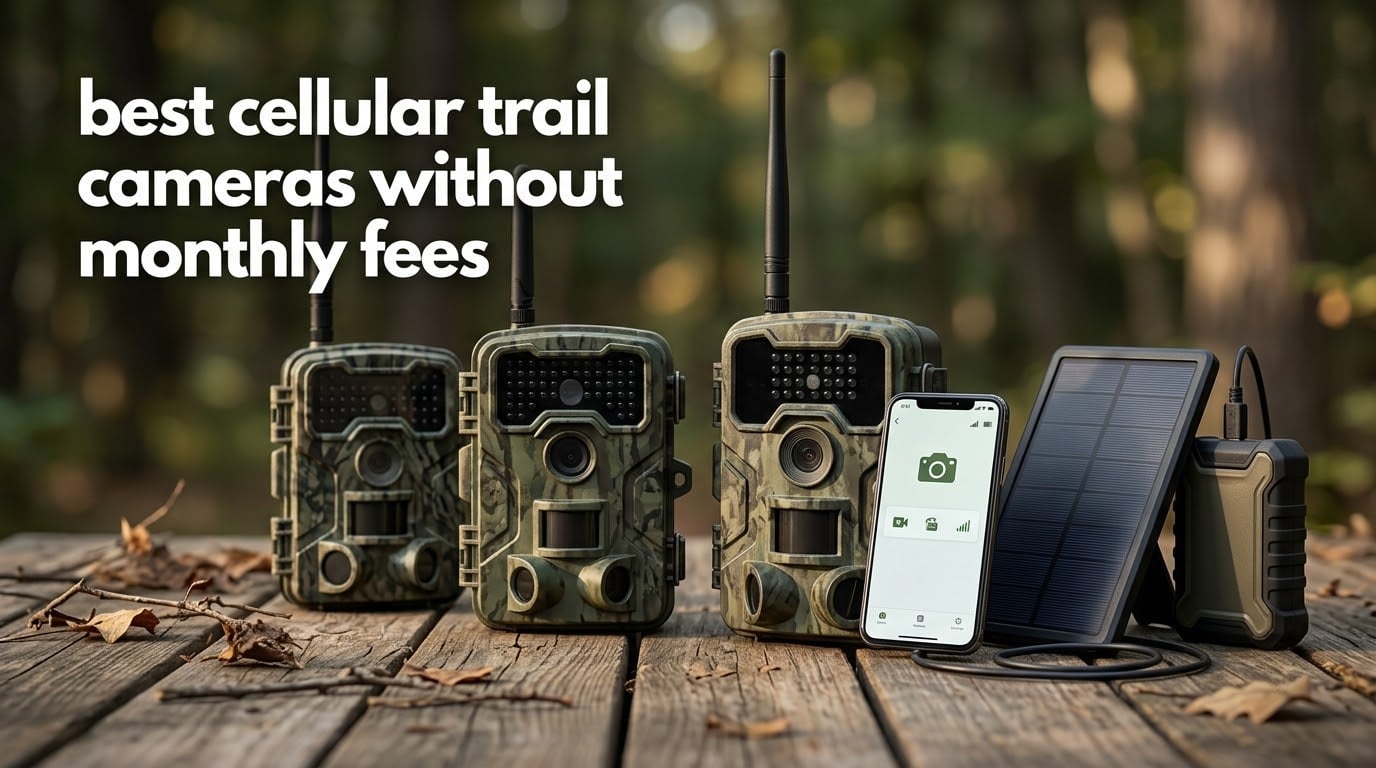
Short answer: yes. A cellular trail camera without a monthly fee comes down to one of three things — a permanent free data tier that sends a set number of photos each month, prepaid “lifetime data” baked into the purchase price, or no cellular radio at all and a memory card doing the work. Only one major brand still offers a genuinely free tier, and one brand in our list sells unlimited lifetime data with no recurring bill. We ranked all ten cameras below by how well they handle that constraint.
The frustration is real and it comes up constantly on hunting forums. Buyers expect a camera to be a one-time purchase, then discover that photos only arrive once a plan is attached to the app account. The complaint that gets repeated most often on r/trailcam is simple: you buy the hardware, and the running cost is the part nobody mentions at checkout. When several cameras are involved, the math gets uncomfortable fast.
So we built this roundup around the running cost rather than around trigger speed. For each camera we looked at what you actually pay per month to get pictures on your phone, what the free or trial allowance really covers, whether full-resolution files stay on the card, and what happens when you blow past the limit. We also compared the hardware that matters in the field: trigger speed, night flash, detection range, power draw and carrier coverage.
We earn a commission when you buy through the links on this page, at no extra cost to you, and it does not change the ranking. If you would rather start from scratch, our broader [10 Best Trail Cameras Expert Reviews](https://webcomicsweekend.com/best-trail-cameras/) covers the non-cellular options too, and our [15 Best Mirrorless Cameras](https://webcomicsweekend.com/best-mirrorless-cameras/) guide covers handheld shooting. Everything below sends photos to a phone over a cellular network.
Top 3 Cellular Trail Cameras Without a Monthly Fee for October 2026
Three stood out once we priced the running cost against the hardware. The Reveal X 3.0 has the deepest proven reliability of the group, the Oculview two-pack covers the most ground per mount, and the VOOPEAK TC32 is the least painful camera to activate in the field. Here is the short list before the full write-ups.

TACTACAM Reveal X 3.0
- Auto-connect multi-carrier LTE
- 4K photo and 1080p video
- Sub-0.5s trigger with burst
- Built-in GPS and storage

Oculview 4G LTE Two-Pack
- 2K live stream with no Wi-Fi
- 336° pan and 90° tilt
- 6W solar panel each
- 0.2s trigger

VOOPEAK TC32 2K 360
- 360° view with 130° field of view
- Solar panel with dual night vision
- IP67 housing
- SIM included
All 10 Cellular Trail Cameras Compared in October 2026
Every camera in this list transmits over 4G LTE or better and stores originals locally. Read the Key Features column first, then jump to the full review for the running-cost detail.
| Product | Specs | Action |
|---|---|---|
| TACTACAM Reveal X 3.0 |
|
Check Latest Price |
| Oculview 4G LTE Two-Pack |
|
Check Latest Price |
| VOOPEAK TC32 2K 360 |
|
Check Latest Price |
 TACTACAM Reveal Ultra TACTACAM Reveal Ultra |
|
Check Latest Price |
 Moultrie Edge 3 Moultrie Edge 3 |
|
Check Latest Price |
 TKENPRO RBX-H10 TKENPRO RBX-H10 |
|
Check Latest Price |
 TACTACAM Reveal Pro 3.0 TACTACAM Reveal Pro 3.0 |
|
Check Latest Price |
 Loatos 2K Live Camera Loatos 2K Live Camera |
|
Check Latest Price |
 Zleo Lifetime Data Camera Zleo Lifetime Data Camera |
|
Check Latest Price |
 Moultrie Edge 2 Pro Moultrie Edge 2 Pro |
|
Check Latest Price |
1. TACTACAM Reveal X 3.0 — The Most Proven No-Subscription Workhorse
TACTACAM Reveal X 3.0 Cellular Trail Camera, Night Vision, Waterproof
4K photo
1080p video
Sub-0.5s trigger
96 ft night vision
IP66
Pros
- Auto-connect multi-carrier LTE locks onto the strongest of AT&T and Verizon
- Sub-0.5 second trigger with 3-shot burst mode
- Built-in GPS and onboard storage mean no SD card purchase
- Pre-installed antenna and pre-activated SIM
- IP66 waterproof for year-round deployment
Cons
- Higher upfront cost than the solar-equipped budget models in this list
- Requires the REVEAL app and a compatible smartphone
I put the Reveal X 3.0 at the top of this list because the running-cost conversation is easier when the hardware underneath is boring in the best way. With 947 reviews averaging 4.3 stars, it is the most proven cellular trail camera in this group, and that matters more here than in a general roundup. You are committing to a camera you may run for several seasons on a data allowance that is not generous.
The auto-connect multi-carrier setup scans AT&T and Verizon and holds onto the stronger of the two. On r/trailcam, Tactacam is one of three names buyers keep coming back to for hardware reasons, and ArcheryTalk owners single out the same brand for picture quality while grumbling about what unlimited data costs across several cameras. That combination is exactly why this model works as a no-fee pick: you accept a capped transmission allowance and get hardware that rarely lets you down in the field.
The 96-foot night vision range and 4K stills are stronger than most of the field here, and the sub-half-second trigger with three-shot burst is what you want when a buck walks a corridor rather than pausing in the open. Battery life is rated at up to six-plus months per charge cycle with the add-on power accessories, though on busy sites real-world figures depend heavily on how often the radio transmits.
The pre-installed antenna and pre-activated SIM mean most owners receive their first photos in under ten minutes of unboxing. There is no SIM to order, no activation portal to find, and no carrier dropdown to guess at. Built-in GPS tags each capture so you know which camera a file came from when you are running four of them across a lease.
What you get at zero monthly cost
The camera stores originals on internal memory and sends what the plan allows. A capped tier means the phone receives a subset rather than an endless feed, and the full-resolution file is still sitting on the camera when you next walk the trail. That is the trade every no-fee setup makes, and it is a much better one than paying a per-camera fee to look at thumbnails.
Users on r/bowhunting mention being able to switch a plan on and off whenever they want, and that flexibility is what lets a capped camera work seasonally. Run the camera through the scouting window at a higher allowance, then drop back to the smallest tier for the months you are not actively working the timber.
Where it falls short
Full function depends on the REVEAL app and a compatible smartphone, which is a real limitation if you split cameras between two households or want a laptop view. A small share of one-star reviews describe units that missed triggers or lost connectivity in very remote locations, so treat the camera as dependent on signal rather than as a satellite messenger.
The price also sits above several models in this list, including the solar-equipped budget picks further down. If you need two or three cameras and the data allowance is tight, that premium repeats.
2. Oculview 4G LTE Two-Pack — Best Coverage From a Single Mount
Oculview 4G LTE Cellular Trail Cameras, 360° 2K Live Streaming Game Camera, SIM Card Included, Low-Glow Night Vision, Solar Powered, Instant Alerts, Two Storage Ways, No WiFi Needed for Hunting&Trail
2K live stream
336° pan and 90° tilt
0.2s trigger
6W solar each
IP65
Pros
- 336° pan and 90° tilt give full-area coverage from one mount
- 2K live streaming to phone without Wi-Fi
- Included 6W adjustable solar panel per camera
- Works in fringe coverage with one or two bars
- 0.2s trigger with instant push notifications
Cons
- Setup and UBox app workflow confusing for first-time users
- App account or password loss locked some owners out
- Memory card and cloud storage sold separately
- Minor false alerts under some settings
This is a two-camera pack, and that alone changes the economics on a no-fee budget. When every additional camera adds its own plan line, buying two bodies in one order lets you plan coverage across a food plot and a travel corridor without doubling the paperwork. The 336-degree pan and 90-degree tilt head means each unit covers a wide arc from a single strap, which is how the pack compensates for having only two positions.
The 2K live streaming works without Wi-Fi at the camera location, and reviewers specifically call out the ability to hold signal in fringe coverage areas with only one or two bars. That is the situation most of us actually scout in, since the spots with animals tend to be the spots where the tower is behind a ridge.
The included 6W adjustable solar panel is the sleeper feature here. In a three-camera setup running on capped data allowances, power is the constraint that actually ends the project early, and a panel per camera removes battery logistics from the equation entirely. Each camera also takes a microSD card up to 128GB for local recording, so full-resolution files stay on the card.
The 850nm low-glow infrared array runs silently with a built-in spotlight option, and the 0.2-second trigger with a 120-degree PIR detection angle is quick enough for moving animals. Two-way audio lets you talk to a curious animal or scare off a curious person without walking in.
Why two cameras beat one expensive one
If your goal is coverage rather than trophy-quality stills, two pan-and-tilt units beat a single fixed-lens camera. A 336-degree arc means you can point the head down a lane after the fact from the app instead of re-strapping the camera each time the season shifts.
The 4G LTE module connects across Verizon, AT&T and T-Mobile, and the IP65 housing handles a full season of rain and cold. Both cameras in the pack activate separately, which is worth knowing before you commit, because separate bodies mean separate activation steps.
Where it falls short
The UBox app workflow is the most common complaint in reviews. Several owners report losing account access and being locked out of camera viewing until support resolved it, which is exactly the failure mode you cannot tolerate on a remote lease with no second chance.
Storage is not included. You need to buy microSD cards separately, and optional cloud storage is a further add-on. If you plan to lean on the free allowance and keep originals on card, budget for cards up front.
3. VOOPEAK TC32 2K 360 — Easiest Camera to Activate in the Field
4G LTE Cellular Trail Camera, 2.5K 360° Live Feed with SIM Card Included
2K 360° live feed
130° field of view
IP67
Solar powered
65 ft night
Pros
- 360-degree live view with a wide 130-degree field of view
- Dual night vision with six IR LEDs for color and infrared
- Solar panel reduces battery charging concerns
- IP67 housing rated for rain and snow
- App setup with clear prompts and no complicated install
Cons
- AI species identification is a paid subscription feature
- Each camera needs its own separate data top-up
- Memory card not included and sold separately
- 2-megapixel still sensor is modest
The TC32 is the one I would hand to someone setting up their first no-subscription cellular camera. The SIM card is pre-inserted with a small complimentary data allowance to get you started, the app walks through setup with plain prompts, and the screw-in mount means no strap fiddling in the dark. For a first install, that is worth more than a spec sheet advantage.
Video recording runs at 2K or 1080p with selectable HD and SD modes, and the 130-degree field of view across a 360-degree viewing angle gives you a wide look without moving the camera after installation. Night range is 65 feet with six infrared LEDs working alongside a color night mode, which is short compared with the 96-foot figures on the Tactacam models but adequate for a feeder or a yard.
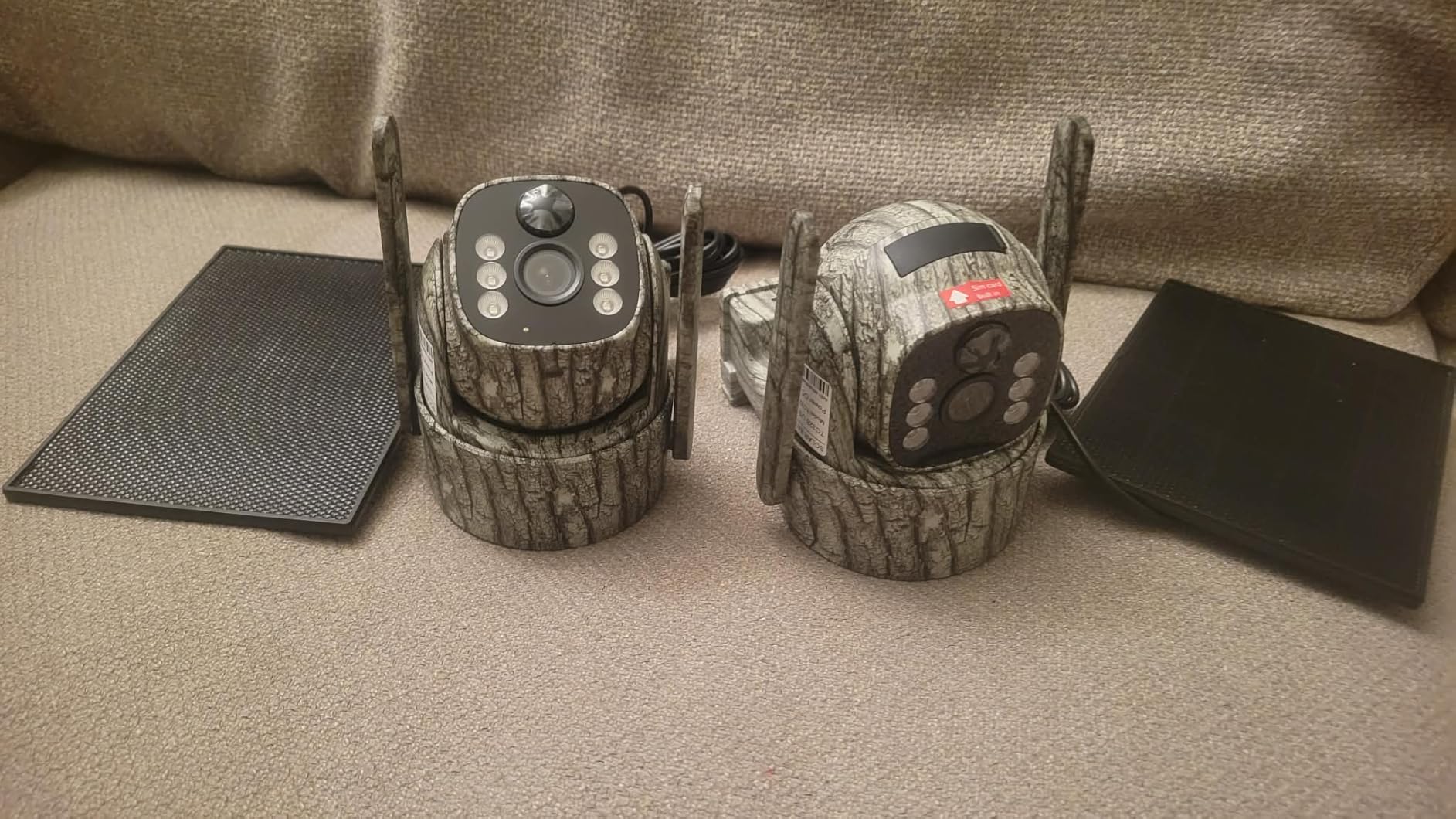
Solar is built in and rated IP67, so the housing handles rain and snow. Operating temperature runs from 14 to 158 degrees, and at 320 grams it is light enough to reposition between trees without effort. Local microSD storage accepts cards up to 128GB, which is where your full-resolution originals live if you keep transmission allowances tight.
Owners consistently rate the setup experience as clear and uncomplicated, which is not a small thing when you are mounting a camera on a lease you visit twice a season. PIR sensors push instant motion notifications to the phone, and the camera is aimed by app rather than by test shots.
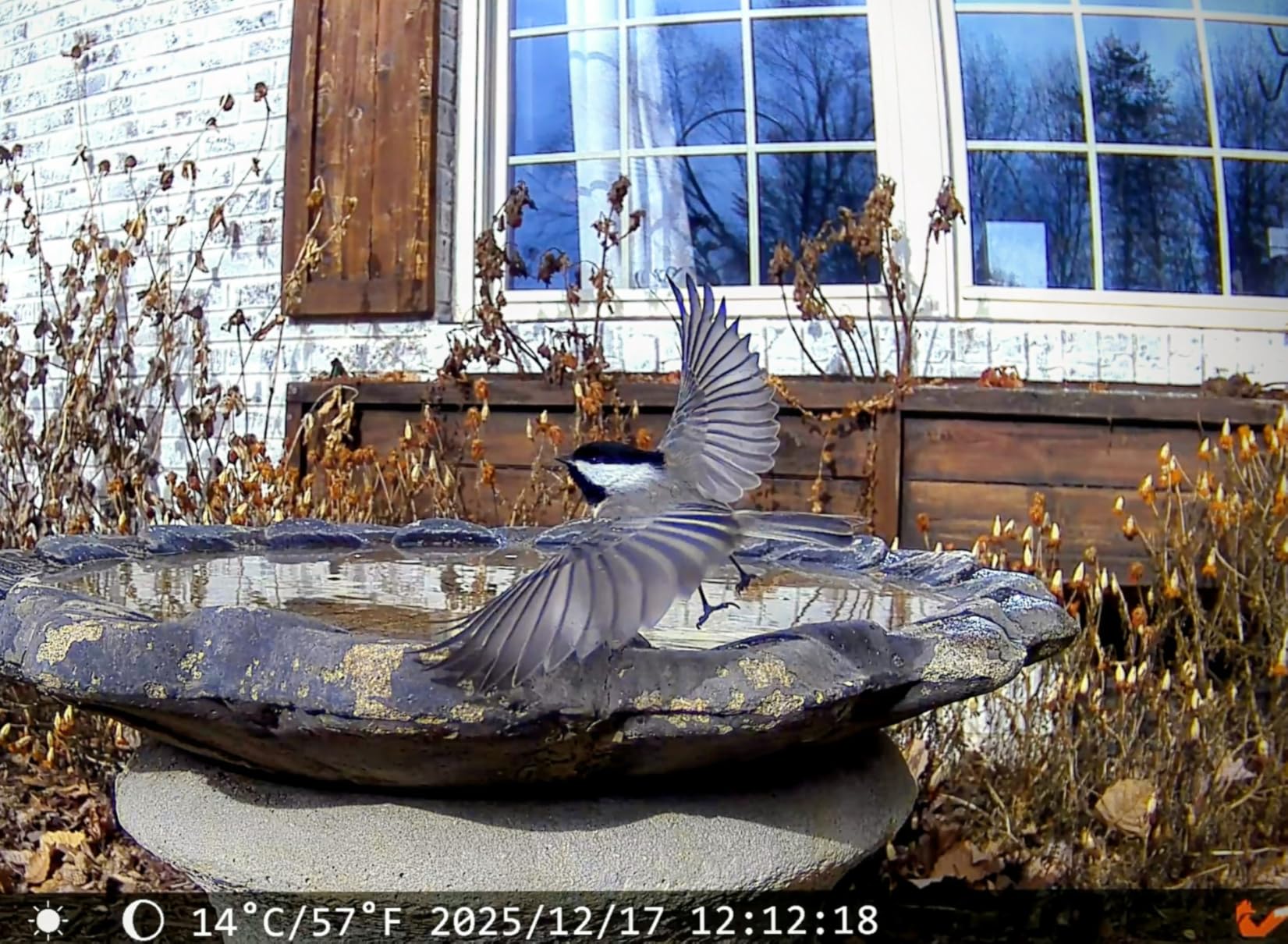
How to run this one on a tight allowance
The single most useful setting here is the SD recording mode. With the card populated and transmission capped, the camera records every event at full quality locally and only pushes a fraction of those events to your phone. You check the card when you walk the trail and you glance at the app when you need to know whether deer are moving.
Watch the paid-tier extras. AI species and behavior detection sits behind a subscription, and at 2 megapixels the still sensor is among the lowest here, so a card-based workflow suits this camera far better than judging photos from phone previews alone.
Where it falls short
Each camera carries its own data allowance and cannot share service with another unit, so two TC32s cost two allowances. That is the pattern across most of this list and the reason multi-camera discounts are worth researching before you scale up.
The memory card is not included. For a camera whose main appeal is local recording, that feels like an odd omission, and it is the first accessory to add to the order.
4. TACTACAM Reveal Ultra — Best Stealth and Anti-Theft Features
TACTACAM Reveal Ultra Cellular Trail Camera: 4K Photo, 1080p Video, Live View, GPS Tracking-Enabled, Switchable No-Glow/Low-Glow Flash, LTE Connectivity, LCD Screen – Best Hunting, Game Camera
4K photo
2.5K video
Switchable no-glow and low-glow flash
GPS alerts
2-inch LCD
Pros
- 4K stills and crisp 2.5K video with reduced IR glow
- Active GPS keeps transmitting location when powered off
- Switchable no-glow and low-glow flash to match your quarry
- Holds signal where ordinary phones lose service
- 2-inch LCD screen speeds up field setup
Cons
- Some units reported repeated false triggers from moving shadows
- Video reportedly fails to transmit on affected units
- No in-app technical chat for support
- Canadian coverage and plan pricing disappoint
The Reveal Ultra solves a problem most roundups skip: theft. Active GPS keeps reporting the camera location even when the unit is powered off or the battery is pulled, and you get an alert if it moves beyond half a mile. On public land or a parcel with a history of walk-ins, that feature justifies the hardware on its own.
The switchable flash is the other standout. You choose between no-glow infrared at 80 feet and low-glow at 96 feet, letting you match the night mode to the species you are watching and to how paranoid you are about deer spotting the emitter. Both Tactacam models in this list handle signal in rough country well, and owners of this one repeatedly report getting through where their own phones do not.
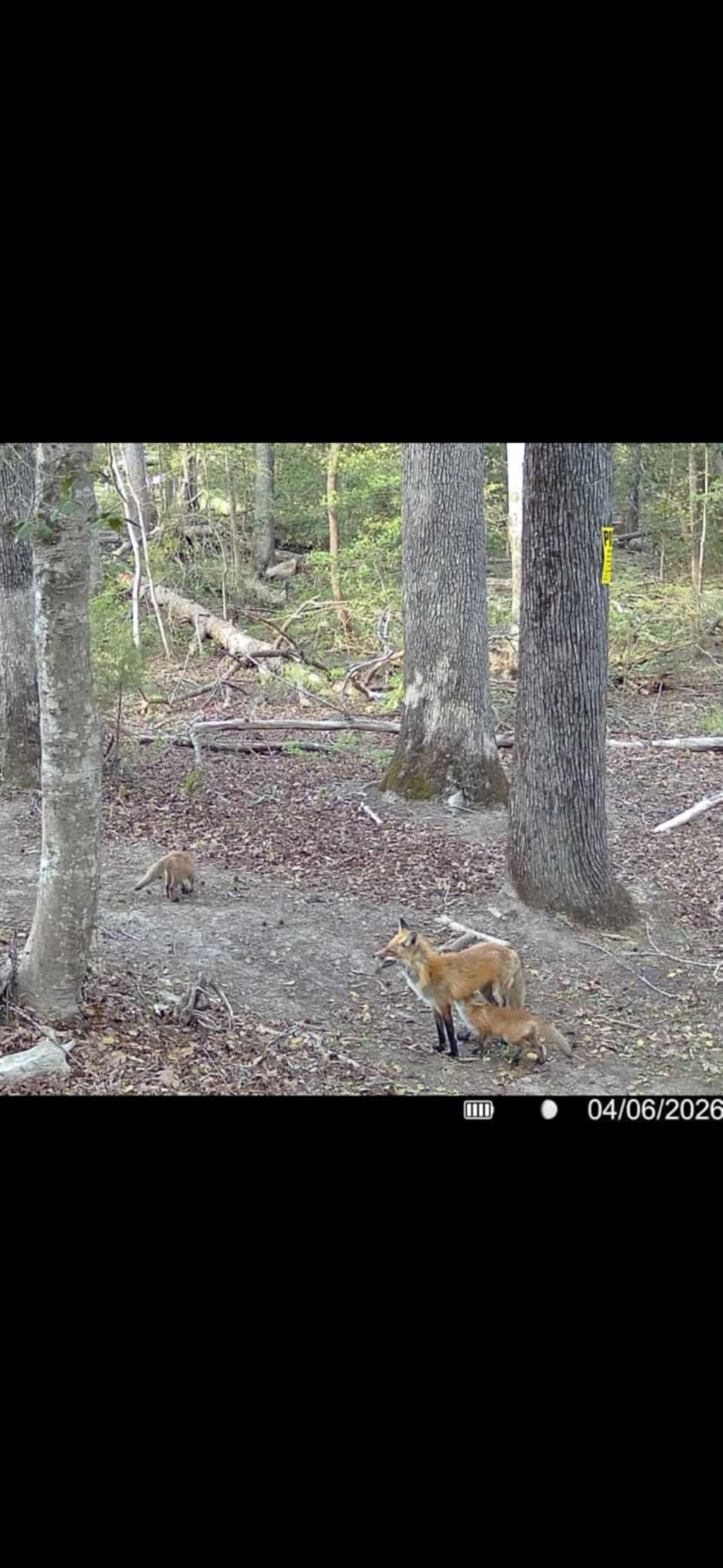
Image quality is 4K stills with 2.5K video, the trigger is sub-half-second, and burst mode goes up to nine shots. A 2-inch LCD on the back of the camera makes menu work possible without the app, and 16GB of internal storage plus an SD slot means you can keep originals on the device while pushing only what the allowance permits.
The upgraded antenna is designed for signal gain in poor coverage, and the camera pairs with Tactacam solar panels, folding panels, a battery belt and a lithium cartridge if you are running it off-grid on a free allowance.
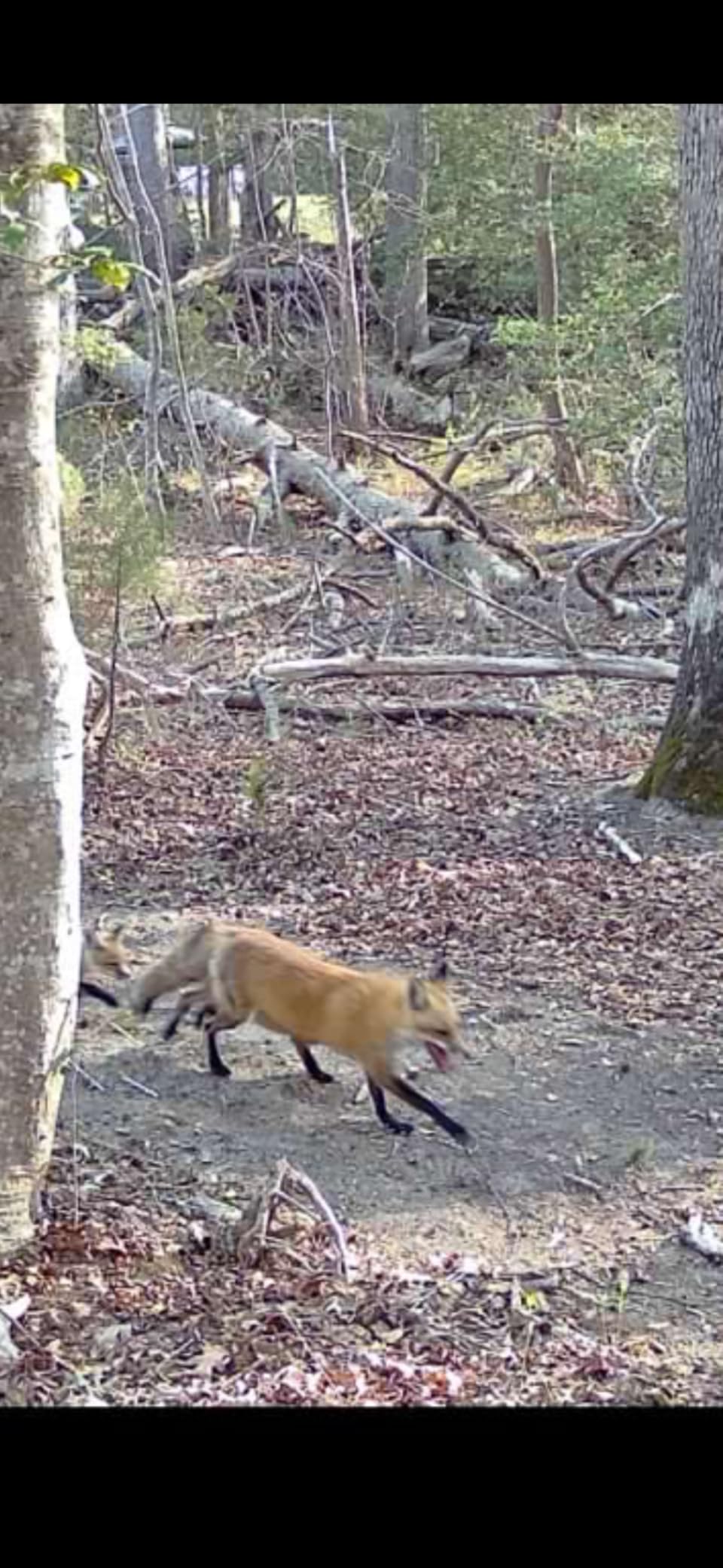
When stealth matters more than price
No-glow infrared is the setting to use if you are hunting deer that spook from a visible red emitter. Combined with the GPS movement alerts, this is the camera to pick when the location is public, remote or shared with people you would rather not walk in.
Multiple low-cost data tiers and on-demand HD photo requests mean you can spend nothing most months and pull a full-resolution frame on the morning of a hunt rather than streaming continuously. That request-on-demand pattern keeps a high-resolution camera on a minimal allowance.
Where it falls short
Shadow-driven false triggers are the most common complaint, and a minority of owners report videos that never reach the app on affected units. If your site sits where wind moves branches through the detection zone, expect to tune sensitivity before you trust the trigger.
Support is routed through Amazon rather than in-app chat, and Canadian buyers report unsatisfying coverage and pricing. There is no free tier here, so this camera only qualifies for a no-fee setup if you use it on a low allowance and keep originals on internal storage.
5. Moultrie Edge 3 — Best Photo Quality in the Lineup
Moultrie Edge 3 Cellular Trail Camera – 40MP, 0.5s Trigger
40MP stills
1080p video
0.5s trigger
100 ft detection
Low-glow IR
Pros
- Live Aim lets you frame the camera from the app
- Built-in GPS maps every camera location
- Auto-connects across four major US networks
- 40MP photos and 1080p video described as crystal clear
- No SD card needed with built-in memory
Cons
- Photo and video quotas on cellular tiers can raise monthly cost
- 50-degree field of view is narrower than fisheye rivals
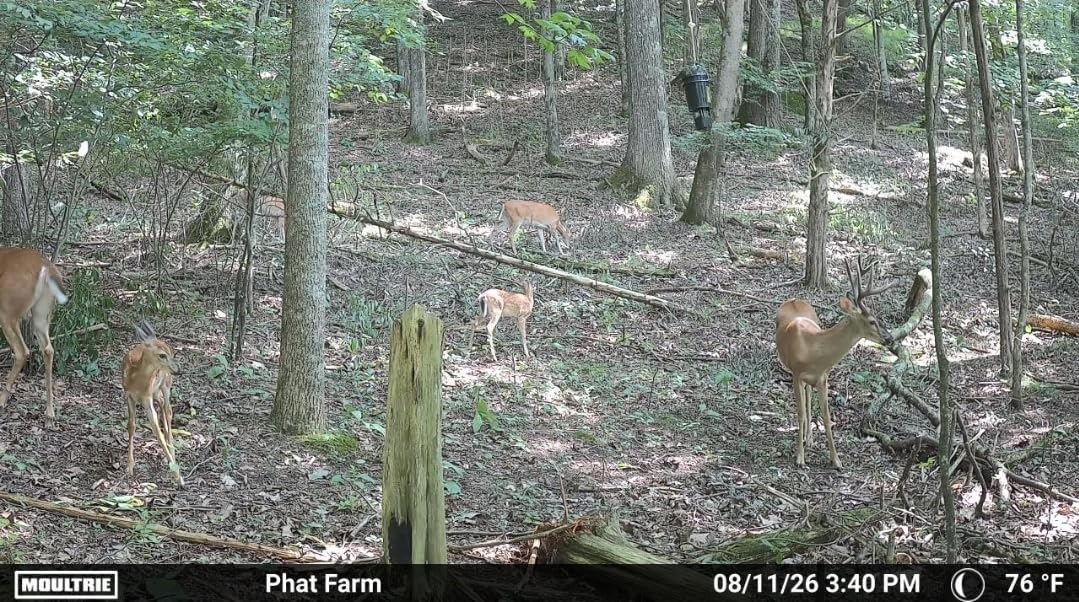
The Edge 3 is the camera to buy when the pictures are the point. Forty megapixel stills and 1080p video with sound put it at the sharpest end of this group for still quality, and owners consistently describe the results as crystal clear. On r/bowhunting, Moultrie owners mention the tradeoff plainly, that the photos are good rather than exceptional at certain settings, but that the reliability is what keeps them in the field.
Live Aim is the feature we would not give up. You frame the camera from the phone, and it works even when there is no cellular signal at all, which matters when you are mounting deep in timber. Built-in GPS maps every camera in your account, so a four-camera layout stays easy to find rather than becoming a guessing game.
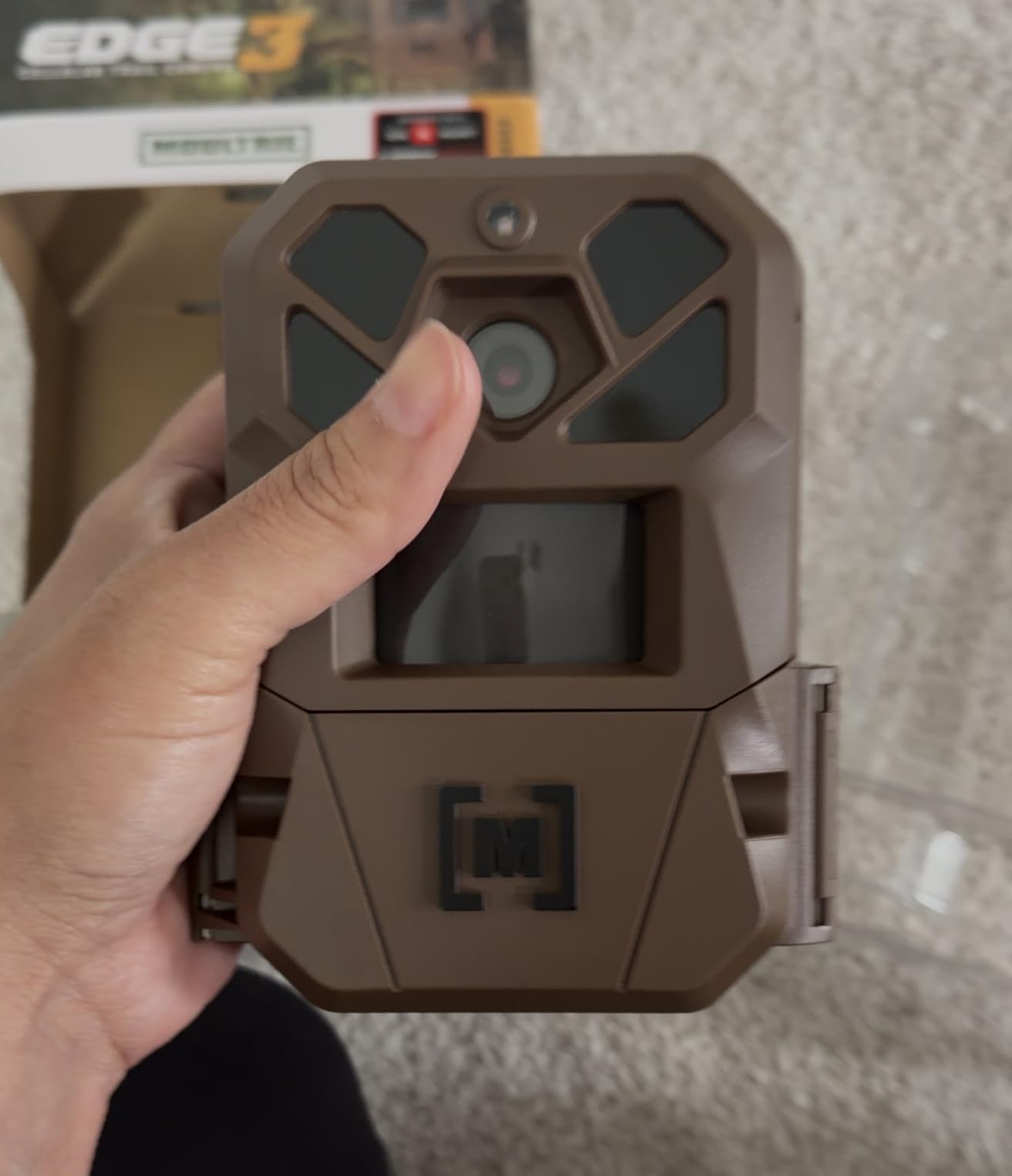
Auto-connect reaches across four major US networks, which is the broadest carrier coverage among the cameras listed here and the single most useful thing for anyone hunting in marginal-signal country. Detection runs to 100 feet on low-glow infrared with a 0.5-second trigger. No SD card is required because storage is built in, and the camera works with EDGE series lithium battery packs and solar panels.
A two-year warranty from activation is longer than most competitors offer, and for a camera you plan to leave in a tree through several seasons, warranty length is part of the running cost.
How to keep this one off a paid plan
The built-in memory is what makes a no-fee approach workable here. Set the camera to record to internal storage at full resolution, keep the cellular transmission on the smallest allowance, and read the results when you walk the tree. You get 40MP files with no card to lose and no cloud subscription attached.
Watch the quotas carefully. Reviewers on this model specifically flag that heavier usage pushes the effective monthly cost higher than expected, which is the same complaint that surfaces on most cellular cameras. The free allowance here is not generous, so treat the camera as card-first and phone-second.
Where it falls short
The 50-degree field of view is narrow. Compared with fisheye-style competitors that sweep a trail in one shot, this camera sees a corridor rather than a clearing, so placement takes more thought and closer placement.
At 1.5 pounds it is a chunky body to carry, which adds up when you are carrying four of them and a ladder to set them.
6. TKENPRO RBX-H10 — Best Off-Grid Solar Power
TKENPRO Trail Camera Built-in SIM Card Unlimited Data Cellular Trail Camera
1080p live video
940nm low-glow IR
0.2s trigger
7800mAh plus 4W solar
IP66
Pros
- Built-in SIM picks up the strongest of Verizon T-Mobile and AT&T
- Solar panel plus 7800mAh battery forms a dual power system
- 940nm low-glow night vision without visible red glow
- Two-way audio for deterring animals and intruders
- 0.2s trigger with PIR motion alerts
- IP66 housing for year-round use
Cons
- Each camera needs its own data plan and cannot share service
- SIM is not detachable and works only in the United States
- No Wi-Fi connectivity option
- Listed dimensions of 1 x 1 x 1 inches appear inaccurate
The power system is why this camera is on the list. A 7800mAh rechargeable battery paired with a 4W solar panel means no AA swaps, no alkaline drain, and no winter visit to a tree that nobody wants to make. For a no-fee setup where you are already accepting a capped data allowance, removing the power problem the same way is the sensible order of operations.
The built-in non-detachable SIM scans Verizon, T-Mobile and AT&T and locks onto whichever signal is strongest, and it comes with 300MB of complimentary data on a seven-day trial to get you started. Two-way audio lets you speak into the scene, which is genuinely useful for deterring intruders at a feeder or a remote building.
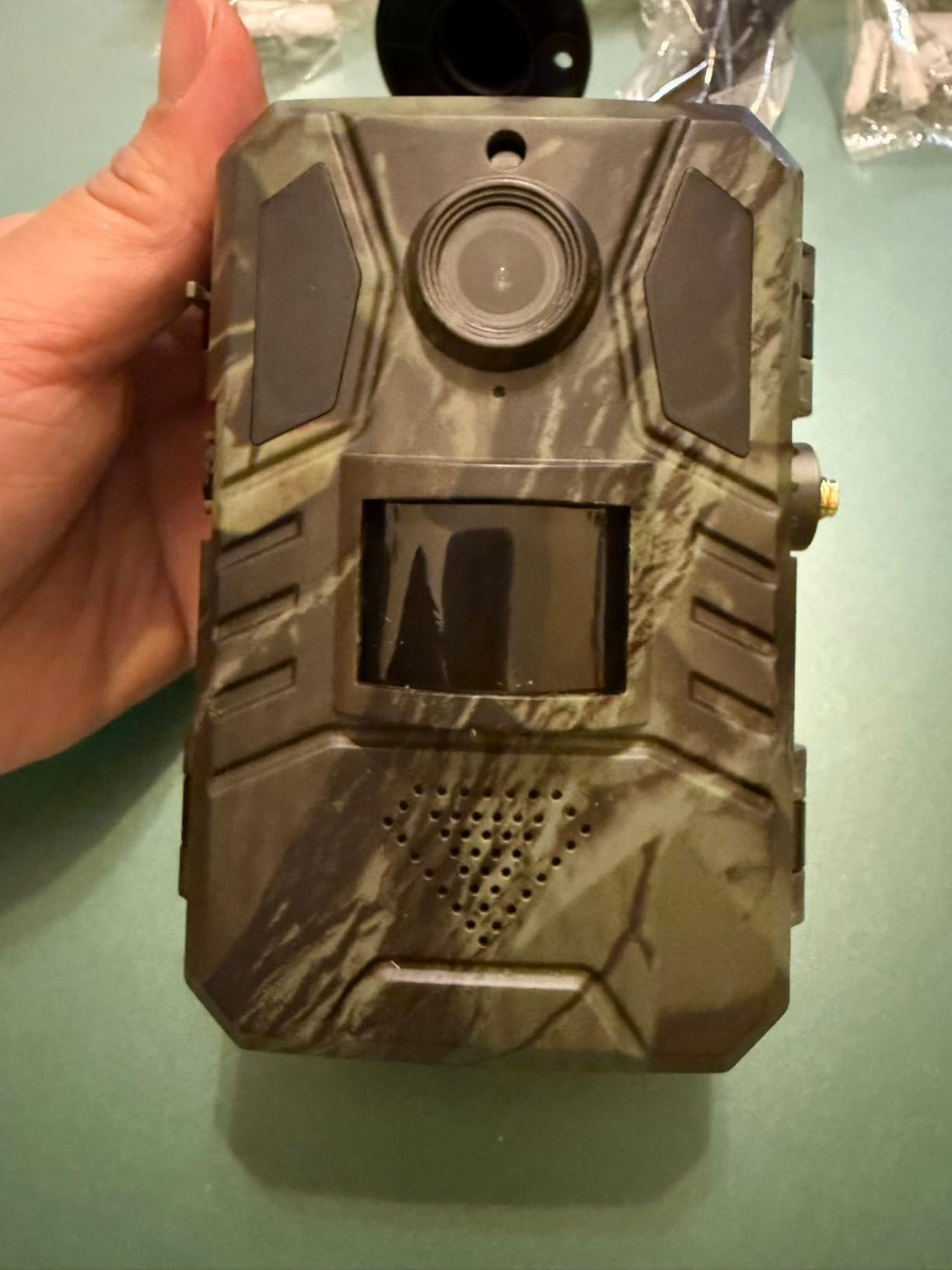
Night vision uses 940nm low-glow infrared, so animals are not lit by a visible red emitter. Trigger time is 0.2 seconds with PIR motion detection, and the live feed runs at 1080p through the free Ucon app on your phone. The IP66 housing covers full-year deployment.
An unlimited data plan is offered as a monthly option or an annual one, per camera, which is the honest number to put next to a free-allowance setup. On a low-traffic location the allowance and local recording cost nothing, and on a busy one a paid plan becomes the alternative.
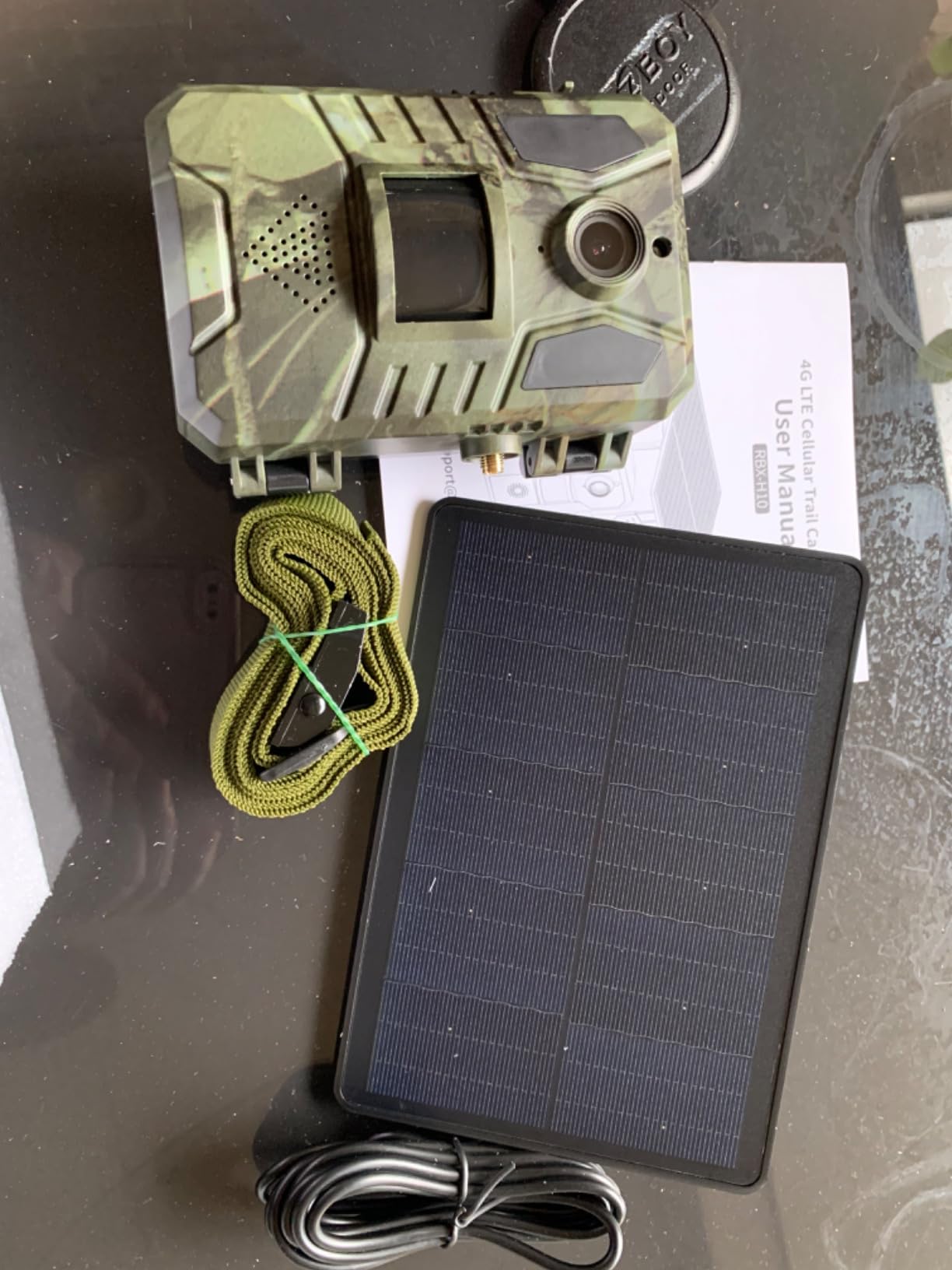
Why power decides whether a no-fee setup survives a season
Alkaline AA batteries are the hidden recurring cost of cellular trail cameras. Every transmission wakes the radio and drains cells faster than a plain SD camera, which is why forum users push rechargeable packs and solar as the standard fix. This camera arrives with both.
Coverage across the three major carriers means a spot with weak service is still workable. The camera is specified for the United States, Canada and Mexico with a US-only SIM, so plan accordingly if you hunt across the border.
Where it falls short
Each camera carries its own data plan and cannot share service, so a four-camera layout is four allowances. That scaling problem is the honest limit of any no-fee plan in this category.
The SIM is soldered in and cannot be removed, there is no Wi-Fi option, and the published dimensions of 1 by 1 by 1 inches are plainly wrong. Judge the physical size from photos rather than the listing.
7. TACTACAM Reveal Pro 3.0 — Best Ready-to-Go Bundle
TACTACAM Reveal Pro 3.0 Cellular Trail Camera – Multi-Cellular Network, GPS, 2″ LCD, No-Glow IR, Wi-Fi Enabled, HD Photos & 1080p Videos, Fast Trigger + 32GB SD Card (1PK)
No-glow IR
2-inch LCD
Built-in GPS
Wi-Fi plus cellular
32GB card included
Pros
- Rated 4.6 across 102 reviews in this lineup
- Excellent clarity in daylight and full darkness including low temperatures
- No-glow IR keeps the camera undetectable to deer and people
- Picks up signal where the owner's own phone has poor reception
- Simple activation with a pre-activated SIM and the REVEAL app
- 32GB SD card included in the bundle
Cons
- Heavy battery consumption with roughly weekly swaps at active sites
- Detection can be inconsistent with occasional missed deer
- Default settings need tuning to reduce shadow triggers
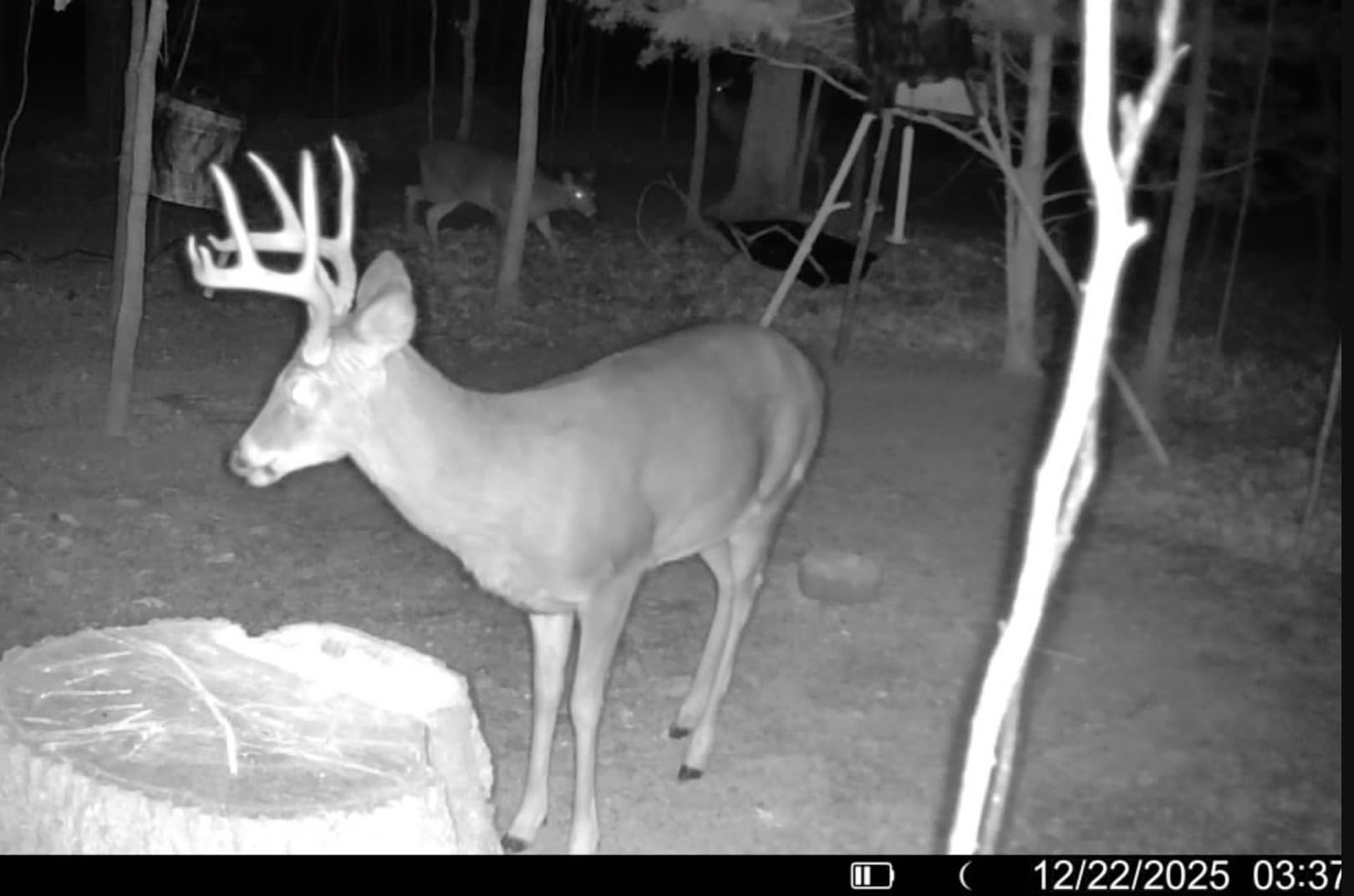
This bundle arrives with a 32GB SD card already in the box, which is exactly what a no-fee setup needs. On a capped allowance, the card is where your full-resolution originals live, so starting without one means your first trip to the tree ends with the camera recording over itself. It also runs Wi-Fi in addition to cellular, so you can configure it on a bench at home before it goes up the tree.
The 4.6 average across 102 reviews is among the strongest ratings in this lineup, and long-term owners describe units still performing after a full year in the field. No-glow infrared keeps the camera undetectable to deer and to people walking past, and the 2-inch LCD makes on-camera menu work practical.

Five-shot burst mode captures fast movement, built-in GPS tags every frame, and storage is built in with an SD slot for expansion. Multi-cellular support means no carrier lock-in, and a one-year comprehensive warranty is backed by in-house customer service rather than a third-party marketplace route.
Picture quality holds up in full darkness and at low temperatures, which is where cheaper infrared arrays fall apart. For anyone who wants the cleanest files without paying for premium optics, that is the reason to pick this one.
What the included card actually solves
With 32GB of card storage, you can keep full-resolution captures on the camera for weeks and let the phone receive a limited stream. Set the camera to record everything, transmit only what the allowance covers, and pull the good frames from the card when you walk in.
Wi-Fi plus cellular means the same camera works as a bench camera and a field camera. If your lease has no reliable signal at a particular tree, you can still aim it and check settings on site without waiting for a transmission.
Where it falls short
Battery drain is the loudest complaint. Owners report swapping batteries roughly weekly at active sites, which is the real running cost nobody plans for, and it is worse on a camera transmitting over cellular.
Detection is occasionally inconsistent, with deer walking past without a capture, and the default settings need tuning to cut shadow and movement triggers. Pair it with lithium AA cells or an accessory battery pack rather than alkaline.
8. Loatos 2K Live Camera — Budget Pick With Local Recording Backup
Loatos 2K Live Trail Camera, 4G LTE Cellular Trail Camera Unlimited Data
2K live view
0.2s trigger
85 ft IR
4W solar and 7800mAh
IP66
Pros
- Entry price point of this group while still offering 2K live view
- Seven days of unlimited trial data before you commit
- Local recording continues to the microSD card even when cellular lapses
- 0.2s trigger roughly 50 percent faster than comparable cameras
- 940nm infrared activates silently at night
- 4W solar panel with 7800mAh battery supports year-round use
Cons
- Memory card not included with up to 128GB sold separately
- Cloud storage limited to a 30-day trial for new users
- Service currently restricted to the United States
The detail that makes this camera interesting for a no-fee buyer is the fallback recording. Local capture to the microSD card continues independently of the cellular service, so if your allowance runs out mid-month or the signal drops, the camera does not stop recording. You lose the phone alerts, not the season’s footage.
It starts with seven days of unlimited trial data, after which an unlimited two-year option is sold as a recurring monthly charge. That is the middle ground between a capped allowance and a heavy subscription, and it is a smaller jump than the per-camera pricing on some rivals in this list.
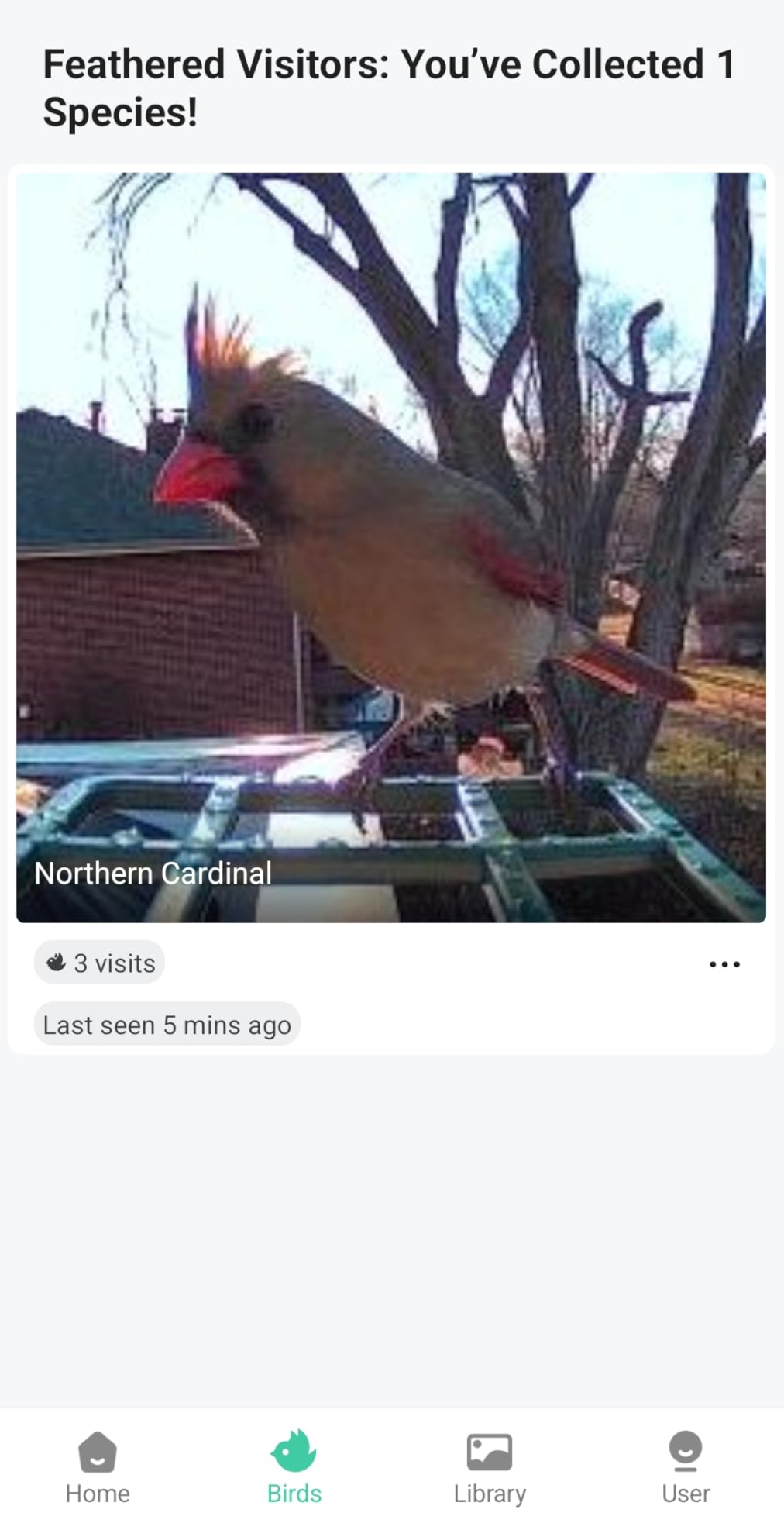
The hardware is quick where it counts. A 0.2-second trigger is roughly 50 percent faster than comparable cameras, 2K real-time video supports simultaneous viewing for up to four users, and 940nm low-light infrared works silently so animals are not disturbed. Night range is 85 feet with a 120-degree viewing angle.
The pre-integrated US SIM covers Verizon, T-Mobile and AT&T. Power comes from a 4W solar panel with a 7800mAh rechargeable battery, the housing is IP66, and a two-year manufacturer warranty backs it. The Ucon app handles instant animal alerts, adjustable motion zones and custom schedules.
When this is the right cheap option
Choose this camera when you want live viewing and fast triggers without committing to a long plan, and when you will pull files from the card rather than judging everything from phone previews. The dual storage design is the honest answer to a limited allowance: the camera keeps working either way.
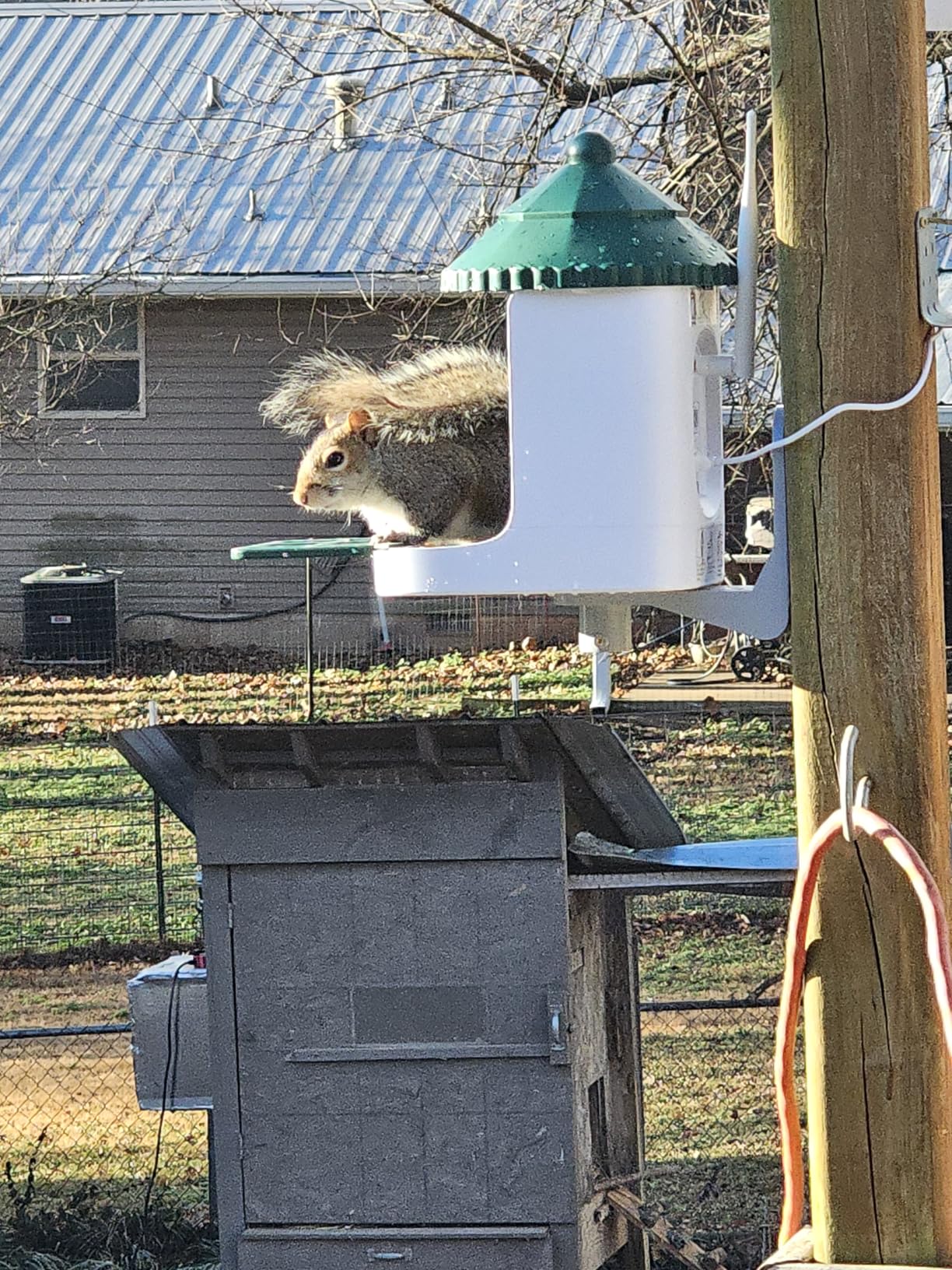
Solar power plus a large rechargeable battery means the installation survives without a battery budget. For a feeder, a bait station or a backyard camera that runs year-round, that combination removes two recurring costs at once.
Where it falls short
The memory card is not included, and you need one for the local-recording feature that makes this camera worth buying. Cloud storage is limited to a 30-day trial for new users, so treat cloud as optional rather than as part of the deal.
Service currently works only in the United States, and the 92-review history is one of the thinnest in this lineup. The camera itself earns its 4.6 rating; the company behind it carries more risk.
9. Zleo Lifetime Data Camera — the Only True One-Time Cellular Bill
Zleo Lifetime Data-Free Trail Camera with Cellular Service, No Monthly Fees
2K 360° live view
Unlimited lifetime data
9000mAh plus solar
80 ft low-glow IR
IP65
Pros
- Unlimited lifetime data with no activation fee or contract
- Free lifetime thumbnail previews with no data packages or quotas
- Runs on Verizon AT&T and T-Mobile 4G LTE for off-grid placement
- 2K live streaming keeps you out of the deer corridor
- Dual power from external solar panel and 9000mAh battery
- Pan and tilt head with two-way audio and push alerts
Cons
- Image and video quality only fair compared with sharper bodies
- Low-glow night vision reaches about 30 feet and needs tilting upward
- Included solar panel is undersized in low-sun months
- App login failure ended up locking one owner out
This is the camera the whole article is really about. Zleo sells unlimited lifetime cellular data with no activation fee, no contract and no credit check, plus free lifetime thumbnail previews with no data packages and no image quotas. It is the only genuinely one-time-purchase cellular option in this lineup, and support responses generate real enthusiasm among owners who refuse recurring cellular bills.
The catch is that you pay for all of it up front, and the upfront outlay is larger than any other camera in this list. So you are pre-funding several years of service in the box. Do the arithmetic honestly against a few years of per-camera allowances before deciding, because the promise only pays off if you keep the camera for years.
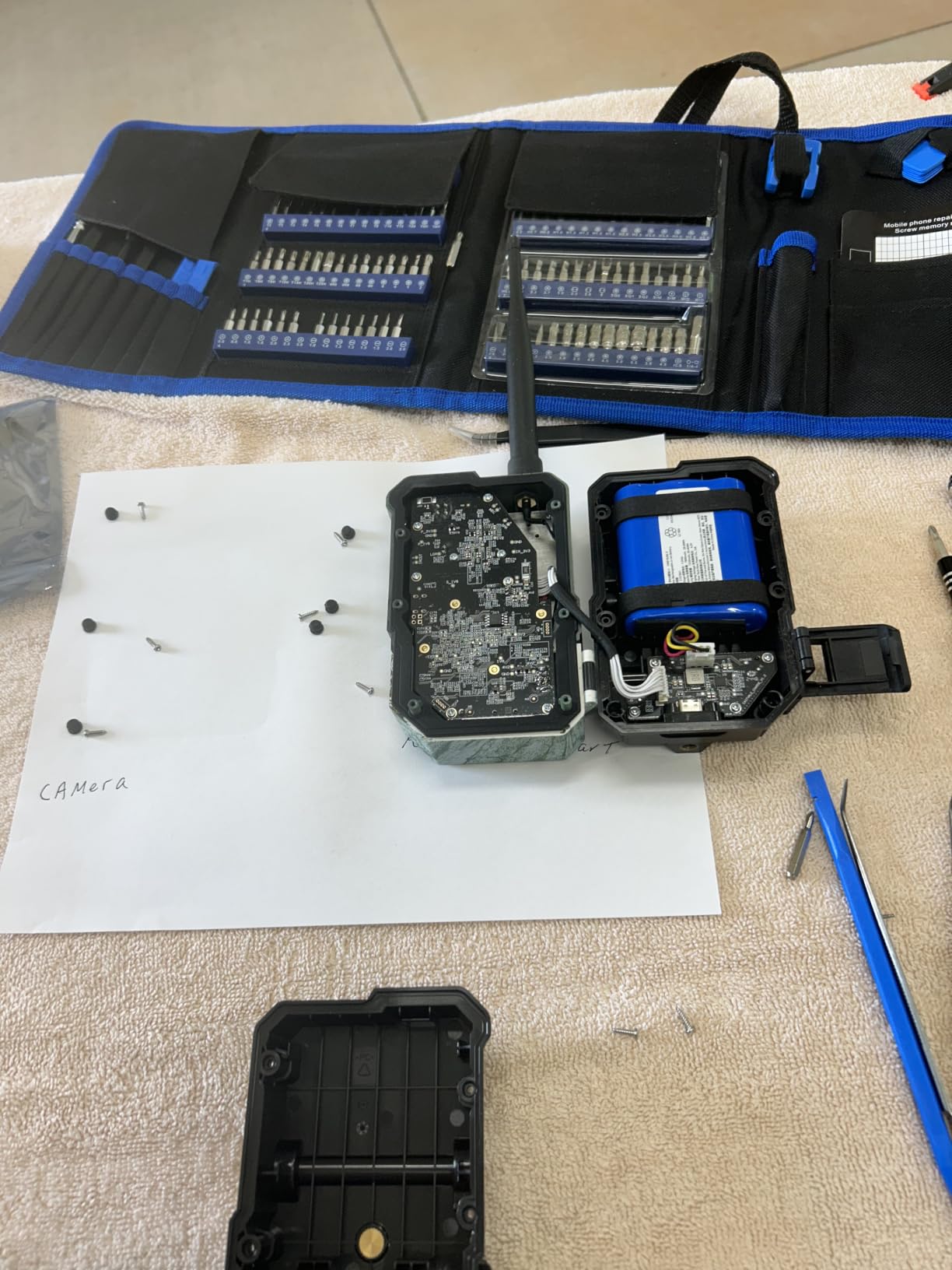
The hardware is mid-pack. Video captures at 1440p with a 2-megapixel still sensor, the pan and tilt head carries 3x digital zoom and two-way audio, and the trigger is 0.5 seconds. Low-glow infrared uses 12 LEDs across an 80-degree field of view, and microSD storage accepts cards up to 256GB for local recording.
Power is dual: an external solar panel plus a 9000mAh built-in rechargeable battery. Connectivity is tri-band 4G LTE across Verizon, AT&T and T-Mobile, the housing is IP65, and a two-year manufacturer warranty applies.
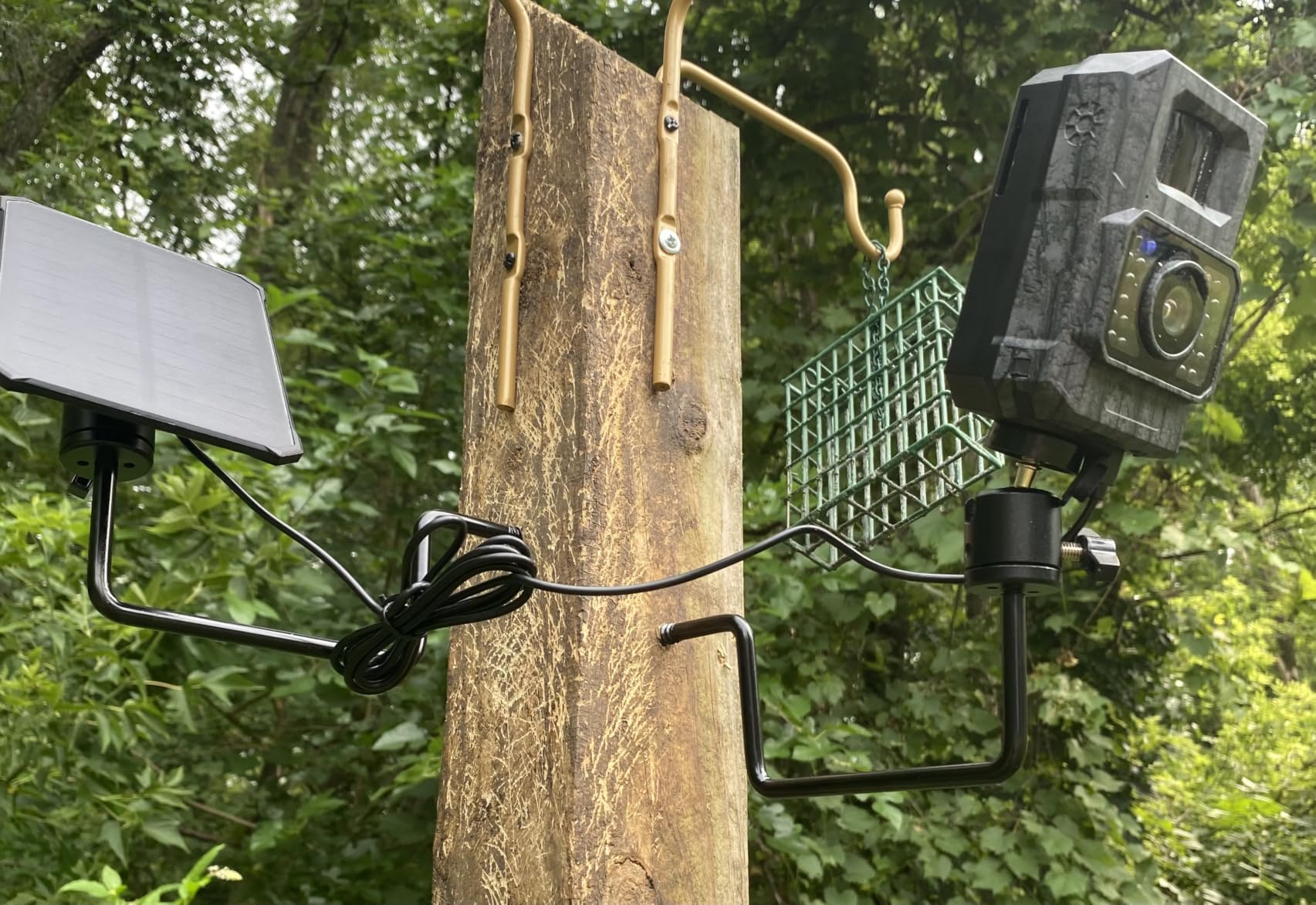
What lifetime data actually means here
Read the promise precisely. It covers the cellular data service and the thumbnail previews, so you can transmit as many photos as you want without a recurring charge. It does not improve the image quality, extend the night vision, or cover a card you forgot to buy.
The fine print that matters is company longevity. A lifetime guarantee from a young brand is only as durable as the business behind it, so weigh the two-year warranty and the responsiveness of support against the savings. Reviewers report customer service sending replacement parts for a broken latch, which is a good sign.
Where it falls short
Picture quality is the weak point. Owners place the images below the sharper bodies in this roundup, and low-glow night vision reaches only about 30 feet, requiring you to tilt the camera upward to get usable coverage.
The bundled solar panel is undersized and struggles through low-sun winter and spring months, so budget a larger panel. One documented app login failure ended up locking one owner out of a camera 2.5 hours away, which is a reminder to test the app and save credentials before deploying it.
10. Moultrie Edge 2 Pro — Best False-Trigger Filtering
Moultrie Edge 2 Pro Cellular Trail Camera – 40MP, No-Glow Flash
40MP stills
1440p video with audio
100 ft no-glow range
Live Aim
8GB built-in
Pros
- Live Aim preview makes camera alignment fast without test shots
- AI species filtering cuts shadow-driven false triggers
- Ran through a full season of rain and cold without a failure
- 8GB built-in memory plus cloud backup means no SD management
- On-demand remote photo trigger is useful for scouting
- Automatically connects to the strongest available carrier
Cons
- A replacement unit arrived refurbished and defective and drained batteries in a day
- Photo quality is decent rather than excellent at this price
- AI verification adds about 35 seconds before delivery
- Some motion detections are missed
False triggers are the hidden data cost. A camera waking on waving grass burns through a free photo allowance in a week without telling you anything useful, which is why the Edge 2 Pro’s AI species filtering matters more in a no-fee roundup than it would in a general one. Owners credit it with cutting the shadow-driven triggers that flood other models.
It is also one of the two most reviewed models in this lineup at 380 reviews, and the durability record is strong. One owner ran it through a full season of heavy rain, extreme cold and warm days without a failure, using the same body for hunting, marina surveillance and property monitoring.
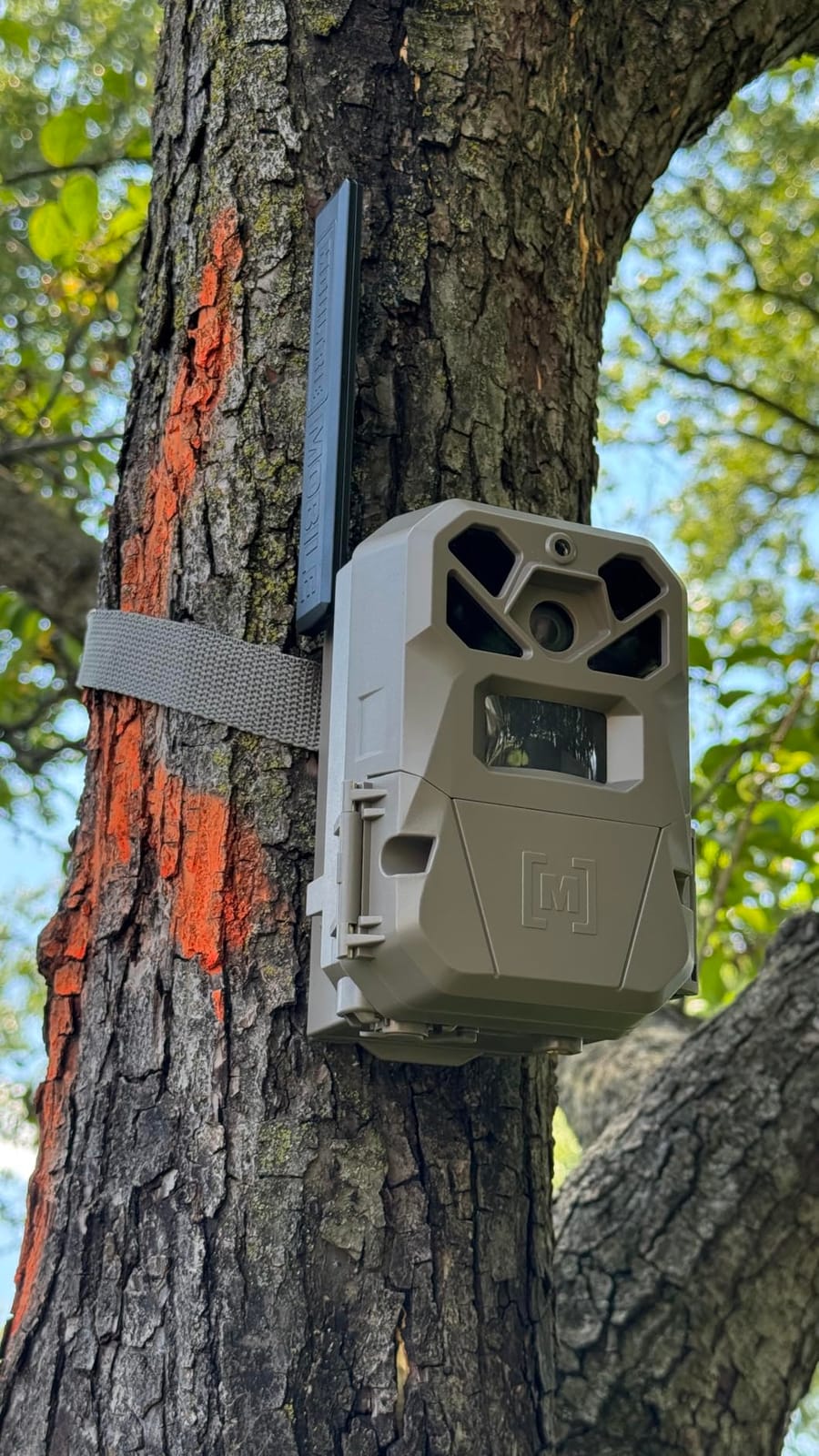
The specifications are solid for the money: 40MP stills, 1440p video with audio, 100-foot detection range and no-glow infrared flash. Live Aim lets you align the camera from the phone without waiting for test shots, and the On Demand remote trigger lets you request a photo before and after a hunt.
Storage is 8GB built in with cloud backup, so there are no cards to manage, and the app adds timelapse, multi-shot and motion-triggered modes. Power accessories include Power Mag and Power Mag+ packs plus 10W and 3.4W solar units, and the warranty runs two years from activation.
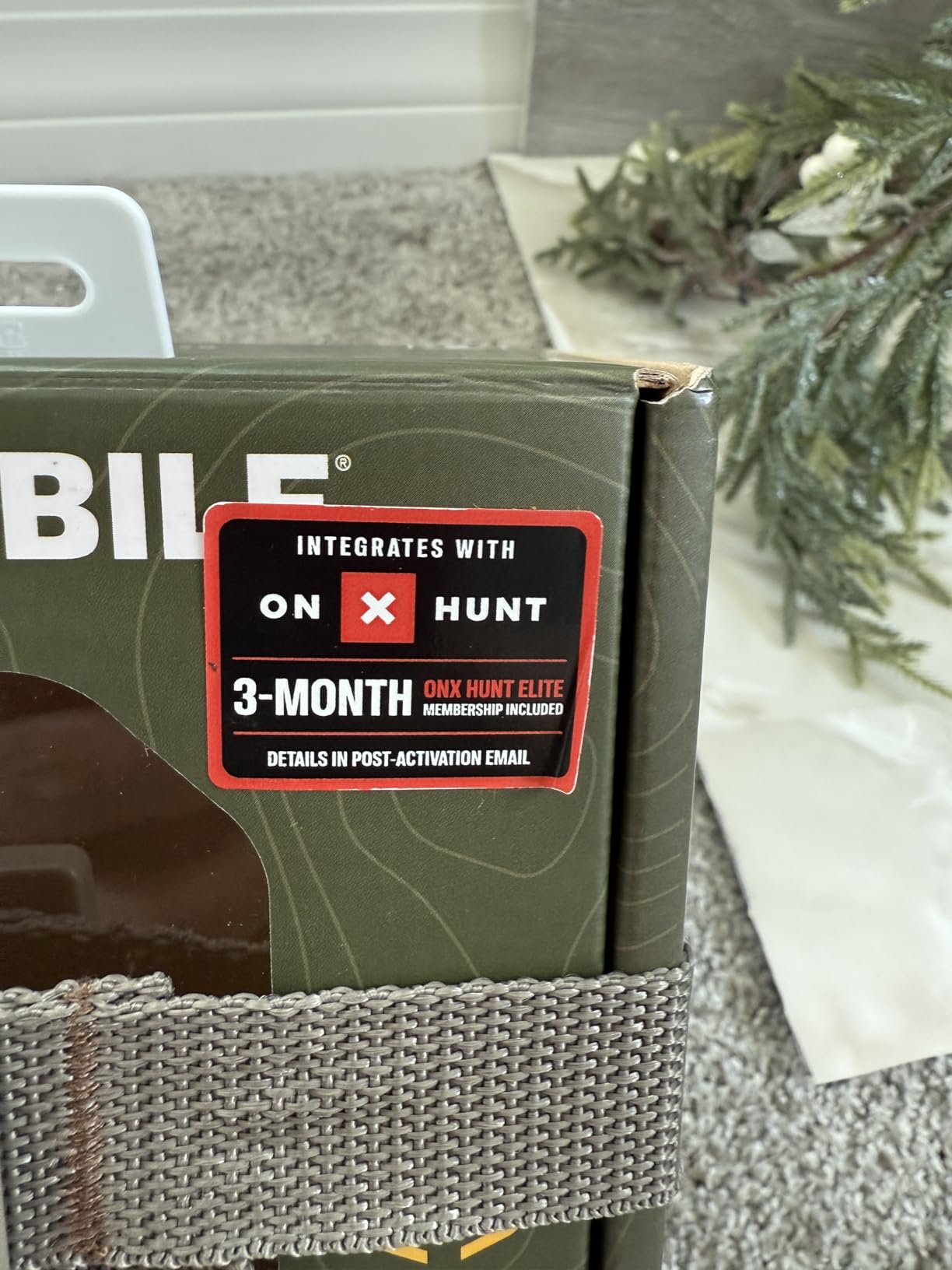
Using the AI filter to protect a limited allowance
Species identification is the point here, not a gimmick. With bucks, does, turkey and humans identified in the app, the camera can suppress the branch, cloud and shadow events that quietly eat a monthly photo allowance. That turns a capped tier from a squeeze into a workable plan.
On-demand triggering extends the same logic. Instead of leaving the camera streaming continuously, you can request frames when you actually need them, which keeps data use minimal on any of these cameras.
Where it falls short
The AI verification step adds roughly 35 seconds between capture and delivery. That is fine for scouting and frustrating if you want a near-live view of a deer in front of the lens.
One replacement unit arrived refurbished and defective, triggering constantly and draining its battery in a day, which is a useful warning about quality control. Photo quality is decent rather than excellent, and some motion detections are missed outright.
What No Monthly Fee Actually Means in 2026
There are three different things sellers mean when they advertise a cellular trail camera without a monthly fee, and confusing them is how buyers end up disappointed. Knowing which one you are buying decides everything else on this page.
A permanent free tier. The camera ships with a monthly allowance at no cost, and the allowance resets every month. Spypoint’s 100-photo allowance is the example forum users describe as genuinely free rather than a trial, and it is the reason buyers say the free tier must be permanent, not a 30-day promotion. Nothing in this lineup matches it exactly, which is why every camera here still needs a small paid tier for heavier use.
Prepaid lifetime data. The data cost is folded into the purchase price, so there is no recurring bill and no quota. The Zleo in this list is the clearest example, offering unlimited data and free lifetime thumbnail previews. The honest framing is that “lifetime” means the lifetime of the company selling it, so pair the promise with a warranty length and a support record you can verify.
Not cellular at all. A camera with no radio writes to a memory card and costs nothing per month forever. For a tree 60 feet from a back door, this is still the best answer, and most buyers who go cellular-only for a whole property end up regretting the plan math. If you want a no-cost setup across several positions, a [hybrid of cellular and SD cameras](https://webcomicsweekend.com/best-trail-cameras/) is the approach we would build.
Two things get left out of the marketing copy. First, free tiers almost always exclude video, live streaming and AI tagging, so a camera that seems free can cost you the video you expected. Second, what happens past the limit varies by brand, so check whether exceeding the allowance throttles transmission, stalls the camera or converts to a charge.
How to Keep a Cellular Camera Under a Free Data Allowance
Staying inside a small allowance is mostly configuration, not hardware. Five settings do most of the work.
1. Record everything locally, transmit selectively. Every camera here stores originals on internal memory or a card. Keep full-resolution capture running to storage and let the phone receive a reduced stream. This one change turns a capped plan into a full-quality archive.
2. Size the card for the season. Cards up to 128GB are common here and one model accepts 256GB. At multi-megapixel stills and 1440p video, a large card is what lets you leave the camera up between visits without overwriting the good frames.
3. Enable the species filter. AI buck and species detection suppresses wind, shadow and vegetation triggers, which are what actually burn through a monthly allowance. The Moultrie Edge 2 Pro is the standout for this in our view.
4. Use On Demand frames instead of live streaming. Live view is the fastest way to consume an allowance. Requesting a single photo when you need it costs almost nothing and still answers the question you called the camera to answer.
5. Narrow the detection zone and schedule. Point the camera at the trail rather than the clearing, cut the top of the frame to remove sky, and set active hours. A camera that sleeps through the middle of the night stops sending blank frames.
If you want help judging picture quality from those stored files, our [8 Best DSLR Cameras](https://webcomicsweekend.com/best-dslr-cameras/) guide explains the resolution and sensor differences you are comparing against.
What to Look for in a No-Subscription Cellular Camera
Trigger speed versus recovery time. Trigger speed is how fast the shutter fires after something enters the detection zone. Recovery time is how long before the camera can shoot again. A fast trigger with a slow recovery captures the first frame of a buck and misses the rest, so both numbers matter at a travel corridor.
Detection range versus flash range. Detection range is how far the sensor senses movement, often 100 feet on the models here. Flash range is how far the infrared light reaches, commonly 65 to 96 feet. A camera with a 100-foot detector and a 65-foot flash will record animals as dark silhouettes at the edge, which is why no-glow and low-glow choices matter.
No-glow versus low-glow infrared. No-glow hides the emitter from deer and people entirely but usually covers a shorter distance. Low-glow reaches further and can produce a faint visible red emitter. For mature bucks, no-glow is the safer setting.
Battery strategy. Cellular radios draw heavily, and alkaline AA drains fast. Lithium AA cells, rechargeable battery packs and solar panels are effectively mandatory for a no-fee camera, because battery replacement is a recurring cost even when data is not. The solar-equipped models here carry 4W to 6W panels and large rechargeable cells.
Carrier coverage. Multi-carrier auto-connect, scanning two to four networks and holding the strongest, is the single most useful feature in rough country. Cameras listed here support everything from two carriers to four, and the four-network model has the broadest reach.
App quality for multiple cameras. Owners running four to eight cameras care about grouping, naming and notification control far more than any single image. Apps that cannot handle more than one camera are a deal breaker, and account lockouts are the worst failure mode of all.
Brand longevity. A prepaid lifetime plan is a bet on the company. Check warranty length, whether support is in-house, and how long the model has been on the market before you accept a promise that only holds while the seller exists.
Frequently Asked Questions
Which trail camera is best without a subscription?
A no-subscription cellular camera needs a permanent data allowance, prepaid lifetime data, or local card storage instead of a radio. The TACTACAM Reveal X 3.0 is the most proven option for reliability, the Zleo is the only camera here with unlimited lifetime data and no recurring bill, and for cameras close to home a plain SD card model costs nothing per month forever.
Which cellular trail cameras have free plans?
No major-brand cellular trail camera in our lineup offers a large permanent free plan. What the category does offer is small trial allowances, prepaid lifetime data, and capped low tiers. The Zleo provides unlimited lifetime data and free lifetime thumbnail previews, the Loatos includes seven days of unlimited trial data, and several models bundle 100MB to 300MB to start. For a genuinely free tier with a real monthly allowance, Spypoint’s 100 photos per month is the one forum users describe as genuinely free.
Can I use a cellular trail camera without a subscription?
Yes, with limits. You can activate the camera, record to built-in memory or a card, and let it transmit only what a small allowance covers. What free or minimal tiers typically exclude is video, live streaming and AI tagging. You also need to check what happens when the allowance runs out, since behaviour varies from throttled transmission to an automatic charge.
Can you use a cellular trail camera without a data plan?
Not with a cellular radio. A camera with 4G LTE needs data to transmit, so at minimum it needs a trial allowance, a prepaid lifetime package, or a purchased plan. If you refuse any data cost, choose either a prepaid lifetime camera or drop the radio entirely and use an SD card camera, which records at full resolution with no monthly charge forever.
Do you have to pay a monthly fee for a cellular trail camera?
It depends on the brand. Tactacam and Moultrie sell no-contract tiers starting in the low double digits per month per camera, the TKENPRO lists an unlimited plan available monthly or annually per camera, and the Loatos offers an unlimited two-year option billed monthly. The Zleo is the exception in this group because its data is prepaid for life.
What trail camera has the best cellular service?
Coverage is decided by carrier reach rather than brand, so multi-carrier auto-connect is the feature that matters. The Moultrie Edge 3 auto-connects across four major US networks, the Tactacam Reveal models scan ATu0026amp;T and Verizon, and the Oculview, TKENPRO and Loatos cameras cover Verizon, T-Mobile and ATu0026amp;T. Owners report these cameras holding signal in marginal areas where ordinary phones show one or two bars.
The Best Cellular Trail Cameras Without Monthly Fees: 2026 Verdict
For most people, the TACTACAM Reveal X 3.0 is the pick. It has the deepest proven reliability in the group, auto-connect multi-carrier LTE that holds signal in rough country, 4K stills with a sub-half-second trigger, and built-in storage so a capped allowance still leaves you with full-resolution files. Pair it with lithium cells or a solar panel and it will run a season without a visit.
If your objection to monthly fees is absolute rather than budgetary, the Zleo is the only genuine answer here, with unlimited lifetime data and free lifetime previews. It costs the most up front, the pictures are fair rather than excellent, and a lifetime promise is only as good as the company behind it. Buy a larger solar panel and test the app before you hang it 2.5 hours from a road.
Our best advice is to decide by distance. Cameras near home belong on an SD card model at no cost forever. Cellular earns its keep on the remote spots, where the phone alerts save you the walk. And whichever route you take, check the per-camera allowance before scaling past two units, because that scaling is where the monthly bill appears. If you are outfitting a whole property, our [8 Best Cellular Shades](https://webcomicsweekend.com/best-cellular-shades/) guide covers the power and charging side of remote installs.