
Short answer: the best broadfork for no dig gardening is the one heavy enough to push your tines into the ground with your body weight alone, and narrow enough to fit between your beds. For most home no-till gardeners that means a five-tine steel fork with handles around 54 to 56 inches long. If your soil is heavy clay or hardpan, step up to a fully welded all-steel frame; if you have raised beds and a sore back, a lighter fiberglass-handled model will serve you better.
A broadfork is also called a U-fork, a U-bar, or a Grelinette, and that name confusion trips up a lot of first-time buyers. All four names describe the same tool: a two-handled fork with four to twelve tines that you step on, drive into the soil, and rock back to fracture compaction without inverting the soil profile. That last part is the whole reason it belongs in a no dig garden. A rototiller smears soil structure into ribbons and leaves a compaction pan behind it. A broadfork opens air channels and leaves the soil layers where the organisms put them.
We spent time with eight of the most-reviewed broadforks on the market, checked every spec against the manufacturer data, and read the owner feedback closely. The honest headline is that a broadfork is a conversion tool, not a maintenance tool. If you are starting a new plot from turf, breaking a clay pan, or reclaiming a neglected bed, it earns its place. If your beds have been built with compost and mulch for three seasons already, you do not need one, and buying one will not make your garden better. That honest framing is where we start, because no roundup I found leads with it.
One practical note before the picks: forum discussion on the Charles Dowding forum and across permies and r/Permaculture repeats the same thing. Gardeners who broadfork every spring are doing something closer to tillage than no dig. Broadforking once or twice to break ground, then mulching forever, is the version most people actually want.
If you are still planning your bed layout, our potting bench picks are worth a look for setting up the work area at the right height before you ever pick up a fork.
Top 3 Broadforks for No Dig Gardening for October 2026

Bully Tools 5-Tine Broadfork
- 10-gauge USA steel
- 11 in tines
- Detachable fiberglass handles
- Rubber grips


The Bully takes our top slot on the strength of its owner base and its fit for the widest range of gardens. The VEVOR is the value pick that closes the handle-to-head gap that cheaper forks usually leave open. The Meadow Creature is the top rated pick and the one to buy if you are breaking virgin clay once and never again.
All 8 Broadforks at a Glance (October 2026)
| Product | Specs | Action |
|---|---|---|
| Bully Tools 5-Tine Broadfork |
|
Check Latest Price |
| VEVOR 5-Tine Broad Fork |
|
Check Latest Price |
| Meadow Creature BF-12 |
|
Check Latest Price |
 Walensee 9-Tine Broadfork Walensee 9-Tine Broadfork |
|
Check Latest Price |
 VASALAID 5-Tine Broadfork VASALAID 5-Tine Broadfork |
|
Check Latest Price |
 SILKPE 5-Tine Broadfork SILKPE 5-Tine Broadfork |
|
Check Latest Price |
 SENVERT 5-Tine Broadfork SENVERT 5-Tine Broadfork |
|
Check Latest Price |
 KEMETIK 5-Tine All Steel Broadfork KEMETIK 5-Tine All Steel Broadfork |
|
Check Latest Price |
Two numbers in that table matter more than the rest. Weight decides whether you can work the tool for a full bed without wrecking your shoulders, and joint construction decides whether it still feels tight in year five. Bolted handle joints are the single most common failure point owners report.
1. Bully Tools 5-Tine Broadfork – the pick with the biggest owner base
Bully Tools 5-Tine Broadfork, Fiberglass Handles, 56″ 10-Gauge Steel Fork
11 in tines
56 in total length
11.8 lbs
10-gauge USA steel
Pros
- 628 reviews give the widest owner feedback in the group
- 10-gauge steel made in the USA
- Detachable handles for storage
- Rubber grips cut hand fatigue
Cons
- Handle bolts work loose and cause a wobble
- Not built for roots or boulders
- Needs occasional re-tightening
This is the fork we recommend to most people asking about no dig gardening, and the reason is simple arithmetic. It carries a 4.6 rating across 628 reviews, which is the largest owner base in the group by a wide margin, and at 11.8 pounds it sits in the middle of the weight range where most home plots can handle it. The head is 10-gauge American steel with 11-inch tines and a 56-inch overall length, which is tall enough to keep you upright on a deep pass without bending at the waist.
Owners report moving at roughly 10 feet per minute once the tool is in the ground and working rhythm, which is a realistic figure for a bed pass you are rocking rather than levering. The wide, narrow-plate tines pass through soil without smearing it, and multiple reviewers specifically note that earthworms and soil life come up intact rather than being cut apart.
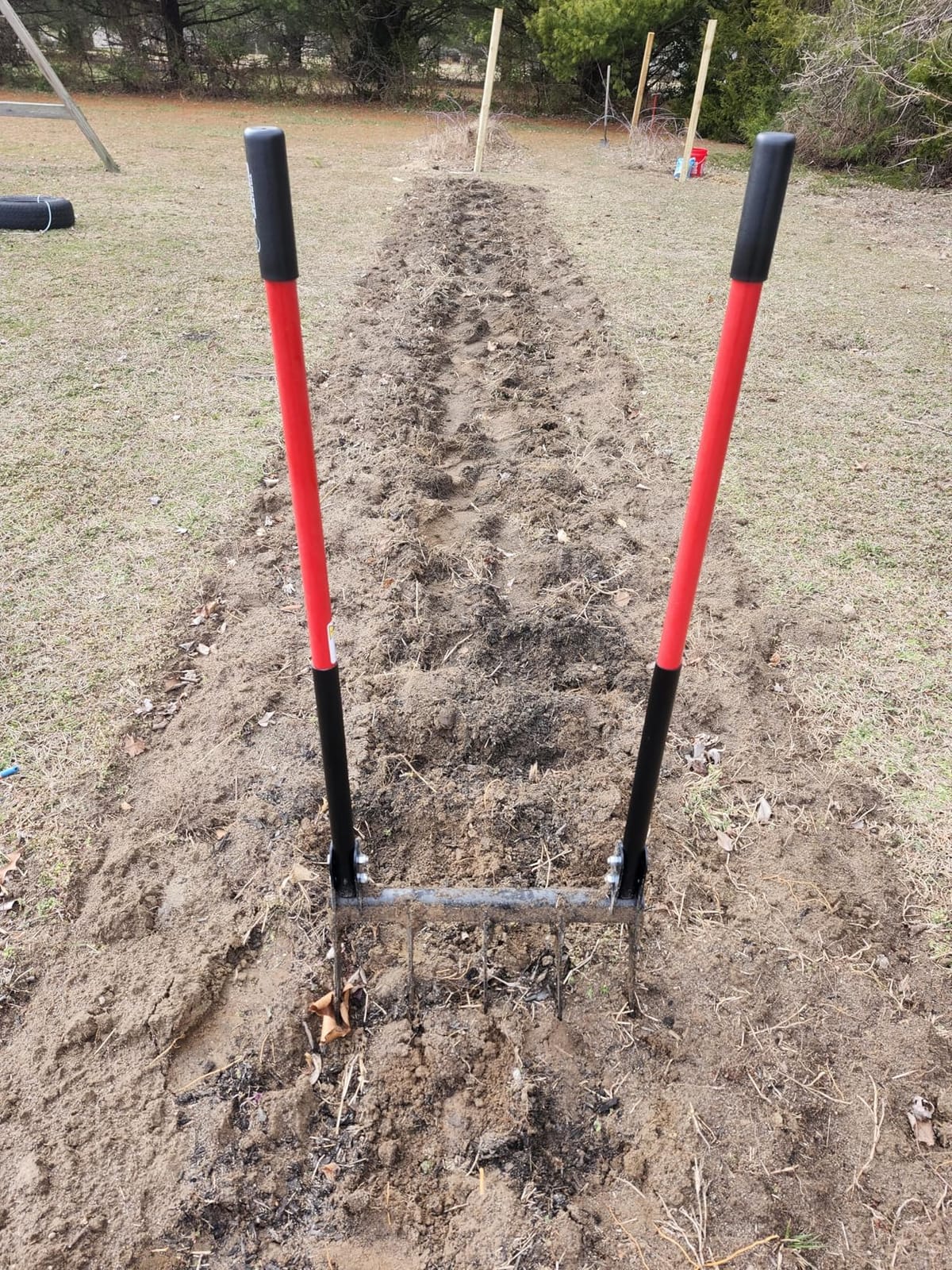
The handling is where this tool earns its back-safety reputation. You put your weight on the crossbar and press down, then lift the handles rather than pulling them, which means the work is done by your legs and torso instead of your lower back. Several owners with replaced knees or chronic back problems describe gardening this way as the only method that does not flare symptoms up. The rubber grips and 42.5-inch detachable handles take the shock of the rock-and-lift cycle that smaller forks transmit straight into the palms.
The honest weakness is the handle hardware. The most repeated complaint across the reviews is that the bolts at the handle-to-head joint loosen over time and produce a persistent wobble, and some owners shim them with washers or weld the joint themselves. A second theme worth knowing: this is an aerating tool, not a demolition tool. Owners are clear that it is not designed to take hits from immovable roots or stones, and that tines can bend when they meet one.
What soil and bed size suit it
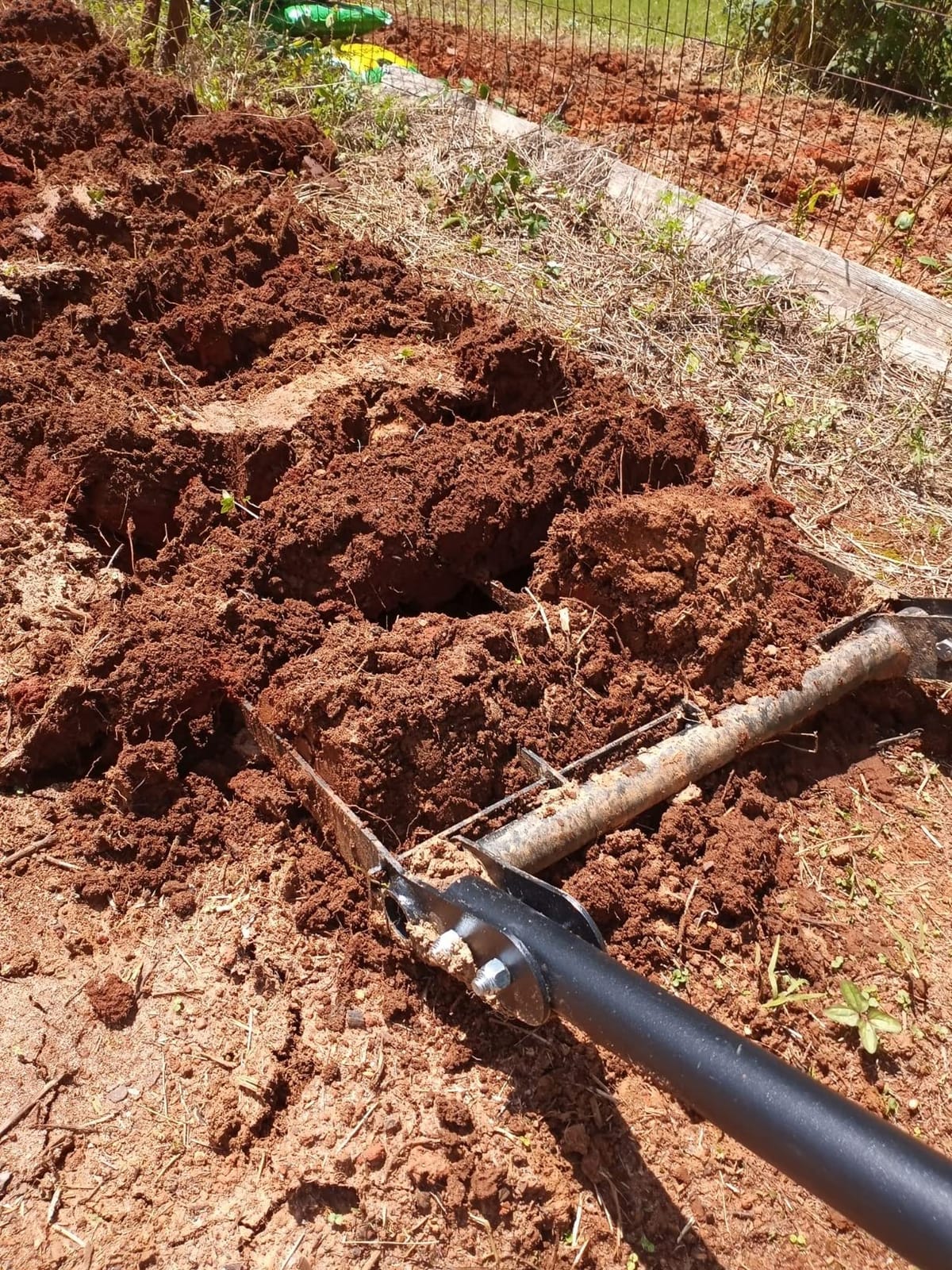
It handles a range of conditions, from loose loam to compacted clay, and the 56-inch length means most gardeners never have to crouch. Five tines give a working width that suits a 3-foot or 4-foot bed, and the 11-inch tine depth matches what you want for breaking a spring pan without going to subsoil.
It is not the tool for a rockier plot or a stump field. If your ground has old roots or stone near the surface, the all-steel welded picks below handle more of that punishment without the bending risk.
Where it falls short
The wobble issue is real and it is a maintenance item, not a defect. Check the handle bolts at the start of each season and before long sessions, and you will keep it tight. On a buying decision, know that you are choosing a tool that needs occasional attention rather than one you can leave outside for years untouched.
One long-term owner reports four years of use with no breakage while leaving the tool outdoors year round, so the durability story is credible. Just do not expect the joint to be as inert as a weld.
2. VEVOR 5-Tine Broad Fork – the value pick that closes the wobble gap
VEVOR Broad Fork, 5-Tine Pitchfork with Dual Fiberglass Handles, Heavy Duty Garden Fork, Ergonomic U-Shaped Design Broadfork Hand Tiller, Gardening Tool for Composting Transplanting Aeration
54 in total length
20 in working width
13.67 lbs
Forged steel head
Pros
- Reinforced head-to-handle joint resists loosening
- 4.6 rating across 258 reviews
- 54 in length suits smaller users
- Detaches into a toolbox for storage
Cons
- Broadfork technique still needs body weight on the crossbar
- Heavier than the Bully at 13.67 lbs
The single most common failure in a mid-priced broadfork is the joint between the head and the handles, and this is the pick that fixes it. The listing calls out a reinforced handle-to-head connection designed specifically to prevent loosening and wobbling, and owners confirm the difference is noticeable compared with cheaper forks. It also holds a 4.6 across 258 reviews, with 83 percent of ratings at five stars.
At 54 inches overall, the tool sits at the shorter end of the range here, and that is a deliberate choice for gardens worked by smaller-framed gardeners or by anyone who does not want to wrestle with a long lever. The broad 20-inch working width is worth noting too, because it covers ground faster than the narrower five-tine layouts.
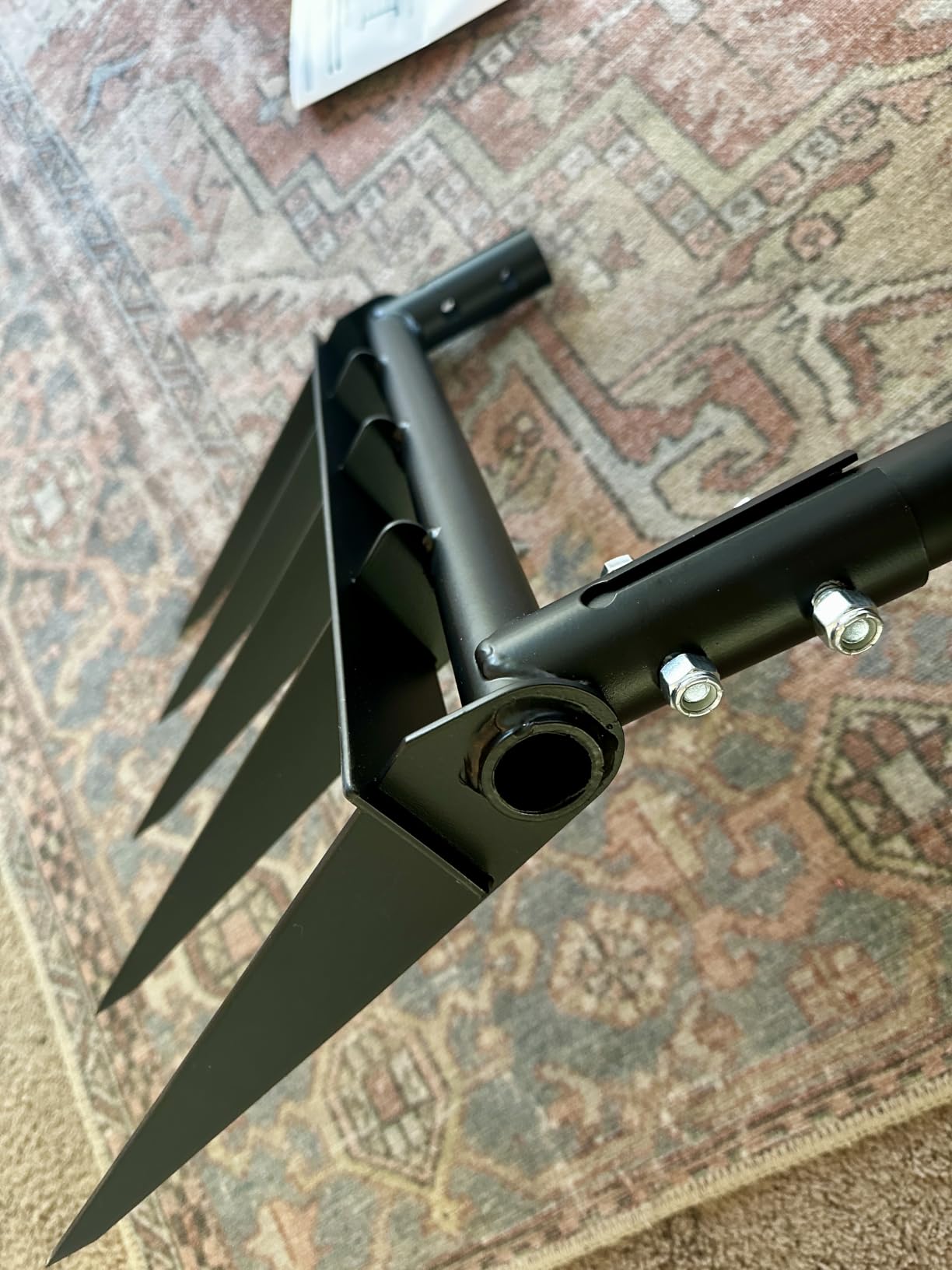
The fork head is forged rather than stamped, and it is paired with a fiberglass handle, which is a combination that trades some of the raw weight of an all-steel frame for a more comfortable session. Buyers also like that it detaches for storage, which matters a great deal in a small urban plot or a shared allotment where wall space is limited.
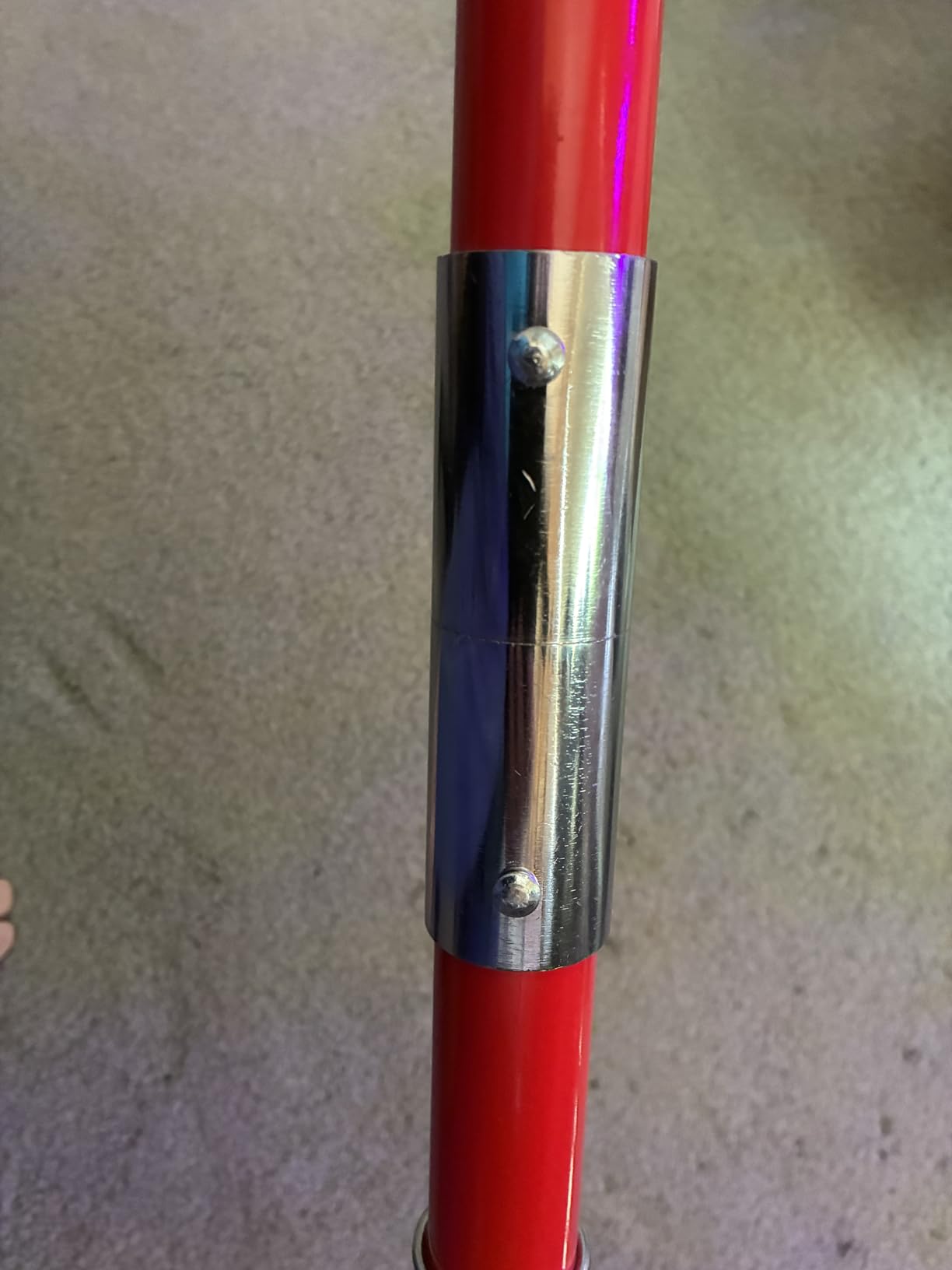
One thing to set expectations on: reinforced does not mean welded, and this is still a tool you step on with your full weight when the soil is compacted. The tech listing describes it across several head and handle configurations for different jobs, and the review data notes that some of the published specification figures differ between those variants, so treat the headline five-tine numbers with a little care.
Why we rate it best value
It is the pick that makes the most sense for someone who wants a genuine broadfork rather than a spading fork that looks like one. The joint holds, the length suits most bodies, and the detachable design means it lives in a corner of a garage instead of taking up a wall. For a first no dig bed, that combination removes almost every reason not to buy it.
It is also the one to consider if you are breaking ground on a new plot rather than maintaining established beds, because you will get more use out of a strong joint in the first season than most owners get in five.
Where it falls short
At 13.67 pounds it is meaningfully heavier than the Bully, and on a long bed in wet clay you will feel that in your forearms by the third pass. If your soil is light and your beds are already in decent shape, the extra mass is work you do not need.
It is also a five-tine design, so on a wide market row you will be walking back and forth more than you would with a nine-tine head. For a home 4-foot bed that is irrelevant. For market gardening, it is the reason to look at the Walensee below.
3. Meadow Creature BF-12 All Steel Broadfork – the Premium Pick welded build
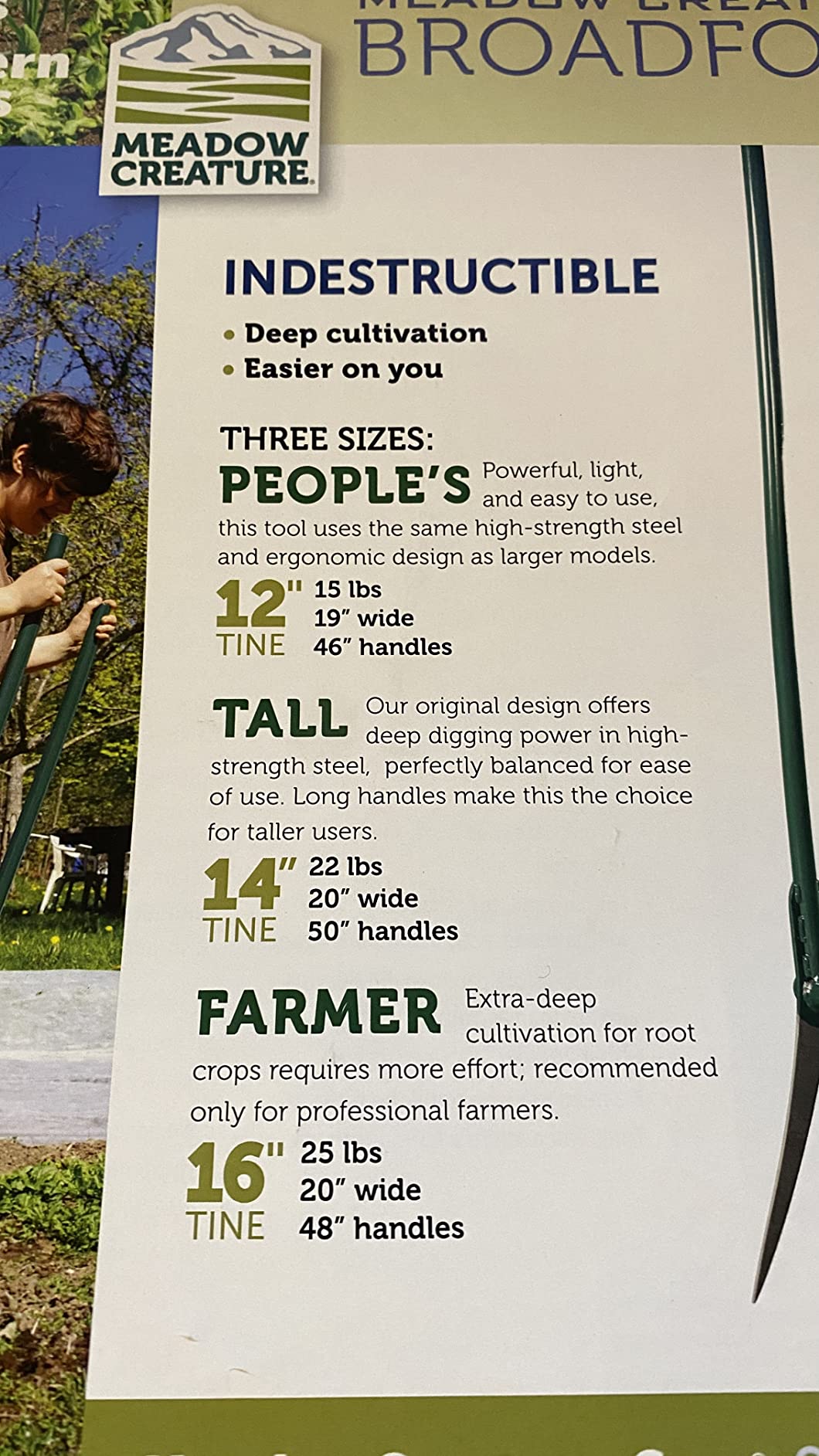
Meadow Creature’s All Steel Broadfork: The Peoples Broadfork ,12 tines Green BF-12 BF-12
Fully welded all steel
12 tines
15 lbs
Lifetime warranty
Pros
- No bolted joints to loosen or snap
- Highest average rating in the group at 4.8
- Handles oak roots that fiberglass tools cannot
- Covers a lot of ground with 12 tines
Cons
- 15 lb weight needs rest breaks
- Works best on damp not soggy soil
- Higher cost than fiberglass-handled forks
The welded construction explains both the 4.8 rating and the 94 percent five-star share. There are no bolts at the handle joints, which means there is nothing to loosen, nothing to shear, and no wobble to chase. The BF-12 is 15 pounds of alloy steel with twelve tines, made in the USA and backed by a lifetime warranty.
Owners treat it as a professional-grade tool rather than a weekend purchase. One reviewer replaced roughly 24 hours of electric tiller work in solid clay with about two hours using this fork. Another ripped out large old oak roots that a fiberglass-handled mattock could not touch, which is the use case that justifies an all-welded frame.
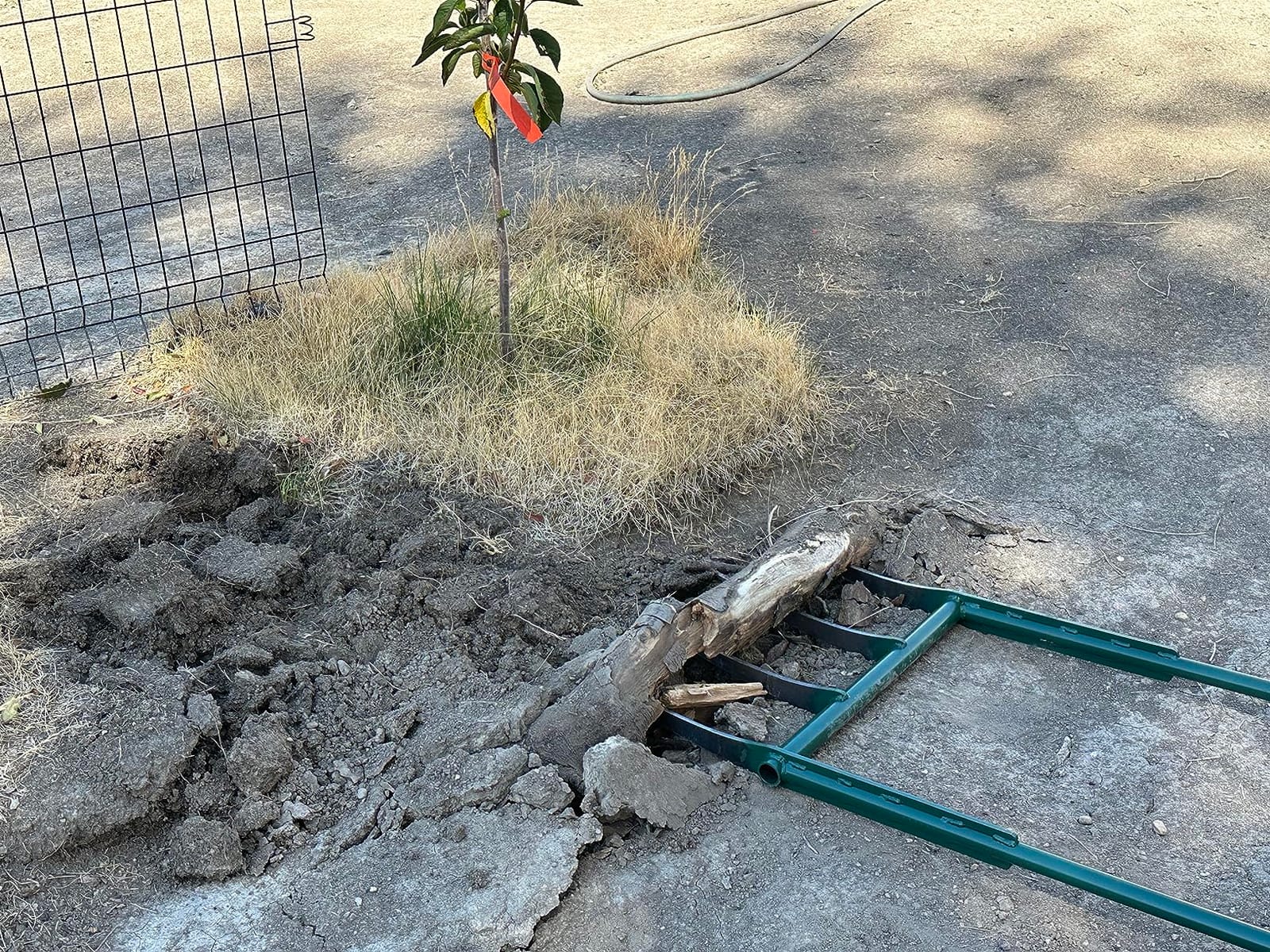
What makes it relevant to a no dig system is the same thing that limits it. Owners are consistent that this is an aerating tool, not a rototiller replacement, and that it works best on damp ground. On soggy clay, or in soil packed hard with large rocks, the work gets harder rather than easier. The 15-pound weight also means you work in short bursts with rest breaks, standing on the crossbar and rocking rather than levering.
It is also quiet, needs no fuel or batteries, and does not turn the bed over. That combination is why a lot of no-till growers name Meadow Creature and Earth Tools builds as the durability benchmark, and it is why the welded frame has become the default answer to the question of which broadfork to buy once.
When it is worth the premium
Buy it if you are converting one hard plot, breaking a clay pan that has been there for decades, or clearing ground with root mass in it. Those are the situations where a welded frame earns its cost, because you will hit it hard and a bolted joint would be the weak link.
You will also feel the twelve-tine advantage on long passes. Where a five-tine fork needs three or four passes across a bed, this covers more ground per stroke, and the wide tine spacing moves a lot of soil volume per lift.
Where it falls short
It is a poor match for an established, mulched, healthy bed that only needs surface loosening, because you would be deploying serious weight for light work. It is also a genuine physical commitment. Owners describe the weight as a real workout and advise working in short sessions.
If you are undecided between a heavy steel frame and something lighter, the honest answer is that weight should match your soil. On heavy clay, weight is the point. On loam and sandy ground, it is punishment, and forum regulars say so plainly.
4. Walensee 9-Tine Broadfork – the widest pass per stroke
Walensee Broadfork Garden Tool, 9 Tines Heavy Duty Broad Fork Hand Tiller, 2-in-1 Garden Pitchfork with Ergonomic U-Shaped Handle, Spading Digging Fork for Gardening, Cultivating
9 hardened tines
9.1 in depth
15.97 lbs
38.2 in U-shaped handle
Pros
- Nine tines cover far more ground per pass
- Hardened tines resist bending in hard ground
- 9.5 in foot platform makes crossbar leverage easy
- Doubles as a spading fork for root crops
Cons
- 38.2 in handle is shorter than most
- Manufacturer caps depth at 5.9 in in compacted soil
- Second-highest 1-star share in the group
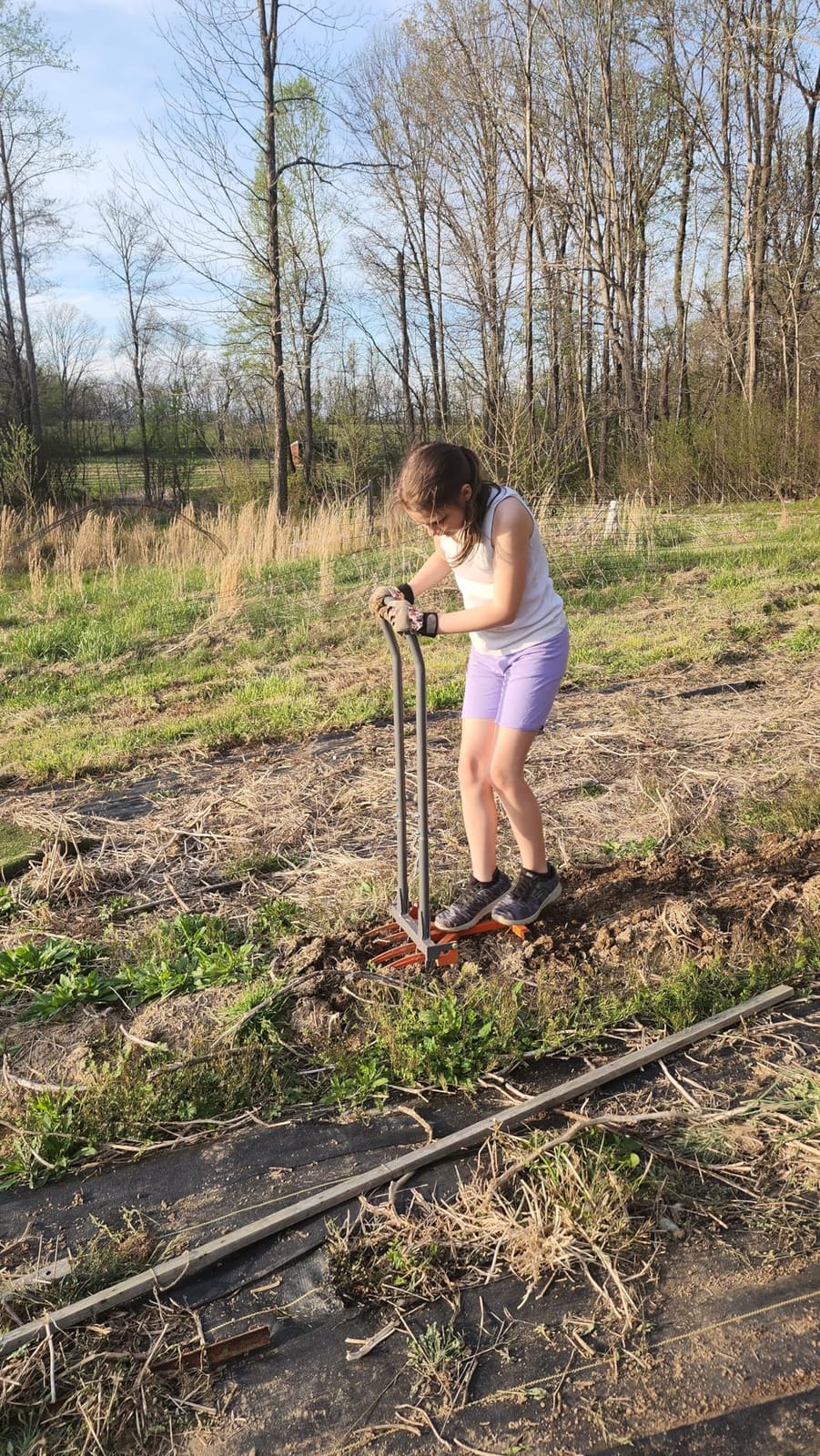
Everything about this fork is organised around coverage. Nine hardened high-rigidity tines reach 9.1 inches into loose soil, and the manufacturer rates the U-shaped handle to withstand up to 165.4 pounds of pressure without deforming. In practice that means far more ground per pass than a five-tine layout, which is the deciding factor for market rows and long beds rather than a small square plot.
The 9.5-inch foot space is wider than most, and reviewers single it out as making it easy to step up and put your weight on the crossbar. Several owners mention that the upright posture and the handle design reduce hand strain during long sessions, which is exactly the mechanics that keep a broadfork friendly to an aging or injured back.
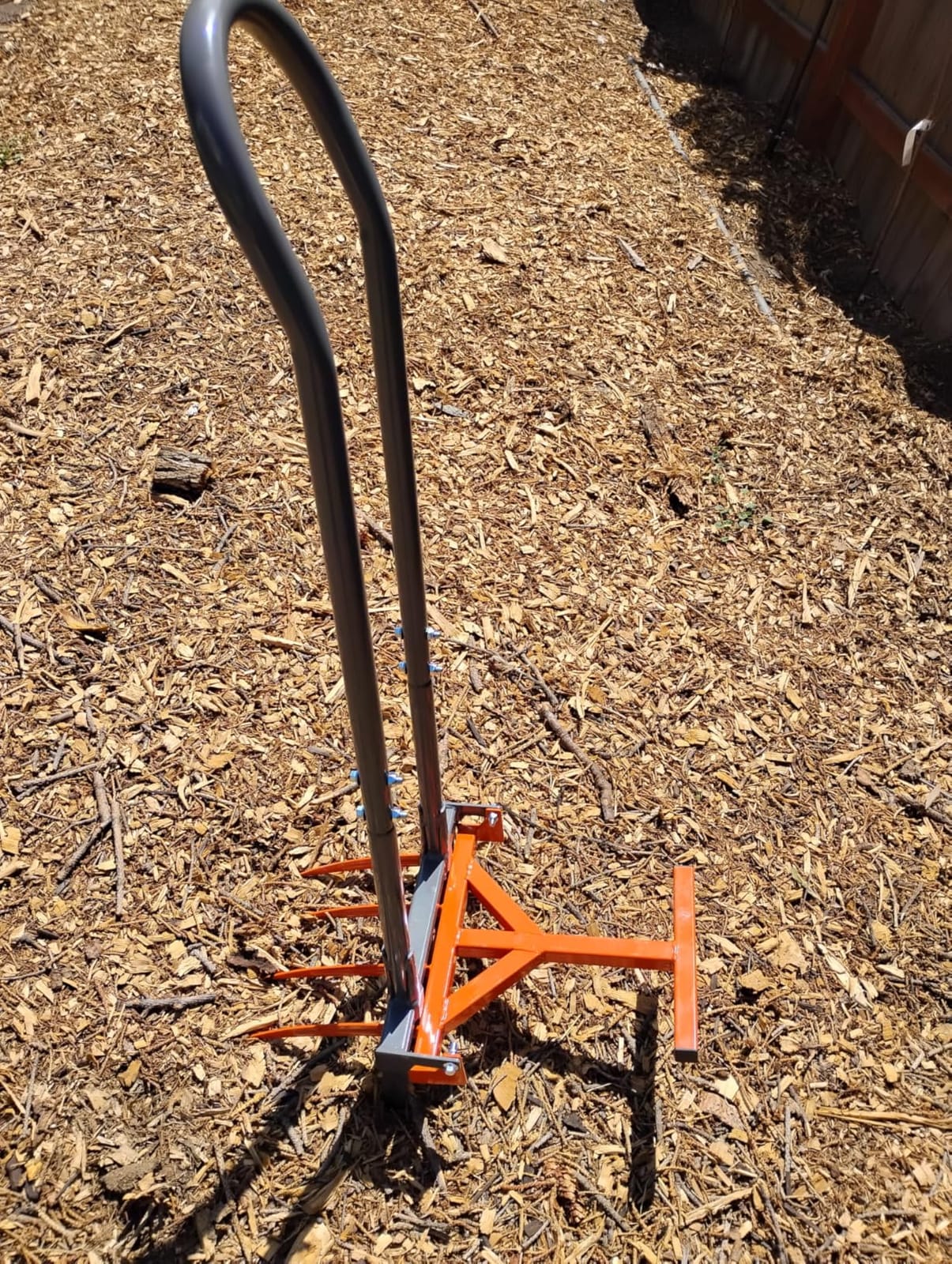
The build is all steel, with a spray-molded tine treatment aimed at resisting bending and deformation, and hardened tines that hold their shape in hard conditions. The two-in-one design also lets it double as a spading fork, and reviewers use it for digging and lifting root vegetables as well as for aeration, so it earns its place even if you never turn it for full depth.
Two honest limitations. The 38.2-inch handle is shorter than the 54-to-56-inch models elsewhere in this list, so on deeper passes you will bend more than you would with a taller tool. And the brand’s own guidance caps the working depth at 5.9 inches in compacted soil, so think of the 9.1-inch figure as a loose-ground number.
Who should buy the nine-tine layout
If you garden in rows rather than square beds, the arithmetic is simple. Fewer passes across the same length saves you standing up and stepping back dozens of times, and that is where tine count turns into real time saved. A 4-foot bed is the smallest size where the difference is worth noticing.
The rubber-footed crossbar and heavy handle also make it a decent match for gardeners who want a broadfork body mechanic but do not want to lift a full all-steel frame, since the tine count does some of the work that weight does on the other picks.
Where it falls short
The rating spread is wider here than on the picks above it, with 19 percent of ratings at four stars and 5 percent at one star, the second-highest one-star share of the eight. That is not a dealbreaker, but it is a signal that the deep-work experience varies more than owner satisfaction on the welded frames.
The shorter handle is the other real constraint. On a bed that needs genuine 9-inch depth in compacted ground, a taller tool with fewer tines will be easier on the back than this one.
5. VASALAID 5-Tine Galvanized Broadfork – the budget entry to no dig
Broadfork 5-Tine Broad Fork for Gardening Ergonomic U-Shaped Design
Galvanized all steel
5 heat-treated tines
16.27 lbs
Reinforced crossbar
Pros
- Galvanized layer resists rust and corrosion
- Heat-treated powder-coated tines shed soil
- Reinforced crossbar adds real leverage
- Removable center pole for storage
Cons
- Bolted head-to-handle joint is the weakest point
- Some buyers report a wobbly feel
- About 10 percent of ratings are 1-star
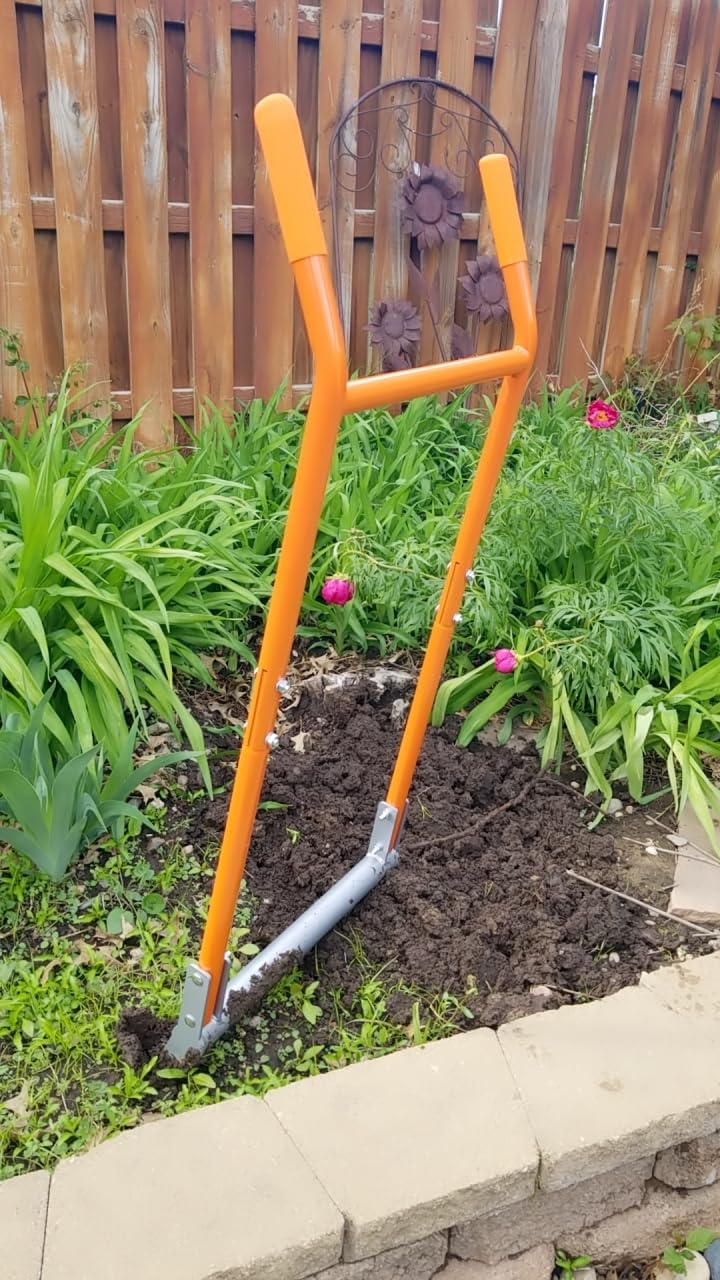
This is the pick for someone who wants to find out whether broadforking fits their garden before committing to a welded frame. The build is thickened all steel with a galvanized layer for rust and corrosion resistance, and the five tines are tempered and heat-treated with a powder coating that minimises soil adhesion, which is a genuinely thoughtful detail for a tool that lives in wet ground.
At 16.27 pounds it is not a light tool, and that is deliberate. The reinforced crossbar between the two handles adds the buying power you need to drive the tines down without levering on your lower back. Owners also like the non-slip rubber handles for reducing hand fatigue over long sessions and the removable center pole section for storage.
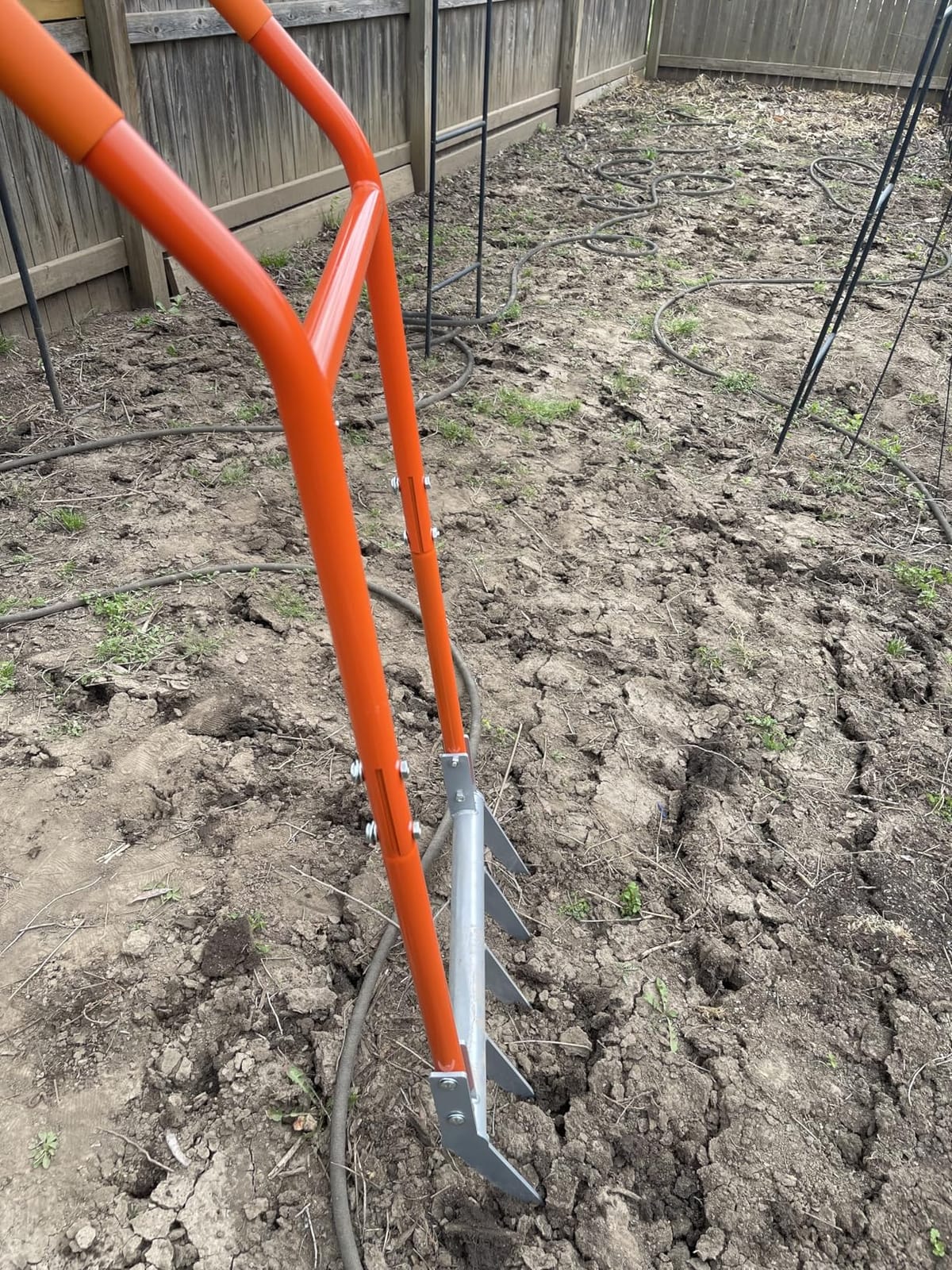
The positive feedback is not thin. One gardener describes using it to lift a 50-year-old comfrey plant in four passes, and another reports it drives three to four inches into caliche clay when there is moisture in the ground. Owners working no-till specifically note that it mixes amendments in without harming worms or fungal networks, and pulls whole cover crop root systems such as clover out cleanly.
The recurring criticism is the head-to-handle joint. The bolts, not a weld, carry the prying load, and at least one detailed review predicts they will eventually snap and recommends welded tubes instead. A second thread of feedback says the assembly is not fully welded as the listing implies, which leaves the tool sitting unused in a shed for some buyers.
What you get for the entry cost
You get a genuinely capable tool rather than a decorative one, provided your ground is workable and you tighten the joint. Galvanized steel and heat-treated tines are the right materials for someone who plans to keep working after the first bed is turned, and the removable center pole solves the storage problem in a small garden.
For a first no dig conversion on a manageable plot, it does the job. Treat the handle bolts as a seasonal check, the same way you would with the Bully, and you will get several seasons out of it.
Where it falls short
The 1-star share sits among the highest of the eight picks here, at roughly 10 percent of ratings, and the complaints are consistent enough to take seriously. A wobbly joint undermines the entire point of using body weight instead of muscle, because you end up fighting the tool rather than driving it.
There is also a practical assembly note. The instructions call for installing the base-to-pole screws first and the center handle screw second, and some buyers hit alignment problems with the bolt holes. Budget ten minutes and a clear surface for the first assembly.
6. SILKPE 5-Tine Cambered Broadfork – for hard ground and new builds
SILKPE 56” Heavy Duty Broadfork for All the Soils, Detachable Design Pitchfork, 5 Sharp and Cambered 11” Tines Bord Fork Garden Tool, Ergonomic Handles, Good Package, Easy Assembly, Blue.
Cambered 11 in tines
56 in length
17.56 lbs
Single-plate welded head
Pros
- Cambered tines 30-50 percent thicker than competing tools
- Single steel plate head with drilled and welded pipes
- Inward-folded handle ends lengthen the pull stroke
- Protective cover and thick wrenches included
Cons
- 17.56 lb weight demands real effort
- 10 percent of ratings are 1-star
- Needs a four-screw assembly first
Of the eight, this is the one built most explicitly for ground that has not been broken up before. The five cambered 11-inch tines are 30 to 50 percent thicker than competing products, and the manufacturer states plainly that the overall build is 30 to 50 percent heavier as a result, and that you will need to exert noticeably more force. Buyers tend to read that as a feature rather than a warning, because the extra mass is what drives the tines into compacted clay.
The head construction is the part worth paying attention to. The tines are cut from a single steel plate with precisely drilled holes, and the cross and vertical pipes are welded into that plate, which gives a rigid head with fewer places to flex. The 56-inch overall length and 19-inch width keep you upright on a full-depth pass.
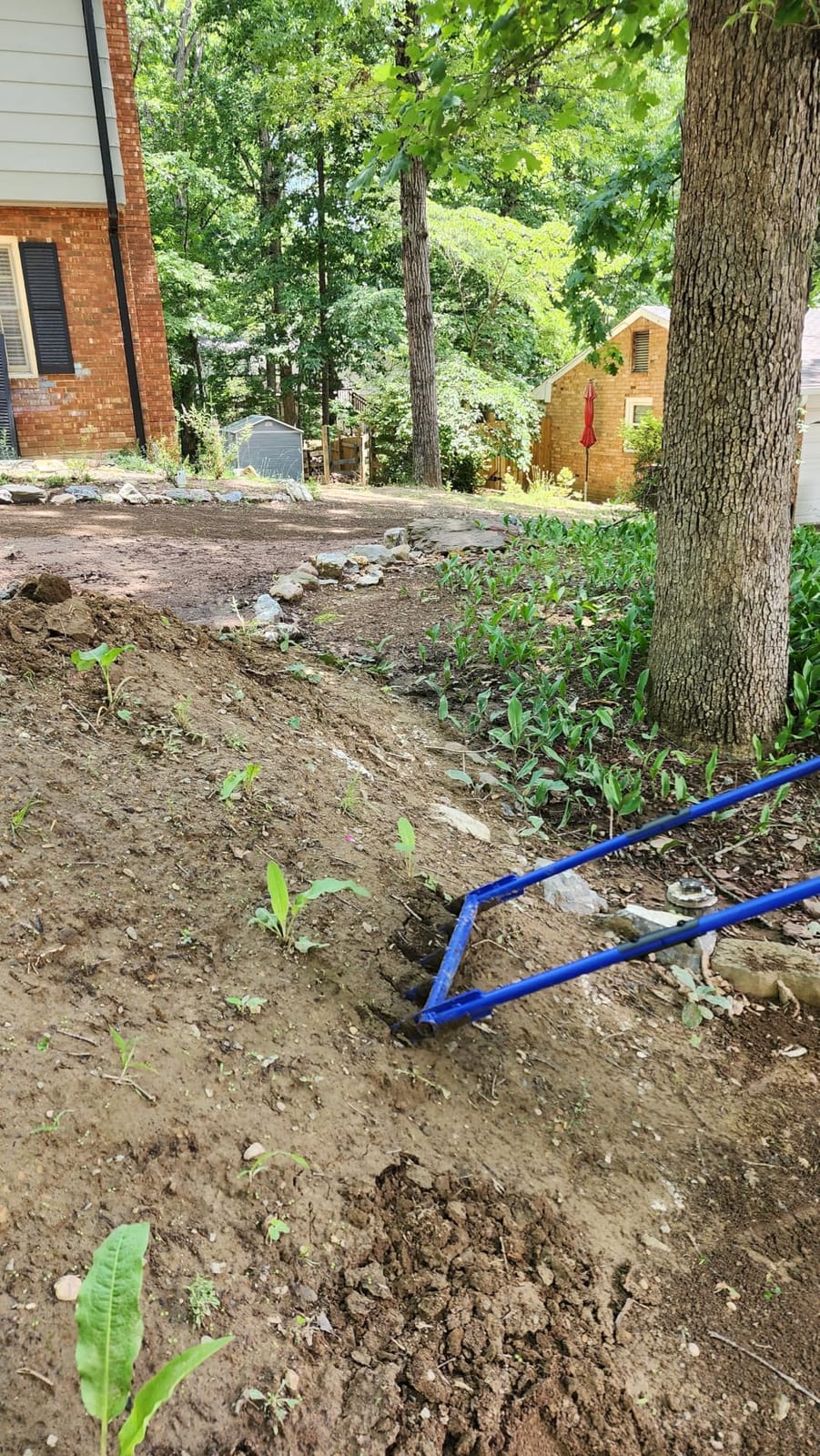
Another detail that is genuinely clever is the inward-folded handle ends. That geometry lengthens the pulling distance so the lever stroke does more work per pull, which reduces how hard you have to haul on the handles to lift the tines back out. Owners credit the cambered arc shape with penetrating both soft soil and hard, compacted clay.
It also arrives with the small things that are usually missing: thickened wrenches for the four-screw assembly, a user manual, and a protective floor cover for storage. The assembly takes about three minutes with the supplied tools, and you get 12 months of service coverage on the parts.
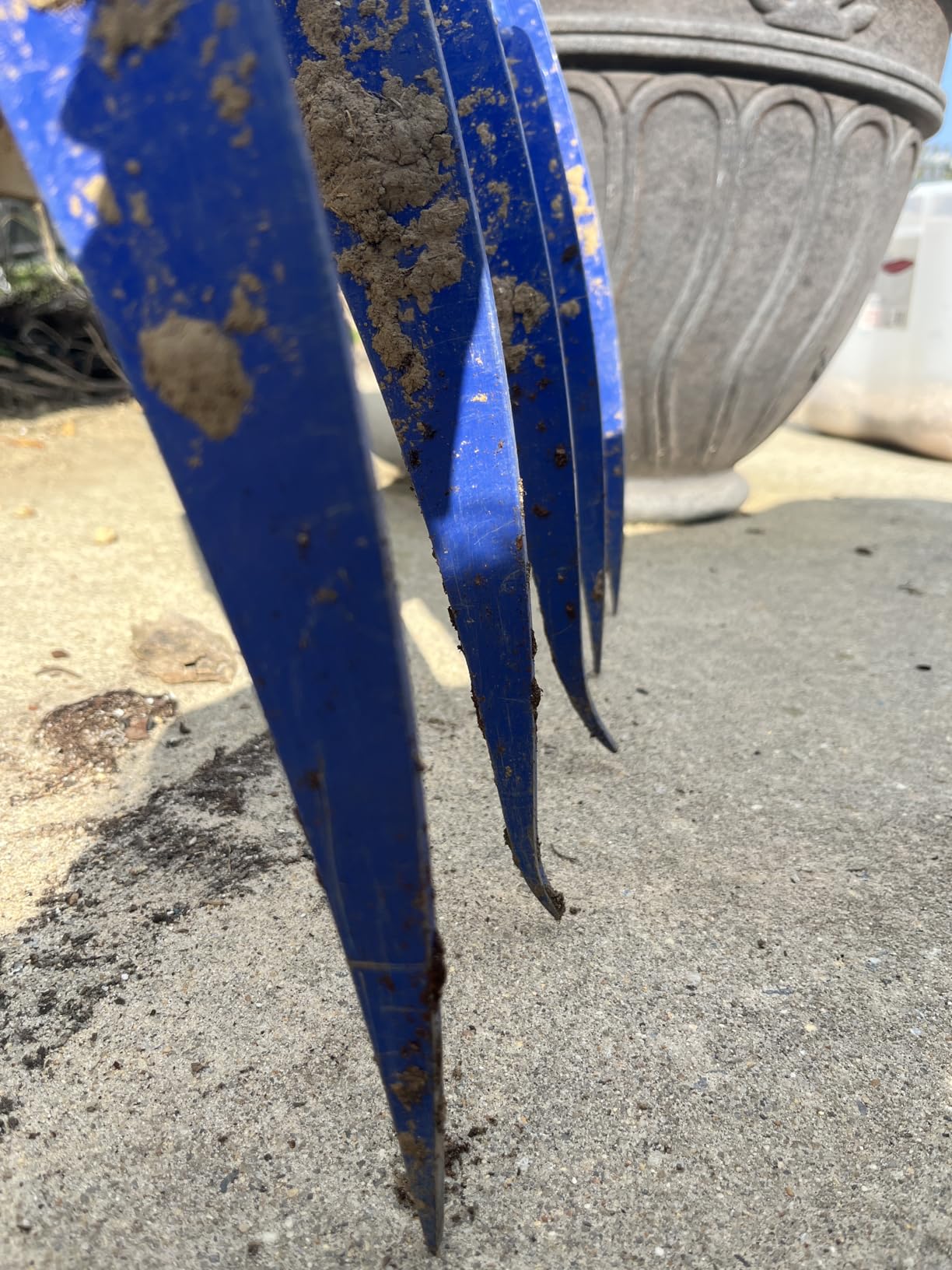
Why we pair it with new ground
New-build plots and reclaimed fields are usually the definition of compacted: builder rubble, machine traffic, and a thin layer of topsoil over pan. A heavier, thicker-tined fork is the right tool there, and the single-plate head is built to take the shock of the first pass when you hit something unexpected.
It is also worth noting for anyone converting turf. A cambered tine profile tends to enter sod and matted roots more readily than a straight tine, and the arc means less resistance on the way down.
Where it falls short
The weight is the trade-off the brand itself names, and it is real. At 17.56 pounds this is a tool for someone who is prepared to do physical work, and it is a poor choice for a small urban plot with loose soil.
The rating spread is similar to the VASALAID, with 10 percent of ratings at one star. Those reviews tend to describe the effort as more than expected rather than as a failure, so the tool is honest about what it asks of you rather than overselling.
7. SENVERT 5-Tine Broadfork – for lighter handling and root crops
Senvert BroadFork Garden Tool, Heavy Duty 5-Tine Broad Fork Hand Tiller, Garden Pitchfork with Ergonomic U-Shaped Handle, Digging Fork for Gardening, Cultivating
5 heat-treated tines
54 in overall size
19.5 in item width
Welded dual-row tine joint
Pros
- Heat-treated tines with reinforcing ribs resist bending
- Structural rib at the handle base
- Forward-angled upper section guides hands forward
- Suited to bed prep and lifting potatoes
Cons
- Only 46 reviews
- No published weight so effort is hard to judge
- Working width figure should be read with care
This is the pick for a gardener whose soil is already in decent shape and who mostly wants to lift potatoes and carrots as well as aerate. The engineering emphasis is on the joint: five heat-treated tines with reinforced ribs, a welded dual-row tine connection, and a structural rib at the handle base, all aimed at the point where cheaper forks twist.
The forward-angled upper section on the U-shaped handle is the detail owners mention most. It guides the hands into position during the pull stroke, which means you are lifting with your arms behind the load rather than pinching the handles, and that is a meaningful difference over a long session in a root bed.
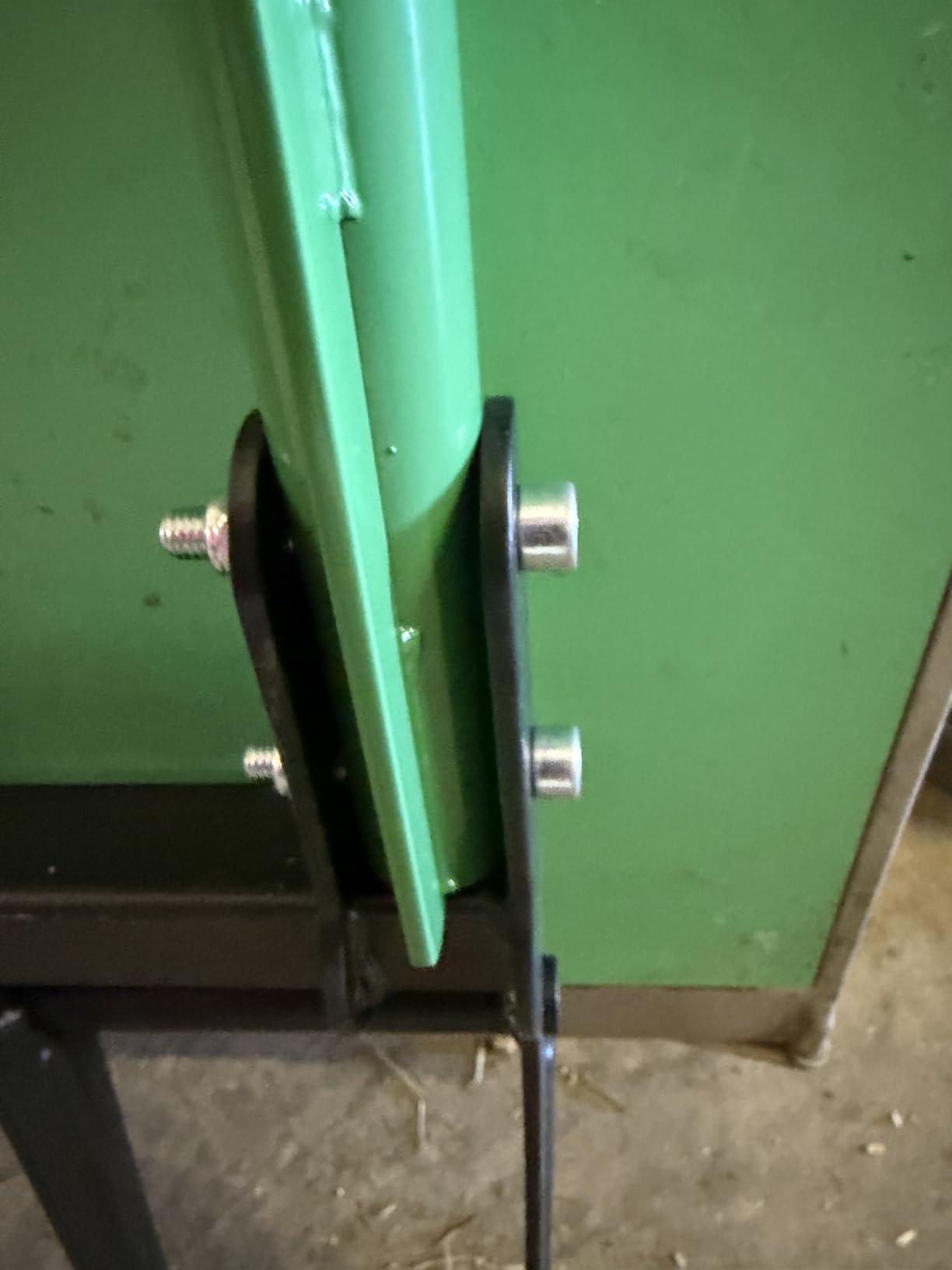
At 54 inches the tool is compact enough for smaller frames and small plots, and the ribbed heat-treated tines hold their shape in soil that has already been worked once. Seventy-five percent of ratings are five stars, and the reviews focus on the build claims and the handle geometry rather than on long-term durability, which is the honest limitation of a 46-review sample.
One thing to know before you buy: the listing carries a 19.5-inch working width figure, but the review analysis flags that as implausible for a five-tine head and recommends reading it as the 19.5-inch item width instead. Treat the effective working span as narrower than that number implies.
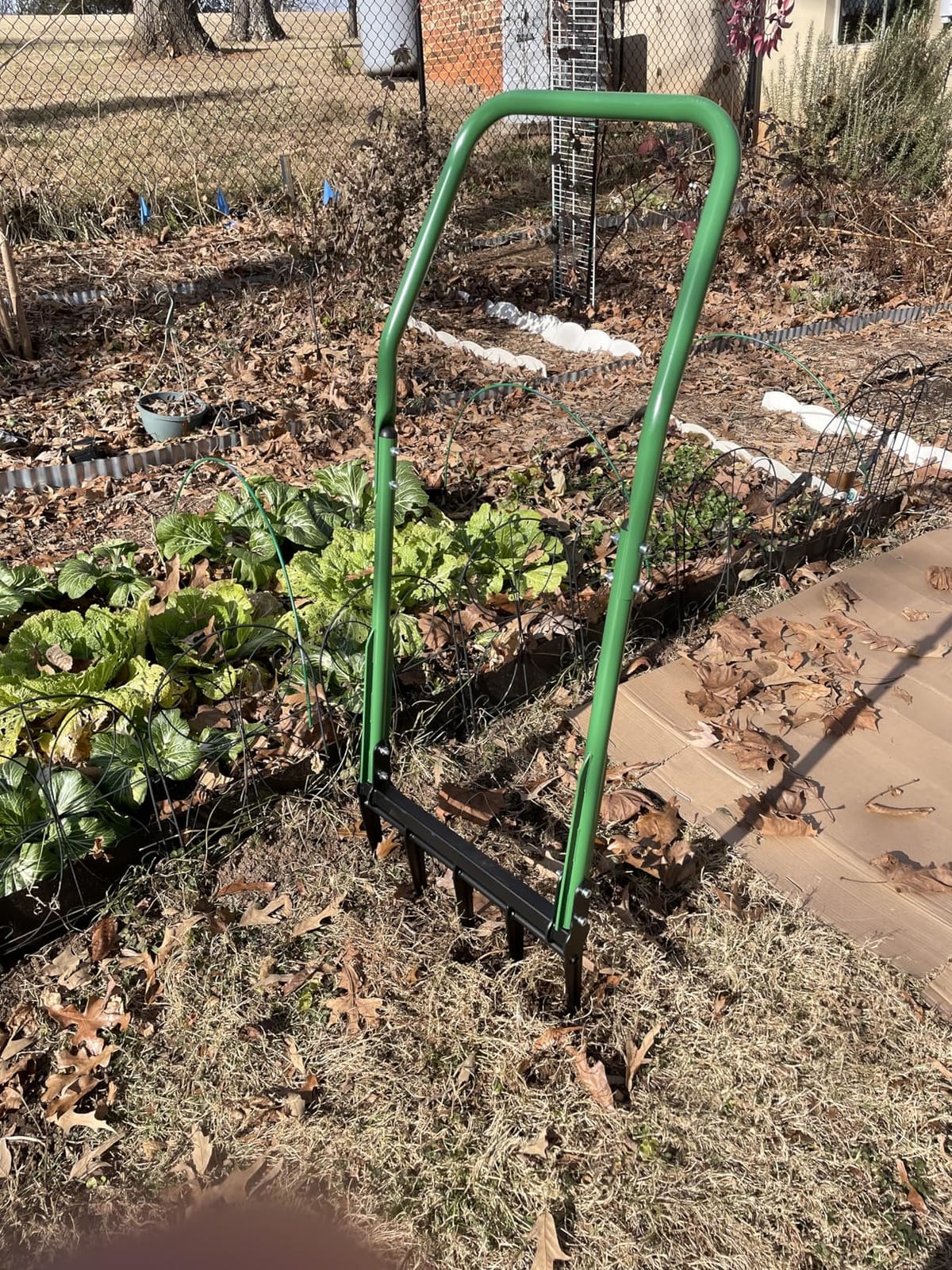
Best use in a no dig system
A no dig garden is harvested constantly, and this is the pick that handles the harvest side as well as the preparation side. Lifting root vegetables in a no-dig bed tends to be the hardest part of the job, and a ribbed, heat-treated tine that will not bend makes it far less frustrating than a lightweight spading fork.
For a 2-foot bed in a suburban garden, the 54-inch length and compact head are well matched. You are not covering a market row, so tine count matters less than how the tool feels in your hands at the end of a two-hour session.
Where it falls short
No weight is published for this model, which is a real problem when you are matching a tool to your strength. If you are unsure, the honest test is whether you can stand on the crossbar and press your full weight down without straining.
And the review base is small. Forty-six reviews is enough to see consistent themes, but not enough to compare durability claims against the Bully, which has more than thirteen times the owner data behind it. If long-term reliability is your priority, buy a tool with a deeper feedback record.
8. KEMETIK 5-Tine All Steel Broadfork – the heaviest frame here
KEMETIK 5 Tines All Steel Broadfork, 56″ Broad Fork Garden Tool Heavy-Duty Digging Pitchfork, Non-Slip Grips & Detachable Design for Gardening, Farm Cultivation, and Soil Loosenin
17.71 lbs
56 in overall length
Arc clip lock joint
5 curved high-carbon tines
Pros
- Arc clip lock connection holds the head tight with no wobble
- Curved high-carbon welded tines stay straight
- Accessory kit includes wrench and spare screws
- Detaches into two parts for transport
Cons
- Heaviest in the group at 17.71 lbs
- One verified buyer reports all tines bent on first contact
- Not practical for small jobs
The heaviest tool in the group, at 17.71 pounds, and that weight is the entire pitch. It uses a thick load-bearing steel pipe frame with five thick curved high-carbon steel welded tines, and the connection is an arc clip lock rather than a bolt through a hole, which is the design choice reviewers single out most. Owners describe the head staying tight with no wobble while working, which is exactly the complaint that shows up on cheaper models.
Buyers report driving it three to four inches into hard clay and sand with a push of the foot and a twist, and one account of clearing a new-build yard of glass, concrete, rebar and rocks in a single day. The non-slip rubber grips have inward-folded ends that support an upright posture, which owners link to less back and wrist strain over long sessions.
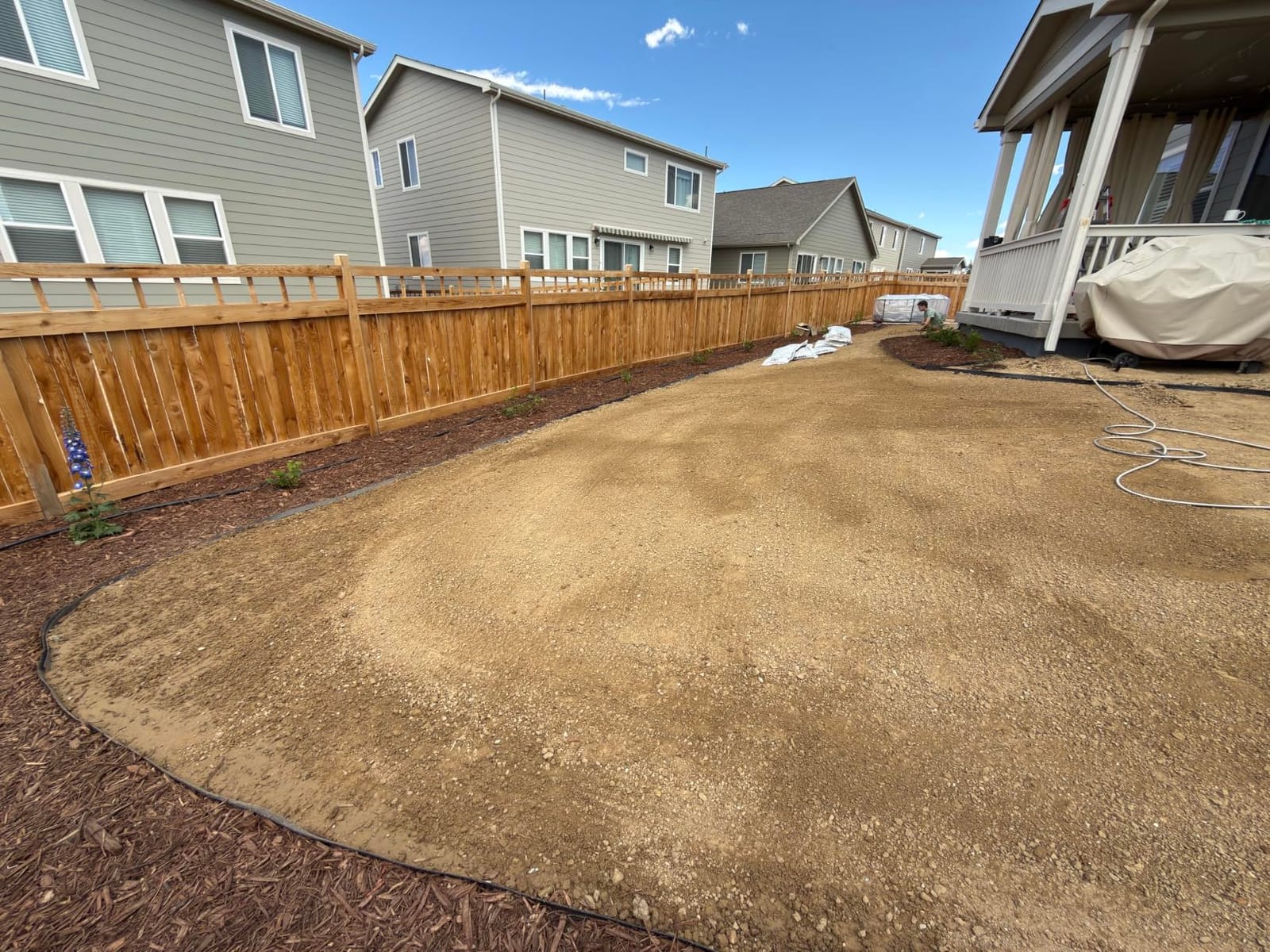
It is also the best supplied of the group in terms of small parts. The package includes rubber tine and floor protectors, a thickened wrench, and spare screws, so a lost or stripped fastener on day two does not end your season. The two-piece detachable design stores in a garage, a storage room, or a car trunk.
There is one serious complaint in the reviews, and we would rather name it than bury it. A verified buyer reports every tine bending immediately on their soil, which is exactly what happens when a heavy tool meets ground with stones and root mass in it. If you cannot clear the surface first, do not start with this.
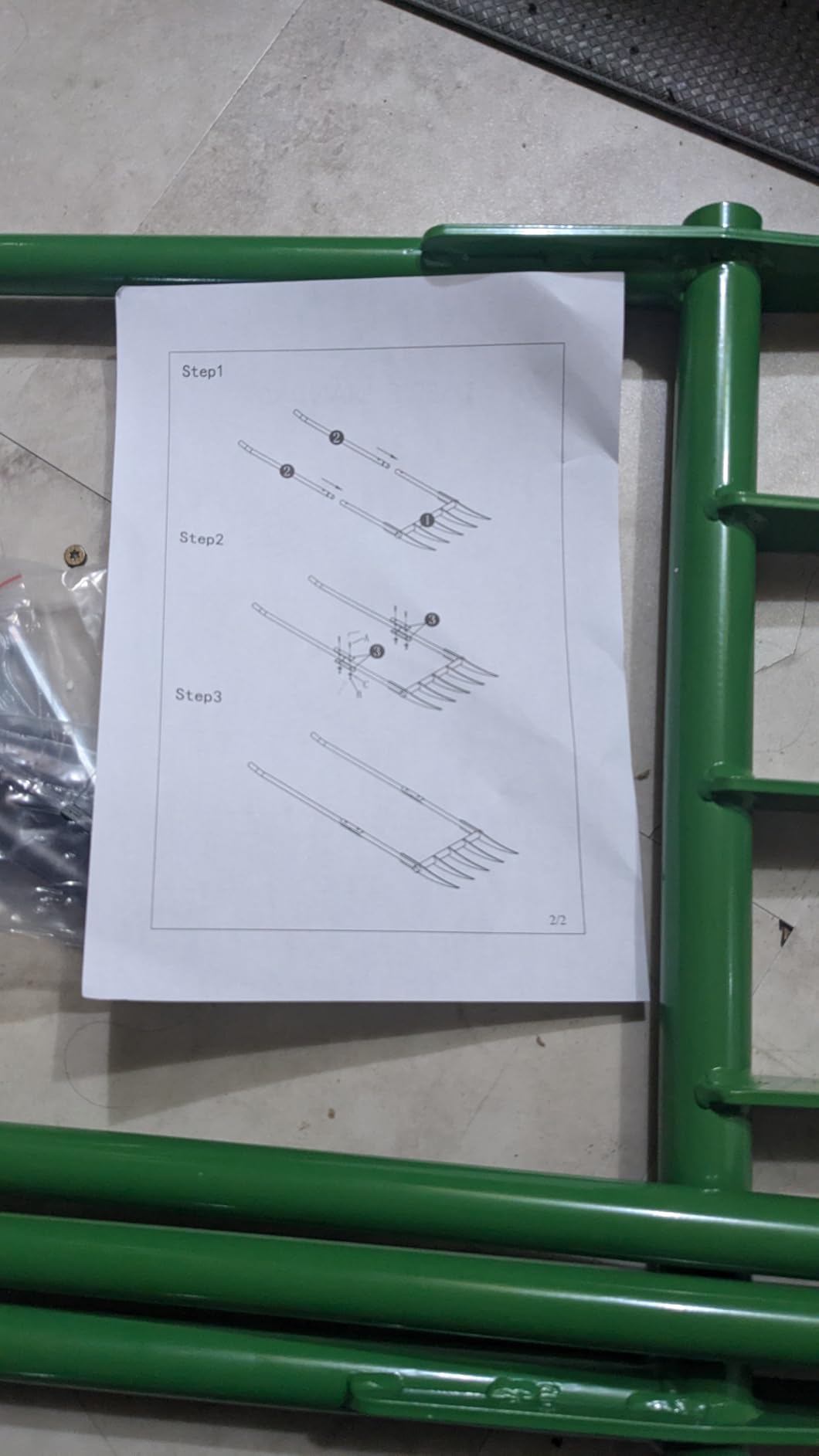
What earns it a place on the list
The arc clip joint is a better answer to the wobble problem than a bolt, and the curved high-carbon tines are the toughest steel in this group. For a plot that has never been worked and needs serious breaking, the mass is the feature you are paying for.
It is also the only pick here with a documented account of a gardener with health limitations using it to till an entire new-build yard alone, which says something about the tool being usable when the operator is not at full strength.
Where it falls short
It is not a small-job tool, and the owners who own it say so. On a couple of short raised beds, a 17.71-pound frame is simply more than the task needs, and the weight becomes fatigue rather than force.
It is also the smallest review base in the group at 34 ratings, which means the one-star tine-bending report sits inside a limited sample. Treat the durability story as promising but less well tested than the Bully or the Meadow Creature.
How to Choose a Broadfork for a No Dig Garden
The core question is not brand, it is whether the tool matches your soil. Broadfork physics are simple: the downward force comes from your body weight, and that force is divided by the number of tines. More tines means less force per tine and more ground covered per pass. Fewer tines means more punch per tine and better penetration in hard ground. That is why clay gardeners want few tines and heavy steel, and why loam gardeners are better served by something lighter.
On heavy clay or hardpan, the recommendation is a heavy, fully welded steel frame on the fewest tines you can find. On established beds with good structure, a lighter fiberglass-handled five-tine fork is the sensible choice, and using a heavy all-steel fork on soft loam is a common source of the frustration that makes people conclude broadforks are impractical. Readers trust reviewers who say a heavy fork is wrong for their ground, and the forum consensus is the same: match the tool to the soil or you will resent the purchase.
Tine depth matters as much as weight. Eleven-inch tines reach the depth of most hardpans and tillers pans, while a 5.9-inch working depth will only handle surface compaction. Anything in the 9-to-11-inch range suits a genuine soil-restoration job.
Head width should roughly match your bed. A 20-inch working width covers a 3-foot bed in a few passes, while a 4-foot bed or a market row rewards the wider coverage. More important than exact matching is not buying a narrow head for a wide bed, because that turns one pass into four and you will stop before you finish.
Joint construction is the second most important buying criterion, and the word to look for is welded. The most-cited purchase criterion across owner feedback is durability with no bolts or joints to fail. Bolted head-to-handle joints loosen, then wobble, then shear. If you are choosing between two similar tools, the welded one is worth the extra money, because it is the difference between a tool you tighten each season and a tool you leave in the shed for a decade.
Handle length affects your back more than weight does. Handles between 54 and 56 inches keep you upright on a full-depth pass. Shorter handles mean bending at the waist, which is precisely the motion no dig gardening is supposed to spare you. Handle material is a comfort question: ash and hardwood absorb shock well, fiberglass will not swell or crack, and rubber grips reduce hand fatigue over extended sessions.
Maintain it like the steel it is. Carbon steel tines will spot-rust if you leave them wet, so scrape the soil off after each session and store the tool dry rather than in a puddle. A film of oil on the tines before storage is cheap insurance and keeps a welds-last-forever claim honest. If you keep ash or wooden handles on any model, wipe them dry and check for swelling at the grip joint each season.
And check your ground before you check out. Rocky soil damages tines and can injure the user, and that is close to unanimous forum consensus. If your plot is full of stones and old root mass, clear the surface first or pick a tool that can take the punishment.
For anyone who cannot justify a full broadfork yet, there is a sensible ladder. A sturdy garden fork used the same way, stepping on the tines and rocking rather than levering, does a surprising share of the work on a small bed. A spading fork covers a narrow bed or a corner. A hori hori knife handles planting and dividing without any leverage problem. If your plot is small, one of those is genuinely enough, and the [fabric grow bags we tested](https://webcomicsweekend.com/best-fabric-grow-bags-for-container-gardening/) route avoids the compaction problem entirely by never asking you to walk on the bed.
Broadfork vs Rototiller for No Dig Gardeners
For a no dig garden, the comparison is not close. A rototiller inverts the soil profile, smears structure into ribbons, destroys the fungal networks and worm channels that make no dig gardening work, and leaves a compaction pan at the depth of its tines. That pan is the reason people till one year and get worse soil the next. A broadfork fractures compaction and lifts the soil without turning it, which is why forum members describe it as tillage results without the drawbacks.
A broadfork also releases less stored soil carbon because the soil is not being churned, and it is quiet and needs no fuel. The honest counterpoint is throughput: a rototiller covers a large plot faster on the first pass, and a broadfork is a slower tool worked by one person. If you have half an acre of new ground and a deadline, a tiller may be the honest choice. If you have beds you intend to keep improving for years, the broadfork is the one that leaves them better.
How to Use a Broadfork in a No Dig Bed
Work the soil when it is moist but not waterlogged. Too dry and the tines skate over the surface and the soil shatters into dust; too wet and you create smearing, which is the exact problem you are trying to fix. The squeeze test is simple: a handful of soil should hold its shape and then break apart when you press it.
Start at one end of the bed and drive the tines straight down, stepping on the crossbar with your full weight. Do not lever forward. Then lift the handles from about 90 degrees down to 30 to 45 degrees, using your legs rather than your back, and step forward one to two feet for the next pass.
Rocker, do not lever. Users consistently describe rocking the tool as the correct technique, and the forcing method as what wrenches backs and bends tines. Aim to just touch the depth of the compaction you are trying to break, not to go deeper for its own sake.
Stop when the soil stops fracturing. Over-working a bed that is already loose achieves nothing and only tires you out, which is also the most common reason people conclude the tool was a mistake.
Then leave it alone. Do not rake it smooth, do not re-tread it, and do not go over it again next month. Add compost, mulch, and cover crops, and let the structure you just opened do the rest of the work. That is the no dig part.
Frequently Asked Questions
What is the best broadfork for gardening?
For most no dig gardens, a five-tine steel broadfork with handles between 54 and 56 inches long is the best all-round choice, because the length keeps you upright and five tines divide your body weight so the tines still penetrate compacted soil. For heavy clay or hardpan, move up to a fully welded all-steel frame on fewer tines, such as a twelve-tine or five-tine welded model. For established raised beds, a lighter fiberglass-handled fork is easier on the back and does the same job.
Is broadforking good for soil?
Yes, and that is the whole point of it in a no dig system. A broadfork fractures compaction and opens air and water channels to roughly the depth of its tines without inverting the soil profile, so worm channels, fungal networks, and organic matter stay where the soil biology put them. A rototiller smears structure into ribbons and leaves a compaction pan behind it. Broadforking works best once on new ground or a hard pan, not repeatedly on healthy beds.
Is broadforking good for your back?
Used correctly, yes, and far better than digging. You step on the crossbar and press down with your body weight, then rock the handles rather than levering them, so the effort comes from your legs and torso instead of your lower back. Owners with replaced knees and chronic back problems describe this as the only method that does not flare symptoms. The risk is handle length, so pick 54 to 56 inch handles and stop before you are fatigued rather than pushing through.
What can I use instead of a broadfork?
A sturdy garden fork used the same way, stepping on the tines and rocking rather than levering, handles a surprising share of the work on a small bed and is what forum users recommend when a broadfork is out of reach. A spading fork suits a narrow bed or a corner. A hori hori knife covers planting and dividing without any leverage demand. If you want to sidestep soil compaction entirely, container and fabric grow bag growing removes the need to walk on a bed at all.
Why are broadforks so expensive?
Because the material and the joint are the tool. A broadfork is a lever that has to survive being driven into clay by a person stepping on it, so the cost sits in steel gauge, in a welded or reinforced head-to-handle connection rather than bolts, and in hardwood or fiberglass handles long enough to keep you upright. Bolted models are cheaper for exactly the reason owners complain about, and a lifetime warranty on a welded frame is part of what you are paying for.
Is a broadfork better than a tiller?
For a no dig garden, yes. A broadfork loosens and aerates to tine depth without turning the soil, leaves the structure intact, needs no fuel, and does not create the hardpan that a tiller leaves at its working depth. A tiller is faster on a large area of never-worked ground, but it inverts the profile and smears soil structure. Pick the tool based on whether you intend to keep the bed, or simply need the ground broken once.
The Best Broadfork for No Dig Gardening in 2026
For most no dig gardeners, the Bully Tools five-tine is the broadfork to buy. Its 11.8-pound weight, 56-inch length and 628-review owner base make it the most proven option here, and the only maintenance it asks is an occasional handle-bolt check. If your soil is heavy clay and you are breaking ground once, the fully welded Meadow Creature BF-12 is the stronger long-term answer, and the all-steel frame will outlast any bolted alternative.
Pick a lighter five-tine with a reinforced joint if your beds are already in decent shape, and pick a nine-tine layout if you work long market rows. Either way, use it once, then mulch. A broadfork that is stored in a shed and brought out every spring is not no dig gardening, it is tilling with extra steps, and the best broadfork for your garden is the one you need least often.