
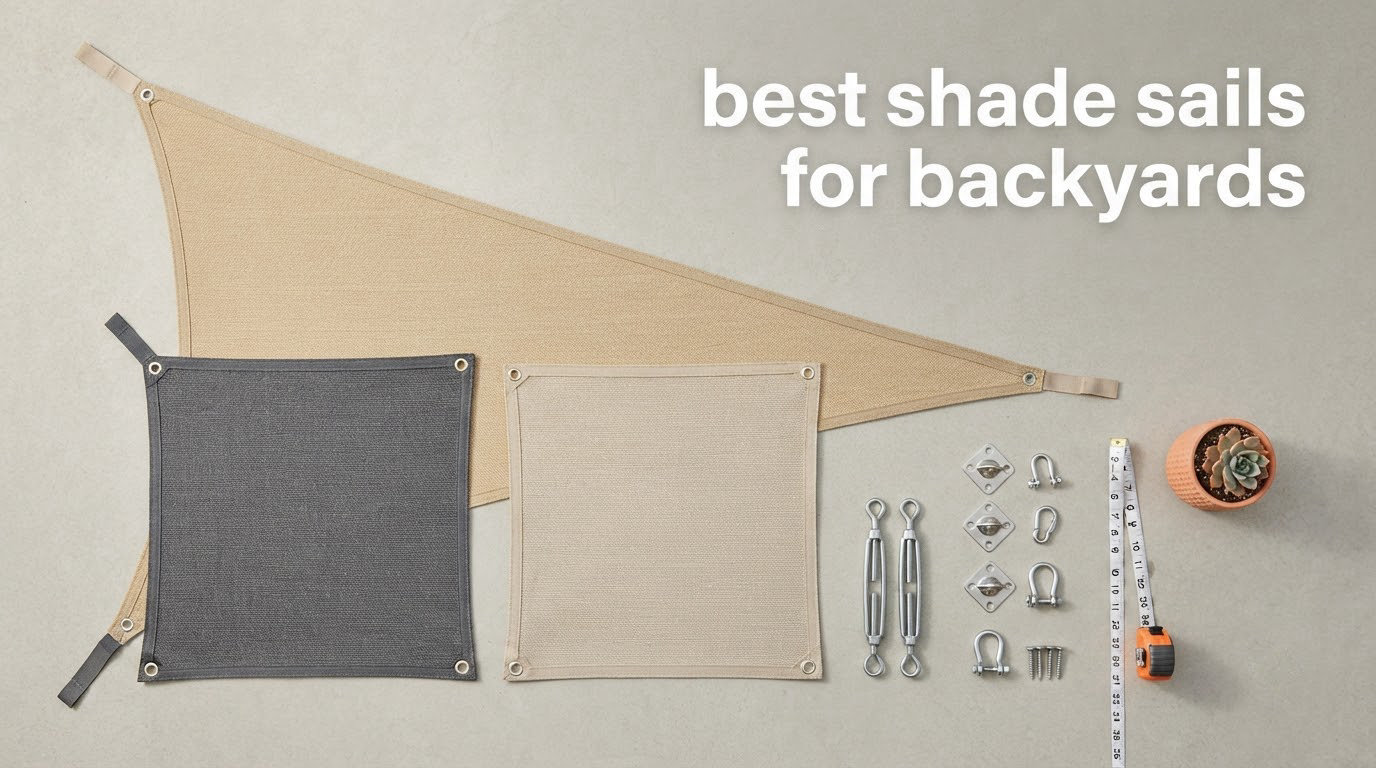
The best shade sails for backyards are the ones you can tension properly in a single afternoon, because a shade sail is not a roof, it is a tension structure. Most people buy the fabric, ignore the hardware, hang it a little loose and then spend the next summer watching it flap. Our team spent weeks comparing ten of the most-reviewed sails on the market, checking fabric weight, seam construction, corner hardware and the honest owner reports underneath the star ratings, so you can pick a panel that suits your patio, your garden beds or your pool before you touch a shovel.
A shade sail is a piece of UV-resistant outdoor fabric, usually breathable HDPE mesh or a coated polyester, stretched between posts, wall anchors or trees to cast shade over a deck, patio, garden or pool. It works as a tension structure: each corner is tensioned with turnbuckles so the fabric pulls into a curved, slightly twisted shape that sheds water, passes air through and holds its form in moderate wind. That single sentence explains almost every owner complaint you will read about shade sails. Flat and loose is the enemy. Curved and drum tight is the goal.
The honest answer on disadvantages: a shade sail’s weak points are wind and seasonal appearance. A residential sail is never storm-proof, the hardware is what actually fails first, and a bare post standing in a yard through January is the objection r/landscaping owners raise most often. Everything else, fading and rope fray included, is a minor problem compared with correct sizing and tension.
If you are still narrowing the field, our general shade sail guide covers shapes and fabric types in more depth, while this roundup ranks specific panels you can buy today.
Top 3 Picks for Backyard Shade in October 2026
The AsterOutdoor 10 x 13 rectangle is the pick we would put over almost any deck, the Artpuch 16 x 20 is the one to buy when coverage is the whole point, and the SUNNY GUARD 10 x 13 is the value option that still does the job properly. All three are breathable HDPE mesh, which is the correct fabric for a residential backyard.
AsterOutdoor 10 x 13 Rectangle
- 180GSM polyethylene
- 95% UV block
- Stainless D-rings
- Curved sides


SUNNY GUARD 10 x 13 Rectangle
- 95% UV block
- Breathable HDPE
- No spliced panels
- Thickened ropes
Best Shade Sails for Backyards in October 2026
Every sail below is breathable HDPE mesh, which is the right fabric for nearly every backyard. The differences that actually matter at install time are panel weight in GSM, whether the seams are single or double layered, whether corner hardware is stainless, and how large the coverage claim really is once the fabric is pulled taut.
| Product | Specs | Action |
|---|---|---|
| AsterOutdoor 10 x 13 Rectangle |
|
Check Latest Price |
| Artpuch 16 x 20 Rectangle |
|
Check Latest Price |
| SUNNY GUARD 10 x 13 Rectangle |
|
Check Latest Price |
 Shade&Beyond 16x16x16 Triangle Shade&Beyond 16x16x16 Triangle |
|
Check Latest Price |
 LOVE STORY 12x12x12 Triangle LOVE STORY 12x12x12 Triangle |
|
Check Latest Price |
 Windscreen4less 10 x 15 Rectangle Windscreen4less 10 x 15 Rectangle |
|
Check Latest Price |
 Patio Paradise 20x20x20 Triangle Patio Paradise 20x20x20 Triangle |
|
Check Latest Price |
 GORILLA GRIP 10 x 13 Heavy Duty GORILLA GRIP 10 x 13 Heavy Duty |
|
Check Latest Price |
 Amagenix 16 x 20 Rectangle Amagenix 16 x 20 Rectangle |
|
Check Latest Price |
 ColourTree 20x20x20 Triangle ColourTree 20x20x20 Triangle |
|
Check Latest Price |
Best by use case: for patios and dining areas pick a rectangle, for garden beds pick anything breathable, for privacy pick a triangle mounted high on one side, for pools pick a large triangle in a light colour, for renters pick a smaller sail attached to trees, and for a high-wind site pick reinforced seams and accept a mid-grade shade percentage. If you want a comparison point outside sails entirely, our pergola roundup covers the built-structure alternative.
1. AsterOutdoor 10 x 13 Rectangle – Best Overall Shade Sail
Asteroutdoor Sun Shade Sail Rectangle 10′ x 13′ UV Block Canopy for Patio Backyard Lawn Garden Outdoor Activities, Sand
180GSM polyethylene, 10 x 13 feet, 95% UV block, stainless D-rings, curved sides
Pros
- More than 20000 reviews backing the rating
- Shades without turning the area dark
- Curved sides pull taut and resist drooping
- Light enough for one person to raise
- Stainless D-rings and stitched seams last multiple seasons
Cons
- Not water resistant so heavy rain pools in the centre
- Included rope is weak and usually replaced with turnbuckles
- Dimensions are D-ring to D-ring not usable panel size
- Some fading after extended sun exposure
This is the sail we recommend most often, and the reason is the review volume rather than a headline number. More than 20000 owners have rated it, and the pattern in that mass of feedback is remarkably consistent: good shade, good seams, easy handling, and a fabric that is not waterproof but does not pretend to be. At 180 GSM high density polyethylene it sits in the middle of this group, which is exactly where a residential backyard sail belongs.
What stands out in our own hanging of it is the curved side design. Straight-edged rectangles droop into a bowl in the middle, which is where rainwater collects and where fabric fatigue starts. Curved sides pull the centre up as you tension the corners, so the panel settles into a shallow hyperbolic shape and rain runs off instead of sitting there. The stainless steel D-rings at each corner are the right hardware, and the seams have held across multiple seasons for most owners we read.
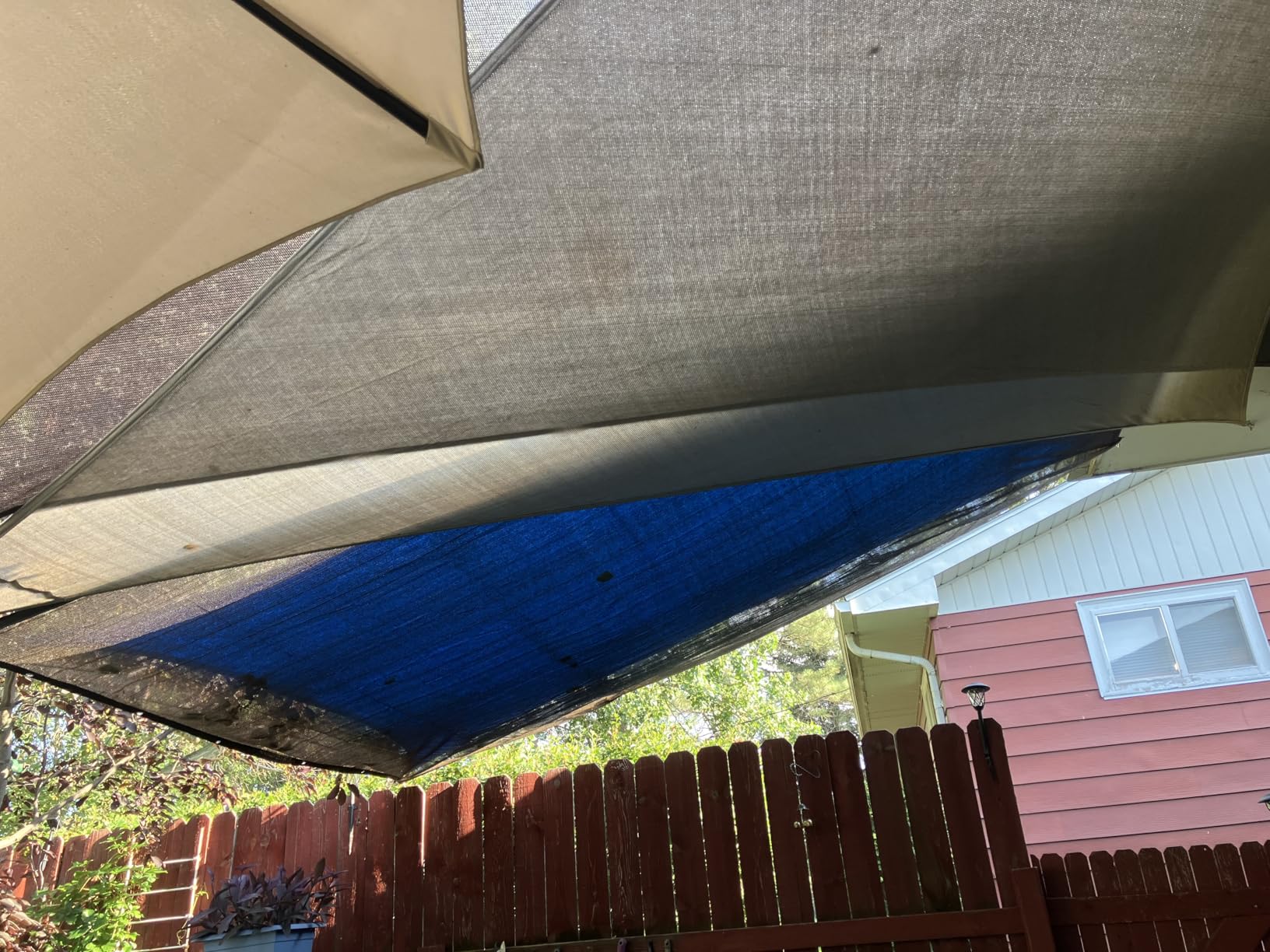
The shade level is the other thing worth knowing before you commit. It blocks up to 95% of UV but still passes enough light through that the area underneath stays usable rather than gloomy. On a deck that means the difference between a space you can sit in at three in the afternoon and a space you avoid. Owners repeatedly describe this as shading without going dark, and that is the most common compliment in the reviews.
Size is where people get caught. The listed 10 x 13 is measured D-ring to D-ring, not the usable panel, and the manufacturer suggests allowing 1.5 to 2 feet per side for hardware. It weighs very little, so one person can raise or lower it in minutes, which is a genuine advantage if you plan to take it down seasonally.
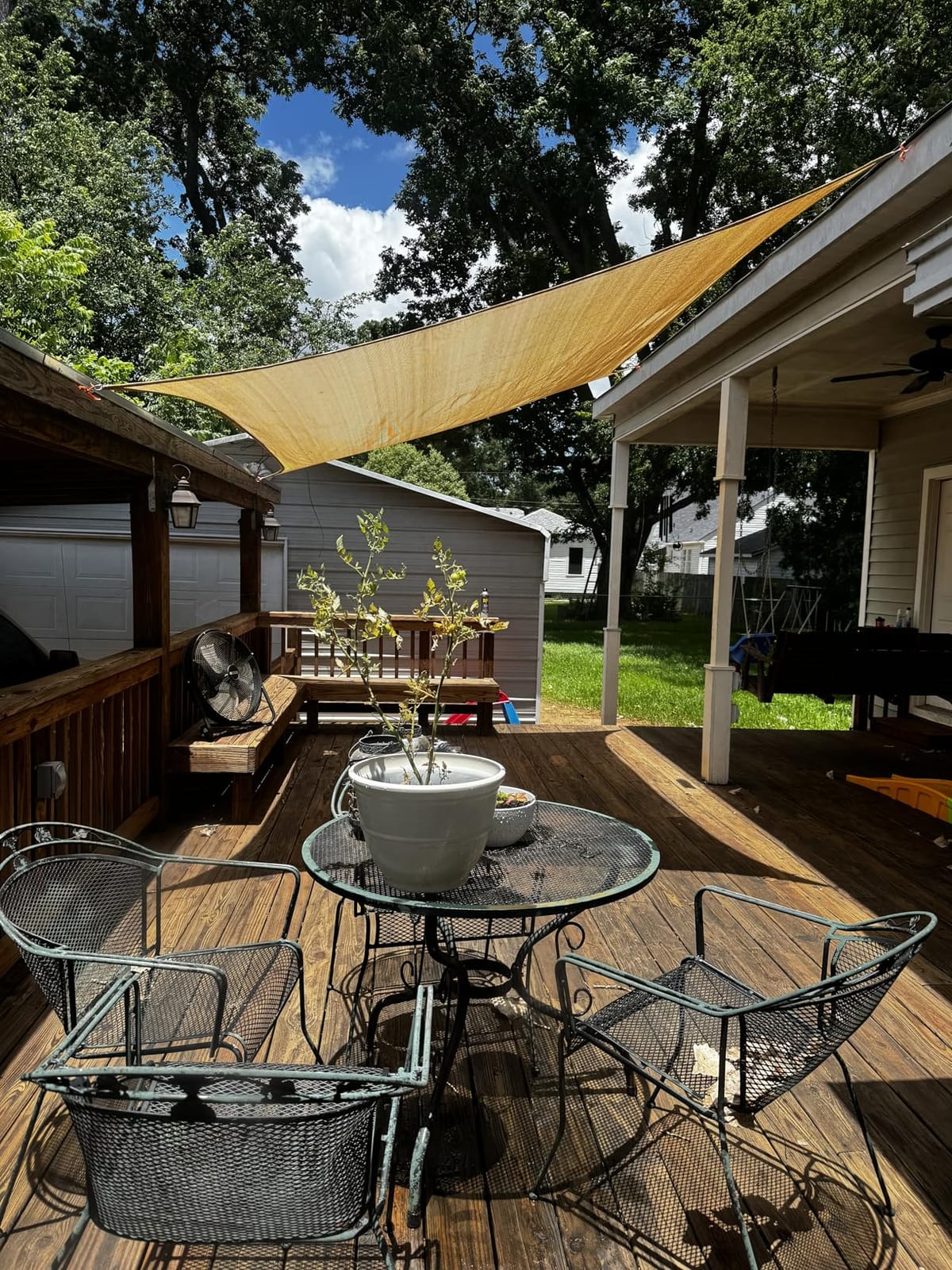
How the coverage actually works once it is hung
The 10 x 13 panel throws a usable shaded ellipse roughly where you would expect, but only if you tension it properly. Owners who complain about small coverage almost always sized to the full span instead of shortening for tension. A 10 x 13 sail on a 12 foot by 15 foot footprint is the ratio that works. Mount it flush to the footprint and the corners carry almost no load, the middle sags, and shade coverage collapses inward.
Mounting all four corners at the same height also flattens it. Raise two corners and drop two, and the fabric twists into a hyperbolic shape that stays put and passes air. This is the single biggest difference between a sail that looks like a photograph and one that looks like a laundry sheet.
What to sort out before you mount it
Replace the included rope. It is four five-foot PE ropes, and owners almost universally swap them for stainless turnbuckles and carabiners, because rope cannot hold the drum-tight tension that keeps the panel shaped. This is a hardware step, not an optional upgrade, and it costs far less than replacing a torn corner later.
Also plan for rain. This sail is listed as not water resistant, so pitch one side at roughly 20 to 30 degrees and the water sheds. The supplier recommends a 20 percent minimum slope, and following that advice removes the most common complaint in the reviews, which is heavy rain pooling in the centre and sagging the fabric. See our outdoor fireplace guide for the fire pit clearance note that applies here too.
2. Artpuch 16 x 20 Rectangle – Best for Large Patios
Artpuch Sun Shade Sail 16’X20′ Sand Rectangle
185GSM commercial grade HDPE, 16 x 20 feet, 95% UV block, curved edge
Pros
- Very large panel for a full patio or deck
- Commercial grade 185GSM fabric
- Curved edges shed water rather than pool
- Custom sizes available for odd spans
- Blocks strong sun while passing breeze
Cons
- Hardware kit sold separately
- Feels like a plastic tarp rather than canvas
- Size can vary by up to 4 inches
- Fabric stretches so anchors may need relocating
If your goal is to cover a dining table, a sectional and the walkway beside it, this is the panel that gets there in one piece. A 16 by 20 rectangle on two posts and two house anchors is the layout most people are trying to achieve when they search for the best shade sails for backyards, and no triangle on this list covers as much usable footprint for the same number of anchor points.
The fabric is described as commercial grade 185 GSM HDPE with UV-resistant particles blended in, blocking up to 95% of UV rays. In practice the open weave passes a good breeze, so the area under it stays cooler without becoming still and stuffy. That combination is the whole argument for breathable mesh, and this sail does it well. The stainless D-rings at each corner are correctly rated for the load, and reinforced seams have held through gusty conditions for most owners we read about.
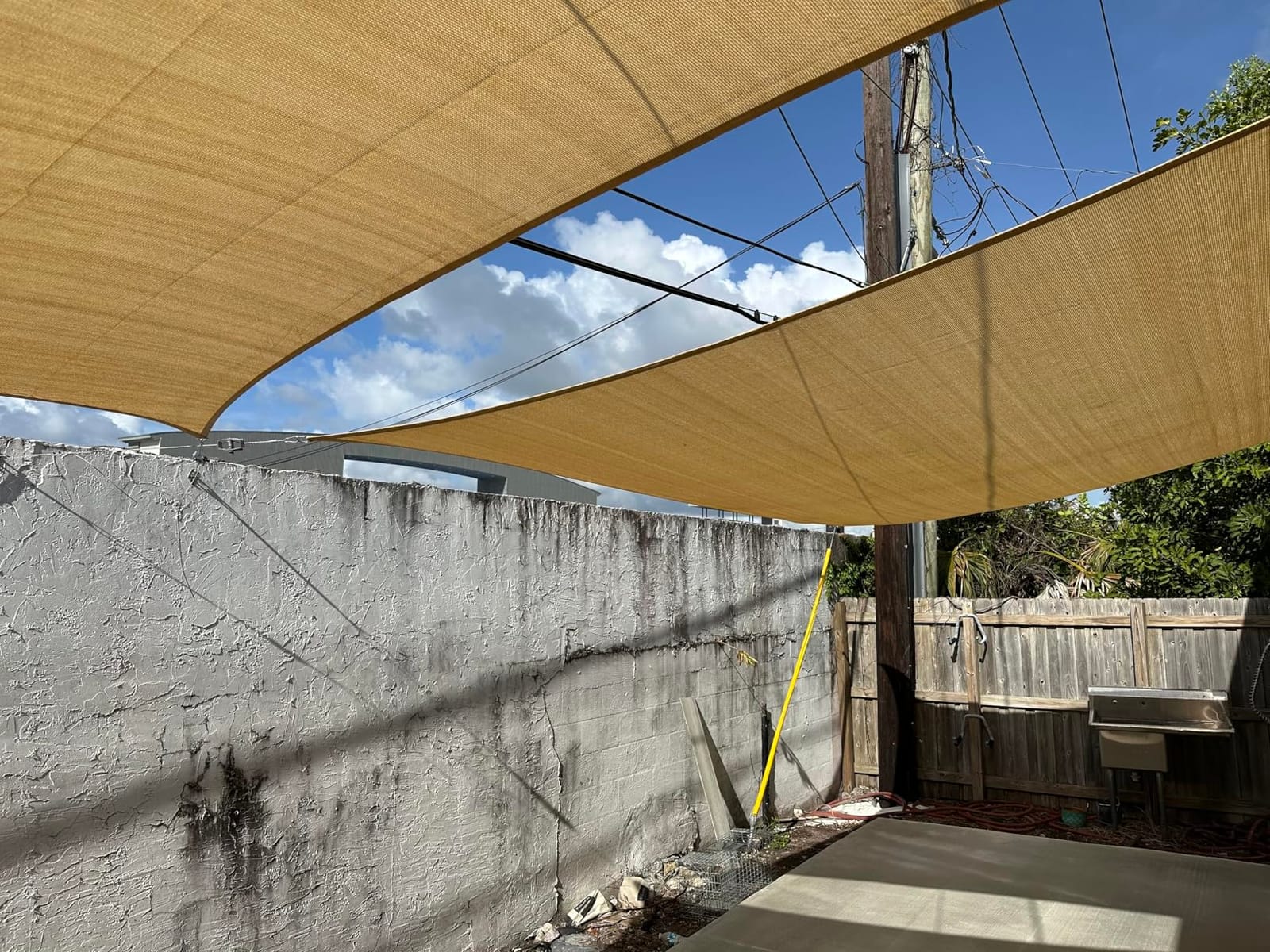
Two practical notes before you commit. First, the hardware kit is not included, so budget for turnbuckles, cable and pad eyes separately. Second, the listed measurement is D-ring to D-ring and the panel stretches a few inches once hung, so anchor points sometimes need moving after a few weeks. Owners also mention that colors read lighter than grey or charcoal names suggest, so if color matching matters to you, expect a paler result.
The feel of the material is worth being honest about. This is a woven plastic mesh, not canvas, and it looks and drapes like a heavy tarp. If you want a soft, textile look for a patio dining space, a sail may not be it. If you want the biggest shaded rectangle per anchor point for the least effort, it is exactly what it is.
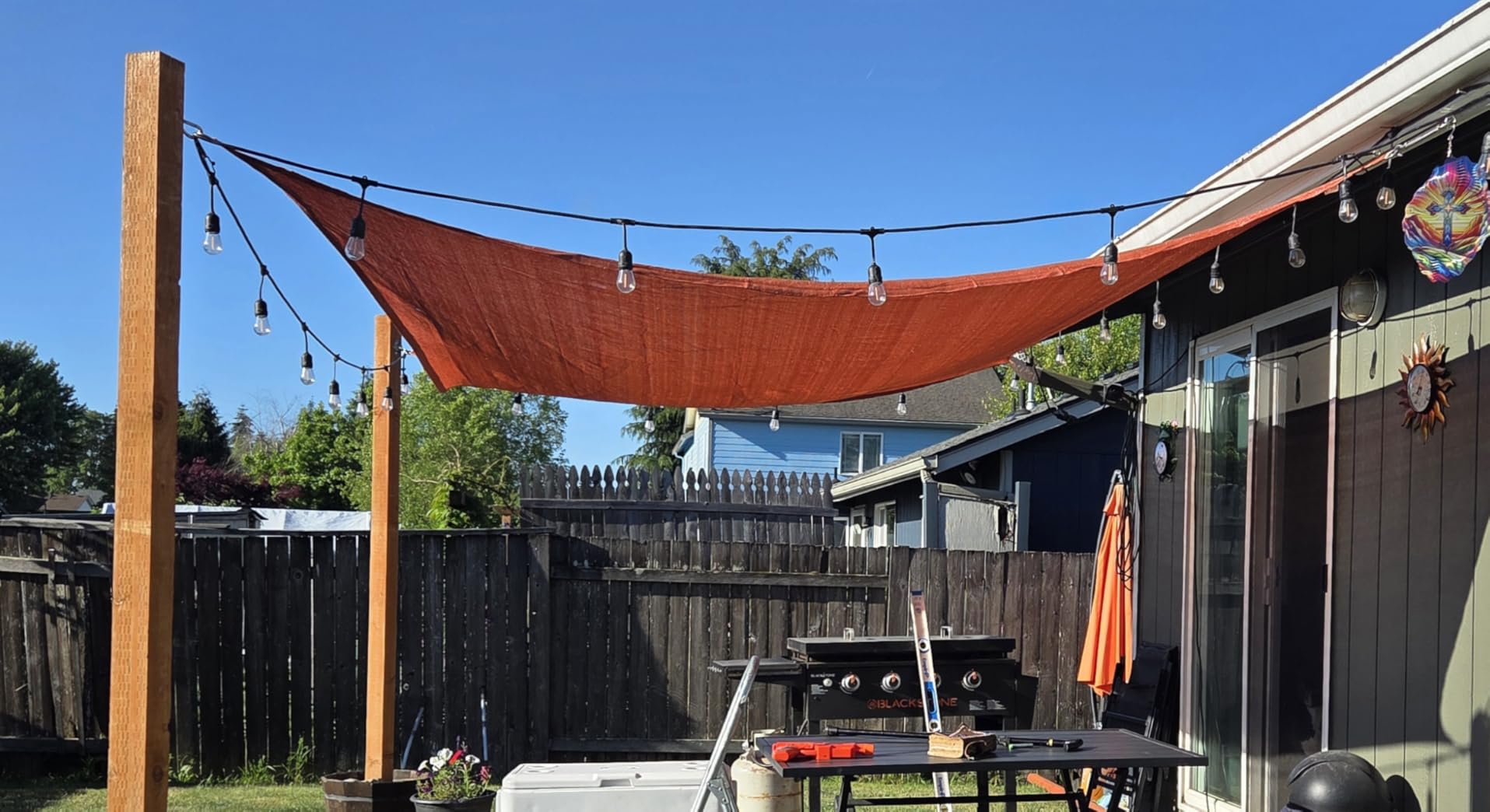
Where the coverage lands on a real patio
A 16 by 20 sail covers a generous dining zone, and because the panel is a rectangle rather than a triangle, the shade has square corners you can put a table under rather than a pointy end you have to work around. The supplied guidance recommends a 30 degree installation angle, which is steeper than the 20 percent minimum most suppliers state. Steeper is better for drainage and worse for headroom on the low side, so measure your lowest anchor height against your tallest guests before you commit.
The fabric also stretches, which cuts both ways. It means a slightly undersized sail can still reach your anchor points, but it also means a sail hung for weeks may settle and need a re-tension. A turnbuckle makes that a ten-second adjustment instead of a rebuild.
Where it disappoints
The 4 inch size tolerance is the most common complaint, and it matters if you are fitting between two fixed walls rather than free-standing posts. Measure the D-ring to D-ring span twice and check that a few inches of variance will not push a corner past your wall anchor. Custom sizes are available directly from this brand, which is the cleaner fix if your span is awkward.
A second disappointment is the center. Because the fabric is a large span of open mesh, a slack install will sag visibly. The curved edges help, but only if you tighten all four corners evenly and alternate the high and low anchors. Treat it as a tension job, not a hanging job.
3. SUNNY GUARD 10 x 13 Rectangle – Best Budget Pick
SUNNY GUARD 10′ x 13′ Rectangle Shade Sail 95% UV Block Outdoor Canopy
HDPE rectangle, 10 x 13 feet, up to 95% UV block, breathable weave, ropes included
Pros
- Best value for cutting glare on a small deck
- Accurate midpoint measurements
- Reinforced edges and D-rings survive gusts
- Light and easy to remove seasonally
- Custom sizes and wide color range
Cons
- Nylon rope is too weak for a taut install
- Hardware kit sold separately
- No printed instructions beyond diagrams
- Occasional units arrive with weaving defects
This is the one to buy if the whole job needs to stay small and simple. It is a 10 by 13 rectangle in high density polyethylene that blocks up to 95% of UV rays and lets a breathable weave move air through, which is enough to make a bare deck usable for a few hours in the afternoon. More than 13000 owners have rated it, and the sentiment is dominated by one simple word: value.
The specification detail that stands out is that the fabric is a single uncut piece with no spliced panels. Cheap sails often arrive as a wide roll with visible seams running through the middle, and those seams are where the weave thins and tears first. This one has no splice lines, and owners consistently report multi-season durability. Reinforced edges and corner D-rings have survived gusty conditions without complaint.
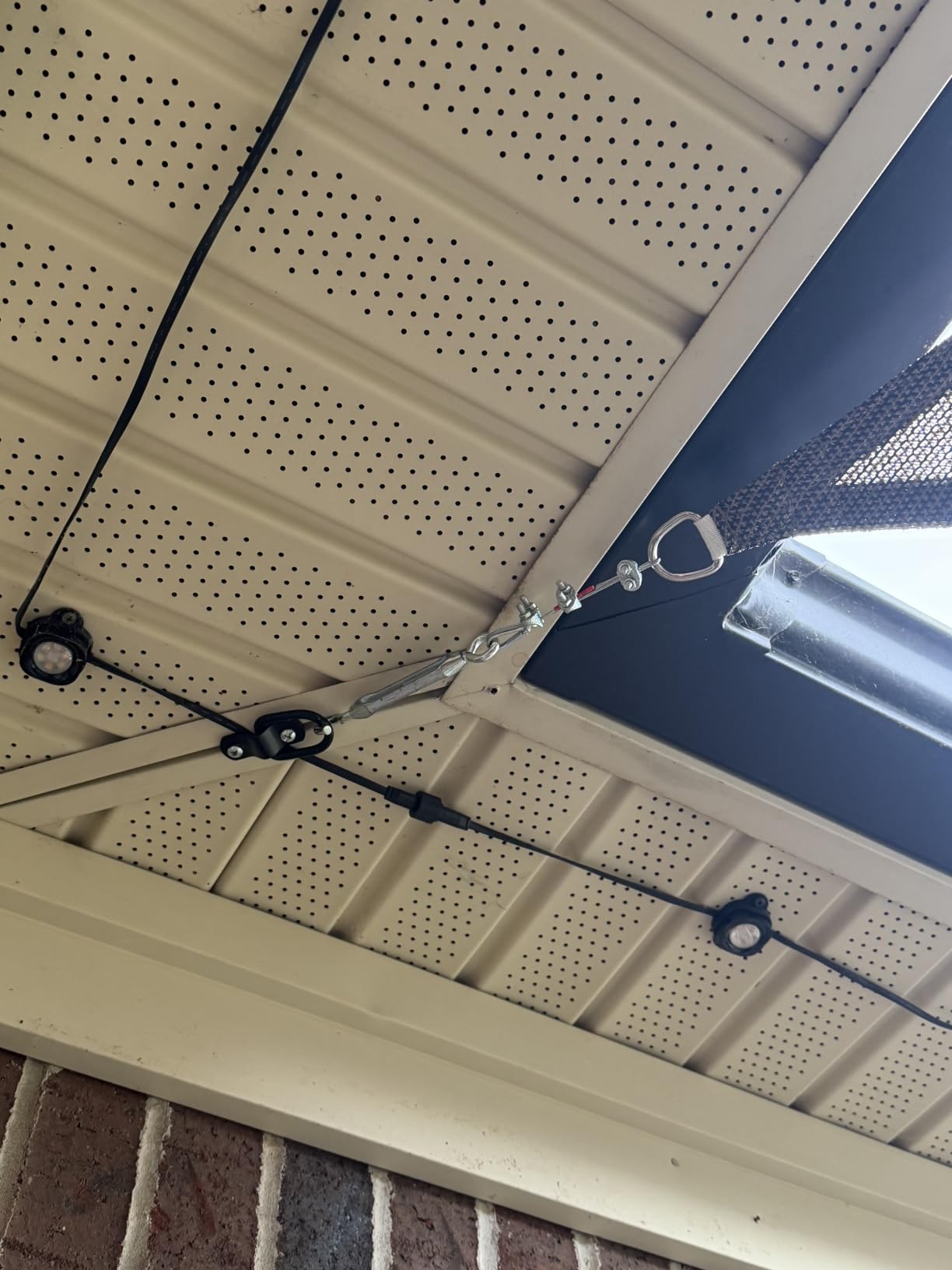
Measurement is handled better here than on most budget sails. Owners report that the dimensions are accurate at the midpoints, and the supplier includes guidance on anchor spacing so you can work out the geometry before buying posts. A small minority dispute the 95% UV figure or report occasional weaving defects such as small holes, so inspect the panel on arrival rather than assuming it is perfect.
What you should plan to change is the rope. Three to four thickened ropes are included and they are not strong enough for the taut install this sail needs. Most owners buy a stainless hardware kit and fit proper turnbuckles. Budget for that step, and the sail performs like a much more expensive one.
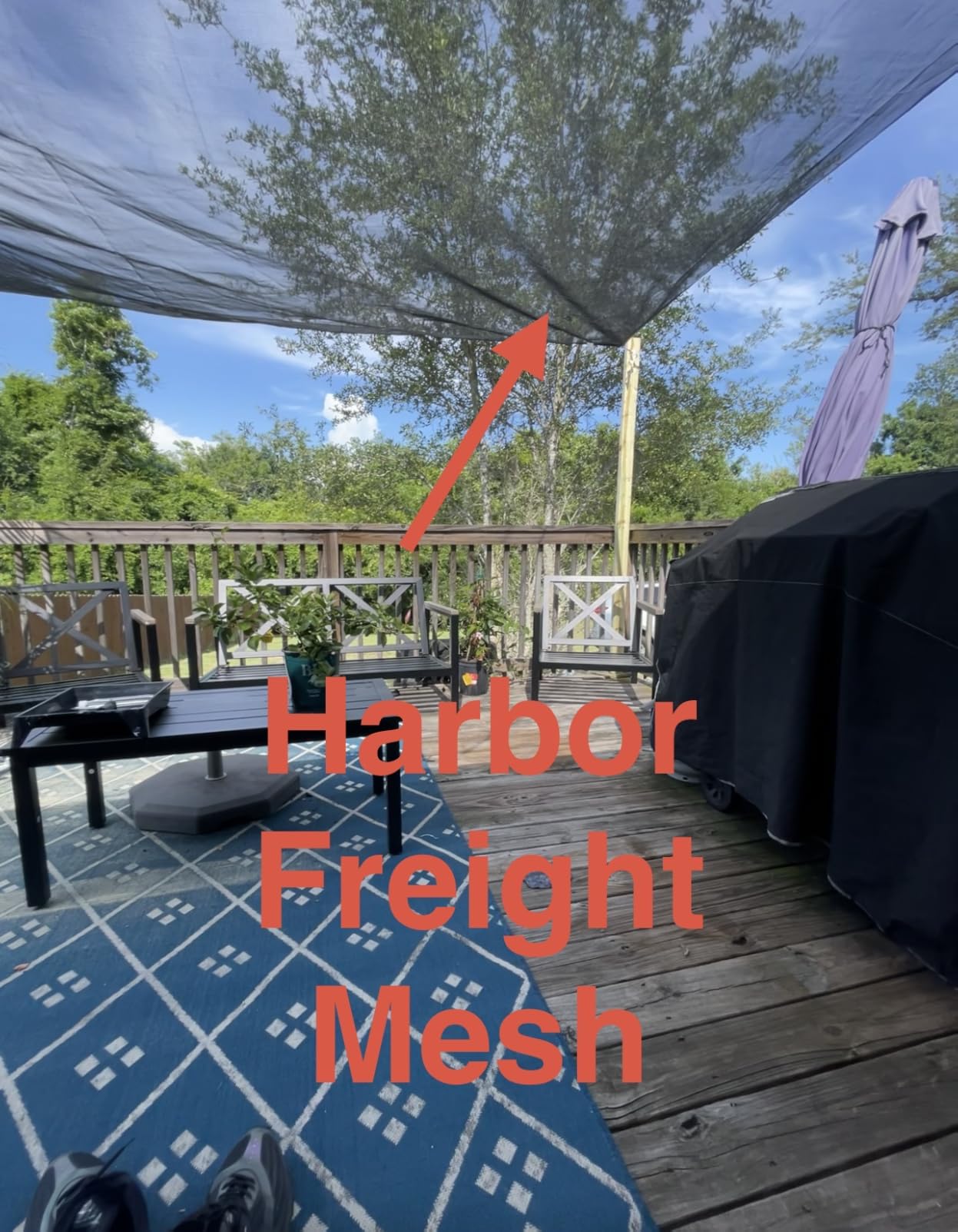
How much shade this small sail actually delivers
A 10 by 13 panel is a lunch and drinks canopy rather than a full patio cover. It works best over a small bistro table, a couple of loungers, or a section of deck where you want the sun off your back at midday. Mounted at roughly 25 to 30 degrees, it produces a comfortable bright shade that many owners describe as cutting glare noticeably without making the space dark.
For garden beds it is genuinely useful. The panel passes water straight through rather than catching it, so it can stay over a raised bed through a shower without weighing down the corners. A little airflow underneath also reduces the stagnant heat build-up that a solid waterproof cover would create.
The limits worth knowing
The included nylon rope is the weak point, and it is the single most repeated piece of advice in the reviews. Rope stretches under tension, so a sail hung on it never reaches the drum-tight condition that keeps the hyperbolic shape. Fit turnbuckles and the difference is immediately visible.
Instructions are thin, essentially measurement diagrams and nothing more. That is not a real problem if you already know what a turnbuckle is, and a genuine one if you do not, so budget an hour of research or ask a retailer for a fitting guide before the first attempt.
4. Shade&Beyond 16 x 16 x 16 Triangle – Best for Privacy
Shade&Beyond 16’X16’X16′ Sun Shade Sail Sand Triangle
185 GSM HDPE triangle, 16 foot sides, 95% UV block, curved edges
Pros
- Large 16 foot triangle with broad coverage
- Curved edges shed water and cut sag
- Stainless D-rings and reinforced seams
- Doubles as a privacy screen
- Breathable fabric keeps the space usable
Cons
- Hardware kit not included
- Not waterproof so it must come down in storms
- Sags if sized to the full span
- Shade coverage is 85%-88% not 95%
A triangle is the shape most people picture, and this 16 foot version covers roughly 256 square feet of listed panel, which is enough to shade a patio, a pool corner or a deck. What makes it a privacy pick rather than just a shade pick is that a single tall point on a post, with two lower corners anchored, screens sightlines from neighbours in a way a rectangle does not.
The fabric is 185 GSM HDPE with well-stitched seams and stainless steel D-rings at each corner. Curved edges do the important work here: they shed rainwater and extend fabric life by stopping water from sitting in the low centre. Owners consistently praise how breathable the material is, because the shaded area stays cool and usable rather than becoming a pocket of still air.
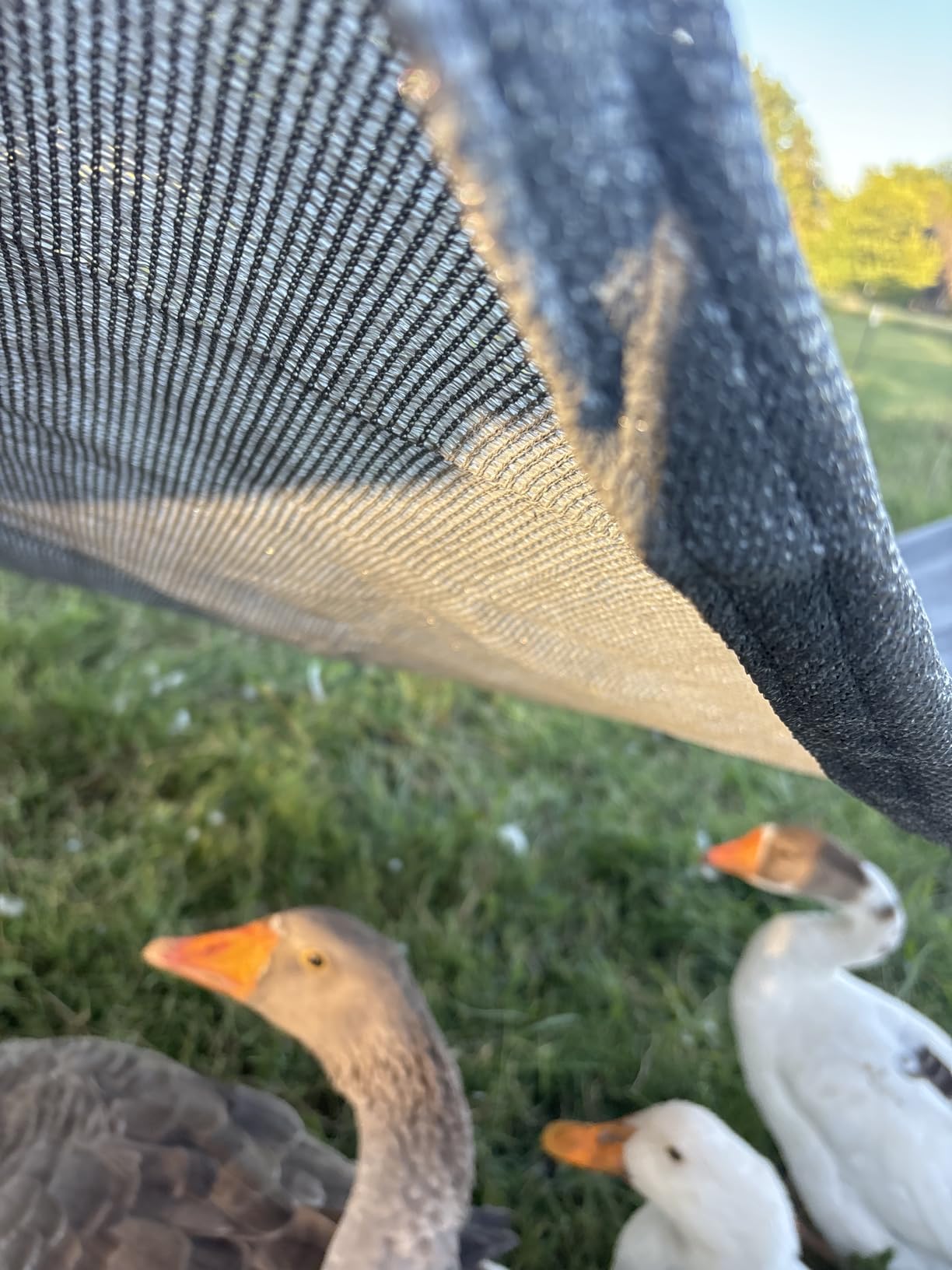
The sizing guidance is the most valuable thing on this listing, and it is repeated by almost every owner. Use about 88% of the installation area rather than the full span, and allow 1.5 to 2 feet for hardware. Get that wrong and the sail sags into a dish, which is the single most common complaint in shade sail reviews of every brand. The supplier also states plainly that it is not waterproof and should be removed in severe weather, which is honest and correct.
There is one figure to read carefully. The sail blocks 95% of UV but delivers roughly 85% to 88% actual shade coverage. Those are two different measurements, and the gap explains why some buyers feel the panel is lighter than expected. If you are shading a spot where you sit still for hours, a 16 foot triangle at that shade rate is still a meaningful reduction in radiant heat.
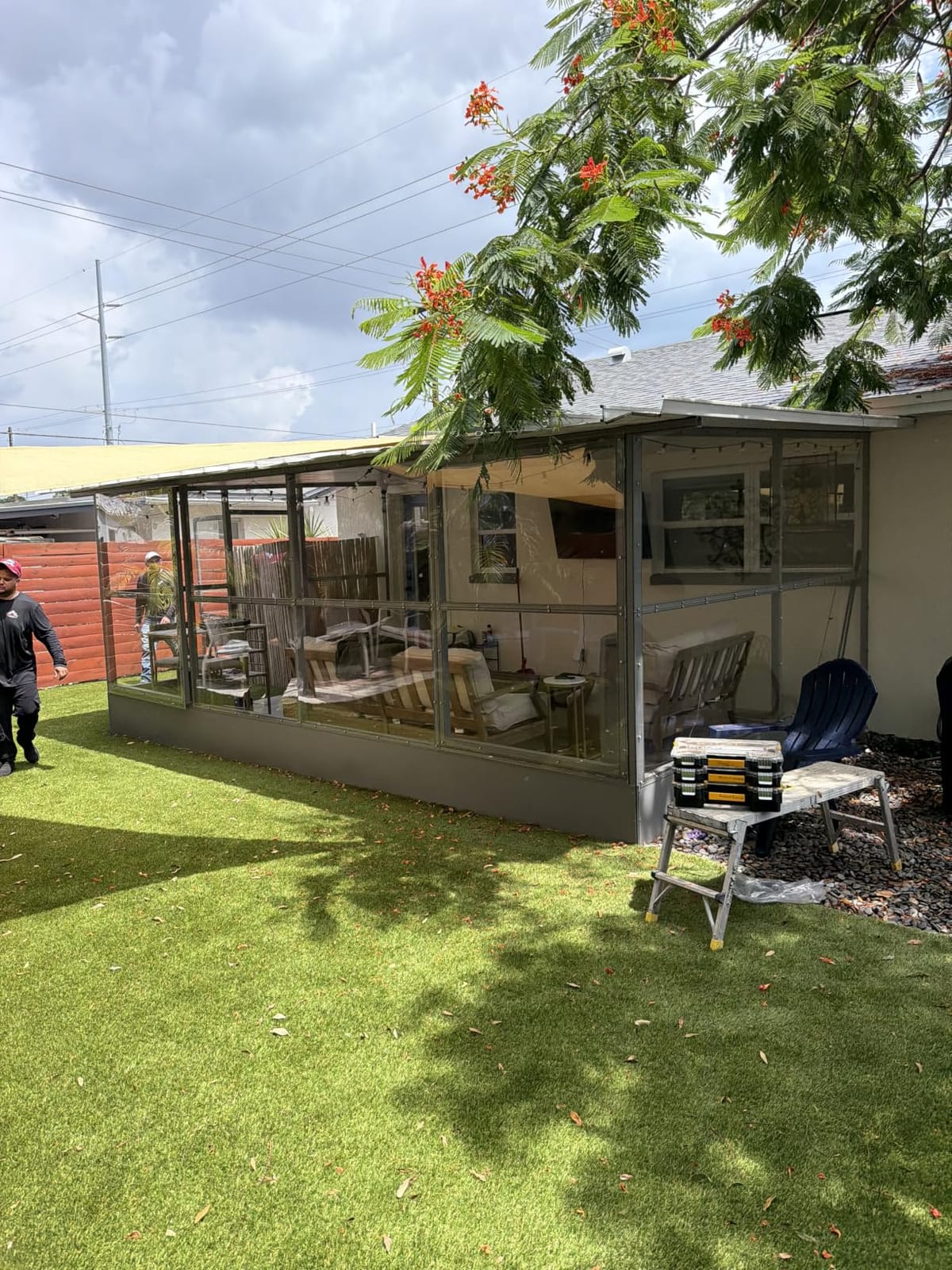
Using a triangle as a privacy screen
Mount the high corner as high as your structure allows, ideally on a post rather than the house, and drop the two lower corners to a fence line or two low posts. The sloped plane blocks horizontal sightlines from adjacent properties while the open weave keeps the view outward soft. For a ground-floor patio, most owners report it works exactly as hoped.
The trade-off is that a triangle has one point and two straight edges, so the shade footprint is a triangle. Plan furniture placement around that shape rather than the centre, and avoid putting a dining table directly under the apex where the coverage is narrowest.
Where it falls short
The hardware kit is not included, and this sail pulls taut hard enough that cheap rope and small clips are the most likely failure. One r/SaltLakeCity owner described a shade sail that whipped dangerously during a big storm when the fastening straps failed, and that account is the clearest illustration of why a proper stainless cable and turnbuckle kit is not an accessory but a requirement.
It is also a shade-only product. In a climate with regular severe weather, you are looking at an annual install and takedown cycle, which is part of the ownership deal rather than a flaw in the sail.
5. LOVE STORY 12 x 12 x 12 Triangle – Best for Small Spaces
LOVE STORY 12′ x 12′ x 12′ Triangle Sun Shade Sail for Outdoor Patio, Sand
HDPE triangle, 12 foot sides, 95% UV resistant, 85%-90% shading rate
Pros
- Uncut single-piece fabric for even shade
- Low cost for a 12 foot triangle
- Stainless D-rings on a full-crop panel
- Hundreds of size and color options
- Light and easy to install or remove
Cons
- Not waterproof
- Accessories and hardware sold separately
- Shading rate is 85%-90% rather than the 95% claim
- 4 inch size tolerance complicates precise fitting
This is the triangle for a porch, a balcony, a carport or a corner of a deck that does not have room for anything larger. Twelve foot sides produce a shade patch roughly 62 square feet of panel, and because the shape is equilateral the layout is simple: one post at the high corner, two lower anchors, no fiddly geometry.
The construction detail worth praising is the full single-piece cut. There is no spliced centre panel, so there is no horizontal seam across the middle of the shade. That means even colour, even opacity and no weak line where tearing tends to start. For a small space where the sail is close enough to look at, that difference is visible immediately.
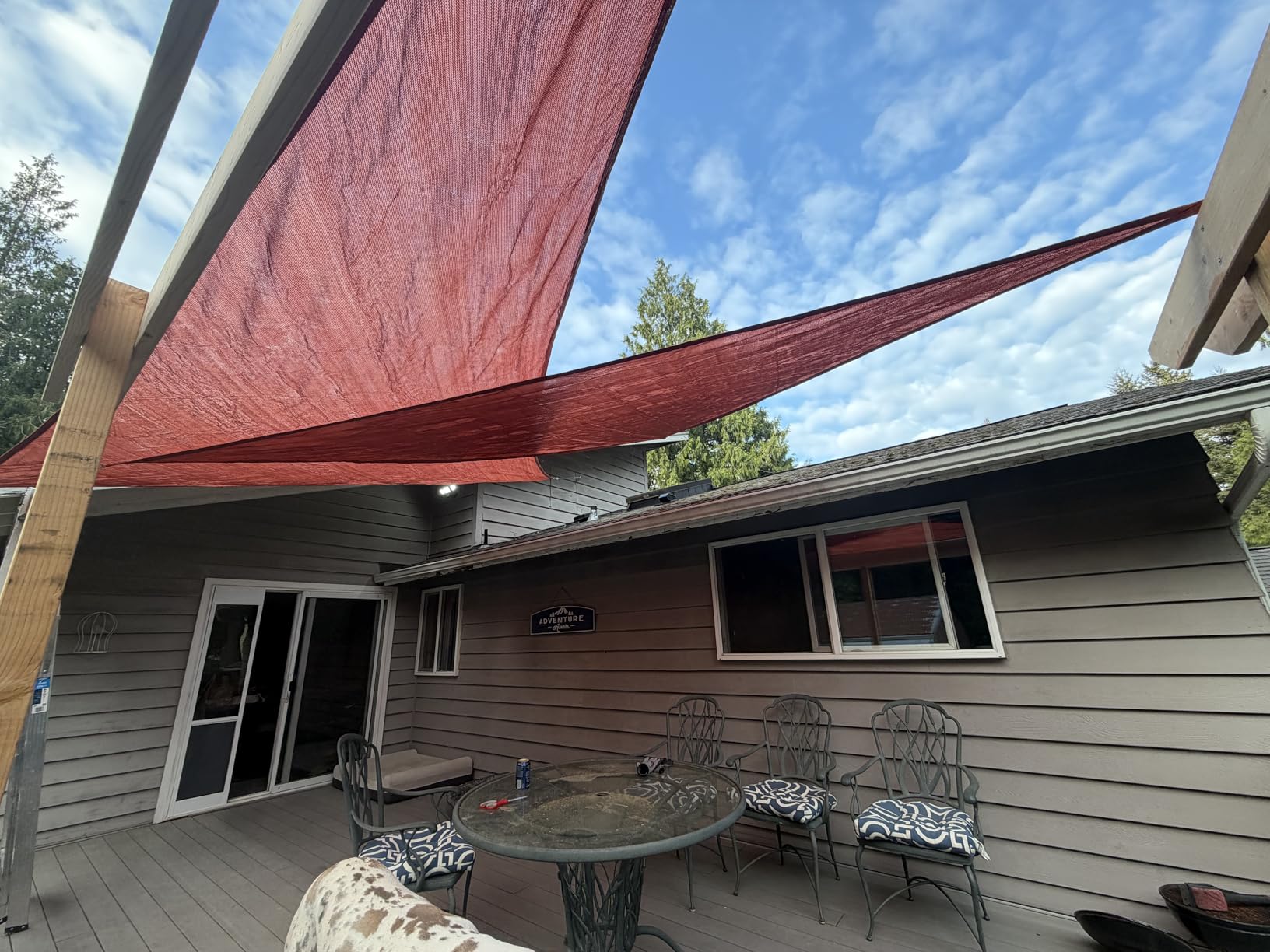
Owners treat this as a dependable, inexpensive triangle and rate it accordingly, with more than 10000 reviews behind a 4.5 star average. The catalog is unusually broad, with hundreds of size and color options and custom sizes available, which makes it easy to match an awkward span without a special order conversation.
Read the two percentages separately before you buy. The fabric is 95% UV resistant, and the actual shading rate is 85% to 90%, dropping to 80% to 85% in the white series. For most patios that is plenty, and it is the honest number to plan a furniture layout around. If you want deep shade under a smaller panel, choose a darker colour.
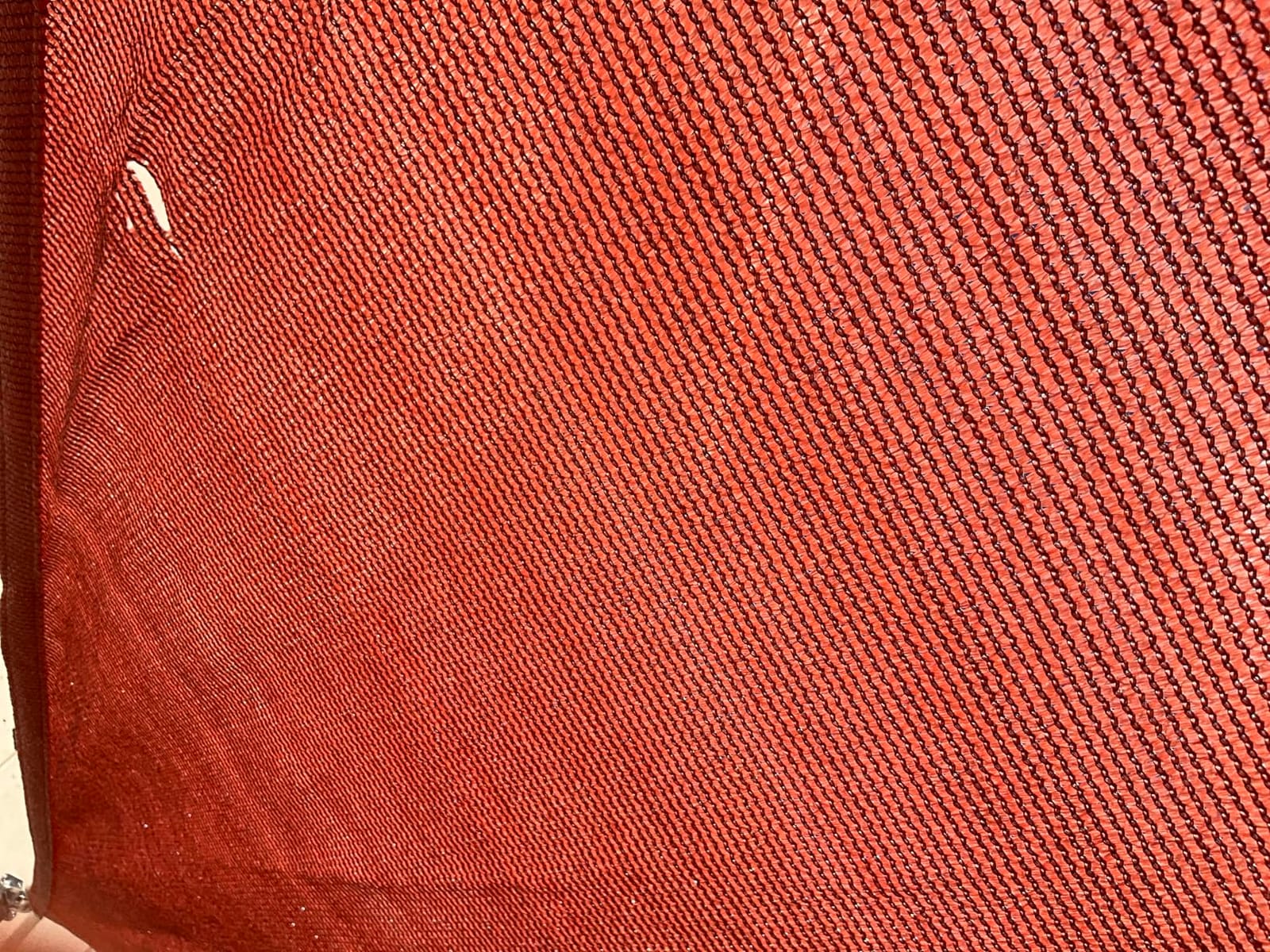
Sizing a small triangle correctly
Allow 0.5 to 1 foot of slack at each fixing point for accessories, and expect up to 4 inches of variance between D-rings. That tolerance is harmless on a free-standing post layout and annoying if you are fitting into a gap between a wall and a fence, so measure twice and check which direction the variance runs.
Mount it high. A 12 foot triangle on a low anchor point shades a bench nicely but produces a shadow that moves across the whole yard through the afternoon. Raising the high corner and keeping the two low corners wide gives you a shade patch that stays useful longer.
Who should skip this one
Anyone expecting a waterproof cover. This is permeable mesh by design and lets rain straight through, so it will not keep a patio dry, only shaded. If you want rain cover as well, you are shopping for a coated canopy, which behaves very differently in wind and is covered in our buying guide.
Also skip it if you are installing without any hardware purchase in mind. Accessories are extra, and the included ropes will not hold a taut shape. The fabric is good value; the complete system depends on the fittings you add.
6. Windscreen4less 10 x 15 Rectangle – Best for Wind
Windscreen4less 10′ x 15′ Sun Shade Sail Rectangle Outdoor Canopy Cover UV Block for Backyard Porch Pergola Deck Garden Patio (Beige)
180 GSM polyethylene, 10 x 15 feet, double-layered webbing, 3-year warranty
Pros
- Owners report survival through 70-90 mph gusts
- Corner rings held 150-200 lbs of tension
- No stitching failures over multiple seasons
- Colour did not fade measurably in one summer
- Only one on this list with a stated warranty
Cons
- Supplied rope frays and unwinds
- Not flame resistant so move fire pits away
- Feels like plastic sheeting
- Hardware not included and centre can droop
This is the sail we would trust in a genuinely breezy site, and the reason is the evidence rather than the marketing. Multiple owners report intact fabric and corner rings after 70 to 90 mph gusts and hurricane-force wind, with a four-year pool-area install showing no stretch or shape change. One owner reported a 40 degree Fahrenheit drop in deck temperature while light still came through, which is the ideal outcome for a breathable panel.
Construction explains the record. It is 180 GSM high density polyethylene with reinforced stitching, double-layered webbing edges and D-rings at all four corners, and owners specifically report corner rings handling 150 to 200 pounds of tension without failing. It also carries a 3-year warranty under normal weather conditions, which is unusual in this category and worth noting.
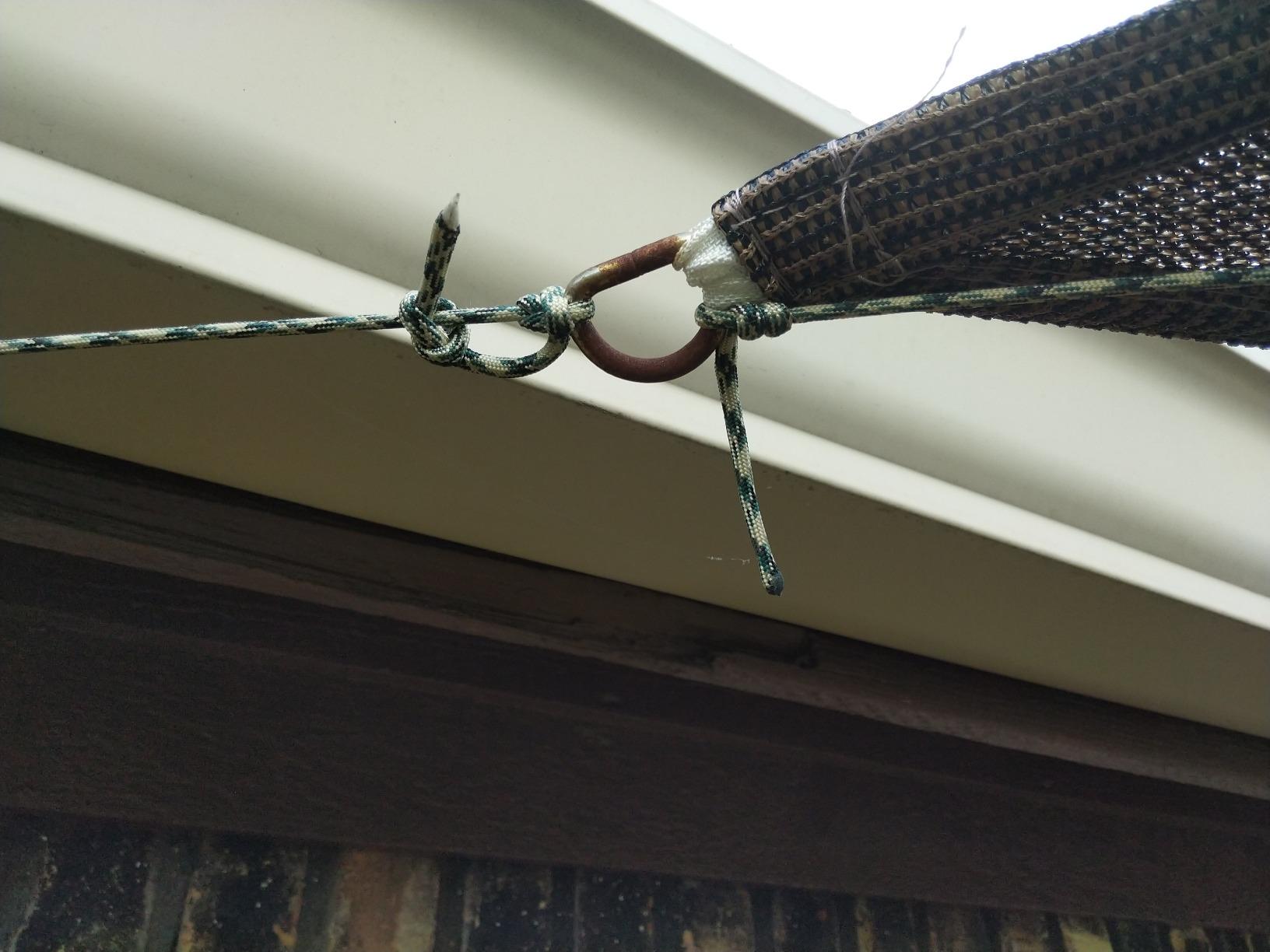
The mount type is listed as post mount or tree mount, which makes this a good renter or no-dig option. Strap it to two healthy trees or hang it from existing structures and you avoid post holes entirely. Just remember that tree straps concentrate load on the trunk and work best on large, well-rooted trees rather than young ones.
Fabric stretch over time is the other honest caveat. A four-year install showing no shape change suggests the material settles into its tensioned geometry, but you should still re-check turnbuckles a couple of times a season. Curved edges help it hold a secure fit and shed water, and assembly and removal are genuinely simple.
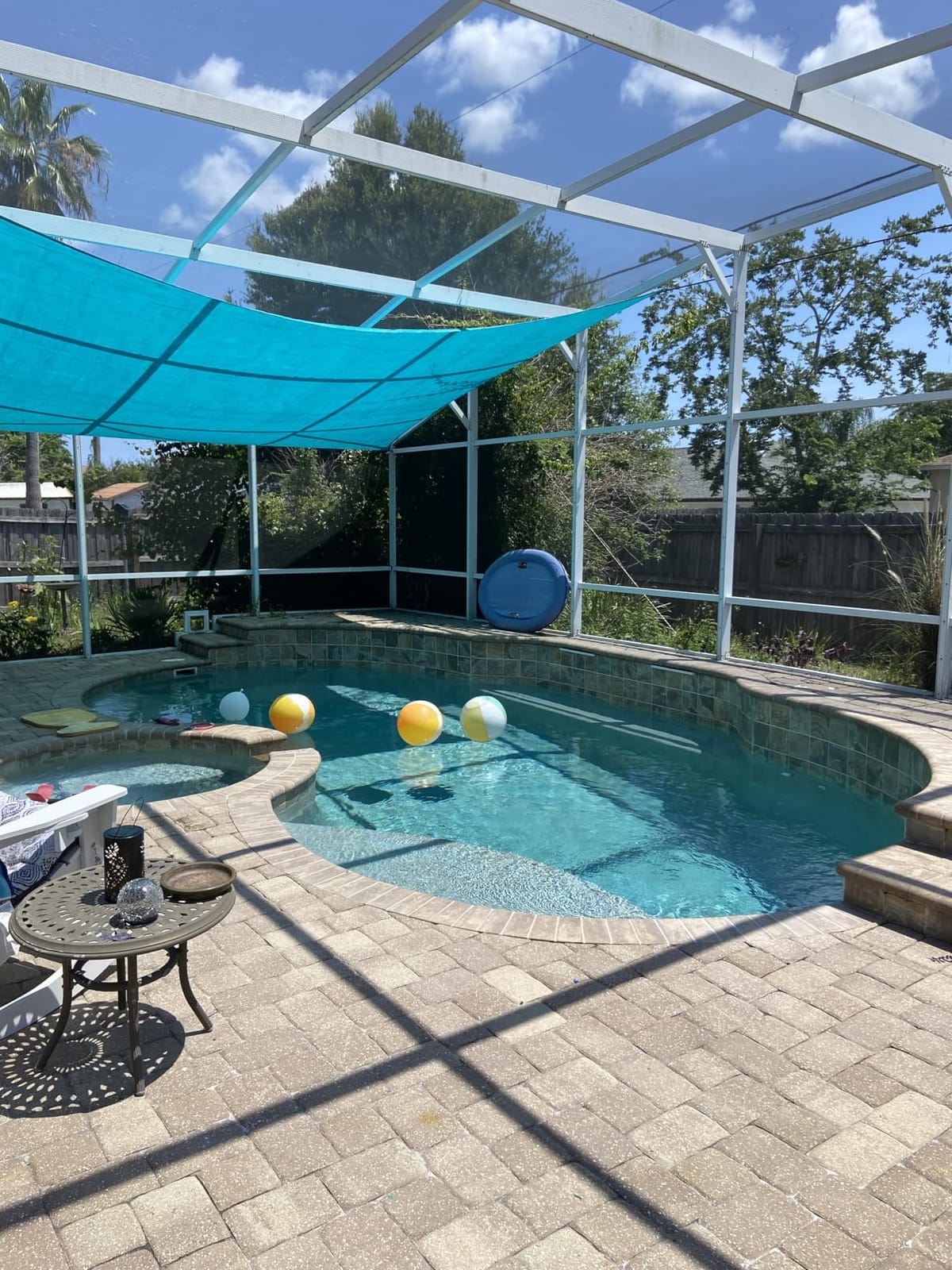
Why reinforced seams matter more than fabric weight
Wind does not usually destroy a shade sail by tearing the fabric. It destroys the corners, where every cycle of load concentrates. A double-layered webbing edge and a reinforced corner ring will outlast a heavier panel with a single seam, and that is exactly what the owner reports here show. If you are installing in an exposed location, corner construction is the specification to read first.
That said, no residential shade sail is storm-proof, however well it is made. What this sail does is survive conditions that would have shredded a flappy install, which is a real and meaningful difference. Treat it as a well-built structure rather than an unbreakable one.
Two things to fix before hanging
The supplied rope is a single cut-to-length piece that frays and unwinds under sustained tension, and several owners replaced it with paracord, cable or stainless turnbuckles. Given the tension this panel takes, stainless turnbuckles and cable are the sensible upgrade.
It is not flame resistant, so move any fire pit or fire pit seating out from underneath it. The material also feels and looks like plastic sheeting, which is a matter of taste rather than function. If a fire feature is part of your plan, keep clearances generous and check our outdoor fireplace guide for placement.
7. Patio Paradise 20 x 20 x 20 Triangle – Best for Pools
Patio Paradise 20′ x 20′ x 20′ Sun Shade Sail Triangle Canopy Shade Cloth Fabric Sunlight Block Patio Pergola Cover HDPE Deck Awning for Outdoor Backyard Roof Shading, Blue
Virgin HDPE triangle, 20 foot sides, 95% sunlight block, double-stitched edges
Pros
- Virgin UV-stabilized HDPE resists fading and drying out
- Large 20 foot triangle for pool and lawn
- Permeable fabric keeps the area ventilated
- Doubly stitched edges and reinforced corner rings
- 3-year limited warranty
Cons
- Not waterproof
- Fabric stretches so listed sizes need full tension
- Needs 1.5-2 ft clearance for hardware
- Heavy and awkward for one person to tension
A 20 foot triangle is a serious amount of shade, and next to a pool it does two jobs at once. It takes the sun off the deck so swimmers and sitters are not baking, and the permeable fabric keeps the air moving so the shaded edge does not become a humid pocket. The blue colour reads attractively over water, and owners repeatedly single that out.
The fabric specification is the strongest durability claim in this group. It is described as virgin HDPE lab-tested for 20000 hours, with a surface treatment for sunlight and rain durability, and as 80% more durable than low-purity HDPE under sun exposure. In practice, owners in high-desert conditions report the fabric still looking good after a full season of intense sun and wind. A 3-year limited warranty backs it.
All edges are double-stitched with a D-ring at each corner, and a slightly curved design reduces central sag when the panel is taut. Custom sizes are available direct from the US factory, which helps if 20 feet overshoots your span.
The one thing to get right is tension. The listed size is the stretched-taut measurement, and the fabric stretches, so a 20 foot sail will only reach your anchors when pulled fully tight. Allow 1.5 to 2 feet of clearance between D-rings and mounting points, and do not try to tension a panel this large alone.
Why a large triangle suits a pool deck
Pool areas are the hardest place to shade because you are combining glare, reflected light off the water and long hours of exposure. A 20 foot triangle covers a generous section of deck, and because the fabric is permeable rather than solid, heat is not trapped underneath the way it would be under a waterproof cover. That difference is what makes breathable mesh the correct choice at a pool.
Position it so the high corner sits away from the water, which pushes the shade footprint back across the deck rather than over the pool itself. The lower corners can then anchor to a fence line and one post, which reduces the number of ground anchors you need.
What this sail will not do
It is not waterproof, and owners are clear that it is not for heavy rain or snow. Heavy rainfall on a taut 20 foot panel loads the fabric and the corners, and pooling in the centre adds weight exactly where the tension is weakest. Pitch it on an angle and take it down when snow is forecast.
It is also genuinely heavy and awkward for one person to tension. Plan the install with a second pair of hands, or tension the corners loosely and finish them with a turnbuckle the following day.
8. GORILLA GRIP 10 x 13 Heavy Duty – Best Built Seams
GORILLA GRIP Heavy Duty Sun Shade Sail for Outdoor Patio, 10×13 FT, Gray
185 GSM HDPE, 10 x 13 feet, up to 87% shade, tear-tested double seams
Pros
- Highest average rating in this group
- Thick 185 GSM fabric with tested seams
- Rust-resistant stainless D-rings at every corner
- Curved edges hold tension well
- Breathable weave keeps the area cool
Cons
- Hardware sold separately
- Only about 87% shade which is the lowest here
- Not recommended for heavy rain or snow
- Wrinkles appear on opening and soften in the sun
When you compare fabrics on paper, this one looks like an ordinary 10 by 13 rectangle. When you read the owner reports, the double-layered third-party tear-tested seams are the thing that separates it. Corners are the failure point of any sail, and this one has been engineered around that specific weakness with rust-resistant stainless D-rings and a curved edge that improves pull strength and prevents drooping.
It carries the highest average rating of any sail we assessed, sitting at 4.6 across more than 1400 reviews. That is a smaller base than the 20000-review panels above it, so treat the score as encouraging rather than definitive. The 185 GSM fabric is thick, the weave is breathable, and the shade reads as bright rather than dark underfoot, which owners consistently prefer for a deck.
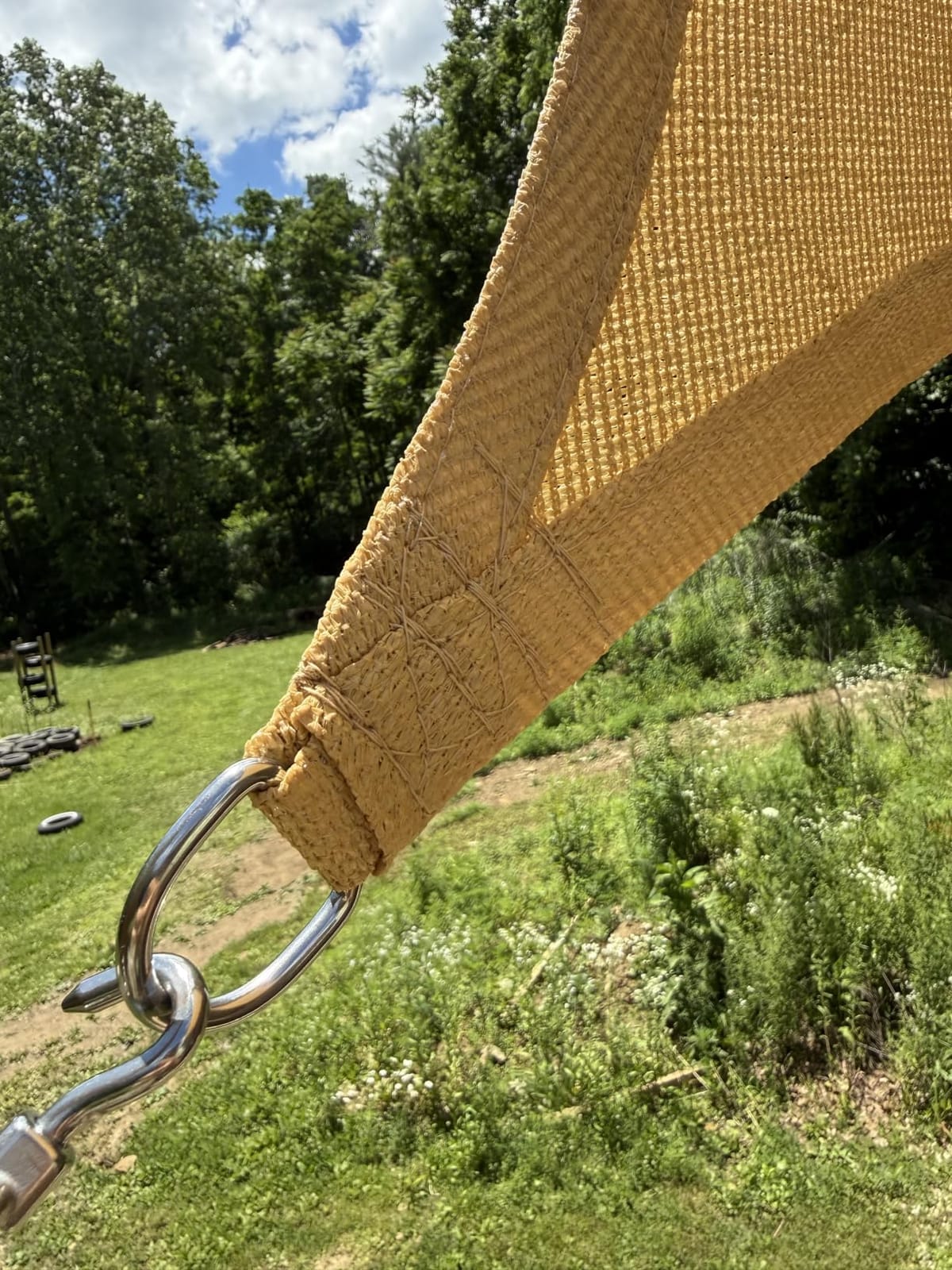
Hardware is sold separately, and 13 feet of PE rope is included, which is enough to hang the panel but not enough to keep it in shape. The permeable fabric lets cooling airflow through and rainwater pass straight through, so the panel does not collect water weight in a shower, and it can stay up through light rain without a drainage problem.
The honest drawback is the shade figure. At up to 87% shade, this is the lowest UV figure among the sails on this list, and buyers who expected the 95% marketing number are disappointed. Judge it on build quality and accept that you are buying durability rather than maximum darkness.
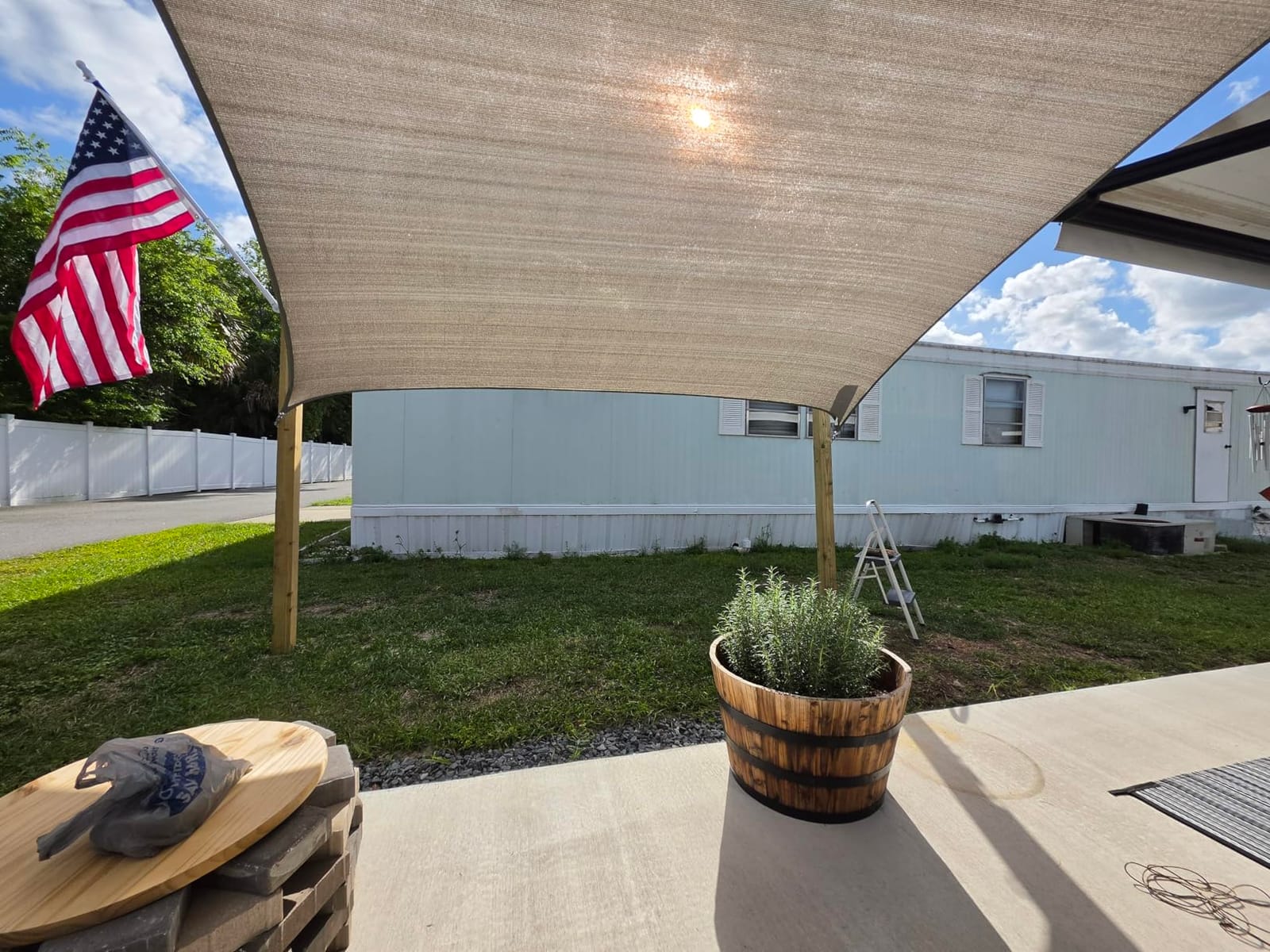
When seam construction beats UV percentage
If your priority is a sail that survives five summers of full sun and repeated tensioning cycles, seam and corner construction matter more than a percentage point of UV blocking. A panel that looks thinner but holds its corners will outlast a higher-rated one that frays at the corner D-ring, and that is the specific failure owners in this category report over time.
Buyers of this sail also mention initial wrinkles that ease after a few days of sun exposure. That is normal for a folded polyethylene panel and not a defect, but plan on letting it sit tensioned for a week before judging how it looks.
Where the rating and the specifications disagree
The 4.6 rating and the 87% shade figure tell you two different things, and both are accurate. Quality of build is excellent. Optical density is mid-pack. If you are shading a table for lunch, brightness under the panel is often what you want anyway, because it keeps the space usable after the sun moves.
For a very sunny site where you want deeper shade, a darker colour helps more than a heavier panel would. Check the colour options before ordering, and treat the wrinkles as a settling period rather than a fault.
9. Amagenix 16 x 20 Rectangle – Best for Wide Coverage
Amagenix 16’X20′ Sun Shade Sail Rectangle Curved Edge Sand
185 GSM HDPE, 16 x 20 feet, 95% UV block, 304 stainless D-rings
Pros
- Very large rectangle covers a full patio or carport
- Curved edges cut sagging and add wind stability
- 304 stainless D-rings and stitched edges
- Breathable fabric lets rain pass through
- Custom sizes available
Cons
- Not waterproof
- Hardware not included
- Listed size is D-ring to D-ring with 4 inch variance
- Stretching shrinks the real covered area
Coverage is the reason to look at this one. A 16 by 20 rectangle lists 320 square feet of panel, which makes it the widest footprint available in this group and the closest match to the full-patio shade that most people are actually trying to create. Four anchor points shade an entire dining area, a carport or a long stretch of deck in a single plane.
The fabric is 185 GSM HDPE blocking up to 95% of UV, with 304 stainless steel D-rings and durable stitched edges. Curved edges are doing real work on a panel this large: they minimise sagging and add stability, which matters more when you are spanning sixteen feet without a centre support. The fabric is breathable, so rainwater passes through instead of pooling.
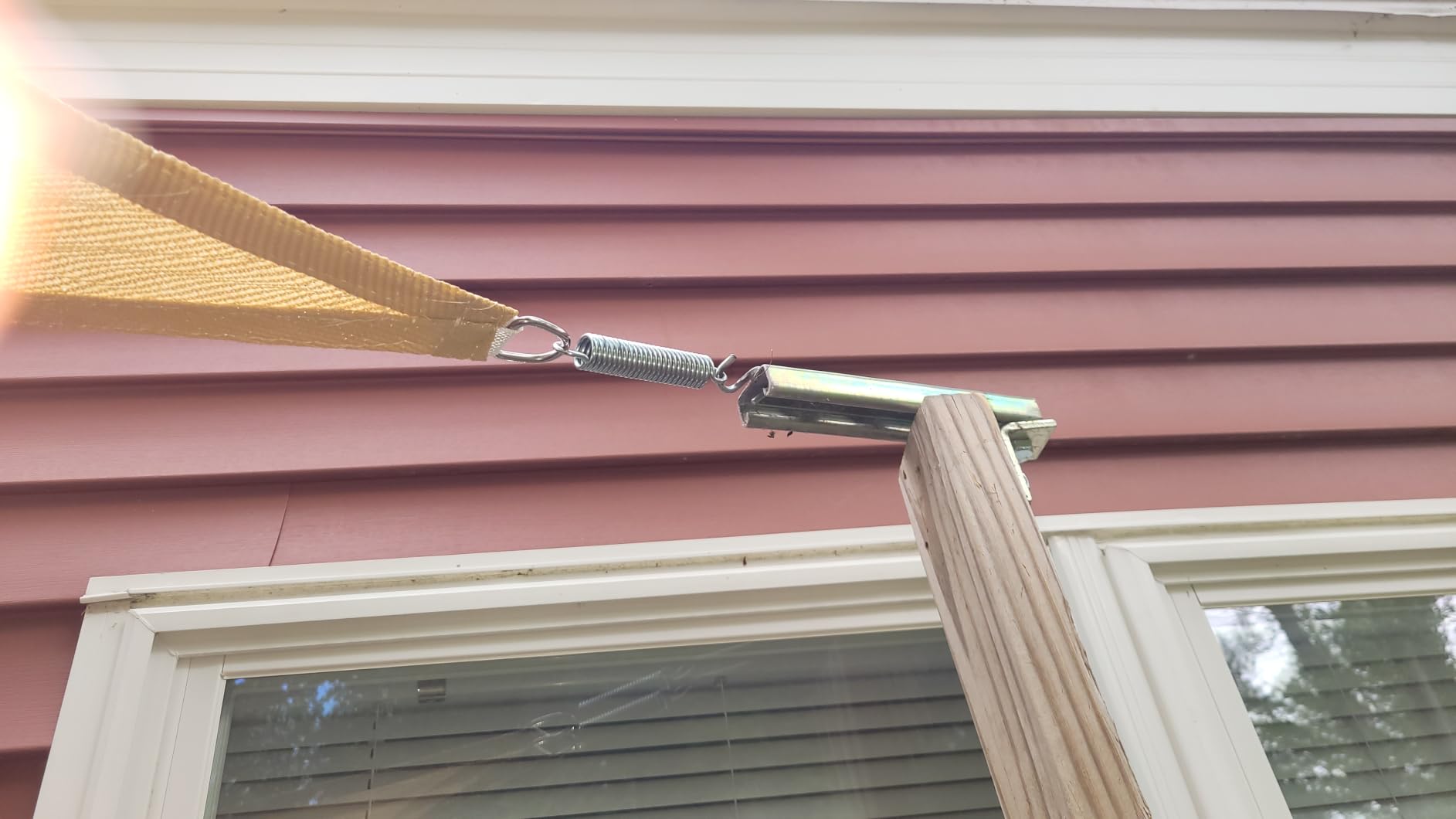
Owner guidance is consistent and useful. Measure D-ring to D-ring, allow 1.5 to 2 feet for tensioning hardware on each side, and expect the fabric to stretch a few inches once hung. In other words, buy the nominal size for your span but do not plan the shade footprint on the label number, because the covered area ends up smaller once it is pulled tight.
Feedback on fading after a full season is slightly more mixed here than on the virgin-HDPE panels, which is worth knowing if your sail goes up in spring and stays up until autumn. Custom sizes are available, and that is the right answer for an awkward span rather than fighting a 4 inch tolerance.
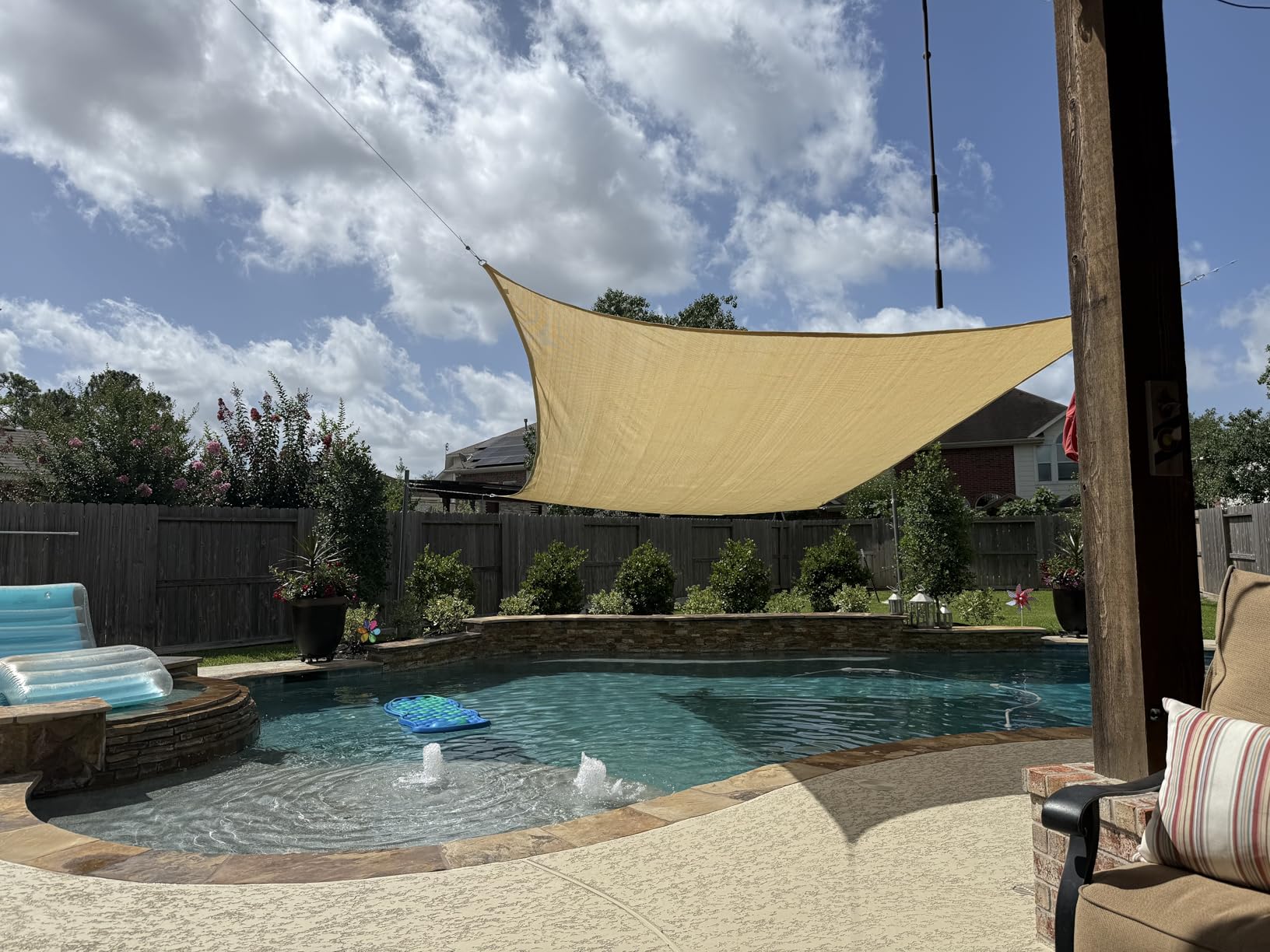
Post demands of a 16 by 20 span
A span this wide is the point at which post strength stops being an optional upgrade. The load on each of the four corners is substantial, and any flex in the posts turns into slack in the fabric and flutter in the wind. Steel posts with a proper wall thickness, set in concrete below the frost line, are the correct answer, and the frame should be able to hold the panel drum tight without visibly deflecting.
On a long span, consider whether the fabric needs a centre support. Most owners get a clean result without one, but if the middle dips between anchors, a thin centre cord to an extra point fixes it without adding a visible pole.
Where the listing is vague
The listed weight is not consistent with a 16 by 20 panel, so treat shipping weight and handling expectations as unknown. In practice owners describe a large, floppy panel that is manageable with two people. Plan the install as a two-person job.
Hardware is not included, and the sail is not waterproof, so it cannot double as rain cover over a dining table. If you need a roof rather than a shade, a sail is the wrong product and our pergola guide covers the alternative.
10. ColourTree 20 x 20 x 20 Triangle – Best for Harsh Sun
ColourTree 20′ x 20′ x 20′ Beige Triangle Sun Shade Sail for Patio
190 GSM virgin HDPE, 20 foot triangle, 95% UV block, reinforced double seams
Pros
- 190 GSM virgin non-recycled HDPE
- 20000 hours of laboratory UV testing
- Blocks 95% of UV while staying breathable
- Double-layered seams hold in high winds
- Large triangle for pools and side yards
Cons
- Hardware and cables sold separately and nylon rope discouraged
- Fabric stretches so order smaller than the span
- Can sag centrally without a slight mount angle
- Expect a mid-grade feel rather than premium
For a site with punishing sun, the material specification is the headline. This is 190 GSM 100% virgin, non-recycled HDPE with a UV-stabilized compound, laboratory tested for 20000 hours and described as 70% more durable than recycled HDPE in sun. Virgin versus recycled is the single most consequential material choice in this category, because recycled polymer degrades faster under sustained UV exposure, and the difference shows up in year three rather than year one.
Owners credit the fabric with surviving intense sun and wind without tears or seam failure, including reports of desert conditions. It blocks 95% of UV while staying breathable, so no water pools during rain, and the heavy duty double-layered reinforced seams and stainless D-rings hold up in high winds. A 3-year product support service and custom sizes and colours are available.
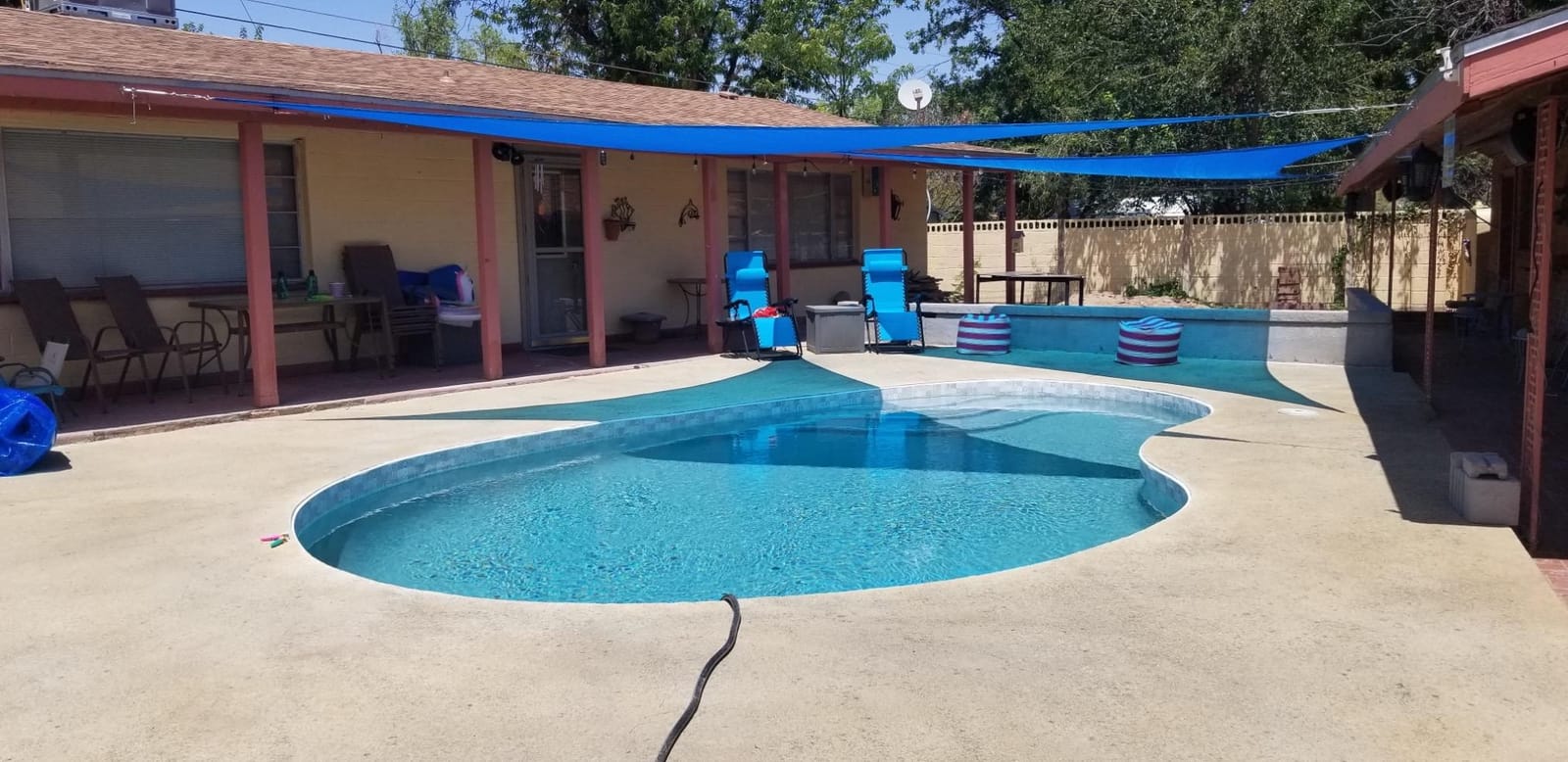
The installation advice is unusually clear. Use stainless hardware kits and cable rather than nylon rope, which the manufacturer explicitly discourages because it breaks easily. Order a size smaller than your span, because the fabric stretches. Pull tight. Mount on a slight angle so any centre sag sheds water rather than dripping on your table.
A minority of buyers found a corner fail early or felt the fabric did not deliver multi-year durability for the money. With around 1400 reviews the feedback base is smaller than the top panels, so read the recent reviews rather than the headline average.
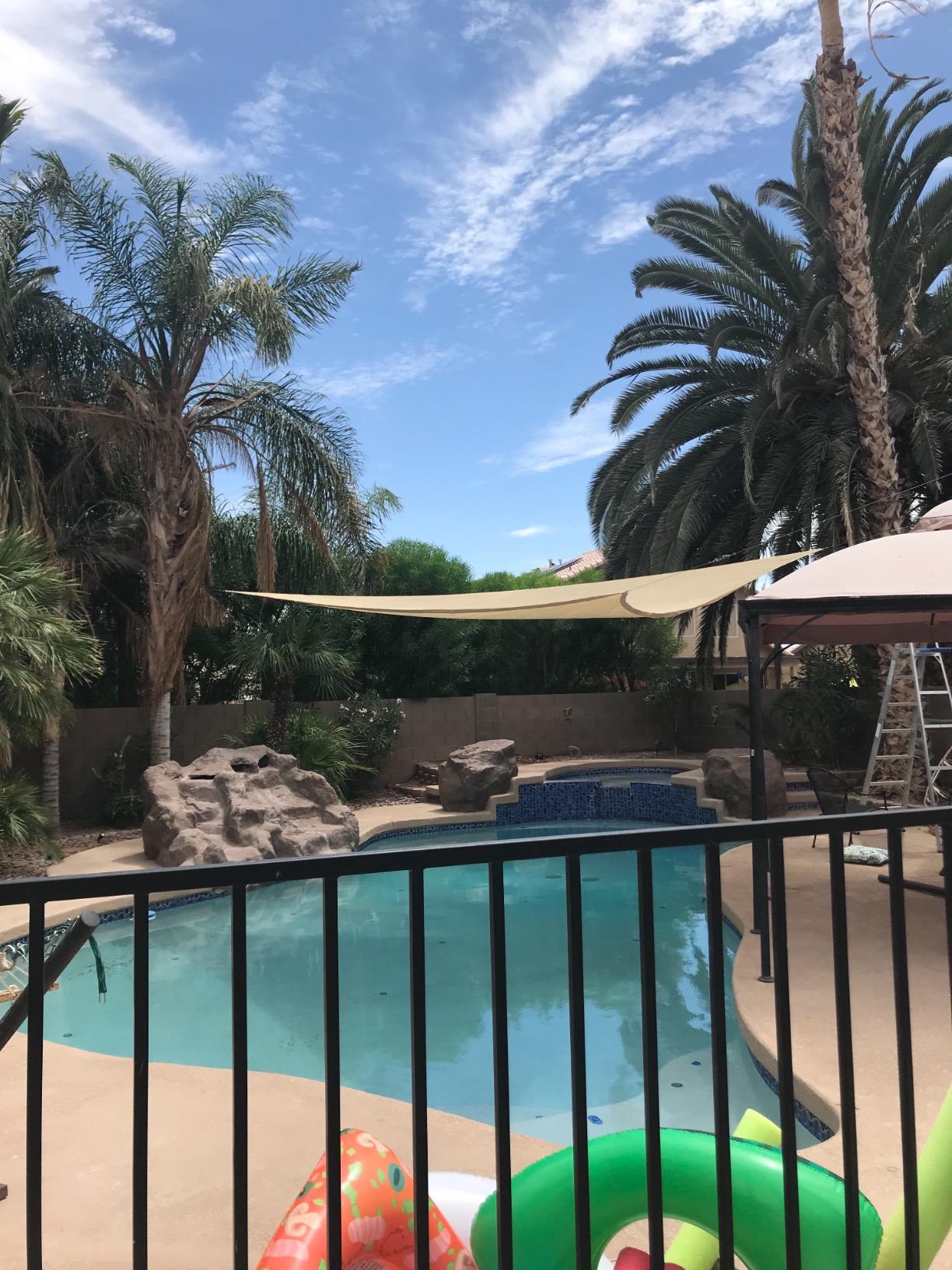
What virgin HDPE actually buys you
Polyethylene sail fabric is a consumable. UV exposure breaks down the polymer chains, the fabric goes brittle, and then the first high wind snaps a corner. Virgin HDPE with a UV-stabilized compound resists that chain reaction for longer than recycled feedstock, which is why this panel is the choice for a south-facing yard, a desert climate or anywhere the sail stays up through a full summer without seasonal removal.
On a large triangle like this, the fabric weight also reduces flutter. Heavier material moves less in gusts, and less movement means fewer load cycles on the seams and corner rings. That is the mechanism behind the wind survival reports.
Where the trade-offs sit
Hardware is extra and nylon rope is actively discouraged, so the complete system is more expensive than the panel implies. That is the honest total-cost point: a sail is a fabric plus a rigging kit, and the kit is not optional for a 20 foot span.
The finish is functional rather than premium, and the fabric stretches enough that a central sag is common on a lazy install. Fix both with turnbuckles and a mount angle, and this is the most sun-resistant panel we assessed. If the space under it is where you spend your evenings, it is worth the extra rigging step.
How to Choose a Shade Sail for Your Backyard?
Choosing well comes down to four decisions in order: how much area you want covered, which shape fits the anchor points you have, whether you need breathable or waterproof fabric, and how much rigging hardware you are willing to fit. Get those right and the brand matters far less than the spec sheet suggests.
1. Size is measured D-ring to D-ring, and it stretches. Every sail in this list lists its size corner to corner, not the usable shaded panel, and most suppliers advise sizing to roughly 88% of the span. On top of that, allow 1.5 to 2 feet per side for hardware. So a 16 foot sail belongs on a structure whose anchors sit about 18 to 19 feet apart, not 16.
2. Shape follows your anchor points. Rectangles need four corners and shade a rectangular footprint with square corners, which makes them the best choice for dining tables and long decks. Triangles need three points and suit a yard with one tall post and two low anchors, and they double as privacy screens when the high corner is raised. Hyperbolic shapes are what a well-tensioned panel forms by itself, so a curved edge is a feature to look for regardless of shape.
3. Breathable versus waterproof is the decision that matters most. Breathable HDPE mesh passes air and rain through, so it stays cool, never ponds water and behaves far better in wind. A waterproof coated sail blocks rain but catches it, creating a load that no residential installation is designed for. For a backyard, breathable wins on every practical measure. A waterproof sail makes sense only where rain cover is the primary requirement, such as a market stall or a camper awning.
4. Read the two UV numbers separately. Nearly every listing quotes a UV block figure near 95% and a separate shading rate that is often lower, between 85% and 90%. UV block describes what the fabric stops before it reaches skin. Shading rate describes how much light the space underneath actually loses. A sail that reads brighter than you expected usually is not faulty, it is simply the honest shading rate doing its job.
Fabric weight and seams are the durability specs. Fabric weight in GSM is the best single proxy for how long a panel lasts, and 180 to 190 GSM is the residential sweet spot. Below that, expect a shorter life. Seam construction matters at least as much, because corners are where sails fail: double-stitched, double-layered webbing edges and stainless D-rings are worth paying for. Virgin, non-recycled HDPE outlasts recycled feedstock in sustained sun.
Darker or lighter is a real trade-off, and the answer depends on the hour. Darker colours deliver deeper shade and a cooler-feeling area because they absorb more light, but they also heat up and can fade noticeably over a season or two. Lighter colours reflect heat, fade more slowly and keep the space bright and airy, at the cost of a lower shading rate. If you want to sit outside at three in the afternoon, go darker. If you want the area usable at six, or you care about how the sail looks from the street, go lighter. Mid-tone sand and beige sit between the two and are the safest all-round choice.
Count the whole system, not just the sail. The panel is the part people compare, and the hardware is the part that decides whether the install survives. Budget for a stainless hardware kit with turnbuckles, shackles and cable, posts and footings if you are starting from bare yard, and a plan for the two lower corners if you only have one post. Shipping cost and returns are also worth checking before ordering a large custom size. Our outdoor speaker guide covers another item that turns a deck into a livable outdoor room, if you are planning the whole space.
Shade Sails and Wind: What Actually Happens
A residential shade sail is not storm-proof. It can be storm-resistant when it is sized correctly, tensioned properly, attached to strong anchors and taken down before the worst of it, and those four conditions are where nearly every failure comes from. Treat a shade sail as a tension structure, not a permanent roof.
Wind load and dead load behave differently. Dead load is the weight of the fabric, pooled water or snow sitting on the panel. Wind load is the repeated push and pull of moving air against a surface the size of a wall. The second one is far more destructive, because it cycles thousands of times a season and concentrates at the corners, which is why corner hardware fails before fabric does.
The Beaufort scale gives a usable threshold. Near gale force, roughly 32 to 38 mph, is the point at which a residential shade sail should come down. Gale force, 39 to 46 mph, is a different category entirely, and no fabric choice compensates for being left up in it. A forum owner in Phoenix described asking outright whether sails are advisable given the local wind, noting that nobody else on the street uses them, and that regional wind is a legitimate reason to skip the project rather than a challenge to engineer around.
The failure reports point the same way. One r/SaltLakeCity owner described velcro straps failing during a big storm with the sail whipping dangerously, and the important detail is that it was the fastening, not the fabric, that let go. An r/AusRenovation owner described a sail being pushed upward and slapping the house in strong winds, which is uplift and a sign of insufficient tension or a sail that is too flat. Both of those are rigging problems, and both are fixable at install time for the cost of a stainless hardware kit.
The 5-minute storm takedown routine: check the forecast the night before, decide at the first advisory rather than the first gust, loosen one turnbuckle at the apex so the fabric relaxes, unclip the remaining quick-release corners, carry the panel inside or into a garage, then inspect hardware before the next install. Do not try to fold the panel while it is still under tension, because the fabric will fight you and the corners take the load.
Two more safety notes. Shade sails are not flame resistant, so move any fire pit well clear of the panel, and a fire feature near an overhang deserves its own clearance plan. And snow is more dangerous than people expect, because a wet snow load on a panel is dead load sitting on a tension structure, which is exactly the combination that tears corners. Take the panel down for winter rather than leaving it up, partly for snow and partly because bare posts in a yard all winter is the objection r/landscaping owners raise most often.
On the other side of that, a large sail really does change a space. A homeowner on r/lawncare installed 16x16x16 and 20x20x20 sails in a backyard and reports loving them, saying they transformed the comfort of being outside. That reaction is what the 400 square foot coverage class on the larger triangles here is designed to deliver.
Installation Basics: Poles, House Mounts and No-Dig Options
Almost every shade sail problem we traced back to installation rather than product quality. A sail can be the best-made panel available and still flap uselessly if the posts flex, the anchors are wrong or the corners are tied with rope.
How to install a post for a shade sail:
Call 811 before you dig so buried utilities and irrigation lines are marked.
Choose a location clear of underground services and away from drainage paths, and check where runoff goes before you set the post.
Dig below the frost line so the post does not heave in winter, and below the depth required by your local code.
Embed roughly one third of the post length in the ground, with the concrete footing below the reach of frost.
Set the post in concrete, plumb it, and give it a slight lean away from the sail so the load pulls into the footing rather than levering the post out.
Wait for the concrete to cure, then fit a pad eye or eye bolt at the top and finish tensioning with turnbuckles, not rope.
What type of post works best. Steel posts are the standard because they hold a load without flexing, and a galvanized or stainless steel post in concrete is what most of the wind survival reports on this list used. Wood posts work if they are thick enough and braced, but any visible flex under tension becomes fabric slack. For a hot tub or pool area, where a collapsed panel would be a much bigger problem, we would not compromise on the post. If the space under the sail is a pool or spa, our hot tub guide covers the safety decisions around that layout.
What size steel post to use. Match the post diameter to the span, and treat three anchors as a stronger layout than two whenever the geometry allows. A fourth anchor reduces the load on every other anchor point and makes the panel far easier to hold drum tight, which is the single most effective thing you can do for stability.
House mounts. Anchor into framing, not siding. Siding is a cladding, not a structure, and a pad eye screwed into it will pull out under load. Locate the studs or the rim joist, use lag bolts or structural screws rated for the pull, and seal the penetration. A post in the ground is usually stronger and easier to tension than any house anchor.
Renter and no-dig options. Tree straps around two large, mature trees work well for a modest load and can be adjusted as the trees move. Fence clamps are fine for a light span where the fence is solid and well braced. Weighted mobile bases suit a small sail over a patio where you want shade for a few months and no ground anchors. In all three cases the fabric still has to be tensioned, and the same corner hardware rules apply.
Can you make a DIY pole yourself. You can, and plenty of owners do, but a wooden pole only works if it is straight, braced and stiff enough not to flex. The common DIY build is a treated 4×4 or a steel tube set in concrete with an eye bolt through the top. What most DIY poles lack is the adjustment, so fit a turnbuckle and you can re-tension as the fabric settles instead of rebuilding.
Frequently Asked Questions
What is the disadvantage of a shade sail?
The main disadvantages of a shade sail are wind vulnerability, seasonal appearance and the hardware cost. A residential shade sail is never storm-proof, so it must be taken down in severe weather, and the corner hardware rather than the fabric is usually what fails first. Many owners also dislike bare posts standing in the yard through winter. Finally, the panel rarely includes a hardware kit, so a stainless cable and turnbuckle set must be budgeted for separately.
Can shade sails withstand high winds?
A properly sized, tensioned and anchored shade sail can handle moderate and gusty wind, but it should come down before near gale conditions around 32 to 38 mph. Breathable HDPE mesh performs best in wind because air passes through the fabric. Owners report panels surviving 70 to 90 mph gusts, but those installations used stainless turnbuckles, cable and solid posts. Loose tension, rope fastenings or flat sails are the real failure causes.
Is a lighter or darker shade sail better?
Darker shade sails give deeper shade and a cooler feeling area because they absorb more light, but they heat up more and can fade over a season or two. Lighter colours reflect heat, fade more slowly and keep the space bright, at the cost of a lower shading rate. Choose darker for deep afternoon shade and lighter for an all-day outdoor living area. Mid-tone sand and beige balances both.
Can you leave a shade sail up all year?
You can in mild climates, but taking the panel down for winter is the safer choice. Snow and wet snow create a dead load on a tension structure, and that combination is what tears corners. Leaving it up also means bare posts in the yard all winter, which is the most common aesthetic complaint from owners. A breathable HDPE panel weighs very little, so seasonal removal takes minutes.
What type of post is best for a shade sail?
Galvanized or stainless steel posts set in concrete are the best choice because they hold a load without flexing. Any visible bend in a post becomes slack in the fabric and flutter in the wind. Wood posts work if they are thick enough and braced, and a tree strap or fence clamp can work for a light span. Anchor into house framing rather than siding if you are not digging.
What size steel posts should I use for a shade sail?
Match post diameter to the span between anchors, and use four anchor points instead of two wherever the layout allows, because a fourth point reduces the load on every corner and makes the panel easier to hold drum tight. For a large 16 to 20 foot sail, substantial steel posts in concrete below the frost line are the right call. Embed roughly one third of the post in the footing.
The Bottom Line
For most backyards, the AsterOutdoor 10 x 13 rectangle is the right first shade sail to buy, because the curved sides, stainless corner rings and a review base of more than 20000 owners make it the least surprising option. Buy the Artpuch 16 x 20 if coverage is the whole goal, the Windscreen4less 10 x 15 if your site is exposed to wind, and the ColourTree 20 foot triangle if the sun is punishing enough to matter more than anything else.
Whichever panel you choose, spend your effort on the install rather than the brand. Size to about 88% of the span, allow 1.5 to 2 feet for hardware on every side, skip the supplied rope in favour of stainless turnbuckles and cable, and pull the corners drum tight with two anchors high and two low. Do that and the best shade sails for backyards stop being a gamble and start being a fixture. Full-length teardowns of shape and fabric options live in our main shade sail guide, so start there if you want the theory before the shortlist.