
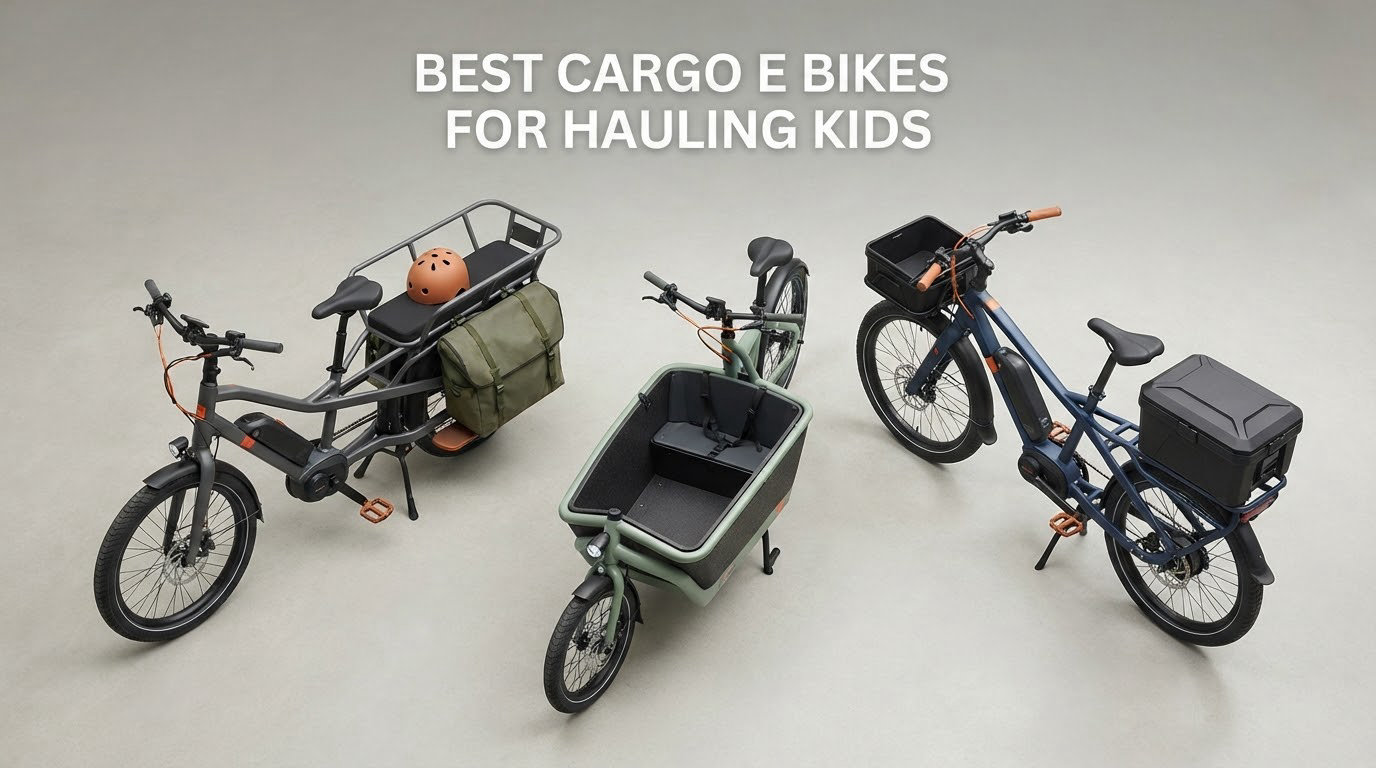
If you are shopping for the best cargo e bikes for hauling kids, the short version is this: the EUYBIKE 20-inch fat tire cargo e-bike is the one we would put a single parent and a child on, because it pairs a 960Wh removable battery with an 82 Nm motor and a step-through frame that makes loading a kid painless. Families carrying more weight should read past it to the TINIOVER folding trike, which carries a 550 lb load across two seating positions.
We spent the last several weeks reading owner reviews, spec sheets and forum threads on family hauling, and comparing six bikes that genuinely seat children rather than just claiming to. Every number in this roundup comes from the manufacturer listing or from what buyers report after living with the bike, and every bike here has a flaw we name out loud.
The appeal is easy to understand. A family e-bike turns a 3-mile school run into a 12-minute ride, a grocery stop into a 40-pound pannier load, and it does all of that without parking, fuel or a second car in the driveway. The cost is that these bikes are heavy, long, and far less forgiving than a standard bicycle.
One caveat before we get into the list: payload is a total number. It covers the rider, every child on board, plus bags, groceries and any child’s bike you are towing. A parent at 180 lb with two 45 lb kids and a week of groceries is already at 315 lb before the bike’s own weight enters the picture, which is why we list load ratings for every model here rather than trusting marketing adjectives.
If you are still working out the basics, our guides to the best cargo bikes overall and the best cargo electric bikes cover the non-electric and wider electric categories. This page is narrowed to one job: getting children from A to B safely.
Top 3 Picks for Hauling Kids in October 2026
The three bikes below are the ones we would shortlist first, and each one solves a different version of the school-run problem. The EUYBIKE wins on range and simplicity, the TINIOVER on raw load capacity, and the SISIGAD on having a child seat already built into the frame.

EUYBIKE Fat Tire Cargo E-Bike
- 960Wh removable battery
- 82Nm 1450W peak motor
- Step-thru frame with basket and child seat

TINIOVER Folding 2-Seater Trike
- 550lb load rating
- 90Nm 1200W motor
- UL2849 certified battery

SISIGAD Family E-Bike K008
- Integrated child seat with guardrail
- 450lb capacity
- 1500W peak motor
All 6 Cargo E-Bikes at a Glance in October 2026
All six bikes below are family e-bikes: every one has a second seating position, a child perch, or a rated load figure that covers passengers. The table is sorted in the order we recommend reading them, and every capacity figure is a total load rating for rider plus passengers plus cargo.
| Product | Specs | Action |
|---|---|---|
| EUYBIKE Fat Tire Cargo E-Bike |
|
Check Latest Price |
| TINIOVER Folding 2-Seater Trike |
|
Check Latest Price |
 LoonFat 2-Seat Fat Tire E-Bike LoonFat 2-Seat Fat Tire E-Bike |
|
Check Latest Price |
 Speedrid 3-Seat Electric Trike Speedrid 3-Seat Electric Trike |
|
Check Latest Price |
 KAKIGO Two-Seater Electric Trike KAKIGO Two-Seater Electric Trike |
|
Check Latest Price |
| SISIGAD Family E-Bike K008 |
|
Check Latest Price |
1. EUYBIKE Fat Tire Cargo E-Bike – Best Overall for One Child
EUYBIKE Electric Bike for Adults, 20″x 4″ Fat Tire Ebike, 1450W Peak Cargo Ebike with 48V 20AH Removable Battery, 80 Miles Mechanical Disc Brake 2 Seater Electric Bicycle Black with Safety Seat
960Wh removable battery
82Nm 1450W peak motor
70-80 mile assist range
Step-thru with child seat
Pros
- Huge 960Wh removable battery for long school-run days
- 1450W peak motor and 82Nm torque handle real grades
- Dual suspension softens potholes for the child
- Fat tires add grip and cushion on rough streets
- Step-thru frame makes loading a small child easy
Cons
- Heavy and bulky compared with slim cargo bikes
- Only a 7-speed drivetrain for climbing
- High carbon steel frame adds weight
- 90 percent pre-assembly still leaves real setup work
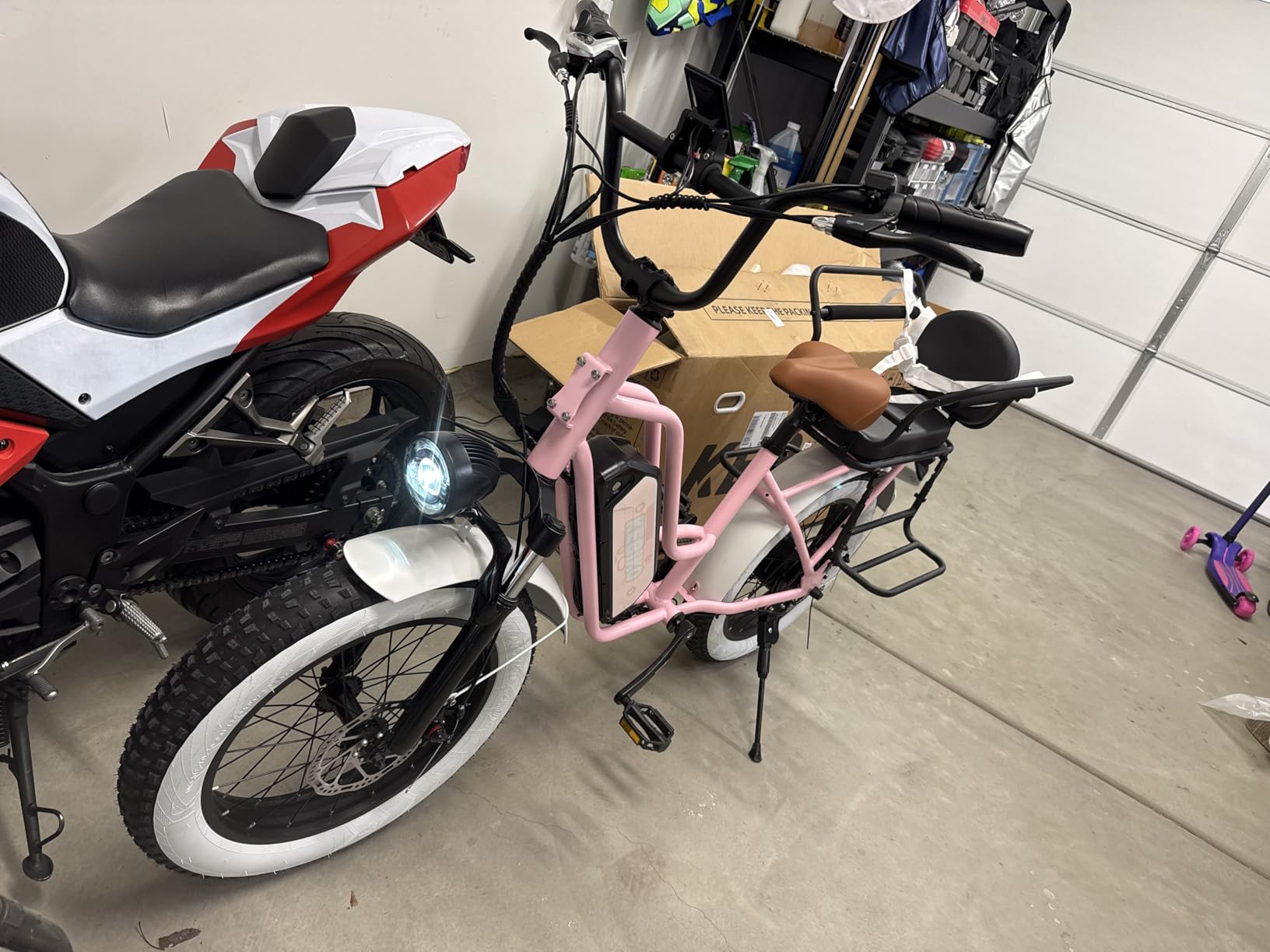
This is the bike we would buy for a household with one child and a rider who wants the least fuss. The listing packages it with a basket and a child-seat style configuration, so the cargo problem is already half solved before you add a single accessory. The step-through frame is the part parents notice first, because getting a four-year-old up and buckled onto a high top-tube bike is where most school-run mornings go wrong.
The battery is the headline. At 48V 20Ah and 960 watt-hours it is one of the largest packs in this roundup, and it is removable, which matters more than it sounds when the bike weighs as much as a large dog. Owners report 70 to 80 miles in pedal-assist mode and roughly 35 miles in pure electric, and the battery itself weighs 11.4 lb so you can carry just the pack indoors rather than wrestling the whole frame up a flight of stairs.
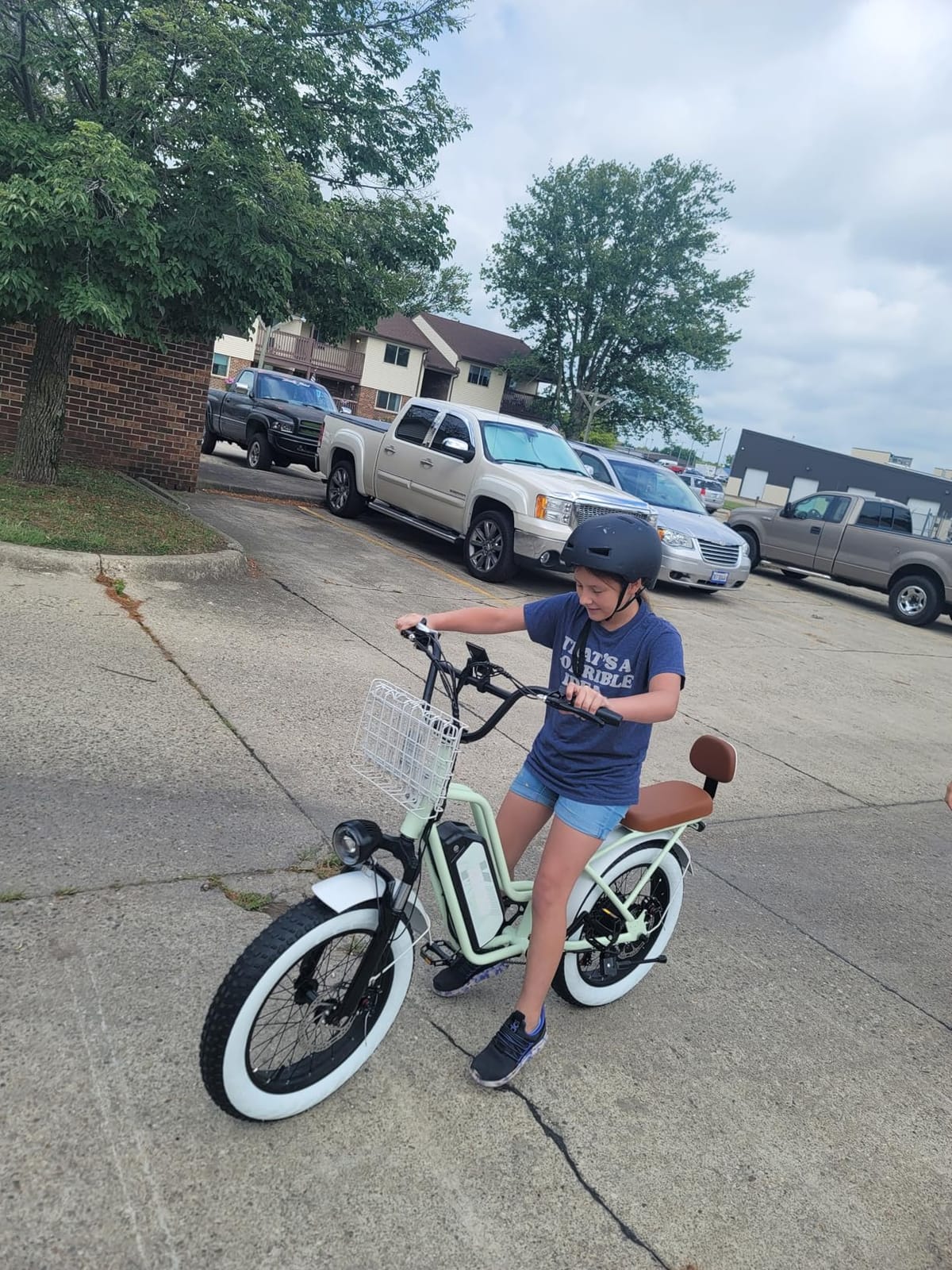
Motor figures are 750W nominal and 1450W peak, with 82 Nm of torque and a claimed 30-degree incline capability. In practice that is enough to move a parent and a child up a moderately steep street without the bike bogging down, which is the failure mode buyers complain about with smaller 500W hub motors. The 7-speed drivetrain is the weak point: seven gears is not much help when you are loaded and the grade steepens.
Comfort for a child passenger is handled by a high-strength front suspension fork plus a seat suspension absorber, and the 20 by 4 inch puncture-resistant fat tires swallow a surprising amount of broken asphalt. Both disc brakes are front and rear with a power-off function, so the motor stops contributing the moment you squeeze the lever.
Who this bike suits
A parent with one child, a mixed route of pavement and rougher side streets, and a daily round trip that is long enough that range actually matters. The removable pack, the fat tires and the low step-through frame all point the same direction: this is a bike built for regular use, not for a single demonstration ride.
It also suits anyone who wants the child seat integrated at purchase time instead of bolting a proprietary seat onto a rack later. Buyers consistently single out the range and the ride comfort on rough roads as the two things that made them keep the bike.
Where it falls short
Weight and bulk. The fat-tire frame is not as maneuverable as a slim longtail, and owners point out that the high carbon steel construction adds weight that a smaller-wheeled cargo bike would not carry. If you have a tight garage, a narrow hallway, or stairs, think hard about where this bike lives.
Second, the gearing. With one gear in reserve and a 7-speed range, a long loaded climb at a crawl is the scenario where this bike asks the most of the rider. Third, the assembly: 90 percent pre-assembled still means an evening of work with the included tool kit.
2. TINIOVER Folding 2-Seater Electric Trike – Best for Heavy Loads
Creek Pro Folding Electric Tricycle for Adults, Etrike with Passenger Seat & Backrest, 1200W 20MPH 100Miles Fat Tire Electric Trike, 3 wheel electric bike, Reverse, Parking, Differential, Gray
550lb maximum load
90Nm 1200W rear motor
48V 20Ah LG cell battery
Triple hydraulic brakes
Pros
- 550lb load rating is the highest in this roundup
- 90Nm motor and differential handle loaded cornering well
- UL2849 and UL2271 certified battery
- Reverse and hill-park functions help at curb stops
- Owners repeatedly praise warranty support
Cons
- Heavy 125lb frame that is awkward to move alone
- Extensive assembly with hard-to-follow instructions
- Conversion kit holes can misalign
- Struggles on steep hills in the lowest gear
- Passenger seat sits close to the rider
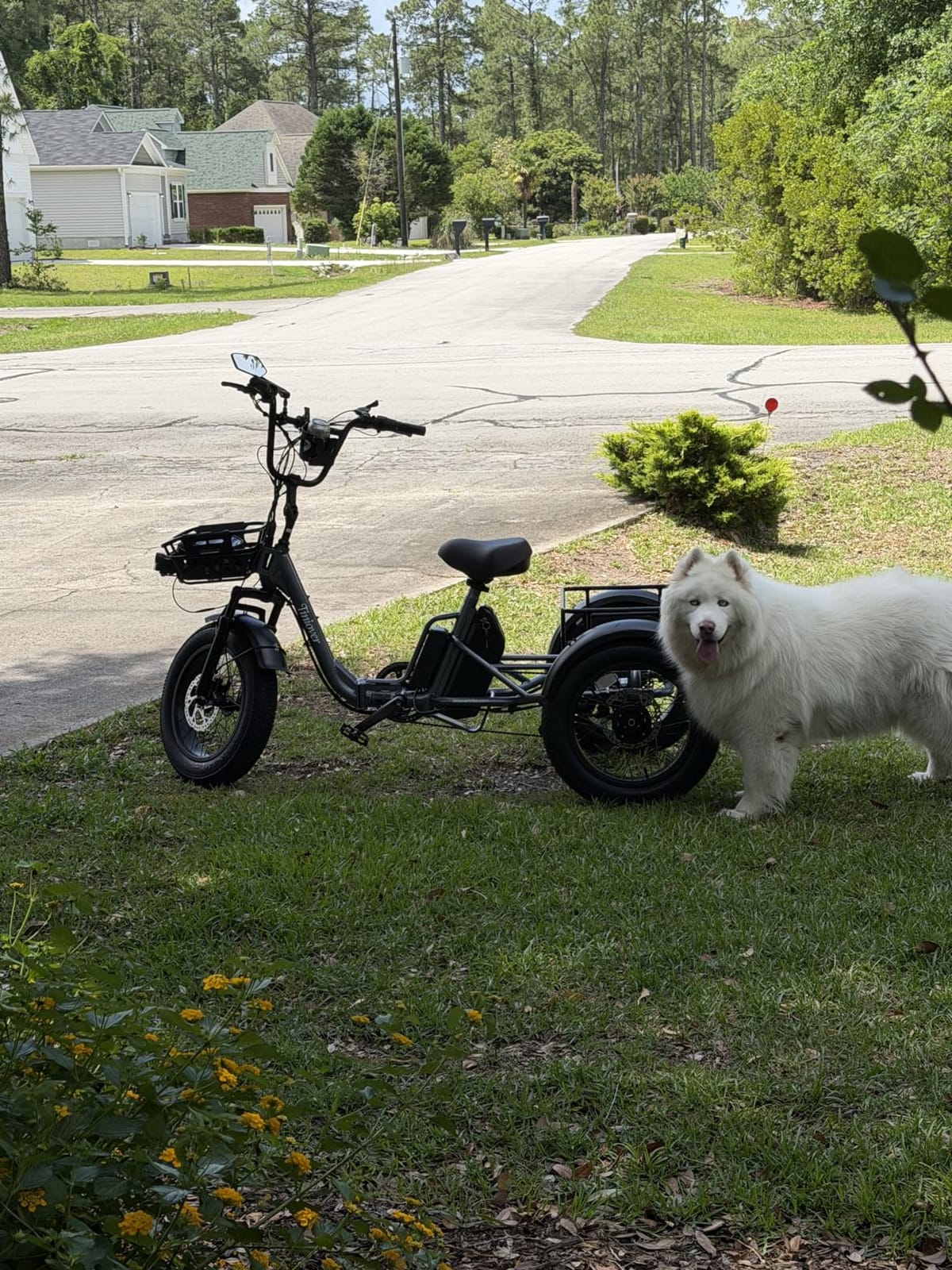
Three wheels change the argument entirely, and this is the trike we would point a family with two children or a heavier parent toward. A 550 pound maximum weight recommendation means a 200 lb rider, two 60 lb kids, a week of groceries and luggage still lands in the middle of the envelope. No two-wheeler in this roundup publishes a comparable figure.
The drivetrain is a 1200W rear brushless motor producing 90 N·m of torque with a 20 mph top speed, paired with a 48V 20Ah LG cell removable battery rated for up to 100 miles. A rear differential lets the two rear wheels rotate at different speeds through a turn, which is the single most important piece of hardware on a loaded trike and the one most cheap builds skip.
Braking is the strongest in this group: a triple hydraulic mechatronic system with 180mm rotors, an integrated parking system and a power cut-off sensor. On a bike carrying 300 lb of passengers downhill, that stopping power is not a luxury feature. There is also a mid-axis torque sensor so pedal assist responds to how hard you push rather than just to wheel speed, and the owners who notice it describe the assistance as natural.
It carries the UL2849, UL2272 and UL2271 certification marks, which is a genuine differentiator in this category and the answer to a question that shows up constantly in family forums: how do you tell a properly certified bike from an uncertified marketplace import? Buyers use this trike to ferry children to school and to give mobility-limited family members time outside, and the support team comes up repeatedly in reviews as responsive and caring.
Who this trike suits
Households of three or four where the total weight question is the deciding factor: a tall parent, two older children, or a grandparent riding with grandchildren. The modular rear conversion also means the same trike can carry cargo instead of a passenger when nobody is aboard, which extends its usefulness well past the school run.
Riders who will genuinely use the extra capability should also consider it. Reverse driving and hill parking are not gimmicks on a 125 lb trike loaded to its limit; they are how you stop without rolling backwards on a slope.
Where it falls short
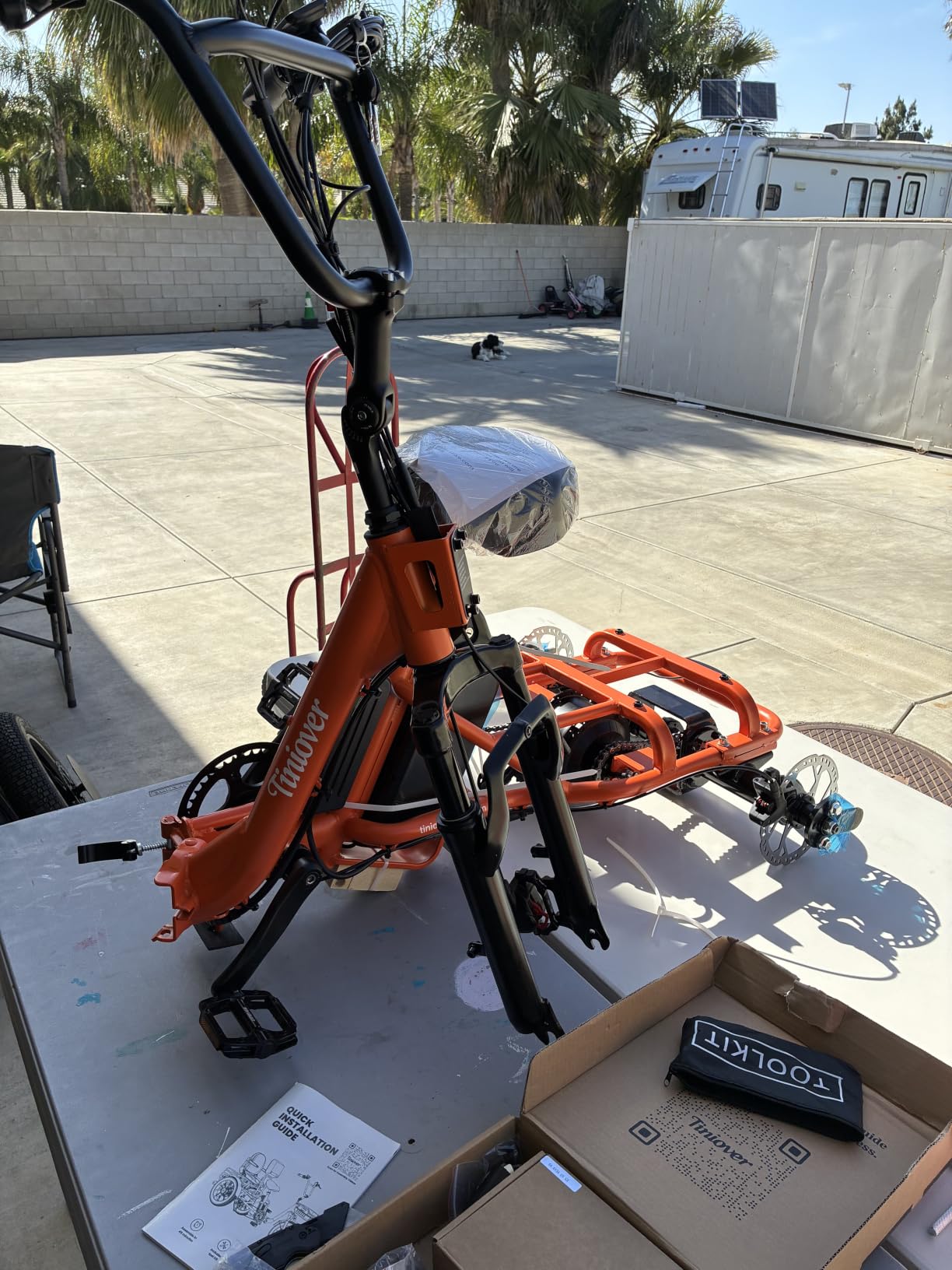
At 125 pounds the frame is genuinely heavy, and buyers say it is awkward to move without help, which is a real problem for apartment living. Assembly is the other sticking point: the printed instructions and QR code walkthroughs confused enough owners that it generated a steady stream of complaints.
Third, the conversion kit mounting holes frequently misalign with the frame, and the passenger seat kit often arrives in a separate box well after the trike itself. Fourth, on steep hills with two combined riders it runs out of gear in the lowest ratio. Finally, the passenger position sits close to the rider, which is tight for shorter adults.
3. LoonFat 2-Seat Fat Tire E-Bike – Best Value Pick for Errands
LoonFat T20 Ebike for Adult with Rear Seat & Front Basket,2 Seats UL2849
1000W peak hub motor
48V 13Ah removable battery
55lb step-in frame
Rear seat plus front basket
Pros
- Lightest frame here at roughly 55lb
- Integrated rear pillion seat and large front basket
- Removable UL2849-certified battery
- Push mode and cruise control reduce fatigue
- Quick assembly for most buyers
Cons
- Single-speed hub drivetrain with no gears for hills
- Poorly written assembly instructions
- Some units arrived with cosmetic or hardware defects
- Throttle reported to stick occasionally
- Mediocre screen and screw quality
This is the pragmatic choice: a two-seater with a rear pillion seat, a large front basket and a step-in frame that weighs roughly 55 pounds, which makes it the easiest bike here to move around a garage or hold upright while a child climbs on. Buyers describe it as quick and pleasant to ride for short family trips, and the soft ergonomic saddle gets praise from riders and passengers alike.
Power comes from a 1000W peak brushless hub motor reaching up to 25 mph and 30-degree inclines, fed by a 48V 13Ah removable lithium battery with UL2849 and BMS certification. Range is quoted at 50 to 70 miles in pedal-assist and 30 to 40 miles in electric-only mode, and the tires are 20 by 3.0 inch puncture-resistant fat tires over a hydraulic front suspension fork.
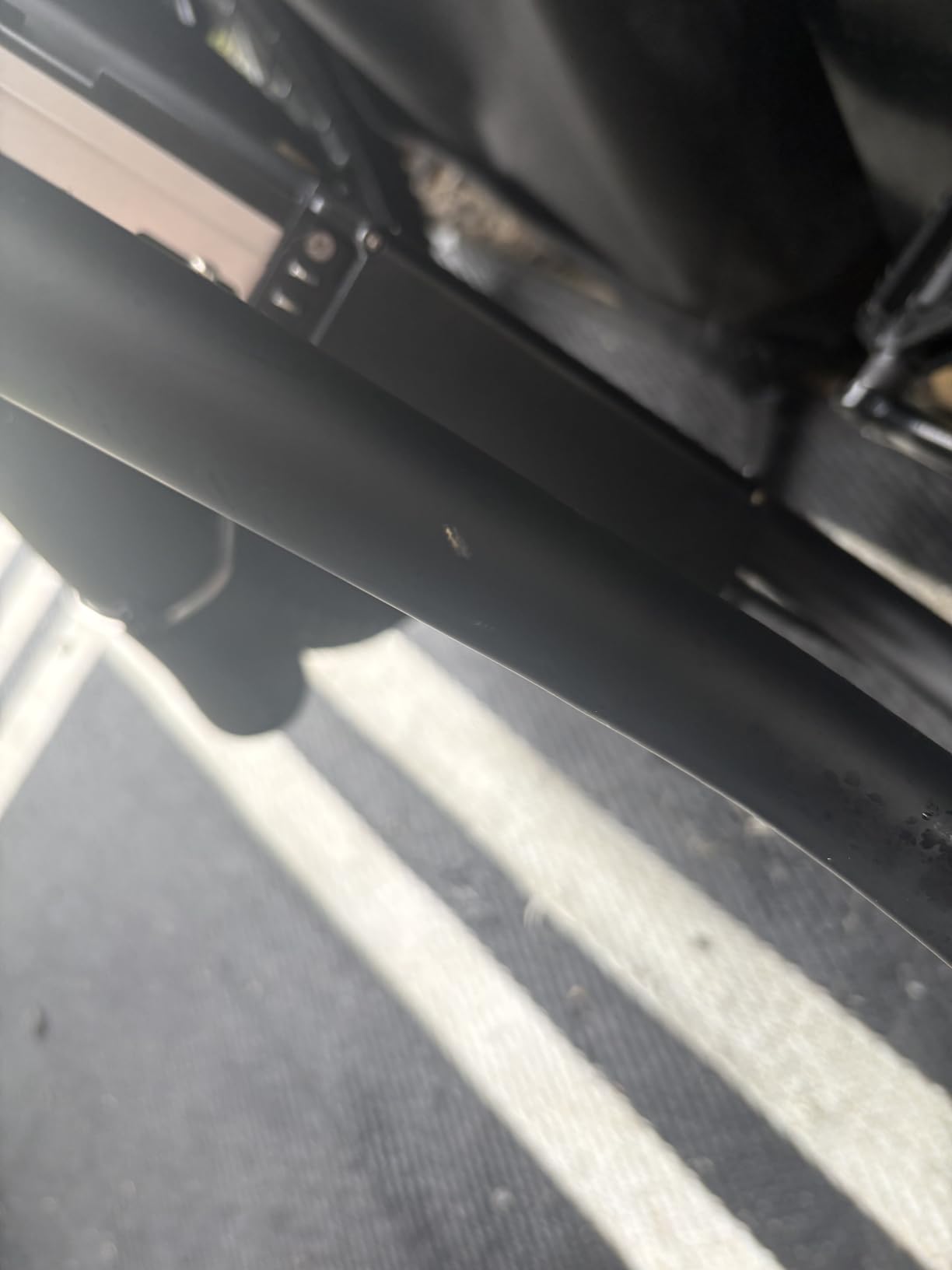
The feature set is generous for a bike at this level: dual disc brakes, a five-level LCD color display with a USB interface, headlights, taillights and full fenders front and rear. Fenders matter more than usual on a family bike because they keep road spray off a child’s legs, and the four riding modes plus push mode and cruise control take strain off a longer errand run.
It is also the only bike in this roundup that a buyer can realistically lift and maneuver alone without assistance, and several customers report completing assembly with the help of online video walkthroughs rather than a professional shop. That combination of lightness and simplicity is why it earns the value slot.
Who this bike suits
Short-distance households: one child, a school run under five miles, errands, and a route that is mostly flat and paved. The front basket plus rear seat covers the classic after-school pattern of one kid plus a week of shopping, and the light frame makes it the least intimidating bike for a first-time family e-bike owner.
It also suits anyone whose storage situation rules out the 125 lb trikes. A 55 lb bike that steps over rather than swings a leg over is far easier to manage on a shared staircase or in a narrow hallway.
Where it falls short
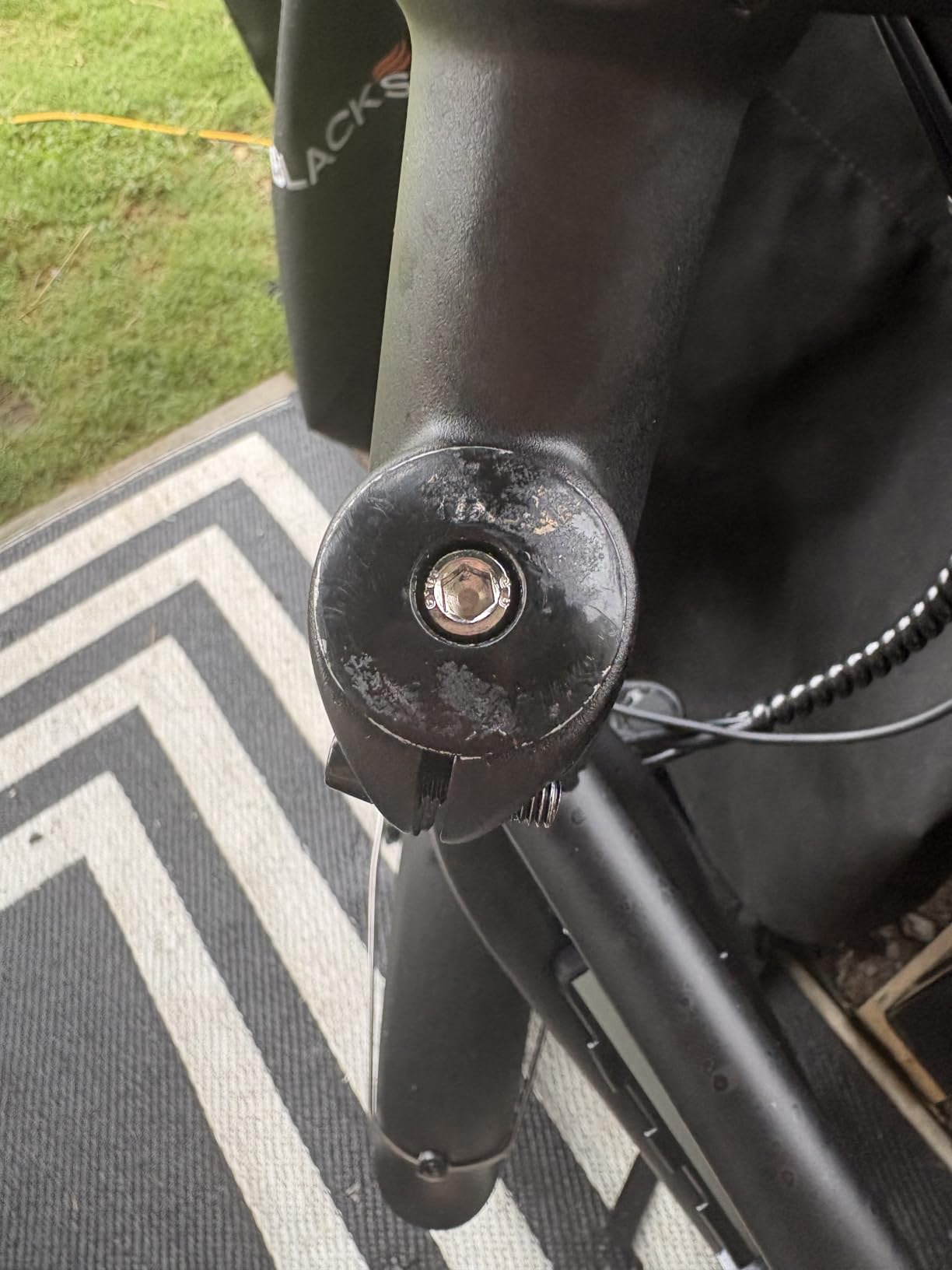
There is one speed. A single-speed hub drivetrain gives you no low gear at all, and a hill with a passenger on the back is exactly when you want one. Reviewers also report confusion with the assembly instructions, units arriving with dings, paint chips, a torn rear seat or hardware that needed replacing before the first ride.
Second, the throttle has been reported to stick occasionally, which is worth testing on a stationary stand before handing the bike to anyone. Third, tires may need checking on arrival, with one report of metal debris inside a tire, and the screen and screw quality is described as mediocre. The 3.0 inch tire width is narrower than the 4 inch tires on the other cargo options here, so wet leaves and loose gravel deserve more respect.
4. Speedrid 3-Seat Electric Trike – Best for Three Riders
Speedrid Electric Tricycle for Adults 3 Seats, Peak 1000W Reverse E Trike
Converts from solo to three seats
48V 25Ah battery
1000W peak differential motor
Reverse and parking brake
Pros
- Only three-seat option in this roundup
- Large 48V 25Ah battery for long dependable rides
- Rear differential and drum brakes give stable handling
- Reverse makes tight parking simple
- Turn signals plus remote key with alarm
Cons
- Top speed limited to about 15.5 mph
- Very heavy iron frame that is hard to store
- Single-speed drivetrain gives no hill range
- Only rated to 15-degree inclines
- Reports of battery
- brake lever and wiring issues
This is the only bike here that genuinely seats three people, which makes it the answer to a family of three kids or a parent plus two children plus a grandparent. Two hidden unfolding passenger seats convert the trike from a solo ride into a three-seat family vehicle, and the front seat is documented as supporting pets up to 44 lb for anyone using it as a two-seat with a dog.
Power comes from a peak 1000W brushless differential motor with a top speed of about 15.5 mph and 15-degree incline capability, and the 48V 25Ah battery charges in roughly six to eight hours on the included 3A fast charger. A reverse function handles tight spaces, and a rear differential smooths cornering when the load changes from one side to the other.
Storage is generous for a trike: a ventilated front basket, a front compartment and a lockable rear trunk. The lighting package is unusually complete for this category, with high and low beam headlights, rear lights and turn signals, plus a FOB remote key with an alarm function. A responsive foot brake, parking brake and anti-start brake lever handle stopping and parking duties.
Owners value the fold-out passenger seats, the large battery and the easy low-speed maneuvering with children or pets aboard, and support is described as responsive when issues arise. The bike carries UL2272 compliant certification on the electrical side.
Who this trike suits
Large families on flat-to-mild terrain who need seating capacity more than speed. If your route includes a 15-mile school run at a 20 mph pace, this is not the bike, but for a two-mile school trip, a run to the park, or a trip to the shops, the three-seat layout removes a whole second trip.
It also suits riders who want a key and an alarm, and anyone who will appreciate reverse when the bike weighs as much as a small motorcycle. The front basket plus trunk covers a full grocery run with the seats folded.
Where it falls short
The iron frame is the first problem. The listed unit weight of 3,880 ounces converts to more than 240 lb, and whether or not that figure is accurate for the assembled bike, owners consistently describe it as very heavy and difficult to move or store. Treat the published weight as a warning about handling rather than a spec you can rely on.
Second, the 15.5 mph ceiling and the 15-degree incline rating mean this is a bike for flat neighborhoods. Single-speed with no gear range makes any grade harder than that rating suggests. Third, some reviews report battery, brake lever and wiring reliability issues, so budget for a service plan or learn the basics of your own electrical connections.
5. KAKIGO Two-Seater Electric Trike – Best for Riding With Grandkids
KAKIGO Electric Tricycle with Passenger Seat,Peak 1350W Two Seater Electric Tricycle for Adults,48V 15.6Ah 2 Seater Electric Trike,Front&Rear Basket,Rear Differential,Teal
Belted bench rated to 330lb
90Nm 1350W peak motor
80-90 mile assist range
Rear differential
Pros
- Highest average rating in this roundup
- Belted bench seats two riders up to 330lb combined
- 80-90 mile assist range from a certified battery
- Owners describe it as well built and smooth riding
- Large front and rear basket space
- Popular with grandparents riding with grandchildren
Cons
- Arrives as two packages so accessories can lag behind
- Assembly instructions out of date and screws unlabeled
- Thin stock tires and tubes
- Short rear seat for adult passengers
- Tops out near 12 mph
The KAKIGO has the highest average rating of the six bikes here, with no reviews below four stars, and the reason is consistent: it does what the listing says without drama. The 1350W peak brushless motor produces 90 Nm of torque, which is the joint-highest torque figure in this roundup and the reason it moves well with two riders aboard.
Instead of a saddle and a separate pillion pad, you get a wide two-seater bench with safety belts, rated to 330 lb combined. The battery is a 48V 15.6Ah UL2849-certified removable lithium pack with BMS protection and IPX5 water resistance, quoted at 80 to 90 miles in pedal-assist. That certification mark matters in a segment full of uncertified imports.
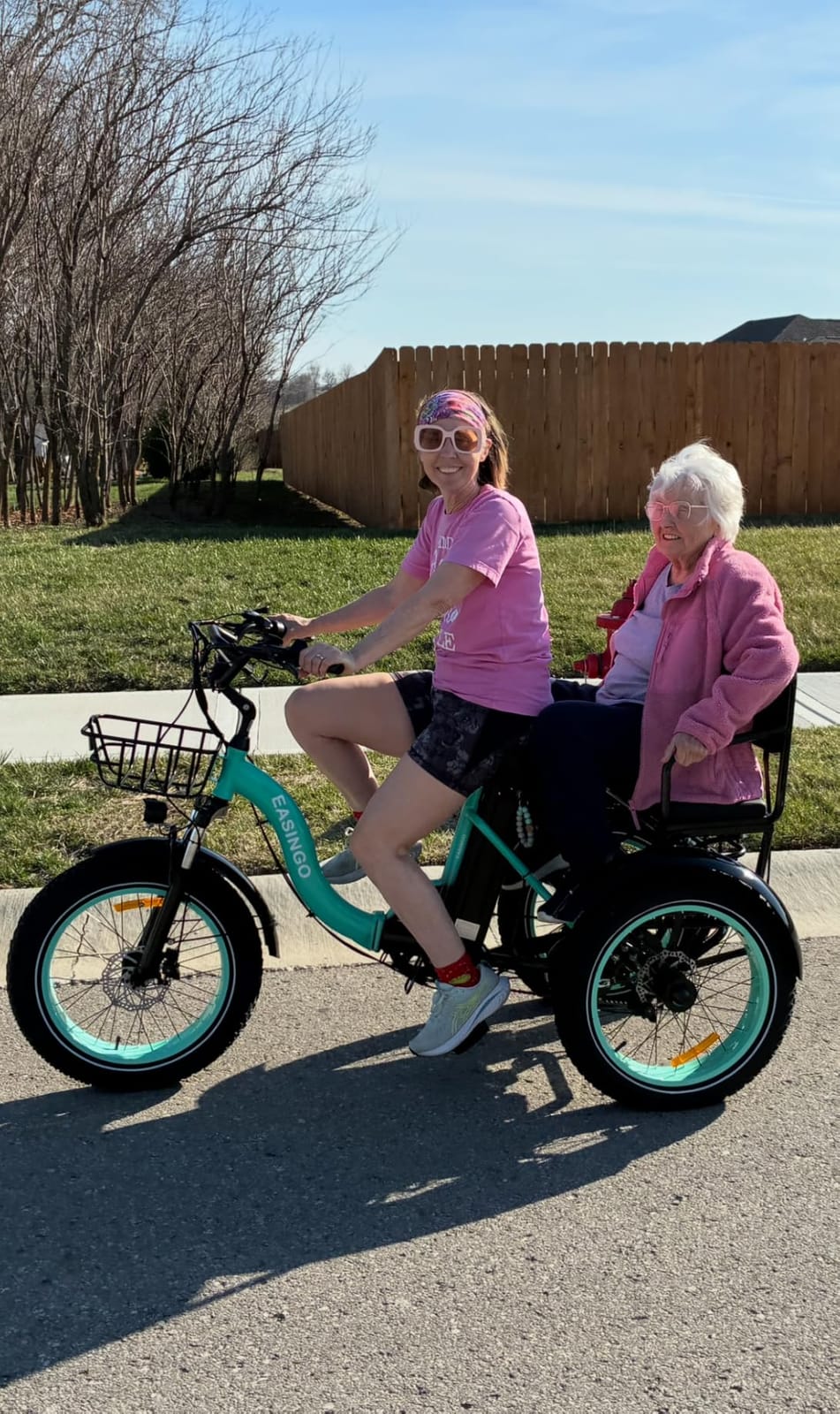
Handling hardware is good: a rear differential for independent rear wheel rotation, front hydraulic suspension, and hydraulic brakes at both ends. The 20 by 4 inch tires sit on aluminum alloy rims, gearing is 7-speed with a thumb shifter, and there is a large rear basket plus front storage. The frame is described as a low center-of-gravity design, which is exactly what you want with a bench seat carrying two people.
Buyers mention using it to ride with children and grandchildren at campgrounds, which tells you the use case it was actually designed around: unhurried multi-generational trips where everyone shares one bike instead of the group splitting into two vehicles.
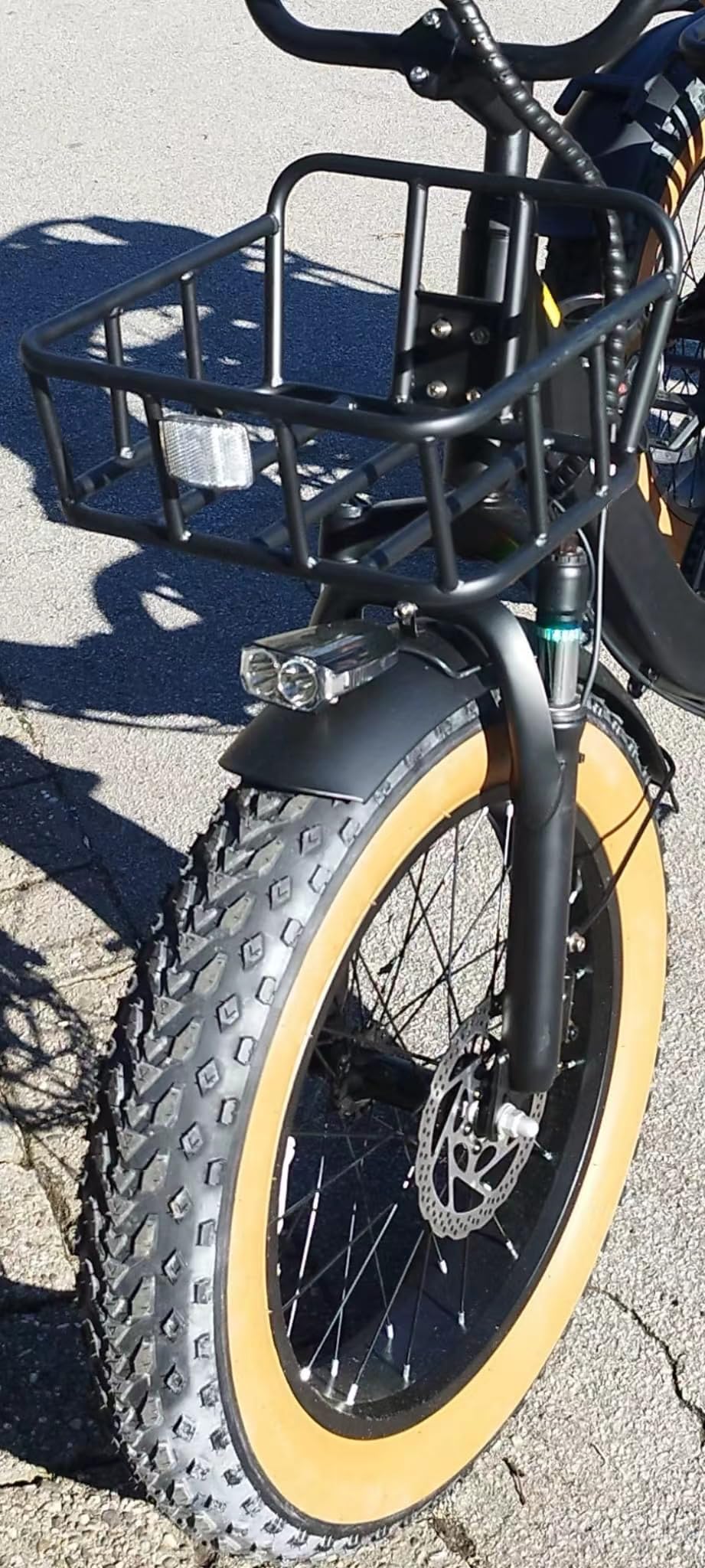
Who this trike suits
Grandparents and older riders who want to take grandchildren out themselves, and any household that values a bench with belts over an open pillion pad. A belted bench is meaningfully safer for a child than a seat without one, and the 330 lb rating covers two adults or an adult and two small children.
It also suits riders planning long recreational days rather than short school hops, because the 80 to 90 mile assist range means a full day out on a single charge in pedal-assist mode.
Where it falls short
Assembly and delivery logistics. This model arrives as two packages, so accessories can arrive after the trike, and the assembly instructions are reported as out of date with unlabeled screws. Second, the stock tires and tubes proved thin, with one flat reported on the first day; check pressures before every loaded ride.
Third, the rear seat is short for adult passengers with limited legroom, and a few riders describe the narrow track with oversized tires as slightly unstable at very low speed. It also does not accelerate quickly and tops out near 12 mph, which is fine on a bike path and slow on a main road. The listed item weight is 129 lb, so plan your storage around moving it with two people.
6. SISIGAD Family E-Bike K008 – Best for One Toddler
SISIGAD Family Electric Bike with Seat – Peak 1500W Motor, 20″ Fat Tire Cargo Ebike, 48V 15Ah Removable Battery E Bike,Dual Hydraulic Brakes,LCD&APP Control,7-Speed,Step-Thru Electric Bicycle
Integrated child seat with guardrail
450lb load capacity
1500W peak motor
48V 15Ah removable battery
Pros
- Child seat built into the frame with a high guardrail
- 450lb capacity for parent plus child plus errands
- 1500W peak motor handles loaded hills
- Step-through frame helps small children on board
- Dual hydraulic brakes and app control
Cons
- Only a 6-month warranty
- Listing is inconsistent about frame material
- 3.0 inch tires are narrower than 4 inch alternatives
- Seats one child rather than a second adult
- Listed 750W sits well below the 1500W peak claim
This is the only bike in the roundup with a child seat built into the frame, complete with a high rear guardrail. If your child is small enough to ride the perch rather than sit independently, that removes the entire accessory buying decision: no adapter kits, no rack compatibility research, no guessing whether a standard seat will bolt on securely.
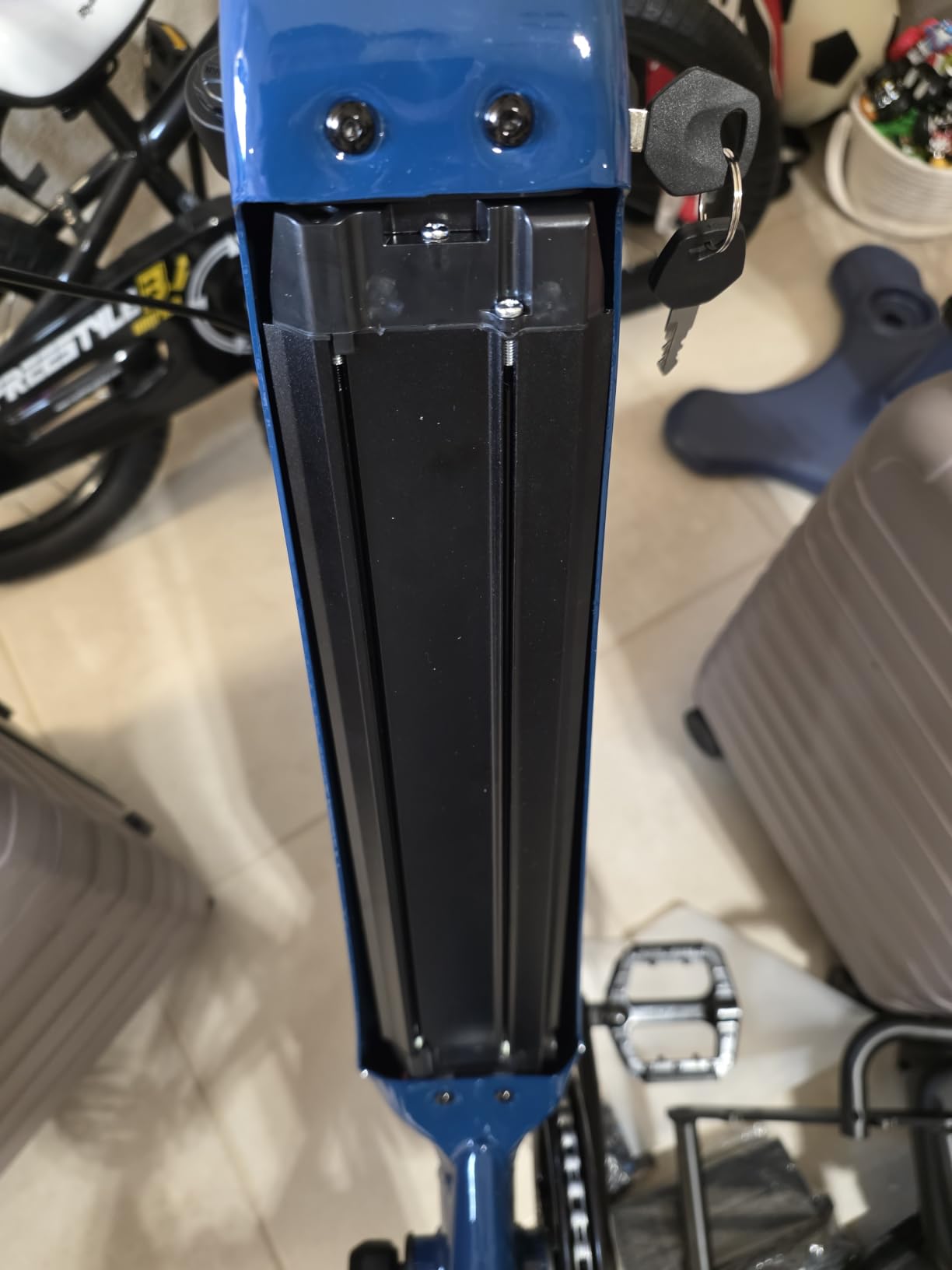
The load capacity is listed at 450 lb for parent, child and daily essentials, and the motor is a 1500W peak unit described as high torque for hills and heavy loads. The battery is a 48V 15Ah removable pack with a stated 60-mile range per charge and an SGS-certified cell, and the bike includes an LCD display with smartphone app control.
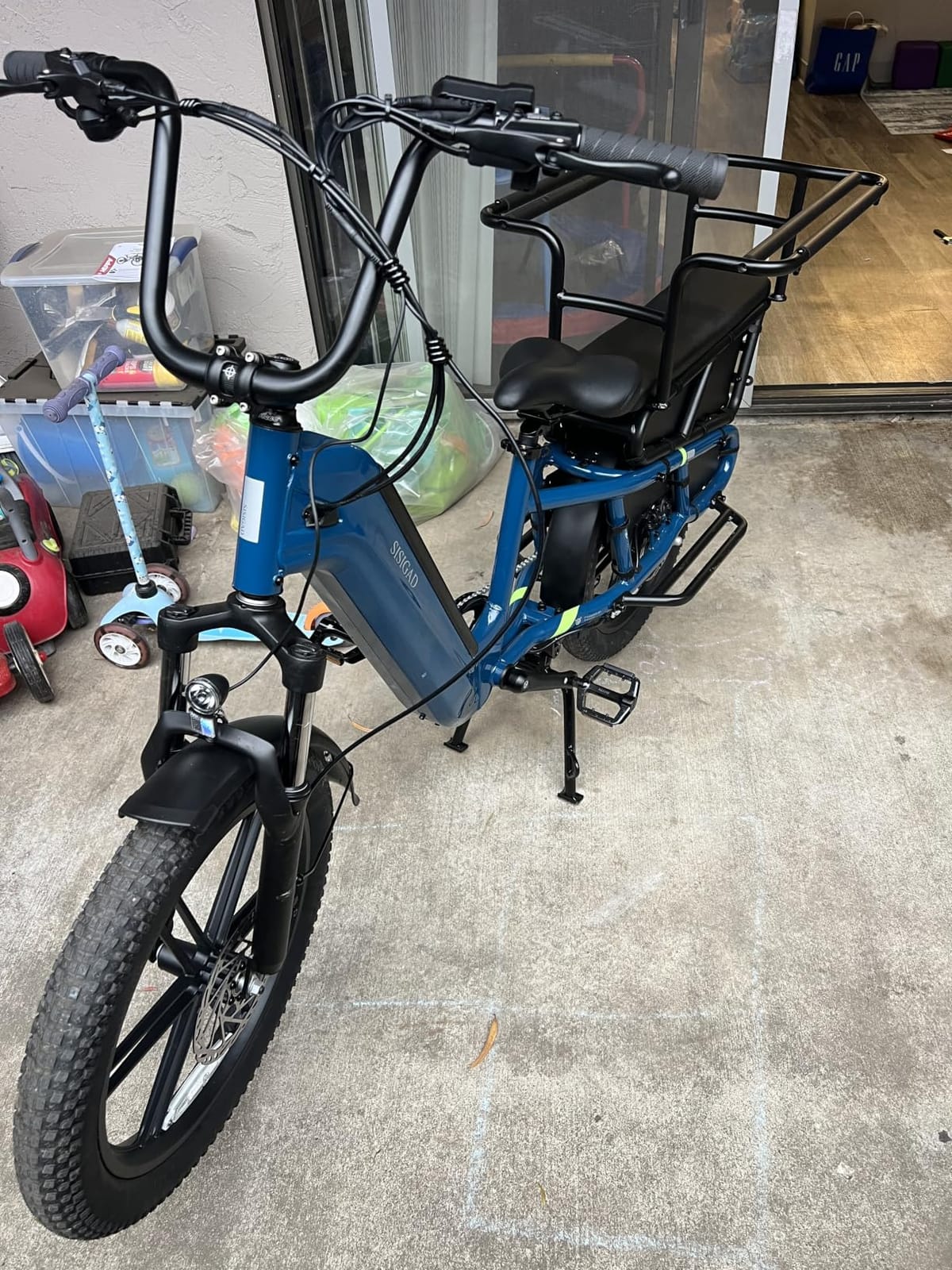
The frame is a low-step design, and buyers single that out for the practical reason that it makes helping a small child on and off much easier at a kerb. Braking is dual hydraulic discs front and rear, which is weather resistant and consistent under load, and the front suspension plus 20 by 3.0 inch fat tires take the edge off rough streets.
Dimensions are listed at 1350 by 265 by 655 mm, and a 7-speed drivetrain handles shifting. The defining draw remains the guardrailed child seat, and the things buyers like most are the motor strength and the hydraulic brakes on a bike used for school runs and family errands.
Who this bike suits
Parents of one toddler or young child who want the simplest possible setup, and riders who appreciate a low-step frame they can stand over in everyday clothes. A 450 lb rating gives plenty of headroom for a parent plus a child plus a full basket of shopping.
It also suits anyone who wants app connectivity for tracking rides or battery state, and the hydraulic discs are a genuine upgrade over the mechanical-style stopping on some cheaper two-seaters.
Where it falls short
The warranty is six months, which is the shortest in this roundup and the most significant drawback here. On a bike carrying your child, that is the number we would push hardest to negotiate, because warranty support matters more to parents than peak wattage.
Second, the listing is internally inconsistent: it describes an aluminum frame in one place and a high-carbon steel low-step frame in another, and it lists 750W wattage against a 1500W peak claim, so ask the seller to confirm the continuous rating. Third, the 3.0 inch tires are narrower than the 4 inch tires on the other cargo options, and there is room for one child only, not a second adult passenger.
Longtail, Front Loader, Trike and Heavy-Duty Cargo E-Bikes Explained
What kind of electric bike can carry kids? The honest answer is any bike with a rated payload that covers your family’s combined weight, a seating position designed for a passenger, and brakes that can stop the whole assembly. In practice that narrows to three shapes, and the one you choose changes almost everything else about the ride.
A longtail cargo e-bike stretches the frame behind the rider and mounts two child seats side by side on an extended rear rack, with room behind them for bags. It is the most popular shape for a reason: two children sit together, adults can reach back and steady them, and the wheelbase keeps the bike planted at speed. The cost is length, typically 75 to 85 inches, which changes how you store it.
A front loader puts a box between the handlebars ahead of the rider, so one or two toddlers sit inside a low compartment with a harness. Owners value the line of sight and the fact that a strapped-in toddler cannot reach over and grab a sibling. The trade-off is a heavier, shorter bike with a higher center of mass than a longtail.
A trike with two or three seating positions is the answer when weight is the deciding factor. Three wheels do not tip, a differential lets the rear wheels turn independently through a corner, and the low center of gravity of a bench seat is calmer than two kids on a rack. Two of the bikes in our list are trikes and one converts to three seats, which is the only genuine multi-child option we could verify in this category.
Style matters less than the load rating. Several bikes here are marketed as cargo e-bikes without publishing a payload figure at all; if a listing does not state a total load number in pounds, treat the child-carrying claim as untested.
Payload Capacity, Child Seats and Age Limits
How much weight can a cargo e-bike carry? It depends entirely on the bike, and the honest range across this roundup runs from a 330 lb belted bench on the KAKIGO to the 550 lb rating on the TINIOVER trike. Always add rider, children, bags and groceries together, then leave a margin rather than running at the ceiling.
Child seats add their own weight to that total, and the seat is usually the heaviest single item. Whether you can put a child seat on an e-bike depends on the mounting system: bikes with an integrated perch need nothing, bikes with a rear rack need a rack rated for the seat and the passenger, and bikes with a bench already have belts. Ask for the rack’s own load rating in writing before assuming a standard seat will fit.
On age, the practical answer is that a baby can ride in a front box or a strapped bench from infancy because the seat supports them, while a rear perch on a two-wheeler suits a child old enough to hold on and sit unsupported, usually around three or four. Many families use the perch for a preschooler and reserve the front seat for the baby.
Two hard rules for any age. Every child under about nine should wear a properly fitted helmet, because a loaded bike tips differently than a solo one. And a child who cannot independently hold their head and torso should be belted or strapped, not perched.
Our broader guide to bikes for younger children is useful for judging when a child is ready for a perch rather than a seat, and for sizing helmets correctly. For bike-and-trailer setups rather than on-bike seats, our kids bike comparison covers the other half of the school-run problem.
Loaded Range, Braking and Climbing Under Load
How far can a cargo e-bike go with two kids on it? Advertised range is measured with a single rider at a steady pedal-assist level on flat ground, and a loaded family ride is a different machine. Expect a meaningful drop, and plan your charge around roughly half the headline figure if your route has hills or headwinds.
The figures owners actually report sit comfortably below the marketing numbers across this list: the EUYBIKE’s 70 to 80 mile pedal-assist claim drops toward 35 miles in electric-only use, and the trikes’ 80 to 100 mile claims assume a solo rider on level ground. A two-hour school run with a return trip and a grocery stop on the way home is a small fraction of any of those numbers, which is why battery size matters more than any other single spec.
Braking under load is the safety story. A solo rider at 170 lb can stop on entry-level mechanical discs; a rider at 170 lb with two children is pushing four times the mass, and stopping distance scales accordingly. The two trikes here run hydraulic systems, one with a triple hydraulic mechatronic setup on 180mm rotors and the other with hydraulic brakes front and rear, and the SISIGAD uses dual hydraulics too.
Torque decides the hill. The bikes in this roundup cluster between 82 Nm and 90 Nm of peak torque, and that figure matters more than headline wattage because it is what the motor delivers at the cranks when you are pushing into a grade. The bikes with a single-speed drivetrain, like the LoonFat and the Speedrid, lose the argument on hills because no amount of torque replaces a low gear when the rider is also carrying passengers.
Stability is the piece parents ask about most. A long wheelbase resists tipping in straight-line motion, but the documented incidents in family forums cluster around low-speed tight turns, uneven ground and kerbs, where a heavy bike at a standstill is at its least stable. Slow, wide steering arcs, the parking brake or reverse functions where available, and never turning hard at walking pace with a child aboard are the practical habits that prevent almost all of them.
Safety, Street Legality and Who Should Skip a Cargo E-Bike
Cargo e-bikes are legal to ride on public roads in most US states under the same three classes as any e-bike: Class 1 assists up to 20 mph, Class 2 adds a throttle up to 20 mph, and Class 3 assists up to 28 mph with a speedometer. Class 3 often carries an age restriction, typically 16 and under in many states. You do not need a license or registration in most places, but path and trail bans are common, and a longtail is frequently barred from bike paths where a standard bike is welcome.
Check the UL 2849 mark before you buy. That certification covers the whole electrical system including the charger, and it is the single clearest way to tell a properly built bike from an uncertified marketplace import. In this roundup the TINIOVER trike carries UL2849, UL2272 and UL2271 marks, the LoonFat and KAKIGO bikes carry UL2849, the Speedrid is UL2272 compliant, and the SISIGAD uses an SGS-certified battery. The EUYBIKE’s battery is described as UL-certified, so verify which standard the number corresponds to on the listing.
For what ebikes to stay away from, the pattern is consistent: no published load rating, no certification mark, no warranty longer than a few months, and throttle controls that let a child reach the throttle. A bike whose listing never states a payload number in pounds is telling you the manufacturer has not tested it with a family on it.
Now the honest part: who should not buy one at all. If you live above the ground floor with no lift, a 125 lb trike or an 85 lb longtail is a daily obstacle rather than an occasional one. If your routes have no protected lane and no low-traffic street, a 6-foot bike carrying children in car traffic is a risk that no amount of torque compensates for. And if your own weight plus your children plus the gear exceeds the bike’s rating, walk away, regardless of how good the motor looks on paper.
Storage deserves its own check before you commit. Measure your doorway, hallway and any stairs, and work out in advance who moves the bike when it needs to come inside. For comparison, our cargo liner picks solve the problem for whatever storage room you already have.
How to Test Ride a Cargo E-Bike Loaded?
Most shops will happily let you ride an unloaded cargo e-bike and then quietly decline to add two children to it, which is exactly the test that matters. Insist on the loaded ride, and here is how to make it happen without wasting the salesperson’s afternoon.
First, ask for the total payload rating in writing before you go. If the salesperson cannot produce one, that conversation is your answer. Second, bring the actual child seats you intend to use if they are already bought, because mounting points and clearance differ between a perch, a rack and a bench.
Third, load the bike to a representative weight with sandbags or dumbbells from the shop’s rack rather than a small child, and keep it loaded for the whole ride. Fourth, on the test route, include at least one hill of sustained grade and one stop-start corner, because those are the two situations where a family e-bike earns or loses its place.
Fifth, ride it yourself first with no passengers, and note how the bike tracks under power. Pedal assist that does not engage until the bike is already moving is a documented complaint and it is genuinely frightening with children aboard, so confirm the assist responds at a standstill. Sixth, brake hard twice from about 15 mph and feel whether the lever travel is acceptable with the load fitted.
Seventh, park it and try the kickstand or parking brake on the slope the shop offers, if there is one. Eighth, and last, ask the service department what the warranty actually covers and how a claim is handled, because that conversation tells you more about the next five years of ownership than the spec sheet does.
Frequently Asked Questions
What is the best cargo bike for transporting kids?
The EUYBIKE fat tire cargo e-bike is the strongest all-round choice for one child, pairing a 960Wh removable battery with 82 Nm of torque and a step-through frame that makes loading a small passenger easy. Families carrying more weight should look at the TINIOVER folding trike, which rates 550 lb and has a rear differential for stable cornering.
How much weight can a cargo e-bike carry?
It depends on the bike, and the ratings in this roundup run from 330 lb on the belted KAKIGO bench to 550 lb on the TINIOVER trike. The number covers everyone: rider, every child on board, the child seats themselves, bags and groceries. Add all of it up and leave a margin rather than running at the ceiling.
What age can a baby go in a cargo bike?
A baby can travel from infancy in a front box or a strapped bench seat, because the seat supports their body and a harness holds them in. A rear perch on a two-wheeler suits a child old enough to sit unsupported and hold on, usually around three or four. Any child under about nine should wear a properly fitted helmet on a family e-bike.
Do I need a license for a cargo e-bike?
In most US states no license or registration is required, but class rules still apply. Class 1 assists to 20 mph, Class 2 adds a throttle to 20 mph, and Class 3 assists to 28 mph and often carries an age limit. Longer bike paths frequently ban longtail and trike cargo bikes even where standard e-bikes are allowed, so check your local path rules before you buy.
How far can a cargo e-bike go with two kids on it?
Plan on roughly half the advertised range with two passengers. The headline numbers here are measured solo on flat ground, and a loaded school run with hills and headwinds cuts into them heavily. The EUYBIKE’s 70 to 80 mile assist claim falls toward 35 miles in electric-only use, so size your battery around a full day of errands rather than a long tour.
What ebikes should I stay away from?
Use four filters. Skip listings that publish no payload rating in pounds, since the family claim is then untested. Skip bikes with no UL 2849 or equivalent electrical certification. Be cautious with one-year or shorter warranties, and with any design where a child could reach the throttle. On this list the weakest warranty belongs to the SISIGAD at six months.
Conclusion: Which Cargo E-Bike Fits Your Household
Match the bike to the household, not the other way round. One child on mixed terrain with a long round trip means the EUYBIKE, with its removable 960Wh pack and step-through frame. Two children or a heavier family means the TINIOVER trike, whose 550 lb rating is the only one in this roundup that clears the load with margin.
Three riders means the Speedrid, though the Speedrid’s 15.5 mph ceiling and heavy iron frame suit flat routes and short trips. An adult plus a child who want to share a bench with belts is the KAKIGO, and a parent who wants the child seat already built into the bike with nothing to buy is the SISIGAD. The LoonFat remains the answer for a short school run on flat, paved streets where storage space is the binding constraint.
Before any of them, do the arithmetic. Add up every rider, every child, every seat and a full load of groceries, and compare it to the published payload number. Then measure your storage space and your route. Those two checks eliminate more bad purchases than any specification on this page, and no reviewer on any forum will tell you otherwise.