
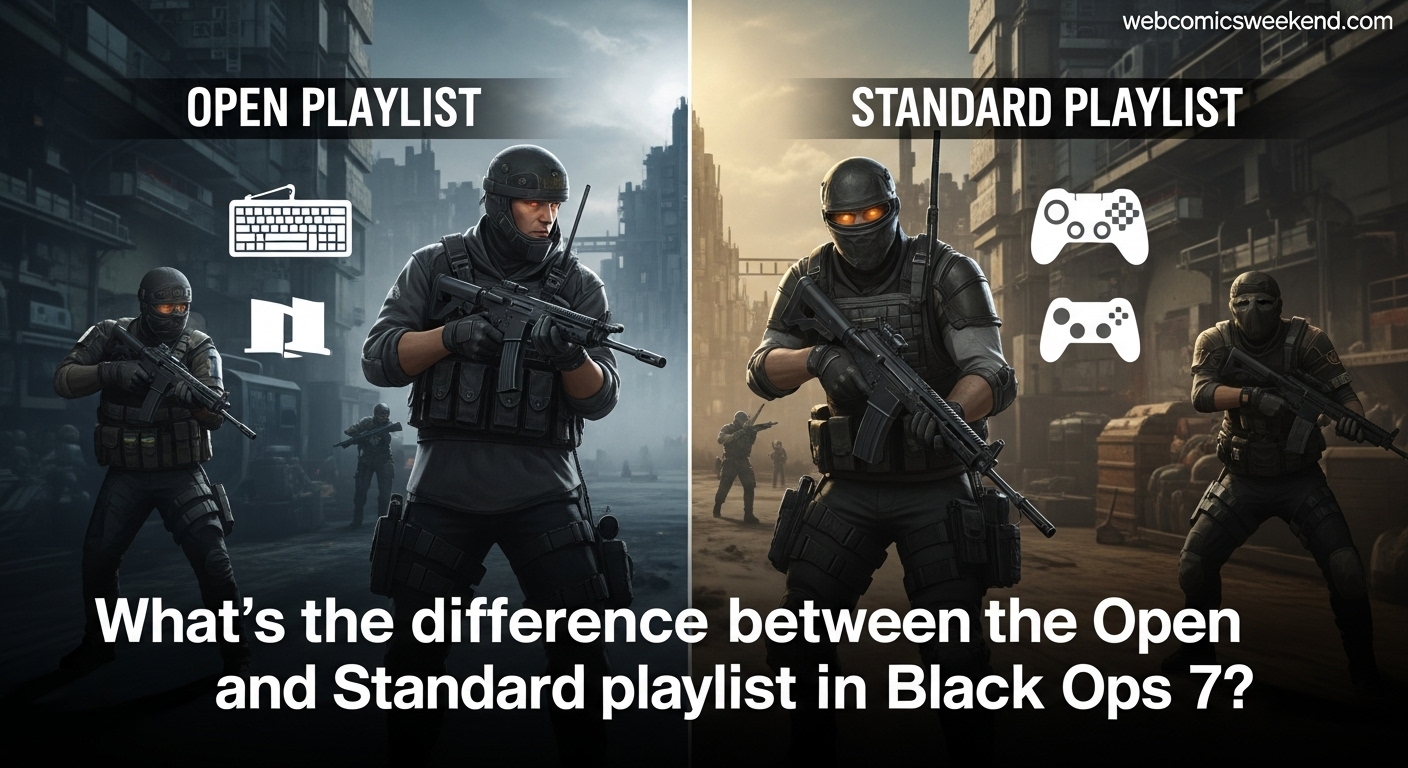
I’ve been playing Call of Duty for over a decade, and I’ve never seen a change quite like what Treyarch has done with Black Ops 7’s matchmaking system. When I first heard about the split between Open and Standard playlists, I’ll admit I was skeptical. But after diving deep into the beta and now the full release, I can tell you this is exactly what the community has been asking for.
Let me break down everything you need to know about these two playlist types so you can decide which one is right for you.
The Big Picture: Why Treyarch Split the Playlists?
I remember the frustration all too well. You’re having a great match, dropping 40 kills, feeling unstoppable, and then suddenly—BAM—your next lobby feels like you’ve been dropped into a professional tournament. That’s the reality of strict Skill-Based Matchmaking (SBMM) that’s dominated Call of Duty since Modern Warfare 2019.
Treyarch finally listened to years of community outcry and made the most significant change to Call of Duty matchmaking in over five years. They’ve given us options, and honestly, it’s about time.
Open Playlist: Freedom and Variety
When I first jumped into the Open playlist during the beta, the difference was immediately noticeable. I mean, like, night-and-day noticeable. Suddenly, I wasn’t playing against players who were all at my exact skill level. There were some players who were clearly dominating the lobby, and others who were struggling to get more than a handful of kills.
What Makes Open Different?
Skill Consideration: In Open playlists, skill is “minimally considered” for matchmaking. Treyarch’s official wording is that they start with “ping and server stability, then factors in skill levels” rather than making skill the primary criterion. This means you’re more likely to get matched with players based on connection quality and geographic location than on how good you are at the game.
Input Types: This is where it gets really interesting. Open playlists welcome everyone—keyboard and mouse players, controller users, even hybrid setups. It’s the wild west of input types, and I love it. The aim assist is still there for controller users, but it’s tuned down to keep things fair across different input methods.
Crossplay: Full crossplay is enabled in Open playlists. That means PC players can match up against console players, Steam users can play with Xbox gamers—you name it. It’s the ultimate melting pot of the Call of Duty community.
Persistent Lobbies: This is my favorite feature. Lobbies don’t disband after each match anymore. You stay with the same group of players unless you choose to leave. I’ve built some amazing rivalries this way, and there’s nothing quite like getting revenge on someone who dominated you in the previous match.
My Experience with Open Playlists
I’ll be honest—my first few matches in Open playlists were a wake-up call. I’m a decent player, but suddenly I was going up against people who were clearly on another level. Then there were matches where I felt like I was carrying my team. The variety is real, and it’s refreshing.
When I talked to other players about their experiences, the feedback was overwhelmingly positive. Even pro players like Shroud chimed in, saying the Open playlist was “actually kind of enjoyable.” That’s high praise coming from someone who makes a living being good at FPS games.
Standard Playlist: The Classic Experience
If you’re someone who liked the way matchmaking worked in previous Call of Duty titles, the Standard playlist is going to feel like home. It’s basically the traditional Call of Duty experience we’ve all come to know (and sometimes love to hate).
What Makes Standard Different?
Skill Consideration: In Standard playlists, skill is an “important consideration” for matchmaking. This means the system tries to match you with players of similar skill levels, creating more balanced matches. It’s the stricter SBMM that we’ve been dealing with for years.
Input Types: Standard playlists are controller-only. No keyboard and mouse players allowed. This creates a level playing field where everyone is using the same type of input device.
Crossplay: Crossplay in Standard playlists is limited to consoles only. So Xbox players can play with PlayStation players, but PC players are excluded. This helps maintain that controller-only ecosystem.
Aim Assist: Full aim assist is enabled in Standard playlists, which is what most console players are used to. It’s not tuned down like it is in Open playlists.
Who Should Play Standard?
From what I’ve seen, Standard playlists are perfect for players who:
- Want consistently balanced matches
- Prefer playing against others at their skill level
- Don’t want to deal with keyboard and mouse players
- Enjoy the traditional Call of Duty matchmaking experience
Detailed Comparison: Open vs Standard
Let me break this down in a way that’s easy to understand. I’ve created a comprehensive comparison table so you can see exactly how these two playlist types differ:
| Feature | Open Playlist | Standard Playlist |
|---|---|---|
| Skill Consideration | Minimally considered | Important consideration |
| Primary Matchmaking Factor | Connection quality & location | Skill level |
| Input Types Allowed | All (KBM, controller, hybrid) | Controller only |
| Crossplay | Full (PC, console, Steam) | Console only |
| Aim Assist | Reduced but present | Full strength |
| Persistent Lobbies | Yes | No (traditional disbanding) |
| Skill Variation | High (varied skill levels) | Low (similar skill levels) |
| Match Variety | Unpredictable, varied outcomes | More predictable, balanced |
| Target Audience | Players seeking variety, competitive players | Players seeking balance, casual players |
The Technical Side: How It Actually Works?
I’ve dug deep into the technical aspects of both systems, and let me tell you, it’s fascinating stuff. Treyarch has completely reworked how matchmaking functions in Black Ops 7.
Open Playlist Technical Details
The Open playlist system prioritizes connection quality above all else. When you queue up for a match, the system first looks for players with good ping to you and stable server connections. Only after that does it even consider skill levels, and even then, it’s just a minimal factor.
This is why I’ve noticed such a huge difference in hit detection and overall game feel in Open playlists. Fewer “deaths around corners,” more accurate shots actually registering as hits. It feels like the classic Call of Duty games where connection quality was king.
Standard Playlist Technical Details
The Standard playlist uses the more traditional SBMM approach that we’ve seen in recent Call of Duty titles. It considers various performance metrics like score-per-minute, kill/death ratio, and other stats to create balanced teams.
The system tries to ensure that each team has a similar overall skill level, which theoretically leads to more competitive matches. However, as many of us have experienced, this can sometimes result in those frustrating sessions where you have a great game followed immediately by a terrible one.
Community Reaction: What Players Are Saying?
I’ve spent hours reading through forums, watching YouTube videos, and talking to other players about their experiences with both playlist types. The community reaction has been… well, it’s been mixed, but generally positive.
The Positive Feedback
Many players, especially those who’ve been critical of SBMM over the years, are thrilled with the Open playlist. I’ve seen comments like:
- “Finally, I can play Call of Duty without feeling like I’m in a constant sweat fest”
- “The persistent lobbies are amazing—I’ve made friends and rivals already”
- “It feels like the old Call of Duty games I fell in love with”
Even some content creators and pro players have expressed their approval, noting that the Open playlist allows for more varied content creation and a more relaxed streaming experience.
The Concerns
Not everyone is completely on board, though. Some players have raised valid concerns:
- “Average players are going to get destroyed in Open playlists”
- “This is just going to split the player base”
- “Casual players will stick to Standard, leaving Open for the sweats”
These are legitimate concerns, and only time will tell how they play out. Personally, I think Treyarch has struck a good balance by making most playlists Open by default while keeping Standard as an option.
Which Playlist Should You Choose?
This is the big question, isn’t it? After spending dozens of hours with both playlist types, I’ve developed some strong opinions about who should play which.
Choose Open If:
- You’re a skilled player who wants more freedom to dominate
- You enjoy variety in your matches and don’t want predictable outcomes
- You like building rivalries and playing with the same people over multiple matches
- You don’t mind occasionally going up against players who are much better or worse than you
- You want the best possible connection and hit detection
I fall into this category myself. I love the unpredictability of Open playlists, and I’ve had some of my most memorable Call of Duty moments in them. There’s nothing quite like the feeling of dropping a 50-kill game against players of varying skill levels.
Choose Standard If:
- You prefer balanced matches where everyone is at a similar skill level
- You’re a controller player who doesn’t want to deal with keyboard and mouse players
- You’re newer to Call of Duty or still developing your skills
- You want consistent, predictable matchmaking experiences
- You don’t like the idea of persistent lobbies and prefer fresh matchups each time
I’ve recommended Standard to several friends who are newer to Call of Duty, and they’ve all had positive experiences. It’s less intimidating and more forgiving for players who are still learning the ropes.
The Impact on Different Player Types
Let me break this down by player skill level, because that’s really what determines which playlist you’ll enjoy most.
For High-Skill Players
If you’re someone who consistently tops the leaderboard, Open playlists are going to be your paradise. You’ll have the freedom to dominate matches without the SBMM system constantly trying to balance things out. I’ve seen some incredible killstreaks and highlight-reel moments come from skilled players in Open playlists.
However, be prepared for the occasional match where you’re completely outclassed. Even the best players can have off days, and in Open playlists, you might run into someone who’s even better than you are.
For Average Players
This is where it gets interesting. As an average player myself, I’ve found that Open playlists can be a mixed bag. Some matches, I feel like a god. Other matches, I struggle to break even. But you know what? I kind of love that variety.
If you’re an average player who doesn’t mind the occasional stomp (either giving or receiving), Open playlists can be really fun. But if you prefer more consistent, balanced matches, Standard might be better for you.
For Newer Players
If you’re new to Call of Duty or still developing your skills, I’d recommend starting with Standard playlists. The stricter SBMM will help ensure you’re matched against players of similar skill levels, which is much less intimidating than jumping into Open playlists where you might encounter veterans who’ve been playing since the original Black Ops.
Once you’ve developed your skills and confidence, you can always give Open playlists a try. Many players find that the variety actually helps them improve faster, as they’re exposed to different playstyles and skill levels.
The Future of Matchmaking in Call of Duty
I’ve been thinking a lot about what this means for the future of Call of Duty. This split between Open and Standard playlists represents the biggest shift in matchmaking philosophy in over five years, and I believe it could set a new precedent for how competitive shooters handle matchmaking.
Treyarch is gathering a ton of data on how players interact with both systems, and I’m curious to see how this influences future Call of Duty titles. Will other developers follow suit? Could this become the new standard for FPS games?
Only time will tell, but I’m excited to see where this leads. For now, I’m just enjoying having options and being able to choose the type of matchmaking experience I want.
Common Questions and Concerns
I’ve seen a lot of questions pop up in forums and discussions, so let me address some of the most common ones.
Will the Player Base Be Split?
This is probably the biggest concern I’ve seen. People worry that having two separate playlist types will divide the community and lead to longer matchmaking times.
From what I’ve experienced, this hasn’t been a major issue. Call of Duty has a massive player base, and most playlists are Open by default, with only a few Standard options available. This means the majority of players are still in the same pool, and matchmaking times have been reasonable.
What About Cheaters?
Another valid concern is whether Open playlists will become infested with cheaters, especially on PC. While I did encounter a few suspicious players during the beta, Treyarch has implemented strong anti-cheat measures, and the situation has improved significantly in the full release.
Will My Progress Carry Over?
Yes! Your progression, ranks, stats, and unlocks carry across both playlist types. You can switch between Open and Standard without losing any of your hard-earned progress. This is great because it means you can try both playlist types without any penalty.
Which Playlist Has More Players?
Currently, Open playlists have the majority of players, which makes sense since most playlists are Open by default. However, Standard playlists still have healthy populations, and I haven’t had trouble finding matches in either type.
Tips for Success in Each Playlist Type
After spending so much time with both systems, I’ve picked up some tips that might help you succeed regardless of which playlist type you prefer.
Open Playlist Tips
- Embrace the variety – Some matches you’ll dominate, others you’ll struggle. Don’t get discouraged by the occasional bad game.
- Build on persistent lobbies – Since you stay with the same players, learn their tendencies and adjust your playstyle accordingly.
- Focus on connection – Take advantage of the improved hit detection and connection quality.
- Experiment with loadouts – The varied skill levels give you more freedom to try unconventional setups.
- Learn from better players – When you encounter someone who’s clearly better than you, watch what they do and try to learn from it.
Standard Playlist Tips
- Stay consistent – Since matches are more balanced, consistency is key to maintaining a good win rate.
- Communicate with your team – Balanced matches mean teamwork is more important than ever.
- Master the meta – With similar skill levels, small advantages in loadout and strategy can make a big difference.
- Don’t get complacent – Just because matches are balanced doesn’t mean they’re easy. Stay focused and play your best every game.
- Learn from losses – When you lose in Standard playlists, it’s usually because the other team played better. Analyze what they did right and incorporate those lessons into your own play.
My Personal Recommendation
After all this time with both playlist types, you might be wondering which one I prefer. Honestly, it depends on my mood and what I’m looking for in a given session.
If I’m looking to relax and have some fun, or if I want to work on improving my skills against varied competition, I’ll jump into Open playlists. The variety keeps things interesting, and I love the social aspect of persistent lobbies.
If I’m in a more competitive mood and want balanced, intense matches where every kill matters, I’ll go with Standard playlists. There’s something satisfying about hard-fought matches where everyone is at a similar skill level.
My advice? Try both! Spend some time in each playlist type and see which one resonates with you more. The beauty of this system is that you have options, and you’re not locked into one style of play.
Final Thoughts
The introduction of Open and Standard playlists in Black Ops 7 represents a bold step forward for Call of Duty matchmaking. It’s a rare example of a major developer actually listening to community feedback and making meaningful changes based on player input.
I’ve been critical of Call of Duty’s matchmaking in the past, but I have to give credit where it’s due—Treyarch has nailed it with this system. By giving players options and creating distinct playlist experiences, they’ve managed to please both the SBMM critics and those who prefer balanced, skill-based matchmaking.
Whether you’re a veteran player who’s been around since the original Black Ops, or you’re just picking up your first Call of Duty game, there’s a playlist type that’s right for you. And that, my friends, is exactly how it should be.
Now if you’ll excuse me, I’ve got some Open playlist matches to play. I’ve got a rival from a few matches ago that I need to get some revenge against…
FAQ
Q: Can I switch between Open and Standard playlists?
A: Absolutely! You can switch between playlist types anytime from the multiplayer menu without losing any of your progress, XP, or unlocks.
Q: Do Open playlists have no SBMM at all?
A: Not exactly. Skill is “minimally considered” in Open playlists, but it’s not completely eliminated. The system prioritizes connection quality and geographic location over skill matching.
Q: Will I face cheaters more often in Open playlists?
A: While this is a valid concern, Treyarch has implemented strong anti-cheat measures. In my experience, cheating hasn’t been significantly more prevalent in Open playlists compared to Standard.
Q: Are all game modes available in both playlist types?
A: Most game modes are available in both playlist types, but some may be exclusive to one or the other. The majority of playlists are Open by default, with only a few Standard options available.
Q: Do I need different loadouts for Open vs Standard playlists?
A: Not necessarily, but you might find that certain loadouts perform better in one playlist type versus the other. For example, you might be able to get away with more experimental setups in Open playlists due to the varied skill levels.
Q: Will my stats be affected by which playlist I play?
A: Your stats will reflect your performance across both playlist types, but you might notice differences in your performance metrics depending on which playlist type you play more frequently.
Q: Are there ranked playlists in both Open and Standard?
A: Ranked playlists typically follow the Standard format with stricter SBMM to ensure competitive integrity, but this can vary depending on the specific game mode and season.
Q: Can I party up with friends who are playing in different playlist types?
A: No, you’ll need to be in the same playlist type to party up with friends. Make sure you coordinate with your squad before jumping into matches.
Q: Will this playlist system be in future Call of Duty games?
A: While nothing has been officially announced, the success of this system in Black Ops 7 could influence future titles. Treyarch is gathering data on player preferences that will likely inform future matchmaking decisions.
Q: How do I know which playlist type I’m currently in?
A: The playlist type is clearly labeled in the multiplayer menu. Open playlists are marked as such, while Standard playlists are indicated separately. The UI makes it easy to distinguish between the two types.