
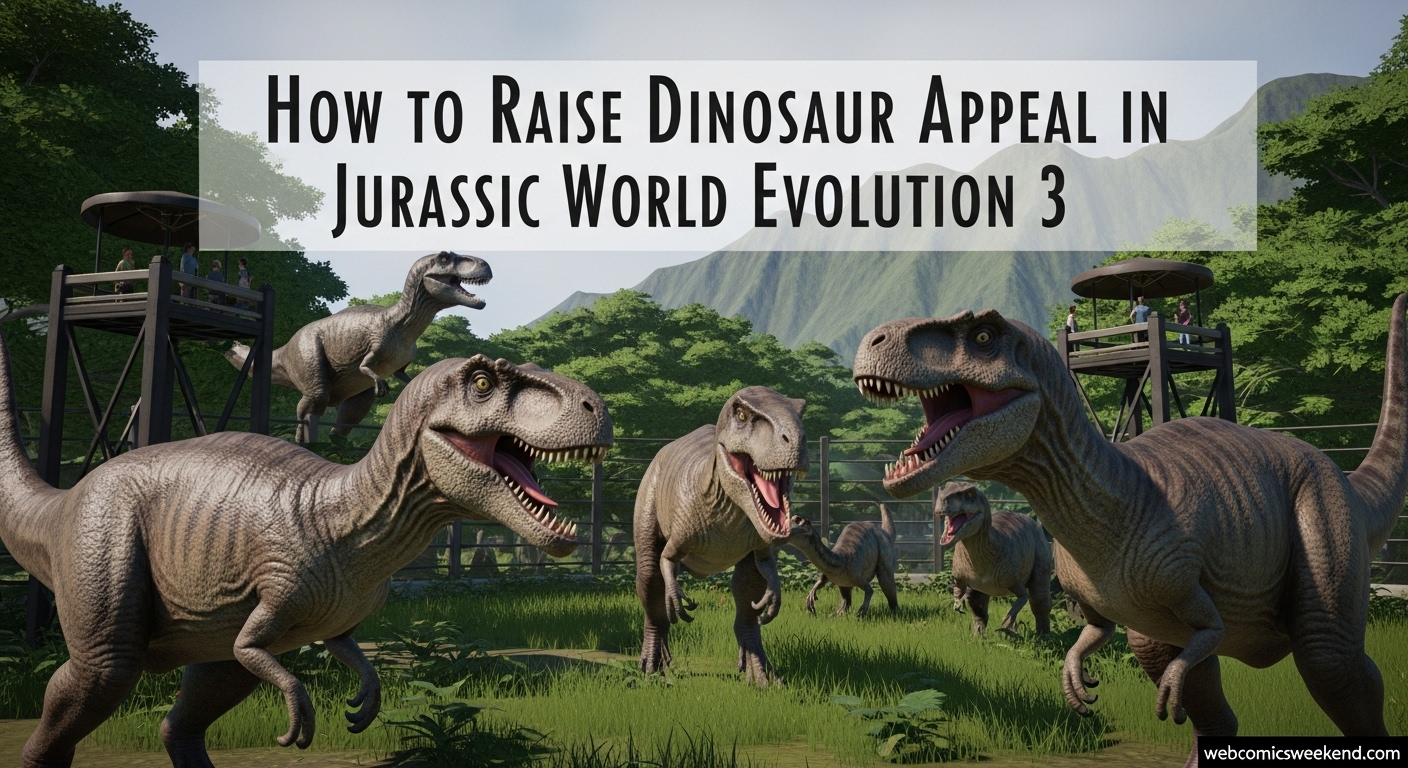
Hey there, fellow park manager! If you’re anything like me, you’ve spent countless hours in Jurassic World Evolution 3 trying to create the perfect dinosaur park that guests will flock to. I’ve been there – staring at my dinosaurs wondering why some are drawing massive crowds while others seem to be invisible to visitors. Well, I’m here to share everything I’ve learned about maximizing dinosaur appeal in Jurassic World Evolution 3.
Let me tell you, when I first started playing, I thought it was all about having the coolest dinosaurs. Boy, was I wrong! After countless experiments (and more than a few dinosaur escapes), I’ve cracked the code on what really makes those prehistoric stars shine in your park.
What Exactly is Dinosaur Appeal?
Before we dive into the nitty-gritty, let’s get one thing straight. Dinosaur appeal isn’t just some random number – it’s the lifeblood of your park’s success. Every dinosaur in your park has an appeal rating measured on a five-star system, and this rating directly impacts how many guests want to visit and how much money you’ll make.
I remember when I first discovered this mechanic. I had this amazing T-Rex that I thought would be the star of my park, but guests were barely glancing at it. Meanwhile, my Velociraptors were drawing massive crowds. What gives? It all comes down to appeal, and more importantly, how well you’re managing it.
The Comfort-Appeal Connection: My Biggest Discovery
Here’s the thing I wish I knew from day one: comfort is the foundation of appeal. You can have the most expensive, rare dinosaur in the game, but if it’s not comfortable, it’s not going to perform well for your guests.
When I click on any dinosaur in my park, the first thing I check is the comfort tab. This little panel tells me everything I need to know about why my dinosaur might be underperforming. The comfort rating is affected by two main categories:
Environmental Needs
This is all about creating the perfect home for your dinosaurs. I’ve learned that each species has specific preferences for:
- Terrain types (pasture, barren, water, forest)
- Enclosure size (bigger isn’t always better, but too small is a disaster)
- Vegetation (some dinosaurs love dense forests, others prefer open plains)
- Water sources (not just for drinking, but for the right environment)
I once had a Stegosaurus that just wouldn’t stop breaking fences, no matter what I did. Its comfort was at 0%, and I was pulling my hair out trying to figure out why. Turns out, I had placed it in an enclosure that was too small and didn’t have enough forest coverage. Once I expanded its territory and added the right vegetation mix, its comfort shot up to 100%, and so did its appeal!
Social Needs
Dinosaurs are social creatures (well, most of them anyway). I’ve found that managing their social needs is just as important as their environment. This includes:
- Population size (some dinosaurs like company, others prefer solitude)
- Gender balance (having the right mix of males and females)
- Cohabitation compatibility (which dinosaurs can live together peacefully)
I learned this the hard way when I tried to house a bunch of different carnivores together. Let’s just say it didn’t end well, and my guest satisfaction plummeted. Now I always check the cohabitation preferences before putting dinosaurs together.
My Step-by-Step Guide to Maximizing Dinosaur Appeal
Alright, now that we understand the basics, let me walk you through my proven system for getting those five-star appeal ratings that’ll make your park the talk of the town.
Step 1: Start with the Perfect Environment
When I’m setting up a new enclosure, I don’t just drop in some fences and call it a day. I take the time to create a natural habitat that meets all my dinosaurs’ needs.
Here’s my process:
- Research the species – Before I even place the first fence, I check what the dinosaur needs. What terrain does it prefer? How much space does it need? What kind of vegetation makes it feel at home?
- Use the Environment tools – Jurassic World Evolution 3 gives us amazing tools to customize terrain. I use these to create the perfect mix of terrain types. For example, if I’m setting up for Triceratops, I make sure to have plenty of open pasture with some forested areas for shade.
- Add water features – I’ve found that adding water sources not only meets the dinosaurs’ needs but also makes the enclosure look more natural and appealing to guests.
- Consider expansion – I always build enclosures larger than the minimum requirement. This gives me room to add more dinosaurs later and ensures my current residents have plenty of space to roam.
Step 2: Master the Art of Visibility
Here’s something that took me way too long to figure out: dinosaur appeal only matters if guests can actually see the dinosaurs! I can’t tell you how many times I’ve had perfectly comfortable dinosaurs with high appeal ratings, but my park’s overall appeal was low because guests couldn’t see them.
My visibility strategy includes:
- Strategic viewing platform placement – I place viewing galleries and platforms where they’ll give guests the best views of multiple dinosaurs. I use the Dinosaur Visibility View Mode to identify any blind spots in my park.
- Varying viewing experiences – I mix different types of viewing attractions. Some guests prefer the up-close experience of viewing platforms, while others enjoy the panoramic views from monorails or balloon tours.
- Consider dinosaur comfort – I’ve learned that some dinosaurs get stressed if their nests are too visible to guests. I make sure to place nesting areas away from heavy guest traffic while still keeping the main dinosaur areas visible.
Step 3: Embrace the Power of Breeding
When Jurassic World Evolution 3 introduced breeding mechanics, I was skeptical at first. But let me tell you, this has become one of my favorite features for boosting appeal. There’s something special about seeing juvenile dinosaurs in your park – guests absolutely love them!
My breeding strategy:
- Research genome requirements – Before I start breeding, I make sure I have enough of the species’ genome researched to create both males and females.
- Create suitable nesting areas – Different species need different types of nests. I make sure to place them in areas that meet the dinosaurs’ comfort requirements.
- Monitor breeding success – I keep an eye on fertility rates and compatibility between breeding pairs. Sometimes I need to adjust the population or environment to encourage successful breeding.
- Enjoy the appeal boost – Well-cared-for juvenile dinosaurs not only add appeal while they’re young but also grow into adults with an additional appeal boost. It’s like getting a two-for-one deal!
Step 4: Build a Diverse Dinosaur Collection
I used to think that having a few “star” dinosaurs was enough, but I’ve learned that variety is crucial for maximizing park appeal. The game actually has a species target, and if you don’t meet it, your overall park appeal suffers.
My approach to species variety:
- Start with the basics – I begin with common, easy-to-care-for species to build my foundation.
- Gradually add variety – As my park grows, I add more diverse species, including both herbivores and carnivores.
- Consider guest demographics – Different types of guests are attracted to different dinosaurs. I try to have a mix that appeals to various visitor types.
- Balance appeal with practicality – While high-appeal dinosaurs are great, I also include species that are easier to care for and maintain good comfort levels.
Advanced Appeal-Boosting Techniques
Once you’ve mastered the basics, there are some advanced techniques I’ve discovered that can really take your dinosaur appeal to the next level.
Genetic Modifications and Traits
I’ll be honest, when I first started playing, I mostly ignored the genetic modification system. Big mistake! Carefully selected traits can significantly boost your dinosaurs’ appeal and overall performance.
My favorite appeal-boosting traits:
- Increased lifespan – Gives your dinosaurs more time to build and maintain high appeal
- Disease resistance – Healthy dinosaurs are happy dinosaurs with better appeal
- Improved social traits – Makes cohabitation easier and boosts social comfort
- Visual enhancements – Some traits make your dinosaurs more visually striking to guests
The Power of Juvenile Dinosaurs
I can’t stress this enough – juvenile dinosaurs are appeal magnets! Guests love seeing baby dinosaurs, and they provide a significant boost to your park’s appeal. But there’s a catch: they require extra care and attention.
My juvenile dinosaur care routine:
- Extra monitoring – I check on my juveniles more frequently than adults
- Appropriate enclosure design – I make sure enclosures are safe for smaller dinosaurs
- Gradual introduction – I sometimes introduce juveniles to adult populations gradually to avoid stress
- Special viewing areas – I create dedicated viewing areas where guests can safely observe the young dinosaurs
Entertainment Attractions Synergy
Don’t forget that entertainment attractions can work together with your dinosaurs to create even more appeal! I’ve found that strategic placement of attractions can create appeal hotspots throughout my park.
My attraction placement strategy:
- Cretaceous Cruise – I place these where they can view multiple high-appeal dinosaurs
- Balloon Tours – Great for giving guests aerial views of large enclosures
- Dinosaur Encounters – I position these near my most impressive dinosaur specimens
- Innovation Centre – I place this centrally as it provides a base appeal boost
Common Mistakes I’ve Made (and How to Avoid Them)
Let me save you some frustration by sharing some of the biggest mistakes I’ve made when trying to boost dinosaur appeal.
Mistake #1: Ignoring Comfort Warnings
I used to see those comfort warnings and think, “Eh, it’s probably fine.” Wrong! Low comfort leads to low appeal, stressed dinosaurs, and eventually escapes. Now I address comfort issues immediately.
Mistake #2: Overcrowding Enclosures
More dinosaurs doesn’t always mean more appeal. I once packed an enclosure with way too many dinosaurs, thinking it would be impressive. Instead, I ended up with stressed, uncomfortable animals and low appeal across the board.
Mistake #3: Neglecting Visibility
I can’t tell you how many times I’ve created beautiful, natural enclosures that guests could barely see. Now I always plan viewing areas as part of my initial enclosure design.
Mistake #4: Forgetting About Maintenance
High-appeal dinosaurs require consistent care. I used to set up perfect enclosures and then neglect maintenance, leading to declining comfort and appeal over time.
My Personal Appeal-Boosting Checklist
To make things easier for you, here’s the checklist I use when setting up new dinosaurs or trying to improve existing ones:
Pre-Placement Checklist
- Research species requirements thoroughly
- Plan enclosure size with room for growth
- Prepare terrain types according to species preferences
- Plan water sources and vegetation
- Consider future breeding needs
Placement and Setup
- Create enclosure with appropriate fencing
- Add required terrain types in correct proportions
- Place water sources and feeders
- Add suitable vegetation
- Set up initial viewing areas
Ongoing Management
- Monitor comfort levels daily
- Address any comfort issues immediately
- Check visibility from guest areas
- Manage social needs and population
- Plan for breeding and juveniles
- Maintain enclosure and dinosaur health
The Results: What Happens When You Get It Right?
When I finally mastered these techniques, the difference in my park was incredible. Not only did my dinosaur appeal ratings skyrocket, but my guest satisfaction and revenue went through the roof. I went from struggling to break even to running a highly profitable park that guests couldn’t get enough of.
The best part? Seeing those five-star appeal ratings on my dinosaurs and knowing that I created the perfect environment for them to thrive. There’s nothing quite like the satisfaction of watching happy dinosaurs in a well-designed park, with guests lining up to see them.
Final Thoughts
Raising dinosaur appeal in Jurassic World Evolution 3 isn’t about finding some magic trick or exploit. It’s about understanding and meeting your dinosaurs’ needs, creating engaging environments for your guests, and managing all the systems that work together to create a successful park.
I hope my guide helps you avoid some of the mistakes I made and accelerates your journey to creating the ultimate dinosaur park. Remember, patience and attention to detail are key. Take the time to understand each dinosaur’s needs, experiment with different approaches, and don’t be afraid to start over if something isn’t working.
Now go out there and create some amazing dinosaur parks! I can’t wait to hear about your success stories and the incredible parks you’ll build. Happy park managing!
FAQ: Raising Dinosaur Appeal in Jurassic World Evolution 3
What’s the fastest way to increase dinosaur appeal?
The fastest way I’ve found is to focus on comfort first. Get your dinosaur’s comfort to 100% by meeting all their environmental and social needs, then ensure they’re visible to guests through strategic viewing platform placement.
Do juvenile dinosaurs really boost appeal that much?
Absolutely! In my experience, juvenile dinosaurs provide a significant appeal boost both while they’re young and when they grow into adults. Guests love seeing baby dinosaurs, and they add variety to your park.
How important is species variety for park appeal?
It’s crucial! The game has a species target, and if you don’t meet it, your overall park appeal suffers. I always aim for a diverse collection that includes different types of dinosaurs to appeal to various guest demographics.
Can genetic modifications really affect appeal?
Yes, they can! I’ve found that certain traits like increased lifespan, disease resistance, and visual enhancements can significantly boost your dinosaurs’ appeal and overall performance in your park.
What’s the biggest mistake new players make with dinosaur appeal?
From my experience, the biggest mistake is ignoring comfort warnings. Low comfort leads directly to low appeal, and many players don’t address comfort issues until it’s too late.
How many viewing platforms do I need per enclosure?
This depends on the enclosure size and dinosaur population, but I generally place at least 2-3 viewing platforms around larger enclosures to ensure good visibility from multiple angles.
Should I focus on a few high-appeal dinosaurs or many average ones?
I’ve found that a balanced approach works best. Have a few star dinosaurs as main attractions, but maintain a diverse collection with good appeal ratings across the board.
How often should I check dinosaur comfort levels?
I check my dinosaurs’ comfort levels at least once per game day, and more frequently for new additions or dinosaurs that have shown comfort issues in the past.
Can dinosaur appeal decrease over time?
Yes, if you neglect maintenance or if their comfort levels drop, dinosaur appeal can decrease. I make sure to regularly monitor and maintain all aspects of my dinosaurs’ care.
What’s the most important factor for dinosaur appeal?
While all factors are important, I’ve found that comfort is the foundation. A comfortable dinosaur is a happy dinosaur, and happy dinosaurs have higher appeal ratings.
Want more tips for building the ultimate dinosaur park? Check out our other gaming guides and simulation game strategies to level up your park management skills!
Bookmark this guide for future reference as you continue to expand and improve your Jurassic World Evolution 3 park. I’ll be updating it regularly with new tips and strategies as I discover them!