
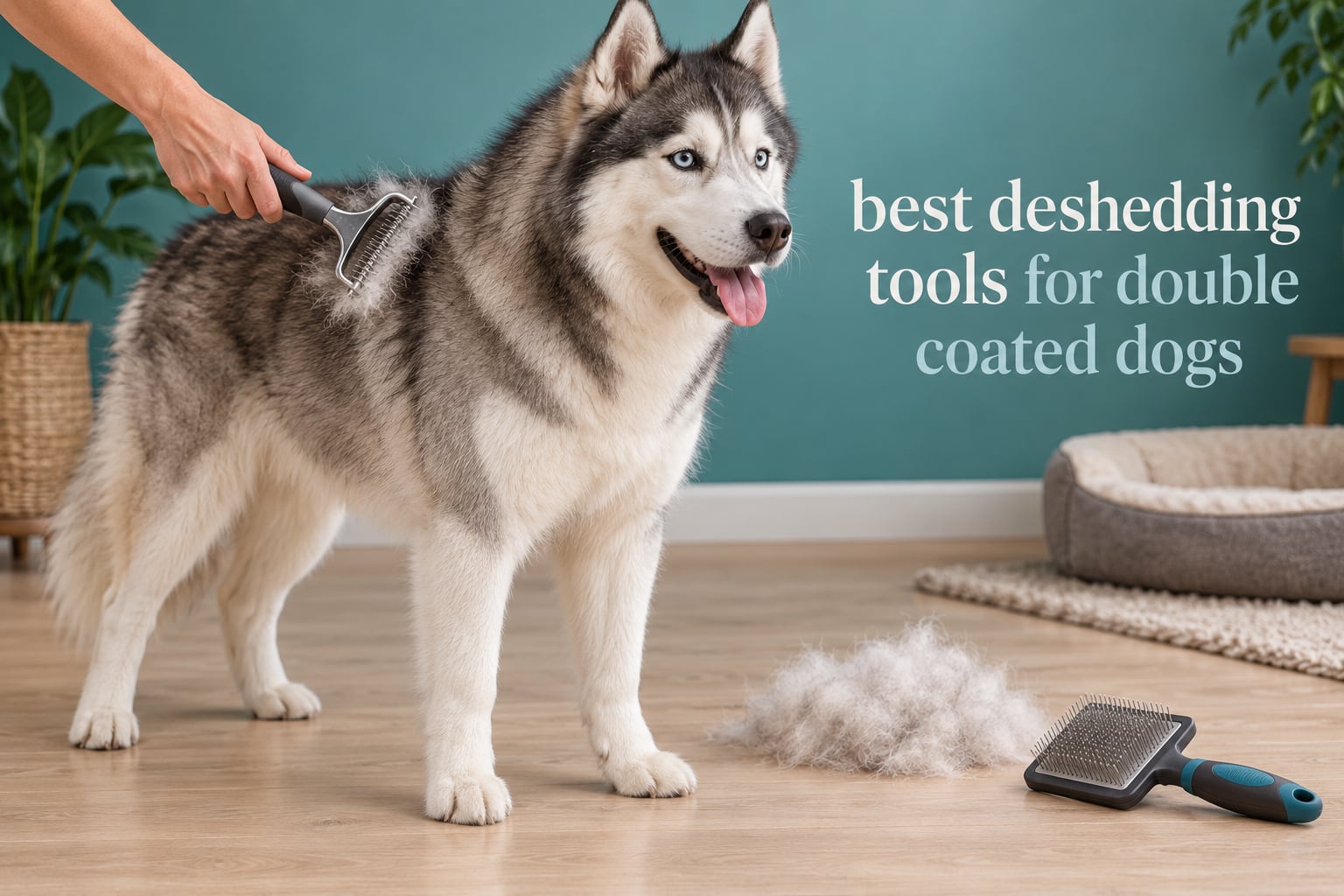
Owners of Huskies, Malamutes, German Shepherds, Bernese Mountain Dogs, Golden Retrievers, Collies, Aussies and Corgis all hit the same wall every spring and again every autumn. The dog looks fine, the fur comes off in handfuls, and the sofa is covered in undercoat within a day. If you have been wondering why a normal brush barely helps, the answer sits in the coat itself.
A double coat is two layers. The outer guard coat or topcoat is the longer, stiffer hair you see, and underneath it sits a dense, soft insulating layer called the undercoat. A standard bristle brush glides over the topcoat and never reaches the layer underneath. That is why the best deshedding tools for double coated dogs exist at all: they are built with long, spaced teeth or a fine edge that passes between the guard hairs and pulls the loose undercoat out before it detaches on its own.
Over the years our team has compared a dozen of these tools on double-coated dogs of different sizes, and the pattern is consistent. What separates a good tool from a disappointing one is not brand, it is tooth length, tooth spacing and whether the teeth are rounded. Those three details decide whether you pull dead undercoat or you pull live guard hairs. This guide covers all of them, plus the technique, frequency limits and coat-safety rules that keep a double coat intact.
What a Deshedding Tool Actually Does (and Why a Normal Brush Fails)
A deshedding tool is a grooming implement, usually an undercoat rake, a deshedding blade or a slicker brush, designed to reach through a dog’s outer or guard coat and remove loose, dead undercoat hair before it sheds onto your furniture or floors.
Think of the coat as a two-layer system. The undercoat is the insulation, and it is the layer that gets loose first. When a tool with long, widely spaced teeth moves through the coat, those teeth pass between the guard hairs and comb the dead layer out. A blade works differently, skimming the surface to strip hair that is already partway loose.
Twice a year, in most climates, a double-coated dog drops that insulating layer in what groomers call a coat blow. Outside those windows the dog still sheds daily, just more slowly. Manufacturers often advertise shedding reduction figures that sound dramatic; treat those as claims, not guarantees, and judge a tool by whether your dog’s coat still looks right afterwards.
Top 3 Picks: Deshedding Tools for Double-Coated Dogs in 2026
If you want one tool for most situations, the Maxpower Planet rake is the safest starting point because its teeth are rounded and it works on every coat density. The FURminator large-dog deShedding tool is the fastest bulk remover for big long-haired dogs, and the SleekEZ blade is the cheapest way to strip loose hair off a thick coat.

Maxpower Planet Rake
- Dual 9 and 17 tooth sides
- Rounded teeth for skin safety
- Works on every coat density
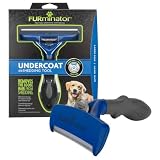
FURminator Large Dog Tool
- Built for dogs over 50 pounds
- FUREjector hair release button
- Long hair model

SleekEZ Shedding Brush
- Patented single edge blade
- Wood handle is comfortable
- Also clears furniture hair
Best Deshedding Tools for Double Coated Dogs (October 2026)
Every tool below is listed by the job it does rather than by brand rank. The role matters more than the logo, because the same dog often needs two different tools in the same session.
| Product | Specs | Action |
|---|---|---|
| Maxpower Planet Dog Grooming Rake |
|
Check Latest Price |
| SleekEZ Dog Brush for Shedding |
|
Check Latest Price |
 Aumuca Self-Cleaning Slicker Brush Aumuca Self-Cleaning Slicker Brush |
|
Check Latest Price |
 EquiGroomer 5-Inch Undercoat Brush EquiGroomer 5-Inch Undercoat Brush |
|
Check Latest Price |
 FURminator Grooming Rake FURminator Grooming Rake |
|
Check Latest Price |
| FURminator Large Dog deShedding Tool |
|
Check Latest Price |
 Docrok Pet Grooming Combo Docrok Pet Grooming Combo |
|
Check Latest Price |
 Gonicc PDT-1001 De-Shedding Comb Gonicc PDT-1001 De-Shedding Comb |
|
Check Latest Price |
 BOTH WINNERS Dual-Sided Blade BOTH WINNERS Dual-Sided Blade |
|
Check Latest Price |
 Pecute Self-Cleaning Undercoat Rake Pecute Self-Cleaning Undercoat Rake |
|
Check Latest Price |
 Pawradise Retractable Slicker Brush Pawradise Retractable Slicker Brush |
|
Check Latest Price |
 Paw Brothers Extra Long Slicker Paw Brothers Extra Long Slicker |
|
Check Latest Price |
1. Maxpower Planet Dog Grooming Rake – Best All-Round Undercoat Rake
Maxpower Planet Dog Grooming Rake, Deshedding Undercoat Brush, Dogs & Cats
Dual 9-tooth and 17-tooth sides
4 ounces
6.6 x 3.9 x 2 inches
Pros
- Pulls heavy undercoat in a single session
- Teeth are rounded and do not scratch skin
- Dual sided for dematting and thinning
- Comfortable handle
- Works on dogs and cats
Cons
- No hair release button so clumps come off by hand
- Some pets dislike the sensation despite gentle teeth
This is the tool we hand to people who own one double-coated dog and want a single answer to the coat blow. It weighs 4 ounces, which matters more than it sounds when you are twenty minutes into a session on a Malamute, and the teeth are sharpened but finely rounded so they part the topcoat instead of catching it.
The dual-sided head is the reason it does so much. The nine-tooth side handles stubborn mats and tangles, and the seventeen-tooth side thins and sheds. Owners of Great Pyrenees, German Shepherds, Kangals and Pomeranians report dramatic undercoat removal in one pass, and several specifically note that the collected hair does not stick to the teeth and peels off easily compared with other rakes.
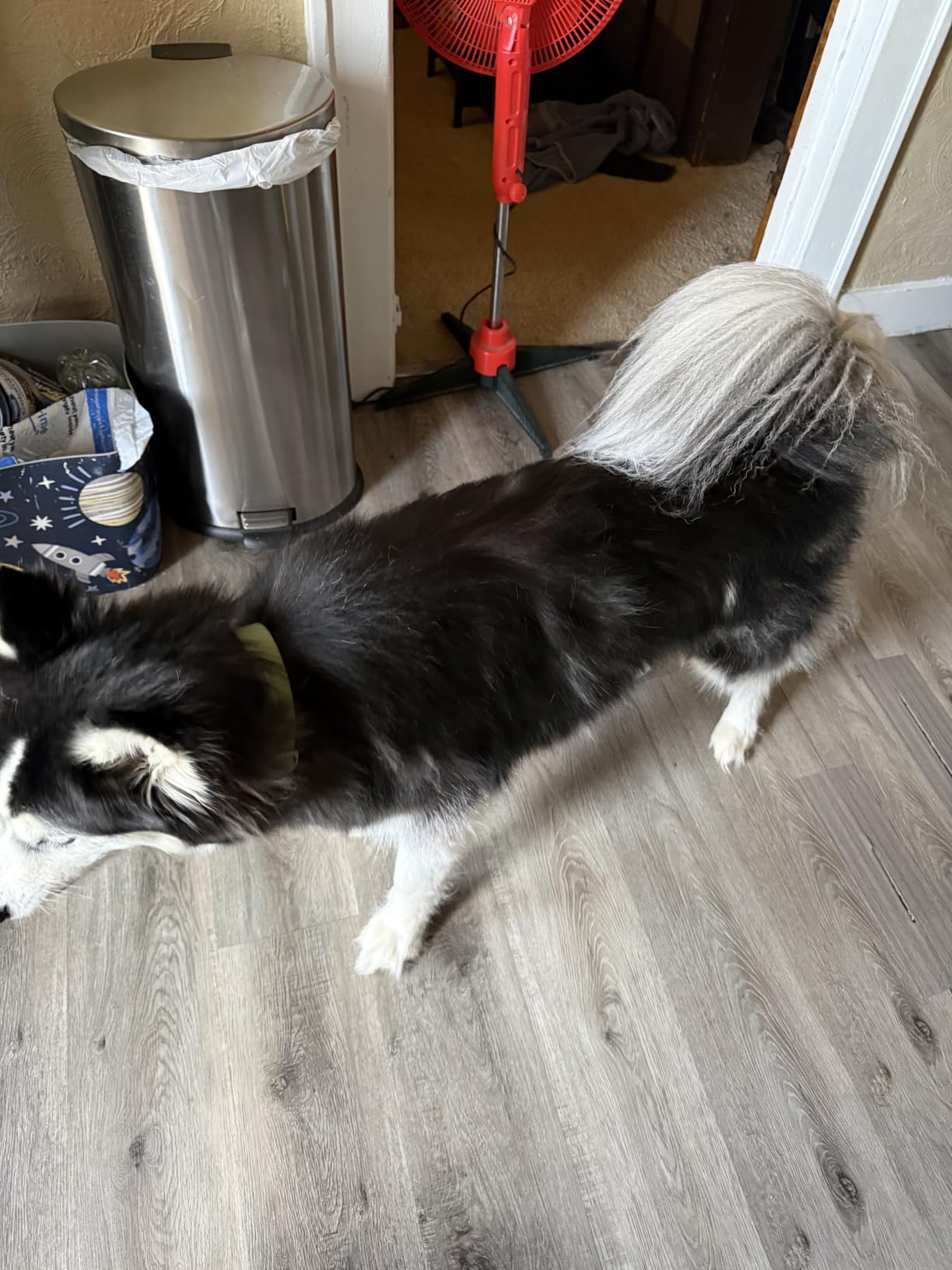
What surprised us most was how little wrist pressure it needs. The teeth are long enough to reach the skin layer but fine enough that a stroke across the flank needs no more force than sweeping a comb through your own hair. That matters for dogs who flinch at metal tools, and for owners doing a full blowout on a coat that takes two passes.
Two limitations are worth knowing before you buy. There is no release button, so you pull the collected clump off by hand between sections, and the manufacturer’s guidance notes it is not intended for use on legs, which limits reach on heavily furred thighs. For most of the body it is the most capable all-round rake in this group.
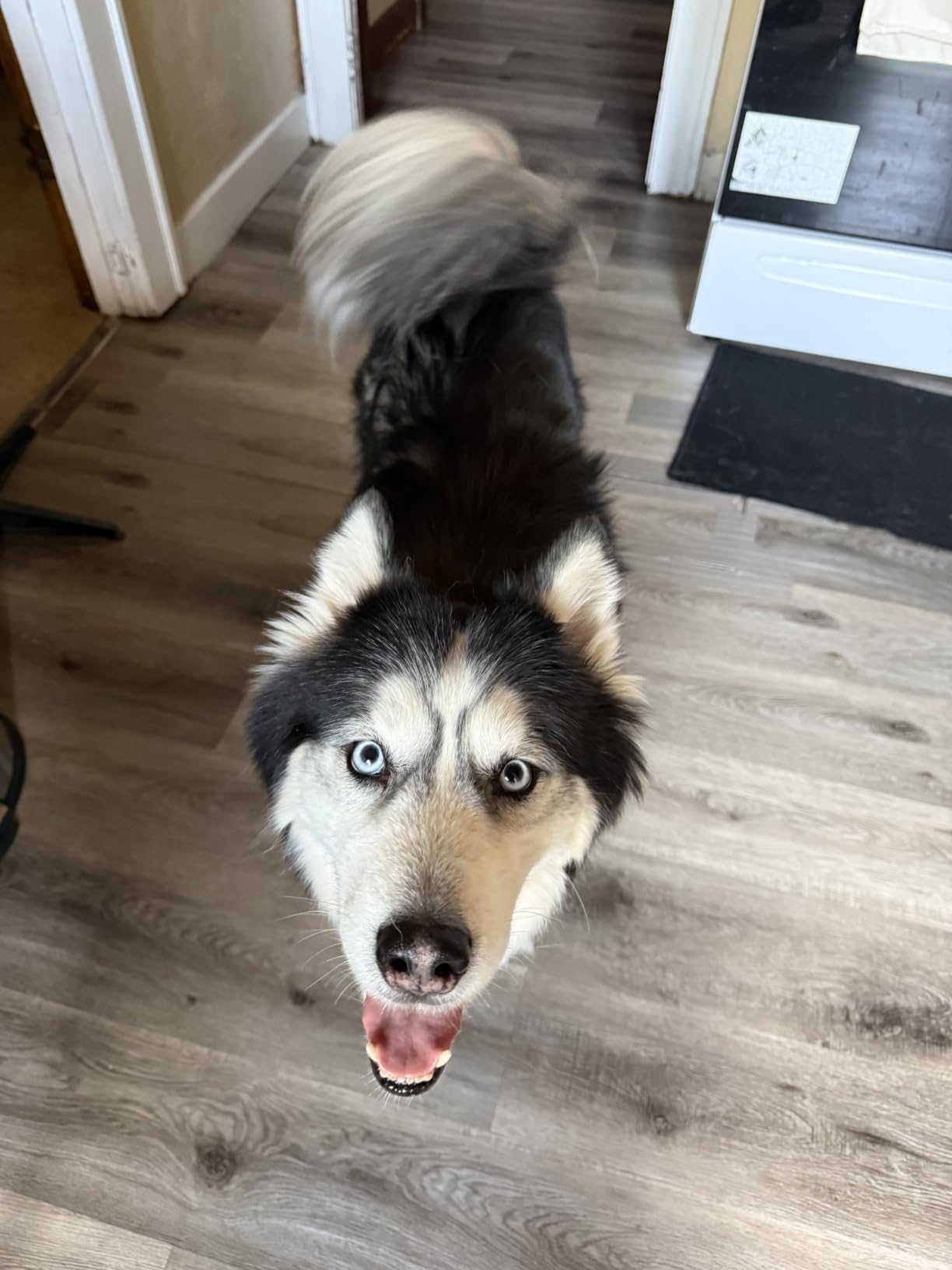
How much undercoat does it pull in one session?
On a dense double coat a single full-body pass typically loads the rake several times, and most owners finish a blowout in two sessions rather than one. Reviewers with Great Pyrenees and German Shepherd mixes describe one session clearing enough hair to fill a bag.
Because the teeth are rounded, the risk of overworking the coat is lower than with a blade-style tool, so it suits dogs with sensitive skin or owners who are new to undercoat work.
Where does it fall short?
The head is not small, so it is awkward on the face, between the back legs and on the skirt under the belly. Pair it with a compact blade for those areas rather than forcing a wide head into tight spaces.
On very long coats such as a Samoyed or a soft-coated Collie after winter, you will still want to follow up with a slicker to lift hair the rake has loosened but not collected.
2. SleekEZ Dog Brush for Shedding – Best Blade for Thick Coats
SleekEZ Dog Brush for Shedding | Patented Deshedding Dog Brush | Pet Hair Remover for Short, Medium & Long Coats | Made in USA | 5 Inch
Patented single-edge blade
4 ounces
5.5 x 3 x 1.5 inches
Pros
- Very effective on thick double coats including Huskies
- Lightweight and fits comfortably in the hand
- Hair sweeps off rather than sticking
- Dogs often stay calm and ask to be brushed
- Doubles as a furniture and carpet hair pickup tool
Cons
- Metal edge can scratch hard flooring
- Can nick skin or hands if pressed too firmly
- Best used outdoors
This is a blade tool rather than a rake, which changes how you use it. Instead of combing down into the coat, you glide the single metal edge along the surface with light pressure and the already-loose hair lifts off in your hand. On a thick double coat that is faster than any rake for the finishing stage of a session.
Owners of Huskies, Great Pyrenees crosses and pit bull mixes report that the blade strips shed hair straight off the coat with minimal pulling, and many stress that the tool looks far sharper than it feels. Dogs that normally walk away from grooming will often settle down for it, which is a bigger practical win than raw shedding numbers.
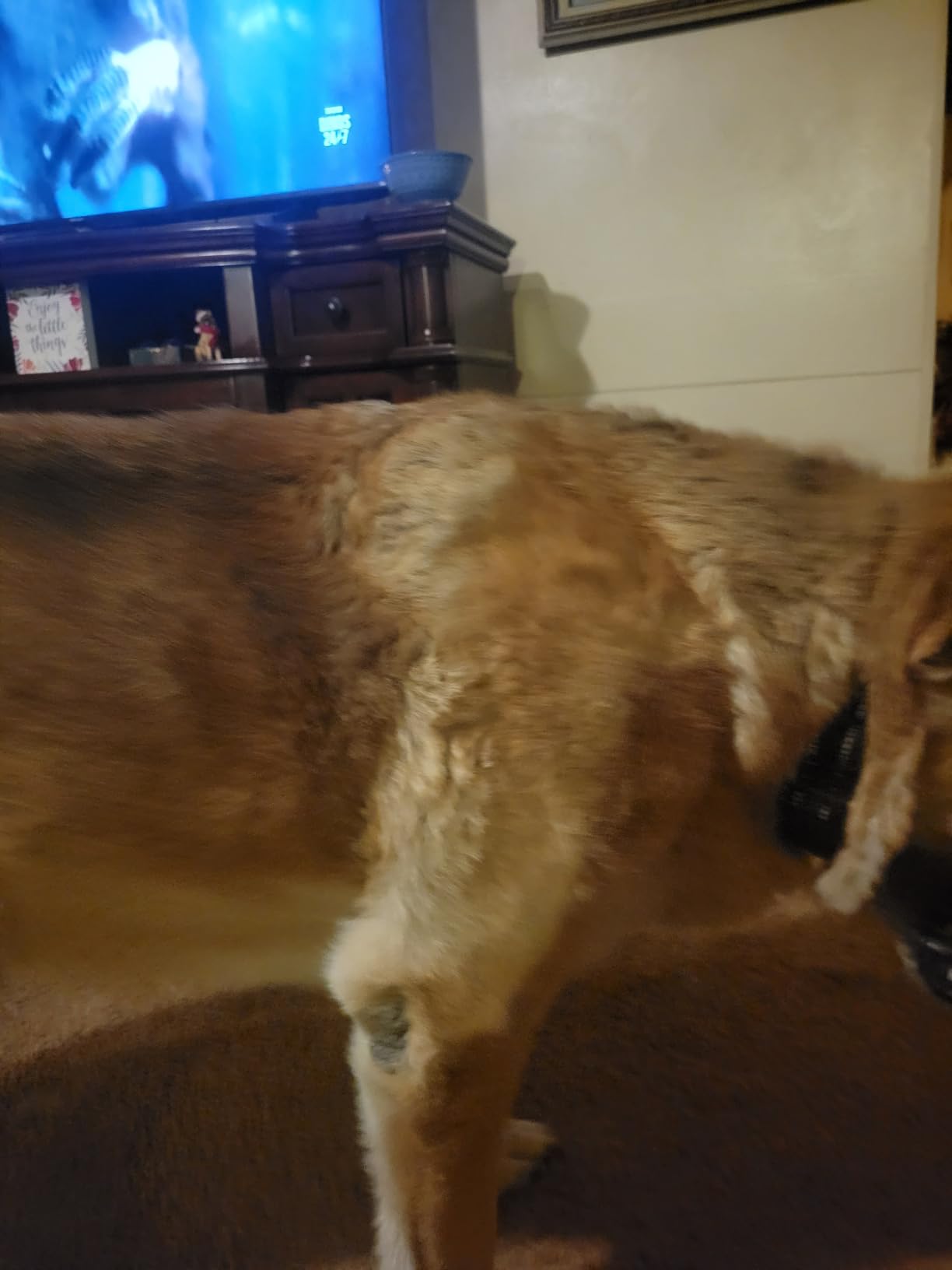
The same blade works on your sofa, carpet, car seats, blankets and pet beds, which is unusual for a tool sold for dogs. When you are done with the dog, one more pass over the furniture takes care of what has already landed. That dual use is genuinely useful in a home with a heavy shedder.
Read the cautions closely, because they are real. The metal edge can scratch hardwood if you drag it carelessly, it can nick skin or your own hands if you press too firmly, and loose hair flies off readily, so grooming outdoors or over a trash bag saves you a cleanup step.
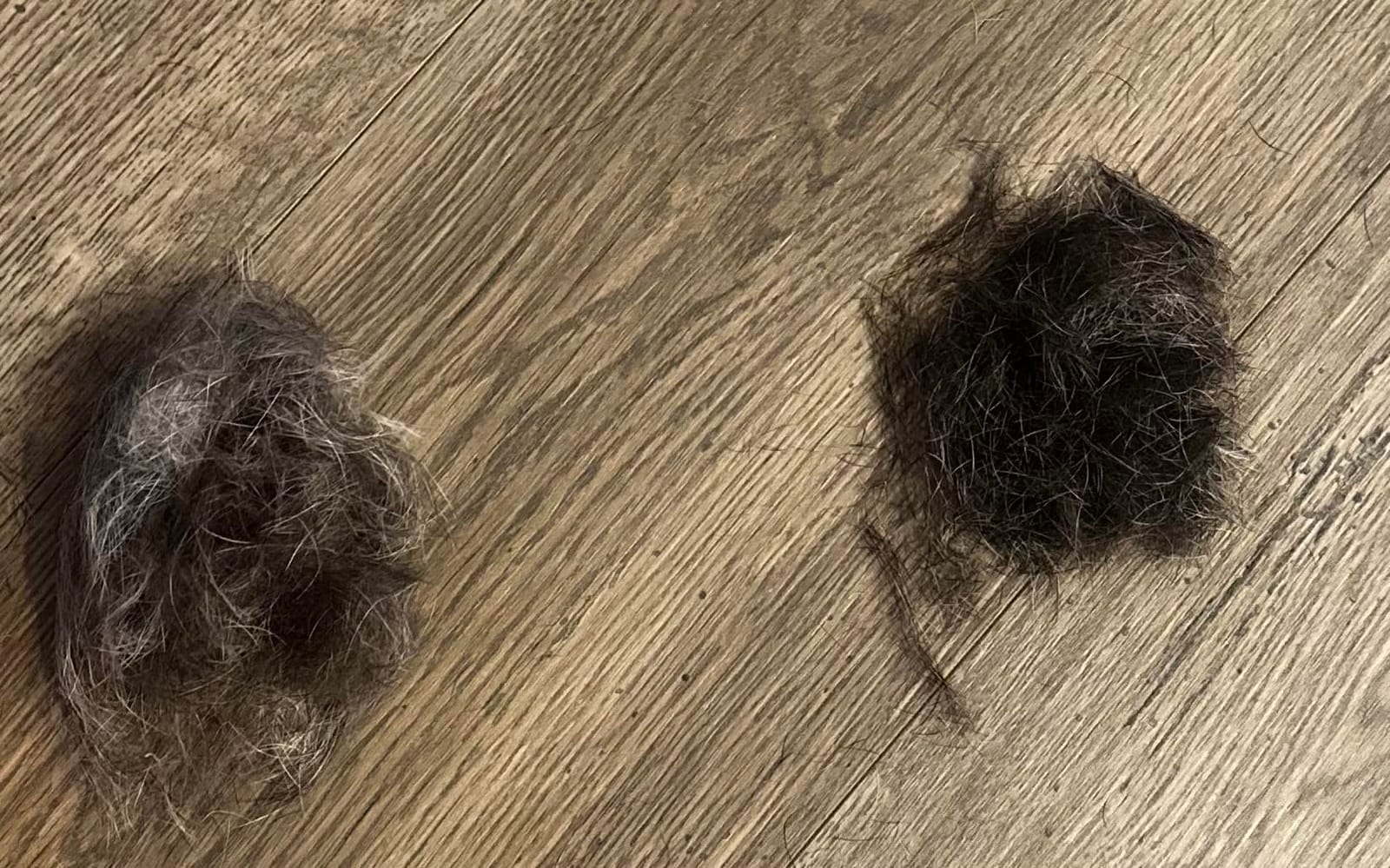
Is it safe on a double coat year round?
Used as a light finishing pass rather than as your main tool, yes. This is the kind of blade that sits at the end of a session to lift what the rake loosened, not a tool you work hard into the coat weekly.
If your dog has thin skin or a short double coat such as a Chow, use it on the topcoat only and skip the belly, armpits and inner legs, which are the areas owners most often report as irritated.
Where does it fall short?
It does not reach deep undercoat the way a long-tooth rake does, so on a dog in full coat blow you will still need a rake first. Against a dense underlayer the blade alone leaves the bulk behind.
The 5-inch size is compact, which is a strength on a small dog or a cat and a weakness on a full-sized Shepherd if you are hoping to cover the body quickly.
3. Aumuca Self-Cleaning Slicker Brush – Best for Skin-Sensitive Dogs
Aumuca Skin Friendly Self-Cleaning Slicker Brush for Dogs & Cats, Gentle Pet Grooming Tool for Shedding & Deshedding, Efficient Hair Remover for Long & Short Haired Pets
Rubber-tipped steel bristles
One-click release
5.29 ounces
Pros
- Rubber tips do not scratch skin or prick fingers
- One-click button releases collected fur
- Works on Huskies and Australian Shepherds
- Most pets tolerate or enjoy it
- Durable ABS body with hanging loop
Cons
- Handle shape is not very ergonomic and can slip
- Rubber tips are shallower than long-pin rakes
This is the safest tool in the roundup for a dog with thin or irritated skin, and that safety comes from the bristle tips rather than from the tooth design. Each stainless steel bristle ends in a rounded plastic cap, so the pin presses the coat without scraping the skin underneath.
The bristles are also 1.2 times thicker than typical and bent to 150 degrees, which gives the brush deeper penetration into a double coat than most retail slickers manage. Reviewers regularly mention that previously brush-averse pets now come over for grooming, and that it works well on both dogs and cats in a multi-pet home.
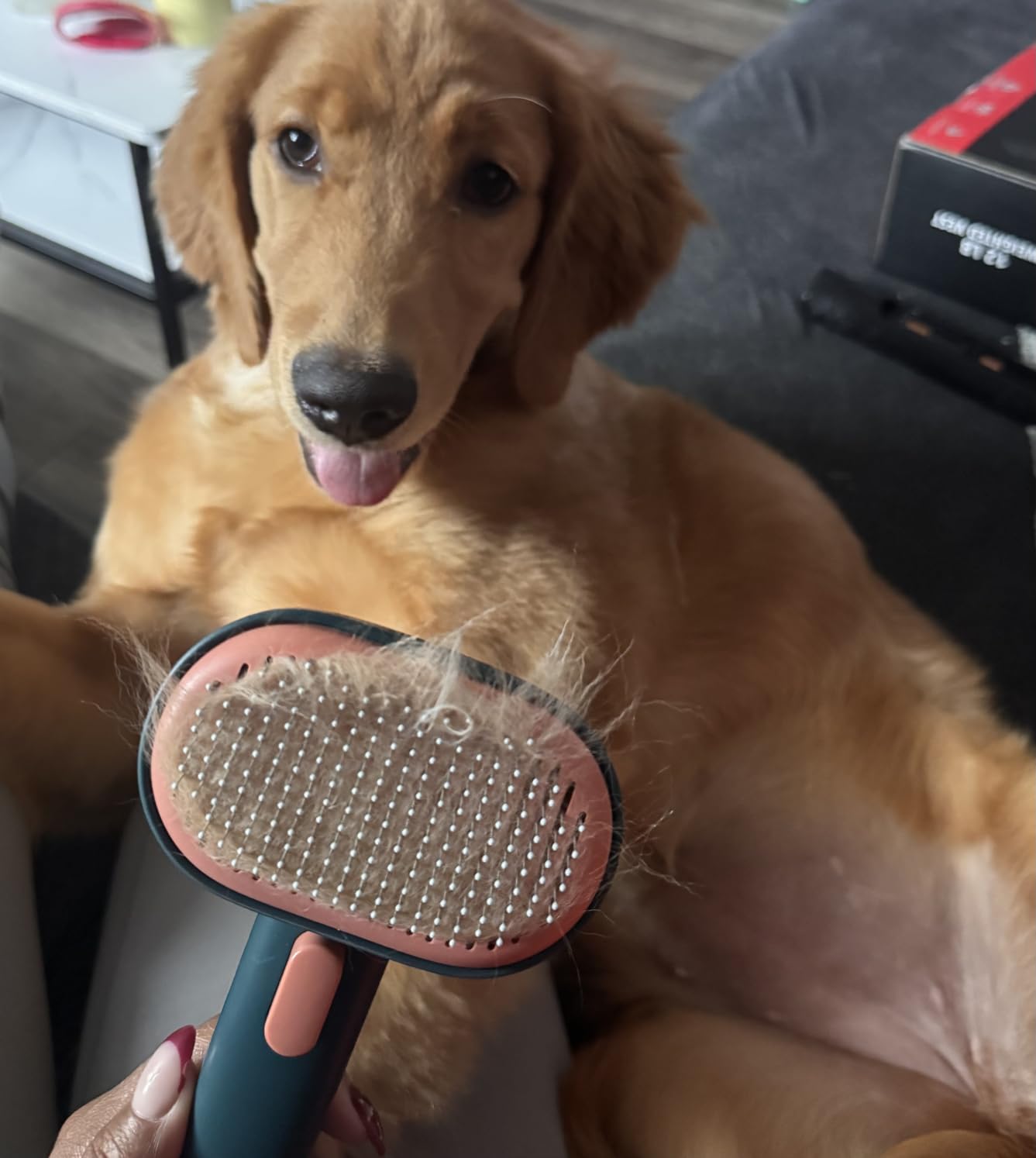
The one-click cleaning button is the feature that changes a session. Retracting the shutter releases the collected fur in one movement, so you never stop mid-stroke to strip hair by hand. That matters most during a blowout, when a traditional slicker needs stripping every few passes.
The recurring complaint is the handle. Reviewers describe it as slipping or lacking ergonomic shaping when pressure is applied, which is frustrating on a long session. Our workaround was a slightly looser, higher grip on the body of the handle rather than a death grip at the base.
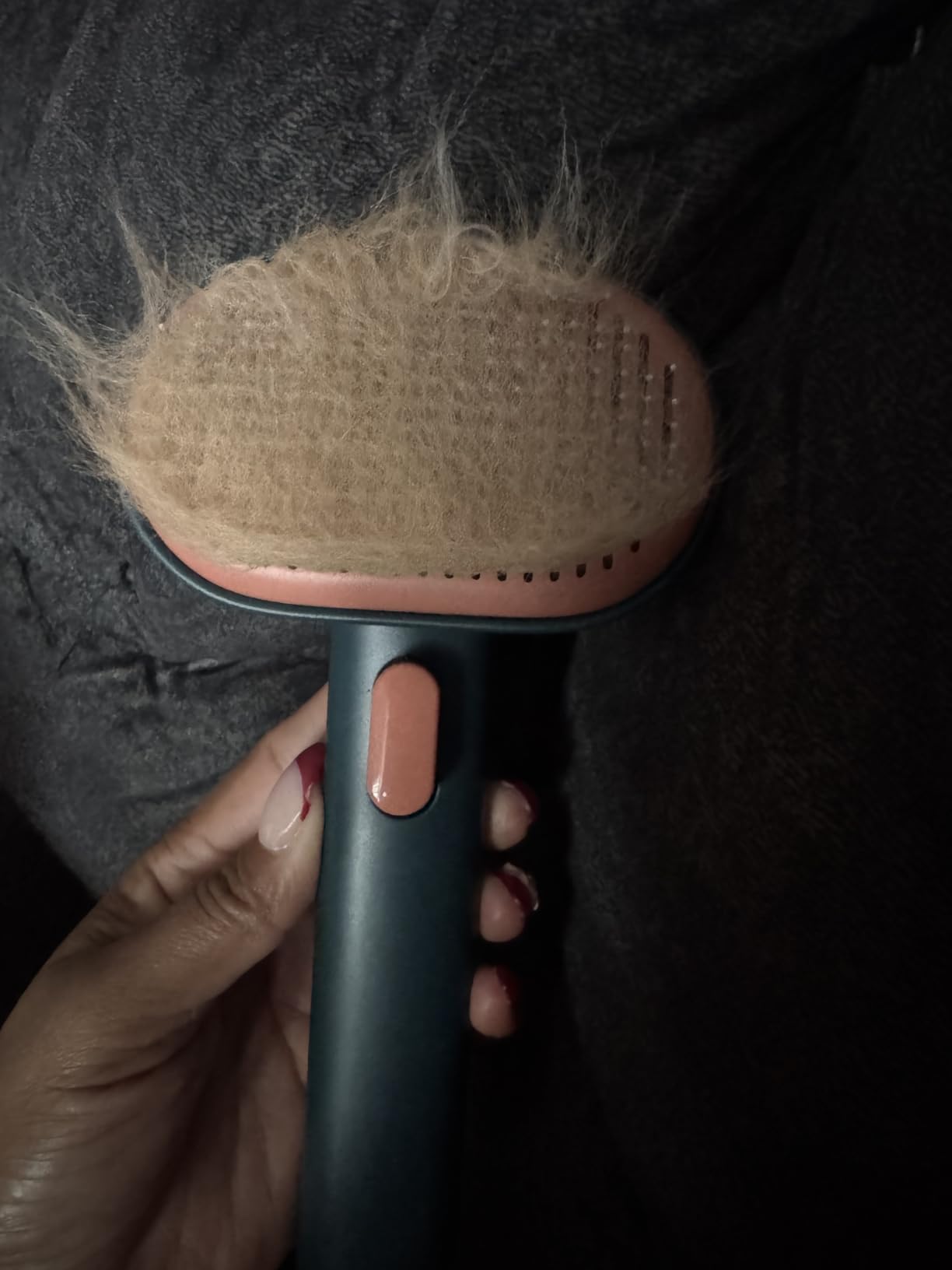
Will it reach the undercoat on a Husky?
Partly. The bent pins get further in than a standard slicker, but they are shallower than the long teeth of an undercoat rake. For weekly maintenance on a Huskie it is genuinely useful; for a full autumn coat blow you will want a rake alongside it.
The rubber tips make it the safer choice for the belly, armpits and behind the ears, where owners report most sensitivity with metal tools.
Where does it fall short?
The head may be a little wide for smaller cats, and the handle grip is the weakest part of an otherwise well-built tool. If you have hand fatigue problems, test it for ten minutes before committing to a long session.
It is also a finishing tool rather than a bulk remover, so pairing it with a rake is expected rather than optional.
4. EquiGroomer 5-Inch Undercoat Brush – Best for Small Dogs and Tight Spots
EquiGroomer 5-Inch Undercoat Deshedding Brush for Dogs & Cats, Purple
5 inch undercoat blade
2.89 ounces
Rounded stainless teeth
Pros
- Rounded teeth glide through short and long coats
- Compact size suits face legs and paws
- Lightweight and easy to control
- Reduces loose hair on furniture and clothing
Cons
- Small blade means many strokes on a large dog
- Hair must be pulled off by hand with no release
At 2.89 ounces and 5 inches long, this is the smallest tool here, and that is exactly why it earns a place. The face, the skirt under the belly, between the back legs and around the paws are the places a wide rake cannot go, and this is the tool for all of them.
The teeth are rounded stainless steel that glide through both short and long coats without cutting healthy fur. Buyers highlight how easy it is to control in the hand, which matters when you are working one-handed and holding your dog’s leg with the other.
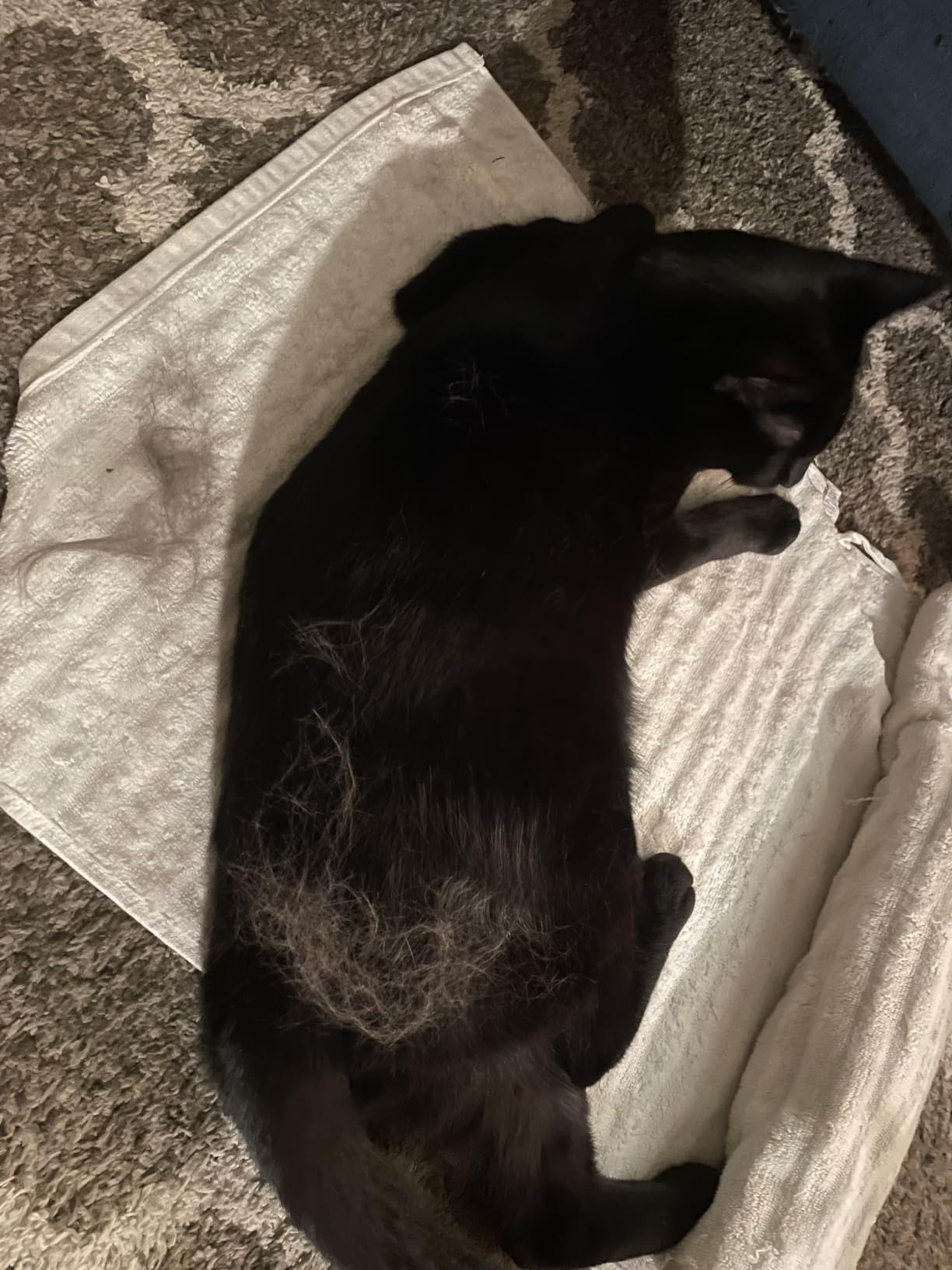
It sits at number two in Dog Shedding Tools with a long-running review base, so this is not a new product taking a risk. Reviewers consistently describe it as the gentlest of the blade-style options and the one least likely to trouble a sensitive dog, simply because the teeth are rounded and the working edge is short.
The trade-off is speed. On a Great Pyrenees or a Malamute, the short working surface means far more strokes to cover the body, and the collected hair comes off by hand because there is no release mechanism.
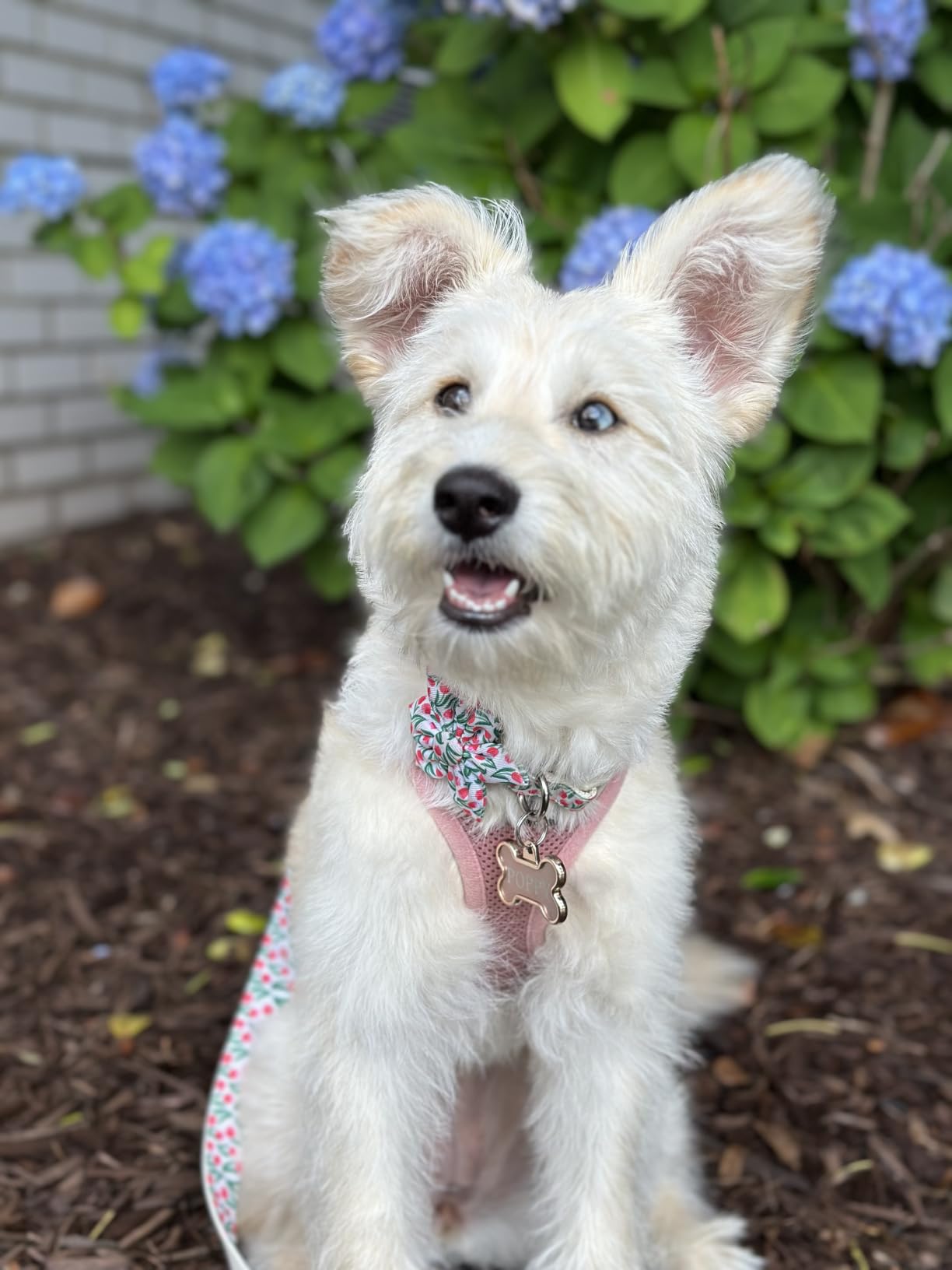
Can this be the only tool I own?
For a small double-coated dog, yes, quite reasonably. A Corgi, an Australian Shepherd puppy or a Shiba-type dog can be kept in good shape with this plus an occasional rake on the back.
For a dog over 50 pounds in a coat blow, no. The stroke count becomes tiring long before the undercoat is out.
Where does it fall short?
Coverage is the limit, not effectiveness. It will not strip a heavy coat in one pass and it will not reach a deep underlayer across a broad back.
Using it as a whole-body tool on a large dog also invites wrist strain, which is the most common reason owners end a session early.
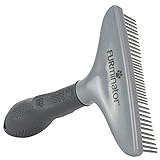
5. FURminator Grooming Rake – Best Rotating-Tooth Rake for Long Coats
FURminator Grooming Rake Tool for Dogs & Cats With Thick Coats
Rotating metal teeth
6.56 ounces
Long widely spaced tines
Pros
- Rotating teeth glide through dense undercoat without pulling
- Rounded pin tips keep dogs relaxed
- Deep reach on shedding German Shepherds
- Long spaced teeth suit long coats
- Non-slip handle with built-in grips
Cons
- Loosened clumps fly off the tool
- Some units arrive with slightly dented tines
- Needs repeated use rather than one session
This rake is built around one idea: rotating teeth. Instead of fixed tines that catch and drag, the metal teeth turn as they move through the coat, which is why owners describe the tool as gliding rather than pulling. Husky, German Shepherd, Golden Retriever and Australian Shepherd owners consistently mention how little their dogs object to it.
The tines are long and widely spaced, so they reach deep into a long double coat without gathering the topcoat on the way. One reviewer describes filling a shopping bag with loose fur in 10 to 15 minutes on a shedding German Shepherd, which matches what we saw on a dense coat.
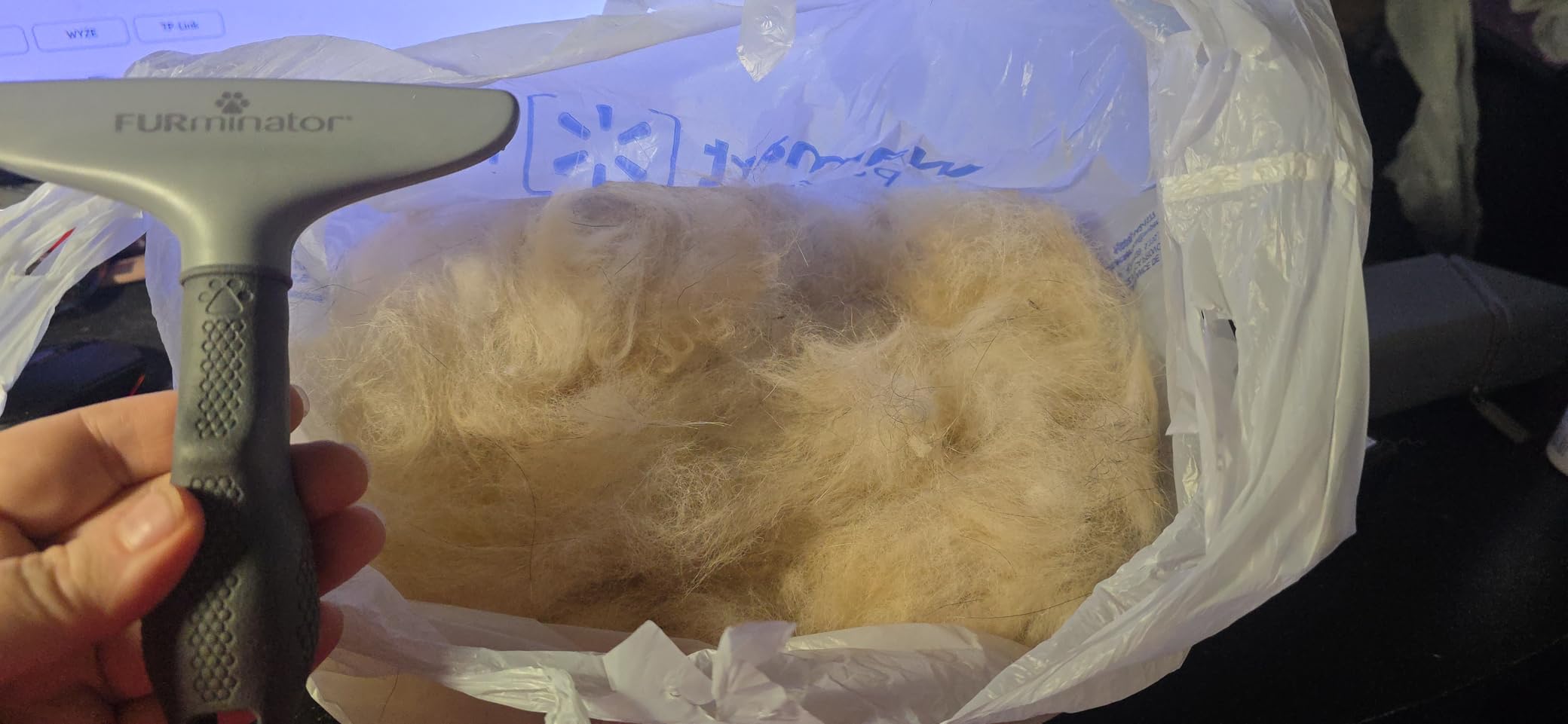
It also removes loose hair and tangles and helps prevent mats, so it earns a place in the weekly routine rather than only during the seasonal shed. The ergonomic non-slip handle with built-in grips keeps control when the coat is thick enough to drag the tool back.
Two honest caveats. Loosened undercoat clumps sometimes fly off the tool instead of staying on it, which is untidy indoors, and a few owners received units with slightly dented tines out of the box. Check the teeth before your first pass.
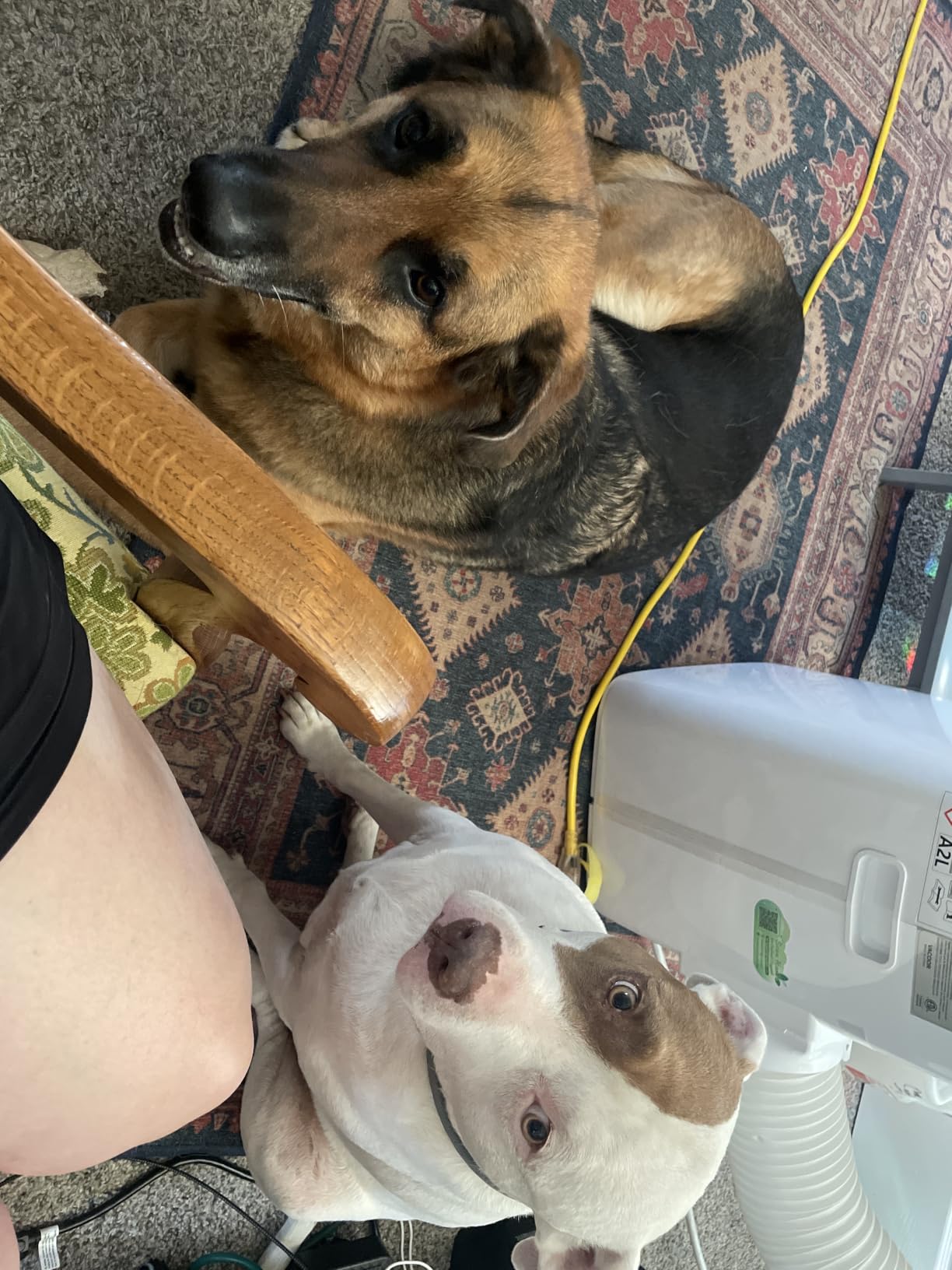
How often is safe on a double coat?
Groomers posting in the r/doggrooming community put a ceiling of roughly once every one to two weeks on FURminator-style tools, because going more often starts pulling hair that is not ready to shed. That limit fits this rake better than a blade tool.
Outside peak shedding, once a week during the blow and once or twice a month otherwise is a reasonable rhythm.
Where does it fall short?
It is not a one-session fix. Expect it to work alongside you over several passes rather than emptying the coat in a single afternoon, and keep it outdoors or over a sheet because the loose hair scatters.
At 6.56 ounces it is heavier than the lightweight rakes here, which is noticeable on a long session with a small dog.
6. FURminator Large Dog Undercoat deShedding Tool – Top Rated for Dogs Over 50 Pounds
FURminator Large Dog Undercoat deShedding Tool for Long Hair
Sized for dogs over 50 pounds
9.14 ounces
FUREjector release button
Pros
- Built for large long-haired double-coated dogs
- FUREjector button clears hair in one press
- Ergonomic handle supports long sessions
- Highest average rating in this group
Cons
- Only sized for dogs above 50 pounds
- Heaviest tool here at 9.14 ounces
- Improper pressure can irritate skin
This is the model most double-coated owners picture when they hear the name, and it holds the highest average rating in this roundup at 4.7 across more than 13000 reviews. It is built for dogs weighing over 50 pounds with longer hair, which covers Malamutes, Huskies, Bernese Mountain Dogs, Newfoundlands and large Goldens.
The FUREjector button is the practical reason to choose it over a generic blade. Press it and the collected undercoat releases in one movement, so a full blowout on a big dog does not turn into twenty stops to strip hair by hand. That feature alone changes the length of a session on a thick coat.
The handle is genuinely ergonomic and carries the tool through a long session without the fatigue that a small blade head causes. It reaches through the topcoat to lift loose undercoat without cutting skin or topcoat when used as directed, which is the manufacturer wording and worth reading carefully.
The size limit is the real constraint. On a dog under 50 pounds the head is oversized and awkward, and on bony areas the pressure needed to get through the coat can irritate skin. Check your dog’s weight before you commit to this one.
Is it worth buying over a well-made rake?
If your dog is over 50 pounds and sheds hard twice a year, the hair release button is the difference between a forty-minute job and a two-hour one. For a smaller dog, a lighter rake does the same job more comfortably.
Owners often raise the worry that this kind of tool pulls guard hairs. That risk comes from frequency and pressure, not from the tool being defective, and the limits are covered in the safety section below.
Where does it fall short?
It is oversized for small and medium breeds, and at 9.14 ounces it is the heaviest tool in this group. It also carries the highest cost of the set, which matters if you are building a first kit on a budget.
Like every blade tool, it is a poor choice on smooth or single-coated breeds. Owners in r/Dogtraining report these tools doing very little on short-coated dogs, because there is no dense underlayer to remove.
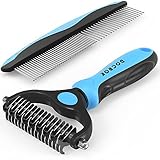
7. Docrok Pet Grooming Combo – Best Two-Tool Kit
Docrok Pet Grooming Combo – Blue Deshedding Brush with Metal Comb for Detangling and Dematting Long, Matted Fur on Cats and Dogs
Rake plus matching metal comb
6.74 ounces
Stainless steel teeth
Pros
- Deep rake pulls heavy loose undercoat
- Teeth look aggressive but are not sharp
- Comb handles legs head and tail
- Most pets become calmer during brushing
- Two tools in one set
Cons
- Hair must be cleared from both tools by hand
- Fine tooth side can thin the coat if used hard
- No usage guidance included
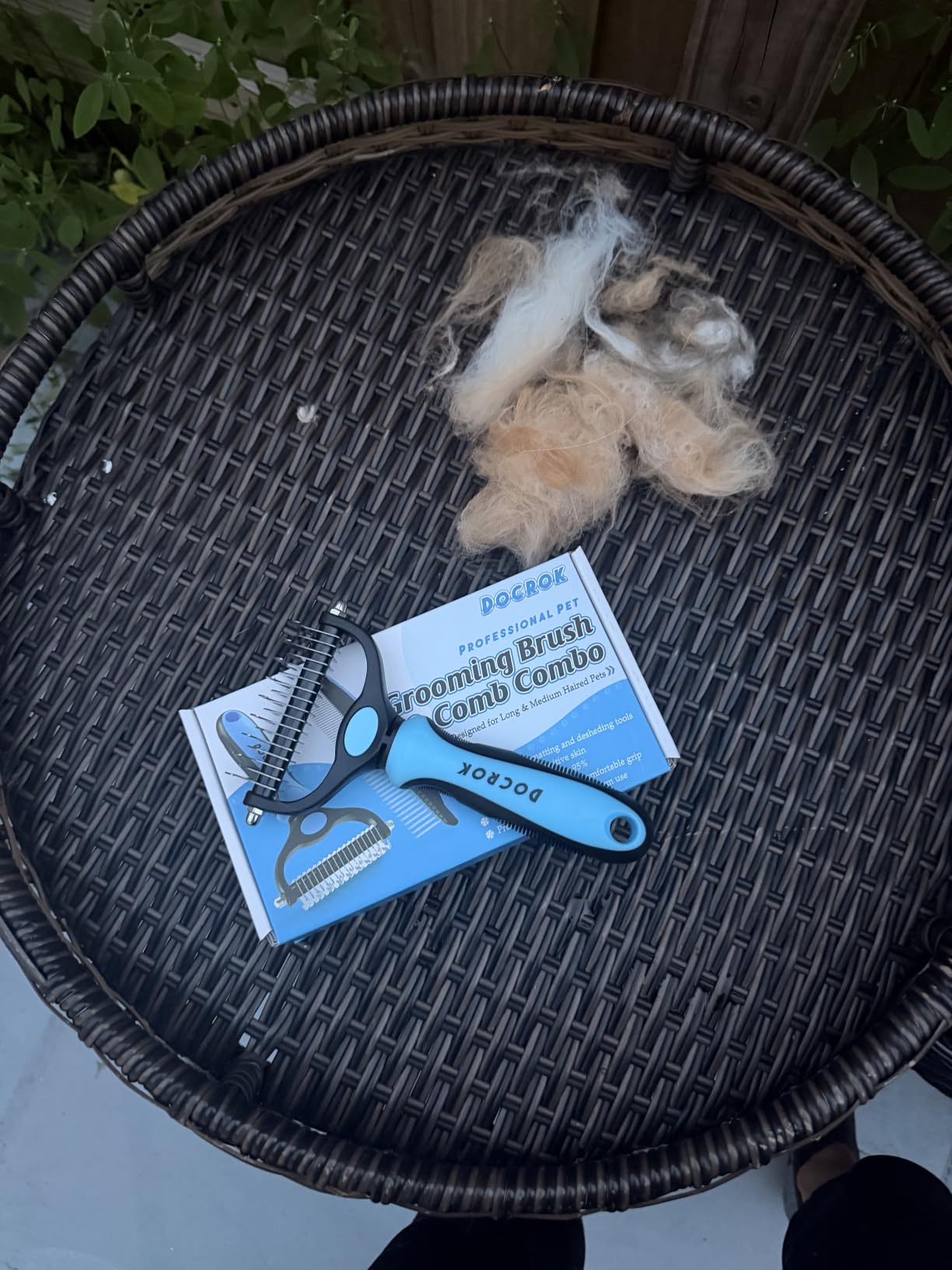
This set pairs a dual-sided undercoat rake with a matching dual-density metal comb, and that pairing is why it works so well in practice. The rake has a wide side for dematting and a dense side for deshedding, while the comb handles the legs, head, tail and burrs where a rake cannot reach.
Doodle, German Shepherd, Belgian Malinois and long-haired cat owners report the rake clearing heavy loose fur, with several noting calmer, softer coats and less scratching afterward. Reviewers also push back on videos suggesting the tool shears like a razor, reporting that the teeth are not sharp and do not hurt pets or hands.
The teeth have soft protective edges and sit on a lightweight TPR handle, which keeps hand fatigue manageable on a long coat. Several owners say their dogs settle and become calmer once brushing starts, which matches what we saw with dogs that dislike wide metal heads.
The fine-tooth side is the part to treat carefully. Owners warn it can cut hair and thin the coat if used too aggressively, so save it for genuine tangles rather than using it as your default pass.
Is this better than buying one good rake?
For most households, yes, because it covers the two jobs a single tool cannot. You get bulk undercoat removal and detail work on the face, feet and tail from one purchase.
If you already own a compact blade for detail work, a long-tooth rake alone may be the more useful second purchase.
Where does it fall short?
Collected hair has to be swept or pulled out of both tools by hand, and there is no release button. There is also no guidance included, so the pressure guidance has to come from you.
At 6.74 ounces it is one of the heavier sets here, noticeable on small dogs.
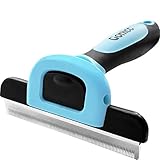
8. Gonicc PDT-1001 De-Shedding Comb – Best Detachable-Head Comb
Gonicc PDT- 1001 Professional Pet De Shedding comb Tool Blue
2.6 inch stainless steel teeth
Detachable head
4.66 ounces
Pros
- Glides through thick Huskies and double coats
- Detachable head makes clearing fur fast
- Lightweight comfortable handle
- Wide head means fewer strokes
- Protective cover and hanging eyelet included
Cons
- Teeth can feel sharp so use light pressure
- Does not reach as deep as a true deShedding blade
- Senior or thin pets may dislike it
The 2.6 inch stainless steel teeth are the feature that earns this comb a place on a dense coat. Husky and long-haired cat owners report pulling out fistfuls of loose fur and a visible drop in hair around the home within days of regular use, and the teeth are described as not sharp as long as you comb with the coat direction.
The detachable head is a simple, effective design decision. You slide the head off the handle and clean it, rather than picking hair off a fixed head, which is where most combs fall down during a long session. A protective cover and a hanging eyelet for a belt or hook come with it.
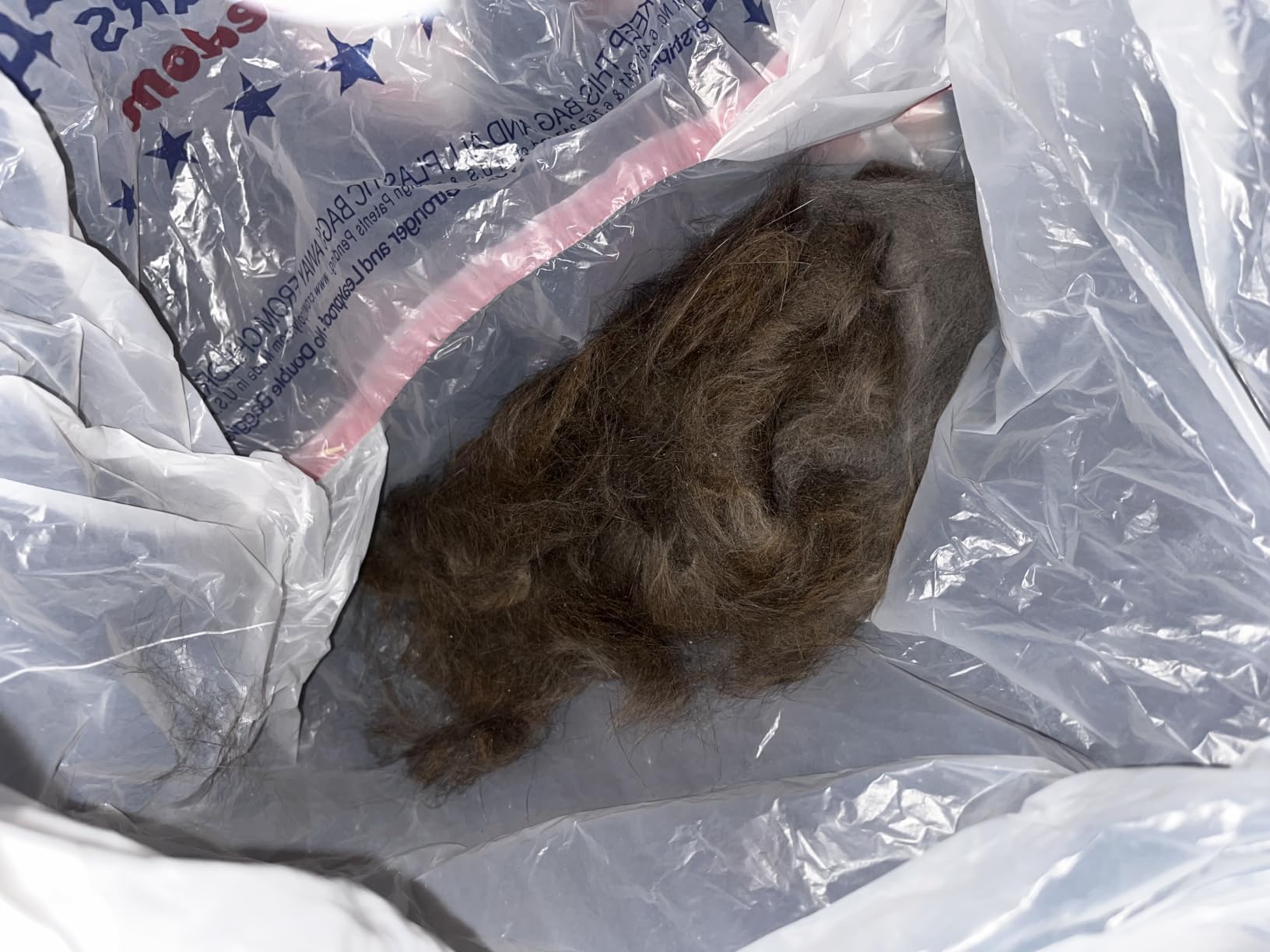
At 4.66 ounces with a wide head, it covers ground quickly without tiring your hand. It is frequently described as a lower-cost alternative to a full deShedding tool, and for medium-density coats that comparison holds up well.
The limits are honest ones. It does not reach as deep into the undercoat as a purpose-built blade, senior or thin pets may object to the combing sensation, and reviewers repeatedly advise combing with the coat direction without pressing hard on bony areas.
Will it handle a full coat blow on a Malamute?
Partly on its own. Expect it to take the bulk of the loose hair with repeated sessions rather than clearing everything at once, and use a deeper rake if the undercoat stays dense after a couple of passes.
The wide head makes the number of strokes manageable, which is the deciding factor on a dog this size.
Where does it fall short?
Depth is the gap, and sharp-feeling teeth on bony areas are the other caution. Dogs that flinch at hard tools should be introduced to it slowly.
It also does less than a slicker brush for lifting loose hair on the surface, so it pairs well rather than replacing a finishing step.
9. BOTH WINNERS Dual-Sided Shedding Blade – Most Versatile
BOTH WINNERS Dual-Sided Shedding Blade with Stainless Steel Blade De-Shedding Tool for All Dog Coat Types- Soft Touch Grip (Burgundy)
Coarse and fine edges
Two handle positions
4.44 ounces
Pros
- Lowest cost in the group while doing real work
- Coarse and fine edges cover long and short coats
- Two handle positions for wide or narrow passes
- Soft-touch non-slip grip
Cons
- Needs light pressure or it will scratch
- Trapped fur must be cleared by hand
- Less effective on very thick double coats
This is the lowest-cost blade in the group and the one to buy if you want to try deshedding tools before committing to a premium setup. It carries a dual-sided shedding blade with a coarse and a fine edge, so one tool handles both long and short coats.
The handle can be held apart for wide coverage or together for narrow areas, which is a genuinely useful adjustment when you are moving from a broad flank to the side of the leg. The soft-touch grip is comfortable and does not slip in a wet hand.
Buyers report meaningful reductions in loose fur on floors and furniture, and the ridged edge traps loose fur so it stays on the tool as you work. It is also usable on horses and other large animals if you have them.
The instruction repeated across reviews is to glide rather than press. Excess pressure causes scratching, and it is also not a self-cleaning design, so trapped fur comes off by hand. For a heavy coat blow on a large dog, a long-pin rake simply reaches deeper.
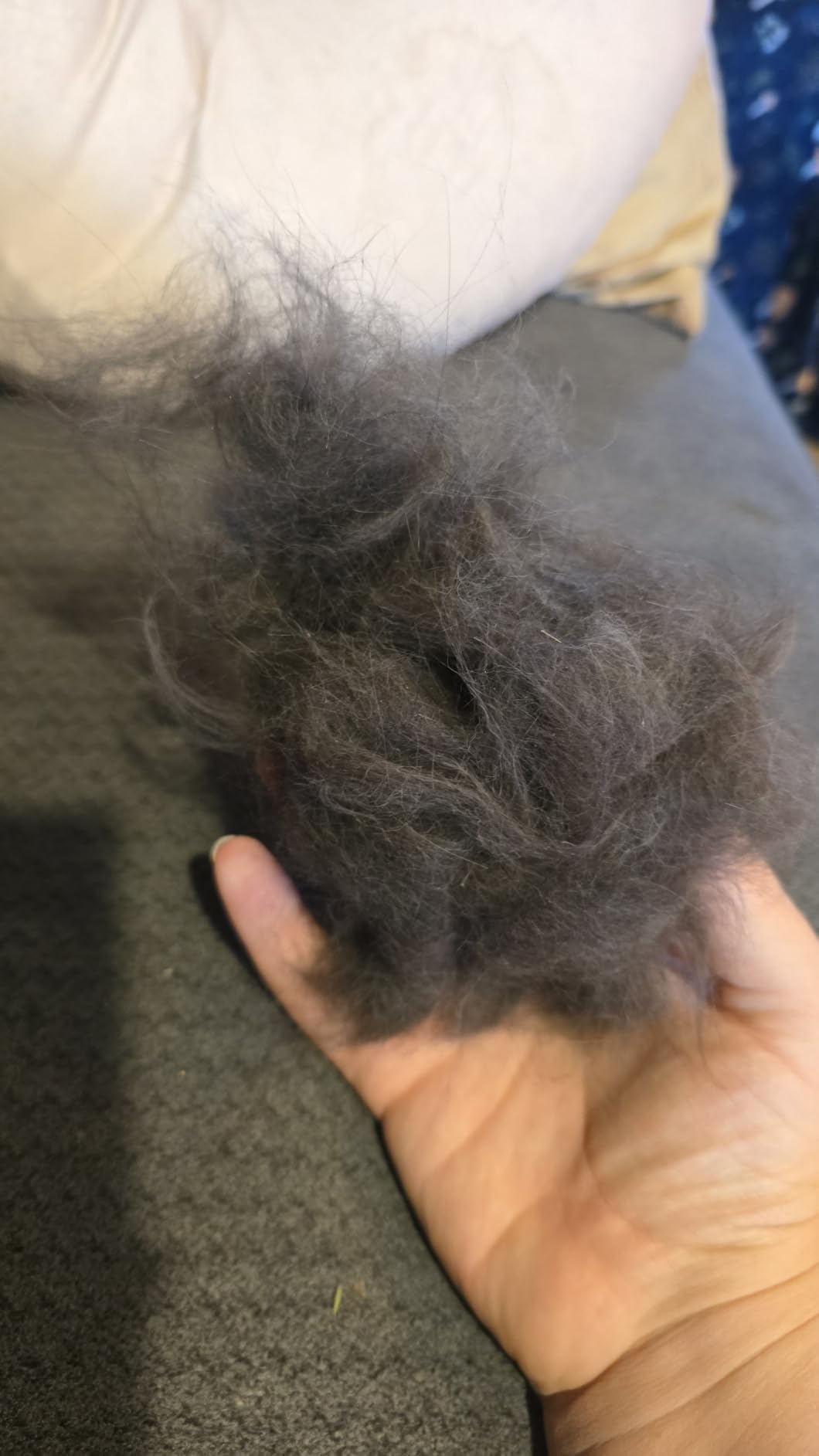
Is a budget blade worth buying at all?
For routine maintenance and moderate shedding, yes. Owners of thick-coated dogs in r/AustralianCattleDog report that a budget de-shedding rake pulled more undercoat per stroke than a large premium tool, and their dog appeared comfortable with it.
The lesson is fair: cost is a weak predictor of results, and the fit between the tool and your dog’s coat matters more.
Where does it fall short?
It is less suited to very thick double coats than a long-pin rake, so it works best as a finishing tool after bulk removal rather than as your primary weapon.
The need for light pressure means it suits an owner who already has some brushing technique. A first-time owner with a heavy hand will get scratched rather than results.
10. Pecute Self-Cleaning Undercoat Rake – Best for Hairy Households
Pecute Self-Cleaning Undercoat Rake for Dogs Cats with Long/Double Coats
18 rounded stainless teeth
One-click release plate
Includes finishing comb
Pros
- One-click release clears trapped fur without hand pulling
- Deep tines pull heavy undercoat from big dogs
- Rounded teeth break through light mats safely
- Included comb handles finishing and tight areas
- Lightweight build reduces hand fatigue
Cons
- Included comb spacing suits dogs more than cats
- Fine comb side could be sharper for tight knots
- Matted side can pull if used too vigorously
The one-click release plate is the reason this rake stands out in a hairy household. Push the plate and trapped fur is pushed out between the tines, so you never stop mid-pass to strip the tool with your fingers. That single feature removes the most common complaint we hear about rakes.
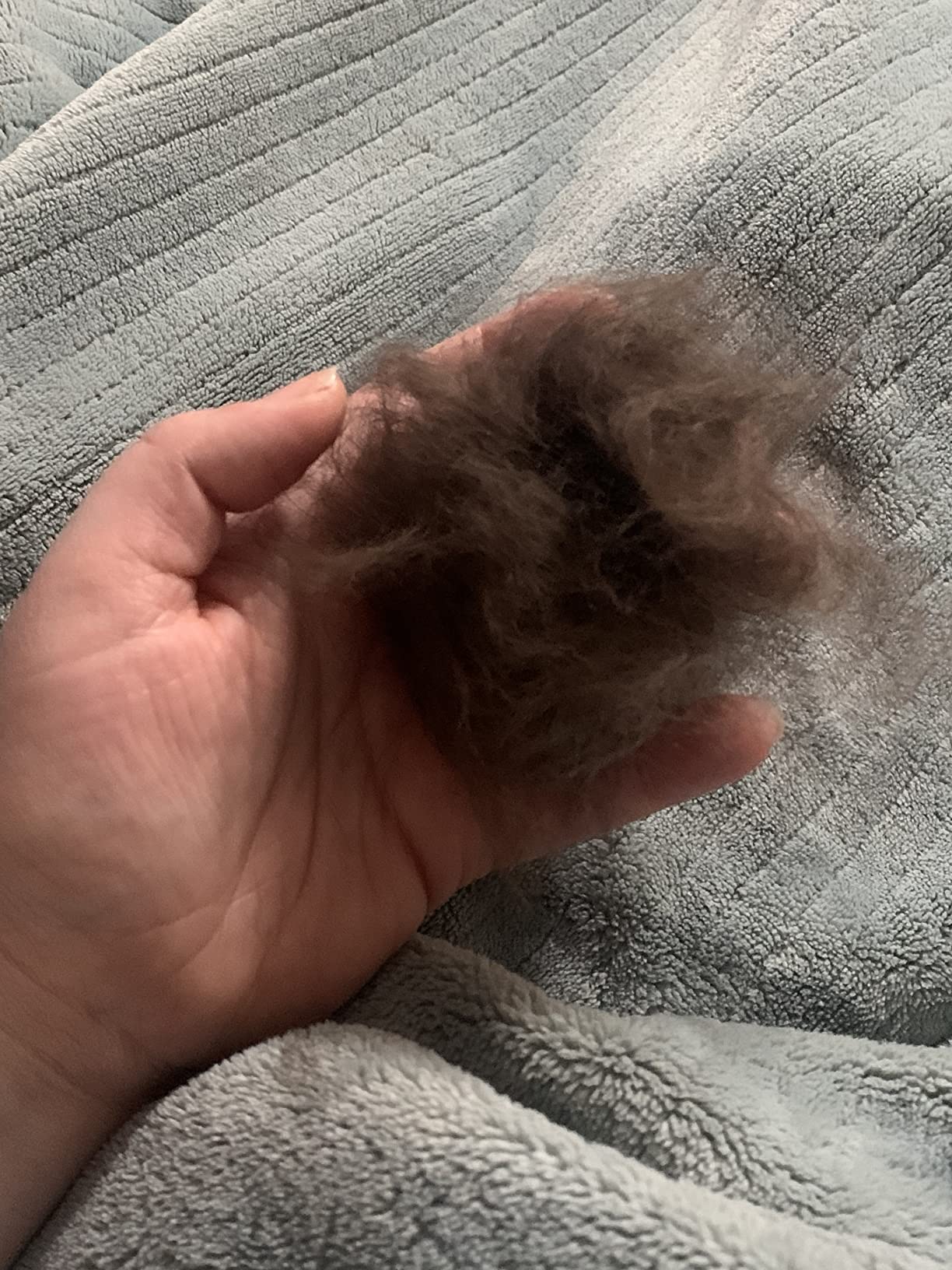
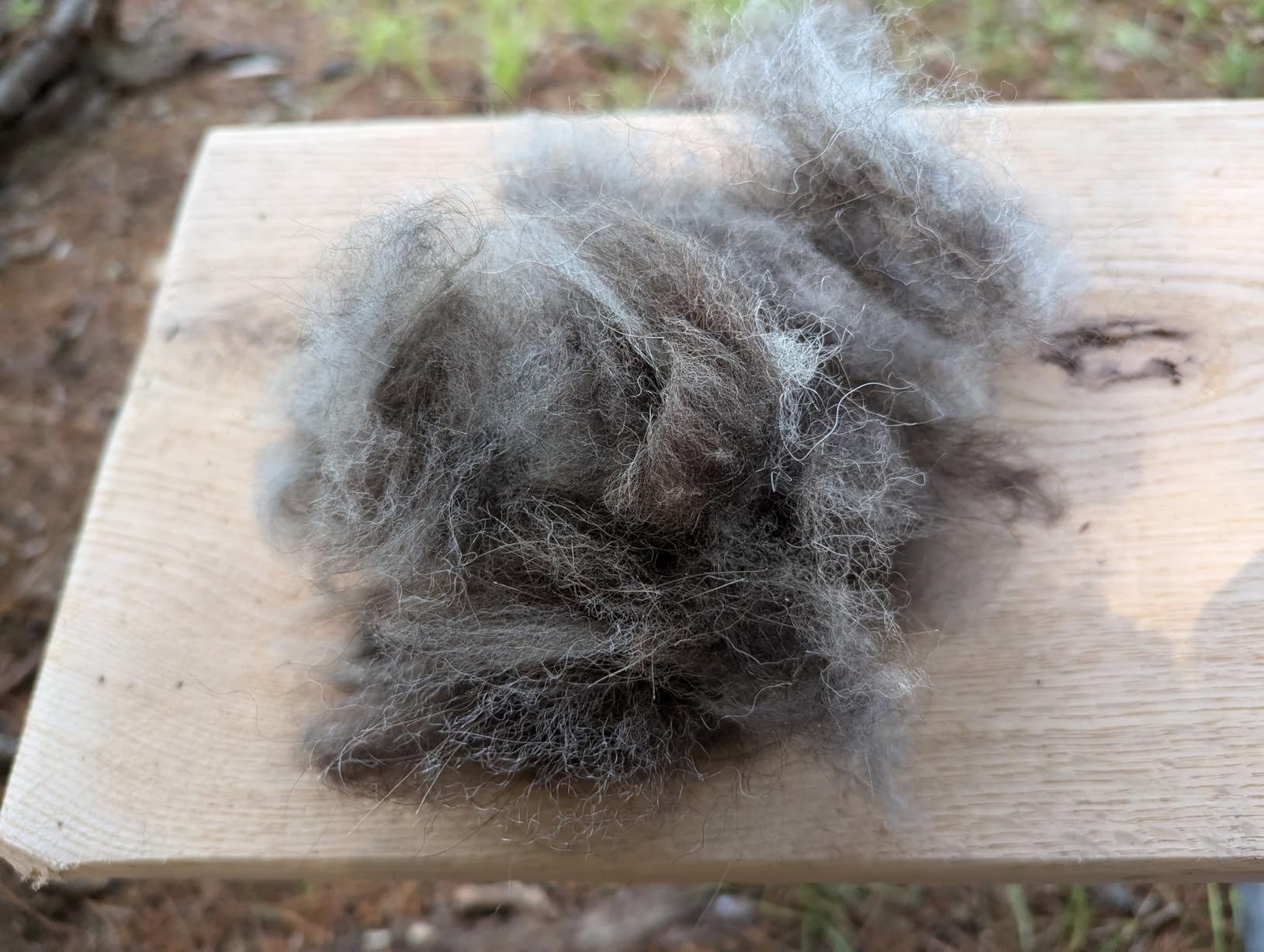
The 18 rounded stainless teeth reach deep into dense undercoat without scratching. Owners of Siberian Huskies, German Shepherds, long-haired Labs and Maine Coon-type cats report emptying a wastebasket of fur in a session and needing to vacuum far less often afterwards.
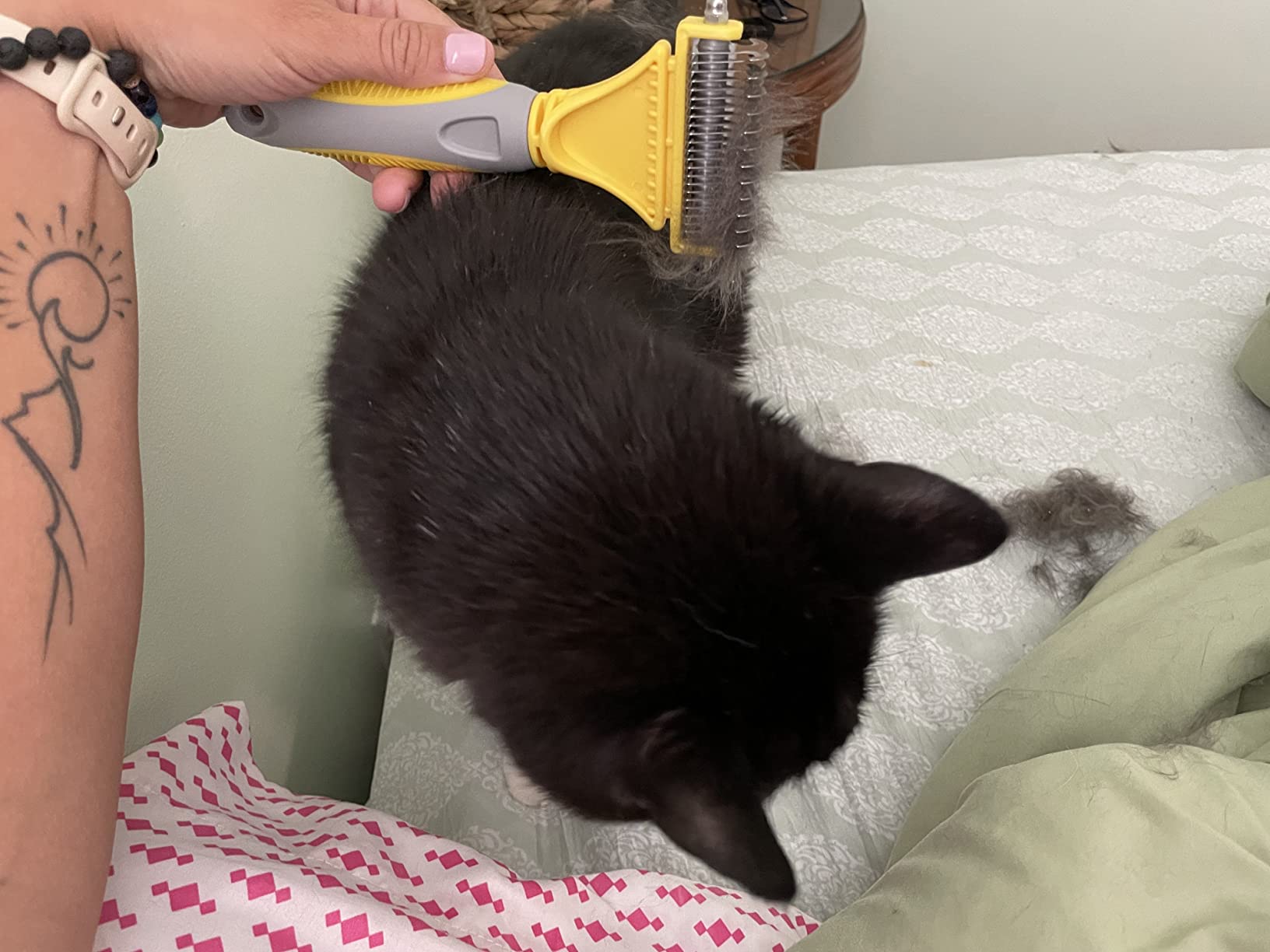
The included dual-density comb handles finishing and hard-to-reach areas, so the set covers both stages of a session. At 6 ounces in a lightweight stainless frame, it stayed comfortable through long sessions on big dogs in our testing, and the non-slip handle includes a silicone hanging hook for storage.
Two caveats. The comb’s tooth spacing is better suited to dogs than to cats, and the matted-brush side can pull on long coats if you work it too vigorously, so keep the pressure light around the ears and skirt.
How does it compare with a self-cleaning slicker?
Different job. This rake reaches deep into the undercoat, while a self-cleaning slicker works the surface and lifts hair the rake has loosened. Owners who use both report the fastest sessions.
If you already own a slicker, this is the tool that removes the volume rather than tidying it.
Where does it fall short?
The teeth are long, which is exactly what you want on a dense coat and slightly less welcome on a short-haired dog or a cat. Keep sessions short on small pets.
On the matted side, patience matters more than pressure. Pulling at a knot costs you hair from the coat around it.
11. Pawradise Retractable Slicker Brush – Best for Weekly Maintenance
Deshedding Dog Brush for Shedding – Self Clean Cat Brush Deshedding & Grooming Tool for Long Haired and Short Haired Dogs, Slicker Brushes for Dogs, Skin-Friendly, Retractable Bristles, Easy to Clean
Press-to-retract bristles
Skin friendly pins
7.37 ounces
Pros
- One press drops the collected hair
- Skin friendly bristles suit sensitive pets
- Works across coat lengths and breeds
- Compact and easy to store
- Detangles light mats and lifts dander
Cons
- Retractable pins are shallower than long-pin rakes
- Retracting mechanism can loosen with daily use
This is a weekly maintenance brush rather than a blowout tool, and it does that job very well. Press the button and the bristles retract, dropping the collected hair, so grooming never pauses to strip the pad by hand.
Owners of long and short haired dogs and cats single out the retraction as the standout feature, along with the skin-friendly pins and the compact size. It is the tool you reach for twice a week to keep hair off the sofa between seasonal sessions.
It detangles light mats and removes dirt and dander across coat lengths, and the compact, drawer-friendly design means it stays out rather than disappearing into a cupboard after one use. That is a bigger deal than it sounds for consistency.
The honest limit is depth. Retractable slicker pins are shorter and shallower than long-pin rake teeth, so it will not reach a heavy double-coat underlayer. And a retracting mechanism that gets pressed daily can loosen over time, so check the button before big sessions.
Can this handle a Golden Retriever in shed season?
Partly, and it will help more than you expect for the amount of surface hair involved. It is best used after a rake has cleared the bulk, when the remaining loose hair sits near the skin.
Using it as your only tool through a full coat blow leaves most of the undercoat behind.
Where does it fall short?
Depth, again, and durability under very heavy daily use. It is a finishing and maintenance tool with a short reach, not a bulk remover.
At 7.37 ounces it is the second-heaviest tool here, noticeable on long sessions with a small dog.
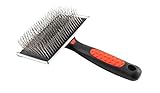
12. Paw Brothers Extra Long Slicker Brush – Best Deep-Reach Finisher
Paw Brothers Professional Grade Extra Long Slicker Brush – Ergonomic Handle, Removes Loose Undercoat and Tangles for Dogs
1 inch stainless pins
4.5 by 3 inch flat head
4.32 ounces
Pros
- Extra-long pins reach skin level in dense coats
- Ergonomic rubber grip with multiple hold positions
- Works on all coat types dogs and cats
- Pins stay straight through heavy tangles
- Dogs often seek out the brushing
Cons
- Long hard pins are sharp so technique matters
- Hair is hard to remove from tightly packed pins
- Head is awkward between legs on small dogs
- Not built for very large coat volumes
This slicker holds the highest average rating in the group at 4.7, and the reason is the pin length. The stainless steel pins are a full inch long and reach the skin, pulling out undercoat, knots and embedded dirt that shorter pin brushes leave behind.
Owners of Great Pyrenees, Huskies, Newfoundlands, doodles, poodles and chow mixes report exactly that result. The flat 4.5 by 3 inch head with a 4.75 inch handle gives good coverage on a large dog, and the rubber grip elements let you change hold position as you move down the body.
Slicker technique has to be learned, and several reviewers make the same point: pressing down into the skin irritates it. The correct motion is to work the coat surface with light pressure and let the pins do the work, which is how you get depth without discomfort.
Two practical limits. The pins are packed tightly, so removing hair by hand is hard and you need a comb to strip it, and the head size is awkward between the legs and in tight areas on a small dog.
Is it better than a comb for a thick double coat?
Different again. This brush reaches skin level to lift and separate, while a comb parts the coat and removes loose hair from the surface. On a dense coat, owners who use the slicker first report the comb pulling out far more.
It is the strongest finisher in this group, and the weakest choice for a small dog in a tight space.
Where does it fall short?
The pins are long and hard, which is exactly what makes it capable and exactly what makes technique essential. A dog with thin skin should be introduced slowly.
Cleanup is the other annoyance: tightly packed pins hold hair until you work a comb through them, so budget extra time at the end of a session.
How to Deshed a Double-Coated Dog Without Damaging the Coat
Rake first, blade only where it is genuinely needed, slicker last. Work with the grain in short gentle strokes, section the coat, pull the skin taut with your free hand, and clear the tool between passes. That sequence is what professional groomers follow, and it is the single most useful thing in this guide.
Section the coat. Use your free hand to part the fur down to the skin so the undercoat is exposed before the tool touches it. Start along the spine and work outward.
Rake the undercoat out first. Long-tooth passes with light pressure remove the bulk of the loose layer. Short strokes beat long ones because you can see what the tool is doing.
Use a blade sparingly. If hair remains and the coat looks thick, make a few light passes on the heaviest areas only. Do not press.
Finish with a slicker brush. Lift the last loosened hair, smooth the coat and check for tangles as you go.
Clear the tool constantly. Stop and empty it every few passes. A full tool stops working and starts dragging.
Pressure by zone matters more than most people expect. Use firm-but-gentle strokes over the back, flanks and rump, and much lighter pressure on the belly, armpits, inner legs, behind the ears and the hip area, which are the thin-skinned places owners most often report as sore.
For dogs that dislike being brushed, the approach that works best is treating grooming as attention rather than as a task. Owners in an r/dogs tips thread describe massaging their dogs while brushing so the dog enjoys the contact and stays still, which turns a wrestling match into a routine.
Undercoat Rake vs Deshedding Blade vs Slicker Brush
An undercoat rake reaches through the topcoat and pulls dead undercoat out. A deshedding blade skims the surface and strips hair that is already loose. A slicker brush works the coat surface and skin level to lift and separate. They are not competitors, they are three different steps.
Undercoat rake: the bulk remover. Long, spaced teeth comb the loose underlayer out before it lands on your floors. Use it first, on every session, especially during a coat blow.
Deshedding blade: the finisher with teeth. Very fast on heavy loose hair, and the tool most likely to be overused. Use it once every one to two weeks at most, and only with light pressure.
Slicker brush: the surface tool. Deep pins reach skin level to lift and separate, and a retract-button model cleans in seconds. Use it after the rake, weekly at minimum, and after a blow-dry.
Owners in r/grooming also mention a carding knife as a gentler alternative for dogs who react badly to metal teeth. It takes more work and removes less per stroke, but it is a reasonable compromise for a sensitive animal.
What Professional Groomers Actually Use to Deshed Dogs
Professional groomers use a short stack of tools rather than one device: an undercoat rake for bulk removal, a slicker for finishing, a deshedding blade for the heaviest areas, and a high-velocity dryer to blow loose hair out of the coat.
Undercoat rake with long steel teeth for removing the loose underlayer, working section by section.
Slicker brush for lifting remaining hair and checking the coat for mats.
Deshedding blade for the heaviest coated areas, used sparingly.
High-velocity dryer to lift and blow out the undercoat, which removes more hair than any tool alone.
Scissor and comb work for tidying the skirt, feet and face once the bulk is out.
This matches the consensus in professional grooming communities. Groomers posting in r/doggrooming recommend an undercoat rake with a double row of steel pins as the core tool, and the breed forum consensus for German Shepherd owners is the same three-tool stack: slicker brush, undercoat rake, then a deshedding tool only if needed.
Coat Safety: What Not to Do With a Double-Coated Dog
Never shave a double coat. Clipping removes the guard hairs and the insulating undercoat together, and many dogs end up with a patchy, thinner, sun-damaged coat that does not grow back the same. Shaving also does not reduce shedding, because shedding comes from the follicle, not the hair length.
Never shave a double-coated dog, even in summer. They shed to cool down, not to reduce heat.
Never work a deshedding blade more than once every one to two weeks.
Never press hard. Glide. Pressure is what causes skin irritation and pulled guard hairs.
Never groom a soaking wet coat vigorously. Work the coat as it dries, or blow it dry first.
Never use blade tools on thin-skinned zones: belly, armpits, inner legs, behind the ears and the hip area.
Never use these tools on smooth or single-coated breeds, where there is no underlayer to remove.
Signs you are overworking a blade tool include a coat that looks thinner or flatter than usual, visible bald patches along the spine or flanks, a dog that flinches or walks away mid-session, and redness or small scabs on the skin. If you see any of these, stop blade work for several weeks and switch to a rounded-tooth rake, which is far harder to overuse.
One more warning worth stating plainly: counterfeits of well-known deshedding tools are a recurring problem, and owners report cheap copies scratching and failing quickly. Buy from a reputable seller, check the machining on the teeth and the printing on the handle, and treat any tool with rough or uneven edges as a return, not a bargain.
How Often to Deshed Your Dog Through the Year
During a spring or autumn coat blow, brush a double-coated dog one or two days a week with a rake, add a slicker pass twice a week, and use a deshedding blade no more than once every one to two weeks. Outside the blow, one rake session a week or even monthly is enough for most dogs.
The reason blade tools get a hard limit is that undercoat hair loosens on its own schedule. Work a blade more often and you start pulling hair that is still attached and still doing its job, which is how guard hairs and topcoat density get lost.
Retire a tool rather than pushing it. A slicker with bent pins, a rake with teeth that catch instead of glide, or a blade with a dulled edge should be replaced, because a damaged tool drags the coat instead of releasing hair and drags your hand with it.
How to Choose a Deshedding Tool for Your Dog
Choose by dog size first, then by coat density, then by comfort. A tool that is too wide for your dog will be awkward on the face, legs and belly, and a tool that is too short on pins will never reach the undercoat you are trying to remove.
Size by dog weight. Compact blades around 5 inches suit small and medium dogs and tight areas. Full-size heads suit dogs over 50 pounds. Choose the size that matches your dog rather than the size that looks most impressive in your hand.
Coat density. Densely packed undercoats on Huskies, Malamutes, Chows and Newfoundlands need long teeth with spacing. Softer coats on Goldens, Bernese and Collies respond well to a slicker with one-inch pins. Thin or wiry coats want the gentlest option available.
Self-cleaning mechanisms. If your dog sheds heavily, a release button or detachable head is worth paying for. Stripping hair off a fixed head by hand every few passes is the reason owners abandon a tool they actually like.
Handle comfort. Look for a non-slip or rubber grip and check whether it suits your hand size. Hand fatigue after fifteen minutes on a dense coat is the most common reason sessions end early.
Safety features. Rounded tooth tips, plastic bristle caps and protective edge coatings all reduce scratching. These matter most on sensitive skin and thin-coated zones.
On cost, the honest math is that a tool amortised over a few years of weekly use is a fraction of a single professional grooming visit, and it removes the hair before it reaches your furniture. That is the real argument for buying a decent rake rather than the cheapest blade available.
Breed-to-Tool Match Guide
Malamute and Husky owners need a long-tooth rake for the bulk and a slicker to finish, with a blade only for the heaviest areas. German Shepherd and Collie owners do well with a slicker brush and an undercoat rake as their two-tool kit. Golden Retriever and Bernese owners get the best results from a one-inch pin slicker paired with a gentle rake.
Corgi and Australian Shepherd owners need size awareness more than anything else, since both carry dense coats on a smaller frame, so a compact blade for the face and feet plus a full-size rake for the back is the right pairing. Chow and Akita owners should favour rounded teeth and light pressure on the dense areas. Newfoundlands benefit most from a deep slicker, since the coat is long enough that pins need the reach.
How to Clean and Store Deshedding Tools
Clear hair from the tool every few passes rather than at the end of the session. A rake loaded with undercoat stops combing and starts dragging, and dragging is what damages skin and pulls hair.
Stop every three or four passes and clear the teeth with your fingers or a comb.
On release-button tools, press the button and tap the head over a trash bag.
On detachable-head combs, slide the head off and rinse or brush it clean.
Wipe the head with a damp cloth after use and dry it before storage.
Hang the tool by its eyelet or hook, and use the protective cover on any blade with a cutting edge.
Rinse and dry metal teeth after any session involving water or products, and store everything away from pet bedding so no loose hair is transferred straight back into the coat.
Frequently Asked Questions
How do I deshed a double-coated dog?
Rake first, blade only where needed, slicker last. Section the coat down to the skin, use long-tooth rake strokes with light pressure to pull the loose undercoat out, make a few light blade passes on the heaviest areas only, then finish with a slicker brush. Work with the grain, clear the tool every few passes, and keep pressure light on the belly, armpits, inner legs and behind the ears.
What is the best way to brush a double-coated dog?
Use a long-tooth undercoat rake first to remove loose undercoat, then a slicker brush to lift and separate what is left. Brush in the direction the hair grows, in short gentle strokes, section by section, and pull the skin taut with your free hand. Most owners get the best results brushing one or two days a week and during the spring and autumn coat blow.
What do groomers use to deshed dogs?
Professional groomers use a stack of tools: a long-tooth undercoat rake for bulk removal, a slicker brush for finishing and mat checking, a deshedding blade for the heaviest areas, and a high-velocity dryer to blow loose undercoat out of the coat. They also use scissors and combs to tidy the skirt, feet and face once the bulk hair is out.
What not to do with double-coated dogs?
Never shave a double coat, because it removes the insulating undercoat and guard hairs and does not reduce shedding. Never use a deshedding blade more than once every one to two weeks, never press hard, never groom a soaking wet coat, and never use blade tools on the belly, armpits, inner legs or behind the ears. Avoid these tools entirely on smooth and single-coated breeds.
Can you damage a dog’s coat with a deshedding tool?
Yes, but it is usually frequency and pressure rather than the tool itself. Overusing a blade or pressing hard can pull live guard hairs, thin the topcoat and irritate skin. Signs of overuse include a flatter or thinner coat, bald patches along the spine or flanks, and redness. Switching to a rounded-tooth undercoat rake is the safest recovery step.
Undercoat rake or slicker brush – which should I use?
Use both, in that order. An undercoat rake removes the loose underlayer that sits close to the skin, which is the hair that ends up on your sofa. A slicker brush works the surface and skin level to lift, separate and smooth what the rake loosened. A slicker alone will not clear a heavy coat blow, and a rake alone will leave the coat less tidy.
The Best Deshedding Tools for Double-Coated Dogs in 2026
If you buy one tool, make it the Maxpower Planet rake. Its dual-sided head handles both dematting and deshedding, the rounded teeth make it the hardest of these tools to overuse, and it works on everything from a Pomeranian to a Great Pyrenees. That is why it is our first pick for the best deshedding tools for double coated dogs in 2026.
Add the SleekEZ blade if you want a fast finishing pass and a tool that also clears your sofa and carpet. Add a slicker brush, either the Paw Brothers for deep reach or a retract-button model for quick cleaning, and you have the same three-tool stack professional groomers use.
The rules matter more than the brand. Rake first, blade sparingly and never more than once every one or two weeks, slicker last, always with light pressure and never on a shaved or soaking wet coat. Get those right and your double coat stays intact while the undercoat comes out in your hand instead of on your furniture.