
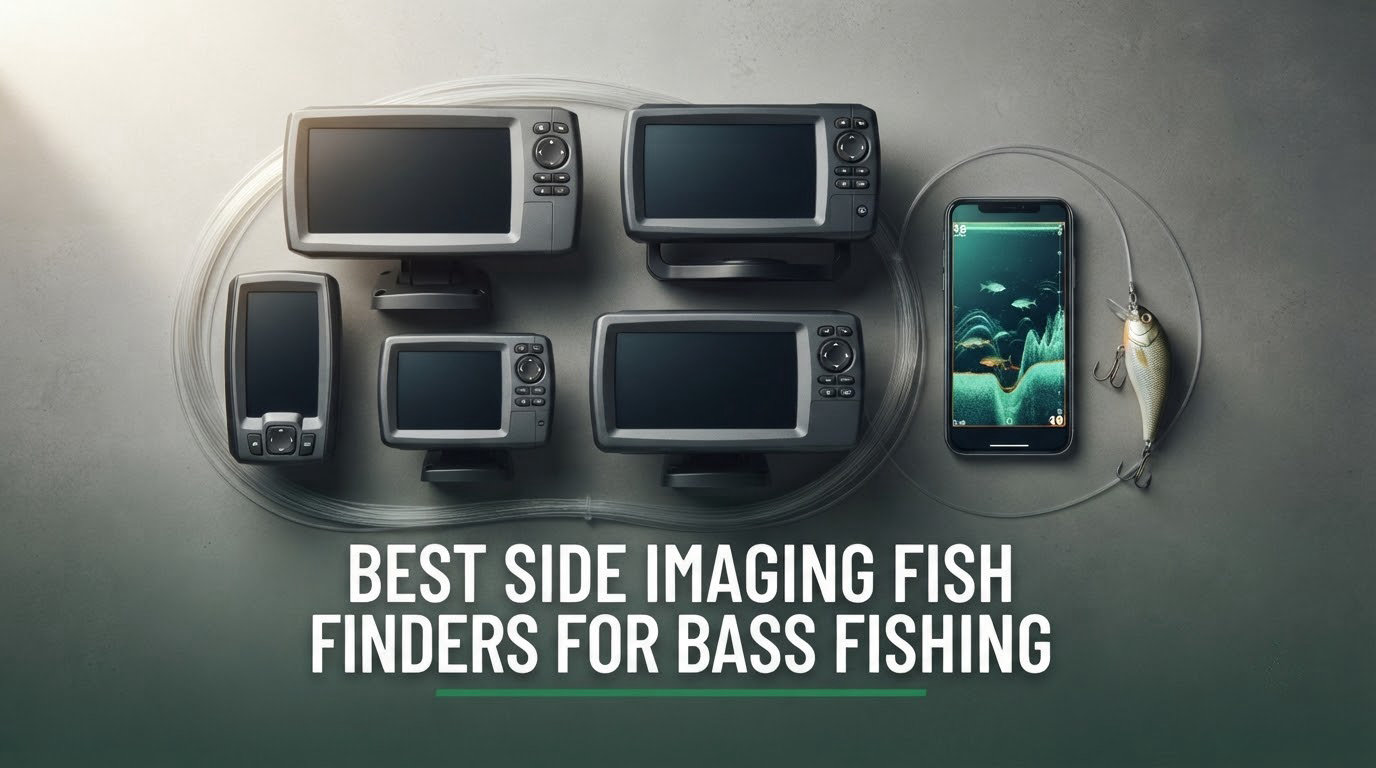
Side imaging sonar fires narrow beams of sound to each side of the boat rather than straight down, then stitches the returns onto the screen as a detailed picture of the bottom out to roughly 70 to 200 feet per side. That makes it the single most useful tool a bass angler can own for breaking down unfamiliar water, because you see brush piles, rock bars, weed edges and baitfish while the boat is still moving at 1 to 2 mph.
Down imaging only tells you what is directly beneath the hull. The moment a fish moves a few feet off the bottom or sits behind a ledge, it disappears. Side imaging covers the width of the strike zone, which is why most serious bass fishermen treat it as a locating tool rather than a luxury feature, and why forward-facing sonar like MEGA Live or ActiveTarget gets added later as a complement rather than a replacement.
We pulled nine side imaging units across Humminbird, Garmin and Lowrance and compared them on the things that actually change results on the water: side range, whether the transducer is in the box, mapping, networking, control style and how readable the display is in direct sun. If you want the wider brand picture first, our picks for the best Garmin fish finders and the best Humminbird fish finders are worth a look, but everything below is filtered specifically for bass work.
One warning before the list. Side imaging has real limits, and none of the roundups we studied mention them. In very shallow water and in dense vegetation like hydrilla the picture degrades badly, and a transducer mounted at the wrong height or angle will look broken no matter which brand you buy. We cover both problems below.
Top 3 Side Imaging Picks for Bass Anglers in October 2026
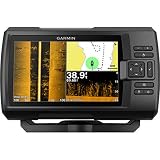
Garmin STRIKER 7SV
- SideVu and ClearVu scanning sonar
- CV52HW-TM transducer included
- Quickdraw Contours built in

Lowrance Elite FS 10
- Active Imaging 3-in-1 transducer
- C-MAP DISCOVER charts preloaded
- 10-inch multi-touchscreen

Humminbird HELIX 7 CHIRP SI G4
- CHIRP Side Imaging
- Keypad and softkey control
- AutoChart Live standard
Every Side Imaging Fish Finder in This Guide at a Glance for October 2026
All nine models below carry genuine side imaging sonar. That is not a given in this category, because several models without side scan still surface in shopping results for this search, so check the model suffix and the transducer name before you buy.
| Product | Specs | Action |
|---|---|---|
| Garmin STRIKER 7SV |
|
Check Latest Price |
| Lowrance Elite FS 10 |
|
Check Latest Price |
| Humminbird HELIX 7 CHIRP SI G4 |
|
Check Latest Price |
 Humminbird XPLORE 10 Humminbird XPLORE 10 |
|
Check Latest Price |
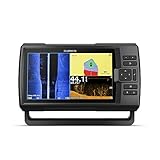 Garmin STRIKER Plus 9SV Garmin STRIKER Plus 9SV |
|
Check Latest Price |
 Garmin ECHOMAP UHD2 93sv Garmin ECHOMAP UHD2 93sv |
|
Check Latest Price |
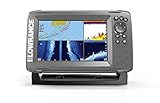 Lowrance HOOK2-7 TripleShot Lowrance HOOK2-7 TripleShot |
|
Check Latest Price |
 Humminbird HELIX 7 G4 MEGA SI Humminbird HELIX 7 G4 MEGA SI |
|
Check Latest Price |
 Lowrance HDS PRO 10 Lowrance HDS PRO 10 |
|
Check Latest Price |
1. Garmin STRIKER 7SV – Best Overall Side Imaging Fish Finder for Bass Fishing
Garmin Striker 7SV with Transducer, 7″ GPS Fishfinder with Chirp Traditional, ClearVu and SideVu Scanning Sonar Transducer and Built in Quickdraw Contours Mapping Software, 7 inches (010-01874-00)
7-inch color TFT
SideVu and ClearVu scanning sonar
CV52HW-TM transducer in the box
Pros
- Transducer in the box so the install is complete
- Bright screen owners call vivid in sunlight
- Quickdraw Contours records 1-foot contours for up to 2 million acres
Cons
- No chartplotter and no mapping at all
- ActiveCaptain navigation is clunky in direct sun
- Side scan performance varies with transducer setup
The STRIKER 7SV is where I send most people who ask for one unit that just works. Owners consistently call the down view clear enough to watch a fish chase a lure, and the side view is genuinely useful for picking up brush piles and rock bars at trolling speed. It is also the most reviewed model in this guide, so there is a large body of real owner experience to draw on.
Everything needed for the install is in the package: the CV52HW-TM transducer, an adapter cable, transom and trolling motor mounts, and the power and data cable. That matters more than it sounds, because a surprising number of listings in this category ship a bare control head and leave the transducer as a separate purchase.
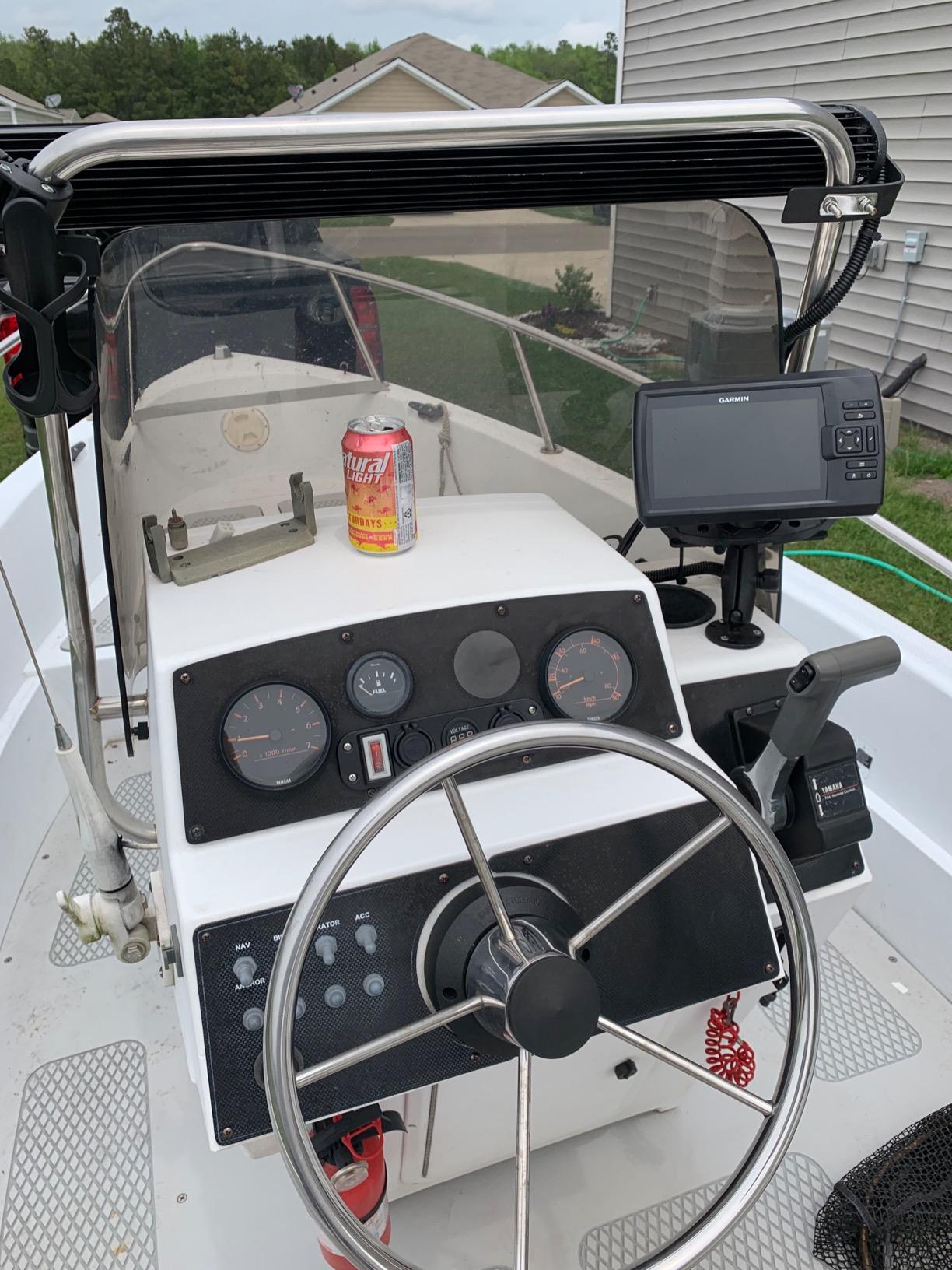
The honest drawback is that there is no chartplotter here. The Striker series accepts no mapping software and carries no charts, so contouring is limited to Quickdraw, which records 1-foot contours for up to 2 million acres. Owners who want to see a lake shape usually fall back on a phone app, and several report that workflow is more cumbersome in direct sun than they expected.
One more thing worth knowing before you mount it: side scan results improve noticeably after you adjust transducer height and angle. A few buyers needed that adjustment to get usable detail at all, which is normal but not obvious from the manual.
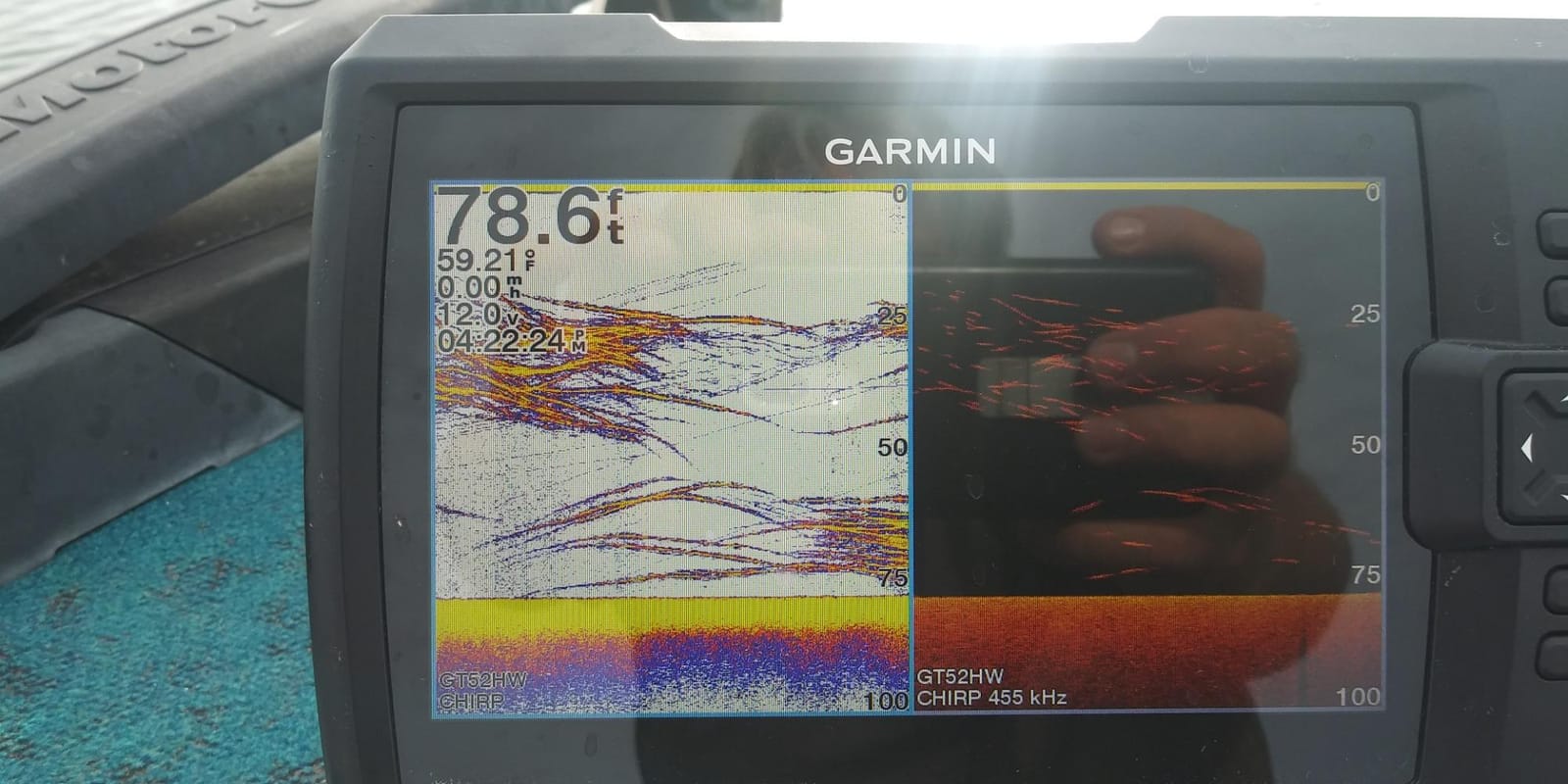
Is the transducer actually included?
Yes, and that is the main reason this model wins its slot. The CV52HW-TM covers CHIRP traditional plus ClearVu and ClearVu-style down and side scanning, so nothing extra is required to get an image on screen.
Buyers who came from higher end Lowrance setups report being surprised that a unit at this level produces usable side scan detail. Several also bought a second unit for the trolling motor.
Will it work on a small boat or a pontoon?
The transom and trolling motor mounts are both included, and the 1.7 pound weight means it will not be awkward on a jon boat. It is the pick we saw most often in kayak and small boat setups, and the 7-inch screen is the minimum we would consider for side scan work.
What it will not do is navigate. If charting a new lake is part of your plan, look at the ECHOMAP UHD2 instead.
2. Lowrance Elite FS 10 – Best Value Side Imaging Fish Finder With Charting Included
Lowrance Elite FS 7 Fish Finder with Active Imaging 3-in-1 Transducer, Preloaded C-MAP Contour+ Charts
10-inch multi-touchscreen
Active Imaging 3-in-1 transducer
C-MAP charts preloaded
Pros
- C-MAP inland coastal and Canadian charts need no separate card
- 3-in-1 transducer covers CHIRP and SideScan and DownScan with FishReveal
- Wireless plus NMEA 2000 plus Ethernet for multi-display installs
Cons
- Live sonar hardware is a separate purchase
- Only the 10-inch build is covered by this listing
The Elite FS is the pick for anyone who wants a single screen that does everything without a second box of maps later. Three sonar modes come out of one 3-in-1 transducer, and the C-MAP DISCOVER charts are loaded in the unit, covering inland, coastal and Canadian water. That removes the most common hidden cost in this category.
The 10-inch multi-touchscreen gives you a genuinely large picture of the sonar return and the chart at the same time, which matters when you are running a split screen at trolling speed and trying to read both a ledge transition and your position. Over 500 ratings average 4.6, with a large share of five-star reviews focused on exactly this all-in-one value.
Connectivity is the other strength. Wireless, NMEA 2000 and Ethernet are all present, so this is a sensible console unit for a boat that will grow a second display later. A suncover is included with the mounting hardware, which sounds trivial until you have parked a screen in a hot car in July.
The gap is live sonar. The unit is ActiveTarget 2 and 2 XL ready, but that transducer is sold separately, so budget for it as an add-on rather than expecting it in the box.
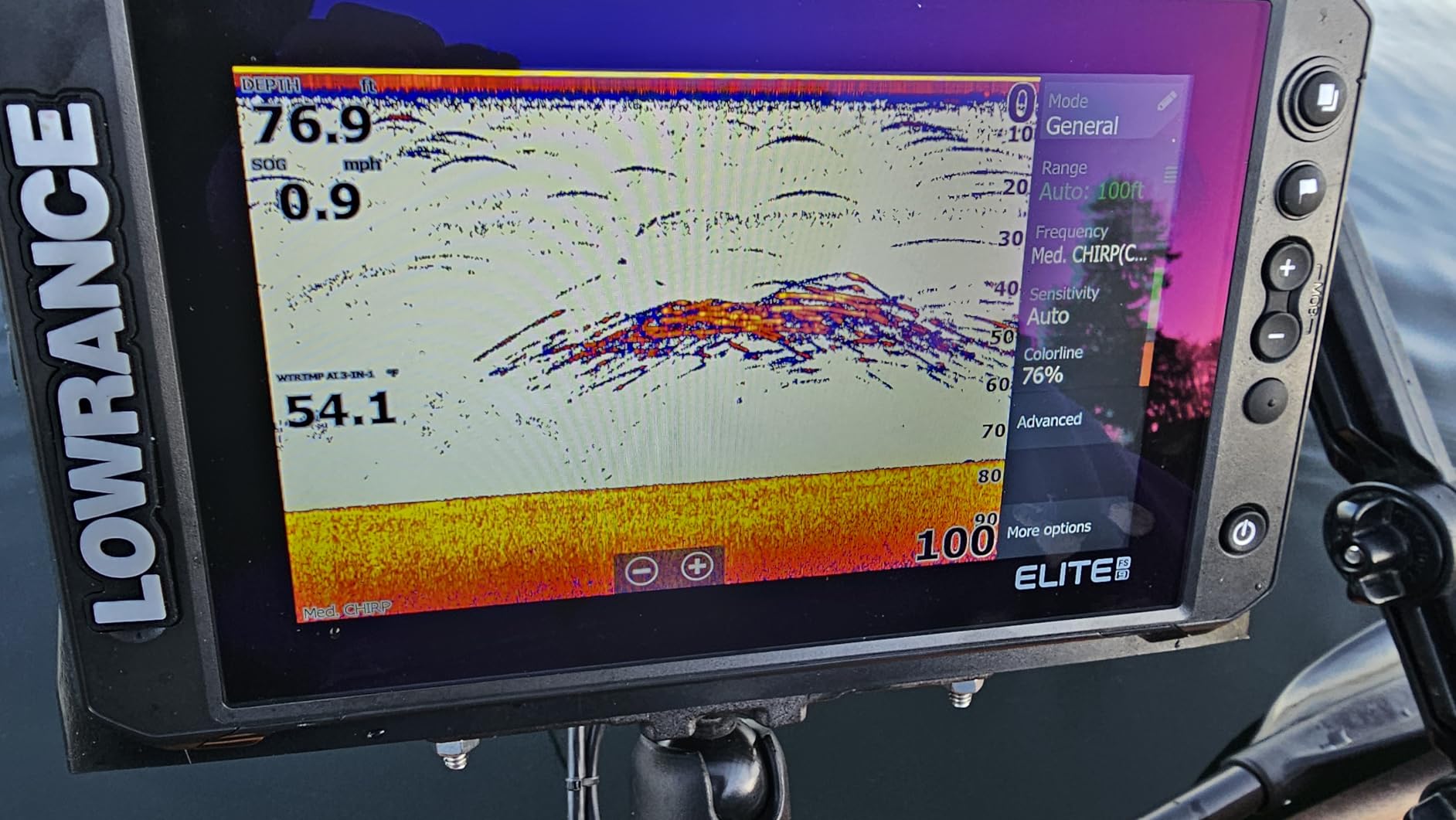
Do I need a separate map card?
No. Preloaded C-MAP DISCOVER charts are standard, and they are detailed enough to find contours and structure without buying anything else. Premium C-MAP Contour+ options exist if you want more, but they are not required to get started.
Note the listing covers the 10-inch configuration. The same family is offered in 7, 9 and 12 inch sizes with different transducer packages, so check the size before you commit.
Is it worth stepping up from a 7-inch?
If you are moving from a 5-inch or a non-imaging unit, the jump to a 10-inch screen with charting is the single biggest quality-of-life change in this list. Owners who upgraded from older electronics single out the touchscreen size and the breadth of connectivity as the reasons they switched.
If you are already on a networked boat, the Ethernet and NMEA 2000 ports make this an easy drop-in for a second helm position.
3. Humminbird HELIX 7 CHIRP SI GPS G4 – Best Budget Side Imaging Pick With Keypad Control
Humminbird 411590-1 Helix 7 Chirp SI GPS G4
7-inch color TFT
CHIRP Side Imaging and Down Imaging
XNT 9 HW SI T transducer
Pros
- Keypad and softkey control stays usable with wet hands or in rain
- CHIRP Side Imaging filters noise and clutter out of the picture
- AutoChart Live mapping included with eight hours of built-in recording
Cons
- Menu settings take real time to learn
- One buyer reported a packaging label that did not match the listing
This is the unit to buy if you dislike touchscreens, and that is not a small group. Experienced anglers on the fishing forums we read repeatedly say they prefer physical keypads for the reason that matters in the field: wet hands, a bouncing boat and rain do not play well with capacitive screens. The HELIX runs entirely from a keypad and softkeys.
The sonar side is solid too. CHIRP Side Imaging filters noise and clutter out of the picture, Dual Spectrum CHIRP 2D gives you a Wide Mode for coverage and a Narrow Mode for detail, and the transom-mount XNT 9 HW SI T transducer is in the box. Anglers who moved over from Garmin cite better detail and better mapping as the reason for switching.
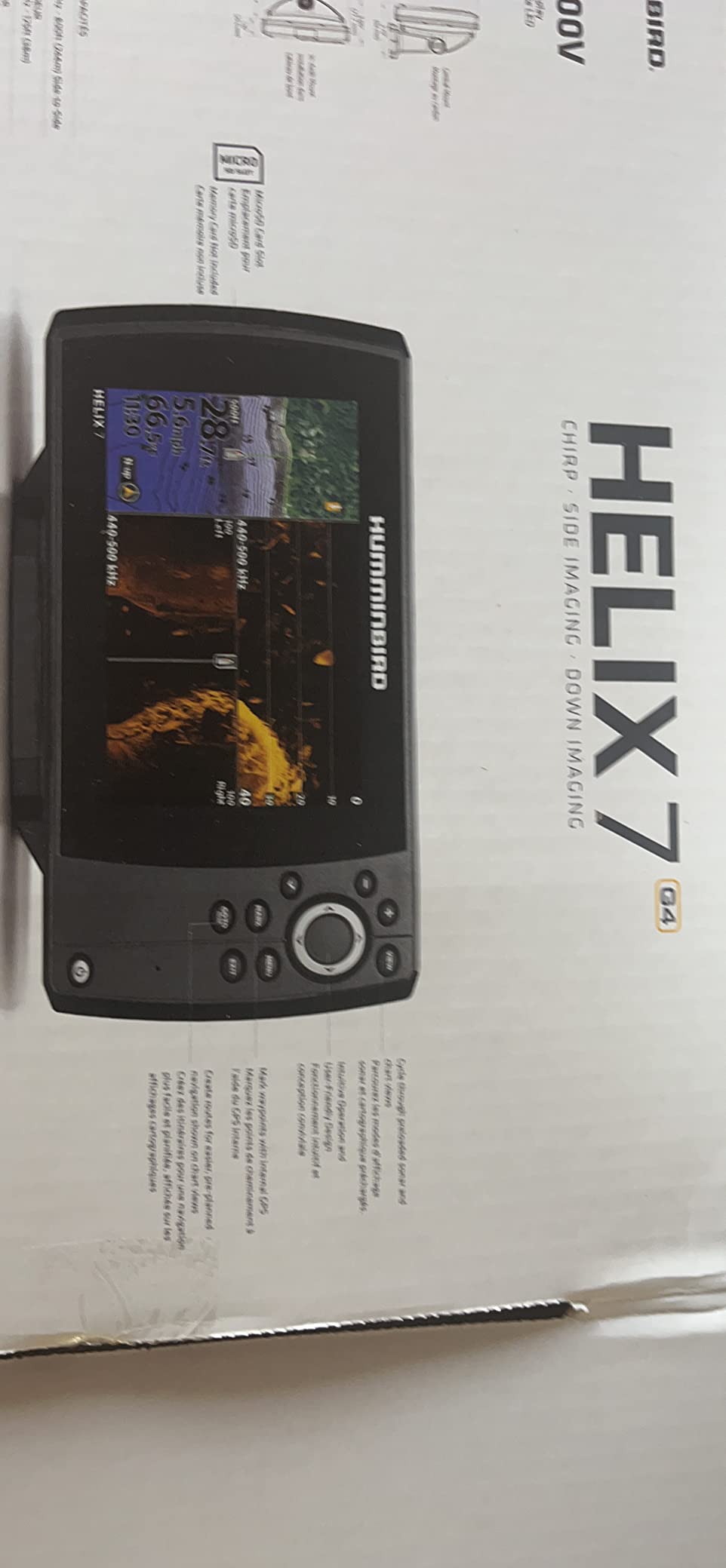
Mapping is handled by AutoChart Live, which records depth contours, bottom hardness and vegetation in real time with eight hours of built-in recording before you need an SD card. The internal GPS carries a Humminbird Basemap with charts of more than 10,000 lakes, and premium LakeMaster, CoastMaster and Navionics cards are supported if you want them.
Two caveats. The menu system genuinely takes time to learn before the unit performs at its best, so budget a few trips. And one buyer reported the box was labeled for side imaging only while the listing described side imaging plus down imaging, which is a packaging detail rather than a hardware fault.
Will this network with my trolling motor later?
This specific model number does not carry the N suffix, and that matters. Humminbird uses the N designation to mark units built for networked multi-device installs, so if you are planning a console and bow pair from the start, buy the networked variant instead of planning to add one later.
For a single-unit install on a transom or a single trolling motor, it is a straightforward fit with the included gimbal bracket.
Is 7 inches enough for side scan work?
It is the size most weekend bass anglers end up with, and the forum consensus is to save until you can afford a 7-inch with side imaging rather than buying a 5-inch without it. A 7-inch lets you split the screen between side scan and down scan and still read both.
If you run a lot of split-screen layouts at 1 to 2 mph, the Elite FS 10 gives you noticeably more room to work with.
4. Humminbird XPLORE 10 – Best for Maximum Side Scan Range
Humminbird XPLORE 9 GPS Fish Finder with Transducer, MEGA Side Imaging+ & HD Touchscreen
10-inch HD touchscreen and keypad
MEGA Side Imaging+ at 200 feet per side
Pros
- Widest side scan range here at 200 feet per side
- HD touchscreen that also supports keypad operation
- Bluetooth for anchor control and phone notifications
Cons
- Control head only so the transducer is a separate purchase
- Only 49 ratings so far
Range is the headline here, and it is a real difference rather than a marketing line. MEGA Side Imaging+ reaches 200 feet on each side, paired with MEGA Down Imaging+ at 200 feet of depth coverage and Dual Spectrum CHIRP for 2D. Pros running this class of electronics typically scan wide so they can see structure coming rather than reacting to it.
The 10-inch HD display is a touchscreen but also supports keypad operation, which makes it a reasonable middle ground if you are not sure which style suits you. Bluetooth handles wireless anchor control and phone notifications, and high-speed Ethernet with built-in NMEA 2000 covers networked installs. Minn Kota and Cannon compatibility is on the list too.
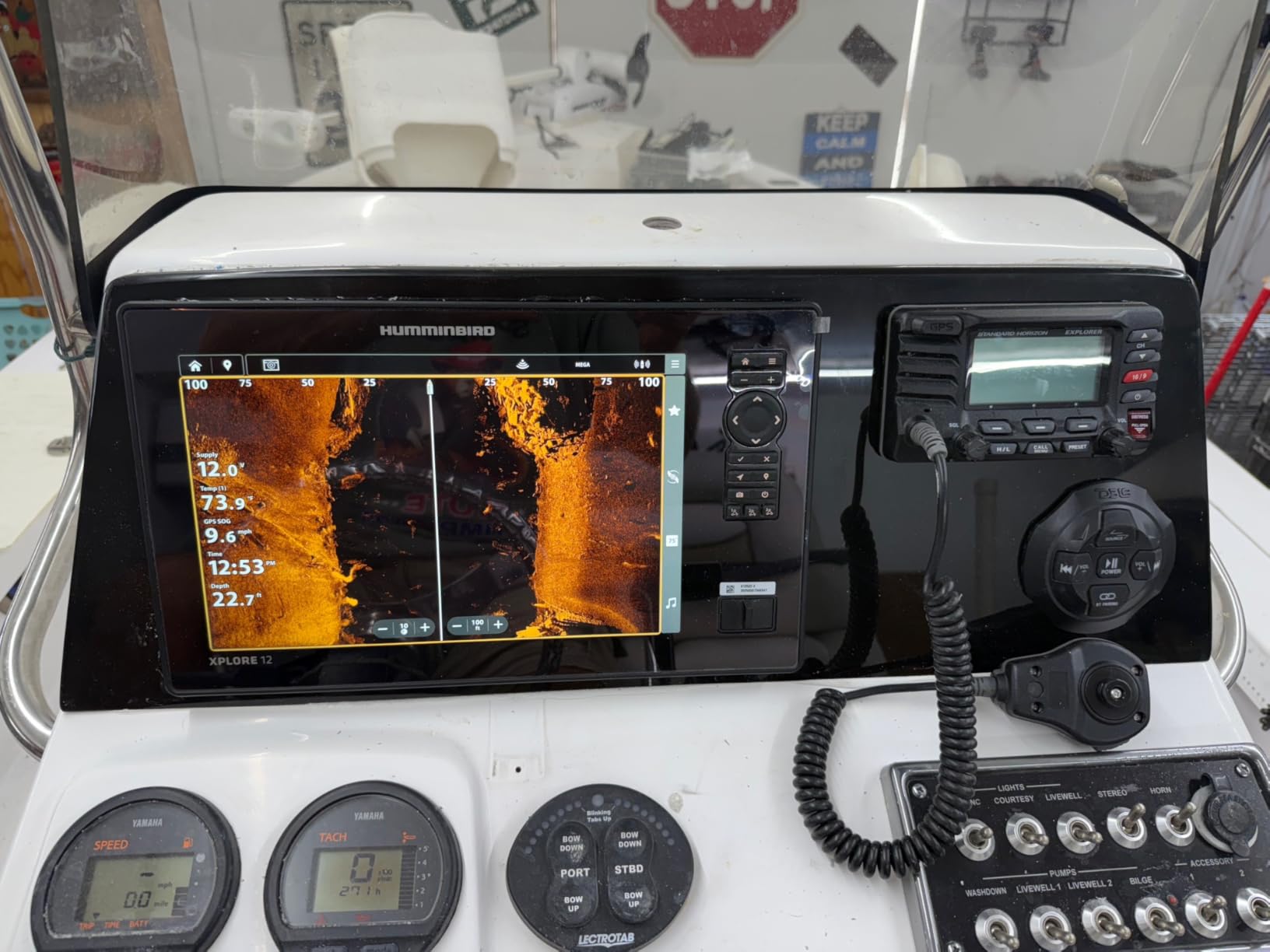
A LakeMaster and CoastMaster VX map card is included, covering US and Canadian regions, so the unit is chart-ready out of the box. At 4.7 stars with 88 percent five-star, early owner satisfaction is strong, with the map card and the networking options getting the most mention.
Two things to weigh. This configuration is a control head only, so budget for a separate MEGA Side Imaging+ transducer. And at 49 ratings it has a much thinner review history than the established models in this list, which is worth remembering when a product is this new.
Do I need the 200 feet per side?
Only on large clear reservoirs, deep grass flats and big open water where you want to see a weed edge before you arrive at it. On a typical creek or a small inland lake, most of that range goes unused and you are paying for pixels you never read.
For most weekend bass fishing, 125 feet per side is the more useful figure, and the HELIX 7 G4 MEGA SI below hits that mark.
What does control head only actually mean?
It means you receive the display unit, power adapter, cover and mounting bracket, but the transducer is not in the box. That can be a smart way to buy if you already own a compatible transducer, or if you plan a networked install with one shared sensor.
If you are starting from nothing, add the transducer cost to your budget before comparing this against models that ship complete.
5. Garmin STRIKER Plus 9SV – Best for a Big Screen Without Paying for Charts
Garmin Striker Plus 9SV with CV52HW-TM transducer, 010-01875-00
9-inch WVGA sunlight-readable display
CV52HW-TM transducer included
Pros
- 9-inch screen owners say stays readable in direct sun
- Transducer and both mounting options included
- Startup is close to plug-and-play
Cons
- No mapping software accepted and no charts included
- Screen interpretation takes practice
- Isolated report of warranty friction after a unit failure
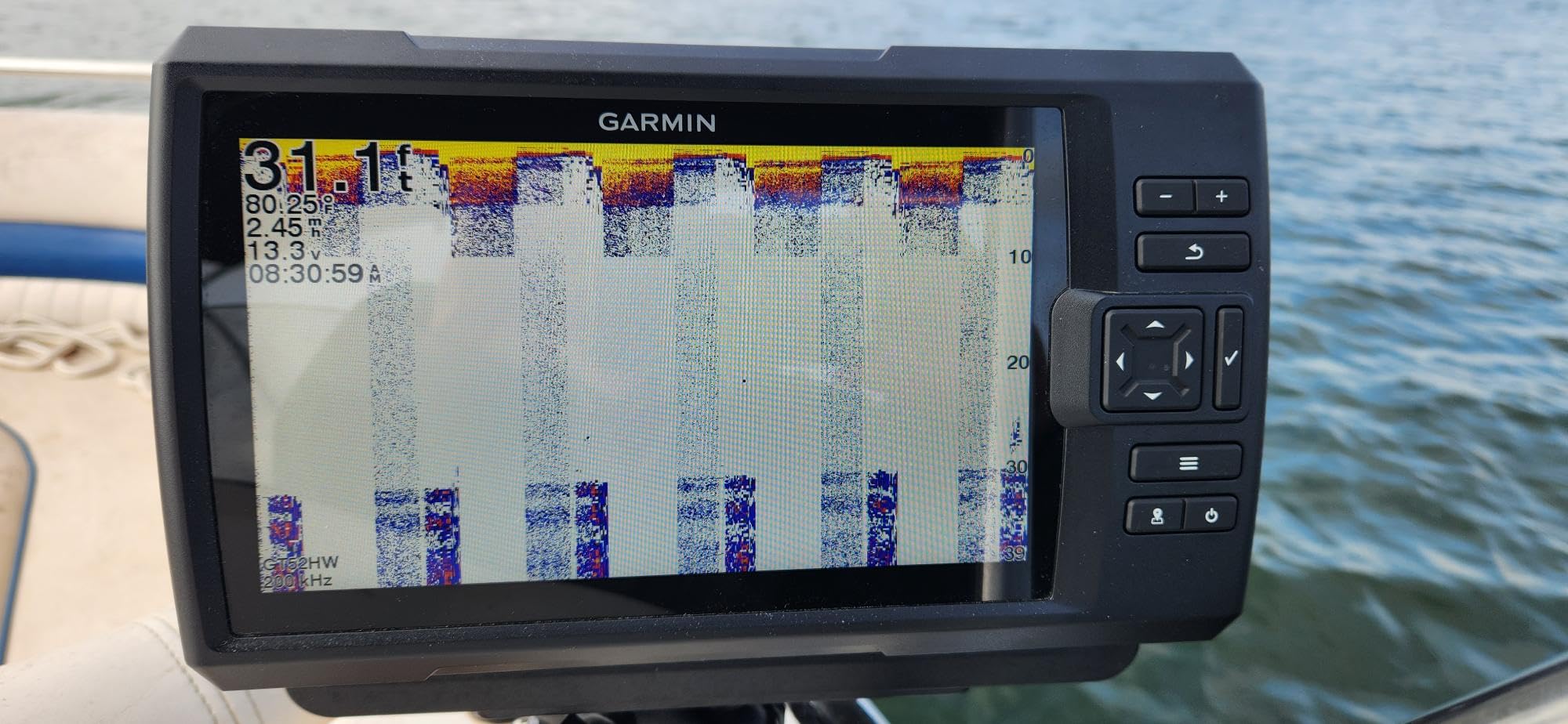
This is the pontoon and small bass boat pick. The 9-inch WVGA panel is widely reported as readable in direct sun, which is exactly the condition you fish in at 8 a.m. on an open lake, and a larger screen makes split-screen layouts far easier to parse while the boat is moving.
Sonar-wise it matches the 7SV with the same CV52HW-TM transducer providing CHIRP traditional plus ClearVu and SideVu scanning. Startup is close to plug-and-play: a few setup questions and a traditional sonar view running in about a minute, with an easy transom-mount installation.
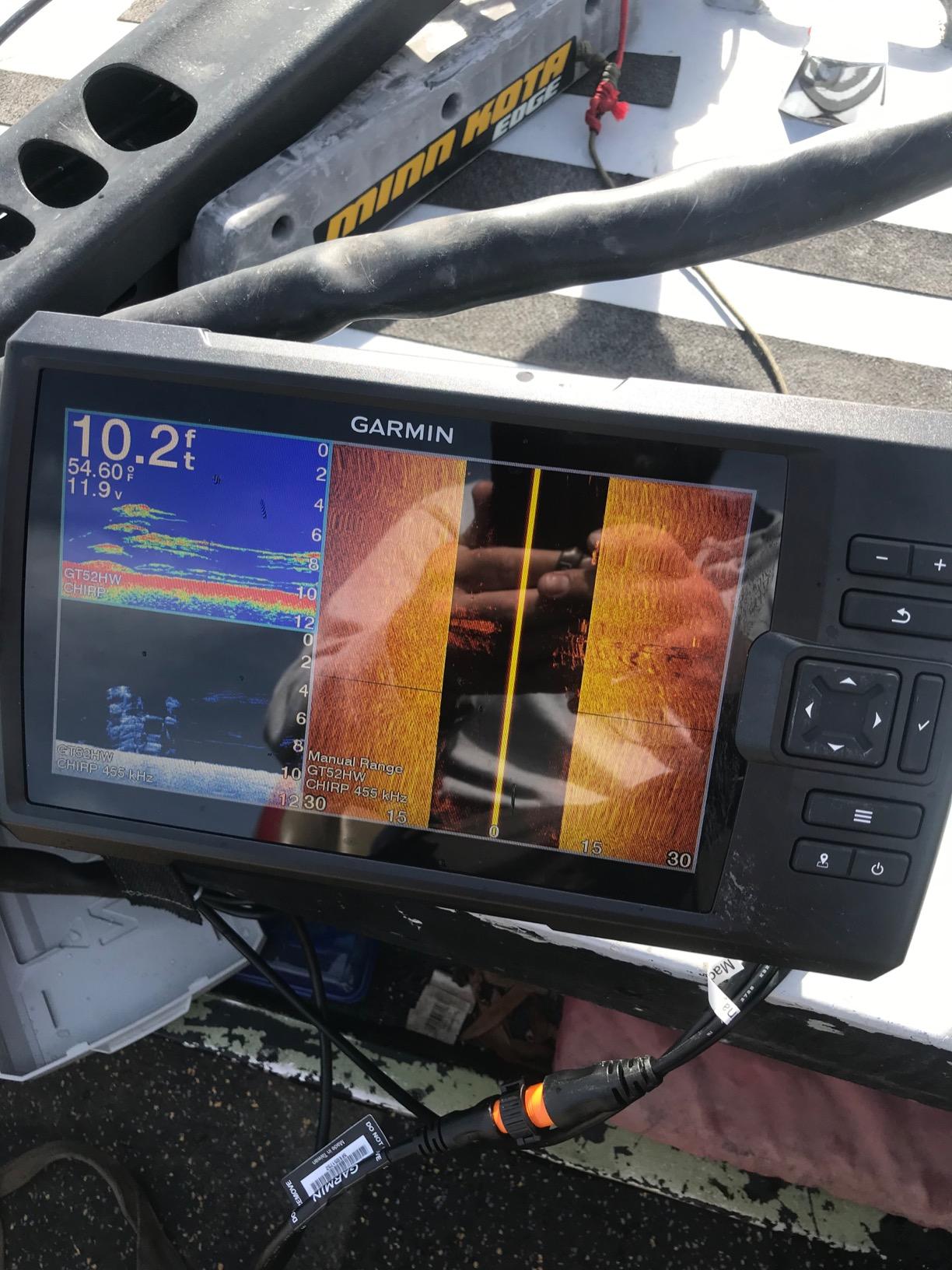
Several owners who came from higher end Lowrance electronics report being impressed enough to reconsider their brand preference, and depth readings and alarms get specific praise for tracking rapid bottom changes across a lake. The unit weighs 2.4 pounds, so it is not an awkward addition to a small helm.
As with the rest of the Striker line, there is no chartplotter and no mapping software. That is the trade for the screen size at this level, and most buyers accept it and chart on a phone. A few report that reading the display without practice takes a little getting used to.
How does it compare with the 7SV?
Same transducer, same sonar feature set, more screen. Owners who moved from the 7-inch to the 9-inch describe the difference as working comfort rather than raw capability, especially when splitting side scan and down imaging.
Both share the same limitation: no charts, so neither works as a chartplotter.
Is a 9-inch screen too big for a small boat?
For a jon boat or a compact bass boat with a limited console, 9 inches can be tight, and the mounting footprint is larger than a 7-inch unit. For a pontoon with a full helm or a 16-foot-plus bass boat, the extra screen is the reason to choose it.
Measure your console panel before ordering rather than assuming the diagonal will fit.
6. Garmin ECHOMAP UHD2 93sv – Best for Mapping and Chartplotter Use
Garmin ECHOMAP UHD2 93sv with GT56 Transducer, 9″ Touchscreen Chartplotter, Garmin Navionics+ U.S. Inland
9-inch touchscreen chartplotter
GT56 scanning sonar transducer
Navionics+ inland maps
Pros
- Full chartplotter and scanning sonar in one 9-inch screen
- Navionics+ inland maps preloaded with up to 1-foot contours
- Wireless link to a Force trolling motor for route following
Cons
- Carries charting hardware
- so it sits above the Striker models
- Weighs 8.1 pounds against 1.7 to 2.4 pounds for the Striker models
Where the Striker models stop at sonar, this one is a full chartplotter with scanning sonar built in. Built-in Garmin Navionics+ inland maps cover more than 18,000 lakes with contours down to 1 foot, which removes the map card expense entirely and is the single biggest reason to step up.
The GT56 transducer is included and covers traditional, ClearVu and SideVu scanning sonar. The 9-inch touchscreen is reported as noticeably better in clarity and viewing angle than the previous generation, which matters when you are trying to read fine structure on the side scan return rather than just see that something is there.
Wireless sharing of sonar, waypoints and routes to a second ECHOMAP UHD2 means a bow or console pair needs no extra cable pulling, and the unit links wirelessly to a Force trolling motor for route following and speed control. It ranks first in its category on Amazon, and at 4.7 stars from 101 ratings it is one of the strongest performers here.
Two practical notes. The 8.1 pound weight is real compared with the 1.7 to 2.4 pound Striker models, so check your mounting hardware. And no recurring hardware complaints surfaced in the owner reviews we reviewed for this model.
Is the transducer included or extra?
Included. The listing covers the GT56 scanning sonar transducer, so unlike the control head only builds elsewhere in this guide, nothing extra is needed before mounting.
The family is also offered in 6, 7 and 9 inch sizes with GT54 or GT56 transducers and several basemap regions, so confirm you are ordering the 93sv with the GT56.
Can I pair it with a second screen?
Yes, and this is where the ECHOMAP separates itself from the Striker line. Built-in wireless sharing lets a second ECHOMAP UHD2 mirror sonar, waypoints and routes without running a cable between the helm and the bow.
If your boat already has another brand installed, check NMEA 2000 compatibility before assuming it will drop in alongside existing electronics.
7. Lowrance HOOK2-7 TripleShot – Best All-in-One Bundle, With Caveats
Lowrance HOOK2-7 7-inch Fish Finder with TripleShot Transducer and US / Canada Navionics+ Map Card
7-inch LCD display
TripleShot transducer with SideScan
Navionics+ card included
Pros
- TripleShot transducer delivers SideScan and DownScan and CHIRP from one unit
- Navionics+ card included so charting is ready out of the box
- Demo mode and install make it approachable for first-time buyers
Cons
- Route and waypoint logic anchors routes to the original start point
- Navionics tiles take several seconds to load
- Screen text and brightness are hard to read in direct sun
On paper this is the most complete box in the guide. The TripleShot transducer puts SideScan, DownScan and conventional CHIRP into a single unit, and a US and Canada Navionics+ card is included, so the unit is a fish finder and a chartplotter from the moment it is mounted.
That said, this is the second-weakest performer in the group at a 4.2 average, with a rating distribution that carries about 9 percent one-star reviews. That is well above the 3 to 5 percent share on the Garmin and Humminbird models, and owners responding to the complaints frequently recommend stepping up to a higher-end model instead.
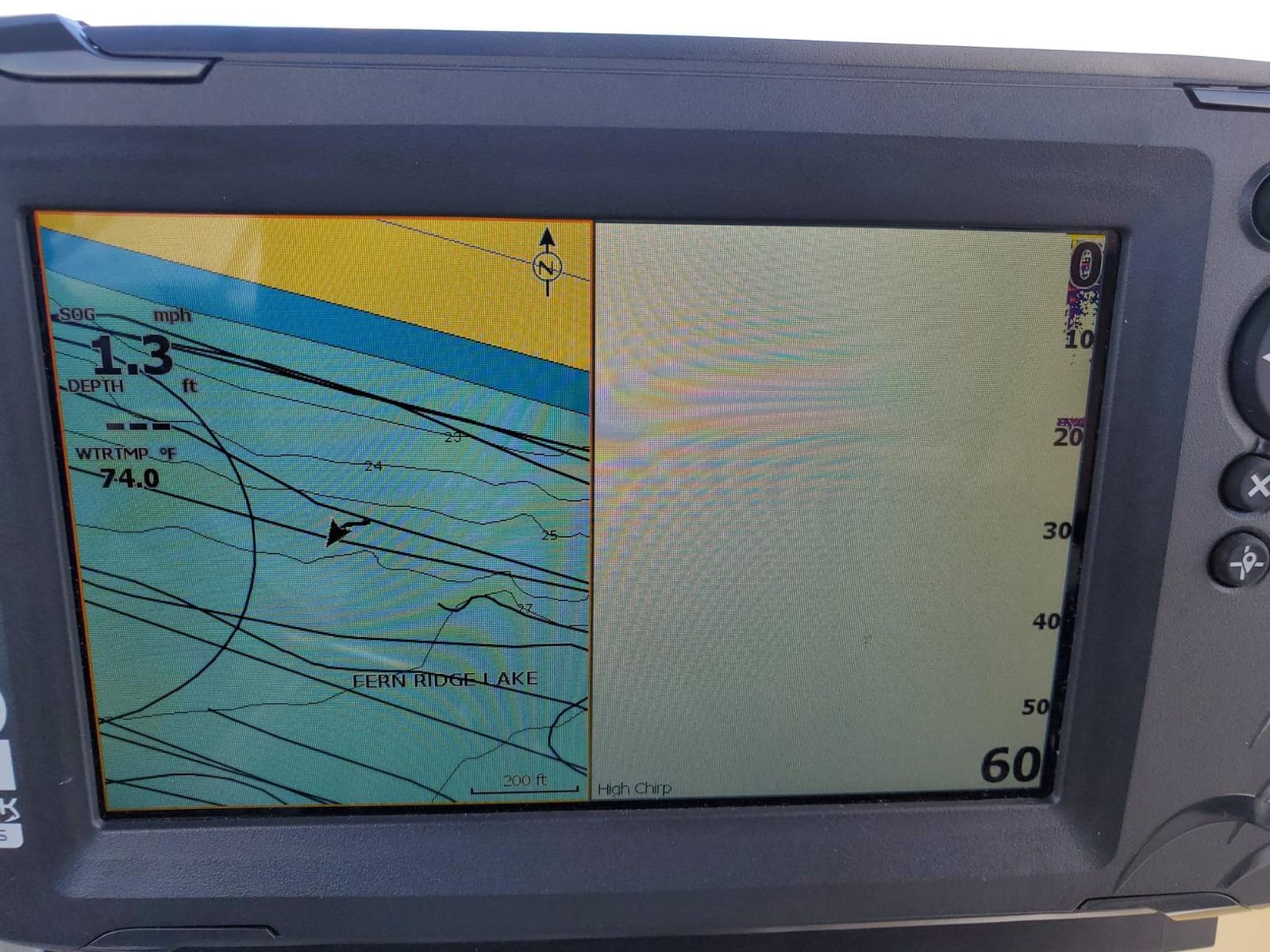
The specific complaints are consistent enough to plan around. Route and waypoint navigation anchors routes to the original starting location, which is confusing on a lake you fish in sections. Navionics map tiles take several seconds to load while you are moving. Small black text on the depth and speed readouts is hard to read in direct sun, and some users report noise interference on the sonar return.
There is also a practical install issue. The transducer cable length can be too short to reach a bow-mounted position on a mid-size boat, which is a real problem if that is where you planned to put it.
Is it worth buying for the bundle alone?
If you want one box that contains side scan, down scan, 2D sonar and a map card, it is hard to argue with the package. The TripleShot transducer alone removes the need to source a separate multi-beam unit, and the included card gets you charting immediately.
Just know you are buying convenience over capability, and over owner satisfaction at this price level.
Will it mount at the bow on a mid-size boat?
Check the cable length before you commit. Owners on mid-size boats report the cable can fall short of a bow-mounted position, which turns a simple install into a routing job or an extra cable.
If you know the unit is going at the bow, the Elite FS in this guide has a wider range of mounting configurations, including flush mount options.
8. Humminbird HELIX 7 G4 MEGA SI – Best Side Imaging With a Transducer in the Box
Humminbird Helix 7 G4 GPS Fish Finder with Transducer, MEGA Side Imaging
7-inch color TFT
MEGA Side and Down Imaging to 125 feet
XNT 9 HW MSI 150 T in the box
Pros
- 125 feet per side of MEGA Side Imaging with the transducer included
- Keypad and softkey control stays reliable in any weather
- AutoChart Live mapping is standard
Cons
- 125 feet is a shorter range than the 200 foot MEGA Side Imaging+ models
- Nine percent one-star reviews
- Softkey interface needs menu time
This is the Humminbird to buy if you want MEGA imaging quality, a keypad instead of a touchscreen, and a complete install. The XNT 9 HW MSI 150 T transom-mount transducer is in the box, and it delivers MEGA Side Imaging and MEGA Down Imaging to 125 feet on each side and beneath the boat with substantially more detail than standard imaging sonar.
Dual Spectrum CHIRP gives you Wide Mode for coverage and Narrow Mode for precise 2D target separation, which is what you want when you are trying to pick a small bait ball off a deep ledge edge rather than just detect that something is down there.
Is 125 feet per side enough for bass fishing?
For most lakes, yes. 125 feet per side gives you 250 feet of total coverage, which is well past the range where you can reliably cast to a target you spot. The 200-foot models buy you early warning on very large flats and clear reservoirs rather than better target identification on normal water.
That makes this the better value if you are not fishing big open water, and the MEGA detail per pixel is the part you actually notice at 1 to 2 mph.
How does it hold up on reliability?
Be aware of the numbers: about 9 percent of ratings here are one-star, tied for the highest share in this group. Reliability complaints on Humminbird units are a recurring theme on marine electronics forums, where owners also argue that the brand produces the best shallow water side scan available. Both things appear to be true at once.
Support is straightforward though. The unit is rated to 125 feet of depth, includes a gimbal and in-dash mounting kit, and carries a one-year manufacturer warranty.
9. Lowrance HDS PRO 10 – Best for Boats That Will Grow More Screens
Lowrance HDS PRO 9 Fish Finder with Active Imaging HD 3-in-1 & C-MAP
10-inch SolarMAX HD touchscreen
Active Imaging HD 3-in-1 transducer
C-MAP charts preloaded
Pros
- Active Imaging HD 3-in-1 transducer included for high definition CHIRP and SideScan and DownScan
- SolarMAX HD screen built for wide viewing angles and polarized lenses
- C-MAP DISCOVER charts cover US and Canadian inland and coastal water
Cons
- A 4.1 average with 12 percent one-star reviews
- Live sonar equipment is sold separately
- Heaviest unit listed at 11.6 pounds
On the specification sheet this is among the most capable units in the guide. The Active Imaging HD 3-in-1 transducer is included and delivers high-definition CHIRP, SideScan and DownScan, the SolarMAX HD 10-inch screen is built to stay visible at wide viewing angles and through polarized sunglasses, and the connectivity list is unusually broad: Ethernet, NMEA 2000, wireless and Bluetooth for displays, radar and trolling motors.
C-MAP DISCOVER charts are preloaded for US and Canadian inland and coastal water, and the unit is ActiveTarget 2 and 2 XL ready. If you are building a multi-display boat now and adding more later, the expansion paths are the reason to choose it.
Here is the problem. At 4.1 stars from 49 ratings with 12 percent one-star reviews, it is one of the least-proven units in the group, and that is the highest negative share of any model here. The specification gap between the Elite FS and the HDS PRO is real, and so is the drop in owner satisfaction at that step.
Two more practical notes: live sonar hardware is a separate purchase, and at 11.6 pounds it is among the heaviest units listed, so confirm your mounting surface can carry it.
Who should skip this one?
Anyone buying a single display for a single boat who wants proven reliability. With 49 ratings and one of the thinner review bases in the guide, you are taking a bigger risk on early hardware for specification gains you may not use.
The 10-inch SolarMAX panel does solve one real problem: seeing the screen through polarized lenses, which matters for anglers who wear them all day.
Is it worth the step up from the Elite FS?
Only for the HD sonar detail, the brighter panel and the Ethernet expansion. The two share the same ActiveTarget readiness and the same C-MAP onboard charting approach, so the jump is narrower than the specification lists suggest.
We would look at the full Lowrance fish finder roundup before deciding, since the brand covers several transducer packages at different tiers.
How to Read a Side Imaging Display?
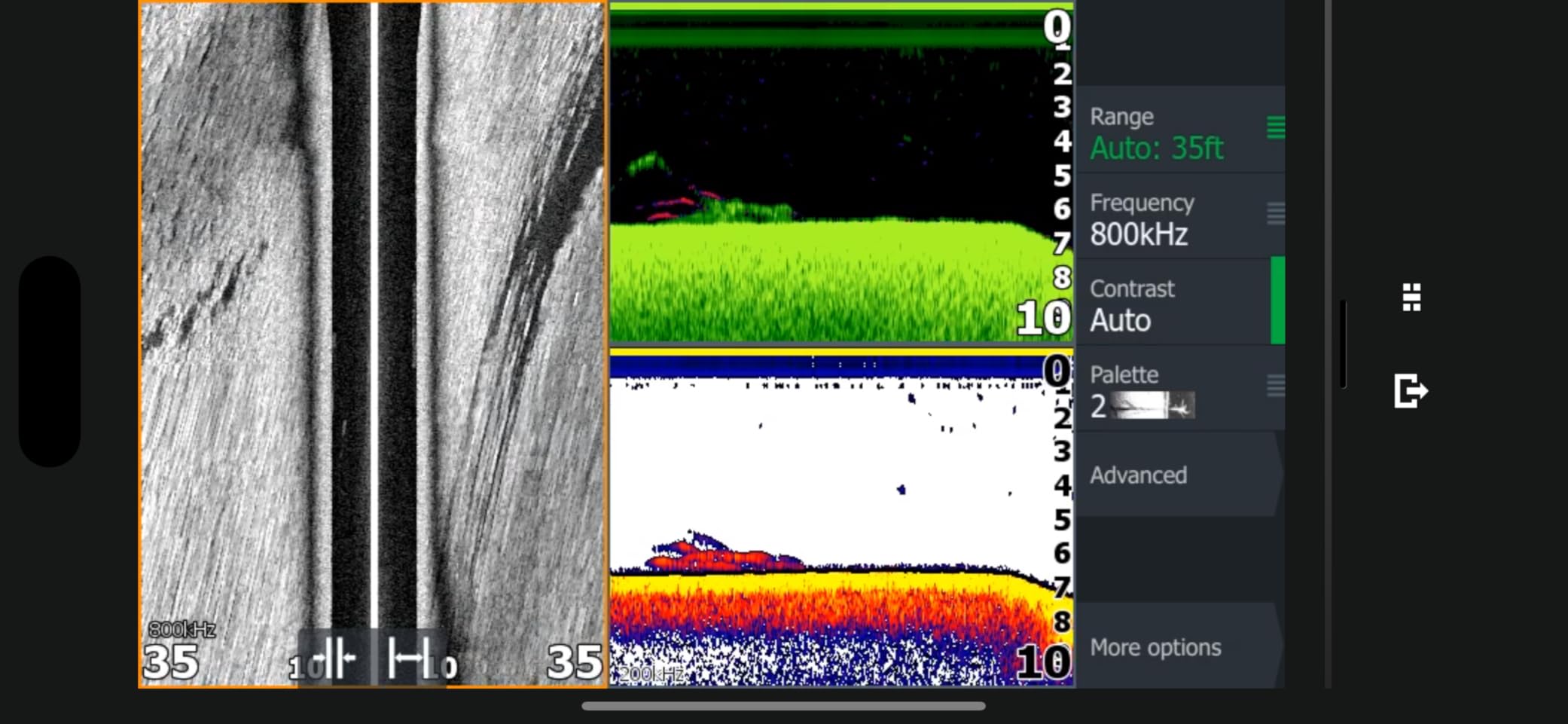
Getting oriented takes about ten minutes and most of the confusion people report online comes from not doing it. The display is a top-down view of the bottom on either side of the boat, with the water column itself drawn as a gap down the middle.
First, the dark channel running vertically through the center of the screen is the water column. The number inside it is the depth directly under the boat.
Second, the colored bands to either side of that channel are the bottom contour. The distance from the channel to the edge of the band is the distance from the boat, so the further out a band reaches, the further away that structure sits.
Third, shapes standing out from the bottom band into the water column are shadows. A bright return on the bottom with a shadow behind it is an object. That shadow is the signature of a brush pile, a rock, a stump or a fish holding off the bottom.
Fourth, a hard edge where the band changes width or brightness is a depth change. That is a ledge, a drop-off, a rock bar or a channel swing, and it is the transition bass feed on.
Fifth, baitfish show up as a loose cloud of small specks with shadows, usually out in front of or behind a structure rather than on it.
Sixth, scroll speed matters more than any menu setting. Troll between 1 and 2 mph. Go faster and the image smears into unreadable streaks, go slower and the screen fills with stale data.
How to Choose a Side Imaging Fish Finder for Bass?
Most buyers make two mistakes: buying a unit without side imaging because the model name was unclear, and buying a chartplotter when they actually wanted a fish finder. A few checks prevent both.
Confirm the listing actually has side imaging
Check three things. The model suffix matters: an sv in the name usually signals side scan on Garmin, an SI in the name signals it on Humminbird, and Lowrance puts SideScan language in the description rather than the name. Second, read the transducer model number in the box, because a bare control head means side imaging is only theoretical. Third, note that X-suffixed Lowrance models plot GPS but have no map card slot at all, which is a common late discovery.
This is not hypothetical. Several models without side imaging surface in shopping results for this exact search, which is why we verified transducer inclusion on every entry above.
Screen size by boat type
A 7-inch screen is the practical floor for side scan work and is enough for a single-console bass boat or a jon boat. A 9-inch suits a 16-foot-plus bass boat or a pontoon helm where you run split-screen layouts. A 10-inch or larger makes sense if you are pairing a console chartplotter with other displays and want the sonar return large enough to read structure detail at speed.
Beyond size, pay attention to brightness in direct sun. A screen that looks washed out at 8 a.m. on an open lake is worse than a smaller panel that stays readable. Several owners in this guide specifically call out sunlight readability as the reason they are happy with the unit they bought.
Transducer: what is included in the box
Eight of the nine models here include a transducer. The exception pattern is worth learning: control head only builds are cheaper and make sense if you already own a compatible sensor or plan a networked install with one shared transducer. If you are starting from nothing, that is not a saving, it is an added line item.
Frequency is the next layer. Standard side imaging runs around 455 kHz and reaches the farthest, while higher frequencies trade range for detail. Included transducers vary a lot, so check which one you are actually getting before you judge the picture quality. A transducer mounted at the wrong height or angle will produce a poor image on any unit in this guide.
CHIRP and imaging frequency
CHIRP stands for Compressed High-Intensity Radar Pulse. Instead of sending one fixed frequency, a CHIRP unit sweeps a band of frequencies continuously, which gives cleaner returns, better target separation and more detail than traditional fixed-frequency 2D sonar. Nearly every unit in this guide includes some form of it.
On the imaging side, Humminbird markets MEGA Side Imaging and MEGA+ Imaging, Garmin calls its equivalent SideVu and ClearVu, and Lowrance uses SideScan and StructureScan. The names differ but the function is identical, which is the single most common source of confusion when comparing units across brands.
Charts and mapping options
Mapping is where the price spread opens up fastest. The Garmin Striker models here accept no mapping software at all, so you rely on Quickdraw Contours or a phone. The Humminbird units include AutoChart Live with eight hours of built-in recording, which builds your own contour maps as you fish and works with zero line SD cards. Lowrance loads C-MAP DISCOVER on board.
Every platform lets you record your own contours, and doing so on an unfamiliar lake is often more valuable than any premium card. Budget for mounting hardware, transducer costs and additional displays separately, because that is where the real total cost hides.
Trolling motor networking and brand lock-in
Most serious setups put side imaging at the console and 360 or live sonar at the bow on the trolling motor. Before buying, confirm your trolling motor is on the compatibility list, since Minn Kota, MotorGuide and Lowrance Ghost each integrate differently. If you already own electronics from a brand, staying inside that ecosystem avoids new wiring, new mounts and NMEA 2000 headaches.
Switching brands mid-boat is where cost creeps up fastest. If you are starting fresh, decide the brand first. For kayak and portable setups, our guide to the best kayak fish finders covers the recessed transducer pocket problem in more detail.
Side Imaging vs 360 Imaging vs LiveScope
These three get confused constantly, and they answer different questions.
Side imaging looks left and right out to a set range and shows you the shape of the bottom and everything standing on it. It is the tool for finding structure while you are moving.
360 imaging uses a rotating head to look in every direction from one fixed point, so it shows a circle around the boat. It is the right tool for deciding where to start and stop a cast at a spot you have already found, which is why bass anglers often rate it above forward-facing sonar for casting work.
Live sonar, sold as MEGA Live, ActiveTarget and Garmin LiveScope, looks forward and shows moving targets in real time. It is the best tool for watching a fish react to a lure and for confirming what is holding on a specific piece of structure.
For bass, the forum consensus is consistent: side imaging locates the fish, and live sonar confirms the individual fish. Neither replaces the other. If your budget covers one purchase, make it the side imaging unit, and add live sonar later. If you only fish one known spot and already know where the bass sit, 360 imaging is a better use of the money.
For anyone fishing from a small craft, the best portable fish finders cover the transducer mounting and power options that make side imaging practical off a main console.
Frequently Asked Questions
Which fish finder has the best side scan?
Humminbird leads on image detail, with MEGA Side Imaging on the HELIX 7 G4 reaching 125 feet per side and MEGA Side Imaging+ on the XPLORE reaching 200 feet per side. The closest rival is Garmin SideVu with the GT56 transducer on the ECHOMAP UHD2. The head-to-head depends heavily on which transducer is in the box, not the control head alone.
What is the best fish finder for bass fishing?
For bass, the console unit matters more than the bow unit. The Garmin STRIKER 7SV is our top pick because it pairs SideVu and ClearVu scanning sonar with the CV52HW-TM transducer in the box at the entry level. Anglers who want charting included should look at the Lowrance Elite FS 10 or the Garmin ECHOMAP UHD2 93sv.
Does Garmin or Humminbird have better side imaging?
Humminbird is generally credited with the clearer image and the longer range, from 125 feet per side on the HELIX 7 G4 up to 200 feet on the XPLORE. Garmin is generally credited with the easier interface, the better bundled mapping and the more capable transducers. The XNT 9 HW MSI 150 T at 125 feet versus the GT56 side scan is the practical comparison to make.
How do you read side imaging fish finders?
The dark channel down the center of the screen is the water column, and the number inside it is the depth under the boat. The colored bands on either side are the bottom contour, and the distance from the channel is the distance from the boat. Shapes extending into the water column are shadows, which is how brush piles, rocks and fish appear. Troll between 1 and 2 mph for a clean image.
What does CHIRP mean on a fish finder?
CHIRP stands for Compressed High-Intensity Radar Pulse. Instead of transmitting a single fixed frequency, a CHIRP unit sweeps a range of frequencies continuously, which produces cleaner returns, better target separation and more detail than traditional fixed-frequency 2D sonar. Most side imaging units in this guide pair CHIRP 2D with a separate imaging frequency.
Is side imaging worth the extra money?
For bass fishing, yes. Side imaging is the primary locating tool, not a luxury feature, because it shows structure and fish out to 100 feet or more on each side while you are moving. Down imaging alone only shows what is directly under the boat, so fish holding off a ledge or off the bottom disappear. Anglers fishing one known spot may get more from a cheaper down imaging unit instead.
Final Verdict
The best side imaging fish finders for bass fishing in 2026 come down to what your boat needs. Buy the Garmin STRIKER 7SV if you want side imaging that works, with the transducer in the box, at the lowest sensible entry point. Buy the Lowrance Elite FS 10 if charting should be included from day one. Buy a Humminbird HELIX or XPLORE if image detail and keypad or MEGA range matter more to you than price.
Whatever you choose, verify the transducer before you order, mount it properly, and give yourself a season to learn the settings. The unit that gets read well beats the unit with the longest specification list every time.