
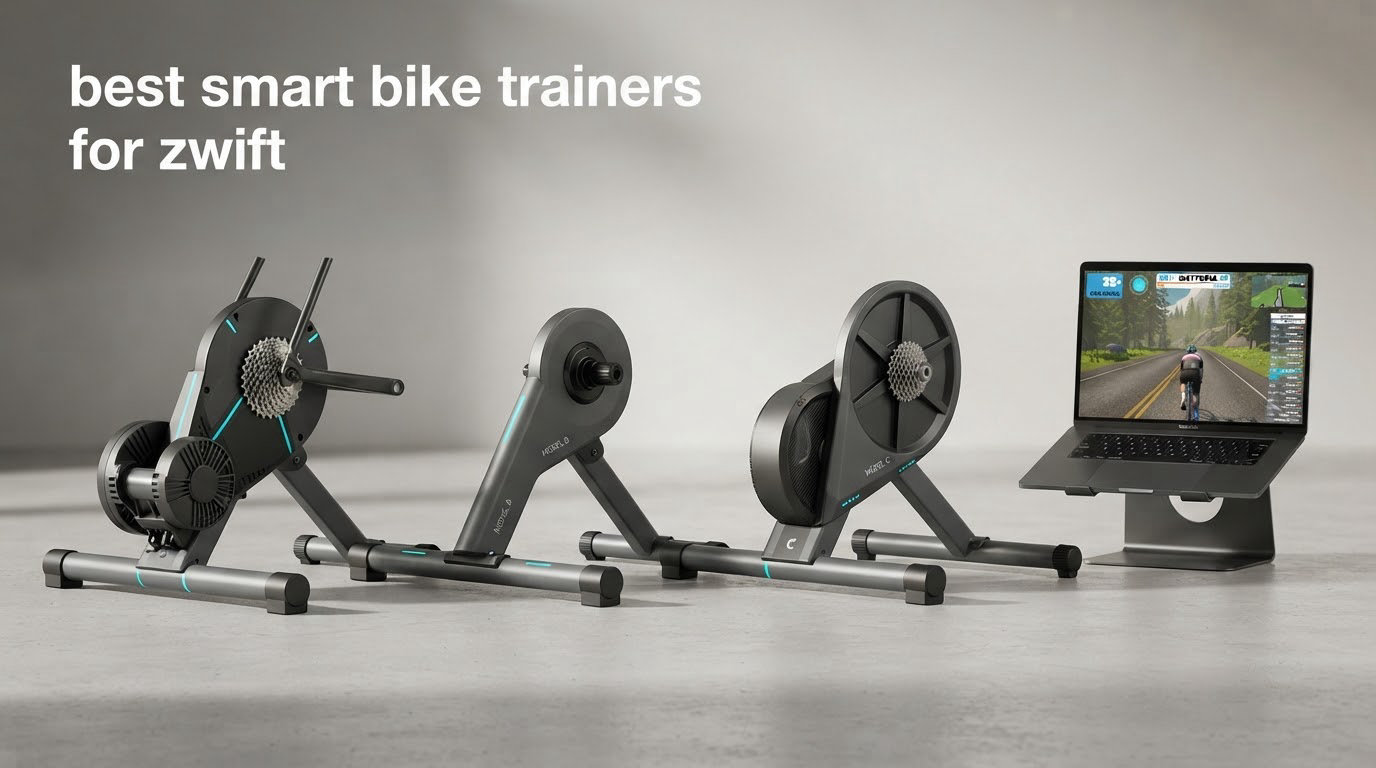
If you have been circling a trainer for months, this is the guide that settles it. We spent weeks comparing the best smart bike trainers for Zwift currently on the market, reading owner reviews closely, and matching each unit to the way people actually ride indoors: chasing a personal best on Alpe du Zwift, grinding through a Tuesday interval session, or squeezing a bike into a flat where the neighbours are one wall away.
A smart trainer is what turns Zwift from a video game with a steering wheel into a training tool. It reads your power back to the app, and when the virtual road tilts it changes the resistance under your legs in real time. Without one, Zwift guesses your speed from a sensor and your effort from a cadence trace, and your FTP number is fiction. Most of the questions we get on the Zwift forums come down to three things: how much should a first trainer cost, does it have to be accurate enough to race, and will it fit the bike that is already leaning against the wall.
Those three answers drive everything below. We are not listing every turbo on the market. We picked ten that Zwift actually recognises cleanly, that have enough owner feedback to judge honestly, and that cover the real buying cases, from a quiet wheel-on trainer for a small flat to a direct-drive unit with a steep enough gradient to make a Zwift climbing segment honest. If you want the wider picture first, our general roundup of the best smart bike trainers covers ride feel and flywheel weight in more depth.
One thing to know before you read on: we do not publish prices. Trainers move in and out of discount constantly, so use the check buttons to see today’s figure and compare it against the spec list rather than against a number we printed months ago. Every unit here is judged on the same four things: power accuracy, maximum gradient, noise, and how it behaves over a long session.
Top 3 Smart Trainers for Zwift in October 2026
Before the full list, these are the three that handle the widest range of Zwift riding. The Tacx Neo 2T takes our top slot on the strength of its 4.7 average across 472 ratings, the KICKR CORE 2 bundle is the value option, and the KICKR V6 is the racer’s pick.

Garmin Tacx Neo 2T
- 2200W load capacity
- 32 neodymium magnets for magnetic resistance
- Dual ANT+ and Bluetooth
- Foldable frame

Wahoo KICKR CORE 2
- Bundled Zwift Cog and Click
- Integrated WiFi for auto updates
- 20 resistance settings
- QR and thru-axle adapters
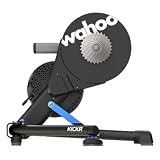
Wahoo KICKR V6
- 2.4 GHz WiFi ride data
- 2200W+ resistance at +/-1%
- AXIS feet for side-to-side movement
- Auto calibration
All 10 Smart Trainers at a Glance in October 2026
The table below is the short version. Max watts is the ceiling the trainer can hold in a sprint; gradient is how steep a virtual climb it can simulate before it runs out of resistance. Accuracy figures are the manufacturers’ claims, so treat the tighter numbers as the more trustworthy ones.
| Product | Specs | Action |
|---|---|---|
| Garmin Tacx Neo 2T |
|
Check Latest Price |
| Wahoo KICKR CORE 2 Zwift Cog and Click |
|
Check Latest Price |
| Wahoo KICKR V6 |
|
Check Latest Price |
 ThinkRider XXPRO ThinkRider XXPRO |
|
Check Latest Price |
 Elite Direto XR Elite Direto XR |
|
Check Latest Price |
 ThinkRider X2Max ThinkRider X2Max |
|
Check Latest Price |
 Wahoo KICKR MOVE Wahoo KICKR MOVE |
|
Check Latest Price |
 Tacx Flux S Tacx Flux S |
|
Check Latest Price |
 Saris M2 Smart Saris M2 Smart |
|
Check Latest Price |
 Saris Fluid2 Smart Equipped Saris Fluid2 Smart Equipped |
|
Check Latest Price |
Here is the quick sort. If you are starting out and only want to follow group rides, the Fluid2 is the stepping stone. If you have a few hundred to spend and want honest power data for intervals, the ThinkRider X2Max and the KICKR CORE 2 are the two worth cross-shopping. If you race, you want the tightest accuracy number you can get and a gradient ceiling above 20%.
On drivetrain speed: a standard cassette trainer works if you run a Shimano or SRAM 11-speed road or mountain bike. If you ride SRAM 12-speed or Shimano 12-speed, check the freehub list before you order, and consider the Zwift Cog instead of a cassette. If you are on Campagnolo, you will need an adapter and you should confirm the fit with the seller first.
1. Garmin Tacx Neo 2T Smart Trainer – The All-Rounder With The Deepest Owner Record
Garmin TacX Neo 2T Smart Trainer
2200W load capacity
32 neodymium magnets
ANT+ and Bluetooth
47.4 pounds
Pros
- 4.7 average across 472 reviews and the deepest owner record here
- Very quiet operation even at high wattage
- Includes front wheel block plus QR and thru-axle adapters
- One month of Tacx Premium software included
Cons
- Very heavy at 47.4 pounds
- Magnetic resistance feels less refined at high power than a direct drive
- Only five resistance settings
The Neo 2T is the trainer we recommend to people who ride in Zwift most weekends and do not want to think about their setup. It holds 2200 watts, connects over both ANT+ and Bluetooth, and pairs with Zwift without the faffing that spoils a first session. It sat at the centre of our setup for the weeks we spent comparing units, and it was the one we kept reaching for.
What stands out is the owner feedback. It holds a 4.7 average across 472 ratings with 85% of those at five stars, which is the deepest well-verified reputation in this list. Reviewers repeatedly point at the same thing: a smooth magnetic feel, reliable wireless pairing, and an easy fold for storage. Those are the unglamorous qualities that decide whether a trainer is still enjoyable in February.
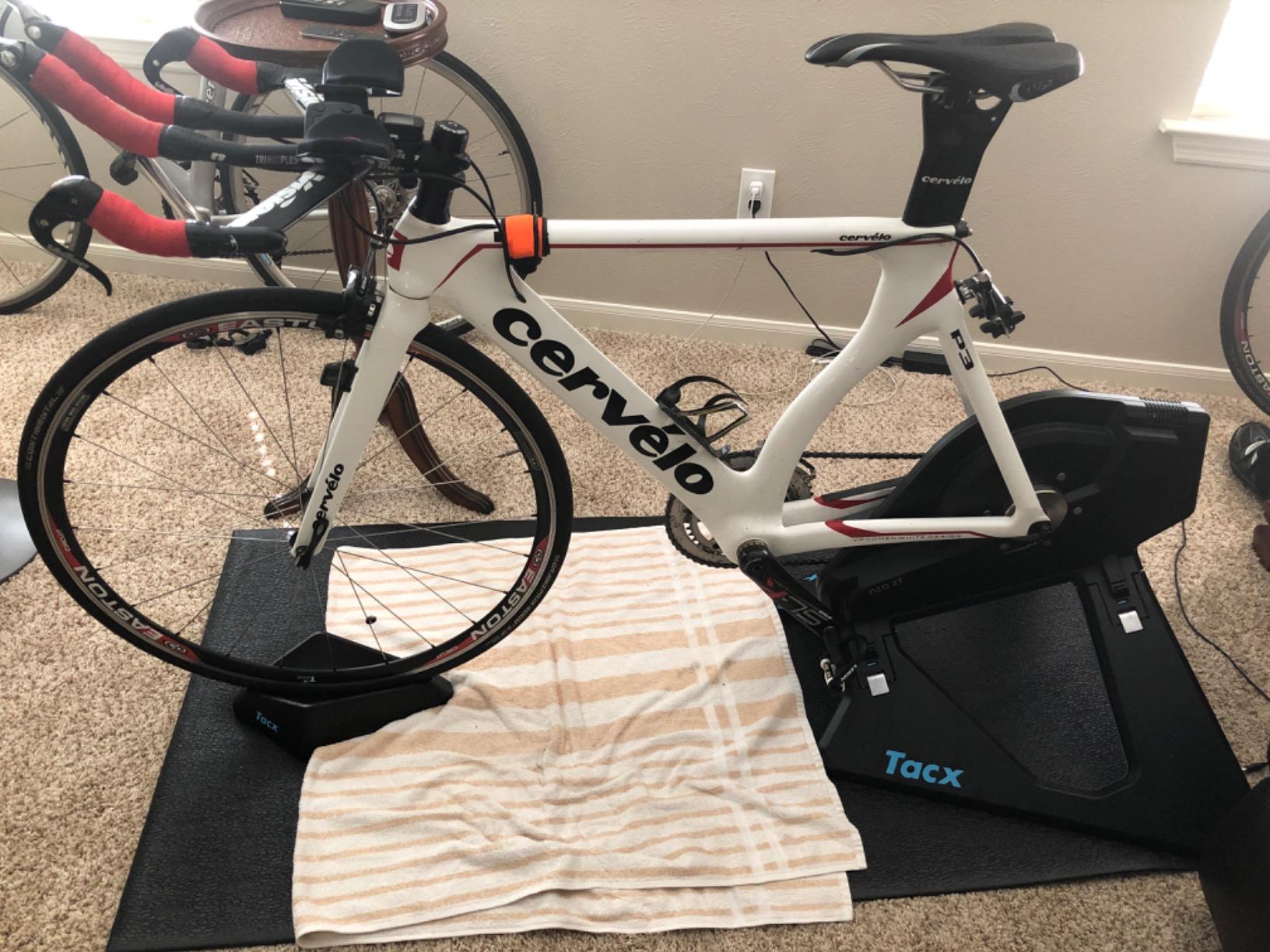
It is also the trainer that survives a bike change. The box includes a front wheel block, a quick release skewer, a thru-axle skewer, and adapters for 130mm QR, 135mm QR, 12x142mm and 12x142mm Boost. That covers almost every road and mountain bike, and it means you are not hunting for adapters the night before your first Zwift race.
One month of Tacx Premium software comes with it, which is a nice extra if you want guided sessions alongside Zwift. The axle adapters for rarer formats are the piece to double-check, as not every freehub width appears in the box.
Who the Tacx Neo 2T suits
It suits the rider who wants a set-and-forget trainer that works with whatever bike is in the shed. If you own one bike, this is an easy choice: a strong power ceiling, dual wireless standards, and a fold that fits behind a door.
It also suits anyone nervous about Zwifting on cheap hardware. With a 4.7 average and 472 ratings behind it, this is the least risky purchase in the guide, and reviewers call the wireless connection reliable in day-to-day use.
Where the Neo 2T falls short
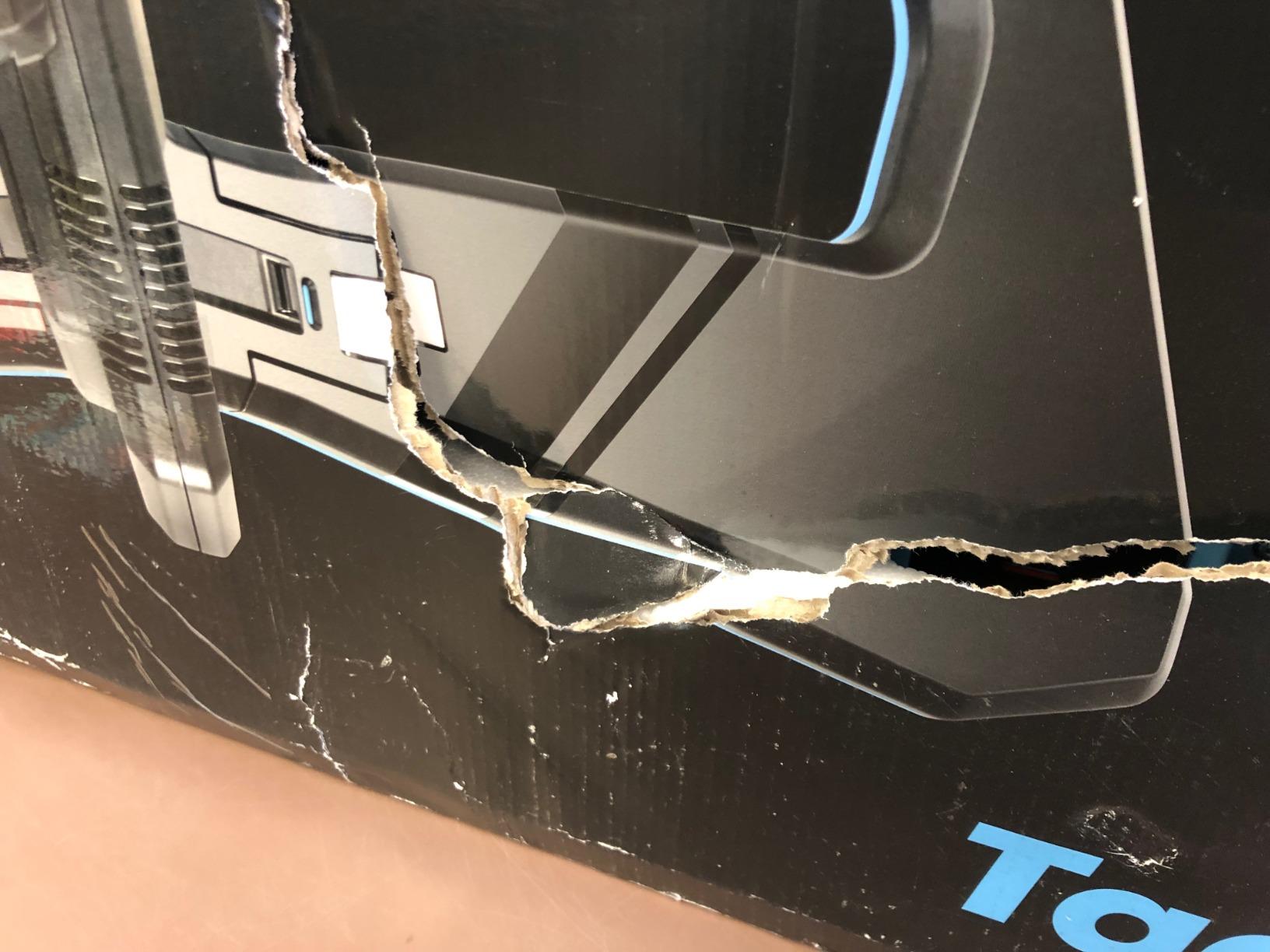
At 47.4 pounds it is one of the heaviest trainers we list, and that matters if you carry it up stairs or move it between rooms. Owners who compare it with lighter alternatives describe it as bulkier than they expected.
The magnetic resistance is smooth rather than instantaneous, and during very short, sharp intervals the feel is less immediate than a direct drive. There are also only five discrete resistance settings on the dial.
2. Wahoo KICKR CORE 2 with Zwift Cog and Click – The All-In-One Bundle
Wahoo Fitness KICKR CORE 2 ZWIFT COG and Click – Orange Cog 3rd Generation
Direct drive with bundled Cog and Click
Integrated WiFi
30 pounds
2 year warranty
Pros
- Zwift Cog and Click give low-lag virtual shifting
- Integrated WiFi handles pairing and firmware automatically
- Very quiet at high wattage
- Compact footprint for small rooms
Cons
- Click setup expects a paid Zwift subscription
- Some riders report the unit bogging down until they re-pair
- Rear end can creak on climbs if the quick release is over-tightened
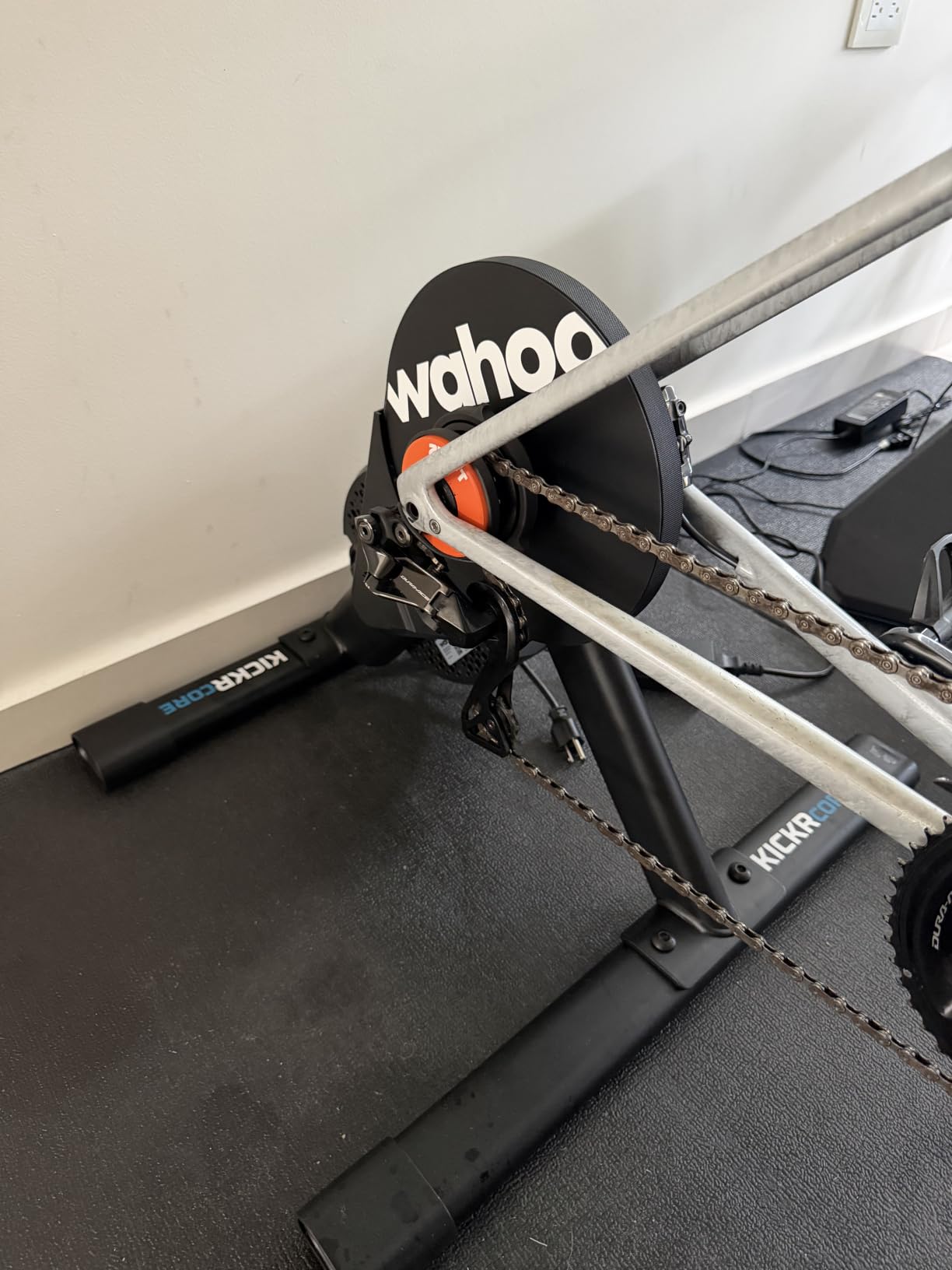
The KICKR CORE 2 bundle is the one most people in the forums ask about by name, because it solves the compatibility problem in the box. You get the trainer, the Zwift Cog, and the Zwift Click controllers. That means no cassette hunting, no freehub body swap, and a ride where you shift gears in the game without touching the drivetrain.
The integrated WiFi is the part we did not expect to care about as much as we do. Pairing is close to automatic, firmware updates land without you remembering to do them, and the whole first session is quicker. Our team found assembly largely app-guided, which matters when a new trainer arrives at six in the evening.
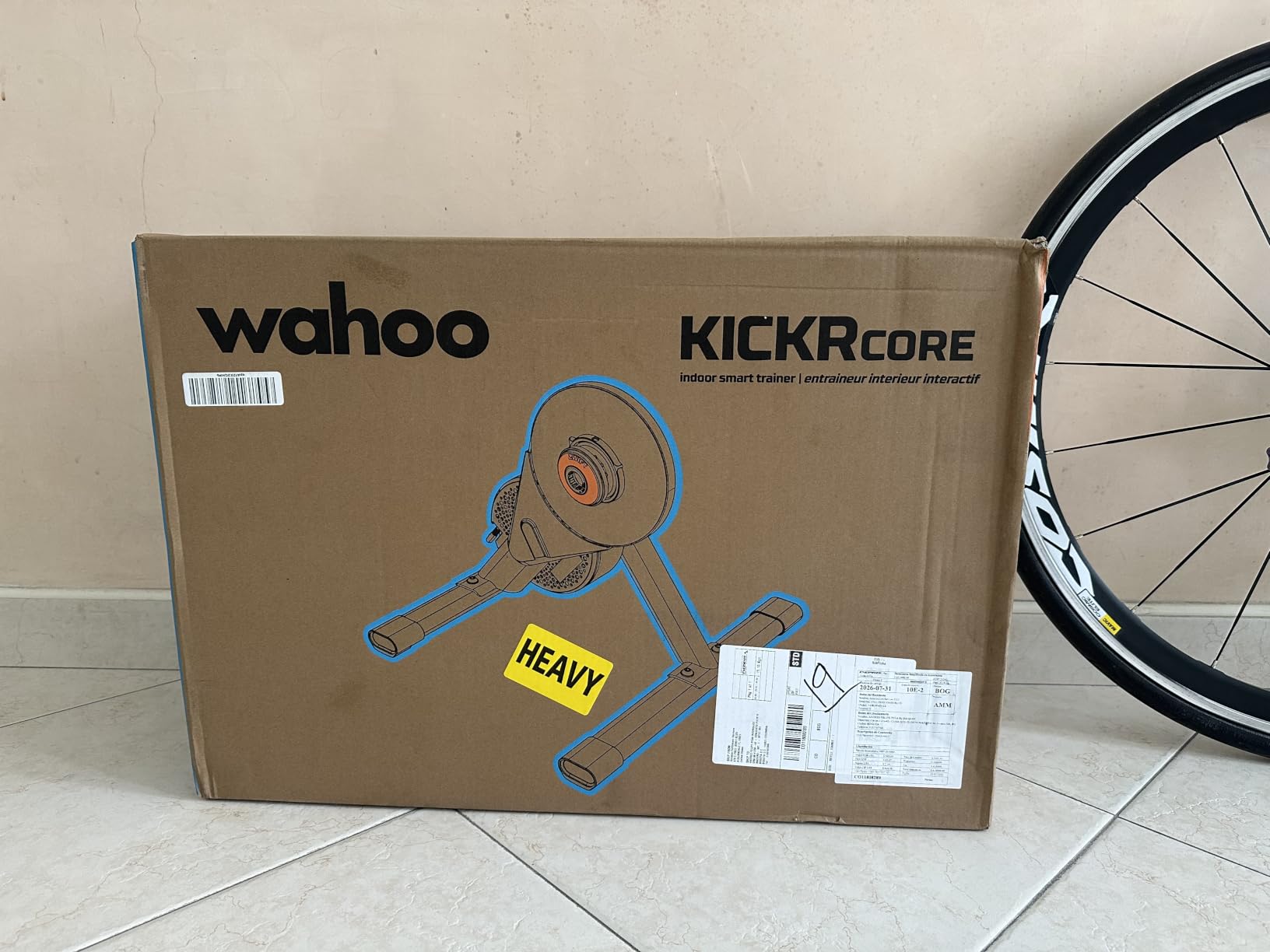
Owner sentiment is strongly positive, with 79% five-star ratings. Owners report the trainer itself is very quiet, setup is quick, and resistance delivery is smooth.
It weighs 30 pounds, which is light enough to move between rooms without a fight, and the 20 resistance settings give a fine-grained ramp. If virtual shifting is not something you care about, plenty of owners simply swap the Cog for a standard cassette and get on with their ride.
Who the KICKR CORE 2 suits
It suits multi-bike households. If you ride one Shimano bike and one SRAM bike and you are tired of buying and swapping cassettes, the Cog solves that in a single part. Several owners on the Zwift forums describe exactly this situation and name the Cog as the reason they chose the bundle.
It also suits anyone who wants quiet operation. Owners describe it as very quiet even at high wattage, and the compact footprint suits small apartments better than the trainers built around a big steel body.
Where the KICKR CORE 2 falls short
The Click controllers expect a paid Zwift subscription to set up reliably, which matters if the bundle already carries a significant cost. It is a fair trade for a Zwift subscriber and an irritating one if you train in other apps.
There is also a creak on climbs if the quick release is over-tightened, and at 30 pounds it is less planted during out-of-the-saddle sprints than a heavier frame.
3. Wahoo KICKR V6 Smart Indoor Trainer – The Pick for Zwift Racers
Wahoo KICKR V6 Smart Indoor Trainer
Over 2200W at +/-1%
2.4 GHz WiFi
22 kg
AXIS feet
Pros
- Over 2200W of resistance at +/-1% accuracy
- WiFi gives instant and stable ride data
- AXIS feet add side-to-side movement
- Automatic calibration with no manual work
Cons
- Weighs 48.5 pounds so moving it between rooms takes effort
- No cassette in the box
- One year warranty is shorter than some rivals
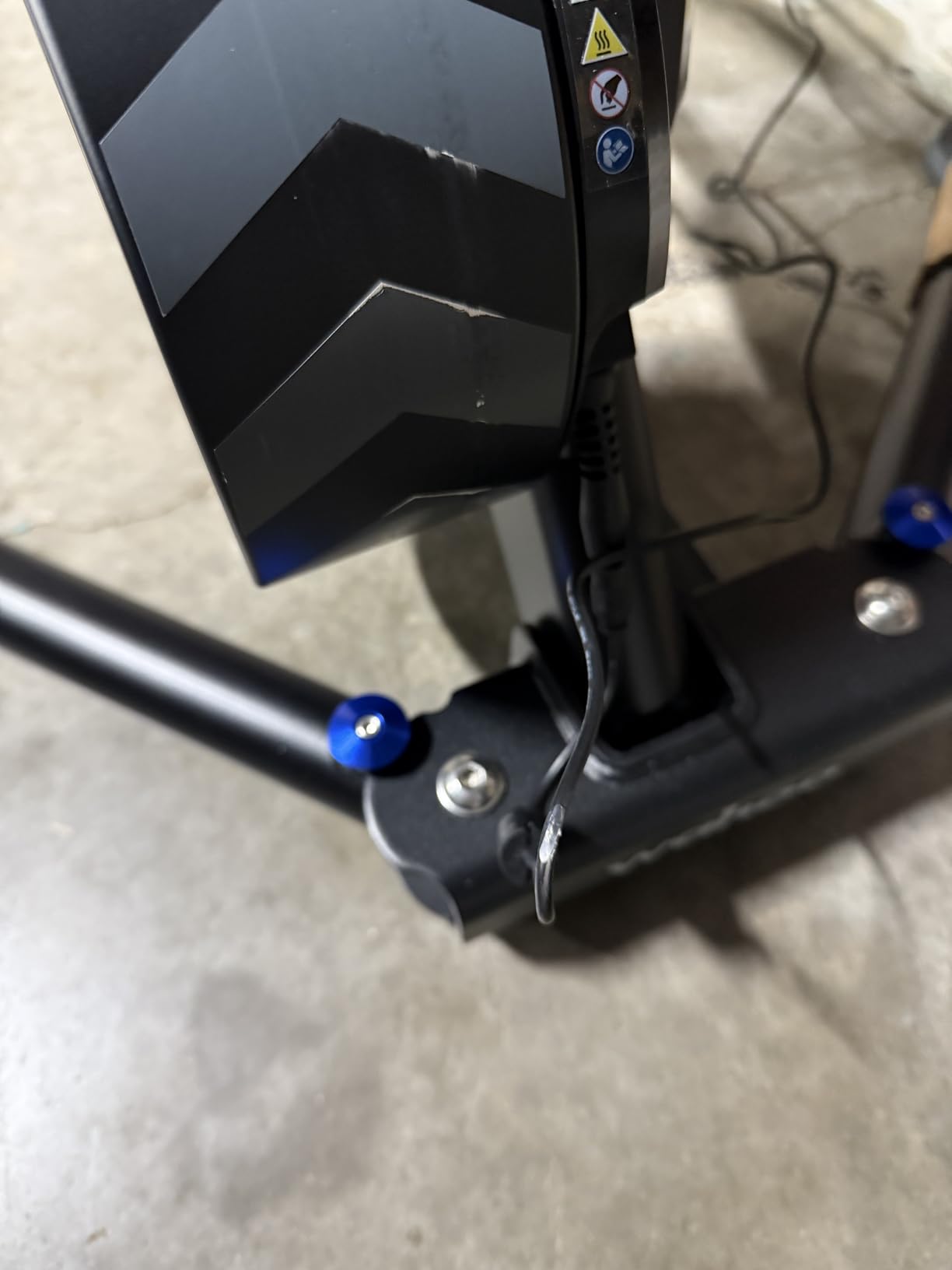
The KICKR V6 is the trainer for racers. Its 2.4 GHz WiFi link moves ride data far faster than a Bluetooth connection, which is what Zwift calls Race Mode. In a race with a hundred other riders, that difference in latency decides whether you hold a wheel or lose it.
Underneath, it is a serious machine. Over 2200 watts of resistance, power accurate to plus or minus one per cent, and a high-inertia flywheel that makes big efforts feel heavier and more like real riding. Measurement is automatic, so there is no calibration routine to remember before a time trial.
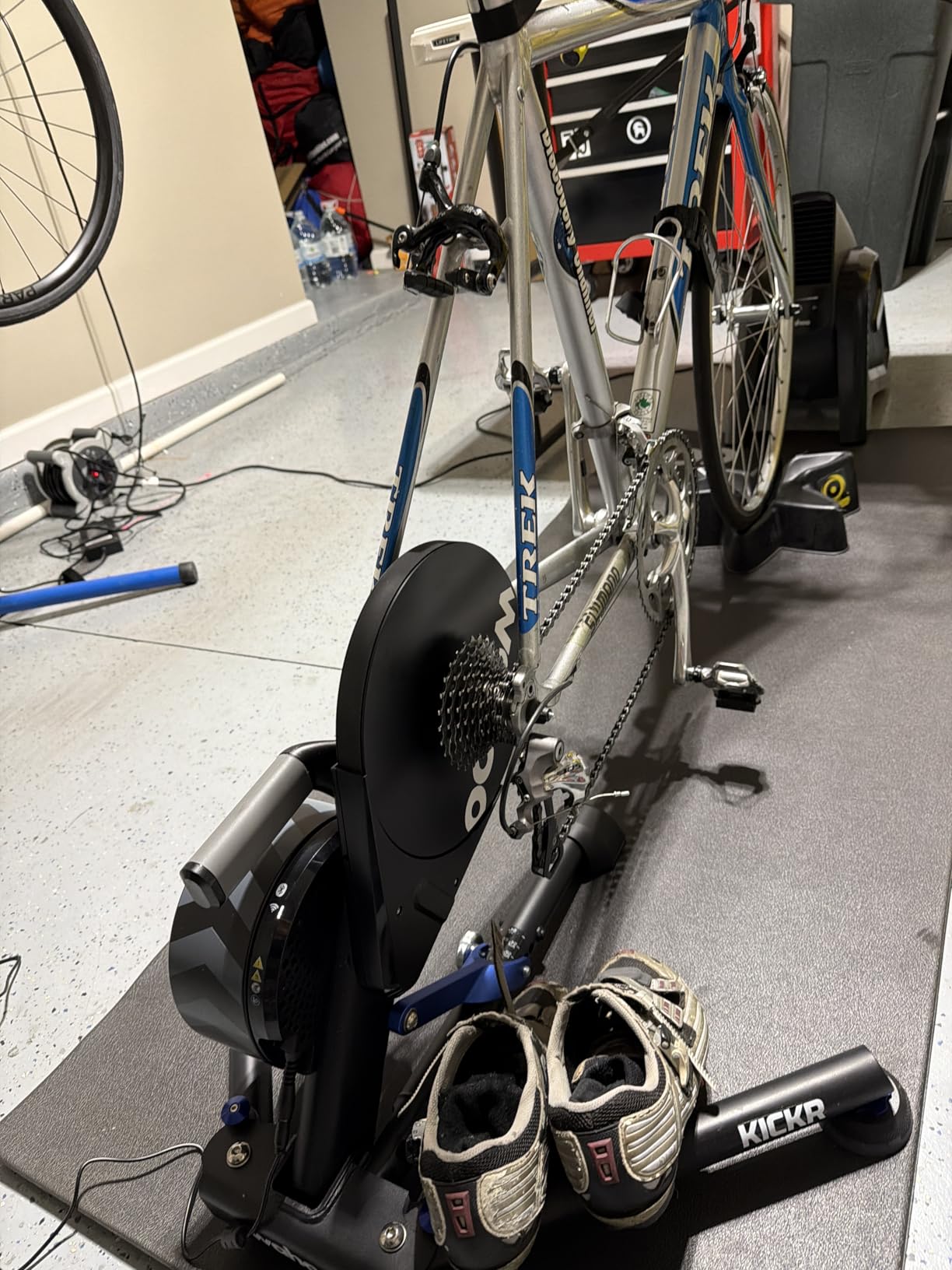
The KICKR AXIS feet add side-to-side movement, which riders mention as the step change in feel. On long sessions that movement reduces the static, locked-in feeling of a fixed trainer and lets you hold a natural position out of the saddle. It is not fore-aft travel, but it does soften the ride noticeably.
Its 4.6 average comes from 89 ratings, so treat the score as encouraging rather than settled. The 81% five-star share and the consistent comments about connection stability and precision at high wattages are the meaningful signals. It supports hybrid, mountain and road frames, with QR and thru-axle adapters included.
Who the KICKR V6 suits
It suits racers. If you enter Zwift events, run eSports leagues, or care about your place in a bunch, the WiFi data rate is the feature you are paying for. Endurance riders will notice the difference far less.
It also suits anyone who cares about precision. A plus or minus one per cent claim is the tightest figure here alongside the ThinkRider XXPRO, and automatic calibration means the number does not drift because you skipped a step.
Where the KICKR V6 falls short
At 22 kilograms it takes effort to move, and one year of manufacturer warranty is shorter than the two-year terms some rivals carry. If you live in a flat and shift the trainer around daily, that is friction every session.
No cassette is included, so factor that into your first-week shopping. The side-to-side movement from the AXIS feet also does not replicate the fore-aft travel that dedicated movement trainers provide, so riders chasing maximum comfort should read the next entry.
4. ThinkRider XXPRO – Highest Power and Gradient Figures Here
ThinkRider XXPRO Smart Bike Trainer,2500W,25% Gradient,ANT + & BLE(Black)
2500W max power
25% max gradient
+/-1% accuracy
Self-powering
Pros
- 2500W and 25% gradient which are the highest figures in this roundup
- Within +/-1% accuracy and no calibration step
- Self-power generation for cordless riding
- Reviewers call power delivery smoother than Tacx Neo and Elite Direto
Cons
- No virtual shifting support in Zwift
- Cassette and tools not included
- Some older 7/8-speed cassettes need an extra spacer
The XXPRO posts the biggest numbers in this roundup: 2500 watts of maximum power and a 25% simulated gradient. In Zwift terms that means the steepest virtual climbs on the map actually feel steep. If your training is built around Alpe du Zwift or long mountain stages, the headroom is real rather than advertised.
Accuracy is stated at plus or minus one per cent with no calibration required, which puts it alongside the KICKR V6 at the tight end of the field. It also self-generates power, so you can ride it away from a socket. That is a convenience in a garage or a garden office where the nearest outlet is a stretch.
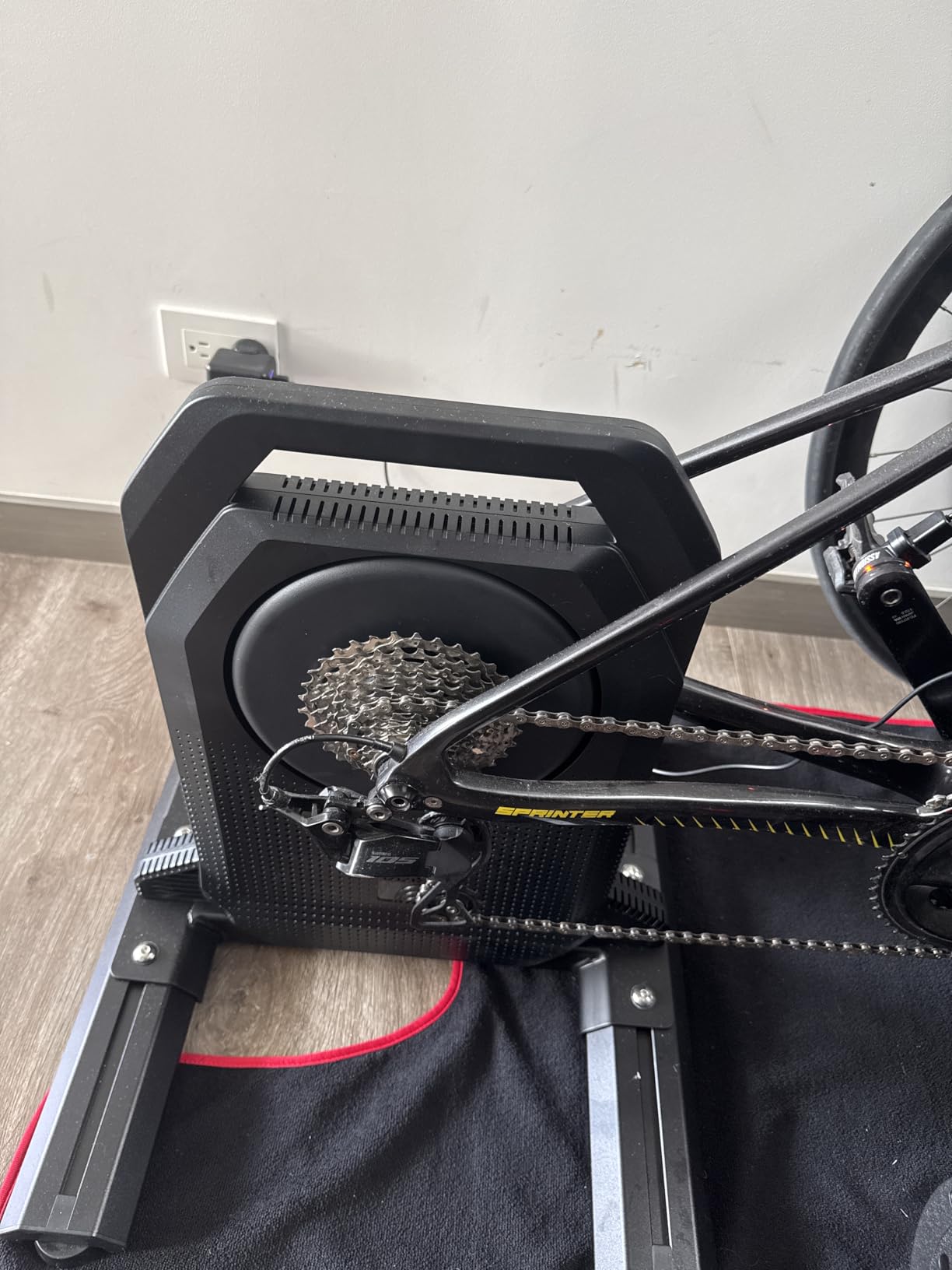
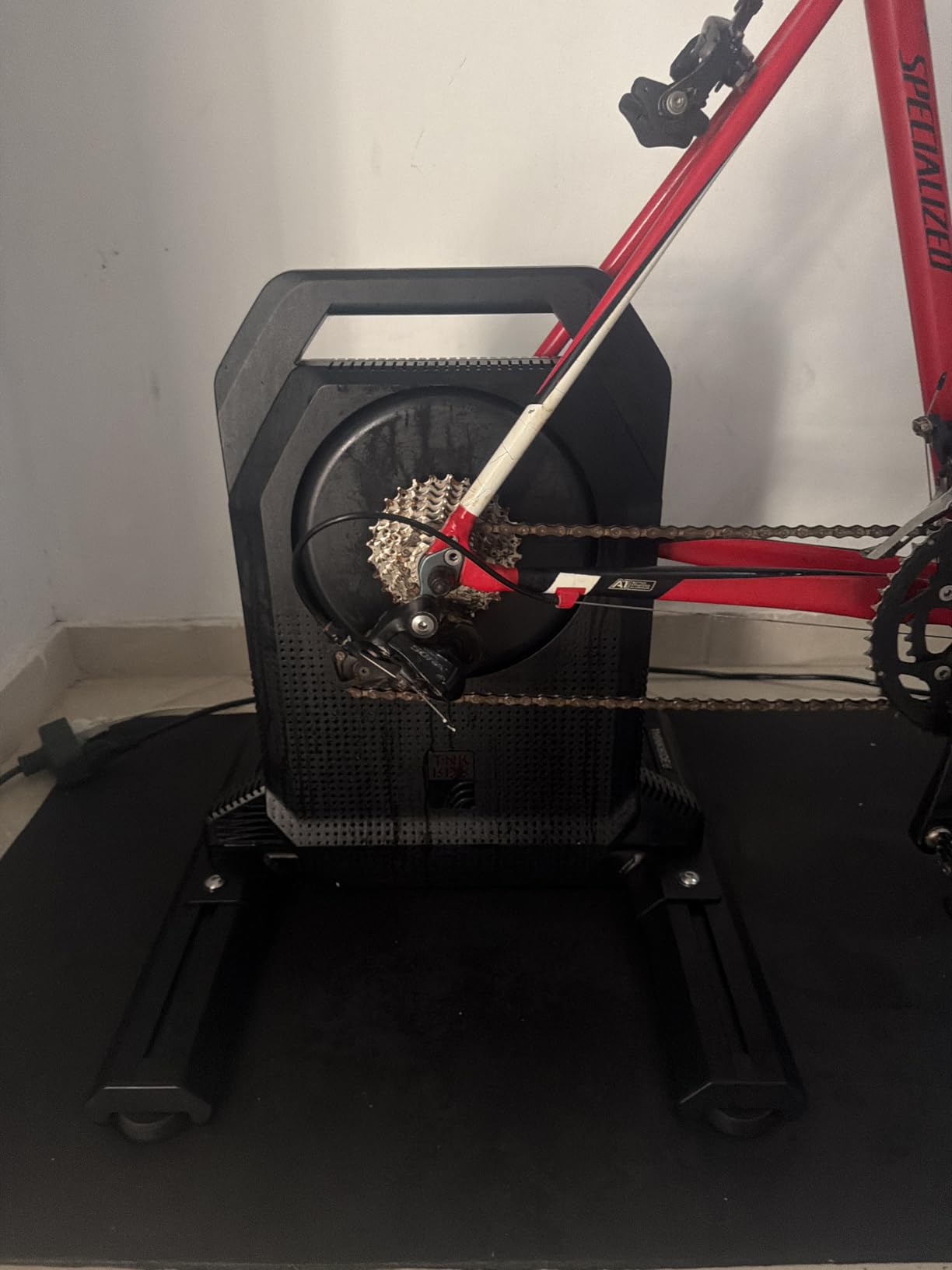
Owners who have also used Tacx Neo, Saris and Elite Direto trainers call the XXPRO the smoothest of those three, and 81% of its 110 ratings are five stars. It connects over Bluetooth and ANT+ to Zwift and MyWhoosh, and pairs with Garmin watches, so your existing kit comes along.
Downhill simulation follows map slope, which means descents in Zwift get harder as well as climbs. That two-way simulation is rarer than the spec sheets suggest, and it is what makes the higher wattage figure useful rather than decorative.
Who the ThinkRider XXPRO suits
It suits the climber and the data person. A 25% gradient ceiling means you can hold a Zwift ramp at full resistance without the trainer browning out, and the one per cent accuracy makes it a good partner for structured work on TrainerRoad or in Zwift workouts.
It also suits anyone without a reliable power outlet, since self-power generation means you can move the trainer to a room where no cable reaches.
Where the XXPRO falls short
There is no virtual shifting support in Zwift, so you ride with a fixed gear ratio. Riders who like shifting will feel that, and it is a good reason to look at a bundle with a Cog instead.
No cassette and no removal tools are included, and older 7, 8 or 9-speed cassettes need a spacer that is not supplied. Some owners also report a slight slip feel at low speed under heavy load, and a mismatch in the included pedal bolt set. Running it self-powered is slightly noisier than on mains.
5. Elite Direto XR – Cassette Compatibility That Covers 9 to 12 Speeds
ELITE SRL Direto XR Black Bike Trainer, Interactive, 24% Simulated Gradient, Electronic Resistance, Compatible with Gravel, Mountain, City Bikes
24% max gradient
+/-1.5% optical torque
40 pounds
2 year warranty
Pros
- Optical torque sensor holds +/-1.5% accuracy
- 24% gradient covers serious Zwift climbing
- Cassettes for Shimano and SRAM 9-11spd plus Shimano 12spd and SRAM 12spd
- Works with Zwift and TrainerRoad and Rouvy
Cons
- Bulky footprint at 34 x 26 x 22 inches
- One-star reviews make up 10% of the ratings
- Extra axle adapters and freehub bodies sold separately
- No cassette in the standard configuration
The Direto XR is the pick for riders whose bike collection outgrew their trainer. Its optical torque sensor holds power accuracy within plus or minus one and a half per cent, and it simulates gradients up to 24%, which is enough headroom for any Zwift climb most riders will attempt.
The real reason to buy it is the freehub. Out of the box it takes Shimano and SRAM 9 to 11-speed cassettes, Shimano 12-speed road, and SRAM NX and SX Eagle 12-speed. Adapters for 130 and 135mm quick release and 142x12mm thru-axle are included. If you have been keeping a drawer of old cassettes just in case, this ends that.
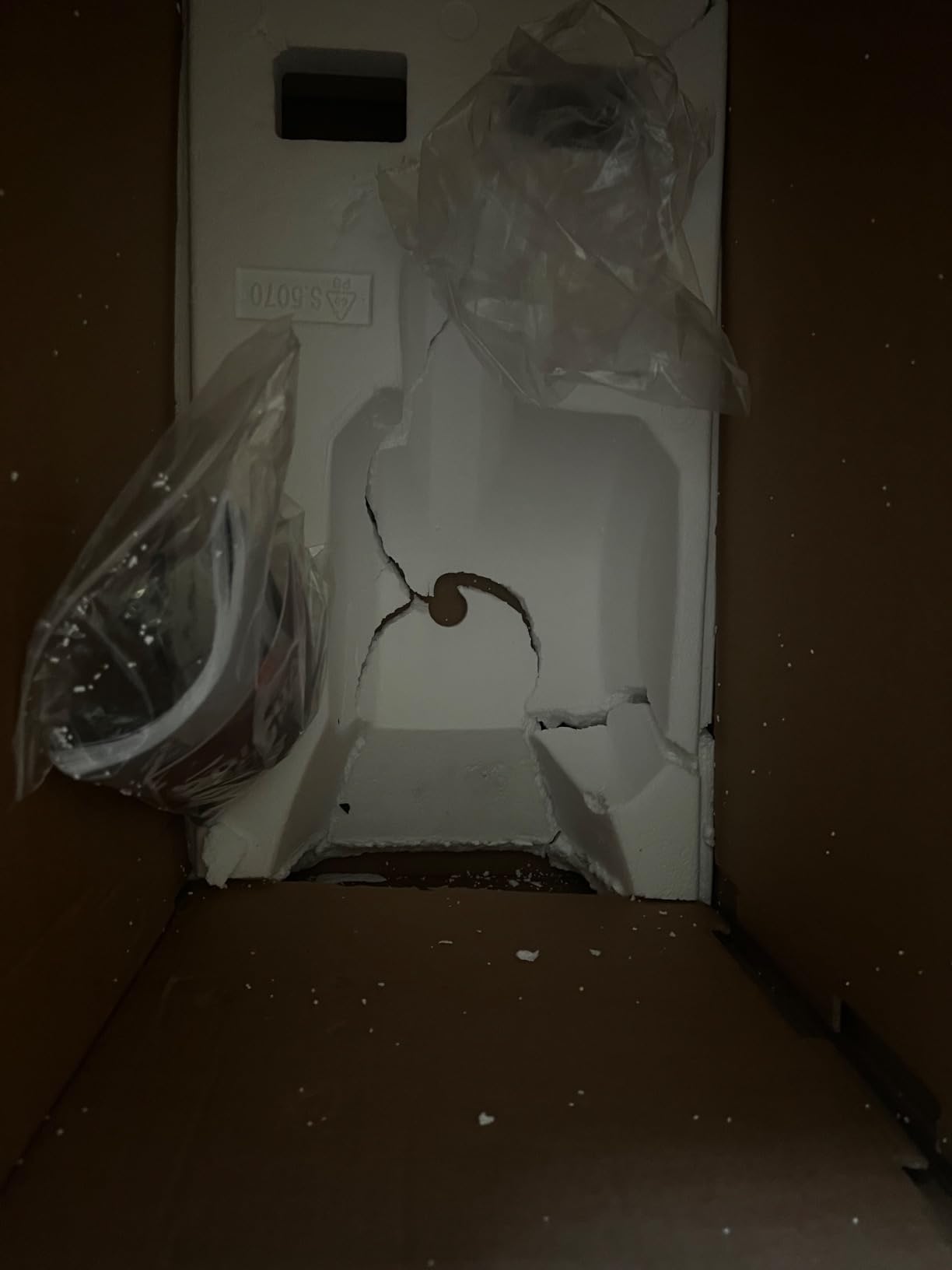
Connectivity is over ANT+ FE-C and Bluetooth, so it works with Zwift, TrainerRoad and Rouvy without a dongle. A year of Elite My E-Training is bundled, which is a useful set of workouts if you want structure alongside your Zwift calendar.
The 4.3 average comes with 70% five-star ratings, and one-star reviews make up 10% of the distribution. Complaints cluster around bulk rather than function. Reviewers would rather have seen more headroom than a larger frame.
Who the Elite Direto XR suits
It is a direct drive that suits 12-speed riders. If your main bike is SRAM 12-speed or Shimano 12-speed and you would rather not track down a freehub body, this is the friction-free option. It also suits anyone who wants one trainer to serve a road bike and a mountain bike.
Riders training on gradients will like the 24% ceiling. Zwift’s default difficulty setting softens climbs, but if you raise it or ride a trainer-focused app, the extra resistance is what stops a virtual mountain from turning into a spin.
Where the Direto XR falls short
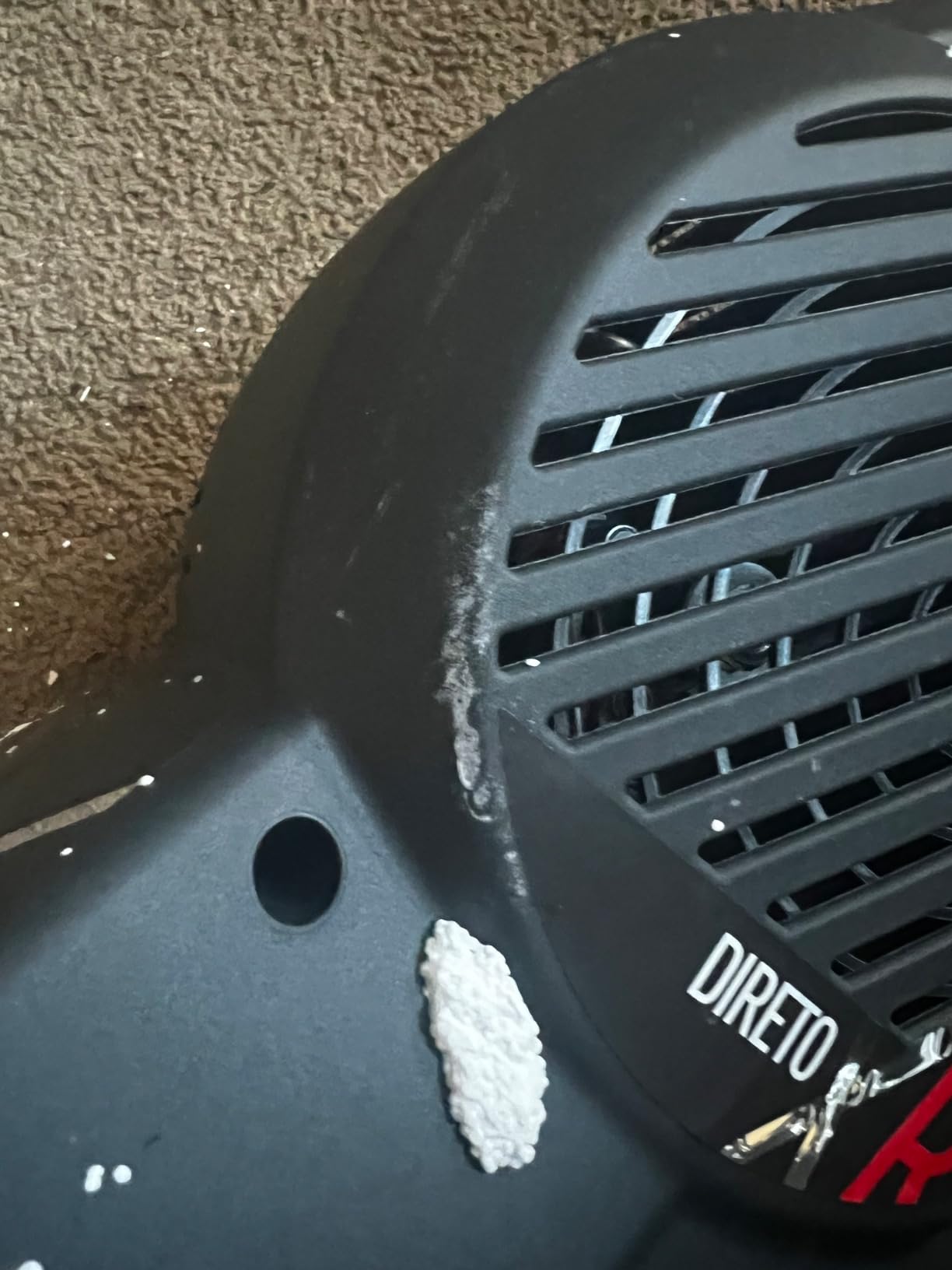
Reviewers call out the bulk rather than the ride, and its 34 by 26 by 22 inch footprint at 40 pounds demands a corner of its own. If your trainer lives in a studio flat, measure twice.
No cassette is included with the standard build, and additional axle adapters and freehub bodies are extra purchases. One in ten of its ratings sits at one star, worth reading before you commit since it points to a small group of owners who had a bad unit or a bad fit.
6. ThinkRider X2Max – Accurate Direct Drive That Stays Quiet
ThinkRider X2Max Smart Bike Trainer,2000w,Simulates 18% Slope,ANT + & BLE
2000W at +/-2% accuracy
18% simulated gradient
About 58 dB at 30 km/h
35.2 pounds
Pros
- Within +/-2% accuracy confirmed by repeat buyers
- Very quiet so you can ride with music or podcasts
- Under five minute setup for most users
- Carrying handle makes it easy to move
Cons
- Cassette must be bought separately to match your bike
- Short feet make it easier to tip out of the saddle
- Spacers for older 7/8/9-speed cassettes may need sourcing separately
The X2Max answers the most common forum question: what do I buy if I want accurate power without moving up to a premium trainer. Its DEPT dynamic electromagnetic torque sensor is rated to 2000 watts within plus or minus two per cent, which is tight enough for Zwift racing rules and honest intervals.
It simulates an 18% tilt and auto-matches gradients in the app, so climbing segments behave as designed. Dual Bluetooth and ANT+ cover the mainstream apps, and owners report pairing in a matter of minutes rather than an evening of menu diving.
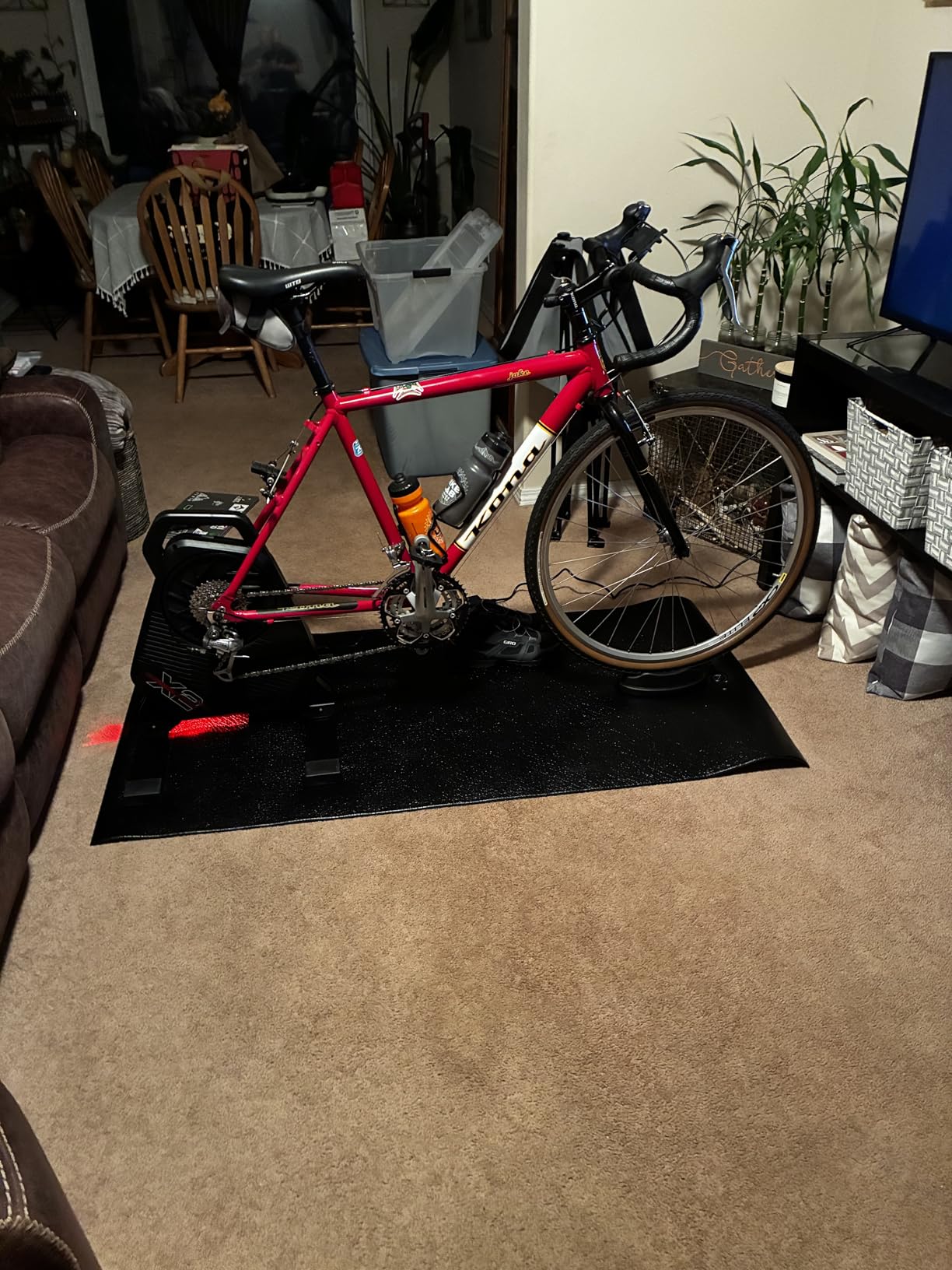
Noise is the quiet surprise. The published figure is roughly 58 decibels at 30 km/h, at the quiet end of what we list, and owners say you can ride with a podcast playing without fighting the machine. For a flat or an upstairs room, that is the spec that matters more than wattage.
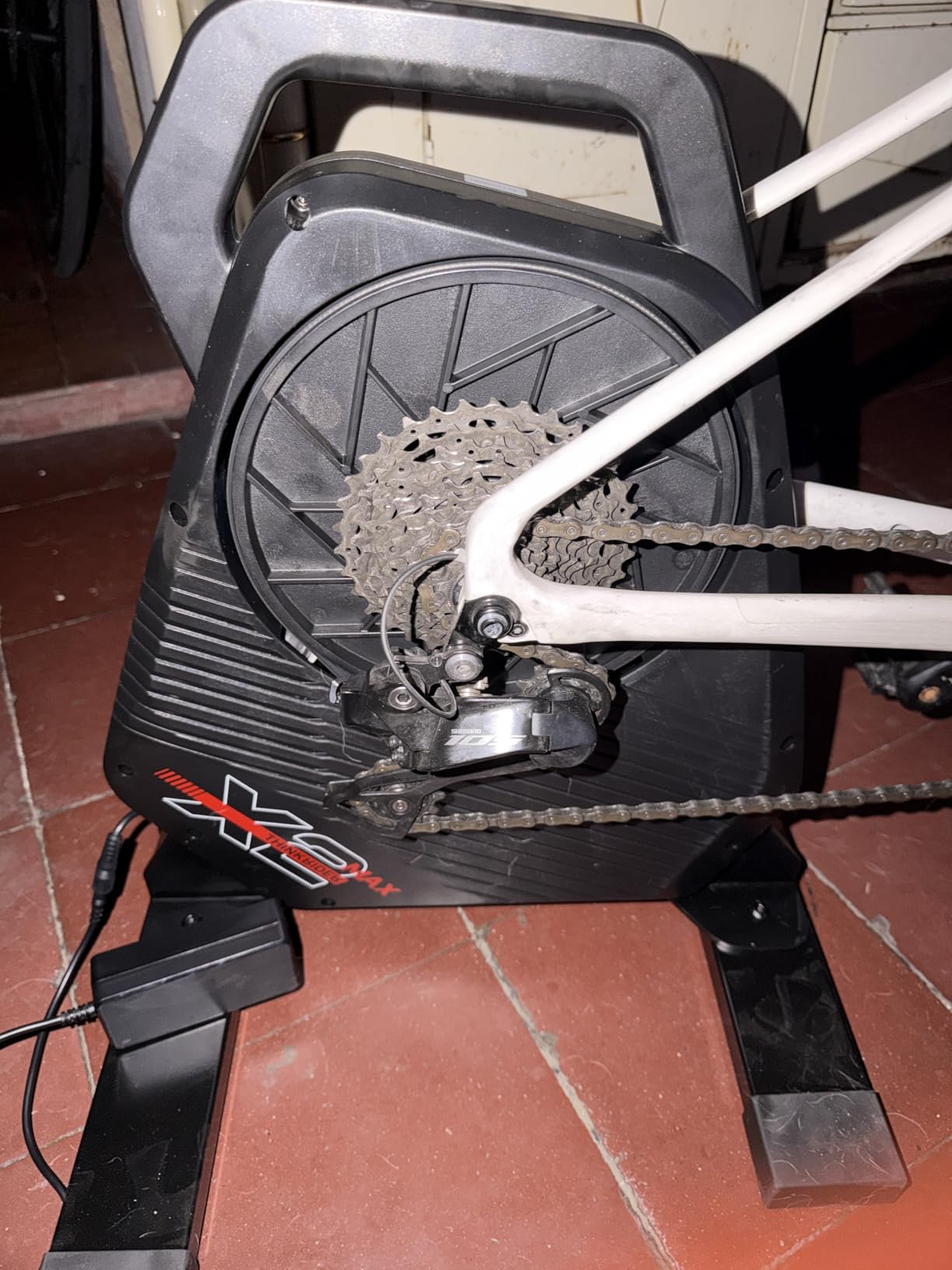
Setup takes most people under five minutes, and the I-beam triangular structure keeps it stable for standing intervals. The carrying handle is a small thing that changes whether a 35.2 pound trainer lives in a corner or in a garage.
Who the ThinkRider X2Max suits
It suits first-time smart trainer buyers with a few hundred to spend. You get direct-drive accuracy and an 18% gradient without stepping up to the premium units, and 73% of its 114 ratings are five stars.
It also suits apartment riders. The measured noise level and owners describing riding with music playing make this a strong pick if sound is your binding constraint. Forum threads about shared homes keep coming back to trainers like this one.
Where the X2Max falls short
No cassette is included and spacers for older 7, 8 or 9-speed cassettes may need sourcing separately, so allow for a little extra spending there. The short feet make it easier to tip when you accelerate out of the saddle, which is worth knowing before your first standing sprint.
Some owners report a slightly wobbly freewheel body that adds chain noise, and the bundled companion phone app is poorly built. The app is optional, so neither issue blocks normal use.
7. Wahoo KICKR MOVE – The Only Trainer Here With Fore-Aft Movement
Wahoo KICKR Move Smart Indoor Trainer
Dual-axis fore-aft movement
Lock-out mode
ERG Easy Ramp
29 kg
Pros
- The only trainer here with true fore-aft as well as side-to-side movement
- Movement reduces fatigue on long indoor sessions
- Lock-out mode fixes the trainer for structured efforts
- 2.4 GHz WiFi plus three Bluetooth connections and ANT+ FE-C
Cons
- Costs more than any other trainer in this guide
- Weighs 29 kg and needs two people to move it
- Footprint of 88 x 67 x 68 inches needs real floor space
- Only 32 ratings so durability is less well documented
The KICKR MOVE is the comfort answer. Most smart trainers are bolted to a fixed point and your bike sways over the top of them. This one travels fore and aft as well as side to side, and riders describe that as a step change in how long a session can last.
It has a lock-out mode if you want the trainer fixed for a focused effort, and ERG Easy Ramp eases you back into your target power after a pause rather than dumping you straight back into the effort. Those two features together make it a good partner for a TrainerRoad-style workout as well as free riding.
Connectivity is the most complete here: 2.4 GHz WiFi, up to three simultaneous Bluetooth connections, a direct connect port, and ANT+ and ANT+ FE-C. That means your watch, your bike computer and your phone can all talk to it at once.
It also has a 250 kg load capacity and a 250 kg-rated frame, with AXIS stiff feet included alongside QR and thru-axle adapters. Users who have one point to the fore-aft movement reducing fatigue and to the ergonomics of riding a real bike rather than a mounted shell.
One caveat on evidence: with 32 ratings it has the thinnest review base we list, so the 4.5 average and 76% five-star share are encouraging rather than proven over time. Long-term durability is not documented yet.
Who the KICKR MOVE suits
It suits long-session riders and anyone whose knees or back object to a fixed trainer. Forum regulars consistently name fore-aft and side-to-side movement as the biggest quality-of-life upgrade they have made, and this is the trainer built around that idea.
It also suits a household with several devices to pair, since three Bluetooth connections alongside WiFi and ANT+ cover most hardware.
Where the KICKR MOVE falls short
It is large, heavy and pricey. At 88 by 67 by 68 inches it is not a bedroom object, and the 29 kg weight means two people to move it.
The one year warranty is also short, and with only 32 ratings there is not yet a long record of units surviving five winters. If you are cautious about buying an expensive trainer with a thin evidence base, the KICKR V6 gives you comparable ride tech with a much larger review history.
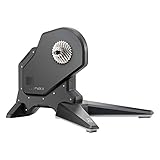
8. Tacx Flux S – A Quiet Mid-Tier Direct Drive
Tacx Flux S Smart Bike Trainer, Black, Model:T2900S.60
Direct drive within 3%
1500W sprint and 10% gradient
50 pounds
Two year warranty
Pros
- Direct drive power accuracy within 3%
- Described by owners as near-silent in a shared apartment
- Sturdy frame that handles standing pedalling
- Works with Zwift and Tacx software
Cons
- Weighs 50 pounds which is awkward in a small flat
- Simulates only up to a 10% gradient
- Two resistance settings only
- One-star reviews account for 10% of ratings
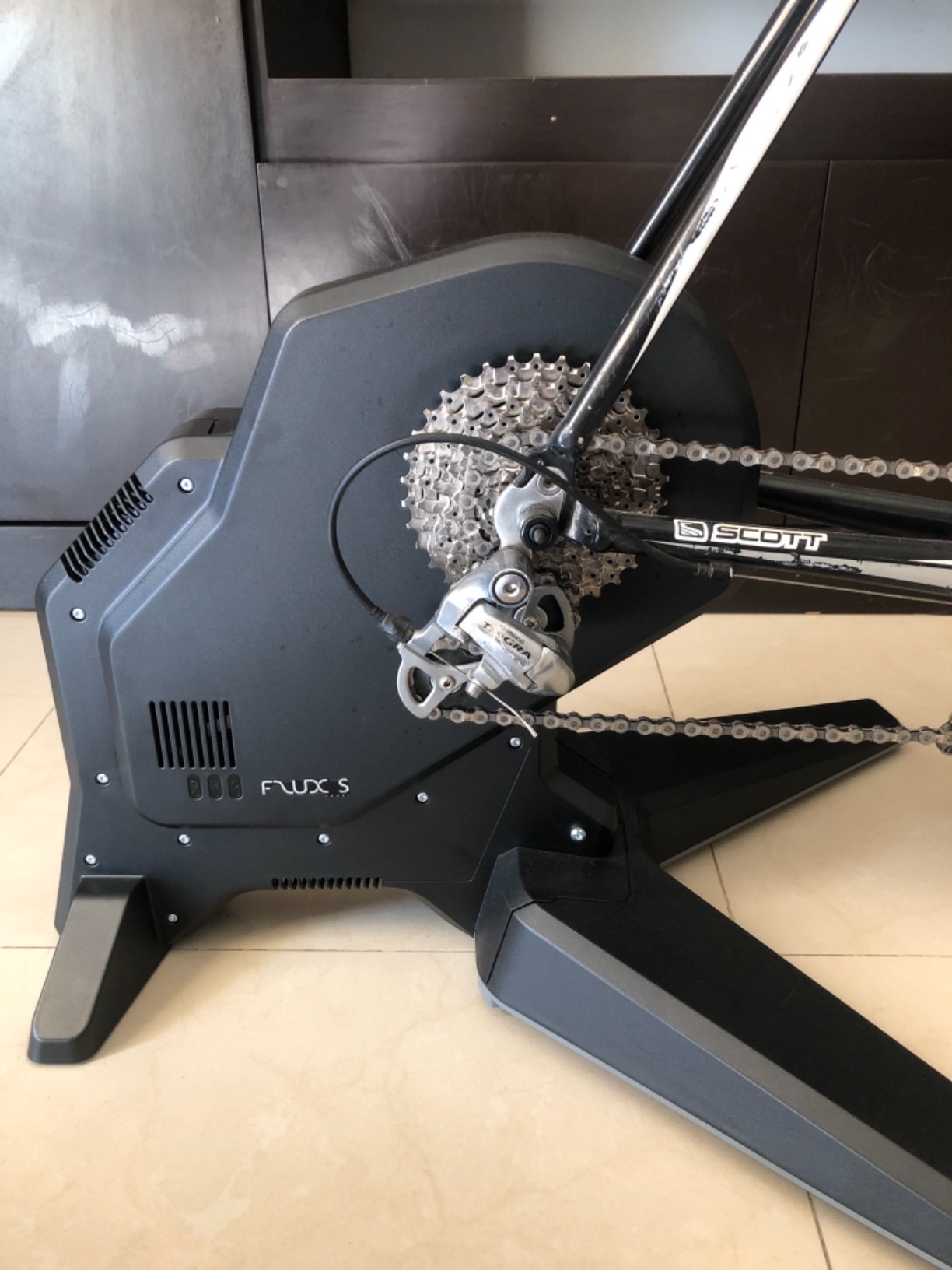
The Flux S is a mid-tier direct drive with a reputation for quiet. Power measurement is accurate within three per cent, which is enough for everyday Zwift riding and most training blocks, and owners describe it as effectively silent for shared-apartment use.
The frame is the other selling point. Reviewers mention that it stays planted when you stand up, which matters more than raw watts on a Zwift climb where you are out of the saddle for a minute at a time. It works with Zwift and Tacx software, so you are not locked into one platform.
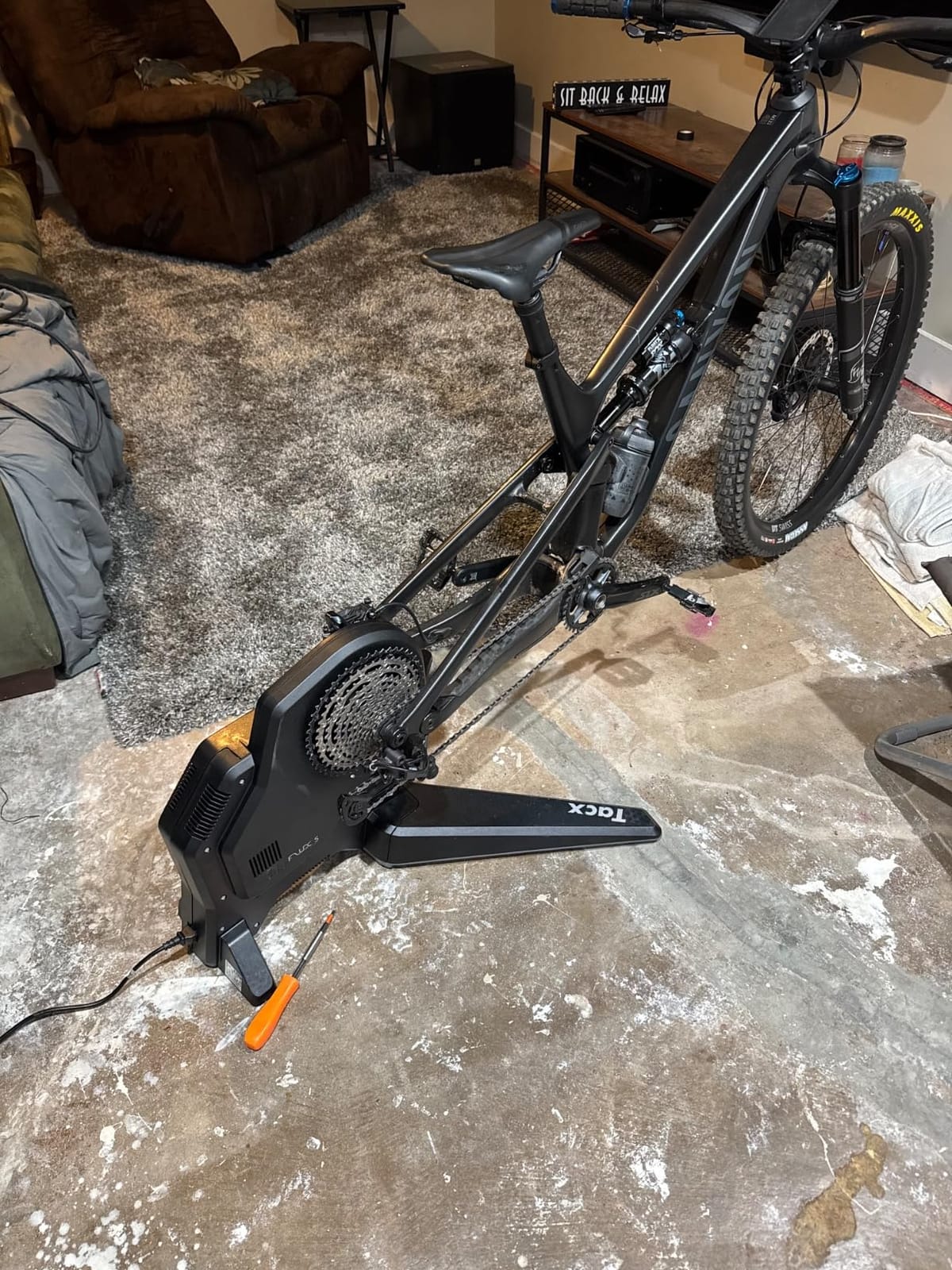
Where it falls short is the ceiling. It simulates gradients up to 10% and holds 1500 watts of sprint resistance. Under Zwift’s default difficulty that is usually enough, but if you train gradients specifically you will feel the limit.
There are only two resistance settings on the physical control, and it ranks well down the category rankings relative to its brand peers. The 4.3 average with a 72% five-star share is solid but not exceptional, with 10% of ratings at one star.
Who the Tacx Flux S suits
It suits riders in flats and shared walls who want direct-drive accuracy without stepping up to a flagship. It is a 10% gradient trainer at 50 pounds, so it trades headroom and portability for silence and stability.
It also suits riders who want Tacx software alongside Zwift, since the app options are open to you. It carries a two year limited warranty.
Where the Flux S falls short
It is a heavy unit in a small flat. Combined with a 10% gradient ceiling, it rules the Flux S out for anyone training specifically for steep climbing.
Where it does well is noise and stability, which is why it still earns a place for apartment riders who ride under 10% gradients.
Two resistance settings is a strange amount of hardware control, and the one-star share suggests a minority of owners had real trouble. For more headroom within the same brand, the Neo 2T at the top of this list is the one to look at.
9. Saris M2 Smart – Wheel-On Convenience With Certified Connectivity
Saris M2 Smart Indoor Bike Trainer, Compatible with Zwift App, Black, Made in the USA
Wheel-on electromagnetic
Within +/-5% accuracy
Zwift certified
20 pounds
Pros
- Wheel-on design means no drivetrain removal to mount the bike
- Zwift certified with both ANT+ FE-C and Bluetooth
- Compact 22 x 20 x 9 inch footprint and only 20 pounds
- Limited lifetime warranty
Cons
- +/-5% accuracy is looser than the direct drives listed here
- Audible whirring at speed with 69 dB at 20 mph
- One-star reviews make up 13% of ratings
- No power data beyond speed and cadence estimation
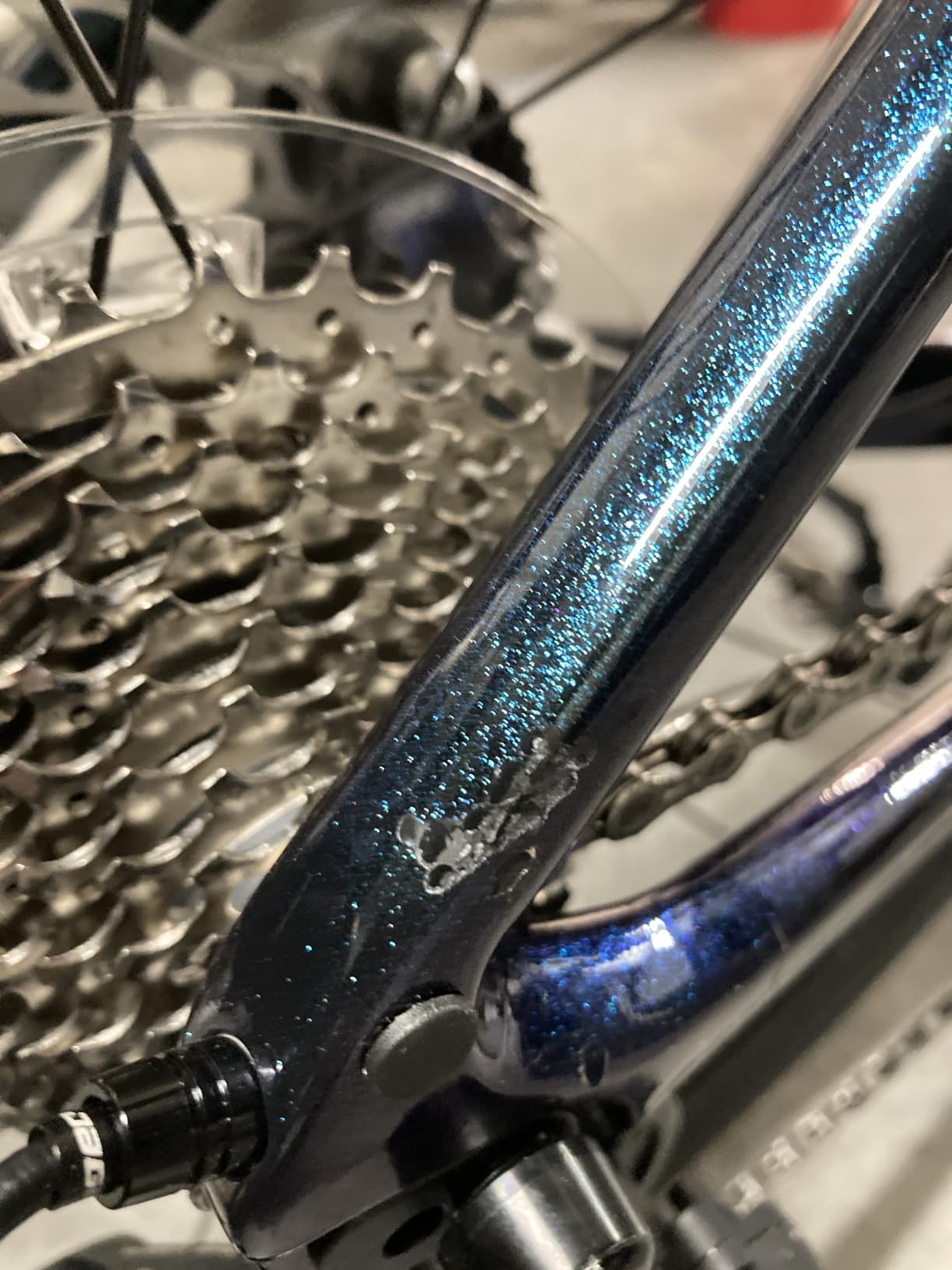
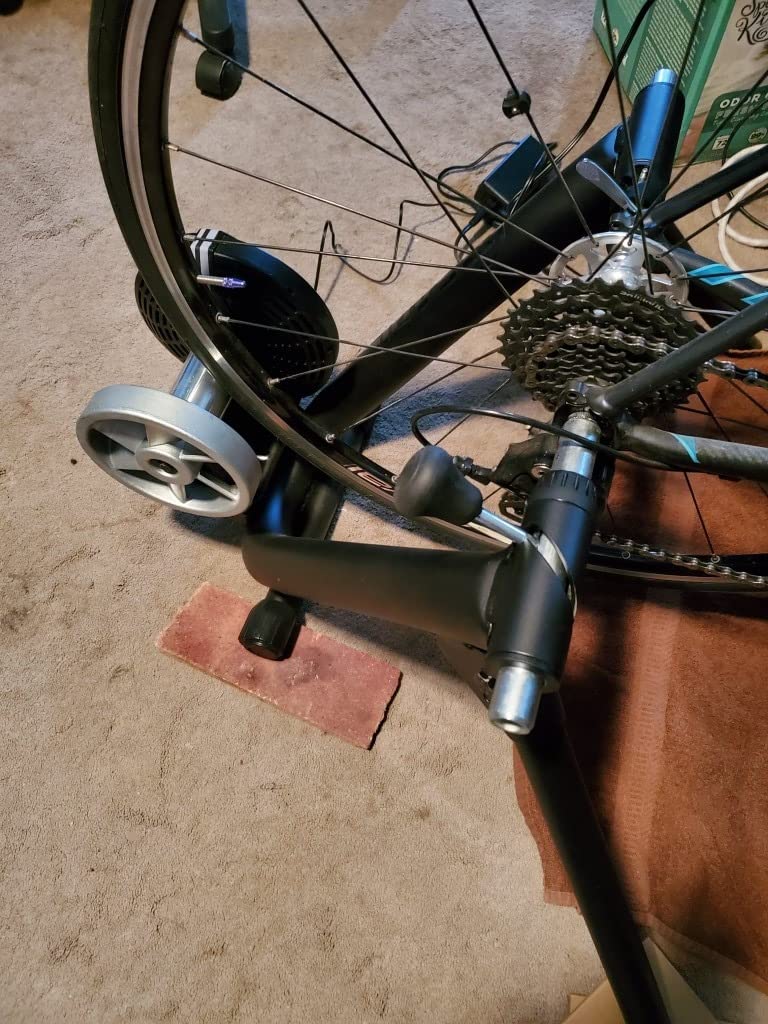
The M2 Smart is a sensible way into smart training. You leave the rear wheel on, thread the trainer onto the axle, and go. There is no cassette to remove, no chain to handle, and no risk of dropping a chain bolt on the carpet at the end of a long day.
It is Zwift certified over both ANT+ FE-C and Bluetooth, and at 20 pounds it moves between rooms without a fight and stores in a 22 by 20 by 9 inch footprint. A limited lifetime warranty is a genuine long-term comfort that few rivals in this guide match.
One month of Rouvy is included, and a steel quick release skewer comes in the box for common road and mountain frames.
The trade is accuracy and noise. Power is within plus or minus five per cent, looser than the direct drives listed here, and it produces an audible whirr at speed, measured at 69 decibels at 20 mph. That is a real consideration if you ride in the evening near a wall.
Who the Saris M2 Smart suits
It suits riders who dread drivetrain work. If removing a cassette makes you avoid indoor sessions, the wheel-on format removes that objection entirely. It also suits anyone with limited floor space or a household that will not tolerate a heavy steel machine in the room.
Beginners benefit too. A 4.1 average across 471 ratings shows a broad base of owners using it as intended for steady rides and general fitness.
Where the M2 Smart falls short
Five per cent accuracy is the loosest figure in this guide, and it is not enough for Zwift eSports rules that demand better than two per cent. Treat it as a trainer for fitness and endurance rather than for verified race results.
One in ten of its ratings sits at one star, the highest share in the group, and the noise at speed is the most common complaint.
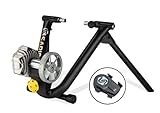
10. Saris Fluid2 Smart Equipped – Fluid Resistance With a Bundled Speed Sensor
Saris Fluid2 Smart Equipped Indoor Bike Trainer, Includes Speed Sensor, Made in The USA
Fluid resistance
Bundled speed sensor
7.3 pounds
Limited lifetime warranty
Pros
- Fluid resistance is quiet and progressive with a road-like feel
- Folds flat for storage and travel
- Limited lifetime warranty
- 800-plus mile owners report no issues
Cons
- Assembly is difficult and several owners needed a mallet or lubricant
- Some units arrived missing speed sensor components
- No power data beyond the bundled speed sensor
- Thru-axle bikes need a separately sold adapter
The Fluid2 is a wheel-on fluid trainer with a bundled speed sensor, so Zwift sees you riding. You will not get real power data, and the numbers will be wrong in ways we will explain shortly, but you will get miles in the legs on a cold evening.
The fluid resistance ramps up progressively like wind rather than a magnet switching on, and at 69 decibels at 20 mph it is quiet in the way a fluid unit should be. It folds flat at 7.3 pounds, so moving it or taking it travelling is straightforward.
Owners with a few hundred miles on theirs report the sensor is reliable once fitted, and the limited lifetime warranty is the longest durability promise in this guide. Several report 800-plus miles without issues or leaks.
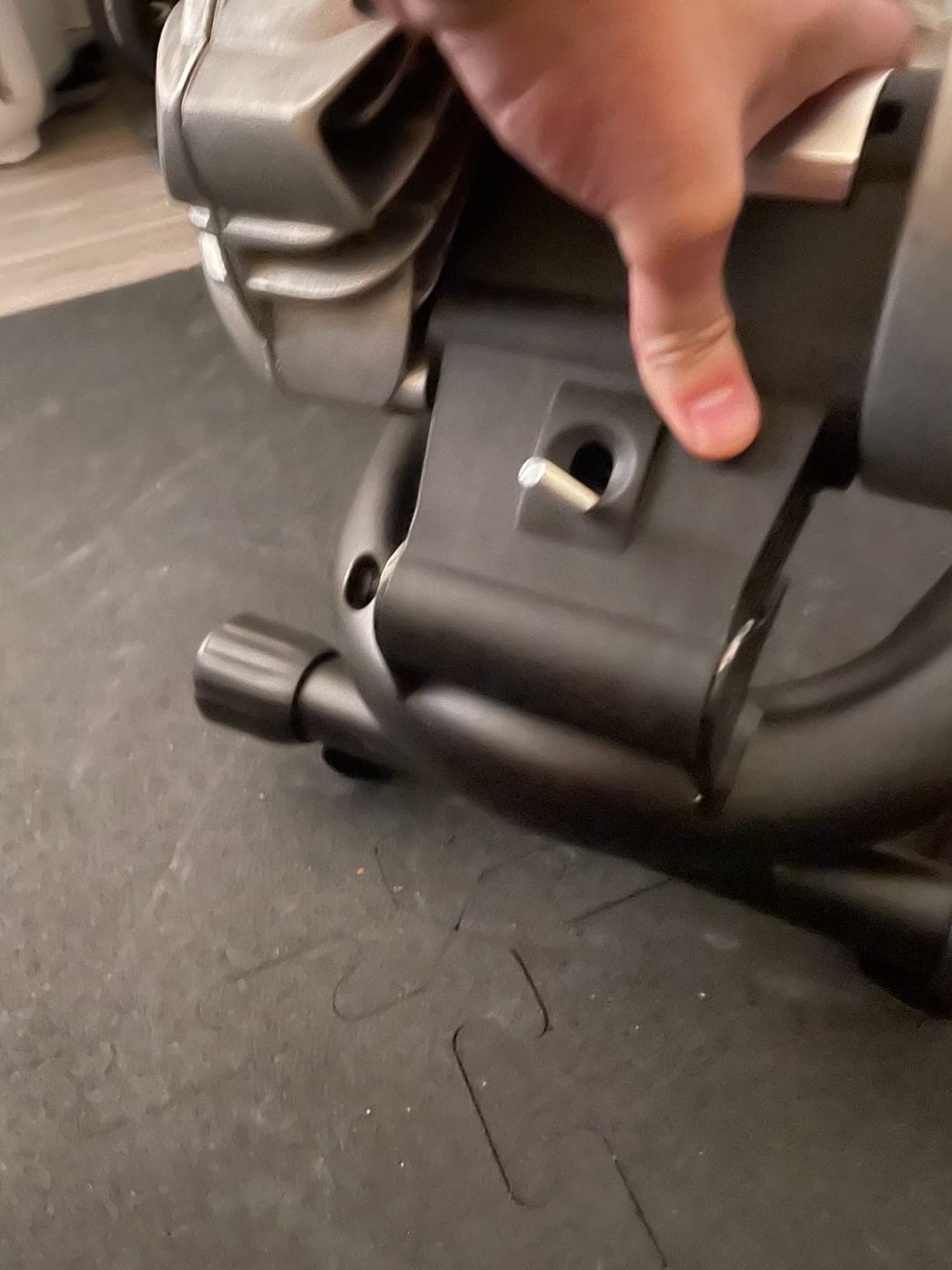
Assembly is the weak point. Several reviewers needed a mallet or lubricant to get the parts to go together, and a few units turned up without full speed sensor components. Fitting the sensor to the rear hub through the spokes is also fiddly if you have never done it.
Who the Fluid2 suits
It suits the rider who wants to try Zwift before committing. If your question is whether you enjoy virtual riding, this is the least costly way to find out, and a month of Rouvy is included to widen the trial.
It also suits a rental or a small flat where nothing heavy can be stored. At 7.3 pounds and folding flat, it disappears into a cupboard when the session ends.
Where the Fluid2 falls short
There is no power meter inside it. Zwift estimates effort from the speed sensor, and that estimate is often wildly optimistic or pessimistic depending on your cadence. Thru-axle bikes also need a separately sold adapter.
The front wheel riser is basic, and owners report wanting a taller one to avoid wrist and arm soreness on long sessions. If you are already sure Zwift is for you, spend the difference on a trainer with real power accuracy.
How to Choose a Smart Trainer for Zwift?
Work through these five questions in order and the choice narrows quickly. Most people start with budget, but axle compatibility is the question that actually ends up deciding whether a trainer is usable at all.
1. How much do you want to spend, and what do you give up? At the entry level you get a wheel-on trainer with a speed sensor, which is fine for following rides and poor for intervals. In the middle of the range you get direct drive with genuine power accuracy and a gradient ceiling. At the top you are buying ride feel, movement, and connectivity options.
2. What is your axle and drivetrain? Check the freehub before anything else. A standard cassette trainer works with Shimano and SRAM 9 to 11-speed. Shimano 12-speed road, SRAM 12-speed and Campagnolo all need a specific freehub body or adapter, and these are separate purchases. Boost 148 thru-axles need the right adapter too. The Elite Direto XR is worth a look here because its box covers the most cassette standards without extra freehub bodies.
3. How accurate does your power need to be? For fitness riding, anything within five per cent is fine. For structured training and FTP work, look for two per cent or tighter. For Zwift eSports, some events mandate better than two per cent, and that rules out several otherwise good trainers. The KICKR V6 and ThinkRider XXPRO are quoted at plus or minus one per cent here; the wheel-on units at the bottom of the list sit at five per cent.
4. Where will it live, and who can hear it? Noise is the factor riders regret ignoring. Published figures here run from roughly 58 decibels on the ThinkRider X2Max to 69 decibels on both Saris trainers at 20 mph. If you are upstairs or next to a bedroom wall, take those numbers seriously. Also weigh the machine: several trainers here run past 45 pounds, and weight is not a reliable guide to accuracy.
5. Do you care about movement and noise over time? Long sessions are where fore-aft and side-to-side movement earn their money. Riders on the forums describe it as the biggest quality-of-life upgrade they have made, and it reduces fatigue on rides of several hours. If you are only doing hour-long sessions, put the money into accuracy instead.
Connectivity, briefly. Bluetooth FTMS and ANT+ FE-C are the universal standards and every trainer here speaks at least one. WiFi is the premium tier, and it is what enables the fastest Zwift data rates, which matter in a race and hardly at all in a solo workout. Check whether your setup can accept multiple connections if you run a watch and a phone at the same time.
What about flywheel weight? Heavier flywheels feel more like real riding, particularly in short sharp efforts, and they are quieter at speed. Among the units here the heavier builds are the big steel-bodied direct drives. If you ride mostly long and steady, flywheel weight matters far less than the gradient ceiling.
For a wider look at the hardware beyond smart trainers, our bike trainer roundup covers non-smart and basic setups in detail, including functional trainers for riders training strength and squat mechanics indoors.
Do You Need a Smart Trainer for Zwift?
Not always, and this is the question the forums ask more than any other. Zwift will happily run on a basic trainer with speed and cadence sensors, or on a completely dumb trainer with a sensor on the wheel. It will show you an avatar moving. The catch is that the power figure is a guess.
That guess is often wrong in a way that shocks people. Riders moving from a basic trainer with speed and cadence sensors to a smart trainer have reported their average power dropping sharply on the same ride, from an estimated 170 to 200 watts down to 50 to 90 watts. The speed-sensor estimate was not measuring effort, it was measuring how hard the legs were pushing relative to the tyre.
So the practical answer depends on why you ride indoors. If you ride to relax, to follow a friend, or to get out of bad weather for an hour, a basic trainer and a sensor does the job. If you ride to train intervals, to chase an FTP, or to race, a smart trainer is the only way to get numbers you can trust.
One more decision riders get wrong: whether to add an on-bike power meter. In Zwift, both your trainer and any paired power meter can feed the app, and if both are connected the game will sometimes blend them. That blending is the source of a lot of confused power readings. Pick one source and stick with it, and if you own a meter, connect either the meter or the trainer, not both.
Switching sources also changes your FTP. When the power source changes, the estimate moves, and old training history stops lining up with new sessions. Expect a recalibration in the first few weeks and do not chase the number.
Zwift Cog and Click: What They Do and When to Skip Them
The Zwift Cog is a single sprocket that replaces your cassette, and the Zwift Click is a pair of handlebar controllers that shift it inside the game. Together they give you virtual shifting: you can change gear in Zwift without touching the bike’s drivetrain, which means a flat course no longer forces you to pick one gear for forty minutes.
The appeal is clearest for multi-bike households. If you ride one Shimano bike and one SRAM bike, the Cog removes the need to buy, store and swap cassettes whenever you change machine. It is the reason several owners in the forums give as their main justification for the KICKR CORE 2 bundle.
There are two reasons to skip them. The first is effort: the Click controllers expect a paid Zwift subscription to set up reliably, and a few owners report connectivity friction that only clears when they drop the Click pairing. The second is lock-in. The Cog only works inside Zwift, so if you also train in Rouvy or MyWhoosh, you will be shifting on those platforms too.
Our advice is straightforward. If Zwift is your only platform and you own more than one bike, take the bundle. If you train across several apps, or you are still deciding which app you will use, buy a trainer that takes a normal cassette and decide later.
Smart Trainer Jargon Explained
Direct drive. The motor is the resistance. There is no contact point and nothing wears, and power readings tend to be the most accurate because torque is measured at the axle.
Wheel-on. The unit grips the tyre instead of the axle, so your rear wheel stays on. Easier to mount, harder to make accurate, and quieter or louder depending on the resistance type.
ERG mode. The app holds you at a target wattage and adjusts resistance to keep you there, regardless of what the virtual road is doing. This is the mode structured workouts use.
Simulation mode. The opposite of ERG. The app sets a gradient and the trainer matches it, so a 10% climb feels like a 10% climb at whatever power that costs.
Max watts and max gradient. Two different ceilings. Max watts is how hard the unit can push in a sprint; max gradient is the steepest virtual slope it can hold. Riders doing climbs care about gradient, and riders doing sprints care about watts.
Zwift difficulty setting. Zwift defaults to a difficulty that softens gradients, so a 10% real climb may feel like 5%. This is why most riders over-spec their trainer. If you want the gradient to feel honest, raise the difficulty before you decide the trainer is not steep enough.
ANT+ FE-C and Bluetooth FTMS. The two wireless standards every smart trainer speaks. FE-C is the older, more widely supported control protocol; FTMS is Bluetooth’s equivalent. If a trainer supports both, you can pair whatever watch, computer or phone you like.
WiFi and Race Mode. WiFi moves ride data to your computer faster than Bluetooth. In a Zwift race that lower latency helps you hold position. In a solo workout it makes almost no difference.
Flywheel. A heavy rotating disc that smooths resistance and adds inertia. Heavier feels more like real riding and runs quieter, at the cost of weight and size.
Fore-aft and side-to-side movement. A trainer that rocks or sways rather than sitting still. It reduces fatigue over long sessions and is the main comfort upgrade in this category.
Freehub body. The splined part of the trainer that your cassette bolts to. A 12-speed or Campagnolo bike needs a matching body, and these are usually sold separately.
Frequently Asked Questions
Which smart trainers are compatible with Zwift?
Every trainer in this roundup connects to Zwift over Bluetooth FTMS, ANT+ FE-C, or both. The Tacx Neo 2T, KICKR CORE 2, KICKR V6, ThinkRider XXPRO, X2Max, Elite Direto XR and Saris trainers are all Zwift certified. The main compatibility question is not the app but your drivetrain, since 12-speed and Campagnolo bikes need a matching freehub body.
Do I need a smart trainer for Zwift?
You do not need one to start. A basic trainer with a speed and cadence sensor will run Zwift, but the power figure is an estimate from wheel speed rather than a real measurement, and it is often wildly off. Buy a smart trainer once you want to ride intervals, chase a real FTP, or enter a race.
Which smart bike trainer is the most reliable?
The Garmin Tacx Neo 2T has the strongest evidence behind it, with a 4.7 average across 472 ratings and 85% of those at five stars. It is also built with dual ANT+ and Bluetooth and includes adapters for most axle formats. Reliability on a trainer is mostly about connection stability and resistance consistency, and that is where its feedback is strongest.
Is there a better alternative to the Zwift Ride smart frame?
For most people a smart trainer is the better route, because you keep your own bike, your own fit, and your own power data history. A smart frame is worth considering if you have no bike to mount, very little floor space, or want a ready-made bike with no drivetrain compatibility questions at all.
Is the Wahoo KICKR CORE 2 better than the Tacx Neo 2T?
The KICKR CORE 2 wins on connectivity and drivetrain flexibility, with integrated WiFi and a bundled Zwift Cog and Click for virtual shifting. The Tacx Neo 2T wins on reputation and adapter coverage, with a 4.7 average across 472 ratings. For Zwift racing and mixed-brand households take the KICKR; for quiet, set-and-forget reliability take the Neo.
Which is better for comfort, the Tacx Neo 2T or the Wahoo KICKR MOVE?
The KICKR MOVE, without much doubt. It is the only trainer here with true dual-axis movement including fore-aft travel, which riders report reduces fatigue on long sessions. The Neo 2T is quieter, smaller and far lighter, but it does not move. If your sessions are under an hour, the Neo 2T is the sensible choice.
How accurate are smart trainers compared to power meters?
Good direct-drive trainers measure within one to two per cent of a crank-based power meter, which is close enough for most Zwift racing rules. Budget wheel-on units are looser, around five per cent. Connect only one power source in Zwift, because pairing a trainer and a meter at once can blend the readings and produce confusing numbers.
What is a Zwift Cog?
The Zwift Cog is a single sprocket that replaces your cassette so the game can shift gears for you. Combined with the Zwift Click handlebar controllers it gives virtual shifting inside Zwift. It is the easiest way to use one trainer across Shimano and SRAM bikes, and it only functions inside Zwift rather than other apps.
Do smart trainers damage my bike?
They can if you ride rough. Climb out of the saddle on a trainer without the fore-aft movement and the rear end of a frame takes repeated shock loads it was not designed for. Fit your bike properly, tighten the quick release to the maker’s guidance, and consider a rocker plate or a movement trainer if you do a lot of standing work.
Final Verdict: Which Smart Trainer for Zwift Should You Buy?
Pick the Tacx Neo 2T if you want the least uncertain purchase in this guide: a 4.7 average across 472 ratings, 2200 watts of ceiling, dual wireless, and adapters for nearly every axle format. Pick the KICKR CORE 2 bundle if you ride more than one bike or want virtual shifting and automatic firmware updates out of the box.
Go further down the list when your needs are narrower. The ThinkRider XXPRO has the steepest gradient and the highest power figure here. The ThinkRider X2Max gives you real accuracy and real quietness without a premium bill. The KICKR V6 is for racers who care about data latency, and the KICKR MOVE is for people whose sessions run long enough that comfort decides everything.
Whatever you choose, check the freehub before you order, set up your mat and fan on day one, and expect your FTP to move once the power source changes. If you are still weighing it, our general smart trainer roundup and transport guides cover the setup side. Use the buttons above to check today’s figure before you commit.