
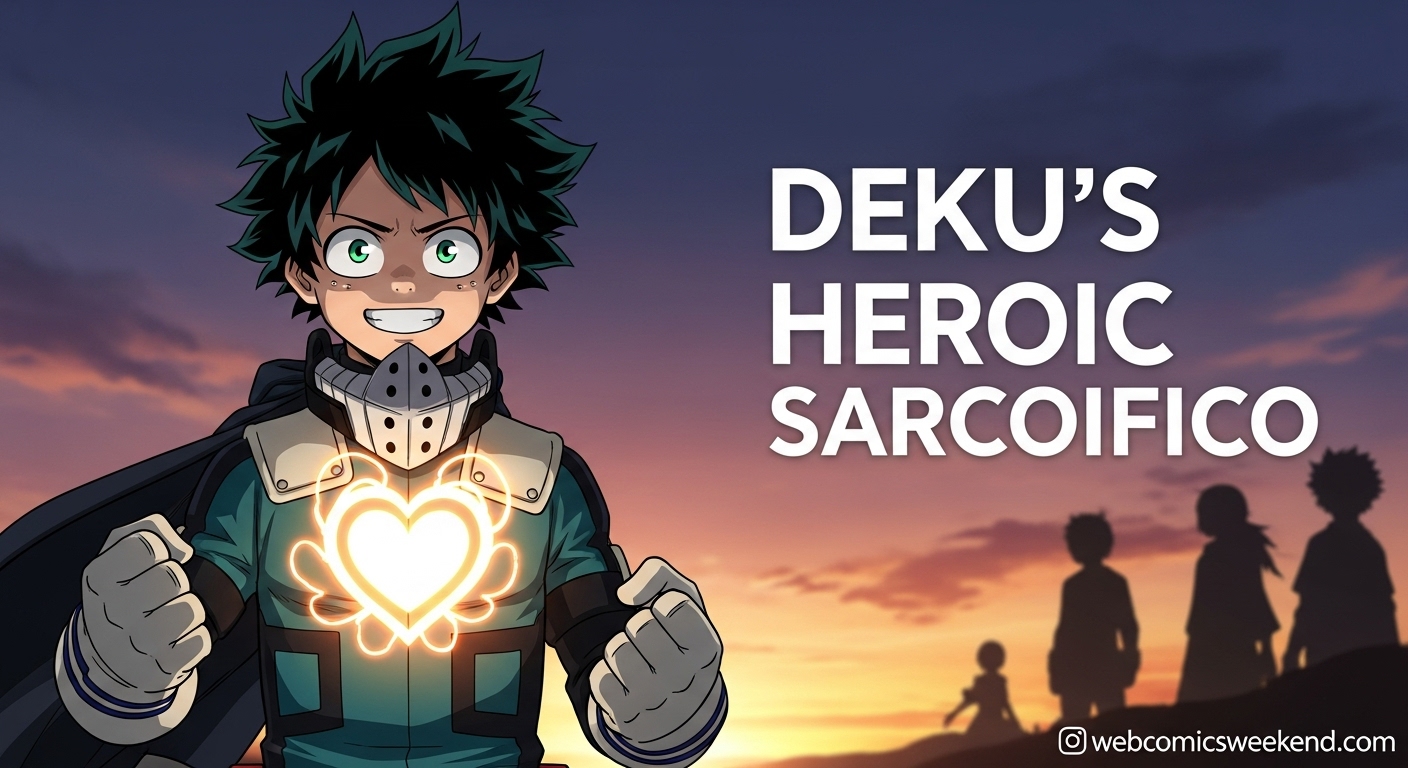
I’ve been following My Hero Academia since the very beginning, and let me tell you, nothing could have prepared me for the emotional rollercoaster of this final season. When I watched Deku make the ultimate sacrifice in episode 5, giving up One For All to save Shigaraki, I was absolutely floored. This moment wasn’t just shocking—it was the perfect culmination of everything the series has been building toward since day one.
You know, I remember when I first started watching MHA, I was like everyone else, completely obsessed with the amazing quirks and epic battles. But as I’ve grown alongside Deku throughout his journey, I’ve come to realize something profound: My Hero Academia has never really been about the powers at all. It’s been about heart, compassion, and what truly makes someone a hero.
The Moment That Changed Everything
When I saw Deku decide to transfer all the vestiges of One For All to Shigaraki, I’ll admit it—I was confused at first. Why would our hero give up the incredible power that had been passed down through generations? Why would he return to being quirkless after everything he’d been through? But then it hit me: this was the most heroic thing he could possibly do.
The plan, guided by the previous One For All users, was brilliant in its selflessness. By transferring the quirks to Shigaraki, Deku could reach the core of his pain and trauma, understanding the child who had been manipulated and broken by All For One. This wasn’t about defeating a villain—it was about saving a lost soul. And honestly? That’s what being a hero is all about.
Why This Sacrifice Makes Perfect Sense?
I’ve seen some fans upset about Deku losing his powers, but I think they’re missing the point entirely. Let me break down why this ending is not just acceptable—it’s absolutely perfect:
The Full Circle Moment
Think about it: Deku started as a quirkless boy who dreamed of being a hero in a world that told him it was impossible. His first heroic act—saving Bakugo from that sludge monster—happened when he had zero powers. He acted purely out of courage and compassion, and that’s what caught All Might’s attention in the first place.
Now, at the end of his journey, he returns to being quirkless, but this time he’s not the helpless boy he once was. He’s completed his heroic cycle, becoming the greatest hero not through power, but through sacrifice and love. How poetic is that?
The True Meaning of One For All
One For All was never meant to be a weapon—it was always about passing on hope and protecting others. Deku’s decision to give it up embodies the very essence of what makes One For All special. It’s not about accumulating power; it’s about the willingness to give everything for others.
When I think about it, All Might himself said that One For All was cultivated by those who couldn’t stand by and do nothing in the face of evil. Deku’s sacrifice is the ultimate expression of that ideal.
Heroism Beyond Powers: What MHA Has Taught Us
Throughout the series, we’ve seen countless examples of heroism that had nothing to do with quirks. Let me share some of the moments that really drove this home for me:
Uraraka’s Speech That Saved Deku
I still get chills thinking about Uraraka’s impassioned speech during the sixth season. When everyone was terrified of Deku’s power and wanted him banished, she stood up and reminded them that heroes aren’t gods—they’re human beings with vulnerabilities and emotions. Her words saved Deku not through any quirk, but through the power of empathy and understanding.
All Might Bowing to Deku’s Mom
Remember when All Might bowed to Inko Midoriya, promising to protect her son? That moment gave me goosebumps. Here was the world’s greatest hero, humbling himself before a worried mother, showing that true heroism includes accountability and compassion for the families of heroes.
The School Festival Concert
This might seem like a small moment, but when Class 1-A performed at the school festival just to make Eri smile, it showed me that heroism isn’t always about fighting villains. Sometimes it’s about bringing joy to someone who’s never experienced it before. And when Eri finally smiled? That was more powerful than any quirk battle I’ve ever seen.
Quirkless Deku Saving Bakugo
I keep coming back to this moment because it’s so fundamental to everything. Before Deku ever had One For All, he ran toward danger to save someone who had always bullied him. That act of pure courage, with no powers to back him up, is what true heroism looks like.
The Characteristics of a True Hero
After watching this series for so long and seeing Deku’s journey reach its conclusion, I’ve realized that true heroes share certain qualities that have nothing to do with their quirks:
Selflessness Above All Else
A real hero puts others before themselves, no matter the cost. We’ve seen this time and time again with Deku, but also with characters like Lemillion, who continued protecting Eri even after being hit by a quirk-erasing bullet. When you’re willing to sacrifice everything—including your powers—for someone else, that’s when you know you’re dealing with a true hero.
Action Over Words
Anyone can talk about wanting to help people, but heroes actually do something about it. In My Hero Academia’s world, 80% of people have quirks, but only a handful become heroes. Why? Because being a hero requires training, dedication, and most importantly, taking action when it matters.
Deku didn’t just dream about being a hero—he trained his body relentlessly, studied heroes obsessively, and threw himself into danger time and time again. His actions always spoke louder than his words.
Standing Against Darkness
Heroes don’t just fight individual villains—they stand against the darkness in the world and bring hope to others. All Might understood this when he said that being the Symbol of Peace meant more than just punching bad guys. It meant inspiring people and showing them that things could get better.
Deku’s sacrifice against Shigaraki wasn’t just about defeating one villain—it was about breaking the cycle of hatred and pain that had been passed down through generations.
Why Some Fans Got It Wrong?
I’ve seen a lot of discussion online about Deku’s ending, and I want to address some of the misconceptions I’ve come across:
“Deku’s Dream Never Came True”
This couldn’t be further from the truth! In the final chapter, we see that Deku is mentioned alongside All Might, Endeavor, and Best Jeanist as one of the iconic heroes that everyone admires. More importantly, Deku himself says that his dream came true. He became the greatest hero of all time not by being the strongest, but by making the ultimate sacrifice to save others.
“Deku Became a Miserable Wage Slave”
Again, this misses the point completely. While Deku is no longer an active hero in the epilogue, he’s living a happy life teaching future heroes. When I see him passionately explaining how a student can use their quirk to its full potential, I can tell he’s found fulfillment in passing on what he’s learned. He’s not miserable—he’s exactly where he needs to be.
“Deku Didn’t Change at All”
Saying Deku ended up where he started because he’s quirkless again completely misses his character development. The boy at the beginning was desperate for approval and unsure of his place in the world. The man at the end is confident, fulfilled, and has achieved his dream through sacrifice. The only thing they have in common is being quirkless—everything else about him has transformed.
The Beautiful Irony of Deku’s Journey
What I love most about Deku’s story is the beautiful irony of it all. He started as a quirkless boy who wanted nothing more than to have a power like everyone else. He got his wish and then some, inheriting the most powerful quirk in existence. But in the end, he had to give it all up to become the hero he always wanted to be.
There’s something profoundly meaningful about this. Deku had to lose the very thing he thought would make him a hero to truly become one. It’s like the universe was teaching him—and all of us—a lesson about what really matters.
What This Means for the Future of Heroism?
Deku’s sacrifice has huge implications for the future of hero society in the MHA world. By giving up One For All, he’s shown that the next generation of heroes won’t be able to rely on inherited power. They’ll have to find their own way, just like he did.
But you know what? I think that’s a good thing. It means future heroes will have to focus on what truly matters: courage, compassion, and the willingness to help others. They’ll have to build their own legacies rather than inheriting someone else’s.
Personal Reflections on Deku’s Journey
As I’ve watched Deku grow from a nervous, quirkless kid to the confident hero he is today, I can’t help but reflect on how much his story has meant to me. When I was younger, I used to think that being special meant having some kind of talent or ability that set you apart from everyone else.
But Deku’s journey has taught me that what truly makes someone special isn’t what they can do—it’s who they choose to be. It’s about having the courage to do what’s right, even when it’s scary or difficult. It’s about caring for others, even when they don’t deserve it. And it’s about being willing to sacrifice for the greater good.
I’ve carried these lessons with me in my own life, and I know I’m not alone. Countless fans have been inspired by Deku’s story to be better people, to help others, and to never give up on their dreams, no matter how impossible they might seem.
The Legacy of One For All
Even though One For All is gone, its legacy lives on. Not in the form of a transferable quirk, but in the hearts of everyone Deku inspired. The torch has been passed, not through power, but through example.
When I think about it, that’s a much more powerful legacy than any superpower could ever be. Powers can be lost or taken away, but the impact of a true hero’s actions can last forever.
Why This Ending Satisfies Me as a Fan?
I’ll be honest—I was worried about how My Hero Academia would end. I’ve seen too many great anime series let me down with their conclusions. But Deku’s sacrifice? It feels right. It feels earned.
This ending satisfies me because it stays true to everything the series has been about. It doesn’t go for the typical shonen ending where the hero becomes the most powerful being in existence. Instead, it goes for something more meaningful—something that reinforces the core themes of the story.
The Message We All Needed to Hear
In a world that often values power, strength, and ability above all else, My Hero Academia’s final message is more important than ever. True heroism isn’t about what you can do—it’s about who you are and what you’re willing to give up for others.
Deku’s sacrifice reminds us that the most powerful force in the universe isn’t a superpower—it’s love. It’s compassion. It’s the willingness to see the good in others, even when they’ve lost their way.
Looking Forward: What’s Next for Deku?
Even though Deku is quirkless now, I don’t think his story is over. If anything, it’s just entering a new chapter. As a teacher, he has the opportunity to shape the next generation of heroes, passing on the lessons he’s learned throughout his journey.
I can imagine him in the classroom, telling students about the importance of heart over power, about sacrifice over selfishness. He might not have One For All anymore, but he has something much more valuable—wisdom, experience, and the knowledge of what it truly means to be a hero.
The Impact on Other Characters
Deku’s sacrifice has had a profound impact on everyone around him. Bakugo, who once mocked him for being quirkless, now respects him more than anyone. Uraraka, who has been by his side through everything, understands the depth of his compassion. And All Might, who chose him as his successor, can be proud that he made the right decision.
Each of these characters has grown because of Deku’s influence, and his sacrifice will continue to shape their futures as heroes.
Why This Story Resonates So Deeply?
I think the reason My Hero Academia has touched so many people is because, at its core, it’s not really about superheroes. It’s about the potential for heroism that exists within all of us.
We might not have quirks in the real world, but we all have the capacity for courage, compassion, and selflessness. We all have the ability to make a difference in someone’s life, even in small ways. Deku’s journey reminds us that we don’t need special powers to be special—we just need to be willing to do what’s right.
FAQ: Understanding Deku’s Sacrifice
Why did Deku have to give up One For All?
Deku gave up One For All as part of a plan to save Shigaraki by reaching the core of his consciousness. By transferring the vestiges of the previous users to Shigaraki, he could understand Shigaraki’s pain and trauma, potentially saving him from All For One’s influence. This selfless act meant Deku would return to being quirkless.
Is Deku really quirkless forever?
Yes, according to the manga, Deku has permanently lost One For All. Even though Eri’s rewind power restored his body, the quirk itself did not return. He now only has “embers” of the power, which he must use to face All For One in the final battle.
Did Deku’s dream come true?
Absolutely! Despite losing his powers, Deku achieved his dream of becoming the greatest hero. In the epilogue, he’s mentioned alongside All Might, Endeavor, and Best Jeanist as one of the most iconic heroes. More importantly, Deku himself states that his dream came true.
What is Deku doing after losing his powers?
After the time skip, Deku is living a happy life as a teacher at U.A. High School, helping train the next generation of heroes. He’s passionate about teaching students how to use their quirks effectively and passing on the lessons he learned throughout his journey.
How does Bakugo feel about Deku losing his powers?
Bakugo has developed immense respect for Deku throughout the series, and this respect only grows after Deku’s sacrifice. Bakugo understands that true heroism isn’t about power but about character, and he recognizes Deku as the greatest hero because of his willingness to sacrifice everything for others.
What does this mean for the future of hero society?
Deku’s sacrifice signals a shift in what it means to be a hero in the MHA world. Future heroes will need to focus on character, courage, and compassion rather than relying on inherited power. This creates a more meritocratic hero society where anyone, regardless of their quirk status, can aspire to be a hero.
Will One For All ever return?
While there’s always a possibility in fiction, the story strongly suggests that One For All is gone for good. This is actually thematically important, as it reinforces the idea that true heroism comes from within, not from external powers.
How does this ending compare to other shonen series?
Unlike many shonen series where the protagonist becomes the most powerful being in existence, My Hero Academia takes a different approach. Deku’s ending emphasizes character development and thematic resonance over power escalation, making it unique among its peers.
What was the most heroic moment in the series?
While there are many incredible heroic moments, Deku’s sacrifice stands out as the ultimate act of heroism. However, other notable moments include quirkless Deku saving Bakugo, Lemillion protecting Eri after losing his quirk, and All Might’s final battle against All For One.
What message is the series trying to convey with this ending?
The series is conveying that true heroism is defined by heart, not powers. It’s about selflessness, compassion, and the willingness to sacrifice for others. The ending reinforces that anyone can be a hero, regardless of their abilities or circumstances.
The Final Lesson
If there’s one lesson I’ll take away from My Hero Academia, it’s this: true power comes from the heart. It comes from caring about others, from standing up for what’s right, and from being willing to make sacrifices for the greater good.
Deku gave up the greatest power in the world because he understood that real strength isn’t about what you can do—it’s about who you choose to be. And in making that choice, he became the greatest hero of all time.